Too often for those of use who carry lots of privilege – race, class, ability or citizenship status privilege – we fail to act or to stand in solidarity with those who are being targeted by systems of oppression. Or, if we do act, the tendency is to engage in savior politics or make it about us.
Let us be clear, this is not about doing missionary work or even being an ally. Those of us who hold lots of privilege need to begin to think about what role we play in movements for social justice and liberation.
A recent article written by an indigenous activist, entitled, Accomplices Not Allies: Abolishing the Ally Industrial Complex, provides us with an important critique of what too often happens from well intentioned white folks who “want to do some good” or who “want to help.”
The article states near the beginning:
The risks of an ally who provides support or solidarity (usually on a temporary basis) in a fight are much different than that of an accomplice. When we fight back or forward, together, becoming complicit in a struggle towards liberation, we are accomplices.
Later on in the article, the author writes:
Don’t wait around for anyone to proclaim you to be an accomplice, you certainly cannot proclaim it yourself. You just are or you are not. The lines of oppression are already drawn. Direct action is really the best and may be the only way to learn what it is to be an accomplice. We’re in a fight, so be ready for confrontation and consequence.
Part of being an accomplice is having mutually respectful relationships with oppressed communities. However, as the above comment makes clear, we must engage in direct action to demonstrate that we are an accomplice in the struggle for liberation.
Grand Rapids opportunities for being an accomplice
The undocumented immigrant community has been experiencing a great deal of harm and suffering for a long time. During the Obama administration 8 year tenure, an estimated 2.7 million people were deported.
Under the current administration, they have taken the gloves off and made it painfully clear that they will be targeting the undocumented community. The Executive Orders that have been passed in the first months of the Trump administration have targeted refugees, muslims and undocumented immigrants. The Trump administration has expressed their desire to build a wall along the US/Mexican border, hire more ICE agents and arrest, detain and deport those who are undocumented.
These recent actions by the federal government have sent fear into the immigrant communities, but it has also galvanized those same communities to fight back. In virtually every city across the US, it is the undocumented and immigrant communities who have begun to increased the level of organizing and taken the lead on this critical issue by organizing marches, boycotts, strikes, actions around A Day Without Immigrants, etc.
The question for those of us who hold lots of privilege and will not be impacted by the wave of anti-immigrant and xenophobic response from the government and white supremacists groups is – what will we do to step up and join the fight along side the undocumented community?
Undocumented Resistance in Grand Rapids
There are several actions coming up in Grand Rapids and opportunities to be ready to mobilize against government repression.
First, this Thursday, April 20th, there is an action at noon organized by the Grand Rapids chapter of the Cosecha Movement. This action is designed to draw attention to the practices and policies of the Immigration, Customs and Enforcement agency known as ICE. The action begins with a gathering at the Calder Plaza and will proceed from there. For more information contact the organizers through the Facebook event. 
The action on April 20th is a lead up to a much larger action on Monday, May 1st. This action, also organized by the Grand Rapids chapter of the Cosecha Movement, is calling for a boycott, strike and march. Organizers are asking people to not go to work or school, to not shop or spend money, rather to march with them for immigrant justice. The Facebook event for May 1st states:
On May 1st join us and thousands of immigrants and immigrant allies and lets win together permanent protection, dignity and respect for all people regardless of where you were born, country of origin,what religion you practice or who you are. Our country was founded by immigrants and is fuel by immigrants!
The march begins at noon on May 1st at Garfield Park. For those of us who hold lots of privilege, showing up send an important message that those in the immigrant and and undocumented community are not alone.
A third opportunity for people to be accomplices in the struggle for justice is for participate in the Grand Rapids Immigrant Solidarity Network’s Rapid Response to ICE campaign. The Rapid Response to ICE campaign is where accomplices, after receiving some training, are willing to mobilize quickly to actually prevent ICE agents from arresting undocumented immigrants and/or to provide mutual aid to family members impacted by the trauma of having someone taken from them.
There have already been several trainings for being part of the Rapid Response to ICE campaign and the next one will be held on Thursday, May 11 from 6:30 – 8:30pm at the Kent Ionia Labor Council. For details go to the Facebook event page for this training.
 Last Thursday, Education Secretary Betsy DeVos made the following statement:
“Every student deserves to learn in an environment where they are safe, and this Administration is committed to promoting a culture of safety on our nation’s campuses.”
DeVos made this statement while meeting with Michigan’s First Lady Sue Snyder, who is attempting to work on the issue of sexual assault on US campuses. There were several news agencies seeking to get more information on the meeting between DeVos and Snyder, but so far no one knows what the two women spoke about.
Sexual Assault on campuses across the US is a major issue. Twenty-three percent of female undergraduate students have experienced some form of unwanted sexual contact, according to reports. Not only can this leave the student struggling with physical and emotional damage caused by the assault, survivors continue to be stigmatized. Some colleges also choose to sweep reports of these assaults under the rug.

So how seriously will Education Secretary Betsy DeVos take the issue of sexual assault on US campuses? It remains to be seen how serious she will take the issue, but we have some indication of where she stands on this matter, based on statements she made during her confirmation hearing.
The Obama administration cranked up the issue in 2011 when it sent a “Dear Colleague” letter out to universities telling them they had to respond promptly to claims of sexual assault and sexual harassment on their campuses. It also said they had to use the standard of “preponderance of the evidence” when determining whether an assault occurred. That standard — common in civil law — is lower than the “beyond a reasonable doubt” standard required for conviction in criminal cases.
During her confirmation hearing, DeVos would not commit to continue what the last administration had begun in 2011. The US Department of Education has confirmed that Candice E. Jackson will become the deputy assistant secretary in the Office of Civil Rights (OCR). Jackson, a lawyer, received national recognition during the presidential campaign in 2016, since she wrote a book about how the Clintons have a history of disrespecting women. The appointment of Jackson seems to be a highly partisan move that will not translate into actual justice for victims of sexual assault on US campuses. DeVos has also stated that she plans on restoring due process for those accused of sexual assault on US campuses, which seems to suggest that she will not be taking an aggressive stance against sexual assault at the university level.
Promoting a Culture of Safety on US Campuses?
It is worth noting that Betsy DeVos, her husband Dick DeVos, the DeVos family and the Prince family have a long history of funding organizations that promote patriarchal values and hetero-normativity. From Focus on the Family to the Family Research Council, the DeVos and Prince families have given millions to dozens of organizations that do not make it a priority, even downplaying the urgency of, sexual assault in the US.
Expanding on the notion of what Betsy DeVos said last Thursday about promoting a culture of safety on US campuses, we must also apply that to students who identify as being from communities of color, immigrant communities, the LGBTQ community and those who practice Islam.
These students, in the current political climate, also would not feel safe on campuses across the nation. Just after the election in November of 2016, campuses were reporting an increase in hostile acts against minorities. However, it should be noted that this is not a new thing for minorities to feel unsafe on US campuses. The efforts to try to integrate schools, beginning in the 1960s, was met with tremendous resistance and a report from the Southern Poverty Law Center in the summer of 2000 documented that “hate on campuses has become commonplace.”
The new Secretary of Education has publicly stated that every student deserves to learn in an environment where they are safe, but we are not hopeful that this is what will actually happen. Safety in education will only happen when communities make it a priority and put it into practice across the country. Safety in education will only happen when white supremacy, classism and heterosexism are eliminated in every school.
CWD and the West MI Power Structure: Part II
 Last month we posted an article about the West Michigan Power Structure that did not specifically involve the DeVos Family. We looked at people like Peter Seechia, John Kennedy, Michael Jandernoa and Mark Murray.
In Part II of our look at the West Michigan Power Structure we look at three men who make up CWD Real Estate Investment – Sam Cummings, Scott Wierda and Dan DeVos.
CWD was in the news last Thursday, after the Grand Rapids City Commission voted unanimously to approve $2.3 million in reimbursements through brownfield funding for a new hotel project. In addition, the Downtown Development Authority awarded CWD an additional $895,000 in tax abatements this past February.
According to the MLive story, the new hotel will be run by the Amway Hotel Corp. This should come as no surprise, considering that Dan DeVos is one of the three men running CWD, but also because of the relationship the company has with other DeVos family members and their role in the West Michigan Power Structure in general.
Sam Cummings, Scott Wierda and Dan DeVos all were involved in business and investment before CWD was created. Cummings has previously been involved in Second Story Properties, Wierda was a co-owner of Jade Pig Ventures and Dan DeVos is the CEO of DP Fox Ventures. CWD was founded in 2008 and since then has amassed a significant amount of real estate property throughout West Michigan. According to the CWD website, they own more than 3 million square feet or retail and urban office real estate in the area.
Funding Republican Priorities
Another aspect of the CWD trio is their funding of GOP candidates and priorities. Wierda and Cummings have spent less money than DeVos on political contributions, but it is significant funding non the less.
Dan DeVos has contributed several hundred thousand dollars in recent years to GOP candidates and to the party itself. Such contributions from the three men are not just ideological, they are strategic in terms of how it benefits their growth as a real estate investment company.
Interlocking systems of power and influence
Cummings, Wierda and DeVos are also deeply connected to organizations, sitting on boards or committees in order to use their financial clout to influence local politics and culture.
Sam Cummings has been involved in the Economic Club of Grand Rapids, the Michigan Association of Realtors, currently sits on the Aquinas College Foundation Board, is a GVSU Foundation Trustee, was a Trustee at the Grand Rapids Community Foundation, a former board member of The Right Place Inc and former Grand Rapids Art Museum Foundation Trustee. Cummings was also instrumental in the failed Grand Prix races in downtown GR back in 1996.
Scott Wierda is also involved in the Econ Club of Grand Rapids, the Michigan Association of Realtors, is a vice-chair of the Michigan State Housing Authority, sits on the GVSU Foundation board of Trustees and used to be a Trustee of the Grand Rapids Art Museum Foundation.
Dan DeVos sits on the boards of organizations that differ from both Cummings and Wierda. DeVos is on the board of the Econ Club of Grand Rapids, Family Outreach Center, Hope Network, Norwood University, the West Michigan Sports Commission, the Orlando Magic Youth Foundation and the Grand Rapids Youth Foundation.

ArtPrize and CWD
Lastly, it is worth looking at the relationship that CWD has with the Rick DeVos-led project ArtPrize.
CWD is a major sponsor of ArtPrize and has been for years. The motivation for supporting ArtPrize should be evident, since their downtown properties stand to make a ton of money from patrons and venue fees. CWD has properties in prime locations throughout downtown Grand Rapids, which provides the company with a constant revenue stream during ArtPrize and lots of exposure and all the free PR that comes with the annual art spectacle.
In the second year of ArtPrize, Sam Cummings was quoted as saying:
“Our long-term goal is really to import capital – intellectual capital, and ultimately real capital. And this (ArtPrize) is certainly an extraordinary tool.”
One last connection between CWD and ArtPrize, is the fact that Scott Wierda’s wife, Rebecca Wierda, sits on the ArtPrize board.
All of these connections, the political, financial and cultural connections, are what makes CWD and their founders an integral part of the West Michigan Power Structure.
The GRPD, White Supremacy and Community Accountability
The recent actions of the Grand Rapids Police Department, where they profiled black youth after an incident at the KROC Center is not only infuriating, it is the most recent example of how deeply entrenched White Supremacy is the norm when it comes to the police.
What happened to those young African Americans is unacceptable and should never be tolerated. The response from the community to demand some form of accountability has been admirable, but we see how the GRPD is simply unwilling to be questioned on their behavior. Both the Chief of Police and the police union have made it painfully clear that they do not care what the community has to say about recent events or what many others addressed during last Tuesday’s City Commission meeting, which was to talk about the collective experience from people of color as it relates to the GRPD.
The recent incident and the response by the police department and police union should cause us all to take a step back and examine the real function the police serve in Grand Rapids, some some history of police unions, White Supremacy in Grand Rapids and the false solutions that the City of Grand Rapids has been presenting on policing.
What are cops for?
For many people in the US it is known that what gave birth of modern policing was the organizing of white men to hunt and police slaves who dared to flee the plantation. Modern policing was founded on slave patrols. This cannot be said enough, because besides this being the origin of modern policing it should tell us something about the ongoing white supremacists nature of how policing has functioned for nearly 200 years in the US. I can’t stress enough how important it is for people to read the book, Our Enemies in Blue: Police and Power in America, by Kristian Williams.
Police departments serve the power structure of any community. This doesn’t mean that cops don’t do “good things,” but we really need to move beyond the good/bad binary and come to terms with the primary function of police departments. Police departments serve the power structure, the state and engage in various forms of population management to make sure that people don’t try to overthrow the systems of power and oppression that most of us live under. The police essentially protect the system of economic exploitation that most of us experience, since they do not go after the capitalist class for unjust treatment of workers, and they make sure that whatever grievances we have with those in power, we will not be allowed to stop the abuses of power by means other than petitions and voting.
Police Unions
The response from the Grand Rapids Officers Association to the recent outcry from the public is frustrating, but it should be understood that it is consistent with the function of police departments and that police unions are fundamentally different than other trade/labor unions.
As Kristian Williams observes:
“Police associations thus developed in relative isolation from the rest of the labor movement, while building close ties with the command hierarchy within departments. This fact points to two related reasons why police unions are not legitimate unions. First, as is discussed above, the police are clearly part of the managerial machinery of capitalism. Their status as “workers” is therefore problematic. Second, the agendas of police unions mostly reflect the interests of the institution (the police department) rather than those in the working class.
Williams goes on to say in Our Enemies in Blue:
Unionization (of police) has thus served to preserve the patterns of abuse and discrimination, while at the same time advancing the agenda of law enforcement on the social and political fronts.
Another way to think about this point is that since police unions work for the system of power, they are not really interested in challenging the status quo or challenging any system of oppression that exist in any community. Again, their function is to serve power and defend the interests of those within the police department. The Grand Rapids Officers Association said in their response to the recent public outcry that they – are charged with taking care of the people who take care of all of our citizens. It is true that their task is to look out for cops, but the notion that cops “take care of all our citizens” is a ridiculous piece of propaganda.
White Supremacy and Cops
The GRPD is set to host several community meetings across the city on Wednesday, April 19 to share the findings of the recent racial profiling study. While some might see this as a mechanism of accountability, what such studies do is further legitimize the white supremacist nature of police departments.
White Supremacy doesn’t exist in a vacuum, it is the result of structural violence that benefits white people over communities of color. Communities of color disproportionately experience exploitation and poverty, and are therefore more likely to be policed over white communities and white neighborhoods.
The arrest rates and incarceration rates of communities of color is disproportionately higher that that of white communities and this is by design. Therefore, hiring more officers of color will not do much to dismantle the White Supremacy within police departments, it will only further legitimize the nature and function of those police departments.
False Solutions or re-imagining what it means to look out for each other
Within months after the police murder of Michael Brown in Ferguson, Missouri, the GRPD realized that is was important to take the initiative around so-called police reform. The level of police violence was astronomical, particularly in communities of color, so the GRPD and the city leaders knew is was important to appear as if they city was taking proper action.
The city has been working on 12 ways to attempt to improve community relations and restore public trust. These 12 recommendations are really just minor adjustments to the current system of policing and will not result in building trust within the community. All one had to do was listen to those from the community who spoke at the City Commission on Tuesday and it is clear that there are large sectors of the community that do not trust the GRPD.
So what is to be done? Well, there are no easy solutions and any discussion of what is to be done must come from those who are most directly impacted by police abuse and police behavior. What many organizations and many communities who directly impacted from police violence have been saying in recent years is that they want to have control over their own communities. Some organizations and movements, like Black Lives Matter, have been calling for the abolition on policing. Again, we have to listen to the wisdom of those most negatively impacted by police violence.
At a minimum, let us hope that the resistance from the GRPD leadership and the police union to practice accountability, will lead us have more critical discourse on the nature and function of policing and allow us to re-imagine new ways of looking out for each other that do not rely on cops.
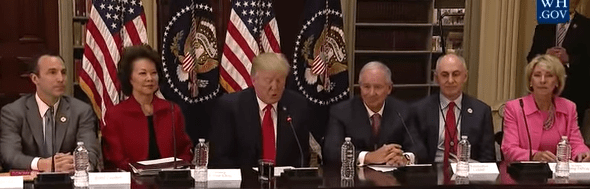
 On Tuesday, Education Secretary Betsy DeVos joined President Trump and several other cabinet members for a Strategy and Policy Forum listening session with 17 CEOs from major corporations.
Corporations like Walmart, IBM, General Motors, PepsiCo and Boeing were present to offer their suggestions on how to further privatize the country. Each of the cabinet members met with specific CEOs and Betsy DeVos spent her time with Ginni Rometty of IBM; Jack Welch, formerly of GE and Toby Cosgrove of the Cleveland Clinic.
According to a statement released by DeVos, she stated:
“Today’s event was a great opportunity to listen and learn from some of America’s best innovators and job-creators. I look forward to collaborating with them on how we can maintain our nation’s global competitiveness.”
Speaking as a member of the Capitalist Class, DeVos was in her element during the “listening session,” feeling right at home with public-private partnership dynamics. In her statement from April 11, DeVos also said:
“By encouraging public-private partnerships, we can help connect students with prospective employers and provide those students with the necessary skills to find a good-paying job in their communities.”
For members of the Capitalist Class, education is primarily about talent creation and making sure that schools are producing new workers and managers for the business community. Education is not seen as a form of liberation, development of critical thinking skills or as a mechanism to further explore our humanity. The Strategy and Policy Forum listening session with the 17 CEOs is just one illustration of the importance of education as a form of workforce development.
Further Punishment for those with Student Loans
On Tuesday, Betsy DeVos reversed some Obama administration policies on student debt and student loans, policies that were not all that beneficial those those with student loans.
DeVos stated, “We must create a student loan servicing environment that provides the highest quality customer service and increases accountability and transparency for all borrowers, while also limiting the cost to taxpayers.” 
Such a statement further demonstrates Education Secretary DeVos’ belief that the market should be the driving factor when it comes to education.
Resistance Report noted that, “The new rule will affect approximately 4 million students and graduates whose loans are in default, collectively owing more than $67 billion. The affected students make up about 11 percent of the estimated 44 million Americans who have student debt, according to data from the Federal Reserve. And unlike credit card debt, student debt can’t be discharged through bankruptcy, thanks to laws passed in the 1970s.”
These changes to the student loan policy will most likely result in more students defaulting on their loans, but it will certainly result in more and more people being deeply limited in what they can be involved in, since having 10 – 30 year student loan payments provides little incentive for people to be involved in challenging systems of power that have imposed these loans on them in the first place.
Media Literacy and the Trump Administration
 For nearly 20 years, GRIID has been promoting Media Literacy as an important component for an informed public. Over the past two decades we have conducted media literacy trainings throughout Michigan and have worked with public health educators, sexual assault prevention campaigns, labor organizers, environmental activists and anti-war organizers.
Media Literacy is fundamentally about developing critical thinking skills, skills that are often not part of the current educational system. Education is often framed as a mechanism for talent creation or merely preparing students for the job market. We view education as a life-long endeavor that is primarily about developing critical thinking skills that are essential to all of us in order to promote and practice justice and liberation from oppression.
Over the past 20 years we have used numerous media literacy exercises, but none more than the Branded Alphabet. The Branded Alphabet media literacy exercise is a great way for people to:
- Understand the pervasive nature of advertising in our society and how we are all being targeted by advertising campaigns.
- Understand how the news media functions and how they decide what information to give us, when to give it to us and how to give it to us.
- Juxtapose the Branded Alphabet with the current administration cabinet as a way to demonstrate the gap between our knowledge of products vs our knowledge of politics.
- Understand how the media system is constructed in such a way as to make consumerism a priority over an informed public
 We have just updated the Brand Alphabet media literacy exercise, since we now have a new administration, with most of the key cabinet members being approved by Congress.
We invite you to test your knowledge of both the Branded Alphabet and members of the Trump administration. Ask yourself why you might now products more readily just from one letter than who hold major cabinet positions in the Trump administration? The answers are on page three of the media literacy exercise.
Last Thursday, the US military engaged in a bombing mission against Syria, launching 59 Tomahawk missiles directed at several targets on the Middle Eastern country.
However, this was not the first time that the US has bombed Syria in recent years. Since 2014, the US has been bombing Syria regularly (roughly 8,000 airstrikes), but unlike this past weekend, there was not an outbreak of protests across the nation, like the ones targeting the Trump administration.

Endorsing the US Missile Strike against Syria
Since the Thursday evening US military attack against Syria, politicians have been responding to the Trump administration’s actions. Michigan Senator Gary Peters made the following statement on Friday in support of the missile strike:
“Bashar Al-Assad’s ruthless use of chemical weapons to kill innocent men, women, and children is abhorrent and cannot be tolerated. Our ultimate goals in resolving the crisis in Syria should be restoring stability to the region and providing safety and security for the Syrian people, who have endured unspeakable terror at the hands of their own government. I applaud the skill and bravery of the American service members who executed last night’s air strike.
While it’s crucial that we send a strong message to Assad, I firmly believe this strike and any future U.S. military action must be accompanied by a comprehensive strategy to achieve our goals of stability and safety. Now more than ever, we need clear and consistent leadership from the Trump Administration that includes diplomatic, economic and military coordination with our Arab partners in the Middle East and allies in the international community. President Trump should work with Congress to ensure the United States presents a united front to address what is an extremely complicated conflict in Syria.”
Senator Debbie Stabenow has of yet to post a statement on her website, but she was interviewed on WKAR (MSU radio station) and had this to say:
“The Syrian people have endured horrendous atrocities at the hands of their government, and the latest chemical weapons attack against innocent children and their families demands a response. The Trump Administration must ensure that further US action is part of a clear strategy and policy that includes diplomatic coordination with our allies, as well as input from Congress. I stand behind our service members involved in last night’s military action and commend their bravery.”
Interestingly enough, Rep. Justin Amash, unlike Democrats Peters and Stabenow, did not support the Trump administration’s missile attack on Syria. On a brief statement of Facebook, Amash said:
Airstrikes are an act of war. Atrocities in Syria cannot justify a departure from our Constitution, which vests in Congress the power to commence war.
The Framers of the Constitution divided war powers to prevent abuse. Congress to declare war, so the American people might be represented in such a decision; the president to conduct war and repel sudden attacks.
Such a statement from Amash is not out of character, since her has opposed US military actions during the Obama administration as well. To be clear Amash does not take an anti-war or an anti-imperialist position. Amash claims to be more of a Libertarian and a Constitutionalist, but it should also be stated that his seat has been held by Republicans for decades and has been considered a safe seat.
Amash has not been seriously challenged in several races, nor was Rep. Vern Ehlers before him or Rep. Paul Henry before Ehlers. Given that the seat has been a safe seat for republicans, it has allowed those who have held the seat some flexibility to vote against their own party, especially when that vote doesn’t threaten the outcome of any particular legislation.
Major US Media acts as cheerleader for the US missile strike against Syria
Since Friday morning, most of the major US media has been endorsing the US missile strike and acting like a cheerleader for the US Military.
The independent news site, The Intercept, ran an article on Friday with this sentiment, running the headline, The Spoils of War: Trump Lavished With Media and Bipartisan Praise For Bombing Syria.
In addition, the media watchdog group Fairness & Accuracy in Reporting noted that in five major US newspapers, there were 18 opinion pieces on the US missile strike on Syria and all of them praised the US missile strike. Indeed, it has been difficult to find many dissenting opinions within the US commercial media, once again demonstrating US media loyalty to empire.
Last week, we kicked off the first installment in our series of articles under the heading of Betsy DeVos Watch. 
In this week’s article we take a look at a visit from the Secretary of Education to a charter school in the nation’s capitol. DeVos was visiting Excel Academy in Washington, DC and began her brief comments by stating, “As we bring our education system into the 21st century, it is important we highlight the many types of different schools serving the varied and unique needs of individual students.”
Of course, there is nothing surprising about these comments or which school DeVos visited, since she has been saying for years that she thinks that charter and private schools would be better for the country.
However, what was more interesting than the fact that Betsy DeVos visited Excel Academy, was who she brought with her. Accompanying the Secretary of Education was the President’s wife Melania Trump and Queen Rania Al-Abdullah from Jordan. Excel Academy is an all girls school, which is why DeVos chose two women to be her guests for the school visit on Wednesday.
DeVos ended her comments at Excel Academy by stating, “I’m honored to have joined First Lady Melania Trump and Queen Rania Al-Abdullah in visiting this exemplary school. I thank Excel Academy for shaping these young women’s lives in a positive and meaningful way.”
Let us take a moment to unpack what kind of message DeVos and her guests could have sent to the all-female students who attend Excel Academy and what kind of role models each of the them represent in the real world.

First, Betsy DeVos grew up in a family that was extremely wealthy and one that had very reactionary beliefs about women and families. Betsy then married into an even wealthier family, which also has a long history of supporting religious values that often demean women and promote patriarchal values. Both the DeVos and Prince families have spent millions of dollars supporting groups like Focus on the Family, The Family Research Council and Promise Keepers (just to name a few), all of which promote patriarchal values with very narrowly defined gender roles. The young girls attending Excel Academy could also learn the idea that wealth gives you power, buys you access and allows you the ability to impose your will on the rest of society.
Then there is the President’s wife Melania Trump. There have been lots of demeaning things written about Melania and we in no way want to contribute to gossip and petty views about the President’s wife. However, we will say that it is no doubt quite probable that these girls that attend Excel Academy are aware of the history of how Trump has viewed women, along with the sexist comments he has made and doesn’t apologize for. What sort of message does that send to these girls at Excel Academy.
Lastly, there is Queen Rania Al-Abdullah from Jordan. While some might think that being royalty is rather cool, the fact is that Jordanians live under a monarchy, do not have terribly progressive policies regarding women and girls and on top of that are a major recipient of US military aid.
So when Betsy DeVos says she wants to see young women’s lives be shaped in a positive and meaningful way, we would say don’t use the Secretary of Education and her guests as role models.
Last summer, Grand Rapids Mayor Rosalynn Bliss announced that she was forming an affordable housing committee, with the intent of addressing the crisis Grand Rapids has been experiencing around cost and availability around affordable housing.
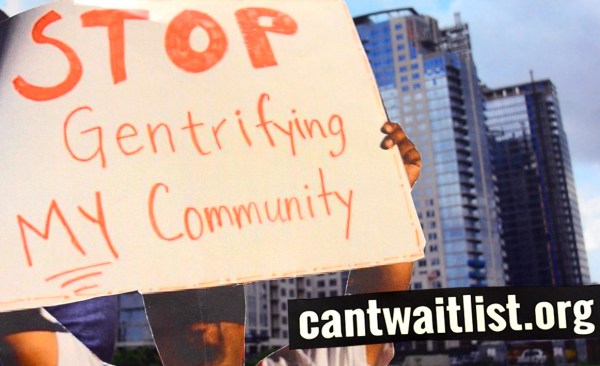
Since last fall, a committee has been in place and has been meeting to discuss the issues of affordable housing, along with putting together a list of recommendations for how to address this crisis. However, before we get to the recommendations, it seems important to provide some context to what has been happening in recent years around housing and gentrification in Grand Rapids.
The Grand Rapids Housing Crisis
For years now Grand Rapids has been involved in a development boom, with new projects being introduced on a monthly basis. Besides the downtown development boom, there are other areas that have also experienced major development changes, such as along the Wealthy Street corridor, the Michigan Avenue corridor, the near westside between Bridge St and West Fulton and the Belknap neighborhood, just to name a few.
The majority of these new projects are based around creating market rate housing, housing that has and will attract mostly professionals and those aspiring to be part of the capitalist class. Such projects have led to the physical displacement of working class individuals and families, with the bulldozing of homes, to the increase in rental costs that many of these neighborhoods have experienced because the landlords/property management companies know they can charge more.
In addition, with Grand Rapids being in the national spotlight, it has attracted many more investors from out of town, even out of state, who realize that investing in Grand Rapids in very profitable. The corporatization of housing in Grand Rapids is growing, with no end in sight, since the vacant housing market is less than 1% and rental units are mostly adopting market rate prices.
There have been some affordable housing projects announced in the past year, but these projects are woefully inadequate in terms of the need and in some cases involved some of the same developers that are creating the problems to begin with.
Representation on the Mayor’s Affordable Housing Committee
One concern from the very beginning, when it was announced that the Mayor was forming this committee, was who would have a seat at the table. Here is a list we received from someone who also sits on the committee.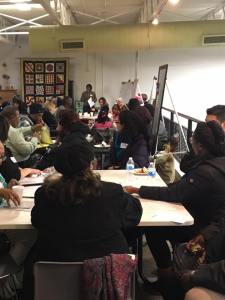
Jordoun Eatman, David Allen, Sonali Allen, Anne Armstrong, Connie Bohatch, Max Benedict, Neil Carlson, Lamont Cole, Laurie Craft, Patricia Kelly, Kurt Hassberger, Mike Hawkins, Ruth Kelly, Tim Kelly, Alicia Key, Lynn Locke, Adelyn VanTol, Joshua Lunger, C. Frank, BriAnne McKee, Jon O’Connor, Clay Powell, Erica Hooser, Darel Ross, Gustavo Rotondaro, Kristin Turkelson, Suzanne Schulz, Monica Steimle, Celeste Vaught, Stacy Stout, Ryan VerWys, Ryan Wheeler, John Wheeler, Jesica Wood, Kara Wood, Landon Bartley, Amy Snow-Buckner, Audrey McIntosh, Nancy Haynes, Tracie Coffman, Jonathan Klooster, Mayor Rosalynn Bliss, Greg Sundstrom.
Those on this list are either elected city officials, city staff members, representatives of development companies and non-profit organizations. There are some housing advocates who are part of this list as well, but the majority of people who make up the affordable housing committee are those who by virtue of what they do and who they work for, will be unwilling to significantly challenge the status quo around housing, development, racial justice and economic issues.
An equally important point to raise is, who is not part of this committee? It can not be emphasized enough, that those who are Most Impacted by the current Housing Crisis – those displaced, working class people, marginalized communities of color, and queer youth – are not part of this committee. In fact, one could argue that they are the most important people in terms of making recommendations, since they are the ones who are currently experiencing the housing crisis.
Affordable Housing Recommendations
The 82-page report that was recently released consists of a lot of technical language and is not the most user-friendly document, but it is worth reading if we want to understand the framework that those who are members of this committee have put forth.
There are three major aspects of the report. First, is a list of how funds should be used coming from the Grand Rapids Affordable Housing Community Fund. Second, there is a list of short-term recommendations, then followed by some long-term recommendations.
There are 24 short-term recommendations:
- Reduce PILOT fee from 4% to 1%, Market rate developers qualify for PILOTS if affordable housing
- Re-focus on homeownership
- Incentives for small scale development (residential/commercial)
- Reduce or subsidize City fees (i.e., water and sewer connection fees, LUDS, HPC, permits) Neighborhood Enterprise Zone
- OPRA
- Brownfield
- Development agreement
- Expedited permitting
- Move to monthly water bills
- a: Density bonus, b: parking reductions, c: affordable housing prerequisite
- Homeownership and rental balance for healthy market and Tag parcels to an affordability index, to know affordability ranges
- Number of unrelated people, raise from current four
- Allow Accessory Dwelling Units by right
- Non-condo zero-lot-line
- Setback requirements, minimum lot size, building area, building width for single family
- Mixed housing types
- Height restrictions, increase
- Eliminate lots of common ownership
- Eliminate minimum lot width requirement in Traditional Neighborhood zone district and Lot width requirements for two families
- Income Limits and Lead Practices for Tax Foreclosures
- Layer lead abatement/housing assistance
- Residential Rental Application Ordinance
- Reduce or eliminate monitoring and blight fees for non-profits awaiting redevelopment
Most of these recommendations seem to be centered around construction and development and do not address the actual needs of the thousands of families currently experiencing the housing crisis. Again, this is not surprising, considering who is sitting at the table.
One short-term solution, which we have suggested, would be to have the city stop giving major tax-breaks to developers and to instead divert that money to the Affordable Housing Community Fund. In addition, the Affordable Housing Community Fund should have 50% or more of those determining how the money will be used, be from impacted communities.
The long-term solutions continue much along in the same vein, which focuses on mild reforms that often benefit developers and home owners. There is a long-term recommendation about living wages, but with no real clarification. Certainly if people made $15 an hour, what many groups are calling for as the new minimum wage, it would make a difference in terms of what people could afford. However, even living wages have limitations.
The national Homes for All group has the following principles/values that would actually make more sense in terms of providing a framework to actually achieving housing justice, although these are values that those currently making a profit off of housing would never adopt. They also are committed to having this movement being majority led by those most impacted by the current housing crisis. Here are those values:
• Community and Housing are a Human Right: Our homes, our communities and the land upon which we live are not a commodity to be exploited for profit, they are precious resources that should be used to meet people’s needs.
• Land and housing should be collectively-owned and controlled by communities: We reject corporate and Wall Street ownership of land and promote alternative models that increase democratic participation and control over land & housing in our communities.
• Land and housing should be developed in a way that is sustainable for the planet.
• Land and Housing should be accessible, permanent, quality, and connected to economic, social and cultural networks and institutions. No person, regardless of race, gender, class, sexual orientation, age, ability, citizenship or previous criminal or housing record should be denied a home nor forced to live apart of the networks and institutions our communities rely on to survive and thrive.
The Grand Rapids Chapter of Homes for All is working on trying to implement these principles. You can contact them at info@grhomesforall.com.
The recommendations put forth by the Mayor’s Affordable Housing Committee will be discussed at a meeting on Thursday, April 20, from 3-5pm at City Hall. However, the public is only allowed to observe, not to provide input, yet another indication of how this process is designed and how it has been managed.
Celebrating the Grand Rapids Furniture Workers Strike of 1911: Lessons for contemporary organizing and resistance
 On April 19, it will be 106 years since hundreds of furniture workers walked off the job in Grand Rapids protesting working conditions, wages and the lack of an 8 hour work day.
We have been researching this historic event over the years and want to offer the following information for those who want to familiarize themselves with this history, learn from it and think about the significance of working class tactics for todays organizing efforts.
First we highly recommend Jeffrey Kleiman’s book, Strike: How the Furniture Workers Strike of 1911 Changed Grand Rapids.
In addition, on the Grand Rapids People’s History site, we have written or republished numerous articles based on our own research over the years as it relates to the 1911 Grand Rapids Furniture workers strike.
 First is a two-part article written by Michael Johnston, who is know by many as the unofficial labor historian of Grand Rapids. In Part I of his two-part series, Johnston provides important historical context, a context that led to the massive worker walkout on April 19 of 1911.
In Part II, Johnston writes about the role that the IWW (industrial Workers of the World) played in the 1911 strike and how the local power structure and even many of the other unions saw them as a threat.
We also include in this primer on the 1911 furniture workers strike, some articles about other factors that played into the outcome of the strike. First, we look at the role of religion and how Christian Reformed Church members were told not to participate in the strike, while the Catholic Bishop at the time was in full support of the striking workers.
 Then there are those who documented the strike at the time. We wrote a piece that contrasted the observations of Viva Flaherty, a socialist, who provides a great reflection on what happened during the 1911 strike, and how one of the Furniture barons (R. W. Irwin) documented what took place.
In another article we have written, we note that there were 10,000 workers marching in the Labor Day parade in 1911. Not only was this an impressive number of workers, but it was essentially about 10% of the entire population of Grand Rapids in 1911. Imagine if 10% of working class people took part in a contemporary Labor Day parade or action.
 In yet another piece, we contrast the living conditions of those in the capitalist class – the Furniture Factory owners – and those who actually created the wealth for these men – the furniture workers.
Lastly, we include an article about the backlash from the 1911 furniture workers strike. The capitalist class was not happy about the 1911 strike, even though they ended up winning. However, those in power are never content with just winning certain battles, they want to prevent future attempts to challenge their power. What the Robber Baron class did was to change the City Charter, which resulted in decreasing the number of city wards to just 3 and eliminating a strong mayor position. The result of this charter change would make it harder for working class people to have real representation on the city commission and to make the mayor a glorified commissioner.
Again, it is important that we come to terms with understanding this local history, reflecting on it and thinking about what it means for current struggles against the power structure in Grand Rapids.

