History of US Immigration Policy: Summary of GRIID Class week #1
For anyone who could not join the class tonight or who couldn’t find time to be part of this class, I want to share a summary of what was discussed. I also want to provide links and resources for anyone who wants to do their own investigation on the history of US immigration policy.
As with each of the 8 weeks of this class we will rely on the Popular Education resource I created and update regularly. The Popular Education resource provides an important overview of this history, along with a list of books and online resources that can help us with developing a robust analysis of the history of US immigration policy and how to frame it.
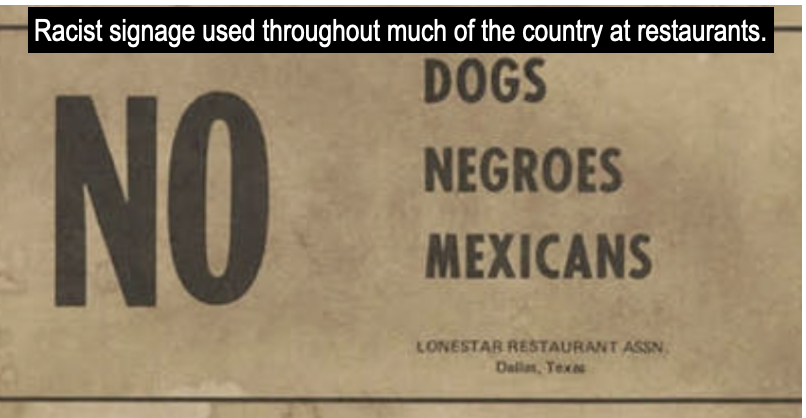
For week #1 we read sections from the book, American Intolerance: Our Dark History of Demonizing Immigrants. The sections we read collectively and discussed covered the demonizing of Mexicans, Chinese, Germans, the Japanese and members of the jewish community.
For Mexicans, the demonization escalated after the US invaded Mexico and eventually occupied the northern part of Mexico and claimed it for the US. For the Mexican people living in that region, they were then treated as inferior, subjected to ongoing discrimination and were forced off the land that they were born into.
The chapter on the Chinese dealt mostly with xenophobia on the west coast, where Chinese immigrants lived. Chinese immigrants built the railroads in the US, along with developing most of the agriculture sector in California as well, yet white communities and white politicians did not want them to stay nor to bring their families, so the Chinese Exclusion Act was passed and remained in place for decades.
Then there was a chapter on anti-German discrimination, which happened in the years just before and during WWI, where Germans were now called Huns. The discrimination wasn’t as bad as what many non-European communities experienced, but it demonstrated the fact that anyone can be demonized to serve a political purpose.
A fourth chapter looked at the treatment of Japanese Americans, referred to as the “Yellow Peril.” After Pearl Harbor Japanese Americans were rounded up and put into internment camps, most losing the homes and businesses in the process.
The the last chapter we discussed it dealt with how the growing antisemitism impacted the Jewish community, where people believed that they were spying for Hitler. This discrimination was directed at Jews from Europe. However, the worst aspect of this anti-Jewish position was that the FDR administration would not accept a shipped filled with Jewish immigrants that had fled Nazi Germany. They were forced from docking and had to return to Europe, where most of them were killed.
We discussed that the current anti-immigrant position of the Trump Administration is rooted in xenophobic immigration policies and practices that have existed since the US was founded.


Trackbacks
Comments are closed.