How the Local News reported on Senator Levin’s visit
As we reported on Monday, Michigan Senator Carl Levin was in Grand Rapids to speak at a luncheon hosted by the Economic Club of Grand Rapids. There were several news agencies present during Senator Levin’s talk and it is worth looking at what they reported on.

Both Channel 8 and 13 have stories posted on their websites. We can’t verify if these stories are what they broadcast, but this tends to be the case based on what they have done in the past when it comes to posting locally produced stories.
You can see from the video in both the WOOD TV 8 story and the WZZM 13 story that they filmed Senator Levin at the Economic Club luncheon. What is interesting about both stories is that neither of them dealt with what the Senator had to say at the noon luncheon. Instead, both local TV stations decided to ask the Senator his thoughts on the upcoming Michigan Governor’s race and the answers are almost identical.
The Grand Rapids Press was the only other GR-based news outlet that reported on Senator Levin’s visit yesterday. However, the Press also did not report on the Senator’s comments at the Econ Club luncheon, instead they asked the Senator five questions. The five questions consisted on one on the difficulties that incumbent candidates will face in this year’s election, the likelihood of health care legislation passing, one on Dick Cheney’s criticism of President Obama and two questions on the US war in Afghanistan.

However, Press reporter Kyla King did nothing more than print a sampling of what Senator Levin had to say about each question. There is no evidence that the reporter had any follow up questions to the comments made by the Senator, nor is their any indication that the reporter tried to verify any of the claims made by Michigan’s senior Senator.
This is a clear example of what media critics like Jeff Cohen would call journalism as stenography, where reporters just write what politicians say. This flies in the face of basic principles of journalism, which have been adopted by groups like Committee of Concerned Journalists.
These principles include the idea that reporters should practice verification, so as to try to substantiate claims made by people the talk to. One other important principle is the idea that journalists must serve as independent monitors of power. The local news media practiced neither of these principles of journalism, thus limiting the ability of people in West Michigan to adequately engage in the democratic process.
Media Bites – Audi & Corporate Greenwashing
This week’s Media Bites takes a look at a new Audi car commercial that ran during this years Super Bowl. The ad shows an over-zealous group of cops known as the Green Police who arrest people for minor environmental infractions.
However, someone driving an Audi is rewarded by the same cops, because after all fuel efficient cars are so “eco-friendly.” This Audi campaign is just another form of Corporate Greenwashing.
Hiroshima-Nagasaki Atomic Bomb Photo Poster Exhibition Begins Sunday
As part of their work to rid the world of nuclear weapons, Dominican Sisters ~ Grand Rapids brings the Hiroshima-Nagasaki Atomic Bomb Photo Poster Exhibition to Grand Rapids Feb. 21 through March 14, 2010. On loan from  Japan’s Hiroshima Peace Memorial Museum, the 20 large posters depict the death, destruction and suffering experienced by the civilians in these cities after the US dropped atomic bombs on Hiroshima, August 6, 1945 and Nagasaki, August 9, 1935.
“In 2006, we made a corporate stance for nuclear disarmament, to work towards the elimination of nuclear weapons,” explains Sr. Barbara Hansen, Dominican Sisters ~ Grand Rapids . “Some of us, like Sr. Ardeth and Sr. Jackie went to prison, others offer their prayers. This year, we are hosting the exhibit.”
The free exhibit at the Dominican Center at Marywood, 2025 East Fulton, is open to the public 2 – 6 p.m. Mondays, Wednesdays and Fridays, 10 a.m. – 4 p.m. Saturdays and noon to 4 p.m. Sundays . During the exhibition, related events welcome visitors of all ages.
Sunday Feb. 28, 7 p.m. John F. Donnelly Conference Center, Aquinas College
 Survivor, Seika Ikeda, who was 12 years old when the atomic bomb was dropped on Hiroshima, will recall her experience via a live Webcam video conference transmitted from Japan. Ikeda lived less than a mile from the epicenter of the explosion. In addition, Steven Leeper, chairperson of the Hiroshima Peace Museum, will speak to current developments in nuclear disarmament. A question and answer period will follow.
Feb. 21, 24, 28, March 3, 7, 10 and 14, Dominican Center at Marywood
Short films about Hiroshima-Nagasaki and nuclear disarmament will be shown at 3 p.m. Wednesdays and 12:30 p.m. Sundays during the exhibit. One of the films features an interview with a Michigan World War II veteran who served as a medic on the USS Haven, a hospital ship that arrived on the scene to care for US prisoners of war. “It’ s important that we listen to our vets, let them talk,” says Sr. Barbara. “We need to hear, not stand in judgment, so they can do their healing.”
 Sat. Feb. 27 , 10:30 am, 11:30 am, 1:30 pm and 2:30 pm, Dominican Center at Marywood
Folding Origami Paper Cranes, Japanese Symbol of World Peace. Before she died from cancer caused by the bombings, Sadako, a nine-year-old girl, folded paper cranes for peace. Area children can continue her legacy.
“Nuclear warfare is too indiscriminate, too large in proportion to be a choice,” Sr. Barbara says. “The sooner we rid the world of these, the safer we will be. The exhibit is a way to move the younger generation to realize the horrendous reality.”
For more information contact Diane Zerfas,OP at DZerfas@dominicancenter.com.
Senator Levin on War and the US Economy
Earlier today the Economics Club of Grand Rapids hosted a luncheon presentation by Michigan Senator Carl Levin. The event promotional material cited Senator Levin as one of the country’s 10 best Senators, according to a recent Time Magazine.

The focus of Senator Levin’s talk today was on the US economy, but he first he started with a few remarks on the US war in Afghanistan.
Senator Levin, “our men and women in the military are hoping to prevent the Taliban from taking and keeping control of Afghanistan.” This was an interesting statement, since even President Obama in his December address to the nation claimed that the US was in Afghanistan to fight terrorism and al Qaeda.
Levin said that he was delighted that Afghans were participating in the military campaign and that for Afghanistan to succeed the Afghan army has to take control the country. This is similar to what Levin has said over the past year, making claims that the Afghans themselves must take control of their country. However, the Senator never addresses how sending more US troops will achieve such a goal.
In addition, Levin made the claim that the Afghan military is the only respected organization in the country, which was somewhat of a slight against non-governmental groups like the Afghan Women’s Mission and RAWA. Levin also said that according to sources (one he never identifies), that the Taliban only have 8% support amongst Afghans.
The Bailout was the Right Thing To Do
Levin spent most of his luncheon talk speaking to the issue of the state of the US economy. He began by addressing why the economy failed. According to the Senator there were three main factors – 1) a certain level of greed, 2) misjudgment and, 3) deregulation. “American families paid the price for the excesses of Wall Street.”
He gives the example of Goldman Sachs and how they used the system to make massive profits. He also said that AIG is nothing more than a thinly disguised casino. However, despite his criticism of such companies the Senator said, “We bailed out the financial system and it was the right thing to do.” So, how can you be critical of some companies, yet defend a massive taxpayer bailout to the very same entities which engaged in massive fraud at the expense of the American public?

Senator Levin then went on to say that in 2009, the government adopted the TARP program as a major part of the stimulus plan, or as Levin said, “We took your money to try to get the economy out of a ditch. The judgment of most economists was that we would be worse off if TARP was not adopted.” However, numerous writers, including Dean Baker, have demonstrated that TARP was just another mechanism to turn the taxpayers money over to Wall Street.
Levin felt that Michigan definitely benefited from the federal stimulus plan, because it saved jobs, but also because it will help Michigan industries, like the auto industry, have a chance to be competitive. This was an interesting admission that the so-called free market system in the US cannot survive without massive government intervention. In fact, Levin stated that, “Michigan companies are not competing against other companies, they are competing against other governments.” Levin added to this statement by saying that there needs to be more US business and government collaboration if the US is to remain competitive globally.
Michigan’s senior Senator told the crowd that next week the Senate will be addressing a jobs package. Levin said that it will need to be a bi-partisan effort if it hopes to pass.
In closing, Senator Levin said the US government needs to restore confidence in our markets, which ultimately means Wall Street. However, in addition to restoring confidence in the market the government needs to reduce the deficit and figure out a way to better police financial institutions in the future, even though the Senator offered no ideas on just how the federal government plans to “police” Wall Street.
Questions, not many Answers
There was a brief question and answer period, with questions on a variety of topics. The first question asked about a current lawsuit by media companies requesting full government disclosure on who got what money in the bailout. Levin said he was in favor of disclosure, but he stressed that the real solution is for the government and businesses to work together even more for the future of the economy.
Another questioner asked why politicians can’t get along in DC. Levin’s response was, “We need more people like Vern Ehlers in DC. What is lacking in Washington is civility.” Levin claimed that some of the blame should be put on the media, since he thinks that government officials have to act more outrageous in order to get coverage. He also said there needs to be serious changes in campaign finance. Senator Levin expressed his frustration with the recent Supreme Court decision to allow corporations to give more money during elections.
While we would agree that campaign finance is necessary for positive change, it is important to point out that Senator Levin has received over $27 million dollars to run for office since 1989, and that some of the sectors who have contributed the most in that period are law firms, Pro-Israel groups, real estate companies and the auto industry. Can the Senator honestly says that this money has not influenced his voting decisions?
The last question was from a man claiming to be a small business owner who expressed frustration over the government proposals that are being shoved down his throat – Health Care insurance for everyone, Cap & Trade, and a small business tax package. Levin responded by saying that none of these proposals are likely to go through. However, the Senator did say that he supported some kind of health insurance for all Americans and that there must be something done to reduce carbon emissions. Unfortunately, Senator Levin offered up no real plan on how either of these issues could be addressed.
New US/NATO Offensive in Afghanistan results in Civilian Deaths
Yesterday the Grand Rapids Press ran a front-page story about a US/NATO military campaign in one of the Taliban strongholds in Afghanistan. The article came from the New York Times and was headlined, “Allies gain control of Afghan City.”
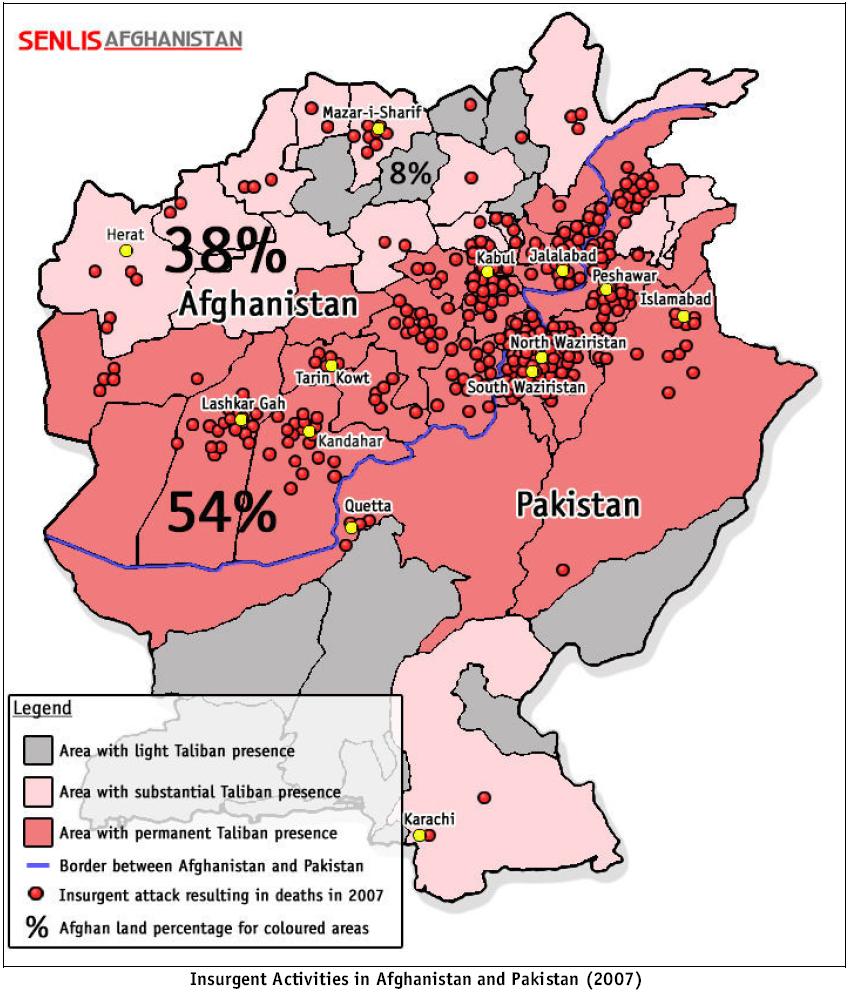
The story states, “More than 6,000 American, Afghan and British troops came in fast early on Saturday, overwhelming most immediate resistance. But as the troops began to fan out on searches, fighting with Taliban insurgents grew in frequency and intensity across a wide area.”
Two paragraphs later the article notes that an American and British soldier were killed in this attack and that “Three American soldiers were killed and seven wounded when they were attacked by a suicide bomber on a motorcycle during a foot patrol in neighboring Kandahar Province.” The death of US troops is mentioned early on and the Press even used their deaths as the sub-heading for the story, which read as, “Two soldiers killed amid light resistance in Taliban stronghold.”
The NYT article continues by stating, “NATO officials said that no civilian casualties had been reported. In the chaos, the claim was impossible to verify.”
This is an interesting, since Reuters news service reported yesterday that 12 Afghan civilians were killed in the US/NATO attack in Helmand, Afghanistan. The article states that US/NATO forces told Afghan residents of Helmand to stay in their homes and not leave the area, which is when “NATO rockets killed 12 Afghan civilians on Sunday, missing Taliban militants attacking NATO and Afghan troops as they press ahead with a major offensive that must win over the local population to succeed.” Of the 12 civilians killed, several of them were a family.

US military commander, Gen. Stanley McCrystal said, “It’s regrettable that in the course of our joint efforts, innocent lives were lost. We extend our heartfelt sympathies and will ensure we do all we can to avoid future incidents.” The Reuters story also states that Afghani President Hamid Karzai is calling for an investigation of the deaths.
So how is it that the New York Times missed reporting that a dozen Afghan civilians were killed in this US/NATO offensive? In today’s New York Times, they do report that Afghan civilians were killed, but they list the number as 9 and said Afghan insurgents had forced the civilians to give them refuge. While the Times acknowledged there were civilian deaths, the tone seems to be different than when US soldiers are killed, as we noted from a study of news coverage from the summer of 2009.
The reporting of civilian deaths may increase in the coming weeks and months and the US/NATO offensive is just beginning. We will continue to monitor the coverage and see if civilian deaths are reported on.
Food Justice Potluck 2/20

This Saturday, the Bloom Collective will host one of its monthly potlucks on the theme of Food Justice. Members of the Grand Rapids-based group Our Kitchen Table will lead a discussion on food justice issues, particularly how it relates to West Michigan.
The Potluck is open to anyone and begins at 3pm in the Bloom Collective space at 1134 Wealthy. Bloom Collective members will have vegan and vegetarian options. There will also be books, zines and documentaries available for people wanting to explore more around the topic of food justice.

Food Justice Potluck
Saturday, February 20
3pm
1134 Wealthy
The 2010 Winter Olympic Tragedy
In the past 24 hours the news coverage of the opening ceremony of the 2010 Winter Olympics In Vancouver, Canada has included the tragic death of one of the athletes. While the death of this athlete is tragic, the greater tragedy is what has happened to the people and the city of Vancouver.

Left sportswriter Dave Zirin has noted in several of his weekly columns in the past year that any city, which has hosted an Olympics in the past 30-years has incurred a massive debt. The 2010 Winter Olympics has been no different, with Vancouver Sun reporting a year ago that an estimated $6 billion dollars had already been spent in preparation for the 2010 Winter Olympics. Some estimates put the total between 10-15 billion and still rising.
The incredible cost of these Olympics begs the question – who is paying the bill? According to the 2010 Olympic Watch Committee the city of Vancouver and Canadian taxpayers are picking up the tab. But the monetary costs of the 2010 Olympics are not the only costs.
The group no2010 reports that the construction of roads, ski resorts and other Olympic facilities is causing a tremendous amount of deforestation, soil erosion and providing the British Colombian government greater access to Native land. The Canadian government never signed formal agreements with Native communities in the Northwest part of Canada and now Native people fear that the Olympics provides a cover for more government and corporate intrusion into their traditional lands.

Local News Coverage
As would be expected, the local news coverage of the 2010 Olympics is nothing short of adulation. The Grand Rapids Press front page for February 12 is devoted to the opening of the Winter Olympics with the headline, It’s A Five-Ring Circus. MLive.com has a 2010 Olympics features section and WOOD TV 8 has major online coverage to add to their broadcast coverage, which is not surprising since NBC is the US network host of the 2010 Olympics.
The only critical murmur about the Olympics in local news was a very brief online posting by Press writer Troy Reimink, which raises the cost of the Olympic games question, but ultimately dismisses this criticism in light of the greatness of the US athletes.
This dismissal is in contrast to the Indy media coverage of the opening ceremonies, which included 2,000 protestors being confronted by police. Democracy Now! also reported the protests and a people’s summit that took place in contrast to the pomp and circumstance of the opening ceremony.
The no2010 committee put out this excellent video that provides some historical context to Olympic resistance and what people have been doing in preparation of the 2010 Winter Olympics.
A call for zines, art and film from Think Outside the Bomb
A national organization called Think Outside the Bomb (TOTB) is organizing a national tour around the US beginning in April. TOTB, an anti-nuclear youth network, is inviting people to submit zines, artwork or film that will be used during their national tour.

The TOTB tour will include a traveling art exhibit that will show two things: (1) the horrors of nuclear weapons and energy systems, and (2) active resistance to nuclear weapons and energy systems.
The national anti-nuclear youth network is also wants to hear from you and your community about the anti-oppression struggles you are engaged in, whether they be against nuclearism, militarism & war, patriarchy, racism, capitalism, etc.
Their promotional material states, “This summer we are going on a three-month, 40-city tour of the USA, where we will distribute a tour zine. This zine will feature submitted poetry, essays, photos, action and campaign information, and a tour CD containing spoken word, spoken essays, and music.”
For anyone wanting to submit art, zines, spoken word or film for the TOTB 2010 Tour, the submission deadline is March 15. You can send you submissions via e-mail to thinkoutsidethebombtour@gmail.com. Hard copies of original artwork can be sent to: TOTB 1925 Five Points Road SW, Albuquerque, NM 87105.
The tour is scheduled to come to Grand Rapids on May 18. We will post more information about the TOTB visit to Grand Rapids once we have more details, but if you want to participate in organizing the GR part of the tour contact Kyla Sisson sissokyl@aquinas.edu.
What we can learn from the Press about Vern Ehlers
For the past two days the local news media has been running stories about the decision of Representative Vern Ehlers to decline another run at the 3rd Congressional District seat.

On Thursday, the Grand Rapids Press continued this coverage with three additional articles, one on who might declare candidacy for the 3rd Congressional District and two that wax fondly about the soon to be retired Congressman.
The first piece was an opinion piece by editorial writer Jeff Cranson, with the headline “We can learn from Vern.” The story reads as a sort of farewell piece where Congressman Ehlers says, “In the old days, they (congressional representatives) played golf together, they had dinner at each other’s houses. That adds a lot to the civility. That just doesn’t happen, anymore.” I’m not sure what the point of this statement is, but does it mean that when members of Congress played golf together they treated each other with more respect?
The rest of the opinion piece reflects on Ehlers refusal to seek the spotlight, his love of science and his willingness to speak with the media.
The second piece from Press reporter Jim Harger, in many ways reads like the piece from Jeff Cranson. The story reflects on Ehlers sense of civility, but it also talks about how Ehlers felt proud to be compared to former President Gerald Ford. “Probably the greatest honor I’ve had is when people tell me I resemble Jerry Ford.”
It seems a bit premature to be waxing eloquently about Congressman Ehlers, especially since he has 10 more months to serve in Congress. You would think that the Press would wait til then to shower praises on the former Calvin College professor.
All of this positive coverage of Ehlers seems to conflict with a fundamental tenet of journalism, which is to be a watchdog of political power. Ehlers has a voting record and should be held accountable to that record.
In the stories that have run in the past few days the only concrete comments about Ehlers voting record was to say that Ehlers was an environmentalist. According to the League of Conservation Voters Ehlers only scored a 69% when voting on environmental issues in 2008, compared to the 100% score that Senators Stabenow and Levin scored.
This is the kind of information that the Press should be sharing with its readers, information that is based on Ehlers track record as a representative for the 3rd District, not his love of science and what he thinks about civility.
The Press could be sharing with its readers a regular summary of Ehlers voting record by using the resources at Project Vote Smart, which has an archive of Ehlers’ voting record. The only daily newspaper in the 3rd Congressional District could also provide the area voters with information on who has provided money to Ehlers over the years and how that has influenced his voting decisions. This is the kind of journalism Grand Rapids needs, not stories praising public servants because they take calls from the media on Saturday mornings.
Bloom Movie Nite – The Black Panthers – What We Want, What We Believe

The Bloom Collective is hosting a screening of several short archival films that deal with the philosophy and practices of the Black Panther Party for Self Defense. What We Want, What We Believe is a 4-DVD collection that looks at the Black Panthers. The Bloom Collective will be showing 3 archival newsreels entitled Off the Pig, Mayday, and Repression.
Following the 3 short films there will be discussion on the message and practices of the Black Panther Party for Self Defense and its relevance for today.
Where: Bloom Collective 1134 Wealthy
Friday, February 12 7PM
$3 suggested donation
Here is a clip from the newsreel film called MayDay:


