Yesterday, Grand Rapids Mayor George Heartwell was in Houston, Texas to receive the 2010 Siemens Sustainable Community Award for most sustainable city in the country for midsized cities.

The Grand Rapids Chamber of Commerce President Jeanne Englehart and Amway Corporation Sustainability Program Manager Eric Van Dellen, according to the Grand Rapids Press, joined Heartwell in receiving the award.
The brief Press article doesn’t provide any context or explanation for why Grand Rapids was chosen and the Press reporter doesn’t ask any questions about the significance of the award and what it means in terms of what the city has actually done to promote sustainability. However, there are several questions that could be asked and numerous observations to be made about what such an award actually means.
First, we should consider the source of the award. The US Chamber of Commerce and the Siemens Corporation are bestowing this sustainability award. Siemens is a global corporation that operates in the areas of “Information and Communications, Automation and Control, Power, Transportation, Medical, and Lighting.” According to Source Watch, the company has engaged in questionable labor practices in China, practices that even break Chinese labor laws.
The US Chamber of Commerce is also rife with contradictions, when comparing their politics to that of sustainable policies. First, the Chamber is dominated by oil, pharmaceutical, automobile and other major polluting industries. Second, the Chamber has aggressively opposed climate change legislation in the US, even though the proposed legislation has been very weak.
Third, the Chamber has opposed virtually all pro-worker initiatives in recent decades, most recently the Employee Free Choice Act. Lastly, it is worth noting that the US Chamber of Commerce has spent more money lobbying Congress than any other entity since 1998, spending over $638 million to influence policy. Receiving a sustainability award from these corporate entities is like receiving a peace award from the Pentagon.
A second question that should be asked by any competent journalist is what criterion did the Chamber/Siemens award committee use to determine which cities won? According to the 2010 Siemens Sustainable Community Awards website, “A sustainable community has committed to setting and achieving complementary economic, environmental, and social goals that will help build long-term competitiveness and success.” This statement is rather vague and could be interpreted in any number of ways.

The Chamber/Siemens award site does have a summary document on what they identify as sustainability in Grand Rapids. “The City of Grand Rapids’ Sustainability Plan is a commitment to sustainable development, such as the construction of LEED-certified buildings, innovative uses of energy, renewable energy development, promotion of public transportation, waste elimination, resource conservation, job creation, increased education attainment, and pedestrian and bicycle access.”
Not surprising the document includes as the first item is the City’s construction of LEED-certified buildings. While there is something positive to be said about more energy efficient buildings it does not take into account where the resources for the buildings come from, the pollution generated during construction and most importantly what happens inside those buildings. If what happens inside is inherently unsustainable, then any positive gains made from energy conservation are negated by what the entity which occupies the building does.
It is true that the City has reduced its energy consumption and has increased the amount renewable energy production, but this statistic refers to the city owned buildings themselves and not the city as a whole, which is an important distinction. It would be interesting to see what the data is for energy use for the businesses, industries and residents of the city as a whole were.
The document also states that the award recognizes that the city promotes public transportation, pedestrian and bicycle access. The public transportation system is still grossly inadequate for a city the size of Grand Rapids, where the majority of people who live and work in the area still drive. Traffic congestion is a major problem as is the amount of land that is devoted to parking. There certainly has been an increase in people using bicycles in recent years, but for anyone who commutes by bike you know how dangerous it is to ride in Grand Rapids, a city with virtually no bike lanes.
Such an award is also questionable considering that the city is unable to balance its own budget, cutting basic services and home to a growing underclass living in poverty.
Much more could be said about the actually sustainable practices within the City of Grand Rapids, but the Grand Rapids Press nor anyone else should not just accept on face value such an award, in part because it is given out by entities which do not practice sustainability themselves and because the city if far from being truly sustainable.
US Supreme Court Nominee Kagan has Troubling Record
(This article by Marjorie Cohn is re-posted from Common Dreams.)

After President Obama nominated Elena Kagan for the Supreme Court, he made a statement that implied she would follow in the footsteps of Justice Thurgood Marshall, the civil rights giant and first black Supreme Court justice. Kagan served as a law clerk for Marshall shortly after she graduated from Harvard Law School. Specifically, Obama said that Marshall’s “understanding of law, not as an intellectual exercise or words on a page, but as it affects the lives of ordinary people, has animated every step of Elena’s career.” Unfortunately, history does not support Obama’s optimism that Kagan is a disciple of Marshall.
Kagan demonstrated while working as his law clerk that she disagreed with Marshall’s jurisprudence. In 1988, the Supreme Court decided Kadrmas v. Dickinson Public Schools, a case about whether a school district could make a poor family pay for busing their child to the closest school, which was 16 miles away. The 5-justice majority held that the busing fee did not violate the Fourteenth Amendment’s Equal Protection Clause. They rejected the proposition that education is a fundamental right which would subject the statute on which the school district relied to ‘strict scrutiny.’ The Court also declined to review the statute with ‘heightened scrutiny’ even though it had different effects on the wealthy and the poor. Instead, the majority found a ‘rational basis’ for the statute, that is, allocating limited governmental resources.
Marshall asked clerk Kagan to craft the first draft of a strong dissent in that case. But Kagan had a difficult time complying with Marshall’s wishes and he returned several drafts to her for, in Kagan’s words, “failing to express in a properly pungent tone – his understanding of the case.” Ultimately, Marshall’s dissent said, “The intent of our Fourteenth Amendment was to abolish caste legislation.” He relied on Plyler v. Doe, in which the Court had upheld the right of the children of undocumented immigrants to receive free public education in the State of Texas. “As I have stated on prior occasions,” Marshall wrote, “proper analysis of equal protection claims depends less on choosing the formal label under which the claim should be reviewed than upon identifying and carefully analyzing the real interests at stake.” Kagan later complained that Marshall “allowed his personal experiences, and the knowledge of suffering and deprivation gained from those experiences to guide him.”
Kagan evidently rejects these humanistic factors that guided Marshall’s decision making and would follow a more traditional approach. This is a matter of concern for progressives, who worry about how the Supreme Court will deal with issues like a woman’s right to choose, same sex marriage, “don’t ask, don’t tell,” and the right of corporations to donate money to political campaigns without restraint. While Kagan has remained silent on many controversial issues, she has announced her belief that the Constitution provides no right to same-sex marriage. If the issue of marriage equality comes before the Court, Justice Kagan would almost certainly rule that denying same sex couples the right to marry does not violate equal protection.
There are other indications that should give progressives pause as well. During her solicitor general confirmation hearing, Kagan said, “The Constitution generally imposes limitations on government rather than establishes affirmative rights and thus has what might be thought of as a libertarian slant. I fully accept this traditional understanding…” But the Constitution is full of affirmative rights – the right to a jury trial, the right to counsel, the right to assemble and petition the government, etc. Does Kagan not understand that decisions made by the Supreme Court give life and meaning to these fundamental rights? Is she willing to interpret those provisions in a way that will preserve individual liberties?
While Kagan generally thinks the Constitution serves to limit governmental power, she nevertheless buys into the Republican theory that the Executive Branch should be enhanced. In one of her few law review articles, Kagan advocated expansive executive power consistent with a formulation from the Reagan administration. This is reminiscent of the ‘unitary executive’ theory that George W. Bush used to justify grabbing unbridled executive power in his ‘war on terror.’
As solicitor general, Kagan asserted in a brief that the ‘state secrets privilege’ is grounded in the Constitution. The Obama White House, like the Bush administration, is asserting this privilege to prevent people who the CIA sent to other countries to be tortured and people challenging Bush’s secret spying program from litigating their cases in court.
During her forthcoming confirmation hearing, senators should press Kagan to define her judicial philosophy. Several of the radical right-wingers on the Court define themselves as ‘originalists’, claiming to interpret the Constitution consistent with the intent of the founding fathers.
I would like to hear Kagan say that her judicial philosophy is that human rights are more sacred than property interests. I would hope she would declare that her judicial philosophy favors the right to self-determination – of other countries to control their destinies, of women to control their bodies, and of all people to choose whom they wish to marry.
Kagan is likely to be circumspect about her views. She will frequently decline to answer, protesting that issues may come before the Court. We should be wary about how Justice Kagan will rule when they do.
Calvin Students Rally for Immigrant Rights

Yesterday, about 150 people gathered outside on the campus of Calvin College to publicly proclaim their support for immigrant rights. Students and community members also came together to denounce the recent anti-immigration law in Arizona and the similarly proposed legislation here in Michigan.
The event had a religious overtone, which included songs, a liturgy and prayer, but the students were clear about how their faith instructs them to “welcome the alien in a foreign land.” The belief that everyone should be welcomed and treated with dignity was demonstrated by having the entire rally translated into Spanish.
The rally also included several speakers that addressed issues of racial profiling, immigrant rights, and educational opportunities for children of immigrants. The first speaker was Professor Dan Miller who discussed the history of immigration policy in the US. He also made it clear that the current immigration policies do not work and he invite the crowd to support comprehensive immigration reform.
Professor Miller was followed by an African American man who told his very personal story about the difficulty he has had with getting the proper paperwork for his Mexican wife, who was born in the US. He said that the level of bureaucracy was very frustrating and it made him realize how difficult it is for people to want to be legal residents/citizens of the US.

The audience then heard from a young Latina woman who spoke about her desires to go to college. She told the crowd that she can’t be accepted by any college or university because her parents came to the US papers. She talked about how she is now part of a larger struggle to fight for her right to get a college education and what is happening at a national level to pass what is called The Dream Act.
Another Latino addressed the crowd and told his story about wanting the best for himself and his family. He talked about how hard he has worked and the roadblocks he has faced along the way, but that it is important for all of us to stick together and build solidarity, especially if we want equality for everyone.
The rally organizers invited people to sign letters to elected officials and to be involved in ongoing efforts to push for immigrant rights. The Michigan Organizing Project (MOP) will be taking busloads of people to Kalamazoo next month to pressure President Obama on comprehensive immigration reform while he is giving a commencement address.
We also had a chance to briefly interview one of the event organizers on camera.
(This article by Jeremy Scahill is re-posted from The Nation.)
During his White House press conference Wednesday with Afghan President Hamid Karzai, President Obama addressed the issue of civilian deaths caused by US operations in Afghanistan. “I take no pleasure in hearing a report that a civilian has been killed,” said Obama. “That’s not why I ran for president, that’s not why I’m Commander in Chief.”

“Let me be very clear about what I told President Karazi: When there is a civilian casualty, that is not just a political problem for me. I am ultimately accountable, just as Gen. McChrystal is accountable, for somebody who is not on the battlefield who got killed,” said Obama.
That statement is quite remarkable for a number of reasons, not the least of which is that it is not true. How are President Obama or Gen. McChrystal accountable? Afghans have little, if any, recourse for civilian deaths. They cannot press their case in international courts because the US doesn’t recognize an International Criminal Court with jurisdiction over US forces, Afghan courts have not and will not be given jurisdiction and Attorney General Eric Holder has made clear that the Justice Department will not permit cases against US military officials brought by foreign victims to proceed in US courts to go forward. So, what does it mean to be accountable for civilian deaths? Public apology? Press conferences? A handful of courts martial?
Obama praised US forces for their restraint in Afghanistan, saying, “Because of Gen McChrystal’s direction, often times they’re holding fire, they’re hesitating, they’re being cautious about how they operate even though it would be safer for them to go ahead and take these locations out.”
But how does that square with recent, heinous instances of civilian killings in Afghanistan? In February, for example, US special forces shot and killed five people, including three women who collectively had 16 children. The US military tried to cover it up and blame it on the Taliban, saying coalition forces “found the bodies of three women who had been tied up, gagged and killed.” The New York Times reported that military officials had “suggested that the women had all been stabbed to death or had died by other means before the raid, implying that their own relatives may have killed them.”
Later, General McChrystal’s command admitted US-led forces had done the killing, saying it was an accident. This was hard to square with reports that soldiers may have dug bullets out of the dead bodies to try to cover it up. The head of the Joint Special Operations Command, Vice Admiral William McRaven, eventually apologized to the family of the dead Afghans and offered them two sheep as a condolence gift. Was this accountability?
Or, what about the incident last May when US warplanes bombed civilian houses in Farah province killing more than 100 people? The dead, according to the Red Cross, included an “Afghan Red Crescent volunteer and 13 members of his family who had been sheltering from fighting in a house that was bombed” in the air strike. US Military sources floated the story to NBC and other outlets that Taliban fighters used grenades to kill three families to “stage” a massacre and then blame it on the US.
“War is tough and difficult and mistakes are gonna be made,” President Obama said today. Part of the problem, though, is that when “mistakes” happen and civilians are killed, attempts are made to cover them up or to blame them on the Taliban.
Local T-shirt design fights Arizona racism

Local musician Jonathan Barrera Mikulich recently found out about a t-shirt design contest for people wanting to respond to the decision by Arizona to pass a racist, anti-immigration law.
His t-shirt design was accepted and are now being sold online. Once he found out he had won Barrera Mikulich and that he would get a percentage of the money from the shirt, he announced that he would donate the money to a local organization that promotes Mexican cultural heritage, the Mexican Heritage Association (MHA). The MHA operates in West Michigan and hosts cultural events like the Mexican Festival in September in downtown Grand Rapids.
Today, CNN Money and Fortune Magazine posted an article entitled, “A Michigan Success Story,” which features Grand Rapids. The article juxtaposes the struggling city of Detroit with Grand Rapids, a city they say is reinventing itself.

The article states that there is a tremendous amount of development happening in downtown Grand Rapids, “not the kind of view you expect these days in downtrodden Michigan.” The story mentions the arena, the convention center, the entertainment district and the “crown jewel” – the medical mile.
The writer of the article says that the reason for the change in Grand Rapids is the corporate, philanthropic and political leadership in this community. This is an expected conclusion coming from a magazine devoted to unbridled capitalism. The rest of the article is a recounting of this revitalization from the perspective of the local capitalist class.
Those sourced in the article is a Who’s Who of local wealth and political influence. Birgit Klohs from The Right Place is cited first, followed by former bank executive and Van Andel confidant John Canepa. From there on the list of those mentioned are David Van Andel, Dick DeVos, and David Frey, the founders of Grand Action.
Grand Action is the organization in which DeVos and company use to push their own development projects with public & private dollars, but generally portrayed as providing leadership that benefits the whole community. Other local business leaders are mentioned as well, such as Fred Meijer, Pete Seechia, Bill Gillette and Bob Pew.
The result of all this corporate good will is that Grand Rapids is a success with a “more stable economy.” However, the article does mention at the very end that there are still problems. “Unemployment is still high. Michigan’s manufacturing decline, which has emptied thousands of square feet of factory space in the city, has disproportionately hit minorities.” Once they got that obligatory statement out of the way the writer went right back to gloating over the success of Grand Rapids.
The folks at Fortune/CNN Money failed to mention the high levels of poverty. In fact, the Brookings Institute found that 24.7% of the population in Grand Rapids is living in poverty, one of the highest percentages for cities in the US. The article also failed to mention that the City of Grand Rapids is in the midst of one of a major budget crisis, where taxes were just raised and now the city will consider charging people a fee for street lights use.
The reason why this information was not included in the story is simple – they didn’t talk to working class people, the unemployed and the underemployed. Had the Fortune writer bothered to walk just south of downtown Grand Rapids you see a different picture and its residents would tell you that they are dealing with absentee landlords, home foreclosure and limited access to good food, health care and education.
There is no doubt that there is a great deal of development happening in Grand Rapids, but the important question to ask is who are the beneficiaries of this development? So when Fortune/CNN Money says Grand Rapids is a success story, they should add the qualifying point……for some.
Michigan Attorney General Mike Cox unveiled a new political ad today in his quest to win voters as the Republican candidate for Governor. The Cox ad begins by going after another GOP gubernatorial candidate Pete Hoekstra.
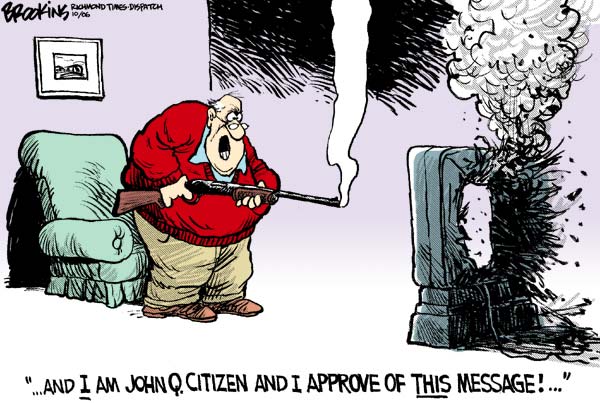
The ad uses the metaphor of building a bridge for the future of the state, a bridge that looks much like the Mackinac. However, Cox quickly turns his attention on two votes that 2nd Congressional Representative Pete Hoekstra has made in recent years.
The first is a vote to support funding for a bridge in Alaska, which was later amended to be a bridge damaged in New Orleans due to Hurricane Katrina. The legislation was dubbed “Bridge to Nowhere,” but viewers of the Cox ad would be hard-pressed to know this.
The ad then goes after Hoekstra’s decision to vote for the $850 billion Wall Street Bailout and adds that Hoekstra voted to add “$1 Trillion dollars for new spending.” The ad’s narrator then states, “Congressman Hoekstra is making big government bigger.”
The political ad then transitions to a few positive notes about Cox, such as his fight against the national health care legislation, Governor Granholm and Blue Cross & Blue Shield. The spot ends by saying that Mike Cox is “tough enough to lead Michigan.”
Political Theater vs Informing Voters
The Grand Rapids Press today has a piece by Lansing-based reporter Peter Luke that looks at the Cox ad. Unfortunately, the Press article does little to critique the Cox ad or verify the claims made in it. Instead, the reporter chooses to get a response from Hoekstra’s campaign manager about the claims made against Hoekstra.
Hoekstra did vote for the Wall Street Bailout and his campaign manager doesn’t deny it, but responds by saying that if the bailout was not approved, “GM, Chrysler and our supply base would not be here today.” The Press reporter doesn’t question the response, because to investigate such a comment would detract from the political theater he wants to encourage. Luke adds to this theater by including more comments from Hoekstra’s campaign manager, which distracts voters from the issues.
The Press article then says that the Hoekstra campaign is claiming that the “Cox campaign is coordinating efforts with a group called Americans for Job Security, which apparently purchased $134,000 worth of ads in the Grand Rapids media market echoing similar anti-Hoekstra themes.” This is an interesting observation, but the Press doesn’t bother to tell us who the Americans for Job Security (AJS) are. According to Source Watch, AJS is a front group for the US Chamber of Commerce and an active opponent of the Employee Free Choice Act.
The remainder of the Press article is devoted to recent polling from the Rasmussen Reports, as well as “conflicts” between the two Democratic challengers Virg Bernero and Andy Dillon.
The Press would serve its readers better by investigating the claims of the candidates instead of posting stories about mud-slinging between candidates.
(This article is a re-posting from Common Dreams.)

In the midst of what appears to be the worst offshore oil disaster in American history, U.S. Senators John Kerry (D-Mass.) and Joseph Lieberman (I-Conn.) will today put forth a draft climate bill that will not solve the problems of global warming and continues pandering to the fossil fuel industry — including expanded offshore oil drilling — that created the problems in the first place.
The proposal, leaked one day before its official release, reflects months of back-room negotiations between the senators, major polluters, and other Washington insiders, and would:
- provide only a fraction of the greenhouse gas pollution reductions scientists have said are necessary to avoid catastrophic climate disruption
- ban successful Clean Air Act programs from reducing greenhouse pollution
- ban existing state and local efforts to tackle climate change
- catalyze increased oil and gas drilling — including offshore drilling
- subsidize dangerous and costly nuclear energy
In response, Center for Biological Diversity Executive Director Kierán Suckling urged rejection of the proposal unless these problems are addressed. He issued the following statement:
“The climate proposal put forth today by Senators Kerry and Lieberman represents a disaster for our climate and planet. This proposal moves us one baby step forward and at least three giant steps back in any rational effort to address the climate crisis.”
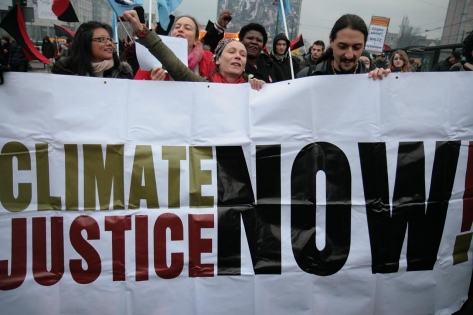
“The senators’ proposal would entrench our addiction to fossil fuels by offering incentives for increased oil and gas drilling just days after what appears to be the worst offshore oil disaster in American history. Large domes, small domes, golf balls, garbage, chemical dispersants, fire — none have succeeded in stopping the enormous flow of oil into the Gulf of Mexico. Clearly, there are no ‘safeguards’ Senators Lieberman and Kerry could put into this bill to make offshore oil safe.”
“This proposal echoes greenhouse pollution reduction targets that scientists recently called ‘paltry’ and inadequate to prevent the worst impacts of climate change. Scientists have determined that reducing carbon pollution to 350 parts per million is necessary to preserve life as we know it. 350 ppm must be the bottom line for all climate and energy policies. The senators’ weak targets will not reduce carbon pollution to below 350 ppm from its current level of 391 ppm.”
“In his recent Earth Day proclamation, President Barack Obama specifically celebrated the gains of the Clean Air Act; nonetheless, this proposal appeases polluters by gutting the Act, which has protected the air we breathe for 40 years, reaping economic benefits more than 40 times its cost. The Clean Air Act already provides a mechanism to establish science-based pollution caps for greenhouse pollutants, yet the Kerry-Lieberman proposal would ban proven successful Clean Air Act programs from cutting greenhouse emissions.”
“The Kerry-Lieberman proposal is not the answer because it asks the wrong questions. A successful climate bill must build upon, and not roll back, our existing foundation of environmental protections, and it must achieve the greenhouse pollution reductions necessary to avert dangerous climate disruption.”
Media Bites – Burger King & Product Placement
In this week’s Media Bites we take a look at a new Burger King commercial that is a cross-promotional piece for the Hollywood film Iron Man 2. The commercial is just one facet of the fast food giant’s marketing campaign, which also features Iron Man 2 toys and games on their BK Kids Club website. It seems quite insidious to use superhero characters to sell unhealthy foods to kids.
Another Snyder for Governor ad with no substance

Gubernatorial candidate Rick Snyder will be in Grand Rapids this Thursday for a meet and greet at the Rosa Parks Circle (noon) in downtown Grand Rapids, as was announced in the Grand Rapids Press.
This announcement comes on the heels of the newest Snyder TV ad, which hit Michigan TV markets last week. The ad continues to promote Snyder as a “tough nerd” and features his daughter saying, “Dad’s a businessman, not a politician. He’s the only businessman running so he’s the only one that even knows what he’s doing.”
Such statements are the norm in campaign advertising, where claims are made with no evidence to back them up. There is essentially no hard information in the TV ad, just an appeal to voters that since Snyder is a businessman he can turn Michigan’s economy around.
Viewers of the ad are encouraged to read his plan online, where Snyder says he plans to re-invent Michigan’s economy. Snyder’s plan, called Michigan 3.0, would move the state into “an era of innovation that transforms our society into a vibrant force of entrepreneurs and innovators that can compete in the global economy.”
The only details that Snyder provides on how to re-invent Michigan’s economy is in his Top 10 Plan section. The number one item is to “create more and better jobs.” However, if one read this section there is only information on his history as a businessman, his ideas to reform the Michigan Economic Development Corporation and the need for regulatory reform.
Each of Snyder’s three talking points about the economy are based on a business-friendly model. However, he never provides any evidence that this will create more and better jobs. In fact, he never even defines what better jobs would look like.
It seems that Snyder is like many politicians, willing to spend thousands of dollars to convince the public that he is the better candidate without providing any concrete plan that would do what he claims he will do as the next governor.
 Grand Rapids Institute for Information Democracy