$33 Billion More for Afghan War
This video interview is with David Swanson, the founder of War is a Crime, and from the Real News Network.
2nd Congressional race ads and the GR Press
Yesterday the Grand Rapids Press posted an article that takes a look at a new political ad by 2nd Congressional candidate and political newcomer Jay Riemersma. The posting has the ad embedded, but provides little analysis of either the ad or Riemersma’s political platform.

The Press reporter begins by telling us that Riemersma’s ad has been running on the Fox News channel from Traverse City to Grand Rapids. However, the story then switches to reactions from Riemersma’s GOP opponents.
Candidate Bill Cooper points out that Riemersma has been using a fundraising consultant group, Base Connect, but the reporter never bothers to tell readers anything about this group. According to their website, Base Connect “is a creative agency for conservative candidates running at the national level. They boast a list of conservative candidates and organizations in their client list. Among the groups are Veterans for Victory, a pro-war/pro-defense PAC; the National Center for Policy Research, which got it’s start support Reagan’s policies in Afghanistan and Central America in the 1980s; and the Liberty Committee, which works to reduce the size of government.
The rest of the Press article on Riemersma has a reaction from another candidate for the 2nd Congressional seat, Bill Huizenga and a short excerpt from Riemersma’s ad. The Press reporter offers no analysis of the ad or information about Riemersma’s platform as a candidate.
In the ad Riemersma says he wants to be known for cutting taxes, being Pro-Life and for Conservative Values, stopping Washington from reckless spending and that he is pro-gun. Any with any ad it is hard to know what he means by cutting taxes. Does this mean he favors cutting taxes for working people, the rich or corporations? According to Riemersma’s website he is in favor of cutting corporate taxes.
On the matter of “reckless Washington spending” Riemersma offers no details on his website, so it is hard to know if he is against the Wall Street bailout or any other government program, because he never identifies the reckless spending. One area of reckless spending would not be the military budget, since Riemersma is pro-military. He quotes the great historian Ronald Reagan who says, “History teaches that wars begin when governments believe the price of aggression is cheap.” Interesting comment, especially since the Reagan administration supported numerous wars around the world with the largest military budget on the planet.
Unfortunately, this kind of analysis is not provided by the reporters at the GR Press. They believe that just having reaction from political opponents is sufficient and more interesting than actually providing solid information on candidates and their platforms.
Musician Elvis Costello cancels concert in Israel in support of Palestine Solidarity Campaign
(This article is a re-posting from the Palestine Solidarity Campaign.)
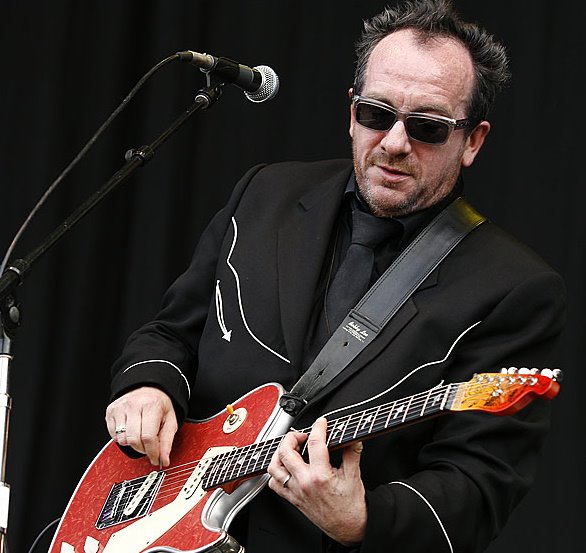
Elvis Costello has announced on his website that ‘after considerable contemplation that I have lately arrived at the decision that I must withdraw from the two performances scheduled in Israel on the 30th of June and the 1st of July.’
He continued: ‘there are occasions when merely having your name added to a concert schedule may be interpreted as a political act that resonates more than anything that might be sung and it may be assumed that one has no mind for the suffering of the innocent.’
Elvis Costello’s decision to cancel his concerts in Israel was taken just days after the announcement that Gil Scott-Heron was also cancelling his performance there.
Sarah Colborne, Director of Campaigns and Operations at Palestine Solidarity Campaign, said ‘we are increasingly seeing artists taking a stand against allowing themselves to be used by the Israeli state to normalize their occupation and apartheid policies against Palestinians.
Principled artists understood it was unacceptable to play under the Apartheid South African regime in Sun City. Principled artists and performers are holding firm to such principles in the 21st century, taking a clear stand for peace and justice, and not performing under a regime in Israel which is engaged in an illegal occupation and denies Palestinians their basic human rights.
We urged Elvis Costello to respect the Palestinian call for boycott, divestment and sanctions on Israel, and our members and supporters also deluged him expressing their concerns. We are very pleased that Elvis Costello has taken such a stand.’
Elvis Costello signed off his announcement ‘with the hope for peace and understanding’. Elvis Costello’s decision not to perform in Israel brings us closer to that peace, understanding and justice which is so desperately needed.
Media Bites – AT&T Front Group ad
This week’s Media Bites takes a look at a new ad campaign by the Front Group, Americans for Prosperity. The ad claims that the federal government wants to take over the Internet, but what they don’t tell you is that one of the largest Internet service providers – AT&T – is the entity that is funding the ad campaign.
Yesterday, the Grand Rapids Chamber of Commerce in conjunction with Crain’s Detroit Business hosted a forum at the downtown campus of GVSU on the importance of downsizing and consolidating local government.
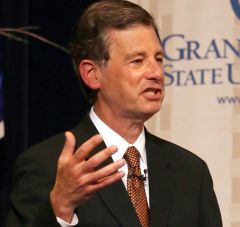
The event was titled “Better, Faster, Cheaper: The Business Case for Rebuilding Local Government,” and featured Stephen Goldsmith, a former Mayor of Indianapolis and in 2000 he was the chief domestic policy advisor to the George W. Bush campaign.
Goldsmith began his presentation by saying that government can’t solve complex horizontal problems with vertical solutions. This is an interesting observation, especially since he advocated for a more business/privatized approach for government. However, don’t corporations and private entities use a top down (vertical) approach to solving problems? At least with governments you have the capacity to vote people out of office, but you can’t vote for a change in corporations.
The keynote speaker went on to say that “government is being changed from direct service provider to generator of public value. We need government that does less and does more through third party entities.” Goldsmith was advocating for more public/private partnerships, but he also believes it is necessary to promote privatization of government services and more deregulation.
The speaker shared a few stories from when he was governor of Indianapolis that emphasized how to put his theories into practice. One story was about how a union representative for the city sanitation workers came to Goldsmith and said that they would freeze their wages and make concessions in work rules if the Mayor would agree to not privatize their jobs. Goldsmith agreed and the sanitation workers even came up with better ideas on how to function.
What Goldsmith didn’t say was that this is the situation that most unionized workers find themselves in, so one of the few options they have is take a pay cut or to give up some workplace power just in order to save their jobs. This tactic by unions is not terribly effective and does not always work, since businesses and governments will often choose to either move else where, or in the case of government/public entities – privatize public services.
As I listened to Goldsmith it reminded me of the same kind of language that neo-liberal international policy makers use when talking about ways to “improve” the economies of poorer nations. One of the main tools that these policy makers use are structural adjustment programs (SAPs), a policy advocated by the International Monetary Fund (IMF).
SAPs call for downsizing government, eliminating public services, the privatization of public services and better tax incentives for foreign investors. Although historically, these policy have been imposed on other countries they are now being promoted domestically. Naomi Klein, author of Shock Doctrine: The Rise of Disaster Capitalism, demonstrates how these same structural adjustment programs are being adopted in the US with the example of New Orleans after Hurricane Katrina.
However, Goldsmith’s presentation was exactly what the crowd wanted to hear and it fits nicely into the goals of the West Michigan Regional Policy Conference objectives – downsize government, privatize public services, more public/private partnerships, eliminate business taxes and make Michigan a “right to work state.”
The Press Acts as Stenographer
The only news agency that was present was Grand Rapids Press reporter Jim Harger. Harger recounts the comments from Goldsmith and others in attendance, but doesn’t question or verify the claims being made by any of the speakers. In many ways the Press article accepts the position that governments are resistant to change and are burdened by bureaucracy.
While there may be problems with local governments to not seek out dissenting perspectives or to verify the claims of the main speaker does a disservice to the public. Imagine if a conference organized by unions was held that was advocating greater restrictions on corporations. Do you think that the Press would have sought out the perspective of companies to “balance” such a story?
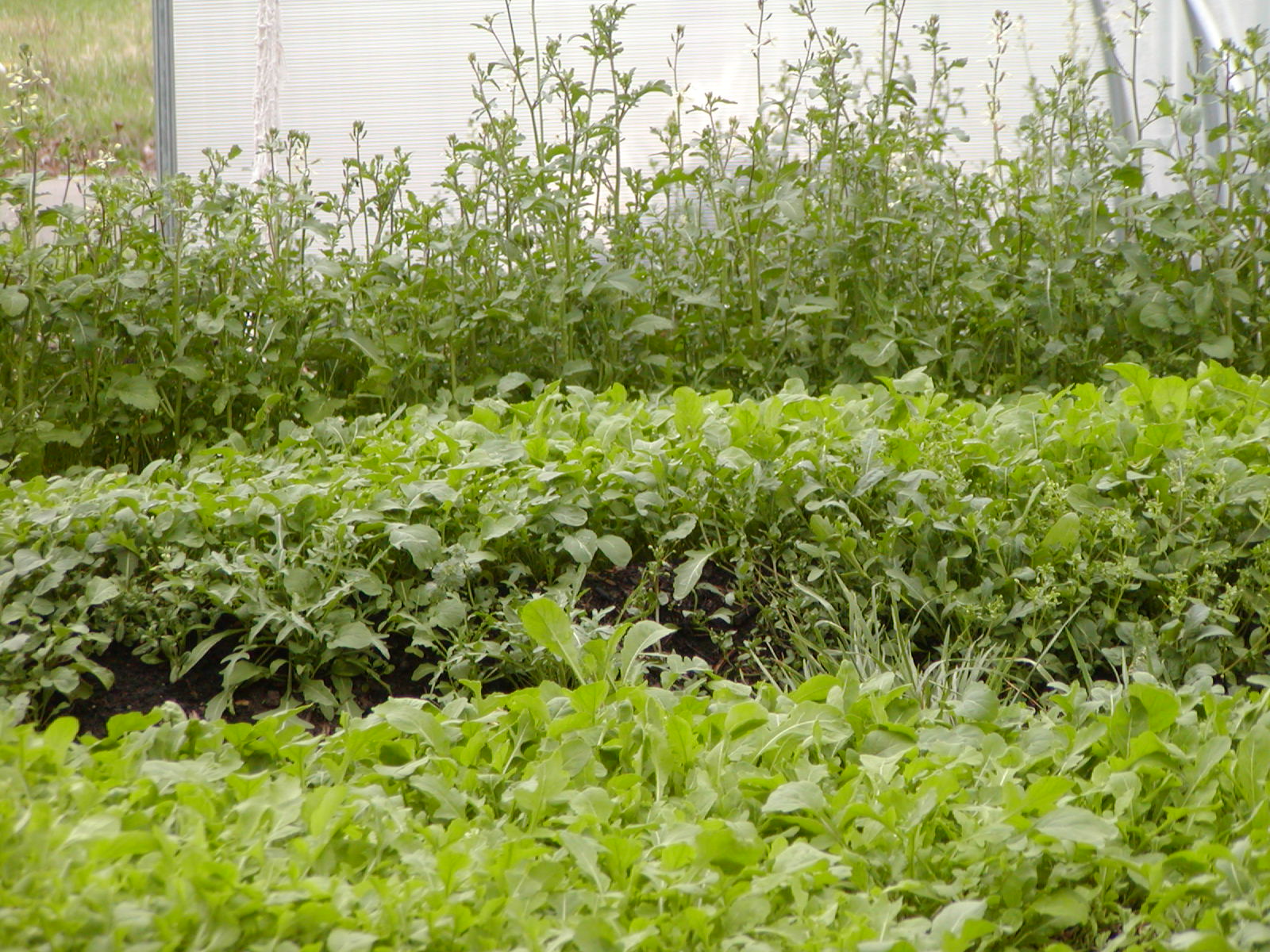
OKT members recently visited Brother Nature's urban garden, which grows on cleared abandoned residential lots in Detroit. The garden provides fresh produce to restaurants, farmers markets and, of course, neighbors, who are welcome to come pick whatever they need.
Steps to Growing Healthy Urban Gardens
6 – 9 p.m. Tues. May 25
SECA, 1408 Madison SE
Our Kitchen Table is a (OKT) launches its Food Diversity Project Series with free gardening workshop, “Steps to Growing Healthy Urban Food Gardens,” on Tuesday May 25 from 6 to 9 p.m. The workshop will be held at Southeast Community Association (SECA) 1408 Madison Ave. SE in Grand Rapids.
A non-profit, grassroots community activist organization, OKT works for environmental justice and food security in Grand Rapids area urban communities.
Clinton Boyd PhD., Senior Scientist with the Sustainable Research Group, will share how to pick a spot, collect soil samples for testing (at a laboratory or with a DIY kit) and other tips for successful urban food gardening. “This workshop is designed for new gardeners, container gardeners and any gardener’s looking for their “green thumb,” says Lisa Oliver-King of Our Kitchen Table.
During the workshops, participants can sign up to join OKT’s Food Buying Club, which places orders for with Country Life Natural Foods in Pullman, Michigan. They can also sign up to be part of OKT’s seed bank, where members share heirloom seeds gathered from their own gardens.
OKT will also collect used household batteries and CFL light bulbs for recycling, exchange mercury thermometers for free digital thermometers and sign people up for free recycle bins. “Dress for the weather and bring a water bottle,” King advises. “This is a hands-on workshop and you will be connecting with the soil.”
The workshop is free and open to children age 10 and over accompanied by their parents. OKT asks that those interested in attending preregister. For information and registration, contact Lisa O-K, lisask1@aol.com or 616-719-9779.
CMS Energy director faces removal campaign at Massey
(This article by Eartha Jane Melzer is re-posted from Michigan Messenger.)
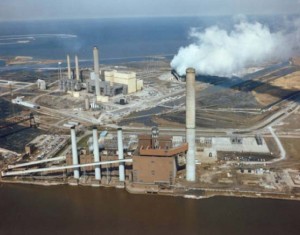
Shareholders of the Massey Energy Company are warning that safety oversight failures at the company have cost investors dearly and they are recommending that three directors who served on the board’s safety committee be removed during the company’s annual shareholders meeting next week.
One of the members they are campaigning against is Richard Gabrys, who is also on the board of directors of Jackson, Michigan-based CMS Energy.
A group of nine public institutions that collectively own $64 million in Massey stock point out that in the years leading up to the Upper Big Branch mine disaster, which killed 29 workers and sent stock prices plummeting, the federal Mine Safety and Health Administration issued “significant and substantial” violations on that mine at a rate that was 19 times the national average, yet Massey’s safety committee failed to take corrective action.
Those nine public investors are the California State Teachers’ Retirement System, Office of Connecticut State Treasurer, Illinois State Board of Investment, Maryland State Pension and Retirement System, New York State Common Retirement Fund, New York City Employees’ Retirement System, North Carolina Dept. of the State Treasurer, Oregon State Treasury, and the Pennsylvania Treasury.
Rather than take action on safety warning from regulators, the investors say, Massey’s safety committee “tried to deflect criticism of it’s safety problems by emphasizing less relevant measures such as “Non-Fatal Days Lost.”’
The groups note that Risk Metrics and Glass Lewis — major proxy advisors — have both recommended votes against Gabyrs and his colleagues Dan Moore and Baxter Phillips, Jr., all of whom are up for reelection, citing the company’s record of safety violations, the Board’s failure to adequately oversee management, and poor corporate governance practices.
“In evaluating a director’s qualifications, the best way to determine whether or not a director is truly representing shareholders is to look at what they are doing in their role in committee,” said Mike Garland of the CtW Investment group which manages funds for the institutions. “It is our view the Richard Gabrys has failed in this role and bears responsibility for all of those failures. He sat on the safety committee, and this is a company with an abysmal safety record.”
Massey has appointed Gabyrs to review the company’s safety related actions/failures and the related FBI investigation, even though he sat on the safety committee that was responsible for those actions. The CtW Investment group says that this is an obvious conflict and shows ongoing bad judgment by the board and Gabrys.
The fact that Gabrys also directs one of Michigan’s biggest energy companies has raised some concerns here.
CMS has it’s own history of problems with environmental violations, and in a March filing with the Securities and Exchange Commission the company acknowledged that these violations are a liability that could cost shareholders and/or ratepayers.
In the past few years EPA has issued numerous Notices of Violation for environmental problems at the company’s coal burning power plants in Jackson, Muskegon, West Olive and Essexville.
In March 2007 EPA cited the company for violating the Clean Air Act by releasing more than the legal amount of soot from 14 of the company’s boilers for a total of 37 days between 2004-2005.
It noted, “The purpose of this visible emission limit is to help protect the public from unhealthy exposures to particulate. Particulate emissions, especially fine particulate, contribute to respiratory problems, lung damage and premature deaths.”
In October 2008 EPA issued violations to the company for violating the Clean Air Act by carrying out 10 projects at the J.H. Campbell Plant in West Olive; the B.C. Cobb Plant in Muskegon; and the D.E. Karn and J.C. Weadock Plants in Essexville without regard for the law that required them to install technology to reduce emissions (NOx and/or SO2) which cause ozone formation and acid rain.
These violations remain unresolved. In a March filing with the Securities and Exchange Commission the company wrote,
“Consumers is engaged in discussions with EPA about all of these matters. Depending on the outcome of these discussions, the EPA could bring legal action against Consumers and/or Consumers could be required to install additional pollution control equipment at some or all of its coal-fueled electric generating plants, surrender emission allowances, engage in Supplemental Environmental Programs, and/or pay fines.”
Those fines could be so substantial, the filing said, that the company “would need to assess the viability of continuing operations at certain plants” and that it “cannot predict the financial impact or outcome of these matters.”
The environmental violations cited by EPA show that Consumers Energy has long operated its coal-fired power plans without installing the modern pollution controls that are required by law in order to protect human health, Shannon Fisk, attorney with the Natural Resources Defense Council, said via e-mail, “It is far beyond time for Consumers to retire or clean up its outdated coal plants and aggressively invest in energy efficiency and cleaner energy sources that will create jobs in Michigan and protect public health.”
David Holtz of Progress Michigan expressed concern that Richard Gabrys, given his history with Massey Energy, may not be prepared to help CMS comply with environmental laws.
“Massey’s history of safety violations and now the deaths of so many miners happened under Gabrys’ watch as member of the board’s safety committee. That raises serious questions about his qualifications and judgment as a director of CMS Energy,” Holtz said.
“Gabrys’ questionable track record at this giant coal company should have shareholders at CMS Energy asking if the continued presence of Gabrys on their board is in the interests of shareholders and ratepayers or if he’s just part of an gentleman’s club of wealthy coal barons whose real interest is promoting dirty, polluting coal over clean energy and the jobs it will bring for Michigan.”
Food Systems and Food Justice in West Michigan
On Saturday about 20 people spent the morning discussing food justice and food policy at a forum hosted by the Greater Grand Rapids Food Systems Council (GGRFSC). The intent of the 3-hour gathering was to share a summary of 5 separate “white papers” on different aspects of food justice & food policy and then see what direction people wanted to go in from there.
The first presenters were Christy Mello & Lisa Oliver King from Our Kitchen Table (OKT). OKT takes a food justice approach to food security. Food Justice is not so much an economic development issue, rather the emphasis is on changing the current system that makes food more accessible for people and makes food a right, not a commodity.
Their Food Diversity Project is a result of a grant that was obtained by the GGRFSC in 2008 with the intent of encouraging people to grow their food in the long-term and in a sustainable manner. Right now OKT has about 45 gardeners who are participating in the project, which includes growing food in an urban context, food sharing, canning, and seed saving. The OKT analysis advocates greater neighborhood self-reliance and urban bio-diversity.
Cynthia Price with GGRFSC presented next on the topic of urban agriculture. Her focus was on reintegrating agriculture for sustainable living through land use and municipal planning. “How important is it to have long term urban planning that incorporates urban agriculture?” Price asks. She also touched on another paper, which focused on local food and health, specifically the health benefits of eating locally. For instance, foods that are harvested and shipped long distance tend to lose some of their nutrient value.

Tom Cary, a local farmer and organizer with GGRFSC, spoke last and mostly focused on the economic impact of a local food system. The US is currently a net food importer, which is not a position the US can afford to maintain, according to Cary. The other part of the problem of being a food importer is that the food we import is under the control of large multi-national corporations, which means we have little say in the process of food production. However, Cary argues in his paper that we have some buying power through the choices we make in what we purchase.
Some of this effort to influence how food is produced and distributed is reflected in the increase of new farmers, CSAs (Community Supported Agriculture), farmers markets and local restaurants purchasing local produce. However, Tom said that this shift in food production and consumption still only represents about 5% of the food that people in the US consume.
Tom also mentions the disparity of what famers can earn based on the current model. In Allegan County the average farmer with 50 acres or more makes around $20,000 on average. A new farm of 4-6 acres for example, makes about $60,000 a year because the food production is more diverse and is focused on local distribution.
After hearing the presenters, everyone else in attendance introduced themselves and talked about their interests in food security, food justice and food policy. The group then decided to discuss all of the themes addressed in the white papers, instead of breaking into small groups having different discussions.
The group conversation centered around food systems with subcategories such as food justice, urban agriculture, locally grown food, the food economy and food policy & land use. The group also pointed out the importance of identifying the threats or obstacles to achieving a just food system.
Here is a partial list of all the other issues raised by the group that would are all part of the larger food systems theme: healthy food literacy, reclaiming the commons, countering the privatization of land, Government support of agribusiness, government subsidies, the lack of a government department of food, the global impact of food production on the local level, poverty, health of the soil, political power of agribusiness, the true cost of food, GMOs, diversifying local foods, affordability, hoop houses, the importance of a corporate power analysis, the need to treat people with dignity, culturally relevant food, media literacy with corporate food advertising, food co-ops, food charity organizations, urban fruit & nut trees, food waste, edible landscaping, the Farm Bill, transitional food systems, the amount of money being spent on the military industrial complex, adopting a Cuban urban ag model, and the importance of finding ways to support local small farmers who are committed to a local food system.
At the end of the morning the group decided that it would be good to have a follow up meeting soon for further discussion and to identify clear action steps to be taken at the local level. Someone also suggested that it would be good to attend the OKT Food Summit on June 10, since there would be discussion on what people are doing locally and what ways people could support each other’s work around food justice.
Send Capitalism on a Summer Vacation
Thinking about reducing your involvement with the capitalist system? Summer is the best time to get started. It’s easier to experiment with changes to your consumer life during the summer for these reasons:
Utility Escapism. Michigan has recently undergone some jarring and mostly hidden increases in utility costs, thanks to new legislation. The Michigan legislature quietly enacted a law that allows utility companies to request rate increases and then charge the increased amounts until the request is approved. If it’s turned down, the company can simply file another request and keep charging.
In addition, the state Public Service Commission gave Consumers Energy a $139.4 million rate increase—and then made headlines by knocking off a bargain $5 million from the total. Ready to stick it to these crooks? Vote with your feet; cut your utility bills down as low as you can.
It’s easy to turn off the heat in the summer, of course, but it’s also easy to reduce your electric costs. Michigan is on the far western edge of the Eastern Time Zone, a big energy advantage. Our summer evenings last until about 10PM at the height of the season. Don’t sit at home with the lights on and watch TV—take your dinner to the park. Sit on your porch and talk. Take a long walk.
Do you or a relative need air conditioning for health reasons? If so, you can still reduce those costs by about 3 percent for every degree you turn it up. Leave the AC off in the morning and only turn it on in the afternoons. And remember that leaving lights on just adds to the heat indoors.

Line drying of laundry saves another significant amount of electricity.
Fresh Food Perspectives. Even in the summer, when produce is plentiful, supermarkets charge premium prices for fruits and vegetables, especially if they are called “organic.” And not all of it is actually fresh. It’s a lot cheaper and better for you to buy produce locally at area farmer markets or to plant a garden.
If you can’t have your own garden, you can swap goods—home-baked bread, for example—with a friend who has too many tomatoes or zucchini. Plus, pick your own fruits and vegetables at area farms. If you eat eggs, meat, or dairy, summer is the perfect time to check out West Michigan’s organic resources of those products, such as Creswick Farms or Hilhof Dairy.
And since all this local, fresh food tastes great already, try raw preparations if you haven’t already. One dependable resource for raw recipes is Gone Raw. Nervous? Don’t be. A raw apple pie tastes as good, or better, than a baked one.
Alternative “Shopping.” Sometimes people get into the habit of hanging out at malls in the summer, and that always seems to lead to recreational shopping. But you’re not just buying stuff. You are buying into the huge markups of retail giants and chain stores. Because retailers know that, “sales” (which are usually scams where prices are just partially reduced from extra markups) are rarer in the summer.
But have you ever noticed how many things people throw away and give away in the summer? One summer I found all my porch furniture by cruising my neighborhood on trash days for wicker furniture that was being thrown out. Another time I found a solid oak Victorian dresser sitting next to a dumpster.
And for pennies on the dollar, garage sales will often yield pots and pans, a couple of new-to-you t-shirts, or other household and clothing items. Help your neighbors raise a little cash while you find what you need. Even more “cost-effective” are the Really Really Free Markets, held once a month in Grand Rapids. Bring items to give away and take away what you need—an excellent method of beating the capitalist system.
These places, plus events like art fairs (buy works directly from the people who make them), can also be venues for gifts to give friends. Holiday shopping, in particular, is one of the biggest cash cows for capitalists. In some stores items are re-ticketed every single day from Thanksgiving to Christmas, with a markup every day. If you shop local sources in the summer with gift-giving in mind, you’ll avoid putting your money in the hands of greedy big-box and department store merchants later in the year.

Free Entertainment. The multi-billion dollar movie industry counts on the fact that you must see the major summer blockbuster film the day it comes out—and pay top ticket prices. But why not wait until it’s available on a DVD from the local library? Meanwhile, there’s a lot going on that doesn’t cost anything at all. Summer in this area abounds with free outdoor concerts, free films, gallery openings and art festivals, plus neighborhood events like the Eastown’s Bizarre Bazaar.
You can go to the beach or to one of Grand Rapids’ six community pools (there’s a small charge for adults). There are festivals such as the Fiesta Mexicana on the plaza downtown. And you can check out unique free events like the Storytelling Bonfires, a night-time campfire group presenting music and stories once a month at Lamoreaux Park.
By the time fall arrives, chances are good you’ll be energized by your capitalist-lite summer experience. Use that energy to find even more ways to save, recycle, and trade. Break free from a system that guarantees you’ll always be on the losing end.
Public Citizen Urges Boycott of BP
(This article is a re-posting from Public Citizen.)
If you drive a car, boycott BP.
 That’s what Public Citizen is calling on the public to do in the wake of an April 20 explosion on a BP-leased rig that is causing 210,000 gallons of oil to gush into the Gulf of Mexico every day. Already, more than 5,000 people have signed to Take the Beyond BP Pledge at http://www.citizen.org/boycott-bp.
“Eleven oil workers are dead. One of the largest oil spills in U.S. history continues to worsen. Yet BP continues to doubletalk on its responsibility and its liability,” said Robert Weissman, Public Citizen’s president. “BP must pay. A consumer boycott will deliver that message and give people a way to act on their anger. We are urging people to send a clear message to BP that its shoddy oversight of this project and its history of environmental and worker safety violations is unforgivable.”
The pledge asks people to boycott BP gas for three months. Public Citizen has also launched a Facebook group, “1,000,000 Strong to Boycott BP.”
“BP made a conscious decision not to install a $500,000 safety device that could have prevented the Gulf disaster,” said Tyson Slocum, director of Public Citizen’s Energy Program. “A company that made $14 billion in profits in 2009 – a bad year – refused to spend a fraction of a percent of its profits to safeguard against what is fast becoming the worst oil spill of all time. The sheer greed at the expense of safety and the environment is mind-boggling.”
BP has one of the worst environmental and safety records of any oil company operating in the U.S. BP has pleaded guilty in just the last few years to two crimes and paid more than $730 million in fines, penalties and settlements for environmental crimes, willful disregard for workplace safety and energy market manipulation. (See http://publiccitizenenergy.org/2010/05/05/cost-of-doing-business-bps-550-million-in-fines-2-criminal-convictions/ for details.)
“There are other places to buy gas,” Weissman said. “While no oil company is a stellar corporate citizen, BP is a particularly bad and irresponsible actor. We want the company to feel the extent of the public’s wrath.”
Added Slocum, “the BP disaster highlights the need to stop offshore drilling expansion and end our national addition to oil. It also emphasizes how crucial it is to hold Big Oil accountable. The BP boycott is a way to start.”
 Grand Rapids Institute for Information Democracy