More protests planned for Lansing this week

As the Michigan Legislature and Governor Snyder continue to attack the public sector and organized labor the level of resistance keeps growing.
This week there will be crucial legislative decisions being made in the State House. On Tuesday, March 15 at 10:30am House Commerce Committee will hold a hearing on HB 4287. This bill prohibits the use of project labor agreements in any projects using state funds or tax breaks. This is another attack on out building trades!
Then on Wednesday, March 16 the House Education Committee will take up HB 4306, a bill that forces local school boards to privatize services. In response to these draconian pieces of legislation there are protests planned for both Tuesday and Wednesday of this week.
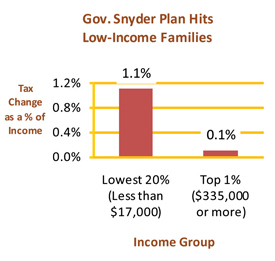
On Tuesday, March 15, the Michigan League for Human Services and AARP are holding a rally at the State Capitol from 11am – 1pm. The focus of this rally is to “let lawmakers know it is not OK to cut services and shift taxes from businesses to vulnerable families with children and seniors.”
On Wednesday, March 16, the Michigan AFL-CIO and other affiliate unions are holding a rally at the Lansing Capitol that will begin at noon. According to the AFL – CIO, they are gathering to “Protest the anti-worker legislation (over 40 pieces) such as Emergency Manager bills, ban on Project Labor Agreements, and cuts to education.”
Lastly, it should be noted that there is now an organized campaign to Recall Michigan Governor Rick Snyder. The effort to collect the 900,000 necessary signatures to recall Snyder cannot begin until July 1. The campaign is being done by a group with the website Fire Rick Snyder, which doesn’t provide any information on who is behind the campaign.
Governor Snyder Launches His Union-Busting Agenda
Remember last month, when newly minted Governor Rick Snyder said Michigan was not Wisconsin? He was responding to questions on whether he intended to support Wisconsin-style union-busting legislation here. “We are two very different states,” Snyder commented. “I believe we should go through the collective bargaining process in terms of our discussion as we ask for concessions,” he added, referring to his stated opinion that state employees were overpaid.
A lot of people settled back and bought that comment hook, line, and sinker. No attacks on unions here.
It’s March now. And a new bill, slipped into consideration and passed by the State Senate (and already pre-approved in a House version), says otherwise. Governor Snyder has already announced he will sign the final version.
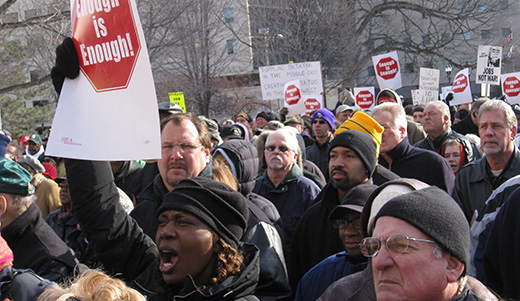
In the Senate, the vote on the bill was deadlocked before Snyder’s Lieutenant Governor, Brian Calley, cast his vote to break the tie. Protestors lining the visitors’ gallery called out “shame on you!” after several days of protests on the Capitol steps.
 The bill is a redo of the state’s emergency financial management bill and allows, like the original legislation, for the state to take over a school system, a city government, or other entity that is failing financially.
But the new beefed-up version lets the state then suspend or terminate any and all union contracts as a part of the takeover. All the governor has to do is target a particular public institution with unionized members as being “in financial emergency” and the union’s contracts can be eradicated and replaced with whatever terms the manager sees fit to provide.
Remember democracy? Kiss it goodbye. This new law would also allow the “emergency manager” assigned by the state to fire elected officials…seize and sell city or school assets…eliminate or privatize city or school services and programs. With no input from or vote by citizens. Its constitutionality has already been called into question.
The state can even use this bill to erase and redraw city boundaries or completely eliminate a school system if the manager wants to do so.
“This is a takeover by the right wing and it’s an assault on democracy like I’ve never seen,” stated Mark Gaffney, president of the Michigan State AFL-CIO.
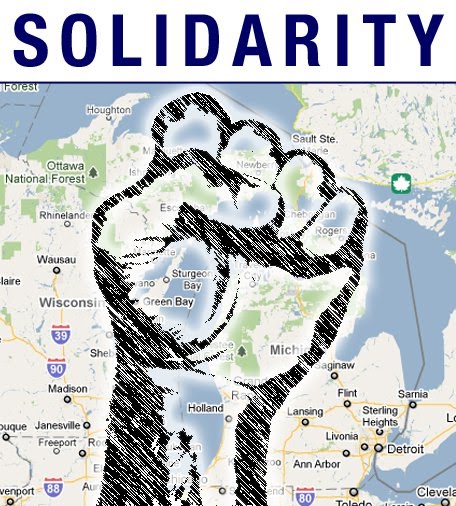 President of the Michigan Education Association Iris Salter said, during a protest against the new legislation, that the bill was “a way to say to labor ‘You don’t count.’ It’s a way to say to employees, ‘Get back.’ I believe it’s just like being in the slave days.”
Naomi Klein, author of The Shock Doctrine, called the bill “a corporate coup d’etat.” She pointed out that since the “manager” could be a contracted management firm, Michigan could soon be facing “the privatization of whole towns by fiat.”
Another issue, raised by Representative John Conyers, is that the first unions to be busted will be in towns and school systems where there are high numbers of minority residents. They have been hit the hardest in the state’s years-long financial downturn, and tax bases in these communities are plummeting.
And this is just the beginning of planned legislation to weaken unions and conduct class warfare in Michigan under Governor Snyder’s approving eye. Up next: a bill to repeal Michigan’s wage law and one that will terminate binding arbitration for police and firefighters.
PWA event will focus on threats to Women’s Rights

The Progressive Women’s Alliance (PWA) is hosting an event this Wednesday that will address the legislative threats to women’s rights. Their recent media release states:
“In one of the most blatant efforts to erode women’s right to choose, the House voted 240-185 on Feb. 18, 2011 to defund Planned Parenthood. While abortions remain legal, it is no secret that anti-choice legislators are working to chip away at access to the procedure.
This bill and this vote are the most recent attempt to take away women’s rights, and will, at the same time, hinder access for thousands of women across the nation who turn to Planned Parenthood to receive basic reproductive healthcare and family planning services. The passage of H.R.3 has the potential to limit STD testing, cervical cancer screenings and the availability of condoms for thousands who rely on the organization for these services. Many are calling this move not just an attack on choice, but also an attack on women’s healthcare.”

The PWA event is both a fundraiser and an opportunity for people to hear Sarah Scranton, the executive director of Planned Parenthood Advocates of Michigan.
Wednesday, March 16
5-5:30 pm social time
5:30-6:30 pm program and dialogue
Cost: Open to the public. Tickets are $15; $5 for students with valid ID
Women’s City Club, lower level, 254 East Fulton in Grand Rapids
Gut Check in Madison: Is Labor Ready to Fight for its Life?
(This article by Paul Street is re-posted from ZNet.)

Wisconsin Governor Scott Walker and his right Republican allies in the Wisconsin legislature might be a bunch of plutocratic, Koch-funded thugs but you’ve got to hand it to them – they’ve got guts. So what if the strategic departure of fourteen Democratic state senators from Wisconsin was followed by an historic popular and labor uprising in and around the Madison Capital Rotunda, bringing hundreds of thousands of union members and supporters from one day to the next to protest Walker’s move to “reverse half-a-century’s middle-class progress in the state by erasing collective bargaining rights for public employees” (the New York Times editors today [Friday, March 11]) in the disingenuous name of “budget repair”? So what if it is obvious to any serious observer that Walker and the Wisconsin Republicans’ effort to undermine public unions – a longstanding goal of the Republican Party and many of its big business backers (e.g. Koch Industries) – has nothing to do with fixing a state budget crisis that Walker has trumped up and fed with tax breaks for the wealthy and corporate Few? And so what if numerous recent public opinion polls (USA Today, Wall Street Journal, New York Times) show that the preponderant majority of Americans support collective bargaining rights for public (and private sector) workers? So what if most of the nation’s citizens reject Walker’s war (and that of other governors and legislators) on public sector workers – a war that amounts to the largest assault on organized labor’s economic and political power in recent American history?
“This is Our Moment”
Walker couldn’t care less. He’s a fiercely dedicated right-capitalist ideologue carried away with the sense of his mission to inflict lasting and historic damage on organized labor and the Democrats. One of many hard-right Republicans elected with Tea Party support at the state level in November of 2010, Walker has made little effort to hide his militantly regressive, pro-business agenda in early 2011. He quickly hung a sign on the doorknob of his office that read “Wisconsin is open for business.” He rejected $810 million in federal money that Wisconsin was getting to build a high-speed train line between Madison and Milwaukee. He turned the state’s Department of Commerce into a “public-private hybrid” in which workers had to re-apply for their jobs. He joined with other Republicans to grant $117 million in tax breaks to businesses and others – this even as he planned major cuts in social spending and an assault on the supposedly exorbitant pension and medical benefit levels enjoyed by public workers in the state.1
Labor suspicions that the Tea Party backers the billionaire right wing Koch brothers were a major force behind the proposed Wisconsin legislation were validated when the liberal, New York-based blogger Ian Murphy placed a call to Walker in which Murphy posed as David Koch. Murphy (as Koch) and Walker spoke for 20 minutes — a conversation in which the governor described several potential ways to pressure Democrats to return to the Statehouse and revealed that he and his allies had considered secretly planting people in pro-union protest crowds to stir up trouble. Walker likened his stand to that taken by President Ronald Reagan when Reagan fired the nation’s air-traffic controllers during a labor dispute in 1981. “That was the first crack in the Berlin Wall and led to the fall of the Soviets,” Walker claimed. Walker said he expected the anti-union movement to spread across the country and that he had spoken with the governors of Ohio and Nevada. The blogger pretending to be Koch agreed, telling Walker, “You’re the first domino.” Walker responded affirmatively, saying “Yep, this is our moment.” When Walker said he was willing to negotiate with Democratic senators, Murphy told him to “bring a baseball bat.” Walker laughed and responded that he had “a slugger with my name on it.” At the end of the call, the blogger posing as Koch said, “I’ll tell you what Scott, once you crush these bastards, I’ll fly you out to Cali and really show you a good time.” Walker replied that “that would be outstanding,” adding that the standoff is “all about getting our freedoms back” The prank caller said “Absolutely. And you know, we have a little bit of vested interest as well.”2

Revealing a personal relationship with at least one of the Koch brothers, Walker’s conversation with the prankster Ian Murphy was consistent with earlier comments from the brash new Tea Party governor. Six days into the protests, Walker told Fox News that he was “not fazed” and predicted that Wisconsin would trail-blaze “conservative” policy for other states by weakening unions, much like it did with so-called welfare reform (the abolition of poor families’ entitlement to public family cash assistance) and the advance of school privatization vouchers in the 1990s. As the Times reported six days in, “Mr. Walker, 43, the son of a Baptist preacher, is an Eagle Scout….His political heroes: Tommy Thompson, this state’s former governor, and Ronald Reagan….’He didn’t flinch,’ Mr. Walker said of Reagan. ‘Obviously, I take a lot of inspiration from that.’”3
And now the arch-authoritarian, super-plutocratic, Reagan-inspired union-buster in Madison has made his latest bold move. It was just a matter of time until he and his Republican allies broke out their labor-smashing collective bargaining measure from their larger “budget repair” bill as a separate piece of legislation, permitting them to assault union rights without the presence of the 14 Democratic state senators. So what if doing so exposes the fact that union-busting was the real goal in and of itself, independent of Walker’s claim that the killing of public sector workers’ bargaining rights was necessary to fix the budget? A messianic labor-smasher’s got to what a messianic labor smasher’s got to do: the historical mission inherited from Ronald Reagan and Tommy Thompson cannot be deterred!
On the evening of Thursday, March 10, 2011, the Wisconsin legislature passed a stand-alone bill that cut out bargaining rights for most government employees in the state. Hundreds of protestors crashed into the Capitol chanting “shame” and “General Strike.” More than two weeks ago, the Madison-based 97-union South Central Labor Federation (representing 45,000 public and private sector union members in southern and central Wisconsin)passed a resolution in support of exploring the possibility of launching a General Strike if and when “Walker signs his ‘budget repair bill.’” The federation appointed a coordinating committee is to contact European unions with experience conducting general strikes.4 A recent on-the-ground report from the left labor journalist Lee Sustar gives the following account from the Capitol last night from Mike Imbrogno, an executive board member of American Federation of State, County and Municipal Employees (AFSCME) Local 171 at the University of Wisconsin: “People keep asking, ‘When are we going on strike?’ There is the broad mix of workers here who have been out for the last three weeks: boilermakers, AFSCME members, teachers, firefighters, graduate employees of the UW Teaching Assistants’ Association, lots of building trades people” – many more than ready for some serious direct action. 5
The Cautious Electoral Road v.Direct Action
Walker’s got guts. What about labor? The governor and his cronies have just rammed through legislation (possibly in illegal fashion) that promises to cripple public sector unions financially while destroying their bargaining power. As the left labor analyst Lee Sustar notes on Socialistworker.org, it’s “Do or Die” time for organized labor in Wisconsin, the upper Midwest, and, by extension, the rest of the nation. Once (during the mid-1950s) as high as 35 percent, American union density (the percentage of employed workers enrolled in unions) is down to 11.9 percent and half of the nation’s union members are in the public sector (private sector union density is 6 percent). The corporate and financial elites and its many tools in the political class (in a country where politics continues all too commonly to be little more than “the shadow vast on society by big business”) wants that number to fall by at least half in the next decade. Will union leadership step up to the plate and meet the challenge to defend both working people and its own relevance and position, in accord with majority progressive opinion?
There are reasons to wonder. In December of 2008, a group of militant trade unionists and workers struck a strong populist chord that reverberated across the nation when they staged a successful six-day workplace occupation to secure vacation and severance pay at Chicago’s Republic Door and Windows plant last December. Despite “vast publicity and the stunning victory produced by the workers,” U.S. labor leaders made no move to replicate the occupation tactic in other settings where it would have been well applied, choosing as usual a “cautious, Beltway-focused approach” that “sh[ies] away from visible local mobilizations” and “prefers to concentrate instead on high-level lobbying in Washington” (Roger Bybee). 6
In April of 2009, United Steelworkers of America president Leo Gerard gave a revealingly myopic response when New York Times reporter Steven Greenhouse asked him why American workers seemed less willing than their European counterparts to engage in workplace occupations and mass demonstrations. By Greenhouse’s account, Gerard “said there were smarter things to do than demonstrating against layoffs — for instance, pushing Congress and the states to make sure the stimulus plan creates the maximum number of jobs” in the United States.7 “I actually believe that Americans believe in their political system more than workers do in other parts of the world,” Mr. Gerard told Greenhouse. “He said,” Greenhouse reported, “large labor demonstrations are often warranted in Canada and European countries to pressure parliamentary leaders. Demonstrations are less needed in the United States, he said, because often all that is needed is some expert lobbying in Washington to line up the support of a half-dozen senators.” 8 The labor bureaucrat Gerard’s self-serving explanation for U.S. labor quiescence was shamefully seconded by liberal Stanford historian David Kennedy. Kennedy “saw another reason that today’s young workers and young people were protesting less than in decades past.” He told Greenhouse that “this generation [has]… found more effective ways to change the world. It’s signed up for political campaigns, and it’s not waiting for things to get so desperate that they feel forced to take to the streets.”9
Really? The impressive potency of American trade unionism’s “smarter” and “more effective” preference for “expert lobbying” over direct action was certainly seen with the corporate-managed democracy’s rapid dismissal of labor’s cherished EFCA. That already-“dead” bill – on which presidential candidate Barack Obama ran (along with his disingenuous promise to revise NAFTA) before union rallies (even as his chief economic advisor Austan Goolsbee assured conservative Canadian officials that Obama’s “NAFTA-bashing” was just harmless “campaign rhetoric” spit out for clueless proletarians) – would have been more effectively advanced with a wave of workplace occupations and marches. That’s how workers won the National Labor Relations Act (once a powerful vehicle for union representation and collective bargaining) during the 1930s. As progressive labor journalist Roger Bybee noted, “the turmoil created by labor activism” during the Depression decade “forced [Franklin Delano] Roosevelt to argue the need for labor rights and the creation of a social safety to head off even more explosive confrontations between workers and authorities.”[10] I was reminded by Gerard and Kennedy’s arguments of the late radical historian Alan Dawley’s evocative notion that the U.S. “ballot box” is “the coffin of class consciousness.”11
“Do or Die in Wisconsin”
Nearly two year later, the situation in Madison and other state capitols has become “so desperate” that public sector unions have “fe[lt] forced to take to the streets” to fight hard right, Tea Party-approved governors and legislators elected r) governors elected in the wake of the great progressive de-mobilization/demoralization enforced by the corporate Democrats and the moribund “progressive movement.” It has been inspiring to witness their people-moving institutional capacity in defensive reaction again the maximalist anti-labor of the worst, most reactionary policymakers in the country. Unlike the Obama-obsessed Tea Partiers, the union and pro-labor crowds in and around the Capitol Rotunda have seemed uninterested in the question of who sits atop the national media-politics extravaganza. They have been focused, laser-like on the real and relevant policy issues at hand and above all on basic labor, human, and civil rights and social justice within and beyond the workplace. With tens of thousands of them circling the Capitol and thousands occupying the structure itself, they seem to have been channeling the wisdom of the late great radical American historian Howard Zinn in 2009: “There’s hardly anything more important that people can learn than the fact that the really critical thing isn’t who is sitting in the White House, but who is sitting in—in the streets, in the cafeterias, in the halls of government, in the factories. Who is protesting, who is occupying offices and demonstrating—those are the things that determine what happens. It is becoming clearer and clearer to many, after the first year of Obama’s presidency, that it is going to require independent action from below to achieve real change.”
Great but now the question looms: will“unions will push back with the kind of job actions that launched the biggest labor mobilization in decades” or will they — to quote the radical labor journalist Lee Sustar –– “allow Walker to drive a legislative steamroller over half a century of public-sector unionism in Wisconsin”? Will unions “stand up to the challenge of the greatest attack they’ve faced since President Ronald Reagan fired 11,000 striking members of the Professional Air Traffic Controllers Organization in 198”? Will they move with fire in their bellies in accord with growing rank and file sentiment for significant mass job actions and possibly even a general strike or will they follow the soft advice of six-figure-income liberal, coordinator- class elites like Leo Gerard and David Kennedy by licking their wounds and putting their faith in hopeful future policy corrections through America’s supposedly great political democracy, so pathetically subordinated as it is the combined and interrelated dictatorships of money and empire? Will they move history forward with pro-active gutsiness, showing their capacity to make history from the bottom up and not simply react to the extreme provocations of particularly noxious elites? Reporting from Madison, Sustar notes a telling conflict there between the militant direction many working people want to take and the standard cautious and electoralist-parliamentarian approach favored by labor bureaucrats, who are trying to sound militant by pressing for a voter campaign to recall Scott Walker as they work to dampen the call for decisive, mass, and reasonably rapid direct action from the bottom up:
‘Asked if he supported the call for a general strike, Joe Conway, president of Madison Local 311 of the International Association of Fire Fighters, said, “I’m in total agreement. We should start walking out tomorrow and the next day, and see how long they can last.”’
‘…Whether or not the anger of the union rank and file will push union officials into action is unclear. “Right now, what I am seeing from the labor leadership is a lack of response,” said J. Eric Cobb, executive director of the Building Trades Council of South Central Wisconsin. Top union leaders have been in a reactive mode, rather than leading, he said.’
‘…In recent days, union leaders have shifted their focus further away from mobilizations, and toward the recall of eight Republicans in the state Senate, as well as the campaign for the Wisconsin state Supreme Court. A mass labor rally scheduled for March 12 was intended to give a boost to that effort.’
“…Labor has already shown it has the power to stop Walker’s union-busting. But do union leaders have the will to use it? Following the Senate passage of the union-busting bill, the Wisconsin Education Association Council (WEAC) called on members to go to work as usual on Thursday.’
‘Certainly, the recall effort is a useful pressure tactic. But in practice, union leaders have counterposed the electoral strategy to further job actions that can put pressure on Walker and his business backers.’12
Not for the first time in American labor history, rank and file workers are faced with the need to pressure not only employers and the capitalist state but also the labor bosses, who are threatened at one and the same time by the actions and power of elites and the needs and militancy of the working class. Let’s hope that labor “leadership” can embrace their existential identity of interests with rank and file militants in this case. Walker and his class warrior comrades across the gubernatorial mansions and state legislative halls of this country seek nothing more than the complete crippling of organized labor. They’re showing a lot of guts in their mad, top-down campaign. Now it’s time for labor “leaders” to show the same from the bottom up, or get out of the way for those with the courage and chutzpah the situation requires. Sure Walker will call a state of emergency and call out the National Guard but let us not forget that (to quote a placard I saw in Madison three Saturdays ago) “union blood runs thicker than tea.”
NOTES
1 Monica Davey, “For Wisconsin Governor, Battle Was Long Coming,” New York Times, February 19, 2011.
2 Ryan J. Foley, “On Prank Call, Governor Discusses Strategy,” Associated Press, February 22, 2011.
3 Ryan J. Foley, “Wisconsin Governor Says State Could Lead Nation in Weakening Unions as Protests Enter Day 6,” Associated Press (February 20, 2011) at http://www.chicagotribune.com/news/local/breaking/sns-ap-us-wisconsin-budget-unions,0,3070407.story; Monica Davey, “For Wisconsin Governor, Battle Was Long Coming,” New York Times, February 19, 2011.
4 Steve Verburg, “Labor Group Calls for General Strike if Budget Bill is Approved,” Wisconsin State Journal, February 23, 2011 at http://host.madison.com/wsj/news/local/govt-and-politics/article_64c8d7a8-3e8c-11e0-9911-001cc4c002e0.htm
5 Lee Sustar, “Do or Die in Wisconsin,” www.socialistworker.org, March 10, 2011.
6 Roger Bybee, “Is U.S. Labor Prepared to Fight?” Z Magazine (June 2009): 35-36.
7 Steven Greenhouse, “In America, Labor Has a Long Fuse,” New York Times, April 5, 2009.
8 Greenhouse, “Labor Has a Long Fuse.”
9 Greenhouse, “Labor Has a Long Fuse.”
10 Bybee, “Is U.S. Labor Prepared?”38
11 Alan Dawley, Class and Community: The Industrial Revolution in Lynn, Massachusetts (Cambridge, MA: Harvard University Press, 1976).
New Hate Speech Watch blog started in Grand Rapids
In the past we have posted a few stories that have looked at the hate speech on the comments section of MLive articles.

One of our writers did an initial story that looked at an example of hate speech comments and what the Grand Rapids Press policy is on this matter. A second story was done that looked at how the Press responded to the first article, when a GRIID writer was able to speak to the online editor to get her feedback on the hate speech and their policy. Hate speech on MLive was an issue that was also raised by the director of the Hispanic Center at Michigan Civil Rights Commission forum on Bullying on March 1st.
However, despite the growing concerns about hate speech on MLive there doesn’t appear to be a let up with this type of speech. Many people have commented on this blog that they are disgusted and frustrated with the kind of things that people are allowed to say on the MLive forum.
One person who has been disturbed by these comments has decided to do something about it. Katherine Marty, a local performance artist, just started a blog called MLive’s Greatest Hits. The blog is pretty straight forward, with almost daily postings of MLive comments, followed by comments from the blogger.
When GRIID asked Katherine what made her decide to start this blog she said, “everyone I know talks about how mean-spirited and bigoted the comments on MLive are. I’d been flagging a lot of comments for removal, at least one every day. And I wasn’t seeking out hate speech; I was just reading news items that interested me. After a while I decided it was better to highlight vicious rhetoric and bring it into the open than to write little notes to the site moderators and hope the bigots just went away.”
We would agree that hate speech will not go away until it is exposed and GRIID salutes Katherine’s efforts to shine a light on hate speech in West Michigan.
 The Beehive Design Collective- a non-profit, volunteer driven, political arts organization, is headed this way to share their innovative graphic-campaign in two events:
Tues. March 15, 11a.m.- 3 p.m.
GRAPHICS FOR THE COMMONS
Collaborative Graphic Design for Movement Building
A hands-on, collaborative image making workshop with the Bees at Red Hydrant Press 314 Straight St. SW Door M. Limited to 50 participants.
Tues. March 15, 6:30-8:30 p.m.
DISMANTLING MONOCULTURE
Tales of Ants & Economies in the Americas
The Bees present their larger than life banners at Kendall College Student Commons, 17 Fountain St. NW. On street parking or pay for parking at Ionia/Pearl ramp.
 According to the The Beehive Collective: A high-energy “picture-lecture,” “Dismantling Monoculture” is an anthology of three educational, visual narratives that illuminate the connections between colonization, militarization, and industrial development in the Americas. To create the graphics, the Beehive interviewed hundreds of community members about the effects of globalization on their lives. The Bees craft these stories into visual metaphors, weave them together in a patchwork “quilt,” and lead audiences through a larger-than-life banner version of the graphic.
The experiences experience prompts discussion and understanding of contemporary struggles in this era of tremendous change. . Los Angeles high  school student Megan Jackson remarks, “I still remember your presentation quite vividly. You made the subject much easier to understand for all of us visual learners. You do a remarkable job at keeping the attention of the audience while teaching about a potentially hard to understand subject.”
The Beehive Collective is currently booking a nation-wide tour to raise funds for the printing and distribution of the finale graphic in the trilogy, “Mesoamerica Resisté!”
Watch a brief video about The Beehive Design Collective:
For more information and photos of The Beehive Collective’s work, visit www.beehivecollective.org.
Sponsored by Our Kitchen Table, Red Hydrant Press, The Bloom Collective
and Kendall College of Art and Design of Ferris State University.
New Media We Recommend
Below is a list of new materials that we have read/watched in recent weeks. The comments are not a “review” of the material, instead sort of an endorsement of ideas and investigations that can provide solid analysis and even inspiration in the struggle for change. All these books are available at The Bloom Collective, so check them out and stimulate your mind.
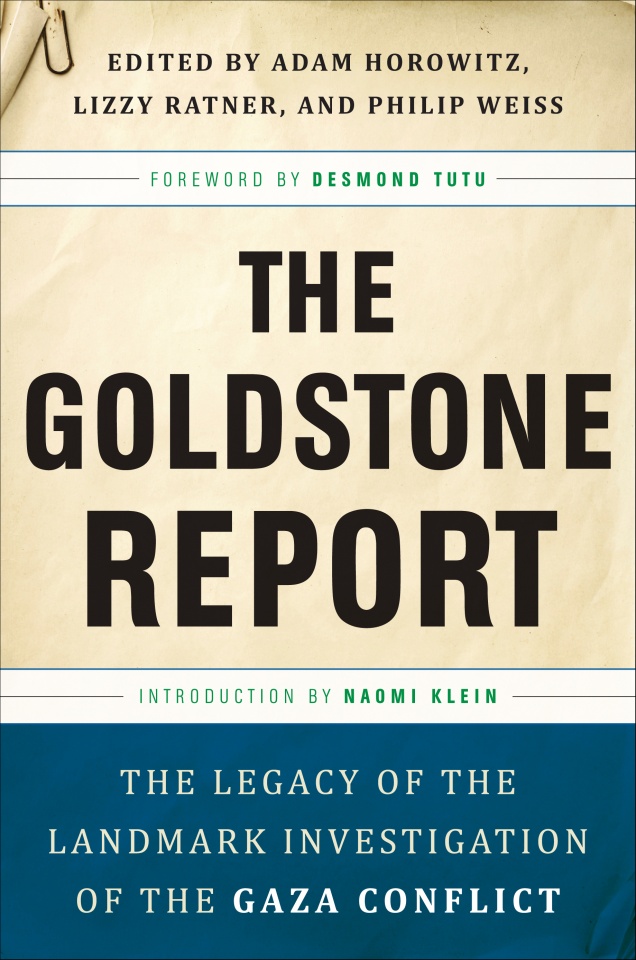
The Goldstone Report: The Legacy of the Landmark Investigation of the Gaza Conflict, edited by Adam Horowitz, Lizzy Ratner, and Philip Weiss – It has been more than two years since the Israeli Assault on Gaza and more than a year since the Goldstone Report was released. This book not only provides us with the content of that report, it includes commentary by South African Bishop Desmund Tutu, Naomi Klein and a numerous other writers and activist who talk about the significance of the record on what Israel did to innocent Palestinian civilians between late December of 2008 and January of 2009. This is an important volume that will add to the international case against Israel’s illegal occupation of Palestine.

23 Things They Don’t Tell You About Capitalism, by Ha-Joon Chang – If you are looking for a thoughtful and non-ideological book that deconstructs capitalism, look no further. Ha-Joon Chang, author of the acclaimed book Bad Samaritans, provides us with a very readable critique of the economic system of capitalism. Chang presents 23 fundamental points for each chapter and then lays out very sound arguments to support each statement. 23 Things They Don’t Tell You About Capitalism may not be an anti-capitalist manifesto, but it certainly provides people with an important critique that does come with a great deal of ideological baggage.
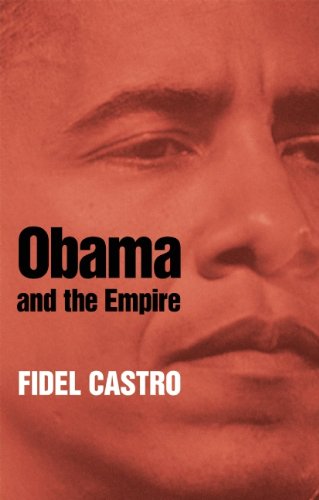
Obama and the Empire, by Fidel Castro – Former Cuban leader Fidel Castro has certainly seen his share of US presidents, but one thing has remained the same….US policy towards Cuba. In this collection of short essays Castro provides an interesting analysis of US foreign policy since Barack Obama became President a little over two years ago. Castro backs up the title of the book by demonstrating that the imperialist policies of the US have not been fundamentally altered since Obama entered the White House. The essays are chronological and cover the period from Obama’s election to the summer of 2010. Obama and the Empire is an important contribution to the growing body of literature that smashes any illusion that US foreign policy would be any different under the current administration.

The Coca-Cola Case (DVD) – This film by German Gutierrez & Carmen Garcia is a must see for anyone who has not been completely numbed by the branded image of the world’s most famous soda. The Coca-Cola Case is based on the work of union members, human rights activists and lawyers who have been fighting to Coca Cola Company over their denial that union workers in Colombia are being assassinated for attempting to organize workers in the Coke bottling plants. Even if you are familiar with the Killer Coke Campaign, this film is still important to see, not just because it deals with corporate crimes, because it shows what the possibilities are of cross-border organizing and solidarity.
Senator Levin and the “use of force” in Libya
The ongoing uprising in Libya has resulted in greater repression from the state under the direction of Muammar Qaddafi. Recent reports show that numerous civilians are being attacked and killed as the long-time leader of Libya is using the military to prevent his country from following Egypt and Tunisia on the road to democracy.

The levels of state repression have caused some in the international community and particularly in the US government to consider military engagement. On Sunday, Senator John Kerry called for a “No Fly-Zone” to be imposed on Libya, with other Senators quickly coming on board.
On Wednesday, Michigan Senator Carl Levin also weighed in on the matter when he addressed the issue in a statement for the Armed Services Committee. Levin said, “Two ships with a Marine Expeditionary Unit of over 1,000 Marines aboard are in the Mediterranean. Missile-launching ships are available should the President choose to use them to strike Libyan targets, including military aircraft, air defenses, airstrips, command centers, and bases. Before exercising any use-of-force option, the President is appropriately seeking support from the international community, in particular the support of other countries in the Arab and Muslim worlds and in the region.”

Now the statement from Levin doesn’t read as a strong endorsement for US military intervention in Libya, but it does demonstrate that the US already has the military capability to intervene if the Obama administration decides to take such action.
Much of the commercial media reporting in the US on the political repression in Libya presents Qaddafi as a brutal dictator, which the historical record would support. However, like much of the recent coverage of popular uprisings throughout the Middle East, there hasn’t been much historical context about the US relationship with Libya and Qaddafi.
Even the most rudimentary reading of the historical relationship between the US and Libya shows that the US supported a plan for the British, French and Italian governments to control Libya after WWII. This plan called for installing a puppet monarch, King Idris, who supported US/NATO strategic interests and access to Libya’s oil after the 1959 discovery of vast oil reserves.
In the 1960s growing civil unrest directed against the King led to a 1969 coup that landed Muammar Qaddafi as the new leader of Libya. Qaddafi has always ruled with an iron fist, but the US has not always objected to his repressive policies. In fact, according to Mark Zepezauer’s book Boomerang, the CIA supported Qaddafi against numerous attempted coups in the 1970s.
In the 1980s, the Reagan administration pushed Qaddafi on his role in regional politics and even bombed the country on numerous occasions in an attempt to take the Libyan leader out. One of those bombing raids resulted in the death of Qaddafi’s daughter. For more on the historical relationship between the US and Libya, particularly during Qaddafi’s reign, check out the chapter on Lybia in Bill Blum’s Killing Hope: US Military and CIA Interventions Since World War II.

Besides having a better historical analysis it is also important to think about what a No Fly-Zone would mean for Libya. Middle East policy analysis Phyllis Bennis has an important article, which provides sound analysis. Bennis argues that while there is some call from within Libya for international intervention that many on the ground don’t want military intervention as it may result in strengthening Qaddafi’s power. Bennis also points out that while the United Nations has imposed targeted sanctions on Libya it did not endorse the use of force.
Another point that Bennis makes is that while US political leaders are using language like “humanitarian intervention” we should not believe that the US interests are with the fate of Libya’s civilian population. This point has also been raised by author Jean Bricmont, who says that the last time the US used “humanitarian intervention” was in Kosovo. That intervention was disastrous for civilians and Bricmont argues caused more of a humanitarian crisis. Bricmont, in a recent article, argues that if the US intervenes in Libya it should more accurately be called humanitarian imperialism.
As the events in Libya unfold we should keep a close eye on what actions the US will take and pay close attention to how they frame those actions so as not to be swayed by their appeals to “humanitarian intervention.”
This Day in Resistance History: The End of the Illegal Imprisonment of the Amistad Passengers
On this day in 1841, the United States Supreme Court admitted that the nation had falsely imprisoned 52 people for two years, due in part to direct interference from the U.S. government. The decision also highlighted startling admissions related to slavery in the United States.
 The ruling was made on behalf of the Mende passengers from the ship La Amistad. They had been jailed since 1839 in New Haven, Connecticut. Sengbe Pieh (called Joseph Cinqué during the trials) and 51 others had been called everything from pirates to property to murderers. Arguments about their fate bounced from one court to another in one of the most complicated cases in the early American justice system.
In 1839, the U.S.S. Washington captured the slave ship La Amistad in the waters off Long Island. The Amistad’s senior crew members, José Ruiz and Pedro Montez, told naval officers that they were transporting 52 slaves from a plantation in Cuba, where they had been born, for sale elsewhere in Cuba. But the Black passengers, led by Sengbe Pieh, managed to arm themselves, kill the captain, and take possession of the ship. Ruiz said he was ordered to sail to Africa, but managed to fool the slaves by charting a course north, hoping to find aid in American waters.
The passengers were taken into custody. A district court hearing, scheduled as a courtesy, would formally return the ship and its “contents” back into the hands of Ruiz and Montes.
 Instead of the expected pro forma hearing, however, the courtroom erupted with petitions by a number of claimants. The captain and first mate of the U.S.S. Washington appeared and demanded to have the ship and the slaves given to them as pirate salvage captured on the high seas. The senior Spanish diplomatic counsel marched into the courtroom to announce that Queen Isabella II wanted La Amistad and the slaves. sent to Spain. A local group of abolitionists demanded that the slaves be set free, because Connecticut no longer allowed slavery and the slaves therefore had reached free soil. And Secretary of State John Forsyth delivered a message from President Martin Van Buren, stating that it was in the national interest that the judge comply with the wishes of Spain, honoring a 1795 treaty. Clearly, this case was far more tangled than originally thought.
Then New Haven abolitionist Lewis Tappan hired attorney Roger Baldwin to represent the Amistad passengers. Baldwin hit on a legal point that no one else had even considered. The so-called slaves, he pointed out, could not speak a word of Spanish. If they’d been born on and worked on a Cuban plantation, how could that be possible? And if they had not been born into slavery, then under current U.S. law they could not be sold as slaves. They were free if they had been born free. Baldwin set about to prove it.
He sought help from one of his Yale professors, Josiah Gibbs, a language expert. Gibbs’s job was to try to speak with the imprisoned men and women directly and find out where they had come from. The professor cleverly established a basic vocabulary with the prisoners. Then he went down to the docks and shouted out the words he’d learned from them until he found someone who understood the language and answered him.
That person was James Covey, a native of Sierra Leone who spoke Mende and had become a British sailor. Covey discovered that Senge Pieh had been a landowner and a rice farmer. He and the other Mende passengers had been kidnapped, taken in chains to a slave fortress in Sierra Leone, and sold to slavers who owned the ship Tecora. Ruiz and Montes bought the Mende prisoners from the Tecora captain with the intent of illegally selling them to a Cuban plantation owner.
Meanwhile, Roger Baldwin, obtaining a writ to search La Amistad, found the Tecora manifest hidden on board. It listed the Amistad group, giving each one a false Spanish name and listing their sale prices to the Amistad owners.
Despite this incontrovertible evidence, Baldwin was forced to take the case through three separate courts. Each time he won, the case was appealed by the government. Finally, the case landed in the U.S. Supreme Court. By this time, the situation won the attention of former President John Quincy Adams, an ardent abolitionist, who worked with Baldwin on preparation for the high court hearing. Baldwin presented the case, with Adams giving the closing argument.
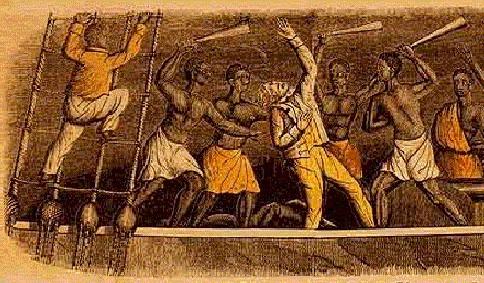 Despite the fact that all but one of the Supreme Court justices of the time were Southern slave owners and despite constant pressure applied by Van Buren on behalf of Spain, the Court found that the Amistad passengers were in fact free men and women. The order secured their immediate release from prison. The Court further ordered that the kidnapped Mende be transported at U.S. government expense back to their homeland.
Justice Joseph Story, who wrote the majority opinion, made a point of addressing demands that Pieh and the male Mende be charged with murder and piracy for killing the captain and a crew member during their uprising on La Amistad. Story wrote that “while we may lament the dreadful acts by which they asserted their liberty and took possession of the Amistad and endeavored to regain their native country,” Pieh and the others could not be charged with murder or insurrection. They had simply attempted to take back the liberty that had been stolen from them. He wrote that they had fallen victim to “a heinous crime” and that any acts they committed to regain their freedom were justified as self-defense.
The Amistad case underscored a basic American hypocrisy. While politicians repeatedly stressed the American idea of natural rights, such as liberty—a point directly addressed in the opinion—the case cast light on the government’s complicity with the institution of slavery. The irony of ruling that the Mende passengers had the right to rise up against those who had deprived them of their freedom did not extend to more than 2.5 million people who were enslaved on plantations and cities across the United States at the time. United States v. Libellants and Claimants of the Schooner Amistad, along with the Dred Scott decision, is considered one of the most important court cases concerning slavery in United States history.

Many of us know the story of Rosa Parks refusing to move to the back of the bus. This story is what many have come to believe was what gave birth to the Civil Rights Movement.
Wayne State University Professor Danielle L. McGuire’s new book, At The Dark End of The Street: Black Women, Rape, and Resistance – New History of the Civil Rights Movement from Rosa Parks to the Rise of Black Power, sheds light on the background of the one of the most important social movements of the 20th century.
McGuire has documented that what led many people to the Civil Rights Movement, particularly Black women, was their collective experience of rape at the hands of White men.
McGuire tells the story of Recy Taylor who was gang raped by White men in 1944. The incident caught the attention of a local NAACP official who sent his best investigator to look into the case and it just happened that this investigator was Rosa Parks. What McGuire came to discover through her research and interviews with Civil Rights veterans was that there was a whole lot of anger and organizing against the White community because of repeated acts of sexual assault against Black women by White men. McGuire says that the bus boycotts were not a surprise, since buses were a place where Black women were often sexually harassed by White men.
Professor Danielle L. McGuire will be speaking about her book this coming Monday, March 14, 4pm in the Loosemore Auditorium on the downtown campus of GVSU. The event is free and open to the public.

