As housing crisis festers, mortgage servicers spend $8 million on political contributions
This article is re-posted from the iwatchnews.org.
As the financial markets roil, one of the critical factors weighing down the U.S. economy is the flood of home foreclosures. Thursday’s crash underscores how difficult it will be for the economy to make significant strides while the housing market is still in tatters.
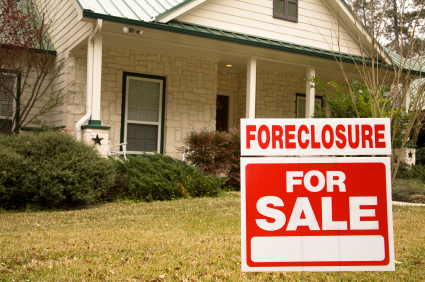
The pace of the housing market recovery may depend in part on the outcome of intense negotiations underway among state and federal authorities and the nation’s five largest mortgage servicers.
Government officials are negotiating with the firms — Bank of America, JP Morgan Chase & Co., Citigroup, Wells Fargo & Co. and Ally Financial Inc. — over allegations of widespread abuses in the foreclosure process. State attorneys general around the country have been investigating evidence that the big banks used falsified documentation to process foreclosures.
Four of the five companies under scrutiny—Bank of America, JP Morgan, Wells Fargo and Citigroup — are major donors for state and federal political campaigns. Between them, they have donated at least $8 million since the start of 2009 to candidates, party committees and other political action committees, according to an iWatch News analysis of campaign finance data. (Ally Financial hasn’t given money during that period to campaigns under its current name or is previous name, General Motors Acceptance Corp., or GMAC).
The fate of foreclosure negotiations could go a long way toward determining where the housing market will go in the next few years.
Normally, the housing market plays a leading role in any economic recovery. But that hasn’t been the case in the aftermath of the U.S. financial crisis of 2008.
“It’s has been a negative factor in this recovery — or lack of recovery,” housing economist and consultant Michael Carliner said.
Generally, when interest rates go down, that spurs the mortgage and housing markets and helps move the economy in the right direction. But that hasn’t happened this time around, said Carliner, a former economist for the National Association of Home Builders. “We have lowest mortgage rates since the early 1950s and it’s not doing anything,” he said.
Interest rates on 30-year fixed rate mortgages averaged 4.39 percent for the week ending Aug. 4, according to a survey by mortgage giant Freddie Mac.
What’s holding back the housing market, Carliner said, is a glut of available homes for sale, due in part to overbuilding during the housing boom and to continuing foreclosure woes. An “excess inventory” of perhaps 2 million homes is making it hard for the housing market to get going again, he said.
The inventory of foreclosures continues to grow. In June, one out of every 583 housing units in the United States received a foreclosure notice, according to data provider Realty Trac. The numbers are even worse in the hardest hit markets, where housing prices climbed the fastest during the housing boom and fell the most when the housing crash came. In Nevada, one out of every 114 housing units was the subject of a foreclosure filing in June.
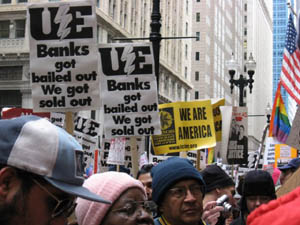
Investigations and negotiations over allegations of fraudulent foreclosure practices by big banks have helped slow down the foreclosure process, making it harder for the market to work through defaults and readjust, Carliner said.
He would like to see a deal between government officials and mortgage servicers that would pave the way to swifter foreclosures that would help put the foreclosure problem in the past. “If people haven’t paid their mortgages in two years, they shouldn’t be able to keep their house,” Carliner said.
Not everyone agrees.
Ira Rheingold, executive director of the National Association of Consumer Advocates, a consumer attorneys group, argues that any national settlement should be about keeping people in their homes. He wants a settlement that would require banks to reduce the amount of mortgage debt held by distressed homeowners.
Reducing their payments and overall debts would help keep them in their homes and reduce the number of foreclosures, he said. It would also provide a measure of justice, he said, for homeowners who were defrauded via bait-and-switch salesmanship, falsified documentation and other predatory tactics that were common during the mortgage frenzy of the past decade.
Rheingold acknowledges, though, that extracting large concessions from big banks will be a “tough slog.”
The banks have high-powered legal talent and lobbyists on their side, and four of the top five mortgage services have given generously to state and federal political campaigns, according to an iWatch News analysis of election data provided by the subscription-only CQMoneyLine.
- Since the start of 2009, Bank of America has donated at least $3.2 million to candidates, party committees and other PACs. Among the top recipients was Rep. Jeb Hensarling (at least $17,500), a Texas Republican who is vice chairman of the House Financial Services Committee. Another Texan Republican, Randy Neugebauer , received at least $16,000 from the financial giant. Neugebauer also serves on the Financial Services Committee, and chairs the Subcommittee on Oversight and Investigations.
- JPMorgan Chase has donated over $ 2.8 million to candidates, party committees and other PACs since the start of 2009. The firm has made donations to the Republican Governors Association (at least $50,000), the National Republican Senatorial Committee (at least $45,000) and the National Republican Congressional Committee (at least $45,000), the Democratic Governors Association (at least $25,000) and the Democratic Senatorial Campaign Committee (at least $15,000). The firm also donated at least $15,000 to the Blue Dog PAC, the fundraising arm of the Blue Dog Democrats who were vital to financial corporations when the Democrats controlled the House.
- Wells Fargo gave over $1 million to candidates, party committees and other PACs since the start of 2009. Wells Fargo has given at least $45,000 each to the NRCC and NRSC and at least $30,000 each to the DSCC and DCCC. It also donated at least $17,000 to Rep. Ed Royce , a California Republican who serves on the Financial Services committee. Another top recipient was Democrat Carolyn Maloney of New York, the vice chair of the Joint Economic Committee and ranking member on the financial services committee’s Subcommittee on Financial Institutions and Consumer Credit.
- Citigroup has given $850,000 to candidates, party committees and other PACs since the start of 2009. Among its top individual recipients is Democrat Gregory Meeks of New York. Meeks, who sits on the House Committee on Financial Services, has received at least $10,000 from Citi. Another is Ohio Republican Rep. Pat Tiberi (at least $15,000), a member of the powerful Ways and Means committee. Tiberi is currently the Chairman of the Subcommittee on Select Revenue, which has jurisdiction over federal tax policy.
Over 1 Million have been deported under Obama

You will recall that one of the campaign promises that Barack Obama gave was to reform the immigration policies of this country to make them more humane.
Well, it is three years later and there have been more than 1 million people deported under his administration. This reality has not been lost on many Americans, particularly the Latino community, which has been hit the hardest by the increase in immigration raids by ICE.
Last week, Latino youth protested the President during a speech he gave at the National Latino Youth Conference in DC. Here is part of a Media Release that was released explaining the action:
Wearing shirts that read “Obama Deports DREAMers,” Latino youth demonstrated the Latino community’s growing frustration with President Obama. The students conducted the action while the President gave a speech today at a major Latino conference in Washington, DC.
“We stood up while President Obama gave another of his predictable speeches on immigration because we are outraged at his trying to promote his election among Latinos while continuing to deport us at a time when there is no legislative solution to the immigration crisis,” said Felipe Matos, an undocumented student from Florida and advocate with Presente.org. “The fact is that Obama has deported over one million immigrants, including DREAMers, since he arrived to the White House. It is inconceivable that he keeps giving political speeches to win the Latino vote for 2012 while dividing the Latino community with his inhumane immigration policies.” Presente.org, an online advocacy group that seeks to empower Latinos across the nation, joined forces today with United We DREAM, a national immigrant youth-led organization with the mission of achieving equal access to higher education for immigrants, to continue urging President Obama sign an executive order that would stop the deportations of DREAM Act eligible youth until there is a legislative solution to our human rights crisis.
“I grew up in this nation with the passion of becoming a doctor and give back to my community, but now I face the reality of being deported anytime soon,” expressed Mercedes Gonzalez, one of the near 20 DREAMers who stood up during Obama’s speech. Students participating in the action urging Obama to stop deporting them came from the states of Florida, New Jersey, Connecticut, Tennessee, North Carolina and Arizona.
As shown on a recent poll by ImpreMedia/Latino Decisions, immigration is the most important issue for Latino voters – the fastest growing voting bloc in the nation. Because there is an immigration crisis in dividing our nation, Presente.org has been following and calling out the President Obama every time he addresses the Latino community.
“We organized the Latino and immigrant community during Obama’s recent appearances in Puerto Rico, Texas and now in Washington, DC urging Obama to use his executive power to stop deporting DREAMers. We won’t stop following him and organizing until he stops his inhumane deportation program,” concluded Felipe Matos.
According to U.S. Immigration and Customs Enforcement, as of May 23, 2011, the U.S. government has deported 1,026,517 immigrants since the beginning of fiscal year 2009. That figure includes noncriminal immigrants and DREAMers who are victims of our outdated immigration system.”
Some immigration groups are asking people to sign petitions to the President and get him to reverse his policy on deportation and targeting undocumented immigrants. However, since Obama is in the midst of a re-election campaign it seems unlikely that that White House will do anything substantive on this issue. Maybe it is time for people to say they won’t vote for him again until these kinds of life and death policies are changed?
Nearly 200 people march for equality in Holland
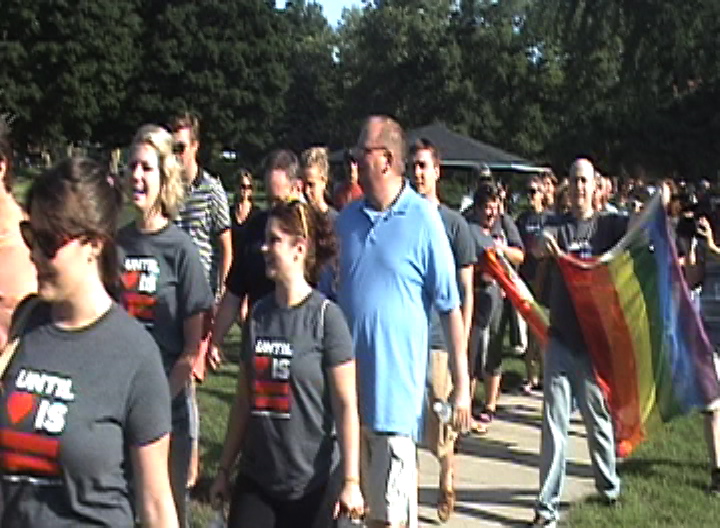
Last night people from all over West Michigan were in Holland to continue the campaign to pressure the Holland City government to adopt an anti-discrimination ordinance that would include gender identity and sexual orientation as part of the City’s anti-discrimination policy.
Initially people gathered at Smallenburg Park in Holland to share food, to get shirts from Until Love is Equal and to building community amongst those who believe in justice and equality for all the residents of Holland, Michigan. This action involved people from Until Love is Equal, Holland is Ready, Hope is Ready, West Michigan Pride and GLISEN.
At around 6:15pm people then marched through the city chanting and making it know to the downtown businesses and citizens that were encountered along the way.
Before the march began, GRIID had a chance to interview one of the organizers of this event, Max Singer.
Once the crowd gathered in City Hall they were joined by more supporters of this campaign for equality. The City Council dealt with other matters before the public comment period began.
Jack Hoffman, a Grand Rapids lawyer, was the first to speak and he responded specifically to the Holland Mayor’s comments on the ordination. Hoffman addressed numerous flaws in the Mayor’s comments, primarily from a legal point of view. Hoffman referenced the proposed ordinance that was put forth by the Holland Community Relations Commission and noted that the Mayor did not fully understand the legal implications of the anti-discrimination ordinance.
Many speakers followed, those speaking in favor of the anti-discrimination ordinance and those against. However, it should be noted that during the public comment period there were 31 comments in favor of the ordinance and only 4 against.
We were told by one of the organizers that some of those that voiced their opposition to the ordinance have been at every Holland City Commission meeting since the vote was first put to the commissioners. Their arguments were primarily rooted in their own interpretation of the Christian Bible, but they also made arguments that “homosexuality was a sin” and “an unacceptable lifestyle.”
Another man who spoke against the ordinance said that it was a prelude to the “gay community” wanting same sex marriage, which in his opinion would lead to “bestiality and people having multiple sex partners.” The only other specific argument from the opposition was that gay people should seek out the assistance of Exodus International, which can help people denounce their lifestyle and embrace a heterosexual life through Jesus.

Those in favor of the ordinance presented numerous arguments, some of them also including religious reasons. However, the most compelling comments spoke to the issue of harm being done because Holland is not an accepting community.
One young woman spoke about how her sister, who is a lesbian, is afraid to come out to people because of what might happen to her. Another young woman spoke about a gay friend of hers who has no come out to most people because of the fear and intimidation he believes he would have to endure under the current government sanctioned discrimination.
A member of the gay community in Grand Rapids then spoke about his own history and experience of discrimination. He doesn’t understand why the City voted for hate and said that gay people deserve the right to be protected.
Bill Freeman with Holland is Ready then followed by citing a Christian song, “they will know we are Christians by our love,” but says it ought to be “they will know we are Christians by our homophobia.” Freeman then addressed each of the council members that voted no on the ordinance, responding to each of their claims.
One woman spoke tearfully about her gay son who did go through the Exodus International program, renounced his identity and then later committed suicide. She urged the council members to recognize all the young people in the room and that they are the future of Holland.
A professor then told his story growing up gay. When he was a student at Hope and came out he remembers students praying outside his dorm room. He then stated that “people who feel free to engage in public comments of hate towards the LGBT community demonstrates the need for formal protections for those who identify as LGBT or Q. How many people have to tell you stories about the fear and harm they have endured?”
A 16 – year old from Rockford then spoke in favor of the ordinance to set an example to other communities in the state to make the right decision. She only found out about this that day and decided that she needed to come and speak in favor of this ordinance. “Even if you think that gay people are wrong, you have the obligation to protect them.”
A young woman then told her story of meeting a transgender person who committed suicide last year because of the discrimination that person faced. This young woman always wanted to raise children here, but now sees that there is “a tremendous amount of hate” and that may cause her to not want to live here in the future.
Another young woman who has a close friend that is gay said that her friend and many others that identify as LGBT will not want to grow old in Holland unless they vote for the ordinance.
A middle aged man then spoke about how he thought that “this issue doesn’t really affect him,” but while at the park he realized that if he gets on TV it will that impact how people see him. In fact, he said that people might begin to question his sexuality. He urged the council members to vote yes so the young people will not feel the fear he felt that day.
After nearly two hours of testimony it was clear that the majority of the people in the room were in favor of an anti-discrimination ordinance and that the bulk of those who spoke in its favor were young people who saw themselves as the future of Holland.
The other main point that was stressed throughout the night was the fact that harm is being done right now in Holland because there are no legal protections for people who identify as LGBTQ. The National Coalition of Anti-Violence Programs report for 2010 says that acts of violence against the LGBTQ community increased by 13% across the country from 2009 to 2010. The question must be asked, how many people have to live in fear and suffer hate, intimidation and violence in Holland before they are legally protected?
At the end of the meeting the Mayor spoke and said that an anti-discrimination ordinance does not mean a city is welcoming and that religion did not inform his vote.
Councilman Dave Hoekstra, one of the four council members who voted in favor of expanding the ordinance, said he was impressed with all the young people who spoke up during the meeting and he encouraged other members of the council to make the right decision and support the ordinance.
Ruin-Nation: The Obama Catastrophe
This article by Glen Ford is re-posted from Black Agenda Report.
 Barack Obama finally got the grand, bipartisan consensus he’s been working towards for two and a half years. His implacable, deep-seated hostility to the left half of the Democratic Party (“retarded,” said his boy, Rahm Emanuel) – which includes most of the Congressional Black Caucus – transformed a 2008 popular mandate for progressive change into its opposite: a de facto center-right governing coalition of Republicans, rightwing Democrats and Obama’s Executive Branch arrayed against roughly half the Democrats (on a very good day) in the House of Representatives, plus a handful of liberal Senators.
Obama’s unrelenting hostility to “entitlements,” which he vowed to put “on the table” for cutting two weeks before taking the oath of office in January, 2009, came to fruition this week, setting in motion a rolling implosion of Roosevelt’s New Deal and Johnson’s Great Society. It is a monumental catastrophe, worthy of a Mt. Rushmore in reverse (say, deep in a guano-filled bat cave). History will, without doubt, lay this ruin of a nation at the doorstep of Obama, the corporate Democratic Trojan Horse whose complexional characteristics neutered, neutralized or outright made insane the bulk of Black America and most of those whites that pass as “progressives.”
Black Agenda Report and author Paul Street, among a very few others, warned long before the 2007 launch of Obama’s campaign that his own words, deeds, financial contributors and political associations showed him to be an eager operative of Wall Street and the Pentagon. As president, Obama has embraced or launched so many wars, he feels compelled to deny that his latest aggression, against Libya, is a war at all, lest he seem too full of bloodlust. Under the austerity regime jointly imposed by Obama and the GOP (his “Big Plan”) through a manufactured debt crisis (abetted by Obama over the years), the actual reins of the legislative process will pass to a Super Committee, a formalized version of the center-right senatorial “gangs” (health care and debt) and appointed commissions (debt reduction) favored by Obama as embodiments of his “grand consensus” politics. The formula guarantees a shutout of the Left – although, as long as Obama is around, the corporate media will continue to claim, nonsensically, that he represents the Left.

The most pitiful picture to emerge from the mega-debacle just witnessed in Congress, is that of Black Texas Rep. Sheila Jackson-Lee, standing on the House floor in mid-July, asking “Why is this president being treated so disrespectfully” by Republicans, in the debt debate. As if insults to Obama’s dignity were the crisis ravaging her constituents and the rest of Black America. A report had just confirmed that 30 years of (meager) Black gains were wiped out between 2005 and 2009. One-third of Black America is without assets or has negative wealth, including half of Black single women, the people that raise the majority of Black kids, one-third of whom live in poverty. Black unemployment sits at Depression levels. But Rep. Sheila Jackson-Lee was upset because of perceived disrespect to Obama, who offers nothing to Black people but the corporate crap-line, “A rising tide lifts all boats.”
The entire structure of social support for poor and working people was at issue, yet the Black congresswoman could think only of Obama: “Why is he different?” Jackson-Lee assured her audience that, “in my community, that is the question that we raise.”
To the extent that that is true, to the degree that Black America remains more concerned about how Obama is doing as he seeks another term in office, rather than how the African American people are doing under Obama’s center-right, Wall Street- and war-loving regime – Blacks are doomed to a period of suffering unprecedented in the modern age.
Presumably to protect the dignity of First Black President – her highest priority – Jackson-Lee joined the 95 House Democrats that voted for the certainty of losing trillions of dollars for tens of millions of needy citizens, rather than risk the possibility of unknown financial dislocations. The same number of Democrats said “No” to the president and his GOP interlocutors. Among the 40 full-voting, Democratic members of the Congressional Black Caucus, the split was 15 “Yes,” 24 “No” and one Non-Voting (NV).
“YES”: 15 “Obama Uber Alles”
Terri Sewell (FL), Karen Bass (CA), Frederica Wilson (FL), Sanford Bishop (GA), Hank Johnson GA), David Scott (GA), Danny Davis (IL), Bobby Rush (IL), Cedric Richmond (LA), “Lacy” Clay (MO), Gregory Meeks (NY), Chaka Fattah (PA), James Clyburn (SC), Sheila Jackson-Lee (TX), Eddie Bernice Johnson (TX)
“NO”: 24 “Save the Safety Net”
Barbara Lee (CA), Laura Richardson (CA), Maxine Waters (CA), Corrine Brown (FL), Alcee Hastings (FL), John Lewis (GA), Jesse Jackson, Jr. (IL), Andre Carson (IN), Elijah Cummings (MD), Donna Edwards (MD), John Conyers (MI), Hansen Clark (MI), Keith Ellison (MN), Bennie Thompson (MS), Emanuel Cleaver (MO), Donald Payne (NJ), Yvette Clarke (NY), Charles Rangel (NY), Edolphus Towns (NY), G.K. Butterfield (NC), Mel Watt (NC), Marcia Fudge (OH), Al Green (TX), Bobby Scott (VA)
NV: 1
Gwen Moore, (WI)
House Speaker Nancy Pelosi is said to have released Members to “vote their conscience.” That means the 15 “Yes” Members looked the speeding GOP/Obama train directly in the headlights as it bore down on “hope” itself, and opted to side with their president instead of their constituents – the same president that had over the years methodically pushed Social Security, Medicare, and Medicaid to the edge of the cliff, and then invited the Republicans to join him in shoving “entitlements” into the void.
He is the enemy. Unequivocally. Cast him out.
This Day in Resistance History – The Chicago Eviction Riots
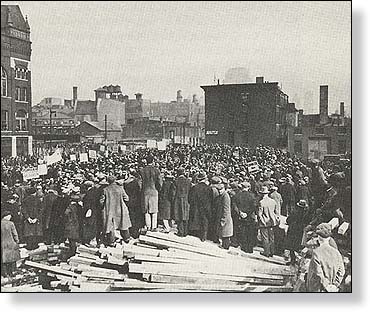
The Great Depression hit working people hard all over the country, especially in industrial cities like Chicago.
By 1931 there were roughly 750,000 unemployed living in Chicago and many municipal workers and public school teachers were not getting paid on time or at all beginning that spring.
With unemployment so high and people not getting paid for their work, landlords began giving out eviction notices all over the city. Some people left quietly, but many people started to resist the thought of being homeless and began to stay in the rental property they inhabited.
The landlords began to use the legal system and the Chicago police to physically force people out of their homes, but the more that people witnessed this kind of brutality the more it caused people to want to resist this injustice.
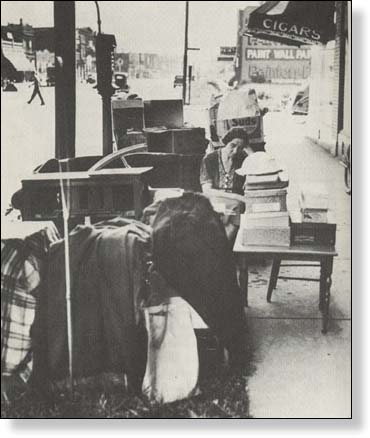
At times people would pile up their furniture near the entrance of the door so that it was nearly impossible for landlords or the police to get in. Other times people would stack their furniture in front of the house near the sidewalk as visible sign of protest. Often this kind of resistance was spontaneous, where people would get an eviction notice and then walk around in their neighborhoods telling people what would happen. This sometimes would lead to a march and clashes with cops.
People also took action that was more organized and in early August of 1931 an estimated 60,000 people marched to protest the new eviction laws in Chicago. The march turned ugly when police began attacking protestors. At least 3 protestors were killed and several cops injured, but the eviction uprising also led to the creation of unemployment councils and unions in Chicago and around the country.
From eviction riots to foreclosure crisis
Today, millions of Americans are faced with very similar circumstances with thousands of people being evicted daily across the country and millions confronted with home foreclosures.
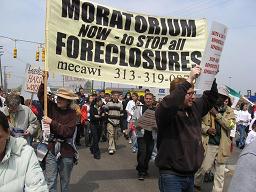
Like the first Great Depression some people are responding to the foreclosure crisis by protesting and refusing to leave. There have even been stories where local law enforcement has refused to evict people as they see it as an inhuman act.
There are also organized groups that have sprung up all over the US since 2008 as a response to the foreclosures. Groups like Detroit Moratorium Now have organized homeowners and tenants to fight to keep their homes and they have engaged in organized resistance to the banks and other lending institutions that have profited from the foreclosure crisis.
This kind of a movement does not exist in Grand Rapids, but there is the group Foreclosure Response. Foreclosure Response connects people facing foreclosure to resources and advocates for change to stop foreclosure, which is important work. However, the local group doesn’t seem to be engaging the power structure or the banks that are the cause of the foreclosure crisis, nor are they advocating direct action as a response.
Maybe we need to reclaim the spirit of resistance that people engaged in after the 1929 economic crash, take to the streets, demand housing rights for all and organize tenant unions to counter the power of contemporary landlords.
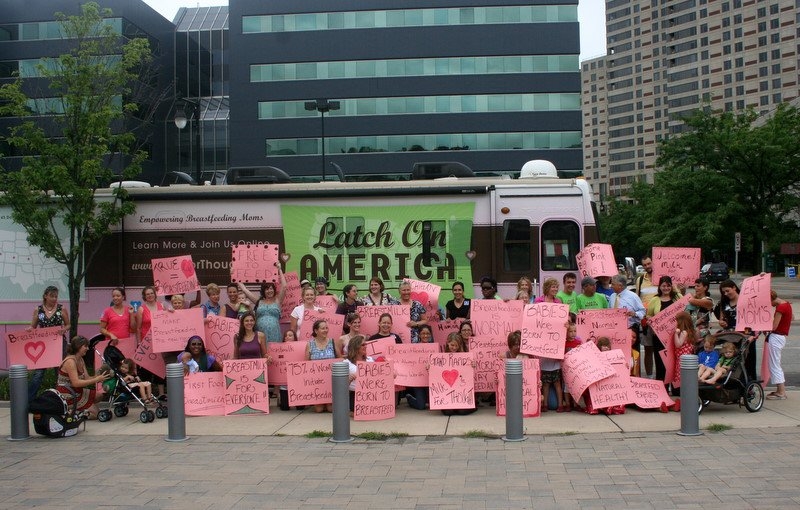
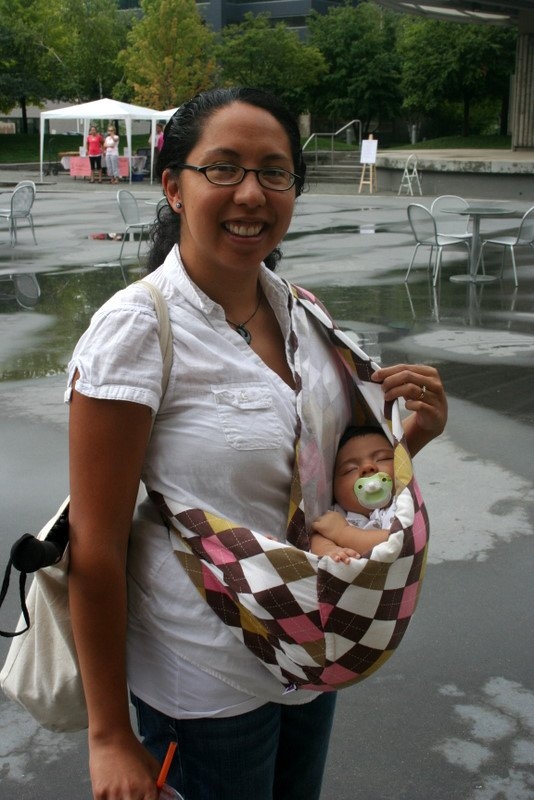
Last Thursday, Milk for Thought’s “Latch On America Tour” Big Pink Bus brought together a host of breastfeeding advocates from across Kent County. Participants included area doulas, midwives, childbirth educators, La Leche League leaders and lactation consultants. The Kent County Health Department and Healthy Kent Breastfeeding Coalition provided information on the benefits of breastfeeding and various programs supporting breastfeeding mothers.
“It was a fun way to bring together our communities’ many breastfeeding resources. The event gave each an avenue to reach out to families so that more people may find the help and support they need,” said midwife, Shannon Pawson. “Breastfeeding isn’t always easy, but it’s always worth it!”
“I really appreciated the idea of coming together as a community to show there is a support mechanism for breastfeeding moms,” added Kelly Grieve, a Grand Rapids La Leche leader.
 Also on hand, the “Free to Feed” campaign invites businesses to place the Free to Feed logo in their windows so that breastfeeding mothers know they are welcome to openly breastfeed in their establishments.
Speaking of openly breastfeeding, it is totally legally to expose the breast when breastfeeding. Indecent exposure laws do not apply to breastfeeding women. That’s one of the messages that Afrykahn Moon shared with the crowd. Moon was kicked off a public bus in Troy Michigan for breastfeeding her two-week-old son. The municipality has since “reminded” its 600 drivers that women are indeed allowed to breastfeed babies while on board public buses.
The Michigan Breastfeeding Network handed out flyers about Section 4207 of the Patient Protection and Affordable Care Act, which state that “employers shall provide breastfeeding employees with reasonable break time and a private, non-bathroom place to express breast milk during the workday, up until the child’s first birthday.”
 Ryan Comfort, CEO of Milk for Thought, rallied the crowd at the close of the event as a big pink star was placed on the large map on the side of the bus, indicating Grand Rapids had hosted the Pink Bus. When GRIID asked him why he, a man, was involved in the cause, he said, “My hope is to serve as an example. Breastfeeding is so much more than getting nutrition. It empowers women to meet their personal goals. I provide my skills in business and technology to a cause that has such an impact on women and families. We’re here to shine a big spotlight on breastfeeding.”
Another of the many males in the audience, Josh Dunigan shared that he was breastfed and, as the son of a midwife, had learned much about breastfeeding’s benefits. “The scientific research is in. Children who are breastfed do better in school, are more likely to go on to higher education and contribute to society. Breast milk or nurturing should be important to every living human being because of the way these affect society.”
10 – 11 a.m. Saturday Aug. 6 The Grand Rapids BIG LATCH ON
This Saturday, a follow-up event, “The Grand Rapids BIG LATCH ON, will be one of many across the country setting a new record for the most mothers latching and breastfeeding simultaneously. “We have chosen Rosa Parks Circle as a venue because we felt that nursing in public was an important issue to address,” says organizer, Juliea Paige. “We feel that the more people see nursing in public, the less of a big deal it will become. More than this, though, is the idea of society learning how to breastfeed through exposure such as this. It is known that breastfeeding is far more successful among cultures where it is not hidden and widely accepted. In response to the Surgeon General’s call to action, we believe that supporting not only breastfeeding, but breastfeeding in public, could serve as a strong start in getting new mothers to establish and continue nursing their babies successfully.”
12 Top Reasons to Breastfeed:
- Always fresh, clean, safe and at the right temperature, plus it’s free.

- Most nutritious –breast milk changes overtime to adapt to a growing baby’s needs.
- Breastfed babies are less likely to develop ear infections, Crohn’s disease, obesity, diabetes, asthma, SIDS or allergies.
- Breastfed babies have higher IQs.
- Breast milk contains endorphins that suppress pain and comfort a sick infant.
- Breastfed babies have better speech development.
- Helps moms shrink uterus back to pre-pregnancy size and lose pregnancy weight, especially off the thighs.
- Reduces mom’s risk of breast, endometrial and ovarian cancer.
- Can provide natural birth spacing for the first six months (with exclusive breastfeeding and no return of menstrual periods).
- Breast milk tastes better and doesn’t stain. Breast milk poop doesn’t smell bad!
- Release of prolactin allows mother to relax.
- Nights are less stressful for both mother and baby.
This article by Neil deMause is re-posted from the August issue of Extra!
The analysis provided in this article contrasts with a recent MLive story, which acknowledges warmer temperatures, but also provides significant space to WOOD TV8 meteorologist Bill Steffens who continues to deny there is global warming.

On April 14, a massive storm swept down out of the Rocky Mountains into the Midwest and South, spawning more than 150 tornadoes that killed 43 people across 16 states (Capital Weather Gang, 4/18/11). It was one of the largest weather catastrophes in United States history—but was soon upstaged by an even larger storm, the 2011 Super Outbreak that spread more than 300 tornadoes across 14 states from April 25 to 28 (including an all-time one-day record of 188 twisters on April 27), killing 339 people, including 41 in Tuscaloosa, Alabama (CNN, 5/1/11).
Ensuing weeks saw Texas wildfires that had been burning since December expand to consume more than 3 million acres (Texas Forest Service, 6/28/11; CNN, 4/25/11), plus record flooding along the Mississippi River, which couldn’t contain the water from April’s storms on top of the spring snowmelt. On May 22, a super-strong F5 tornado killed 153 people as it flattened a large part of Joplin, Missouri (National Weather Service Weather Forecast Office, 5/22/11) ; in the first two weeks of June, a heat wave broke temperature records in multiple states, and the Wallow fire became the largest in Arizona state history (Washington Post, 6/14/11).
It was an unprecedented string of severe weather: By mid-June, more than 1,000 tornadoes had killed 536 people (NOAA, 6/13/11), nearly as many deaths as in the entire preceding decade. And it was only natural to ask: Were we seeing the effects of climate change?
Most scientists would say yes, or at least “probably.” The Intergovernment Panel on Climate Change, a global scientific body that has been a target of conservatives despite a record of soft-pedaling its findings to avoid controversy (Extra!, 7/8/07), warned on February 2, 2007, “It is very likely that hot extremes, heat waves and heavy precipitation events will continue to become more frequent.” (In science-speak, “very likely” refers to a certainty of greater than 90 percent, and is as near as you get to a definitive conclusion.) Other forecasts (e.g., Environment America, 9/8/10) have projected that wet regions will receive record rainfall thanks to increasing evaporation, while dry ones get record drought, as climate patterns shift to accommodate the new normal.

Yet despite these dire predictions, U.S. media were hesitant to investigate the links between climate change and this spring’s extreme weather. Much coverage settled for the cheap irony of contrasting extreme phenomena, as when NBC’s Saturday Today show meteorologist Bill Karins (6/11/11) quipped:
Feast or famine’s been the rule this spring. The northern half of the country, we’ve dealt with the heavy rain, the record snow pack that’s now melting in the northern Rockies. That’s causing the flooding. The southern half of the country, you would love some of that rain.
Even news reports that probed deeper into the causes of the spring’s extreme weather, though, often stopped short of looking at climate factors. A Chicago Tribune story (4/29/11) headlined, “Why April Record for Twisters? Experts Call It Random, Say Nature Varies,” noted that “some meteorologists” blame the periodic weather pattern known as La Niña, but then cited other scientists as saying the tornado outbreak was just random variation, with University of Illinois meteorologist Bob Rauber saying, “Global warming is occurring, but this is not a manifestation of it.”
On the CBS Evening News (6/9/11), meanwhile, John Blackstone noted, “Perhaps the biggest weather troublemaker has been in the Gulf of Mexico, where sea surface temperatures have been almost 2 degrees [Fahrenheit] above average. That warm, moist Gulf air meeting the powerful jet stream created the string of tornadoes that killed 525 people.” Yet, asked by anchor Scott Pelley why the Gulf of Mexico is hotter than usual, Blackstone replied only: “Well, it’s related to the drought in the South—in the South-Southwest, with little clouds, lots of sunshine, the waters warming up and those warm waters could add energy to this hurricane season as well.”
But while La Niña is a natural cyclical variation, the warming Gulf is not—at the very least, it’s exacerbated by the global warming trend, which has pumped at least four times the heat energy into the oceans that it has into the atmosphere (NPR, 3/19/08). As National Center for Atmos-pheric Research climatologist Kevin Tren-berth explained to Extra!, the air over oceans now averages 1 degree Fahrenheit warmer and 4 percent wetter than it was before 1970. “So there is more warm moist air from the Gulf flowing into all spring storms that travel across the U.S. That destabilizes the air, provides fuel for thunderstorms and converts some thunderstorms into supercell storms, which in turn provide the environment for tornadoes to form.”
The easiest connection for most reporters to make was with heat waves, probably because they match best with the popular image of “global warming.” “Intense hot conditions will increase dramatically over the next 30 years,” ABC News’ Jim Avila (6/8/11) reported after June’s record-setting heat wave. “Climatologists say it’s clear: Global warming is beginning to show itself in plain sight.”
For other extreme weather events, though, climate change only merited occasional mention. The wildfires that raged out of control across the Southwest in May and June were mostly covered as an unexpected natural disaster, without much thought of causes; in one exception, the Arizona Republic (6/12/11) fixed the blame squarely on the state having too many trees—a charge also brought up by the New York Times (6/11/11), which reported that, among other things, “Some [residents and experts] complained that it was environmentalists who had caused the forests to become tinderboxes by preventing the thinning of trees as they sought to protect wildlife.”
This common conservative claim, Climate Progress blogger Joe Romm noted (6/12/11), was refuted in a 2006 paper (Science, 8/16/06) that found that fires were increasing the most at higher elevations, where forest restoration is less of an issue, but where warmer temperatures have a huge impact by melting winter snows earlier and increasing summer drought.
In fact, scientists have long predicted that one result of climate change would be a dramatic increase in Western wildfires, as Pete Spotts of the Christian Science Monitor explained in a rare article making such connections (6/9/11). The National Academy of Sciences projected (7/16/10) that a 1-degree Celsius increase in global temperatures—just half the best-case scenario in most climate models—could more than triple the acreage burned by wildfires in the U.S. West. Washington Post blogger Jason Samenow (6/14/11) reported on this study, but it went unmentioned in the newspaper’s wildfire coverage.
Similarly, a NASA wildfire model released last year (10/27/10) projected that climate change would lead to an increase of fires in the U.S. West of between 30 and 60 percent by 2100. “I want you to think a little bit of fire as a metaphor for the many things that climate change holds for us,” NASA earth sciences director Peter Hildebrand told a conference in Colorado in early April—though the only reporter to note this statement was environmental journalist Brendon Bosworth on his self-titled blog (4/8/11).
As for tornadoes, news coverage was openly dismissive of their connection to climate change. A New York Times Q & A following the Joplin tornado (5/25/11) asked: “Can the intensity of this year’s tornadoes be blamed on climate change?” and answered “Probably not. Over all, the number of violent tornadoes has been declining in the United States, even as temperatures have increased.”
Indeed, while the number of reported tornadoes has steadily risen in recent years, prior to this year the number of strong tornadoes (category F4 or F5) had not, leading most scientists to conclude that the rising totals for weak storms are merely a result of more thorough reporting, thanks to sprawling development in tornado-prone regions that has put more people within sighting distance. And because the mechanics of tornado generation are poorly understood—and they depend on vertical temperature differential, so a warming lower atmosphere would predict more tornadoes, but a warming upper atmosphere would tend to reduce them—most scientists say that stronger and more frequent tornadoes can’t be definitively linked to climate.
Still, Trenberth told the blog Think Progress (4/29/11) that it’s “irresponsible” not to mention climate change in tornado coverage. “The basic driver of thunderstorms is the instability in the atmosphere: warm moist air at low levels with drier air aloft,” he told the site. “With global warming, the low-level air is warm and moister and there is more energy available to fuel all of these storms.”
Most reporters, though, chose to stick to the narrower question of whether these particular tornadoes were caused by climate change—which, given all the factors involved to create any particular storm, is impossible to answer, except in the sense in which all weather today is the product of a warmed climate.
“Contributing to the thrashing were the La Niña conditions in the Pacific Ocean, unusually warm ocean temperatures in the Gulf of Mexico and the increase of moisture in the atmosphere caused by the warming climate,” wrote the Washington Post (6/15/11) on the spring’s tornadoes, fires and floods. The piece cited National Oceanographic and Atmo-spheric Administration climate director Thomas Karl as “caution[ing] against focusing on any single cause for the unusual chain of events,” quoting him as saying that “clearly these things interconnect.”
Karl also featured prominently in an article by the New York Times’ John Broder (6/15/11) that reported, “Government scientists said Wednesday that the frequency of extreme weather has increased over the past two decades, in part as a result of global warming,” but quickly added that scientists “were careful not to blame humans for this year’s rash of deadly events.” Broder’s only evidence: Karl’s statement that “since 1980, indeed, extreme climatological and meteorological events have increased. But in the early part of the 20th century, there was also a tendency for more extreme events followed by a quiet couple of decades.”
The story’s headline: “Scientists See More Deadly Weather, but Dispute the Cause.” (Broder later apologized to Romm—Climate Progress, 6/18/11—for what he called a “crappy headline.”)
In fact, though, Karl had previously made clear that climate change would result in more extreme weather. “How climate change will be felt by you and impact your neighbors is probably going to be through extreme weather and climate events,” he told EarthSky (3/15/10). “We may be fine for many years, and all of a sudden, one particular season, one particular year, the extremes are far worse than we’ve ever seen before.”
In many ways, articles like Broder’s parallel the decades-long public debate over carcinogens: It’s just as difficult to say whether any one person’s cancer was caused by pollutants as whether one weather event was caused by climate change. And in both cases, statistical studies have a literally fatal drawback: By the time you’ve gathered enough data, it’s too late to prevent the consequences.
Scientists, then, may conclude that it’s “too soon to tell” exactly how climate change affects tornadoes and other severe weather, but that’s not the same as saying it has no effect. As Trenberth tells Extra! of the spring’s string of catastrophes: “Much of what goes on is natural variability and weather. But there is a component from human influences through global warming. While it may be modest, it is real and significant.”
As noted, the role of climate change in the spring’s severe weather wasn’t entirely ignored. The Christian Science Monitor (6/9/11), in its report on Arizona wildfires that had “blackened an area half the size of Rhode Island,” called them “the latest poster child for what some scientists see as a long-term trend toward larger, longer-lived wildfires in the American West,” noting that “climate change appears to be an important contributor.”
Urgency was left to op-ed pages: Climate activist Bill McKibben wrote a scathing op-ed in the Washington Post (5/23/11) that sarcastically suggested: “It’s very important to stay calm. If you got upset about any of this, you might forget how important it is not to disrupt the record profits of our fossil fuel companies.” Environmental writer Chip Ward wrote an opinion piece on CBS News.com (6/16/11): “Global warming, global weirding, climate change—whatever you prefer to call it—is not just happening in some distant, melting Arctic land out of a storybook. It is not just burning up far-away Russia. It’s here now.” (CBS News’ television programs, meanwhile, never once mentioned climate change in their coverage of the spring’s wildfires.)
One example of how to cover the story differently came from the Edmonton Journal (5/17/11), where columnist Graham Thomson wrote:
No scientist can guarantee that any of these events are caused by human-induced climate change. Climate change is all about trends.
However, the trends are consistent: The atmosphere is warming, the climate is changing and we are largely responsible through our burning of fossil fuels.
What scientists can tell us is that as the climate warms we’ll experience more extreme weather events leading to floods, droughts, forest fires and crop failures. In other words, it’s what we’re seeing now.
Even Thomson, though, didn’t try to suggest that we change our behavior to prevent extreme weather from becoming te norm.
Similarly, when the New York Times editorial page weighed in on what can be done about climate change (6/1/11), it was to praise the city of Chicago for building more rooftop gardens and adding air conditioning to classrooms as part of “long-term preparations for a warmer, stormier climate.” Never mind that the electricity needed to power air conditioners is a major contributor of carbon emissions, or that air conditioning in schools is unlikely to do much to stem the additional 166 to 2,217 annual deaths that researchers Roger Peng and Francesca Domenici estimate Chicago will suffer by the end of the century as the result of climate change (Environmental Health Perspectives, 5/11).
And then there was the counsel given by Nightline anchor Bill Weir (4/26/11), who bent over backwards to avoid definitive conclusions on the causes of the deadly weather:
After months of epic droughts and floods, blizzards and heat waves, some are seeing proof of warnings past, while others refuse to believe that man could ever wreck God’s planet. But neither side can deny that we are having one hellacious spring.
He informed viewers that a NASA scientist says blaming individual weather events on climate change is “a leap too far,” then signed off with this advice: “In the near term, the best you can do is get a weather radio and try to stay dry.”
The Drug War as the New Jim Crow
(This article/video by Laura Flanders is re-posted from GRITtv.) The NAACP has just passed a historic resolution demanding an end to the War on Drugs. The resolution comes as young Black male unemployment hovers near 50 percent and the wealth gap’s become a veritable gulf. 
So why is the forty-year-old “War on Drugs” public enemy number one for the nation’s oldest civil rights organization? Well here’s why: it’s not extraneous – it’s central: the war on drugs is the engine of 21st century discrimination – an engine that has brought Jim Crow into the age of Barack Obama. Author Michelle Alexander lays out the statistics — and the stories — of 21st Century Jim Crow in her ought-to-blow-your-socks off book: “The New Jim Crow: Mass Incarceration in an Age of Colorblindness.” I had a chance to sit down with Alexander earlier this summer. We’ll be posting the full interview in two parts.
“We have managed decades after the civil rights movement to create something like a caste system in the United States,” says Alexander in part one here “In major urban areas, the majority of African American men are either behind bars, under correctional control or saddled with criminal record and once branded as criminal or a felon, they’re trapped for life in 2nd class status.” It’s not just about people having a hard time getting ahead and climbing the ladder of success. It’s about a rigged system. Sound familiar? Like the Pew Research Center report on household wealth and the Great Recession — the NAACP resolution story was a one-day news-blip – despite the fact that it pierces the by-your-bootstraps myth that is at the heart of – you pick it – the deficit, the stimulus, the tax code – every contemporary US economic debate.
White America just maybe ought to pay attention. With more and more Americans falling out of jobs and into debt, criminal records are a whole lot easier to come by than life-sustaining employment. Contrary to the conventional media version, the “Drug War” story is not a people with problems story – it’s a policing and power story that reminds us that racism’s not a figment — and it just might contain a hint or two, too, about what a high-unemployment America could come to look like — for all of us.
Rally for Marital Justice all week in Grand Rapids

The struggle for LGBTQ justice has been taking place in Grand Rapids for decades and one of the most visible allies of the LGBTQ community over the years has been the group Concerned Clergy.
Concerned Clergy was involved in the early days of LGBTQ organizing in Grand Rapids and has provided not on spiritual support for the LGBTQ community, they have actively been engaged in local campaigns. Concerned Clergy was involved in the effort to get an anti-discrimination ordinance passed in Grand Rapids and has organized numerous forums on the faith & justice implications of support equality and dignity for all.
Today in Grand Rapids, several members of Fountain Street Church continue that tradition by holding a monthly vigil in support of Marriage Equality. Starting on Valentine’s Day nearly three years ago Rev. Fred Wooden and Rev. Matthew Cockrum began inviting members of their congregation and the general community to join them in these vigils to make this issue public and to say that Marriage Equality is not just an issue for the LGBTQ community, but one that the straight community should also fight for.
These vigils are the first Wednesday of every month, beginning at noon near the entrance to Rosa Parks Circle. This week, however, they are hosting a vigil Monday through Friday to try to make this issue more visible to the Grand Rapids community.
GRIID had a chance to interview Fred Wooden about the history of this effort, what it means for West Michigan and his thoughts on the recent vote to have Marriage Equality in New York.
March in Holland on Wednesday for LGBTQ Rights

This Wednesday, August 3rd people are invited to Holland to participate in a march that will end up at City Hall to get the Council to reconsider their non-vote on an anti-discrimination ordinance voted on in June.
GRIID writer Joshua Sadowski wrote a story about the 5 – 4 no vote in June and we plan on being at the march this week to report on both the marchers and the reaction at City Hall.
People are invited to come to Smallenburg Park on Fairbanks Avenue in Holland at 5pm and share some food before marching to City Hall. The facebook page announcement states that people are encouraged “to speak up against the unfair discrimination of LBGT members in Holland. We will be asking that the Council reconsider their NO vote on adding sexual orientation and gender identity language into our anti-discrimination ordinance.”
Marching to City Hall as The Voice of Holland’s Future
Wednesday, August 3
5:00 PM
Smallenburg Park on Fairbanks Avenue
Holland, MI

