According to a new report from the Michigan Campaign Finance Network, the top 150 PACs in Michigan have raised $8,587,412 since January 2011.

This amount is actually a bit down since last year at this time, but last year was also a gubernatorial election year. The report cites the following as the top PAC fundraisers for the first half of 2011:
“The Republican legislative caucuses’ PACs are the top fundraisers so far this cycle. The House Republican Campaign Committee has raised $758,385 to top the list, and it has a cash balance of $511,267. The Senate Republican Campaign Committee is second with $599,050 raised, but it has only $63,784 on hand after repaying debts from last election cycle. The SRCC still owes $325,000.
The House Democratic Fund has had the third biggest take so far this cycle at $501,547. It has a balance of $235,824. The Senate Democratic Fund has raised $202,276, good for seventh place on the list, and its balance is $124,163.
The rest of the top ten PACs includes Blue Cross/Blue Shield of Michigan PAC, $309,342; Michigan Health and Hospital Association’s Health PAC, $298,638; the Michigan Education Association PAC, $294,612; Business Leaders for Michigan PAC II, a corporate PAC, which can make independent expenditures but not contributions to candidates, $200,500; Michigan Association for Justice PAC, $195,417; and the Michigan Association of Realtors PAC, $190,532.
Business Leaders for Michigan also operates a PAC, which does not use corporate funds that can make direct contributions to candidates. That PAC raised $100,500. The Michigan Chamber of Commerce, likewise, has a corporate PAC, which raised $60,000, and a ‘hard money’ PAC that raised $122,148.”
The Press Release for this new report ends with this comment from MCFN executive director Rich Robinson, “Michigan’s economic recovery may be sputtering, but the money that lubricates Michigan politics never dries up.”
Reporting on anti-gay violence
Yesterday, MLive posted a story about a gay man who was assaulted on Wednesday night after leaving an event at the Bistro Bella Vita in downtown Grand Rapids.

The article states that Dave Battjes, a member of the West Michigan Pride, was physically assaulted by “2 men in their 20’s” who called Battjes a “faggot” and told him he didn’t deserve to live.
The article then refers to the assault as “alleged” until police are able to interview the victim. The Press reporter goes on to quote Battjes and then refers to a statement from the GR Community Foundation President, which condemns the violent assault.
The comments section of the MLive article is filled with lots of anti-gay comments and victim blaming, which is what we have come to expect from those who regularly spew hate. However, what is equally objectionable is the weak article from GR Press reporter John Tunison.
Like much of crime reporting, the article has little contextual information that would assist readers in understanding that while this assault was a specific incident it is also part of a larger societal problem. For instance, a National Coalition of Anti-Violence Programs report from 2010 stated that anti-LGBTQ violence increased by 13% from 2009 to 2010, with 2,503 reported incidents of violence.
The same report also states that the majority of the perpetrators of such hate crimes are White men between the ages of 19 and 39. The Press article says that the victim estimated the perpetrators as in their 20’s, but it doesn’t identify their race and there is no discussion about what motivates young men like those who assaulted Wednesday’s victim. In other words, like news stories on rape, we are left with only a focus on the victim and not the perpetrators.

In Michigan the numbers on anti-gay violence aren’t much better. According to Equality Michigan (cited in the same report mentioned above), the number of reported anti-LGBTQ hate crimes reported in Michigan in both 2009 ad 2010 were both around 200.
One of the services that Equality Michigan provides is to assistance to victims of hate crimes. Michigan Equality’s Department of Victim Services (DVS) “is a social change and social service program that works to address and end violence in the lives of LGBT and HIV-affected people. Violence is any act or situation where a person or group harms others, denies them the right to be who they are, or hurts their quality of life. Violence can be direct, such as assault, or it can be indirect, such as being fired because you are gay. Both can be devastating to an individual and to a community.”
In fact, at the Equality Michigan event that was held on Wednesday night in downtown Grand Rapids just prior to the assault, the new Executive Director spoke about this service that the statewide organization provides. The focus on these kinds of services might have been more apparent to the GR Press has they bothered to send a reporter to that event, which was historic in that the new Executive Director for Equality Michigan is the first trans person to lead an statewide equality organization. The sad fact that no commercial news media attended the event and the only report we are aware of is what GRIID posted yesterday.
It is certainly important that the GR Press reported on the anti-gay assault, but we need to demand better coverage of this kind of violence in order to have a greater collective understanding of what drives this kind of violence and how we can all respond to it.
New Media We Recommend
Below is a list of new materials that we have read/watched in recent weeks. The comments are not a “review” of the material, instead sort of an endorsement of ideas and investigations that can provide solid analysis and even inspiration in the struggle for change. All these items are available at The Bloom Collective, so check them out and stimulate your mind.

Malcolm X: A Life of Reinvention, by Manning Marable – This book not only sheds new light on the person of Malcolm X, it raises numerous questions about the Nation of Islam, the FBI, CIA and NYC cops and their role in the assassination of one of the most important Black activists of the 20th century. There is a great deal of new information on Malcolm’s life that the author was able to track down over a 10 year research period, which includes new documents, taped lectures and interviews with those who knew Malcolm. Equally important is the new details on the drastic changes that Malcolm X was making months before his assassination in terms of his evolving views about the plight of Black America, religion, politics and organizing. Highly recommended as an informative and inspiring look at the person that James Baldwin referred to as “the gentlest person I ever met.”

BP: The Unfinished Crimes and Plunder of Anglo-American Imperialism, by Frederic Clairmont – It has been more than a year since the BP disaster in the Gulf of Mexico and not only has BP been able to avoid any serious backlash from their insidious greed they have been able to avoid having to deal with greater scrutiny of their entire history. This short book provides readers with a brief history of the company that has been wedded to western imperialism and British colonialism. The author provides important information that frames BP as a long-term partner in the plunder of countries like Iran, where BP played a central role in the military overthrow of the democratically elected government in 1953. This book is an important resource to help us prevent future historical amnesia when it comes to corporate crimes.

To Die in Mexico: Dispatches from Inside the Drug War, by John Gibler – The united Nations recently published a report saying that the 40 – year old international war on drugs has been a complete failure. This new book by John Gibler confirms this fact in terms of how the war on drugs is playing out in Mexico. Gibler provides an investigative reporter account of the human cost of the war on drugs and takes you to the scene of the crimes where innocent people are being gunned down over profits. To Die in Mexico follows in the great tradition of writers such as John Reed and John Ross, making Mexican life and politics come alive in print. This book not only should be required reading for anyone wanting to understand the human cost of the war on drugs, it should be read by Americans who will come to realize through Gibler’s book that the US government is deeply complicit in the gruesome deaths that occur daily throughout Mexico because of drug trafficking.
Screaming Queens: The Riot at Compton’s Cafeteria (DVD) – This documentary not only demonstrates that Stonewall was not the first radical action by the LGBTQ community it sheds like on the fact that the main force behind this uprising in San Francisco were trans people. The film is packed with first person accounts of what happened in before and after the 1966 riot where police attacked members of the LGBTQ community and people fought back. Screaming Queens is an important contribution to our understanding of the struggle for liberation within the LGBTQ community and a powerful example of the need to continue to present a grassroots perspective on history that mostly ignores the views of the most vulnerable.

Last night about 50 people gathered in Grand Rapids to meet the new Executive Director of the statewide organization Equality Michigan.
Earlier this week Equality Michigan announced that Denise Brogan-Kator was named the new Executive Director and she and other staff have been visiting communities across the state to let them know the of organization’s future plans and find out what communities need to fight for greater equality for the LGBTQ rights.
In a media release from Equality Michigan, Brogan-Kator states:
“I am excited about the opportunity to move equality forward with our talented team, and humbled by the support I’ve received. My focus is to end legal workplace and housing discrimination in Michigan by bringing our antiquated state nondiscrimination law in line with those states, which understand that equality for all is central to being competitive. I know what it is like to lose a job after you’ve performed well; I know what it is like to hear homophobic and transphobic slurs; I know what it’s like to nearly lose my children in the legal system; I know what it’s like to feel unsafe walking with my partner – all for no reason other than who I am.”
After making a few comments to the audience we had a chance to speak with Denise on camera about the work of Equality Michigan, her assessment of where West Michigan is on LGBTQ issues, the Holland vote and the significance of her new appointment as a trans woman.
Ever since Barack Obama was elected as President the claim has been made that we live in a post-racial society. Even amongst many liberal commentators the idea that racial equality has reached some sort of social apex because a Black family inhabits the White House.
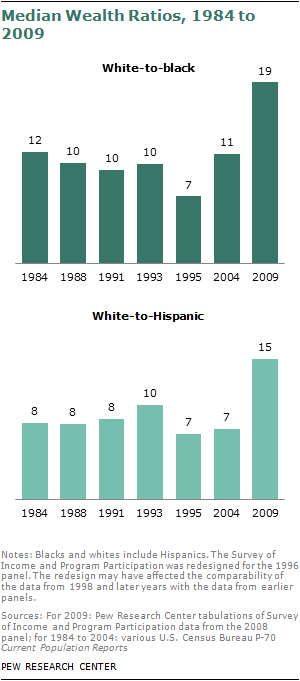
The reality for communities of color across the US however is quite different. A new study by the Pew Research Center shows that since 2005 the wealth gap has increased throughout the US, particularly along racial lines.
In looking at census data from 1984 to 2009, researchers found that there has been an increase in the wealth gap between Blacks and Whites of 19 to 1. In 1984 the gap was 12 to 1 and as low as 7 to 1 in 1995. The biggest change has been between 2004 and 2009. The same is true in the gap between Hispanics and Whites, where in 2004 there was a 7 to 1 wealth gap and by 2009 that gap grew to 15 to 1.
Other key findings from the report:
Hispanics: The net worth of Hispanic households decreased from $18,359 in 2005 to $6,325 in 2009. The percentage drop—66%—was the largest among all groups. Hispanics derived nearly two-thirds of their net worth in 2005 from home equity and are more likely to reside in areas where the housing meltdown was concentrated. Thus, the housing downturn had a deep impact on them. Their net worth also diminished because of a 42% rise in median levels of debt they carried in the form of unsecured liabilities (credit card debt, education loans, etc.).
Blacks: The net worth of black households fell from $12,124 in 2005 to $5,677 in 2009, a decline of 53%. Like Hispanics, black households drew a large share (59%) of their net worth from home equity in 2005. Thus, the housing downturn had a strong impact on their net worth. Blacks also took on more unsecured debt during the economic downturn, with the median level rising by 27%.
Whites: The drop in the wealth of white households was modest in comparison, falling 16% from $134,992 in 2005 to $113,149 in 2009. White households were also affected by the housing crisis. But home equity accounts for relatively less of their total net worth (44% in 2005), and that served to lessen the impact of the housing bust. Median levels of unsecured debt among whites rose by 32%.
The report does not provide much data state by state, but there is some information that looks at the median home prices state by state. According to the Pew study, “From the end of 2005 to the end of 2009, median home prices decreased by more than 30% in five states: Nevada (down 49%), Florida (38%), Arizona (38%), California (37%) and Michigan (34%).”
We do know that the racial break down of children living in poverty based on a report Kids Count 2010. According to that report, “Almost one of every two African American children was mired in poverty and more than one of every three Hispanic children, compared with one in seven white non-Hispanic children.”
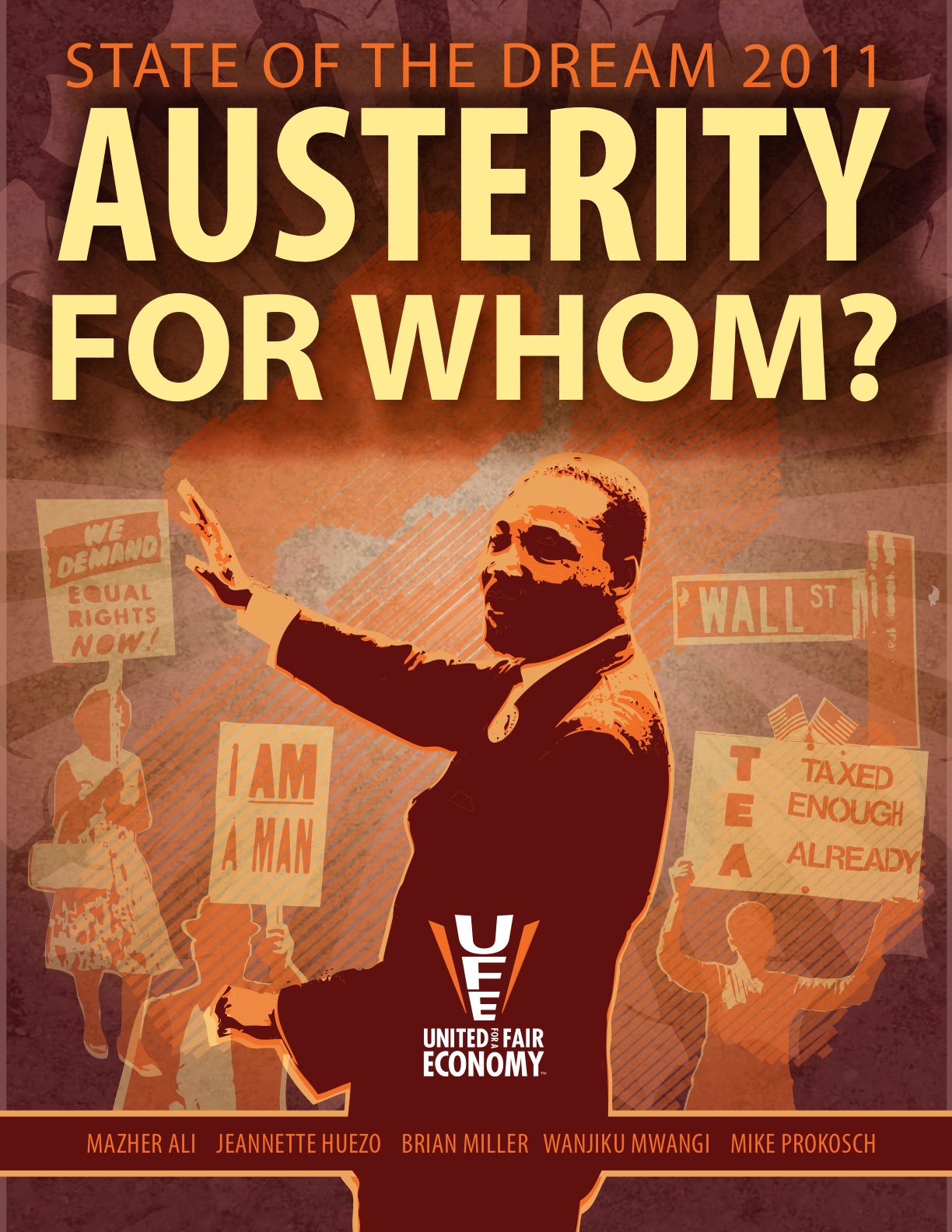
All this data is not suggesting that the Obama administration is to blame for the increase in the wealth gap between Whites and racial minorities, especially since the data only includes one year of the current administration. What it does say is that the trend is not on the decline and according to a report by the group United for a Fair Economy the trend is even worse in the past year.
What this data should say to people who care about racial justice is that institutional racism is deeply entrenched and statistically has grown worse for African Americans and Hispanics in the last 30 years. It also suggests that the emphasis on diversity in this society is not the same as racial justice and that maybe we need to challenge our understanding of house race and class intersect in this society.
I have heard numerous people over the past 2 years make the argument that Rick DeVos is blazing his own path and shouldn’t be judged by the previous DeVos generations’ political philosophy. A recent article in MiBiz would suggest otherwise, especially for those who are not under the spell of Capitalism’s promise of riches.

The MiBiz article mostly focuses on Rick DeVos’ more recent project known as 5×5, a competition of sorts, which requires those seeking funds for start up business projects must present their idea to a panel of judges. This is really old news for those who follow GR politics since the 5×5 venture has been happening since January of this year.
5×5 is not an entirely original idea for Grand Rapids, since another project called Sunday Soup follows a similar model. Well, not really. There are fundamental differences between the two projects, Sunday Soup is grassroots, takes place at the DAAC and allows anyone who attends to be part of the collective decision on which art-based proposal will get funding. 5×5 is not grassroots, gives out money for business-focused projects and uses judges that are primarily culled from business circles.
Cut from the same cloth
The MiBiz article is instructive in that not only provides DeVos an unchallenged forum to promote his ideas, it tells us something about what he really values.
The article provides a little information on DeVos’ history of for-profit projects. He mentions Sprout as his first venture and says that it didn’t do as well as planned. Soon after he started ArtPrize, which as we all know has been widely successful. Rick DeVos then goes on to say:
“Perseverance is the key, as is not treating failure as something that marks someone for life. (Failure) is inevitable if you’re trying. If you’re not failing, you aren’t trying hard enough.”
Interesting, although not surprising, that the MiBiz writer does not challenge DeVos on this notion of perseverance. Here is a guy who comes from a multi-billion dollar family, with business and political connections that have a global reach, and he wants us to believe that he became successful because he persevered?
In addition, Rick DeVos has become quite good at using cutting edge language like “decentralized models” and “a dynamic ecosystem of entrepreneurs.” DeVos wants us all to think that he embraces a communal/collectivist approach to life, but despite his use of language we need to ask the basic question…….who benefits from these kinds of projects?
The MiBiz article makes it clear that the local elite business community fully endorses his projects, as well as the Grand Rapids Downtown Development Authority (DDA). There is no mention of working class people, racial minorities or those who live anywhere other than the downtown business districts. So it seems clear who the beneficiaries are.
The MiBiz article also mentions a third project by Rick DeVos, called Momentum. Momentum is a business “boot camp” where applicants are vetted and are then eligible for much larger capital investment funds. The project provides mentors (all White business people) and a group of business sponsors that also attempt to present themselves as “community minded.”
The MiBiz article ends with one more comment from Rick DeVos that is also instructive. “I love ideas, and I love the connection between ideas. I love innovation and trying things in that spirit of rebelliousness you have to start from when you’re trying to do something new. … Anything we can do to support that is a good thing.”
First, there is nothing rebellious about anyone who was born into wealth and continues to promote well accumulation for a chosen few. Second, there is nothing terribly innovative about any of the projects that Rick DeVos has created to far. The 5×5 and Momentum projects are both designed to do what organizations as old as the National Manufactures Association – generate more wealth for a select few and then make the claims that this new wealth will trickle down to benefit everyone.

The trickle down notion is even what drives ArtPrize if one considers who the primary beneficiaries are of that project. The downtown businesses – hotels, restaurants, clubs and private parking lots – are the big winners. Sure some working class people might make extra tips, but the whole idea is based on the fact that hundreds of artists will invest their unpaid labor with only a handful of artists getting paid.
ArtPrize is also “successful” in that it has received an uncanny amount of local news coverage (which is essentially free advertising), so much so that in 2010 ArtPrize coverage trumped election coverage despite the fact that there was a Governor’s race. Add to this the recent announcement that ArtPrize is receiving $100,000 of federal money, which essentially means that working people are partially subsidizing a project that will disproportionately benefit the business class.
For all the claims that Rick DeVos is a rebellious guy who is stepping out from the shadows of his father and grandfather, we think it would be more accurate to say that he is continuing the family tradition of transferring wealth to a chosen few while most of the community struggles to meet its basic needs.
ABC and WZZM 13 give McDonalds a free pass on their ongoing campaign to target children

Yesterday on the ABC show Good Morning America, there was a perfect example of the inherent flaw in commercial media – the inability to seriously challenge corporate interests.
Good Morning America reporter George Stephanopoulos presented a story about the McDonalds Corporation’s decision to revise their Happy Meal package to include fruit. This decision by the fast food giant to provide the same kinds of food “stuff “ – chicken nuggets and fries – clearly demonstrates that they are primarily interested in public perception over real nutrition.
Good Morning America then blew a perfect opportunity to actually confront what any reasonable person would see as a complete scam from McDonalds. The show invited the President of the McDonalds Corporation to the show and did not hold them accountable for decades of targeting children with unhealthy food.
In watching the video you hear George Stephanopoulos refer to “some critics” who would rather see the Happy Meal discontinued, but the ABC commentator did not identify any of these “critics” nor provide them with equal airtime to challenge the McDonalds Corporation.
What viewers hear instead are vague commitments from McDonalds about providing nutritional information in every Happy Meal box. At one point Stephanopoulos even admits that he can hear his children telling him to take them to McDonalds so they can have some fun.

It’s bad enough that a major TV network gives a free pass to a company that is complicit in obesity, ecological destruction, worker exploitation and deceiving children (as documented in the film McLibel), the ABC Network provided a national forum for McDonalds to continue to lie to the American public.
To make matters worse, Michelle Obama then released a statement saying:
“McDonald’s is making continued progress today by providing more fruit and reducing the calories in its Happy Meals. I’ve always said that everyone has a role to play in making America healthier, and these are positive steps toward the goal of solving the problem of childhood obesity.”
At the local level, ABC affiliate station WZZM 13 not only plugged the Good Morning America story about McDonald’s claim to care about children, they also missed a big opportunity to take the fast food giant to task for decades of targeting children with unhealthy foods.
Channel 13 invited 2 local moms to come and “debate” the McDonalds Happy Meal issue in their TV studio. However, the 7 minute segment basically consisted of one mom saying she never takes her kids to fast food restaurants and the other saying she does is every once in a while. In other words, McDonalds got a free pass on WZZM 13, since their decades long practice of targeting children with unhealthy foods was pretty much ignored.
WZZM 13 could have provided viewers with valuable information from the Campaign for Commercial Free Childhood or encouraged parents to read an excellent toolkit for how to fight fast food marketing produced by the Berkeley Media Studies Group. The local ABC affiliate could also have invite a public health official or someone from the local group Stop Targeting Our Kids (STOK) so that viewers would have a greater opportunity to understand how McDonalds deceives children. The fact that WZZM 13 did not hold the McDonalds Corporation accountable is no surprise considering McDonalds is a regular advertiser on the local ABC station.
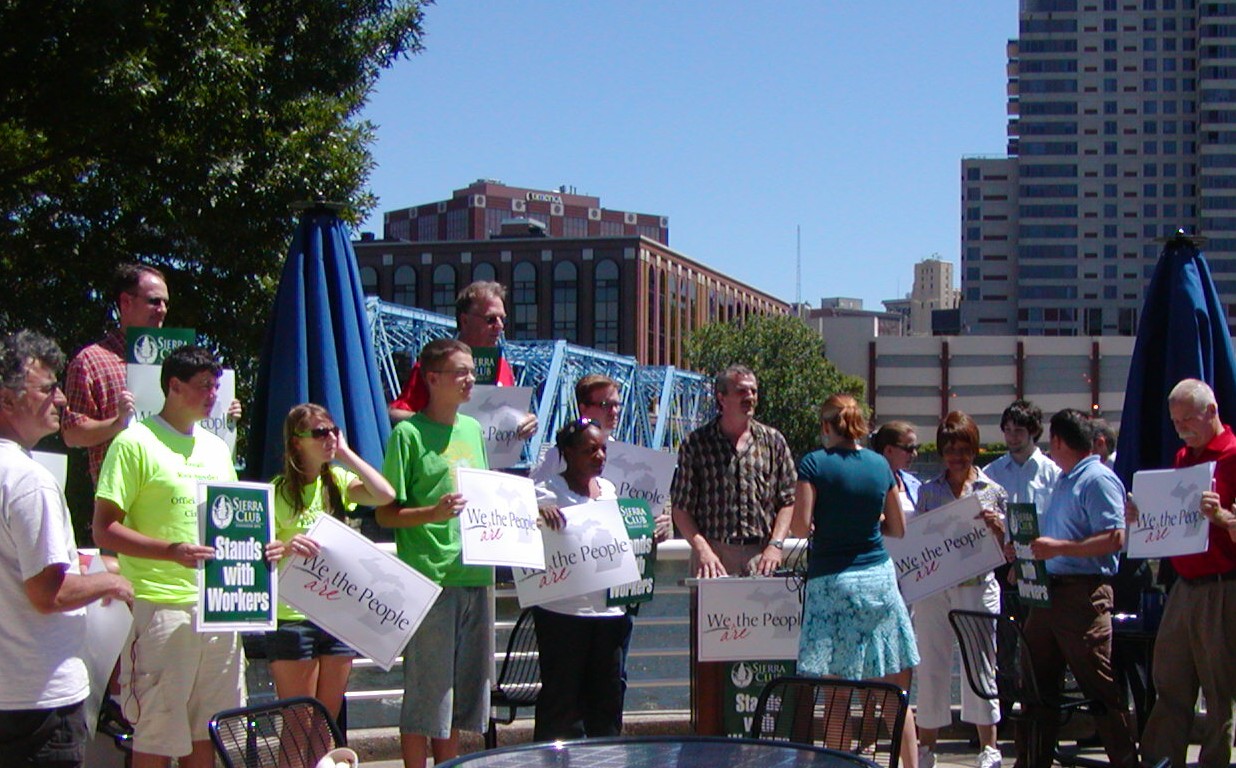
Tuesday afternoon, a press conference alongside the Grand River brought representatives from the Sierra Club, We Are the People and the Blue Green Alliance together to challenge new Michigan legislation (HB4326/SB272) that destroys crucial environmental, consumer and worker protections and strip the governor’s authority to protect the Great Lakes. According to Sue Levy, representing the UAW, “4326 prevents the state from adopting standards that are tougher than federal standards. We will have to rely on Washington to protect Michigan’s resources and workers. It will tie our hands from protecting the Great Lakes. Fewer environmental resources will mean fewer workers on the job.”
Mike Berkowitz, chapter organizer for the Sierra Club, stated, in a press release circulated at the start of the press conference, “This legislation sends a clear message that state politicians don’t think the Great Lakes are worth protecting. Washington bureaucrats are not better equipped to protect the Great Lakes than the people who live right here in Michigan. This ‘one-size fits all’ approach won’t protect ‘Pure Michigan’ and it won’t create a single job.”
Berkowitz recapped that statement when he took the podium. He also shared examples from recent history that reaffirmed the dangers of the new legislation. Because Michigan’s governor has the authority to protect the Great Lakes, in 1976, Governor Milliken was able to save Lake Erie by instating limits on phosphorous. Berkowitz noted that Governor Granholm’s stronger-than-federal mercury limits have prevented even higher levels of this deadly toxic metal to enter the food supply of Michigan populations dependent on fish for sustenance. And, Michigan’s more stringent regulation of CAFOs has protected the Great Lakes, inland lakes and rivers, like the Grand, from being turned into manure filled dumping grounds. (CAFO stands for concentrated animal feeding operations, i.e. huge factory farms.)
“Imagine the Grand River here, filled with feces and urine,” Berkowitz said.
Last, Mark Schaur, from the Blue Green Alliance (a front group for the Democrats) took the podium. He reiterated his quote from the same press release, “Racing to the bottom on environmental protection and worker safety isn’t a jobs plan for Michigan. In fact, it’s quite the opposite. Instead we need to build on Michigan’s unique assets—its people and its natural resources—to create the good jobs of the 21st century here.”
He went on to say that Michigan’s people and natural resources “power our economy,” stating that this legislation would ultimately make the US economy less competitive and cause us to lose the “race” for green jobs to China and Germany.
During the question and answer period following the presentations, GRIID asked if any of the speakers knew of industries or entities who had lobbied to get HB4326/SB272 passed. No one had an answer. However, the easily accessible minutes of the May 18, 2011 Committee on Regulatory Reform listed the following supporters of the bill:
- Michigan Association of Home Builders.
- Telecommunications Association of Michigan.
- Michigan Chamber of Commerce
- Michigan Farm Bureau
- National Federation of Independent Business,
- Michigan Manufacturers Association
Clearly, HB4326/SB272 is a dangerous affront on Michigan’s environment. Combining the environmental impacts with the call for more jobs and a stronger economy may be a good strategy in this instance. However, the environmental crises we now face–locally and globally–require an immediate and radical shift in our patterns of consumption. Green jobs and new technologies are not enough.
Detroit City Council First in Michigan to Support a Ban of Dangerous Gas Drilling Technique
This article is re-posted from Food & Water Watch.

Last Friday, Detroit’s City Council became the first in Michigan to pass a resolution supporting a ban on a controversial gas drilling technique known as fracking. The Council passed the resolution unanimously. Council member JoAnn Watson offered up the resolution, and several local activists attended the Council meeting to show their support. In banning fracking, Detroit joins 65 other municipalities across the United States who have taken action against the practice.
“Detroit sent a strong message indicating that a ban on fracking is necessary to protect public health and preserve Michigan’s natural resources,” said Lynna Kaucheck of Food & Water Watch. “Michigan sits in the middle of 20 percent of the world’s available fresh water; that means we have a distinct responsibility to protect this vital natural resource. The time to ban fracking in Michigan is now.”
Fracking involves injecting water, sand and toxic chemicals deep underground to break up dense rock formations and release natural gas. Opponents of fracking cite the high potential for water and air pollution as a leading reason to ban the practice. Over 1,000 cases of water contamination have been reported near fracking sites.
Public opposition to fracking has escalated in recent months, with concerned residents and environmental and consumer advocacy groups campaigning against the practice. Recent reports show that oil and gas interests have leased nearly $200 million worth of Michigan-owned drilling rights in the Collingwood-Utica formation in the last year. The Collingwod-Utica formation is a deep shale deposit that rests under the northern portion of Michigan’s lower peninsula.
“Its time our state lawmakers truly put the state of Michigan and its tourism and agriculture industries ahead of greedy oil and gas interests” said Kaucheck. “We need to support the industries that make our state great, instead of selling of our natural resources to the highest bidder.”
In other parts of the Midwest where fracking is increasingly common, residents have reported complications ranging from headaches and blackouts, noxious odors in the air and sudden blindness, hair loss and death among their livestock.

A 2011 Cornell University study found that the process of fracking also releases methane, which according to the EPA, is 21 times more damaging of a greenhouse gas than carbon dioxide. Similarly, a study released by researchers at Duke University in April found methane levels in shallow drinking water wells near active gas drilling sites at a level 17 times higher than those near inactive ones.
“This resolution is a great first step and a bold statement from the Detroit City Council,” said Kaucheck. “We hope that other municipalities and the state follow suit.”
Earlier this year, the U.S. House and Energy Commerce Committee determined that 14 oil companies had injected 780 million gallons of fracking chemicals and other substances into U.S. wells between 2005 and 2009. This included 10.2 million gallons of fluids containing known or suspected carcinogens.
The companies however, are not required to disclose the chemicals in fracking fluid, which they claim should be protected as a “trade secret”. They are also exempt from seven major federal environmental laws, including the Clean Water Act.
Scientists at the Endocrine Disruption Exchange who tested fracking fluids found that 25 percent can cause cancer; 37 percent can disrupt the endocrine system; and 40 to 50 percent can affect the nervous, immune and cardiovascular systems.
Last month Food & Water Watch released a report entitled The Case for a Ban on Fracking. The report reveals how the natural gas industry’s use of water-intensive, toxic, unregulated practices for natural gas extraction are compromising public health and polluting water resources across the country.
The Case for a Ban on Fracking is available here.
A map of municipalities that have taken action against fracking is available here. As of today, Grand Rapids has not taken action to ban fracking.
Milk for Thought’s Big Pink Bus in Grand Rapids Thursday
 On Thursday July 28th, Milk for Thought’s “Latch On America Tour” Big Pink Bus will park at Rosa Parks Circle for a full day of events celebrating and promoting breastfeeding.
The fun starts at 10 a.m. Grab a sign and welcome the bus when it arrives at 10:20. According to its website, “At Milk for Thought, we want to change the landscape of breastfeeding — from attitudes to advocacy to education. Our goals are to work collaboratively to empower pregnant and breastfeeding moms by connecting them to local experts and counselors, baby-friendly hospitals and birthing centers, support groups, and other mothers who are out there and want so much to help. Instantly, new moms will get the support, encouragement, and shoulder to lean on that they need to have a successful breastfeeding journey.”
Why all the hype about breastfeeding? Here’s just a few of the many reasons. Breastfed babies are healthier, smarter and less prone to ear infections, allergies, diabetes and asthma. Breastmilk is inexpensive (think free), convenient and is the only true species-specific formula available for human babies. Mothers who breastfeed enjoy the relaxing effects of oxytocin each time their babies suckle. They are less prone to breast cancer, osteoporosis and ovarian cancer.
The fun starts at 10 a.m. Grab a sign and welcome the bus when it arrives at 10:20. The day’s line-up includes a line-up of speakers including the Healthy Kent Breastfeeding Coalition, physicians, elected officials, breastfeeding mothers, authors, La Leche League and representatives of Milk for Thought as well as live musical entertainment.
Of special note, at 1:30 p.m., Troy, Michigan mother, Afrykahn Moon, will share her experience of being kicked off a public transit bus there for breastfeeding her two-week-old son.
Multiple community partners will have resource tables. In the “Faces of Breastfeeding in Michigan” photography area, visitors can have their pictures taken to share what breastfeeding means to them.
For the full listing of speakers and events, visit the Facebook event page.

