
Malalai Joya, an Afghan activist and former member of the Afghan parliament, has a message for those of us who live in the country that is most responsible for the bloodshed in her country.
Malalai Joya is the author of the book A Woman Among Warlords: The Extraordinary Story of an Afghan Who Dared to Raise Her Voice. She continues to speak out on behalf of the Afghani people and you can follow her online at http://www.malalaijoya.com/.
The Political Economy of ArtPrize – Part II
Earlier this week in Part I, I talked about who the primary economic beneficiaries are of ArtPrize, particularly the owners of the downtown businesses. In Part II I want to talk about the financials of ArtPrize, where their money is coming from and what that means for civil society in the Greater Grand Rapids area.

Several weeks ago I registered on the ArtPrize site and asked the following question: “Can I see your organization’s financial records, what your budget is, how much money you get from sponsors and a breakdown of that amount.” The response I got back was, “GVSU is doing an economic impact study, I would suggest contacting the university.”
First off, the response in no way answered my question, since an economic impact study is not likely to include the budget for ArtPrize, with a breakdown of sponsorship contributions. Second, since ArtPrize is now a non-profit they are required by law to make this information public. I wrote back to the person who directed me to GVSU and I asked the same question as before. I went to the ArtPrize office downtown and asked the same question to which I was directed to their PR guy, Brian Burch. I e-mailed Brian and have as of this writing received no response.
Getting access to non-profit financial statement, also known as 990s, is easier said than done. I was able to access the 2009 financials online, but it provides a limited sense of what kind of money has come and who has funded the annual art competition. However, there is enough information to make some observations and analysis about the amount of money funneled to ArtPrize and who is giving it.
According to the 2009 financial statement for ArtPrize, there was a total of $2,173,163.00 in expenses. The document also shows that Dick and Betsy DeVos gave son Rick $1,700,000.00 for his art competition. Some of the expenses included $605,660.00 for web design that was paid to Pomegranate Studios, which is another DeVos venture; $221,000.00 to People Design Inc. for advertising and $256,000.00 for PR provided by Seyferth & Associates. So it seems that mom & dad fronted this little capital venture for son Rick.

We have not as of this writing received the 990s for 2010 or 2011, but we were able to locate some information on finances for 2010. According to an article in Philanthropy Roundtable:
The Dick and Betsy DeVos Family Foundation makes ArtPrize possible. “The foundation provided the venture capital,” says Rick. Last year, the contest cost $2.8 million, with the cash awards making up only a fraction of this price. The organization had to underwrite everything from its own staff time to developing a web infrastructure that can handle public voting. The physical event also carried substantial costs, such as providing shuttle buses, printing maps and guidebooks, and producing colorful silicone gel wristbands. In keeping with DeVos’ original conception, ArtPrize spent no money on advertising. The DeVos Foundation put up the prize money and made up the difference between the event’s receipts and expenses with a loan. Community sponsors also chipped in, providing $500,000 in 2009 and $1 million in 2010.
Well, we know that the amount of people ArtPrize has hired has increased over the past 2 years, so we can speculate that the budget is bigger now than in 2009. Then there is the matter of sponsors, which are numerous. Some of them are just the run of the mill downtown businesses, but there is a listing for the major sponsors, such as the Presenting Sponsor – The Dick & Betsy DeVos Foundation.
Other major sponsors are: Amway, Bissell, Comcast, Grand Rapids DDA, The David & Carol Van Andel Foundation, Haworth, Frey Foundation, Herman Miller, Meijer, Steelcase, Kendall College, PNC Bank, Wolverine Worldwide, West Side Beer, Daniel and Pamella DeVos Foundation, Doug and Maria DeVos Foundation, Richard and Helen DeVos Foundation, Rick and Melissa DeVos, VanderWeide Family Foundation, Amway Hotel, Deloitte, Atomic Object, Fox Motors, Huntington Bank, ITC Holdings, Pomegranate Studios, Rockford Construction, Square One Design, Universal Forest Products, Gilmore Collection, Varnum, ITC Holding, On Stage Services, Terryberry Company, Consumers Energy and The Edgar and Elsa Prince Foundation.
After major sponsors there are the group listed as benefactors. This list includes Crown Motors of Holland, Edward Jones, Experience Grand Rapids, Grand Rapids Community Foundation, J.C. Huizenga, Porsche, RCM Technologies, Scott Christopher Homes and Spectrum Health.
The corporations, foundations and other entities listed here make up a good portion of the local power structure, whether we are talking about the DeVos, Van Andel and Prince families, Peter Seechia, David Frey, John Huntington and Fred Meijer or just the corporate entities which wield significant power over political and economic policy in West Michigan.
This kind of sponsorship certainly plays a key role in the political culture of West Michigan. It is very doubtful that thousands of dollars are donated to ArtPrize just for fun. In fact, I would submit that these entities contribute to events like ArtPrize as a means of creating an illusion, a diversion or a buffer for public outrage.

The illusion from the money donated by the list of sponsors is that the public is to see them as what they call themselves, philanthropists. We are to believe that these great patrons donate money out of the goodness of their hearts. The financial contributions of the sponsors could also been seen as a diversion, so that people look at all the art downtown and forget about the thousands of people who are living in poverty, are unemployed and struggling to meet their basic needs. Lastly, these contributions can act as a buffer, by getting people who enjoy and praise ArtPrize to the extent that they will silence or marginalize people who want to challenge or question the power that the families and corporate entities in West Michigan wield.
If you look at who makes up the Grand Rapids Chamber of Commerce, the Econ Club of Grand Rapids, the Downtown Development Authority, Grand Action, the West Michigan Policy Forum and the One Kent Coalition you see many of the same names involved in sponsoring ArtPrize. The Chamber of Commerce and the Econ Club have been supporters of the economic policies implemented by Governor Snyder, which have resulted in the elimination of a business tax, weakening public sector unions and taking away local power through the Emergency Financial Manager system.
The West Michigan Policy Forum wants Michigan to be a Right to Work state and the One Kent Coalition wants to radically alter local government by merging the City of Grand Rapids with the Kent County that will be led by a CEO, according to their own proposed legislation.
Another example would be the dominance of the DeVos, Prince and Van Andel families in their sponsorship of ArtPrize. According to research done by investigative reporter Russ Bellant (The Religious Right in Michigan Politics), we know that the DeVos and Prince families have donated hundreds of thousands of dollars to organizations and campaigns to defeat efforts for greater equality by the LGBTQ community, both in Michigan and around the country.
Some of this funding has gone to support efforts to defeat marriage equality and domestic partner benefits or to religious groups, which preach that, “homosexuality is a sin.” Despite this kind of homophobic policy funding, I have seen nothing in writing or heard anyone discussing these issues while ArtPrize has been going on. Look at it this way, what if neo-Nazi groups or the KKK were sponsors of ArtPrize? Do you think there would be some discussion of this, maybe even rage? Do you think that the African American community and its allies would be avoiding or even calling for a boycott of ArtPrize? Sure seems likely. So why is it that when institutions that make it a priority to deny people who identify as LGBTQ their basic rights, why are people not outraged? Just because the foundations that fund anti-gay policies don’t wear white hoods, doesn’t mean they don’t do harm to vulnerable population.
It could be that this information is just not known. However, it is my contention that this information is known at some level, but there are too many people who are willing to just ignore these facts so they can stroll about downtown for a few weeks of the year and give up their power to a small sector of West Michigan, that not only has deep pockets, but undermines basic rights and the democratic process. Some might say that this kind of analysis is just conspiracy theories, but I say this is how power functions.
Postscript: Just a little side note – Brian Burch, the PR guy for ArtPrize, is also one of the Holland City Council members who voted no on including sexual orientation in the City’s anti-discrimination ordinance the past summer.
List of sources on local funding for anti-gay initiatives:
http://www.disaboomlive.com/forums/t/40396.aspx
http://www.mediamouse.org/tag/betsy-devos
http://www.mediamouse.org/resources/right/foundations/richard-and-helen-devos-foundation
http://www.mediamouse.org/resources/right/foundations/edgar-and-elsa-prince-foundation
Salvadoran speaks about anti-mining resistance in his country

This morning at the GVSU downtown campus, Agustin Menjiva, a community organizer from El Salvador, addressed a group of about 150 students.
Agustin’s visit was part of a speaking tour with the group Sister Cities, which provided a translator for the talk. The village that Agustin is from (Arcatao) has a sister city relationship with the city of Madison, Wisconsin.
Agustin begins by providing some background on the recent history of El Salvador to give a context to the current struggle. From the late 1970s through 1992, El Salvador was immersed in a civil war that resulted in a great deal of suffering and murder of civilians. The death toll was estimated at 80,000, according to an investigation by the UN Truth Commission in 1994.

“Our struggle in the 80s was based on our desire to have basic human rights, the right to organize, the right to form unions, the right to land, education and housing.” Agustin says that the repression was overwhelming and that the target of the repression was predominantly the poor and rural workers. “Indeed, it was a crime to be poor in El Salvador, especially if you demanded justice.”
Agustin also mentions that there were many religious workers targeted during the repression, especially those that worked with and spoke out on behalf of the poor. He mentions that Salvadoran Bishop Oscar Romero was the most visible example of religious solidarity in the country at the time. Romero, who denounced the repression and military violence, was murdered while saying mass in San Salvador.
“Community organizers like myself were also targeted. In fact, anyone who was seeking real solutions to the injustice were often targeted by the military death squads,” said Agustin.
Eventually a group of armed insurgents, known as the FMLN, was formed and began a military campaign against the repressive government in El Salvador. The military’s response was to unleash even more repression. Agustin gives an example of the Rio Sumpul massacre, where 600 Salvadoran refugees were killed by the military in one afternoon while trying to cross a river into Honduras.
Agustin also spoke about how many people fled their villages and hid in the mountains, which is what people from his community did. People would live in caves and hide from the military as a means of survival.
In 1984 CRIPDEZ was formed in El Salvador and sought to develop solidarity with the international community, which eventually led to the Sister Cities project as a means of providing support for their struggle. Part of this support was manifested in having international people accompany us to our communities to deter further massacres and human rights abuses. From 1986 through 1991, many communities returned to their villages. The government condemned this action and claimed that the families of these communities were guerrillas and terrorists.
In 1992, there was a cease-fire followed by a signing of Peace Accords between the Salvadoran government and the FMLN. Agustin says that most people saw the FMLN as a defender of the people, which provided tremendous support to the armed revolution.
The speaker then told the students that this period of massive repression was also the result of the support that the US government gave to the Salvadoran government/military. During the 1980s, the US was providing $1.5 million of military aid per day to the military to carry out its murderous campaign.
It was this collective experience of the Salvadoran people that in many ways led to their desire to organize a better future. Agustin then said that his father and one brother were killed by the Salvadoran military, which is a constant reminder of why we work for justice and human rights. His own experience is what informs his desire to organize his own community and to have a clear analysis of systemic violence and exploitation.

With the signing of the Central American Free Trade Agreement (CAFTA) in 2005, it opened El Salvador to a new kind of exploitation and violence. Gold mining companies from the US and Canada have flooded the country and are trying to extract resources that will not benefit the people in the communities where the gold has been discovered.
There has been tremendous resistance by the communities to these mining efforts, particularly in the department of Chalatenago. People in the community of San Jose Las Flores began to organize around the human and ecological impact of mining, which eventually led to preventing any mining companies from operating in that area. Some of this organizing has involved lots of education work and hosting community councils to collectively discuss what impact mining might have.
Agustin said that the campaign is now a national campaign in El Salvador. Their hope is that they can get the government to take a stronger stand against mining to prevent future exploitation and ecological destruction.
The mining companies have responded by suing the Salvadoran government, arguing that the legal agreements in CAFTA protect their right to mine in that country. One of the leading companies, Pacific Rim, is hoping to use the lawsuit to pressure the Salvadoran government to allow these companies to operate with impunity.
The translator (Alex) with Sister Cities then spoke about some of the organizing happening in the US to bring attention to this issue and to get more Americans to provide solidarity for the current Salvadoran struggle.
Alex also mentions that the efforts of the mining companies have caused some division in a few communities in the country. These divisions have led to violence, where at least 4 anti-mining activists have been murdered in recent years. The mining companies are saying the violence was gang related, but Alex said that the gang members were paid to commit these murders. Another target of the repression has been Radio Victoria, a community radio station that has been critical of the mining. She said that if people want more information on these issues they can go to www.elsalvadorsolidarity.org.
After the talk, one person asked the question of who was the US President during the repressive years in El Salvador. Reagan and Bush Sr. were the presidents during the bulk of the civil wars years, but Carter was President during the beginning of the US military support of the repression. Archbishop Romero had even sent a letter to Carter in early 1980 to ask him to stop sending military aid. Carter never responded to the letter.
Another student asked what President Obama has done in regards to El Salvador. The response was that he has said nothing and done nothing on the mining issue. Agustin also said that most Salvadorans are not big fans of Obama because he has increased the number of deportations, which has affected many Salvadorans who were living in the US. One last concern, according to Agustin, is that Salvadorans are disgusted with the Obama administration’s support of the Honduran coup in 2009 and the subsequent repression.
Afghanistan’s Energy War
This article by Shukria Dellawar and Antonia Juhasz is re-posted from Common Dreams.
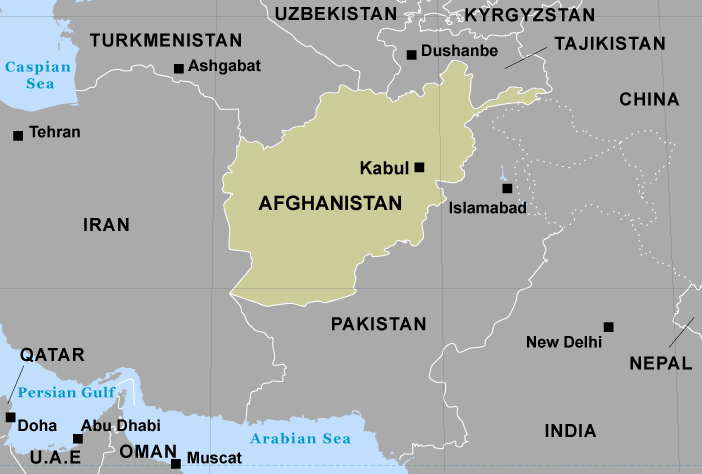
Violence escalated daily in Afghanistan with the approach of the 10-year anniversary of the U.S. invasion on October 7. At the same time, a little-noted energy agenda is moving rapidly forward that may not only deny Afghans the much needed economic benefits their energy resources could provide, but may also exacerbate insecurity and instability, ensuring a prolonged U.S. and foreign military presence. It is an agenda remarkably similar to one well underway in Iraq.
Eight years of war in Iraq succeeded in transforming the country’s oil industry from a nationalized model, largely closed to American oil companies, into an all but privatized industry open to foreign oil companies. ExxonMobil and BP, among other companies, are today producing oil in Iraq for the first time in over 30 years under some of the most corporate-friendly terms in the world. However, opposition from Kurdish leaders, Iraqi unions, civil society organizations, and some parliamentarians — who worry that the terms would grant undue benefit to foreign companies, to the detriment of Iraq’s economic stability and security — has kept the Iraq Oil and Gas Law, written to lock in this access, from passage.
But while the effort to transform Iraq’s oil sector has played out on a fairly public international stage, no such attention has been focused on Afghanistan. Compared to Iraq, Afghanistan’s populace remains poorly educated, its civil society and public sector workforce underdeveloped, and its government not only weak and challenged by corruption, but also lacking in both energy sector expertise and infrastructure. Under such circumstances, a radical redesign of the nation’s energy development model cannot take place in a manner that ensures fairness, equity, sustainability, or safety.
Suspect Intentions
Afghanistan’s known hydrocarbons are primarily located in the North. Its approximately 1.6 billion barrels of crude oil and 15.7 billion cubic feet of natural gas are minor in comparison to the resources of its neighbors (Iraq’s oil reserves are estimated at 115 billion barrels), but are comparable to those in nations such as Chad and Equatorial Guinea —and may be considerably larger, as there has been no significant exploration in decades.
Unknown to most Afghans, in January 2009 the government implemented a new Hydrocarbon Law that transforms its oil and natural gas sectors from fully state-owned to all but fully privatized. In April 2011, the Afghanistan Ministry of Mines launched the first of what it expects to be “several tenders for Afghanistan’s oil and gas resources over the next few years.”

As in Iraq, the contracts include production-sharing agreements. These agreements are the oil industry’s preferred model, but are roundly rejected by all the top oil-producing countries in the Middle East because they grant extremely long-term contracts (45 years or more, including the exploration phase, under Afghanistan’s law) and greater control, ownership, and profits to the companies than other models. They are used for only approximately 12 percent of the world’s oil. The Afghanistan contracts, moreover, would not require foreign companies to invest earnings in the Afghan economy, partner with Afghan companies, or share new technologies.
The Kabul-based nonprofit watchdog, Integrity Watch Afghanistan, found the Ministry of Mines severely lacking in the capacity to implement sound oversight, including to protect impacted communities and the environment, and found that this, “combined with reported endemic corruption in Afghanistan,” means that the Afghan government will not be able to ensure the good management of these resources.
The Norwegian government recently concluded an analysis of Afghanistan’s hydrocarbons, finding that “most Afghans express a high level of suspicion about the motives and intentions of neighboring countries and, increasingly, also of the international community. Further, “[M]any Afghans point out the risk of a lack of political willingness to ensure that such benefits [from hydrocarbon development] will have a fair distribution.”
Pipeline Politics
Afghanistan is not only an energy producer, it is also a potential “energy conveyer.” And negotiations for the creation of a Turkmenistan-Afghanistan-Pakistan-India (TAPI) pipeline are progressing at a rapid rate. Just last month, Afghanistan Minister of Mines Wahidullah Shahrani reported, “The implementation of the TAPI project will begin in 2012 and will be completed in 2014.”
The pipeline would carry natural gas from Turkmenistan through Afghanistan and Pakistan to India. It has been an objective of United States and western energy companies (and their governments) that have invested in the land-locked but energy-rich countries of the Caspian region since the mid-1990s, when companies including California-based Unocal began negotiating with the Taliban. Sanctions imposed on Afghanistan in 1998 made it impossible for U.S. companies to do business there, so negotiations stalled until 2001, when sanctions were lifted.
The Bush administration made completion of the TAPI a core part of its Afghanistan war strategy. As then-U.S. Assistant Secretary of State Richard Boucher said in 2007: “One of our goals is to stabilize Afghanistan, so it can become a conduit and a hub between South and Central Asia so that energy can flow to the south.”
This March, U.S. Assistant Secretary of State Robert Blake, Jr. reiterated the importance of the TAPI before a Congressional Committee, and in July Secretary of State Hillary Clinton urged completion of the TAPI while in India.
In April, upon the Afghanistan Parliament’s approval of a TAPI gas pricing agreement, parliamentarian Mohammad Anwar Akbari said that “we will have support of a U.S. company” for its construction. In the past year, Minister of Mines Shahrani has been pushing the benefits of both the pipeline and natural resource development in Afghanistan to private companies in London and New York.
The Price for Entry
The primary obstacle to construction of the pipeline and to foreign oil companies actively seeking oil production contracts is, and always has been, security. In response, Minister Shahrani announced plans for a 7,000-person Afghan “pipeline security force.” Yet across Afghanistan there is enormous skepticism about the present capacity of the Afghan National Army and Police, who are considered no match for the Taliban or local warlords.
Yet, if the pipeline is constructed and U.S. companies begin producing in Afghanistan, its importance to the West will only intensify, as will the desire to keep Afghanistan “open for business.” If Afghanistan does not have the internal capacity to provide this “openness” itself, the Untied States and other foreign governments may feel forced to do so on its behalf – utilizing their own troops.
The focus on Afghanistan’s entry into the “Great Game” of energy politics must not be only on generating profits or for the interests of external actors, but also on the long-term stability, independence, and strength of Afghanistan. Otherwise, the price for entry may be far higher than Afghans – and Americans – wish to pay.
Occupy Your City video
This story/video is re-posted from Brave New Films.
People young and old are taking the streets to let our government and corporations know that we are a democracy that’s not for sale.
The Occupy Wall Street protest is a full bore international indictment against corporate greed and dysfunctional government. Your leadership has helped us before and we need you again.
Will you use our inspiring video and images to activate and motivate a friend? We want everyone to know about the Occupy movement. Already, there are thousands of protesters in New York City and hundreds more in Los Angeles, Boston, Washington DC, Seattle, Miami and elsewhere. The time is now. Protests are growing more each day, with some observers estimating the Occupy movement could swell to 250,000 online activists in the coming days.
ArtPrize = Useful?
This article was written by Richard Kooyman.
Last week Cornerstone University’s Institute for Christian Cultural Engagement held the first “Creativity and Wisdom Conference” on their campus in Grand Rapids, Michigan. The Institutes website described the conference as being about a movement to revitalize creativity.
“Creativity and the Arts have been a part of Church history for millennia. Now, a movement to revitalize creativity in the Church is gaining ground. Come learn how creativity and the Church can once again work together.
Taking place during Grand Rapid’s ArtPrize®, ‘Creativity and Wisdom’ will examine human creativity through the eyes of biblical wisdom by looking and listening to a range of artists and speakers who offer both in depth analysis and the artistic fruits of their labor.”
Is creativity in the church different than creativity outside of the church? And how is creativity defined by the church today? The movement presented by the Institute for Christian Cultural Engagement suggests a new partner in religious creativity. That new partner is business.
Featured speakers for the conference were Rick DeVos, ArtPrize founder and Don Perini, Professor of Creativity at Cornerstone University. Cornerstone University was also a financial sponsor of ArtPrize in 2011. Introducing ArtPrize, Rick Devos used a series of key phrases from the ArtPrize website. These hip sounding slogans such as “Art=Community”, “You=Artist”, and “Prize=Catalyst” sound as if they are directly sourced from the best selling pop sociology/business books by Richard Florida and Daniel Pink.
Richard Florida’s language on creativity, from his book, “The Rise of the Creative Class,” has been adopted by art institutions, government, and politicians alike. Florida contends that the basis for the Creative Class is economic. A word search in “The Rise of the Creative Class” for the words ‘creative’ or ‘creativity’ brings up those words roughly 1200 times. In comparison the word ‘artist’ appears only 48 times. Richard Florida’s idea of who is creative and what is creativity is broad but you don’t have to delve deep into the book before it becomes apparent to what extent Florida defines and promotes creativity.
“I define the highest order of creative work as producing new forms of designs that are readily transferable and widely useful- such as designing a product that can be widely made, sold, and used; coming up with a theorem or strategy that can be applied in many cases; or composing music that can be performed again and again.” Richard Florida.
To Florida, creativity is the generation of ideas for business.

Rick DeVos also emphasizes that ArtPrize is about ideas, a “multitude of ideas”. At the conference DeVos chastised museums as dull and boasted that ArtPrize has “accomplished more in two years what some organizations accomplish in 20” by providing a “diversity of opinion.” He claims that 90% of what happens during ArtPrize is out of their control and that he just wants to see “ crazy crap all over Grand Rapids.” Like Richard Florida, you won’t hear DeVos using the word “art” much when talking about creativity or the creative process.
He told the conference attendees that as a Christian he felt Christians should be moved to create things that “people respond to” and that Christians need to become “relevant.” Richard Florida and Rick DeVos seem to agree that art is something that is useful and useful is defined as something that people already may want.
Since Modernism, Art has been free from that utilitarian idea of pedestrian usefulness. Artists and writers of the early 20th Century broke new ground that liberated Art from the influence of religion and politics. Art was free to be about Art. Thinking of Art as something that needs public approval before it is made is a business model that suggests Art needs consumer testing before it hits the market. Art since modernism has led the way; personal taste and opinion follow.
Don Perini, Professor of Creativity, demonstrated how to generate, capture, and implement ideas. He defined a good idea as one that is “powerful.” Perini’s powerful idea echoed Florida’s concept of creativity being useful. Powerful ideas, according to Perini, where those that were “useful” and useful ideas were those that 1) Changed the World 2) Partnered with God, 3) End Sin, and 4) Instill morals.
This regressive idea that Art should reflect evangelical morals is nothing new in West Michigan. The Acton Institute a ecumenical think-tank in Grand Rapids defines art in a 2010 blog podcast titled, “The Stewardship of the Arts” ,http://tiny.cc/jidu68b3h0, as a combination of 1) a mastery of skill and 2) the glorification of God. The Acton Institute has been supported by the Dick and Betsy DeVos Foundation, the major funding source of ArtPrize. Betsy DeVos was an Acton board member for over 10 years.
During the Q&A period of the conference a question was asked why the concept of creativity has become so popular recently. Perini answered that Business needs creativity and that people need to be creative to have an advantage in the job market. Then he offered a surprising statement. Creativity was popular in business and society, Perini suggested, because creativity was “cheap.” Business “didn’t need expensive research and design departments”, Perini said. Creative people evidently were everywhere or could be made to be everywhere, ripe for the picking.
The night before the creativity and biblical wisdom conference the top ten ArtPrize winners were announced to the public. That night my social media sites had numerous postings from people disappointed in the quality if the voting results. The problem seems to me to be two fold. On one hand there were a number of winners in the top ten whose work seemed unremarkable it their ability to push expectations. But the most potent of the debates centered on a work that was obviously made to pander to the religiosity of the West Michigan populace, Mia Travonatti’s giant mosaic depicting Jesus on a cross. While it was not the only artwork spread around the city that referenced Christianity it was commanding in its scale and realism. Travonatti had won third place last year with a saccharine mosaic of a female figure. This year she had done her homework.
I was able to ask Rick DeVos what he thought would be the art world’s impression of ArtPrize if Mia Travonatti’s “The Crucifixion” would win the top prize of the competition. He answered that he constantly has to emphasize to people that the point of ArtPrize is not who wins the prize but the conversations and dialog that ArtPrize generates. I reminded him that someone would win the worlds largest art prize of $250,000 and that I wanted to know if he thought it would help or hinder ArtPrize’s reputation in the larger, real art world. “Who knows”, he said, “ I’m not from that world.”
New Media We Recommend
Below is a list of new materials that we have read/watched in recent weeks. The comments are not a “review” of the material, instead sort of an endorsement of ideas and investigations that can provide solid analysis and even inspiration in the struggle for change. All these items are available at The Bloom Collective, so check them out and stimulate your mind.
Dark Matter: Art and Politics in the Age of Enterprise Culture, by Gregory Sholette – Artist and activist Greg Sholette presents a compelling critique of a shift in the motivation and production of art, particularly in New York. Sholette argues that the labor of artists and art production is more and more a part of business development and corporate culture. Dark Matter looks at how enterprise culture gentrified sections of Manhattan. Juxtaposed with this cooptation of art the author presents numerous examples of grassroots artists and visual campaigns they engaged in to communicate their angst over how art was being used for corporate profit.
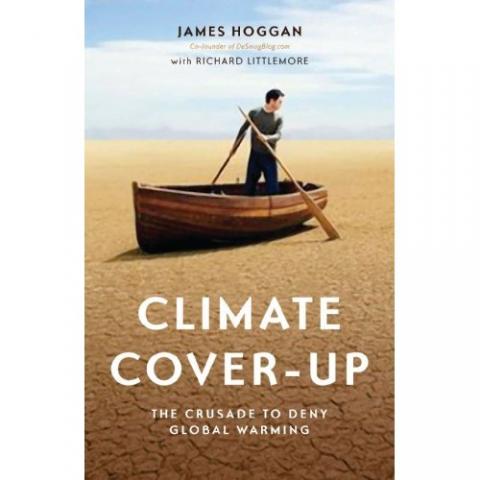
Climate Cover – Up: The Crusade to Deny Global Warming, by James Hoggan – Climate Cover – Up exposes the well funded and well organized effort on the part of some sectors to deny that global warming is one of the main issues of this generation. Hoggan looks at the role that Think Tanks, academia, politicians, media pundits and the capitalist class play in a campaign to distort and deny the truth about global warming. The author also presents information on astroturf groups, which are essentially fake front groups for big business, that pose as citizens groups attempting to present “the other side” in the debate on climate change. In some ways, the information contained in this book has been dealt with by other authors, but Hoggan presents this alarming information in a very readable fashion.

Breaking the Code of Good Intentions: Everyday Forms of Whiteness, by Melanie Bush – For people who are grappling with the issue of White Privilege and liberal responses to racism, Melanie Bush’s book is an invaluable read. The author looks at some of the subtle and institutional ways in which White Privilege and “whiteness” is manifested in American society. The book weaves historical information with contemporary analysis to tackle a subject that many people are unwilling to confront. Even though the book was written in 2004, it is still highly relevant particularly in the supposed “post-racial” era.
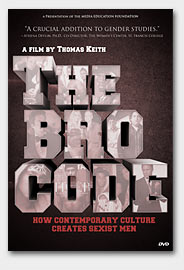
The BroCode: How Contemporary Culture Creates Sexist Men (DVD) – This new MEF documentary takes a hard look at how men are socialized into viewing women as sexual objects. Narrated by filmmaker Thomas Keith, the film uses lots of examples from contemporary media culture to demonstrate how pervasive the messages are to boys and men about what their attitudes are towards women. The film is broken up into four sections: Train Men to Womanize; Immerse Men in Porn; Make Rape Jokes and Obey the Masculinity Cops. The BroCode is an important educational tool for anyone high school age and up, but is a particularly important tool for men to view to get them to talk about and examine their own sexist behaviors.
The Political Economy of ArtPrize – Part I
There have been numerous articles written in recent weeks critiquing the quality of the art in this year’s ArtPrize. Some of what has been said is important and needs to continue.
However, there is an aspect of ArtPrize that hasn’t been addressed and that is the economic impact that the art competition has on Grand Rapids. This is what I hope to look at in two separate articles.
First, there have been previous estimates and a current study is being done on the economic impact, but little discussion has been placed on whom are the primary beneficiaries of the money being spent during Artprize. Secondly, there has been virtually no investigation into the Rick DeVos created entity’s own finances, sponsors and the political significance of that funding.
Part I – Who Benefits
About a month ago I was reading an excellent book by Gergory Sholette entitled, Dark Matter: Art and Politics in the Age of Enterprise Culture. It is a wonderful critique of this shift to art creation as a mechanism of economic development.
I tend to take books no matter where I go, so I have been out at numerous places and people will ask what is that book about. I respond and say I am reading it before ArtPrize starts for new insight into understanding the annual event. People often say they have some issues with the event as well, but “at least it is good for the economy.”
But what do people mean, “it’s good for the economy?” The economy is not an entity or some benevolent institution, it is a financial system that is designed to primarily benefit the capitalist class. Therefore, the question that should be asked is, who benefits financially from Artprize? So lets look at how people are spending money and who that money disproportionately goes to.

First, based on the insane amount of car traffic in recent weeks, it is safe to conclude that lots of people are driving to come downtown. This means that the oil companies and parking lot owners are making big money. In downtown Grand Rapids, the two primary beneficiaries of paid parking are the City itself and Ellis Parking, which has substantial control over urban parking in Grand Rapids, Lansing and Flint.
Second, people are eating and drinking at restaurants and clubs in downtown Grand Rapids. According to the Experience Grand Rapids site, there are 80 restaurants in the downtown area. The primary beneficiaries of money being spent at these places are the owners, owners like John & Greg Gilmore. Sure wait staff might make extra tips, but do you think that those who cook, wash dishes and clean these establishments are getting a raise during Artprize? Another thing generally overlooked about people going to restaurants during ArtPrize is that is more people are coming downtown that means that less people are eating in neighborhoods like Alger Heights or Grandville Avenue.
A third way people are spending money in downtown Grand Rapids is on hotel rooms. There are not many downtown hotels, but it is worth noting that the majority of those hotels are owned by the DeVos family. Again, the owners of those hotels are the primary beneficiaries of the money being spent on hotel rooms. Sure there are people employed in those hotels, but do you think the men and women who clean the rooms and change the linen are making a livable wage or get extra pay during ArtPrize?

A fourth economic beneficiary of ArtPrize are venues that are not restaurants, bars or hotels. Places like the various museums downtown, the convention center and other non-service industry venues are making money. Again, the question should be asked who are the primary economic beneficiaries of these venues? One could argue with the museums that it helps keep their doors open and provides financial resources for them to bring new exhibits to town.
A fifth group that benefits are businesses that sell art supplies or commodities used in ArtPrize installations, such as hardware stores, big box stores and any place that carries paint, construction material, etc. Since there are a limited number of stores that carry these items, most of the materials are being purchased from big box stores like Meijer, Home Depot, Wal-Mart or Lowes. Of course there are people who are using recycled material in their art, but the primary beneficiaries of these art material purchases are the owners of those stores.
A sixth economic beneficiary are the people employed temporarily by artists to haul or help install pieces. There are a few companies, some local, that are making money off of transporting pieces, especially the larger ones.
Some people might also want to include in the group of economic beneficiaries being artists. A few artists will win monetary prizes, some will sell art because of ArtPrize and some might say that greater exposure is to their benefit. However, lets be clear that the over 1,000 artists who submitted works of art this year are fundamentally contributing free labor.
There might be people we overlooked who economically benefit from the annual art competition, but the primary beneficiaries are the owning class, which has not been reflected in past studies done on the economic impact of ArtPrize. The study done last year by GVSU estimated that $7 – 7.5 million in economic activity was generated because of ArtPrize, but that study did not acknowledge that most of that money went to the people who own the hotels, restaurants, clubs and parking lots.
The group hired to do the study on the 2011 economic impact of ArtPrize is the Anderson Economic Group (AEG) based out of Lansing. However, looking at that business’s profile it is clear that they operate in the service of the financial sector, which is why the Economic Club of Grand Rapids hosted AEG’s founder In September and spoke on Michigan’s economy. Considering who the Anderson Economic Group serves, do we really think they will be looking at how ArtPrize benefits working class families?
The answer of course is no. ArtPrize economically benefits the owning class and the so-called creative class, which is ultimately about promoting enterprise culture. This sentiment was best described by local business elite Sam Cummings in 2009. “Our long-term goal is really to import capital – intellectual capital, and ultimately real capital. And this (ArtPrize) is certainly an extraordinary tool.”
There may be some trickle down economic benefits to working people by ArtPrize, but it is primarily an engine for wealth that gushes up.
(Part II of this article will focus on the finances of ArtPrize as an entity, their sponsors and its political/economic significance.)
Shocking New Keystone XL Documents Reveal Bias and Complicity in State Department Review of Proposed Oil Pipeline
This article is re-posted from Friends of the Earth.

Documents made public this morning by Friends of the Earth provide definitive evidence that the State Department’s review of a controversial proposed oil pipeline has been irreparably tainted by department employees’ pro-pipeline bias and complicit relationships with industry executives, including an oil lobbyist who was once a top Hillary Clinton campaign aide.
The internal State Department documents, which pertain to the review of TransCanada’s proposed Keystone XL tar sands oil pipeline, show that a State Department official cheered “Go Paul!” after TransCanada lobbyist Paul Elliott announced his firm had obtained new support for the pipeline. They reveal multiple department officials’ understanding that TransCanada planned to reapply to pipe oil at potentially dangerous pressures after the Keystone XL was approved (TransCanada announced in August 2010 that it was withdrawing its application for a permit to use high pressures). And they provide further evidence of inappropriately cozy relationships between multiple department employees and lobbyist Elliott, who was lobbying illegallyfor as long as two years due to his failure to disclose his lobbying as required by the Foreign Agents Registration Act.
An overview of key contents of the newly released documents, as well as links to pdfs of the documents themselves, can be found at http://www.foe.org/new-foia-docs-reveal-smoking-gun-regarding-state-department-bias.
“The contents of these newly released documents are shocking. They expose a rigged State Department process conducted in close coordination with oil firm TransCanada,” said Erich Pica, president of Friends of the Earth. “These revelations should disqualify the State Department from playing any further role in the pipeline review. If President Obama is true to his campaign pledge to end the days of lobbyists setting the agenda in Washington, he must revoke the State Department’s authority to approve this pipeline.”
“If President Obama removes the State Department from the process, a fair-minded reading of the evidence will force him to reject this dirty and dangerous pipeline, and that is exactly what he should do,” Pica said.
The documents made public today were obtained by Friends of the Earth, the Center for International Environmental Law and Corporate Ethics International via the Freedom of Information Act. The State Department initially refused to release the documents, so the groups, represented by Earthjustice, filed suit in May to force their release. The batch of documents made public today is the second round of documents released by the State Department. More documents are expected to be forthcoming.
On Thursday, September 22, the Washington Post reportedon the first round of documents. Those documents indicate that State Department officials provided inside information and coaching to TransCanada.

The additional evidence of State Department bias and an irreparably flawed process is substantial. For example:
· Last fall Secretary of State Clinton said she was “inclined” to approve the pipeline even though an analysis of the pipeline’s potential environmental impacts was not finished.
· A Wikileaked document reported on by theLos Angeles Times indicates that State Department officials “alleviated” Canadian officials’ concerns about whether the pipeline might be approved and provided them with “messaging” advice.
· The firm hired by the State Department to prepare the environmental impact statement and hold public hearings — Cardno Entrix— recently listed TransCanada as one of its “major clients.”
· The environmental impact statement released by the State Department in August included an appendix written by two TransCanada employeesand a TransCanada consultant(pdf) but did not identify TransCanada as the author. The appendix was a response to an independent report by University of Nebraska professor John Stansbury, Ph.D., about what the worst Keystone XL spills could look like. Though the TransCanada-authored response was included in the environmental impact statement, Stansbury’s report itself was not.
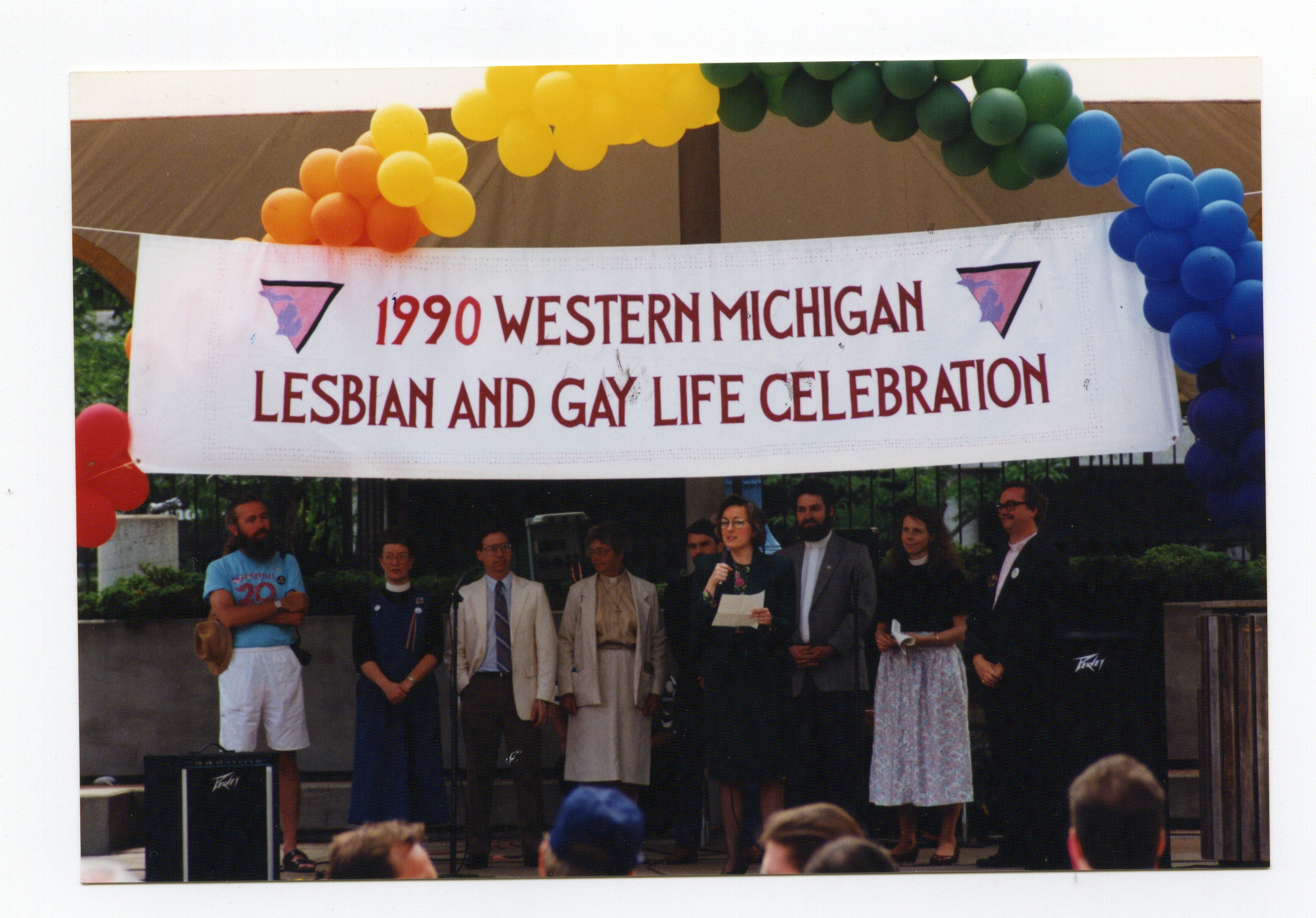
When of the benefits of doing a project like the People’s History of the LGBTQ community in West Michigan is that you get an opportunity to see where we have been in order to makes some determinations about where we might be going.
The gay community in Grand Rapids fought hard to get an anti-discrimination ordinance passed in 1994, but before that they had a tough battle to get city support for a Pride Celebration.
At the time, Mayor Gerald Helmholt, would not offer a city proclamation endorsing the Pride Celebration in the late 80s when the first events were held in Grand Rapids. Helmholt was also opposed to the first attempts to get an anti-discrimination ordinance passed in Grand Rapids in 1991 & 1992. Helmholt, a member of Citizens for a United Grand Rapids, was quoted in a June 3, 1992 Press article as saying, “I think it’s the basic belief of the group that a thorough investigation will reveal there is no more discrimination against gays and lesbians than there is against anyone else.”
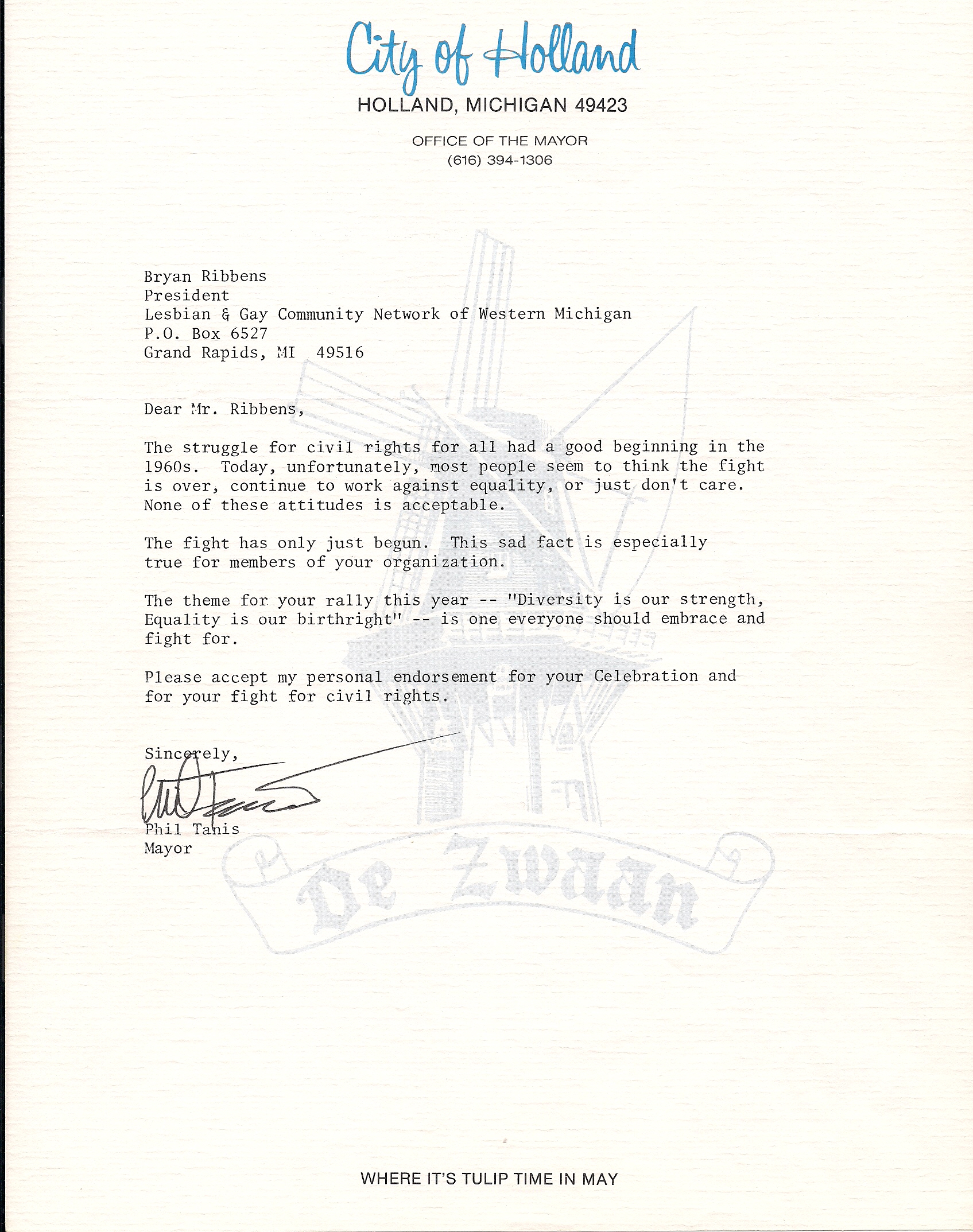
However, not all area mayors were opposed to what the Grand Rapids LBGT community was trying to accomplish at the time. In fact, in 1989, the Mayor of Holland, Phil Tanis, wrote a fairly compelling letter in support of Grand Rapids Pride.
“The struggle for civil rights for all had a good beginning in the 1960s. Today, unfortunately, most people seem to think the fight is over, continue to work against equality, or just don’t care. None of these attitudes is unacceptable.
The fight has only just begun. This sad fact is especially true for members of your organization.
The theme for your rally this year, ‘Diversity is our strength, equality our birthright,’ is one everyone should embrace and fight for.
Please accept my personal endorsement for your Celebration and your fight for civil rights.”
It would seem that the current Mayor of Holland and several of its City Council members are unaware of this history or they are hoping that we don’t know about it.
 Grand Rapids Institute for Information Democracy