The Political Economy of ArtPrize – Part I
There have been numerous articles written in recent weeks critiquing the quality of the art in this year’s ArtPrize. Some of what has been said is important and needs to continue.
However, there is an aspect of ArtPrize that hasn’t been addressed and that is the economic impact that the art competition has on Grand Rapids. This is what I hope to look at in two separate articles.
First, there have been previous estimates and a current study is being done on the economic impact, but little discussion has been placed on whom are the primary beneficiaries of the money being spent during Artprize. Secondly, there has been virtually no investigation into the Rick DeVos created entity’s own finances, sponsors and the political significance of that funding.
Part I – Who Benefits
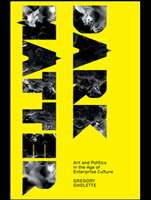
About a month ago I was reading an excellent book by Gergory Sholette entitled, Dark Matter: Art and Politics in the Age of Enterprise Culture. It is a wonderful critique of this shift to art creation as a mechanism of economic development.
I tend to take books no matter where I go, so I have been out at numerous places and people will ask what is that book about. I respond and say I am reading it before ArtPrize starts for new insight into understanding the annual event. People often say they have some issues with the event as well, but “at least it is good for the economy.”
But what do people mean, “it’s good for the economy?” The economy is not an entity or some benevolent institution, it is a financial system that is designed to primarily benefit the capitalist class. Therefore, the question that should be asked is, who benefits financially from Artprize? So lets look at how people are spending money and who that money disproportionately goes to.

First, based on the insane amount of car traffic in recent weeks, it is safe to conclude that lots of people are driving to come downtown. This means that the oil companies and parking lot owners are making big money. In downtown Grand Rapids, the two primary beneficiaries of paid parking are the City itself and Ellis Parking, which has substantial control over urban parking in Grand Rapids, Lansing and Flint.
Second, people are eating and drinking at restaurants and clubs in downtown Grand Rapids. According to the Experience Grand Rapids site, there are 80 restaurants in the downtown area. The primary beneficiaries of money being spent at these places are the owners, owners like John & Greg Gilmore. Sure wait staff might make extra tips, but do you think that those who cook, wash dishes and clean these establishments are getting a raise during Artprize? Another thing generally overlooked about people going to restaurants during ArtPrize is that is more people are coming downtown that means that less people are eating in neighborhoods like Alger Heights or Grandville Avenue.
A third way people are spending money in downtown Grand Rapids is on hotel rooms. There are not many downtown hotels, but it is worth noting that the majority of those hotels are owned by the DeVos family. Again, the owners of those hotels are the primary beneficiaries of the money being spent on hotel rooms. Sure there are people employed in those hotels, but do you think the men and women who clean the rooms and change the linen are making a livable wage or get extra pay during ArtPrize?

A fourth economic beneficiary of ArtPrize are venues that are not restaurants, bars or hotels. Places like the various museums downtown, the convention center and other non-service industry venues are making money. Again, the question should be asked who are the primary economic beneficiaries of these venues? One could argue with the museums that it helps keep their doors open and provides financial resources for them to bring new exhibits to town.
A fifth group that benefits are businesses that sell art supplies or commodities used in ArtPrize installations, such as hardware stores, big box stores and any place that carries paint, construction material, etc. Since there are a limited number of stores that carry these items, most of the materials are being purchased from big box stores like Meijer, Home Depot, Wal-Mart or Lowes. Of course there are people who are using recycled material in their art, but the primary beneficiaries of these art material purchases are the owners of those stores.
A sixth economic beneficiary are the people employed temporarily by artists to haul or help install pieces. There are a few companies, some local, that are making money off of transporting pieces, especially the larger ones.
Some people might also want to include in the group of economic beneficiaries being artists. A few artists will win monetary prizes, some will sell art because of ArtPrize and some might say that greater exposure is to their benefit. However, lets be clear that the over 1,000 artists who submitted works of art this year are fundamentally contributing free labor.
There might be people we overlooked who economically benefit from the annual art competition, but the primary beneficiaries are the owning class, which has not been reflected in past studies done on the economic impact of ArtPrize. The study done last year by GVSU estimated that $7 – 7.5 million in economic activity was generated because of ArtPrize, but that study did not acknowledge that most of that money went to the people who own the hotels, restaurants, clubs and parking lots.
The group hired to do the study on the 2011 economic impact of ArtPrize is the Anderson Economic Group (AEG) based out of Lansing. However, looking at that business’s profile it is clear that they operate in the service of the financial sector, which is why the Economic Club of Grand Rapids hosted AEG’s founder In September and spoke on Michigan’s economy. Considering who the Anderson Economic Group serves, do we really think they will be looking at how ArtPrize benefits working class families?
The answer of course is no. ArtPrize economically benefits the owning class and the so-called creative class, which is ultimately about promoting enterprise culture. This sentiment was best described by local business elite Sam Cummings in 2009. “Our long-term goal is really to import capital – intellectual capital, and ultimately real capital. And this (ArtPrize) is certainly an extraordinary tool.”
There may be some trickle down economic benefits to working people by ArtPrize, but it is primarily an engine for wealth that gushes up.
(Part II of this article will focus on the finances of ArtPrize as an entity, their sponsors and its political/economic significance.)
Shocking New Keystone XL Documents Reveal Bias and Complicity in State Department Review of Proposed Oil Pipeline
This article is re-posted from Friends of the Earth.

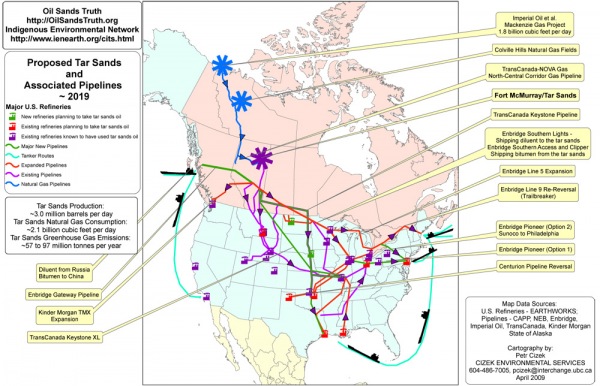
Documents made public this morning by Friends of the Earth provide definitive evidence that the State Department’s review of a controversial proposed oil pipeline has been irreparably tainted by department employees’ pro-pipeline bias and complicit relationships with industry executives, including an oil lobbyist who was once a top Hillary Clinton campaign aide.
The internal State Department documents, which pertain to the review of TransCanada’s proposed Keystone XL tar sands oil pipeline, show that a State Department official cheered “Go Paul!” after TransCanada lobbyist Paul Elliott announced his firm had obtained new support for the pipeline. They reveal multiple department officials’ understanding that TransCanada planned to reapply to pipe oil at potentially dangerous pressures after the Keystone XL was approved (TransCanada announced in August 2010 that it was withdrawing its application for a permit to use high pressures). And they provide further evidence of inappropriately cozy relationships between multiple department employees and lobbyist Elliott, who was lobbying illegallyfor as long as two years due to his failure to disclose his lobbying as required by the Foreign Agents Registration Act.
An overview of key contents of the newly released documents, as well as links to pdfs of the documents themselves, can be found at http://www.foe.org/new-foia-docs-reveal-smoking-gun-regarding-state-department-bias.
“The contents of these newly released documents are shocking. They expose a rigged State Department process conducted in close coordination with oil firm TransCanada,” said Erich Pica, president of Friends of the Earth. “These revelations should disqualify the State Department from playing any further role in the pipeline review. If President Obama is true to his campaign pledge to end the days of lobbyists setting the agenda in Washington, he must revoke the State Department’s authority to approve this pipeline.”
“If President Obama removes the State Department from the process, a fair-minded reading of the evidence will force him to reject this dirty and dangerous pipeline, and that is exactly what he should do,” Pica said.
The documents made public today were obtained by Friends of the Earth, the Center for International Environmental Law and Corporate Ethics International via the Freedom of Information Act. The State Department initially refused to release the documents, so the groups, represented by Earthjustice, filed suit in May to force their release. The batch of documents made public today is the second round of documents released by the State Department. More documents are expected to be forthcoming.
On Thursday, September 22, the Washington Post reportedon the first round of documents. Those documents indicate that State Department officials provided inside information and coaching to TransCanada.
The additional evidence of State Department bias and an irreparably flawed process is substantial. For example:
· Last fall Secretary of State Clinton said she was “inclined” to approve the pipeline even though an analysis of the pipeline’s potential environmental impacts was not finished.
· A Wikileaked document reported on by theLos Angeles Times indicates that State Department officials “alleviated” Canadian officials’ concerns about whether the pipeline might be approved and provided them with “messaging” advice.
· The firm hired by the State Department to prepare the environmental impact statement and hold public hearings — Cardno Entrix— recently listed TransCanada as one of its “major clients.”
· The environmental impact statement released by the State Department in August included an appendix written by two TransCanada employeesand a TransCanada consultant(pdf) but did not identify TransCanada as the author. The appendix was a response to an independent report by University of Nebraska professor John Stansbury, Ph.D., about what the worst Keystone XL spills could look like. Though the TransCanada-authored response was included in the environmental impact statement, Stansbury’s report itself was not.
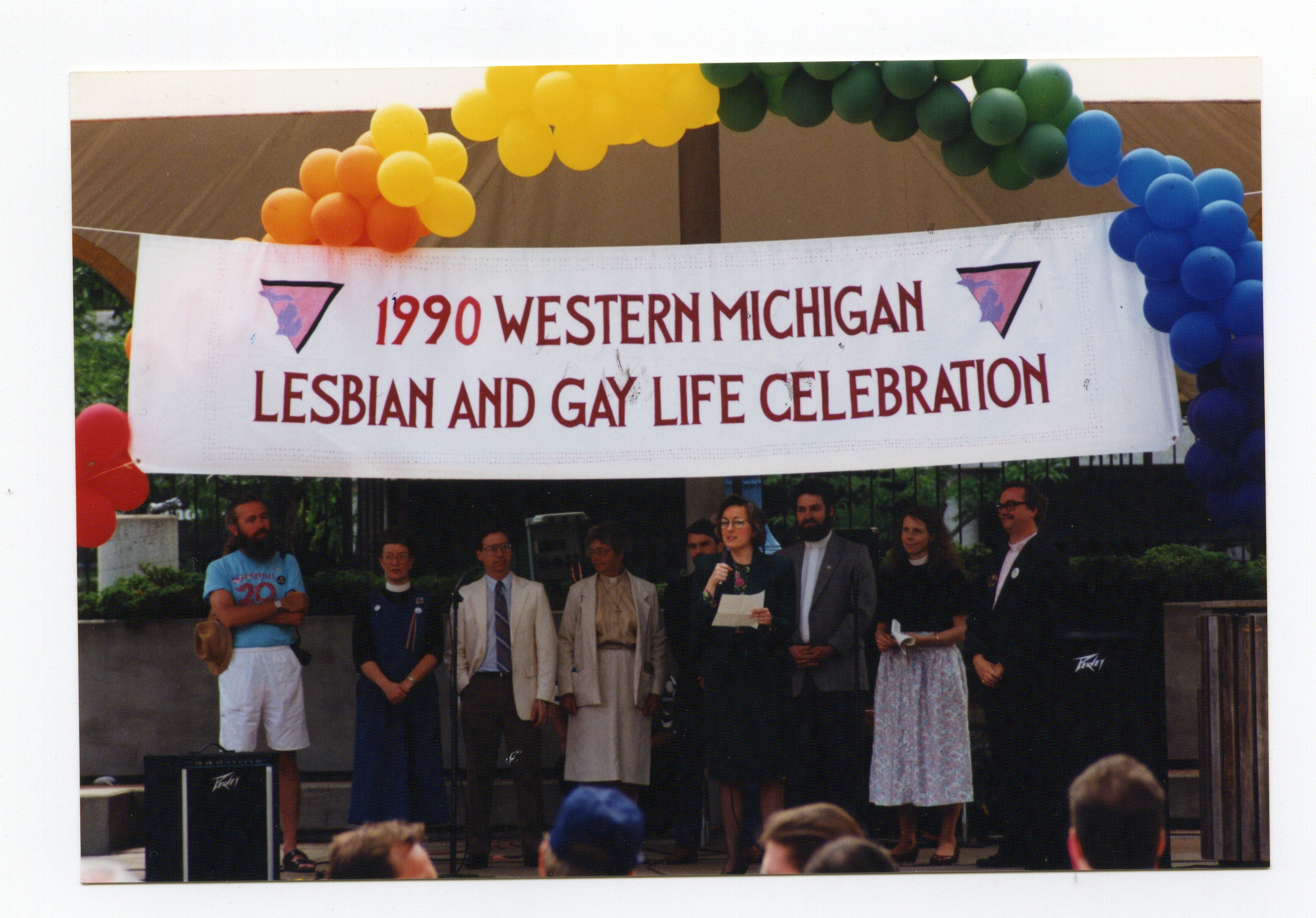
When of the benefits of doing a project like the People’s History of the LGBTQ community in West Michigan is that you get an opportunity to see where we have been in order to makes some determinations about where we might be going.
The gay community in Grand Rapids fought hard to get an anti-discrimination ordinance passed in 1994, but before that they had a tough battle to get city support for a Pride Celebration.
At the time, Mayor Gerald Helmholt, would not offer a city proclamation endorsing the Pride Celebration in the late 80s when the first events were held in Grand Rapids. Helmholt was also opposed to the first attempts to get an anti-discrimination ordinance passed in Grand Rapids in 1991 & 1992. Helmholt, a member of Citizens for a United Grand Rapids, was quoted in a June 3, 1992 Press article as saying, “I think it’s the basic belief of the group that a thorough investigation will reveal there is no more discrimination against gays and lesbians than there is against anyone else.”
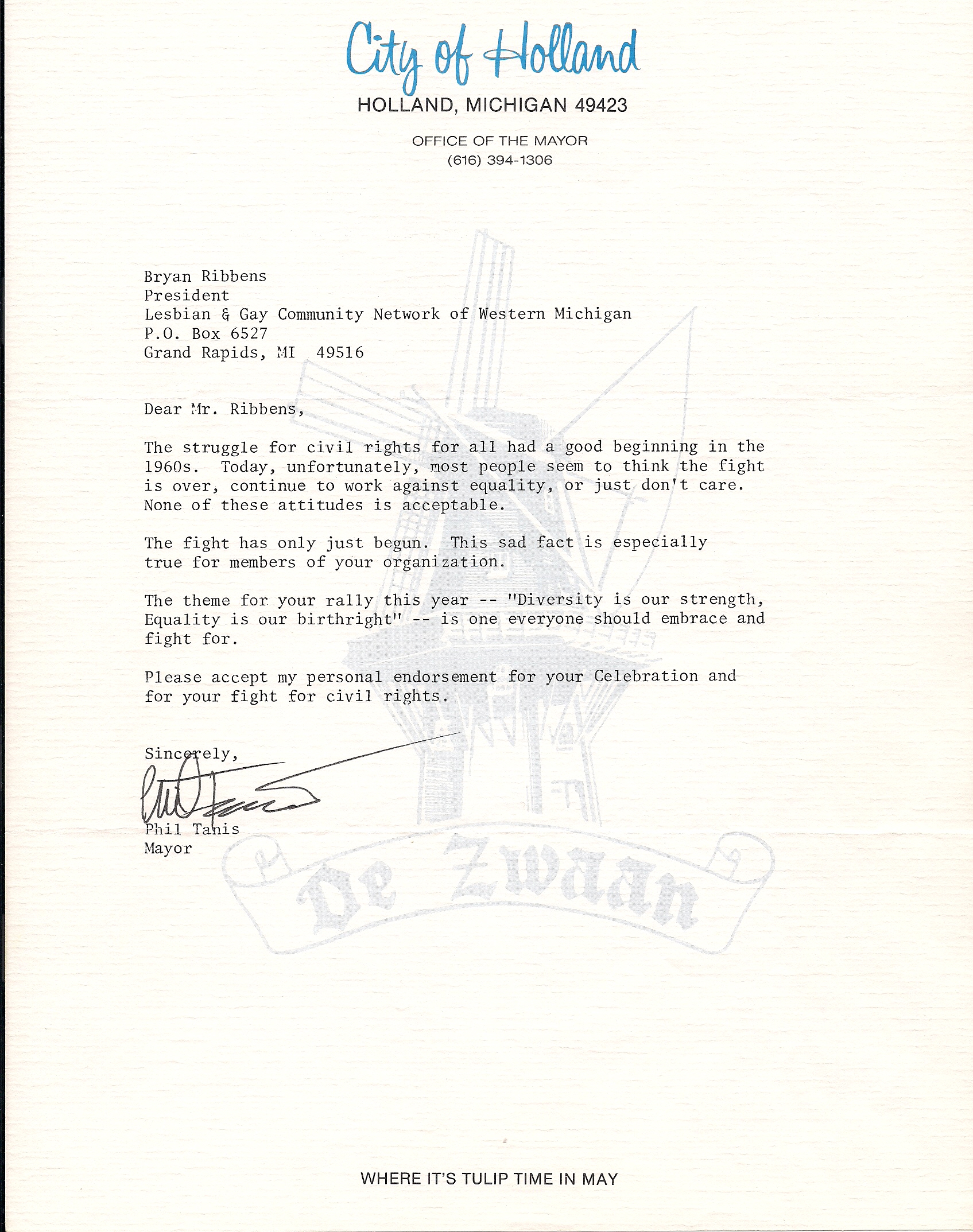
However, not all area mayors were opposed to what the Grand Rapids LBGT community was trying to accomplish at the time. In fact, in 1989, the Mayor of Holland, Phil Tanis, wrote a fairly compelling letter in support of Grand Rapids Pride.
“The struggle for civil rights for all had a good beginning in the 1960s. Today, unfortunately, most people seem to think the fight is over, continue to work against equality, or just don’t care. None of these attitudes is unacceptable.
The fight has only just begun. This sad fact is especially true for members of your organization.
The theme for your rally this year, ‘Diversity is our strength, equality our birthright,’ is one everyone should embrace and fight for.
Please accept my personal endorsement for your Celebration and your fight for civil rights.”
It would seem that the current Mayor of Holland and several of its City Council members are unaware of this history or they are hoping that we don’t know about it.
Rio Tinto blasts into Michigan sacred site
This is reposted from Stand for the Land. For more background information, read the GRIID series Mining in Michigan parts one, two and three.

On September 14, Circuit Court Judge Paula Manderfield refused a request by the Keweenaw Bay Indian Community and other petitioners to delay underground work at the Eagle Mine site in Michigan’s Upper Peninsula.
By doing so, she cleared the way for Kennecott Eagle Minerals, a subsidiary of Rio Tinto, to blast through the base of an outcropping known to Anishinaabe peoples as Eagle Rock, or Migi Zii Wa Sin, to gain access to a copper-nickel ore body that lies some 2400 feet away, beneath the Salmon Trout River. The portal structure went up several days before the hearing, showing Kennecott’s confidence in a courtroom decision favorable to their interests.
This past Sunday afternoon, a gorgeous fall day on the Yellow Dog Plains, my companion and I were walking near the mine site, looking down an open corridor leading to Eagle Rock, when we heard a terrific explosion. We stood there, stunned. It was a painful thing to witness.
In the words of my companion:
My heart sank. There was a series of quick explosions. In less than 5 seconds there might have been 3 or 4 explosions. The concussions seemed to vibrate through my body for many minutes. It felt like I just received bad news that somebody had a terrible accident.
In allowing this to happen, Judge Manderfield, Kennecott, and the DEQ ignored centuries of oral history, verbal testimony, and archaeological studies demonstrating that Eagle Rock is linked to ancient ceremonial sites in Wisconsin and Montana and may be part of a network extending south to Mexico and north to the Arctic. Eagle Rock is not a sacred site, they said, because there is no building and no mention of it in the written record.
The U.S. Congress itself, in drafting the American Indian Religious Freedom Act, acknowledged that “Native American religions hold certain lands or natural formations to be sacred.” And, in fact, Native Americans are a traditionally nomadic people who relied on oral communications to preserve their history.
Last November, the National Congress of American Indians adopted a Resolution calling on “legislative and regulatory bodies of the State of Michigan and the United States to take prompt action to guarantee the protection and preservation of the integrity and intrinsic value of the Native American sacred ceremonial place known as Eagle Rock…”
Eagle Rock has existed and been maintained quietly, privately and secretly by the various Native American communities in order to protect it and preserve it from intrusion and desecration by curious outsiders… the mining operation of Kennecott Eagle Minerals… has intruded into this sacred area, destroying the serenity of the place and drawing attention to its existence.
That serenity and seclusion has been forever destroyed. Today, we have it on official authority that Rio Tinto has indeed begun blasting at this sacred site. When the mining is over, Kennecott says, they will return the place to its original condition. Eagle Rock will be filled with a cement plug.
Catherine Parker
Marquette, Michigan
Chomsky on Wall Street protests, US political system
This interview is re-posted from ZNet.
Linguist and political writer Noam Chomsky was recently interviewed by the TV show Russian Times.
In the interview Chomsky addresses the Occupy Wall Street action, undemocratic elections in the US, international terrorism and US policy in the Middle East.
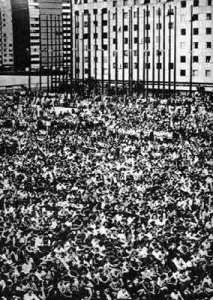
Forty-three years ago today, over 300 Mexican students were killed while protesting in what is called the La Plaza de las Tres Culturas at Tlatelolco, Mexico City.
This massacre took place just days before the 1968 Olympics, which the students were using as a platform to tell the whole world about the injustices they and millions of other Mexicans faced. The student occupation of the national university (UNAM) had been going on for months before the military repression took place.
For decades the government tried to cover up what the Mexican army did on October 2, 1968. There have been numerous attempts to investigate the crimes committed that day, but no government official was willing to let the truth come out.
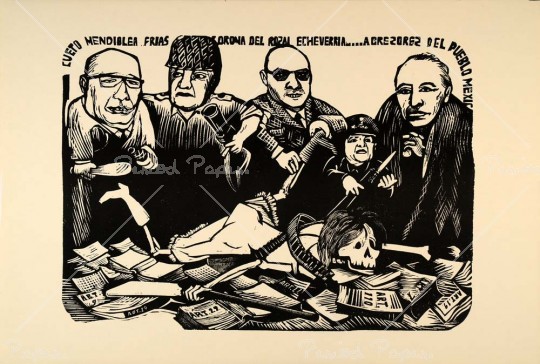
There still is much that is hidden in regards to what happened that day and who gave the orders within the Diaz Ordaz regime, but today we have a great deal more information that has been obtained through the declassification of documents.
The US-based National Security Archives has been able to obtain numerous documents related to the 1968 student massacre. Many of these documents are from the CIA or the Johnson administration and their assessment of what was happening. The US government was claiming that the students were pawns of the Soviet Union, while others express concern for how the student “agitation” will negatively impact the 1968 Olympics.
There are other declassified documents, which demonstrate that the US government was aware of and in support of the military takeover of the university in Mexico City that was being occupied by the students.
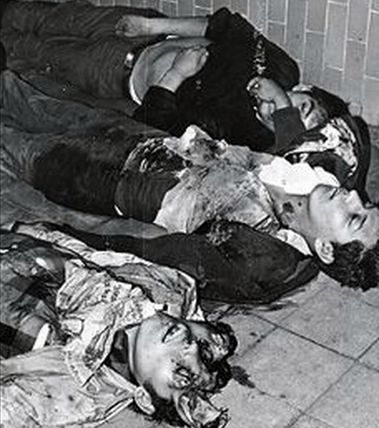
Beginning in 2006, the National Security Archive was able to finally get access to several Mexican government documents, which sheds further light on the Tlateloco massacre. With these new documents, we now have a complete list of the students killed that day. In addition, the National Security Archives now has a blog with regular updates on the ongoing investigation in the 1968 student massacre, but the blog is only in Spanish.
This horrendous massacre is deeply important to the Mexican people, but it should be of importance to those of us in the US as well. The US government knew of the repression that would be unleashed on the Mexican students just days before the beginning of the 1968 Olympics, but did nothing to prevent the massacre from taking place.
One other reason that Americans might think about what took place is because of what John Carlos, the great US track runner who used the 1968 Olympics as a platform for drawing attention to the treatment of Blacks in the US said earlier this summer at a conference. He said that while the actions that US athletes took during the 1968 Olympics were important, the most important thing we should remember was the sacrifices that the hundreds of Mexican students made to promote freedom and liberty.
I’ll end with this wonderful Mexican corrido song about the October 2, 1968 massacre, entitled Ni Perdon, Ni Olvido! (Don’t Forgive and Don’t Forget!)
The Art Prize Top Ten—Top of What Standard?

It’s happened again, only this time the pattern is even clearer than usual. What entries made it into the top ten at ArtPrize? The gigantic, the cute, the pieces with “local” appeal, with entertainment value, and works that pander specifically to the conservative sensibility of the area. Plus, as usual, a couple of artworks with legitimate content and value. At least, that’s how I see it breaking down.
Concerns that GRIID has presented in the past all apply to this year’s event and selections. There is, for one thing, a serious lack of diversity among the artists—all but one is White. Another concern is how only certain downtown locations seem to be drawing the visitors and the votes, and other nearby areas, such as Heartside, don’t have the same number of venues and are not drawing visitors. As in the two past years, all of the Top Ten winners are confined to the small area of prize locations in the immediate downtown area—the Ford Museum, the Art Museum, the B.O.B., etc. It’s no coincidence, therefore, that the city’s convention and visitor’s bureau just commissioned a study of the economic impact of ArtPrize for downtown businesses. A preliminary study showed that the first ArtPrize generated between $5 to $7.5 million of business for downtown GR. That fits neatly into the DeVos plan of how “creative class” attractions will generate a new well of dollars for their family’s next generation.

So let’s look at these highly predictable Top Ten vote-getters.
First, let’s talk about great big animals. Remember the Loch Ness monster? This year’s Animals-Interacting-With-Water entry is called “Grizzlies on the Ford.” It’s a group of bears catching fish and wading next to the Gerald R. Ford Museum. The bears are carved from wood, and are highly reminiscent of those big wooden pieces that guys in the UP carve with chainsaws and sell at roadside stands. Maybe that rang some nostalgic bells with the folks who voted for it.
“Mantis Dreaming” is technically a better piece, but it’s still a gigantic animal from an artist who has entered three of them so far in this competition. His artistic statement includes the line, “We all have a butterfly that we want to catch.” Yuck.
Then there’s “Ocean Exodus,” displayed in what I have come to think of as the Steam Pig Memorial Exhibit Space. The artist says that the piece is “in progress” and “will get bigger.” Why add this comment? Maybe just in case it’s not big enough now to capture the necessary dimensions of an ArtPrize win. (Remember, the credo of AP seems to be, “The Bigger, The Better.”) The work also looks suspiciously like it was recycled from his piece “A Matter of Time” from 2010. This sculpture does display a lot of technical expertise, but occupying its place in front of the B.O.B,, I couldn’t help but wonder if its main value was generating more diners for Gilly’s seafood restaurant and bar. (“Look, Marge, they have octopus on the menu!”)
Finally in the animal category, there’s “Rusty,” a very large and very deranged-looking dog guarding a big, shiny ball. I think it might actually make small children fearful of entering the Grand Rapids Public Museum. That thing would have given me nightmares when I was five.
For pure entertainment value of the Rob Bliss variety, we have “Under Construction,” which features the artist and members of his family standing as living bronze statues on a construction site. I would like to think this was a tribute to the working class, but the artist statement makes it clear it’s a tribute to capitalism: “Presenting a scene that is common in West Michigan; things are constantly changing, rebuilding, improving. We see new buildings, new festivals, and new people.” I’d guess that most people voted for it, however, in the same way that they would vote for the entertainment of watching the guards outside of Buckingham Palace. “Did he move, Marge? I swear, I saw him move!”
In the category of “I couldn’t do that if I tried” is “Metaphorest,” a very big and very boring mosaic that seems lifeless in comparison with the artist’s mural for the Children’s Museum. It also looks unfinished, since large parts of the surface are painted rather than tiled. But did I mention it is big? And that counts for something.
There were two artworks I felt were intriguing and different in this Top Ten group. One, “The Tempest II,” looks from a distance a bit like a rough and peeling plaster wall. But instead, it is a paper sculpture, filled with shadows and light on its layered surfaces. It seems to have something to say about how even what appears to be permanent is in fact ephemeral.
Probably one of the most striking works in ArtPrize, and the best of the Top Ten in my eyes is “Rain.” A kinetic sculpture with a slow, deliberate movement, it has a hypnotic effect on the viewer. The gold and silver catch the light and give the impression of a segment of a rainstorm in sunlight, captured and held in a perfect square.
But if there’s a special award to those who really knew their audience and went for the jugular to garner votes, it has to be divided between the final two pieces from the Top Ten. “President Gerald Ford Visits ArtPrize” has a fiberglass resin Ford gazing at a bronze bust of himself. (“Look, Marge! Isn’t that a cute idea?”) There’s a similar work, much more evocative, called “Conversation With Myself” in this year’s ArtPrize entries. But the portrait of Ford is highly representational, and features our hometown-boy-made-good, if you can call a president who was appointed and then failed to get elected a success. (Ford is the only President to fall into this category unless, of course, you count George W. Bush). How could it lose? During ArtPrize, the sculptor has busied himself with creating a sculpture of Betty Ford. Maybe so that Jerry doesn’t look so utterly narcissistic.
And finally there is “Crucifixion,” a cathedral-sized (nine feet by thirteen feet) mosaic of Jesus on the cross. If this doesn’t win one of the top awards, it may make up for it if the DeVos family ends up purchasing it. After all, it’s the most obvious piece of pure Christian iconography in the Top Ten, and the DeVoses the only people around here with a house big enough to hang it in.
Business as usual at ArtPrize: the “golden rectangle” loaded for bear (literally) with oversized works that look more like escapees from a craft fair than an art museum. Appealing to the masses isn’t all that difficult, it seems, once you know the formula…although, Mia, that that crucifix is really beneath you.
Salvadoran speaker in Grand Rapids October 6

The US/El Salvador Sister Cities Project is coming to Grand Rapids on Thursday, October 6.
The Midwest tour will have Agustin Menjivar, who is the President of the Association of Communities for the Development of Chalatenango. Agustin has been a long time activist and is currently involved in an anti-mining campaign.
Mining projects, dominated by the company Pacific Rim, are destroying communities throughout El Salvador and contaminating the water. There have been campaigns to defeat mining projects in El Salvador for years as is well documented at CISPES and in an article in a recent issue of Monthly Review. Mining projects have increased dramatically in El Salvador due to the changes brought about by the 2005 signing of the Central America Free Trade Agreement known as CAFTA.
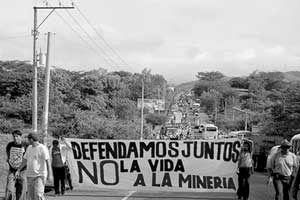
Agustin Menjivar will talk about the work being done in El Salvador on Thursday, October 6 on the GVSU downtown campus. The US/El Salvador Sister Cities tour is sponsored by the GVSU School of Social Work and the Padnos International Center.
There are 2 different presentation on October 6, both of which are in the Eberhard Center. The presentation will be in Spanish, but translation will be provided. The public is welcome to attend both talks.
Thursday, October 6
9 – 11AM and 6 – 7:30PM
Eberhard Center Auditorium
GVSU downtown campus
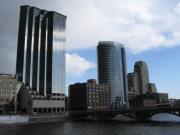
As the Occupy Wall Street action enters its third week, there have been announcements of similar actions being planned across the country.
Recently, an Occupy Grand Rapids facebook page was created that states:
Born from frustration with corporate greed and control over politics and the excessively increasing disparity between the wealth of 99% of the populace and the 1% elite, this is for protests in Grand Rapids in solidarity with the Occupy Wall St. protests and banking protests across the world.
There hasn’t been much additional information or dialogue on this site, but it is a clear indication that people want to organize an action in solidarity with Occupy Wall Street.
There is also an Occupy Michigan and Occupy Detroit groups also started online, which is another reflection of the growing effort to say to those in power that people have had enough of the corruption, greed, militarism and environmental destruction being carried out by the state and the capitalist class.
Here is a recent short video that shows how much the Occupy Wall Street action is spreading across the country.
GVSU hosts men against violence event in Allendale
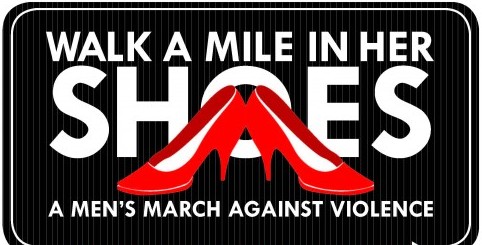
Last night about 150 GVSU students, faculty and staff gathered on the Allendale campus to take a stand against sexual assault, sexual coercion and rape.
The event, Walk a Mile in Her Shoes, is an international event designed to get men to think about the reality that women face everyday in terms of sexual harassment, sexual assault and rape by men.
The male students who attended last night event were invited to wear high heel shoes and walk a mile on campus as a means to sensitize them to the difficulties of being a woman in a male dominant society.
Before the students went on that walk they were presented with some information about the realities of living in what feminist Diana H. Russell calls a “rape culture.” According to data from a national fraternity association that has taken a stand against sexual assault:
- 1 out of 4 college women are sexually assaulted
- 50% of sorority women experience some form of sexual coercion
- 10.3% of college rapes happen in a fraternity house
- 90% of sorority women who are sexually assaulted know their assailants
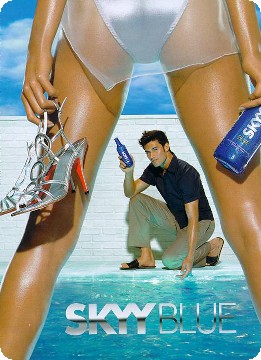
Students were told that men are so privileged that they are generally unaware of these facts and the reality that their fellow female classmates, teachers and girlfriends face on a daily basis.
The students then walked around on all 3 floors of the Kirkof building since the weather did not permit them to walk outside as they had originally intended. Other students witnessed the men walking in high heel shoes and holding signs address sexual assault and this writer witnessed numerous students engaging those walking in conversation about the purpose of the event.
When the students returned to the room where the event began they were presented with more information on how we are all socialized to objectify women, especially through the dominant culture represented in media. Students looked at and discussed media representation of women in magazine ads, TV commercials and movie clips, in order to understand how objectification of women is normalized in media.
Part of the purpose of the event was to start a men’s group on campus to take a stand against violence. Some of the men involved in this event and the GVSU Women’s Center are planning other activities and opportunities for men to become involved. If you are a male student at GVSU and are interested, contact MarcQus Wright at wrighmar@gvsu.edu or call 616-331-4296.
After the event was over I had a chance to interview two of the men involved in organizing Walk a Mile in Her Shoes.
 Grand Rapids Institute for Information Democracy