Occupy Wall Street, Denounce the Democrats
This article by Margaret Kimberley is re-posted from Black Agenda Report.

In 2009, the New York state legislature imposed a tax surcharge on residents earning $1 million or more per year. This “millionaire’s tax” was passed with the proviso that it expire on December 31, 2011. When Democrats in the state capital proposed extending this tax on the rich, Democratic governor Andrew Cuomo said no, and the surcharge was history.
The Occupy Wall Street protesters held a march, dubbed the millionaire’s march, to demand that the rich pay their fair share of taxes. They marched past the New York City homes of billionaire David Koch, News Corporation CEO Rupert Murdoch, and Jamie Dimon, CEO of J.P. Morgan Chase. For some strange reason, they did not march past the offices of the Democratic governor.
This stunning inaction is a bad omen that the Occupy Wall Street movement is doomed to fail unless it changes course quickly. The only way to protest income inequality or bailouts of the financial services industry is to protest against the people in power, even when they happen to be Democrats. Occupy Wall Street appears destined to turn into yet another effort to soft pedal Democratic complicity in the current economic crisis. OWS activists must not only disconnect themselves from the Democratic Party, but have the courage to protest them as strongly as they would Murdoch and Koch.
Agitation in favor of the “99%” against the “1%” is useless if it doesn’t address the bipartisan nature of the attack on the working people of this country. It is a bad sign indeed when the likes of Nancy Pelosi express support for OWS. The Democratic Congressional Campaign Committee hypocritically asks for “100,000 strong standing with Occupy Wall Street.” It strains credulity to believe that the people in charge of raising corporate cash for democrats really want to see changes in our political system.
It is Barack Obama, not George W. Bush, who made a lie of the dictum that Social Security is the “third rail of politics.” It is now in the slaughterhouse along with all other government programs, waiting its turn to be eviscerated. The Democrats have excelled in committing the crimes, which Republicans have only dreamed about, and they will only grow bolder if they are not called to account.
As a witness to the protest in lower Manhattan’s Zuccotti park, this columnist did not see one sign or hear any general assembly statements denouncing the Democratic Party. It is easy to shout down Geraldo Rivera and Fox news, that condemnation is low hanging fruit for any intelligent person.
It will be harder to say that Andrew Cuomo and his political aspirations are as much a part of the problem as Messrs. Koch and Dimon. The propaganda, which ignores Democratic Party perfidy, is very deeply imbedded in the American people. If they don’t hear the voices of the American left telling them the truth of the country’s condition, then our situation is a dire one indeed.
The coming days and weeks will give the occupiers ample opportunity to speak out as the Obama administration ratchets up its efforts to realize right wing fantasies. On the same day that marchers missed a golden opportunity to expose the Democratic Party’s complicity in letting wealthy New Yorkers get away with their ill gotten gains, the administration charged Iranian citizens in a bizarre and unbelievable plot to kill the Saudi ambassador to Washington. Will the OWS forces move to protest when Obama makes the inevitable case for war, or will they revert to letting Democratic crimes against humanity go unopposed?
While OWS promises to remain unco-opted by any political party, it has not moved further to include the Democrats in its denunciations. Partly as a result of its leaderless, decentralized nature, OWS has been slow to solidify any demands. Words like breaking up the concentration of wealth and power will be meaningless without a more pointed critique of the political system, a critique which should be no respecter of persons or party.
Mass action is the only way to prevent further inequality, and further American aggression around the world. Occupy Wall Street can be the beginning of a great movement, or a lost opportunity. The experiment may be in its beginning stages, but the learning curve has to be brief if OWS is to not only remain free from political interference, but make good on its claims of fighting for the interests of working people.
Why the Local Media doesn’t and won’t get Occupy Grand Rapids

Over the past several days there have been numerous stories done by local commercial news media on the Occupy Grand Rapids movement, with much of the coverage focused on the drama and conflict of any protest movement.
This kind of coverage is doomed to fail in terms of what the Occupy Grand Rapids might want to achieve, which seems to be systemic change, particularly over economic issues. What follows are some reasons why the local news media just won’t get it.
- The local commercial news media has consistently over the past 20 years of monitoring (conducted by GRIID and other sources) has demonstrated that an inherent bias in favor of the status quo because of their general lack of holding power accountable. Even though holding power accountable is a fundamental principle of journalism, rarely is it ever practiced.
- One basic premise of the Occupy Wall Street movement is that the current economic system of capitalism is bankrupt and only serves the interests of the 1%. However, the local news media (like the national news media) has failed to fully understand and report on how this economic system inherently serves the interest of the 1%. Economic news coverage is flawed because it accepts the myth that the economic system serves the majority and when there are “problems,” like the 2008 crash it is simply because of a lack or regulation or a few corrupt individuals or companies.
- The failure of commercial news media to investigate and question the real reasons behind the 2008 crash is reflected in their continual acceptance of the current economic system. Economic reporting continues in the same way it has for decades and even if the local commercial media gives some attention to the Occupy Grand Rapids movement it will be token at best because the bulk of their economic reporting accepts that capitalism works for everyone.

- The local news stories about the Occupy Grand Rapids movement are event based, meaning they have been reporting on the initial gathering, subsequent gatherings and conflicts with the city government and police. This kind of reporting ignores the work and efforts of people for decades to challenge the economic system and its consequences – poverty, unemployment, underemployment, wage theft and who are the primary beneficiaries of this economic system. In other words, there is no historic context to why people are engaged in the occupy movement now. This means there is no linkage with the anti-globalization movement, which challenged global capitalism as it has evolved since NAFTA, the creation of the WTO, the role of the IMF and the World Bank.
- The local commercial news media will never be able to objectively report on any movement that is calling for a systemic change of the current economic system, because the local news media is part of that system. All of the local commercial news media outlets are owned by for profit companies, many of which are part of large media monopolies. The Grand Rapids Press is owned by Advanced Publications, WZZM 13 by Gannett, Fox 17 by the Tribune Company, WOOD TV 8 by LIN Media and WOOD radio by Clear Channel.
- Another reason why local commercial news media can never really report honestly and objectively about the Occupy Grand Rapids movement is because they rely on advertising for the majority or all of their revenue. The Occupy movements are inherently opposed to the hyper-consumption message of advertising, which is the life-blood of commercial media. Advertisers will not tolerate consistent and substantive news reporting on the crisis of capitalism and since these media companies operate on advertising revenue they are unable to investigate and report on this movement with any depth.

- Lastly, the local commercial news media will not be able to honestly report on the 1% that lives in West Michigan because they have demonstrated an unwillingness to challenge the local economic power structure. In fact, not only are they unwilling to expose the local 1%, they often provide a forum for the local 1% or act as cheerleaders.

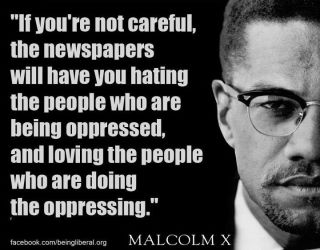
Having attended numerous general Assembly meetings I am aware of the desire of the Occupy Grand Rapids movement to have a media policy. However, I have yet to see a concrete policy and based on the stories already done by the local news media there doesn’t seem to be any indication that a clear policy or coherent talking points have been adopted.
A media policy will be critical if the local movement is to have a chance at preventing the commercial news media from distorting their message. More importantly, such a media policy should be focused on developing independent and autonomous media that they and their allies can distribute. This kind of a media strategy will have a more positive and long term benefit than relying on the for profit media to “report the truth.”
National Coming Out Day – Interview with Queer Activist Wick Thomas

The LGBT Resource Center at GVSU brought to town Queer activist Wick Thomas for their National Coming Out Day events on campus. We had an opportunity to interview Wick about his own history, queer organizing in Kansas City, challenging the religious right and his thoughts on Occupy Wall Street.
Wick is involved with the Kansas City-based group Equal, is known for organizing an action challenging Kansas City Pride and in support of LGBTQ rights in Uganda.
[vimeo 30394334]Michigan LGBT Groups Hold News Briefing to Launch a State-Wide Non-Discrimination Campaign
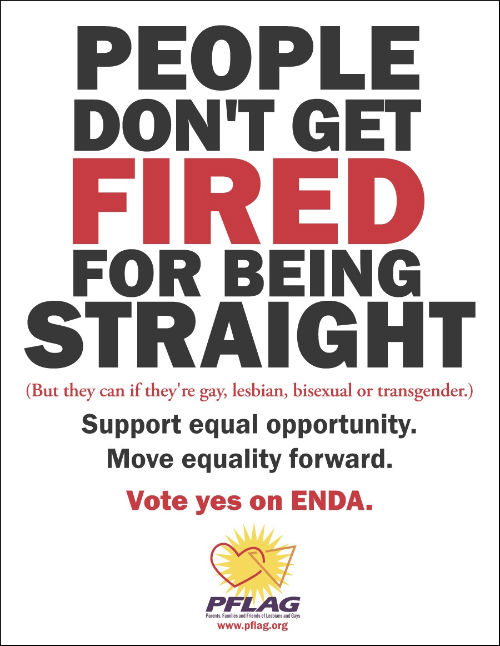
Today, representatives from Equality Michigan, the ACLU, Affirmations and the Unity Michigan Coalition are holding a press conference on an urgent matter concerning the LGBT community and anyone who cares about civil rights.
The coalition of groups sent out the following message in a Media Advisory:
Did you know in Michigan, you can actually be fired from your job if someone at work thinks you are gay or transgender? On National Coming Out Day, Tuesday October 11, gay and transgender leaders will host a special news briefing to launch a state-wide campaign to urge the legislature to change the law to protect all Michiganders at work.
Michigan has the nation’s highest unemployment rate, hovering at 10.9 percent — with those numbers, how can employers actually fire someone just for being gay? Despite the economic crisis and the bad laws already on the books, Michigan legislators introduced HB5039 and HB5040 just yesterday. If successful, these bills would further legislate employment discrimination against gays and transgender people in our state.
We will follow this legislation and communicate any action steps that people are encouraged to take.
The Fight Against Climate Change is Down to Us – the 99%
This article by Naomi Klein is re-posted from ZNet.

If there is one thing I know, it’s that the 1% loves a crisis. When people are panicked and desperate, that is the ideal time to push through their wishlist of pro-corporate policies: privatising education and social security, slashing public services, getting rid of the last constraints on corporate power. Amidst the economic crisis, this is happening the world over.
There is only one thing that can block this tactic, and fortunately, it’s a very big thing: the 99%. And that 99% is taking to the streets from Madison to Madrid to say: “No. We will not pay for your crisis.”
That slogan began in Italy in 2008. It ricocheted to Greece and France and Ireland and finally it has made its way to the square mile where the crisis began.
Many people have drawn parallels between Occupy Wall Street and the so-called anti-globalization protests that came to world attention in Seattle in 1999. That was the last time a global, youth-led, decentralized movement took direct aim at corporate power. And I am proud to have been part of what we called “the movement of movements”.
But there are important differences too. We chose summits as our targets: the World Trade Organization, the IMF, the G8. Summits are transient, they only last a week. That made us transient too. And in the frenzy of hyper-patriotism and militarism that followed 9/11, it was easy to sweep us away completely, at least in North America.
Occupy Wall Street, on the other hand, has chosen a fixed target. And no end date. This is wise. Only when you stay put can you grow roots. This is crucial. It is a fact of the information age that too many movements spring up like beautiful flowers but quickly die off. It’s because they don’t have roots. And they don’t have long term plans for how they are going to sustain themselves. So when storms come, they get washed away.

Being horizontal and deeply democratic is wonderful. These principles are compatible with the hard work of building structures and institutions that are sturdy enough to weather the storms ahead. I have great faith that this will happen.
Something else this movement is doing right: You have committed yourselves to non-violence. You have refused to give the media the images of broken windows and street fights it craves so desperately. And that tremendous discipline has meant that, again and again, the story has been the disgraceful and unprovoked police brutality.
But the biggest difference a decade makes is that in 1999, we were taking on capitalism at the peak of a frenzied economic boom. Unemployment was low, stock portfolios were bulging. The media were drunk on easy money. It was all about start-ups, not shut-downs.
We pointed out that the deregulation behind the frenzy came at a price. It was damaging to labor standards. It was damaging to environmental standards. Corporations were becoming more powerful than governments and that was damaging to our democracies. But to be honest with you, while the good times rolled, taking on an economic system based on greed was a tough sell, at least in rich countries.
Ten years later, it seems as if there aren’t any more rich countries. Just a whole lot of rich people. People who got rich looting the public wealth and exhausting natural resources around the world.
The point is, today everyone can see that the system is deeply unjust and careening out of control. Unfettered greed has trashed the global economy. And we are trashing the natural world. We are overfishing our oceans, polluting our water with fracking and deepwater drilling, turning to the dirtiest forms of energy on the planet, like the Alberta tar sands. The atmosphere can’t absorb the amount of carbon we are putting into it, creating dangerous warming. The new normal is serial disasters: economic and ecological.
These are the facts on the ground. They are so blatant, so obvious, that it is a lot easier to connect with the public than it was in 1999, and to build the movement quickly.
We all know, or at least sense, that the world is upside down: we act as if there is no end to what is actually finite: fossil fuels and the atmospheric space to absorb their emissions. And we act as if there are strict and immovable limits to what is actually bountiful: the financial resources to build the kind of society we need.
The task of our time is to turn this round: to challenge this false scarcity. To insist that we can afford to build a decent, inclusive society – while at the same time respect the real limits to what the earth can take.
What climate change means is that we have to do this on a deadline. This time our movement cannot get distracted, divided, burned out or swept away by events. This time we have to succeed. And I’m not talking about regulating the banks and increasing taxes on the rich, though that’s important.
I am talking about changing the underlying values that govern our society. That is hard to fit into a single media-friendly demand, and it’s also hard to figure out how to do it. But it is no less urgent for being difficult. That is what I see happening in this square. In the way you are feeding each other, keeping each other warm, sharing information freely and providing health care, meditation classes and empowerment training. My favorite sign here says “I care about you”. In a culture that trains people to avoid each other’s gaze, to say “Let them die,” that is a deeply radical statement.
We have picked a fight with the most powerful economic and political forces on the planet. That’s frightening. And as this movement grows from strength to strength, it will get more frightening. Always be aware that there will be a temptation to shift to smaller targets – like, say, the person next to you. Don’t give into the temptation. This time, let’s treat each other as if we plan to work side by side in struggle for many, many years to come. Because the task before us will demand nothing less.
Let’s treat this beautiful movement as if it is the most important thing in the world. Because it is. It really is.
This is a version of a speech delivered on Thursday, that first appeared in print in the Occupied Wall Street Journal.
Occupy Grand Rapids – Day 3
Following the model that started in New York, Occupy Grand Rapids began on Saturday with a meeting at the Calder Plaza in downtown Grand Rapids.
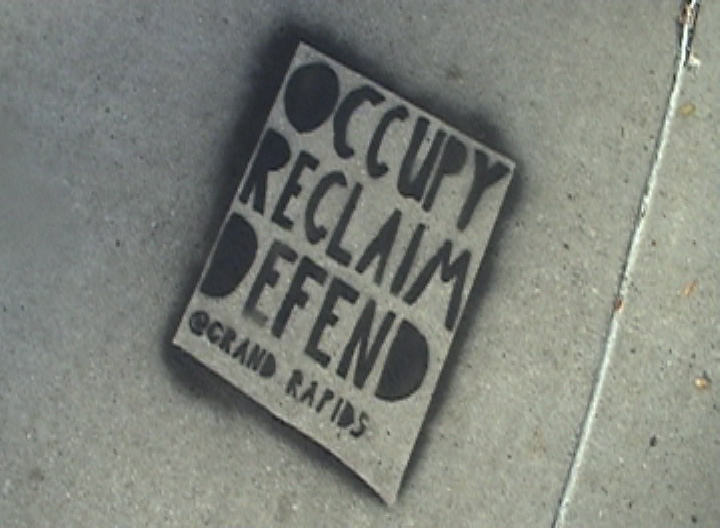
About 300 people showed up to the first General Assembly meeting, where proposals were put forth, ideas shared and action steps were discussed in a consensus process.
People eventually decided to march through downtown Grand Rapids, since many people were walking about for the final days of ArtPrize. The group made its way to the Ah Nah Awen Park and decided to occupy space near the Ford Museum.
Over the next few days General Assembly meetings were held twice a day with some meetings involving over a hundred people. At times the consensus process seemed to struggle, in part due to the newness for many people and because of the size.
Lots of issues have been raised at these meetings and much of what has been discussed has been posted online at http://occupygrandrapids.wikispaces.com/.
There have also been a few skill share workshops offered for people, such as a Know Your Rights session that was held on Sunday, which provided people basic information on how to deal with cops.
On Monday, some members of the group decided to have a march in downtown Grand Rapids in the late afternoon with the intent of reaching out to more people. About 30 people marched for an hour, chanting and handing out flyers to people. At one point the group was chanting, “Banks Got Bailed Out, We Got Sold Out,” and a young man sitting on a park bench said to his friend, “They are pissed off about the taxpayer money the banks got. We got nothing. We just got screwed.”
During the 6pm General Assembly meeting there was word that the City would not allow the group to be at the park overnight, which was later confirmed when police showed up to tell everyone they had to leave. According to information on facebook the Occupy Grand Rapids group is not going to spend the night at the park, but will continue to hold meetings at both noon and 6pm at Ah Nah Awen Park until another location can be secured.
Suppression of Indigenous Sovereignty in 20th Century United States
This essay by Ward Churchill is re-posted from ZNet. We are re-posting this article is preparation of October 12, Indigenous People’s Day, which has replaced Columbus Day for many across the Americas.

As the 20th century prepares to take its rightful place in the dustbin of history, the last vestiges of sovereignty among the more than 300 indigenous nations trapped inside the claimed boundaries of the United States are rapidly sliding into a kind of final oblivion. In one of official America’s supreme gestures of cynicism, American representatives at the United Nations and elsewhere have long been aggressively peddling their government’s Indian policy to other countries as the “most enlightened, progressive, and humanitarian model for the actualization of indigenous self-determination in the modern world.” It would do well to consider this policy carefully, with an eye towards separating fact and implication from the fantasies induced by Washington’s propaganda mills. In such clarity reside the analytical tools with which any effective (re)assertion of native sovereignty must be forged.
Allotment and Assimilation
Towards the end of the 19th century, with the wrap-up of the protracted series of military campaigns known as the “Indian Wars”—through which it had, after 1790, invaded and occupied most of its land base west of the Appalachian Mountains—the U.S. set out to simultaneously absorb the remaining 150 million acres of native-held territory inside its borders and to digest the residue of about a quarter-million indigenous people residing on these treaty-reserved tracts. The stated federal agenda devolved upon bringing about a comprehensive forced culture dissolution and eventual physical dispersal of every surviving American Indian society. It was the stated objective of this formally articulated “Assimilation Policy” that no Indians, culturally identifiable as such, remain within the U.S. by 1935.
Although there were a range of antecedent experiments, the real opening round of Washington’s assimilation program came with the 1885 Major Crimes Act, under which U.S. jurisdiction was unilaterally asserted over every reservation in the country (each of which, it had previously been conceded in American law, constituted a distinct and separate national sovereignty). This was followed, in 1887, by passage of the General Allotment Act, described by Indian Commissioner Francis Leupp as a “great engine for grinding down the tribal mass,” through which the U.S. effected another sweeping and uninvited intervention in the internal affairs of indigenous nations, this time by supplanting their traditional modes of collective landholding with the Anglo-American system of individuated property ownership.
In compiling the lists—”tribal rolls”—of those eligible to receive title to land parcels averaging a mere 160 acres each, federal agents typically relied upon eugenicist “blood quantum” methods, thus converting native peoples from their prior status as national/cultural entities into “racial” groups for purposes of U.S. legal and bureaucratic administration. The “standard” was set very high, usually at one-half or more “degree of blood,” in order to minimize the number of individuals entitled to retain any property at all. Once all those meeting these racial criteria had received their allotments of land, the balance of the territory belonging to each indigenous nation was declared “surplus” and handed over to non-Indians.
In this manner, some 100 million acres—about two-thirds of the 1880 reservation land base—was stripped away by the early 1930s, the bulk of it acquired not by average American citizens but by various corporate and governmental interests. What was left was managed in perpetual “trust” under a “plenary power” relationship imposed by Congress, exercised by the Interior Department’s Bureau of Indian Affairs (BIA), and not only upheld but amplified by the Supreme Court in its 1903 Lonewolf decision. In the latter, the “justices” opined, in a manner grossly contrary to even the most elementary principles of international law, that the United States possesses an “absolute and unchangeable right” to abrogate the provisions of any treaty into which it had entered with any indigenous nation but that the latter remains legally bound to comply with whatever provisions the U.S. finds useful.
Meanwhile, the campaign to achieve total destruction of native cultures was proceeding apace. The main vehicle for this was a massive and prolonged forced transfer of indigenous children to government-run boarding schools situated in locations quite distant from their families, friends, and societies. The purpose of this, according to Colonel Richard Pratt, a prominent “educator” of the period, was to “kill the Indian” in each youngster by systematically deculturating them. Kept at the institutions for years on end, the children were forbidden under penalty of corporal punishment to speak—and in many cases ever to know—their own languages, practice their own religions, dress or wear their hair in the accustomed manner, learn their own histories, or to be otherwise raised as who they were. Instead, they were indoctrinated from the earliest possible age to embrace Christianity, compelled to speak only English, to accept Anglo-America’s self-serving intellectual constructions, and to adopt its values and socio-cultural mores. All the while, they were trained to perform menial labor in service of their conquerors.
To enhance the effects of the boarding school system, through which perhaps 80 percent of successive generations of native youth were processed between 1875 and 1965, the BIA proclaimed a series of draconian regulations on the reservations. In 1897, for example, it was decreed that the practice of traditional spiritual ceremonies was an offense punishable by fines, imprisonment, and impoundment of property. Local agents also increasingly utilized their “delegated trust authority” to lease whatever productive land remained on the reservations to non-Indian ranching and agricultural concerns, always at a pittance and often for periods of 99 years. Under this combination of conditions, the U.S. portion of Native North America was in utter disarray by 1930; politically, economically, and militarily prostrate, socio-culturally destabilized to an extreme degree, and literally verging on the very sort of ultimate extinction federal policymakers had so confidently predicted as its fate.
Reorganization and “Reform”
The basis upon which U.S. assimilation policy was reversed embodies one of history’s more sublime ironies. During the period of allotment, the few remaining American Indians were largely consigned to die off, comfortably out of sight and mind of the immigrant society which had annihilated and usurped them, in remote and barren locales thought to be essentially valueless by federal planners. By the early 1920s, however, it was increasingly apparent that there had been something of a miscalculation in this respect. What remained of the reservations was some of the most mineral-rich territory in the world, containing about two-thirds of what the U.S. now claims as its own domestic uranium reserves, a quarter of the readily accessible low sulfur coal, a fifth of the oil and natural gas, as well as substantial deposits of copper, iron, zeolite, molybdenum, and several other ores.
This presented an interesting dilemma for U.S. elites, not because of any regard for the obvious native interest in the resources at issue or other humanitarian concerns, but because of the predictable results of allowing America’s vaunted, and entirely mythical, “free market” system to hold sway over them. Previous experience in this respect, notably in the Indian-owned oil fields of Oklahoma, had demonstrated that pursuing such a course led to chaotic production inefficiencies and a considerable squandering of potential wealth. It was perceived as vital that native assets be kept out of the public domain, and placed instead under a sort of centralized governmental management which could not control royalty rates and other overhead costs—thus channeling highly inflated profits to officialdom’s preferred corporate partners—and also coordinate overall timetables of reservation resource extraction in conformity with America’s broader economic and strategic interests.
The already well-advanced liquidation of indigenous nations had to be abandoned in favor of a program preserving most of them as demographic/geographic entities. Equally essential, a structure had to be created to oversee this archipelago of permanent internal colonies. Both requirements were accommodated by passage of the Indian Reorganization Act (IRA) in 1934.
The basic thrust of the IRA, while canceling such assimilationist initiatives as allotment, was to follow closely on the models of colonial governance perfected by the European imperial powers. In essence, this involved supplanting whatever remained of the traditional organic forms of indigenous government entities with which, over the years, the U.S. had entered into more than 370 ratified treaties and a host of other international agreements—with federally designed and sponsored local/territorial councils, each of which derived its exceedingly limited authority, its operational funding—its very existence—to Congress rather than to its ostensible constituency. While such bodies were meant, under strict BIA supervision, to handle many of the day-to-day details of U.S. policy implementation on the reservations, their larger purpose was to foster the illusion of native consent to and participation in their own exploitation.
To this end, the IRA’s “tribal councils” were formed behind a carefully crafted facade of “democracy.” Much was made of the fact that council functions were to be anchored on formal tribal constitutions. Unmentioned was the reality that these were boilerplate instruments written by BIA bureaucrats, containing provisions concerning council powers, the racial criteria of tribal membership, and so forth which were flatly antithetical to the traditions of the peoples whose values they supposedly reflected. The procedures through which indigenous nations “voluntarily accepted” these constitutions were similarly rigged. Probably the most glaring example is that of the Hopi, where 85 percent of eligible voters actively boycotted the entire referendum process. In the aftermath, U.S. Indian Commissioner John Collier decreed that all abstentions should be counted as “aye” votes, instantly transforming an overwhelming and unequivocal refusal by the Indians into an apparently near-unanimous endorsement of the IRA.
Such official fraud was hardly unique. In the 1936 referendum conducted by the BIA among the Lakotas, for example, it was later discovered that a sufficient number of ballots had been cast on behalf of dead people to change the outcome from rejection to an appearance of acceptance. It has also been well-documented that, throughout California, federal officials engaged in a systematic pattern of deception, fundamentally misrepresenting the nature of the IRA during pre-referendum “educational workshops” conducted in 1936 and 1937. Many native people in that state were thus led to believe that by casting ballots to affirm the IRA they were actually voting to the exact opposite effect. In each instance—and there are many more—such transparently fraudulent results were not only allowed to stand, but promoted as evidence of the enthusiasm with which indigenous peoples embraced reorganization.
While the IRA structure was being set in place between 1934 and 1939, the federal school system “serving” Native America, which had been geared to delivering “education for extinction,” was largely retooled to train and indoctrinate the petty functionaries and technicians needed to make the system work. With the spawning of this comprador e1ite among Indians, a direct counterpart to the “talented tenth” identified by W.E.B. DuBois as having been selected and groomed to fill a similar management role within the African-American population, federal overseers could increasingly rely upon a strata within virtually every indigenous nation to carry out their instructions. Moreover, they could rely upon this emergent “broker class” to cast an aura of legitimacy over the matrix of its own domination by claiming—as Indians—that it comprised the very foundation of any genuine exercise in native self-governance.
Termination and Relocation
By the early 1950s, the U.S. internal colonial system was functioning rather well. The mining of reservation resources, particularly uranium and copper, had commenced on a relatively massive scale and, although the royalty rates assigned to these minerals by the BIA rarely exceeded 10 percent of what they might have generated on the open market, and despite the fact that most of the arrangements included no requirement that mining companies perform even minimal cleanup of the mess they’d made once profitably extractable ores had been exhausted, all leases allowing for corporate development had been duly approved by the relevant tribal “governments.” The shallow pretense of indigenous self-determination embodied by the IRA was even sufficient to prevent the United Nations from requiring, in accordance with its charter, that the reservations be inscribed on a list of “non-self-governing territories” scheduled for timely decolonization.
It was at this point that congressional conservatives decided the time was ripe for a “trimming of fat” from federal budget allocations to underwrite the administration of Indian affairs. Pursuant to House Resolution 108, effected in 1953, a lengthy series of “termination acts” was passed, each of them withdrawing U.S. recognition of the existence of one or more indigenous nations. By the time this throwback to assimilationism had run its course a decade later—the policy was for the most part implemented by Indian Commissioner Dillon S. Myer, a man whose qualifications for the job seem to have consisted mainly of having presided over the mass internment of Japanese Americans during World War II—some 108 native peoples had been arbitrarily declared “extinct,” their reserved land bases officially dissolved. While the victims ranged from the tiny, impoverished “mission” bands of southern California to the much larger and more prosperous Klamaths of Oregon and Menominees of Wisconsin, their common denominator was that their reservations possessed no mineral wealth substantial enough to warrant the government’s paying the costs of continuing to hold it in trust.
Simultaneously, emphasis was placed on “relocation,” a program designed to remove a substantial portion of the population from non-terminated reservations, dispersing them in major urban areas. While funding was deliberately withheld from initiatives which might have improved living conditions in Indian Country—according to federal census data, American Indians comprised the poorest identifiable population sector in the U.S. from 1935-1995, with gross unemployment running well over 60 percent for the entire period—the government displayed a peculiar willingness to engage in relatively lavish spending to convince native people to “voluntarily” abandon their homelands and melt into the vastly larger “mainstream” society.
The results of this rather crude carrot-and-stick routine are striking. In 1900, 99.6 percent of all federally recognized American Indians were land based. By 1930, as a steady rebound in the size of the indigenous population—from a little over 237,000 in 1890 to more than 333,000 a generation later—began to push against the territorial constraints imposed by allotment, the proportion had declined to 90.1 percent. In 1950, 86.6 percent of all recognized native people in the U.S. still lived on reservations. By 1960, the federal relocation program had abruptly brought the proportion down to 72.1 percent, nearly as great a drop in just 7 years as had occurred in the preceding 60. By 1970, 44.5 percent of all recognized Indians had been removed from the reservations; by 1980, the figure had climbed to 49 percent; today, it stands somewhere around 55 percent.
The sorts of governmental/corporate benefits of this process are readily discernible, beginning with the fact that keeping huge tracts of certain reservations effectively depopulated makes it far easier to engage in wholesale strip mining and related activities. The conditions of stark destitution imposed on most reservation residents also tends to render them more malleable, less resistant to any kind of activity, no matter how destructive, which might generate income, no matter how meager, than might otherwise be expected. At another level, termination and relocation have served to make indigenous societies unstable in a cultural sense, fracturing the close knit kinship relations which made them extraordinarily cohesive, eroding the abilities of many peoples to perpetuate their languages, and so on. This, in turn, has left the majority of Indians in the U.S. steadily more “adaptable” to and dependent upon the Euro-American settler society which dominates and exploits them.
At another level still, the proportionately massive population dispersal brought on by relocation, in combination with a calculated governmental pattern of manipulating native identity criteria to achieve a pronounced undercounting of indigenous people during the past quarter-century—analyst Jack Forbes has estimated that while federal census data admitted an aggregate of just under two million Indians in the U.S. by 1980, the real number should have been closer to 15 million—has left contemporary Indians in a position of social invisibility.
As might be expected, federal methods of circumscribing native demography have been avidly embraced and promoted by the IRA’s “Vichy” governments and their adherents, a matter which radically undercuts the numerical basis on which Native America as a whole might force some favorable alteration in its collective circumstance. Worse, such posturing has unleashed a recurrent cycle of bitter infighting among indigenous peoples, as “certified” Indians endeavor to protect their tiny shares of each year’s pitifully small congressional appropriation against the prospect of their federally negated cousins joining the queue. At this point, the bestowal of formal recognition upon several long neglected peoples—the Abenakis of Vermont, Miamis of Ohio and Lumbees of North Carolina among them—is resisted fiercely by the leaders of several “federally-recognized tribes.”
Rebellion and Repression
During the 1960s, the final dissolution of Europe’s colonial empires and Third World efforts to prevent their replacement by neocolonial modes of exploitation became a primary international agenda. By the end of the decade, the important segments among the internally colonized “minorities” of the United States—most especially blacks, Chicanos, and Puertorriquenos (both on the mainland and in their externally colonized island homeland), but also other groups, including Appalachian whites—inspired by the tangible short-term successes of this global struggle, had embarked on decolonization initiatives of their own.
In this environment of generalized sociopolitical ferment and instability, a new spirit of militancy began to congeal among native peoples, not only in the lower 48 states, but in Alaska and Hawai’i as well. Beginning in the mid-1960s, increasingly substantial confrontations occurred in the Pacific Northwest between state and federal authorities, and several indigenous nations intent upon exercising their treaty-guaranteed fishing rights. In 1969, a multi-tribal group of relocatees in the San Francisco Bay Area seized Alcatraz Island, site of an infamous but, by then, abandoned federal prison, in order to establish a land base for the area’s displaced Indians. Before the Alcatraz occupation ended a year-and-a-half later, others had begun in locations as far-flung as Fort Lawton, near Seattle, a Nike missile base in Chicago, the Mayflower replica at Plymouth, Massachusetts, and the Mt. Rushmore National Monument in South Dakota.
By late 1972, a coalition of native groups calling themselves the Trail of Broken Treaties took over the BIA headquarters in Washington, DC, on the eve of the U.S. presidential election, holding it until the incumbent administration of Richard M. Nixon agreed to review a 20-Point Program redefining U.S./Indian relations. Among the program’s more significant features were demands that the government meet its existing treaty obligations to indigenous nations, reinstate terminated peoples, repudiate blood quantum criteria and other such impositions on native identity, and resume the nation-to-nation relationship with indigenous peoples required by the first article of its own constitution. Instructively, the strongest outcry against any such changes came from the National Tribal Chairman’s Association (NTCA), a federally-funded consortium of IRA council heads.
Buffered by these “representative tribal leaders,” federal officials not only dismissed the Trail of Broken Treaties’ 20 points out-of-hand (once the militants had withdrawn from the BIA building), but launched a major campaign of repression against them. Marked as a priority for neutralization was the American Indian Movement (AIM), a group described at the time as being comprised of the “shock troops of Indian sovereignty.” Most sensationally, this involved a force of several hundred federal paramilitaries—advised, equipped and supplied by army counterinsurgency specialists—laying siege to virtually the entire organization at the hamlet of Wounded Knee, on the Pine Ridge Reservation, in South Dakota.
In the aftermath of the 71-day standoff at Wounded Knee, several key AIM leaders were assassinated. The rest were targeted for multiple prosecutions—Russell Means, to name a prime example, was charged with 37 felonies and several other offenses carrying a combined potential sentence of triple life plus 113 years imprisonment process which, although it resulted in almost no convictions, tied them up in U.S. courts for several years. The demands of meeting their usually high bails and underwriting their various legal defenses also effectively bankrupted the organization, while diverting considerable time, energy, and attention away from other sorts of political organizing.
While this was going on, more than 60 grassroots AIM members and supporters were killed on Pine Ridge, victims of death squads assembled by Richard Wilson, head of the reservation’s IRA government, and funded by the BIA. As has now been confirmed by at least one leader of the “goons,” as Wilson’s gunmen called themselves, they were composed mostly of off-duty BIA police personnel, armed, coordinated, and essentially immunized from prosecution by the politically repressive Federal Bureau of Investigation (FBI). The arrangement was remarkably similar to those engineered by the Central Intelligence Agency (CIA) in roughly the same period as a means of maintaining “order” in U.S. client states throughout Latin America.
The orgy of state violence culminated on June 26, 1975, when a large body of FBI agents and BIA police surrounded and attacked a small AIM encampment on Pine Ridge. In the resulting firefight, one AIM member and two agents were killed, a circumstance used by the government as a pretext to assault the entire reservation with overwhelming force. Using armored personnel carriers and helicopters loaned by the military, and brandishing automatic weapons, several hundred FBI men swept Pine Ridge and the adjoining Rosebud Reservation for nearly two months. It was not until late September, when open resistance on both reservations had been thoroughly suppressed, that the last of these occupation troops were finally withdrawn.
Shortly thereafter, the government was able, on what it now concedes was a fraudulent basis, to obtain the extradition from Canada of Leonard Peltier, head of the group which had fought off the FBI in June. Subjected to a travesty of a trial for “murdering” the two FBI agents—two codefendants in the case had already been found by a jury to have acted in self-defense and federal prosecutors now admit they have “no idea” who fired the lethal shots—Peltier was sentenced in 1977 to serve two consecutive life sentences in prison. Twenty years later and in failing health, he remains incarcerated in a maximum security facility, a symbol of the high price which can be extracted by federal authorities from anyone bold enough to seriously assert native rights to sovereignty in the United States.
Decimated, exhausted, heavily infiltrated, and completely outgunned, AIM disintegrated during the late 1970s. Although there have been occasional flashes of life, as with the Yellow Thunder Camp occupation in the Black Hills during the early 1980s, and a series of successful demonstrations to prevent public celebrations of the Columbian Quincentenniary in Denver a decade later, the movement’s overall decline could not be reversed. Today, while chapters continue to exist in Denver and a few other localities, references to AIM are associated mainly with a governmentally/corporately funded Minneapolis corporation run by the brothers Clyde and Vernon Bellecourt, apparently subsidized to subvert the reputation and rhetoric of the movement’s past radicalism into a blanket endorsement of the colonial status quo.
Subterfuge and Self Determination
Even as the repression of AIM crested in the wake of Wounded Knee, the movement sought to broaden its latitude of action. In response to requests by elders like Frank Fools Crow, who had proclaimed the continuing existence of an Independent Oglala [Lakota] Nation during the siege, a meeting on the Standing Rock Reservation, North Dakota, was convened during the summer of 1974. Its purpose was to consider ways of placing the question of American Indian treaty rights before the community of nations as a whole. The result was the formation of the International Indian Treaty Council (IITC), an AIM subpart specifically to establish an indigenous presence at the United Nations. Under direction of Cherokee activist Jimmie Durham, an organizational office was opened at New York’s UN Plaza and a lobbying effort begun.
Durham’s initial strategy was straightforward. Article I, Section 10, of the U.S. Constitution both reserves American treaty-making prerogatives to the level of federal authority and disallows the government from entering into a treaty relationship with any lesser entity. Hence, each time the Senate ratified a treaty between the U.S. and one or more native peoples—as it did more than 370 times between 1778 and 1871—it simultaneously conveyed formal recognition of the full national sovereignty inhering in the other party or parties. Since no nation possesses a right in international law to unilaterally extinguish the sovereignty of another, and since the indigenous nations formally recognized as such by the U.S. have never willingly relinquished their sovereignty, it follows that they still retain it in a legal sense. Since all nations are expressly prohibited under provision of the United Nations Charter, the 1960 Declaration on the Granting of Independence to Colonial Countries and Peoples and other international legal instruments from preempting the exercise of sovereignty by any other, it was/is quite reasonable to conclude that, when presented with the facts, the UN would have no valid alternative but to enter a resolution requiring the decolonization of Native North America.
Well aware of what was afoot, the Nixon administration moved decisively to co-opt IITC’s initiative. The vehicle for this was the American Indian Self-Determination and Educational Assistance Act, passed in 1975, long after Nixon had been driven from office. Although the statute had absolutely nothing to do with the concept of self-determination articulated in international law (it offers a hiring preference to American Indians in implementing federal policies, thus incorporating them even more directly into the matrix of U.S. colonial domination) the government’s use of the term greatly confused the situation. This was all the more true in that the NTCA and comparable organizations quickly offered themselves as what amounted to a cheering section for the measure, lauding it as, among other things, “the final confirmation of American Indian sovereignty in the modern era.”
Thus, when Durham was finally able to arrange for IITC’s participation in an unprecedented UN conference on discrimination against indigenous peoples during the summer of 1977, the U.S. announced—falsely, but with the apparent agreement of most native people within its domain—that, in its case, many of the matters raised had already been resolved. Only the fact that Durham had cannily solicited representation of 98 indigenous nations, including a number from South and Central America, averted a probability of the process stalling right there. As it was, since a U.S. domestic statute could hardly be argued as bearing upon the circumstances of native peoples elsewhere, the Human Rights Commission’s parent body, the Economic and Social Council (ECOSOC), determined that matters would have to be considered in more depth.
This led, after much maneuvering, to creation of the United Nations Working Group on Indigenous Populations in 1981. Although much-heralded as a major breakthrough in the cause of native rights worldwide, this entity carried within it the seeds of a fundamentally different outcome. To begin with, its very title consigned it to considering the circumstances of certain “populations” rather than “peoples.” The wording, insisted on by the U.S. and Canada, is legally significant: under international law, all peoples are guaranteed the right of true self-determination—as opposed to the grotesque parody embodied in American law—while populations, defined as demographic subsets of a given country’s polity, are not. It was not until 1989 that the two North American super states abandoned their terminological objections, and then only with the caveat that they were doing so with the specific understanding that use of the term “peoples” would not be construed as conveying legal connotations.
Secondly, rather than being charged with responsibility for exploring the applicability of existing international legal instruments to the situations of various indigenous peoples, the Working Group was assigned to first conduct a comprehensive global survey of the conditions which had been imposed upon them, and then, after 1984, to draft an entirely new element of law to address their needs. It, in reality, set the stage for a formal codification of their collective demotion from the status of either nations or peoples to that of “domestic minorities” within assorted UN member-states.
In 1979, Durham resigned in disgust when, among other things, the Treaty Council board of trustees decided the organization should push for the drafting of the new international instrument. His replacement, closely associated with those who engineered the chartering of “National AIM, Inc.” in Minneapolis, piloted the organization, first into alignments with a welter of nation-state governments considered hostile to the United States—regardless of their own records on indigenous rights—and finally into “cooperative” relations with any government, including that of the U.S., willing to subsidize it. By 1987, the tiny clique who had assumed control was prepared to drop all but the most shallow pretense of complying with the wishes of the grassroots people whose interests they ostensibly served, reforming IITC as a San Francisco-based corporation accountable only to a hand-picked board of directors.
This course of action resulted in an almost complete erosion in the base of support which had propelled IITC to its early prominence. Although it has never abandoned its now grossly misleading claim to represent them—it actually increased the putative number to over 100 during the early 1990s—virtually all of the indigenous nations which participated in Durham’s 1977 delegation had carefully separated themselves from “AIM’s international diplomatic arm” by 1985. Some, like the Hawaiians, the Haudenosaunee (Six Nations Iroquois Confederacy), the Treaty 6 Chiefs of Canada, the Hopi, and the Lakotas, elected to represent themselves in international fora. Others, including virtually all the indigenous peoples of South and Central America, founded far more genuinely representative organizations of their own.
The capstone to the whole charade came in November 1996, when, prior to its submission to ECOSOC, and thence the General Assembly, a subgroup of the Commission on Human Rights convened to consider a Draft Declaration on the Rights of Indigenous Peoples which had been approved by native delegates in 1993 and subsequently adopted by both the Working Group and its parent body, the Sub-Commission on Prevention of Discrimination and Protection of Minorities. When the Commission’s panel of nation-state “reviewers” set out to alter the draft in a manner intended quite literally to gut it, a unified body of indigenous delegates demanded that it go forward unchanged. U.S. representatives, who had for the most part remained much more circumspect in their approach over the preceding 20 years, at last openly responded that no draft instrument would be approved which “conflicts with the principles of American legal doctrine.”
While this affront precipitated a mass walkout by native delegates, thereby bringing the approval process to a temporary halt, the Treaty Council delegation was conspicuous in breaking ranks. Not only did its members refuse to join their ostensible colleagues in a separate strategy session, they opted instead to engage in a sequence of informal caucuses with offending American officials before launching a marginally successful campaign to convince individuals from other organizations to return to the session and endorse the draft document. Meanwhile, back in the U.S., a concerted effort was mounted to discredit those in opposition on the rather bizarre grounds that they were suspected “FBI provocateurs, CIA agents, or both.” Instructively, the “representative group of Indian leaders” issuing these increasingly bitter communiqués were not to be found in the ranks of the NTCA. Instead, they were located in the IITC-affiliated offices of National AIM, Inc.
Prospects and Potentials
The recent events in Geneva represent something of a crossroads in the struggle for native sovereignty and self-determination, not only within the United States, but globally. The sheer audacity with which the U.S. has moved to convert a supposed universal declaration of indigenous rights into little more than an extrapolation of its own posture in foreclosing on the most meaningful of these, clearly, describes one direction in which things are moving. Should the American initiative prove successful—and it is strongly supported by the governments of Canada, Australia, and a number of other UN member states—the ever more refined and sophisticated model of internal colonialism developed by the U.S. for world replication will be formally legitimated, enshrined as international law. At that point, the only legally sanctioned option available to native people will be incorporation into the governing structures of their colonizers, a status amounting to permanent subjugation within their own homelands.
The craven performance of the National AIM/IITC amalgam reveals the utter bankruptcy of these twin husks of 1970s radicalism ever mounting even token resistance to such an outcome. While their irrevocably supine posture in the face of U.S. power may provide valuable lessons on how repression, subversion, and co-optation can be used to deform genuine national liberation movements, it furnishes nothing by way of an alternative to capitulation. The “something” they now offer in seeking to facilitate an indigenous ratification of the Draft Declaration is not better than nothing at all. On the contrary, insofar as it would present for the first time an appearance of native consent to the denial of our sovereignty and self-determining rights, this something is far, far worse than nothing.
This is the point taken by the delegates who walked out of the November Working Group session, and herein lies the potential for things to move in a different direction. In their collective refusal of any formulation which might legally consolidate the notion of an intrinsic right of states to wield hegemony over our peoples and homelands, they have paved the way for an indefinite stalemate or even cancellation of the drafting process. This, in turn, reopens the fundamental question—from which the whole idea of a Universal Declaration of the Rights of Indigenous Peoples may be seen more than anything as an elaborate, 15-year diversion—of identifying and applying those elements of extant international law which have all along pertained to the rights and circumstances of indigenous peoples.
Salient in this respect are Chapters XI and XII of the United Nations Charter, which require, among other things, that all non-self-governing territories (colonies) be inscribed on a list of entities placed under UN supervision and within which the self-assigned trust authority of colonizing powers is strictly limited in terms of both scope and duration, exercised only in such manner as may be required to ensure the resumption of genuine “self-governance or independence as may be appropriate to each territory and the freely expressed wishes of the peoples concerned” in the most timely possible fashion. Amplification and clarification of what is intended by these chapters of the Charter is found in the Declaration on the Granting of Independence to Colonial Countries and Peoples (General Assembly Resolution 1514 (XV), 1960), which states that:
The subjection of peoples to alien subjugation, domination, and exploitation constitutes a denial of fundamental human rights, is contrary to the Charter of the United Nations, and is an impediment to the promotion of world peace and cooperation.
All peoples have the right to self-determination; by virtue of that right they freely determine their political status and freely pursue their economic, social, and cultural development.
Inadequacy of political, economic, social, or educational preparedness should never serve as a pretext for delaying independence.
All armed action or repressive measures of all kinds directed against dependent peoples shall cease in order to enable them to exercise peacefully and freely their right to complete independence, and the integrity of their national territory shall be respected.
Immediate steps shall be taken, in Trust and Non-Self-Governing Territories or all other territories which have not yet attained independence, to transfer all powers to the peoples of those territories, without any conditions or reservations, in accordance with their freely-expressed will or desire, without any distinction as to race, creed or color, in order to enable them to enjoy complete independence and freedom.
Any attempt aimed at the partial or total disruption of the national unity and territorial integrity of a country is incompatible with the purposes and principles of the Charter of the United Nations.
Reinforcement of such principles obtains from the Universal Declaration of Human Rights (General Assembly Resolution 217 A (III), 1948), the International Covenant on Economic, Social and Cultural Rights (General Assembly Resolution 2200 (XXI), 1966), the International Covenant on Civil and Political Rights (General Assembly Resolution 2200 (XXI), 1966) and other instruments. Possible impingements upon the applicability of this stream of international to indigenous internal colonies—notably General Assembly Resolution 1541(XV; 1966), which posits that the decolonization procedures required by the UN Charter and Resolution 1514 pertain only territories which are “geographically separate and…distinct ethnically and/or culturally from the country administering it”—are hardly insurmountable. Although Resolution 1541 has typically been construed as meaning that, to be eligible for inscription as non-self-governing territories, colonies must be separated from colonizing powers by at least 30 miles of open ocean, strict adherence to this so-called “Blue Water Thesis” is indefensible insofar as it would not even admit to the fact that Germany colonized contiguous Poland during the Second World War, or that the Poles possessed a legal right to decolonization.
Ultimately, the issue can be resolved only on the basis of a logically/legally consistent determination of whether indigenous peoples actually constitute “peoples” in the legal sense. While the deliberately obfuscatory arguments entered on this matter by the U.S. and other nation-states have by this point thoroughly muddled the situation with respect to a host of untreatied peoples throughout the world, the same cannot be said concerning the treatied peoples of North America, most especially those within the United States. As was noted above, we have long since been recognized not only as peoples, but as nations, and are thereby entitled in existing law to enjoy the rights of such regardless of our geographic disposition vis-a-vis our colonizers.
The route leading to an alternative destiny for native people is just as clear as that prescribed for us in the newly revised Draft Convention. By relentless and undeviating assertion of the basic rights of treatied peoples—at all levels, through every available venue, and excluding no conceivable means of doing so—we can begin to (re)secure them, restoring to ourselves and to our posterity our/their rightful status as sovereign and coequal members of the community of nations, free of such pretense as IRA-style “self-governance” and subterfuges like the 1975 “Indian Self-Determination” Act. Only by achieving success in this enterprise can we eventually position ourselves to tangibly assist our relatives in other quarters of the globe, untreatied and thus presently unrecognized as being imbued with the same self-determining rights as we, to overcome the juridical/diplomatic quandary in which this circumstance places them.
Any such progression, of course, serves to incrementally disempower nation-states even as it steadily (re)empowers those upon whose subordination statism depends most heavily and directly for its very existence. This, for its part, undermines a cornerstone on which that rapidly metastasizing malignancy described by U.S. President George Bush in 1991 as constituting a “New World Order” is designed to rest. The inestimable benefit to all humanity deriving from a trajectory of this sort should be readily evident to anyone not already vested in the perpetuation of planetary business as usual, and may serve to explain why the agenda of indigenous liberation deserves the broadest imaginable prioritization and support among those who profess commitment to constructive sociopolitical and economic change.
Fittingly, the contours of the liberatory strategy which has begun to congeal among the dissidents who walked out of the Working Group session last November may be readily discerned in the charge delivered by the elders to those assembled at the first International Treaty Council gathering 23 years ago. Theirs was a vision from which, as Jimmie Durham rightly insisted, we should never have departed.
Whether we can recover the sense of cohesion, purpose, and momentum they so generously bestowed on us—and which we so frivolously squandered in the arrogance of our belief that we might somehow dance with the devil and win—remains to be seen. There is tremendous ground to be made up and damage to be undone.
Our struggle will be longer and harder than it might have been had we heeded our old people during the late 1970s. It is likely also to be much harsher, given that we have by now wasted most of the moral authority gained through the sacrifices of AIM warriors at Wounded Knee and elsewhere. We may have to undergo the whole grim process once again, or many times, in order to recoup what has been lost. We are nonetheless obliged to regain our stride, however painfully and belatedly. We are obliged because if our histories have taught us anything at all it is that, whatever the future may hold for our peoples, it must be something we collectively forge for ourselves or it will be truly too dreadful to contemplate. Our coming generations surely deserve far better.
GR Press editorial endorses more anti-worker trade policies
Last week, a Grand Rapids Press editorial gave an endorsement to the proposed free trade deals between the US, South Korea, Colombia and Panama.

The editorial suggests that these trade deals would “unleash” American products for these countries and possibly reduce the deficit. The editorial also suggests that these trade agreements would be good for Michigan, especially South Korea because it would open markets for the auto industry.
There is some mention of human rights abuses in Colombia, but the Press editors simply state that more trade can be a positive influence in reducing the brutal anti-union campaign in Colombia.
The editorial ends by stating, “In a political climate where the economy and jobs are the over-riding concerns, approving these trade deals should be an easy sell.”
As is generally the case, the Press endorses business agreements with the usual argument of jobs. However, the Press writers offer no concrete evidence or sources to support their claims, rather they assume that since Michigan unemployment is high that people will support such trade agreements.
However, there are other perspectives on this issue, such as those of the people at Public Citizen. One of the best sources on trade policy, Public Citizen says of the proposed free trade deals:
“Passing the Korea deal would kill U.S. jobs. Even official government studies show it will increase the U.S. trade deficit. Passing the Colombia deal would kill any leverage Colombian union, Afro-Colombian and other community leaders and their U.S. union and civil society friends and allies have to stop the murders, forced displacements and other acts of political violence that dominate life in Colombia. And passing the Panama deal would kill our ability to fight tax havens without risking attack by corporations under new privileges established in the pact.”
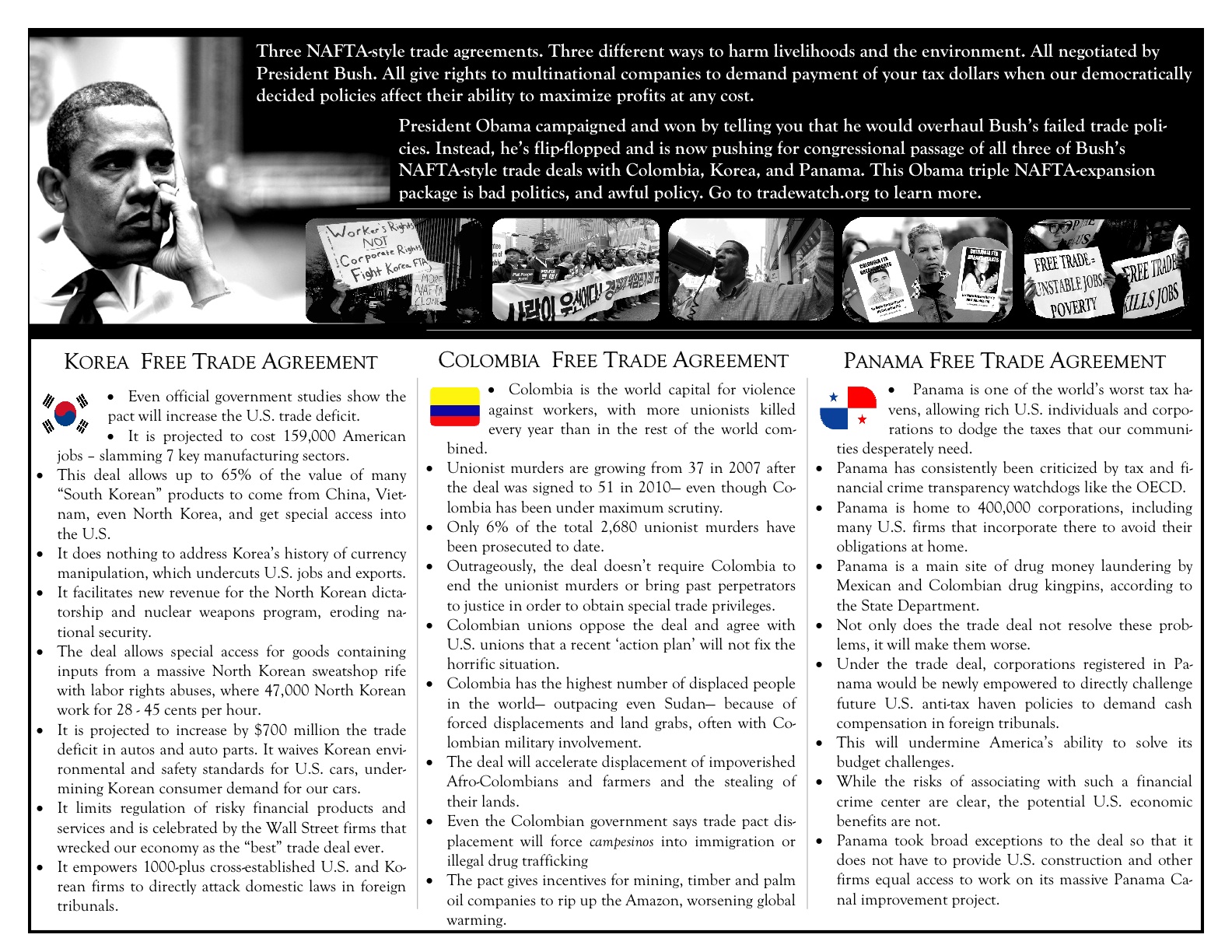
The Press editorial also fails to acknowledge that NAFTA and subsequent trade agreements meant a significant job loss for Michigan, not a job gain. In addition, this kind of trade agreement, which is predicated on opening up foreign markets to US manufactured goods doesn’t fit well within the new “buy local” mantra. How can sending products made in Michigan to South Korea promote sustainability?
In the end the Press editorial doesn’t really present a case for more free trade agreements, it reflects a pro-business position and it doesn’t provide any historical context on the impact that previous free trade agreements have had on Michigan.
How’s the New Oligarchy Treating You So Far?
In 2002, when the tax cuts for the wealthy were planned by the Bush Administration, Dick Cheney told the others at the meeting, “This is our due.” The tax cuts were one of the final bricks in a fortress of financial vandalism that Reagan had started in the 1980s. The cuts cemented into place loopholes and tax advantages so extreme that within a few years, the gap between rich and poor in this country widened to Grand-Canyon size.
The result? The top 1 percent of capitalist elites now control 40 percent of the nation’s wealth, and some estimates place it even higher. Extended by the Obama Administration in the spring of this year, the lucrative tax cuts aren’t good for everyone; they cost the government $42 billion a year. But the justification to workers for this massive handout to America’s richest citizens was always this: The recipients of all this bounty would turn around and create more jobs.
In Michigan, where we started into a single-state recession in 2001, this always seemed implausible. And the loss of jobs that started in our state has spread across the nation. Between 2008 and 2010 alone, after the tax cuts for the rich had been in place for 6 to 8 years, the U.S. lost 8 million jobs.
It’s estimated that that the few jobs that have been added since the rich started raking it in have cost taxpayers approximately $400,000 per job.
Now the middle class soon is disappearing before our eyes. Middle class incomes have dropped almost 10 percent from 2001 to the present, and many former members of the middle class have joined the one out of every seven Americans who are now living in poverty.
We believe it’s always good to recap a crisis situation. So here, zeroing in on Kent County and Grand Rapids, are some effects the new oligarchy has had on our community:
But these numbers don’t include everyone who has maxed out unemployment payments and still don’t have a job. It’s estimated that Michigan’s true unemployment rate is currently 20.3 percent.
•In 1999, Grand Rapids had a poverty rate of 8.9 percent. Today, our poverty rate is 15.7 percent.
•In the United States, the rate of children living in poverty has increase 18 percent in the past 10 years. In Michigan, it’s increased 64 percent.
•On October 1, thanks to new legislation from Lansing, people who have drawn more than two years’ worth of welfare have been cut from the rolls. In Grand Rapids, this first wave included 300 families and 767 children. Many more families will become homeless and find themselves without income in the near future—two years is now a lifetime cap for drawing welfare in the state. And with a real unemployment rate of over 20 percent, a job for any of them seems a faint hope at best.

•In 1999, the median family income in Michigan was $3,400 above the national average. In 2009, it was $3,900 below the national average. Adjusting for inflation, the average Michigan worker with a full-time job makes less money than a worker here did in 1978.
•Fewer people in Kent County have been able to complete college educations during the past decade. In Michigan, less than one-quarter of adult citizens now have a college degree. The national average is 27.9 percent.
•In Michigan, one out of every 349 families lost their home this year to foreclosure. In Kent County, it’s one in every 205 homes. From July to September of this year, the foreclosure rate here jumped 29 percent.
And how, by contrast, are the wealthiest of our citizens faring, compared to the rest of us? Very well indeed, thank you, since they’ve skimmed all of the cream and most of the milk out of this area for themselves.
As GRIID recently reported, Fred Meijer’s net worth has increased 150 percent over the past five years, and Rich DeVos’s net worth has increased 43 percent. Ask yourself how many jobs Amway and Meijer’s has added to this area of the country as a result of this tremendous upsurge in the wealth of the corporate owners.

Michigan faces other challenges related to this money grab by the top 1 percent of wealthy elites, and Grand Rapids shares them:
•The power brokers in this state who own Governor Rick Snyder and have fed him the entire Mackinac Policy Center strategy are busy at work making their ultimate dreams come true. The DeVos-fueled “think tank” presents a program that promotes privatization in all areas of government, including city services and teachers’ unions on the local level. It’s also the cradle of the concept of merging of Grand Rapids, Kent County, and other area communities into one massive structure ruled by a “CEO”: the infamous One Kent Coalition.
The One Kent Coalition, led by Dick DeVos, David Frey, Pete Secchia, Peter Wege, and Kate Pew Wolters, among others, recently had to back down from their push to force the change. Their proposal was so open-ended and vague that it would allow for something akin to a permanent Emergency Financial Manager running West Michigan—with no citizen input and complete power to privatize city and county services. Don’t expect the retreat to be anything but a temporary regrouping. This group of greedy capitalists wants all of the city and county assets under its complete control, and now is the time to make it happen.

•Dick and Betsy DeVos’s dream of dismantling the public school system in Michigan is starting to come to fruition in Detroit, where 50 percent of the public schools were closed and 41 of the remaining schools were just turned into charter schools by the current Emergency Financial Manager.
•The expanded Emergency Financial Manager law was a brilliant stroke by the crafty policy-center gurus. In one stroke, it:
√ Allows services to be moved from city control with citizen oversight into the hands of private companies
√ Advances the continued destruction of the public school systems. It also allows redistricting to occur without any citizen vote.
√ Lets Snyder and his gray presences behind the gubernatorial throne to get rid of troublesome elected officials who were voted by citizens into local offices.
√ Transfers public assets into the hands of waiting capitalists—such as the transfer of a public waterfront park in Benton Harbor onto the books of a development company that’s going to turn it into a private resort.
•New legislation is about to be introduced to make Michigan a Right-to-Work state…but only for teachers. More specifically, only for teachers who are members of the MEA, Michigan’s largest teachers’ union. This is a clever method to bust this union via a targeted state law.
•Governor Snyder has assessed $1.7 billion in new taxes on the poor and the elderly, and used the money to cut the state’s largest business tax by 80 percent—because, of course, they are going to use the money to create new jobs in Michigan. Ha, ha.
Now it’s been announced that the Snyder administration is planning to push another tax cut for businesses: a repeal of the tax that businesses pay on commercial property, such as equipment and furniture systems. This will take another $800 million of tax money away from the state. Lieutenant Governor Calley said about the proposed legislation, “We’d like to have a system that essentially rewards productivity and investment in Michigan.”
Some industrial-centered communities will lose up to 50 percent of their tax revenues as a result, but companies like Amway, Meijer’s, and Steelcase will pocket those rewards.
•In August, Snyder’s approval rating stood at 38 percent. But he dodged a recall and just said that he plans to run for a second term. And with his gluttonous patrons and their now-even-deeper pockets standing guard around him, he just might pull it off.
Remember, they believe all this is their due. Grand Rapids is no longer yours. It’s carrion waiting to be devoured by the wealthy capitalist elites of West Michigan. If we stand by and do nothing, we’ll have to witness the stripping of the bones yet to come.
So how is the oligarchy treating you these days? And what do you plan to do about it?
Czar Snyder image used by permission from artist Linda R. Robinson.
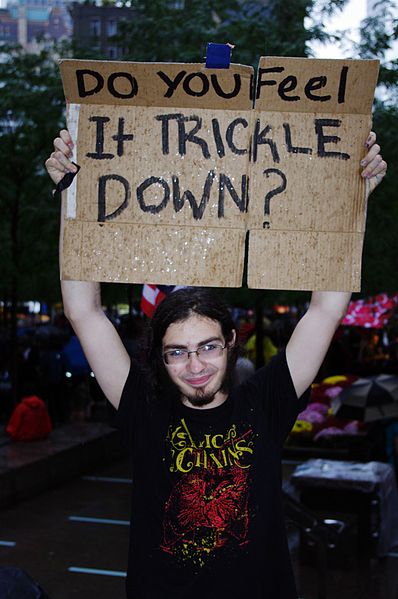
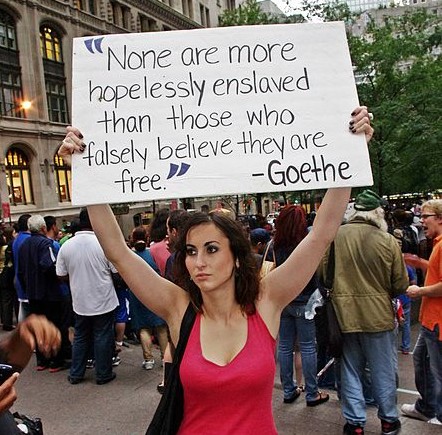
Occupy Wall Street images from Wikimedia Commons.
Step Out, Step Up – Men Against Violence march 10/13
Sexual Assault, rape, domestic violence and hate crimes committed against the LGBTQ community, are predominantly committed by men in this society.

This is the message of the march that the local chapter of NOW and the Bloom Collective want to communicate this Thursday. Here is what the facebook page for this event says:
“Walk with us to support an end to violence. We’ll meet at Rosa Parks Circle, walk to the parking area behind the arena where a member of the LGBT community was assaulted this summer, stop at Tini Bikinis, and end at YWCA, with speakers at each location.
We’ll look at how gender roles play a part in the problem of violence in our society by focusing on the most common perpetrators, men.”
People are encouraged to bring signs and invite male friends to get them to take a stand against male perpetrated violence.
Step Out, Step Up – Men Against Violence
Thursday, October 13
6:30PM Rosa Parks Circle
 Grand Rapids Institute for Information Democracy