GRIID Interview with Pastor/Rev. Greta Jo Seidohl on the solidarity fast being organized by religious leaders to draw attention to the detainee hunger strike at the ICE detention facility in Baldwin
GRIID – We recently saw each other at a solidarity action outside of the North Lake Processing Center in Baldwin, MI to support detainees who went on a hunger strike on Monday. What prompted the Michigan Multi-Faith Clergy Rapid Response to call for the solidarity fast?
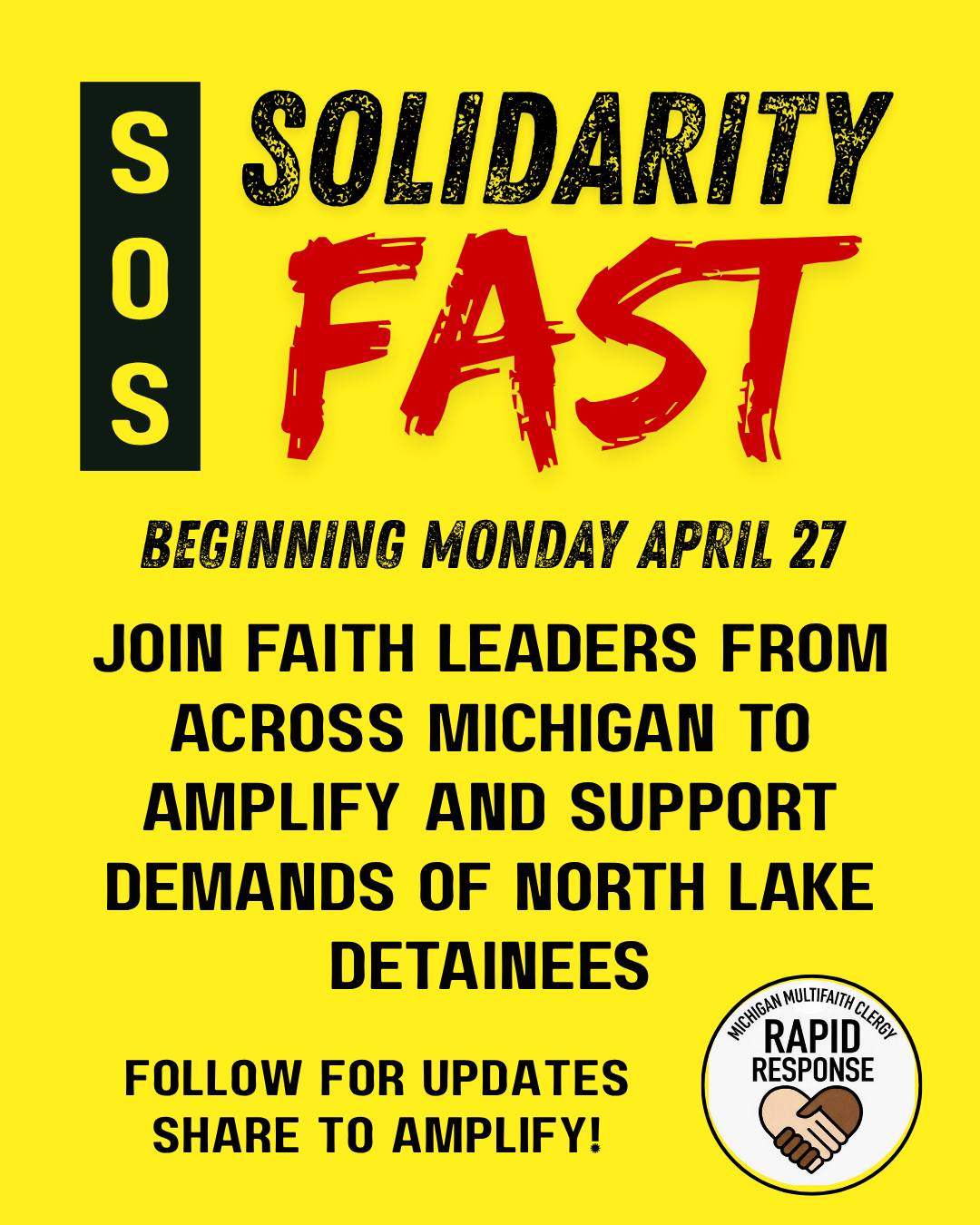
Greta Jo – When we heard about the Hunger Strike, we wanted to act quickly to amplify detainees’ demands and encourage people to advocate for their well-being. The Michigan Multifaith Clergy Rapid Response is a network of faith leaders mobilizing quickly for coordinated action to protect vulnerable communities and uphold human dignity.
We meet regularly to discuss current concerns and potential responses. At the moment we were gathered outside of North Lake, a group of clergy were participating in an already scheduled meeting to discuss an action in solidarity with the people detained at North Lake. So with the news of the hunger strike, the group shifted gears from other ideas to addressing this moment.
 GRIID – Can you say something about the practice of fasting as a mechanism for solidarity, specifically in religious traditions?
Greta Jo – Across religious traditions, there are a lot of ways people fast. It can mean going entirely without food for a period of time or eliminating certain foods. Fasting can indicate mourning and repentance, it can be a practice of self-discipline and obedience, and it is also a way to act in solidarity with the poor and hungry. For example, in Christian tradition, meat, wine, eggs, dairy, fish, and olive oil are items that are traditionally fasted from. In part, this is because they were luxuries. In the Islamic tradition, there is the yearly fast of Ramadan of abstaining from food from sunrise to sunset. And in the Jewish tradition, Passover is a time of abstaining from certain foods and deeper attention to how food is prepared and consumed.
At the same time, fasting is usually coupled with the encouragement to increase our giving and to increase reflection and prayer. In this case, as there is a Hunger Strike at North Lake, and detainees are standing against their oppression by abstaining from food, we felt that the religious tradition of fasting was an appropriate act of solidarity. Even so, we don’t encourage fasting on its own—but also a commitment to learn, reflect, and act during the time of fasting.
It’s also important to note, that how much, or what you give up (or don’t give up), is personal. The meaning is to intentionally align with and support these detainee’s demands. How we do that through fasting will be personal, but it must also include action.
GRIID – Can you also say something about the women who have a class action lawsuit that was filed last fall?
Greta Jo – I was personally not aware of that lawsuit until last Tuesday at North Lake. But hearing their stories read aloud as we stood in witness was heart wrenching. As we’re crafting out communication around the fast, we’re intentionally drawing from those written stories to not only lift up the hunger strikers but the brave women sharing their truths too.
GRIID – What outcomes are the clergy group that is calling for the fast hoping for and besides fasting what other ways can people support the detainees at the North Lake Processing Center?
Greta Jo – We hope to see the demands and needs of the detainees met – specifically around medical care and legal due process. We hope to see an end to inhuman treatment. Ultimately we want to see immigrants safely returned to their families and a clear, timely path to citizenship.In addition to the fast itself as an act of solidarity, witness, and amplification, those who have committed to the fast are going to receive daily action invitations such as donating to mutual aid/bond funds and writing letters of support to detainees. The hope being that the fast is a catalyst for continued acts of solidarity.
GRIID – There has been less attention to the repressive tactics that ICE engages in now that Minneapolis is “old news”. How can the solidarity fast be a tool to rekindle the urgency around how undocumented immigrants are being targeted/treated and why it is critical that we center their lived experiences?
Greta Jo – It’s frustrating that the public’s compassion feels dependent on the news cycle. Actions like the fast are personal for the people participating but they are also inherently about raising awareness and gaining public attention to the root issue. I find that when someone hears the word ‘hunger strike’ or ‘solidarity fast’ there is an emotional reaction rooted in an embodied understanding of the severity of the situation that would cause people to take such an action. What is happening to our neighbors deserves that level of recognition. I think that solidarity fast can be a tool to help the general public remember that those impacted by ICE violence are real people – people with bellies that grumble, eyes that cry, and hearts that break. If our solidarity fast can help elicit an emotional response from a larger portion of the public and help re-humanize the people detained for those with privilege, then our witness will have had an impact.


Trackbacks
Comments are closed.