MLive uncritically looks at GRCC farmer certification program
Earlier today, MLive posted a story by reporter Brian McVicar, which promoted a new program by the Grand Rapids Community College that seeks to assist local farmer obtain certification and allow them to sell to larger food distributors.
The article states that GRCC is offering Good Agricultural Practice (GAP) certification classes to area farmers who want to expand their sales beyond farmers markets. Nowhere in the story does the reporter question the premise of the project, which seems to be shifting food sales from farmers markets to involve food marketers and food brokers. The article does not include voices that would suggest that farmers markets are the best mechanisms for promoting local food.
The only sources cited in the article are the director of work force training at GRCC and someone with the MSU extension, which is one of the partners in this project.
However, the article omits the other partners in this project, which according to GRCC are Sysco, Walsma Lyons and Morse Marketing Connections. The MLive story does mention Sysco, but not as a partner.
Understanding who the partners are in this project makes all the difference in the world. Sysco, Walsma Lyons and Morse Marketing Connections do not grow food, they only distribute and market food products. These entities also have a long history of being food brokers and marketers with an emphasis that is not on the local. For instance, Walsma Lyons states they offer access “to a large global network of preferred suppliers.”
Morse Marketing Connections, “originally worked with Michigan-based agricultural groups and has expanded nationally, now working in multi-sector partnerships across a variety of food-related initiatives, with government agencies, private and public universities and corporations.” Sysco, while it has a Grand Rapids office, is one of the largest food distributors in the US.
What the MLive reporter failed to acknowledge or investigate is that when companies like Sysco get involved in purchasing from local growing’s, particularly small farmers is that they then exert tremendous influence in what those farmers grow. The reason being is that Sysco and other food brokers operate on volume, which means they not only are likely to determine food prices, they sometime can determine what farmers grow, based on “the market.” If a small blueberry farmer begins to sell their product to companies like Sysco they are submitting themselves to an unstable market that is often determined by what Sysco other food distributors can market around the country or around the global. This means that when a crop disaster happens anywhere else in the world it can impact the sales of food grown locally that are now in the global market because of their relationship to companies like Sysco.
This topic was explored briefly in the film Food Inc., but is better explained in Raj Patel’s book Stuffed and Starved: Markets, Power and the Hidden Battle for the World’s Food System.
If the local news media is going to report on local programs that are supposed to “assist” area farmers, then they need to ask important questions about the commercial partners in this project and what it really means for farmers and the public.
This Day is Resistance History: The Birth of Frederick Douglass
On February 14, 1817, the great Abolitionist and former slave, Frederick Douglass was born.
Including ex-slave as a descriptor is important, since Douglass was one of the first to write about his experience as a slave in the US with his first autobiography, Narrative of the Life of Frederick Douglass, in 1845.
The publishing of this autobiography by Douglass came about in part because Douglass would often encounter disbelief from White audiences about his former slave status, because he spoke so eloquently in public. Privileged White audiences, it seems, had a hard time believing that a Black man could use language in such a powerful way, but it was Douglass’ own experience of slavery that gave him the ability to articulate an abolitionist message.
Frederick Douglass was one of the seminal figures of the 19th Century Abolitionist movement, not just because he was an ex-slave, but because he was a tireless organizer who challenged not only chattel slavery, he challenged institutional racism that was at the very foundation of this nation.
In his 1852 speech, The Meaning of July Fourth for the Negro, Douglass states:
What, to the American slave, is your 4th of July? I answer; a day that reveals to him, more than all other days in the year, the gross injustice and cruelty to which he is the constant victim. To him, your celebration is a sham; your boasted liberty, an unholy license; your national greatness, swelling vanity; your sound of rejoicing are empty and heartless; your denunciation of tyrants brass fronted impudence; your shout of liberty and equality, hollow mockery; your prayers and hymns, your sermons and thanks-givings, with all your religious parade and solemnity, are to him, mere bombast, fraud, deception, impiety, and hypocrisy — a thin veil to cover up crimes which would disgrace a nation of savages. There is not a nation on the earth guilty of practices more shocking and bloody than are the people of the United States, at this very hour.
As the battle to end Chattel slavery continued, Douglass not only became one of the strongest voices for abolition, he was deeply involved in the multi-pronged efforts to dismantle legalized slavery.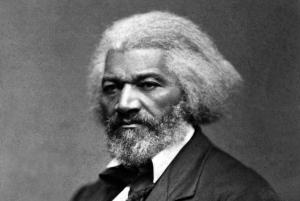
Douglass not only documented the abolitionist movement in his publication The North Star, the former slave challenged the White anti-slavery sectors to do more than take a moral position against slavery. Douglass supported and was involved in the Underground Railroad, mostly through speaking, writing and raising money for those doing the dangerous work.
Douglass was also constantly slapping America upside the head by framing the issue as one of urgency and liberation. There were those at the time who advocated for a reformist approach and to “not ask for too much too soon,” but Douglass would constantly remind his audience that nothing short of the immediate abolition of slavery was acceptable. Indeed, while Douglass may not have fully agreed with the militant responses to legalized slavery from Nat Turner or John Brown, he recognized that this kind of resistance was inevitable if change didn’t come immediately.
Douglass understood the function of power in the US and how change would not come through a reformist strategy. In 1857, Douglass would pen one of his most powerful criticisms of reformism, in his West India Emancipation speech:
Let me give you a word of the philosophy of reform. The whole history of the progress of human liberty shows that all concessions yet made to her august claims have been born of earnest struggle. The conflict has been exciting, agitating, all-absorbing, and for the time being, putting all other tumults to silence. It must do this or it does nothing. If there is no struggle there is no progress. Those who profess to favor freedom and yet deprecate agitation are men who want crops without plowing up the ground; they want rain without thunder and lightning. They want the ocean without the awful roar of its many waters.
This struggle may be a moral one, or it may be a physical one, and it may be both moral and physical, but it must be a struggle. Power concedes nothing without a demand. It never did and it never will. Find out just what any people will quietly submit to and you have found out the exact measure of injustice and wrong, which will be imposed upon them, and these will continue till they are resisted with either words or blows, or with both. The limits of tyrants are prescribed by the endurance of those whom they oppress.
We also celebrate Frederick Douglass because he was more than an abolitionist. Douglass was an anti-imperialist who condemned the US invasion of Mexico. In 1948, Douglass wrote in The North Star, of “the present disgraceful, cruel, and iniquitous war with our sister republic. Mexico seems a doomed victim to Anglo Saxon cupidity and love of dominion.”
We celebrate Frederick Douglass today because he was one of the first men to stand in solidarity with women who were organizing for their own liberation. Douglass understood the importance of inter-sectionality and that oppression was wrong no matter what form it took. He wrote the following words in support of women’s rights in the immediate aftermath of the Seneca Falls Convention.
In respect to political rights, we hold woman to be justly entitled to all we claim for man. We go farther, and express our conviction that all political rights which it is expedient for man to exercise, it is equally so for women. All that distinguishes man as an intelligent and accountable being, is equally true of woman; and if that government is only just which governs by the free consent of the governed, there can be no reason in the world for denying to woman the exercise of the elective franchise, or a hand in making and administering the laws of the land.
Lastly, we celebrate the birth of Frederick Douglass because he understood the importance of independent media (The North Star) and the practice of journalism that exposed power.
Stabenow announces Farm Bill hearings on Washington, continues to support subsidies to agribusiness
Last week, Michigan Senator Debbie Stabenow announced that the Agriculture, Nutrition and Forestry Committee will be holding four hearings over the next month on the 2012 Farm Bill.
The four hearings will cover the following topics: Energy and Economic Growth for Rural America; Strengthening Conservation through the 2012 Farm Bill; Healthy Food Initiatives, Local Production; and Nutrition and Risk Management and Commodities in the 2012 Farm Bill.
The announcement also says, “Witnesses, times and other specific hearing details to be announced.” This clearly suggests that Stabenow and the other Committee members have selectively invited people to address the committee, which if it follows the same pattern of the Michigan Farm Bill hearing from 2011, then all the “witnesses” will be representatives from Agri-business.
The selection of who will no doubt be speaking at these hearings could also be deduced by looking at who the major campaign contributors are to Senator Stabenow, who is in the midst of a re-election year. Several of the top 20 contributors for the 2012 election are from the agribusiness sector.
A third indicator on who might be speaking at the upcoming Ag Committee hearings is reflected in whom Senator Stabenow has recently provided taxpayer subsidies to.
On February 3rd, Stabenow announced that several Michigan food suppliers would be receiving federal funding. All four recipients will be using the “grant” money to “develop marketing strategies for agricultural commodities.” The four businesses are producers of beet sugar, chocolate & yogurt-covered blueberries, fruit wines and bio-based chemical products. Interesting, since none of these products seem like essential food staples and that promote better nutrition. Indeed, all four products seem to be specialty items that will all be fairly pricey and target more upscale consumers. This is what your tax dollars are being used for……..to advertise luxury food items to upscale consumers.
We plan on reporting on the outcome of each of these hearings as information becomes available.
450 US Military bases in Afghanistan and counting
This article by Nick Turse is re-posted from Tom’s Dispatch.
In late December, the lot was just a big blank: a few burgundy metal shipping containers sitting in an expanse of crushed eggshell-colored gravel inside a razor-wire-topped fence. The American military in Afghanistan doesn’t want to talk about it, but one day soon, it will be a new hub for the American drone war in the Greater Middle East.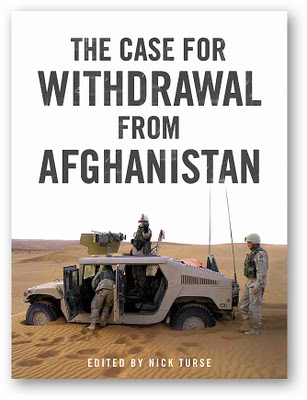
Next year, that empty lot will be a two-story concrete intelligence facility for America’s drone war, brightly lit and filled with powerful computers kept in climate-controlled comfort in a country where most of the population has no access to electricity. It will boast almost 7,000 square feet of offices, briefing and conference rooms, and a large “processing, exploitation, and dissemination” operations center — and, of course, it will be built with American tax dollars.
Nor is it an anomaly. Despite all the talk of drawdowns and withdrawals, there has been a years-long building boom in Afghanistan that shows little sign of abating. In early 2010, the U.S.-led International Security Assistance Force (ISAF) had nearly 400 bases in Afghanistan. Today, Lieutenant Lauren Rago of ISAF public affairs tells TomDispatch, the number tops 450.
The hush-hush, high-tech, super-secure facility at the massive air base in Kandahar is just one of many building projects the U.S. military currently has planned or underway in Afghanistan. While some U.S. bases are indeed closing up shop or being transferred to the Afghan government, and there’s talk of combat operations slowing or ending next year, as well as a withdrawal of American combat forces from Afghanistan by 2014, the U.S. military is still preparing for a much longer haul at mega-bases like Kandahar and Bagram airfields. The same is true even of some smaller camps, forward operating bases (FOBs), and combat outposts (COPs) scattered through the country’s backlands. “Bagram is going through a significant transition during the next year to two years,” Air Force Lieutenant Colonel Daniel Gerdes of the U.S. Army Corps of Engineers’ Bagram Office recently toldFreedom Builder, a Corps of Engineers publication. “We’re transitioning… into a long-term, five-year, 10-year vision for the base.”
Whether the U.S. military will still be in Afghanistan in five or 10 years remains to be seen, but steps are currently being taken to make that possible. U.S. military publications, plans and schematics, contracting documents, and other official data examined by TomDispatch catalog hundreds of construction projects worth billions of dollars slated to begin, continue, or conclude in 2012.
While many of these efforts are geared toward structures for Afghan forces or civilian institutions, a considerable number involve U.S. facilities, some of the most significant being dedicated to the ascendant forms of American warfare: drone operations and missions by elite special operations units. The available plans for most of these projects suggest durability. “The structures that are going in are concrete and mortar, rather than plywood and tent skins,” says Gerdes. As of last December, his office was involved in 30 Afghan construction projects for U.S. or international coalition partners worth almost $427 million.
The Big Base Build-Up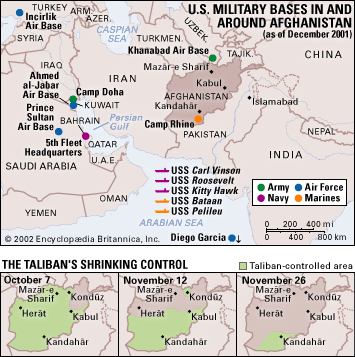
Recently, the New York Times reported that President Obama is likely to approve a plan to shift much of the U.S. effort in Afghanistan to special operations forces. These elite troops would then conduct kill/capture missions and train local troops well beyond 2014. Recent building efforts in the country bear this out.
A major project at Bagram Air Base, for instance, involves the construction of a special operations forces complex, a clandestine base within a base that will afford America’s black ops troops secrecy and near-absolute autonomy from other U.S. and coalition forces. Begun in 2010, the $29 million project is slated to be completed this May and join roughly 90 locations around the country where troops from Combined Joint Special Operations Task Force-Afghanistan have been stationed.
Elsewhere on Bagram, tens of millions of dollars are being spent on projects that are less sexy but no less integral to the war effort, like paving dirt roads and upgrading drainage systems on the mega-base. In January, the U.S. military awarded a $7 million contract to a Turkish construction company to build a 24,000-square-foot command-and-control facility. Plans are also in the works for a new operations center to support tactical fighter jet missions, a new flight-line fire station, as well as more lighting and other improvements to support the American air war.
Last month, Afghan President Hamid Karzai ordered that the U.S.-run prison at Bagram be transferred to Afghan control. By the end of January, the U.S. had issued a $36 million contract for the construction, within a year, of a new prison on the base. While details are sparse, plans for the detention center indicate a thoroughly modern, high-security facility complete with guard towers, advanced surveillance systems, administrative facilities, and the capacity to house about 2,000 prisoners.
At Kandahar Air Field, that new intelligence facility for the drone war will be joined by a similarly-sized structure devoted to administrative operations and maintenance tasks associated with robotic aerial missions. It will be able to accommodate as many as 180 personnel at a time. With an estimated combined price tag of up to $5 million, both buildings will be integral to Air Force and possibly CIA operations involving both the MQ-1 Predator drone and its more advanced and more heavily-armed progeny, the MQ-9 Reaper.
The military is keeping information about these drone facilities under extraordinarily tight wraps. They refused to answer questions about whether, for instance, the construction of these new centers for robotic warfare are in any way related to the loss of Shamsi Air Base in neighboring Pakistan as a drone operations center, or if they signal efforts to increase the tempo of drone missions in the years ahead. The International Joint Command’s chief of Intelligence, Surveillance, and Reconnaissance (ISR) operations, aware that such questions were to be posed, backed out of a planned interview with TomDispatch.
“Unfortunately our ISR chief here in the International Joint Command is going to be unable to address your questions,” Lieutenant Ryan Welsh of ISAF Joint Command Media Outreach explained by email just days before the scheduled interview. He also made it clear that any question involving drone operations in Pakistan was off limits. “The issues that you raise are outside the scope under which the IJC operates, therefore we are unable to facilitate this interview request.”
Whether the construction at Kandahar is designed to free up facilities elsewhere for CIA drone operations across the border in Pakistan or is related only to missions within Afghanistan, it strongly suggests a ramping up of unmanned operations. It is, however, just one facet of the ongoing construction at the air field. This month, a $26 million project to build 11 new structures devoted to tactical vehicle maintenance at Kandahar is scheduled for completion. With two large buildings for upkeep and repairs, one devoted strictly to fixing tires, another to painting vehicles, as well as an industrial-sized car wash, and administrative and storage facilities, the big base’s building boom shows no sign of flickering out.
Construction and Reconstruction
This year, at Herat Air Base in the province of the same name bordering Turkmenistan and Iran, the U.S. is slated to begin a multimillion-dollar project to enhance its special forces’ air operations. Plans are in the works to expand apron space — where aircraft can be parked, serviced, and loaded or unloaded — for helicopters and airplanes, as well as to build new taxiways and aircraft shelters.
That project is just one of nearly 130, cumulatively valued at about $1.5 billion, slated to be carried out in Herat, Helmand, and Kandahar provinces this year, according to Army Corps of Engineers documents examined by TomDispatch. These also include efforts at Camp Tombstone and Camp Dwyer, both in Helmand Province as well as Kandahar’s FOB Hadrian and FOB Wilson. The U.S. military also recently awarded a contract for more air field apron space at a base in Kunduz, a new secure entrance and new roads for FOB Delaram II, and new utilities and roads at FOB Shank, while the Marines recently built a new chapel at Camp Bastion.
Seven years ago, Forward Operating Base Sweeney, located a mile up in a mountain range in Zabul Province, was a well-outfitted, if remote, American base. After U.S. troops abandoned it, however, the base fell into disrepair. Last month, American troops returned in force and began rebuilding the outpost, constructing everything from new troop housing to a new storage facility. “We built a lot of buildings, we put up a lot of tents, we filled a lot of sandbags, and we increased our force protection significantly,” Captain Joe Mickley, commanding officer of the soldiers taking up residence at the base, told a military reporter.
Decommission and Deconstruction
Hesco barriers are, in essence, big bags of dirt. Up to seven feet tall, made of canvas and heavy gauge wire mesh, they form protective walls around U.S. outposts all over Afghanistan. They’ll take the worst of sniper rounds, rifle-propelled grenades, even mortar shells, but one thing can absolutely wreck them — the Marines’ 9th Engineer Support Battalion.
At the beginning of December, the 9th Engineers were building bases and filling up Hescos in Helmand Province. By the end of the month, they were tearing others down.
Wielding pickaxes, shovels, bolt-cutters, powerful rescue saws, and front-end loaders, they have begun “demilitarizing” bases, cutting countless Hescos — which cost $700 or more a pop — into heaps of jagged scrap metal and bulldozing berms in advance of the announced American withdrawal from Afghanistan. At Firebase Saenz, for example, Marines were bathed in a sea of crimson sparks as they sawed their way through the metal mesh and let the dirt spill out, leaving a country already haunted by the ghosts of British and Russian bases with yet another defunct foreign outpost. After Saenz, it was on to another patrol base slated for destruction.
Not all rural outposts are being torn down, however. Some are being handed over to the Afghan Army or police. And new facilities are now being built for the indigenous forces at an increasing rate. “If current projections remain accurate, we will award 18 contracts in February,” Bonnie Perry, the head of contracting for the Army Corps of Engineers’ Afghanistan Engineering District-South, told military reporter Karla Marshall. “Next quarter we expect that awards will remain high, with the largest number of contract awards occurring in May.” One of the projects underway is a large base near Herat, which will include barracks, dining facilities, office space, and other amenities for Afghan commandos.
Tell Me How This Ends
No one should be surprised that the U.S. military is building up and tearing down bases at the same time, nor that much of the new construction is going on at mega-bases, while small outposts in the countryside are being abandoned. This is exactly what you would expect of an occupation force looking to scale back its “footprint” and end major combat operations while maintaining an on-going presence in Afghanistan. Given the U.S. military’s projected retreat to its giant bases and an increased reliance on kill/capture black-ops as well as unmanned air missions, it’s also no surprise that its signature projects for 2012 include a new special operations forces compound, clandestine drone facilities, and a brand new military prison.
There’s little doubt Bagram Air Base will exist in five or 10 years. Just who will be occupying it is, however, less clear. After all, in Iraq, the Obama administration negotiated for some way to station a significant military force — 10,000 or more troops — there beyond a withdrawal date that had been set in stone for years. While a token number of U.S. troops and a highly militarized State Department contingent remain there, the Iraqi government largely thwarted the American efforts — and now, even the State Department presence is being halved.
It’s less likely this will be the case in Afghanistan, but it remains possible. Still, it’s clear that the military is building in that country as if an enduring American presence were a given. Whatever the outcome, vestiges of the current base-building boom will endure and become part of America’s Afghan legacy.
On Bagram’s grounds stands a distinctive structure called the “Crow’s Nest.” It’s an old control tower built by the Soviets to coordinate their military operations in Afghanistan. That foreign force left the country in 1989. The Soviet Union itself departed from the planet less than three years later. The tower remains.
America’s new prison in Bagram will undoubtedly remain, too. Just who the jailers will be and who will be locked inside five years or 10 years from now is, of course, unknown. But given the history — marked by torture and deaths — of the appalling treatment of inmates at Bagram and, more generally, of the brutality toward prisoners by all parties to the conflict over the years, in no scenario are the results likely to be pretty.
The Seed Emergency: The Threat to Food and Democracy
This article by Vandana Shiva is re-posted from ZNet.
The seed is the first link in the food chain – and seed sovereignty is the foundation of food sovereignty. If farmers do not have their own seeds or access to open pollinated varieties that they can save, improve and exchange, they have no seed sovereignty – and consequently no food sovereignty.
The deepening agrarian and food crisis has its roots in changes in the seed supply system, and the erosion of seed diversity and seed sovereignty.
Seed sovereignty includes the farmer’s rights to save, breed and exchange seeds, to have access to diverse open source seeds which can be saved – and which are not patented, genetically modified, owned or controlled by emerging seed giants. It is based on reclaiming seeds and biodiversity as commons and public good.
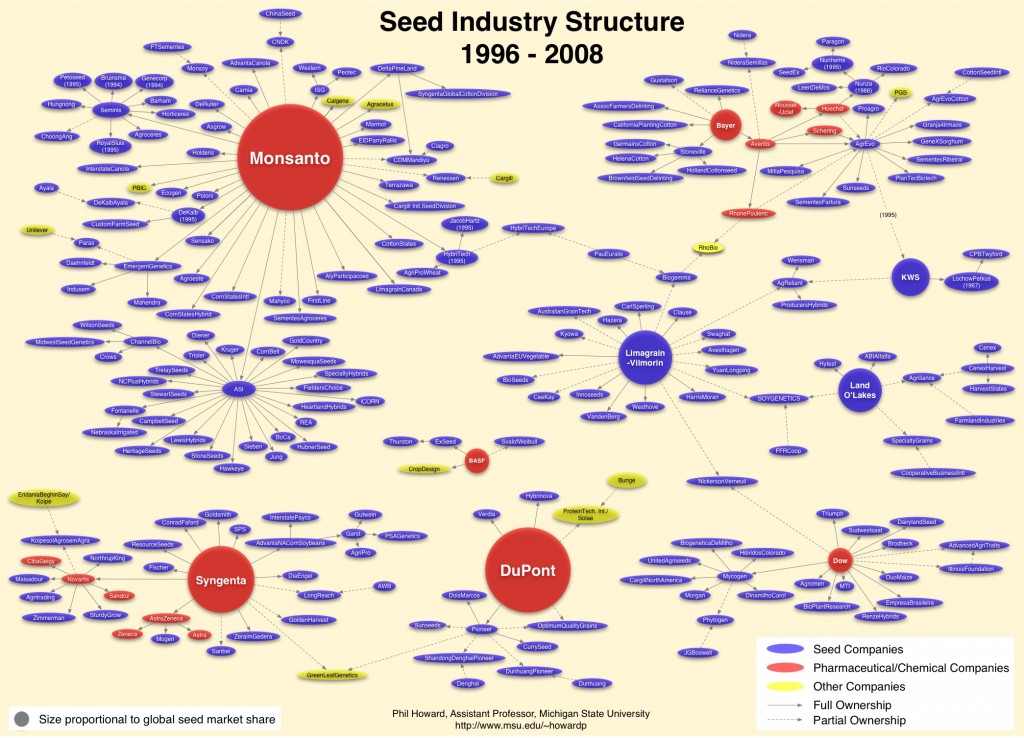
The past twenty years have seen a very rapid erosion of seed diversity and seed sovereignty, and the concentration of the control over seeds by a very small number of giant corporations. In 1995, when the UN organised the Plant Genetic Resources Conference in Leipzig, it was reported that 75 per cent of all agricultural biodiversity had disappeared because of the introduction of “modern” varieties, which are always cultivated as monocultures. Since then, the erosion has accelerated.
The introduction of the Trade Related Intellectual Property Rights Agreement of the World Trade Organisation has accelerated the spread of genetically engineered seeds – which can be patented – and for which royalties can be collected. Navdanya was started in response to the introduction of these patents on seeds in the General Agreement on Tariffs and Trade – a forerunner to the WTO – about which a Monsanto representative later stated: “In drafting these agreements, we were the patient, diagnostician [and] physician all in one.” Corporations defined a problem – and for them the problem was farmers saving seeds. They offered a solution, and the solution was to make it illegal for farmers to save seed – by introducing patents and intellectual property rights [PDF] on those very seeds. As a result, acreage under GM corn, soya, canola, cotton has increased dramatically.
Threats to seed sovereignty
Besides displacing and destroying diversity, patented GMO seeds are also undermining seed sovereignty. Across the world, new seed laws are being introduced which enforce compulsory registration of seeds, thus making it impossible for small farmers to grow their own diversity, and forcing them into dependency on giant seed corporations. Corporations are also patenting climate resilient seeds evolved by farmers – thus robbing farmers of using their own seeds and knowledge for climate adaptation.
Another threat to seed sovereignty is genetic contamination. India has lost its cotton seeds because of contamination from Bt Cotton – a strain engineered to contain the pesticide Bacillus thuringiensis bacterium. Canada has lost its canola seed because of contamination from Roundup Ready canola. And Mexico has lost its corn due to contamination from Bt Cotton.
After contamination, biotech seed corporations sue farmers with patent infringement cases, as happened in the case of Percy Schmeiser. That is why more than 80 groups came together and filed a case to prevent Monsanto from suing farmers whose seed had been contaminated.
As a farmer’s seed supply is eroded, and farmers become dependent on patented GMO seed, the result is debt. India, the home of cotton, has lost its cotton seed diversity and cotton seed sovereignty. Some 95 per cent of the country’s cotton seed is now controlled by Monsanto – and the debt trap created by being forced to buy seed every year – with royalty payments – has pushed hundreds of thousands of farmers to suicide; of the 250,000 farmer suicides, the majority are in the cotton belt.
Seeding control
Even as the disappearance of biodiversity and seed sovereignty creates a major crisis for agriculture and food security, corporations are pushing governments to use public money to destroy the public seed supply and replace it with unreliable non-renewable, patented seed – which must be bought each and every year.
In Europe, the 1994 regulation for protection of plant varieties forces farmers to make a “compulsory voluntary contribution” to seed companies. The terms themselves are contradictory. What is compulsory cannot be voluntary.
In France, a law was passed in November 2011, which makes royalty payments compulsory. As Agriculture Minister Bruna Le Marie stated: “Seeds can be longer be royalty free, as is currently the case.” Of the 5,000 or so cultivated plant varieties, 600 are protected by certificate in France, and these account for 99 per cent of the varieties grown by farmers.
The “compulsory voluntary contribution”, in other words a royalty, is justified on grounds that “a fee is paid to certificate holders [seed companies] to sustain funding of research and efforts to improve genetic resources”.
Monsanto pirates biodiversity and genetic resources from farming communities, as it did in the case of a wheat biopiracy case fought by Navdanya with Greenpeace, and climate resilient crops and brinjal (also known as aubergine or eggplant) varieties for Bt Brinjal. As Monsanto states, “it draws from a collection of germ-plasm that is unparalleled in history” and “mines the diversity in this genetic library to develop elite seeds faster than ever before”.
In effect, what is taking place is the enclosure of the genetic commons of our biodiversity and the intellectual commons of public breeding by farming communities and public institutions. And the GMO seeds Monsanto is offering are failing. This is not “improvement” of genetic resources, but degradation. This is not innovation but piracy.
For example, the Alliance for a Green Revolution in Africa (AGRA) – being pushed by the Gates Foundation – is a major assault on Africa’s seed sovereignty.
Agribusiness
The 2009 US Global Food Security Act [PDF] also called the Lugar-Casey Act [PDF], “A bill to authorise appropriations for fiscal years 2010 through 2014 to provide assistance to foreign countries to promote food security, to stimulate rural economies, and to improve emergency response to food crisis, to amend the Foreign Assistance Act of 1961 and for other purposes”.
The amendment to the Foreign Assistance Act would “include research on bio-technological advances appropriate to local ecological conditions, including genetically modified technology”. The $ 7.7bn that goes with the bill would go to benefit Monsanto to push GM seeds.
An article in Forbes, titled “Why Uncle Sam Supports Franken Foods”, shows how agribusiness is the only sector in which US has a positive trade balance. Hence the push for GMOs – because they bring royalties to the US. However, royalties for Monsanto are based on debt, suicidal farmers and the disappearance of biodiversity worldwide.
Under the US Global Food Security Act, Nepal signed an agreement with USAID and Monsanto. This led to massive protests across the country. India was forced to allow patents on seeds through the first dispute brought by the US against India in the WTO. Since 2004, India has also been trying to introduce a Seed Act which would require farmers to register their own seeds and take licenses. This in effect would force farmers from using their indigenous seed varieties. By creating a Seed Satyagraha – a non-cooperation movement in Gandhi’s footsteps, handing over hundreds of thousands of signatures to the prime minister, and working with parliament – we have so far prevented the Seed Law from being introduced.
India has signed a US-India Knowledge Initiative in Agriculture, with Monsanto on the Board. Individual states are also being pressured to sign agreements with Monsanto. One example is the Monsanto-Rajasthan Memorandum of Understanding, under which Monsanto would get intellectual property rights to all genetic resources, and to carry out research on indigenous seeds. It took a campaign by Navdanya and a “Monsanto Quit India” Bija Yatra [“seed pilgrimage”] to force the government of Rajasthan to cancel the MOU.
Northern Border Coalition forms to push for Immigrant and Immigration Rights in Michigan
This article is based on information available from Alliance for Immigration Reform Michigan.
For the first time ever, Northern border states have united to urge the Department of Homeland Security to reform the Border Patrol division of Customs and Border Protection.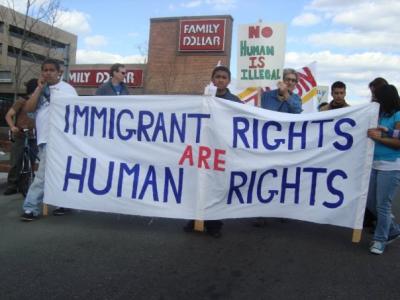
For years, northern border residents have endured civil and human rights violations, documenting a long history of racial and religious profiling, harassment, abusive interrogation, searches without probable cause, road checkpoints and sweeps of public transit.
In response, many residents and advocacy groups, organized under the Northern Borders Coalition, have signed on to a major position statement, which calls on Secretary Janet Napolitano to take back control of her rogue department. This Sign-On letter was delivered to Sec. Napolitano on February 7, in coordination with several other events during the month of February that call attention to the fundamental problems with the way DHS patrol our nation’s northern borders.
The sign-on letter was put together by northern border organizations that work with, for, and in the communities that suffer abuses by border patrol agents. These organizations included Alliance for Immigration Reform- Michigan and New York Immigration Coalition, among others. In addition to the sign-on letter, additional organizing efforts include a Northern Border Conference in Detroit on February 23 & 24, and a “We Are the Border” National Day of Action on February 28th. That day of action marks the one-year anniversary of the death of Alex Martinez, a US Citizen, who was shot and killed by U.S. Border Patrol and Local Law Enforcement in Washington State. His story is just one of thousands of people who’ve been mistreated in border communities. It’s clear that U.S. Border Patrol is abusing their authority and our communities.
For example, in 2011 at a family birthday party in Nooksack, Washington, a small girl had an accident and fell in the driveway. Her mother called 911 for an ambulance. In addition to medical help, firefighters, Sheriff’s Deputies, and Border Patrol agents all arrived at the home. Border Patrol agents walked around the party asking people for names and other information. Many guests ran inside the home and closed the door. The residents of the home were U.S. Citizens with the last name of Martinez (different family than the example listed above).
“Racial profiling, aggressive interrogation, and questionable collaboration between Customs and Border Protection (CBP) and state and local law enforcement have become the norm along the northern border in New York,” said Chung-Wha Hong, executive director of the New York Immigration Coalition. “Such enforcement tactics fail to secure our border and violate constitutional safeguards that apply to U.S. citizens and immigrants alike.”
Short Film exposes Enbridge environmental practices
This video is re-posted from EcoWatch.
Editors Note: Enbridge, the company responsible for the more than 1 million gallons of oil that leaked into the Kalamazoo River in the spring of 2010, is a major part of the Alberta Tar Sands Project and would make millions if the Keystone Pipeline Project were approved in the US. This powerful film includes a section on the ecological disaster that happened in Michigan nearly 2 years ago.
Filmmaker Corey Ogilvie has produced a great new short film on the risks versus benefits of Enbridge’s proposed new pipeline that would take raw bitumen from the tar sands to the coast of British Columbia.
This film focuses on the impacts of the inevitable spills from the pipeline. There are, of course, also impacts from the pipeline when it doesn’t spill—upstream impacts on Alberta’s land, air and water from digging up the tar sands, and downstream impacts from the climate change caused by burning the oil.
Small group of labor activists protest outside Amash’s office on unemployment benefits issue
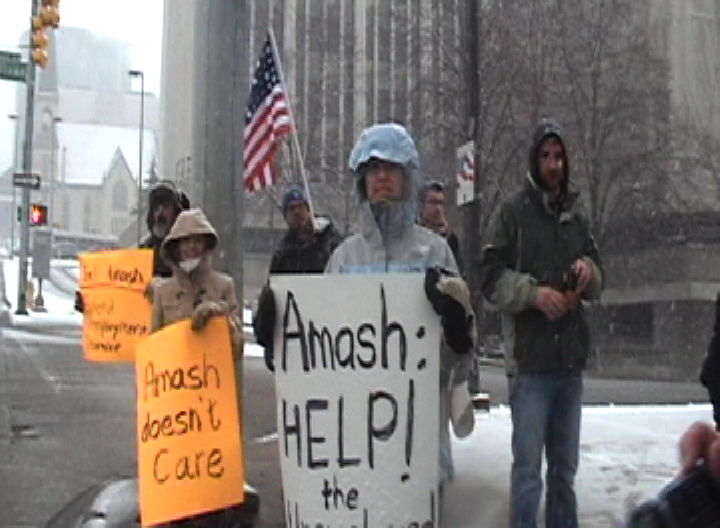
Earlier today about 15 people gathered in front of the federal building in downtown Grand Rapids to make a statement about Rep. Justin Amash’s position against extending unemployment benefits for millions of Americans.
One protestor we spoke with was a retired UAW worker (Dale), who said, “this was the most anti-worker Congress he has seen” in his life and that these policies are just one tactic being used in “the war on working people.”
The protest was one of several happening across Michigan today and was called for by the AFL-CIO to call out Republican legislators who do not support extending unemployment benefits and who want further conditions placed on those who do. However, the Democratic Party has recently said they would agree to cutting the length of time people could be on unemployment, according to a Huffington Post story posted today.
The only commercial media entity to show up today was WZZM 13 who interviewed Sue Levy from the UAW. GRIID also interviewed Levy and filmed the first two questions asked by the channel 13 reporter. Sue wanted to address the issue of the GOP proposal of drug testing for unemployment recipients, but the TV 13 person said, “we are not going there.” GRIID asked Sue Levy what her thoughts were on the proposed drug testing as well as her thoughts on ending corporate welfare benefits.
Bank Bailout 2: Obama Lets Mortgage Abusers Off the Hook
This article is re-posted from Common Dreams.
The Obama administration announced this morning that the five largest U.S. banks have agreed to a $26 billion ‘settlement’ to end lawsuits over abusive practices that forced millions of families from their homes and helped bring about the nation’s financial meltdown.
After months of talks with state and federal officials, the banks have reportedly agreed to help some homeowners reduce their mortgage debt or refinance their homes at lower rates. Over 4 million familes lost their homes to foreclosure yet just 750,000 people who lost their homes to foreclosure will receive a one-time check for just $1,800 to $2,000, which for many will barely cover the cost of moving. The deal will only help a fraction of the struggling homeowners affected by the bank’s practices.
New York and California have reportedly signed off on the deal after initially holding it up in protest of lenient treatment of the banks.
The deal gives banks immunity from civil lawsuits for “robosigning,” a practice whereby homeowners were rapidly evicted without proper vetting.
In his January 24th State of the Union address, President Obama promised a fresh investigation into mortgage abuses that led to the financial meltdown. Now, before that investigation has even begun, Obama is granting these 5 “too big to fail” banks immunity from “robo-signing” abuses.
* * *
UPDATE: Matt Taibbi writing at Rolling Stone:
…this looks like America’s public prosecutors just wilted before the prospect of a long, drawn-out conflict with an army of highly-paid, determined white-shoe banker lawyers. The message this sends is that if you commit crimes on a large enough scale, and have enough high-priced legal talent sitting at the negotiating table after you get caught, the government will ultimately back down, conceding the inferiority of its resources.
* * *
Yves Smith, writing at NakedCapitalism:
The Top Twelve Reasons Why You Should Hate the Mortgage Settlement
[…] As we’ve said before, this settlement is yet another raw demonstration of who wields power in America, and it isn’t you and me. It’s bad enough to see these negotiations come to their predictable, sorry outcome. It adds insult to injury to see some try to depict it as a win for long suffering, still abused homeowners.
1. We’ve now set a price for forgeries and fabricating documents. It’s $2000 per loan. This is a rounding error compared to the chain of title problem these systematic practices were designed to circumvent. The cost is also trivial in comparison to the average loan, which is roughly $180k, so the settlement represents about 1% of loan balances. It is less than the price of the title insurance that banks failed to get when they transferred the loans to the trust. It is a fraction of the cost of the legal expenses when foreclosures are challenged. It’s a great deal for the banks because no one is at any of the servicers going to jail for forgery and the banks have set the upper bound of the cost of riding roughshod over 300 years of real estate law.
2. That $26 billion is actually $5 billion of bank money and the rest is your money. […]
3. That $5 billion divided among the big banks wouldn’t even represent a significant quarterly hit. […]
4. That $20 billion actually makes bank second liens sounder, so this deal is a stealth bailout that strengthens bank balance sheets at the expense of the broader public.
5. The enforcement is a joke. The first layer of supervision is the banks reporting on themselves. […]
6. The past history of servicer consent decrees shows the servicers all fail to comply. Why? Servicer records and systems are terrible in the best of times, and their systems and fee structures aren’t set up to handle much in the way of delinquencies. […]
7. The cave-in Nevada and Arizona on the Countrywide settlement suit is a special gift for Bank of America, who is by far the worst offender in the chain of title disaster. This move proves that failing to comply with a consent degree has no consequences but will merely be rolled into a new consent degree which will also fail to be enforced. […]
8. If the new Federal task force were intended to be serious, this deal would have not have been settled. You never settle before investigating. It’s a bad idea to settle obvious, widespread wrongdoing on the cheap. […]
9. There is plenty of evidence of widespread abuses that appear not to be on the attorney generals’ or media’s radar, such as servicer driven foreclosures and looting of investors’ funds via impermissible and inflated charges. While no serious probe was undertaken, even the limited or peripheral investigations show massive failures (60% of documents had errors in AGs/Fed’s pathetically small sample). […]
10. A deal on robosigning serves to cover up the much deeper chain of title problem. […]
11. Don’t bet on a deus ex machina in terms of the new Federal foreclosure task force to improve this picture much. If you think Schneiderman, as a co-chairman who already has a full time day job in New York, is going to outfox a bunch of DC insiders who are part of the problem, I have a bridge I’d like to sell to you.
12. We’ll now have to listen to banks and their sycophant defenders declaring victory despite being wrong on the law and the facts. They will proceed to marginalize and write off criticisms of the servicing practices that hurt homeowners and investors and are devastating communities. […]
* * *
And at Firedoglake, Scarecrow writes of the ‘settlement’:
Obama’s Guiding Principle: Leave No One Accountable
[…] The Obama Administration has followed a predictable pattern we now recognize. It has consistently functioned like criminal defense counsel, whose mission is to get their criminal clients, the major corporations and executives who fund their elections, off with no admission of guilt, no forced resignations, and as little harm to their reputation, or that of the counsel, as possible. To do this, they neutralize anyone with an ounce of public purpose in their veins.
Its role is then to convince the public that whatever you thought or feared was going on in America, and whoever you believed had caused the collapse of America’s economy, caused millions to lose their jobs, their homes and their retirements and continued to loot the country, it’s time to look forward. Because everyone who matters — and that’s not you — now agrees, they say, to function in the public interest, even though it’s a bald face lie, since nothing has changed and the looters and their complicit overseers are still in charge.
Obama’s people have performed this function for America’s looters over and over again. They did it for Wall Street, the banks, the rich tax evaders, the insurance companies, the oil companies, the gas companies, the coal companies, the CIA, the DoD, and numerous torturers and their legal/policy enablers and associated war criminals in the previous administration.
Consistent with this strategy, Obama’s team must silence, neutralize or punish anyone who protests or blows the whistle on the massive criminality and corruption involved. It must also emasculate the left and what’s left of the liberal wing of the Dem Party, using the argument that the Administration is not nearly as awful as the other Party’s people, who openly glorify looting and killing and vilifying the victims.
But of course, when we were ruled by the latter, everyone with any humanity was repulsed by the open looting and killing and indifference and was willing to say so. When the Administration sanctions it, however, we are supposed to bite our tongues, because it could be worse.
Well, it’s worse, and it’s more insidious and corrupting of our souls than where we were four years ago. It is evil.
New Media We Recommend
Below is a list of new materials that we have read/watched in recent weeks. The comments are not a “review” of the material, instead sort of an endorsement of ideas and investigations that can provide solid analysis and even inspiration in the struggle for change. All these items are available at The Bloom Collective, so check them out and stimulate your mind.
Program or Be Programmed: Ten Commands for a Digital Age, by Douglas Rushkoff – Living in an increasingly digital world, despite all the claims of freedom and wonder, does come with consequences, political, social, cultural and personal. In his newest book, Douglas Rushkoff gives us another gem. The media & culture theorist presents ten ideas or guidelines about how we might navigate in the online world. Many of these notions are not likely to be new to people, but Rushkoff presents a fresh take on the implications of human interaction in the digital world. The author discusses the amount of time we spend online rather than in person, whether that is in person with others or just ourselves. Program or Be Programmed also takes on issues of online identity, scale, complexity and choice. In addition, the author challenges us with the notion that the less we know about programming in the digital world will likely result in our collectively being programmed. What the author means by that is that we will often begin within the framework of interaction and information that has been determined by someone else, not through our own initiative and creativity. An important book for those grappling with digital reality and its social implications.

Postmodern Imperialism: Geopolitics and The Great Games, by Eric Walberg – The political term The Great Game first came into use in the 19th Century referring to the political conflict between Russia and Great Britain. Ironically, this conflict was best manifested in both countries desire to control and rule what is now modern day Afghanistan. The author uses The Great Game theme as he explores geopolitics, particularly in the Middle East. Walberg presents a very interesting thesis on the major applications of The Great Game theory over the past 100 years and identifies three “rules” for how it is applied, particularly by the US. The three “rule” are; 1) neoliberal trade policies supported by international finance; 2) imperial wars and occupation and; 3) Empire exceptionalism, which is really a reference to US global policy. The book is well sourced and covers a great deal of historical ground, although at times unnecessarily. However, Postmodern Imperialism is a value resource for anyone wanting to understand global geopolitics and contemporary US foreign policy.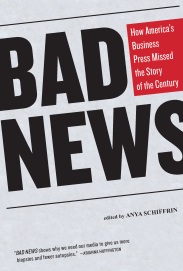
Bad News: How America’s Business Press Missed the Story of the Century, edited by Anya Schiffrin – How is it that there was so little reporting on the impending financial crisis in 2008 by the mainstream news media? This is one of the main questions answered by numerous writers in this interesting collection of essays on the US news media’s role in the recent global financial meltdown. Some authors argue that the mainstream news media generally reports the official narrative on economic matters and rarely steps outside the accepted economic framework. Other contributors discuss the media through a class lens as large corporate entities who are financially tied to the world of Wall Street and therefore have no incentive to report on the policies and practices of the financial sector. There are also a few writers whose critique centers more on the decades long decline of journalism in the US their failure to hold both political and financial power accountable. A worthy collective of articles with analysis that would be helpful to anyone who wanted to better understand the 2008 economic crisis.
Plastic Planet (DVD) – A fascinating documentary that looks at the often hidden realities of plastic in the modern world. Directed by Werner Boote, investigates how plastic is produced, how it is used and more importantly the environmental and health consequences of a powerful global industry. The film uses archival footage from 1950s US Tupperware parties to industry promotional video that stands in sharp contrast to the devastating impact of the fossil fuel and chemical based product known as plastic. Plastics are so pervasive that they are now is all the major bodies of water, in the soil, in the bodies of fish, birds, other species and humans. The film has great production value and provides viewers with a wealth of information on one of the most pervasive and toxic substances current used by most of the world.

