Renter Rights and Foreclosure Fights event 2/25 in Grand Rapids
In recent years millions of Americans lost their homes to foreclosure as the financial sector engaged in massive fraud and preyed on working families.
The Obama administration just sided with the mortgage industry by not holding them accountable for their roll in deceiving the public in order to increase their profits.
This Saturday, the Bloom Collective will host a discussion entitled Renters Rights and Foreclosure Fights to let people know what has been happening around these issues in West Michigan.
According to their Facebook event, the Bloom Collective promises “a lively discussion about renter rights, the housing foreclosure crisis and some creative ways that people are resisting being evicted and abused by landlords around the country. We have invited guests who work on these issues, but we welcome all ideas and perspectives on how to stand up for everyone’s right to descent housing.”
This is a potluck event where people are invited to bring a dish to pass. The event is free and open to the public.
Renters Rights and Foreclosure Fights
Saturday, February 25
Noon – 2:00PM
Bloom Collective
671 Davis NW – Lower Level of the Steepletown Center
President Obama’s proposed budget and LGBT security
Earlier this week the White House announced some of its 2013 budget proposals that would provide “Security to the LGBT Community.”
In his address to Congress, President Obama made the following statement about economic security, “we are in a make-or-break moment for the middle class, and for all those who are fighting to get there.”
Such sentiments seem rather shallow from an administration that continued the Wall Street Bailout, passed a health care plan that will channel more public money into the private health care system, continued Bush tax policies that benefit the rich, implemented several foreign trade policies that will benefit corporations and not working people, maintained massive amounts of corporate welfare and increased the annual US military budget for the third year in a row.
The White House statement went on to say, “To construct an economy that is built to last while providing opportunity and security for the LGBT community and people living with HIV/AIDS, the 2013 Budget will:
Strengthen Anti-Discrimination Enforcement, Support Federal Employee Domestic Partner Benefits, Combat Hate Crimes, Support Equal Rights for Hospital Visitation, Support the National HIV/AIDS Strategy (NHAS) and Expand Investments in Prevention, Care, and Research, Expand the Ryan White HIV/AIDS Program, Support Housing Assistance for People Living with HIV/AIDS, Combat Violence and the Bullying of Children and Support the President’s Ambitious Goals to Address Global AIDS.
On first glance this list seems fairly progressive, but what are the real benefits of such proposals for the LGBT community?
The administration says it will support federal employee domestic partner benefits, which is certainly a benefit to the federal employees who identify as LGBT. The original legislation was proposed in 2007, with an amended version in November 2011. Therefore, despite three years in the White House, domestic partner benefits for federal employees has not been made a priority by this administration. In addition, considering that this is an election year, the likelihood that this issue will become law in 2012 is next to none.
The Obama administration says it will support equal rights for hospital visitation in this new announcement, but that is a policy that already exists. In November of 2010, “The Centers for Medicare & Medicaid Services (CMS) today issued new rules for Medicare-and Medicaid-participating hospitals that protect patients’ right to choose their own visitors during a hospital stay, including a visitor who is a same-sex domestic partner.” Thus, the inclusion of this policy in the recent White House statement is a bit misleading since the right already exists.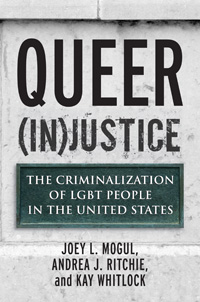
On the matter of increasing funding for hate crimes prosecution, many see this as a commitment of support for the LGBT community. However, the hate crimes legislation has been coming under scrutiny for several years now from the more grassroots and radical sectors of the LGBT community. Groups like FIERCE, Queers for Economic Justice, Pink and Black and the Sylvia Rivera Law Project all argue that hate crimes legislation not only does not act as a deterrent, hate crimes legislation channels more public money into the criminal justice system, a system that these groups argue engage in systemic abuse of those who identify as Lesbian, Gay, Bisexual, Transgender or Queer. These claims are further substantiated in two excellent books that have been published in the passed year, Queer (In)Justice: The Criminalization of LGBT People in the United States and Normal Life: Administrative Violence, Critical Trans Politics, and the Limits of Law.
The other main issue addressed by the Obama administration that would “support” the LGBT community was funding for HIV/AIDS. The administration states it will increase funding for HIV/AIDS projects, both domestically and internationally. Again, on face value this seems like a positive action on part of the administration, but the fact is that the amount of money they are talking about allocating for HIV/AIDS programs both domestically and internationally are grossly inadequate. In regards to expanding the Ryan White HIV/AIDS Program, the administration will add $67 million to last years budget. However, when put next to the amount of money the Obama administration will provide the state of Israel this year, $3 Billion, the $67 million seems rather miniscule.
At this point I can hear rumblings of, “these proposals are better than nothing,” or “they are better than what happened under the Bush administration.” I would respond yes to both. Yes, the actions of the Obama administration to LGBT concerns are better than nothing and they are better than what the Bush administration did. However, this should not prevent those of us who care about justice and equality to be content with what the current administration is doing. Why should we set the bar so low? Why is what we want based on what the power structure in this country is willing to do?
Imagine if this administration were to write a check to the LGBT community, a check that would alleviate all economic concerns and inequalities. Imagine if there was enough funding to do real HIV/AIDS prevention work, to fund anti-bullying efforts, provide domestic partner benefits for everyone, eliminate workplace discrimination and funding that would provide adequate housing for everyone who identified as LGBT. This is what we should be fighting for. This should be the goal. This should be where we set the bar for equality and justice for the LGBT community. Let us not be content with the crumbs the Obama administration throws at the LGBT community.
During the Wall Street Bailout we all heard the politicians say, “the banks are too big to let them fail.” What if we had an ethos in this country that said, “the lives of those in the LGBT community are too important to let them endure further injustice and inequality.”
Criminalizing the poor: ACLU of Michigan tells court to strike down anti-begging laws
Yesterday, a lawyer with the ACLU of Michigan asked a federal judge to, “strike down a state law that criminalizes peaceful panhandling in all public places.”
The ACLU appeared in federal court in Grand Rapids as a follow up to a lawsuit they filed against the State of Michigan in September, a lawsuit intended to do away with arresting people who ask for money on the street.
According to a Media Release from the ACLU of Michigan:
“Anti-begging laws that punish that most vulnerable segment of our society are not only harsh, they are unconstitutional,” said Miriam Aukerman, ACLU of Michigan staff attorney. “Removing the reminders of poverty from our sight is not the answer to Michigan’s economic woes. The ACLU is not opposed to laws that protect citizens from threats, intimidation and harassment. However, jail time is a harsh price to pay for holding up a sign or simply asking for spare change.”
Grand Rapids factors heavily into this issue, since the ACLU lawsuit was filed on behalf of two men arrested in Grand Rapids for asking people on the street for money, James Speet and Ernest Sims.
Since the lawsuit has been filed, James Speet claims that the Grand Rapids Police Department has stopped him several times and harassed him because of the lawsuit. The Chief of Police from Grand Rapids responded to such allegations today in a story that appeared on MLive.
In addition to the legal advocacy that the ACLU of Michigan is providing on this issue, they recently produced a short video that provides a clear explanation on why the anti-begging laws are unconstitutional. The video also provides testimony from Ernest Sims.
Citizens Inundated report focuses on how money influences elections
The National Media Reform group Free Press just released a new report entitled, Citizens Inundated: How big-money politics and broadcast media are poisoning democratic discourse and undermining US elections.
The 11-page report looks at the long-standing trend of the amount of money spent on political ads during any given state or national election cycles. Filling the airwaves with political ads during an election cycle is not new, but what has changed since the Supreme Court ruling on Citizens United is that the amount of money being donated to political campaigns is resulting in an even larger increase in political ads.
The report is presented in three main sections: the Supreme Court decision and Super PACs, Broadcasters and the FCC and Views, Voters and the 1%.
In the first section the report states, “Citizens United unleashed a deluge of political advertising during the 2010 midterm election. Kantar Media’s Campaign Media Analysis Group estimates that candidates, political parties and independent groups will spend up to $3.3 billion to buy TV ads during the 2012 election season. That’s a 57 percent increase over the estimated $2.1 billion that was spent on local ads during the 2008 presidential race.”
In the second section of the report we find information and analysis relative to the lack of accessible information from broadcasters on which entities is buying airtime and how much they are spending. The report talks about how the efforts to provide more transparency and get broadcaster to post online regular information on political ad spending is being resisted by both the broadcasters and groups like Committee for Political Truth, which is a 501c4 group that runs attack ads to influence elections.
The last section of the report addresses two major issues. First, it looks at how the amount of money going to broadcasters from political ads provides no incentive for broadcaster to do any serious reporting on candidates during an election. The other major issue in this section talks about how it is really the 1% of the population, the richest Americans, who give the bulk of campaign money, are determining the outcome of current elections.
“Money does determine winners and losers in U.S. politics. But that spending power is limited to the top one percent. In a November 2011 New York Times editorial, Harvard Law School Professor Lawrence Lessig reported that less than one percent of Americans give more than $200 to a political campaign, and that fewer than .05 percent give the maximum to any congressional candidate.46 “Campaigns financed by the one percent,” Lessig concludes, “will never earn the confidence of the 99 percent, or appear to any of us as anything other than corrupt.”
One conclusion to draw from this report is that until there is real and substantive campaign finance changes made the electoral process in the US will be a farce.
GRIID plans to provide some monitoring of political ads that air in the West Michigan market and how much money broadcasters are making from those ads between now and the November election. In the meantime, read this new report and share the graphic below, which visually communicates the unjust influence of money in elections.

New Media We Recommend
Below is a list of new materials that we have read/watched in recent weeks. The comments are not a “review” of the material, instead sort of an endorsement of ideas and investigations that can provide solid analysis and even inspiration in the struggle for change. All these items are available at The Bloom Collective, so check them out and stimulate your mind.
Kill the Messenger: The Media’s Role in the Fate of the World, by Maria Armoudian – As someone who firmly believes in the importance of independent media, I found Maria Armoudian’s book Kill the Messenger an excellent articulation of the importance that media plays in social change. The author/Professor looks at numerous case studies pertaining to the role of the news media in international affairs, such as the Rwandan genocide, the Bosnia War and Mexico & Chile’s fight for democracy. Armoudian’s case studies not only support her thesis of how crucial media can be in our understanding of complex global affairs, she makes it clear that the news media can also foster violence & war or it can be a tool for resisting violence and fighting for peace. The book concludes with some suggestions of what a truly independent media would look like and why it is necessary to develop in these turbulent times.

Why Are Faggots so Afraid of Faggots?: Flaming Challenges to Masculinity, Objectification and the Desire to Conform, edited by Mattilda Bernstein Sycamore – Mattilda Bernstein Sycamore has done it again. This book is another amazing collection of essays that challenges the blatant straight homophobia in this culture. These essays also challenge gender norms and even take on the overt efforts within the more mainstream LGBT community’s desire to assimilate. The essays use humor, poetry, sarcasm and sharp analysis that takes us out of our comfort zone and forces us to seriously rethink how we see gender in painfully male dominant world. In addition, these essays speak to the resiliency, courage and compassion of those who will not be silent on the institutional mechanisms that seek to police our behavior at every turn. Delightfully brilliant!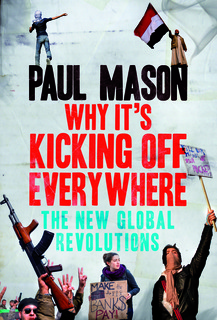
Why It’s Kicking Off Everywhere: The New Global Revolutions, by Paul Mason – BBC journalist Paul Mason has given us a gift. Why It’s Kicking Off Everywhere is a first hand account of the social uprisings happening all across the world. Mason begins with the Arab Spring and provides readers with a beautifully written narrative about some of the people involved in the Egyptian revolution, both the conditions that led to their involvement and reflections on their participation in the overthrow of President Mubarak. Mason then takes the reader to the youth rebellion in Britain, the uprisings in Spain and Greece, then ending with American and the Occupy Wall Street Movement. While the author does not provide any serious critique of each of these movements worldwide, the book does give one a sense of the scope of the global uprising and the possibilities that exist for more profound social transformation. An important contribution to the resistance literature of the 21st Century.
The FBI’s War on Black America (DVD) – This 1989 documentary (recently released on DVD) provides a stout history overview of the Federal Bureau of Investigation’s (FBI) brutal campaign against Black activists in the 1950s – the 1970s. Using archival footage and interviews from numerous Black activists and revolutionaries, this film chronicles the FBI COINTELPRO campaign to undermine and eliminate the Civil Rights and Black Power movements. This film presents the more radical elements of the larger freedom struggle by Blacks in the US and why they were seen as a threat to the established power structure. A important conclusion that one could draw from such a film is that anytime an oppressed group fights back against power it will be targeted for marginalization or elimination. The FBI’s War on Black America is a film that should be seen by people who want racial justice, since it doesn’t sugar coat the history of how the US power structure responded to the Black liberation movement that has too often been sanitized.
WOTV channel 4 for women not a venue for gender equity
A local TV station produced by and featuring on air personnel that are exclusively women. What a great idea!
The broadcast industry has been so male dominated since its inception, but an all female TV crew could provide West Michigan viewers with perspectives that would be essential to the transformation of this community.
There could be women talking about politics, the economy, health care, the environment, foreign policy and education. These women could be highlighting the achievements of women locally, nationally and globally.
There could be regular segments that look at how women are at the forefront of most major social movements, both historically and at the present. Women are part of every major social uprising around the world, from India to Greece.
There could be regular segments discussing why women are still paid significantly less than men in this country and why there is an increase of women living in poverty and a significant growth in numbers of women in the prison industrial complex in the US.
This would be a great example of giving voice to women and using a local TV station that would truly serve the public interest. Unfortunately, this is not the case.
There is a new TV station devote to women, WOTV channel 4, but the station appears to be using the re-designed channel mostly for commercial purposes that target women in very gender-limiting ways.
By gender limiting I mean the channel features 7 women who offer advice or act as experts on the following topics – motherhood, wellness, eating healthy, local social calendar and financial planning. The station also features a woman who is referred to as the “Zen expert.”
Most of these areas of interest are in very narrowly stereotyped female areas of interest and do not allow for women to address larger political, social and economic issues that equally impact women.
For example, here is the description for the Social Sizzle Expert. “Jordan Carson is the WOTV 4 Women expert on the Social Sizzle, focusing on the hottest events and places around west Michigan! You can spot Jordan checking out the newest Grand Rapids restaurant with the girls, MC’ing a charity event, hitting up local boutiques or strolling around Rosa Park Circle with her Toy Yorkie, Sammy.” This does not really inspire the kind of contribution that women could make that was envisioned by the Women’s Suffrage movement or the various waves of feminism over the past 40 years.
However, the channel does seem to be a mechanism for promoting more commercial messages, which presents women primarily as consumers or more crudely as SHOPPERS.
The WOTV 4 for women website also offers lots of beauty tips and cooking recipes, since we all know this is what it means to be a woman. In addition, the channel seems to be catering to more upscale women and professional women. Women who are struggling financially, women who are grassroots organizers and care givers, educators and healers are not really who this channel seems to be highlighting in its first few weeks of operation. One can look at the WOTV channel 4 for women party pictures to get an indication of the kind of women it serves, with the event being held at the Cygnus 27 restaurant inside the Amway Grand Plaza.
The broadcast industry is given the rights to the airwaves to serve the public interest. The WOTV channel 4 for women at this point doesn’t seem to be serving the public interest, rather it seems to be serving commercial interests. In addition, the channel seems to be doing harm to the gains made by women over the past 100 years by presenting narrow gender conformity based on the topics they cover and the audience they seem to be targeting.
Imagine if that channel featured women from the YWCA, the Grand Rapids chapter of NOW, the women of Our Kitchen Table, women from the GVSU or Aquinas College Women’s Center, female religious leaders, female community organizers and women who fight gender inequity every day in this community. That would be a TV channel worth getting excited over.
The Grammy Awards, Corporate Greed and Cultural Genocide
This article by Bruce Dixon is re-posted from Black Agenda Report.
For tens of thousands of years longer than humans have been reading and writing, since way, way before our ancestors began saving seeds and planting them, humans have made music. It’s one of many things that make us human.
But so are racism, hypocrisy and in the current era, vampire capitalism. It’s hard to see anything but hypocritical racism and greed in the decision of the National Academy of Recording Arts and Sciences – the body that gives out the Grammys — in their elimination of more than thirty musical categories, including Latin jazz and 3 other Latin music categories, 4 R&B categories, zydeco and Native American music, one Gospel, one Rap and one World Music category.
The award ceremony led off with a prayer for Whitney Houston. But four of Houston’s six Grammies are in categories that the Grammies no longer notice. The late Etta James was hailed as well, at the same time the categories for two of her Grammies were done away with. So the real message was that the next wave of Whitney Houstons won’t be nearly as welcome. Most of the musical categories eliminated by the Grammies this year were Latin, black and nonwhite.
“Why do they only cut this music?” asked multiple Grammy award winner Carlos Santana, who protested outside the awards ceremony with many other musicians. “I think they’re racist. You can’t eliminate black gospel music or Hawaiian music or American Indian music or Latin jazz music because all this represents what the United States is, a social experiment.” Other award recipients who have publicly spoken and written demanding the organization to restore the stricken categories are Herbie Hancock, Eddie Palmieri, Paul Simon Bill Cosby, Esperanza Spalding, Bonnie Raitt, Stanley Clarke, David Amram, Pete Escovedo, Oscar Hernandez and Larry Harlow.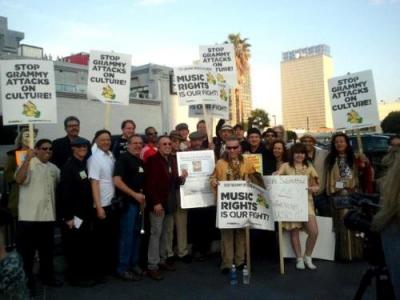
A number of artists filed suit against the National Academy of Recording Arts and Sciences, demanding the minutes of meetings at which the elimination of these awards were discussed. Although they were dues paying members of long standing who recruited and contributed labor to its outreach programs, the academy denied access to these records through the courts on the grounds that they were “a foreign corporation established in Delaware” and so not subject to the transparency laws applicable to domestic non-profits.
The truth is that elimination of these categories is a kind of cultural genocide, a fencing off and enclosure of artistic space where many kinds of great music will be less able to connect with their audiences. In an era when a tiny number of major recording companies monopolize access to radio airplay and most concert venues, one more award, more or less, doesn’t mean much to Alicia Keys or Beyonce. But a Grammy, or even a Grammy nomination, for a struggling independent artist can be the difference between being able to make a living at her music, or having to give it up and do something else to survive.
You can find more information, and sign the petition to restore the stricken categories at www.grammywatch.org. That’s www.grammywatch.org. The decisions of what music to study and play and listen and dance to are decisions that audiences and artists should make. They are much too important to be reserved for greedy and racist recording industry executives. Letting them make that decision for us IS cultural genocide.
Earlier today we did the first interview in our newest Grand Rapids People’s History Project. The focus of this film and online archive is local resistance to the US war in Vietnam.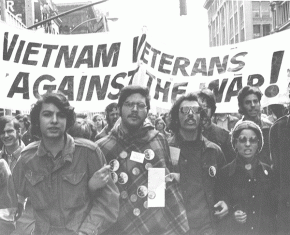
The areas of interest we want to explore are: public forms of resistance in Grand Rapids, such as protest, marches and teach-ins; draft resistance; Vietnam Veterans and GI resistance; responses from the faith community; tax resistance; cultural resistance through music, poetry & art; and people from Grand Rapids going to Washington DC or other sites of major protests during that time.
Like the Grand Rapids People’s History of the LGBTQ Community, we plan on conducting interviews and collecting archival documents, pictures and video. We also will be looking at what was happening locally to what was happening nationally and we will investigate the way in which the local news media reported on the US war in Vietnam.

We are looking for people to interview who were active in the anti-war movement in the 1960’s and 70’s. If people know someone who was involved in that resistance and can provide us with contact information that would be helpful. We are also looking for people who could donate time and energy to doing research with us for this project, such as researching the Grand Rapids Press, college newspapers and any other public record from that time, which would provide us with archival materials on the local anti-Vietnam War movement.
For those who want to be involved in this project contact me at jsmith@griid.org.
Michigan’s budget crisis puts democracy on the chopping block
This article by Paul Abowd is re-posted from iwatchnews.org.
When the city of Pontiac, Mich., ordered the closing of its fire department in December, Councilman Kermit Williams found out in the morning paper. This was just one in a series of radical realignments for the city, whose elected government has been replaced by one person with unprecedented power over nearly every aspect of city policy.
Public Act 4, a law Michigan passed in March 2011, has cut elected officials like Williams out of the process. It allows Gov. Rick Snyder to give emergency managers unilateral powers over the municipalities and school districts they run.
“They couldn’t get elected if they tried,” said Williams.
Appointed managers can nullify labor contracts, sell public utilities and dismiss elected officials. Michigan cities Benton Harbor, Ecorse, Flint, Pontiac, and two school districts are under emergency management. Detroit, the state’s largest city, is under financial review by the state.
Michigan is one of 23 states where the GOP has control of both houses and the governor’s mansion since the 2010 election. With the help of free-market think tanks, the state legislature used its one-party rule to pass a flurry of legislation aimed at the state’s prolonged great recession marked by auto industry flight and compounded by the 2007 housing market crash.
The emergency law, an unprecedented austerity measure, is the centerpiece of their strategy. Gov. Snyder’s supporters say Public Act 4 allows a more efficient and nimble response to the budget crisis than local governments have been able to muster. Critics have filed suit and begun a petition campaign to repeal what they call a power grab that obstructs voting rights. Labor officials say the law is part of a nationwide effort by right-wing think tanks and their corporate backers to break up public sector unions.
“We haven’t seen anything this severe anywhere else in the country,” said Charles Monaco, spokesman for the Progressive States Network. “There’s been nothing in other states where a budget measure overturns the democratic vote.”
Fallout in the cities
Pontiac’s Emergency Manager Louis Schimmel privatized city hall, firing Mayor Leon Jukowski, then rehiring him as a paid consultant. The City Council was not so lucky.
Neither were the police and fire departments. Pontiac is now patrolled by the county Sheriff, and nearby Waterford Township will put out fires. In late December, Schimmel put hundreds of city properties, including City Hall, up for sale.
Schimmel says he can do what elected officials have been unable to do: execute a plan for balancing the books quickly. Still, he has run into nagging structural roadblocks.
In February, Gov. Snyder celebrated a rare $457 million surplus in the state budget. But legislators in the Democratic minority say his administration has not eased the financial strain on cities. Changes to the corporate tax code are expected to reduce business tax revenue by $1.7 billion this year, and city governments will see a 10 percent cut to the $1 billion revenue-sharing budget.
“One thing we can’t do is print money,” said Schimmel. “We’re always chasing the dropping knife, fixing something here and losing revenue somewhere else.”
City officials like Williams say the emergency manager approach has been tried, unsuccessfully, for more than a decade. Public Act 4 is a strengthened version of a 1990 law that brought state appointees to several cities beginning in 2000.
Appointed managers and elected officials have pointed the finger at each other for the worsening economic situation in the cities. Neither, however, has been able to provide more than short-term fixes to the long-term flow of jobs, residents and revenue from the cities.
Pontiac has been under some form of state-appointed management for three years, during which time the city’s credit rating has dropped from B to Triple-C. The city is projecting a $9 million deficit for 2012.
“They aren’t creating revenue,” said Councilman Williams. “You can’t just cut your way out of a deficit.”
Williams says the emergency manager’s worst cut has been to the democratic process. With an indefinite appointment and city-paid salary, Schimmel doesn’t answer to anyone but the governor, at whose pleasure he serves. City Council can no longer make decisions but still calls meetings, which Williams says are routinely packed with angry residents.
Mackinac plan
Louis Schimmel brings to the Pontiac job years of experience as an associate of Michigan’s Mackinac Center for Public Policy. The center is part of a national network of free-market think tanks that draw support from the Heritage Foundation and major corporate donors. Among the Center’s funders is multi-billionaire Charles Koch, a champion of conservative movements.
Schimmel has pushed Mackinac’s gospel of privatization for decades. He served as the center’s director of municipal finance and its board of scholars.
The organization has played an integral role in the formation of the emergency law. In 2005, Mackinac published Schimmel’s essay calling on Michigan’s legislature to give managers the power to impose contract changes on public employee unions and “replace and take on the powers of the governing body.”
After the GOP won control in 2010, Mackinac reprinted Schimmel’s article. Two months later, Mackinac celebrated when the legislature put its prescriptions into Public Act 4.
Schimmel got those powers when he was hired to run Pontiac in September. He quickly fired the city’s clerk, attorney and director of public works. He contracted out the public works, building, public safety, law, and water departments.
“Nearly the whole city has been privatized,” said Councilman Williams, who now works without a city salary.
In 1986, Schimmel also privatized city services when Ecorse, Mich., landed in state receivership.
More than twenty years later, the city is back in debt, and back under state management. In a December planning report, new Emergency Manager Joyce Parker said Ecorse would save $2 million annually by bringing the city’s Department of Works back in house, ending costly contracts stemming from the 1980s restructuring.
Schimmel concedes the privatization strategy can backfire, but blames inept local government. “If you don’t have an overseer of the contractor, privatization can be much more expensive than in-house services,” he said.
Bargain basement
The Mackinac Center has also pushed state legislators to challenge public employee unions. Before the March 2011 emergency bill passed, Mackinac’s Legislative Analyst Jack McHugh laid out the center’s agenda.
“Our goal is [to] outlaw government collective bargaining in Michigan,” he wrote to state Rep. Tom McMillin in an email obtained by think tank Progress Michigan.
In Flint, Emergency Manager Michael Brown promised to restructure collective bargaining agreements in his mid-January report to the state.
Flint has hemorrhaged jobs for decades since General Motors began closing factories in the 1980s. Brown is the second state-appointed manager in a decade.
“We’re on the merry-go-round again,” said Paul Jordan, a longtime Flint resident who has joined a legal effort to overturn the law. “This didn’t work in 2002.”
International Vice President of the AFSCME public employees union Larry Roehrig says city workers agreed to health care concessions in a contract with the elected government, hoping to avoid further cuts when Brown arrived.
“We are holding our collective breath,” said Roehrig. “Sure we’re worried, but what can we do?”
The police and fire unions have no agreement with the city, and have taken a more defiant approach to Brown, who can impose contract changes, and even abolish the entire bargaining agreement with state approval.
“If you can bust the unions, you’ve busted the Democratic Party,” said Brit Satchwell, president of the Ann Arbor Education Association, the teachers union.
The Mackinac Center claims that Michigan could save $5.7 billion if public employees’ wages and benefits were made comparable to sinking private sector wages.
Facing charges of greed, the public employee union leaders say cuts to public sector jobs have only seeded the next phase of economic woes in the state — foreclosures, unemployment, and intensified reliance on state aid programs in cities like Flint, where the jobless rate at the end of 2011 was 17.5 percent.
“It’s an acceleration of the downward spiral,” said Satchwell.
Mackinac and ALEC
Another group that may be influencing state legislators in passing emergency manager type laws is the American Legislative Exchange Council (ALEC).
The group convenes national conferences with state legislators and corporate representatives to draft model legislation. Elected officials in ALEC pay a minimal fee to join the group, while corporations pay up to $100,000.
Michigan’s Mackinac Center attends ALEC events, as well. James Hohman, a center analyst, was one of 40 private sector representatives at a December 2010 conference on state fiscal policy, months before Michigan passed Public Act 4.
According to minutes from the closed-door meeting, legislators, corporate representatives and think tanks including Mackinac hammered out new model laws to align public and private sector pay and restructure state pensions.
Since 2010, ALEC member Rep. McMillin has introduced several bills taken right from the playbook. One resolution encouraging privatization of public services draws directly from ALEC’s model laws, hundreds of which were leaked to the Center for Media and Democracy last summer.
The model bills have matched up with language found in Arizona’s immigration law and informed Ohio and Wisconsin’s collective bargaining laws.
ALEC’s Tax and Fiscal Policy Director Jonathan Williams did not respond to requests for comment.
ALEC publishes reports on state fiscal policy including the “State Budget Reform Toolkit” and the yearly “Rich States, Poor States” report, written with Koch Foundation money. The reports encourage legislators to target public employees, minimize “redistribution of income” through welfare programs, identify privatization opportunities, sell off public holdings like water systems, hospitals, and utilities and slash corporate taxes.
The reports recommend that states create a “centralized, independent, decision-making body to manage privatization and government efficiency initiatives.” Michigan’s law grants far more sweeping powers to one state appointee.
The D.C.-based think tank’s connection with Michigan lawmakers runs decades deep. John Engler was Michigan’s governor for three terms, from 1991 to 2003. ALEC hails him as an early member in the 1970s and a “pioneer” in the movement to privatize state holdings.
When Snyder was elected in 2010, he hired Engler’s former Lieutenant Gov. Dick Posthumous, also a longtime ALEC member, as his special legislative adviser.
Pushback
Detroit’s elected leaders, unions and citizens groups have attracted national support in their opposition to the State Treasurer’s financial review of city finances in December. Members of the City Council responded by demanding that the state repay $220 million owed to the city under a former revenue-sharing agreement
Michigan’s congressional delegation asked Gov. Snyder to back away from the law, while a ten-person review board determines whether Detroit is eligible for a manager.
Detroit’s Mayor Dave Bing acknowledges the city’s budget woes — a $200 million deficit — and has proposed raising corporate taxes, laying off 1,000 city workers, and altering city pensions to head off an emergency manager who would put elected leaders out of a job.
The state’s decision whether to install a manager will hinge on the outcome of Bing’s ongoing talks with city unions. In February, the mayor announced a tentative agreement on concessions with public employees.
Meanwhile, Congressman John Conyers has asked the U.S. Department of Justice to review the federal constitutionality of the law. And Michigan residents will deliver hundreds of thousands of signatures to the state on March 2, attempting to put the law up for referendum in November.
Detroit’s Sugar Law Center for Economic and Social Justice has filed a suit claiming the law violates basic sections of the state constitution, including the home rule provision that outlines residents’ rights to elect local government.
“If we win this case, it will give other state legislatures pause before pursuing similar laws,” said Tova Perlmutter, director of the law center.
MLive uncritically looks at GRCC farmer certification program
Earlier today, MLive posted a story by reporter Brian McVicar, which promoted a new program by the Grand Rapids Community College that seeks to assist local farmer obtain certification and allow them to sell to larger food distributors.
The article states that GRCC is offering Good Agricultural Practice (GAP) certification classes to area farmers who want to expand their sales beyond farmers markets. Nowhere in the story does the reporter question the premise of the project, which seems to be shifting food sales from farmers markets to involve food marketers and food brokers. The article does not include voices that would suggest that farmers markets are the best mechanisms for promoting local food.
The only sources cited in the article are the director of work force training at GRCC and someone with the MSU extension, which is one of the partners in this project.
However, the article omits the other partners in this project, which according to GRCC are Sysco, Walsma Lyons and Morse Marketing Connections. The MLive story does mention Sysco, but not as a partner.
Understanding who the partners are in this project makes all the difference in the world. Sysco, Walsma Lyons and Morse Marketing Connections do not grow food, they only distribute and market food products. These entities also have a long history of being food brokers and marketers with an emphasis that is not on the local. For instance, Walsma Lyons states they offer access “to a large global network of preferred suppliers.”
Morse Marketing Connections, “originally worked with Michigan-based agricultural groups and has expanded nationally, now working in multi-sector partnerships across a variety of food-related initiatives, with government agencies, private and public universities and corporations.” Sysco, while it has a Grand Rapids office, is one of the largest food distributors in the US.
What the MLive reporter failed to acknowledge or investigate is that when companies like Sysco get involved in purchasing from local growing’s, particularly small farmers is that they then exert tremendous influence in what those farmers grow. The reason being is that Sysco and other food brokers operate on volume, which means they not only are likely to determine food prices, they sometime can determine what farmers grow, based on “the market.” If a small blueberry farmer begins to sell their product to companies like Sysco they are submitting themselves to an unstable market that is often determined by what Sysco other food distributors can market around the country or around the global. This means that when a crop disaster happens anywhere else in the world it can impact the sales of food grown locally that are now in the global market because of their relationship to companies like Sysco.
This topic was explored briefly in the film Food Inc., but is better explained in Raj Patel’s book Stuffed and Starved: Markets, Power and the Hidden Battle for the World’s Food System.
If the local news media is going to report on local programs that are supposed to “assist” area farmers, then they need to ask important questions about the commercial partners in this project and what it really means for farmers and the public.

