Betsy DeVos Watch: Billionaires and Populist Rhetoric
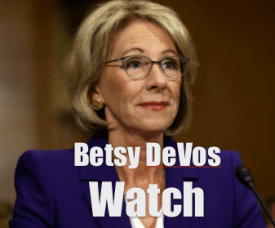 As of this writing, the Secretary of Education, Betsy DeVos, has posted 26 speeches on the Department of Education website. Of those 26 speeches, some of them have been given during college or university commencements, while others have been with other state or national education conferences.
However, there are a disproportionally high number of speeches that Betsy DeVos has delivered that specifically addresses organizations and associations that are far right politically and embrace education privatization.
Here is a list of the speeches she has delivered to these far right and other groups representing the current Neoliberal establishment:
2/23/2017 Conservative Political Action Conference
3/29/2017 Brookings Institute
5/22/2017 American Federation of Children
6/13/2017 National Alliance for Public Charter Schools
7/20/2017 American Legislative Exchange Council
10/13/2017 Washington Policy Center
10/27/2017 Future Farmers of America
11/30/2017 Foundation for Excellence in Eduction
1/16/2018 American Enterprise Institute
(Editor’s Note: This list of speeches by Betsy DeVos, does not include the speech she gave at the Acton Institute’s annual dinner in Grand Rapids on 10/18/2017)
As you can see, of the 26 speeches that Betsy DeVos has given (as listed on the Dept. of Ed site), nine of those speeches have been given to far right and current Neoliberal establishment groups.
We have reported on two of these speeches, including her comments at the ALEC conference and the Foundation for Excellence in Education Summit. Now, we would like to provide some analysis of the speech she gave last week to the American Enterprise Institute.
Early on in the Secretary of Education’s speech to the American Enterprise Institute (AEI), she acknowledges how AEI has, “influenced and shaped the way Americans think about so many issues in the public square.”
Betsy DeVos also says she is honored to call the CEO of the Brookings Institute, Arthur Brooks, a friend.
DeVos then goes on to say:
The vast majority of learning environments have remained the same since the industrial revolution, because they were made in its image. Think of your own experience: sit down; don’t talk; eyes front. Wait for the bell. Walk to the next class. Repeat. Students were trained for the assembly line then, and they still are today.
I actually agree with this statement from Secretary DeVos. However, we disagree entirely on in what direction public education should go.
Betsy DeVos then offers criticism of both the No Child Left Behind policies of the Bush administration and the Race to the Top policies of the Obama administration. DeVos then uses language as if she wants to come across as a populist by saying, “Washington bureaucrats and self-styled education “experts” are about as far removed from students as you can get.”
About half way through her speech, Betsy DeVos finally gets to her solution, which is the Every Student Succeeds Act (ESSA). Here is what the Secretary of Education thinks ESSA is a step in the right direction:
The Every Student Succeeds Act charted a path in a new direction. ESSA takes important steps to return power where it belongs by recognizing states – not Washington — should shape education policy around their own people. But state lawmakers should also resist the urge to centrally plan education. “Leave it to the states” may be a compelling campaign-season slogan, but state capitols aren’t exactly close to every family either. That’s why states should empower teachers and parents and provide the same flexibility ESSA allows states.
Essentially, DeVos is promoting the long-standing far right mantra of States Rights. However, as you read in the above comment, she is not just advocating turning power over to states, she is suggesting that even take legislatures can be a barrier to education. This is what Betsy DeVos has been working on for decades, whether it is with the American Federal for Children, the Great Lakes Education Project or the Mackinac Center for Public Policy. The pro-voucher, pro-charter, pro-privatization agenda is exactly what the Secretary of Education is promoting. The only difference is, she wants to present her approach as looking out for poor, urban school districts. DeVos states, “So let’s face it: the opponents of parents could repeal every voucher law, close every charter school, and defund every choice program across the country.
But school choice still wouldn’t go away. There would still be school choices… for the affluent and the powerful.”
How ironic that someone who comes from a millionaire family and marries into a billionaire family, now claims to be for poor, working class parents and students. However, this is exactly the same language that Donald Trump used during his campaign, presenting himself as being empathetic to the working class factory workers who have lost jobs to bad trade policies like NAFTA and then turning around and passing tax policies that benefits the billionaire class that he and Betsy DeVos are part of. Indeed, we live in Orwellian times.
Immigrants vs Homeless Veterans: A False Narrative on the Government Shut down and how those in power pit one vulnerable population against another
 On Friday, young immigrants, who have been the beneficiaries of the DACA program, held a rally/action in downtown Grand Rapids. Before the action began, some local TV news people interviewed one of the organizers and asked him, if the government shuts down, how will you respond to claims that the Dream Act could take funding away from other vulnerable groups. Here is the response from Danny Caracheo, as reported by WZZM 13.
I spoke with Danny Caracheo on Thursday, while he was in Washington DC to pressure Michigan members of Congress to pass a clean Dream Act. Caracheo told me that when speaking with Senator Debbie Stabenow, he was asked by her how he would feel of passing a clean Dream Act would result in federal funding cuts for other social service programs.
Such questions, by the news media or by members of Congress creates a false narrative and ends up pitting one group of vulnerable people against another. It is a false narrative because it makes people think that Congressional funding for social services in limited and can’t adequately support all the programs asking for money. This is simply not true. In fact, there is more than enough money to provide both DACA recipients and homeless veterans with what they need. Ultimately, it comes to to priorities.
I can think of three easy ways to make it so that all social programs could be funded, by changing the priorities of the federal budget.
- The current Tax plan aside, the US has not adequately taxed the wealthiest individuals for decades. if the wealthiest individuals and families were taxed now like they were in the middle of the 20th century, there would be enough money to fund all social programs for the most vulnerable populations in the US.
- Corporate Welfare. In a 2014 article in Forbes magazine, they estimated that corporate welfare for the top 500 companies cost the public $63 Billion. $63 billion ought to cover the costs of most of the major social service programs that Congress claims would be cut if the Dream Act was passed.
- Of course, the largest amount of money that could be used for social programs could come from the current Department of Defense budget, which is roughly $640 Billion for 2018. You can see by the pie chart below, that the US military budget uses more than 50% of all federal spending.
 One can look at the ongoing spending for the US War in Afghanistan, or Iraq or US military spending since 2001, by checking out the counters from the National Priorities Project. Watch the millions of dollars being spent every minutes is staggering.
The reality is that the US could fund the DACA program, services for homeless veterans, refugees, people with disabilities, provide free education and free health care for the entire nation, if Congress did not chose to spend most of public tax dollars on militarism and war.
Dr. Martin Luther King Jr. said during his Beyond Vietnam speech in 1967:
“A nation that continues year after year to spend more money on military defense than on programs of social uplift is approaching spiritual doom.”
DACA Action in Grand Rapids Shut Down Rush Hour Traffic, Motorist hits people who were demonstrating with their car
 On Friday, about 75 people met at Calder Plaza to rally in support of DACA recipients and to demand that Congress pass a Clean Dream Act. A Clean Dream Act would include NO funding for a border wall, increased border security, interior enforcement, more detention centers and NO mandatory E-Verify.
Several people spoke to those gathered, people who had just come from Washington, DC, where Dreamers and their supporters occupied Congressional offices and some were arrest for civil disobedience.
The DACA action on Friday was organized primarily by local Dreamers, but was also facilitated by the West Michigan Coalition for Immigration Reform.
After people spoke, the DACA Action then moved to the corner of Michigan and Ottawa in Grand Rapids, where about half of the crowd moved out into the street on the crosswalk area to block traffic.
For about 15 minutes the traffic was stopped on Michigan Street, going both east and west. Traffic coming south on Ottawa was partially stopped, since no one could turn west onto Michigan – as can be seen in the video above.
There were a variety of signs and banners being displayed, from pass a Clean Dream Act, We Support DACA and Stop Separating Families. One of the main messages the group in the street was attempting to communicate was that they will disrupt business as usual as long as the government continues to disrupt the lives of immigrant families – whether that is taking away the DACA program, ICE raids or the deportation of immigrants.
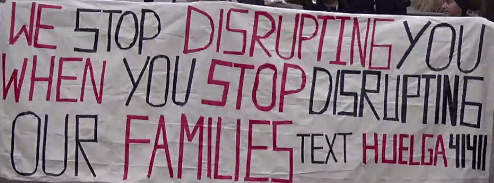
The disruption caused in the street on Friday in Grand Rapids only prolonged the commute for those stuck in traffic, whereas the disruption the government rips families apart and causes tremendous social, financial and emotional harm to the immigrant community.
About 15 minutes into the street blockade, a motorist coming off of Ottawa ran into two people who were part of the protest. You can see what happened at about 30 seconds into the video below, which was taken by someone from the radio station La Tremenda.
The video doesn’t capture everything, but it was clear from several witnesses that the motorist knowingly drove their vehicle into people who were part of the DACA Action. This motorist then left the scene, completely disregarding the well being of those who were part of the demonstration.
After the motorist forced their way through the street blockade, two federal marshals showed up in plain clothes, flashing their badges and pulling people off the street. Both of the federal marshals threatened to arrest people if they didn’t leave the street. These two men caught people off guard, since everyone was expecting the GRPD to show up and stop the protest.
At this point some of the protestors decided to march in the street on the crosswalks, but this time continuously moving when the light changed, thus making this part of the action within traffic laws.
The GRPD eventually showed up and spoke briefly was someone designated to deal with the cops and then they drove off.
Asking for help to find the motorist who drove into people
If anyone who has pictures or video from the DACA Action, that includes images of the motorists driving into people, please share it with us.
People are asking for help in identifying the motorist, as this person is clearly dangerous. This is what we know:
The vehicle was a silver, Nissan Pathfinder, believed to be a 2011 or 2012 model. People have not been able to completely determine the license plate number, which is believed to be B58 X?T4 or B5A X??4.
The driver was a White male, between the age of 20 & 40, wearing a black hat and sunglasses, holding a cell phone in his hand, which you can sort of see in the picture here on the right.
The car also had a black, Yakima, Rear Hitch-Mounted Cargo Box, which is why it was difficult to get a good view of his license plate.
Shortly after the first motorist that drove through the blockade, “another white man in a white SUV ran the red light and nearly hit a child and her father who were attempting to cross the street in the crosswalk with a walk light too. This father and daughter left the protest immediately after, safe but shaken,” according to an eye witness.
While the action was successful in many ways, it is important to point out that there are people who will do harm to those who are protesting, state violence was also on display during the DACA Action and that this protest is only part of the ongoing struggle for immigrant justice.
For those wanting to get involved in immigrant justice, here are three opportunities in the Grand Rapids area:
Movimiento Cosecha GR https://www.facebook.com/cosechagr/
West Michigan Coalition for Immigration Reform https://www.facebook.com/groups/454724594603533/
GR Rapid Response to ICE https://www.facebook.com/RapidResponseGR/
Amazon says No to Grand Rapids and the Right Place Inc. will still not make the proposal public
 Yesterday, it was reported that the online sales giant Amazon, has narrowed down their list of cities to twenty and Grand Rapids is not on the list.
MLive reported, “Although we were not selected to advance in this process, we take great pride in how the greater Grand Rapids area was presented to Amazon and the collaborative work that went into it,” said Birgit Klohs, president and CEO of the Right Place economic development program.
MLive went on to say, “The Right Place team included Downtown Grand Rapids, Inc., the city of Grand Rapids, the Michigan Department of Transportation, Gerald R. Ford International Airport, the Michigan Economic Development Corporation, and Gov. Rick Snyder’s office.”
Considering that the City of Grand Rapids was involved in the process, one would think that the 108 page proposal from Grand Rapids to Amazon would have been a public document. Not so.
I inquired with a few Grand Rapids City Commissioners, who directed me to Kara Wood, the Director of Economic Development for the City of Grand Rapids. Wood said that the proposal to Amazon was NOT a public document and that I should talk to someone from the Right Place Inc.
I sent an e-mail to Tim Mroz, who wrote back saying:
Thanks for asking about Amazon and the proposal. Unfortunately, as hard as everyone worked on it, and as incredibly proud of it that we are, we have decided not to share it publicly. If it would help, I can provide some images/photos of the actual proposal.
Why is the Right Place Inc unwilling to make the proposal to Amazon available to the public? One can only speculate. It seems reasonable, however, to assume that part of the pitch was to provide Amazon with major tax breaks and subsidies, like so many other cities did. Many cities also offered public land for the new Amazon facility. Therefore, if public tax breaks were part of the equation and possibly public land, why was the document not made available to the public?

Jeff Bezos, the CEO of Amazon, and now the wealthiest person on the planet, is accustomed to getting tax breaks from the government. According to an article in Slate.com:
Good Jobs First, which tracks corporate welfare, shows that Amazon has received $1.2 billion in subsidies since its founding, including $177 million this year alone. Economists are very skeptical about tax breaks for corporate relocation generally—including for Amazon’s strenuous warehouse jobs—but the scale of the HQ has brought subsidy offers to new heights. New Jersey Gov. Chris Christie, backing Newark’s bid, announced $5 billion in tax breaks.
The massive tax breaks issue is also echoed by Neil deMause, who was interviewed on Fairness & Accuracy in Reporting’s radio show, CounterSpin.
“I think that clearly paid off for Musk and Tesla, to the tune of $1.4 billion. So I’m not really surprised that Jeff Bezos and Amazon are looking at something similar here, and I think, given what we’re seeing from what’s leaking out about some of the bids (which are not public) for Amazon, it looks like they’re going to be looking at some kind of tremendous taxpayer windfall as well.”
deMause goes on to say: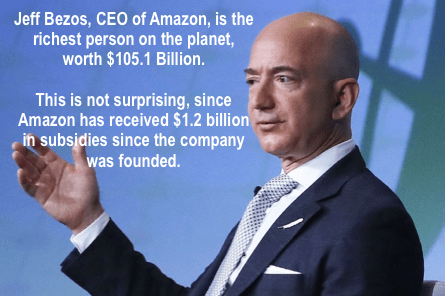
And, this is what really is driving the bidding war so crazy, what Greg LeRoy talks about, is that you’re seeing these crazy numbers being thrown around, because it’s not like there’s another company down the road that you can say, well, if we don’t get Amazon, we’ll just get the second-best thing to Amazon, because there is no second-best thing to Amazon. It’s Amazon or the highway.
Sure, there would have been new jobs provided by the company, but Amazon has a track record of having many of their workers needing to rely on Food Stamps, just to get by.
However, the lack of transparency is what is particularly troubling in this case, especially since it is quite certain that tax breaks were offered in the deal.
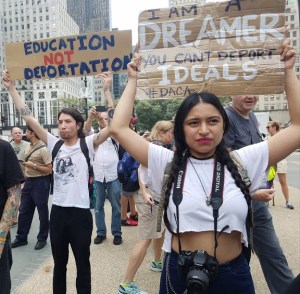 Since the Trump administration announced that it would end the Deferred Action for Childhood Arrivals program, also known as DACA, the immigrant community has been fighting to maintain this program.
DACA youth, their families, friends and allies has been organizing on all kinds of levels, from educational forums to meeting with members of Congress, engaging in sit-ins, strikes and other forms of Direct Action.
Yesterday, hundreds of immigrants, DACA recipients and allies visited members of Congress. These visits were more like office occupations, where Dreamers made lots of noise to demand that Congress pass a Clean Dream Act. A Clean Dream Act would mean that it is not attached to other issues, especially the Congressional budget. Those in DC raising hell have been clear, by saying, “We are not a bargaining chip to be used by Republicans and Democrats.”
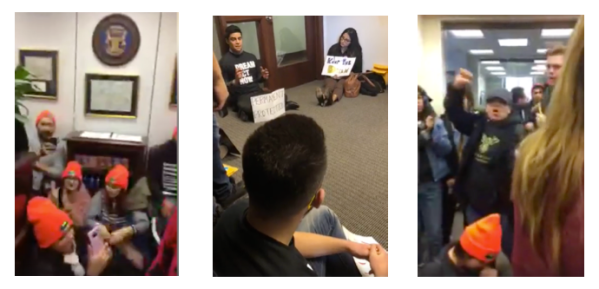
Dozens of people from West Michigan sat in on Senator Stabenow’s office in DC, as you can see from these pictures below. Senator Stabenow, while saying she supports Dreamers, has NOT committed to supporting a Clean Dream Act bill.
What Are We Willing to Do?
Of course, when I say we, I mean those of us who are white. Immigrants are fighting every day for their lives. Immigrants are taking risks. Immigrant youth are faced with the possibility that they might also be deported, if DACA is not renewed.
So what are we willing to do? The easiest thing to do is to call Senator Stabenow’s office today and tomorrow to demand a Clean Dream Act. Her DC office phone number is (202) 224-4822.
 However, this is only the first of several things that those of us with tremendous privilege, must do. Second, if you are in West Michigan on Friday (January 19), come to the protest rally at 4:30 in downtown Grand Rapids and meet at the Calder Plaza. Information on this direct action can be found on Facebook at this link https://www.facebook.com/events/1557143701005498/. Also, don’t just show up, invite your circle of friends and help us spread the word.
If Congress does not pass a Clean Dream Act on January 19, be ready to take action and find out what groups like Movimiento Cosecha GR, an immigrant-led movement, is asking from us.
DACA is just part of the Immigrant Justice Movement
As important as it is to pass a Clean Dream Act, this is only one part of a larger movement to provide permanent protection to all immigrants. Movimiento Cosecha GR is leading that movement here in Grand Rapids and you can be part of their work as an ally and fight for permanent protection, dignity and respect for all immigrants. Contact them through their Facebook page to find out when they meet.
In addition, immigrants are constantly being targeted by ICE agents in West Michigan. If you want to be part of the GR Rapid Response to ICE project, go to their Facebook page. Their next training is scheduled for Wednesday, January 31st, with details here https://www.facebook.com/events/1993245604249285/.
 The GR Rapid Response to ICE project consists of directly intervening to stop ICE agents from taking people, plus providing a variety of Mutual Aid to families that have had loved ones put into detention or deported. Here people can offer transportation, provide courtroom solidarity, contribute funds or assist with fundraising.
People can also be involved in offering sanctuary to immigrants who are being targeted, either in their own home or by getting their faith community to commit to being a sanctuary.
These are all important and necessary aspects of being in solidarity with immigrants. We have to be willing to take risks and to put our bodies on the line. If we don’t, then we are no better than the racists who scream, “immigrants should not be allowed to stay here and should just go back to their country of origin.”
Solidarity Event Planned with J20 Arrestees
(Editor’s note: This post was submitted anonymously.)
Almost a year ago, 230 people were mass arrested at protests against President Donald Trump’s inauguration. Following the arrest – which happened at an “anti-capitalist and anti-fascist” march – approximately 210 people were indicted on eight felony charges of inciting a riot, rioting, conspiracy to riot, and five counts of felony property destruction, punishable by up to 75 years in prison. While two charges – rioting and conspiracy to riot – have been reduced to misdemeanors, defendants are still facing the prospect of 60 years in prison.
Since January of last year, the cases have wound their way through the legal system. After mass arresting an entire city block, the government is attempting to retroactively build a case by searching seized cell phones, pouring over video recordings (some of which were obtained by alt-right sources), and subponeaing website records in an attempt to bolster its prosecution. Beyond this, the prosecution is arguing that mere presence at the protest is enough to warrant conviction.
For those who want a quick overview of the case, the following video provides a helpful introduction:
In December, the first six defendants to go to trial were acquitted of all the charges against them. Despite this legal victory, there is no indication from the prosecution that they plan to drop the charges against the remaining defendants. Instead, trials are scheduled through October of 2018.
Beyond the individual consequences of repression for the defendants – which have included emotional stress, financial stress, lost jobs, and harassment – the case could have broad consequences for social movements. If the state succeeds in this experiment, it will mean that any protest could be mass arrested and face the prospect of felony convictions and lengthy prison terms. Moreover, the state is attempting to redefine basic political organizing as conspiracy, which would greatly increase the stakes for anyone who chooses to organize within their communities. In light of the always increasing inequality brought by capitalism and the blatant white supremacy and misogyny represented by the Trump administration, “organizing” – as it always has been for marginalized communities – will increasingly become less of a choice and more of a necessity – meaning that we all will face this risk if the state is successful.
 The primary need for the J20 defendants is money. The lengthy legal process is incredibly costly, with defendants from diverse regions being forced to travel back to Washington DC for court dates and eventually having to move to DC for trial. You can donate to the legal defense fund here.
A diverse group of people have organized to support the J20 defendants. The umbrella group Defend J20 Resistance is a centralized location for these support efforts and information on the case. Other initiatives – such as a recently called for week of solidarity – aim to raise the profile of the case. A “Statement of Solidarity” has been endorsed by dozens of organizations. Beyond these efforts, it is critically important that people help spread the word about the case as much of the broader left has been strikingly silent about it.
J20 Solidarity Event Planned in Grand Rapids
Here in Grand Rapids, there is an event planned on January 20 – the one-year anniversary of Trump’s inauguration – to raise awareness about the J20 cases. The event is at 1:00pm at Calder Plaza in downtown Grand Rapids.
In addition to information about the J20 case, there will also be speakers from a variety of organizations about the various struggles taking place against the Trump administration.
This underscores an important point about the necessity of continued struggle as a means of solidarity. When the state increases repression, it should be met with increased resistance. If people simply cower and walk away, it will make it that much easier for the state to succeed. An important part of supporting the J20 defendants is to continue the struggles against capitalism and fascism.
Celebrating the Real Dr. Martin Luther King Jr
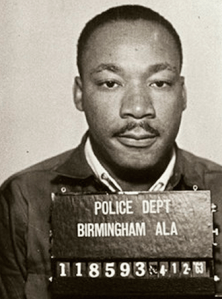 As we celebrate one of the great leaders in the Black Freedom Struggle, it is important that we familiarize ourselves with the real Dr. King and not the one that is promoted in commercial media or by organizations that have their own agendas.
Like most people, Dr. King was not a static person and was not part of a static movement. He evolved over time and continued to sharpen his own view of the world as he moved beyond a civil rights view to a more global liberationist view. Dr. Martin Luther King Jr. also matured in his use of tactics and strategizing when dealing with systems of oppression.
What follows are resources that we encourage people to investigate, so as to drawn your own conclusions about who Dr. King was, what he preached and practiced before he was assassinated nearly 50 years ago.
One good sources is The King Center Archive, which can be found online at http://www.thekingcenter.org/archive. The archive contains nearly 1 million documents associated with the life of Dr. King.
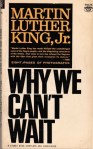 Another great source is a collections of King’s writings published in 1963 called, Why We Can’t Wait. This collection of writings includes his famous Letter from a Birmingham Jail.
 Of course, there is the I have a Dream Speech, which give delivered in Washington, DC in 1963 at one of the largest civil rights demonstrations in US history. Some great sources to accompany that speech are Gary Younge’s book, The Speech: The Story Behind Dr. Martin Luther King Jr.’s Dream and Nobody Turn Me Around: A People’s History of the 1963 March on Washington, by Charles Euchner.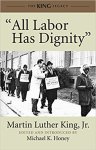
It is also important to know that Dr. King did not limit himself to challenging institutionalized racism, he also spoke out and organized around economic exploitation. Michael Honey’s book, All Labor Has Dignity, is a collection of writings and speeches that Dr. King gave that challenged economic injustice and well as demonstrating his relationship to organized labor groups in the US.
 In a Single Garment of Destiny: A Global Vision of Justice, edited by Lewis Baldwin, you will find an amazing collection of writings and speeches by Dr. King that not only explored the issue of global poverty, but makes clear the tremendous understanding Dr. King had of US foreign policy and global solidarity. Included in this collection is King’s famous speech, Beyond Vietnam, which contains not only his denunciation of the US as the “Greatest purveyor of Violence in the world today,” it contains Kings naming the Evil Triplets of Racism, Militarism and Capitalism as the greatest threats to humanity.
 As King’s vision of liberation became more radical, he began to name systems of oppression and to call out the unjust US war in Vietnam and the violence perpetrated against the black community in the US. In a little know book entitled, The Trumpet of Conscience, there are 5 lectures that King delivered on the Canadian Broadcasting System in 1967. These are some of the most powerful articulations of King’s vision and makes clear why he was such a threat to those in power.
 The further radicalization of King is also capture well in another collection of King’s work, edited by Dr. Cornel West, entitled, The Radical King.
One of the last campaigns that Dr. King was involved in was The Poor People’s Campaign, which began in the summer of 1968, months after he was assassinated. This campaign was originally designed to have thousands of people set up a tent city in Washington DC until their demands were met around racial and economic justice, what King called a Bill of Rights for the Disadvantaged.
During the same time, the Memphis sanitation workers were organizing a strike for better wages and working conditions, Dr. King went to Memphis to support the strike and lend his solidarity to their struggle. The sanitation worker’s strike and King’s visit is well documented in the book, Going Down Jericho Road: The Memphis Strike, Martin Luther King’s Last Campaign, by Michael Honey.
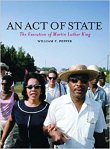 Memphis is where King was assassinated, on April 4 of 1968. King’s assassination is the subject of two important books. One book is Michael Eric Dyson’s book April 4, 1968: Martin Luther King Jr’s Death and How It Changed America. A second book, written by William Pepper, explores who was actually involved in King’s assassination and what role local, state and federal authorities played in the shooting of Dr. King. Pepper’s book is entitled, An Act of State: The Execution of Martin Luther King.
 It is also important to understand that the FBI had been monitoring Dr. King’s activities for years, making threats against him and wire tapping his phones. One book, which documents the FBI monitoring of King (with actual documents), is the book by Michael Friedly and David Gallen, Martin Luther King Jr: The FBI File.
There are other important scholarly works on the message and person of Dr. King. Three books in particular are worth mentioning. The first is by John Ansbro, entitled, Martin  Luther King Jr.: The Making of a Mind. The second scholarly book is by Michael Eric Dyson, entitled, I May Not Get There With You: The True Martin Luther King Jr. Lastly, no investigation of Dr. King is completed without the great Black Theologian James Cone’s book, Martin and Malcolm and America: A Dream or a Nightmare.
In addition to these books, speeches and essays by and about Dr. King, there are some great films about King and this time period. The PBS series Eyes on the Prize, provides  wonderful visual documentation of the black liberation movement and Dr. King. However, a film that deals more directly to the message and person of Dr. King is Citizen King, which deals particularly with the last few years of his life, his vision and the state repression against him and his family.
All of these resources are important, especially if we want to not let government, non-profit or political groups hijack the message and witness of this deeply passionate man.
Countries that Trump calls Shitholes are violent, poverty stricken countries because of over a century of US Policy
President Trump is creating a stir again over his recent comments about immigrants that are coming from “shithole” countries, like Haiti and countries in Africa.
Numerous commentators are responding to the racist nature of such comments and for good reason. However, there is a completely different component here that most media sources are missing and that is the fact that many of the countries that Trump is referring to have refugees/immigrants coming to the US because of US imperialism and European colonialism.
Let’s start with a look at Haiti.
Haiti became independent in 1804, after a revolution led by Black people.The US hated this fact and has been punishing Haiti ever since. Abraham Lincoln proposed to send all the black slaves to Haiti as a White Supremacist solution and since the early 20th century the US has pretty much run the small Caribbean nation.
From 1914 to 1934, the US Marines occupied Haiti in order to stop numerous rebellions. In addition, during this time the US essentially re-wrote the Haiti Constitution to favor longterm US financial interests. ( See Paul Farmer’s, The Uses of Haiti) Since the late 1950s, the US supported the dictatorships of Papa Doc and Baby Doc Duvalier. The Duvalier dictatorship was a brutal dictatorship using state terrorism that was enforced by the government’s death squads known as the Ton Ton Macutes.
Then in 1990, the Haitian people elected a Catholic priest by the name of Jean-Bertrand Aristide, who was a proponent of Liberation Theology. Aristide was overthrown in a US-back Military Coup in 1991 and took exile in the US. The Clinton administration then got Aristide to adopt World Bank/IMF Structural Adjustment Policies, and in turn the US administration agreed restore Aristide to power.
Aristide was elected again and then over thrown by another US backed military coup and spent 7 years in exile, all of which is well documented in the film Aristide and the Endless Revolution.
If we wanted to look at US interventions in Africa over the last 50 years, here is a sampling of how the US has helped to create violence and poverty in that continent:
- US involvement in the assassination of President Lumumba in the Congo in 1961.
- US Support for the South African Apartheid government that last for decades and right up until the end
- CIA involvement in Angola that led to a bloody civil war.
- US support of dictatorship in Somalia in the 1990, which led to a failed US intervention during the Clinton administration.
- US support for the brutal dictatorship of Idi Amin in Uganda in the 1970s.
- US support for the brutal dictatorship of Mobutu in Zaire (now the the Congo) for roughly 30 years.
- Egypt was in the top 5 in US military aid for over 25 years.
- US antagonism of Libya for several decades, leading to the US-back coup in 2011.
- 1998 bombing of a pharmaceutical plant in Sudan, which led to the deaths of thousands, since this pharmaceutical plant provided 50% of the medicines in the Sudan.

It is understandable that people are outraged by the recent comments by President Trump, but he is simply reflecting a long standing US position on Haiti and the continent of Africa.
If you want to explore this history more, participate in the GRIID class, Investigating US Foreign Policy from 1898 to the Present, which begins on Monday, January 29.
 Reading the business press can be difficult at times, but for those who are engaged in grassroots organizing, it is important for us to monitor such news sources. It’s important because those who have economic and political power are often more candid with what they think in the business press than in the more mainstream commercial media.
In addition, the business press also is pretty up front about their bias, even allegiance, to those who wield tremendous economic and often political power. This was demonstrated recently in the Grand Rapids Business Journal, with their announcement of the 2017 Newsmakers of the Year awards event, scheduled for January 31st at the Frederick Meijer Gardens.
The list of nominees reads like a who’s who of the Grand Rapids power structure, with mostly familiar names, to those who follow power dynamics in West Michigan.
There are 16 separate categories, with 3 nominations in each category. However, it is interesting to see how deeply certain people, families and companies are represented in the nominations.
The family/business with the most mentions are of course the DeVos Family. Dick DeVos is a nominee for Economic Development and his wife Betsy DeVos is a nominee for Education. In addition to that power couple, Dan DeVos is a nominee for Sports (ownership of the Grand Rapids Griffins) and Daryn Kuipers is a nominee in the Beverage category because he works for Boxed Water. Boxed Water is part of the DeVos owned Windquest Group Core Companies.
Of course, the DeVos connection doesn’t end there. In the category of Non-Profit newsmakers, AmplifyGR is nominated. AmplifyGR is funded by the Doug and Maria DeVos Foundation and was created for the purpose of getting the family into the development business, along with AmplifyGR’s partner Rockford Construction. Which brings us to another connection, since Rockford Construction is nominated for two categories – Construction and Sustainability.
Being nominated by the Grand Rapids Business Journal as a 2017 Newsmaker, of course is an endorsement that what these individuals or companies were doing in the community over the past twelve months. We take a much different view of these nominees, so we’d like to offer our own awards for each of the people named above.
Daryn Kuipers/Boxed Water wins the We’re Profiting Off of the Sale of Water Award.
AmplifyGR, along with Rockford Construction, wins the Gentrifier of the Year Award.
However, since Rockford Construction was also nominated for the Sustainability of the Year Award, we’d like to give them the – We Had to Destroy the Neighborhood in order to make it Sustainable Award.
Dan DeVos, owner of the Grand Rapids Griffins, wins the We Own Everything Else, Why Not the Sports Teams Award.
Since Dick DeVos was nominated for the Economic Development category, he wins the How to Use Public Money for Private Profit Award.

Lastly, since the Grand Rapids Business Journal nominated Betsy DeVos for an Education award (even though she is the only person nominated who is not working in Grand Rapids), we give her the How to Dismantle Public Education Award.

The War on Immigrants continues to escalate: Temporary Protected Status of 200,000 Salvadoran immigrants has been revoke by the US Government
 Approximately 200,000 Salvadorans, many of whom have resided in the United States since becoming eligible for Temporary Protected Status (TPS) in 2001, will have until September 2019 to either willingly leave the United States, obtain U.S.legal permanent residency by some other means, or else face deportation.
“What these long-term residents of the United States needed is a pathway to citizenship. Instead, under Trump, they will be forced to turn their lives upside down and drag their children back to one of the most violent countries in the world,” said a spokesperson from the Washington Office on Latin America (WOLA).
The Trump administration previously ended TPS for Haitians and Nicaraguans in November 2017, affecting about 50,000 Haitians and some 2,500 Nicaraguans. A decision on the 61,000 Honduran recipients of TPS is expected before May 4, 2018.
Salvadoran officials, including President Salvador Sánchez Cerén, appealed to DHS Secretary Kirstjen Nielsen as recently as last week not to go through with the decision, arguing that it would wreak havoc on El Salvador’s economy. The tiny Central American nation relies heavily on remittance payments sent from Salvadorans living in the U.S. to their family members back home.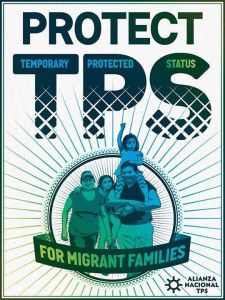
TPS is a program that has allowed administrations to extend temporary residency to foreign nationals on U.S. soil at a time when a profound disaster—natural or political—strikes in their home countries. Originally, close to 300,000 Salvadorans in the United States were vetted and granted TPS after a killer earthquake rocked the small Central American country in 2001, as the Center for Public Integrity explained in a recent story. Congress created TPS as part of the Immigration Act of 1990.
Kent County is home to several thousand Salvadorans, which means that families will be torn apart or face the difficult task of returning to a country that is extremely violent and where more than half the population lives in poverty.
The announcement to end TPS for Salvadorans from the Trump administration is part of a long line of policies that have been devastating for Salvadorans. The US has been a supporter of the wealthiest families, many of which own coffee plantations, for the better part of a century.
In 1932, the US backed the Salvadoran military, which slaughtered an estimated 10,000 coffee workers in one day, because they dared to organize against the harsh working conditions and poverty wages. This event is known in El Salvador as La Matanza – The Massacre.
From the late 1970s through the early 1990s, the US supported the death squad government of El Salvador, which killed about 80,000 of its own people in a brutal counter-insurgency war. During the peak of those years, the US government was providing $1 million a day to the government of El Salvador to suppress their own people. In 1980, Salvadoran Archbishop Oscar Romero wrote to then President Jimmy Carter and asked him to stop sending money for weapons. Weeks later, the Archbishop was shot dead by Salvadoran soldiers while saying mass in San Salvador.
Because of the government repression, thousands pf Salvadorans fled their country to come to the US, but were often denied asylum. In 1984, the US Sanctuary Movement was born and faith-based groups and other organizations were taking people in who were fleeing repression in El Salvador and Guatemala.
During the 1990s, and especially after the 1994 Peace Accords, El Salvador was subjected to Structural Adjustment Programs by the World Bank/IMF loans, which meant that the government had to privatize many formerly public services and reduce spending on social services. It was during this time that the level of state corruption and street level violence increased, violence which continues til today.
This is the legacy of US policy with El Salvador and the decision to end TPS for Salvadorans living in the US, who now have to leave within the next 18 months, is just the most recent repressive policy the US has imposed on the Salvadoran people.
This decision to take away TPS from Salvadorans living in the US is just another aspect of the growing war against immigrants. It is time that we increased our level of resistance to such policies and consider offering sanctuary to those who are being forced to leave, much like the resistance and sanctuary work being done in the 1980s in Grand Rapids.

