Indigenous People’s Day: As White people, we need to come to terms with Settler Colonialism Part II
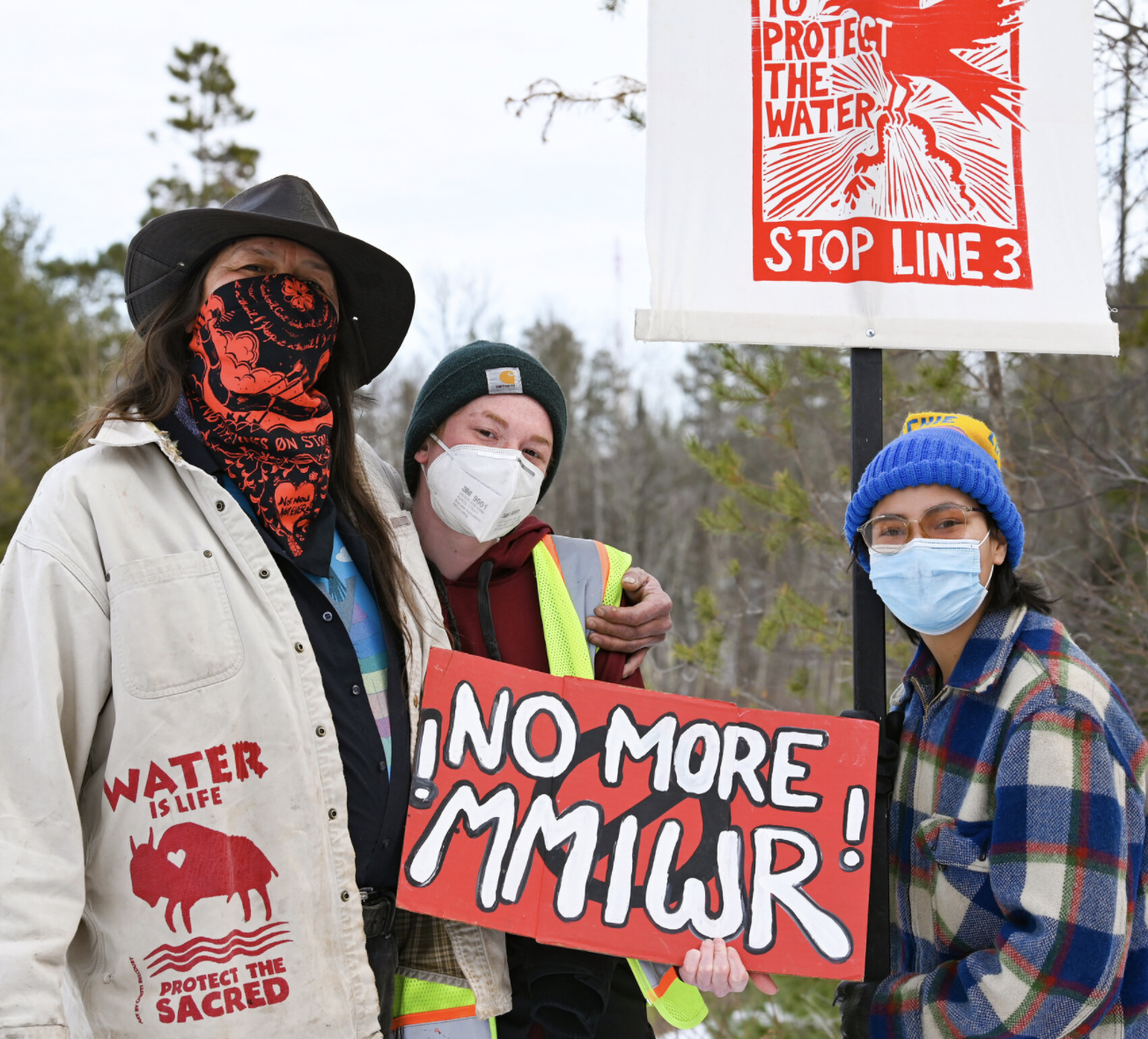 “And the Biden administration is just sitting by and watching it happen. I mean, I’m watching river after river get frac-outs on them in northern Minnesota. These are pristine river systems. You know, I’m watching things get destroyed as Enbridge ravages through our country. And then I’m watching hundreds of people get arrested trying to protect our water and to stop the climate disaster that Enbridge’s Line 3 represents.”
Winona LaDuke on Democracy Now 7/23/2021
In Part I we looked a bit at the historical legacy of Settler Colonialism, particularly in West Michigan. In Part II, we will explore issues around contemporary Settler Colonialism, specifically oil pipelines, Climate Justice, the disappearance & murder of Indigenous women/girls, and the brutal legacy of so-called Boarding Schools.
Confronting the Black Snake
The real resistance to all the fossil fuel pipelines (what Native people refer to as the Black Snake) that are happening in North America, is being led by Indigenous communities and organizers. What we saw at Standing Rock, what we are seeing by the Wet’suwet’en Nation territory, and the Indigenous-led resistance to Enbridge pipelines in Minnesota (Line 3) and Michigan (Line 5) are the result of people having a direct relationship with the land that is being threatened by extractivist practices and multinational corporations.
For those of us who are white, we need to 1) follow the lead of Indigenous communities when it comes to pipeline projects that directly impact their ancestral lands, and 2) we need to fully support – with financial contributions, with education/awareness, and by participating in direct action campaigns – to shut down any and all fossil fuel pipeline projects.
In a recent report entitled, Indigenous Resistance Against Carbon, it states:
Indigenous resistance has stopped or delayed greenhouse gas pollution equivalent to at least one-quarter of annual U.S. and Canadian emissions.
This is the meaningful and concrete types of resistance that we need to support, because it actually is making a difference. For white people, we need to stop wasting our time appealing to politicians and to support Indigenous-led campaigns opposing pipelines.
As we said early, much of this resistance has to do with Indigenous peoples relationship to the land. This gets back to our Part I posting, which talks about Settler Colonialism.
What Indigenous people are saying and writing about, is one simple fact. Decolonization of Indigenous lands is essential to the future of humanity. The authors of the book, The Red Deal: Indigenous Action to Save Our Earth, make it clear that decolonization of Indigenous lands is a major part of future of Climate Justice. If white people are serious about fighting for Climate Justice, then we have to see that decolonization of Indigenous lands is absolutely necessary in that fight. And it must be stated that the current New Green Deal proposal does NOT include the decolonization of Indigenous land. As white people, we need to demand the decolonization of Indigenous land if we are serious about Climate Justice.
Another major issue that plagues Indigenous people in this hemisphere, is the disappearance and murder of Indigenous women & girls. The U.S Department of Justice found that American Indian women face murder rates that are more than 10 times the national average. These are alarming numbers, but Indigenous people are not content with leaving the data up to Settler Colonial entities like the DOJ. In fact, the group Data for Indigenous Justice states:
Our most important value is to do this work in a good way with and for our community. Our goal is to be self-determined and have sovereignty over our MMIWGS2 data in order to inform research, policy and systemic change at local, state, and federal levels and in solidarity with all Indigenous peoples. We are doing what we know is needed to strategically create change. Decolonizing data is having sovereignty over our own data. We are utilizing our data as a resource for true systemic change led by Indigenous people. We seek justice on every front.
It is instructive to note that one significant aspect of the assault and murder of Indigenous women/girls, is the relationship between fossil fuel pipeline workers and the violence against Indigenous women. An article in The Guardian from this past June states:
“Before Minnesota approved the pipeline, violence prevention advocates warned state officials of the proven link between employees working in extractive industries and increased sexual violence. Now their warnings have come true: two Line 3 contract workers were charged in a sex-trafficking sting, and crisis centers told the Guardian they are responding to reports of harassment and assault by Line 3 workers. Johnson said VIP, a crisis center for survivors of violence, has received more than 40 reports about Line 3 workers harassing and assaulting women and girls who live in north-western Minnesota.”
The Indigenous-led resistance to Line 3 in Minnesota had documented this fact a few months before The Guardian, even including an Enbridge document that demonstrates the Canadian Corporation’s anticipation in pipeline workers assaulting Indigenous women, stating:
The assaults and reports of harassment were described in a request for reimbursement from Enbridge’s public safety fund, submitted last month by the anti-violence and anti-human trafficking nonprofit Violence Intervention Project. State permits for pipeline construction stipulated that Enbridge had to create the fund to cover some law enforcement costs and anti-human trafficking efforts associated with the project.
Just as corporations consider environmental degradation a form of collateral damage, the brutalization of Indigenous women is anticipated and expected while corporations engage in “resource extraction.”
For those of us who are white, we need to condemn the relationship to extractivism and the brutalization of Indigenous women/girls, then support whatever demands the Indigenous community has around this issue.
Boarding Schools as Genocide
When people think of genocide, they often think it means the outright slaughter of a group of people. While this does constitute genocide, there are numerous other things that can result in genocide. According to the 1948 Convention on the Prevention and Punishment of the Crime of Genocide:
In the present Convention, genocide means any of the following acts committed with intent to destroy, in whole or in part, a national, ethnical, racial or religious group, as such:
- Killing members of the group;
- Causing serious bodily or mental harm to members of the group;
- Deliberately inflicting on the group conditions of life calculated to bring about its physical destruction in whole or in part;
- Imposing measures intended to prevent births within the group;
- Forcibly transferring children of the group to another group.
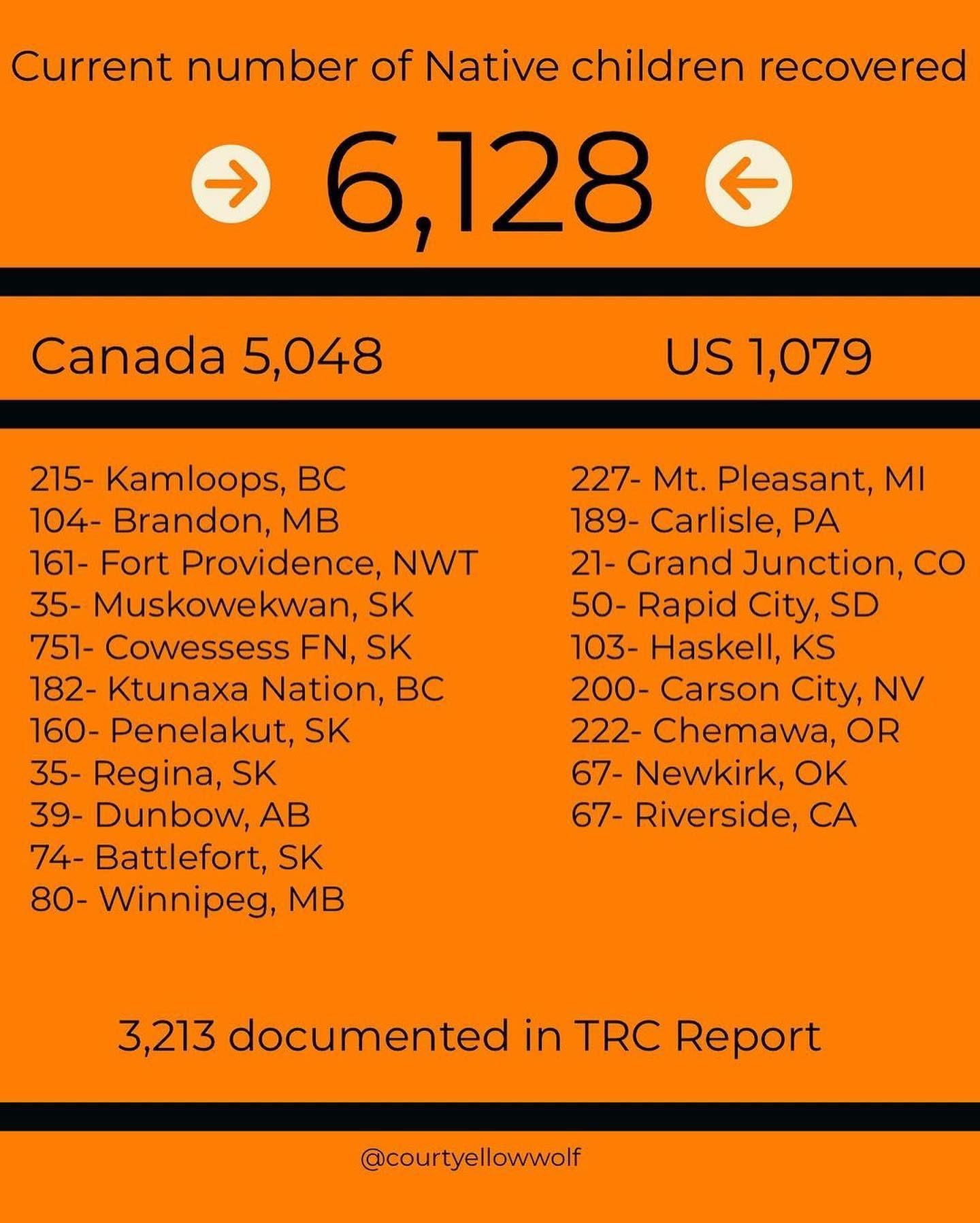 The history of so-called Boarding Schools in the US and Canada was fundamentally about forcibly transferring Indigenous children to government run or christian schools. In other words, it was a form of genocide.
Governments and Christian churches are now scrambling in the face of newly uncovered evidence of the common practice of murdering Indigenous children while attending so-called Boarding Schools. In the fact of this, the Indigenous community is exposing and pressuring these institutions for the role or their complicity in such crimes, as did the local Indigenous community did with an action this past June in Grand Rapids.
So what do White people do in this case? Again, we need to follow the lead of Indigenous communities and provide whatever support they are asking of us. In addition, we need to be challenging Christian Churches to come clean with their role in the history of so-called Boarding Schools, allow Indigenous people access to documentation and spaces where so-called Boarding Schools existed, pay reparations and put an end to any ongoing Christian-run schools for Indigenous children.
Indigenous People’s Day: As White people, we need to come to terms with Settler Colonialism Part I
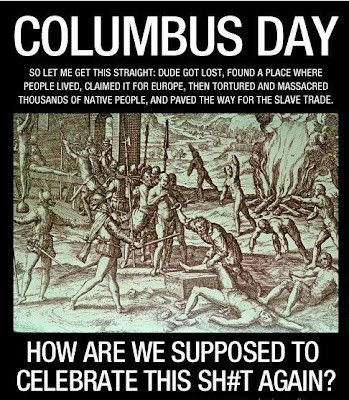 As Native American peoples in this red quarter of Mother Earth, we have no reason to celebrate an invasion that caused the demise of so many of our people, and is still causing destruction today.”
Suzan Shown Harjo – Creek & Cheyenne
There are still too many white people who celebrate Columbus Day. The US government still recognizes Columbus Day as a federal holiday and has not replaced it with Indigenous People’s Day. Federal employees and many state and local employees will get the day off because the federal government still designates today as Columbus Day.
Just a few days ago, the Biden Administration released a proclamation on behalf of Indigenous Peoples Day, but it is a weak and patronizing statement that does little in terms Tribal Sovereignty and fails to acknowledge the historical and ongoing Settler Colonialism that the US government practices and benefits from.
Releasing proclamations is a meaningless gesture, when Sovereign Native nations are demanding things like an end to oil pipelines, the end to the murder and disappearance of Indigenous women/girls, along with justice & reparations for the horrendous history of so-called US Boarding Schools.
Challenging the legitimacy of Columbus Day is an important anti-racist act, but it must be seen in the larger context of challenging White Supremacy.
It is increasingly imperative that we come to terms with the function that Columbus played in the European conquest/colonization of the what we now call the Americas. Columbus was commissioned by the Spanish Crown and sanctioned by Catholic Church (through a 1493 Papal Bull) to conquer new lands and extract resources to benefit Spain. Therefore, Columbus not only is the primary symbol of the 500 years of genocide and slavery that has plague the western hemisphere, he is the symbol of political, religious, social and cultural imperialism that continues to the present by a White Supremacist system of Capitalism.
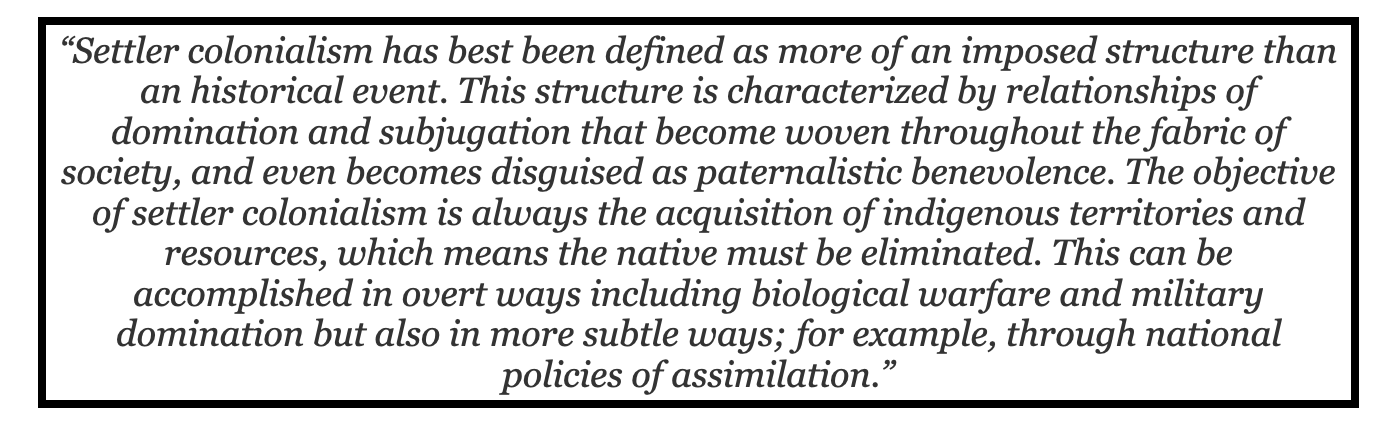
Grand Rapids was founded on Settler Colonialism – As a foundational framework, it is vital that we come to terms with the fact that Grand Rapids, like virtually all US cities were founded on what Native scholar Roxanne Dunbar Ortiz calls Settler Colonialism. Settler Colonialism in West Michigan is the result of a larger White Supremacist strategy that included legal means (treaties), forced relocation, spiritual violence (role of churches) and cultural imperialism, most radically seen with the policy of putting Native children in boarding schools with the goal of, “Killing the Indian, Saving the Man.”
We know that hundreds of Native children from the Three Fires Nations were taken and put into boarding schools by settler colonialists, many of which were run by christians. In these instances Native children were denied the right to speak their own languages and practice their own spiritual traditions. Most of the removal of Native children from their communities happened in the later part of the 19th Century and first half of the 20th Century.
However, on the matter of christian missions attempting to make converts of Native communities in the 1820s and 1830s along the Grand River, it is less clear on whether or not this could be defined as a form of genocide. How much free will did Native people have on choosing another religion? Was the adoption of christian beliefs a form of assimilation into the dominant culture and was it tied to larger socio-economic issues like food and land?
It should come as no surprise that right after the 1821 Treaty of Chicago was signed, the first christian missions came to what is now West Michigan. The Baptist Church established a mission in 1824, under the leadership of Isaac McCoy, and Catholic missions were begun in 1833 by Fr. Frederic Baraga.
One of the things that lured missionaries to the area after the signing of the Treaty of Chicago, was a provision in the treaty which allowed funds for people to work as teachers of blacksmiths amongst the Native people along the Grand River. The government treaty called this, the “civilization fund,” a phrase that underscores the settler colonial mentality.
Isaac McCoy first arrived in 1823, only to discover: “Many Odawa were drinking and few responded to his call for a council. After some inquiries McCoy learned that the majority regarded the 1821 treaty as fraudulent and viewed his visit as an attempt to trick them into ratifying it.” (pg. 7, from Gathered at the River: Grand Rapids, Michigan and Its People of Faith)
Such a statement reflects not only that the Native people along the Grand were not in support of the government imposed treaty, but that many Natives were negatively impacted by alcohol. Alcohol was introduced by French fur traders, particularly Louis Campau and should be seen as another tool used by settler colonialism to control Native people.
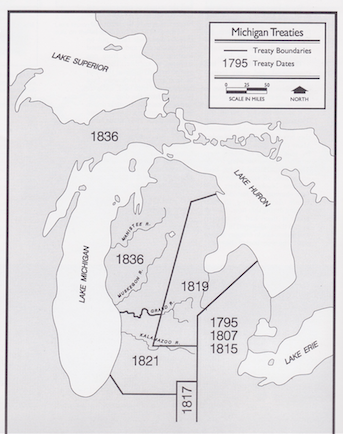 McCoy, however, was not deterred from his initial observations and continued to use all means at his disposal to “win over” the hearts and minds of Native people. In 1826, McCoy set up the Thomas Mission on the westside of the Grand River (as shown in this map). McCoy’s greatest contribution during his time along the Grand River was his relationship with Native leader Nawequageezhig, whom the white settlers call Noonday.
Noonday was one of the few Native leaders who signed the 1821 Treaty of Chicago and was viewed by many as a traitor or collaborator with the settler colonialists. Noonday went as far as to be baptized by McCoy’s successor, Rev. Leonard Slater in the summer of 1827. Another Native leader in the area, Kewwaycooshcum, also known as Blackskin, did not sign the 1821 treaty, but did develop a relationship with the catholics through his connection to Campau. It is hard to know from the limited documentation of that time, whether or not the Native people were using the tensions between the various christian factions to their benefit or if the christian were using Native compliance with the government as a means to an end. One gets a sense of the christian rivalry in a comment from Fr. Baraga, who said, “Mary, to who it is given to root out all heresies of the world……to destroy the false [Protestant} teachings with which some of the poor Indians were already infected, and suffer on His gospel to reign everywhere.” (pg. 12, from Gathered at the River: Grand Rapids, Michigan and Its People of Faith)
However, whatever tensions existed, they were most useful in pushing Native people out of the area as more white settlers colonialists came to the area. This increase in settler colonialists, along with greater desire for land and settler colonial expansion, resulted in a new treaty being drawn up, the Treaty of Washington in 1836. This treaty turned over an additional 13,837,207 acres of land to settler colonialism’s expansionist desires.
It seems that all along, the goal with relations of Native people along the Grand were to take the rest of their land. Whether or not there was direct complicity with the early christian missions to this land takeover is not relevant, the fact remains that they did nothing to resist such an effort.
The end of chapter one from Gathered at the River: Grand Rapids, Michigan and Its People of Faith, states of the fate of Native people in West Michigan:
Keeping title proved difficult, however, as fraud, inexperience, and incompatibility of family farming with tribal tradition took their toll.
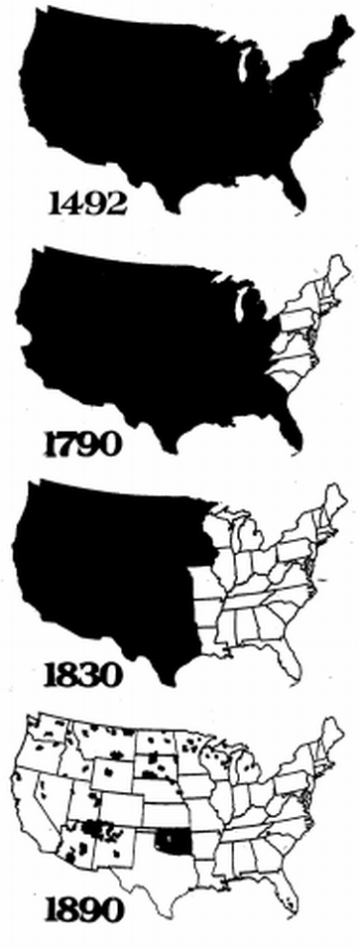 It indeed took its toll, but the authors of Gathered at the River do not call it land theft or settler colonialism or even acknowledge the role that early missions played here in the ongoing genocidal policies of US expansionism. The plight of Native people is not addressed in the rest of the book, which simply goes on to celebrate the history of christian churches in Grand Rapids. However, it seems apparent to this writer that the history of christianity in West Michigan is founded on genocide and settler colonialism.
In Part II we will explore issues around contemporary Settler Colonialism, specifically oil pipelines, Climate Justice, the disappearance & murder of Indigenous women/girls, and the brutal legacy of so-called Boarding Schools.
Some Resources:
The Canary Effect (film) https://www.youtube.com/watch?v=lD7x6jryoSA
An Indigenous People’s History of the United States, by Roxanne Dunbar Ortiz
All Our Relations: Native Struggles for Land and Life, by Winona LaDuke
The 500 Years of Resistance Comic Book, by Gord Hill
Custer Died for Your Sins, by Vine Deloria Jr.
A Little Matter of Genocide: Holocaust and Denial in the Americas 1492 to the Present, by Ward Churchill
 On Monday, MLive posted an article entitled, International Christian Non-Profit opens headquarters in Grand Rapids.
Cure International was founded in 1996, with a mission to provide medical surgery for children living with disabilities. As a Christian non-profit organization, Cure International operates in 8 different African countries.
One of their board members was quoted in the MLive article, stating:
“As we all know, the West Michigan community has an incredible healthcare presence. Relocating our headquarters to Grand Rapids gives us an opportunity to be a part of that community. Cure values collaborative partnerships that cultivate trust and authenticity. And that is what Grand Rapids is, a place built on authenticity and where collaboration comes together for the greater good.”
This board member of Cure International happens to be Jerry Tubergen, who is both the CEO of the DeVos-owned RDV Corporation and Ottawa Private Capital LLC, which the is primary investment firm for the DeVos family.
In that same MLive article, Grand Rapids Mayor, Rosalyn Bliss is quoted as saying, “Cure’s work is nothing short of a miracle.”
If we weren’t looking at this article through a critical lens, what Cure International does might seem like a good thing. They provide medical surgery for children living with disabilities in eight different African nations.
However, even with basic curiosity, one might ask, “Why are the eight African nations that Cure International operates in, unable to provide this kind of medical service to their own people?”
It’s a reasonable question. Could it be that these eight African nations have suffered under multiple centuries of Colonialism and Neo-Colonialism, with foreign military occupations and the massive extraction of resources to benefit the Global North?
There is no information, analysis or commitment on the part of Cure International to address any larger, structural issues like the legacy of Colonialism, Neo-Colonialism, wealth extraction, poverty or the mass displacement of Africans who have fled to Europe or the US. For a detailed analysis of Colonialism and Neo-Colonialism in Africa, see Walter Rodney’s book, How Europe Underdeveloped Africa.
There is also no mention on the Cure International site of the existence of the 13 year US military project known as AFRICOM, The purpose of AFRICOM is to use U.S. military power to impose U.S. control of African land, resources and labor to service the needs of U.S. multi-national corporations and the wealthy in the United States. AFRICOM was established in 2008, during the Obama Administration.
Then there is the board of directors of Cure International. The 12 board members are all white, most of who are CEOs and several of them are involved in the financial sector. Two of the board members are DeVas-connected, Jerry Tubergen, whom we already mentioned, plus Luke Nieuwenhuis, who is Vice President – Distributor Incentives Amway.
The dynamic that Cure International perpetuates, with no willingness to call out the historical and contemporary structural injustices in Africa, coupled with their unquestioning use of people with tremendous wealth, all to provide a form of charity to African children, is what many refer to as White Saviorism.
In his 2012 article in The Atlantic, Nigerian-American writer Teju Cole says, “The white savior supports brutal policies in the morning, founds charities in the afternoon, and receives awards in the evening.” Cole was referring to the wave of support by Christian evangelicals in the US to support the KONY 2012 campaign, but his analysis could be applied to so many instances, like the work of Cure International.
Earlier this year, when the Defund the GRPD campaign identified Kids Food Basket as one of the local non-profits, which perpetuates White Saviorism, lots of white liberals became all incensed at the critique of the work of Kids Food Basket, a topic we wrote about. The criticism applied to Kids Food Basket is very similar to the critique of Cure International. It might make us all uncomfortable and it might make us have to confront our own internalized racism, but it is a necessary aspect working towards social justice and collective liberation.
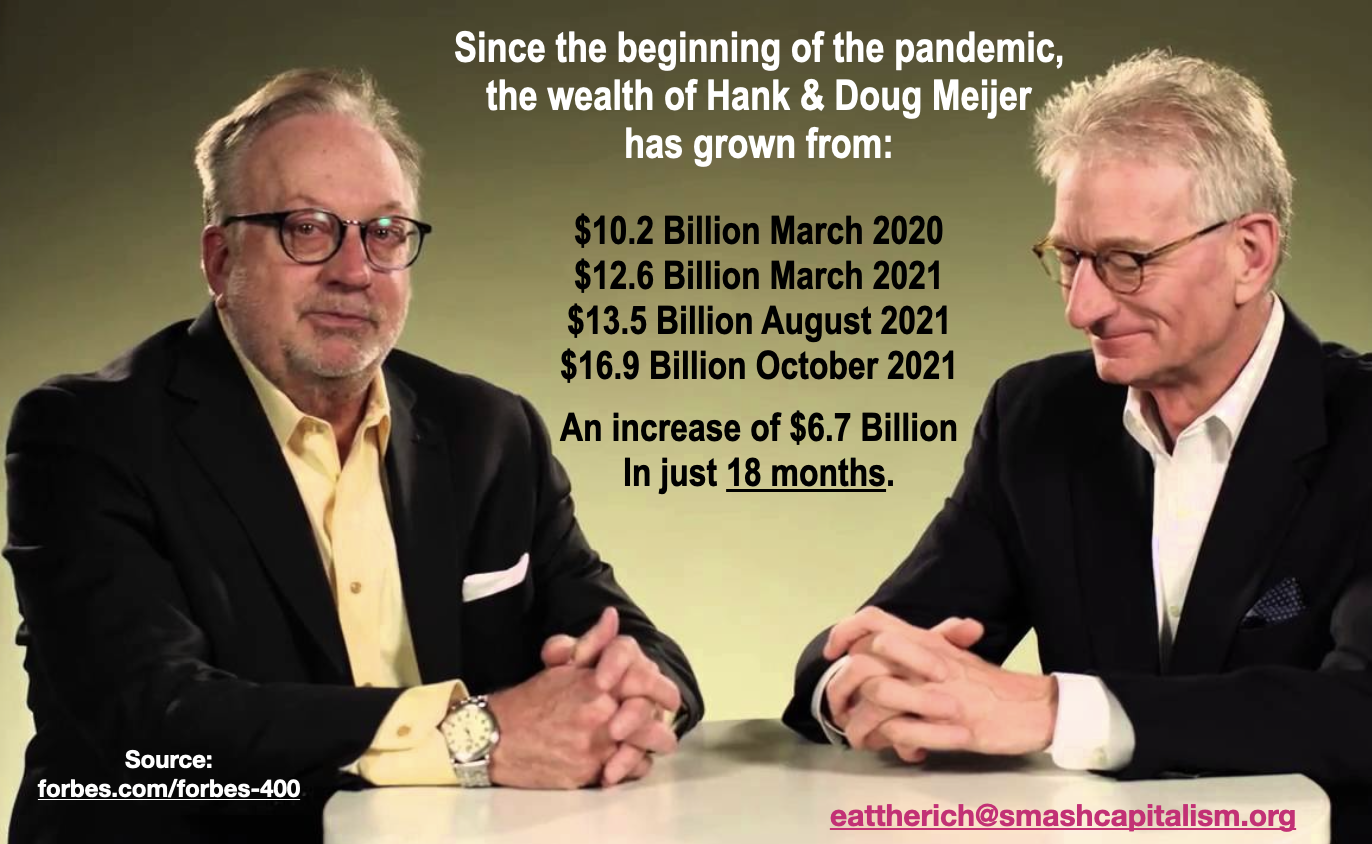
During 18 months of a Pandemic, the wealth of Doug & Hank Meijer has grown by $6.7 Billion
 Imagine what people in Grand Rapids, particularly families who have been negatively impacted by COVID, could do with $6.7 billion dollars collectively?
Just as a frame of reference, $6.7 billion is roughly 14 times the size of the 2022 budget for the City of Grand Rapids ($546 million). So, I’ll ask again, imagine what people/families who have been affected by Covid could do with $6.7 billion collectively?
In March, we wrote about how the wealth of Hank & Doug Meijer had grown, along with many other billionaires just during the pandemic. At that point, the wealth of Hank & Doug Meijer had grown from $10.2 to $12.6 billion in the first year of the pandemic.
Just a few months ago, in August, we posted another story about the Meijer brother’s wealth growing once again. From March of 2021 through the beginning of August of 2021, their wealth had grown by $900 Million, bring their total wealth to $13.5 Billion.
In less than 2 months, the wealth of Hank & Doug Meijer has grown to a total of $16.9 Billion. This means that since the beginning of the pandemic, their wealth has grown by $6.7 Billion, while millions of people are struggling to stay alive, are food insecure and facing eviction.
We also wrote in the August 2021 post, asking why people were not storming the Meijer headquarters in Walker, Michigan? I imagine that there are plenty of people who are mad as hell about the growing wealth gap, especially during a pandemic, yet there is no visible evidence that anyone is organizing a massive campaign to force Hank & Doug Meijer to give up part of their wealth. Why is that?
Do we really believe that they earned this wealth and not those who do the actual work in the Meijer stores and warehouses? Are we unwilling to force them to give up some of their wealth because the law says it is theirs? Do we actually think if we can the right people elected to office that wealth will be more evenly distributed in society?
Imagine if there were 2,000, 5,000, 20,000 or more people who converged on the Meijer headquarters and demanded that Hank & Doug handed over the $6.7 Billion they have made during the pandemic? What do you think those in power would do? Those in power would no doubt call for the cops, hell maybe even the Michigan National Guard to come and arrest thousands of people who were demanding that the wealthiest family give up money they do not need, so others could have a descent life.
These are the circumstances that led Dr. King and other organizers to create the Poor People’s Campaign. These are the moments that gave birth to the Zapatista uprising or the creation of the Landless People’s Movement in Brazil, the African National Congress and so many other uprisings in history. These are revolutionary moments people. What are we willing to do?
Who has really benefitted since Michigan became a Right to Work state, according to the West Michigan Policy Forum
 On Friday, the West Michigan Policy Forum (WMPF) posted an article on their Facebook page, with a headline that read, Michigan’s Right-To-Work Law Improves Lives But ‘Screwing Up’ Media Narratives.
The article that WMPF featured is from the Mackinac Center for Public Policy, one of the premier far right think tanks in the Mid-West.
There are several things worth saying about this article. First, the brief article provides some data and numbers on Michigan for before the state adopted a Right to Work law and after the law was adopted. However, the Mackinac Center writer doesn’t provide any source to support the data or the broader claim that Michiganders are financially better off since the Right to Work law was adopted in late 2012. Even if we believe the numbers that the Mackinac Center author presented in the article, it only reflects the median household income levels and not what most working people are making. Median household income is based on an average of overall income. Therefore, if you have a small percentage of really rich people, then the median household average sounds good, but it is does not accurately reflect what most people are making. The wealth gap has increased significantly throughout the country and in Michigan, with the top 5% of the population having the largest income growth.
Second, on December 11, 2012, governor Rick Snyder signed into law a “right to work” bill, undermining collective bargaining by allowing workers to freeload off the benefits of union negotiations without paying the costs of union representation. The Mackinac Center played a prominent role in supporting this action, a fact that the Mackinac Center writer fails to mention.
Third, the Mackinac Center for Public Policy began pushing for Michigan to become a Right to Work State in 1998, right about the same time that DeVos family foundations began providing significant contributions to the Mackinac Center, according to SourceWatch.
Fourth, the West Michigan Policy Forum made no mention in their sharing of the Mackinac Center article, that they too had been pushing for making Michigan a Right to Work State since the group started in 2008. In fact, at their second major conference, which was held in 2010, the WMPF invited Rick Berman to do a major presentation that not only centered around anti-unionism, Berman’s talk was essentially a “how to make Michigan a Right to Work state.”
In the end, you have the West Michigan Policy Forum post an article from a far right think tank, an article which does not provide sourcing to support its claim. In addition, there is no mention of the relationship between the WMPF and the Mackinac Center, a relationship that is centered in the financial support from the West Michigan elites to the Midland-based think tank. Lastly, both the Mackinac Center and the WMPF had a direct hand in making Michigan a Right to Work state, which means they need to make the claim that the economy is better now in Michigan than before there was a Right to Work policy. The question for all of us, a question that the West Michigan Policy Forum always asks, is who in particular has benefited from the Right to Work policy in Michigan?
Tenants holding a Press Conference was such a threat to Management that they call the cops and 5 GRPD cruisers show up
 The Grand Rapids Area Tenant Union has been working with tenants who reside at Grand View Place apartments who have numerous grievances against management. Tenants don’t feel safe at the Grand View Place apartments, the facility is unsanitary, with constant noise violations and there is constant illegal activity in the building.
When tenants contact the property manager, rarely are they taken seriously. In addition, some of tenants have been threatened with legal action or the threat of eviction, simply because they want to live in a safe and sanitary environment.
One tenant, who is a US military veteran, has been taken to court numerous times by Woda Cooper Companies Inc, the company that owns Grand View Place. However, in each instance, the company ends up dropping the charges when the tenant’s lawyer demands a jury trial.
Another major issue that tenants have complained about is the failure of management to make timely repairs in the building and in individual apartments. In 2020, Woda Cooper Companies Inc, received $2,828,800 in PPP loans from the federal government because of COVID. Several months later that loan was forgiven. If Woda Cooper Companies Inc can benefit from nearly $3 Million of public money, they surely can make the necessary repairs in a timely fashion.
Last Wednesday, several tenants of the Grand View Place apartments hosted press conference to share some of their personal struggles with Woda Cooper Companies Inc., along with presenting a list of demands.
There were two of us who are with the Grand Rapids Area Tenant Union who arrived at Grand View Place apartments and met tenants we had been meeting with outside, near the parking lot. The manager of the property had come out to see what we up to, which was nothing more than having a conversation.
The property manager then went back inside, only to reappear 5 minutes later to greet an unmarked GRPD cruiser. The property manager and the GRPD then approached tenants and members of the tenant union and asked what we were up to. Someone responded by saying, “we were just having a conversation.” The Woda Cooper Companies Inc representative then told us that we – members of the tenant union – needed to leave. The GRPD officer, who happened to be Captain Collard and is part of the Police Command Officers Association, also told us to get off the Woda Cooper Companies Inc. property.
Those of us with the Grand Rapids Area Tenant Union did move to the sidewalk area, which is exactly where we had planned to hold our press conference, right in from of the Grand View Place apartments sign. In the span of about 5 minutes there were an additional four GRPD cruisers that drove by, and one that parked across the street next to a commercial building to keep an eye on us.
At this point it became clear that the local news media would not be showing up, since it was nearly 30 minutes after the time included in the Media Release. The Grand Rapids Area Tenant Union had sent a Media Release to roughly 70 different reporters and newsrooms in the Grand Rapids area. The fact that none of them showed up to the press conference is instructive. It is also instructive to note that all of the major news media outlets had run an ArtPrize story that same day, even though the monied spectacle had already been happening for a full two weeks. The injustice being done to tenants in Grand Rapids just wasn’t newsworthy.
We had also expected to have a few more tenants join us for the press conference, especially those the Tenant Union had been meeting with. However, we found out just minutes after the press conference, that Woda Cooper Companies Inc. had sent out a message to residents that there would be a mandatory inspection of everyone’s apartment.
The Grand Rapids Area Tenant union had decided to livestream a message with one of the tenants and then offer up the demands they had created. Within minutes of terminating the livestream, several tenants were told that there would be no more inspections that day. One of those tenants then sent a message to the Grand Rapids Area Tenant Union, which said:
They scheduled inspections out of the blue for the day of the press meeting here. The notice said they do inspections every month but they do not!!! I waited all day for my inspection. I started calling and texting asking when they would be here, right before we were supposed to meet you outside. They did not respond until after you stopped streaming live in front of the building! They purposely tried to keep tenants from the meeting! They waited all day only to tell me once the press stopped that they were no longer doing inspections! Convenient! They have used inspections as Intimidation and retribution in the past!
What happened last Wednesday should demonstrate to all of us the kind of abuse and exploitation that tenants face on a regular basis. The tenants are Grand View Place apartments live in unsafe and unsanitary conditions and when they do complain they are threatened with eviction. The Grand Rapids Area Tenant Union works with these tenants to craft a set of demands and hold a press conference. No commercial media shows up, but 5 separate GRPD cruisers come to intimidate tenants after management had called them. Management also deceived tenants about an inspection that was clearly designed to prevent them from participating in the press conference.
In one sense it demonstrated what lengths property management companies will go to prevent tenants from exposing their abusive and exploitative practices. In addition, what took place last week was also a demonstration of how threatened property management companies are of tenants when they organize with other tenants and make demands.
If this report disturbs you, then please do what the tenants are asking of people, which is to call the management at Grand View Place apartments (616) 250-5830. Tell them to meet the the tenant demands. You can find the list of demands on the Facebook page for the Grand Rapids Area Tenant Union.

If you really want to change the GRPD, then you should sign up to be a cop, activists are told
On Tuesday night, I went to the Grand Rapids City Commission meeting. I was doing crowd safety for the Justice For Black Lives march to the commission meeting, but then sat through a several hours long City Commission meeting.

The commission chambers was packed, so much so that they set up monitors on the first floor. People came out to talk about a proposed resolution on decriminalizing natural entheogen, a climate crisis resolution, declaring racism a public health issue, changing the names of two streets and ongoing conversation around the GRPD and their policing practices, specifically as it related to the BIPOC communities.
As we wrote yesterday, there was discussion about several GRPD funding issues and adding more cops to the downtown area. When the City Commissioners were talking about adding more cops, it was mentioned that the Public Safety Committee recommended that the city should not accept private money for the proposed 5 additional cops for the downtown area.
Just before the Commissioners voted on the proposal about adding more GRPD officers, Commissioner Lenear made the following comments, comments which I believe to have been directed specifically to members of Justice for Black Lives (JFBL) and their supporters.
“I want to encourage you to be the change you want to see, and encourage you to apply to become officers. Because if you stay outside of a system, then the change you are seeking…..you will have a challenging time seeing what is is you want.”
Now I don’t know if this statement was made out of arrogance or it was a deep misunderstanding of the history of social movements and the role they play in actually making necessary, systemic and structural change. Maybe it was a bit of both, but here is my response to the statement made by Commissioner Lenear during the 9/28/2021 Grand Rapids City Commission meeting.
Now, I am completely aware of the fact that there are those who think that working with systems of power is how you make real change. There is some evidence of that, but I come from the school of thinking that believes that real change, change that leads to liberation and justice primarily comes from autonomous social movements. This is the fundamental argument that radical historian Howard Zinn was making in his seminal work, A People’s History of the United States.
Whether we are talking about the history of the Abolitionist Movement, the Labor Movement, the anti-War movements or the Civil Rights Movement, the overwhelming view is that these movements forced systems of power to make the necessary changes needed. Abolitionist called for the end of chattel slavery, workers demanded the right to organize, anti-war activists demanded an end to war and Civil Rights organizers demanded equal treatment under the law. These movements and so many more pushed society, elected officials and systems of power and oppression to concede certain rights and to grant certain demands, depending on the effectiveness of any given social movement.
Then there are activists and organizers who embrace a more abolitionist stance against systems of power and oppression. The original Abolitionist Movement demanded the abolition of chattel slavery, not a reformist or nicer form of chattel slavery. This same abolitionist stance is what guides many of the current organizers and activists within the current Black Freedom Struggle, specifically with the Defund the Police movement.
This abolitionist effort, which is not trying to make policing nicer, but wants to abolish the current system of policing and replace it with more community controlled forms of community safety. So, when Commissioner Lenear encourages Black and Brown organizers with JFBL, she doesn’t understand how offensive it was to tell these organizers that they should sign up to be a cop in the GRPD if they really wanted to change how policing is done in this city.
I was looking at how people reacted to such a comment, which ranged from disgust to disbelief, while others were clearly wounded by such a statement from Commissioner Lenear.
Another way of thinking about how ridiculous it is to counsel activists who are trying to, at a minimum, have community accountability with current policing practices, is to once again look at previous social movements or resistance movements and how absurd it would be to counsel them to join a system they were seeking to dismantle and abolish. Here is a short list using the logic of the Grand Rapids City Commissioner:
- Those fighting against chattel slavery should have embraced the plantation system or even owned their own slaves.
- Those who were resisting Nazi Concentration Camps should have joined the SS or other elements of the Nazi military in order to get them to stop anti-Semitism or to stop rounding up members of the Jewish community and putting them to death in concentration camps.
- Indigenous community members, specifically parents, should have become school teachers, specifically to work in what were euphemistically referred to as “boarding schools.”
- Those who are organizing to fight against US militarism and US imperialism, should join the military to change it from within.
- Those who are fighting against ICE and their practice or arresting, detaining and deporting immigrants, should sign up and become an ICE agent, so as to somehow make ICE less xenophobic and brutal.
Words matter. Words can do tremendous harm, just as words can be used to affirm people. It’s also important, quite often, to not speak and to honestly listen to what those most impacted by policing have to say. Once you really hear them, then make the necessary changes or meet the demands they are bringing to those who work within centers of power.
More GRPD fear mongering and private sector funding of cops
 In the past few days, there have been some interesting developments in regards to the GRPD and their constant efforts to convince elected officials and the general public of their legitimacy.
First, according to the Fiscal Committee Agenda Packet (pages 16 – 18) for September 28th, there is a resolution to approve Mercy Health/St. Marys to contract for the GRPD for staffing for a total of $779,778. The language about this contractual agreement is instructive:
This partnership would be beneficial to the Grand Rapids Police Department in several ways. The GRPD’s recent strategic plan calls for increased engagement with the community. This is a great opportunity for positive engagement with visitors to the Mercy Health Saint Mary’s campus. One strategy to ensure increased engagement in the community is to decrease the volume of calls to which police officers respond, therefore allowing them more unallocated time to spend actively engaging with their neighborhood. Having a police officer assigned to the Emergency Department reduces beat officers’ responses to Mercy Health Saint Mary’s for calls for service as the officer on scene can handle most reported incidents. Additionally, crime victims are often dropped off at the Emergency Department and an officer on scene is well-positioned to collect evidence and speak with potentially uncooperative witnesses who may “drop and go”. This engagement is likely to increase the odds of a successful criminal investigation. This arrangement offers the Police Department an opportunity to engage with citizens in a non-enforcement capacity, building trust in the community, a priority of GRPD’s strategic plan. Furthermore, as Mercy Health Saint Mary’s is a regional hospital, attracting residents from all over West Michigan, GRPD officers in the Emergency Department would be ambassadors for City visitors.
Building trust, engaging the community and acting as ambassadors for City visitors? Does anyone really believe that having heavily armed cops in an ER will make victims and witnesses feel safe, just after they have been traumatized? The rhetoric in this proposal sounds nice and fluffy, but it completely ignores the high anxiety levels that people already feel in emergency rooms. If the hospital is looking for people to help ease the level of anxieties and assist people who are experiencing trauma, having police would not make people feel safer, as is well documented in the toolkit, A Guide to Alternative Mental Health Crisis Responses.
A second resolution in the Fiscal Committee Agenda Packet (pages 20 – 23) has to do with a U.S. Department of Justice, Office of Community Oriented Policing Services (COPS) grant in the amount of $625,000 with a required local match of $1,709,960 to hire five additional police officers to supplement downtown area patrols.
On this matter, the Fiscal Committee document states:
Public/private partner funding of $607,000 toward the required local match is anticipated during the 3-year project period. Of this amount, $225,000 would be from anticipated Downtown Improvement District (DID) assessments (endorsed by the DID Board on September 23, 2021) and $382,000 is anticipated to be from private party funding commitments through the Greater Grand Rapids Chamber Foundation. During that period, the City would pay the cost of equipping the officers and the remaining $472,840 of the required local match. Additionally, the City would be responsible for the $630,120 cost of the fourth-year retention period.
The document also notes that the added GRPD officers would deal with, “problematic behaviors in the downtown area.” Unfortunately, the notion of problematic behaviors is not addressed, nor are there specific examples provided.
It’s also worth noting that the board of directors for both the Downtown Improvement District and the Grand Rapids Chamber Foundation are almost exclusively made up of members of the business class and is not reflective of the general population that lives downtown. In fact, it seems to this writer that private businesses are subsidizing the GRPD to make sure that their profits will not be threatened.
Update: As of 9/28, the City voted to not take private funding for the GRPD’s COPS grant, and only use public money for that program.
Public Safety Committee drama
The last item that is worth mentioning is the presentation by the GRPD to the Public Safety Committee, followed by questions, comments and discussion of members from that committee. You can watch a video of the meeting held on August 24th.
City Commissioner O’Connor asked why the GRPD doesn’t have more recruiting for new cops, with Public Safety Committee Ed Kettle shaking his head in agreement. O’Connor then suggests to Chief Payne that he ask them, the City Commission, to provide more funds to recruit more cops. This exchange is instructive, since Commissioner O’Connor has received $7,000 from the Grand Rapids police union and Ed Kettle has done paid PR work for the Grand Rapids Police Officer’s Union, along with starting the social media page, Friends of GR Cops.
Later in the video, Public Safety Committee member Kyle Lim asks important questions about metrics being used to show that more cops means less crime. Chief Payne never really answers the question, only offer antidotes. Ed Kettle then says, “The fact is, we don’t have enough cops.” Lim challenges this comment by pointing out once again that no evidence has been presented to demonstrate if the GRPD can show that adding more cops reduces crime.
What the GRPD and their supporters would like us to believe is that the GRPD are the best means of reducing crime. They can show all kinds of graphs and provide grim numbers of the rise of violence, yet they never produce concrete evidence that cops reduce violence.
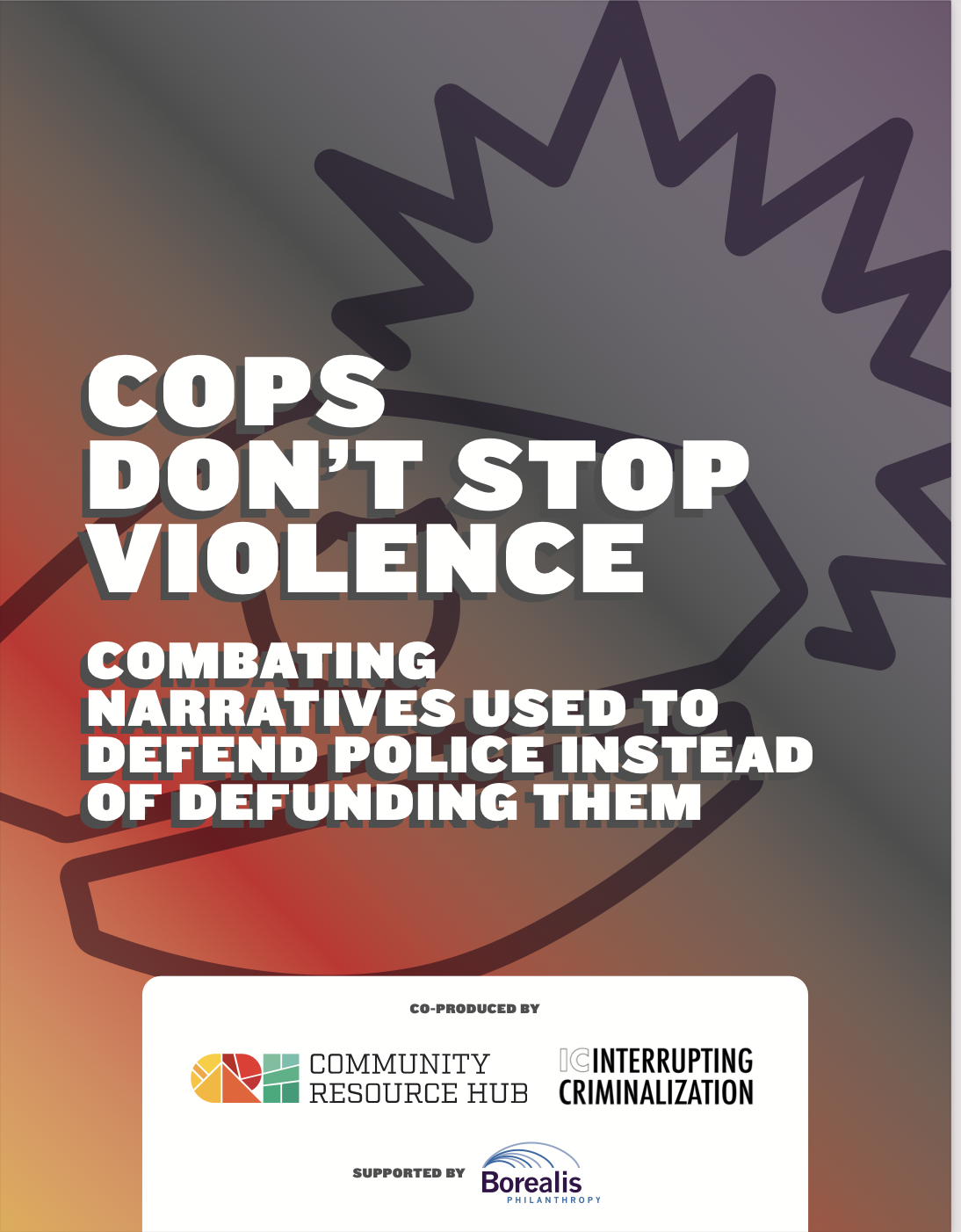
The group Interrupting Violence has an excellent resource entitled, Cop’s Don’t Stop Violence: Combating Narratives Used to Defend Police Instead of Defunding Them. Here is just one excerpt from this document that speaks volumes:
Finally, while the increase in the number of homicides over the past year is significant, it is not unprecedented: “In 1998, there were 6.3 murders per 100,000 people; 2020’s rate will likely be around 6.5 murders per 100,000. The rate likely peaked in 1980 at 10.2 and 1991 at 9.8.” In other words, homicide rates have been this high in the past, including during periods when police budgets were on the rise, and no one was talking about defunding police.
The Interrupting Violence document ends with this assessment, which seem rather appropriate:
In the face of decades-long evidence confirming that they are not particularly effective at preventing, interrupting or solving crime — because that has never been their true function — police departments have focused on “improving police-community relations” in an effort to boost their legitimacy. They have also worked to increase the status and legitimacy of tasks unrelated to preventing or intervening in or resolving violence — like “order maintenance, social service and general assistance duties” and “educational, recreational, and even counseling services.”

Isn’t it time we create a labor union in Grand Rapids for those who work for Non-Profits
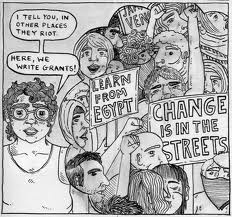 There are thousands of people in the Greater Grand Rapids area who work for a Non-Profit organization. Many of you who are reading this article work in the Non-Profit sector, and virtually everyone knows someone who works in that field.
I have worked for several different Non-profits organizations in my lifetime. I current work as a Direct Care worker for Hope Network. When there are issues or problems that those of us who are workers have to deal with, we have to either represent ourselves as individuals when speaking to management or we have to just grin and bear it.
I read a recent piece by someone who was fired by the Community Media Center here in Grand Rapids. The article provides a horrific account of what the author had to endure. The opening sentence of the article reads:
My own experience at the Wealthy Theatre, part of the Grand Rapids Community Media Center, shows how a lack of accountability for nonprofit leadership leaves open the door to ongoing abuses of power — and people.
The power that Non-Profit Directors have is similar to that of corporate CEOs, especially if the workers at said corporation don’t have a union. It’s even worse if you live in a Right to Work state, which we do here in Michigan.
However, the difference between working for a large corporation and working for a Non-Profit, is that people generally like the work and often embrace the mission of Non-Profits. In my case, I do work to provide basic daily needs to residents who have have serious injuries, plus I always try to make those I work with to feel like they are valued as a human being, even if much of the rest of the society doesn’t see them that way.
The thing that profits often do, is to take advantage of people’s good will and commitment to the mission. People go the extra mile, are willing to work long hours or put up with a dysfunctional work environment because, “at least I get to do work that makes a difference.” And while I understand this sentiment, it is deeply problematic. It is deeply problematic because it says that we are willing to accept exploitation while working for a Non-Profit.
Part of this is due to how we see and value our jobs, especially within a Capitalist system. We internalize the exploitation or we too often dismiss it as a marginal aspect of the work.
Within workplaces, we often think of labor unions as a potential benefit because they fight for better wages. This is true, but labor unions also have a history of fighting for working conditions and even a larger democratic environment. Creating a more democratic climate within Non-Profits seems like a non-brainer, but as anyone who has worked in non-profits will tell you democratic principles or horizontal organizing are rare. Non-Profits after operate like corporations, with a very top down framework, with a board of directors and often little room for those who do most of the work to have any input or say on daily tasks, on projects and on the matter of creating a work culture that is healthy and dynamic.
The experience of people working within the Non-Profit world, which has not been around all that long, has led people to refer to this field of work as the Non-Profit Industrial Complex. Part of this terminology is related to the relationship between foundations – often the primary funding sources for NPOs – and the de-politicization of work that used to be part of social movements. (See, The Revolution Will Not Be Funded: Beyond the Non-Profit Industrial Complex, a book put out by the group INCITE!)
However, I would argue that the exploitation and limited opportunities for workers to be able to defend themselves without retaliation within the Non-Profit world, is a central part of the concept of the Non-Profit Industrial Complex. The good news it, it doesn’t have to stay that way. We can create a union for Non-Profit workers.
The head of the Nonprofit Professional Employees Union (NPEU) said this in 2020:
During a two-week period in the month of April, as the coronavirus crisis raged, the economy buckled, and office workers fled to their homes, the NPEU announced seven successful union drives, boosting their number of shops by a full third. That record is likely unmatched anywhere in the union world. Blado says that the organizing at all of them had begun before the crisis, but was accelerated by the urgency of the moment. It doesn’t hurt that all of those workers now have a vehicle to participate in the conversation about when it is safe to reopen their offices. “This is exactly why people have chosen to have a union,” Blado says, “because of situations like this where management could [otherwise] make a unilateral decision.”
So, who wants to start a labor union for Non-Profit workers in Grand Rapids? Where do we start? Who can hold a meeting to convene those who labor within the Non-Profit Industrial Complex? In Grand Rapids if you want to start a business or if you want to be an entrepreneur, people will throw money at you, but the mention of organizing workers…..not so much.
Here is a link to the Nonprofit Professional Employees Union, https://npeu.org/, or we can create something new. Either way, let’s organize!!!!
What money is behind the politicians that are threatening Kent County Health Director Adam London
Last Tuesday, MLive posted a story about how Kent County Health Director Adam London has not only received verbal threats against his life, but that there was an attempt by someone to force him off the road while driving on US 131.
These kinds of threats seem to be more common, especially since the COVID pandemic began in March of 2020. The latest round of push back is coming from parents and groups like Moms for America once the new school year began.
There have been other threats against health department officials, like the threats made by State lawmakers against Adam London, in a letter that was sent to London on August 13th. The threat that four State Representatives used was framed as:
We in the Legislature are willing to use the Constitutional tools at our disposal – including the power of the purse – should a public health officer act outside the sphere of proper authority.
This letter was sign by 86th District Rep. Thomas Albert, 72nd District Rep. Steven Johnson, 74th District Rep. Mark Huizenga and 73rd District Rep. Bryan Posthumus. Now, various West Michigan news sources had reported on the letter sent to Adam London, but none of the news agencies thought to look at campaign finance records and see which individuals or which entities are the largest contributors to these four men. In other words, the “power of the purse” can work both ways.
What if the public was more aware of the money behind these elected officials? Transparency around campaign financing is a tool that popular social movements have used for decades, since it is not always enough to pressure politicians, but to pressure, expose or boycott the money that puts politicians in power. This is particularly relevant for politicians who hold local office, whether at the county or state level. Just look at the names of the organizations and individuals that have been the primary financial backers of these four State Representatives:
Rep. Thomas Albert has held office since 2015. According to Campaign Finance records, the number one contributor to Albert has been the CEO of Autocam John Kennedy, contributing $12,000. John Kennedy, has a long history of financing conservative politicians and far right policies. John Kennedy is a member of the Grand Rapids Power Structure, is deeply involved in groups like the West Michigan Policy Forum and has been one of the largest campaign contributors to State Senator Mike Shirkey, who sued Gov. Whitmer in May of 2020 over COVID mandates.
In the 2020 Election, Rep. Steven Johnson’s largest contributor was the Michigan Strategic Fund. The Michigan Strategic Fund is a Republican Political Action Committee and some of their largest contributors from West MI are the Meijer PAC ($6,000), Dan DeVos ($5,000) and Elsa Prince ($5,000) who is Betsy’s mother. The DeVos family has also been a direct campaign contributor to Steven Johnson, according to the Michigan Campaign Finance Network.
Rep. Bryan Posthumus is a relative newcomer to state office, being elected in 2020 to the 73rd District. Posthumus got in to office with money from groups like Michigan Association of Realtors, Blue Cross Blue Shield and Doug & Maria DeVos, Dan DeVos, Dick DeVos and JC Huizenga, all part of the Grand Rapids Power Structure.
In the 2020 Election, Rep. Mark Huizenga’s largest contributors were the Chatfield Majority Fund (Rep. Lee Chatfield also sued Gov. Whitmer over COVID mandates), several members of the Meijer family and several members of the DeVos family. Mark Huizenga is now running for State Senate this November and lots of big name West Michigan donors are contributing to his campaign, such as the Meijer family, virtually every member of the DeVos family, Michael Jandernoa, the Van Andel family and JC Huizenga……again, all members of the Grand Rapids Power Structure. It is also worth noting that the Great Lakes Education Project, created by Betsy DeVos, has formally endorsed Mark Huizenga for State Senate, because he, “is willing to put students and parents ahead of Michigan’s failed education bureaucracy.”
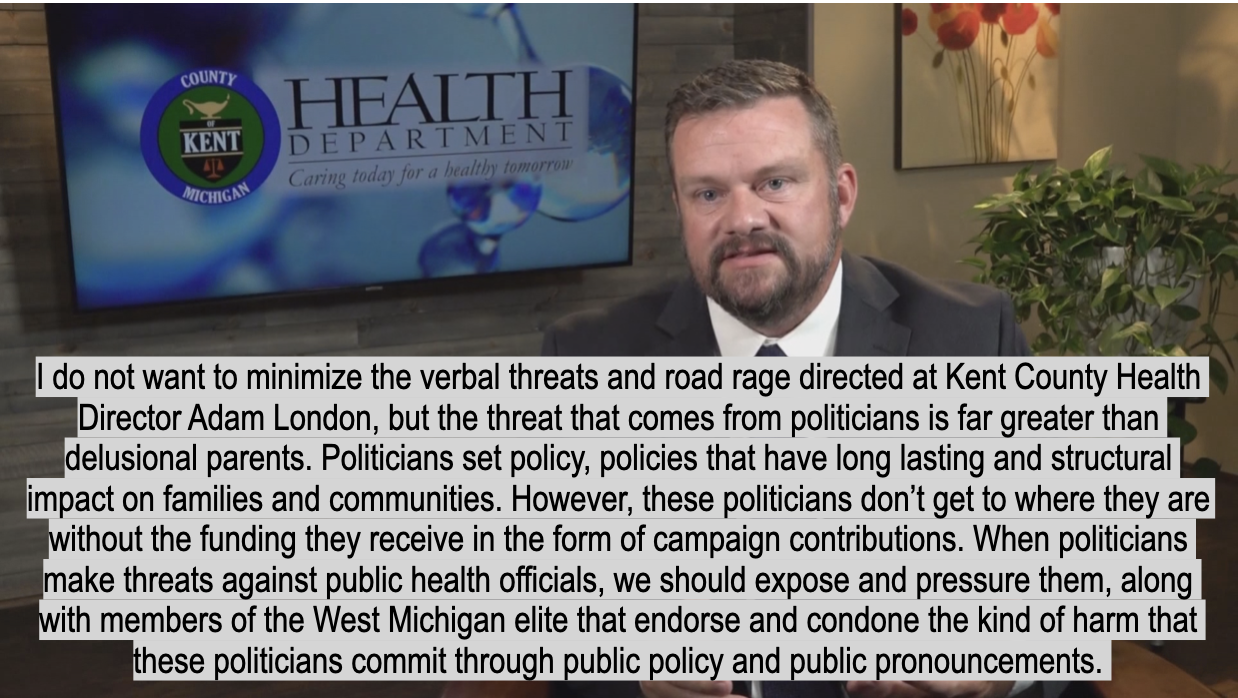
I do not want to minimize the verbal threats and road rage directed at Kent County Health Director Adam London, but the threat that comes from politicians is far greater than delusional parents. Politicians set policy, policies that have long lasting and structural impact on families and communities. However, these politicians don’t get to where they are without the funding they receive in the form of campaign contributions. When politicians make threats against public health officials, we should expose and pressure them, along with members of the West Michigan elite that endorse and condone the kind of harm that these politicians commit through public policy and public pronouncements.
The DeVos family, the Meijer family, the Van Andel family, John Kennedy, Michael Jandernoa, JC Huizenga and other member of the local power structure, need to be held accountable for their role in creating a political climate that tolerates and nurtures the kind of vitriol that has escalated in recent years.