The awful response I received from Sen. Peters about the GRPD murder of Patrick Lyoya
 Two weeks ago, GRIID posted an article about how none of the Democratic Party candidates from West Michigan, who will participate in the November 2022 elections, is advocating that the GRPD or any law enforcement agency be defunded.
The Republicans are constantly claiming that the Democratic Party supports defunding, but this just isn’t the case. Even Democrats that are safely holding office for several more years, like Senator Gary Peters, are unwilling to support the Movement for Black Lives, which has been calling for the defunding of the police since 2020.
There have been numerous online petitions and efforts to communicate to elected officials since the GRPD shot and killed Patrick Lyoya on April 4th. The most recent effort to send messages came in June, right around the same time that the Kent County Prosecutor announced that he was charging former-GRPD office Christopher Schurr with second degree murder. The June online petition that went through change.org, had a list of demands and it was sent to City & County Commissioners, State elected officials from West Michigan, the 3rd Congressional Representative and the 2 Michigan Senators. On Friday, some 6 weeks after the message was sent to Senator Gary Peters, he responded with the following message:
Thank you for contacting me about the shooting of Patrick Lyoya. I appreciate you taking the time to express your views. Hearing directly from Michiganders like you helps inform me of the issues that matter to our state. I’m so grateful for your input.
On Monday, April 4, 2022, Patrick Lyoya was shot to death by a Grand Rapids police officer attempting to arrest him after a traffic stop. While the officer was charged with second-degree murder, nothing can bring back Patrick Lyoya or take away the pain and trauma experienced by his family.
Too many Americans, especially African Americans, are dying senselessly. We must come together to address systemic issues in order to change these unjust circumstances. Additionally, we must make needed reforms to policing, support our law enforcement officers—who serve every day—and build trust between them and the communities they are sworn to protect. I have supported commonsense bills to improve police training and hold officers accountable for their actions. I am a cosponsor of the Police Training and Independent Review Act, which would incentivize states to enact laws requiring the independent investigation and prosecution of the use of deadly force by law enforcement officers. I am also a cosponsor of the Excessive Force Prevention Act, which would prohibit the use of chokeholds under federal civil rights law. We must provide law enforcement with the necessary training.
While I’m very disappointed negotiations on criminal justice and policing legislation in the Senate broke down, I’m continuing to press for a bipartisan path forward on needed reforms. That is why I introduced the bipartisan Strong Communities Act, which advanced out of the Senate Judiciary Committee and now moves to the full Senate. My bill addresses both the issue of attracting diverse recruits to enter our law enforcement agencies as well as the lack of funding at the local level. By increasing the recruitment of public safety officers through their own communities, we can help building stronger, lasting relationships. This legislation would provide federal grants for local law enforcement recruits and officers who agree to serve in a law enforcement agency in their communities. Please be assured I remain committed to working with my colleagues to pass meaningful reforms.
Deconstructing Senator Peters’ response
The first 2 short paragraphs are the obligatory response to the message that came from the Justice4Patrick Movement. Senator Peters is sorry about what happened to Patrick Lyoya, but the Michigan Senator makes sure that he doesn’t say exactly how the GRPD cop killed Patrick Lyoya – Patrick was face down on the ground and the GRPD cop was sitting on top of Patrick, then shot him in the back of the head, execution style.
Senator Peters then spends the rest of his written response talking about legislation he introduced in 2020, the Strong Communities Act, which actually provides more funding for policing, even money to recruit more people to become cops across the country.
This legislation that Senator Peters talks about in his letter does two main things. First, it further legitimizes the notion of community policing as a positive way of doing policing. However, as Alex Vitale, author of The End of Policing notes:
The research shows that community policing does not empower communities in meaningful ways. It expands police power, but does nothing to reduce the burden of overpricing on people of color and the poor.
The second thing that this legislation does is offer financial incentives to recruit news cops and then have them live in the neighborhood they serve for at least 4 years. Police reform groups have long advocated that police officers should live in the communities that they serve. The group Communities United Against Police Brutality, has this response to such a proposal:
“Throughout our research, we have never encountered a shred of evidence that requiring or incentivizing police officers to live in the communities in which they work has any positive effect on the quality of policing,”
A third and final argument for why Senator Peters’ Strong Communities Act is deeply troubling, is the fact that it has received the endorsement from the largest and oldest police organization in the US, the National Fraternal Order of Police.
The National Fraternal Order of Police has a long history of supporting police departments across the US that have a particularly brutal history, has a leadership that is all white, spends millions on lobbying Congress and endorsed Donald Trump in 2016.
For those who want to see systemic change around policing, they cannot be seduced by language of community policing and the notion that cops who live in the communities where they work will make a difference. It just doesn’t matter to people who are harassed, arrested, tasered or beaten by cops, that they live in the same neighborhood as the people they are oppressing.
We all should see this written response to the community-based demands (Senator Peters never addressed any of the demands) in the aftermath of the GRPD killing of Patrick Lyoya as another example how the Democratic Party is equally committed to defending police departments around the country. And while the Democrats don’t use the GOP’s sophomoric slogan, Back the Blue, their legislative proposals are essentially the same, with calls for more funding for police departments and recruiting of new cops. Considering what we have seen in recent years from Senator Peters, I don’t know how else to describe him, other than by calling him a Police Apologist.
On Thursday, MLive reported that the City of Grand Rapids is asking a judge to throw out the racial discrimination charges brought by the Michigan Department of Civil Rights (MDCR).
The charges from the MDCR office was filed in late July of this year, charges directed at the Grand Rapids Police Department, that they unlawfully discriminated against the claimants by treating them unequally based on race.
The charges filed were in response to two complaints of discrimination by the GRPD, which are listed on the Michigan Department of Civil Rights website for July 25th. The two complaints are as follows:
Complaint 610406, filed by Melissa Mason, was in response to a traffic stop on January 20, 2020. Officers of the GRPD stopped Mason, who is Black and was driving with three children, for an expired plate. Even though Mason was compliant with officers, she was removed from her car, handcuffed and placed under arrest in a police cruiser for approximately 20 minutes. In response to the investigation, GRPD was unable to demonstrate that people of another race in similar situations were treated the same as Melissa Mason.
Complaint 485609 was filed by Whitney Hodges on behalf of her minor daughter Honestie Hodges, who is now deceased. The complaint alleged unequal treatment by GRPD of 11-year-old Honestie, who was Black, while police were in pursuit of a middle-aged White woman who matched the description of an attempted murder suspect on December 6, 2017. Officers pointed their weapons at Honestie and others as they exited a house under surveillance and placed her in handcuffs in a GRPD cruiser. As in the previously described complaint, GRPD was unable to show evidence that individuals of another race were treated the same in similar circumstances.
The MLive article from last Thursday also stated, “Grand Rapids officials declined to comment for the story, citing the ongoing case. The city also denied a request by MLive/The Grand Rapids Press to review copies of the city’s filings requesting the charges be dismissed.”
At this point is seems fair to ask, what is it that the City of Grand Rapids is hiding on these two cases? If the City wants the charges dismissed, with a possible claim that no discrimination occurred based on race, then the City of Grand Rapids has nothing to hide. If the GRPD did not engage in discrimination based on race, then let the case move forward. If the courts determine there was no discrimination based on race, then the City of Grand Rapids and the GRPD will be vindicated.
However, it also could be that the City of Grand Rapids does not want these complaints to get any further traction. If the courts can prove that discrimination based on race did occur, then the City of Grand Rapids will likely have to pay fines or pay those who made the complaints.
The City of Grand Rapids would love to avoid further attention being drawn to the racist practices of the GRPD, especially since there will soon be a trial for former GRPD Officer Christopher Schurr, who shot and killed Patrick Lyoya in early April.
If these two complaints that the Michigan Department of Civil Rights has filled against the City of Grand Rapids were to proceed and discrimination based on race were to be found true, it would not work in favor of the image the City of Grand Rapids hopes to maintain.
The City of Grand Rapids has been under a great deal of community-based pressure to defund the Grand Rapids Police Department, ever since the May 30th uprising that took place in downtown Grand Rapids. In addition, the City of Grand Rapids has been harassing, monitoring and arresting numerous activist/organizers who have been demanding the defunding of the GRPD. The repressive tactics of the GRPD directed at activists/organizers has only escalated since the GRPD murdered Patrick Lyoya.
 This is the current political backdrop that the City of Grand Rapids is facing, thus if the Michigan Department of Civil Rights complaints against the GRPD that discrimination based on race did occur, it would only damage the image of the City and it’s Police Department. Imagine all of the Public Relations damage control that would have to be done by the City of Grand Rapids if these cases did determine that there was race based discrimination. This would surely hurt the considerable efforts by the City of Grand Rapids to claim that it is a “Great place to raise a family.” Maybe a new campaign could be created for GR, specifically to attract tourists to come and make the city a destination City. How about, Grand Rapids is Beer City……and a White City! Another campaign slogan to get white people to come to GR could be, Don’t Worry, We’ll Keep the Black people in line…….or else!
Lastly, for the City of Grand Rapids, they are praying that the judge will dismiss the two complaints filed by the Michigan Department of Civil Rights for the reasons we have already state, but there is one more important reason. The MDCR is still investigating 26 additional cases of discrimination complaints against the GRPD. All of these cases would be detrimental to the GRPD, the City of Grand Rapids, and their ongoing efforts to con the outside world that it is a great destination city.
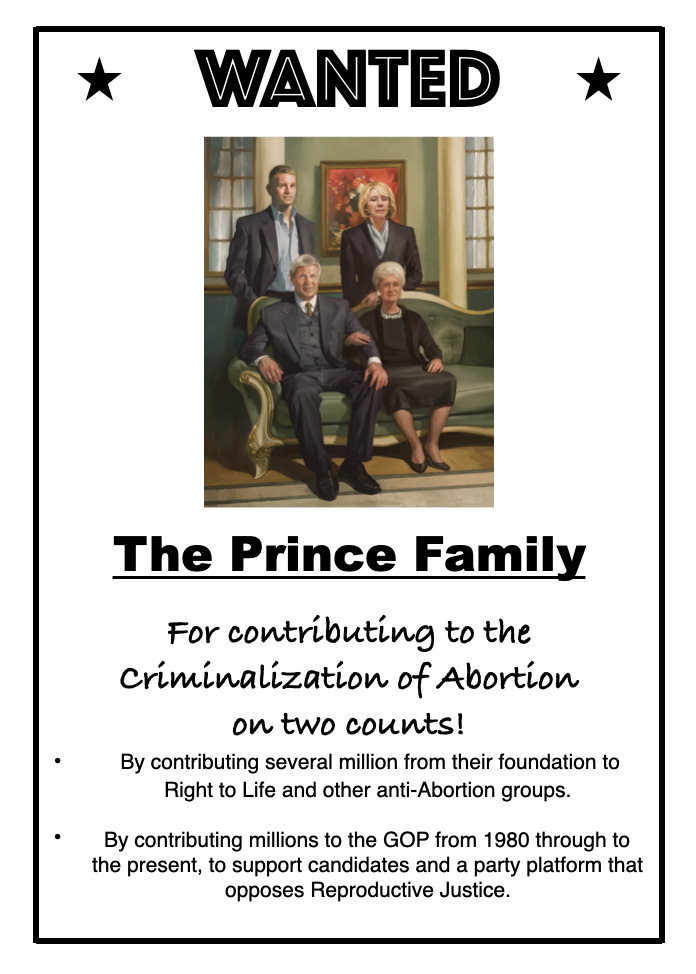 This is the third in a series of WANTED posters, looking at individuals, families and organizations in West Michigan that have contributed significantly to the criminalization of abortion and the undermining of reproductive justice.
The Prince family, from Holland, Michigan, are best known by sibling Erik Prince and Betsy DeVos. Their parents, Edgar (now deceased) and Elsa (remarried with the last name Broekhuizen) used their wealth to fund various Right Wing Christian groups, such as the Council for National Policy, the Family Research Council, Focus on the Family, Alliance Defending Freedom, Right to Life Michigan and Protect Life Michigan, a group that works with high school and college students to develop anti-abortion leaders. All of these groups have a deep commitment to dismantling Roe v Wade, to consistently attacking state policy and providing economic support to so-called women’s clinics that provide “alternatives to abortion” information.
Like the DeVos and Cook families, the Prince family has funded an anti-abortion agenda both through their foundation, the Edgar & Elsa Prince Foundation and through their campaign contributions over the years to GOP candidates and incumbents.
We encourage you to share this poster and consider directing some of your rage at the recent US Supreme Court ruling to overturn Roe v Wade towards the Prince Family Foundation, Elsa Prince Broekhuizen and Erik Prince, who both sit on the board of the foundation.
Sources:
The Religious Right in Michigan Politics, by Russ Bellant, 1996.
GR Chamber Policy Conference promotes economic benefits for downtown Grand Rapids at the expense of the rest of us
On Tuesday, MLive posted an article with the headline, Housing, ‘transformational projects’ discussed at Grand Rapids Policy Conference.
The Policy Conference in question was hosted and organized by the Grand Rapids Chamber of Commerce. For those who are familiar with GRIID, we consider the GR Chamber as part of the Grand Rapids Power Structure, since it primarily represents prominent members of the local Capitalist Class and the people who do their bidding.

This Policy Conference is exactly what you would expect from the GR Chamber of Commerce, with speakers being primarily from the business community. The topics that were covered, as listed by the MLive article were, followed by GRIID comments/analysis in italics:
- Helping to increase the ease of doing business downtown and throughout our neighborhoods to support a vibrant economic ecosystem. – For me this just translates into how businesses can be more profitable at the expense of the public, which means more public funds get directed to the private sector. Neoliberal Capitalism at its finest.
- Bringing together business, philanthropy, civic/nonprofit, and government to accelerate economic inclusion. – Centers of power that use terms like inclusion should raise red flags for all of us. They want to have a few Black and Brown faces benefit from their efforts, thinking this will demonstrate some sort of commitment to racial, gender, class inclusion, but they have no plan to alter what they have always been committed to……making more money for themselves. You won’t hear the GR Chamber of Commerce ever talk about reparations, paying people a living wage or giving back land to the local Indigenous tribes.
- Fostering community support for transformational projects and the most effective use of ARPA dollars. – By transformational projects, based on who was speaking about these at the Policy Conference, they mean the DeVos-led outdoor amphitheater project. For a more detailed response to the so-called Transformational Projects in GR, go to this link.
- Working with all stakeholders to promote the safe, vibrant environment everyone in our community deserves as well as supporting businesspeople speaking up on public safety issues. – This is a directly related to the GR Chamber of Commerce letter that was sent to the City of Grand Rapids complaining about unhoused people and instances of recent gun violence in the downtown area. Their primarily concern is make sure that customers feel safe to spend their money in downtown GR. Here is an article we wrote about that Chamber letter to the City.
- Building a coalition of community members that support increased housing supply at all price points and engagement with local elected officials. – For those who have worked on housing issues who are not part of the real estate industry or the development sector, this is such a bullshit statement. We need a coalition of people who are not part of the GR Power Structure and made up primarily of individuals and families that have been priced out of the housing market in GR to demand and fight for more truly affordable housing.
The MLive article only cites two sources in the article, a GR Chamber spokesperson and Grand Rapids Mayor Bliss. They do mention one of the presenters, which was a senior fellow and the director of the AEI Housing Center at the American Enterprise Institute. The American Enterprise Institute is a Right Wing Think Tank, based in Washington, DC.
The Grand Rapids Chamber of Commerce website has more information on who the presenters were, which provides us with some clarity on the kinds of policy suggestions and proposals that were being made. Beside the American Enterprise Institute person and Mayor Bliss, the other speakers were Dr. Paul Isely, Associate Dean from the Seidman College of Business; Tom Welch, & Carol Van Andel, the Co-Chairs of Grand Action 2.0; and Diane Yentel from the National Low Income Housing Coalition. Not surprising, but everyone except for the last person listed is directly a part of or connected to institutions that are part of the Grand Rapids Power Structure.
It would have been interesting to hear from Diane Yentel with the National Low Income Housing Coalition, since that organization has done some really good housing justice work. I wonder if it was mentioned that based on the research from the National Low Income Housing Coalition, in order for people to afford rent in Grand Rapids, they would have to make $20.02 and hour. (Shown in the chart below) This would mean that a living wage for Grand Rapids would be between $25 – $30 an hour, which most businesses that are part of the Grand Rapids Chamber of Commerce are not paying. In fact, the GR, Michigan and national Chambers of Commerce always lobby to oppose even the inadequate minimum wage proposals.

Ultimately, the Grand Rapids Chamber of Commerce has a long track record for not caring about the most vulnerable people in our community. This is because the local Chamber of Commerce is made up primarily of the economic and political elite, which will never do anything that threatens or diminishes their own interests, unless that are confronted by resistance movements to do so. The recently held Policy Conference by the GR Chamber and who they invited to speak is just one more affirmation of their commitment to power and privilege.
 So, we are approaching the beginning of the fall season and that will mean that ArtPrize will be back in full swing in downtown Grand Rapids.
ArtPrize will mean that thousands of people from all over the world will descend upon Grand Rapids from September 15th through October 2nd. Businesses will be hoping, the hotels will be full and parking lots will be over capacity. People will be voting on artwork that artists have submitted…..for a fee, and the GRPD will be out in force making sure that tourists are safe from unhoused people or dissidents challenging the fetishized event, all at taxpayer expense.
I have been writing about and critiquing ArtPrize since it began. Last year I posted an article entitled, Artprize is back and I still hate it. In that post I listed 7 main posts why I object to ArtPrize. It was interesting to see the reaction from people and how they justified why they would attended ArtPrize and why it should be supported. I will get to those justifications in a bit, along with a list of the harmful shit that the DeVos family does, but first I think it is worth talking about how the City of Grand Rapids uses public money to support ArtPrize, without out consent.
In the August 9th Grand Rapids Fiscal Committee Agenda, there are two separate resolutions in support of ArtPrize. The first resolution begins on page 21, which provides $50,000 from the City’s General Fund sponsorship. The City of Grand Rapids justifies the $50,000 contribution from the general fund, by stating:
A significant portion of these public art activations occur in City parks, facilities and public spaces, encouraging visitors and residents to explore the city and creating much needed foot traffic for adjacent and nearby businesses.
On top of that, the $50,000 from the City’s General Fund, is actually money the federal government provided for the American Rescue Plan Act (page 22). I think an important and reasonable question to ask is, why isn’t this public money, which was given to the City to provide COVID relief for people, not going directly to people who are still struggling to survive because of COVID?
The second resolution begins on page 23, where the City of Grand Rapids will be providing an additional $50,000 in support of ArtPrize through Mobile GR, plus $50,000 more from in kind services. This resolution justifies the $100,000 in support of ArtPrize by stating (page 25):
ArtPrize has partnered with the City of Grand Rapids Mobile GR Department as an Official Parking and Mobility Sponsor since 2012 and has agreed to feature the City’s facilities and services as a preferred parking and mobility provider in its event publications.
Therefore, the City of Grand Rapids will be providing $150,000 in public money to support ArtPrize. Add to that the amount of GRPD officers who will be assigned to patrol ArtPrize, plus the overtime, which will be thousands more from the City Budget, which the public has no real say in. Thus, the City of Grand Rapids will be spending an estimated $200,000 of public money for an event put on by a family that is worth billions.
There was also some additional resolutions from the August 9th Community Development Committee Agenda, which are rather instructive. On pages 11 – 12, there are several items listed that the Grand Rapids City Manager must approve as it relates to ArtPrize. Some of these include pre-approved vendors in the designated ArtPrize boundaries, the use of parking during ArtPrize, signage, plus no sounds amplification systems can be used unless they are approved by ArtPrize and in consultation with the City Manager. If anyone decides to use a bullhorn to amplify messages that are not in compliance with the DeVos-run event, you will like be arrested.
I mention these resolutions for the reasons that are already stated, but also because it is important to note that the Grand Rapids City Manager, Mark Washington, not only gets to make decisions about the use of public money during Artprize, Mark Washington also sits on the Board of Directors of ArtPrize. Seems like a clear conflict of interest, doesn’t it?
Justifying ArtPrize
Over the years, there have been several common justifications that people use to defend the spectacle that is ArtPrize. Here are a few of the most common, with my response.
ArtPrize brings people to downtown Grand Rapids, which is good for the City. It is true that ArtPrize brings people downtown for a few weeks and it does result in significant revenues for the private sector – hotels, restaurants, bars, parking facilities, retail shops. The amount of money that is spent during ArtPrize does benefit businesses, but how much of those profits translate into increased wages for those who do the dirty work? People who wait on customers, those who bus tables, wash dishes, cook, clean hotel rooms, park cars, sit in the parking booths, etc, do you think they are making a livable wage? No. The revenue generated from ArtPrize end up in the pockets of businesses that are disproportionately owned by those who are also members of the Capitalist Class. As Sam Cummings, one of the partners with CWD Real Estate Development said early on about ArtPrize, “Our long-term goal is really to import capital – intellectual capital, and ultimately real capital. And this (ArtPrize) is certainly an extraordinary tool.”
ArtPrize provides an opportunity for LGBTQ, the disability community and those who are part of the BIPOC community to showcase their art. Again, like the point about bringing people to downtown, this is a true statement. However, to me, this is a strange way to look at the work of artists that are queer, disabled and/or BIPOC. How about we question the homophobic, transphobic, ablest and White Supremacist society that we live in, which are the primary obstacles for queer, disabled and BIPOC artists getting the exposure they deserve. In addition, the DeVos family is ideologically, politically and financially committed to undermining a great deal of what the queer, trans, and BIPOC communities are demanding and are generally only supportive of them if they embrace a Christian, nationalist and Entrepreneurial ethos that the ArtPrize-created/funded family is all about.
ArtPrize provides an opportunity for people to win a lot a money, which could change the future for the artist who gets the most votes. Again, I get the sentiment here, but for me, the most honest question to ask would be, “What does it say about our society where people have to play the lottery, have to hope to win ArtPrize or get selected for funding from Start Garden (another DeVos creation) in order to feel financially secure?” Or to put it another way, why do we live in a meritocracy where only some people are financially rewarded and huge sections of the population are forced to live in poverty? If the basic needs of everyone were met and we lived in a society that valued real equity, then artists would not have to perform for people to be valued.
The DeVos family has done so much for Grand Rapids, and ArtPrize is just one example of how much they care about this community. This one always puzzles me, since it is an oversimplification for how the DeVos family influences what happens in Grand Rapids. The DeVos family does own a great deal of property in downtown, with a near monopoly of the hotels, a bar and they have all of their foundations and investment firms located at 200 Monroe – in that newly developed complex on the corner of Monroe and Lyon. All of their properties have primarily benefited their family, not the community as a whole. Then there are the entities that they have either created or sit on the board of directors of. Grand Action was a creation with a tremendous amount of DeVos influence and they have not only proposed projects – the arena, the downtown market, the soon to be amphitheater – they financially benefit from those projects. The DeVos family also is involved with the West Michigan Policy Forum, the Acton Institute, the Right Place Inc, the GR Chamber of Commerce, the Econ Club and so many other entities that are primarily driven by financial interests that primarily benefit those who are already part of the Capitalist Class. The DeVos family does not do anything that does not support their financial, political or ideological interests.
The harm done by the DeVos family
I could tell you to just read the document GRIID has created, We Do What We Want: A DeVos Family Reader, but here are a few of the ways they use their wealth and influence to do tremendous harm.
First, the DeVos Family Foundations, which are numerous, are a mechanism (as are all foundations) to hide their wealth from taxation. In addition, the DeVos Family Foundations have give millions to Religious Right groups, which zealously oppose gay marriage and trans rights, along with opposing people’s right to have an abortion. Their foundations also fund think tanks like the Mackinac Center, the Acton Institute, the Heritage Foundation and the American Enterprise Institute. These groups zealously defend the economic system of Capitalism and fight against those who challenge it, such as worker unions and those fighting for a living wage. The DeVos Family Foundations have also inserted themselves in local education systems, which has also resulted in those schools adopting a more pro-Capitalism framework, along with injecting religious beliefs into the public sphere.
Second, the DeVos Family has contributed more campaign money to the Republican Party than any other family in Michigan. Since the early 1990s, the wealthiest family in West Michigan has contributed over $100 Million to the GOP, specifically for the purpose of adopting public policies that harm worker wages, the right to unionize, to undermine public education, to attack LGBTQ rights, the limit Civil Rights for BIPOC communities, to limit the taxation of corporations, to use public money to fund private businesses (subsidies) and to promote economic policies that continue to destroy eco-systems and promote Climate Catastrophe. The DeVos Family has contributed more than any other entity to get Kent County Prosecutor Chris Becker elected. Chris Becker has made it clear to the public that he will honor a 1931 law that prohibits abortion in Michigan. The DeVos Family collectively has been the largest donor (so far) to the campaign of GOP Gubernatorial Candidate Tudor Dixon, who not only embraces the same ideologically-drive far right policies that the DeVos Family support, Dixon also believes that the 2020 Election was not legitimate. In 2020, the DeVos Family was a significant donor to the re-election campaign of Donald Trump. This means that after all of the heinous shit that Donald Trump did during his presidency, the DeVos Family decided to funded the neo-fascist president in 2020.
A whole lot more could be said about the real harm that the DeVos Family has done ever since the Amway Corporation put them on the map, but to me it boggles the mind that people can somehow engage in some sort of mental jujitsu to justify the existence of ArtPrize. How can people separate the oppressive policies that the DeVos family has funded and then walk around downtown GR and think that ArtPrize is just an art competition? For me, there is no fundamental different between people participating in ArtPrize – knowing what we know about the DeVos Family – or attending a county fair hosted and funded by the KKK.
For more than twenty years, I have been monitoring and writing about the far right think tank, the Acton Institute for the Study of Religion and Liberty. The Acton Institute, which was founded by a Catholic Priest, Rev. Robert Sirico, who is currently the priest at Sacred Heart on the westside of Grand Rapids.
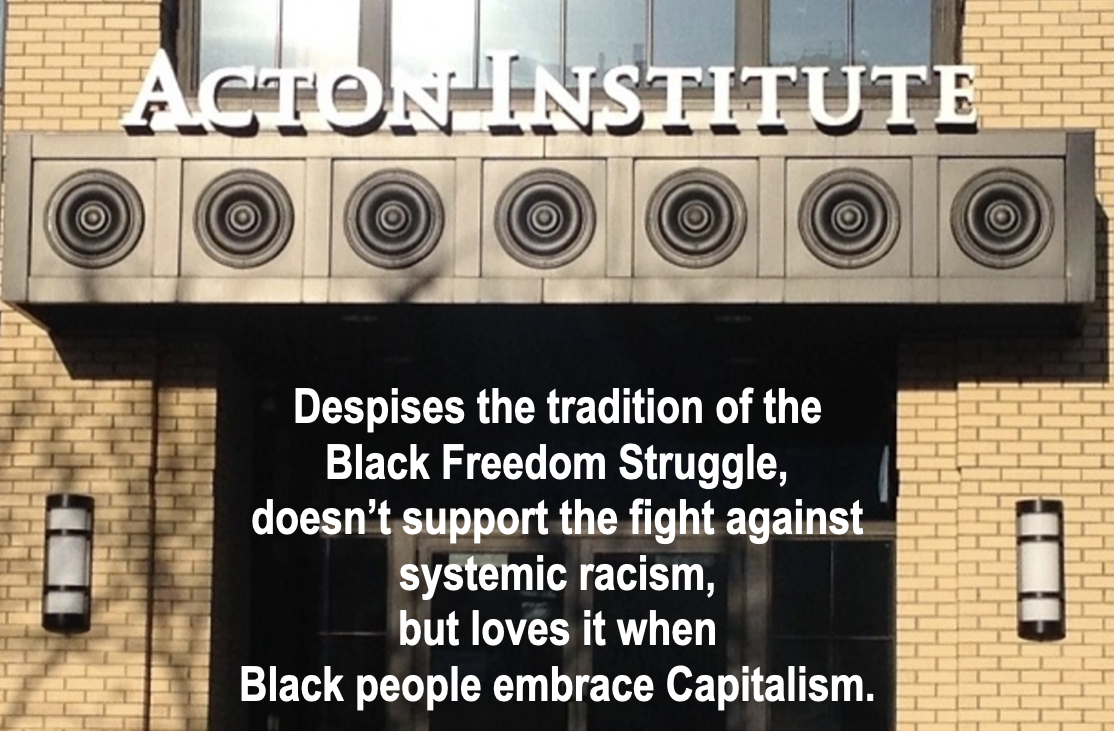
The Acton Institute was founded with the belief that Capitalism and Christianity are perfect bedfellows. However, the far right think tank also embraces other harmful ideological positions that condemns gender equity, the LGBTQ community, public education and labor unions. In more recent years, the Acton Institute has also been more critical of Black-led movements, particularly the Movement for Black Lives. It would be no stretch at all to say that the Acton Institute engages in anti-Blackness, unless of course Black people embrace Capitalism as zealously as they do.
It was rather instructive to read a recent blog post on the Acton Institute’s website, a post entitled, The union movement was anti-black from the beginning. The post was written by Professor Rachel Ferguson, who teaches in the business college at Concordia University Chicago. Ferguson has become Acton’s go to person on race relations in the US, especially after she wrote the book, Black Liberation Through the Marketplace: Hope, Heartbreak, and the Promise of America.
Like the Acton Institute, Professor Ferguson believes that Black people would be better off if they embraced free market Capitalism. Not surprising, this position is completely counter to the history of the Black Freedom Struggle in the US, where Black people have consistently fought against systemic racism, which also includes racial capitalism.
Upon reading Ferguson’s blog post about labor unions and anti-Blackness, I was struck by how selective she was with her sources. First, it is important to acknowledge that many of the early labor unions did exclude Blacks from being members, but Professor Ferguson ignores the inclusive practices of the Industrial Workers of the World (IWW), the Southern Tenant Farmers Union, the Coalition of Black Trade Unionists, the League of Revolutionary Black Workers (in Detroit), plus all of the unions that have significant numbers of African Americans in their ranks, like AFSCME, the UAW, the UFCW and the national and state teacher’s unions. Ferguson’s complete failure to acknowledge the history of these unions was probably intentional, but it also could because she is ideologically blind to this history.
Second, there are the sources that she uses, which are rather instructive. Ferguson cites a professor who teaches at Hillsdale College, which is a haven for far right ideology. Ferguson also cites the book Illiberal Reformers, written by a professor at Princeton University. In both of these book, the Acton writer wants to present labor unions as the primary reason why Black people could not obtain economic freedom. Ferguson then shifts the conversation, by blaming the welfare state as the cause of poverty, since it made Black people dependent on the state. Here, Ferguson cites two books, Out of Work, which blames the federal government for unemployment, plus Black Boom, which makes the claim that corporations relocated overseas because of union, thus harming vulnerable populations like African Americans. This is such an absurd claims, since it fails to even discuss the real motivation of corporations going overseas – using cheap labor.
Third, the Acton writer then engages in out of context sleight of hand, when she cites the great abolitionist Frederick Douglass and the great Black intellectual W.E.B. DuBois. Both Douglass and DuBois railed against systemic racism, which is inherently tied to the practice of Capitalism, plus Ferguson goes on to say that DuBois “flirted with Communism.” This completely ignores the fact that DuBois joined the Socialist Party in 1911, because he was disgusted with the influence that White philanthropists had over the NAACP. DuBois visited the USSR and China in his later years, and in 1961 he wrote a letter to the Communist Party Chairman in the USA, which included the following observations:
Today I have reached a firm conclusion: Capitalism cannot reform itself; it is doomed to self-destruction. No universal selfishness can bring social good to all. Communism—the effort to give all men what they need and to ask of each the best they can contribute—this is the only way of human life. It is a difficult and hard end to reach—it has and will make mistakes, but today it marches triumphantly on in education and science, in home and food, with increased freedom of thought and deliverance from dogma. In the end, Communism will triumph. I want to help bring that day.
Ultimately, the Acton writer demonstrates that she is ideologically limited in her understanding of history and labor unions. Equally important is the fact that since she is writing for an organization that celebrates free market capitalism, she has to always find ways to demonize anyone or any group that challenges the hegemony of the economic system of Capitalism.
Lastly, the most offensive and ridiculous argument the professor makes is that labor unions are anti-Black. I agree that for many unions, especially business unions, they have an awful history of exclusion in regards to Black people. However, the more egregious treatment of Black people during the history of the US has come from Capitalists, from southern plantation owners (DuBois referred to Black liberation from slavery as a General Strike) to current corporations that exploit Black labor and fight to undermine Black organizers attempting to form unions, as we have seen with Amazon workers in recent years. Thus, the Acton writer, while attempting to blame unions for their anti-Blackness, ultimately reveals that the anti-Blackness resides with Professor Ferguson and the Acton Institute.
Despite public perception, the Democratic Party is equally committed to supporting and increasing funding for the police
In recent years the issue of policing has come under greater scrutiny, particularly by BIPOC communities that have disproportionately been the target of police surveillance, harassment, violence and arrest.
The public has been confronted by the issue of policing, especially since the police murder of Michael Brown in 2014, followed by a series of other policing killings of Black people, which culminated in the protests that erupted after the death George Floyd in 2020.
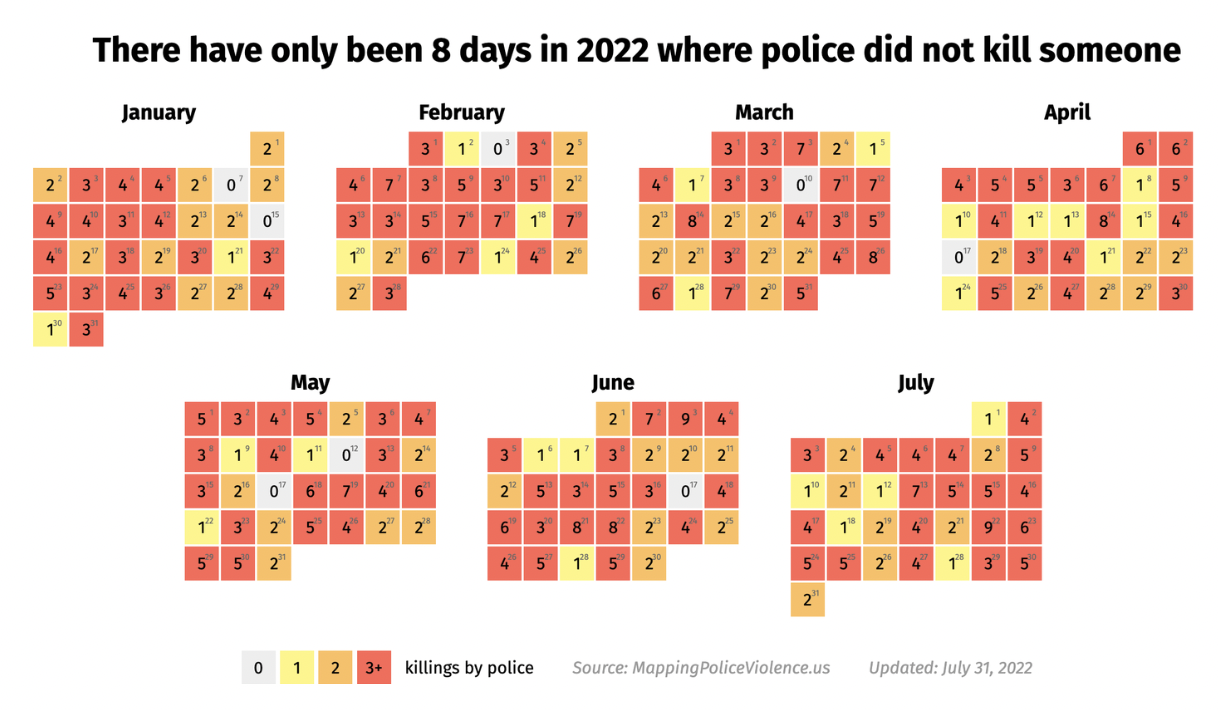
The Movement for Black Lives, along with numerous other BIPOC-led movements dealing with policing and the Prison Industrial Complex, had been critical of the mild and incremental reforms that had been proposed every time a Black person was murdered by the police. When the 2020 uprisings took place, these movements began demanding that the police should be defunded, which was a strategy within a larger goal police abolition.
The idea of defunding or abolishing the police was a radical idea, which resonated with lots of people who were part of the Black Freedom Struggle and other liberation movements within the US. However, many mainstream progressives and liberals not only pushed back around the possibility of abolishing or defunding the police, that they even decided to create their own narratives around what defunding the police actually meant. These narratives not only sought to undermine the very idea of the defund/abolish framework, it was completely counter to what the Movement for Black Lives was proposing, as we noted in a July 2021 post.

In fact, it was white liberals and progressive that went out of their way to undermine the work of the Movement for Black Lives, through their attempts to “clarify” what defunding the police really meant. This was particularly the case for those with the Democratic Party.
The re-framing of what defunding the police meant by Democrats is generally argued as a response to the GOP who conflated the Democrats with Black Lives Matter activists and/or antifa radicals. There may be some truth to this, but it is very thin. The Democratic Party establishment has always been committed to supporting and defending law enforcement agencies in the US, ever since policing and policing departments became established in the 19th Century. The Democratic Party has been equally committed to taking police union funding during electoral cycles, which has always resulted in the pro-police legislation that has been adopted, like the 1994 Violent Crime Control and Law Enforcement Act, more commonly known as the Crime Bill.
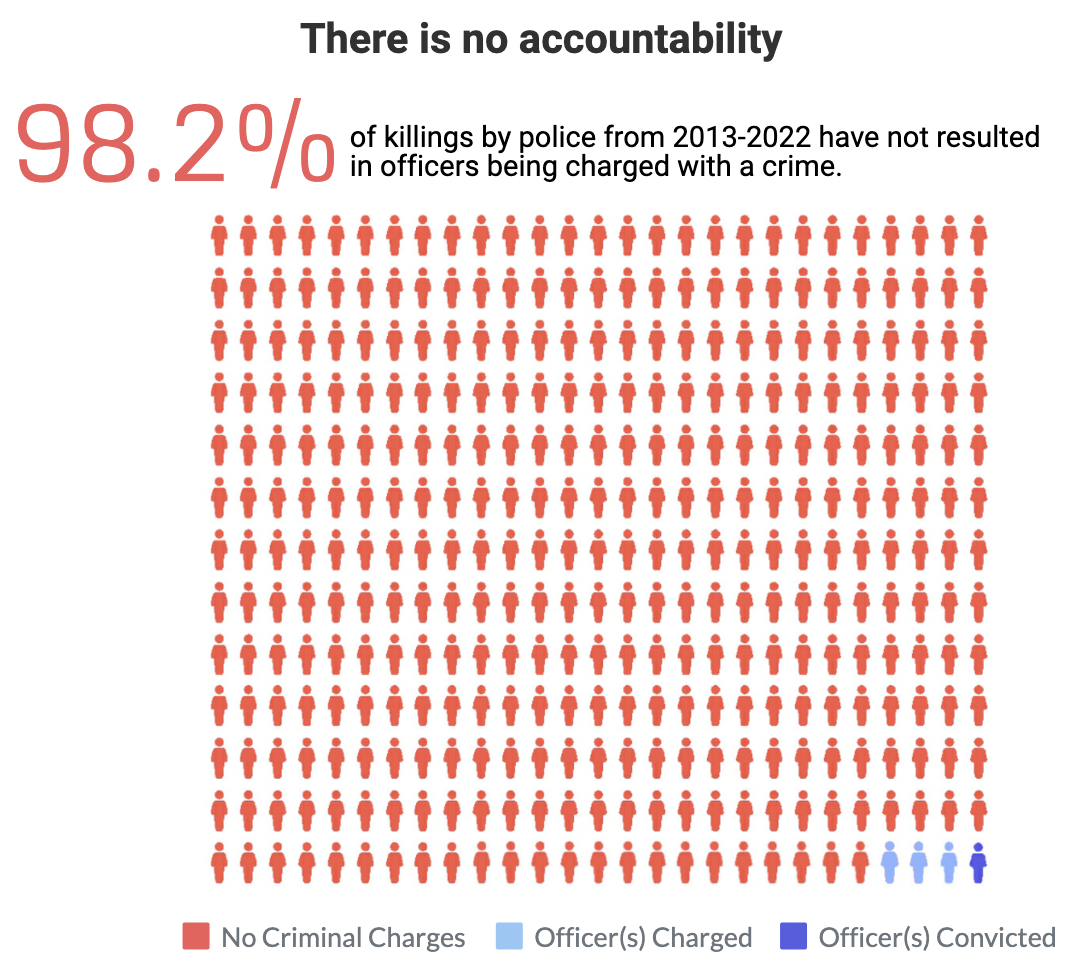 One way to gauge the Democratic Party support for policing is to look at their reaction after the 2020 uprisings. While Joe Biden was running for the Presidency in 2020, he made it clear that he was committed to better training and an increase of funding for cops.
Just this past May, the Biden Administration released a plan for a multi-billion dollar effort to fund policing around the country, in what Biden is calling the American Rescue Plan. Then in late July, the Biden Administration was requesting an additional $37 Billion in funding for the police, in what the White House is calling the Safer America Plan.
At the State level, we have been tracking how the Democratic Party has maintained the same position on policing, with mild reformist rhetoric, but always a call for adding more police officers and more funding for the cops. Last December, the Michigan House of Representatives passed a nearly unanimous bill that would provide an additional $300 Million for policing.
Just last month, there was also bi-partisan support at the state level to provide an additional $20 Million for the Michigan State Police. State Representative David LaGand was quoted as saying of this bi-partisan support, “I’m especially proud to see that several of my priorities are part of the final budget, including funding for public safety. We’ve included grants for community policing.”
The commitment to policing and police funding is also part of the platforms of several Democrats running for state office from West Michigan. Part of that commitment is due to the fact that these Democrats who are either State Senators or State Representatives have received substantial amounts of campaign contributions from police unions. For example, since 2014, State Senator Winnie Brinks has received $5000 in campaign contributions from the Grand Rapids Police Officer’s Association PAC.
State Representative David LaGrand, who is running for State Senate, has under the title of Criminal Justice Reform, that he “introduced legislation to support public safety in communities.” The reality is that the legislation LaGrand introduced involves hiring more State Police Officers and provides grants to local communities to add more cops.
Democratic State Representative candidates from West Michigan have also made it clear that they support the police, more funding for the police and some of them have received campaign contributions from the GRPD union during their political careers. Phil Skaggs, running for State Representative, has received funding from the GRPD union and he believes in ongoing support for police departments, along with additional funding for training. These sentiments from Phil Skaggs are clearly reflected in his statement on April 14th, after he watched the video that was released by the GRPD on the police shooting of Patrick Lyoya, which you can read on his Facebook page. In that statement Skaggs praises cops for “keeping us safe”, plus he advocates for more training and more support for Law Enforcement agencies.
 Another Democratic State Representative who is running for re-election, is Rachel Hood. In a recent paid ad for her campaign, Hood advocates for Safe and Strong Communities, where she touts the $368.5 million in funding for hiring and retaining cops.
One last example is Democratic Candidate for State Representative, Kristian Grant. On Grant’s campaign platform page, she makes it clear that she supports police departments and believes there needs to be more training and more hiring by police departments, specifically to hire more cops from the communities they will work in.
At the local level, the Kent County Commission did nothing to end the contract with Immigration and Customs Enforcement, but the contract ended primarily because of the pressure that the Immigrant Justice Movement applied on Kent County. With Grand Rapids City officials, there has also been tremendous resistance to defunding the GRPD. Within a month after the May 30, 2020 uprising in Grand Rapids, the City of Grand Rapids had heard from 3,000 – 4,000 residents demanding that the GRPD be funded to the 32% minimum that was mandated by the 1995 City Charter. This demand continued and was amplified after the GRPD murdered Patrick Lyoya, but despite the ongoing pressure, no City official – not the City Manager, the Mayor, nor the six Commissioners – have been willing to call for the defunding of the GRPD.
In addition, I think it is worth mentioning that a few months ago, someone who attended a Kent County Democratic Party meeting, told me that Democratic candidates were told to not make waves at the Grand Rapids City Commission meetings around the GRPD murder of Patrick Lyoya. Democratic Party candidates were also told to not be seen as supporting the Justice4Patrick movement that has been challenging Grand Rapids City officials during commission meetings.
If you are interested in supporting the efforts to defund the police and/or abolish the system of policing, then it would be impossible for those objectives to be won by voting for Democrats. The Democratic Party has demonstrated since the 2020 uprisings that they are equally committed to hiring more cops and voting for more funding for police departments.
Not one single Democratic official or Democratic Party candidate in the West Michigan area is calling for a reduction of funding for police departments or the abolition of policing. Therefore, we cannot rely on the so-called liberal political party to achieve the goals of defunding and the abolition of policing in this community. If we want to defund the cops and then abolish them, we will have to use Direct Action as a primary strategy and build movements that can win such goals.
The Devil is in the Details: The Business of Grand Rapids is Business and Business as usual……as long as the public pays for it
 This is our latest installment of The Devil is in the Details, which takes a critical look at Grand Rapids politics and policies, based primarily on the public record, such as committee agendas and minutes.
At the last Grand Rapids City Commission meeting, from July 26th, there were a couple of agenda items that were approved, which is what I want to address here. In both cases, Grand Rapids City Officials have decided to use public money for two contracts, one to Experience Grand Rapids and the other for ACP/Green & Associates, LLC. Let’s look at the Experience GR contract first.
On pages 156 – 176 of the Fiscal Committee’s agenda packet for July 26, you can look at the contract between the City of Grand Rapids and Experience GR. The Fiscal Committee document states:
The proposed contract will continue the long-standing investment in the service of Experience Grand Rapids for their marketing of Grand Rapids as a destination. The contract amount is $150,000, of which $50,000 is funded from the promotional property tax levy and $100,000 is funded from an appropriation included in the FY2023 General Operating Fund budget. This investment helps support Experience Grand Rapids’ diversity, equity, and inclusion work in Multicultural Business Development to increase its reach to multicultural visitors, use a more diverse vendor base, and engage the community. This work supports Experience Grand Rapids’ Strategic Plan which is consistent with the City of Grand Rapids Strategic Plan.
This is all sounds lovely, especially the whole diversity, equity and inclusion (DEI) verbiage, but let’s be clear here that the City is using public money to promote the City as a tourist destination. Why? There are so many entities, especially private sector entities, which have the capacity and the budget to market Grand Rapids as a tourist destination, so why does the City need to use public money for that? I’m sure that the Convention Center, the Arena, ArtPrize, both the Public and Art Museums, various festivals, hotels, restaurants, bars, retail stores, the Meijer Gardens, and a whole slew of other entities are zealously marketing their events, their services, etc to the broader public through trade magazines, lots of social media sites, trade shows, sports magazines, art journals, etc., not to mention the Chamber of Commerce, along with Experience Grand Rapids themselves.
So again, I ask you, why is the City of Grand Rapids using public money to pay Experience Grand Rapids to do what they already do? According to the Experience GR mission statement:
The mission of Experience Grand Rapids is to create an exceptional community by sharing Grand Rapids with the world. What does that really mean? It means that we inspire tourism and conventions through short-term promotions, long-term marketing and sales strategies, and a focus on community developments that will impact the visitor experience.
In the Community Relations section of the Experience GR website, it says:
While the organizational goal is to bring in visitors, convention attendees and business travelers, it’s also important to implement strategies that improve and uplift the local population.
It would probably useful for Experience GR to articulate strategies that improve and uplift the local population, but my guess is that they don’t really have any. Let’s face it, if there primary goal is to market Grand Rapids as a tourist destination, that will only benefit a small sector of the population, primarily the downtown businesses and venues that are already disproportionately the beneficiaries of tourism money that is spent. There are literally thousands of families who will not benefit from Grand Rapids being a tourist destination. So, why does the City of Grand Rapids use public money for this purpose, especially since it does not benefit most Grand Rapidians?
Granted, $150,000 is small potatoes in the grand scheme of things, but $150,000 could used to cover the cost of 1 month’s rent for 150 renters. Again, 150 renters is not a lot, but it would provided needed relief for many renters who are living pay check to pay check, those facing eviction and for tens of thousands of families that are facing an ongoing housing crisis.
The second item I wanted to draw attention to was another contract the City of Grand Rapids, a contract with ACP/Green & Associates, LLC dba Planning Next, for $1 Million. The Fiscal Committee Agenda packet states on pages 5-6 that the City is contracting with them in the amount of $930,360.00, with total expenditures not to exceed $1,000,000.00 for professional services for the Community Master Plan.
Again, I have to ask, why are we paying people up to $1 Million to create a new Master Plan for the City? Why are we not paying people who actually live in this city and people who have a history with the City? What if we used public money to pay for some potential training for people, whom the City of Grand Rapids then hires to work on creating a Community Master Plan. The City of Grand Rapids could pay 20 people $50,000 to work on a Community Master Plan over the next 12 months. Now $50,000 for a 1 year salary isn’t a great salary, but for thousands of people in this city it would be way more than they are used to.
Think of it this way, $50,000 for a year working a 40 hour work week, comes out to $25 an hour, which for a lot of people would be a significant improvement. $25 an hour wage would cover the average rental costs, according to the most recent information from National Low Income Housing Coalition, which states that people need to make at least $20 an hour in wages to afford the cost of rent in this city. If the City of Grand Rapids paid 20 people $25 it would be almost triple the current minimum wage in Michigan.

Paying people who live in Grand Rapids a 1 year salary that is two to three times what they currently make, would not only benefit those 20 people, it would send a message about the value of investing in people in this community. Paying people from this community would be a statement of equity and it would acknowledge the importance of paying people more of a living wage. This is the kind of creative thinking the City of Grand Rapids needs to engage in, instead of relying on “experts” who don’t live in this community. More importantly, investing in members of the community who are already devalued in a Capitalist economy, would send a powerful message about how the City of Grand Rapids values people over profits.
As I post this, it looks like Tudor Dixon is going to win the GOP Primary race to face Gov. Gretchen Whitmer in the November Election. The GOP Gubernatorial candidate list was significantly reduced, since several candidates failed to get enough valid signatures to be on the ballot.

Last Friday, July 29, Tudor Dixon received an official endorsement from former US President Donald Trump, which pushed her ahead of the other Republican Gubernatorial candidates. In a Press Release that same day, Dixon wrote:
“It is a great honor to receive President Trump’s endorsement and have the strength of our campaign to defeat Gretchen Whitmer further affirmed by his support.”
Another endorsement that Dixon received, much earlier than the endorsement from Trump, was an official endorsement from the DeVos family. In a May 23rd Press Release, Dixon includes a comment from Dick DeVos:
“The DeVos family have decided to stand with Tudor Dixon as being the next, right governor for the state of Michigan. We think Tudor, as a business leader and a mom, has the experience, the passion, and a plan to put the state back on track.”
Based on the most recent Campaign Finance records, the DeVos family and other families who work for the DeVos family, have contributed a substantial amount to Dixon’s campaign. Here is the data from the most recent campaign finance data, which was due on July 25th:
- Betsy DeVos $7,150
- Doug DeVos $7,150
- Melissa DeVos $7,150
- Suzanne DeVos $7,150
- Dick DeVos $7,150
- Dan DeVos $7,150
- Pamella DeVos $7,150
- Rick DeVos $7,150
- Dalton DeVos $7,150
- Maria DeVos $7,150
- Steve Ehmann (RDV Corp) $7,150
- Jerry Tubergen (RDV Corp) $7,150
- Barb Van Andel-Gaby $7,150
- David Van Andel $7,150
- Carol Van Andel $7,150
- Amy Van Andel $7,150
- Stephen Van Andel $7,150
- Elsa Broekhuizen (Betsy’s Mom) $7,150
- Ren Broekhuizen $7,150
- Emilie Wierda (Betsy’s Sisiter) $7,150
- Laurie Wierda $7,150
- Craig Wierda $7,150
- Chris Wierda $7,150
The total of the DeVos, Van Andel, Prince/Broekhuizen family contributions comes to a total of $164,450, making them the largest single contributing family group to any of the Gubernatorial candidates in Michigan in 2022.
There were other members of the West Michigan elite, which contributed to Dixon’s campaign, such as several members of the Haworth family, Mark Murray, Mike & Gayle VanGessel, and members of the DeWitt family. However, the DeVos/Van Andel/Prince/Broekhuizen cartel was head and shoulders above everyone else.
If you go to the website for Tudor Dixon’s campaign, one can see how her platform aligns with the DeVos/Van Andel/Prince/Broekhuizen cartel, especially on economic, education, abortion and public safety matters. We will continue to follow Dixon and report on her campaign finances just before the November election to see how much more the money her campaign receives from the wealthiest families in our back yard. Lastly, it is always important to point out that the financial support for Tudor Dixon from the DeVos/Van Andel/Prince/Broekhuizen cartel means that they are in agreement with the neo-fascist Donald Trump about who should be the next Governor of Michigan. This is not surprising, since the DeVos family made significant contributions to Trump in the 2020 Election, which means the DeVos family endorses all of the White Supremacist and neo-fascist aspects of Trump and his Maga horde.
Grand Rapids Power Structure dominates campaign contributions in West Michigan on the eve of Primary Elections
Last week, we looked at campaign financing from the most recent state deadlines, first the State Senate races in West Michigan, then the State Representative races, and lastly the Kent County Commission races.

There were clear patterns that emerged in terms of which names of individuals, families and organizations were making the largest campaign contributions. Specifically members of the Grand Rapids Power Structure, have overwhelmingly funneled thousands into the campaigns for political seats in West Michigan. What follows is a run down of campaign contributions, from the largest on down, plus there are three more months until the November elections.
- DeVos family $86,550
- Terri Land/Dan Hibma $24,950
- Michael & Susan Jandernoa $20,000
- John & Nancy Kennedy $9,450
- Mark Murray $6,250
- Van Andel family $5,200
- JC Huizenga $4,450
Total GR Power Structure $164,850
- GR Chamber of Commerce PAC $29,900
- Realtors PAC $71,750
There are several things worth noting about these campaign contributions. First, most of the money was contributed in the Kent County Commission races, specifically when it came to the DeVos family contributions. Too often we don’t think about how influential the DeVos family is when it comes to buying political influence right here in Kent County, but people would be wise to come to terms with that fact.
Second, while the majority of the GR Chamber PAC campaign contributions went to GOP candidates, 9 different Democrats also received money from them. What is even more interesting about this dynamic, is the fact that the Democrats who received campaign contributions from the GR Chamber PAC, were those who are more likely to win the seats they are running for. This means that the GR Chamber PAC is strategic in their thinking, making sure that no matter who is in office, they have purchased access and influence.
Third, although they are not exclusively based in West Michigan, the Realtors PAC, which represents the Realtors Association, the very entity which dictates the cost of housing in Michigan, also contributed a sizable amount of campaign money in 2022. This is important, since housing costs are a critical issue facing thousands of families in the Greater Grand Rapids area. Thus, the Realtors PAC also wants to make sure that they have purchased access and influence with candidates in the upcoming election. And like the GR Chamber PAC, the Realtors PAC did primarily contribute to GOP candidates, but they also provided campaign contributions to 8 different Democrats, specifically Democrats that are more likely to win their seats in November.
Fourth, there are still a few months before the November election, so we can anticipate a whole lot more money from the GR Power Structure leading up to that time. There were significant campaign contributions from the GR Power Structure to candidates who were on the August 2nd Primary, but one that is done, we’ll have a clearer picture of the partisan battles that will be on the ballot in November. We will be tracking that information after the October 25th deadline for candidates to report campaign contributions.
Lastly, if we then combine the amount of campaign contributions from the Grand Rapids Power Structure families, the GR Chamber PAC and the Realtors PAC (power structure organizations) – which are just nine different entities – we are talking about $266,500 that are going to candidates running for seats in the Greater Grand Rapids area. This means that these 9 entities will not only have a great deal of influence in the outcome of the 2022 Elections in West Michigan, they will have significant influence with the candidates who become State Senators, State Representatives and Kent County Commissioners through the end of 2024. Lastly, this influence will be driven by what benefits the members of the Grand Rapids Power Structure, which is always at the expense of the rest of us, politically, economically and socially. If we ignore their influence, we do so at our own peril.
 Grand Rapids Institute for Information Democracy