(This article by Jeremy Scahill is re-posted from The Nation.)
During his White House press conference Wednesday with Afghan President Hamid Karzai, President Obama addressed the issue of civilian deaths caused by US operations in Afghanistan. “I take no pleasure in hearing a report that a civilian has been killed,” said Obama. “That’s not why I ran for president, that’s not why I’m Commander in Chief.”

“Let me be very clear about what I told President Karazi: When there is a civilian casualty, that is not just a political problem for me. I am ultimately accountable, just as Gen. McChrystal is accountable, for somebody who is not on the battlefield who got killed,” said Obama.
That statement is quite remarkable for a number of reasons, not the least of which is that it is not true. How are President Obama or Gen. McChrystal accountable? Afghans have little, if any, recourse for civilian deaths. They cannot press their case in international courts because the US doesn’t recognize an International Criminal Court with jurisdiction over US forces, Afghan courts have not and will not be given jurisdiction and Attorney General Eric Holder has made clear that the Justice Department will not permit cases against US military officials brought by foreign victims to proceed in US courts to go forward. So, what does it mean to be accountable for civilian deaths? Public apology? Press conferences? A handful of courts martial?
Obama praised US forces for their restraint in Afghanistan, saying, “Because of Gen McChrystal’s direction, often times they’re holding fire, they’re hesitating, they’re being cautious about how they operate even though it would be safer for them to go ahead and take these locations out.”
But how does that square with recent, heinous instances of civilian killings in Afghanistan? In February, for example, US special forces shot and killed five people, including three women who collectively had 16 children. The US military tried to cover it up and blame it on the Taliban, saying coalition forces “found the bodies of three women who had been tied up, gagged and killed.” The New York Times reported that military officials had “suggested that the women had all been stabbed to death or had died by other means before the raid, implying that their own relatives may have killed them.”
Later, General McChrystal’s command admitted US-led forces had done the killing, saying it was an accident. This was hard to square with reports that soldiers may have dug bullets out of the dead bodies to try to cover it up. The head of the Joint Special Operations Command, Vice Admiral William McRaven, eventually apologized to the family of the dead Afghans and offered them two sheep as a condolence gift. Was this accountability?
Or, what about the incident last May when US warplanes bombed civilian houses in Farah province killing more than 100 people? The dead, according to the Red Cross, included an “Afghan Red Crescent volunteer and 13 members of his family who had been sheltering from fighting in a house that was bombed” in the air strike. US Military sources floated the story to NBC and other outlets that Taliban fighters used grenades to kill three families to “stage” a massacre and then blame it on the US.
“War is tough and difficult and mistakes are gonna be made,” President Obama said today. Part of the problem, though, is that when “mistakes” happen and civilians are killed, attempts are made to cover them up or to blame them on the Taliban.
Local T-shirt design fights Arizona racism

Local musician Jonathan Barrera Mikulich recently found out about a t-shirt design contest for people wanting to respond to the decision by Arizona to pass a racist, anti-immigration law.
His t-shirt design was accepted and are now being sold online. Once he found out he had won Barrera Mikulich and that he would get a percentage of the money from the shirt, he announced that he would donate the money to a local organization that promotes Mexican cultural heritage, the Mexican Heritage Association (MHA). The MHA operates in West Michigan and hosts cultural events like the Mexican Festival in September in downtown Grand Rapids.
Today, CNN Money and Fortune Magazine posted an article entitled, “A Michigan Success Story,” which features Grand Rapids. The article juxtaposes the struggling city of Detroit with Grand Rapids, a city they say is reinventing itself.

The article states that there is a tremendous amount of development happening in downtown Grand Rapids, “not the kind of view you expect these days in downtrodden Michigan.” The story mentions the arena, the convention center, the entertainment district and the “crown jewel” – the medical mile.
The writer of the article says that the reason for the change in Grand Rapids is the corporate, philanthropic and political leadership in this community. This is an expected conclusion coming from a magazine devoted to unbridled capitalism. The rest of the article is a recounting of this revitalization from the perspective of the local capitalist class.
Those sourced in the article is a Who’s Who of local wealth and political influence. Birgit Klohs from The Right Place is cited first, followed by former bank executive and Van Andel confidant John Canepa. From there on the list of those mentioned are David Van Andel, Dick DeVos, and David Frey, the founders of Grand Action.
Grand Action is the organization in which DeVos and company use to push their own development projects with public & private dollars, but generally portrayed as providing leadership that benefits the whole community. Other local business leaders are mentioned as well, such as Fred Meijer, Pete Seechia, Bill Gillette and Bob Pew.
The result of all this corporate good will is that Grand Rapids is a success with a “more stable economy.” However, the article does mention at the very end that there are still problems. “Unemployment is still high. Michigan’s manufacturing decline, which has emptied thousands of square feet of factory space in the city, has disproportionately hit minorities.” Once they got that obligatory statement out of the way the writer went right back to gloating over the success of Grand Rapids.
The folks at Fortune/CNN Money failed to mention the high levels of poverty. In fact, the Brookings Institute found that 24.7% of the population in Grand Rapids is living in poverty, one of the highest percentages for cities in the US. The article also failed to mention that the City of Grand Rapids is in the midst of one of a major budget crisis, where taxes were just raised and now the city will consider charging people a fee for street lights use.
The reason why this information was not included in the story is simple – they didn’t talk to working class people, the unemployed and the underemployed. Had the Fortune writer bothered to walk just south of downtown Grand Rapids you see a different picture and its residents would tell you that they are dealing with absentee landlords, home foreclosure and limited access to good food, health care and education.
There is no doubt that there is a great deal of development happening in Grand Rapids, but the important question to ask is who are the beneficiaries of this development? So when Fortune/CNN Money says Grand Rapids is a success story, they should add the qualifying point……for some.
Michigan Attorney General Mike Cox unveiled a new political ad today in his quest to win voters as the Republican candidate for Governor. The Cox ad begins by going after another GOP gubernatorial candidate Pete Hoekstra.
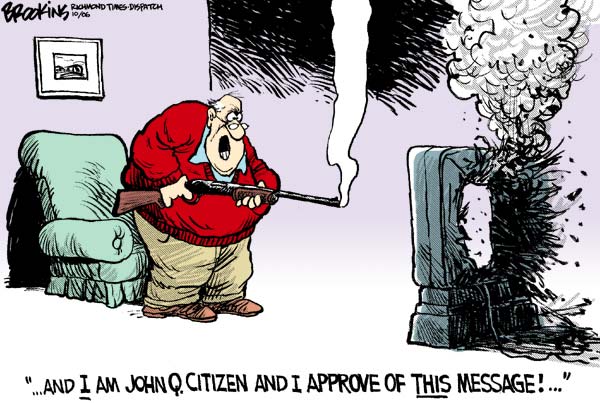
The ad uses the metaphor of building a bridge for the future of the state, a bridge that looks much like the Mackinac. However, Cox quickly turns his attention on two votes that 2nd Congressional Representative Pete Hoekstra has made in recent years.
The first is a vote to support funding for a bridge in Alaska, which was later amended to be a bridge damaged in New Orleans due to Hurricane Katrina. The legislation was dubbed “Bridge to Nowhere,” but viewers of the Cox ad would be hard-pressed to know this.
The ad then goes after Hoekstra’s decision to vote for the $850 billion Wall Street Bailout and adds that Hoekstra voted to add “$1 Trillion dollars for new spending.” The ad’s narrator then states, “Congressman Hoekstra is making big government bigger.”
The political ad then transitions to a few positive notes about Cox, such as his fight against the national health care legislation, Governor Granholm and Blue Cross & Blue Shield. The spot ends by saying that Mike Cox is “tough enough to lead Michigan.”
Political Theater vs Informing Voters
The Grand Rapids Press today has a piece by Lansing-based reporter Peter Luke that looks at the Cox ad. Unfortunately, the Press article does little to critique the Cox ad or verify the claims made in it. Instead, the reporter chooses to get a response from Hoekstra’s campaign manager about the claims made against Hoekstra.
Hoekstra did vote for the Wall Street Bailout and his campaign manager doesn’t deny it, but responds by saying that if the bailout was not approved, “GM, Chrysler and our supply base would not be here today.” The Press reporter doesn’t question the response, because to investigate such a comment would detract from the political theater he wants to encourage. Luke adds to this theater by including more comments from Hoekstra’s campaign manager, which distracts voters from the issues.
The Press article then says that the Hoekstra campaign is claiming that the “Cox campaign is coordinating efforts with a group called Americans for Job Security, which apparently purchased $134,000 worth of ads in the Grand Rapids media market echoing similar anti-Hoekstra themes.” This is an interesting observation, but the Press doesn’t bother to tell us who the Americans for Job Security (AJS) are. According to Source Watch, AJS is a front group for the US Chamber of Commerce and an active opponent of the Employee Free Choice Act.
The remainder of the Press article is devoted to recent polling from the Rasmussen Reports, as well as “conflicts” between the two Democratic challengers Virg Bernero and Andy Dillon.
The Press would serve its readers better by investigating the claims of the candidates instead of posting stories about mud-slinging between candidates.
(This article is a re-posting from Common Dreams.)

In the midst of what appears to be the worst offshore oil disaster in American history, U.S. Senators John Kerry (D-Mass.) and Joseph Lieberman (I-Conn.) will today put forth a draft climate bill that will not solve the problems of global warming and continues pandering to the fossil fuel industry — including expanded offshore oil drilling — that created the problems in the first place.
The proposal, leaked one day before its official release, reflects months of back-room negotiations between the senators, major polluters, and other Washington insiders, and would:
- provide only a fraction of the greenhouse gas pollution reductions scientists have said are necessary to avoid catastrophic climate disruption
- ban successful Clean Air Act programs from reducing greenhouse pollution
- ban existing state and local efforts to tackle climate change
- catalyze increased oil and gas drilling — including offshore drilling
- subsidize dangerous and costly nuclear energy
In response, Center for Biological Diversity Executive Director Kierán Suckling urged rejection of the proposal unless these problems are addressed. He issued the following statement:
“The climate proposal put forth today by Senators Kerry and Lieberman represents a disaster for our climate and planet. This proposal moves us one baby step forward and at least three giant steps back in any rational effort to address the climate crisis.”
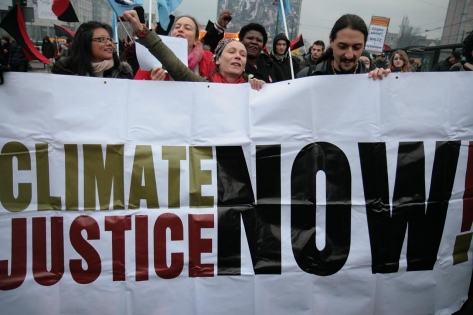
“The senators’ proposal would entrench our addiction to fossil fuels by offering incentives for increased oil and gas drilling just days after what appears to be the worst offshore oil disaster in American history. Large domes, small domes, golf balls, garbage, chemical dispersants, fire — none have succeeded in stopping the enormous flow of oil into the Gulf of Mexico. Clearly, there are no ‘safeguards’ Senators Lieberman and Kerry could put into this bill to make offshore oil safe.”
“This proposal echoes greenhouse pollution reduction targets that scientists recently called ‘paltry’ and inadequate to prevent the worst impacts of climate change. Scientists have determined that reducing carbon pollution to 350 parts per million is necessary to preserve life as we know it. 350 ppm must be the bottom line for all climate and energy policies. The senators’ weak targets will not reduce carbon pollution to below 350 ppm from its current level of 391 ppm.”
“In his recent Earth Day proclamation, President Barack Obama specifically celebrated the gains of the Clean Air Act; nonetheless, this proposal appeases polluters by gutting the Act, which has protected the air we breathe for 40 years, reaping economic benefits more than 40 times its cost. The Clean Air Act already provides a mechanism to establish science-based pollution caps for greenhouse pollutants, yet the Kerry-Lieberman proposal would ban proven successful Clean Air Act programs from cutting greenhouse emissions.”
“The Kerry-Lieberman proposal is not the answer because it asks the wrong questions. A successful climate bill must build upon, and not roll back, our existing foundation of environmental protections, and it must achieve the greenhouse pollution reductions necessary to avert dangerous climate disruption.”
Media Bites – Burger King & Product Placement
In this week’s Media Bites we take a look at a new Burger King commercial that is a cross-promotional piece for the Hollywood film Iron Man 2. The commercial is just one facet of the fast food giant’s marketing campaign, which also features Iron Man 2 toys and games on their BK Kids Club website. It seems quite insidious to use superhero characters to sell unhealthy foods to kids.
Another Snyder for Governor ad with no substance

Gubernatorial candidate Rick Snyder will be in Grand Rapids this Thursday for a meet and greet at the Rosa Parks Circle (noon) in downtown Grand Rapids, as was announced in the Grand Rapids Press.
This announcement comes on the heels of the newest Snyder TV ad, which hit Michigan TV markets last week. The ad continues to promote Snyder as a “tough nerd” and features his daughter saying, “Dad’s a businessman, not a politician. He’s the only businessman running so he’s the only one that even knows what he’s doing.”
Such statements are the norm in campaign advertising, where claims are made with no evidence to back them up. There is essentially no hard information in the TV ad, just an appeal to voters that since Snyder is a businessman he can turn Michigan’s economy around.
Viewers of the ad are encouraged to read his plan online, where Snyder says he plans to re-invent Michigan’s economy. Snyder’s plan, called Michigan 3.0, would move the state into “an era of innovation that transforms our society into a vibrant force of entrepreneurs and innovators that can compete in the global economy.”
The only details that Snyder provides on how to re-invent Michigan’s economy is in his Top 10 Plan section. The number one item is to “create more and better jobs.” However, if one read this section there is only information on his history as a businessman, his ideas to reform the Michigan Economic Development Corporation and the need for regulatory reform.
Each of Snyder’s three talking points about the economy are based on a business-friendly model. However, he never provides any evidence that this will create more and better jobs. In fact, he never even defines what better jobs would look like.
It seems that Snyder is like many politicians, willing to spend thousands of dollars to convince the public that he is the better candidate without providing any concrete plan that would do what he claims he will do as the next governor.
Transparency in campaigns? State just says, “No.”
(This article is a re-posting from the Michigan Campaign Finance Network.)
The Michigan Department of State issued a draft response on April 30th to a request from the Michigan Chamber of Commerce for a Declaratory Ruling on disclosure requirements for corporate expenditures in State campaigns in view of the U.S. Supreme Court’s decision earlier this year in the case of Citizens United v. Federal Election Commission. In its essence, the Chamber’s request asked whether it would have to reveal the identities of contributors whose funds it aggregates for campaign expenditures, or will it be sufficient to say that the aggregated funds are from the Chamber’s general treasury?
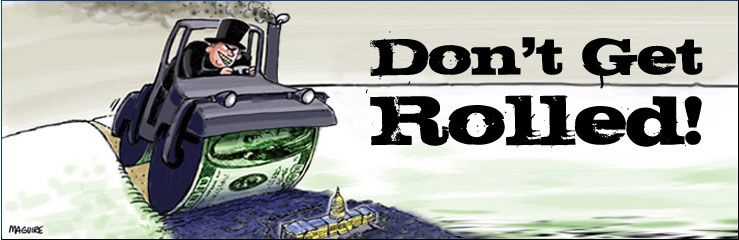
The Department of State’s draft response says that the Chamber can simply report its corporate campaign expenditures are funded by its general treasury.
The Michigan Campaign Finance Network views the Department’s draft to be a fundamentally flawed interpretation of the Michigan Campaign Finance Act (MCFA), P.A. 388 of 1976, as amended, and relevant U.S. Supreme Court campaign finance jurisprudence.
First, the Department of State’s draft response addresses itself to ‘express advocacy,’ a term not found in language or concept in the MCFA, rather than the broader definition of ‘expenditure’ found in the Act, and the full body of relevant Supreme Court jurisprudence on campaign expenditures.
Secondly, the Department of State agrees to place the Chamber’s electioneering ‘committee’ outside the Chamber’s corporate accounting, in order to accommodate the notion of just one contributor – the general treasury, rather than inside the Chamber’s corporate accounting with multiple contributors, as suggested by the Chamber’s own tax returns.
Thirdly, the Department of State appears to ignore section (42)(3) of the MCFA, which says that any recipient of a contribution that is not from a committee that has its own accounting and reporting, must include in its record keeping and reporting the name, address and amount given by each person who has contributed to the total amount of the contribution. That should mean that the Chamber’s general treasury must tell its Chamber PAC III who put money in the general treasury to give to Chamber PAC III, and Chamber PAC III must report those contributors’ identities and the amounts they gave.
“The Department of State’s draft response is surely cause for celebration among the special interests who gain anonymity for their campaign spending by channeling money through nonprofit aggregators,” said Rich Robinson of the Michigan Campaign Finance Network. “Secrecy makes government actors more accountable to special interests than voters. If this flawed interpretation is not corrected, more campaign spending than ever will be off-the-books, and that is a deadly prospect for democracy.”
MCFN comment on MI Dept. of State draft Declaratory Ruling
MI Department of State draft Declaratory Ruling
MCFN comment on MI Chamber request for a Declaratory Ruling
MI Chamber of Commerce request for a Declaratory Ruling
The Michigan Campaign Finance Network (MCFN) is a nonprofit, nonpartisan organization that conducts research and public education on money in Michigan politics.

In Monday’s edition of the Grand Rapids Press, there was an article about a Calvin Professor scheduled to give a talk on the BP oil disaster in the Gulf of Mexico. The headline of the story on page 3 read, “As oil spills, hope emerges.”
The story states that Gerry Van Kooten (Calvin Professor) is somewhat optimistic about the long-term outcome of the growing oil disaster caused by BP drilling for oil in the Gulf of Mexico. Van Kooten worked on the Exxon Valdez oil spill in 1989 and because of that experience believes that nature is very “resilient.” “Mother Nature is remarkably resilient in the end, but it may take decades to get there,” said Van Kooten.
An interesting observation, especially since this could end up being the worst oil spill ever recorded. Van Kooten goes on to say that it is key that the engineers keep the oil spill from reaching the shoreline, which he says will put more wildlife at risk.
The Press reporter does not question any of the assertions from Van Kooten, but they do cite the Sierra Club’s Executive Director Michael Brune who says, “We will be dealing with the impacts of BP’s drilling rig for decades to come.”
Van Kooten then tells the Press reporter that it would be “unrealistic to permanently halt offshore drilling.” That comment is followed up by a statement from the CEO of Grand Rapids-based Wolverine Gas & Oil Corp Sid Jansma. The oil & gas executive thinks “the people of the US will be the losers” if there is a ban on off shore drilling.

It seems quite amazing that the Press can pass this story off as journalism. First, even though they cite a Sierra Club spokesperson, there is no balance in this story, since the comment from the Sierra Club is not used to counter the comments made by Van Kooten or the oil industry executive. Second, the Press reporter does not provide any information to suggest that he verified any of the claims made by either Van Kooten or Sid Jansma.
Third, the Press did not provide full disclosure on Van Kooten. The Calvin Professor does teach geology, but he also worked as a petroleum geologist and oil and gas consultant in Alaska for two decades.
Fourth, the article provides no real context about the extent of the damage done so far from the BP oil spill. Such investigation was demonstrated in an interview conducted by Democracy Now with Riki Ott, a woman who has written two books on the Exxon Valdez oil spill. Ott talked about how the oil industry was not held accountable on regulations, how the spill will devastate eco-systems, potentially destroy the commercial fishing industry and have long-term economic ramifications. This kind of assessment differs greatly from the “optimism” of the Calvin Professor who spoke with the Press before giving a public lecture today.

Yesterday the Grand Rapids Press ran an AP article on page A19 entitled, “Immigration bill old hat for Sheriff Joe.”
The article presents a fairly favorable look at Sheriff Joe Arpaio, the sheriff of Maricopa County, Arizona who has been known for using repressive tactics in dealing with immigration.
The Associated Press story talks about the 15 “crime and immigration sweeps” Arpaio has conducted since April of 2008 and that he has arrested over “2,000 illegal immigrants since 2006.”
In the Grand Rapids Press version of the AP story only Sheriff Arpaio is cited, but in the original version they also cited an Arizona State Senator and marketing professor, both of which do not provide any criticism of Arpaio.
The article does say at one point that “Critics say his deputies pull people over for minor traffic infractions because of the color of their skin so they can ask them for proof of citizenship.” Unfortunately, none of these critics are named in the article, even though there are numerous sources that the AP reporter could have cited.
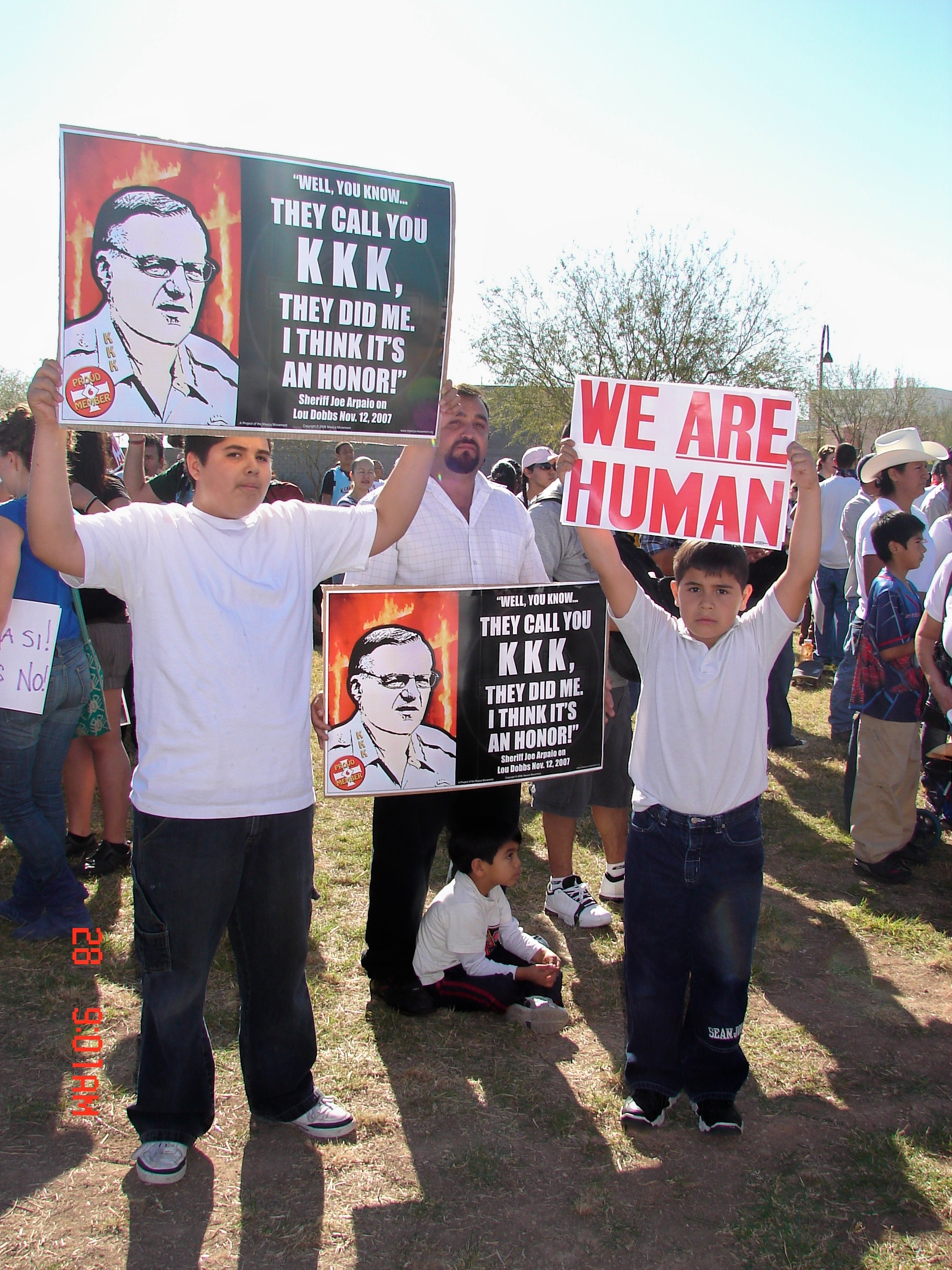
For instance, the FBI and the Attorney General’s office in Arizona have begun a Grand Jury investigation into claims that Sheriff Arpaio has abused his power and even begun investigations of local politicians who have been critical of him.
There are also citizen groups that have been critical of Arapio, one which calls for the overthrow of the sheriff. Another group, America’s Voice, which advocates for sensible immigration reform, has documented numerous charges against Arapio. Among these charges are – the sheriff gives priority to immigration sweeps over felonies, racial profiling of Latinos and the use of forced labor in his “tent city” prison camp.
If the Grand Rapids Press is going to run wire stories about an important issue, such as immigration policy, they need to make sure that these stories have more balance so as to provide readers with multiple perspectives on the critical issues of the day.

