Obama’s Border Plan Looks Similar to Bush’s
(This article is re-posted from Common Dreams.)

President Barack Obama’s plan to send as many as 1,200 National Guard troops to the US-Mexico border appears to be a scaled-down version of the border security approach championed by his predecessor.
The 6,000 troops who were sent by President George W. Bush to the border from June 2006 to July 2008 were generally credited within law enforcement circles as having helped improve border security, but restrictions placed on the soldiers were denounced by advocates for tougher enforcement who are now leveling similar objections at Obama’s plan.
Some law enforcement officials along the border said they worry that Obama will repeat Bush’s mistake by limiting the troops to support roles, such as conducting surveillance and installing lighting, rather than letting them make arrests and confront smugglers. They also believe the scale of the force – one-fifth of the size of the one sent by Bush – is too small to make a difference along the length of the 2,000-mile border.
Cochise County Sheriff Larry Dever, whose jurisdiction includes about 80 miles of the Arizona-Mexico border, said 1,200 soldiers might make a difference in a smaller portion of the border. “But if you spread it across the border, it’s like spitting into the wind,” Dever said.
Under the Obama plan, the troops will work on intelligence, surveillance and reconnaissance support, analysis and training, and support efforts to block drug trafficking. They will temporarily supplement border patrol agents until Customs and Border Protection can recruit and train additional officers and agents to serve on the border. Obama also will request $500 million for border protection and law enforcement activities.
Arizona Attorney General Terry Goddard, a Democrat who has prosecuted rings of drug and immigrant smugglers, said the planned deployment was a good first step, but believes that the president’s plan should evolve to include more troops and more authority for the soldiers.
“I’ll take what we can get,” Goddard said. “Again, I don’t think this is the final response.”
The Mexican government issued a statement saying it hoped the troops would be used to fight drug cartels and not enforce immigration laws. Mexico has traditionally objected to the use of the military to control illegal immigration.
When Bush sent the National Guard to the border, the troops performed support duties that tie up immigration agents, who then had more time to arrest illegal immigrants.
The troops under the Bush deployment didn’t perform significant law enforcement duties. They installed vehicle barriers, operated remote cameras, repaired vehicles, worked as radio dispatchers and performed other duties. Troops who manned mobile observation towers had used binoculars to search for and report border breaches.
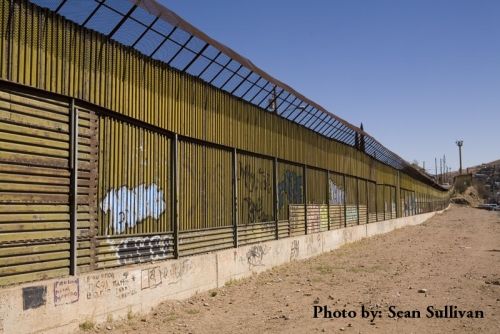
The effect of the troops was felt by the smugglers and would-be border-crossers during 2006 in Palomas, Mexico, a smuggling hub south of the village of Columbus, N.M., where a buildup of border agents, surveillance cameras, vehicle barriers and troops were credited with reducing smuggling traffic.
Vendors in Palomas reported a significant drop in the number of backpacks they sold to border-crossers for carrying their food, water and clothing in during their walk into the United States. “There are not many people because of the soldiers that were put on the border,” vendor Elisco Hernandez Gonzalez told The Associated Press two months after the Guard was sent to the border.
Republican state Sen. Russell Pearce of Arizona, the author of the state’s new immigration law, said he fears Obama will repeat Bush’s mistake in not giving the troops the power to confront violent smugglers and other armed criminals along the border.
Pearce was disturbed by an incident in 2007 where National Guard troops backed off and called in federal agents as gunmen approached their post near the Arizona-Mexico border.
While supporters of the decision said the Guard members did as they were supposed to, Pearce questioned the point of having troops on the border if they can’t confront such dangers. “It was a welcome-wagon role last time,” Pearce said. “They weren’t allowed to do anything.”
T.J. Bonner, president of the National Border Patrol Council, a union representing 17,000 agents, said he doesn’t see the broad outlines of the Obama plan as a solution to border violence.
“People shouldn’t be surprised if the violence continues,” Bonner said. “They shouldn’t expect that the announcement of up to 1,200 National Guard members will send a shock wave of fear in the cartels and that they will start playing nice.”
Pinal County Sheriff Paul Babeu, a major in the Arizona Army National Guard who served as a commander in Yuma, Ariz., during the 2006 deployment, said Obama’s plan is welcome news that will help confront border security weaknesses, but it doesn’t go far enough.
Babeu, who wasn’t speaking on behalf of the National Guard, said the visible presence of armed soldiers is an effective deterrent for illegal immigration. “They’re not given law enforcement authority, but the fact that they’re there, keeping watch, 24/7, has proven to be the most effective solution for border security,” Babeu said.
US soldier deaths in Afghanistan now over 1,000
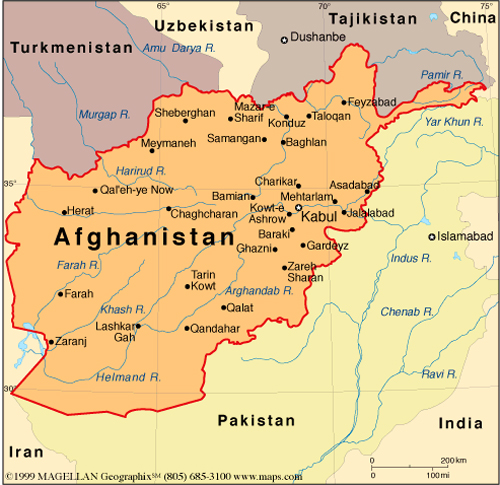
With the recent escalation of the US occupation of Afghanistan by President Barack Obama and the military campaigns in Marjah and Kandahar it was expected the US casualty rates would increase.
According to the website icasualties.org, the number of US troop deaths in at 1,083, while the total number of NATO soldier deaths is at 1,784.
Yesterday it was reported that the US will now shift to more special forces operations in Kandahar, with an emphasis on raids to undermine the power of the Taliban. This decision is not likely to reduce the number of US troops, which will be killed in action. In fact, the number of US soldier deaths has been on the rise since Obama took office.
Watch the most recent Rethink Afghanistan video, which invites people to take action in response to the increased US troop death count.
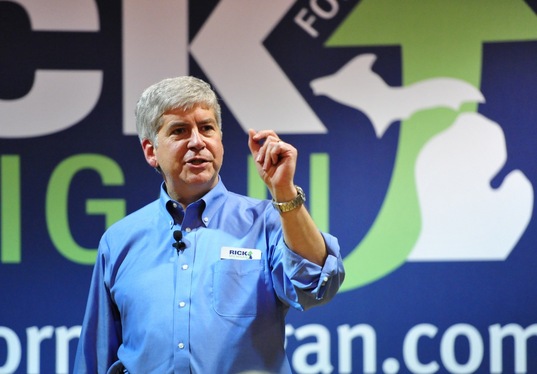
Republican gubernatorial candidate Rick Snyder came to Grand Rapids on Monday as part of his Reinvent Michigan tour. Under a sweltering sun about 200 people gathered at Rosa Parks for the town hall meeting at noon. Some of the people were lured there by the smell of free hot dogs, given in exchange for wearing a Snyder campaign sticker. Others came due to their involvement in the Republican Party, including big time donor Peter Secchia and Bill Cooper, who is running for the 2nd Congressional District seat currently held by Republican gubernatorial candidate Pete Hoekstra.
Snyder began the meeting by outlining his reasons for running for governor, saying Michigan is in an economic disaster and Lansing is broken and overwhelmed by career politicians. Snyder often touts himself as being a nerdy businessman who is outside of the political world of Lansing.
In some respects that’s true. He doesn’t have much experience in Lansing, being an entrepreneur who has made millions by running Gateway Computers in the 90s and starting up Ardesta, a micro and nanotechnology firm.
But Snyder does have enough experience to use the popular Republican line, saying, “It’s time for bureaucracy to go.” He went on to say bureaucracy is a hundred year old system that should be replaced with a customer service government that is more transparent and regulates less. To continue his business rhetoric he said, “If Lansing was a business, we would have fired them a long time ago.”
Yet being a self-described nerd, Snyder sure doesn’t talk like it. At the town hall meeting his rhetoric often lacked substance, a common problem with political speak. Snyder didn’t offer much in the way of concrete plans of how to implement what he calls “Michigan 3.0“, or Michigan’s next era.
Snyder talked about the need to create more jobs but didn’t say much about how. Rather Snyder just said, “The government’s role is not to supply jobs but to create the environment for jobs.” It seems he hopes to create this environment by ridding Michigan of its current business tax and replacing it with a 6% flat corporate tax. But this isn’t certain if it would lead to more jobs or save the state money, and Snyder’s plan would reduce the state’s spending on public worker’s wages and benefits.
When asked about how to fix Michigan’s crumbling education system, Snyder said what needs to happen is a change in dialogue, making it more about the teachers and students rather than funding. Yet not much can be done to keep teachers in the state and schools open for students without money.
Many of these students later attend colleges in Michigan, though keeping them here after college is another issue. When asked about this by a young college student, Snyder replied that Michigan needs to build up a mentor network and to create a better quality of place where young people want to flock to. But Michigan needs to create a lot more than that if it wants to keep its young people, namely diversified jobs.
Near the end of the meeting, Snyder labeled himself a Republican but said also that he doesn’t mention party anywhere in his political literature because he wants people to vote for him because of what he stands for. But what he stands for is the same old Republican ideas of limiting government, letting free markets reign, and cutting taxes.
Rick Snyder is running against fellow Republicans Attorney General Mike Cox, state Sen. Tom George, U.S. Rep. Pete Hoekstra and Oakland County Sheriff Mike Bouchard in an August 3rd primary.
Media Bites: Miller Lite and masculinity
In this week’s Media Bites we take a look at a new Miller Lite ad campaign where the beer company challenges men to be more “masculine.” In both commercials that we look at the men who don’t drink their brand of beer are demeaned for looking too feminine. The Miller Brewing Co. is clearly using stereotypes about masculinity in order to target men with their messages.
GRPS Board only hears criticism on proposed budget
Last night the Grand Rapids School Board held a public hearing on the proposed budget for the upcoming school year. A much smaller crowd was in attendance compared to recent weeks, with an estimated 75 people in attendance.

Everyone who spoke during public comment was critical of the proposed budget, despite the recent announcement from Lansing that some funding would now be coming to the struggling school district.
The first person to address the school board was a PTA president from North Park School. His recommendations on the proposed budget were to not cut funding for art & music as well as an emphasis on pre-school education funding. In addition, he mentioned that their school/PTA is hosting a forum on education and education funding with state legislators this Thursday, which will be a great opportunity for people to pressure state officials on education funding issues.
Some of those who spoke addressed the school board to discuss the importance of revenue in addition to the budget. Paul Haan urged the school board members to be more creativity in generating revenue, beyond state funded enrollment numbers. He asks what else is being done and advocates that GRPS needs to have a more aggressive plan to find revenue. He also advocated for restoration pre-school education funding, funding for arts & music, and trimming administrative costs.
Several speakers were also critical of the HUB model and how it fits into the proposed budget. One teacher said she supports theme schools, because they provide some choices for students and parents. She believes that the proposed budget threatens the existence of these themed schools and their diverse practices, which she says provide great learning opportunities for students.
A music teacher from CA Frost School said she was opposed to cuts in music and art. She believes that students need a strong foundation of music and art in order to develop better learning skills. She also shared a story about how one student improved on his grades in order to stay in her music class.
Some of the students with the GRPS Student Union spoke next. Luis Lara stated that the current educational system is not working and the proposed “blended model” will only continue that trend. He reminds the school board that they work for the students and parents and should seek out their counsel and not just rely on the school superintendent.
Another student, Dan Morrow, read a quote from a fellow student about the importance of having art as a means expressing herself. Morrow also expressed his opposition to proposed cuts to music and art. He ended his comments by saying that the budget should be decided by people who grew up in this district and not by suits who make $150,000, referring to Superintendent Taylor.
Several other parents addressed the school board as well and one said that the budget is less about dollars and more about priorities. This parent felt that having effective, highly qualified teachers in the district should drive the budget.
The last person to speak was a teacher in the GRPS system and said he doesn’t feel good about his job. He feels that all he does as a teacher is to try to reduce failure. He also said the school district has been changing and that education is fraught with trends, but what “we need to do is see what works for our students. We need parental involvement and trained teachers.” He pleads with the board to show some leadership to serve these children.
After the event we spoke with a member of the local chapter of the ACLU who said that they have been in communication with students and parents who told them that they have been harassed and intimidated for speaking out against the school board and school administration. If anything more on this surfaces we will report on that aspect of this issue in the future.
“We did NOT capitulate”
Locked out since Nov. 1, 2009, the UAW Local 19 workers of Light Metals Corp., 2740 Prairie St. SW in Wyoming, ratified a contract on Friday, May 21.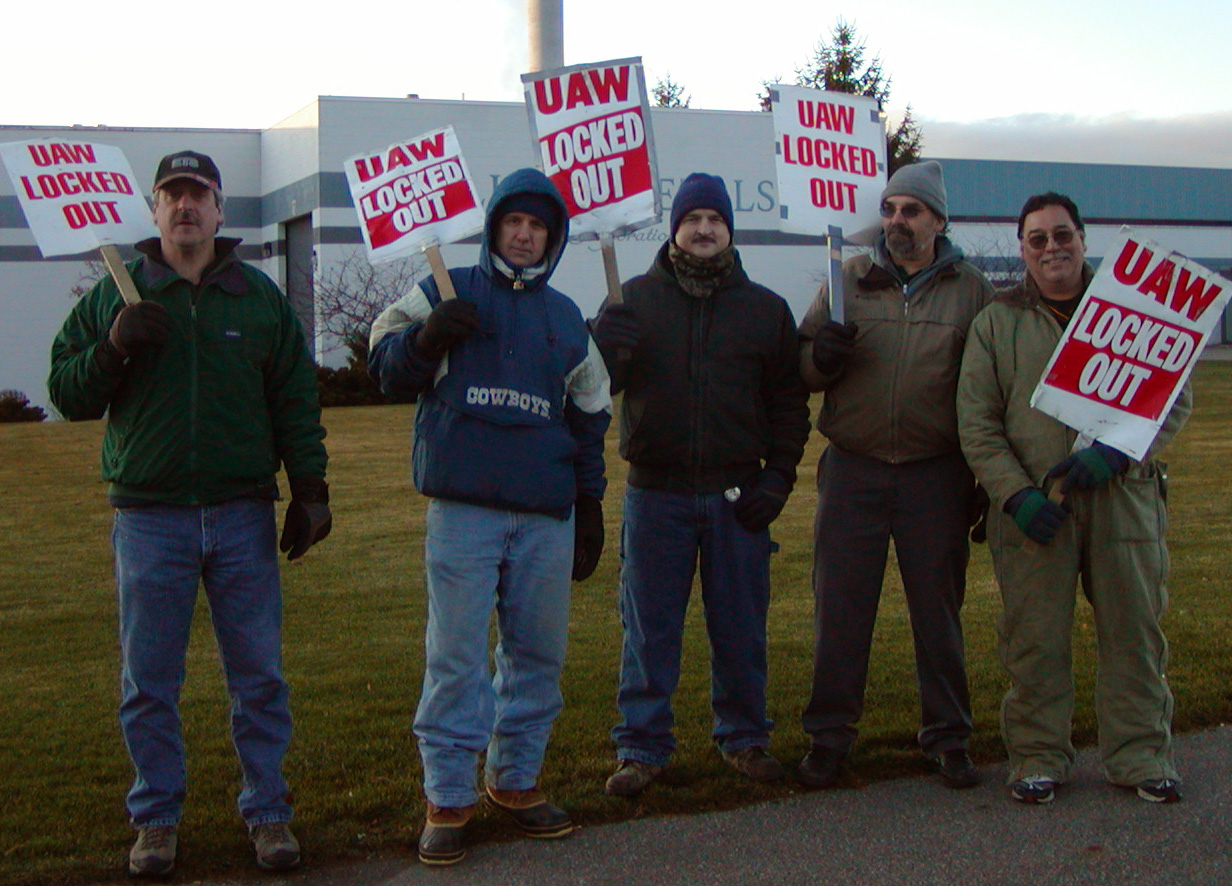
“Although it is a far cry from a great contract, it is a contract that was negotiated and we are all returning to work next Wednesday. (It’s a) five-and-a-half year contract expiring on Oct. 31, 2015,” reported Chuck Dietrich, chief union steward and Light Metals employee for nearly 40 years. “Oh yes, all members who want to will be returning to work and all replacement workers (scabs) will be looking for new employment.”
The locked-out workers stood steadfast on the picket line, through rain and shine, ice and snow, harassment by company security guards and the Wyoming police, who during the coldest days of winter made the workers extinguish a warming fire safely built in a portable metal fire-pit.
In November 2004, Light Metals locked out their UAW workers, who were working under contract, until a court decision brought union workers back to work. When that contract expired last November (2009), they locked them out again. Even though the Local had agreed to a new contract’s demands for cuts in pay, benefits and holidays in November, Light Metals refused to let them work.
The 70 men and women who were locked out averaged 20 years employment with Light Metals. They maintained their daily picket line simply because they wanted their jobs back. While the financial hardship of being locked out for nearly six months has taken its toll, they are happy to be back to work.
“I am proud of our membership,” Dietrich said. “We did NOT capitulate. We DID negotiate.”
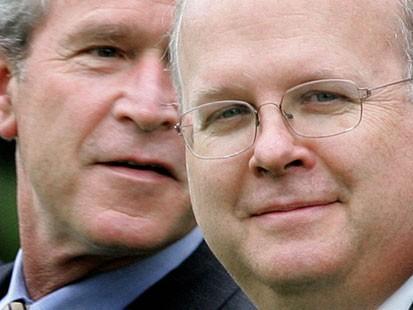
There is now an organized effort to confront former Bush advisor Karl Rove, when is in Grand Rapids this week. Rove will be signing books at the Meijer at Knapps corner on Thursday, May 27 between 4 – 7pm. A group calling for a Citizens arrest of Karl Rove is inviting people to come to Meijers during the book signing.
The Greeks Get It
(This article by Chris Hedges is re-posted from Truthdig.)
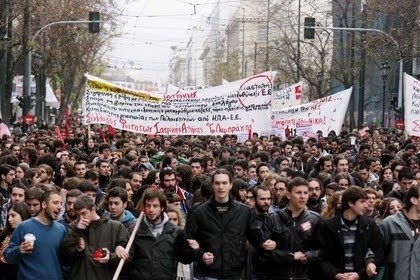 Here’s to the Greeks. They know what to do when corporations pillage and loot their country. They know what to do when Goldman Sachs and international bankers collude with their power elite to falsify economic data and then make billions betting that the Greek economy will collapse. They know what to do when they are told their pensions, benefits and jobs have to be cut to pay corporate banks, which screwed them in the first place. Call a general strike. Riot. Shut down the city centers. Toss the bastards out. Do not be afraid of the language of class warfare-the rich versus the poor, the oligarchs versus the citizens, the capitalists versus the proletariat. The Greeks, unlike most of us, get it.
The former right-wing government of Greece lied about the size of the country’s budget deficit. It was not 3.7 percent of gross domestic product but 13.6 percent. And it now looks like the economies of Spain, Ireland, Italy and Portugal are as bad as Greece’s, which is why the euro has lost 20 percent of its value in the last few months. The few hundred billion in bailouts for other faltering European states, like our own bailouts, have only forestalled disaster. This is why the U.S. stock exchange is in free fall and gold is rocketing upward. American banks do not have heavy exposure in Greece, but Greece, as most economists concede, is only the start. Wall Street is deeply invested in other European states, and when the unraveling begins the foundations of our own economy will rumble and crack as loudly as the collapse in Athens. The corporate overlords will demand that we too impose draconian controls and cuts or see credit evaporate. They have the money and the power to hurt us. There will be more unemployment, more personal and commercial bankruptcies, more foreclosures and more human misery. And the corporate state, despite this suffering, will continue to plunge us deeper into debt to make war. It will use fear to keep us passive. We are being consumed from the inside out. Our economy is as rotten as the economy in Greece. We too borrow billions a day to stay afloat. We too have staggering deficits, which can never be repaid. Heed the dire rhetoric of European leaders.
“The euro is in danger,” German Chancellor Angela Merkel told lawmakers last week as she called on them to approve Germany’s portion of the bailout plan. “If we do not avert this danger, then the consequences for Europe are incalculable, and then the consequences beyond Europe are incalculable.”
Beyond Europe means us. The right-wing government of Kostas Karamanlis, which preceded the current government of George Papandreou, did what the Republicans did under George W. Bush. They looted taxpayer funds to enrich their corporate masters and bankrupt the country. They stole hundreds of millions of dollars from individual retirement and pension accounts slowly built up over years by citizens who had been honest and industrious. They used mass propaganda to make the population afraid of terrorists and surrender civil liberties, including habeas corpus. And while Bush and Karamanlis, along with the corporate criminal class they abetted, live in unparalleled luxury, ordinary working men and women are told they must endure even more pain and suffering to make amends. It is feudal rape. And there has to be a point when even the American public-which still believes the fairy tale that personal will power and positive thinking will lead to success-will realize it has been had.
We have seen these austerity measures before. Latin Americans, like the Russians, were forced by the International Monetary Fund and the World Bank to gut social services, end subsidies on basic goods and food, and decimate the income levels of the middle class-the foundation of democracy-in the name of fiscal responsibility. Small entrepreneurs, especially farmers, were wiped out. State industries were sold off by corrupt government officials to capitalists for a fraction of their value. Utilities and state services were privatized.
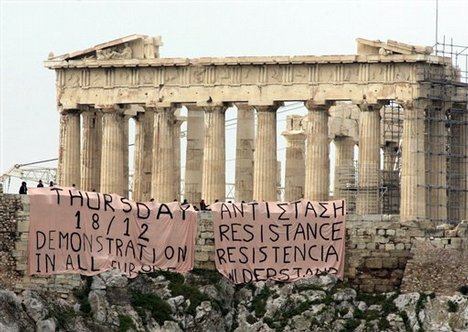
What is happening in Greece, what will happen in Spain and Portugal, what is starting to happen here in states such as California, is the work of a global, white-collar criminal class. No government, including our own, will defy them. It is up to us. Barack Obama is simply the latest face that masks the corporate state. His administration serves corporate interests, not ours. Obama, like Goldman Sachs or Citibank, does not want the public to see how the Federal Reserve Bank acts as a private account and ATM machine for Wall Street at our expense. He, too, has helped orchestrate the largest transference of wealth upward in American history. He serves our imperial wars, refuses to restore civil liberties, and has not tamed our crippling deficits. His administration gutted regulatory agencies that permitted BP to turn the Gulf of Mexico into a toxic swamp. The refusal of Obama to intervene in a meaningful way to save the gulf’s ecosystem and curtail the abuses of the natural gas and oil corporations is not an accident. He knows where power lies. BP and its employees handed more than $3.5 million to federal candidates over the past 20 years, with the largest chunk of their money going to Obama, according to the Center for Responsive Politics.
We are facing the collapse of the world’s financial system. It is the end of globalization. And in these final moments the rich are trying to get all they can while there is still time. The fusion of corporatism, militarism and internal and external intelligence agencies-much of their work done by private contractors-has given these corporations terrifying mechanisms of control. Think of it, as the Greeks do, as a species of foreign occupation. Think of the Greek riots as a struggle for liberation.
Dwight Macdonald laid out the consequences of a culture such as ours, where the waging of war was “the normal mode of existence.” The concept of perpetual war, which eluded the theorists behind the 19th and early 20th century reform and social movements, including Karl Marx, has left social reformers unable to deal with this effective mechanism of mass control. The old reformists had limited their focus to internal class struggle and, as Macdonald noted, never worked out “an adequate theory of the political significance of war.” Until that gap is filled, Macdonald warned, “modern socialism will continue to have a somewhat academic flavor.”
Macdonald detailed in his 1946 essay “The Root Is Man” the marriage between capitalism and permanent war. He despaired of an effective resistance until the permanent war economy, and the mentality that went with it, was defeated. Macdonald, who was an anarchist, saw that the Marxists and the liberal class in Western democracies had both mistakenly placed their faith for human progress in the goodness of the state. This faith, he noted, was a huge error. The state, whether in the capitalist United States or the communist Soviet Union, eventually devoured its children. And it did this by using the organs of mass propaganda to keep its populations afraid and in a state of endless war. It did this by insisting that human beings be sacrificed before the sacred idol of the market or the utopian worker’s paradise. The war state provides a constant stream of enemies, whether the German Hun, the Bolshevik, the Nazi, the Soviet agent or the Islamic terrorist. Fear and war, Macdonald understood, was the mechanism that let oligarchs pillage in the name of national security.
“Modern totalitarianism can integrate the masses so completely into the political structure, through terror and propaganda, that they become the architects of their own enslavement,” he wrote. “This does not make the slavery less, but on the contrary more- a paradox there is no space to unravel here. Bureaucratic collectivism, not capitalism, is the most dangerous future enemy of socialism.”
Macdonald argued that democratic states had to dismantle the permanent war economy and the propaganda that came with it. They had to act and govern according to the non-historical and more esoteric values of truth, justice, equality and empathy. Our liberal class, from the church and the university to the press and the Democratic Party, by paying homage to the practical dictates required by hollow statecraft and legislation, has lost its moral voice. Liberals serve false gods. The belief in progress through war, science, technology and consumption has been used to justify the trampling of these non-historical values. And the blind acceptance of the dictates of globalization, the tragic and false belief that globalization is a form of inevitable progress, is perhaps the quintessential illustration of Macdonald’s point. The choice is not between the needs of the market and human beings. There should be no choice. And until we break free from serving the fiction of human progress, whether that comes in the form of corporate capitalism or any other utopian vision, we will continue to emasculate ourselves and perpetuate needless human misery. As the crowds of strikers in Athens understand, it is not the banks that are important but the people who raise children, build communities and sustain life. And when a government forgets whom it serves and why it exists, it must be replaced.
“The Progressive makes History the center of his ideology,” Macdonald wrote in “The Root Is Man.” “The Radical puts Man there. The Progressive’s attitude is optimistic both about human nature (which he thinks is good, hence all that is needed is to change institutions so as to give this goodness a chance to work) and about the possibility of understanding history through scientific method. The Radical is, if not exactly pessimistic, at least more sensitive to the dual nature; he is skeptical about the ability of science to explain things beyond a certain point; he is aware of the tragic element in man’s fate not only today but in any collective terms (the interests of Society or the Working Class); the Radical stresses the individual conscience and sensibility. The Progressive starts off from what is actually happening; the Radical starts off from what he wants to happen. The former must have the feeling that History is ‘on his side.’ The latter goes along the road pointed out by his own individual conscience; if History is going his way, too, he is pleased; but he is quite stubborn about following ‘what ought to be’ rather than ‘what is.’ “
(This article is re-posted from Public Citizen.)
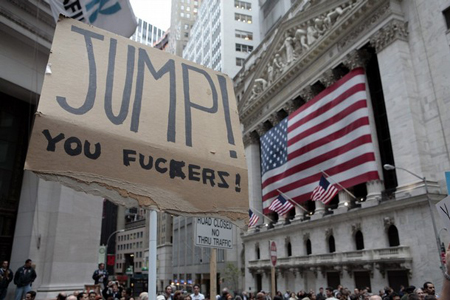
The Senate bill contains several strong, positive elements – among them, the creation of a Consumer Financial Protection Bureau, restrictions on “swipe fees” at the cash register, useful regulation of credit rating agencies and an audit of the Federal Reserve – and we welcome its passage.
But after all the damage inflicted by Wall Street, the bill should be much stronger. Even though it plunged the nation into the worst recession since the Great Depression, Wall Street has enough power on Capitol Hill to thwart reforms that would prevent it from doing the same all over again.
The bill leaves the mega-banks intact, so that they will continue to maintain a vise grip over the financial system, the economy and our democracy. And the bill fails to clamp down sufficiently on the casino economy. Importantly, however, the bill does contain significant derivatives reform language from U.S. Sen. Blanche Lincoln (D-Ark.). By forcing derivatives trading out of the shadows, the Lincoln provision would – with one vital fix – significantly reform a sector with major responsibility for the financial crisis. The strong derivatives regulation contains one major, accidental loophole – no enforcement – that must be remedied in conference. The Lincoln provisions would also force commercial banks out of the derivatives speculation business, an important step to redirect banks to provide credit to Main Street, rather than engage in speculative betting. A vital measure of the ultimate significance of the Senate action is whether the derivatives reform measures can be protected from the swarm of Wall Street lobbyists who will seek to eliminate, eviscerate, defang or otherwise undermine the measures’ purpose and effect.
This legislation is not the end of the Wall Street reform effort. Just as there were multiple rounds of reform in the 1930s, we should look now to further reform efforts, fueled by more revelations about conflicts of interest, self-dealing, deception and fraud.
Bush and Rove will both be in Grand Rapids

We reported a few months ago that former President and War Criminal George W. Bush will be in Grand Rapids on June 2nd speaking to the Economics Club.
Today, the Grand Rapids Press announced that Bush’s main political advisor Karl Rove will also be in Grand Rapids, signing books and attending a fundraiser for young professionals. Rove will be signing books at the Knapp’s Corner Meijer store, 1997 E. Beltline Ave. NE, at 4 p.m. on May 27.
There is a planned protest of the Bush visit on June 2nd, with information on Facebook. As for Rove, it would be worth it for people to read independent information posted on SourceWatch and maybe folks will want to go and pay the man known as Bush’s Brain a visit while he is in town.
Update: there is now a planned protest for Karl Rove’s visit Citizens arrest of Karl Rove on Facebook.

