Contextualizing the Egyptian and Tunisian struggles
As the people of Egypt continue to struggle for freedom from the abusive Mubarak regime it is important for those of us in the US to think about the role of the US government and the historical significance of this liberation struggle.

It is important to continue to follow the daily news coming out of Egypt, but it is just as important that we understand the context of this struggle. There has been some good commentary and analysis on the contextual significance of the Egyptian and Tunisian uprisings.
Naomi Prins helps us understand that the uprising in Egypt is not just a response to the politically repressive Mubarak regime, it is also a response to the economic conditions imposed by Capitalism. Prins states, “Mubarak wasn’t pushing subprime loans onto Egyptians; instead, he was embarking on an economic strategy that entailed selling large pieces of Egypt’s banks to the highest international bidder.”
When it comes to the US role in Egypt it is important that we understand the US has backed the Mubarak regime for decades. And while it is likely that the US will support Mubarak stepping down they are not likely to allow the Egyptians to determine their own future. Here Paul Street has some important things to say about the Obama administration’s response to far. Street correctly acknowledges that the US will not allow real democracy in Egypt, since it would conflict with the long term goals of the US and its allies in the region.
“……the administration is certain to strictly qualify any support it might be seen as giving the people in the Arab streets for fear of helping reinforce a new wave of democratic national independence across the oil-rich Middle East, whose petroleum reserves are seen by American planners as too critical for U.S. power for them to be controlled by the region’s actual residents.”
The strategic and resource acquisition motives of the US in Egypt are further supported by an excellent piece from Vijay Prashad on the people the US has used to work with the Egyptian regime to protect elite interests. Thus, the “transition” away from the Mubarak regime that the US is likely to endorse will involve backing the vice president Omar Suleiman. Stephen Soldz points out in a piece on CounterPunch that Suleiman, the most prominent intelligence officer in the country, has been involved in torture for years while being a US/CIA asset.
There are issues that civil society in the US must come to terms with if we are to truly support the Egyptian and Tunisian struggles. We have to be willing to question our own understanding of the Arab world, the role of Islam and our notions of liberal Democracy. These are issues that were the subject of a recent show on Al Jazeera that involved a conversation with Muslim scholar Tariq Ramadan and Slovenian philosopher Slavoj Zizek.

Yesterday, members of the Grand Rapids Branch of the IWW joined thousands of other people across the country at Chase Bank locations to show support for farmworkers who are being exploited by RJ Reynolds Tobacco Company.
Some members handed out flyers to Chase Bank customers to let them know about the campaign to pressure RJ Reynolds to meet the demands of farmworkers who pick tobacco. The flyers also encouraged people to pull their money out of Chase Bank until there was economic justice for the farmworkers. Chase Bank is the largest lender to RJ Reynolds, which is why the Farm Labor Organizing Committee called for actions all across the country yesterday.
Many people took the information flyers and several people talked to IWW members about the campaign. However, just minutes after IWW members arrived at the Michigan Avenue Chase Bank, the branch manager came out to tell people they could not be there and that if anyone parked in their lot they would have the car towed away.
Minutes later 3 GRPD squad cars showed up and told the IWW members that they could not be on the bank property and remove their signs that were planted in the snow along the sidewalk. IWW members remained for 90 minutes distributing flyers, talking with customers and holding signs for those driving by on Michigan Avenue.
GRIID spoke with IWW member Cole Dorsey about the action and another IWW member who went into the bank to close her account in support of the FLOC campaign.
HOEKSTRA TAKES A SPIN
(This article is re-posted from the Center for Responsive Politics.)
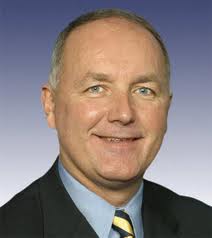
Former Rep. Pete Hoekstra is the latest member of the departed 111th Congress to take a spin through the revolving door of political influence.
The former Intelligence Committee chairman will translate his know-how to major law and lobbying firm Dickstein Shapiro, according to Politico. As the firm’s new legislative and regulatory adviser on intelligence, Hoekstra joins a host of former members of Congress, including once-speaker of the House of Representatives, Dennis Hastert (R-Ill.) and former Sen. Tim Hutchinson (R-Ark.).
 Hoekstra, a Michigan Republican, surrendered his congressional post during the last election cycle, after leaving to run for governor of his home state. He failed to advance beyond the primary in that contest, but Hoekstra is one of several high-profile Republicans reportedly considering a challenge to Democrat Debbie Stabenow, Michigan’s junior senator, during the 2012 election.
Last night, Dr. Izzeldin Abuelaish, a Palestinian doctor who suffered tremendous family loss in the 2009 Israeli assault on Gaza, spoke to a crowd of over 100 people at the Schuler Books on 28th Street.
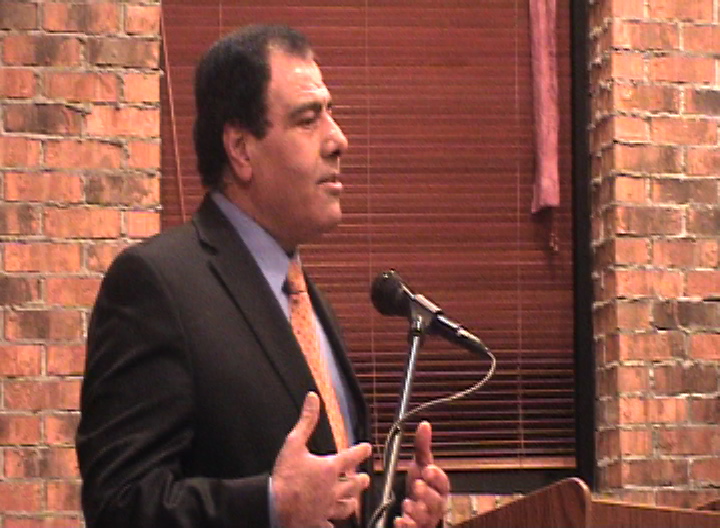
Dr. Izzeldin, who spoke in Grand Rapids last year, was invited to speak again by the local group Healing Children of Conflict (HCC). Dr. Izzeldin shared his personal story of family loss, first his wife in 2008 and then his 3 daughters in January of 2009 as Israeli bombs hit his home.
Dr. Abuelaish said that he was the first Palestinian doctor to practice medicine in an Israeli hospital. He says that this demonstrated to many Israelis that Palestinians are just as capable of serving as are Israelis.
His words were not overtly political, rather he emphasized the need for all of us to spend time with family and to love each other as much as possible, because we never know when our last chance will be to treat each other in a loving manner. He knows all too well, since his daughters were taken from him in an instant.
Dr. Abuelaish said that he had just come from his daughter’s room when the bomb hit their house. His daughters were killed instantly. When he entered the room his daughters’ bodies were almost unrecognizable, with their heads missing from their shredded bodies and blood everywhere in the room.
He tells the audience that what would happen if his son (who is still alive) would turn to violence and even take his own life as a suicide bomber? Dr. Izzeldin says that he cannot judge him if he turns to violence. Instead, he says that we all need to ask ourselves what have we all done and what are the factors that led someone down the road of violence? “If we do nothing to change the circumstances that led people to violence then we can not claim to love peace.”
As tears rolled down his face, he told the audience that what he wants to do is to honor his daughters by working towards peace and to make sure that no other children suffer the same fate. He says he is more determined to not hate, to not create more victims in order to bring justice for his daughters.
For Dr. Izzeldin hate is a poison, that once it enters your body you will be infected by it. The antidote of hate, he said, is to challenge the one you hate to see the world differently and to show them that you believe in the power of peace.
He said that one of his surviving daughters had been studying to go to college. She was wounded in the Israeli Gaza assault and lost sight in one eye, but when she was discharged from the hospital she did not lose sight of her goals. She is now going to college in Toronto and wants to keep the memory of her sisters alive by not giving up and giving in to violence.
He spoke about needing to bring prescriptions to those who are sick. When patients come to a hospital they are looking for a prescription to be healed. “We can’t just tell patients that we hope they get better.” He said in the same way we need to find the right prescription to make the world better. We cannot just want a better world we have to make a better world. He called on all of us to investigate what is going on and to see that we can do something to support those who are fighting to live.
Dr. Izzeldin told the audience that there is now a foundation established in memory of his wife and daughters, called Daughters for Life. Dr. Abuelaish said that Palestinian women are the ones who have pushed the hardest for education for children. He believes that it is time for Palestinian women to lead, to show us the way of the future. The foundation will give education awards to girls from the Middle East so that they will be able to study at the university level.
He concluded by reading a poem written by an Israeli/Jewish woman and an excerpt from his book I Shall Not Hate.
There was some time at the end for Q&A. One man asked him what he thought about a 1 or 2 state solution for Israel and Palestine. Dr. Abuelaish responded by say that as a doctor he doesn’t ask the woman who is in labor in the delivery room if she wants a boy or a girl. He knows she would tell him to just make sure the baby is healthy. He says that a 1 or 2 state solutions are theoretical questions and that what we must do is to take action right now to deal with the more immediate. He said that the Israeli settlements continue to be built, “we can’t even freeze them for 3 months and the US continues to give $3 billion a year.” Theoretical questions mean nothing, especially when we can’t even make progress towards justice.
Another person asked him what he thought about what was happening in Egypt. He said that all political leaders exist to serve their people, not to intimidate them. He hopes that peace and freedom will prevail in Egypt and that he is inspired by the courage that young people have in Egypt. He said we could all learn from them.
Michigan Human Rights Activists Face Nearly a Decade in Prison for Anti-Imperialist, Anti-War Protest
(This Action Alert was sent out by the Campaign to Free Ahlam Mohsen and Max Kantar.)

Ahlam Mohsen and Max Kantar are both facing felony federal assault charges for their roles in an anti-imperialist, anti-war action that took place during a Democratic Party meeting in Big Rapids, Michigan on August 16, 2010. At the meeting, which was attended by Senator Carl Levin—Chairman of the Armed Services Committee in the U.S. Senate—Max Kantar, 23, stood up and denounced Sen. Levin for his complicity in and support for U.S. war crimes and crimes against humanity in the Middle East. After Kantar was finished speaking, Ahlam Mohsen, 23, pushed an apple pie into Levin’s face.
Mohsen and Kantar now face up to EIGHT YEARS IN FEDERAL PRISON for speaking out against U.S. atrocities and mass murder against the peoples of Iraq, Palestine, Afghanistan, Pakistan, and elsewhere.
Mohsen and Kantar’s legal defense team is in IMMEDIATE NEED OF FINANCIAL ASSISTANCE. Please make checks payable to the Campaign to Free Ahlam and Max C/O MECAWI and mail to MECAWI at 5920 Second Ave., Detroit, MI 48202. For questions, please contact the Campaign to Free Ahlam Mohsen and Max Kantar via email at campaignforfreedom@gmail.com.
The CAMPAIGN also calls on all freedom- and justice-loving people to respectfully demand that the U.S. Attorney’s Office for the Western District of Michigan drop all charges against Ahlam Mohsen and Max Kantar. Assistant U.S. Attorney HAGEN FRANK is prosecuting the case.
ASSISTANT U.S. ATTORNEY, HAGEN FRANK
330 Ionia Avenue, N.W.
Suite 501
Grand Rapids, MI 49503
Fax: 616-456-2408
Senator Levin was targeted because of his CRIMINAL ROLE in supporting the U.S.-led SANCTIONS on IRAQ during the 1990s which killed in excess of 1,000,000 people, including some 500,000 CHILDREN UNDER THE AGE OF FIVE due to the denial of food, medicines, and water sanitation items. In addition to receiving more PRO-ISRAEL lobby money than virtually any other member of the Senate, Levin has also been a major proponent of U.S. DRONE BOMBINGS in PAKISTAN which have killed mostly civilians, including thousands of men, women, and children. Levin has always voted without fail to fund and sustain the murderous and dehumanizing U.S. OCCUPATIONS of IRAQ and AFGHANISTAN—unjust wars which include vast amounts of U.S. torture, murder, imprisonment, death, and destruction. The full statement (with sources) read by Kantar to Senator Levin can be accessed here: http://www.mecawi.org/Ahlam.statement%20and%20sources.pdf or http://freeahlamandmax.blogspot.com/2011/02/statement-read-to-senator-levin-in-big.html.
For more information, or to find out how you can help, visit the website of the CAMPAIGN TO FREE AHLAM MOHSEN AND MAX KANTAR at http://freeahlamandmax.blogspot.com/ or contact us via campaignforfreedom@gmail.com.
DROP ALL CHARGES AGAINST AHLAM MOHSEN AND MAX KANTAR! FREE ALL POLITICAL PRISONERS!
GVSU Students Stand in Solidarity with the Egyptian Freedom Struggle

Earlier today a small group of GVSU students braved the blistering cold outside at the Allendale campus to make a public showing of support for the people of Egypt.
Several students held signs, others gave out small Egyptian flags and everyone tried to engage the student body as they passed by about what is happening in Egypt. Their show of solidarity, while small in numbers, is a reflection of the kind of support that people are demonstrating worldwide as Egyptian civil society continues in their struggle against the repressive Mubarak regime.
We spoke with a few of the students on camera about their action, what this means for the US, the Obama administration’s response so far and what students can do to get involved in ongoing actions of solidarity.
What the Guns Are Saying: A Look at HB-4009 in Michigan
In mid-January, State Senator Mike Green sponsored House Bill 4009 into the Michigan Legislature. We have Green to thank for our concealed weapon laws in Michigan. Now he wants to take away “gun free zones” from the current state law. The new bill will allow people to carry concealed weapons into schools, bars, sports arenas, and churches.

Under the new law, gun owners will also be able carry guns into hospitals, college dormitories, casinos, and concert halls with capacities over 2,500 seats.
When Representative Gabrielle Giffords was gunned down in January along with eighteen other people, some pundits wondered if this might finally bring about tighter gun control regulations nationwide. It seems that, in Michigan, we’re having the exact opposite reaction. Just looking at the gun-free zones that might be going away makes the mind boggle: it’s easy to picture the consequences of guns at a rancorous sports event…in a college classroom where a professor’s grade just took away someone’s scholarship…in a hospital where a doctor failed to save the life of some outraged and grieving man’s partner or girlfriend.
But judging from reader comments at the Grand Rapids Press site, many people feel that they need guns with them at all times. They say they need them for protection. This even though Michigan ranks midway in gun deaths in the U.S., 27th out of 50 states, and gun violence in Michigan has dropped steadily throughout the 2000s.
Of course, gun owners will tell you the drop is due to more people carrying concealed weapons. These people routinely ignore studies that show that just owning a gun makes you more likely to become a victim of gun violence. They adamantly believe the opposite, in fact. As one person wrote on MLive, “An armed society is a polite society.”
There are well-known facts to counter that statement: The United States has more gun deaths than almost any other country in the world. We’re only lagging behind Columbia, South Africa, and Thailand. Current figures show that in a one-year period, there were 9 gun deaths in Chile, 12 in Ireland, 68 in Switzerland. Canada had 144, and Germany 296. El Salvador had 1,441 gun deaths, and Mexico had 2,606. Meanwhile, the United States had 9,369 gun deaths. An armed society is a killing society. Tighter gun controls obviously lead to less violence.
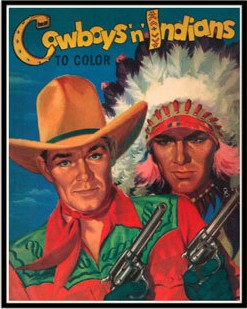
Still, it’s not a set of facts that sinks easily into the American consciousness. Why? Let’s start by thanking Buffalo Bill and the myth of the Wild West, the reason why little boys love to play cowboys. But it’s important to remember the real lure of the game. There are not just cowboys; there are also Indians.
There was plenty of real-life, wholesale slaughter of Indians during the 19th century in the battle for White supremacy in the Western states, but the image that most people hold in their minds of this violence is pure fiction. William Cody’s Wild West Show was the first to frame our familiar national tale: cowboys triumphantly shooting and killing hostile, menacing Indians who attacked wagon trains or military forts without provocation. Audiences in the stadium cheered the brave cowboys and booed the Indians.
By the 1930s, cowboy movies such as “Dodge City” and “Red River” were presenting the same myth—that Indians were always the attackers, and that cowboys, with deadly accuracy and perfect aim, always successfully gunned them down, protecting grateful women and children as they did so. In other words, in this story White people act solely in self-defense, putting them on the side of the angels.
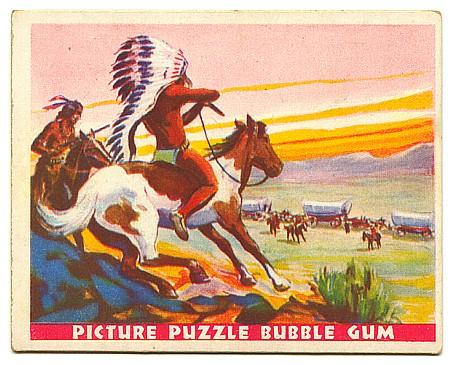 This theme of defending against the aggression of “the Other,” the terrifying element bent on the destruction of American hard work and blocking American imperialism, has now carried over into action films—where the protagonist fends off the foreign enemy du jour (Russians, Vietnamese, Saudis). And it’s found in science fiction films, where alien invaders bent on taking everything away from us are destroyed by scrappy heroes who not only save their wives and children, but the entire planet.
Most people who want to carry concealed weapons into places like sports arenas, hospitals, and even churches aren’t usually planning to gun down random victims. Instead, fortified by these embedded myths in the male culture, they are sure that they will use these weapons in self defense—always successfully, just like any lawful cowboy.
What’s interesting is that you can actually hear these themes in the comments about HB 4009. “Gun free zones should be called sitting duck zones,” wrote one reader, and another added, “There is no reason that law abiding citizens should be denied the right to defend themselves with a firearm if they choose to do so. These ‘gun free’ zones only mean one thing…everyone but criminals are unarmed.”
Another man wrote earnestly about defending his family, adding, “This [law] does help the people of Michigan. It gives anyone that has the good sense to handle their own self defense the ability to stay ready wherever they are.”
Not one person in the thread spoke about the poor, the unemployed, immigrants, or racial minorities. No one named their imagined adversaries. But Michael Moore deftly nailed this point recently on the Rachel Maddow Show:
“That imaginary person that’s going to break into your home and kill you, who does that person look like? It’s not freckle-faced Jimmy down the street. We never really want to talk about the racial or the class part of this in terms of how it’s the poor or it’s people of color that we imagine we’re afraid of.”
The proposed Michigan legislation seems to go hand-in-hand with a growing fear that immigrants are taking jobs away from “real Americans”…that Arabs and Arab-Americans are all secretly bound in a conspiracy to take down the United States…that Black people would rather be on welfare than have jobs and will drain the unemployment coffers. At any moment, one of these perceived enemies can attack. You can read comments expressing this fear on MLive and other sites daily. And a recurring theme for those favoring what the Tea Party calls “Second Amendment solutions” is that arming oneself is the first step toward holding all this “chaos” at bay…at saving what gun owners see as the very fabric of American life.
Let’s revisit that man who pictured himself defending his wife and children at, say, a shoot-out at his church. It’s guaranteed that he sees himself as a person with perfect aim as well as what he calls “good sense.” Somehow you just know that he pictures the attacker as whatever “Other” he fears the most. Just as you can be sure that it doesn’t occur to him that all the good sense in the world may not boot up fast enough to help him during an actual attack by someone with a semiautomatic weapon. Or that, because he is armed, he might actually draw fire to himself and his family if he draws a gun. It’s highly unlikely he’ll have time to fire that spectacular, John-Wayne shot that he’s fantasized about a hundred thousand times.
Senator Mike Green either has these same fantasies himself, or he is cynically feeding on them to grab more votes during his next election cycle. The idea of circling the wagons against threatening hostiles has always played well in American politics. We like our stories simple and, quite literally, drawn in black and white.
New Media We Recommend
Below is a list of new materials that we have read/watched in recent weeks. The comments are not a “review” of the material, instead sort of an endorsement of ideas and investigations that can provide solid analysis and even inspiration in the struggle for change. All these books are available at The Bloom Collective, so check them out and stimulate your mind.
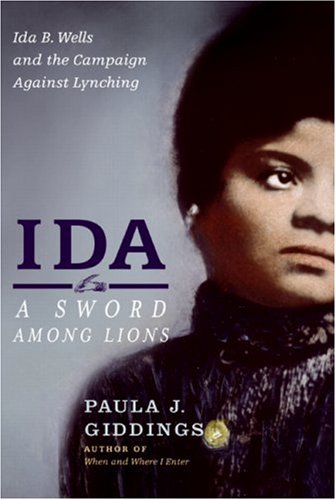
Ida: A Sword Among Lions: Ida B. Wells and the Campaign Against Lynching, by Paula Giddings – This book is part biography and part history lesson. If you have never read much about Ida B. Wells, then this book is a must. Giddings does a great job of providing insight into a woman who not only challenged the White Supremacist practice of lynching she challenged the patriarchal norms of her day. Wells was an organizer, an agitator, a writer, a feminist and a deeply compassionate woman. After reading this book, Ida B. Wells has become one of my new heroes.
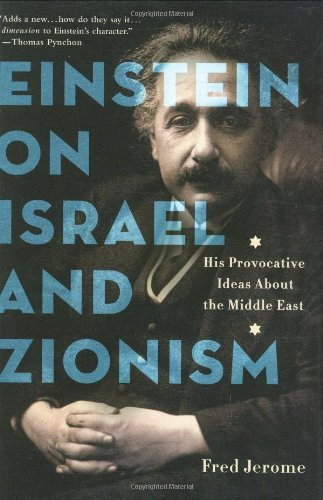
Einstein on Israel and Zionism: His Provocative Ideas About the Middle East, by Fred Jerome – Did you know that Albert Einstein was asked to be the leader of the State of Israel? I didn’t until I read Fred Jerome’s wonderful book about the very public position that one of the greatest scientist took on Israel and Zionism. This book makes clear that Einstein was not a supporter of Zionism or the State of Israel. Laid out in chronological order, the book mostly consists of letters, speeches and articles by Einstein beginning with his thoughts on anti-Semitism in 1919 all the way through til 1955. Einstein on Israel and Zionism gave me an even greater appreciation of the mind of a person who impacted the 20th Century in unimaginable ways.
Killing Us Softly 4: Advertising’s Image of Women, featuring Jean Kilbourne (DVD) – In this new, highly anticipated update of her pioneering Killing Us Softly series, the first in more than a decade, Jean Kilbourne takes a fresh look at how advertising traffics in distorted and destructive ideals of femininity. The film marshals a range of new print and television advertisements to lay bare a stunning pattern of damaging gender stereotypes — images and messages that too often reinforce unrealistic, and unhealthy, perceptions of beauty, perfection, and sexuality. By bringing Kilbourne’s groundbreaking analysis up to date, Killing Us Softly 4 stands to challenge a new generation to take advertising seriously, and to think critically about popular culture and its relationship to sexism, eating disorders, and gender violence.
Scarred Justice: The Orangeburg Massacre 1968 (DVD) – This film brings to light one of the bloodiest tragedies of the Civil Rights era after four decades of deliberate denial. The killing of four white students at Kent State University in 1970 left an indelible stain on our national consciousness. But most Americans know nothing of the three black students killed at South Carolina State College in Orangeburg two years earlier. This scrupulously researched documentary finally offers the definitive account of that tragic incident and reveals the environment that allowed it to be buried for so long. It raises disturbing questions about how our country acknowledges its tortured racial past in order to make sense of its challenging present.
US Media Gloss Over American Role in Egyptian Repression
(This article is re-posted from the national media watchdog group Fairness and Accuracy in Reporting.)
The political context of the current Egyptian uprising is clear: The United States has steadfastly supported dictator Hosni Mubarak, whose rule has been marked by sham elections and the jailing and torture of dissidents, propping up his regime since 1981 with some $60 billion in aid, most of it military.
But since U.S. corporate media are accustomed to viewing international affairs through the lens of U.S. elite interests, much of the current coverage elides Washington’s role, or presents it as a “tightrope” balancing act for the Obama administration.
As one New York Times story (1/26/11) put it, “The administration has tried to balance its ties to Mr. Mubarak with expressions of concern about rigged elections and jailed dissidents in his country.” USA Today (2/1/11) announced: “The upheaval in Egypt has put the United States in a delicate diplomatic situation: pressing for a more democratic Egypt, but wary that too much change could threaten the stability that Egypt helps bring to the Middle East.”
On the PBS NewsHour, Margaret Warner (1/31/11) said, “The chaos in Egypt posed a delicate diplomatic challenge for the United States: appealing for democracy without alienating an ally.” Or as NBC Nightly News anchor Kate Snow (1/29/11) asked: “Is it a bit of a tightrope that the U.S. has to walk here, though, in terms of wanting to promote democracy on the one hand, but being a longtime ally of the Mubarak administration?”
An L.A. Times editorial (1/28/11) implausibly argued that the U.S. record of support for Mubarak would assist efforts to promote democracy: “As an ally and benefactor, the United States has helped prop up the 82-year-old strongman since he took power 30 years ago, and today it is in a unique position to impress upon him the importance of democracy.”
Some of the recently released WikiLeaks cables on Egypt provided another window into media thinking on the issue. The January 28 New York Times story was headlined, “Cables Show Delicate U.S. Dealings With Egypt’s Leaders.” The same day, the London Guardian had a very different headline: “WikiLeaks Cables Show Close U.S. Relationship With Egyptian President.” The Times account buried some of the more damning details, which make clear that U.S. officials are keenly aware of the prevalence of torture and brutality under Mubarak (FAIR Blog, 1/28/11). ABC‘s Christiane Amanpour offered what amounted to a rationalization of U.S. support for Egypt, explaining (1/26/11) that the implications are really big because this is very fundamental. Egypt receives the most American aid, more than $1 billion a year. It has the same goals as the United States against radicalization and terrorism, pro the Israeli peace process. But the United States, many people are saying, needs to get ahead of the curve, because otherwise it might be left behind as the people demonstrate their will.
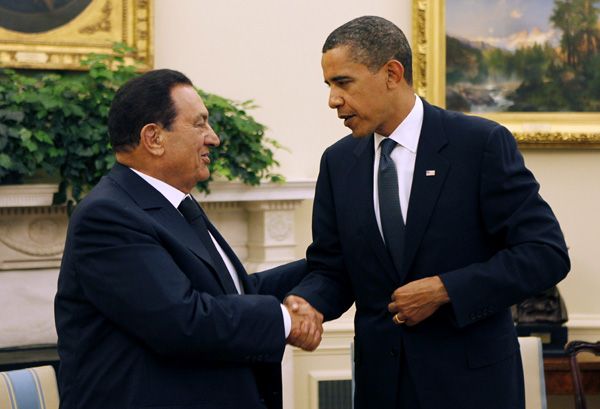
Some outlets saw a distinct shift in the Obama administration’s position–well ahead of any evidence to that effect. The Washington Post published a January 27 piece headlined “As Arabs Protest, U.S. Speaks Up,” which declared that the White House was “openly supporting the anti-government demonstrations shaking the Arab Middle East,” adding that the administration had “thrown U.S. support clearly behind the protesters, speaking daily in favor of free speech and assembly even when the protests target longtime U.S. allies such as Egypt.”
The Post‘s evidence, however, was thin: a quote from Secretary of State Hillary Clinton stating that the Mubarak government should “respond to the legitimate needs and interests of the Egyptian people.” The strongest support for the notion that the U.S. was backing the street protests came from an anonymous administration official–hardly an indication of “speak[ing] up” in “open support.”
Another Post article tried to make the case again on January 31:
The Obama administration firmly aligned itself on Sunday with the protest movement that has overtaken Egypt, calling for an “orderly transition” to a more representative government amid rising U.S. concern that the demonstrations are turning violent and that unrest could spread across the Arab world.
Several paragraphs later, though, the Post added that the “shift in message had no visible effect in Cairo and other Egyptian cities,” and reported that prominent activist Mohamed ElBaradei’s assessment was that the rhetoric “had landed ‘like lead” in the Egyptian capital.”
It would seem that Egyptians have a clearer view of U.S. policy than many pundits and mainstream journalists. That point was driven home when NBC reporter Richard Engel, to his credit, brandished a tear gas canister that had been fired at protesters (1/28/11):
These were the tear gas canisters that were fired by all those riot police today. And if you look at them closely, they say clearly in English, “Made in the USA.” Egyptians have been picking them up, they’ve been looking them over.
But then, as if this straightforward illustration of the U.S. role in Egyptian repression was too revealing, Engel qualified his observation: “And from an Egyptian perspective, it does seem like Mubarak and the United States are working together. So the U.S. is walking a fine line here.”
It does not, in fact, take an “Egyptian perspective” to appreciate how crucial U.S. support has been to the Mubarak dictatorship. One only needs to look at the history of the past three decades–a history U.S. media would prefer that we overlook, or treat as part of a delicate “balancing act.”
Partnering with Polluters
In this week’s MiBiz Michigan Loves Manufacturing e-blast there was news of a collaboration between Dow Chemical and the Nature Conservancy.

The e-blast news brief stated, “Dow Chemical and its foundation are committing $10 million over five years to a collaboration with The Nature Conservancy, to evaluate Dow’s environmental impacts.” For those wanting more details there was a link to Environmental Leader, which identifies itself as Energy and Environmental News for Business.
The article on Environmental Leader states, “The chemical company and environmental non-profit will apply scientific knowledge to examine how Dow’s operations affect nature, and how to factor the role of nature into global business decisions, the two organizations said.”
The article goes on to say that Dow and the American Chemistry Council worked to defeat an effort in Seattle to put a 20-cent price tag on plastic bags and a legislative proposal in California that would have eliminated plastic bags. This information is puzzling since it reflects to this writer an anti-environmental position, where Dow fought to keep plastic bag use the norm on the west coast.
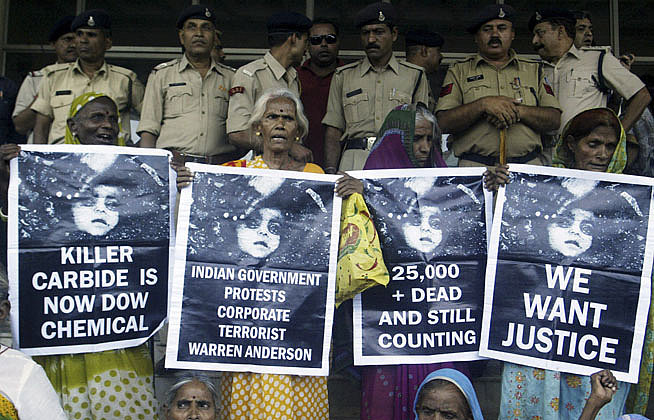
The article then states, “The Nature Conservancy and Dow Chemical are both members of the United States Climate Action Partnership, which lobbies the government on the need for greenhouse gas reduction legislation.” However, according to Sourcewatch the US Climate Action Partnership is made up of major global polluters like Shell, GM, DuPont and Alcoa. In addition, there is no evidence that the group lobbies for greenhouse reduction, rather many of the partner groups are actually involved in opposing greenhouse-gas regulations.
In addition, the article does not raise any issues around the partnership between Dow and the Nature Conservancy. Why would a national environmental organization partner with a company that has a long track record of disregard for negative environmental and health consequences?
For some sectors of the environmental movement this partnership between a known polluter and the Nature Conservancy seems quite natural. Environmental reporter Jeffrey St. Clair notes in a recent series of stories that are critical of many of the national eco-organizations that the Nature Conservancy is “the most unapologetically pro-corporate of all environmental groups.”
The Nature Conservancy (TNC) has a history if supporting corporate friendly policies, with the recent example of their support for a water diversion canal in California that would benefit agri-business. In May of 2010, the Washington Post wrote a story about TNC’s long-time relationship with BP, in which the organization’s CEO defended this partnership.
TNC argues that it is better to develop partnerships with huge corporate polluters than to just see them as the enemy. This kind of relationship has been financially very lucrative, but does it compromise on real environmental protection? Is the decision by Dow to hire The Nature Conservancy merely a PR move to win over public support for their claims of practicing sustainability?
These are important questions that we should all demand that news sources ask when reporting on partnerships between large corporations and environmental groups. It is not enough to assume that real sustainability will be practiced just because the groups involved make such a claim.


