New Media We Recommend
Below is a list of new materials that we have read/watched in recent weeks. The comments are not a “review” of the material, instead sort of an endorsement of ideas and investigations that can provide solid analysis and even inspiration in the struggle for change. All these books are available at The Bloom Collective, so check them out and stimulate your mind.

Food Justice, by Robert Gottlieb and Anupama Joshi – The issue of local food is quickly becoming an issue that has entered the mainstream of American society. However, as the authors of Food Justice correctly observe, local food doesn’t necessarily translate into just food. In this new book the authors not only provide readers with an overview of US food policy since the Civil War, it grapples with the complexities of how we create a food system that is based on justice and not on profits. Their exploration of this issue is timely since agribusiness and food brokers like Wal-Mart are attempting to undermine the grassroots evolution of what can be called the food justice movement. The book provides local examples of what is working across the country and is an invaluable resource for anyone who believes good food is a right.

Crude reflections/Cruda realidad: Oil, Ruin and Resistance in the Amazon Rainforest, by Lou Dematteis and Kayana Szymczak – Crude reflections is part picture book and part inspiration. The authors have created a fabulous visual resource that captures both the beauty of the Amazon and the harsh realities of oil extraction. Add to this the fact that the book is in both English and Spanish and you have a wonderful resource about one of the most important human, environmental and political battles in recent years. The indigenous people living in Ecuadorian part of the Amazon have been involved in a life and death battle with the oil giant Chevron for years. Crude reflections documents this battle and demonstrates in text and with photography the courage of people committed to protecting the land they love.

Crossing Zero: The AfPak War at the Turning Point of American Empire, by Elizabeth Gould and Paul Fitzgerald – In the 10th year of the US occupation of Afghanistan there doesn’t seem to be an end in sight for the disastrous military campaign. Veteran Afghanistan experts Elizabeth Gould and Paul Fitzgerald provide a fresh analysis, with some historical background on why the US policy is doomed to fail. The authors particularly have timely analysis of the Obama administration’s counter-insurgency strategy, the expansion of the war into Pakistan, the Karazi government, the Talilban and a regional outlook on the conflict. For anyone looking for a sharp counter-argument to the White House on Afghanistan, Crossing Zero is an excellent resource.

Gasland (DVD) – Nominated for the 2011 Oscars for best documentary, Gasland is both an informative and moving film by Josh Fox. Fox, who grew up in a small, rural home in Pennsylvania is one day confronted by a large energy company who wants to buy his land to extract natural gas. Fox then discovers that his home sits on top of one of the largest natural gas deposits in the US. In addition, the filmmaker learns that the way that these energy companies extract the gas is through a process called fracking, whereby they drill holes and detonate explosives underground to create cracks that will allow the companies to easily extract the natural gas. However, the process also involves sending a chemical/water mix in the holes, which have created devastating results for anyone who lives nearby. Gasland is a superb film in that in both humanizes the victims of this practice and unwraps the devious web of politicians and corporations that have conspired to make this happen.
Bullying the topic of Forum in Grand Rapids
Yesterday there was an anti-bullying forum hosted by the Michigan Civil Rights Commission at Union High School in Grand Rapids. The forum was organized into two blocks of time, with a series of invited speakers who addressed the issue of bullying first, followed by public comment.
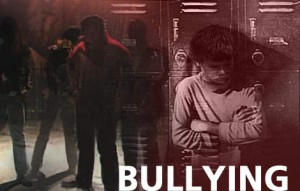
A representative of the Michigan Civil Rights Commission stated up front that they are using these kinds of forums as an opportunity to get input from the public in determining what kind of policy recommendations they will make.
The first person to address the Commission was Josh Lator, with the Michigan State Police. He addressed the emerging trends in technology and how that contributes to the ways in which bullying is manifested today in what is called cyber-bullying. Emerging technology shows that students are bullied not only at school, but throughout the day through digital formats – texting, Facebook, Twitter and other social media tools. Sgt. Lator gives the example of how a news story perpetuated bullying, by doing a story about a form of bullying that was caught on video and posted online. Unfortunately the TV station ran the video and told viewers that it would be linked off of their station’s website.
The next speaker to address the Commission was Michele Kominski, who talked about workplace bullying. Workplace bullying can come in the form of intimidating co-workers, harassment, making fun of and demeaning workers, often perpetrated by employers or supervisors. This is quite common and she cited a study that says that 13% of the workforce has been bullied in the past year. It is more common in some occupations, such as nursing where just over 50% of the nurses surveyed said they were bullied. One of the consequences of this for workers is higher absenteeism, which results in economic costs for employers. The speaker said that Healthy Workplace legislation would help to provide some advocacy for workers and a mechanism for accountability.
Another speaker was Martha Cortez Gonzalez, with the Hispanic Center of West Michigan. Their organization does a great deal of work with youth, which serves roughly 350 youth throughout the year. Gonzalez says that there are 5 distinct Latino gangs in Grand Rapids and this is an issue that they have done both research and work around. Of the 100 youth they have interviewed in the last 2 years all have said that bullying was something that they experienced as a tool that was being used by people who want them to either join a gang or because they were the target of gang activity. Martha also said that the local news media needs to make some changes in order to address their role in bullying. She stated that local media is culpable in these dynamics, particularly because of the vicious comments that are allowed online after articles where people can intimidate and harass people without giving an identity. This is an issue we have noted with the Grand Rapids Press online partner MLive.
Julio Woods, from the US Attorney’s Office for West Michigan spoke next. She suggests that schools need to have a protocol that will allow students to file complaints and to prosecute students who are engaged in bullying. This should include both verbal and digital forms of bullying. If there are no protocols it makes it difficult for students to report any incidents and depending on the severity of the bullying it can make it more difficult for students to get these forms of bullying reported to local law enforcement. She also offered those in attendance an online resource that her agency provides.
Dr. Walter Bramme with the Grand Rapids Urban League followed MS. Woods. Dr. Bramme addressed the issue of bullying from the perspective of race. Bramme began by speaking about the social construction of race and racism. Bramme cites Michele Alexander’s book The New Jim Crow as a reality for people of color since so many people of color are in the prison industrial complex. There are more people of color in the criminal justice system than there were enslaved people in 1860, according to Bramme. The Urban League director ended by saying that bullying is manifested towards Black youth because of the socio-economic dynamics that Black youth live under.
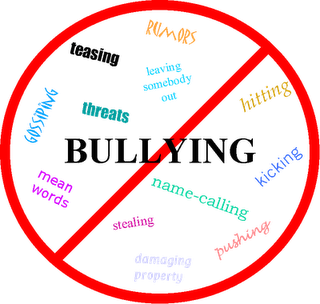
The next speaker was Larry Johnson, Security Manager for the Grand Rapids Public Schools. Johnson said that even if policy or legislation is mandated, resources need to be allocated in order for he policies to be enforced. Johnson makes the point that there are those that are bullied, those that do the bullying and those who are bystanders. He also says that there are schools that allow bullying to take place. Schools are a microcosm of the community, said Johnson, so if bullying is happening in the community, it is happening in the schools. “Therefore it must be a communitywide effort to address this problem.” He also mentions that besides students who bully, there are teachers and coaches who also engage in bullying.
Denise Brogan Kator with Equality Michigan followed Mr. Johnson. Denise made the point that LGBT students are bullied at a significantly higher rate than non-LGBT students in the state. The number one reason that students are bullied in schools is the real or perceived sexual orientation of students. She says that another important issue was how we model negative behavior in how we engage each other, both in our public discourse and on blogs. We need to encourage respectful dialogue around whatever issue that is being discussed. Michigan is only one of five states in the country that do not have any legislation to protect against bullying, according to Kator. She also said that there are those that oppose it because of the specific language about who are the primary targets of bullying, the LGBT community.
A Woman from the Wyoming Community Youth Coalition encouraged people to watch this short video on YouTube, which is about parents of a teenager, which committed suicide after being the victim of bullying.
After the video the Commission opened up the forum for public comment. There were several area students who are all part of the Grand Rapid Mayor’s Youth Council. The first student said that in recent polls she has seen that 2/3rds of kids have reported being bullied. She told how she herself would sometimes stay home from school to avoid bullying. She mentions that there is both verbal and physical bullying, with cyber-bullying being a part of verbal bullying. She also states that there is obvious bullying and what she refers to as secret bullying. An example of secret or subtle bullying is when we call kids names or make up things about kids, which is common on social media.
Another student, Colandra Jones who is a Senior at City High, spoke about examples of bullying at the high school. She also spoke about intervening that was effective and how that it is important for students, particularly older students who can set an example for younger students. She told those present that the Anti-Defamation League came to her school to do a diversity training. Colandra said that it was useful, but needed to be for a longer period of time. She also talked about her own victimization of bullying and stressed the need for eliminating the socio-economic dynamics that contributes to bullying. She also stressed that adults need to take students seriously, to listen to them and support them by engaging other parents, teachers and school administrators on this matter. “Everything you do, or don’t do has an impact!”
Another student on the Mayor’s Youth Council has had lots of experience with bullying, mostly because of his size or because he has been labeled a nerd. He learned to cope, but mostly he felt that people didn’t care because there was no mechanism in place to deal with it. He talked about an upcoming event called Kids Speak and the topic this year is how schools can eliminate bullying. Everyone was invited to attend the event, which will be on April 29th at City Hall in Grand Rapids.
A young Black student who is also part of the Mayor’s Youth Council spoke next. She talked about being bullied in school, which didn’t surprise her. What bothered her more was the inaction of the school despite her and her parents informing the school. She was hit in the face with a broken bottle by another student, which required her to go to the hospital. The perpetrator only got a 3-day suspension, because she verbally responded to the perpetrator. She now sees the same things happening to her younger sister.
Another student on the Mayor’s Youth Council says that he has been the victim of bullying most of his life. He said that the bullying began in kindergarten but it escalated during Middle School. He thought because of his being the target of bullying for so many years that he was the problem. He says that there is negative behavior and bullying in the Catholic Schools, even from the teachers who intimidate students.
After the last student spoke one of the Civil Rights Commissioners asks the audience about witnessing times when bystanders took action. Only a few people in the audience raised their hands.
There were also two women who spoke during the public forum. The first was a woman from Jenison who has kids in the public school system. She says that there have been numerous examples of bullying that her sons have been the target of. She has communicated with the school administration, but has not seen any concrete results. She was forced to go outside of the school system, which finally got their attention. This has been going on for years and the school district would not take action. “Why isn’t there a program, legislation to educate kids about the realities of bullying,” she asked the Commission. She spoke with a great deal of frustration about her kids not being listened to by school officials and even stated that she is considering removing her children from that school district.
The last woman to address the Commission said she has been a victim of bullying in the workplace for the passed four years. She spoke emotionally about her experience, which she has documented over 300 separate examples of being bullied at work. She pleaded with the Commission to help pass legislation in Michigan. She stated that she is currently off work and is afraid to go back for fear of continued bullying.
At the end of the forum the Civil Rights Commissioners let people know that if they or anyone else wanted to submit testimony or statements on the issue of bullying they could send them to this E-mail Millerj31@michigan.gov. People were also encourage to mail in statements to:
Michigan Department of Civil Rights
Attention: Bullying Forum Grand Rapids
Cadillac Place
3054 West Grand Boulevard, Suite 3-600
Detroit, MI 48202
The Story of Citizens United v. FEC: Why Democracy Only Works When People Are in Charge

Annie Leonard is at it again. The creator of the animated series the Story of Stuff just completed her newest short film, which takes a critical look at what is now known as Citizens United v FEC.
Citizens United v FEC was a Supreme Court decisions that essentially gave corporation (or any other entity) the ability to influence electoral politics with no real limited to campaign donations.
In the animated video The Story of Citizens United v FEC Leonard provides us with a fundamental understanding of the growth of corporate power and why this Supreme Court decision was anti-democratic and even provides us with ideas about how to challenge it.

On this day in 1794, Philadelphia shoemakers came together in solidarity to stop the erosion of their industry by greedy factory owners at the start of the Industrial Revolution. The workers formed The Federal Society of Journeymen Cordwainers, a union for leather workers and cobblers. By working together, they managed to regulate machinery use and still allow jobs for craftsmen who took pride in their handwork. For a decade, the organization was highly successful by maintaining a delicate balance: protecting the rights of its members while still allowing the industry to change and grow. In one example, the union helped factory owners cultivate a new market for shoes to the American South.
The union worked peacefully for 12 years, with the only reported problems some scuffles between striking workers and scab employees during a strike in 1805.
But factory owners kept pressuring the union to reduce its piece-rate wages so that they could rake in more profits. That was when the union took action and went out on strike after a proposed wage increase was rejected. The shoe factory owners retaliated by founding a management organization. And then they filed six separate lawsuits, which were heard together as one case, Commonwealth v Pullis. One charge was “criminal conspiracy”: the union, the court papers said, was a price-fixing scheme to raise member wages.
Another charge against the union was that it was a “coercive” and “violent” organization. The violence was a single potato—lobbed at a scab worker during the 1805 strike, it missed and broke a shop window. And the coercion? That was the union’s success at negotiating the first closed shop agreement in the United States. All people working at Society-staffed manufacturing sites had to be members of the union. If a factory owner tried to hire a non-shop employee, the union members working there could strike on the spot and walk out.
During the court case, the factory owners broke the law several times, the worst example of which was that they, not the government, paid the prosecuting attorneys—and at a much higher rate than court-appointed prosecutors usually made. Motivated by their increased takings, the attorneys launched several lines of attack in their six different suits. In addition to the conspiracy charges and charges of coercion and violence, another accusation was that “the workers were transitory, irresponsible, and dangerous,” and needed “the subject of judicial control.”

But the focus taken by the court was that citizens did not have the right to judge their own economic value, and did not have the right to object to any value placed on them by society—with society defined as the factory owners. Commonwealth v. Pullis is one of the first instances on record of the government showing preferential treatment to businesses over citizens. It is also the first American case where the courts were used to bust a union.
After a three-day trial, the Federal Society of Journeymen Cordwainers was found guilty of conspiracy to regulate the price of their labor. It was also noted by the judge that the union members had hampered “the just stewardship of the elite.”
The assessed fines bankrupted the union, so the factory owners were successful in their intent—and continued to use this strategy to their advantage until 1842. That’s when a ruling in the Pennsylvania case Commonwealth v. Hunt affirmed that unions were legal organizations, with the legal right to strike. Between 1806 and 1842, however, any member of a union could be charged and imprisoned on the grounds of conspiracy.
After 1842, capitalists found other ways to attack unions: through anti-trust suits, through court injunctions, through hired thugs who attacked people during union meetings. But a primary strategy in business owners’ line of attack against unions was broken when the judgment against the shoemakers’ union was found to be baseless and unjust
Guerilla Midwife documentary & Future of Birth in Michigan discussion
 Guerilla Midwife &
Future of Birth in Michigan
6 p.m. Doors. Film at 6:30 p.m.
Thursday March 3
Wealthy Street Theater
1130 Wealthy SE, Grand Rapids
Donations to International Cesarean Awareness Network (ICAN) and Bumi Sehat Foundation International
Why is a film about a midwife serving the poor in the Philippines relevant to the Grand Rapids community? A community with its own Medical Mile boasting some of the most high-tech obstetric services available today?
Because birth is not about technology. It is about humanity. Not just the human infant or its immediate family, but about how we weave the very fabric of our culture. That fabric is warped, frayed, weak and unevenly woven. Getting back to humane birth—birth where the mother is empowered by her community to give birth naturally and in connection to herself and her child—is an essential piece to the sustainability of a humane human race.
While US obstetric units boast about the latest in ultrasound imagery, fetal monitoring capability, easy epidurals and a technological answer to every complication that might arise, our infant mortality rates remain embarrassingly high (second highest on the world with African American babies twice as likely to die).
Our infants grow to be preschoolers diagnosed as bi-polar and elementary students medicated for ADHD. Autism is practically an epidemic. And, when technology and prescribed medicines don’t do the trick, our teens turn to illegal drugs. As adults, we struggle not only with a host of health issues but also with dysfunction in our relationships.
What does that have to do with birth? Everything. Come and find out why—and to see the simple alternative that could start us on the path to reclaiming wellness, real community, healthy relationships and a sustainable culture.
View the trailer:
Michigan Lobbyists Spent just short of $32 Million for 2010 in Lansing
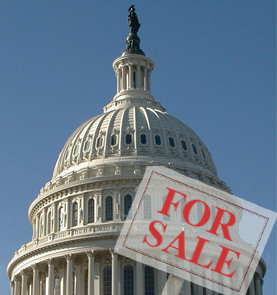
The Michigan Campaign Finance Network (MCFN) just released new information on the top 200 Lobbyists in Michigan for 2010.
The Lansing-based watchdog group stated in a Media Release on Thursday, “Reported Lansing lobbying expenditures totaled $31,811,476 in 2010, according to figures compiled by the Michigan Campaign Finance Network from reports filed with the Michigan Department of State. That amount is down by $38,440, or one-tenth of a percent, compared to 2009 figures.”
According to the MCFN, “The top six spenders in 2010, and eight of the top ten, were multi-client firms. Leading spenders among the multi-client firms were; Governmental Consultant Services, Inc. ($1,279,804), Kelley Cawthorne ($1,151,760) and Karoub and Associates ($1,041,575).”
Other notable big spenders in the area of lobbying for 2010 were:
Blue Cross & Blue Shield of MI $259,378
Consumers Energy Co. $190,039
DTE Energy $180,602
MI Retailers Assoc. $160,607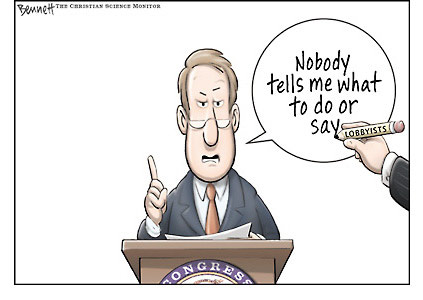
Ford Motor Co. $149,064
MI Beer & Wine Wholesalers $140,194
Michigan Farm Bureau $120,773
MCFN director Rich Robinson noted in the Media Release that there are still serious issues of disclosure and transparency for Lobbyist reporting in Michigan. “Michigan lobbying reports reveal less than those required by the federal government and several other states. The multi-clients report their client list, but they don’t report how much they spend representing each of them. And nobody is required to report travel spending less than $725 on behalf of a lobbyable official. Those are important gaps in disclosure that should be corrected by the legislature.”
Transit Forum next Monday with area Legislators
On Monday, March 7 people will have an opportunity to engage legislators from Kent County on the matter of public transportation.

Disability Advocates of Kent County, Concerned Citizens for Improved Transportation, Faith in Motion, and Essential Needs Task Force are the sponsoring organizations that have invited various elected officials to provide an opportunity for the public to engage them on what kind of transportation needs there are in the county.
Grand Rapids and the surrounding municipalities will be voting on a transit mileage in early May, but this forum is not limited to that upcoming election.
The legislators who have been invited are: Representatives Lisa Posthumus Lyons, Ken Yonker, Peter MacGregor, Dave Agema, Brandon Dillon, Roy Schmidt, Thomas Hooker and Senators Mark Jansen and Dave Hildenbrand.
The event is a luncheon that costs $10, but scholarships are available for people who cannot afford it. If you need to apply for a scholarship do so before the end of this Monday, February 28 by sending an E-mail to lorie.t@dakc.us. To register you can also call Lorie Tensen at (616) 949-1100 ext. 230 or lorie.t@dakc.us, with the deadline also being tomorrow, February 28.
The event is Monday, March 7 beginning at noon and will take place at LaGrave Avenue CRC, 107 LaGrave SE in Grand Rapids.
Michigan Unions Rally in Lansing Against State Budget Proposals

Yesterday, over 1,000 people gathered in front of the state capitol in Lansing to participate in a solidarity rally with the current struggle in Wisconsin. The Lansing rally was just one of many that were organized across the country, where tens of thousands of people came together in support of working people in Wisconsin.
In addition to this being a solidarity rally for Wisconsin, working people in Michigan expressed their outrage at the budget proposal that Governor Snyder has put forth, which mimics Wisconsin on many levels.
Speakers at the rally addressed issues like tax breaks for the rich, further cuts to state employee benefits and pensions, further cuts to state education programs and the privatization of public services as a means to undermine organized labor.
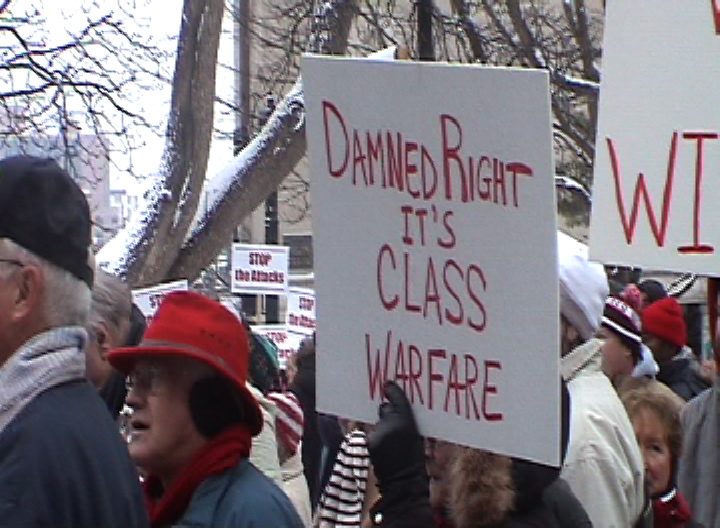
There were numerous unions represented at the rally, many with their own signs representing the UAW, AFSME, SEIU, MEA and the CWA. In additional to unions there were also people there fighting for public education, health care and against the tax cuts that Snyder has proposed, which they believe to be another benefit for the wealthy sectors of Michigan society.
While it was encouraging to see this many people come to Lansing to stand in solidarity with working people in Wisconsin, there was little evidence that this rally and those who organized it have a strategy to take on the State government’s effort to undermine the working class. There also wasn’t a clear enough analysis of what was going on or any indication of next steps from those who organized.
Having a strategy is certainly necessary if Michigan is to mobilize people the same way the Wisconsin has been able to. Michigan needs to have the kind of leadership and commitment from some of the elected officials to not only challenge the budget proposals of Governor Snyder, but also to honestly listen to and be advocates for the citizens of Michigan.
There was one creative element of the protest, where 5 people representing Billions for Billionaires came to thank the working people for allowing them to get richer. They even created their own song for the occasion.
Let’s Pollute: Oscar Nominee with a Conscience
This week I was able to see some of the Oscar-nominated short animation films prior to the award ceremony tomorrow night. The entry from the United States was “Let’s Pollute,” the brainchild of Geefwee Boedoe, a former employee of Pixar. He wrote, directed, and animated the film on a $15,000 budget, editing the final version in a friend’s garage.
Boedoe also wrote jingles for the film and convinced his wife to do recordings of them. It took him three years to finish the six-minute short. After being rejected as an entrant in 10 film festivals, “Let’s Pollute” won an Oscar nomination last month.
The film is about the economic and social devastation of pollution in our society, but it’s presented in the artificial, upbeat style of 1950s and 60s educational films for children. “Pollution is our heritage and keeps our economy going strong,” the peppy narrator explains in the opening.
The introduction shows the history of pollution; how we initially tried hard without success to pollute the North American continent. It wasn’t always as “fun and easy” as it is now, the narrator tells us. Then we realized that “man needed a partner, an ally: he needed the machine.” It was this “wonder of waste” that helped us to get serious about pollution at last.
The second part of the film is the instructional part: it explains the simple rules of “how to be better polluters for a better blighted tomorrow.”
“Buy twice as much as you need,” the film advises, showing an American family at a huge discount store. One clip shows how to buy products with optimum packaging, as a man opens a case of chips, takes out box of chips, then a “fun-size” package from the box, and finally a tiny bag containing a single tortilla chip.
The film also instructs viewers to “throw twice as much away”—showing the family on a picnic, disposing of their plates, utensils, tablecloth, napkins, and picnic table. Then they roll up some Astro-turf and two fake trees and throw them away as well.
Moving twice as far away from your job is another piece of advice, showing how you can become a better polluter by having to drive longer to work every day. And you might even total your car in the process, creating even more landfill!
Leaving all the lights on in your house at the same time…shunning recycling…throwing away things instead of fixing them…are all great steps toward maximum pollution. But the really important thing, the film instructs, is to stop caring. “Remember,” the narrator says seriously, “you can always care less.”
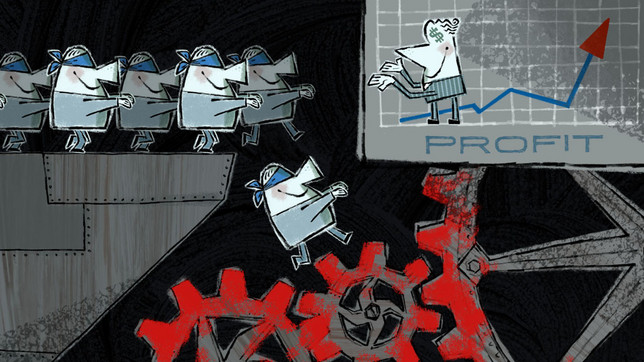
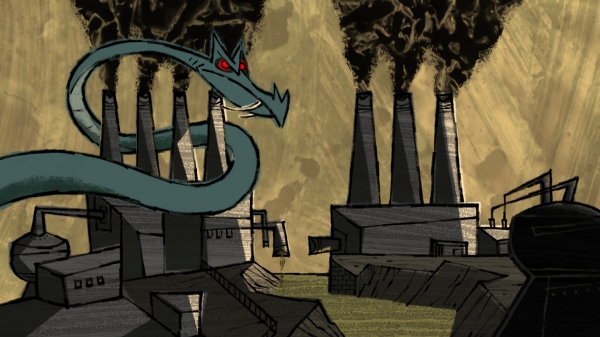
The film also offers some wickedly funny glimpses of capitalists. It depicts environmental regulations as a menacing dragon destroying the progress of pollution, as it takes smokestacks in a chokehold. The film then explains why it is much better not to have any regulations at all, assuring us that we can trust the capitalists to always do what’s best for us. As the narrator says this, a group of consumers march like lemmings toward a giant set of crushing cogs. A capitalist stands on a platform in safety, urging them forward, with a chart behind him totaling up more and more profits.
You can read more about “Let’s Pollute” on the film’s official site and see screen shots on Facebook.
Speaker at GVSU addresses Race, Class and the LGBTQ Movement
Yesterday, the LGBT Resource Center at GVSU hosted nationally know activist and author Kenyon Farrow to speak at an open forum and for the ongoing Change U participants.
Kenyon has been involved in organizing, activism and writing around a whole range of topics such as HIV/AIDS, Queer politics, race and economic justice. He has worked for and with groups such as Queers for Economic Justice and the prison abolition group Critical Resistance.
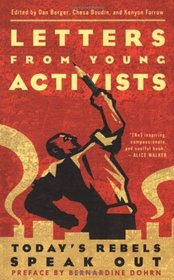
Kenyon’s writings have appear on numerous political blogs, he is co-editor of the book Letters from Young Activists: Today’s Rebels Speak Out and the upcoming A New Queer Agenda. The following article is based upon his afternoon talk on race, class and the LGBT movement.
Kenyon began his talk by saying that the four pillars of mainstream LGBT circles are: defense of marriage, gays in the military, Federal Hate Crime statues and the Employment Non-discrimination Act. Therefore it is important to think about what comes next.
These four issues are what in many ways define the “Gay Agenda” in the public mind. This is important for people to understand because it fits into the popular media construction of the LGBT community, which is epitomized by TV shows Will & Grace. Kenyon calls Will & Grace sort of a well fed and well scrubbed version of Leave it to Beaver, which is often what tends to represent everybody in the LGBT community.

This media construction of the LGBT community however is not rooted in any authentic historical understanding of how queer politics evolved. The lack of understanding about queer history was also seen in 2009, with the 40th anniversary of the Stonewall riots. Kenyon said that many of the upscale celebrations were happening on the heels of Sean Penn winning an Oscar for his role in the film Milk. When Penn accepted the award for his role about the gay liberation activist Harvey Milk he made the point that we all should support marriage equality. Penn statement and the upscale celebrations for Stonewall misrepresents the origins of the LGBT movement, according to Farrow.
The 1969 Stonewall riot was the watershed moment for the current LGBT movement, but much misinformation still surrounds what happened. One of the most commons rumors about the Stonewall riot is that when actress Judy Garland died “all the queens in New York were pissed,” which led to the riot. Kenyon provided people with a more authentic understanding of what took place.
Farrow said that the Stonewall Riots had more to do with how the police were targeting the LGBT community through harassment. Just before the riots New York City Mayor Wagner was lobbying for the city to be the next location for the World’s Fair. In order to make the city more appealing, Wagner decided to “clean up” the streets, even using existing laws to remove certain people from public areas.
Stonewall was one of the main bars that gays frequented. Wagner challenged bars on their liquor licenses. Existing laws also required people to wear at least two items of clothing that would be gender identifiers. Stonewall kept being raided and they eventually fought back. People were able to keep the cops at bay for 3 days during the riots. Kenyon also said that years later FBI documents showed that they thought that either the Black Panthers or the Weather Underground were involved in the Stonewall riots in some way, which demonstrates the power structures perception that the Gay community at that time was perceived as a threat. This, according to Farrow, should signify that the Stonewall riots are not the natural lineage of the current struggle for marriage equality.
After Stonewall groups like the Gay Liberation Front and many others tended to focus on issues like decriminalization and challenging the mental health institutions, which claimed that homosexuality was a mental disorder.
This is not to suggest that there were not more mainstream groups that were operating, but those groups were not calling for liberation. By the late 1970s and early 1980s, with the election of Ronald Reagan, it was seen as an electoral win of the neo-conservatives & the new Right. The Right talked about all the liberation movements of the 60s and 70s as representative of the destruction of the American family and American society. They constructed these movements as a threat to traditional, Patriarchal, normative family structures and as criminal elements.
Ronald Reagan’s election was seen by many as bringing back conservative family values. What was also happening at the same time was the surfacing of HIV/AIDS, what people were calling then the “Gay Cancer.” (Even though heterosexual needle drug users were already dying of AIDS) The right used AIDS as evidence that this was divine punishment for this free love/gay sex behavior.

Kenyons goes on to say that Queer politics at the time were left/radical, but certain factions in the Gay community started to believe the Conservative narrative about their being the cause of AIDS. Another component for the shift from a more radical queer politics was the fact that people of class and racial privilege also became involved because of AIDS. People with money and political clout began to support AIDS education and work, which shifted the politics of the LGBT movement to a more mainstream analysis.
In addition, according to Kenyon, another thing that happened in the late 70s/80s was that marketing data was showing that Gay magazine readers were a targeted group for products and lifestyles, which tended to mean White, Male, wealthier gay people. This is the root of what becomes the Human Rights Campaign and the National Gay and Lesbian Task Force, both of which are the more mainstream and privileged sectors of the LGBT movement.
This evolution of the LGBT movement continues in 1992, where Clinton became the first Presidential candidate to court the gay vote. He targeted them by saying he wanted to lift the ban on gays serving in the military. However, Kenyon points out that why he was courting the Gay vote Clinton was also polling as soft on crime, so he went back to Arkansas before the election to give an executive order to execute a black man on death row. Farrow makes the point that there was a disconnect between race and class issues that affected millions of people in the LGBT community, but it didn’t matter to the national groups since they were representative of a more racially and economically privileged sectors.
So what we begin to see with these new LGBT organizations is that they were making decisions about a national agenda without getting input from the grassroots. The rationale has been that if these issues can be won it will help the Right see that the LGBT community is ok and can be accepted, according to Farrow. He said that the suicide of numerous queer youth last year shatters this notion that they will be accepted.
Another issue that reflects this disconnect, according to Farrow, is the issue of gays in the military. What Kenyon fins problematic about this policy is that the US is immersed in numerous wars abroad where innocent people are being killed, even queer people who live in Iraq and Afghanistan. Farrow points out that since Iraq was a very secular country under Saddam Hussein, many gay Arabs would come to Baghdad, which was seen as the San Francisco of the Middle East.
Kenyon also pointed out that money spent on militarism was a racial and economic justice issue, which also negatively impacts the LGBT community across the country. Lastly, he pointed out that the military in general is not an institution that is about justice and equality. He gave the example of how mainstream LGBT groups missed the boat on this issue by referring to an incident before the US invasion of Iraq when some US soldiers wrote on the side of a bomb, “Die Iraqi faggots!” The Human Rights Campaign made an issue of the use of the word faggot, but said nothing about the use of the bomb.
On the matter of Hate Crimes legislation Kenyon pointed out that it was important to understand that the US has the largest prison population in the world, with the majority being people of color. This is the context of the US prison system, but there is little analysis of this from the LGBT community on the racist nature of the prison system. Hate Crimes legislation is also being abused he said. He gives the example in South Carolina where blacks kids being charged with assault, where the prosecutors are attaching anti-lynching penalties onto the charges, so sentences are increased by misusing hate crimes laws.
Lastly, Kenyon addressed the issue of the Employment Non-discriminatory policies, which do not address the structural problem of how people of color and LGBT folks are excluded from job opportunities. Kenyon said that the Human Rights Campaign (HRC) talked to the Labor movement about this issue, which in turn wanted support for the Employee Free Choice Act. Kenyon says that HRC has a business council, representing some of the largest multinational corporations, which convinced the HRC to not support the Employee Free Choice Act (EFCA). HRC eventually did endorse EFCA, but did not post it anywhere on their website.
Kenyon concluded by saying that this is the LGBT movement that has emerged, one that is mainstream and privileged with little regard for doing broader justice work. Farrow believes that if the LGBT movement is to survive and to be an important component in the liberation of people it will need to develop a more radical critique of society and take a strong stand on issues like economic justice, racial equality, anti-militarism and prison abolition, just to name a few.

