(This article by Andy Kroll is re-posted from Mother Jones.)

Last week, Michigan’s Republican Governor Rick Snyder signed into law a fiercely contested bill giving unelected “emergency financial managers” unprecedented power to shred union contracts, privatize city services, and consolidate or dissolve local governments, all in the name of saving struggling cities and school districts. Dubbed “financial martial law” by one approving state GOP lawmaker and “disaster capitalism” by critics, Snyder and his bill have become a target for Wisconsin-like protests. Several thousand demonstrators marched on the Michigan Capitol in the days before Snyder signed the bill. But gone unmentioned is a little-known Michigan think tank that for years has been pushing for the most controversial provisions in Snyder’s bill—and that’s bankrolled by some of the same right-wing millionaires and billionaires that backed Wisconsin Gov. Scott Walker and his anti-union legislation.
Since 2005, the Mackinac Center for Public Policy has urged reforms to Michigan law giving more power and protection to emergency financial managers, state-appointed officials who parachute into ailing cities or school districts and employ drastic measures to fix budgets on the brink of collapse. In January, the free-market-loving center published four recommendations, including granting emergency managers the power to override elected officials (such as a mayor or school board member) and toss out union contracts. All four ended up in Snyder’s legislation.
“The Mackinac Center has been tied at the hip with the Republican Party establishment for years,” says Doug Pratt, public affairs director at the Michigan Education Association. “It goes to their funding sources; it goes to their ideology.”

Mackinac is part of a network of state-based groups associated with the Heritage Foundation, the influential right-wing think tank in Washington. Its past and present board members include Robert Teeter, a GOP strategist and ’92 campaign manager for George H.W. Bush; Margaret Rieker, a former vice chairwoman of the Republican National Committee; and Joseph Lehman, a former vice president at the libertarian Cato Institute in Washington.
The Mackinac Center does not disclose its donors. But a review of tax records shows that the group’s funders include the charitable foundations of the nation’s largest corporations and a host of wealthy conservative and libertarian benefactors. Between 2002 and 2009, the Mackinac Center’s donors included the Charles G. Koch Foundation ($69,151), founded by the chairman and CEO of Koch Industries, who, with his brother, David, is a major backer of conservative causes; the Dick and Betsy DeVos Foundation ($80,000), the charity tied to the son of the co-founder of Amway, the multibillion-dollar direct marketing company; the Edgar and Elsa Prince Foundation, established by the parents of Blackwater founder Erik Prince, who serves as the foundation’s vice president ($195,000); and the Walton Family Foundation ($100,000), established by Wal-Mart founder Sam Walton and his wife, Helen.
Michael LaFaive, director of the Mackinac Center’s fiscal policy initiative, says the Center is never influenced by its donors: “We are happy to take checks from people who don’t agree with us, but they’re not the ones sending us money.”

Political action committees and non-profit groups linked to some of these same donors also helped fund Scott Walker’s gubernatorial campaign and his push to eliminate collective bargaining rights for most public-sector unions. Koch Industries’ PAC gave $43,000 to Walker’s 2010 campaign, while Wal-Mart’s PAC chipped in $15,000. Dick DeVos and his daughter, Elisabeth, also individually donated to Walker’s campaign.
The Mackinac Center’s is a fervent advocate of privatization—its scholars support outsourcing everything from public school districts to Amtrak to state prisons—and backs anti-union legislation for Michigan. In 2007, the center published “A Collective Bargaining Primer,” advocating against mandatory unionization and automatic dues deductions for public school teachers and other public employees. Collective bargaining for teachers, the Center claims, “has become a significant deterrent to educational quality.” In other words, if you outsource as much as you can and kneecap the unions, the quality of education—and presumably city services—increases.
That position is in line with the beliefs of its donors. In 2009, Amway and Wal-Mart were among the 3,100 businesses that signed a letter opposing the Employee Free Choice Act (EFCA), which would’ve made it easier for employees to unionize; that same year, Wal-Mart spent $7.4 million on lobbying, much of it to defeat EFCA. (The law failed.) The Koch brothers, meanwhile, fund an array of organizations opposed to unions, including the advocacy group Americans for Prosperity, the Cato Institute, and the Reason Foundation. With the Mackinaw Center, it seems, their investment is paying off.
Obama and the Legacy of Salvadoran Archbishop Romero

Yesterday, US President Barack Obama was finishing his 5-day tour of Latin America and while in El Salvador he visited to tomb of Archbishop Oscar Romero. Some may see this visit as a good will gesture that means the US is now on the side of justice, but this would be a naïve view of the significance of Obama’s visit to the tomb of the slain archbishop.
Romero was not only an advocate of the poor, but a spiritual leader who condemned militarism in El Salvador and the role that the US played in that militarism. In fact, Romero sent a letter to then US President Jimmy Carter just 5 weeks before he was assassinated and called on the US to stop sending weapons, military advisors and to not intervene diplomatically, economically or in any other way that would “determine the destiny of the Salvadoran people.”
The US did not listen to Romero’s plea for justice, instead they funded the bloody counter-insurgency war in El Salvador for the next ten years averaging a $1 million a day in military aid that resulted in an estimate 80,000 dead Salvadorans, most of which were murdered by the Salvadoran armed forces according to the UN Truth Commission Report.
In addition to the US role in militarizing El Salvador it has continued to intervene economically by brokering the Central America Free Trade Agreement (CAFTA) in 2006. Five years later the impact of CAFTA on workers and civil society in general has been devastating for the people of El Salvador.
One concrete example of how bad CAFTA is for El Salvador is the case of the Pacific Rim mining company, which has sued the government of El Salvador for $77 million because the government denied mining permits to Pacific Rim. The Committee in Solidarity with the People of El Salvador (CISPES) has been engaged in a campaign in conjunction with Salvadorans to fight Pacific Rim for years.
In addition to visiting El Salvador, Obama also made stops in Brazil and Chile on his four-day tour of Latin America. In keeping with the spirit of Archbishop Romero one could conclude that the President has not promoted more democracy and justice in the region. In fact, this administration has continued decades long policies of isolating progressive governments and supporting militarism.
The Obama administration continues to support the embargo against Cuba, the covert war against Venezuela, the militarizing of Colombia, and the coup in Honduras.

The group SOA Watch particularly thinks that Obama’s visit to Romero’s is dishonest because of the US role in the Honduran coup and their commitment to training Latin American soldiers.
“While Obama tries to portray a change in the dismal history of US relations towards Latin America, nowhere is it clearer than in neighboring Honduras that the past is the present. Last Friday, Honduran teacher Ilse Velasquez became the latest victim of the repression unleashed by the illegitimate regime of Porfirio Lobo. She was hurled unconscious onto the pavement, then hit by a car, after being struck in the head by one of the many tear gas canisters shot by police into the peaceful crowd. Ilse was the sister of Manfredo Velasquez, a student leader tortured and killed by the Honduran military in 1981 who was the subject of a landmark trial at the InterAmerican court that led to the founding of COFADEH and significantly improved the ability of victims of human rights violations to demand justice from their governments
The common denominator in all of these incidents is the leading role of SOA graduates. The repressive Lobo came to power via illegitimate elections following a coup led by two SOA graduates against President Manuel Zelaya in 2009. One of SOA’s most notorious graduates, General Gustavo Alvarez Martinez, was the head of the Honduran Armed Forces at the time of their murder of Manfredo Velasquez. He was also the founder of the brutal Battalion 3-16, whose tentacles continue to penetrate current Honduran repression. The person responsible for ordering police repression against peaceful protesters that led to Ilse’s death on Friday is none other than the nephew of General Alvarez: Security Minister Oscar A. Martinez Guerrero, and a 1991 graduate of the SOA.”
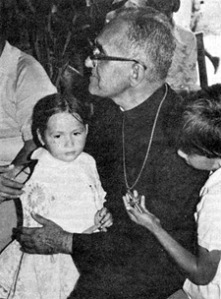
If US President Obama really wanted to honor the memory of the slain Archbishop from El Salvador he would not continue to support militarism and war throughout Latin America and the rest of the world. In fact, Obama would do well to learn a lesson from Romero and follow the spirit of one the Archbishop’s last public words in 1980 where he calls on Salvadoran soldiers to lay down their weapons:
“Brothers, you came from our own people. You are killing your own brothers. Any human order to kill must be subordinate to the law of God, which says, ‘Thou shalt not kill’. No soldier is obliged to obey an order contrary to the law of God. No one has to obey an immoral law. It is high time you obeyed your consciences rather than sinful orders. The church cannot remain silent before such an abomination. … In the name of God, in the name of this suffering people whose cry rises to heaven more loudly each day, I implore you, I beg you, I order you: stop the repression.”
Media Alert: AT&T wants to become a virtual monopoly
(This Media Alert is re-posted from Save the Internet.)
AT&T, the nation’s second-largest mobile phone company, has announced its plan to buy T-Mobile, the fourth-largest carrier.

This deal would form a communications colossus not seen since the monopoly days of Ma Bell. Two companies, AT&T and Verizon, would control nearly 80 percent of the mobile market in America.
AT&T’s takeover of T-Mobile would take away choice for users. And a lack of choice means higher prices, poor service and less innovation for everyone.
Free Press and our allies are determined to protect the public from this train wreck of a deal. We need to act before Washington can cave in again to industry — and raise thousands of voices in protest.
Sign on to this action and urge your friends on Facebook and Twitter to join in.
Fact v. Fiction
AT&T says the T-Mobile takeover “strengthens and expands U.S. mobile broadband infrastructure,” and that it helps us “achieve policymaker goals of deploying broadband to 95 percent of the country, including smaller, rural communities.”
Reality: According to recent Commerce Department data, wireless services are already available to 95 percent of Americans. If this merger goes through, analysts speculate that AT&T will decommission upwards of 40,000 wireless towers, reducing the quality of coverage for hundreds of thousands of Americans.
AT&T says the overall average price-per-minute for wireless services has declined 50 percent since 1999, “during a period which saw five major wireless mergers.”
Reality: That figure is highly misleading. While the cost to consumers for voice services has dropped, the sum total of charges on mobile phone bills has dramatically increased. Added costs include spiraling rates for texting and data services as well as hidden handset subsidies. With less competition among carriers, we can expect AT&T to charge you even more.
AT&T says the merger “enables the next era of American innovation and continued growth of U.S. high tech industry.”
Reality: The merger would allow AT&T to exert even greater gatekeeper control over what happens on the wireless Web. The company has a long history of blocking competing services — like Skype, GoogleVoice and Slingbox. And AT&T’s expanded control over the handset market will stifle innovation in devices. In the past, AT&T has crippled handheld phones that can do more than what the company wants.
AT&T says the merger will expand the American workforce by moving thousands of new jobs to the United States.
Reality: When was the last time a merger actually created jobs for Americans and not more pink slips? This merger puts the jobs of nearly 40,000 U.S. T-Mobile employees at risk. Many of the jobs at retail stores and call centers will be eliminated, and there will be more jobs lost as the effects of this merger ripple through the broader economy.
Jewish author critical of Zionism Speaks in Grand Rapids
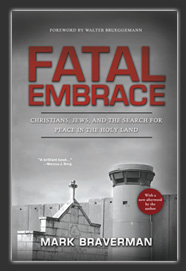
About 50 people attended an event yesterday co-hosted by the Christian Reform Church and Healing Children of Conflict. The event was a presentation by a Jewish writer and anti-Zionist, Mark Braverman. Braverman is the author of the book Fatal Embrace: Christians, Jews and the Search for Peace in the Holy Land and is part of a growing number of Jews who are critical of the State of Israel.
Braverman began his talk by sharing his own story, which is the story of a Jew who grew up with a Zionist narrative in a very traditional setting. Braverman says that he grew up in Philadelphia in a family that practiced conservative Judaism.
This type of theological Judaism is not only conservative it also embraces Zionism, according to Braverman, which is a more recent phenomenon. Braverman was taught that he was very fortunate because he has grown up in a time where the Jews have been redeemed based on the modern creation of the State of Israel.
Braverman also said that he grew up with this belief that all non-Jews were not to be trusted. Christians were seen as people who either wanted to convert you or kill you. However, when he went to Palestine in 2006 and saw what the Israeli occupation was doing it radically altered his worldview. When he heard the story of the Nakba, the 1948 ethnic cleansing of Palestinians from their own lands, it had a profound effect on him.
As he spent more time in Palestinian communities and saw the contrast between the Jewish areas and the Palestinian area he felt more at home amongst Palestinians. Then came the Israeli “separation” wall, which Braverman says is a death sentence for Israel, because it makes them more desperate and more like the historical oppressors.
 However, what eventually turned him around in how he now sees the world was the time he spent with and the relationships he developed with Palestinians. He says that the Palestinians were completely open to discussing the difficult issues around the Israeli/Palestinian conflict, much more so that Israelis.
He then told the audience about the visits he would make to the Sabeel Center, where a Palestinian Christian liberation theology is discussed and practiced. He told everyone about a conversation he had with a Palestinian woman named Nora whose family used to have a house in West Jerusalem. Braverman asked her how she copes with living under occupation.
Nora said that she copes because she is a follower of Jesus. She believes in non-violent resistance and that this testimony for Braverman is what gave him direction as a Jew. He realized that the Judaic tradition, particularly the prophetic tradition, says that one has to speak truth to power and advocate for justice and peace.
Braverman said that in the last day of this particular visit he was with a Quaker tour and saw young Jewish people near to a major Jewish center of worship. He said to one of the Palestinians that this was him 40 years ago and that these kids would just as soon kill the Palestinians in the group. His Palestinian friend said that he knew that and Mark asked what do I do when I go home to my people? He was told to go back to the US and change that belief among Jews and Christians.
Now he speaks in churches throughout the country, many of which welcome his perspective on the issue of Israel/Palestine. He says that the resistance to his message is strong and Christians tend to fear being labeled anti-Semitic, but Braverman says we have to have the courage to challenge this attitude.

He then says that often this issue is framed as a religious war, between Jews and Muslims, but Bravermen says this is not true, it is a struggle for social justice. “Zionism is not Judaism. The state of Israel does not represent the Jewish people,” said Braverman.
Braverman says that there are plenty of Jews in Israel who do not support the policies of the State of Israel. He says some of them have communicated to him that they support the Boycott/divestment campaign, because they do not want to raise their children in a culture that is so toxic with hate.
The author said this is an important global issue because of how it impacts people’s perception of the US. He says that many people have told him they hate the US because of what they are doing to the Palestinians. It is about deconstructing the whole American narrative of supposedly bringing this Judeo-Christian form of democracy to the world.
Braverman ended his presentation by debunking some of the mainstream narratives about US policy towards Israel/Palestinian, which insists the conflict is about the security of Israel. Braverman says this is absolutely not true and what the policy is about is the US maintaining hegemony in the region, which is why they back Israel.
“The churches have a history of working on these changes,” said Braverman. He then gives the example of the US Civil Rights Movement and the global anti-Apartheid movement against South Africa, both of which included the faith community.
Braverman seemed optimistic that people in the US can change their views on Israel/Palestine and that we can build a movement that will result in a lasting and just people for both Israelis and Palestinians.
Earlier this month when it was announced that Rep. King would hold hearings on “Muslim radicals,” it was just the most recent example of how Muslims have been demonized in commercial US media.
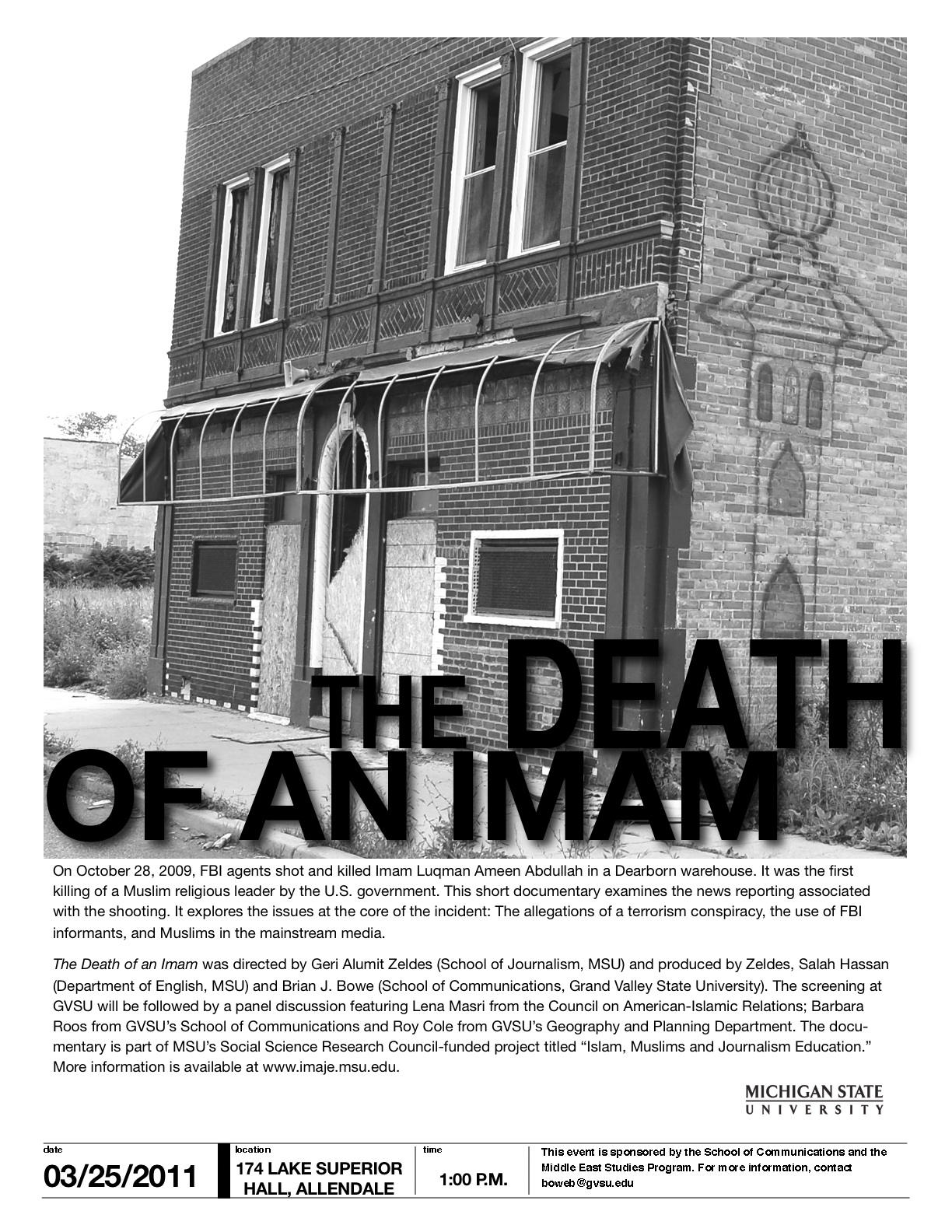
The Death of an Imam is a documentary that deals with a specific case of how news media dealt with an FBI shooting of a Muslim leader in Detroit in 2009.
According to promotional information on the GVSU webpage, “The film examines the news reporting associated with the 2009 shooting of Imam Luqman Ameen Abdullah in a Dearborn warehouse. It explores allegations of a terrorism conspiracy, the use of FBI informants, and the portrayal of Muslims in the mainstream media.
The 17-minute film was co-produced by Brian J. Bowe, a visiting assistant professor in the School of Communications. Bowe is also a doctoral student at Michigan State University, where he worked on the project with co-producers Geri Alumit Zeldes, an assistant professor in MSU’s School of Journalism, and Salah D. Hassan, an associate professor in the Department of English and core faculty in Muslim Studies. Bowe also composed the film’s soundtrack.
A panel of experts will discuss the film. They are Lena Masri, Council on American-Islamic Relations; Roy Cole, associate professor of geography and planning; and Barbara Roos, associate professor of communications.
Friday, March 25
1pm
Room 174 Lake Superior Hall
GVSU Allendale Campus
Protest Against Snyder brings out 75 people in Grand Rapids

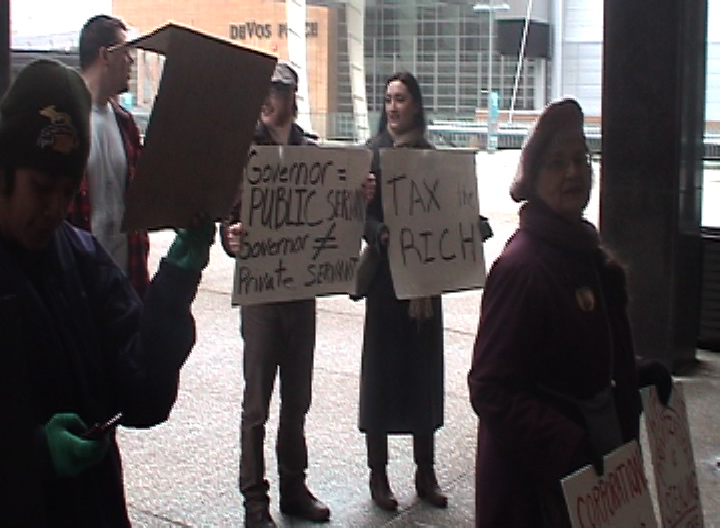
This morning while Michigan Governor Rick Snyder was sharing his “vision” for the state with an invitation only crowd inside City Hall in downtown Grand Rapids, about 75 people showed up to protest what many called anti-democratic policies.
Members of local unions such as IATSE and the IWW were present to express their disgust with Snyder’s proposals to eliminate state employee jobs, cut pensions and slash funding for a variety of sectors.
There were also teachers, activities, retired people and several families who came out with their children to say that what the Governor is doing will hurt families. Several people were particularly upset about Snyder’s decision to allow the state government to step in and take over local governments that were not “fiscally sound.”
Another major issue that has working people concerned is Snyder’s plan to alter how state revenue sharing funds will come back to local municipalities. According to Snyder this plan would reward municipalities that had “best practices” in three areas – accountability, service consolidation and employee compensation. Translated this means that municipalities that are willing to privatize services, consolidate with area governments and eliminate pensions and benefits from city employees would get funds from the state.
It seems clear that Snyder wants to reward only those local governments that embrace his vision to restructure the economy that will primarily be a benefit to the private sector. According to a report on MLive, “Mayor George Heartwell said he believes the city is well on its way to achieving the transparency and consolidation goals. As for replacing the city’s pension system, Heartwell said Snyder’s incentive “is going to be quite helpful at the bargaining table.”
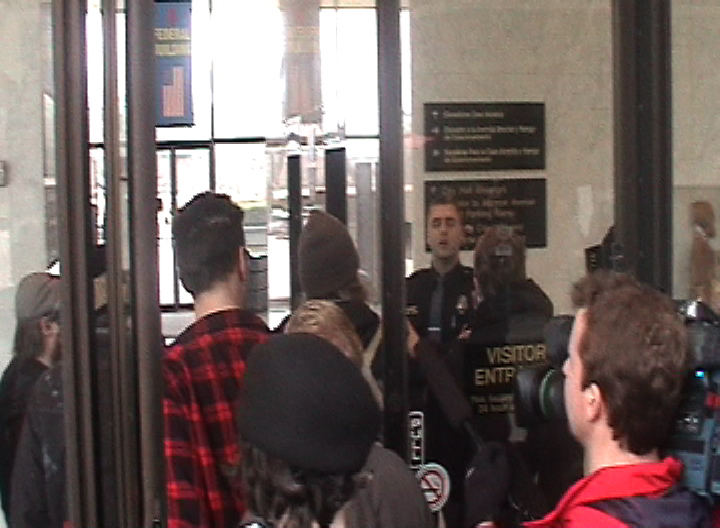
After standing just outside of City Hall for the first half hour, some people decided to go in despite police presence at the doors. Within 5 – 10 minutes roughly 40 people made their way into the City Hall lobby but were not allowed to go any further. Shortly after people entered the building those who had been invited to the closed meeting with Governor Snyder began exiting the elevators. There were City officials, County officials, State Rep. Roy Schmidt as well as numerous individuals from the private sector, such as Jeanne Englehart from the Grand Rapids Area Chamber of Commerce who passed through the crowd before leaving the building.
GRIID was able to speak to several people on camera about why they came out to protest Snyder’s policies.


IWW film night takes on Coca Cola
This Thursday, the Grand Rapids branch of the IWW will be hosting a screening of the new film The Coca Cola Case. The film investigates the brutal reality of union workers targeted for assassination in Colombia and the campaign to hold Coca Cola accountable for these crimes.
According to the film site, “Columbia is the trade union murder capital of the world. Since 2002, more than 470 workers’ leaders have been brutally killed, usually by paramilitaries hired by private companies intent on crushing the unions. Among these unscrupulous corporate brands is the poster boy for American business: Coca-Cola.”
The film is powerful and will challenge what you think about one of the most widely branded companies in the world. After the film there will be discussion on this case and the Killer Coke Campaign.
Thursday, March 24
7pm
IATSE Hall 931 Bridge St. NW
Grand Rapids
While Michigan has been stunned by our new governor’s war on the working class, and while the Midwest has been battling to prevent union-busting in several states, conservatives continue their witch hunt of undocumented workers. This past month has been a high-pitched one, both in the country at large and in Michigan.
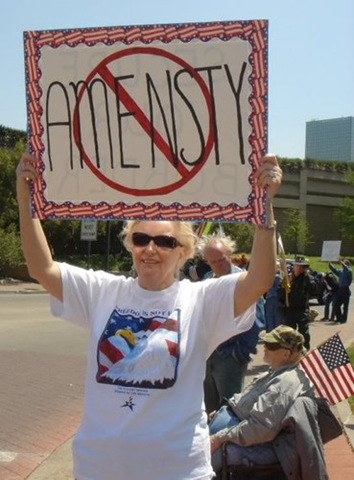 A week ago, Tennessee Representative Curry Todd compared undocumented workers to rats. During a panel discussion with prenatal care professionals, Todd asked them if they demanded that patients provide proof of citizenship before being treated. One panelist told the Congressman that that question was illegal because the child, when born, would be a U.S. citizen. And it was the child who was receiving the services. “They can go out there like rats and multiply, then,” Todd said in disgust.
Later, Todd said that he had been “harsh” in his wording, and said he should have used the term “anchor babies” instead—apparently feeling “anchor babies” would less offensive than something on the order of “baby rats.”
Meanwhile, not to be outdone, Todd’s colleague Geoff Davis, Congressman from Kentucky, posted a new section on his website about the repeal of the 14th Amendment. It includes this statement: “I am extremely concerned about illegal immigration and its impact on national security and the economy. Vulnerable borders and porous ports of entry leave our country susceptible to terrorist attacks and illegal trafficking.”
This seems to indicate that the Congressman feels that every person who crosses the border is either engaged in terrorism or illegal trafficking—of what, he fails to indicate. And his back-up documentation? Nada.
 Here in Michigan, Representative Dave Agema is also enthusiastic about appealing the 14th Amendment, and feels that Michigan’s version of Arizona law SB 1070 is the road to get there: “When you get a whole bunch of states on board with this [anti-immigration legislation], we’ll try to get the Congress to change the 14th Amendment back to what it should be, “said Agema in 2010.
Agema followed through this year by sponsoring HB-4305, which is virtually identical to the Arizona law. Why do we need it? Agema calls his bill “common sense.” Agema’s statement that the law is necessary is discredited by the facts. Michigan has one of the lowest estimated populations of undocumented workers in the nation—about 70,000, compared to approximately 1.5 million in Texas, 2.9 million in California, and a half-million in Illinois.
His fellow Representative Kim Meltzer explained “It [HB-4305] just makes sense for Michigan, with all of its national boundaries, to enact similar security for our citizens.” Oddly there are no news stories of Canadians crossing the Great Lakes in the dark of night because they are so determined to live in the United States—in fact, America is something of a national joke to the Canadians.
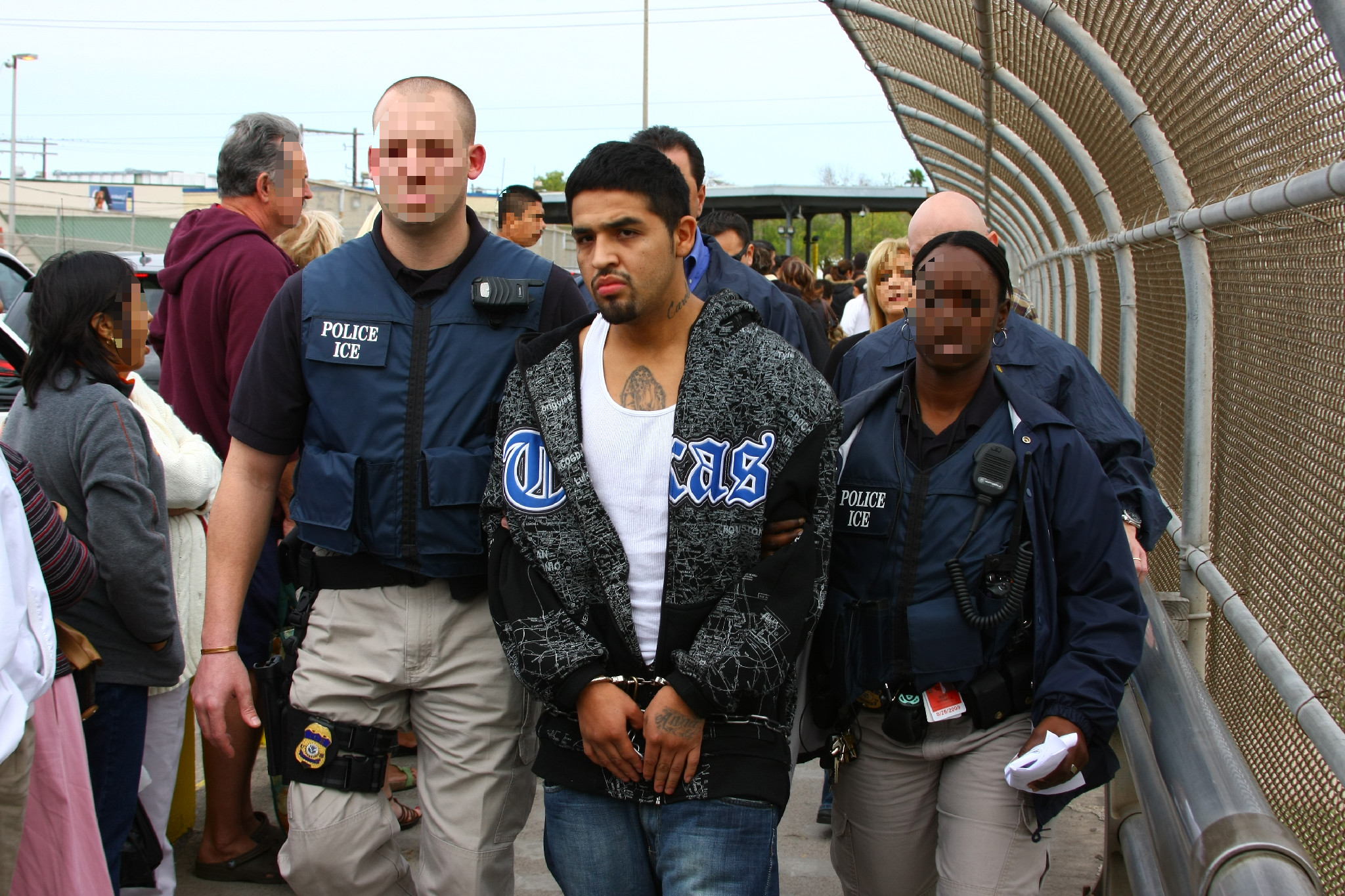
But the pressure on undocumented workers continues: the beginning of March was marked by a series of ICE raids in which 20 people were arrested and either held for trial or deported. Kalamazoo DPS Chief Jeff Hadley praised the ICE officers because “they are ridding our community of bad people.”
Why this sudden uptick of activity, denouncements, and hate speech? It could have to do with an announcement this month that the 2010 census indicated Latino/as have probably already become the “majority minority.” Results also showed that minorities as a group would become the majority population by about 2050.
An article in the Grand Rapids Press on March 13 about the census news triggered a rash of hate-speech commentary, although many of the comments have since been pulled down by the online editorial staff. Here’s a sampling:
I am thankful for the vast majority of Americans who want our immigration laws enforced and borders protected. What I’m not thankful for is that many Americans are out of work, yet illegals all over this state are stealing jobs, either with false soc sec. numbers or under the table and not paying taxes. Not to mention; driving on roads with no license, no insurance, kids burdening the schools, commiting violent crime, stealing benifits, falsifying documents, lying to employers, free health care, stealing federal grants for schools over citizens, and taking jobs and school spots from Americans.
The rise of the Hispanics have caused riots, like the ones that happened in Libery City portion of Miami years ago. When is the Obama administration going to step up to the problem? Answer: never as they see Hispanics as potential Democrat voters.
I actually wouldn’t mind this, in hindsight. The women are better looking too, and the ones who are uncorrupted by our unions and other “natives” still work hard…
No matter how nice the Mexicans are or how hard they are willing to work the facts are now clear. They have left a Crap hole of a country and are turning this one into the same. Unfortunately, they resemble a plague of Locusts stripping the land and they have turned into a massive mob of parasites. They are gobbling up tax payer money faster that the taxpayers can respond. Even when the jobs go away they still hang in there for the free items and services.
Where DO they all go? In the mornings (including Saturday) there is a large crowd of adults and children descending on the schools. Why you ask? For the free food of course. My advice? Never give money to the schools. It is only used here to house Mexican Nationals and free day care.
….MSNBC and other mainstreams love when illegals threaten and attack people, protest for illegals, exploit brainwashed kids at rallys, attack the consitution, hold fascist and Nazi signs, and destroy public buildings…
English is still the language of success. I live in Ca now and all the spanish speakers are stuck with leaf blowers on their backs.
Even though we have a lot to worry about in Michigan these days, it’s clear this at-the-boil hatred is a situation that bears continued monitoring.
Michigan Governor Rick Snyder will be in Grand Rapids tomorrow (Monday) morning to present his budget proposal to officials from the City.
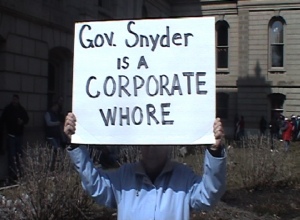
According to a Lansing-based news source, “Snyder will deliver a special message on community development and local government reforms.” The WILX story also stated, “The governor will transmit the message electronically to legislators before beginning his 9:30 a.m. address in Grand Rapids. Snyder wants state and local governments to offer better government accountability and transparency, spend less on employee compensation and share or consolidate more services.”
Snyder has been under attack from numerous civil society sectors in recent weeks because of his budget proposal and other government restructuring ideas that many feel are designed to weaken unions, defund public services, privatize public services and to take away more local government autonomy.
Snyder’s last draconian suggestion is to have local municipalities compete for state funds based on “best practices,” which means that tax revenue that would normally come back to all local governments will now be doled out based on how well these local communities have survived after several years of suffering from a spiraling economy.
In response to the Snyder visit there are two Facebook announcements for protests in Grand Rapids for Monday morning. One is called Protest Rick Snyder and is scheduled from 9 – noon at the Calder Plaza in downtown Grand Rapids. People are invited to come to this protest and make some noise.
The other Facebook announcement is called Protest Snyder at Grand Rapids City Hall. This protest is scheduled for 9 – 11am and says that Snyder will be presenting his proposal at 9:30 in room 660 in City Hall.
Seems like a great opportunity for people to voice their opposition to the Governor’s policies and to meet people who might be open to other organizing possibilities around these anti-democratic proposals.
Interview with “Art in Public” author Lambert Zuidervaart
On Thursday and Friday, Grand Rapids had the opportunity to be part of the kick-off to a new book tour by author and educator Lambert Zuidevaart.

Zuidervaat, a former Calvin College professor who now teaches in Toronto, came to Grand Rapids to unveil his new book Art in Public: Politics, Economics and a Democratic Culture. The importance of his book tour beginning in Grand Rapids was also because of his relationship to the Urban Institute for Contemporary Arts (UICA), where Lambert served as board president during the time the organization was moving into the Sheldon street location.
On Thursday, Zuidervaart gave a lecture at the Grand Rapids Art Museum that basically summarized the main points of his book. He talked about the function of art in the public, particularly its role in promoting a democratic culture.
On Friday, the UICA hosted a symposium in collaboration with Civic Studio and the Art Department of GVSU that included Zuidervaart and several people involved in the arts and culture in West Michigan. The Friday symposium continued the themes that Lambert laid out on Thursday, but involved a larger conversation about these issues, particularly as it relates to Grand Rapids.
Issues of funding for art, civil society, the role of government in art, and democratic culture were discussed along with the commercial pressures that art and artists face in contemporary capitalism. This commercial pressure is what Zuidervaart referred to as hyper-commercialism where art and culture are subordinate to the profit motive.
About 35 people attending the Friday event generated some lively conversation around these themes, but despite the 3-hour forum there was not enough time to deal with all of the complexities and perspectives raised by both the invited speakers and those in attendance.
GRIID was fortunate to have an opportunity to sit down with Lambert Zuidervaart on Friday morning to discuss some of the themes in his book, with some of the discussion centered around Grand Rapids art issues, including ArtPrize.

