Over the weekend I was reminded of the fragility of peace around the world, when I was contacted by a local immigration lawyer in order to provide an affidavit for a Guatemalan who is facing deportation.

The Guatemala sign Peace Accords were signed in 1996, after 4 decades of a brutal counter-insurgency war by the Guatemalan army. The armed resistance forces were disbanded after 1996 and there was an agreement for the Guatemalan army to decrease its numbers as well. Unfortunately, the Guatemalan army has not reduced its numbers in any significant way and has been using the so-called war on drugs as a justification for maintaining military bases and maneuvers, mostly near indigenous communities.
In addition there has been virtually no Guatemalan military personnel or state officials brought to justice for war crimes against the civilian population and particularly against the Mayan population, in what the Historical Clarification Committee called a “genocidal campaign.”
In addition, there has been ongoing investigation into the crimes committed during the worst years of the counter-insurgency campaign (1979-1983), some of which has taken on regional projects. One such project is ADIVIMA, a project of support for victims of the political violence in the departments of Alta and Baja Verapaz. Like in other areas of the country, more and more clandestine graves have been discovered which has assisted in the process of determining the crimes committed against people, but also in helping family members have some closure.
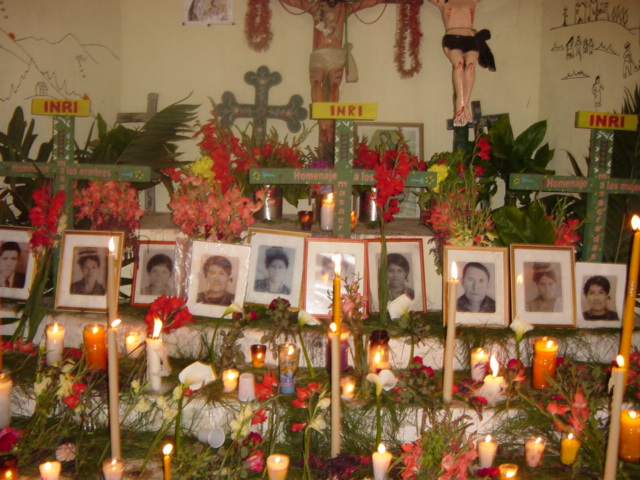
When I was contacted over the weekend by an immigration attorney I was put in contact with a Guatemalan woman from Alta Verapaz who was seeking assistance to prevent her brother from being deported. The woman told me about how her father, who was a member of the Guatemalan army, was killed in 1982. At the time she believed that the guerrillas were responsible for his death, but now has seen documentation to prove it was really the Guatemalan military.
While this revelation has been very helpful for the family in understanding whom was responsible for their father’s death, it has created another dilemma for them. Since none of the perpetrators of these brutal crimes are still living in Guatemala and are either in the military or still have military connections it makes it very dangerous for people once they have discovered who was responsible for the crimes, especially if they have been public about their feelings.

Since the 1996 Peace Accords there has been numerous well documented instances of political violence being perpetrated by current and former military personnel towards people who are seeking justice. The most visible case to date was the 1998 murder of Bishop Gerardi by a Guatemalan officer the day after the Catholic Church released its own findings on the political violence in Guatemala’s 40-year war.
The woman who contacted me told me that if her brother is deported back to Guatemala he will be in great danger. This fear that she expressed to me is a well-founded fear as there have been numerous cases of this kind of political violence perpetrated against people who could name those who committed crimes during the war years.
I was more than willing to produce and sign the necessary affidavit and hope it will prevent her brother’s deportation. This is of particular concern now, not just because of the family’s situation in Guatemala, but also because deportations have increased under the Obama administration.
This incident was also a reminder to me that these kinds of policies have a human face to it, where real flesh and blood people, not just numbers, are at great risk of losing their dignity or worse, losing their lives. This should be of importance for those of us in West Michigan, since there are thousands of Guatemalans who live in this area who are at risk of deportation as the growing anti-immigrant sentiment permeates our political culture.
The Guatemala Catholic Church’s report on the years of political violence is entitled, Nunca Mas!, Never Again! We must do whatever we individually and collectively to say Never Again when our fellow humans are put in harms way. Nunca Mas!
Palestinian survivor and film share experience of the Nakba
 PALESTINE REMEMBERED: UNDERSTANDING THE NAKBA
7 p.m. Weds. March 30
Film: “The Sons of Eilaboun”
with Nimer Haddad, from the destroyed village of Albassa, sharing his experience
At The Bloom Collective, Steepletown Center
671 Davis NW
(Corner of 5th and Davis)
The Nakba (catastrophe) is often misunderstood in the Western World. Facilitator of this event,Cathryn Young of Olives for Hope has traveled to Israel and Palestine several times. She calls on her experience there to bring a better understanding of the past events which impact the current conflict.
“The Sons of Eilaboun” about one village’s experience with the Nakba. Nimer Haddad, from Albassa in Palestine, will be on hand to add some information about his experience as a survivor of the destruction of his village. Light refreshments will be served afterwards.
“The Sons of Eilaboun” (أبناء عيلبون) tells the story of the human toll that Israel’s Plan Dalet claimed as told by the men and women who witnessed Israeli soldiers commit atrocities on a fall day in 1948. These survivors are determined not to let the horrors of this brutal plan be forgotten. The story of Eilaboun was repeated hundreds of times across the land that today is called Israel. The killing, expulsion and looting of these villages was a tactic spelled out in a document called Plan Dalet, developed by the high command of the Israeli Army to rid the future State of Israel of its Arab inhabitants, which it saw as a threat.
View the trailer:
Michigan is part of Millions Against Monsanto
(Part of this article was reproduced from the Organic Consumers Association.)

The Millions Against Monsanto campaign is forming 435 local chapters, one for each U.S. Congressional District. Our goal is for each chapter to reach 2300 supporters by World Food Day. October 16, 2011, will be a nationwide day of action, turning out 1,000,000 people against Monsanto and in support of our right to know – and choose – what’s in our food. Sign and distribute the Millions Against Monsanto petition. Join your local chapter.
Monsanto has a long history of environmental destruction along with contributing to major human health problems, but this campaign is focused on the corporation’s history of both controlling and modifying our food system.
There are 15 Congressional districts in Michigan and as of this writing there are 8 that have chapters of the Millions Against Monsanto campaign. The 3rd Congressional District, which encompasses Grand Rapids, does not have a active chapter.
Check out this short video produced by the Organic Consumers Association that explains the campaign and the food policies of Monsanto.

This Tuesday the local group Healing Children of Conflict (HCC) will host a free screening of the film Peace, Propaganda and the Promised Land: US Media and the Israeli/Palestinian Conflict.
This documentary is part of a series of films that HCC is hosting over the next few months, along with information about the current conflicts that the US is involved in – Israel/Palestine, Iraq and Afghanistan.
According to the Media Education Foundation, “Peace, Propaganda & the Promised Land provides a striking comparison of U.S. and international media coverage of the crisis in the Middle East, zeroing in on how structural distortions in U.S. coverage have reinforced false perceptions of the Israeli-Palestinian conflict. This pivotal documentary exposes how the foreign policy interests of American political elites–oil, and a need to have a secure military base in the region, among others–work in combination with Israeli public relations strategies to exercise a powerful influence over how news from the region is reported.”
Tuesday, March 29
7pm
Calvin College, Bytwerk Theater in the DeVos Center
Discussion will follow the screening
Sisters shine at 3rd Empowered Womyn’s Health Workshop
Last Saturday, nearly 30 women of all ages came together for The Bloom Collective’s third annual Empowered Women’s Health workshop. Our time together was heartwarming, inspirational and informative.
 We ate great food! The workshop kicked off with a brief presentation on good foods and bad foods, as relates to women’s health. Brief, because the wonderful aromas coming from the kitchen made everyone anxious to get on with Nancy Rutledge’s healthy foods cooking demo. She and her assistant, Stella, prepared Gluten Free Cornbread, Quinoa Salad w,Sweet Potatoes and Raisins, Ginger Vinagrette and Black Beans w/Greens and Brown Rice. Here is a .pdf of Nancy’s recipes.
We learned how birth practices impact our society. Next, Shannon Pawson presented a marvelous overview of American birth and what we can all do to change the obstetric practices that make the US almost the most dangerous place on earth to have a baby (in terms of both infant and maternal mortality rates). Sarah also shared how childbirth does not impact just the family but the whole culture. Embracing a home-birth/midwifery model will not only mean better outcomes but also a culture more prone to community and peace. To download Shannon Pawson’s Bloom Birth Presentation and handout, Things You Can Do To Make Birth Better, click here.
We made home brews. Next we moved back to the kitchen to brew our own herbal remedies. Miranda and Bethany facilitated as we mixed up brews of nettle, red raspberry leaves, alfalfa and red clover. Those down with colds added some mullein and ginger to their mixes. Claire AK also shared how weomen can get the specific vitamins and minerals they need from foods we eat.
We took a stand! We closed the instruction portion of the day with a skill-share where Kelsey Hakeem taught us how to pee standing up. We were surprised to learn that girls and women are indeed “equipped” to pee while standing, but cultural mores have prevented us from being taught as children in how to do so. Kelsey instructed us to stand with legs  part, pull up on the crotch area on either side, thrust the hips forward a bit and go for it. She recommended practicing in the shower. She also mentioned women can buy funnels on-line that make peeing while standing simple—you don’t even have to take down your pants. She uses one when camping.
During this session, others shared more great advice around such topics as herbal birth control and handling urinary tract infections. As we listened, many women took opportunity to sew their own cloth menstrual pads, with guidance provided by Rachel Hamilton, who had presented on menstrual health the past two years.
Sister power! After closing with a restful yoga nidra meditation, we were invigorated, inspired and hopeful about creating more community and making our culture one where women’s wisdom is honored. In all, it was a time when we got to see our sisters shine. The light was bright, beautiful … and full of power.
LGBT organizing in the faith communities – Bringing Our Whole Selves to the Conversation
Yesterday, GVSU’s LGBT Resource Center hosted the 4th of five events this semester as part of their Change U program. Rev. Rebecca Voelkel with the National Gay and Lesbian Task Force spoke to an audience during lunchtime about the importance of LGBT organizing in faith communities.
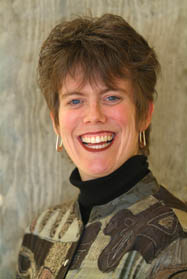
Voelkel is a pastor in the UCC Church, an author and part of what is called the Welcoming Church Movement. This movement of several decades works with faith communities in order to get them to adopt a community policy of being a welcoming and affirming place for people who identify as LGBT.
The pastor began her talk by telling her own story. Her journey began in part because of the TV show Little House on the Prairie, where she developed a “crush” on the actor Melissa Gilbert.
Melissa Gilbert, then played the role of Jean Donavan, the US Lay missionary who was raped and murdered in El Salvador in December in 1980. This led Rebecca to investigate Jean Donavan and then Archbishop Oscar Romero and the struggle for justice on El Salvador.
Rebecca then became involved in the US Sanctuary Movement and even began an Amnesty International chapter at her high school. Eventually, she went to El Salvador in 1987 as part of an accompaniment project of refugees who were returning from exile.
Rev. Volkel talked about the counter-insurgency movement in El Salvador, particularly Operation Phoenix, a campaign that resulted in the death of thousands of Salvadoran civilians. On this trip she met Salvadoran women and asked how they could continue to denounce the government even in the face of such risk. The woman said that she had lost children to the state repression, but she had faith in God, because God through the person of Jesus knows what a suffering body is like.”
Rebecca said that both of her parents were ministers, but she had never heard such a powerful faith testimony until this Salvadoran woman shared hers. She continued to work on Central American issues in the US and on additional trips to that part of the hemisphere. She also investigated Liberation Theology and it was in this investigation that she found the strength to come out as a Lesbian woman.
Rebecca talked about how there is no monolithic representation of religious beliefs, which is why she sees no contradiction with being part of the LBGT movement and the Welcoming Church movement. Some of the religious traditions, like the UCC Church, see it as their duty to work for justice with those in the LGBT community.
Her work takes places in three main arenas. First, she works within specific denominations, which can create space as a welcoming community. The second arena is to get people across all sorts of Christian backgrounds to have a discussion and to work towards justice around LGBT issues. Rebecca says it is important for this to happen because it is the Christian community that has been the main opponent of LGBT issues around the country. The third arena is with leaders from a variety of religious traditions throughout the US.

Lisa Weiner Mahfuz, an organizer within the LGBT community with experience in movement building, then joined Rebecca at the podium to talk about the work they have done together around Proposition 8 in California.
Both women then talk about the fight around Proposition 8 in California that passed in 2008, which was an anti-marriage equality proposition ironically named the Marriage Protection Act. The National Gay & Lesbian Task Force was asked to do some assessment of the outcome of Prop 8 and Rebecca and Lisa shared some of the findings of that work.
Some of the findings from this assessment are:
- Proposition 8 and most of the anti-LGBTQQIA measures are rooted in conservative religion, therefore religious opposition requires a religious response.
- Pro-LGBTQQIA secular-religious partnerships are critical to future success.
- A narrow political campaign frame hinders pro-LGBTQQIA religious work.
One of the reasons that Prop 8 passed, according to the presenters, was because the campaign did not connect to people of color and people of faith. In other words, the campaign was not rooted in specific communities, but applied a cookie-cutter approach that did not take into account specific communal identity.
One of the unfortunate consequences of Prop 8 was that the Right was able to further divide the African American community and the LGBT community by pitting them against each other around the issues of “rights,” which has been a strategy for the past three decades.
Another flaw of the anti-Prop 8 campaign is that it tended to push those most marginalized out of the conversation so that the immediate win is more important than the long-term goal……building relationships and a viable movement.

Therefore, it is critical to build strong alliances with religious folks and the LGBT movement. There are 900 welcoming communities in California, but of those 900 few of the denominations did a good job of mobilizing people to defeat Prop 8.
A model that both Rebecca and Lisa now use, based on what happen in California, has expanded to include LGBT sectors, economic justice sectors, communities of color, the disabilities community and faith communities when developing a campaign. However, when they first attempted this it was a disaster, which taught them it wasn’t enough to get people together to talk but to organize an inter-sectional gathering.
They kept asking themselves how were they going to build trust in relationship with each other? What became clear is that people in the LGBT community, a predominantly secular community, did not know the folks in the Welcoming Church Movement, which meant there was a lack of relationship.
Once they recognized this, they developed a common vision statement that reflected their collective desire for what they wanted the world to look like. Once they had this vision they wanted to talk about their collective values for the conference they were planning. Lisa then quoted Gandhi who said that, “every step along the way must have a step towards liberation.”
A good example of what this kind of work looks like is the document Beyond Marriage, which significantly broadens the discussion about who benefits from marriage equality. Rebecca says that this document moves beyond just same sex marriage to look at how immigrants could benefit from changes in marriage laws or even widowed senior citizens who are taking care of grandkids who they could claim as dependents with the health care.
The point that both speakers were emphasizing was the need to always be more inclusive and expansive when organizing around a particular campaign. This is important both because if means more people have a stake in working on the campaign, but more importantly is has the potential to build capacity for long-term movement building around social justice issues.
This Day in Resistance History: The Triangle Shirtwaist Factory Fire and Union Protections
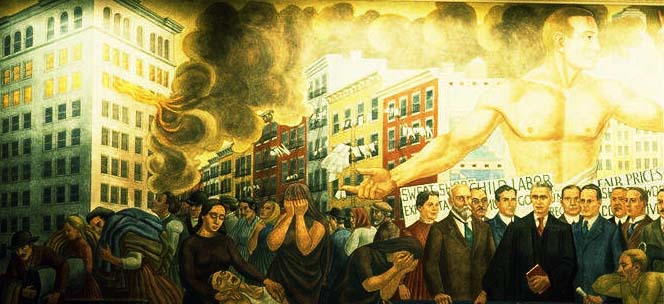
On this day in 1911, New Yorkers watched in horror as young women and children leaped from the upper floors of a garment sweatshop engulfed in flames. Just east of Washington Square Park in Greenwich Village, the Triangle Shirtwaist Factory was located on the upper floors of a commercial building and was run by Max Blanck and Isaac Harris. Aside from the owners and some male supervisors, all the employees were women. The seamstresses were mostly young immigrants, with the youngest employee being 10 years old. Most were between 16 and 25.
It was a Saturday, the “short day” of the week, and the weather outside was beautiful. The seamstresses were looking forward to their day off. They worked 5 nine-hour days. On Saturdays, they were allowed to leave an hour “early.”
But on some days, they were required to stay much later—some workdays stretched to 14 hours. No breaks for allowed—not to eat, not to go the bathroom, not to get a drink of water.

Their maximum pay, for a 14-hour day, was $2. In addition, Blanck and Harris made the women pay for the needles they used, the thread needed to sew garments, and the electricity that their machines used per day. Plus, they had to pay for any shirtwaist they made that was not perfect. Meanwhile, the two bosses were making approximately a million dollars a year.
The fire broke out at 4:45. Blanck, Harris, and the office workers fled. Neither Blanck nor Harris thought to send someone up to the factory floors to warn the workers there…or to unlock the doors. During the day, the women were locked into the factory with their sewing machines. This was a policy Max Blanck had instituted to prevent theft; each bag was checked as the workers filed out one by one. The doors were never unlocked until quitting time.
It was not until the seamstresses saw smoke and flames coming from underneath the doors that they realized what was happening. A few managed to get to a factory floor freight elevator, but they were hand-cranked lifts and were only able to make three trips total to rescue workers. Some women, trying to leap onto the top of elevators as they descended, died in the shaft.

The only fire protection provided by Blanck and Harris for the sewing rooms was 12 buckets of water, six for each floor. There was also a fire escape, weakened with rust and missing screws. It needed replacing. But the owners did not want to spend the money to do that.
Some women climbed out the windows to the roof, but then had nowhere to go. A few managed to get out to the rickety fire escape staircase. It collapsed as the first group of women went down it, killing 20 of the seamstresses.
Most remained on the factory floors, trapped by the locked doors and the encroaching flames. Many burned alive. Others leaped, some on fire, out the windows of the building. Approximately 146 employees died, most burned beyond recognition.
New York garment workers, including the employees of the Triangle factory, had gone out on strike two years before to protest these working conditions and form a union. At that time, the public was indignant and unsupportive. Blanck and Harris hired thugs to follow their young employees. They were beaten, and some were falsely charged with prostitution. One striker, dragged into court with a cracked skull and wearing a blood-soaked bandage, was told by the judge, “You are on strike against God.”
But this time, New Yorkers could not turn a blind eye to young women and children leaping out of windows to the street because they had been imprisoned in a locked sweatshop. Details of the fire and the abuses that led up to it shed a hard light on the conditions in the garment industry.
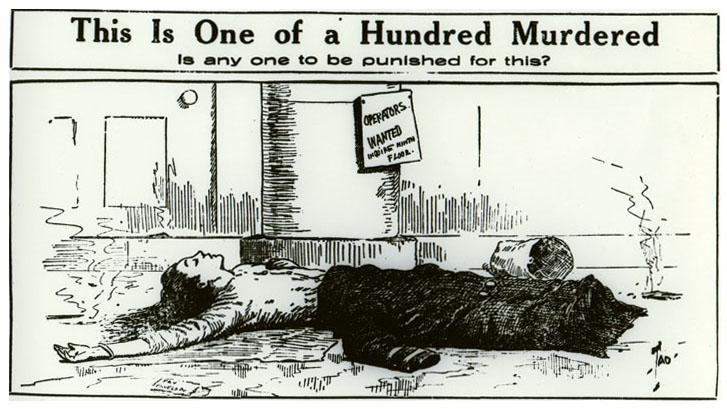
In April of 1911, Blanck and Harris were charged with manslaughter charges. In a classic her-word-against-his trial, the judge found that the surviving workers were unable to prove that Max Blanck knew that the sweatshop floor doors were locked. The two were acquitted, and collected a large amount of insurance, including $400 for each worker who died. In turn, they paid $75 to the family of each fire victim, pocketing the rest for themselves—and that was only after they appealed the court to pay nothing.
Two years later, Blanck was charged with locking the doors at a new factory he’d started with his insurance money. The judge made him pay a fine of $20.
But the New York State Legislature took a less lenient view of the issue. It created the New York State Factory Investigating Committee, which in New York City alone found 200 sweatshops with conditions as bad or worse than the Triangle factory. Labor laws were reformed throughout New York State.

And another outcome of this tragedy was that the International Ladies’ Garment Workers Union was finally allowed to form without additional harassment. About 90 percent of the garment workers in the city joined. The ILGWU merged with the Amalgamated Clothing and Textile Workers Union in 1995.
This and similar unions were the ones who fought every step of the way to eliminate the capitalist abuses that the Triangle employees had suffered. Today, we have a five-day work week, overtime pay, breaks, days off for illness, fire alarms, sprinkler systems, and safety measures. We don’t have them because our benevolent employers value us or want to protect us; if left in their hands, we’d still have 14-hour days and water buckets. We have better working conditions because young immgrant women burned alive to help earn those rights, their deaths jumpstarting the union movement and labor reform laws.
The next time you listen to Rick Snyder or Scott Walker talk about dissolving union contracts and freeing capitalists, to “get out of their way” so they can make more money, think about these women and children and the thousands of others who died so that we have the right to form unions and protect workers.
Whirlpool’s Windfall
(This article is re-posted from Open Secrets.)
 “Whirlpool Corporation, which had global sales of $18 billion and turned a $619 million profit in 2010, likely won’t pay a dime of corporate income tax this year,” write the watchdogs over at Citizens for Responsibility and Ethics in Washington (CREW), “or for years to come, thanks in large part to an expensive lobbying blitz.”
Thanks to a 2005 energy law that allowed corporations to claim tax credits for manufacturing energy-efficient appliances, Whirlpool has collected more than $500 million in credits, a fact first reported by Bloomberg News. And last year, the company and other supporters of the tax credits went to the mat for language to extend the provisions again. Lobbying on H.R. 4853, the bill that extended the tax credits, was part of Whirlpool’s $940,000 lobbying operation in 2010, according to research by the Center for Responsive Politics. That’s nearly a nine-fold increase since 2005.
Since that time, the company has also greatly expanded its roster of hired guns. In 2010, Whirlpool hired 15 lobbyists, most of whom have passed through Washington’s famed “revolving door” between public service and the private sector, including one former congressman: ex-Rep. Martin Russo (D-Ill.) of Cassidy and Associates, who left the firm in December.

Rewards = More Consumption: Questions about MyGRcitypoints

Beginning in late April, the City of Grand Rapids will offer a new incentive program to increase recycling and citizen engagement.
The program is called My GR City Points and it includes two partnering entities, CEOs for Cities and Local First. The first phase of the program will kick in around Earth Day and it is designed to reward people who participate in the City’s recycling program. If you register with the City your recycle bin number, every time the City picks up the bin you get points. These “points” can then be redeemed at local businesses where you can get a discount on products or with enough points not have to spend a cent.
Sounds pretty good, right? Well, before we get all excited about home many free coffees we can get because we are doing our part to save the planet, let’s take a moment to think a bit about what this all means.
People who have studied the policies and practices of recycling acknowledge that recycling in general is problematic. This is not to say that we shouldn’t recycle, it means that recycling as it is generally practiced in the US doesn’t really address the root of the problem, only one of the symptoms of the problem.
The problem is that as a society we generate entirely too much waste. Author Heather Rogers, in her book Gone Tomorrow: The Hidden Life of Garbage, talks about how there was a major shift after WWII in the manufacturing sector to create more packaging for products. This shift in generating waste became a huge problem for municipalities and when there were efforts to put pressure on manufacturers to reduce packaging waste the manufacturing industry pushed back.

The National Association of Manufacturers lobbied hard to defeat any restrictions on how companies packaged their products. In addition, they began a major campaign called Keep America Beautiful, which put the emphasis on personal responsibility for disposing of waste and diverting attention from those who manufactured it.
Not all countries have gone that route and there are numerous European countries that engage in what they call source point waste reduction. In this model consumers can bring unwanted packaging back to the store they bought it from so that the retailer has to deal with the problem, which puts pressure on the manufacturers and retailers instead of the consumer. This actually provides a major incentive for reduced packaging.
However, these examples are still an inadequate response to the problem. The real problem is over consumption, particularly in countries like the US where the average person consumes 40 times more than most people in developing countries.
This over consumption brings us back to the My GR City Points program. People will now be rewarded with the opportunity to consume more if they recycle more. Let’s rephrase that. People will be encourage to consume more, thus creating more waste, if they recycle some of the waste.
It seems that such a program inherently does not seek to push the two other components of the 3 R’s – Reduce, Reuse and Recycle. As a society, we really need to reduce the amount of waste we generate and reuse resources as often as possible. Think of all the energy used in recycling programs – plastic bins that are manufactured, fossil fuel energy used to make the bins, trucks to pick the material up, fossil fuels burned to transport the trucks, energy used to sort and recycle the material at recycling facilities, energy used to melt plastic down for reusing in some other form for more consumer goods.
Again, the point here is to raise questions about what such an incentive plan will do. Recycle when you can, but more importantly lets consume less and put the responsibility of waste generation on those who manufacture it instead of offering an incentive program which encourages people to create more waste.
New Media We Recommend
Below is a list of new materials that we have read/watched in recent weeks. The comments are not a “review” of the material, instead sort of an endorsement of ideas and investigations that can provide solid analysis and even inspiration in the struggle for change. All these books are available at The Bloom Collective, so check them out and stimulate your mind.
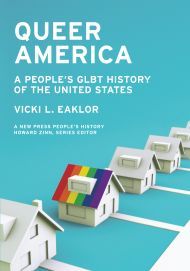
Queer America: A People’s GLBT History of the United States, by Vicki Eaklor – This new addition to the People’s History series is a refreshing contribution to a history that has been suppressed and marginalized. The author does a good job of providing a broad history of the LGBTQ movement in the US, its evolution and its struggle. Eaklor not only follows a chronological timeline of the history of this movement, she highlights the tensions within the movement, particularly between those within the movement that simply wanted to be accepted by American society and those which want liberation. This is an ongoing tension in the LGBTQ movement, which is why the history of this struggle, highlighted in Queer America, is so important for those who care about this issue in the present.

Art in Public: Politics, Economics and a Democratic Culture, by Lambert Zuidervaart – As we noted last week in our interview with Lambert Zuidervaart, this new book was launched in Grand Rapids. Art in Public is an important contribution to our understanding of the role of art in society, but also important because it challenges us to this about civil society and the failure of free market capitalism. Zuidervaart gives us some very useful analysis for reframing discussions around art, public space, funding, and commercialism. In fact, the book is a great vehicle that could be used around the ongoing debate about ArtPrize.

Seed to Seed: Seed Saving and growing Techniques for Vegetable Gardeners, by Suzanne Ashworth – This book is an excellent contribution for those who not only want to save money, but preserve the genetic diversity of seeds that are being threatened by the likes of Monsanto. The book provides very practical tips on seed saving and seed planting for vegetables, fruit, herbs and flowers. Seed to Seed is an extremely valuable resource for the future of sustainability, particularly now that the US government has made it a criminal act to save seeds based on the influence of Argi-business in passing what is called the Food Safety Modernization Act of 2011. Like much of what happens with the DIY movement, those in power are threatened by the public’s desire to have autonomy.

American Outrage (DVD) – This film is a powerful story about two Native American sisters who have been fighting the US government for decades. Carrie and Mary Dann, who are members of the Western Shoshone Nation, have been fighting the US government over land use issues and the devastating effects of mining on their land. In many ways this film embodies the more than a century-long struggle to move Native people off of their lands in order to have access to natural resources that fuels the US imperial project. The film is both informative and inspiring and is a great resource for those who want to be allies in the struggle for Native American autonomy.

