A groundbreaking ceremony will take place in Grand Rapids today for the new GVSU Seidman College of Business. The event has received a fair amount of local news coverage from print, broadcast and online media.

The Grand Rapids Press announced last Thursday that Rich DeVos would be a speaker at the groundbreaking event, since DeVos and Seidman were friends. The article also mentions that of the 300 donors to this new college are former Defense Secretary Donald Rumsfeld and former Secretary of State Henry Kissinger – both of whom served with Seidman in the Ford administration.
The Holland Sentinel also mentioned the groundbreaking ceremony and that both Rumsfeld and Kissinger were major donors to the project. In fact, it appears that much of the coverage is based upon at GVSU Media Release that went out last week.
In character with how local commercial news media reports on such incidents there is no critical analysis or inclusion of other perspectives. Nothing is said about Rumsfeld being considered a war criminal by people in Iraq or lawyers who practice international law. The absence of such a critique also applies to Kissinger despite plenty of declassified documentation on the former Secretary of State’s role in the coup to oust the democratically elected government of Chile, the US support for the Indonesian invasion of East Timor or the war crimes that Kissinger helped orchestrate during the Vietnam War – all of which is included in the documentary The Trials of Henry Kissinger.
Equally important is the lack of any critical perspective on the role that business schools play in society, especially since it has been argued that business school promote the continuation of neoliberal market capitalism, an economic system which creates a tremendous amount of human misery and ecological destruction.

This critique of neoliberal market capitalism is not a new idea nor is it a marginal one. The critique has been around as long as the mid-19th Century when Karl Marx first began providing a critical analysis of market capitalism. Today, that criticism takes on many forms such as Annie Leonard’s book/films The Story of Stuff, Naomi Klein’s The Shock Doctrine or the anti-capitalist website Infoshop.
Even in the Oscar winning documentary Inside Job, there is a section that deals with the role that business schools played in supporting to the hyper-deregulation of the market and the economic practices of the financial sector that led to the massive global economic crash of 2008. Here is a short clip were the film director questions two economics professors who were making money to write policy papers in support of the kind of economic schemes that led to the crash.
Therefore it is no surprise that Rich DeVos would say a few words at the groundbreaking ceremony. DeVos himself is the king of pyramid schemes and a businessman who has profited immensely from taxpayer subsidies, government incentives and the stripping of state business taxes, all which translates into policies that add more cost to the public.
This lack of a critical perspective has been and will be reflected in the lack of anyone in mainstream commercial media questioning the groundbreaking of a new building for a business school, which uses public money to teach people how to transfer more public funds into the private sector. This lack of critical journalism is, as they say, business as usual.
PBS’s New Plan: More Intrusive Ads
(This article by Peter Hart is re-posted from FAIR.)
 The public broadcasting newspaper Current (5/18/11) reports that public television–you know, the non-commercial outlet–will start airing more commercials:
The move could be controversial for the network, which has traditionally prided itself on offering uninterrupted programming over its 40-year history.
PBS will begin breaking into programs with underwriting and promo spots four times per hour on an experimental basis beginning this fall, it told station members at the PBS National Meeting here.
PBS corporate communications official Anne Bentley issued a response that actually begins, “We are always looking at ways to improve the viewer experience.” It goes on to say that “It is all about the viewer,” and–perhaps most bizarrely–claims, “Initial testing showed that viewers didn’t really notice the change.” Really? People didn’t notice a commercial in the middle of a PBS show?
In other PBS news, some stations are apparently considering leaving PBS altogether, according to a report in the New York Times (5/22/11). The main complaint seems to be about money–the stations think they’re paying too much to air the national programming.
There is, of course, a possible silver lining in all of this. One could imagine public TV stations breaking free from PBS and seeking out more independent programming to fill out their schedules. (Democracy Now! instead of the NewsHour— how does that sound?). It’s a long shot, perhaps, but one can at least imagine a brighter future for public television stations that doesn’t necessarily involve airing the conventional PBS programming.
New Media We Recommend
Below is a list of new materials that we have read/watched in recent weeks. The comments are not a “review” of the material, instead sort of an endorsement of ideas and investigations that can provide solid analysis and even inspiration in the struggle for change. All these items are available at The Bloom Collective, so check them out and stimulate your mind.

Capital and Its Discontents: Conversations with Radical Thinkers in a Time of Tumult, by Sasha Lilley – This collection of interviews with people like Ellen Meiksins Wood, David Harvey, Gillian Hart, Ursula Huws, Tariq Ali, Noam Chomsky and Andrej Grubacic provides tremendous insight into the nature of contemporary capitalism, the divergent responses to this economic system and models of liberation. Sasha Lilley has done us all a service by asking important and timely questions to such prominent thinkers particularly at a time when the world is confronted by even more economic inequality than ever before. This book is an important contribution to this needed dialogue.
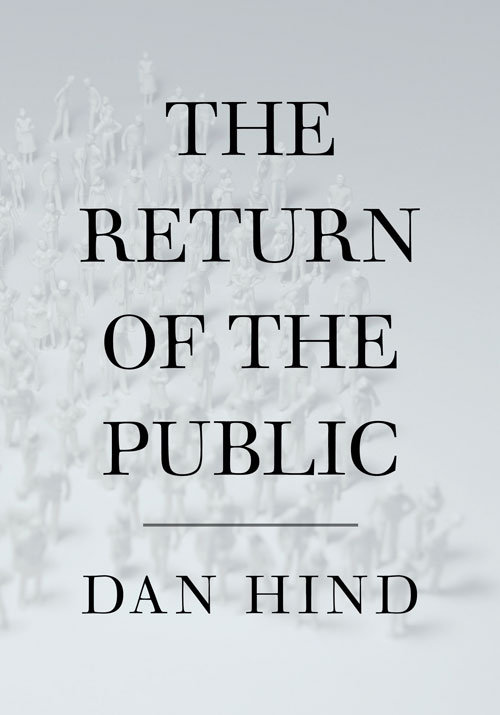
The Return of the Public, by Dan Hind – With so much of our culture and society now under the control of the private sector it is difficult to even think about what “the public” means. Dan Hind has done valuable work in this book by not only providing a lively overview of the history of the concept of what the public is, but also some interesting recommendations for what we could do in the US to reclaim the public. Hind discussed the role of the public in terms of media, physical space and the citizenry and why we need to expand the role that the public should play at the institutional and structural level. The only flaw of this book is that it does not look at the incredible examples from around the world on how people are reclaiming the concept of the public as well as actual physical public space.
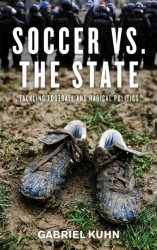
Soccer vs. the State: Tackling Football and Radical Politics, by Gabriel Kuhn – Remember all the attention that the 2010 World Cup received? Soccer vs. the State is an amazing resource in terms of framing the discussion around the global influence of soccer, particularly for working class people. Gabriel Kuhn takes readers on a journey through the modern evolution of the game and how it has been used by the State as a means of oppression and national identity to how communities have used the sport to push the envelope of social justice and radial transformation. What writer Dave Zirin has done to reclaim US sports as a radical issue, Gabriel Kuhn has done it for the most popular sport in the world. Even if you are not a fan of soccer this book provides important social analysis.
Crossing the American Crisis: From Collapse to Action (DVD) – This film is different than other documentaries that investigate the 2008 economic crash in that it seeks to get the perspective of working people all across the country. The filmmakers traveled all over the US interviewing the real impact of the economic crash and how it has impacted working class people. The stories and images are powerful. Crossing the American Crisis is an excellent companion to Inside Job.
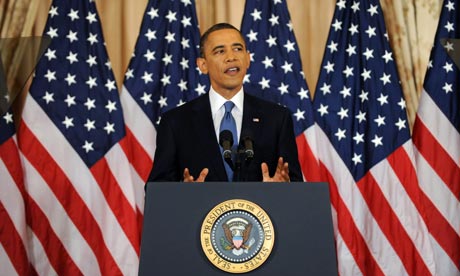
It has been several days since President Barack Obama gave his speech on US policy in the Middle East. Having a few days to ponder the comments by Obama gave us time to look at what independent journalists have to say on the matter.
Listening to the President talk, one might be seduced by the now familiar rhetoric coming from Obama about human rights and freedom. However, he has been using these kinds of words for two and a half years now in regards to the Middle East and with no real evidence that this administration is truly committed to justice in that part of the world.
Middle East analyst Phyllis Bennis noted, “Obama’s speech failed to match the extraordinary events of the Arab Spring with a transformed U.S. policy in the region. Beyond some new economic commitments, the speech was far longer on soaring rhetoric of democracy and freedom than it was on real policy changes.
The announcement of significant new economic assistance, particularly $1 billion in debt relief for Egypt, will be important; but its significance is already undermined by the U.S. imposition on the newly democratizing country to accept the kind of “free trade” policies that have been so disastrous in other parts of the developing world.”
Long time Middle East reporter Robert Fisk also addressed Obama’s lack of substance in a speech “as boring and as unfair as all the other ones, with lots of rhetoric about the Arab revolutions which Obama did nothing to help.”
Obama’s lack of substance and rhetorical misdirection was particularly evident on the matter of Israel/Palestine. Here Fisk notes, “It was the same old story. Palestinians can have a “viable” state, Israel a “secure” one. Israel cannot be de-legitimized. The Palestinians must not attempt to ask the UN for statehood in September.”
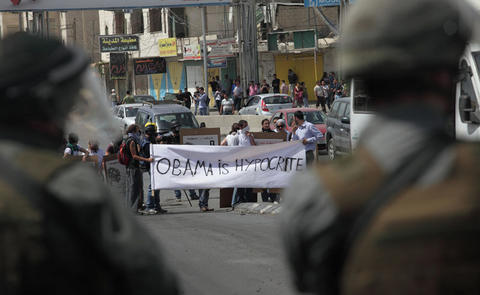
Obama did call for an end to the Israeli occupation, but it is a meaningless statement since he did not call for a complete withdrawal of Israeli troops or the end to the construction of Israeli settlements. Obama also made mention of the 1967 borders, which has by far been the most misinterpreted statement in mainstream commercial media.
US Foreign Policy analyst Stephen Zunes said of Obama’s 1967 border reference:
“The unspecified variations from the pre-1967 borders, Obama insisted, should be made through “mutually agreed-upon” land swaps. Unfortunately, despite Palestinian president Mahmoud Abbas agreeing to such reciprocal territorial swaps — even though it would leave the Palestinian state with a bare 22 percent of Palestine — Israeli Prime Minister Benyamin Netanyahu has refused to consider trading any land within Israel while simultaneously insisting on annexing large swathes of occupied Palestinian territory. How such “mutually agreed-upon” swaps will take place without the United States exerting enormous leverage — such as withholding some of the annual $3 billion in unconditional aid provided annually, which Obama has already ruled out — is hard to imagine.”
Indeed, it is hard to imagine that anything will change as long as the US continues to provide Israel with unconditional funds to do whatever they please.
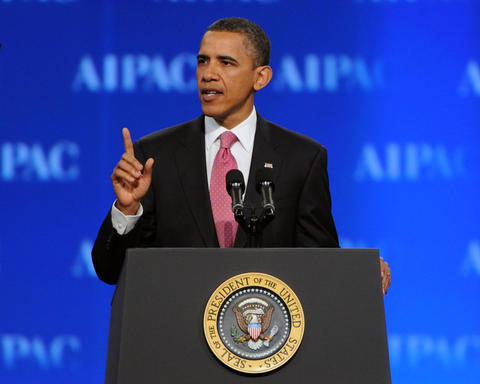
Obama’s rhetorical deception was made even more evident when just days after his speech he addressed the Israeli lobby at the annual AIPAC meeting. Obama told the pro-Israeli audience that there will be no return to the pre-1967 borders.
Glenn Greenwald provides some useful analysis of Obama’s speech to AIPAC and the role that lobby plays in US foreign policy. In addition, there is a good article on Electronic Intifada by several authors that also addresses Obama’s speech to AIPAC. This type of analysis has not been presented in mainstream commercial news and coverage of Obama’s AIPAC speech has been almost non-existent outside of a few major newspapers.
After two and a half years it seems clear that the Obama administration is continuing a decades long policy of unconditional support for Israel and despite all of the President’s rhetoric we should not be fooled to think otherwise.
Here is a brief interview that Al Jazeera did with Robert Fisk that frames what Obama’s speech really means.
Thurs. May 26 6:30 p.m. Drugs And Daydreams
Sun. May 29 6 p.m. Stop Signs: Cars & Capitalism
The Bloom Collective
671 Davis NW
(Corner of 5th & Davis)Suggested Donation $3 – $5

In the coming week, authors of two very different books make a stop at The Bloom Collective as part of their North American tours. On Thursday, May 26, the Raise the Stakes Tour invites local folks to join Shaun for “an evening of stories and scheming” as he shares and sells hand-made copies of his book, Drugs And Daydreams. On Sunday, May 29, Canadian authors, Bianca Mugyenyi and Yves Engler, facilitate a discussion of their new book, Stop Signs: Cars & Capitalism on the Road to
Economic, Social and Ecological Decay. Both events will begin with a potluck.
Raise the Stakes
Using drugs as a metaphor to describe his sensations during three different bicycle
trips along the Pacific and Atlantic coasts, Drugs And Daydreams “lingers in the fringes where the wild clashes with the civilized; those places where conventional notions of geography and travel
 give way to a world of one’s own design.” Shaun calls the book part romance and part travel autobiography. He writes, “The most accurate metaphor I’ve heard for travel is comparing it a love affair. A love affair thrives upon shattered rules and shattered roles. Upon a whirlwind that comes by surprise and leaves everything in its path upturned, transformed. A feeling beyond the grasp of science. Beyond the map. This is where I seek to travel. This is how a love affair begins. This is how my story begins.”
Shaun invites local artists, musicians and poets to share their work as part of the program. So, bring your own zines to share, poetry to read, acoustic music to play and art to display. All copies of Shaun’s book on sale that night are made of scavenged materials and hand-bound by the author within individually relief-printed hard covers. He writes, “Maybe living as scavengers can last, I thought. Knowing that not everyone can do this, but if we can, then we have a responsibility to strike at capitalism’s vulnerabilities. And all of our wits and creativities not dulled by numbing work weeks and banal distractions exist for the sake of us living out our wildest dreams, of us putting a stop to those entities that hurt those that we identify with.”
Stop Signs: Cars & Capitalism
Authors Yves Engler and Bianca Mugyenyi are coming to Grand Rapids via Greyhound Bus to present this anti-car road trip story. Born in Uganda in 1980, Bianca Mugyenyi came to Canada as a child, spending parts of her youth in Swaziland, Kenya and England. She is coordinator of Concordia’s Gender Advocacy Centre and was the Chairperson of the Canadian Federation of Students (Quebec). A Montréal activist and author, Yves Engler has published three books: The Black Book of Canadian Foreign Policy; Playing Left Wing: From Rink Rat to Student Radical; and (with Anthony Fenton) Canada in Haiti: Waging War on The Poor Majority.
 Stop Signs: Cars & Capitalism shows how “the automobile’s ascendance is inextricably linked to capitalism and involved corporate malfeasance, political intrigue, backroom payoffs, media manipulation, racism, academic corruption, third world coups, secret armies, environmental destruction and war.” In short, challenging the domination of cars challenges capitalism.
In a Sept. 2010 article for Counterpunch, the authors wrote, “Nearly three-quarters of U.S. households earning less than $15,000 a year own a car, and in an extreme example of auto dependence, tens of thousands of “mobile homeless” live in their vehicles. The poor purchase cars because there is no other option in a society built to serve the needs of the automobile. If you want to work you need a car. If you want to visit your friends you need a car. Car-dominated transport eats up a disproportionate amount of working-class income. At the same time, the automobile is an important means for the wealthy to assert themselves socially. A luxury vehicle lets the whole world know that you have arrived, both literally and metaphorically.”
Make your holiday weekend more memorable (and less gas dependent) by celebrating bikes and other alternatives to a car-crazy capitalist culture. Bring a dish to pass. The Bloom will provide vegan options.
GR Press article perpetuates pro-Israeli Propaganda
On Saturday, the Grand Rapids Press ran an article in the Religion section about area Christians who traveled to Israel recently as part of a faith tour.
The brief article mentioned that 68 people participated in a 10-day tour that “involved opportunities to meet Israeli people, discuss political events and even join Jewish families in observing the Sabbath with Shabbat dinner in their homes.”

In addition to people talking about their faith experiences while on the tour, much of the story was centered around the political aspect of the tour and the pro-Zionist perspective that was presented.
The article states that four speakers were lined up for the tour and listed them as “a representative of the Israel Defense Forces; an international consultant for NBC and Jerusalem Post Muslim journalist; and the Palestinian Media Watch founder.” While not know what a consultant for NBC would say the rest of the speakers clearly would have provided a pro-Israeli perspective, especially the Israeli soldier and the founder of Palestinian Media Watch, a pro-Israeli blog that presents a one-sided view of Palestine and Palestinians. The founder of this group is Itamar Marcus who is frequently a “guest expert” on US cable news stations and is featured in the fear mongering, anti-Islam DVD Obsession, which was released just weeks before the 2008 US Elections.
The local organizer of the trip to Israel also stated, “Despite the threat of bombs coming in from Gaza and a bus station bombing near their hotel in Jerusalem, no one on the trip was afraid.” In some ways such a statement from an Israeli support is not surprising, but it is troubling however that the Press reporter did not question such a statement.
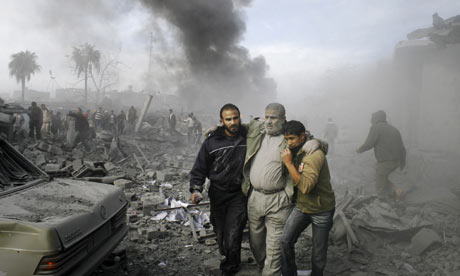
If recent history is any indication then the idea of bombs coming in from Gaza would not only be an absurd notion it would be a complete reversal of the truth. In late 2008/early 2009, the Israeli military sent bombs into Gaza for weeks killing and wounding thousands of Palestinian civilians and the targeting of schools and hospitals, according to an investigative report by the United Nations.
By not questioning the statement the Press reporter perpetuated standard Israeli propaganda and minimizes, or in this case eliminates, the massive human rights violations committed the Israeli Defense Forces against Palestinians.
It is one thing for the Press to communicate the faith-based perspective of Christians on a trip to Israel and not question those perspective, but when the local news media publishes points of view that are not factual without question then the local news does a disservice to the public.
(This article by Dave Zirin is re-posted from ZNet.)

Major League Baseball’s annual Civil Rights Game was poised to be a migraine-inducing exercise in Orwellian irony. Forget about the fact that Civil Rights was to be honored in Atlanta, where fans root for a team called the Braves and cheer in unison with the ubiquitous “tomahawk chop.”
Forget about the fact that the Braves have been embroiled in controversy since pitching coach Roger McDowell aimed violent, homophobic threats at several fans. Forget that this is a team that has done events with Focus on the Family, an organization that is to Civil Rights what Newt Gingrich is to marital fidelity.
The reason Atlanta was such a brutally awkward setting for a Sunday Civil Rights setting, was because Friday saw the Governor of Georgia, Nathan Deal, sign HR 87, a law that shreds the Civil Rights of the state’s Latino population. Modeled after Arizona’s horrific and unconstitutional SB 1070, HR 87 authorizes state and local police the federal powers to demand immigration papers from people they suspect to be undocumented. Those without papers on request will find themselves behind bars. Civil rights hero, Atlanta’s John Lewis has spoken out forcefully against the legislation saying “This is a recipe for discrimination. We’ve come too far to return to the dark past.”
But there was Major League Baseball commissioner Bud Selig, celebrating civil rights in the Georgia, and chortling excitedly about the 2011 All-Star game in Arizona. In the hands of Selig, irony becomes arsenic. Thank God that Commisioner Selig was stupid enough to choose the Civil Rights Game to honor, among others, the great musician Carlos Santana. Santana was supposed to be the Latino stand-in, a smiling symbol of baseball’s diversity. And maybe, he would even play a song!
But Bud picked the wrong Latino. Carlos Santana took the microphone and said that he was representing all immigrants. Then Santana added, “The people of Arizona, and the people of Atlanta, Georgia, you should be ashamed of yourselves.” In a perfect display of Gov. Nathan Deal’s Georgia, the cheers quickly turned to boos. Yes, Carlos Santana was booed on Civil Rights Day in Atlanta for talking about Civil Rights.

Then in the press box, Santana held an impromptu press conference where he let loose with an improvised speech to rival one of his virtuoso guitar solos. He said, “This law is not correct. It’s a cruel law, actually, This is about fear. Stop shucking and jiving. People are afraid we’re going to steal your job. No we aren’t. You’re not going to change sheets and clean toilets. I would invite all Latin people to do nothing for about two weeks so you can see who really, really is running the economy. Who cleans the sheets? Who cleans the toilets? Who babysits? I am here to give voice to the invisible.”
He went on to say, “Most people at this point they are either afraid to really say what needs to be said, this is the United States the land of the free. If people want the immigration law to keep passing in every state then everybody should get out and just leave the American Indians here. This is about Civil Rights.”
Where was Bud Selig during all this drama? It seems that Selig slunk out of a stadium backdoor in the 5th inning. If there is one thing Bud has become an expert at, it’s ducking his head when the issues of immigration, civil rights, and Major League Baseball collide. If Selig really gave a damn about Civil Rights, he would heed the words of Carlos Santana. He would move the 2011 All-Star Game out of Arizona. He would recognize that the sport of Jackie Robinson, Roberto Clemente and Curt Flood has an obligation to stand for something more than just using their memory to cover up the injustices of the present. If Bud Selig cared about Civil Rights, he would above all else, have to develop something resembling a spine. But if Bud is altogether unfamiliar with the concept of courage, he received one hell of an object lesson from Carlos Santana.
GRIID class on the US Drug War starts next month
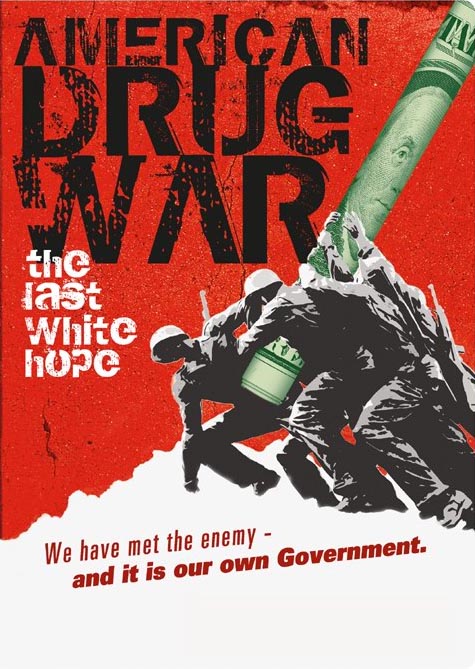
A new GRIID class is being offered starting Saturday, June 4 that will investigate the so-called US War on Drugs.
This 6-week class will take a comprehensive look at the Drug War that will include:
- US foreign policy and interdiction over the last 50 years
- Banks, money laundering and corporate involvement
- The Criminalization of drugs, racism and the Prison Industrial Complex
- Drug Treatment and Prevention
- An analysis of what is happening in Kent County
There will not be a book used for this class, but a series of articles and web-based resources. There is no fee for this class and we will be meeting on Saturdays from Noon – 2:00PM at Heartside Ministry, 54 South Division in Grand Rapids.
For the first session we will be watch the documentary American Drug War. Anyone is welcome to the screening of this film on Saturday, June 4 at noon, but the following 5 Saturdays are for people who sign up for the class. Send jsmith@griid.org if you’d like to sign up.
Obama’s Hope and Change an Illusion as Wars Rage On
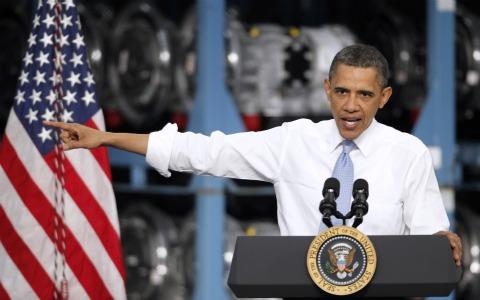
(This video is re-posted from RT America.)
In a speech delivered this morning, President Barak Obama set out some guidelines for the future of the Middle East and North Africa, where unrest and revolt has been all too rampant as of late. While Obama says the present is a “moment of opportunity” to make things better, promises that pegged Obama as a peaceful president at the start of his administration have gone unfulfilled. Instead, America has only extended one war and started another. Nick Turse of TomDispatch.com says he doesn’t have a lot of hope of the President’s most recent rhetoric.
Media and Children
Yesterday I attended the annual Challenge of Children Conference in Holland where 1200 people gathered to discuss issues pertaining to the well being of children. I conducted a workshop for parents, teachers and school social workers on how media impacts children and how the media industry targets them.

I began the workshop by talking about the evolving media technology and how much time kids spend consuming this media. According to a 2010 report from the Kaiser Family Foundation, Media on the Lives of 8 – to 18–year-olds, there has been a dramatic increase in media consumption from 1999 to 2009.
Total media exposure in the last tens years for kids 8 – 18 went from 7 ½ hours to 10 hours and 45 minutes. This shift is due mostly to the current generation of handheld digital devices or mobile units. The report also stated that kids spend more time using multiple media sources at the same time, like playing video games, while listening to music and texting friends.
When we talk about media consumption in the Media Literacy world we always emphasize what the cumulative effect is with the exposure to media images and messages. For instance, the Kaiser report stated that kids are spending on average 4.5 hours a day in front of a TV screen, which over ones lifetime would equal about 16 years of their life spent watching TV. Exposure to say violent media images over that period of time can have a cumulative effect such as desensitization to violence or what researchers call the normalization of violence.
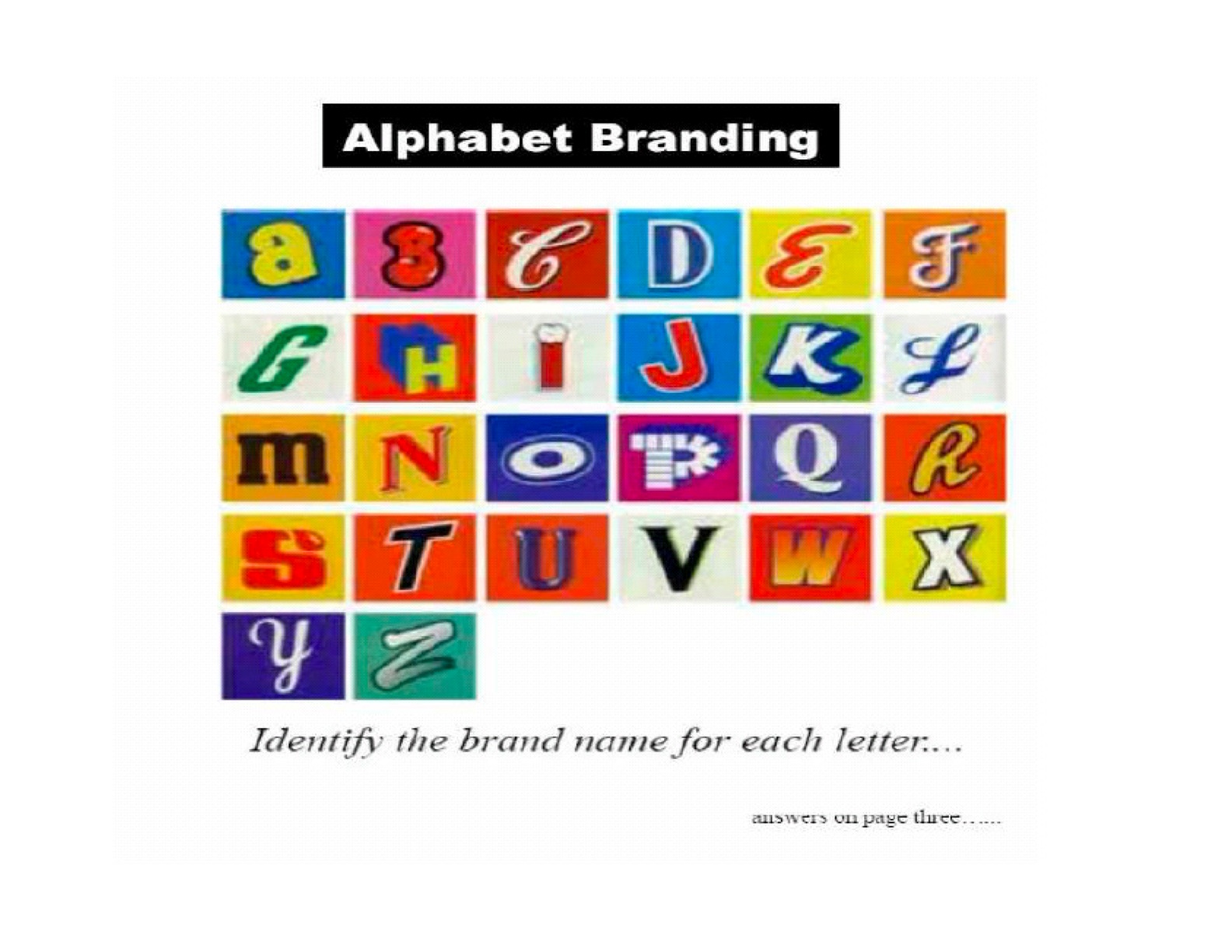
I then did an exercise with those in the workshop to get people to think about what we know and what we don’t know based on what kind of media we are exposed to. I showed them the Branded Alphabet where people have to identify what products each letter represents and then we look at current members of the Obama cabinet and people have to say their name and what position they hold in the government. Overwhelmingly people can identify the products, but not the government officials. This exercise provides a good opportunity to talk about the fact that we know advertising more in part because we live in a for-profit media system where being consumers dominates over being citizens.
 The next aspect of the workshop is to get participants to think about how all media is constructed. What we mean by that is someone puts together media, all media. There is not a wide-angle lens on the world where information comes to us unfiltered. Our media system determines what to give us and when to give it to us. Here we look at a Dove Foundation created PSA to make a point about how both media is constructed as well as beauty.
Once people have a better sense of how media is constructed we then spend some time looking at how to deconstruct media images and messages. We look at numerous examples and talk about everything from the product being sold to the primary target audience, the edits, camera angles, lighting, props, location, colors used, music used, the pace of the ad and the feel of the ad. Those who make these commercials certainly think about it since these ads are highly constructed. One example we looked at was a Chrysler Mini Van ad that is targeting kids. The ad shows kids in a playground who are in awe of the vehicle as it drives by and at one point the narrator of the commercial even says the mini van is “like a playground on wheels.”

After looking at numerous media examples we also mention that advertisers are constantly pushing for new venues in which to target kids. Corporations now pay to insert branded products into video games, use a variety of techniques to advertise in schools and to target kids with product placement in movies. The website Brand Channel provides a chronological breakdown of recently released films and lists the products used within each film. For example, the recently released film Hop features the following branded products: Apple, Baby Carrots, Butterball, Cadbury, Eagle Creek, Gibson, Hershey’s Mrs. Meyers, Playboy, Ray-ban, Sabian, Stax, The Orpheum, Toyota Prius, UPS and Volvo.
Another venue for targeting children is the cross-promotion of products and brands. For instance, with the film Thor, Burger King partnered with the film distribution company to cross-promote the film and Burger King Products. This cross promotion could be seen in commercials but also online at BK’s kid specific website Club BK. The website features games, toys and other messages that encourages kids to consume Burger King products and to normalize fast food.
Once we looked at all the ways in which children are being targeted by media and advertising we ended the workshop by looking at ways in which we can respond to the negative effects of media on children. GRIID has online a 5 Key Strategies for Media Education and Accountability handout which provides people with concrete actions to take in the home, in schools, with media companies and the larger community.
It is not only important that we give kids the skills to become media literate, we also have to confront media companies and challenge them on their practices of targeting children.

