(This article by Dave Zirin is re-posted from The Nation.)

Over the last year, civil rights organizations, politicians, sportswriters and baseball players have asked Major League Baseball Commissioner Bud Selig to move Tuesday’s 2011 All-Star Game out of Arizona. He chose not to listen and now I choose not to watch. If I lived within a day’s travel of Arizona, I’d be choosing to protest at the stadium gates. Ever since Arizona passed its darkly punitive racial profiling law SB 1070, thousands of people have pleaded with Selig to do the right thing and move the game. Baseball is 27.7 percent Latino.
It’s a sport dependent on Latin American talent from the baseball academies of the Dominican Republic to today’s biggest stars, Albert Pujols and Adrian Gonzalez. Even more, Major League Baseball has prided itself—and marketed itself—on historically being more than just a game. Bud Selig, in particular, is a man who publicly venerates the game’s civil rights tradition. Jackie Robinson’s number is retired and visible in every park and the great Roberto Clemente in death has become a true baseball saint. But Selig’s inaction makes his tributes to the past look as hollow as Sammy Sosa’s old bat.
Selig clearly loves the symbolism of civil rights more than the sacrifice. The presence of the game will mean a financial windfall for the state as well as for Arizona Diamondback owner Ken Kendrick. Kendrick is a first-tier right-wing money bundler who has let the state politicians behind SB 1070 use his owner’s box for fundraisers. The game will also mean a national spotlight for the vile Sheriff Joe Arpaio of Arizona’s Maricopa County, our twenty-first-century Bull Conner. Arpaio has been threatening to bring down his pink-clad chain gang to clean up outside the stadium.
Selig is not the only one backing down from the moment. The Major League Players Association issued a very strong statement last year against SB 1070 and hinted that a boycott might be in the cards, saying they would “consider additional measures to protect the interests of our members.” Earlier this week, after months of silence, Executive Director Michael Weiner, said, “SB 1070 is not in effect and key portions of the law have been judged unlawful by the federal courts. Under all the circumstances, we have not asked players to refrain from participating in any All-Star activities.” To say SB 1070 “is not in effect” is sophistry. Only a section of SB 1070 has been judged unlawful: the extension of police powers to demand papers without cause.
Other aspects are now on the books including stiffer penalties for “illegals” and giving citizens the right to sue any city that sets up safe havens for immigrants. In addition, State Governor Jan Brewer is currently appealing the pruning of SB 1070 directly to the US Supreme Court. Also, the law has spawned copycat legislation in states around the country. My own discussions with Arizona activists tells me that racial profiling has been rampant since the law passed, with Latinos, legal and illegal, in fear to call the police or the fire department, or even attend church. Even if you agree with the Michael Weiner, as he writes that immigration matters “will not be resolved at Chase Field, nor on any baseball diamond,” the MLBPA is being remarkably cavalier about its responsibility to “protect its members.”
As for the players, a massive number are bowing out of this year’s game. Is this because of SB 1070? We don’t know, but either way a weakened product will be on display Tuesday night. If the spotlight shifts to anyone on the field, it will be centered on Boston’s All-Star first baseman Adrian Gonzalez, who changed his position a year ago that he wouldn’t play if the game were in Arizona. There is a movement to have players like Gonzalez, sympathetic to the cause, to wear a ribbon or make some kind of statement. We will see if Adrian Gonzalez takes advantage of the spotlight.
But in the end, responsibility for this debacle rests with Selig. NFL owners, whom no one would confuse with the NAACP, threatened to pull the 1993 Super Bowl out of Arizona if the state continued to refuse to recognize Martin Luther King Jr.’s birthday as a national holiday. Now, twenty years later, baseball’s commissioner does nothing. Yes, Bud Selig would undoubtedly have received an avalanche of criticism it he had moved the game. That’s what it means to actually sacrifice something for the sake of the civil rights he claims to hold so dear. Instead, his legacy will bear another blot, joining the steroid boom, the cancellation of the 1994 World Series and the gouging of state economies with taxpayer-funded stadiums. Now Bud Selig can always be remembered as the Seinfeld of sports commissioners: the man who did nothing; the man who, with the game on the line, kept his bat on his shoulder and took a called third strike.
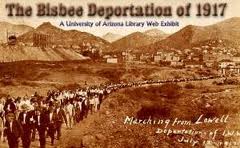
Ninety-four years ago today thousands of workers, many of them IWW members, were arrested for participating in a strike at a copper mine in Bisbee, Arizona.
The onset of World War I made demands on global powers, both militarily and economically. The war necessitated that more raw materials be used for armament production and copper was an essential mineral for that cause.
Copper production increased dramatically from the time WWI began (1914) and the year of the strike (1917). This increase in production required more copper to be mined and thousands of workers were hired in Arizona. The price of copper also increased during this same period, going from 13 cents a pound in 1914 to 37 cents in 1917. However, the profits from this increase did not translate into better wages or changes in working conditions for the miners.
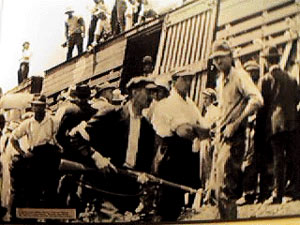
The Industrial Workers of the World (IWW) had been organizing in mines for years and were the primary union organizing in Bisbee. Many of the workers were recent immigrants from Europe and Mexico. Since the IWW did not discriminate along racial or ethnic lines they were effective in organizing many of the miners.
In June of 1917, the IWW organized workers gave the mining company a list of demands, which included:
“…….improvements to safety and working conditions, such as requiring two men on each machine and an end to blasting in the mines during shifts. Demands were also made to end discrimination against members of labor organizations and the unequal treatment of foreign and minority workers. Furthermore, the unions wanted a flat wage system to replace sliding scales tied to the market price of copper.”
The mining company refused the demands and on June 27 the workers went on strike. The company responded by bringing in vigilantes from all around the state to intimidate and arrest the workers.
Over 1,000 workers were rounded up and forced onto a train where they were herded like cattle into rail cars with floors covered in manure. The train was to take them to New Mexico, but authorities turned them away, so the train stopped in the desert and left the men there for days with little food and water. Eventually, US troops arrived and the workers were escorted to a prison where they awaited trial.
The Wilson administration finally investigated the matter and found that the forced relocation of the workers was illegal, but the federal government did nothing to hold the mining company accountable. The state of Arizona also seemed reluctant to challenge the power of the mining company and there was no favorable news coverage as the Bisbee newspaper was also owned by the mining company.

Many of the workers filed lawsuits against the mining company, but these cases moved slowly in the courts and no guilty charges were ever levied against the mining company.
Ultimately, the strike was broken, but word spread across the country of the brutal treatment of workers and the deportation to the desert. This outrage provided a perfect opportunity for the IWW to recruit new members across the country.
The mining companies today in the US are abusing workers with harsh conditions and a lack of concern for worker safety as was the case a year ago with Massey Energy’s mine disaster that resulted in 29 miners being killed. This disaster brought renewed attention to both the conditions of miners and the horrendous environmental track record of the mining industry.
On the anniversary of the Bisbee worker deportation it would do us well to reflect on the condition of working people today, where wages are at poverty level, conditions are unsafe and intimidation tactics are used by the business class. We need to develop solidarity with all workers and not tolerate the gross injustices committed by the business class in the mines, on the shop floor, in restaurants and in the classroom. Solidarity Forever!
Hearing to confront repression of human rights and civil liberties by the criminal justice system.
Saturday, July 16, 3:00-6:00pm Location: The Shrine of the Black Madonna Cultural Center and Bookstore 13535 Livernois Avenue Detroit, MI 48238

The panel presentation will focus on how the ‘War on Terror’ climate and its repressive legal practices in the criminal justice system have affected civil liberties and human rights of Arab, Muslim, African American, South Asian, and all immigrant communities and the broader social justice movement.
Representatives from the National Coalition to Protect Civil Freedoms (NCPCF), Project Salam, CAIR-MI, Michigan Emergency Committee Against War and Injustice (MECAWI), and Committee to Stop FBI Repression-MI will be having a panel discussion about their political, social and legal campaigns around these very important issues to address how we can counter and change oppressive policies.
Included in the panels are families who will share personal stories of struggles for justice. The goal of the program is to shed light on the conditions of families and communities suffering under the war on terror, establish alliances across all communities for support, and mobilize our communities to eradicate these oppressive political and legal injunctions.
PANEL I: Prosecutorial Persecution in the Criminal Justice System
Shahid Buttar, Key not speaker, Bill of Rights Defense Committee
Steve Downs, National Coalition to Protect Civil Freedoms (NCPCF)
Abayomi Azikiwe, Editor Pan-African News Wire, Michigan Emergency Committee Against War and Injustice
Dawud Walid, CAIR-MI
VIDEO PRESENTATION
Mel Undebakke, National Coalition to Protect Civil Freedoms
PANEL II: Impact of Preemptive Prosecution on Families
Hedaya Jayyousi, Dearborn, MI
Tamer Mehenna, Boston, MA
Tom Burke, Grand Rapids, MI
Co-Sponsors Include: National Coalition to Protect Civil Freedoms (NCPCF), Bill of Rights Defense Committee (BORDC), Michigan Emergency Coalition Against War and Injustice (MECAWI), Families United For Justice In America (FUJA), Council on American Islamic Relations-CAIR-MI, Justice For Shifa and Haris Support Committee, Project SALAM, Friends of Human Rights
To participate and co-sponsor the event contact civilfreedoms@gmail.com
Local Contacts: panw@africamail.com or freeshifa@gmail.com or call 517-505-1697
A member of the Grand Rapids branch of the IWW was fired on Friday when he came into the 648 Monroe Street location of Jimmy John’s.
Matthew Bair says he was fired for alleged customer complaints. When Bair asked to see any formal complaints the Jimmy John’s manager refused to show him anything. Bair stated that he had great customer service and would often get good tips from customers during his shift.
Bair and other local IWW members believe he was fired because of his involvement with the IWW, which has been engaged in an organizing campaign with wage – workers in the fast food company.
On Sunday, the IWW organized a phone zap to have as many people as possible call Jimmy John’s and put pressure on them to reinstate Matthew Bair.
Today, several IWW members, including Bair, went to the 648 Monroe Street location to hand out flyers and to put Jimmy John’s employees and customers know that this firing is unacceptable and unjust. Many customers look flyers and listened to Bair who asked them to go inside, talk to the manager and ask that he be reinstated.
At one point IWW members went in the store to hand out flyers to customers sitting down, but also to attempt to engage the workers on what had happened. Most workers would not respond, but those that did were defensive and uncomfortable with the presence of their now fired fellow worker.
We spoke with both Matthew Bair and fellow IWW member Cole Dorsey who were at the Jimmy John’s store today in an attempt to get Bair’s job back. Bair talked about what happened and Dorsey spoke about the IWW response.
It has been several days since the murder of seven Grand Rapids residents and the community has had time to mourn publicly – at a candlelight vigil, in churches over the weekend and through social media.

Every day more information is reveal about the circumstances and the history of the man who killed 7 people and then took his own life. As the news coverage unfolds it is important for all of us to think about certain dynamics that not only are relevant to this case, but are central to the issue of violence in this culture. We need to look at this issue through a gender lens and ask ourselves what significance gender played in the recent killings.
What seems obvious in many ways has not been stated yet in the news coverage we have looked at. The killer was male. This may not seem like much of a revelation, but it does tell us a great deal about violence and how gendered violence has become so normal in our culture that we don’t even think about it.
A man kills 7 people, 6 of which are females. Two of the females killed were girls and one was his wife. News coverage has revealed that Rodrick Dantzler had a history of assault, property damage and domestic violence. That Dantzler had a history of domestic violence was the focus of a July 8 story on MLive, which included comments form local domestic violence prevention specialists who noted that one in four women is affected by domestic violence. In fact, according to local data for Kent County in 2009, there were over 1,000 reported cases of domestic violence – reported. There are roughly three times as many incidents of domestic violence, but the majority is never reported.
Across the country the data is even more alarming. According to the National Network to End Domestic Violence, which publishes an annual snapshot report of an average day in the US, reports that 70,648 cases of domestic abuses happens every day. In Michigan the number is 2,737 per day. When looking at the number of female domestic partners that are murdered by men the number is 3 every day in the US.

Looking at Rodrick Dantzler’s history of domestic violence is certainly important, but the coverage to date has really avoided discussing the fact that a man killed 6 women and one man. The gender of the perpetrator seems to be irrelevant so far in the coverage, even though what is consistent with these murders and murders across the country is that men perpetrate most of them. So why is there limited news coverage about this fact and why are we not having a community conversation about why men commit so many acts of violence? Do you think that if a woman who was victimizing her male partner, who then killed him and several other men and boys, that people would not be talking about the gender of the perpetrator?
These are questions that many feminists have been asking for decades as well as pro-feminist male writers and activists like Jackson Katz. For the past ten years Katz has been making it a point to expose the flaws in our news coverage and public discourse whenever men rape or commit murder, particularly gun murder. Katz explores this issue in his documentary Tough Guise as well as his more recent book The Macho Paradox: Why Some Men Hurt Women and How All Men Can Help.
Again, the community has responded with lots of sympathy and public displays of morning. However, if we are to avoid similar incidents in the future it is critical that we honestly confront the cultural norms about masculinity and work to end male violence against women. This is a teachable moment. Let us hope the Grand Rapids community will learn a lesson.

A member of the Grand Rapids branch of the IWW was fired yesterday after working at a local Jimmy John’s.
Matt Bair was fired for “alleged customer complaints” on July 8. Bair told us that he was never told of any “complaints and always received praise and good tips from costumers.” Bair believes he was fired because of his membership in the IWW.
The IWW has been targeting Jimmy John’s for over a year in an organizing campaign that started in Minneapolis and led to solidarity pickets throughout the country, including one in Grand Rapids last September.
The Grand Rapids branch of the IWW is calling on people to take action with a phone zap. People are urged to call Jimmy John’s owner Tom KirkPatrick and demand, “That fellow worker Matthew Bair be reinstated and to continue work at Jimmy Johns. That they stop their campaign against Jimmy Johns workers organizing for a better future.”
Call (616) 617 3773 all day Sunday!
The IWW also included this statement as a suggestion for what to say to Jimmy John’s owner Tom KirkPatrick:
Hello Mr. KirkPatrick, I am calling to insist that fellow worker Matthew Bair be reinstated at Jimmy Johns. It is illegal to terminate someone for their organizing activity. Please join the consensus of working people around the nation and stop the union busting efforts against your workers.
For more information on the Grand Rapids branch of the IWW go to this link.
(This article by David Rosen is re-posted from CounterPunch.)
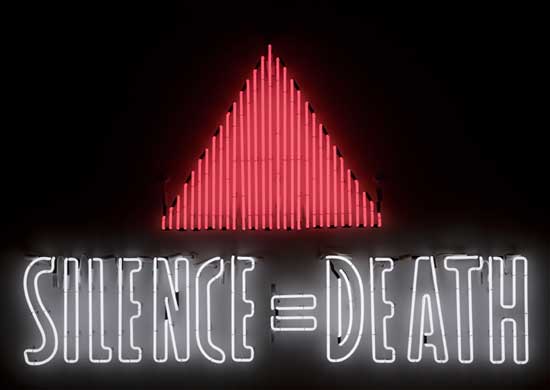
June 27th was National HIV Testing Day. It commemorated the 30th anniversary of the first official recognition of HIV/AIDS by the U.S. Centers for Disease Control. Three decades ago, an unknown malady emerged on the world-historical stage. First in clinics and hospitals in San Francisco, Los Angeles and New York, and then spreading throughout the country, previously healthy gay men were reporting peculiar symptoms that, ultimately and inevitably, led to painful deaths.
Today, HIV/AIDS is a worldwide pandemic. The UNAIDS Global Report 2010 estimates that at the end of 2009 approximately 31 million adults and 2.5 million children were living with the disease. While there is no known cure for the disease, the U.S. and other advanced countries offer a “cocktail” of powerful drugs (known as protease inhibitors) that fights the infection. These drugs help reduce the HIV virus and keep the immune system as healthy as possible, decreasing the complications that may develop.
In the U.S., an estimated 1.1 million people live with the disease. The principle modes of transmission involve: unprotected male-to-male anal sexual intercourse; injection drug use; unprotected heterosexual sexual intercourse; and other means like contaminated medical syringes.
Nearly half (500,000) of those infected in the U.S. are African-Americans. A recent study by the Black AIDS Institute, “Deciding Moment: The State of AIDS in Black America,” notes: “Every year, 56,000 Americans become infected with HIV. Nearly one out of two newly infected people are Black.”
While New York, California and Florida have numerically greater numbers of people living with AIDS, Washington, DC, is the nation’s AIDS capital. Measured on the basis of those infected per 100,000 of the population, Washington has an estimated 119.8 AIDS cases compared to New York’s 24.6, Florida’s 23.7 and California’s 10.2.
While President Obama issued a video message encouraging Americans to get tested for HIV/AIDS to commemorate for National HIV Testing Day and First Lady Michelle Obama visited an HIV/AIDS clinic in Botswana (and even helped paint it) during her recent trip to Africa, these gestures seem pathetic as Washington faces an HIV/AIDS epidemic.
* * *

HIV/AIDS is ravaging minority communities in the U.S., especially the African-American and Hispanic. Black Americans account for 12.6 percent of the U.S. population; when those who identify with more than one race are included, the total is 13.6 percent. Hispanics/Latinos have become the nation’s largest “minority” group, accounting for 16.3 percent of the population. However, African-Americans account for:
§ 45 percent of new HIV infections;
§ 46 percent of people living with HIV;
§ 48 percent of all new AIDS diagnoses; and
§ 57 percent of all HIV-related deaths.
Digging deeper, these figures get even more alarming:
§ Black women account for 61 percent of the HIV infections among women – this is nearly 15 times greater than the rate for white women.
§ Black youth aged 13 to 19 years are only 17 percent of U.S. teenager population, but represent 68 percent of all new AIDS diagnoses among teens.
§ 46 percent of Black gay and bisexual men are infected with HIV, compared to 21 percent of white men and 17 percent of Hispanic males.
This situation is grimmest in Washington, DC. The District has a population of just over 600,000 pepole of which nearly 50 percent are black and 9 percent are Hispanic. A June 2011 D.C. Department of Health report found that the number of HIV/AIDS cases qualified as an epidemic under World Health Organization (WHO) criteria. Among its findings for 2009 are:
§ An estimated 16,721 Washingtonians over the age of 12 were living with HIV/AIDS;
§ 75.2 percent of these with HIV/AIDS were African-American;
§ Residents between 40 and 49 years of age have the highest infection rate among District residents (7,393 per 100,000 residents).
The level of HIV/AIDS in Washington represents 3.2 percent of the population, an infection level greater than in many developing nations. The WHO places an epidemic rate at anything greater than 1 percent of the population.
It must be noted that over the last few years, the number of new HIV/AIS cases in Washington fell by 50 percent. In 2005 the number of deaths from HIV and AIDS was 326 and by 2009 it had fallen to 153 death. DC Mayor Vincent Gray took credit for these developments. “We are getting people diagnosed earlier and into care and treatment faster for their health,” he said, “thereby reducing the chances that others will get infected.”
A comparable pattern is found in New York City. As of yearend 2009, 108,886 people were reported living with HIV/AIDS, of which two-thirds were male. However, nearly 90 percent were minority people, including 52.4 percent Africian-Amerian and 35.5 Hispanic.
Amidst the intensifying economic restructurting and calls by (white) Republicans for fiscal austerity, one can only wonder if we will see a reduction in national (and especially federal) efforts to prevent the spead of HIV/AIDS. Sadly, the likely reduction in preventive efforts will lead to an increase in the number of those infected with HIV/AIDS, especially within minority communities.
* * *
“We pause to mark the thirty years we have been fighting HIV/AIDS,” President Obama recently proclaimed. “As we remember people in our own lives we have lost and stand by those living with HIV/AIDS, we must also rededicate ourselves to finally ending this pandemic – in this country and around the world.”
In July 2010, the Obama administration introduced the National HIV/AIDS Strategy, the nation’s first comprehensive AIDS plan. It is organized around three core goals: to reduce new HIV infections; to increase access to care and improving health outcomes for people living with HIV; and to reduce HIV-related disparities and health inequities.
The U.S. spends $19 billion annually on domestic HIV/AIDS prevention, care and research. Last year, the U.S. Dept. of Health and Human Services allocated $30 million in a major initative to develop better HIV/AIDS prevention methods. The announcement was met with a ho-hum shrug by AIDS activists. Michael Weinstein of the AIDS Healthcare Foundation expressed the widely shared assessment: “This will be another report that will gather dust on the shelves of the Library of Congress.”
Sadly, any new federal effort will likely have only a marginal impact on the continuing spread of HIV/AIDS within the African-American community. Afrcan-Americans have been disproportionately affected by HIV/AIDS since the epidemic’s beginning and this disparity has only deepened over time.
HIV/AIDS among gay and bisexual black men is more than double that of white men, but the transmission patterns vary between both groups. The “down low” phenomenon has been much commented upon within the African-American media, but heterosexual transmission and injection drug use accounts for a greater share of infections among black men than white men; white men are more likely to have been infected through unprotected homoerotic anal sex.
Most disturbing, newly infected black gay and bisexual men are younger than their white counterparts; those aged 13–29 account for 52 percent of new infections among blacks compared to 25 percent among whites.
Social issues will likely play a secondary role in the 2012 election. Jobs, jobs and the deficit will increasingly dominate politial discource. Politicans are sharpening their knives aggressively in their quest for budgetary expendables. As 235 years of American history has taught us, the poorer and darker you are, the more expendable you are.
While Obama has maintained a relatively consistent support for gay rights (e.g., his effort to end Don’t Ask/Don’t Tell), issues like abortion rights, immigration and gay marriage (i.e., “marriage equality”) have been causalities of his compromiser’s half-step shuffle. In key domestic policy challenges, most acutely exemplified in the health-insurance battle, financial reform struggle and the BP-Gulf disaster, the “good” was sacrificed for the “possible” and the vast majority of Americans came out the loosers in the political sausage-making process.
Short of another major HIV/AIDS crisis similar to that which beset the U.S. in the early ’80s, the country will absorb the likely increase in HIV/AIDS infections over the next few years, especially within African-American and Hispanic communities. This will be one of the unintended consequences of new austerity economics imposed by Republican and complicit Democratic budget cut.
For eleected officials, and the corporate lobbyists who really run Washington, the lives of the poor, especially black and Hispanic, are merely collateral damage in the class war they are waging to maximize profit. Their efforts fit perfectly with the new 21st century American ethos, one in which prejudice has replaced reason and self-interest trumps the social good.
New Media We Recommend
Below is a list of new materials that we have read/watched in recent weeks. The comments are not a “review” of the material, instead sort of an endorsement of ideas and investigations that can provide solid analysis and even inspiration in the struggle for change. All these items are available at The Bloom Collective, so check them out and stimulate your mind.
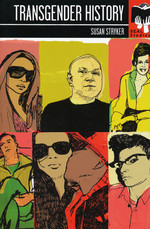
Transgender History, by Susan Stryker – This book is not only educational and informative on the history of transgender struggles it demonstrates that in many ways trans people have been at the front lines of much of the contemporary fight for gay liberation. Susan Stryker does an amazing job dissecting this history and making a strong case that Trans history needs to be explored more by everyone and not just the LGBT community. What gets left out of much commentary on the Stonewall uprising is that it was Queens and Trans people who were taking the strongest actions against police brutality. More than that Stryker points out that several years before Stonewall there was another uprising in San Francisco at Compton’s Cafeteria and again it was the Trans community taking on the cops. The book is also invaluable because it spends a significant amount of time getting readers to think beyond the traditional gender binaries. A must read for anyone community to LGBT Liberation.

The Arab Revolt and the Imperial Counterattack, by James Petras – The Arab Spring is still in progress, but after 6 months it is important to have some solid analysis of what is taking place. Historian James Petras provides excellent insight into the Arab Revolt and more importantly for those of us in the US he sheds light on the response from the Obama administration. Petra looks at the historical US relationships in the Middle East and makes clear that the current administration has been consist with all previous administrations since WWII. Petras then frames the US response over the last 6 months as an imperial counterattack against the popular democratic uprisings throughout the Middle East, whether it is Egypt, Tunisia, Gaza and Libya. The book is only 78 pages, but it packs a punch and is a great resource for understanding how the US is responding to the Arab Spring and what it is doing to try to undermine these popular uprisings.

The John Carlos Story, by John Carlos – Many of us in the US are familiar with the famous photo of John Carlos and Tommie Smith giving the Black Power sign while standing on the Olympic medal platform in Mexico City in 1968. However, many of us do not know the reasons behind the athletes’ actions and how it was part of a much larger campaign for global human rights. The John Carlos Story not only illuminates this powerful moment in history it also tells the story of a man who is not limited to that moment. John Carlos reveals much about his childhood and his fight against racism and injustice. Carlos was part of a growing group of athletes in the US and around the world that used sports as a platform for social justice and radical politics. The book was written with left sports writer Dave Zirin who has been advocating for years that sports have always been a venue for radical politics in the US. After reading The John Carlos Story one would be hard pressed not to agree with Zirin’s assessment. An important book about a man filled with passion and determination to fight for what he believed was the right thing to do.
Not Just A Game: Power Politics and American Sports (DVD) – Left sports writer Dave Zirin narrates this power new documentary about how sports has always been a window into American sports. Zirin breaks down this larger topic into the areas of US sports and militarism, sexism, racism and the courage of athletes to bring social justice and radical politics into the mainstream of sports. Zirin looks at amazing courage of athletes like Billy Jean King, Curt Flood, Pat Tillman, Kathy Switzer, Martina Navratilova, Jack Johnson, Jackie Robinson and Muhammad Ali. Moving stories, courageous people and a great resource for looking at the intersectionality of justice issues.
(This article by Todd Heywood is re-posted from Michigan Messenger.)
Two Michigan state Senators (one being Mark Jansen) have proposed legislation which would allow counseling students to decline to counsel some clients because doing so would violate their “sincerely held religious belief or moral conviction.”
The legislation is a response to the ongoing case of former Eastern Michigan University student Julea Ward. Ward was removed from a counseling program after refusing to counsel a gay student about his relationships. She said she could not do that as it would be encouraging or validating a “lifestyle” she did not condone of believe in because of her Christian faith. Ward transferred the student to another counselor, but soon found herself being booted from the university. She sued in federal court, but thus far the courts have ruled that EMU’s counseling education program was within its rights to boot her.
But Detroit Democratic Sen. Tupac Hunter says Ward was “discriminated against” by the university. That is why he agreed to co-sponsor the legislation with Grand Rapids area Republican Sen. Mark Jansen.
“[Ward] was met with I feel an inappropriate response whereby she was penalized for having her own moral conviction,” Hunter told the Michigan Messenger. “The legislation was crafted to do exactly what it says. To prohibit an individual who is in one of those programs who has a value conflict from being discriminated against.”
Similar “conscience” bills has been introduced in the state legislatures in previous years which would have allowed pharmacists and doctors to decline to provide services based on moral convictions. Those bills have always died in the legislative process. Opponents of the legislation noted that if passed it would have allowed, for example, a Catholic pharmacist to refuse to fill a prescription for birth control pills or the so-called “morning after pill.”
While Hunter says the legislation is not about allowing counselors to discriminate against gays, but rather is broadly structured to respect the moral convictions and religious beliefs of counseling students. But he said he sees limits to the legislation.
Asked if a white nationalist who was an adherent of a brand of Christianity called Christian Identity would be allowed to invoke their sincerely held religious beliefs to refuse to counsel a person of color, Hunter replied, “No. That is where I draw the line.
“You pose a scenario that some one could suggest that’s like being discriminated against because of sexuality,” said Hunter. “When I believe that there is a moral value, what I believe, that is one thing. To say that, you know, that sexuality is on the same level as an issue of racism, that is a debate we need to have.”
Hunter said the Bible prohibits homosexual activity but does not support racism. Asked if under his scenario he weren’t setting universities and colleges up to be the arbitrators of which religious values were and were not valid, Hunter said, “No.”
Civil rights activists were quick to pounce on the legislation and the Detroit senator’s statements.
“All respected mental health organizations say that homosexuality is not a disease that can be treated,” says Wayne Besen, executive director of Truth Wins Out, a national organization that works to counter the effects of ex-gay counseling or reparative therapy promoted by many churches. “Any counseling that rejects coming out as an option is by nature inappropriate, unhealthy and damaging to the client. Furthermore, the counseling should be about the client, not the self-serving needs of the therapist.”
Equality Michigan, an LGBT rights group based in Detroit, opposes the legislation.
“What is frightening about Senator Hunter’s bill is that just about any bias could be argued to qualify as a ‘sincerely held religious belief or moral conviction,’” says Emily Dievendorf, policy director of Equality Michigan. “Any bias would, under this bill, allow counselors to refuse help to individuals seeking their guidance. It is shameful and sad that the desire to hurt the gay community was the motivation for the bill in the first place. Creating broad flexibility in our law to permit discrimination endangers all people. If this bill becomes law, we will see individuals in crisis being refused counseling due to their race, religion, sexual orientation, gender identity, sex, socio-economic status – you name it.”
“This would set a very dangerous precedent. If the Christian therapist can reject gay clients, why can’t a fundamentalist mail carrier elect not to deliver letters advertising concerts for the Gay Men’s Chorus? What is happening in Michigan could create a chaotic and divisive situation where fundamentalists are exempt from laws that govern the general public,” says Besen. “The law is meant to protect a person’s right to worship according to conscience. Unless the counselor is forbidden from such worship, his or her rights are not being violated. The counseling profession by nature is one where an expert provides advice to people with whom they may personally disagree. If a client is told by such a perceived expert that they are unfit to be treated, such unprofessional behavior and moral judgement can damage the client.”
Dievendorf also raises safety concerns associated with denying services to counseling clients.
“This bill also threatens lives through potential delays in access to counseling and even lacks requirements to document the personal bias that is supposed to enable counselors to deny treatment,” she said. “Imagine the potential psychological harm when a client is denied or delayed services because of a counselor’s personal distaste – will we see more self-harm or suicides? We all know how harmful discrimination can be. Senator Hunter is now trying to promote it.”
Six words to describe Grand Rapids
It was announced during the 4th of July celebration that the Amway corporation, along with MLive and the Grand Rapids Press have teamed up to offer yet another contest.

The contest is called My GR 6 and is designed to get people to submit a 6-word phrase that best describes the City of Grand Rapids. The winner of this contest will be showered with $10,000 worth of local prizes that have been donated by some of the larger local businesses and entertainment venues.
Already there has been a significant media buzz around the issue and lots of people submitting their 6 word statements. First, I want to state upfront that there are a lot of things happening in this community that are beneficial, creative and truly support what the famous educator/activist Scott Nearing called “the good life.” What Nearing meant by the good life was social justice, ecological integrity and economic simplicity.
Second, while this project may get people to reflect fondly on the positive attributes of this city, it will not likely get much critical reflection. Some obvious criticisms are that this new “contest,” which was hatched by some marketing personnel with the Amway Corporation, should raise red flags for anyone who hasn’t completely bought into the PR generated history of the Ada-based company, its founders and their families.
The Amway Corporation and the DeVos & Van Andel families have a long history of influencing Grand Rapids both economically and politically. Using the wealth these families made off the backs of workers and those who bought into the pyramid-scheme sales structure, the Amway families have purchased property in the downtown part of Grand Rapids and played a major role in the re-construction of that part of the city.
These assets that Amway family members have acquired has provided them significant leverage in determining what kind of development was to occur, such as hotels, the arena, convention center and medical mile.
In addition to the property assets they possess, they have also leveraged what happens in the city through the political process, whether that has been through major contributions to the Republican Party or area candidates running for office at all levels. They have also influence downtown development through support and participation in such groups as the DDA and Grand Action.
More recent participation in cultural institutions such as the Art Museum, the Public Museum, UICA and the now popular ArtPrize have also provided tremendous clout to the Amway families who have become much better at using the wealth they made from other people to create a much friendlier buffer between unbridled greed and a growing class of people living in poverty.
“Grand people, great faith, generous giving.” Richard and Helen DeVos MyGR6 phrase
The Third and last point to raise here is that while it is certainly important to point out the positive elements of what makes up Grand Rapids, it too often means that we do not look at the negative and even destructive forces in this city. Not directing our gaze or our creativity toward these very real elements of this city is exactly what the Amway families want us to give our attention to.
So, in keeping with the spirit of the MyGR6 contest, I would like to offer up 6 words to get us to think about the not so pleasant realities that permeate our city.

Poverty – Last week we reported on the new unemployment statistics for Kent County, which currently has 8.8% of unemployment. What the statistics don’t reveal is that there are thousands of people living in poverty in Grand Rapids, both the unemployed and underemployed. This means that thousands of people are faced with the possibility of being evicted, not being able to pay utility bills, forced to rely on food pantries and purchase cheap foods, which is often unhealthy food. Living in poverty often leads to people living under significant stress and coping with depression.
In the neighborhood that I have lived in for 26 years, this kind of poverty also has led to abusive landlords who take advantage of those in poverty by taking their monthly rent but not investing is a safe and healthy environment. This is part of My Grand Rapids!
Racism – It is not a secret that Grand Rapids in one of the most racially segregated cities in the country. In addition to the segregation, communities of color are still disproportionately treated as second-class citizens. The poverty rates are higher for Black and Latino/a communities and there is a disproportionately higher rate of incarceration for these two communities of color.
I also know numerous people in the Arab American community who continue to receive threats and verbal assaults on a daily basis. The same is true for all communities of color and those that are also part of recent immigrant communities, who constantly live in fear of harassment from both individuals and cops. Grand Rapids is home to thousands of migrant workers who make poverty wages and endure harsh working conditions even though they provide the labor that brings us most of our food. This is part of My Grand Rapids!
Sexism – According to the Kent County Sexual Assault Prevention Action Team, there are significant numbers of women and children who are sexually assaulted on a monthly basis in Grand Rapids. Grand Rapids is no different from the rest of the country in that roughly 30% of the women who live in this community will be sexually assaulted in their lifetime. This is not a marginal number, but the number does not convey the realities of the ongoing trauma that those who are victims of sexual assault experience throughout their entire lives, which includes some of my closest friends and those I work with. This is My Grand Rapids!
Homophobia – While it is true that the City of Grand Rapids passed an anti-discrimination ordinance in the mid – 1990s, there is still significant discrimination against members of the LGBTQ community. This discrimination is faced in the areas of housing, employment, health services and within religious institutions. After months of research and interviews with people in the LGBTQ community for the People’s History Project, it is clear that Grand Rapids has a long way to go to not only respect people in the gay community, but to provide social, cultural and public space for them to feel safe and welcomed. This is My Grand Rapids!
Pollution – For some, Grand Rapids is known as a “green” city. However, despite some progress being made around environmental issues, Grand Rapids is still a community with an unsustainable amount of pollution. Air pollution is problematic for everyone, but particularly for people with asthma and other respiratory issues. Communities of color and working class neighborhoods are disproportionately closer to the highways that run through this city and are exposed to more air pollution caused from vehicle exhaust.
Grand Rapids doesn’t have adequate green space and needs to improve the urban canopy of trees significantly. Water pollution has improved in some areas but we need to drastically reduce both the amount of contaminants going into water and the amount of water consumed in this city. Grand Rapids does not as of yet have a plan for dealing with composted matter, does not allow people to raise chickens and is still far off from being a city where bicycle and mass transit are the dominant forms of transportation.
Exploitation – The economy of Grand Rapids operates within a Capitalist model and is even celebrated as a place of famous entrepreneurs – ie., the Amway families. This means that we have significant concentrations of wealth in the hands of a few, while working people are exploited on a daily basis.
The “captains of industry” have mechanisms they have created to dictate what happens in Grand Rapids, such as the Chamber of Commerce, the Right Place Program, the DDA and other business programs that exist to push forth a corporate agenda. We can see this — what Michael Barker calls soft power — with the power of business schools at local universities as well as the clout that wealthy families exert through their numerous foundations.
In fact, writers like Barker would argue that Amway’s creation and participation in the MyGR6 contest is a form of soft power because it ultimately supports a system which only benefits a certain sector of the population. If we truly want Grand Rapids to be a grand city, then we need to have critical dialogue followed by the kind of systemic change that would not allow so few to have power over so many.

