The Afghan War after bin Laden
(This article by Jim Naureckas is re-posted from Fairness & Accuracy in Reporting.)
With Osama bin Laden dead, can the United States finally bring an end to the Afghan War, its longest-lasting foreign military conflict? It’s an obvious question, since the invasion of Afghanistan was largely portrayed as an effort to catch the leader of the group that carried out the September 11 attacks.

Corporate media did sometimes address this issue. On ABC (5/4/11), Christiane Amanpour asked in regard to bin Laden’s killing, “And many people are saying, well, does this require the U.S. to leave Afghanistan right now?” She answered her question: “The job is not finished there. You’ll talk to the commanders. We’ll talk to them, it’s the Taliban there who are waging war against the United States, and that job is not finished.” When anchor Robin Roberts noted that many Arabs were calling for the U.S. to get out of Afghanistan, Amanpour replied, “It looks like they won’t be able to yet.”
On NBC (5/8/11), the New York Times’ Elisabeth Bumiller cited Pentagon sources: “Right now what they’re saying is that just getting Osama bin Laden does not change the calculus completely here. The Taliban are still a threat.” Time’s Richard Stengel echoed her: “Well, the big picture is the military folks are telling Obama, ‘Look, our biggest fear is we’ve actually made advances over there,’ right?… ‘And I don’t want you to pull back now.’”
CBS’s Katie Couric (60 Minutes, 4/15/11) asked Defense Secretary Robert Gates, “What would you say to the majority of Americans who say, now we’ve got bin Laden, now it’s time for the troops to come home?” Gates replied: “I would say that we are getting the upper hand. We have over the last 18 months put in place, for the first time, the resources necessary to ensure that this threat does not rebuild, does not reemerge once we’re gone.” He called the idea of withdrawing troops ahead of the Pentagon’s schedule “premature.”
What was missing from these and most other corporate media discussions of bin Laden and Afghanistan was any recognition of the part that country played in the Al-Qaeda leader’s strategic vision. For bin Laden, the U.S. invasion of Afghanistan was not a threat to his plan for the triumph of his brand of right-wing Islam—it was the central element of that plan.
Abdul Bari Atwan, editor of the London-based Arabic newspaper Al-Quds al-Arabi, was one of the few journalists based in the West to interview bin Laden, spending three days with him in the mountains of Afghanistan in 1996. Atwan told how bin Laden explained his long-term strategy in a 2007 Australian Broadcasting Corporation interview (8/24/07):
He told me personally that he can’t go and fight the Americans and their country. But if he manages to provoke them and bring them to the Middle East and to their Muslim worlds, where he can find them or fight them on his own turf, he will actually teach them a lesson.
According to Atwan, bin Laden expressed disappointment with the pullout of U.S. troops from Somalia:
He told me, again, that he expected the Americans to send troops to Somalia, and he sent his people to that country to wait for them in order to fight them. They managed actually to shoot down an American helicopter where 19 soldiers were killed, and he regretted that the Clinton administration decided to pull out their troops from Somalia and run away. He was so saddened by this. He thought they would stay there so he could fight them there. But for his bad luck, according to his definition, they left, and he was planning another provocation in order to drag them to Muslim soil.
In a video message released in 2004 (WashingtonPost.com, 11/1/04), bin Laden recalled his “experience in using guerrilla warfare and the war of attrition to fight tyrannical superpowers as we alongside the Mujahedeen bled Russia for 10 years until it went bankrupt and was forced to withdraw in defeat.” He suggested that it would be easy to do the same thing to the United States:
All that we have to do is to send two Mujahedeen to the farthest point East to raise a piece of cloth on which is written Al-Qaeda in order to make the generals race there to cause America to suffer human economic and political losses without their achieving for it anything of note other than some benefits to their private companies.
Bin Laden cited estimates that the September 11 attacks, which cost Al-Qaeda $500,000, had cost the United States more than $500 billion in destruction and military expenditures—“meaning that every dollar of Al-Qaeda defeated a million dollars.” He noted that insurgents “recently forced Bush to resort to emergency funds to continue the fight in Afghanistan and Iraq, which is evidence of the success of the bleed-until-bankruptcy plan, with Allah’s permission.”
Surely the fact that bin Laden’s explicit strategy was to bog the United States down in expensive wars in Muslim countries has a bearing on whether to continue these wars. But the central role the Afghan War and other Mideast conflicts played in bin Laden’s plan to undermine the U.S. was virtually never mentioned in discussions of whether his death meant that U.S. troops could come home.
One prominent exception was Washington Post columnist Ezra Klein (5/3/11), who wrote a column around Al-Qaeda expert Daveed Gartenstein-Ross’ contention that bin Laden was “enormously successful”:
Bin Laden, according to Gartenstein-Ross, had a strategy that we never bothered to understand, and thus that we never bothered to defend against. What he really wanted to do—and, more to the point, what he thought he could do—was bankrupt the United States of America. After all, he’d done the bankrupt-a-superpower thing before.
What bin Laden learned from his fight against the Soviets in Afghanistan, Klein wrote, was that “superpowers fall because their economies crumble, not because they’re beaten on the battlefield,” and that they “are so allergic to losing that they’ll bankrupt themselves trying to conquer a mass of rocks and sand.”
But, noted Klein, “it isn’t quite right to say bin Laden cost us all that money…. We didn’t need to respond to 9/11 by trying to reshape the entire Middle East, but we’re a superpower, and we think on that scale.” He concluded: “We can learn from our mistakes.”
Rachel Maddow, citing Klein, made a similar argument on her MSNBC show (5/3/11):
Osama bin Laden’s stated goal for the 9/11 attacks was to cause us to spend ourselves into oblivion. His goal was to do something cheap and radical and traumatizing that would cause us to react in a way that bankrupted us. So that what they couldn’t take down by force or by ideological competition, we would take down ourselves by panic.
CNN talkshow host Eliot Spitzer (In the Arena, 5/3/11) also stressed the huge costs of the reaction to the September 11 attacks: “One economist estimates that 9/11 cost the U.S. economy a total of $2.5 trillion, which is roughly similar to our tally…. These huge expenditures have had profound effects on the way we live our lives.” Turning to Richard Quest, “CNN’s money guru,” Spitzer said of bin Laden: “He has changed our priorities, and that may be one of the biggest impacts he ever had. Do you think he wanted that?”
Quest responded: “Of course he did. That was all part of the plan. The plan was to bring down capitalism as we know it.” But Quest stressed, in regard to the money the U.S. has spent in reaction to September 11, “you have no choice…. You had to spend the money. The war was not chosen, the war was brought to your doorstep.”
Surely, if bin Laden could follow the discussion of his death in U.S. media, he would be much happier with Quest’s take than with Klein’s.
In an afternoon session at the Socialism Conference, I attended a lecture by journalist Anand Gopal. Anand (who spoke in Grand Rapids last year) began his talk by telling the story of a village just outside of Kabul that was under the control of the Taliban. The US convinced a man to go to this village to act as Governor. He didn’t leave the government building for fear of being attacked.

After a period of time, he contacted the US military and told them that he would like to go to other villages to give a lecture on good governance since he now had a better understanding of what Afghanis need. The US military was excited and pleased to hear this news, so they came and got this man and took him to another village via helicopter. After the helicopter had dropped the man off, it began to fly away and was shot down because the man they delivered was working for the Taliban.
This story by Gopal was to illustrate a point about how much of a disconnect there is for the US military in terms of what is happening on the ground and how ineffective the counter-insurgency really is.
Anand then said he wanted to frame his talk around 5 major questions:
- How is the war going right now? Gen. Petraeus has recently said that the US military campaign has finally turned a corner and is making headway. The Taliban response, according to Gopal, was to orchestrate a massive jailbreak from Kandahar, assassinate a major drug trafficker and increase attacks. The Taliban attacks are higher than any other time since 2001, which certainly indicates that the counter-insurgency campaign is not being effective.
- What is the purpose of this war? Originally the reasons given were to make Americans feel safe and to defeat Al Qaeda. Anand said that he was in Afghanistan when bin Laden was killed and he got lots of calls from international media on how local Afghanis were responding. He said they were going about their lives in normal fashion because not only do Afghanis not care about bin Laden, they see the real enemy as the foreign occupier. Unfortunately since the US has invested so much in a victory, they are going to stay until they can determine there is a victory. This will mean permanent bases, putting in power a client state and maybe remove all troops by 2014.
- What is the status of women? Gopal began by referring to the Time magazine article, with a picture of an Afghai woman on the cover whom Time says was the victim of Taliban violence. Anand went to the village where this woman was from and found out is that it was an act of domestic violence, thus making the Time story a propaganda piece. The reality is harsh for women in Afghanistan, according to Gopal, but it hasn’t always been that way. There were significant gains for women after 1979 just before the Soviet occupation. The US created the Mujahideen in the 1980s, which ended up being one of the most misogynist groups on the planet. Their views towards women became law after the Soviets left the country and have been practiced ever since. For Gopal, the US has done more to destroy the lives of women than help them. Right now the lives of women are worse, because they still live under oppressive local policies, but they also live with the realities of war.
- What happens if the US leaves? There is a good chance that there will be civil war; however, the longer the US stays, the more likely there will be a civil war. The reason, says Gopal, is the creation of an Afghani militia force that is similar to what they did with the Sunnis in Iraq. The problem with this is that they are corrupt and violent (a view which is supported by a report from the Afghanistan Analysts Network). He told the story of seeing a video while staying with militia forces in April/May of this year. The video showed militia members taking a taxi cab driver to a town square, stripping him down and raping him with a stick. Ultimately what the US created militia is doing is further fragmenting Afghan society.
- What does the future look like for Afghanistan? The only way to avoid the kind of future described in point four would be to have a real opposition group, but the only opposition group is the Taliban. Gopal also believes that there won’t be much of anything else as long as the occupation continues. “As long as the occupation continues and the US commits human rights violations against civilians, things will not improve in Afghanistan and the Taliban will only grow in numbers and gain more support.
After the presentation by Gopal, there was open discussion, numerous comments and questions from those present. Some of the issues raised dealt with the presence of mercenaries, US bases, how to revive an anti-war movement in the US, the Arab Spring impact on Afghanistan and the possibility of a regional peace settlement.
Gopal felt that regional players are necessary for a peaceful solution, but Pakistan is too fragmented and India actually doesn’t want peace, according to an Indian intelligence officer who spoke with Gopal.

On the issue of the lack of a US anti-war movement and Afghanistan, several people mentioned that too many people still have allegiance to the Democrats and have are “conceding” Obama’s complete withdraw of US troops by 2014 as a sign of “hope.” Many people in the room thought this was ridiculous and that there was the possibility of re-building an anti-war movement that made stronger connections with the current economic crisis and developed more solidarity with US soldiers/veterans.
In fact, there were several Afghan and Iraq war veterans in the audience who thought that it is important to make connections with veterans but that it is more difficult since the number of US troops in Afghanistan is still not as big as Iraq or Vietnam and more of the war is being fought by drones and other hi-tech means, which removes more of the human element from the brutal realities of the war.
However, one person did mention that some soldiers who know that there counter-insurgency missions are a complete failure are not really going out on patrol, but are just logging out with their units in what was termed as a form of passive resistance. Another person made the point that the harsh treatment of Bradley Manning sent a strong message to other soldiers that dissent would not be tolerated. However, this means that if more people joined the Free Bradley Manning campaign, it might build solidarity with soldiers by sending a message that there is significant support for soldier dissent.
Revolution and Imperialism in the Middle East
Last night ended with a plenary session on the Middle East, which included five panelists – Ali Abunimah, Glenn Greenwald, Ahmed Shawki, Beesan Kassab and Mostafa Omar.

Omar spoke first about a Tunisian man who burned himself alive, but was misreported in the US. The Tunisian man was a street vendor who was a college graduate and couldn’t find work. He was forced to sell whatever he could on the street and out of desperation took his own life. The US Press reported that he was an independent entrepreneur who was protesting the Tunisia’s crack down of the free market. For Mostafa Omar this story illustrates the lens in which most US journalists see the Arab Spring.
He spoke about the economic conditions of many of the workers with examples of janitors and substitute teachers who are fighting for job security. Omar said that the majority of those who responded to a poll said that the main reason for participating in the uprising was as a resistance to the economic conditions, whereas only 16% said they wanted a Western-style electoral democracy.
Omar then pointed out that there are three major forces of counter-revolution in the Middle East that we all need to pay attention to. First is the US/Israel. Omar gave an example of how the US has been actively working against the uprising in Egypt. Senators John Kerry and John McCain met with military leaders in Egypt after Mubarak was deposed and 2 days later the military attacked the protestors with tear gas from the US that was made in 2011. The second counter-revolutionary forces is Saudi Arabia, which Omar calls the director of regional counter-revolution on behalf of the US. Saudi Arabia is pumping millions into the country to lessen the public desire for revolution. Lastly, the Egyptian ruling class, which is continuing to repress the working class, is also a major counter-revolutionary force.
Omar ended his comments by saying that currently there are 8500 workers on strike in the Suez Canal, a place where weapons have been trafficked to support Israel’s oppression of Palestine. If this strike succeeds, it could have tremendous ramifications not only for the workers but for regional solidarity.

Glenn Greenwald, with Salon.com, spoke next and addressed the challenges around the US led war in Libya. This war begun by the Obama administration has shaped public opinion in some very interesting ways, according to Greenwald. He points out that many of those who opposed the Bush wars are now defending the Obama war in Libya as a “humanitarian intervention.”
Now that we are 3 months into this US war in Libya, there is more evidence of the commonality it has with all other wars. The first thing that was evident was the humanitarian reasoning given by Obama in a speech he delivered to the US public 9 days after he deployed US troops to Libya. The second thing this war has in common with others is a very strong military commitment with very limited purpose. The original purpose was to provide support for a no-fly zone, which is no longer the case.
The third commonality is that the person we demonize was once an ally. This is not the first time, since the Reagan administration also demonized Gaddafi in the 1980s, but then came back into the fold in the US War on Terror in 2001. Under Obama, Gaddafi is once again being demonized. The last commonality is the extremely manipulative rhetoric used by the US administration, particularly the polarizing language of being either for the rebels or for the “genocidal terror of Gaddafi.”
Greenwald also noted how the war is purely illegal in that it not only violates the US Constitution, but it violates a Vietnam era piece of legislation that says that the US cannot engage in military aggression abroad for more than 60 days unless there is a Congressional vote. It has already been 90 days.
Greenwald ended by saying that the bi-partisan nature of this war will be part of the legacy of this administration, along with drone wars. He also mentioned a CIA report provided by WikiLeaks, which showed that the main weapon against anti-war sentiment was a president that was the opposite of the character of Bush, but would continue the same policies.
Ali Abunimah who edits on the online site called Electronic Intifada spoke next and addressed the current status of the Gaza Flotilla, which was attacked by Greek Commandos at the behest of the US. Earlier in the week the Obama administration even announced that he supported attacks against the unarmed Flotilla.

Ali then shifts the focus to Egypt and makes it clear that the revolutionaries in Egypt have also been supporters of Palestinian resistance and have in many ways gained their inspiration from that resistance. He also points out that you cannot support anti-imperialism in the Arab world and not be against Israeli oppression.
He goes on to mention the potential power of the May 15 Nakba protests along the Syrian border. These were people marching for their civil rights and using non-violent means and they were not supported by the Obama administration. However, despite all of the existing plans and ongoing repression of Palestinians their spirit is not broken. One example of how the resistance continues is the growing effectiveness of the BDS movement (Boycott, Divestment & Sanctions movement) that is worldwide.
Egyptian activist and organizer Bessan Kassab spoke next. She also spoke about US imperialism in Egypt and particularly points out Egypt’s participation in the Camp David Accord signing under Sadat in 1978. This relationship between the US and Egypt has continued ever since.
Bessan also pointed out that many of the Egyptians who participated in the revolution were young working class people who rose up out of frustration against the economic conditions in the country. When the Egyptian military finally deposed the Mubarak regime, the military said they are committed to all the international agreements that had previously been signed, like Camp David. Bessan stated that the Egyptians on the ground will not honor that agreement.

She concluded by saying that the Egyptian revolutionaries are committed to a real revolutionary future in Egypt, to fighting imperialism, Zionism and are in support of armed resistance. Her point about an armed resistance was to say that Palestinians don’t need our sympathy, they need weapons to defend themselves.
The last speaker was Ahmed Shawki, an editor with Haymarket Books. Ahmed was in Egypt during part of the uprising and mentions the period before Mubarak fell. He mentions one night in Tahrir Square, where the hired thugs attacked the people revolting with clubs, swords and molotov cocktails. He didn’t know if people would make it out alive, but said it was a testimony to people willing to fight for what they really believe in.
He then talked about the need for ongoing support for a creation of organizations in Egypt, popular organizations, labor organizations, etc. The US is backing the Egyptian military to dismantle and prevent these kinds of organizations from coming into fruition, according to Ahmed.
Ahmed then shifts to discuss the potential and possibility for the same kind of revolutionary resistance in the US. The level of poverty and disillusionment in the US means that there is the possibility of revolution across the country. He said the task of revolutionaries in this country is to find ways to engage people who are desperate and disillusioned and see the necessity of being part of a struggle. He ends by quoting Frederick Douglas on the need to fight and struggle in this country:
“If there is no struggle, there is no progress. Those who profess to favor freedom, and yet depreciate agitation, are men who want crops without plowing up the ground. They want rain without thunder and lightning. They want the ocean without the awful roar of its many waters. This struggle may be a moral one; or it may be a physical one; or it may be both moral and physical; but it must be a struggle. Power concedes nothing without a demand. It never did and it never will!”

This afternoon’s session of the 2011 Socialism Conference gave us a chance to hear Arun Gupta, a writer for the Indypendent.
He began his talk by giving out Doritos to everyone in the room, in order to de-construct this so-called food item. According to Arun Doritos corners 32% of the corn chip market.
Doritos are engineered to stimulate all the human senses. It has a day-glow orange, which tells our brains that this is a cheesy food. Certain acids within the product stimulate the salivary glands. Doritos also stimulates one of the flavor senses – sweet, sour, salty, bitter and umami.

Next there is a dry/toasted corn taste, which has been around since the beginning of human evolution where humans have an association of food with fire. Doritos break down quickly in terms of how much we have to chew them, with the average being 10 chews per ship compared to most real foods, which require 20 chews. It is as some critics call the baby food of adults.
Once you have digested it, it stimulates the high fat stimuli within the body which gives you some pleasure, but also wants you consume more of it. You also have this orange powder on our fingers, which we often lick off, thus engaging yet another one of the human senses. Fritos Lays in effect has engineers a food that is more like a drug in the form of a process food.
Doritos doesn’t cost much to produce, but creates tremendous profits taken from the consumer. Doritos is a great example of how the agro-industrial food system uses international capital as a means to make massive profits.
We don’t really know where the corn comes from that Frito Lays uses in the production of Doritos, but it likely comes from the US, which is a highly subsidized GMO corn. For a 99 cents bag of corn chips, it costs Frito Lays about 1 cent a bag for the food costs. Corn Flakes for example costs about 2 cents a box of cereal, since most of the money goes into marketing and packaging.

Another aspect worth thinking about is the idea that Doritos is also patented, which provides a form of monopoly capitalism. Some companies have tried to compete with Doritos, but since that product is patented they cannot reproduce it.
Another component of the agro-Industrial food system is that it is a de-peasantization of the land, where small farmers are forced off the land. Corn production is a good example of how this has happened in the last 100 years and more recently with NAFTA and Mexico.
Gupta then talks about the few companies that control every aspect of the Agro-Industrial Complex, which would include the seed/grain companies, massive growers, processors, distributors and marketers. With this kind of monopolization, Gupta points out that we don’t really have a free market system. This begins with colonialism, but even more so in the last 100 years with industrial agriculture. Industrial agriculture was designed initially for domestic production there were eventually huge reserves, which has led to a desire of the US to export these food reserves abroad, even if it wasn’t food that fit into the diet of other countries. The US has used food as a weapon of foreign aid and “development” projects.
With this kind of development we also see the rise of the institutions like the World Bank and the IMF, which forced other countries to open their markets to the global grain cartel. The World Bank for instance would impose these structural changes to local markets in order for them to get bank loans. One example is the World Bank forced Haiti to stop growing their own rice so that the US could flood that market with US grains, thus making Haiti even more dependent on the Agro-Industrial Complex.
Now we see more of an emphasis on bio-mass, since there has been a new speculative market for trading in bio-mass for fuels. This has not only translated in an increase in the price for basic food items, it has meant that more of the Agro-Industry is now controlled and financed by companies like Goldman Sachs. This dynamic caused massive problems and even riots in 2008 with the global financial crash since many people around the world could no longer afford basic food items.
What we need to do is to push the idea that food is a public good. Essentially this means that everyone has a right to healthy, real food. This is a necessary step to counter the Agro-Industrial Complex. Another step that needs to happen is to reclaim local food systems and food production. Small-scale farming could work if countries like the US shifted the money spent on subsidizing the Agro-Industrial Complex and gave it to local and small farmers.
The other problem is commodity fetishism, where were extract food out of a social context. He points out some contradictions within veganism or the fact that some food experts say we should support Wal-Mart’s sale of organic items such as milk and yogurt, which is a flawed approach to achieving food justice. (buying organic foods from Wal-Mart is promoted in the film Food Inc.) With veganism the problem can arise where people will consume a tremendous amount of soy products and soy production globally has caused a tremendous amount of both ecological destruction and labor exploitation.
In many was Gupta did an incredible job of deconstructing the inherently destructive nature of the global agro-industrial complex. The only area that he did not spend some time on was the role that marketing plays in getting us all to consume food-stuff like Doritos. Since companies like Frito Lays spend so little on food costs and more on marketing it would be useful to look at the techniques used to manipulate the public into desiring products like Doritos.
The Fight for LGBT Liberation
(This is the first in a series of article of the next few days while we attend the Socialism 2011 Conference in Chicago.)

The first session we attended was on the issue of LGBT Liberation that was led by Zakiya Khabir, an organizer from California. Zakiya began by mentioning recent victories, particularly the New York Marriage equality vote. She also mentions that more countries have adopted LGBT friendly policies and acknowledges the increase of gay and lesbian characters on US TV programming (although not bisexual or trans characters).
However, Zakiya states that there are still huge barriers and even an increase in attacks against the LGBT community, as was reported in a Southern Poverty Law Center report last year. In addition, there are current efforts to repeal LGBT rights ordinances and an increase in violence against gay communities around the world, as is evidenced in Uganda recently. Having said that Zakiya notes that the view that the “western world” is more tolerant is not really true.
The presenter then provides a brief overview about how cultures throughout history have embraced same sex relationships, especially Indigenous cultures. The notion of gender and sexuality constructs was a more recent reflection of humanity, according to Zakiya, who stated that older cultures did not have these kinds of strict designations for men and women.
Zakiya also spends some time talking about the rise of monogamous marriage, particularly within European culture, which also spread due to European colonialism. Monogamy not only became the heterosexual norm for relationships, it spread around the world because of the European colonialism. As Europeans imposed their own cultural norms on much of the rest of the world, non-monogamous relationships became suspect and even criminalized. The presenter also points out that the rise and growth of capitalism also contributed to the growth of homophobia, since Capitalism also changed gender roles through industrialization.
Zakiya then asks what does this issue mean for socialists and those who are committed to social justice? She mentions that there are roots of socialism and anarchism that have embraced and advocated not only for LGBT rights, but for the state to stay out the sexual lives of people. This was clearly one of the messages of people like Emma Goldman.

The presenter then shifts her comments to the issue of Marriage Equality as a manifestation of LGBT Liberation. She says that the battle could take the form of either a state by state battle or the repeal of the 1996 law passed under Clinton known as DOMA, the Defense of Marriage Act.
Zakiya points out that you can still get fired from jobs in 29 states because of your sexual orientation. The reality is even worse for people who identify as Trans, according to the presenter.
A different strategy that is advocated for is to support candidates and particularly President Obama. Zakiya criticizes the Human Rights Campaign and their call for people to support the Obama’s re-election and other Marriage Equality candidates – all five of them. This criticism was also seen at a recent fundraiser for Obama where Gay rights activists were protesting.
Zakiya also mentions that LGBT rights need to be woven into other struggles and cites the recent SlutWalks that have generally included information about violence against Trans people. There is also evidence of more collaboration within both the labor and immigration movements.
The rest of the session was spent with questions and comments from those in attendance. Several people addressed issues around the lack of adequate health care for the LGBTQ community as well as efforts around the country to criminalize the LGBTQ community.
However, most of the conversation was centered around the need to shift the movement’s strategy from marriage equality to a more radical critique that involves direct action. One way to do this would be to connect the fight against austerity to LGBT issues. Several people emphasized how budget cuts have to be part of LGBT struggles, since they disproportionately impact the LGBT community.
Another participant made the point that there seem to be a fair amount of folks in the LGBT community who are more interested in just assimilating themselves into the dominant culture as opposed to participating in broader liberation struggles. This comment led others to acknowledge that many of the national LGBT organizations tend to affirm this emphasis on assimilation. Several people said we can’t wait for Obama to make changes for us, we need to do it on our own. Another person said, “Lets not spend our money on elections, but on building a movement!”
As an example of how assimilation is manifested, was with the national groups like GLAAD, the Gay & Lesbian Alliance Against Defamation. This weekend the president of GLAAD along with several board members resigned because of conflict of interest where GLAAD issued a statement supporting AT&T and T-Mobile’s merger plans. AT&T is a major financial contributor GLAAD and other national LGBT organizations. This underscores the need for a more radical movement that understands the Gay Liberation history and does not advocate for assimilation.
In response to this, one person states that we should not have fights between what writer Sherry Wolf calls “Gay Inc.” groups and the movement. We should hold them accountable, but put energy on the issues. Another person also agreed that we shouldn’t fight these groups, but we need to take our own positions and make our own statements and create our own strategies that are more radical than the Gay Inc. groups.
(This article by Bruce Dixon is re-posted from Black Agenda Report)
Last week’s rollout of “Rebuilding the American Dream” with Van Jones as front man backed by MoveOn.Org was all that and a bag of blue organic corn chips. It had great production values, good music and a snazzy hi-tech web site. There were volleys of focus-group tested buzzwords… “rewarding hard work,” “redeeming the dream,” rekindling hope,” and “standing up for the middle class.” Spokesperson Van Jones threatened to sue Fox News and the NAACP deemed him “a treasure” Corporate media flogged it and Democrats blogged it.

Like the Obama campaign of 2008, Rebuilding the Dream was supposed to be the vehicle citizens would use to make the Democratic party respond to its voters on Main Street rather than its funders on Wall Street. And just like the Obama 2008 campaign, the web site of Rebuild the Dream prominently features a button inviting all the “Join the Movement.”
But is Rebuilding the Dream a new people’s movement? Or is it just another exercise in corporate branding and re-branding? Discussing a different example of political branding back in 2009 we said that”
A brand is a symbol used to evoke manufactured desires, to elicit real or imagined chills, thrills, memories or convenient attitudes in an audience. In the black community, branding electoral campaigns.. with the stamp of the Freedom Movement is old stuff that’s been done for decades. The 2007-2008 Obama campaign carried this about as far as anybody could, declaring that it WAS “the movement” so often and insistently that many folks who’d never experienced such a thing — along with a few who really should know better — seemed to believe it. But Advertising Age, the journal of the multibillion dollar marketing industry knew the truth. It awarded the Obama campaign its 2008 Brand of the Year Award.
Eventually, brands do wear thin. They need retooling, tummy tucks, facelifts. Brand Obama is no exception. After two years of record unemployment and foreclosures, service cutbacks, privatizations, austerity, with corporate welfare and old wars continuing and new ones breaking out, frustration is rising and the new car smell is definitely gone.
Marketing suits are not original thinkers. They like to do what’s already worked. So they looked for a clean cut, articulate, youngish black man with a “progressive” resume who could make earnest speeches and raise money. That would be Van Jones. The fact that Jones has been attacked by right wing clowns like Glenn Beck, Bill O’Reilly and Fox News earns Jones a degree of credibility in some circles. But not everybody is buying it.
“There’s something about Van Jones…” Atlanta-based freelance writer and former Capitol Hill staffer Yvette Carnell wrote on Facebook that “…gets my spidey senses tingling.” In a copyrighted Atlanta Post article, Carnell detailed her aversion to Jones and his new project. Rebuilding the Dream, she says, aims to cleanse the tainted Obama brand by
“…shifting the responsibility of governance from Obama to the American people…. we should all agree that the responsibility of governing rests with the people we elected; members of Congress and the President.
The people made their choice at the ballot box, now it’s up to our elected officials to carry out their end of the bargain. If not, then what are they doing on Capitol Hill and Pennsylvania Avenue anyway? If they are not responsible for translating their campaign promises into legislation, then we’d all be better off setting up tent cities in Washington D.C. and coalescing around a direct democratic model.”
There’s nothing direct or democratic about Van Jones’ marriage to MoveOn.Org, the other big name behind Rebuilding The Dream. “…He’s joining forces with an email fundraising scheme.” said economist Doug Henwood of Left Business Observer. “They’re strictly a one-way operation – you get emails, send them money, they decide the issues. How do they decide what (issues) to concentrate on? It’s not an organization, really.”
Actually MoveOn.Org is a pretty well-oiled organization, just a profoundly undemocratic one that prefers to focus exclusively on Republican wrongdoing while it ignores Democrats engaging in the same criminal acts. When MoveOn.Org helped bring thousands to Washington for a week of lobbying Congress during the Bush administration, it pointedly summoned crowds only to the offices of targeted Repubicans, while ignoring and absolutely refusing to confront powerful and senior Senate and House Democrats who supported Bush’s war.
Rebuilding the Dream seems set to follow in MoveOn’s footsteps. Jones has lots to say about budget cuts at home, but nothing to say about ending the $3 billion a week drain caused by the wars in Iraq and Afghanistan alone, and less than nothing about the bombing of black civilians in Libya and Somalia or brown ones in Pakistan. When Bush invaded Iraq, Van Jones condemned it. But like good career-minded Democrats everywhere Jones is silent as the black president mercilessly bombs Africans in Libya and claims it isn’t a war. Van Jones can rattle on and on about confronting and answering the Tea Party, or the oil industry. But when President Obama allowed Democratic control of the House pass at the end of 2010, the year of the Deepwater Horizon disaster, without introducing a single piece of legislation to restrict or effectively regulate offshore drilling, Van Jones was silent.
The story line that depicts Van Jones as a fountain of innovative environmental and social justice ideas during his brief term as the Obama administration’s “green jobs czar” is more smoke than substance, making both Jones and the president look better than they actually are. If the Obama administration were even remotely serious about creating a “green jobs sector, why did the president and his advisors, including Van Jones, throw away the chance to re-dream the auto industry during the time they had absolute executive control over the vast research, manufacturing and economic power of General Motors? With no possibility of congressional interference, Obama and his green jobs czar could have deployed regiments of scientists and engineers to create better battery technologies, ordering the US Post Office to buy electric trucks and subsidizing the cost and infrastructure too for electric trains, buses and cars.
Heating homes, commercial spaces and offices is the single biggest carbon contributor in the US, accounting for about a quarter of all emissions. The green jobs czar, under Obama’s authority, could have put a few factories and platoons of researchers to work devising new building and insulating materials, and colleges to work training people to retrofit homes and offices, an ongoing green jobs program.
Instead GM management was relieved of its retiree health care liabiliites, which were placed on workers themselves — the union. Non-union GM and supplier plants before the takeover remained non-union. Wages and beneifts were two-tiered to divide younger against older workers and the enterprise handed back to the same mismanagers who crashed it once to go back and manufacture the same mega-polluting, planet destroying machines as before.
Democratic leaning media like The Nation, in lockstep with the direction of Rebuilding The Dream, are breathlessly asking Van Jones what the next step in confronting or building what they call “a liberal alternative” to the Tea Party will be. That’s the fight Van Jones wants to pick — his brand against theirs, diveting attention away from the results we have a fundamental right to expect from our elected officials.
It’s not a movement strategy. It’s a marketing campaign. And Van Jones isn’t a movement leader. He’s just been re-branded.
Reporting on unemployment statistics
Yesterday, MLive posted a very brief story on new unemployment data for the state of Michigan.
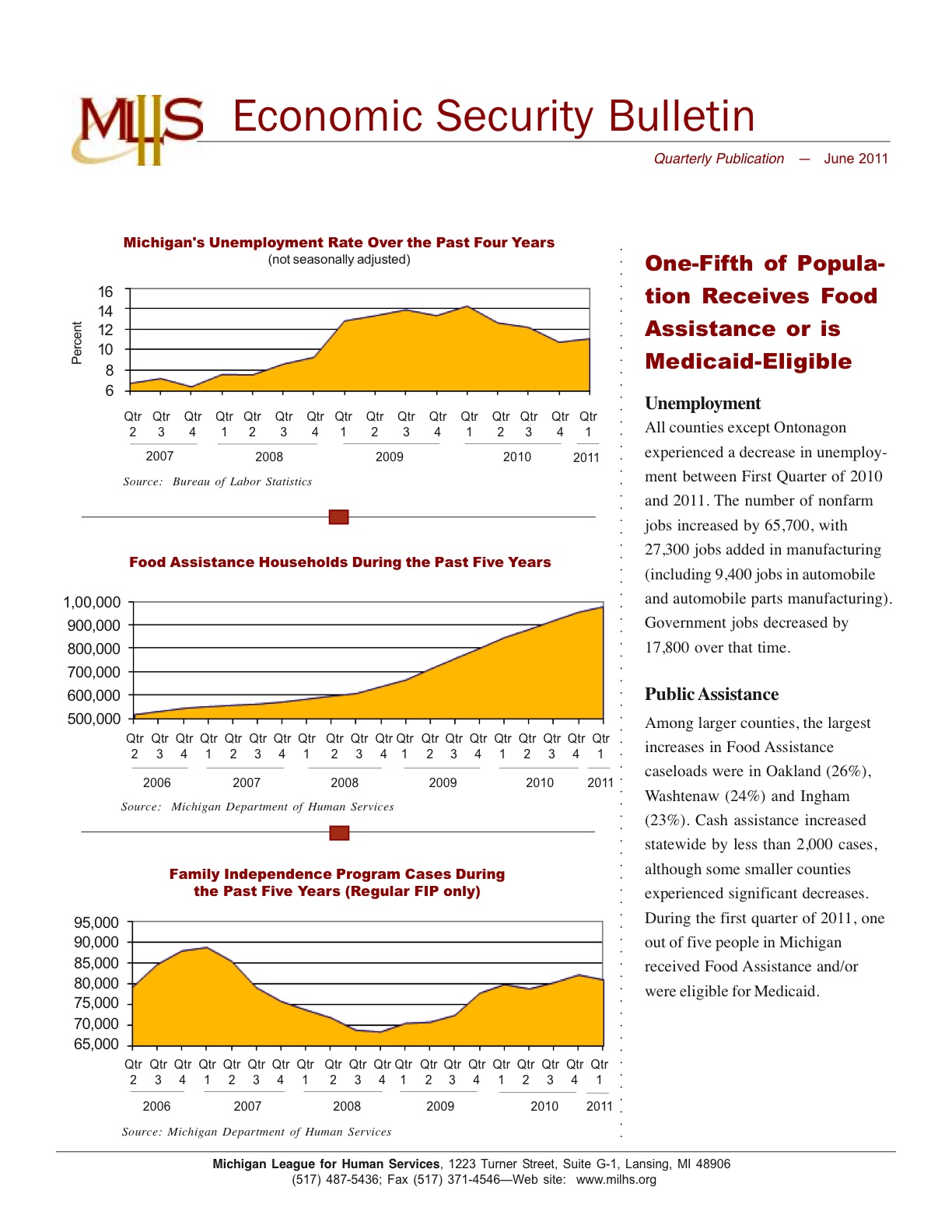
The 100-word article’s headline read, “Unemployment drops in Michigan but families still struggling, report says.”
The article points out that unemployment is down in every county in the state except one, but then points out that those seeking food assistance is up by 15.5 percent statewide.
The Grand Rapids Press reporter never provides any data for Kent County or the surrounding counties, which would make the story more relevant for area readers. According to the Michigan League for Human Services report the unemployment numbers for Kent County are down 2.6%, from 11.4% to 8.8%. The actual number of unemployed in Kent County, according to the study, is 26,879.
In terms of food assistance, the numbers show that there was an 18.8% increase in people seeking help with food. According to the report the number of households seeking food assistance every month went up from 47,634 households to 56,604 households.
The Press writer could have easily provided some of these numbers, but chose not to. In fact, the report also has statistics on those participating in the Family Independence Program, families with children in child day care and those receiving Medicaid. In addition, the report provides a breakdown of trends in employment sectors from 2010 to 2011.
All of this data is certainly relevant and would raise numerous questions for any competent reporter. One simple, yet important question would be if unemployment numbers are down, why are more households seeking food assistance?
One conclusion that could be drawn is that many people who are employed don’t make a livable wage. People earning the minimum wage of $7.40 an hour cannot survive in this economy. The living wage vs minimum wage calculator page for Kent County shows the huge discrepancy. A living wage, where people are paid based on real need, provides a breakdown of the average monthly expenses and then calculates what a living wage would be compared to a minimum wage.
Statistics can be useful tools, but they can also be misleading without adequate context. Just because unemployment statistics are down for Michigan, doesn’t mean that things are better for working class people nor is it a reflection that the “economy” is making a comeback.
New Media We Recommend
Below is a list of new materials that we have read/watched in recent weeks. The comments are not a “review” of the material, instead sort of an endorsement of ideas and investigations that can provide solid analysis and even inspiration in the struggle for change. All these items are available at The Bloom Collective, so check them out and stimulate your mind.
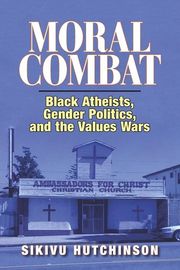
Moral Combat: Black Atheists, Gender Politics and the Values Wars, by Sikivu Hutchinson – What kind of analysis would you be likely to read from a Black feminist who is also an educator and an atheist? Damn fine analysis. Sikivu Hutchinson not only provides interesting insight into contemporary Black politics, she provides analysis through the rare lens of a Black atheist. Hutchinson’s critique is far reaching, but what I found particularly interesting was the level of policing that takes place within the Black community against those who dare to question the role of the Black Church. The author talks about the intimidation she face growing up to embrace Christianity with the Black community but also the internal questioning and censorship that many Black people face who challenge the primacy of religious belief. This book was not only enlightening, but in some ways ground breaking.

A Queer History of the United States, by Michael Bronski – Like Vicki Eaklor’s book Queer America: A People’s GLBT History of the United States, Bronski’s attempt to reclaim and uncover the history of the LGBTQ community is an invaluable resource. Bronski’s volume is much broader than Eaklor’s, in that he covers the US from the time of the first European colonists. Bronski also does something that Eaklor does not spend much time on, which is a keen sense of how literature and other forms of art were an expression of how American the LGBT community has been through the entire history of this country. In addition, Bronski provides important analysis of the more contemporary LGBT movements, especially those that were more focused on liberation, both sexual and social. Bronski makes a strong case for the position that whatever right the LGBTQ community enjoys now it was the result of the more radical sectors within its history such as the Gay Liberation Front, the Gay Activist Alliance and ACT UP. An important contribution that should be included to the body of work started by Howard Zinn’s A People’s History of the United States.

People of the Pines: The Warriors and the Legacy of Oka, by Geoffrey York and Loreen Pindera – The People of the Pines is the story of the courage of the Mohawk people in eastern Canada in 1990. The community of Oka was planning to build a golf course on traditional Mohawk land and the Mohawk people fought back. They Mohawk community not only objected verbally, they organized and engaged in direct action that led to a two and one half month stand-off between Mohawk warriors and the Canadian police/military. This book is not only important because it documents a contemporary example of Euro-American conquest, but it also demonstrates that people can organize and fight back. An important history lesson for all who claim to care about indigenous struggles.

That Infernal Little Cuban Republic: The United States and the Cuban Revolution, by Lars Schoultz – There have been numerous books written on the history of US relations with Cuba since the 1959 revolution, but few have the depth and substance that long-time writer Lars Schoultz brings to this subject. The 700 page volume is a bit overwhelming, but the author’s style of writing and keen sense of history makes up for the length. Schoultz methodically breaks down the history of US relation with Cuba beginning with the Truman administration as a means of providing some context before the 1959 revolution. The author then uses each sequential US administration as a framework for the chapters of That Infernal Little Cuban Republic. One should be clear however, that this book is not written to provide a critique of the Cuban revolution itself, rather it provides a detailed analysis of how the US has responded to Cuba since 1959. Schoultz makes it painfully clear that the US has done everything in its power to undermine the Cuban revolution and to punish the Cuban people as an example for the rest of the world that real independence and autonomy from the US will not be tolerated.
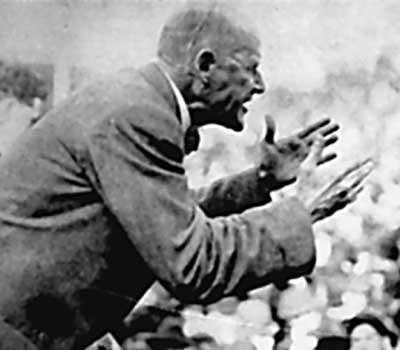
Ninety-three years ago today labor organizer and Presidential candidate Eugene Debs was arrested in Cleveland, Ohio for “intent to interfere with the operation or success of the military or naval forces of the United States.”
The arrest of Debs came about because of a series of speeches he had given where he condemned the US involvement in World War I. On June 16, 1918 Debs gave a speech in Canton, Ohio where he lambasted the war.
“Wars throughout history have been waged for conquest and plunder…. And that is war, in a nutshell. The master class has always declared the wars; the subject class has always fought the battles.”
Debs was speaking in public on June 30, 1918 in Cleveland at meeting of Socialists, again denouncing the war. It was right after this meeting that Debs was arrested and charged with sedition and violating the Espionage Act, which essentially made it illegal to publicly condemn the war.
During his trial Debs chose to represent himself and refused to call any witnesses saying, “I have been accused of obstructing the war. I admit it. I abhor war. I would oppose war if I stood alone.” Debs was found guilty and sentenced to 10 years in prison.
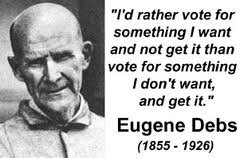
While in prison Debs ran as a Presidential candidate for the Socialist Democratic Party in 1920 and despite being in prison he received nearly a million votes. World War I eventually ended, but President Wilson chose not to pardon Debs, but Warren G. Harding finally let Debs go on Christmas Day of 1921.
However, the White House made it clear that they were not pardoning Debs, they still believed he was guilty, but released him because he was an old man in not in good health. When Debs returned to his hometown of Terra Haute, Indiana he was greeted by 50,000 people.
Debs died in 1926 at the age of 70, but his legacy lived on in the countless people who have resisted war in the US ever since. If Debs were alive today he would condemn the ongoing US wars of conquest in Iraq, Afghanistan and Libya. Debs would not only see these wars as wars of conquest he would acknowledge that they were wars that benefited Wall Street and he would call upon working class people to not fight in wars that served the rich.
Local government consolidation study group still at odds with One Kent Coalition proposal
Two weeks ago we reported that the lack of transparency on the part of the One Kent Coalition was making it nearly impossible for a study group to move forward on making recommendations about whether or not there should be local government consolidation that would involve the City of Grand Rapids and the County of Kent.
Since then the Kent County Commissioners passed a resolution to withdraw from the study group and about two-thirds of the area townships have followed suit. Yesterday’s meeting by local leaders was designed to have the three people who set up the study group – Mayor Heartwell (Grand Rapids), Sandi Frost Parish (Kent County) and Nyal Deems of the One Kent Coalition – address the concerns from the June 14 meeting.

Heartwell began by acknowledging that the County Government and other area townships have all formally expressed their displeasure and lack of trust in the process and the timeline. Heartwell also believes that the September deadline is also unrealistic. For Grand Rapids Mayor George Heartwell there are two fundamental questions that need to be addressed: 1) Is it the consolidation of government that should be given serious consideration, and 2) Is the One Kent proposal a legitimate proposal?
Heartwell said that clarifying the charge of the group was not enough and according to the people he had appointed they were willing to end their participation after the meeting if more information is not given and changes in the process takes place.
Heartwell then presents a document clarifying his and the City’s position. One of the main points is to acknowledge that consolidation of area services has worked well so far. He then says that transparency has not been part of the One Kent proposal like the Green Grand Rapids process. Heartwell suggests that this group divorces the idea of local government consolidation from the One Kent Proposal. This process deserves more time and investigation. He proposes that a new planning committee be appointed to begin a serious process.
Heartwell then asks those involves in the One Kent Coalition if they are willing to go along with this proposal and adopt a timeline that would allow for adequate public involvement and conversation. None of the One Kent Coalition members present responded to Heartwell’s invitation.
The main spokesperson for the One Kent Coalition, Nyal Deems, then addressed the group. The former Mayor of East Grand Rapids seemed surprised by the direction of the meeting and thinks that the charge of this group was clear from the beginning. Deems takes the position that the county and city government is now backing out of participating in the process, without acknowledging the reasons why.

Deems says that the One Kent Coalition had sent out information and sought input to maybe a dozen people, with little response back. He thinks the idea that they didn’t seek input “was silly.” He also dismisses the claims that the right people were not involved and invited to be involved in this process. Deems says that several formers GR mayors and county commissioners have said this issue should be looked into and that maybe the private sector should get involved. So the One Kent Coalition came into being to make the idea of local government consolidation a reality.
Deems also said the group feels that the vote should happen in 2012 during the Presidential Election. This would allow people plenty of time to have a “dialogue” about the issue.
“As we looked at the issue of local consolidation we looked at four areas of similar size, such as Indianapolis, which did consolidate. This could be a good decision and it would be a tremendous benefit to improve the global economic growth of our region,” said Deems.
Deems then rather sarcastically states that Michigan is the only state that had a decrease in population in the last 10 years and that the economic situation will get worse unless action happens now, which is why the One Kent Coalition has moved forward. Deems then said, “there is no one in the group who will stand to make a dime off of this proposal.”
The One Kent Coalition spokesperson was clearly on the defensive, but he really never addressed any of the concerns that people raised at the last meeting, such as a lack of transparency, where the group’s money was coming from and whether or not they had already hired a lobbyist to push forward with their proposed legislation.
The Mayor of Kentwood, Richard Root, then defends the One Kent Coalition proposal and says that the proposal from Heartwell should not divorce itself from the One Kent Proposal. He says that the area “philanthropists” need to be acknowledged and that “we owe them the effort they put forward,” which is reflected in “the names of the people on the buildings” in this area. “To not pay attention to it when some of the most successful business people in the country are involved in this process,” would be a mistake according to Root.
Nyal Deems then says that in recent discussion the One Kent Coalition members said they don’t have a “hard deadline.” They thought September so that the “state legislature can do what they need to do, so that it can it get on the November, 2012 ballot.” Of course they were thinking this way because they want to make this happen as quickly as possible.
Another study group member, Mary Alice Williams, said that the proposed legislation has already acknowledged that local government consolidation is the way to go, so this study group only would be used in helping to tweak that proposal. She said that the question of whether or not to consolidate is not even on the table, but it seems to be an either or proposition. When people haven’t been involved in drafting the legislation then she has “serious reservations in being involved in this process.”
Heartwell then said that maybe the use of the word “divorce” was too strong. However, he wants it to be inclusive, with neighborhood organizers and One Kent Coalition members. “The problem is that there is a timeline and a framework for a vote in 2012,” said Heartwell. He also thinks this would be an open-ended process that would involve not a few dozen, but hundreds of people.
Deems then uses a line that the One Kent members have been using all along in that this process “would ultimately be decided by the voters,” as if that group has demonstrated any real interest in the democratic process. Deems insists that the legislation needs to be done in the next few months, but this “doesn’t preclude more public dialogue between now and the 2012 election. If the state legislative process is delayed until May of 2012, then it would not give the public enough time to have dialogue about this issue.” Deems was hoping that maybe there would be recommendations this group could come up with that would help the process and push forward the legislative process. However, Deems failed to see that people were questioning the process since it did not even allow for them to have a serious question about whether or not local government consolidation should occur.
Several participants, including Wyoming Mayor Curtis Holt propose that a group should continue and seriously have the discussion about local government consolidation. He and others say they should operate autonomously of the One Kent Group and operate on a different timeline that would allow serious investigation and public input into this issue.
Holt then asks Deems if they would be supportive of this proposal. The Wyoming Mayor then asked him if he was the chairmen, the spokesperson, or the President of the One Kent Coalition. Deems, in an almost comical fashion said, “we are not hierarchical. I am the spokesperson for this coalition and we are just people who get together to meet.” Does Mr. Deems really expect the public to believe that members of the One Kent Coalition, which includes the likes of Dick and Betsy DeVos, that they just meet like any common neighborhood group?
The absurdity of this meeting was further underscored when the study group facilitator Steve Crandall says he was hired by the three groups (One Kent, Grand Rapids and Kent County) to move this discussion forward. Several members quickly pointed out that the City and the County had offered up no money to Mr. Crandall, thus exposing the lack of transparency and honesty in this process.
After two hours and 15 minutes the group finally agreed to move forward as an autonomous entity and to devote the entire next meeting to laying out the goals of the group and the process in which they will operate. These meetings are open to the public, so anyone can attend the next meting, which will be held on Wednesday, July 13at 4:00PM in room 202E of the downtown campus at GVSU.

