Rob Bliss’s Lip Dub Sparks Some Questions
It’s released. It’s a big hit on YouTube. And even Newsweek, which called Grand Rapids “a dying city,” has taken notice of Rob Bliss’s gigantic lip dub of Don McLean’s song “American Pie.”

Bliss told the Grand Rapids Press that the lip dub video was intended to promote Grand Rapids as “a growing, fun place to live.” And boy, does it ever look fun. The streets are so clean you could eat off of them. Everyone is cheerful, upbeat, waving and smiling. (Requirements for extras were that people who showed up for the event “dress classy” and “bring a good attitude to represent the city.” “Help us look the best we possibly can,” Bliss stated.)
To give credit where credit is due, the amount of organization and planning that went into this one-take video is mind-boggling. It looks like the filming came off without a hitch; the editing is great; and it certainly is spirited.
There’s nothing here to trouble or raise questions. Just lots of brisk energy and grins and people in the background sitting at café tables, swaying back and forth, or having pillow fights. (Well, that last one might trouble some people who don’t know it’s a homage to an earlier Rob Bliss event.)
Your eye might be jarred from time to time to Bliss’s version of product placement. The line of Fox, WZZM, and WOOD-TV trucks traveling side by side down the street…the bus with the Downtown Grand Rapids slogan on the side…grnow.com and Metro PCS t-shirts…chalk graffiti galore extolling various Grand Rapids boosters. It’s not subtle, and it gets distracting.
Otherwise, Grand Rapids looks like Oz. And the people look like they’ve been reincarnated from those peppy family-style 1970s musical acts from Disney World or Knott’s Berry Farm.
GRIID raised some questions about this Bliss project earlier this month. Now that it’s available for viewing, this writer has a few more.
Although the lip dub promotes Grand Rapids, how well does it represent the people of Grand Rapids?

As was noted earlier on GRIID, the interests of capitalists are definitely well represented by appearances of “movers and shakers,” as the Press called Paul Jendrasiak, Ryan Slusarzyk, George Aquino, Bill Holsinger-Robinson of Rick DeVos’s Pomegranate Studios, plus plenty of local media people. These included featured performances by WOOD-TV people, where Bliss works in the sales department.
Who’s underrepresented here?
Nearly 25 percent of Grand Rapids residents live below the poverty line. The average income in the city is just over $37,000.
There are more women than men living in Grand Rapids—for every 100 women, 92.5 men.
Racial make-up of the city is 57 percent White, 18.9 percent Black, 13 percent Latino/a, and 1.62 percent Asian-American.
As I watched the video, I had to ask myself how well the featured “celebrities” and the extras represented our city’s demographics. Check for yourself.
How well does the lip dub represent the actual city?
All of the action in the video takes place in the immediate downtown area. There are places a stone’s throw away—such as Heritage Hill, the Division Avenue area, the warehouse district—that aren’t shown. Instead we see the cleanest store facades, the most upscale businesses, and the Amway Grand Plaza (twice). We don’t see areas that offer small start-up businesses, alternative art galleries, or any housing other than the downtown condos owned by local real estate power brokers. And I guess it was a given that areas like the Black Hills neighborhood and Heartside don’t make an appearance, either.
How else could the money to make the “American Pie” lip dub have gone to benefit Grand Rapids?
If this video is supposed to help us here in Grand Rapids, then it just begs the question: how else could that $25,000 filming cost have been spent?
According to Feeding America West Michigan Food Bank, the organization is able to buy 33 pounds of food for every dollar donated. That means that the fund to make the Grand Rapids Lip Dub could have bought a staggering 825,000 pounds of food for the food-insufficient families in Grand Rapids.
If you buy all your seeds for a vegetable garden, the annual benchmark cost is usually given at about $50 to yield $1,250 of food. Attending seed exchanges at programs in Grand Rapids like Our Kitchen Table lowers the seed cost a lot. But even using the highest estimate, the cost of this video could have gone toward launching 500 new home or community gardens in the city.
The average cost for a wellness class through the City of Grand Rapids—which teach exercise techniques, offer health information and screenings, and provide courses in organic gardening, is $35. So 714 Grand Rapids adults could have benefited from health advice for the same cost as the lip dub video.
Tuition varies for programs at the Interlochen Summer Arts Camp, but let’s take an average program cost for a summer session of arts education at $5,000. Rob Bliss’s “American Pie” video could have sent five students whose parents could never dreamed of affording this tuition to one of the best arts academies in the country for a life-changing summer. Closer to home and more cost efficient, a children’s arts class at the Grand Rapids Civic Theater (as just one example) costs $285. The “American Pie” video money could have bought 87 Grand Rapids kids an incredible educational experience in the theater. And they would have learned about a lot more than lip-sync techniques.
One other question kept going through my head as I watched this great social experiment:
Who knew this song was so freaking long?
I’ve heard it ever since I was a child, but apparently, I was listening to some Readers’ Digest condensed version. The entire song seems…well…endless. And suddenly the Disney connection clicked. It reminded me of the time I got trapped on the mind-numbing “It’s a Small World After All” ride at Disney World. What a nightmare.
Take a look for yourself:

Last night WGVU hosted an event for the 40th anniversary of the release of the Pentagon Papers at the downtown campus of GVSU. The vent featured a 30-minute excerpt from the documentary film The Most Dangerous Man in America, with a panel discussion afterwards that included Daniel Ellsberg via Skype.
The panel included former 2nd Congressional Representative Pete Hoekstra, who was also Chair of the House Intelligence Committee; Devin Schindler, a lawyer and law professor at Cooley Law School and Gleaves Whitney, head of the GVSU Hauenstein Center for Presidential Studies.
Whitney began the discussion by stating that Americans are naïve in trusting what the government tells the public. He made the point that the approval rating for Nixon went up, even after the release of the Pentagon Papers.
Dr. Ellsberg disagreed with Whitney’s assessment and pointed out that the Pentagon Papers ended with 1968, so it did not deal with the Nixon administration, thus exposing Whitney’s lack of historical knowledge. Ellsberg also stated that what he had hoped to demonstrate with the release of the Pentagon Papers was that four continuous President’s, both Democrats and Republicans, had all supported the war and lied to the public.
The next panelist was Devon Schindler who said he was “ambivalent about the Pentagon Papers.” Schindler clarified that point by saying that in many ways Daniel Ellsberg is similar to Oliver North, saying that, “they fundamentally did the same thing. People cannot put themselves above the law or there will be chaos in the country.”
Ellsberg challenged Schindler’s read of the Espionage Act that does not support government secrecy. Ellsberg said he took an oath to the US Constitution, not a government that was lying and operating in secret. This is significantly different than what Oliver North did by participating in covert operations involving drug and weapons sales, which have nothing to do with upholding the Constitution.
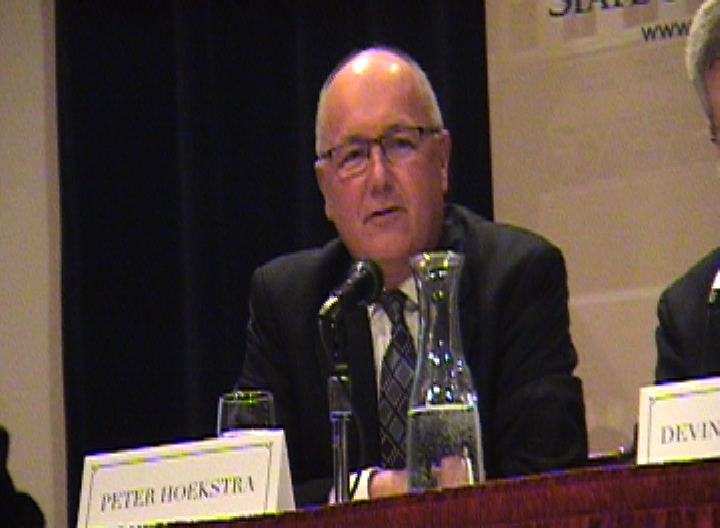
Former Congressman Pete Hoekstra spoke next and did something that this writer did not expect, which was that he agreed with much of what Ellsberg had to say. At one point Hoekstra even said that we needed more whistleblowers. While this was somewhat unexpected it also may have served Hoekstra well since there ended up being no discussion of Hoekstra’s role in the deception of the American public in regards to the Weapons of Mass Destruction (WMDs) that the Iraqi government possessed, according to the Bush administration. In fact, Hoekstra was claiming at the very end of the Bush years that Iraq still had WMDs.
Where Hoekstra admitted that he disagreed with Ellsberg was on the legality of the NSA spy program to monitor phone conversations of Americans that began under Bush and continues with Obama. Here Hoekstra believes that the domestic spy program was legitimate.
Devon Schindler then questioned Ellsberg on his actions to distribute the Pentagon Papers saying that it violated his oath. Here is a video clip that has Schindler adding to his point followed by Ellsberg’s response:
There wasn’t much time for questions from the audience, but there were several good points raised by Dr. Ellsberg. When asked about whether or not the news media is doing its job today he said they were doing a terrible job because they continue to take the government at its word and often “act as stenographers.” “The Press is not nearly investigative as it should be, which is due in part to pressures from advertisers and consolidation of owners,” according to Ellsberg.
There was also a question asked about the comparison of WikiLeaks and the Pentagon Papers. Devon Schindler and Hoekstra both agree that the accused whistleblower Bradley Manning should be punished because he put the national security of the country at risk. Again Ellsberg criticizes Obama for his treatment of Private Bradley Manning and makes the point that one of the main differences was that the Pentagon Papers were Top Secret, whereas the documents Manning leaked were lower level combat information, not that of high-level administrative policy decisions and therefore did not put national security at risk.
One glaring omission from the forum was the lack of any serious discussion about what really motivated both Ellsberg and Manning – the desire to stop the killing of innocent human beings in both Vietnam and the current wars in Iraq and Afghanistan. It seems that the desire to stop the killing for both men was paramount in their decision to release documents, but that point was never really addressed other than a minor reference to torture.
Yesterday, the 8-year old Iraqi boy we reported on three weeks ago, that lost his right leg due to a US missile attack outside his home in Baghdad, Iraq, took his first steps with a new prosthetic leg.

The local group Healing Children of Conflict (HCC) brought Hamzah and his father from Iraq so that the boy could get a prosthetic leg. Several HCC members were present yesterday when the doctors attached the leg and witnessed a joyful smile from both Hamzah and his father.
Hamzah then tried to walk with the new prosthetic leg and did quite well, according to the doctors at Mary Free Bed Hospital. He will need physical therapy to re-learn how to walk since it has been just over two years ago that he lost his leg to a missile explosion.

The doctor explained that as Hamzah grows minor adjustments can be made to the prosthetic, but after a few years he will need to be fitted with a new one. HCC members reiterated to Hamzah and his father that they were committed to bringing them back to Grand Rapids in order to get a new prosthetic leg over the years.
HCC members said this was a clear manifestation of the work they have set out to do in order to take responsibility for the innocent civilians that have been killed or murdered in recent US wars.
Hamzah is one of over a million children that have been killed or seriously wounded since the 1991 US War in the Gulf. Many civilians were killed during the US bombing in early 1991 and declassified records show that the US military strategically targeted civilian infrastructure in those 1991 attacks, which led to massive suffering and loss of life in the 1990s, especially children.
The lack of clean water, loss of medical facilities and the US/UN sanctions imposed on Iraq all contributed to tremendous loss of life. In fact, according to UNICEF, the number of Iraqi children that had died in the 1990s due to the sanctions was 500,000 by 1999. Some may remember that shortly after the UNICEF report came out that then Secretary of State Madeline Albright was interviewed on the CBS show 60 Minutes. Here is what Albright had to say about the death 500,000 Iraqi children:
The sanctions continued even after the US invasion/bombing campaign that began in March of 2003, which has led to even more children dying or being seriously wounded like Hamzah. It is difficult to find specific numbers of Iraqi children that have died or have been wounded as a direct result of the now 8 – year US occupation of Iraq, but the website Iraq Body Count does provide a year to year data base that gives some indication of the number of Iraqi children that have been killed.
Bringing Hamzah to the US to get a new prosthetic leg does not undue the horrible suffering caused by several decades of US warfare in Iraq, but the smile on Hamzah’s face yesterday sure looked like a power symbol of hope and the willingness of some Americans to take responsibility for the actions of the US military in Iraq.
Unions fight for the rights of workers. But those battles are more often fought these days on picket lines, in contract negotiations, and through media coverage. However, violence and intimidation against union organizers and members can be found throughout labor history—and May 26th’s historical event was one of the most significant examples of that; a battle that ultimately cost the capitalists their cover-up of lies and deception.
 This battle took place outside Detroit in 1937. The setting was Ford Motor’s Rouge Complex, a huge Dearborn industrial park on the Detroit River. Walter Reuther and other UAW organizers were at the complex to show their solidarity with Ford workers as they attempted negotiations for better pay and shorter hours. A leaflet campaign had been prepared, and the press showed up to cover the event. What happened next—unfortunately for Henry Ford—was captured on film by a Detroit News photographer.
In 1937, the infamous Harry Bennett was in charge of security for Ford Motors. He was, essentially, Henry Ford’s “fixer,” a former boxer. Ford hired Bennett after asking him a single question: “Can you shoot?” Bennett was tough and paranoid. He had built himself a home on the Detroit River that was a veritable fortress. Styled like a Chinese pagoda, it had hidden tunnels, an interior stair that went directly down to a dock under the house and complete with getaway motor boat, and a moat ringed with explosives ready to be triggered. Bennett also built himself a northern Michigan home that had the same features, only it was built to look like a gigantic log cabin.
Bennett created a security force for Ford, called “service men,” that was composed of former athletes, Detroit gang members, and ex-convicts. It was this security army that had opened fire along with police on auto workers during their Ford Hunger March in 1932, killing five and wounding 60.
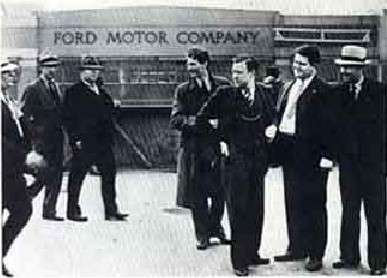 Henry Ford wanted the press to be sympathetic to him in his fight against the workers that were asking for an extravagant two dollars more a day in pay. So Bennett hosted a lavish breakfast feast for the media at the beginning of May. Some of those same reporters and photographers turned up to cover the UAW presence at the Rouge Complex on May 26.
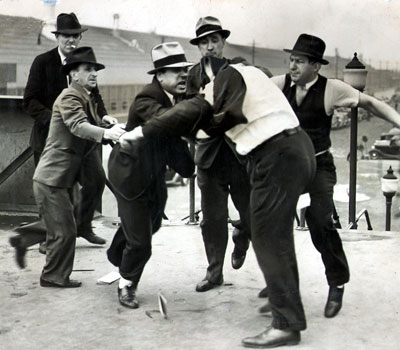
Reuther, Richard Frankensteen and other UAW organizers posed for News photographer James Kilpatrick on a pedestrian overpass that led from the plant to the parking lot. Bennett arrived with 40 of his security force. The service men immediately attacked and began to beat the union negotiators. Reuther was thrown down one flight of stairs on the overpass bridge, kicked and punched, and then thrown down a second flight of stairs. Frankensteen’s jacket was pulled up over his head and then he was savagely beaten. One union organizer had his back broken by Bennett’s thugs; he was thrown off the overpass and landed 30 feet below.
 Members of the women’s auxiliary of Local 174 had arrived to start passing out the leaflets to workers as they came off shift. These women were also attacked and some beaten as well. Dearborn police officers stood by and watched. Later they explained that Bennett’s security forces were “defending private property” and they did not want to interfere.
Bennett’s attacking security officers then turned on the members of the press who had attended the event. Reporters had notes ripped from their hands. Cameras were smashed. Film was confiscated and burned. One reporter was chased by a group of “service men” for five miles before he finally ducked into a police station, into which the attackers did not follow him.
But Kilpatrick, the News photographer, escaped and managed to protect the glass-plate negatives of his photographs. He hid the real negatives in his back seat and surrendered some blank ones to Ford security before making his getaway.
Bennett declared to the media, “The affair was deliberately provoked by union officials…I know definitely no Ford service man or plant police were involved in any way in the fight.” The News photographs, however, told a different story.
 Detroit, and the nation, had been told for years by the media that the capitalists had their workers’ best interests at heart. For example, in January of 1937, Reuther and other organizers along with GM workers were gassed, wounded with shotguns, hosed with fire hoses, and beaten during a sit-down strike, but details of this barely reached the newspapers. But when confronted with the visual story of Kilpatrick’s photos, the public learned a harsh lesson about the real level on which the battle against unionization was being fought.
The outcome of the Battle of the Overpass was the negative attention it brought on Henry Ford and the way he treated his workers. Called before the National Labor Relations Board, Ford had to answer charges involving dozens of unfair labor practices in his violation of the Wagner Act. Ironically, the members of the press gave the most damning evidence at the hearing. Ford lawyers tried to undermine the negative effects of their words by asking questions like, “So, you’re a communist?” when reporters gave their credentials as a members of the Newspaper Guild.
Ford workers were questioned about their working conditions and Bennett’s security force. A Time Magazine report stated, “Witness after witness told how he had been suddenly taken from an assembly line by two service men, marched off for his pay and escorted to the gate, with no explanation except his own—that he had just joined the UAW.” One worker testified that he had a blank union application on him, and it fell from his shirt to the floor where it was picked up by another worker. Five days later he was fired; his foreman just said, “I guess you don’t want to work here.”
Prior to the hearing, Henry Ford tried to head off bad publicity by raising worker pay by $1.50 a day, an announcement he made immediately after the “battle” ended. But the opinion of both the National Labor Relations Board as well as the country went against him and forced him, three years later, to sign a UAW contract.
 As an added insult to Ford’s humiliation, Detroit Labor party candidates won twice as many votes as other candidates combined in the election following the May 26 battle, and swept into a majority.
The Pulitzer Prize committee was so impressed by the importance of James Kilpatrick’s photographs as a record of the truth that it instituted the Pulitzer Prize for feature photography shortly after the Battle of the Overpass.
Today, we are watching our state’s governor, abetted by the Michigan legislature and the Mackinac Policy Center, hard at work busting unions and preparing to overturn union contracts at will. We need to remember that the rights of worker are never going to be secure in a capitalist system.
Like the Battle of the Overpass, the culmination of years of workers standing up to intimidation tactics by auto executives, we too are standing at a pivotal moment in labor history. The strength of workers to confront these tactics is in solidarity and the courage to topple the capitalists by exposing the truth of their agendas.
So speak up. Take action. And the next time you attend a protest or a labor march, be sure to bring your camera.
A groundbreaking ceremony will take place in Grand Rapids today for the new GVSU Seidman College of Business. The event has received a fair amount of local news coverage from print, broadcast and online media.

The Grand Rapids Press announced last Thursday that Rich DeVos would be a speaker at the groundbreaking event, since DeVos and Seidman were friends. The article also mentions that of the 300 donors to this new college are former Defense Secretary Donald Rumsfeld and former Secretary of State Henry Kissinger – both of whom served with Seidman in the Ford administration.
The Holland Sentinel also mentioned the groundbreaking ceremony and that both Rumsfeld and Kissinger were major donors to the project. In fact, it appears that much of the coverage is based upon at GVSU Media Release that went out last week.
In character with how local commercial news media reports on such incidents there is no critical analysis or inclusion of other perspectives. Nothing is said about Rumsfeld being considered a war criminal by people in Iraq or lawyers who practice international law. The absence of such a critique also applies to Kissinger despite plenty of declassified documentation on the former Secretary of State’s role in the coup to oust the democratically elected government of Chile, the US support for the Indonesian invasion of East Timor or the war crimes that Kissinger helped orchestrate during the Vietnam War – all of which is included in the documentary The Trials of Henry Kissinger.
Equally important is the lack of any critical perspective on the role that business schools play in society, especially since it has been argued that business school promote the continuation of neoliberal market capitalism, an economic system which creates a tremendous amount of human misery and ecological destruction.

This critique of neoliberal market capitalism is not a new idea nor is it a marginal one. The critique has been around as long as the mid-19th Century when Karl Marx first began providing a critical analysis of market capitalism. Today, that criticism takes on many forms such as Annie Leonard’s book/films The Story of Stuff, Naomi Klein’s The Shock Doctrine or the anti-capitalist website Infoshop.
Even in the Oscar winning documentary Inside Job, there is a section that deals with the role that business schools played in supporting to the hyper-deregulation of the market and the economic practices of the financial sector that led to the massive global economic crash of 2008. Here is a short clip were the film director questions two economics professors who were making money to write policy papers in support of the kind of economic schemes that led to the crash.
Therefore it is no surprise that Rich DeVos would say a few words at the groundbreaking ceremony. DeVos himself is the king of pyramid schemes and a businessman who has profited immensely from taxpayer subsidies, government incentives and the stripping of state business taxes, all which translates into policies that add more cost to the public.
This lack of a critical perspective has been and will be reflected in the lack of anyone in mainstream commercial media questioning the groundbreaking of a new building for a business school, which uses public money to teach people how to transfer more public funds into the private sector. This lack of critical journalism is, as they say, business as usual.
PBS’s New Plan: More Intrusive Ads
(This article by Peter Hart is re-posted from FAIR.)
 The public broadcasting newspaper Current (5/18/11) reports that public television–you know, the non-commercial outlet–will start airing more commercials:
The move could be controversial for the network, which has traditionally prided itself on offering uninterrupted programming over its 40-year history.
PBS will begin breaking into programs with underwriting and promo spots four times per hour on an experimental basis beginning this fall, it told station members at the PBS National Meeting here.
PBS corporate communications official Anne Bentley issued a response that actually begins, “We are always looking at ways to improve the viewer experience.” It goes on to say that “It is all about the viewer,” and–perhaps most bizarrely–claims, “Initial testing showed that viewers didn’t really notice the change.” Really? People didn’t notice a commercial in the middle of a PBS show?
In other PBS news, some stations are apparently considering leaving PBS altogether, according to a report in the New York Times (5/22/11). The main complaint seems to be about money–the stations think they’re paying too much to air the national programming.
There is, of course, a possible silver lining in all of this. One could imagine public TV stations breaking free from PBS and seeking out more independent programming to fill out their schedules. (Democracy Now! instead of the NewsHour— how does that sound?). It’s a long shot, perhaps, but one can at least imagine a brighter future for public television stations that doesn’t necessarily involve airing the conventional PBS programming.
New Media We Recommend
Below is a list of new materials that we have read/watched in recent weeks. The comments are not a “review” of the material, instead sort of an endorsement of ideas and investigations that can provide solid analysis and even inspiration in the struggle for change. All these items are available at The Bloom Collective, so check them out and stimulate your mind.

Capital and Its Discontents: Conversations with Radical Thinkers in a Time of Tumult, by Sasha Lilley – This collection of interviews with people like Ellen Meiksins Wood, David Harvey, Gillian Hart, Ursula Huws, Tariq Ali, Noam Chomsky and Andrej Grubacic provides tremendous insight into the nature of contemporary capitalism, the divergent responses to this economic system and models of liberation. Sasha Lilley has done us all a service by asking important and timely questions to such prominent thinkers particularly at a time when the world is confronted by even more economic inequality than ever before. This book is an important contribution to this needed dialogue.
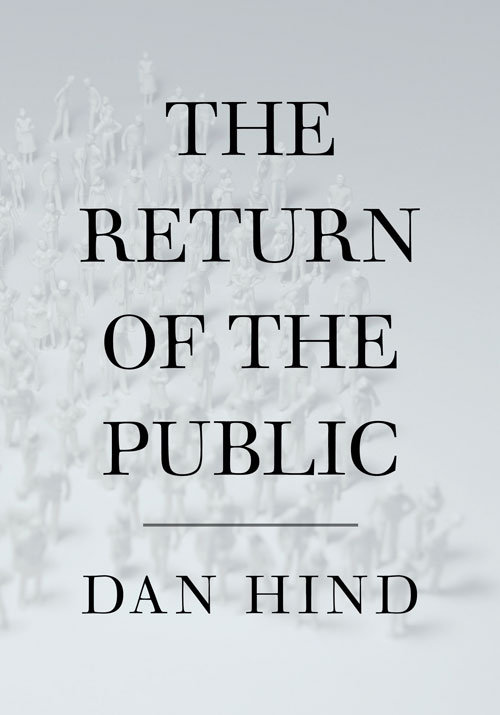
The Return of the Public, by Dan Hind – With so much of our culture and society now under the control of the private sector it is difficult to even think about what “the public” means. Dan Hind has done valuable work in this book by not only providing a lively overview of the history of the concept of what the public is, but also some interesting recommendations for what we could do in the US to reclaim the public. Hind discussed the role of the public in terms of media, physical space and the citizenry and why we need to expand the role that the public should play at the institutional and structural level. The only flaw of this book is that it does not look at the incredible examples from around the world on how people are reclaiming the concept of the public as well as actual physical public space.
Soccer vs. the State: Tackling Football and Radical Politics, by Gabriel Kuhn – Remember all the attention that the 2010 World Cup received? Soccer vs. the State is an amazing resource in terms of framing the discussion around the global influence of soccer, particularly for working class people. Gabriel Kuhn takes readers on a journey through the modern evolution of the game and how it has been used by the State as a means of oppression and national identity to how communities have used the sport to push the envelope of social justice and radial transformation. What writer Dave Zirin has done to reclaim US sports as a radical issue, Gabriel Kuhn has done it for the most popular sport in the world. Even if you are not a fan of soccer this book provides important social analysis.
Crossing the American Crisis: From Collapse to Action (DVD) – This film is different than other documentaries that investigate the 2008 economic crash in that it seeks to get the perspective of working people all across the country. The filmmakers traveled all over the US interviewing the real impact of the economic crash and how it has impacted working class people. The stories and images are powerful. Crossing the American Crisis is an excellent companion to Inside Job.
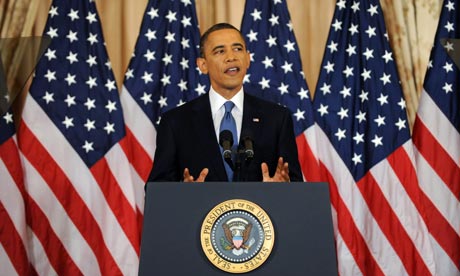
It has been several days since President Barack Obama gave his speech on US policy in the Middle East. Having a few days to ponder the comments by Obama gave us time to look at what independent journalists have to say on the matter.
Listening to the President talk, one might be seduced by the now familiar rhetoric coming from Obama about human rights and freedom. However, he has been using these kinds of words for two and a half years now in regards to the Middle East and with no real evidence that this administration is truly committed to justice in that part of the world.
Middle East analyst Phyllis Bennis noted, “Obama’s speech failed to match the extraordinary events of the Arab Spring with a transformed U.S. policy in the region. Beyond some new economic commitments, the speech was far longer on soaring rhetoric of democracy and freedom than it was on real policy changes.
The announcement of significant new economic assistance, particularly $1 billion in debt relief for Egypt, will be important; but its significance is already undermined by the U.S. imposition on the newly democratizing country to accept the kind of “free trade” policies that have been so disastrous in other parts of the developing world.”
Long time Middle East reporter Robert Fisk also addressed Obama’s lack of substance in a speech “as boring and as unfair as all the other ones, with lots of rhetoric about the Arab revolutions which Obama did nothing to help.”
Obama’s lack of substance and rhetorical misdirection was particularly evident on the matter of Israel/Palestine. Here Fisk notes, “It was the same old story. Palestinians can have a “viable” state, Israel a “secure” one. Israel cannot be de-legitimized. The Palestinians must not attempt to ask the UN for statehood in September.”
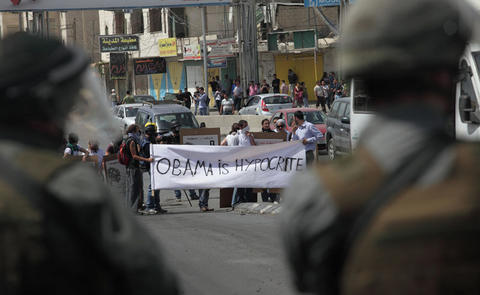
Obama did call for an end to the Israeli occupation, but it is a meaningless statement since he did not call for a complete withdrawal of Israeli troops or the end to the construction of Israeli settlements. Obama also made mention of the 1967 borders, which has by far been the most misinterpreted statement in mainstream commercial media.
US Foreign Policy analyst Stephen Zunes said of Obama’s 1967 border reference:
“The unspecified variations from the pre-1967 borders, Obama insisted, should be made through “mutually agreed-upon” land swaps. Unfortunately, despite Palestinian president Mahmoud Abbas agreeing to such reciprocal territorial swaps — even though it would leave the Palestinian state with a bare 22 percent of Palestine — Israeli Prime Minister Benyamin Netanyahu has refused to consider trading any land within Israel while simultaneously insisting on annexing large swathes of occupied Palestinian territory. How such “mutually agreed-upon” swaps will take place without the United States exerting enormous leverage — such as withholding some of the annual $3 billion in unconditional aid provided annually, which Obama has already ruled out — is hard to imagine.”
Indeed, it is hard to imagine that anything will change as long as the US continues to provide Israel with unconditional funds to do whatever they please.
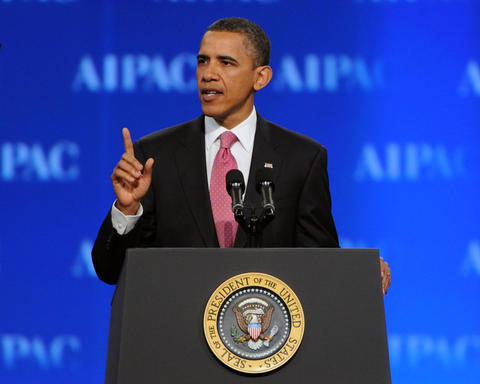
Obama’s rhetorical deception was made even more evident when just days after his speech he addressed the Israeli lobby at the annual AIPAC meeting. Obama told the pro-Israeli audience that there will be no return to the pre-1967 borders.
Glenn Greenwald provides some useful analysis of Obama’s speech to AIPAC and the role that lobby plays in US foreign policy. In addition, there is a good article on Electronic Intifada by several authors that also addresses Obama’s speech to AIPAC. This type of analysis has not been presented in mainstream commercial news and coverage of Obama’s AIPAC speech has been almost non-existent outside of a few major newspapers.
After two and a half years it seems clear that the Obama administration is continuing a decades long policy of unconditional support for Israel and despite all of the President’s rhetoric we should not be fooled to think otherwise.
Here is a brief interview that Al Jazeera did with Robert Fisk that frames what Obama’s speech really means.
Thurs. May 26 6:30 p.m. Drugs And Daydreams
Sun. May 29 6 p.m. Stop Signs: Cars & Capitalism
The Bloom Collective
671 Davis NW
(Corner of 5th & Davis)Suggested Donation $3 – $5

In the coming week, authors of two very different books make a stop at The Bloom Collective as part of their North American tours. On Thursday, May 26, the Raise the Stakes Tour invites local folks to join Shaun for “an evening of stories and scheming” as he shares and sells hand-made copies of his book, Drugs And Daydreams. On Sunday, May 29, Canadian authors, Bianca Mugyenyi and Yves Engler, facilitate a discussion of their new book, Stop Signs: Cars & Capitalism on the Road to
Economic, Social and Ecological Decay. Both events will begin with a potluck.
Raise the Stakes
Using drugs as a metaphor to describe his sensations during three different bicycle
trips along the Pacific and Atlantic coasts, Drugs And Daydreams “lingers in the fringes where the wild clashes with the civilized; those places where conventional notions of geography and travel
 give way to a world of one’s own design.” Shaun calls the book part romance and part travel autobiography. He writes, “The most accurate metaphor I’ve heard for travel is comparing it a love affair. A love affair thrives upon shattered rules and shattered roles. Upon a whirlwind that comes by surprise and leaves everything in its path upturned, transformed. A feeling beyond the grasp of science. Beyond the map. This is where I seek to travel. This is how a love affair begins. This is how my story begins.”
Shaun invites local artists, musicians and poets to share their work as part of the program. So, bring your own zines to share, poetry to read, acoustic music to play and art to display. All copies of Shaun’s book on sale that night are made of scavenged materials and hand-bound by the author within individually relief-printed hard covers. He writes, “Maybe living as scavengers can last, I thought. Knowing that not everyone can do this, but if we can, then we have a responsibility to strike at capitalism’s vulnerabilities. And all of our wits and creativities not dulled by numbing work weeks and banal distractions exist for the sake of us living out our wildest dreams, of us putting a stop to those entities that hurt those that we identify with.”
Stop Signs: Cars & Capitalism
Authors Yves Engler and Bianca Mugyenyi are coming to Grand Rapids via Greyhound Bus to present this anti-car road trip story. Born in Uganda in 1980, Bianca Mugyenyi came to Canada as a child, spending parts of her youth in Swaziland, Kenya and England. She is coordinator of Concordia’s Gender Advocacy Centre and was the Chairperson of the Canadian Federation of Students (Quebec). A Montréal activist and author, Yves Engler has published three books: The Black Book of Canadian Foreign Policy; Playing Left Wing: From Rink Rat to Student Radical; and (with Anthony Fenton) Canada in Haiti: Waging War on The Poor Majority.
 Stop Signs: Cars & Capitalism shows how “the automobile’s ascendance is inextricably linked to capitalism and involved corporate malfeasance, political intrigue, backroom payoffs, media manipulation, racism, academic corruption, third world coups, secret armies, environmental destruction and war.” In short, challenging the domination of cars challenges capitalism.
In a Sept. 2010 article for Counterpunch, the authors wrote, “Nearly three-quarters of U.S. households earning less than $15,000 a year own a car, and in an extreme example of auto dependence, tens of thousands of “mobile homeless” live in their vehicles. The poor purchase cars because there is no other option in a society built to serve the needs of the automobile. If you want to work you need a car. If you want to visit your friends you need a car. Car-dominated transport eats up a disproportionate amount of working-class income. At the same time, the automobile is an important means for the wealthy to assert themselves socially. A luxury vehicle lets the whole world know that you have arrived, both literally and metaphorically.”
Make your holiday weekend more memorable (and less gas dependent) by celebrating bikes and other alternatives to a car-crazy capitalist culture. Bring a dish to pass. The Bloom will provide vegan options.
GR Press article perpetuates pro-Israeli Propaganda
On Saturday, the Grand Rapids Press ran an article in the Religion section about area Christians who traveled to Israel recently as part of a faith tour.
The brief article mentioned that 68 people participated in a 10-day tour that “involved opportunities to meet Israeli people, discuss political events and even join Jewish families in observing the Sabbath with Shabbat dinner in their homes.”

In addition to people talking about their faith experiences while on the tour, much of the story was centered around the political aspect of the tour and the pro-Zionist perspective that was presented.
The article states that four speakers were lined up for the tour and listed them as “a representative of the Israel Defense Forces; an international consultant for NBC and Jerusalem Post Muslim journalist; and the Palestinian Media Watch founder.” While not know what a consultant for NBC would say the rest of the speakers clearly would have provided a pro-Israeli perspective, especially the Israeli soldier and the founder of Palestinian Media Watch, a pro-Israeli blog that presents a one-sided view of Palestine and Palestinians. The founder of this group is Itamar Marcus who is frequently a “guest expert” on US cable news stations and is featured in the fear mongering, anti-Islam DVD Obsession, which was released just weeks before the 2008 US Elections.
The local organizer of the trip to Israel also stated, “Despite the threat of bombs coming in from Gaza and a bus station bombing near their hotel in Jerusalem, no one on the trip was afraid.” In some ways such a statement from an Israeli support is not surprising, but it is troubling however that the Press reporter did not question such a statement.
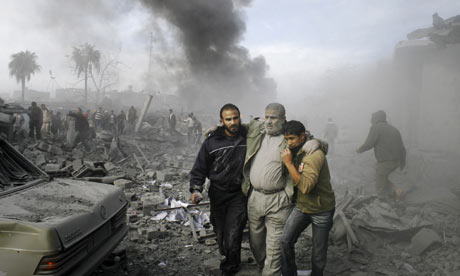
If recent history is any indication then the idea of bombs coming in from Gaza would not only be an absurd notion it would be a complete reversal of the truth. In late 2008/early 2009, the Israeli military sent bombs into Gaza for weeks killing and wounding thousands of Palestinian civilians and the targeting of schools and hospitals, according to an investigative report by the United Nations.
By not questioning the statement the Press reporter perpetuated standard Israeli propaganda and minimizes, or in this case eliminates, the massive human rights violations committed the Israeli Defense Forces against Palestinians.
It is one thing for the Press to communicate the faith-based perspective of Christians on a trip to Israel and not question those perspective, but when the local news media publishes points of view that are not factual without question then the local news does a disservice to the public.
 Grand Rapids Institute for Information Democracy