(This article by Dave Zirin is re-posted from ZNet.)

Major League Baseball’s annual Civil Rights Game was poised to be a migraine-inducing exercise in Orwellian irony. Forget about the fact that Civil Rights was to be honored in Atlanta, where fans root for a team called the Braves and cheer in unison with the ubiquitous “tomahawk chop.”
Forget about the fact that the Braves have been embroiled in controversy since pitching coach Roger McDowell aimed violent, homophobic threats at several fans. Forget that this is a team that has done events with Focus on the Family, an organization that is to Civil Rights what Newt Gingrich is to marital fidelity.
The reason Atlanta was such a brutally awkward setting for a Sunday Civil Rights setting, was because Friday saw the Governor of Georgia, Nathan Deal, sign HR 87, a law that shreds the Civil Rights of the state’s Latino population. Modeled after Arizona’s horrific and unconstitutional SB 1070, HR 87 authorizes state and local police the federal powers to demand immigration papers from people they suspect to be undocumented. Those without papers on request will find themselves behind bars. Civil rights hero, Atlanta’s John Lewis has spoken out forcefully against the legislation saying “This is a recipe for discrimination. We’ve come too far to return to the dark past.”
But there was Major League Baseball commissioner Bud Selig, celebrating civil rights in the Georgia, and chortling excitedly about the 2011 All-Star game in Arizona. In the hands of Selig, irony becomes arsenic. Thank God that Commisioner Selig was stupid enough to choose the Civil Rights Game to honor, among others, the great musician Carlos Santana. Santana was supposed to be the Latino stand-in, a smiling symbol of baseball’s diversity. And maybe, he would even play a song!
But Bud picked the wrong Latino. Carlos Santana took the microphone and said that he was representing all immigrants. Then Santana added, “The people of Arizona, and the people of Atlanta, Georgia, you should be ashamed of yourselves.” In a perfect display of Gov. Nathan Deal’s Georgia, the cheers quickly turned to boos. Yes, Carlos Santana was booed on Civil Rights Day in Atlanta for talking about Civil Rights.

Then in the press box, Santana held an impromptu press conference where he let loose with an improvised speech to rival one of his virtuoso guitar solos. He said, “This law is not correct. It’s a cruel law, actually, This is about fear. Stop shucking and jiving. People are afraid we’re going to steal your job. No we aren’t. You’re not going to change sheets and clean toilets. I would invite all Latin people to do nothing for about two weeks so you can see who really, really is running the economy. Who cleans the sheets? Who cleans the toilets? Who babysits? I am here to give voice to the invisible.”
He went on to say, “Most people at this point they are either afraid to really say what needs to be said, this is the United States the land of the free. If people want the immigration law to keep passing in every state then everybody should get out and just leave the American Indians here. This is about Civil Rights.”
Where was Bud Selig during all this drama? It seems that Selig slunk out of a stadium backdoor in the 5th inning. If there is one thing Bud has become an expert at, it’s ducking his head when the issues of immigration, civil rights, and Major League Baseball collide. If Selig really gave a damn about Civil Rights, he would heed the words of Carlos Santana. He would move the 2011 All-Star Game out of Arizona. He would recognize that the sport of Jackie Robinson, Roberto Clemente and Curt Flood has an obligation to stand for something more than just using their memory to cover up the injustices of the present. If Bud Selig cared about Civil Rights, he would above all else, have to develop something resembling a spine. But if Bud is altogether unfamiliar with the concept of courage, he received one hell of an object lesson from Carlos Santana.
GRIID class on the US Drug War starts next month
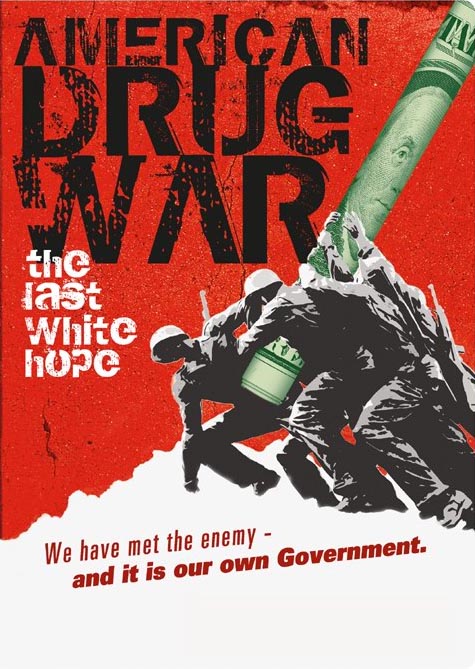
A new GRIID class is being offered starting Saturday, June 4 that will investigate the so-called US War on Drugs.
This 6-week class will take a comprehensive look at the Drug War that will include:
- US foreign policy and interdiction over the last 50 years
- Banks, money laundering and corporate involvement
- The Criminalization of drugs, racism and the Prison Industrial Complex
- Drug Treatment and Prevention
- An analysis of what is happening in Kent County
There will not be a book used for this class, but a series of articles and web-based resources. There is no fee for this class and we will be meeting on Saturdays from Noon – 2:00PM at Heartside Ministry, 54 South Division in Grand Rapids.
For the first session we will be watch the documentary American Drug War. Anyone is welcome to the screening of this film on Saturday, June 4 at noon, but the following 5 Saturdays are for people who sign up for the class. Send jsmith@griid.org if you’d like to sign up.
Obama’s Hope and Change an Illusion as Wars Rage On
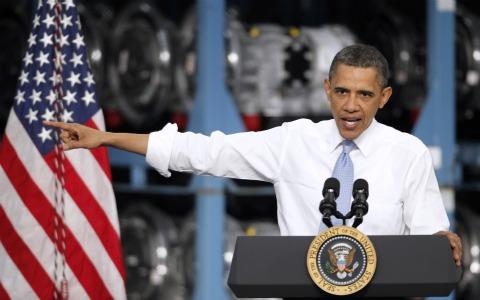
(This video is re-posted from RT America.)
In a speech delivered this morning, President Barak Obama set out some guidelines for the future of the Middle East and North Africa, where unrest and revolt has been all too rampant as of late. While Obama says the present is a “moment of opportunity” to make things better, promises that pegged Obama as a peaceful president at the start of his administration have gone unfulfilled. Instead, America has only extended one war and started another. Nick Turse of TomDispatch.com says he doesn’t have a lot of hope of the President’s most recent rhetoric.
Media and Children
Yesterday I attended the annual Challenge of Children Conference in Holland where 1200 people gathered to discuss issues pertaining to the well being of children. I conducted a workshop for parents, teachers and school social workers on how media impacts children and how the media industry targets them.

I began the workshop by talking about the evolving media technology and how much time kids spend consuming this media. According to a 2010 report from the Kaiser Family Foundation, Media on the Lives of 8 – to 18–year-olds, there has been a dramatic increase in media consumption from 1999 to 2009.
Total media exposure in the last tens years for kids 8 – 18 went from 7 ½ hours to 10 hours and 45 minutes. This shift is due mostly to the current generation of handheld digital devices or mobile units. The report also stated that kids spend more time using multiple media sources at the same time, like playing video games, while listening to music and texting friends.
When we talk about media consumption in the Media Literacy world we always emphasize what the cumulative effect is with the exposure to media images and messages. For instance, the Kaiser report stated that kids are spending on average 4.5 hours a day in front of a TV screen, which over ones lifetime would equal about 16 years of their life spent watching TV. Exposure to say violent media images over that period of time can have a cumulative effect such as desensitization to violence or what researchers call the normalization of violence.
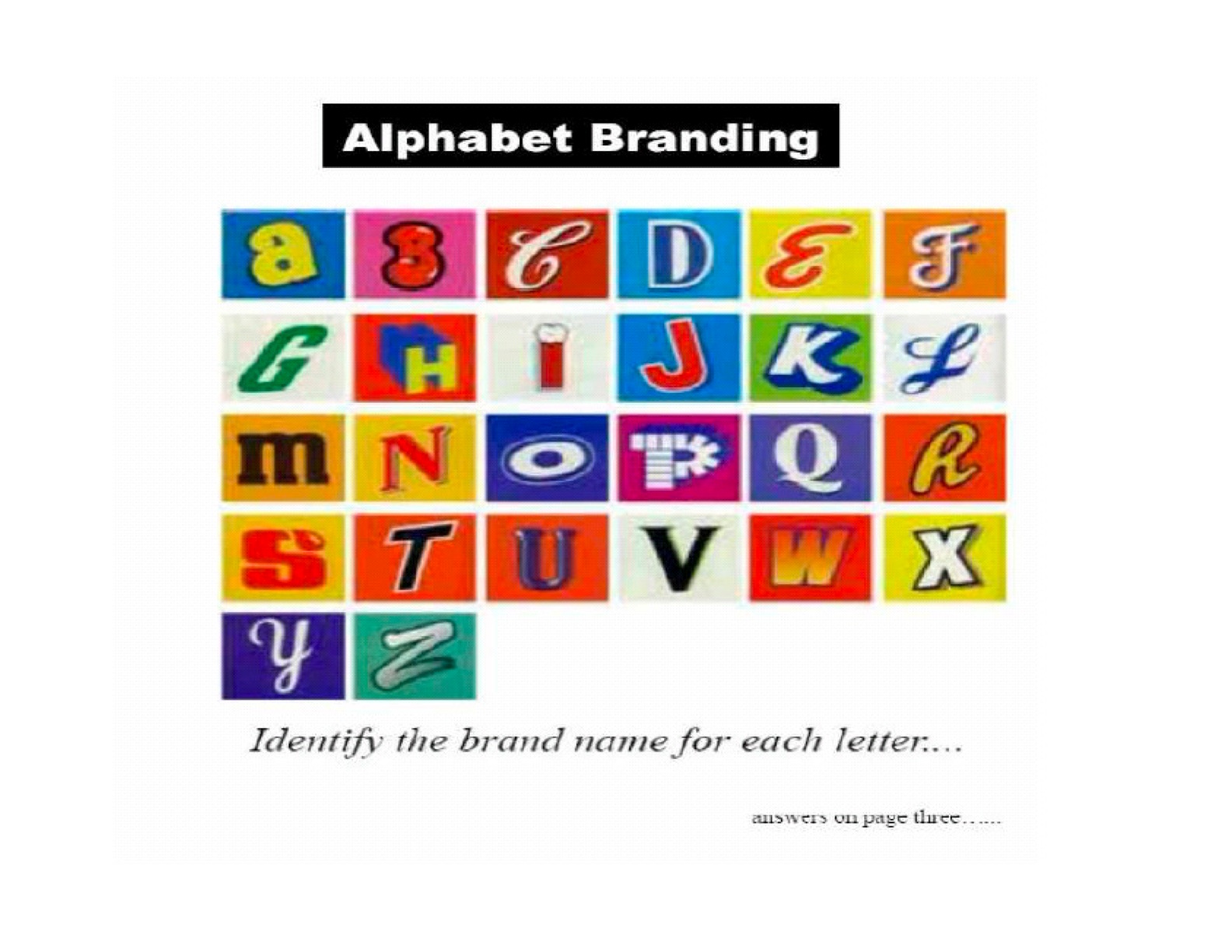
I then did an exercise with those in the workshop to get people to think about what we know and what we don’t know based on what kind of media we are exposed to. I showed them the Branded Alphabet where people have to identify what products each letter represents and then we look at current members of the Obama cabinet and people have to say their name and what position they hold in the government. Overwhelmingly people can identify the products, but not the government officials. This exercise provides a good opportunity to talk about the fact that we know advertising more in part because we live in a for-profit media system where being consumers dominates over being citizens.
 The next aspect of the workshop is to get participants to think about how all media is constructed. What we mean by that is someone puts together media, all media. There is not a wide-angle lens on the world where information comes to us unfiltered. Our media system determines what to give us and when to give it to us. Here we look at a Dove Foundation created PSA to make a point about how both media is constructed as well as beauty.
Once people have a better sense of how media is constructed we then spend some time looking at how to deconstruct media images and messages. We look at numerous examples and talk about everything from the product being sold to the primary target audience, the edits, camera angles, lighting, props, location, colors used, music used, the pace of the ad and the feel of the ad. Those who make these commercials certainly think about it since these ads are highly constructed. One example we looked at was a Chrysler Mini Van ad that is targeting kids. The ad shows kids in a playground who are in awe of the vehicle as it drives by and at one point the narrator of the commercial even says the mini van is “like a playground on wheels.”

After looking at numerous media examples we also mention that advertisers are constantly pushing for new venues in which to target kids. Corporations now pay to insert branded products into video games, use a variety of techniques to advertise in schools and to target kids with product placement in movies. The website Brand Channel provides a chronological breakdown of recently released films and lists the products used within each film. For example, the recently released film Hop features the following branded products: Apple, Baby Carrots, Butterball, Cadbury, Eagle Creek, Gibson, Hershey’s Mrs. Meyers, Playboy, Ray-ban, Sabian, Stax, The Orpheum, Toyota Prius, UPS and Volvo.
Another venue for targeting children is the cross-promotion of products and brands. For instance, with the film Thor, Burger King partnered with the film distribution company to cross-promote the film and Burger King Products. This cross promotion could be seen in commercials but also online at BK’s kid specific website Club BK. The website features games, toys and other messages that encourages kids to consume Burger King products and to normalize fast food.
Once we looked at all the ways in which children are being targeted by media and advertising we ended the workshop by looking at ways in which we can respond to the negative effects of media on children. GRIID has online a 5 Key Strategies for Media Education and Accountability handout which provides people with concrete actions to take in the home, in schools, with media companies and the larger community.
It is not only important that we give kids the skills to become media literate, we also have to confront media companies and challenge them on their practices of targeting children.
Recently the Michigan House of Representatives passed legislation that would reduce funding for public universities if those universities provide domestic partner benefits.

House Bill 4325 passed with 57 votes in favor and 53 against with the Republican majority determining the outcome. This vote was part of a larger public education funding piece, but area Rep. Dave Agema added an amendment that would punish universities who provided domestic partner benefits.
In a recent Media Release Agema stated:
“Public universities are thumbing their noses at the rule of law because of their special constitutional privilege dictating that we can’t tell them how to spend the money we appropriate to them. We can, however, not give them that money in the first place if they disregard the law, which is what this amendment does. It then uses the money from the universities that refused to change their policy and places it into the K-12 public schools retirement coffers to help eliminate the shortfall there. This could be worth up to $60 million to schools.”
According to a story in the Lansing City Pulse, “Fourteen of the state’s 15 public universities have introduced some form of same-sex benefits since voters approved a constitutional amendment in 2004 that banned domestic-partner benefits. The schools’ policies sidestep the ban by offering the benefits to other members of employees’ households.”
GVSU is one of those fourteen public universities in Michigan that offers domestic partner benefits. “Grand Valley offers Household Member Benefits in order to support the recruitment and retention efforts of the University in an effort to keep us competitive with other public universities who already offer similar benefits to their faculty and staff,” according to the university website.

The Director of the LGBT Resource Center at Grand Valley, Colette Seguin Beighley, responded to this decision in Lansing by stating, “Obviously, we are disappointed in the decision of the Michigan House to penalize the budgets of universities offering domestic partner benefits. Grand Valley has worked and continues to work hard to create a campus community that is welcoming for all students, faculty and staff including members of the lesbian, gay, bisexual and transgender communities. This budget penalty is a step backward for Michigan and will not help our ability to recruit and retain talent in our already hurting state.”
This is not the first time that Rep. Agema has taken such a strong anti-gay position as a legislator. According to State Rep. Jeff Irwin, “It was a complete surprise to me when Rep. Agema stood up and made this speech about punishing universities for violating our moral code as a state. He did raise the issue of morality specifically, and he did use the word ‘punish’ specifically.”
Agema has not been shy about his stance on this issue and has repeatedly posted comments on Facebook that reflect his anti-gay ideology. In one recent exchange with someone on Facebook he was asked why he would support government dictating who can marry who, especially since Agema claims to be a big proponent of smaller government that should meddle in people’s lives. Agema responded by saying, “It’s against natures laws, mans laws and God’s laws. Without a male and female the society dies in one generation….think about it!” Indeed, we should all think about what it means to have people like Dave Agema determining public policy.
On this day in 1855, anarchist and unionist George Speed was born in Maryland. He became the Chairman of the IWW Executive Committee, and played crucial roles in the Pullman strike, in fighting government oppression of unions, and in the Haymarket trial. He was also an early proponent of a racially diverse union, demanding no distinction be made between members of different races.

Speed started his working life as a hatmaker’s apprentice, and joined the Silk Hat Finishers’ craft union. Soon, his union activities eclipsed his craft skills, and he became a union organizer.
Speed’s union work took him to Louisiana and Texas to meet with timber laborers; to the Midwest to help organize industrial workers, and to California, where he spent much of his career meeting with and supporting the unionizing efforts of farm workers.
In 1903, Asian-American and Latino farm workers wrote to Samuel Gompers and asked for a union charter from the AFL. Gompers replied that the AFL would never accept members of Chinese or Japanese descent. He told the workers until they guaranteed they would turn away Asian members, they would not receive a charter. Speed spoke to this issue by saying, “The whole fight against the Japanese is the fight of the middle class of California, in which they employ the labor faker to back it up.”
He also noted, “…One man is as good as another to me; I don’t care whether he is black, blue, green or yellow, as long as he acts like a man and acts true to his economic interests as a worker.”
George Speed helped to support part of Coxey’s Army during 1894. The march was a protest over the unemployment of workers following the Panic of 1893. It was originally suggested by Jacob Coxey, a socialist from Ohio who actually was a member of the elite; he owned vast tracks of land, a silica manufacturing plant, and race horses. The size of the march on Washington, D.C., grew to 6,000 men, many of them members of unions.
Newspapers of the time started a panic over the event, calling the workers “tramps,” predicting massive riots from the “noisy, pillaging mob,” and charging various union leaders with trumped-up sex scandals. George Speed helped to face down government troops who attempted to stop the march—although, in fact, the group was never allowed to enter the capital—and learned some valuable lessons which he later applied that same year during the Pullman Strike.

George Speed played a central role in many union actions and strikes, but perhaps the most notable was the Pullman Strike of 1894. Three thousand Illinois railroad car manufacturing employees went out on strike after their wages were cut and their workday expanded to 16 hours. They paralyzed travel and shipping in two-thirds of the United States by doing so. But that was just the beginning. At its peak, the strike encompassed a quarter of a million workers in 27 states, making it one of the largest strikes in United States history.
The American Railway Union joined forces with the Pullman Car Company workers, and its members refused to switch tracks for any train that included Pullman brand cars. When threatened, 125,000 workers walked off the job.
The government attempted to muscle in by issuing an injunction to union leaders, which was simply ignored. United States Marshals and the Army were then sent in on the pretext that since the trains carried US Mail, the strike violated the Sherman Act.
Thirteen workers were killed and 57 wounded during the action. Eugene Debs, head of the Railway Workers union, was arrested and tried, but halfway through the trial the charges were dropped—apparently to avoid a victory by Clarence Darrow, who represented the union. Although mainstream media of the time crowed about the “defeat” of labor, the resulting Industrial Commission report firmly supported collective bargaining as a way to correct the power imbalance between capitalists and laborers. The Erdman Act of 1898 also made yellow-dog contracts (in which workers had to spurn union membership to get hired) illegal.
George Speed was one of the founding members of the Industrial Workers of the World when it was officially formed at a convention in 1905.
Speed’s experience in labor organizing proved helpful to many groups that were unionizing at the time. One example was in 1913; Speed was approached by a group of longshoremen who wanted to organize against unfair practices that included discrimination against minority workers. Speed helped the group draft a list of demands: a pay raise to all workers, regardless of race; a 10-hour day; time-and-a-half for night work; double time for Sunday work; and no retribution for striking. Although some of their demands were met, the strike leaders were then fired.
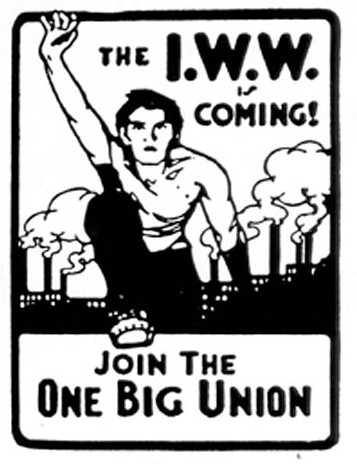
Speed notified the IWW, and the union organized a strike of 1,500 workers who demanded collective bargaining, their raise in pay, and the restoration of jobs. George Speed stayed in Philadelphia to meet with the strikers every day, giving them “the straight stuff” until all demands were met. He helped usher in a new decade of prosperity for Philadelphia longshoremen, and one which became an interracial model for other unions to emulate.
In 1917, George Speed was one of the IWW members in Chicago arrested on charges of violating the Espionage Act of World War I. The IWW “Wobblies” refused to enlist and encouraged draft dodging among its members; the union also supported strikes of lumber workers and miners whose work was deemed “crucial” to the war effort.
Other unions of the time took a placating approach to capitalists and encouraged their members to accept small, incremental changes and improvements. The IWW took a much more radical approach. It was targeted for the trial among the unions because it advocated an all-out attack on capitalism, including industrial sabotage. Leaders spoke of class warfare, especially during wartime. One IWW tract of the time stated, “In the case of wars, which every intelligent worker knows are wholesale murders of workers to enrich the master class, there is no weapon so forceful to defeat the employers as sabotage by the rebellious workers.”
The trial lasted for more than two months. The government tried to claim that the IWW wanted to replace President Woodrow Wilson with Kaiser Wilhelm and that they were accepting funding from Germany. At the same time, the suit claimed that the IWW was being run by Russian Bolsheviks. IWW members were called terrorists by the press.
When Bill Haywood, IWW’s leader, was called to the stand, he showed the charges for the baseless persecution that they were. If the IWW was anti-war, he argued at one point in his questioning, why would they be pro-German? “Germany today is the worst autocracy in the world,” he said.
Despite the absurdity of the charges, the jury deliberated for just over an hour and found all 100 defendants guilty. Fourteen of the top IWW leaders, including George Speed, were sentenced to 20 years in Leavenworth Penitentiary and fines of $10,000 each. Thirty-three other defendants received sentences of 10 years in prison.
At the time of the trial, George Speed was 64 years old and the Chairman of the IWW. He said on the record:
My idea of life is this: that the whole history is one of pain and struggle. That there are two classes in society absolutely antagonistic to each other—an employing class and a working class—and that the interest of the employing class is to buy labor in the cheapest market. I came to that conviction young, and when I got hold of a Marxian leaflet in 1883, it inspired me with a new life. Before that time, I was a little indifferent and a little careless, and after that I tried to devote my whole time to make life better for myself and for my fellow workers.
The trial triggered a wave of vigilante actions against IWW members across the country, with lynchings, beatings, and arrests. IWW’s headquarters in New York City were ransacked. But the IWW continued to stand firm in the tradition of its leaders like George Speed.
Today, the IWW continues to fight for the rights of workers, organize union actions, and participate in community actions such as the creation of food co-ops and food justice organizations. Member groups have organized protests against the Iraq War, demonstrations in opposition to sweatshop labor, and supported boycotts of companies like Coca Cola for its suppression of worker rights. Speed’s dedication to the working class continues on in the union which he helped to create.
Energy Industry Puts Positive Spin on Record Profits
(This article is re-posted from PRwatch.)

After Exxon Mobil posted first-quarter 2011 profits of $10.7 billion — $6.3 billion more than it earned last year by this time — the company put out a defensive statement arguing that it is not to blame for gasoline exceeding $4 around the country.
Instead, the company blamed skyrocketing gas and oil prices on the U.S. government, saying Exxon makes about seven cents on a gallon of gasoline, while state and federal governments collect 40 to 60 center a gallon in taxes. Jack Gerard, CEO of the American Petroleum Institute, the oil and gas industry’s lobbying group, spun his industry’s record income as a positive, saying high oil company profits signal a stronger U.S. economy. Gerard said Americans “should be proud” of a high-earning oil industry, since it supports millions of jobs and provides income for retirees in the form of profits paid on shares in people’s retirement accounts.
Exxon vice president Ken Cohen portrayed the push to eliminate $4 billion in government subsidies for the industry as an attempt to raise taxes on the industry, saying the subsidies help keep jobs from being exported to other countries.
Michigan Governor Rick Snyder spoke to a crowded room yesterday in the Amway Grand Plaza Hotel at an Economics Club luncheon.

The talk given by Snyder was almost identical to the one he gave 6 weeks ago in Grand Rapids to a Chamber of Commerce audience. Snyder stuck to his mantra of reinventing Michigan and gave his 4-month summary of what he feels his administration has accomplished.
Snyder boasted about the creation of a dashboard, which he thinks is a customer friendly way of providing Michigan citizens a way to measure government performance.
The Governor then outlined what he called his roadmap for making certain economic changes happen right away. In February he passed the elimination of the Michigan Business Tax (MBT) and said, “the wicked witch is dead.” He went on to say that eliminating the MBT was all about job creation and is the best thing for the Middle Class. After that comment the room gave him a resounding applause.
In March, Snyder said, the focus was local government reform, which he announced in Grand Rapids. His Emergency Financial Managers law was designed to “help our communities succeed.” Snyder also said that his revenue sharing revisions would make it easier for service consolidation and service management. In addition, he believes that cities will have to “compete for best practices” in order to get tax revenues and communities are “not entitled to that money.”
Snyder also mentioned his budget reform plan his work on changing how Michigan does education. Snyder believes the education system is broken and that this system is “geared to make money and not educate our children.”
Snyder then went on to say that once the budget is completed he plans to address the issue of health and wellness, followed by infrastructure improvements and workforce development, which he referred to as “talent development.” “The greatest resource we have is not the Great Lakes, it is people,” said Snyder. He wants to connect together people and resources that are developing talent.
The Governor ended his comments by talking about the need for Michigan to change its attitude and be more positive about the assets and resources in the state. Snyder called this Relentless Positive Action or RPA. The statement felt like we were all at a positive thinking workshop, but at the same time it made perfect sense, considering who was in attendance.
Like any politician Snyder was giving his audience what they wanted to hear and since his audience was the elite financial sectors of West Michigan his comments were well received. Many of the people in the room are direct beneficiaries of the kinds of economic policies that Snyder is imposing on the state, policies that also seek to privatize public services and give more tax dollars to the private sector.
All one had to do was look at who shared a table with the Governor to see who has access to political power. Surrounding Snyder was Sam Cummings, a local businessman who owns a substantial amount of downtown property in Grand Rapids. Next to Cummings was Senator Mark Jansen who has been highly supportive of Snyder’s policy decisions.

Also at the table were Mark Murray (Meijer), Fred Keller (Cascade Engineering), David Van Andel and right next to Snyder was Rich DeVos. Doug DeVos introduced Snyder and Dick and Betsy were seated at an adjacent table.
Considering who was surrounding Snyder it is no surprise that the Governor was so well received and why he kept referring to everything in business terms. Snyder must have said the word entrepreneurship a dozen times and even referred to his policies as creating “governmental entrepreneuralship.”
Outside of the Econ Club luncheon about 50 people had gathered to protest the Governor’s visit. People held signs while some marched and chanted slogans challenging the economic policies that are attacking working class people. However, such a small turnout did not seem to have much of an impact on Snyder or those at the luncheon and unlike the last time Snyder spoke in Grand Rapids he didn’t even mention the statewide protests.
However, while Snyder wooed the wealthy members of the Econ Club a press conference was held in Detroit to kick off a campaign to repeal the Emergency Financial Managers (EFM) law, known as Public Act 4, which we reported on yesterday. Whether or not this is the most effective strategy to reverse the policies of the current administration in Lansing remains to be seen.
The Academy Award winning film for best documentary in 2010, Inside Job, will be shown this Thursday by the Grand Rapids branch of the IWW.

“The film focuses on changes in the financial industry in the decade leading up to the crisis, the political movement toward deregulation, and how the development of complex trading such as the derivatives market allowed for large increases in risk taking that circumvented older regulations that were intended to control systemic risk. In describing the crisis as it unfolded, the film also looks at conflicts of interest in the financial sector, many of which it suggests are not properly disclosed. The film suggests that these conflicts of interest affected credit rating agencies as well as academics who receive funding as consultants but do not disclose this information in their academic writing, and that these conflicts played a role in obscuring and exacerbating the crisis.”
A discussion of the film will be facilitated by members of the IWW after the screening. The film is free and open to the public.
Inside Job
Thursday, May 19
6:00 PM
IATSE Labor Hall 931 Bridge St. Grand Rapids
Public Act 4, the signed version of HB4214, has been called “financial martial law” that can be waged against any city, town, or public school system in Michigan. GRIID recently reported on the EFM situation in Benton Harbor, where the law is being used to plan the seizing of public property to build an elite private vacation enclave. Despite reassurances at the time of its passage that the “extremes” of the law—such as firing elected officials, and targeting minority communities—would likely not be used because of political pressure, we are already seeing those exact actions put into play.

Now a group of Michigan activists have decided to stop the law cold—with a repeal effort.
Michigan Forward, a Detroit-based nonprofit, has been at the forefront of the repeal effort. Brandon Jessup, chairperson of the group, told GRIID that he was motivated to bring down Public Act 4 because Michigan citizens must “come to grips with this corruption—to speak up and call it corrupt.”
Citing corporate profit gambits that the EFM law allows such as “public parks being enveloped, water systems privatized, and the dangerous level of control that’s defined” in Public Act 4, Jessup says that the Michigan Legislature doesn’t appear to care about the consequences of what they’re doing.
“Snyder said during his campaign that he didn’t need Detroit’s vote,” Jessup told GRIID. “Our urban core needs to be renewed, not torn down and ‘developed’,” he added.
Michigan Forward is working with several groups in the state, including Rainbow PUSH Coalition, which is setting up a headquarters in Benton Harbor, and the Highland Park NAACP.
And now a northern Michigan activist group has also joined Michigan Forward to launch the drive to collect signatures for Public Act 4’s repeal. Reject Emergency Managers is a grassroots group working out of Traverse City. Spokesperson Betsy Coffia states that the name of the group indicates “our real focus, although we support the recall/repeal efforts and overall awareness over all the damaging policies and laws coming out of Lansing.”
In a recent interview, Coffia explained that she was “personally on the phone with my legislators and the Governor’s office prior to [Public Act 4] being signed, and said ‘make sure that you protect local populations, that they have the right to vote, to recall…they should have a say in whether their properties get sold.” None of those protections ended up in the final version of the law. At that point, she and other activists in Traverse City started to study Public Act 4 to determine what avenue could be used to overturn the legislation.
In order to repeal the law, first a petition needs to be drafted. Next, activists must collect 161,305 signatures of voters who want the EFM law repealed. That represents 5 percent of all Michiganders who voted in the election for governor.

Once 161,305 valid signatures are collected to meet the November deadline, the repeal will be placed on the 2012 ballot. However—and this is an important point—the signatures by themselves will suspend the law until the vote.
Michigan Forward submitted a petition to the Board of Canvassers on Friday, May 13. On Monday, May 16, press conferences will be held in Detroit, Traverse City, and Benton Harbor to launch the effort. The drive to collect signatures will start at the beginning of June.
Brandon Jessup explained to GRIID that signatures will not be held while being collected, but will be released in blocks as soon as they are available and verified. Even after the united groups obtain the 161,305 signatures needed, they will continue to collect signatures until the November deadline.
Jessup says that Grand Rapids will be crucial in the collection of signatures, and plans to launch a canvassing effort here. GRIID will keep readers informed, and you can also check Michigan Forward’s website and Reject Emergency Mangers’ Facebook page for up-to-date news on the repeal effort.
Here’s a video created by Flint Public Development which shows citizen outrage over Public Act 4. The video was recorded in Benton Harbor during the Blossomtime parade. Betsy Coffia appears in one interview. She explains problems with the legislation and describes the repeal process:
 Grand Rapids Institute for Information Democracy