Last week’s vote in Holland on an ordinance that would have included revised a non-discrimination ordinance to include “Sexual orientation” and “gender identity” was narrowly defeated by a 5 – 4 vote.

Within days of the vote it was reported that a well-known anti-gay organization was going to work on unseating 3 of the 4 Holland City Council members who voted for the ordinance to be revised. The Campaign for Michigan Families spokesperson Gary Glenn was quoted as saying:
“Given the serious threat these discriminatory gay rights ordinances have proven to pose to religious freedom in other communities, pro-family residents of Holland can’t afford the risk that a single council member might be replaced or pressured to change his vote and allow such a dangerous policy to become law.”

Glenn then went on to say that his organization would provide financial support for candidates, which would like to defeat those who voted in favor of the ordinance.
The Press reporter in Saturday’s story referred to The Campaign for Michigan Families as connected with the Michigan chapter of the American Family Association and described this group as “pro-family.” On Sunday, the Press published another short article about Gary Glenn and The Campaign for Michigan Families who were responding to the claim that Holland residents who favored the ordinance were seeking a referendum so that the people of Holland could vote on the proposed ordinance.
In this second article Gary Glenn is referred to as an “anti-gay rights activist,” which is certainly more accurate than the previous article that described Glenn’s organization as “pro-family.” However, in both articles the Grand Rapids Press reporters do not elaborate on what Gary Glenn or the Michigan chapter of the American Family Association (AFA) actually stand for and what kind of campaigns they have been involved with in the past.
According to SourceWatch the AFA considers itself to be a fundamentalist Christian lobbyist group. The AFA has been involved in local and national campaigns against abortion, pornography, same-sex marriage, deregulation of the oil industry and more recently the defeat of the Employee Free Choice Act. The Southern Poverty Law Center has designated the AFA as a hate group because of their use of hate speech to “help drive the religious right’s anti-gay crusade.”
Indeed, Gary Glenn has a long history of attacking the LGBT community and going after candidates that are either identify as LGBT or support the LGBT community. For example, last year it was reported in a state House race in Michigan Gary Glenn was the voice on a robocall that attacked a lesbian candidate. In the robocall message Glenn used the word homosexual 10 times. Here is the robocall attacking candidate Toni Sessoms.
Gary Glenn was also involved in recent efforts to prevent any anti-bullying legislation in the state because Glenn believed it was a Trojan Horse for the gay community to imposed their agenda on everyone else.
“The homosexual activists are using the bullying issue, as you indicated, as a Trojan Horse. Their real objective is to establish in Michigan state law and in other states sexual orientation — i.e. homosexual behavior — and gender identity — i.e. cross-dressing — as the legal basis of rights and protections. So all we said was why do you insist on segregating students into these special protected class categories like sexual orientation and gender identity and then dole out protection against bullying expressly on the basis on a student’s membership in one of these protected classes, in other words, a segregation strategy.”
Lastly, it should be noted that at least two Ottawa County family foundations have donated money to the American Family Association. One is Jack and Mary DeWitt Foundation and the other to a much more significant degree is the Edgar and Elsa Prince Foundation, which has funded numerous anti-gay campaigns in Michigan and around the country.
All of this information provides real context to the significance of the statement by Gary Glenn and The Campaign for Michigan Families, a context, which the GR Press fails to provide. If the community is to understand the players involved in these kinds of campaigns then it is extremely important to have as much background information as possible so that people can make well informed decisions about what to support and what to oppose.
Update: A link was sent to us with more details on who has provided funding to The Campaign for Michigan Families, specifically financial contributions in 2010.
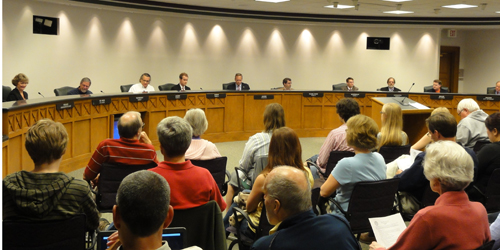
Wednesday the Holland City Council voted 5-4 to defeat a recommendation to draft a change to the city’s Non-Discrimination Ordinances and Equal Employment Opportunity Policy, adding “sexual orientation” and “gender identity” to the categories which it is illegal to discriminate against in housing or employment.
The council meeting can be viewed, in its five plus hour entirety, here (http://www.macmedia.org/hollandcouncil06152011.html).
The measure, if drafted and passed, would have protected gay, lesbian, bisexual, and transgender individuals from discrimination by landlords and employers when looking for housing or getting a job (click on the proposal here). A “yes” note by the council would have given city lawyers permission to draft the change, and official language would have been voted on at a later date. The council instead halted process early, denying any city funds go towards a measure to discourage discrimination.
The Human Relations Commission of Holland was appointed by the council to research the topic late last year, and unanimously supported and recommended they support and fund the ordinance change, which would make discrimination punishable by misdemeanor, as it already is for race, religion, creed, color, national origin, age, sex, marital status, height, weight, age, handicap, or source of income.
The vote came after over 3 hours of continuous public comment, where area residents expressed support for the measure in a four to one ratio over those opposed (25 to 6, with 3 unclear/undecided). Of the individual comments, about 20% came from local Christian ministers and pastors supporting the change. A lawyer for the ACLU was present and spoke in favor of the changes, as did members of Holland is Ready and The Lakeshore Ethnic Diversity Alliance.
Many members of the LGBT community emotionally testified to be harassed or discriminated against within the city limits. Several local residents expressed sadness or concern over their perception that Holland was an “unwelcoming city”, with discrimination throughout. Many citizens stated this atmosphere had caused loved ones, both gay and straight, to flee the city for more accepting locals. Jamie Coon tells her story here:
Stories of discrimination, disenfranchisement, and outright bigotry were all chronicled as having taken place locally. Those opposed insisted that giving rights to the “immoral (homosexuals)” would infringe on their own rights, and some landlords openly stated that they currently practiced discrimination against renters based on their perceived sexuality, ironically highlighting the very need for the measure at hand.
Many opposed to the changes have contended that additional protections “are not necessary”, however the perception of Holland being hostile towards the LGBT community was further supported by research conducted by The Fair Housing Center. Their research (cited by the HRC during the commission meeting) found that, “50% of those gay and lesbian couples in the study looking to buy an advertised home in West Michigan had been discriminated against by the real estate agent because of their perceived sexual orientation.”
This is 20% higher than the state average for housing discrimination based on orientation, the highest in all of Michigan, making this ordinance especially crucial to the movement for equality. The FHC report also shows that the average city with an antidiscrimination ordinance experiences 8% less discrimination than a city without such a law.
Nineteen other Michigan communities have already adopted similar policies and laws. Grand Rapids made the change during the 1990’s, and Kalamazoo passed the issue by public vote “overwhelmingly” in 2009 (giving hope to Holland activists, as a public vote is their only recourse after this defeat, with the exception of changing state or federal law). Ann Arbor was the first to adopt the change in 1978, and Traverse City most recently in 2010 (their board voted unanimously in support). The city of Jackson is the only other community to reject such a proposal, however efforts are currently underway to change the laws there as well.
In addition to the people who spoke at the city council meeting in support of the measure, the chamber itself literally overflowed into the lobby with concerned citizens, about 250 in attendance. The HRC reportedly received feedback from over 600 persons in support of the changes through letters, public comments, emails, and petitions, with 90 persons opposed. Holland is Ready is “a group of local leaders working for the safety, rights and inclusion of GLBT persons” who organized around the council meeting and many (if not most) of those in attendance were seen wearing their buttons.
The above statistics beg the question: why did the city commission vote against the measure if the majority it’s constituents appear to be in favor of the final changes, let alone going ahead with exploring the changes, which a passage would have done?
In order to answer that question one must examine the vote of each member and the reasons they gave for it. Voting in favor of the change were council members David Hoekstra, Jay Peters, Robert Vande Vusse and Shawn Miller. The Mayor of Holland, Kurt Dykstra, and council members Brian Burch, Nancy DeBoer, Mike Trethewey and Todd Whiteman voted to block funding for exploration and effectively continue legalized discrimination in Holland.
Hoekstra, Peters, and Vande Vusse were wholly in favor of passage. Peters stated that “in my gut and in my soul I know that the discrimination that’s been talked about here happens,” that he “overwhelmingly” supported the changes. Vande Vusse shared the concerns of citizens at the meeting, stating that, “the role of this government is to protect the health and well being of the people” and urging his fellows to vote “yes”, Hoekstra along side him.
Shawn Miller expressed concern about “invasive government interventions in personal property rights”. Miller also admitted he was “confused” by the terms “bisexual and transgender” and did not know what they meant. However, Miller agreed to support the measure to draft an ordinance to be reviewed at a later date, with no promises of how he might vote at that time. His position resonates as conservative but reasonable one, especially when compared to his peers.
Todd Whiteman was the only member of the council to openly state he was not in favor of the measure because his “constituents had spoken loud and clear” against it, and further that he was “primarily concerned with the rights of property owners”, again referring to the idea that discrimination is a right of those in power which ought not be impeded.
Mayor Dykstra and members Burch and Trethewey stated that they could not support the council itself passing the measure, though they “empathized” with those in favor, suggesting they bring the issue “in front of the people” for a vote. Burch’s statement was most notable in this regard, as he spoke extensively about his support for the LGBT community, noting his “many gay friends” who he “loves”, that “we all deserve equal rights”, but then stating that a “yes” vote would “end the movement” for equality. In this bizarre, Orwellian exercise in double-think, Burch suggested that the council “implementing a top-down” law on the people of Holland was not good enough for the LGBT people, that only a “vote by the people” would do their fight justice. Burch passionately dared supporters to “imagine the power” that a public vote would have, and in doing so effectively added insult to injury by insisting his disenfranchisement of the LGBT community was actually good for them.
Dykstra and Trethewey held this position as well, though were less cavalier in their presentation. Dykstra had a prepared remark that was clearly written before the meeting even began and the several hours of public comment. One organizer expressed her frustration afterward saying, “why did we all come out here if he wasn’t going to consider (our position)?” This is partially explained by the fact that Dykstra admitted he does not have much interest in the issue of local discrimination, making it clear that his vote was one of political safety in a traditionally very conservative town, putting his own political career in front of the civil rights and equality of others.
Trethewey was visibly unsure and torn, stating his constituents were “split right down the middle” on the issue (which must not have included those present at the meeting or the correspondence received by the HRC). Trethewey wavered, and appeared to be the best bet the measure had of passing, however ultimately retreated, again preferring to force a public vote opposed to representing the interests of a minority group. “We can be progressive and the nine of us can say ‘let’s go, write up this ordinance.’ (But) I don’t think you’re going to get your inclusiveness, you’re going to get something rammed down people’s throats,” he said.
Nancy DeBoer seemed confused and perplexed not only by the issue at hand, but also with her role has a council member, asking at one point, “Can we (the commission) really represent 33,000 (residents of Holland)?” The crowd audibly broke decorum to respond “Yes!,” however she would not support them.
The stance of Burch, DeBoer, Trethewey, and Dykstra, that the issue should be resolved by a public vote and not by the council, is particularly bizarre since this was not the opinion of any of the community members. No person present, for or against the proposal, stated that they supported the measure but that the council ought not vote in favor of it. In addition, the very idea that implementing such a measure is beyond the scope or role of the council is nonsensical, considering the HRC recommended it to the council, and it is within the council’s power to make such changes. In fact, the City of Holland website explicitly states, “The matters handled by City Council include approving of specific building projects, deciding on claims against the City, and making changes to ordinance codes.”
With these facts acknowledged, it becomes clear that the “no” votes with an asterisk noting “empathy” were merely a halfhearted attempt by certain council members to maintain the current power structures while convincing the public that it was actually in their best interest; that they should still vote in support of said council members, even though they haven’t returned the favor in a desperate time of need.
Also notable is that a passage on Wednesday would have only provided the approval to draft an ordinance, not actually implement it. Therefore, supporters cannot simply default to a ballot measure as suggested by some council members, because an actual ordinance hasn’t been drafted yet. Before a ballot initiative can even take place, supports must work with lawyers to draft an ordinance, then that can be voted on by the people of Holland. Had Burch, DeBoer, Trethewey, and Dykstra actually been genuine in their opinions, they would have voted in favor of drafting the ordinance, then brought up their concerns when it came time to actually implement it, allowing voters to decide on a completed ordinance.
As the City of Holland has officially declared it will not support the drafting of an ordinance, it is now up to citizens and activists to draft the ordinance themselves. Jay Kaplan, staff attorney of the Michigan ACLU LGBT Project, was present at the council meeting and his office has indicated to GRIID that they may be aiding in the process.
Supporters of equal rights in Holland, despite sexual orientation and gender identity, can look to the following organizations for resources and support:
Holland is Ready https://www.facebook.com/pages/Holland-Is-Ready/318512633596?sk=info
PFLAG http://www.pflaglakeshore.org/
Equality Michigan www.equalitymi.org

We received a flyer today from the Kent Ionia Labor Council announcing a protest planned for Monday, June 20 in Grand Rapids.
The protest will be held in front of the Grand Rapids Chamber of Commerce office at 111 Pearl St. in downtown Grand Rapids from 11:30AM – 1:00PM.
The State and regional offices of the Chamber of Commerce certainly have a history of lobbying on behalf on business interests, collectively spending over one hundred thousand in lobbying Lansing lawmakers in 2010 alone. The Grand Rapids Chamber hosted Governor Snyder in April and welcomed the then proposal to eliminate the Michigan Business Tax.
The flyer states that people will be showing their “displeasure with the $1.8 billion tax shift from Business to Pensioners and Low to Middle Income Workers.” The flyer invites people to bring their own signs, but does not state how people will be showing their displeasure.
The flyer also states, “The $1.8 Billion Tax Shift has resulted in the taxing of pensions, elimination of the EITC tax credit, the lack of funding for public schools and many other issues!”
(The article below is re-posted from Common Dreams.)
Note: We contacted Grand Rapids Mayor George Heartwell this morning to find out where he stood on the proposed anti-war resolution, which will be introduced at the Conference of Mayors. As of this posting we have received no response. It is also important to note that as of today, the amount of money that has left Grand Rapids to funded both of the wars in Iraq and Afghanistan since 2001 is $632 million and counting – $410 million for Iraq and $222 million for Afghanistan.

As the Obama administration readies plans for U.S. offices in Afghanistan, it’s not just national office-holders who are demanding an expedited drawdown.
On Friday, the U.S. Conference of Mayors will introduce a resolution calling for a quicker end to the war and a speedier withdrawal of troops. If it passes — a vote will come on Monday — it will be the first time the body has formally called for an end to an military engagement since Vietnam.
The mayors’ formal address of the conflict — which is still being debated, politically, at the federal level — illustrates how widespread skepticism about Afghanistan has become.
Just this week, several top candidates in the Republican presidential field raised serious concerns over the sustainability of current troop levels. On Wednesday, 27 senators signed a letter to the president pressing him for a new strategy and a major troop drawdown.
Unlike senators, mayors have no power of the purse. Nor do any of them currently aspire to serve in the role of commander-in-chief. But the resolution that they are set to consider still serves as a reflection of the current mood with respect to Afghanistan and Iraq.
For starters, opponents of the war remain largely Democratic. The signatories of the pending resolution include more than a dozen Democratic mayors of mid-to-large cities — Dave Norris of Charlottesville, Va.; David Coss of Santa Fe, N.M.; R.T. Rybak of Minneapolis, Minn.; and Carolyn Peterson of Ithaca, N.Y.
The basis of the mayors’ objections is not strictly the morality or strategic basis of the war, but the price tag. The resolution’s first clause references the “severity of the ongoing economic crisis” and “budget shortfalls at all levels of government” as reasons to “re-examine our national spending priorities.” The second clause notes that Iraq and Afghanistan are costing the country approximately $126 billion dollars per year. It is not until the third clause that the authors point to the wars’ casualties. They conclude with a plea for Congress to “bring these war dollars home to meet vital human needs.” ”As mayors, we recognize there is an absurdly false choice being put to Americans that we somehow have to pick between all the priorities we care deeply about but can’t touch massive spending on the military,” said Rybak. “There is this rationale that defense spending trickles down to domestic priorities. That is true. I’m happy that the space program developed Tang but that does not mean that’s the end result we should be going for.”
There is only a limited sense about the resolution’s prospects for success. But its supporters suggest that many members will be influenced by the overt national trends.
“I’ve been active in politics for many years in a number of different roles,” Joseph C. O’Brien, the Mayor of Worcester and a co-sponsor of the resolution, told The Huffington Post. “Nationally, the tide is turning on support for interventions abroad, whether Afghanistan or Iraq. … We are spending a billion a month after Osama bin Laden has been killed. And while I appreciate the effort to rebuild nations around the world, we have tremendous needs in communities like mine.”
In order to pass, the resolution would have to go through the U.S. Conference of Mayors’ Metro Economies Policy Committee first before heading to the full body for a vote.
That process is similar to what happened in front of the conference 40 years ago. Then meeting in Philadelphia, a group of mayors urged colleagues to go on record as supporting the federal amendment calling for President Nixon to withdraw all American forces from Vietnam in a matter of months. New York City mayor John Lindsay requested that the group invite a veteran of the war, one John Kerry, to speak before the plenary session. Nixon insisted that Vietnam Veterans for a Just Peace’s John O’Neill be invited to argue the other side. The debate and subsequent passage of the resolution earned a photo on the first page of The New York Times the following day.
It would be a Christmas-come-early gift for war protesters to get that type of press this go-around. Popular dissatisfaction with Afghanistan hasn’t registered as it did with Vietnam. And while there are a determined number of mayors who feel committed to seeing the resolution through, even they aren’t certain about its chances for success.
“I couldn’t tell you whether it will pass or not,” said Rybak. “Sometimes issues that start small in our group make a great deal of difference globally.”
READ THE FULL RESOLUTION:
1. WHEREAS, the severity of the ongoing economic crisis has created budget shortfalls at all levels of government and requires us to re-examine our national spending priorities; and
2. WHEREAS, the people of the United States are collectively paying approximately $126 billion dollars per year to wage war in Iraq and Afghanistan; and
3. WHEREAS, 6,024 members of the US armed forces have died in these wars; and at least 120,000 civilians have been killed in Iraq and Afghanistan since the coalition attacks began.
4. NOW, THEREFORE, BE IT RESOLVED, that the U.S. Conference of Mayors supports efforts to speed up the ending of these wars; and
5. BE IT FURTHER RESOLVED, that the U.S. Conference of Mayors calls on the U.S. Congress to bring these war dollars home to meet vital human needs, promote job creation, rebuild our infrastructure, aid municipal and state governments, and develop a new economy based upon renewable, sustainable energy.
Draft of One Kent Coalition Legislative Proposal

Yesterday we reported on the June 14 meeting of the advisory group that is tasked with looking at the proposal of local government consolidation from the One Kent Coalition.
This morning we received a copy of a draft of the propose state legislation that the One Kent Coalition has put together that would be necessary for the City of Grand Rapids and Kent County to consolidate as one government entity.
The draft is 38 pages long and is by no means easy to read. The draft legislation is calling for this new metropolitan government to be run by a CEO, a Chief Executive Officer, who would have executive power and would be elected by the public. There would also be a metropolitan commission who would adopt ordinances and budgets and be given legislative powers.
We encourage you to read the entire legislative draft and attend the next meeting of this advisory group, which will be held on Wednesday, June 29 at 4:00PM in room 202 E of the downtown GVSU campus.
Yesterday, the second meeting of the committee to study the One Kent Coalition local government consolidation proposal met in downtown Grand Rapids.

This local group of appointed members was given the task of coming up with recommendations in response to the One Kent Coalition’s local government consolidation proposal……..or maybe it wasn’t.
Much of the meeting was spent by committee members discussing what their actual task was and whether or not the September deadline was an adequate amount of time for them to honestly assess the prospects of local government consolidation.
Steve Crandall, a corporate human resources specialist was the facilitator for yesterday’s meeting. When Crandall stated that the group was tasked to look at the feasibility of the One Kent Coalition proposal, County Commissioner Roger Moran said the charge should be to question the proposal. Cascade Township Manager Bill Cousins agreed with Moran and Harold Hamilton (GR City Planning Comm) said he was “freaked out,” since he thinks that if the proposal passed in would leave Grand Rapids with no functioning central government. He supports consolidating services, but not government.
David Leonard, general counsel for Spectrum Health and a member of the One Kent Coalition, said, “shouldn’t it be up to the voters to decide whether or not this is a good proposal?”
Moran responded and said that the One Kent Coalition met for a year in secrecy with no elected officials so he does not trust what their intent is. Former Grand Rapids City Commissioner Mary Alice Williams said she agreed to come to the table to decide whether this was a good idea, but after the first meeting the mandate is how do we move and implement this proposal. “It seems that from the One Kent group that this study group was a necessary evil, a speed bump in the process of it moving forward.” She said she doesn’t object government consolidation in principle, but that more information needs to be presented.
Wyoming City manager Curtis Holt said the language of the legislation that the One Kent Coalition put forth has been decided so it seemed that the task of this group was somewhat ambivalent He stated that the One Kent folks think government consolidation will be good for economic growth, but they have offered no serious data to support such a claim.

Again, Commissioner Moran spoke up and stated that he thinks that is doesn’t matter that this group says, “since the legislation is so far down the line it has already been decided.”
Harold Hamilton stated that he thinks the process needs to slow down. “The September deadline given to us by Nyal Deems at the last meeting is too quick.” Mary Alice Williams asked what do the One Kent Coalition members think about the issues people are raising, if they are going to go ahead with their endeavor no matter what this group’s decides even if they disagree with the proposal.
One Kent Coalition member Marge Potter avoided the question by talking about how Grand Rapids and Detroit are very similar. She also stated that she had submitted some “research for the group” on what other counties like Kent have done around the issue of government consolidation. Crandall agreed with Potter by saying this process is really about looking at “best practices,” but that did not address the question as to what the intent on the One Kent Coalition was and what they have been doing for the past year.
David Leonard said that the One Kent Coalition has submitted nothing more than a legislative proposal and that there is “no conspiracy.” Other members of the One Kent Coalition group present said that they regard “this group’s work as very important in what will be introduced into legislation.” Again, this sentiment did not address the question of what the group has been doing for the past year, where their funding has come from and whether or not they have hired a lobbyist to push the legislation in Lansing.
Tom Butcher, general counsel for GVSU and a member of the One Kent Coalition spoke in very lofty terms about the importance of thinking about what local government might look like in 25 years from now. He mentioned the economic benefits and the decision-making powers that could come with government consolidation and challenged the group to think about social justice in this community, although he never defined what social justice meant.
Former State Representative Jerry Kooiman says that the next meeting should include information on the history/background of the One Kent Coalition, plus Mayor Heartwell and County Commissioner Sandy Frost Parish should also be there to address their thoughts and concerns on the proposal.
Wyoming City Manager Curtis Holt said, “this group needs to be assured by the One Kent Coalition that the conclusions they come up with need to be respected and that no legislation will move forward before the group comes up with some recommendations.”
There was no commitment to this request from Holt, but there was consensus that the One Kent Coalition would make a presentation to the group at the next meeting. The next meeting is scheduled for the downtown campus of GVSU on Wednesday, June 29 at 4:00PM in room 202 E.
After the meeting this writer spoke with Grand Rapids City Commissioner Rosalynn Bliss who stated that the One Kent Coalition has retained Rusty Merchant to be a lobbyist for their state legislation proposal on local government consolidation, despite claims by some of the One Kent Coalition members that they had not hired anyone at this point. Merchant has a history of lobbying for the Grand Rapids Chamber of Commerce and other business groups at the state level.
After sitting through two hours of discussion it seemed very apparent to this writer that the advisory group was not in agreement on the purpose of this group’s task and there was significant concerns, even mistrust, over what the real intent of the One Kent Coalition was. Whenever these concerns were raised members of the One Kent Coalition present avoided any direct response and failed to provide clear transparency on what the group has done up to this point. The meeting on the 29th might provide some clarification for these concerns and we plan to be there and report on what is presented and discussed.
Cheerleading for corporations in Grand Rapids
Within the so-called free market system that we operate it is worth noting the increased role that corporate capitalism plays in our lives.
There are fewer and fewer aspects of the world where corporate capitalism has not inserted itself. More and more of the world is branded and sponsored by corporations and since many of us embrace the role as consumers more than we do as citizens we often welcome the financial contributions that corporate capitalism make to causes or organizations we like.

Towards the end of last year this writer must have received dozens of facebook messages from people encouraging me to support the campaign to “win” $1 million dollars from Wal-Mart. Some of the people who encouraged me to support this campaign have a history of doing social justice work, so I was surprised by their enthusiasm for what was clearly a PR campaign by Wal-Mart.
Last year we also saw hundreds of area people put on a flash mob to try to get Google Fiber to come to Grand Rapids. People gathered at the Calder Plaza to coax one of the most powerful corporations of the digital age to beg them to pick Grand Rapids in the belief that our lives would be vastly improved. Any time a company grows as fast as Google did and has the control of the amount of information they do, we should not be begging them for anything, we should be doing what author Ken Auletta did in his book, Googled: The End of the World As We Know It.
Just yesterday, the local non-profit housing group Dwelling Place invited people via facebook to an event that would “celebrate the arrival of Verizon 4G network in Grand Rapids!” What was in it for Dwelling Place? According to the facebook posting the local non-profit would get $16,000. Therein lies the dilemma.
Non-profit and grassroots groups are constantly struggling to find financial resources to do what they want to do. Sometimes they can raise the money through memberships, other times through grant money and still other times from corporate underwriting & donations.

The problem with corporate donations is three fold. First, when corporations donate money to non-profit groups we are less likely to ask questions about what role they really play in society. Second, these kinds of corporate donations tend to have a censoring affect on the public and particularly on the organization that received the money, which is to say we are less likely to criticize what they do. Lastly, buy taking corporate money we prevent ourselves from ever asking how these companies acquired the wealth they possess in the first place.
Verizon is the one of the largest phone companies in the country and the second largest wireless provider. Verizon has grown tremendously in recent years because of a lack of regulation on media ownership and no real enforcement of anti-trust laws, which have allowed corporations to acquire more and more.
Verizon of course has played an active role in determining the kinds of corporate friendly media policies we have in the US. According to the Center for Responsible Politics, Verizon has contributed over $16 million dollars to political candidates since 1990 and hundreds of millions of dollars lobbying on Tele-Com policies being decided in Congress.
Along with their political influence Verizon also violates the terms of their FCC license. According to a recent Media Release from the national media group Free Press:
“Verizon’s conduct is bad for the public and bad for innovation. It also appears to be illegal under the FCC’s rules that govern Verizon’s LTE network. Users pay through the nose for Verizon’s LTE service, and having done so, they should be able to use their connections as they see fit. Instead, Verizon’s approach is to sell you broadband but then put up roadblocks to control your use of it.”
Free Press has submitted a formal complaint with the FCC over the company’s failure to comply with the terms of Spectrum Licenses.
Verizon, like any individual within corporate capitalism, is committed to greater and greater profits. Giving away small portions of the wealth they have fleeced from the public is a small price to pay for our silence or willingness to ignore the power they wield in public policy.
News Companies Popular Investments Among Congressmen
(This article is re-posted from Open Secrets.)

As recent political fiascoes involving Rep. Anthony Weiner and ex-Sen. John Edwards have shown, the power of the press carries weight, especially in Washington. Careers of high-rising politicos can be buried or propelled to new heights in a matter of minutes by the media.
But many members of Congress actually have a vested interest — beyond just their political careers — in the performance of the same organizations that are supposed to be their watchdogs, a Center for Responsive Politics investigation indicates.
About 60 U.S. senators and representatives, or their spouses, hold assets in at least 19 different news organizations or media conglomerates, according to the Center’s analysis of federal personal financial disclosure documents. At least seven congressmen have media investments worth a minimum of $100,000, and Sen. John Kerry (D-Mass.) leads the pack with his family’s multi-million-dollar holdings in multiple media companies, including a significant investment in News Corp., which owns Fox News.

The latest casualty of a sex scandal, Weiner (D-N.Y.), who has dominated the news cycle ever since he tweeted a picture of his crotch three weeks ago, is one of the congressmen to own stock in a news company.
Weiner owns New York Times‘ assets valued between $1,001 and $15,000, according to his 2009 personal financial disclosure report, the most recent available. (Members are only required to list the value of their assets in broad ranges.) The Times has been reporting on the congressman’s scandal with multiple stories and blog posts each day. Many members of Congress and editorial boards of news organizations have also asked Weiner to step down. And although the Times has not shown its support for Weiner in any way, congressmen’s interest in media investments should be questioned, said Kevin Smith, chairman of the ethics committee for the Society of Professional Journalists.
“If congressmen are investing in the New York Times, does that filter into the newsroom?,” Smith told OpenSecrets Blog. “What happens is that it does raise red flags.”
Edwards, a former senator and presidential candidate who was recently indicted on six counts of campaign finance violations, may also still have holdings in media companies. Edwards has previously reported investments in Comcast and Viacom, two of the biggest media conglomerates, according to his 2004 disclosure report from his time as a U.S. senator. He also disclosed holdings in Gate House Media, which owns nearly 500 publications nationwide, when he announced his presidential bid during the 2008 election cycle. Gannett Co., Walt Disney (which owns ABC), News Corp., CBS, Washington Post, Thomas Reuters and E.W. Scripps Co. are some of the other news organizations in which members of Congress invest.
Robin Pence, spokeswoman for Gannett, which owns 82 newspapers (including USA Today) and 23 television stations, told OpenSecrets Blog in an email that the company has never looked into whether any members of Congress hold the company’s stock.
“But even if they did, it would have no impact on our news coverage,” Pence said. Almost an equal number of Democrats and Republicans either directly or through their spouses hold investments in media organizations.

They include Kerry, Richard Burr (R-N.C.), Tom Harkin (D-Iowa), Kay Hagan (D-N.C.), Sheldon Whitehouse (D-R.I.), Jon Kyl (R-Ariz.) and Reps. Eric Cantor (R-Va.), Nancy Pelosi (D-Calif.), Rick Berg (R-N.D.) and James Renacci (R-Ohio). Six of the total 60 members of Congress with such stock holdings belong to the Lone Star state. Reps. Michael McCaul (R-Texas), Kenny Marchant (R-Texas), Michael Burgess (R-Texas), Lloyd Doggett (D-Texas), William Flores (R-Texas) and Blake Farenthold (R-Texas) each have thousands invested in media companies.
Smith told OpenSecrets Blog that such investments could be problematic depending on the congressmen’s motives — are they politically strategic or financially strategic decisions?
And with such a large number of politicians having holdings in the media, questions behind their motives will undoubtedly be raised. “Either they are all going to the same investment strategist, or they have some sort of game plan,” Smith said.
OpenSecrets Blog contacted the offices of more than a dozen politicians who reported owning stock in media companies. Many did not return messages, and some stated that they were not allowed to comment on their congressmen’s personal investments.
Whitney Smith, spokeswoman for Kerry, who reported investments in News Corp., Comcast, Walt Disney and E.W. Scripps, told OpenSecrets Blog in an email that the senator himself did not personally purchase media stocks. ”All of his holdings are in inherited family trusts that he has no investing control over whatsoever, nor is Senator Kerry a beneficiary of any of his wife’s trusts,” Whitney Smith said.
For the purposes of this analysis, investments in certain large conglomerates, such as General Electric, which partially own certain media organizations, were not included. The research is also based on congressmen’s filings from 2009, meaning that some of them may no longer own the stock in question. Members of Congress are scheduled to report their 2010 personal finances today, although many members typically file for extensions, meaning their information won’t be available for weeks or months.
Below is a list of congressional members’ media investments, according to the Center‘s analysis of their most recent personal financial disclosures:
|
Name |
Asset |
Min |
Max |
| Rep. Gary Ackerman (D-N.Y.) | Tribco LLC |
$250,001 |
$500,000 |
| Rep. Jason Altmire (D-Pa.) | Walt Disney Co. |
$1,001 |
$15,000 |
| Sen. Mark Begich (D-Ark.) | Westwood One |
$1,001 |
$15,000 |
| Rep. Rick Berg (R-N.D.) | Viacom Inc. |
$9,483 |
$9,483 |
| Comcast Corp. |
$4,290 |
$4,290 |
|
| CBS Corp. |
$2,599 |
$2,599 |
|
| Walt Disney Co. |
$2,580 |
$2,580 |
|
| Rep. Howard L. Berman (D-Calif.) | Walt Disney Co. |
$4,837 |
$4,837 |
| Rep. Gus Bilirakis (R-Fla.) | Walt Disney Co. |
$1,001 |
$15,000 |
| Sen. Jeff Bingaman (D-N.M.) | Centennial Broadcasting |
$0 |
$1,000 |
| Rep. Dan Boren (D-Okla.) | Walt Disney Co. |
$1,001 |
$15,000 |
| Rep. Vernon Buchanan (R-Fla.) | Comcast Corp. |
$1,001 |
$15,000 |
| Rep. Michael Burgess (R-Texas) | Walt Disney Co. |
$1,001 |
$15,000 |
| Citadel Broadcasting |
$1 |
$1,000 |
|
| Sen. Richard Burr (R-N.C.) | Walt Disney Co. |
$25,993 |
$25,993 |
| Rep. Eric Cantor (R-Va.) | CBS Corp. |
$15,001 |
$50,000 |
| Walt Disney Co. |
$15,001 |
$50,000 |
|
| Rep. Shelley Moore Capito (R-W.Va.) | Walt Disney Co. |
$1,001 |
$15,000 |
| Sen. Tom Carper (D-Del.) | News Corp. |
$0 |
$1,000 |
| Rep. Ben Chandler (D-Ky.) | Woodford Sun |
$15,001 |
$50,000 |
| Rep. Stephen Ira Cohen (D-Tenn.) | Walt Disney Co. |
$15,001 |
$50,000 |
| Comcast Corp. |
$1,001 |
$15,000 |
|
| Rep. Gerry Connolly (D-Va.) | Walt Disney Co. |
$1,001 |
$15,000 |
| Rep. Jim Cooper (D-Tenn.) | Comcast Corp. |
$1,001 |
$15,000 |
| Rep. Ted Deutch (D-Fla.) | Walt Disney Co. |
$2,002 |
$30,000 |
| Rep. John D. Dingell (D-Mich.) | Comcast Corp. |
$1,001 |
$15,000 |
| Rep. Lloyd Doggett (D-Texas) | CBS Corp. |
$1,001 |
$15,000 |
| Comcast Corp. |
$1,001 |
$15,000 |
|
| Rep. David Dreier (R-Calif.) | Viacom Inc |
$101,002 |
$265,000 |
| Rep. Blake Farenthold (R-Texas) | Walt Disney Co. |
$2,002 |
$30,000 |
| Rep. William Flores (R-Texas) | Comcast Corp. |
$37,692 |
$37,692 |
| Rep. Rodney Frelinghuysen (R-N.J.) | Comcast Corp. |
$1,001 |
$15,000 |
| Gannett Co. |
$1,001 |
$15,000 |
|
| Sen. Kay R. Hagan (D-N.C.) | Walt Disney Co. |
$1,001 |
$15,000 |
| Sen. Tom Harkin (D-Iowa) | Walt Disney Co. |
$1,001 |
$15,000 |
| Rep. Andy Harris (R-Md.) | Comcast Corp. |
$1,001 |
$15,000 |
| Sen. Ted Kaufman (D-Del) | News Corp. |
$0 |
$2,628 |
| Sen. John Kerry (D-Mass.) | Comcast Corp. |
$1,750,003 |
$2,500,001 |
| News Corp. |
$600,002 |
$1,250,000 |
|
| EW Scripps Co. |
$0 |
$1,000 |
|
| Walt Disney Co. |
$0 |
$2,000 |
|
| Sen. Jon L. Kyl (R-Ariz) | Viacom Inc |
$5,173 |
$5,173 |
| Comcast Corp. |
$4,930 |
$4,930 |
|
| Walt Disney Co. |
$2,741 |
$2,741 |
|
| Rep. Leonard Lance (R-N.J.) | Comcast Corp. |
$1,001 |
$15,000 |
| Rep. Kenny Marchant (R-Texas) | Gannett Co. |
$155,405 |
$155,405 |
| CBS Corp. |
$6,744 |
$6,744 |
|
| Comcast Corp. |
$5,916 |
$5,916 |
|
| Walt Disney Co. |
$5,031 |
$5,031 |
|
| Viacom Inc |
$3,716 |
$3,716 |
|
| Rep. Carolyn McCarthy (D-N.Y.) | Thomson Reuters |
$252 |
$252 |
| Rep. Michael McCaul (R-Texas) | Comcast Corp. |
$81,004 |
$215,000 |
| News Corp. |
$32,004 |
$130,000 |
|
| Walt Disney Co. |
$32,004 |
$130,000 |
|
| CBS Corp. |
$30,002 |
$100,000 |
|
| British Sky Broadcasting |
$2,002 |
$30,000 |
|
| ITV Plc |
$2,002 |
$30,000 |
|
| Rep. Jim McDermott (D-Wa.) | Comcast Corp. |
$7,587 |
$7,587 |
| Sen. Ben Nelson (D-Neb.) | Viacom Inc |
$15,001 |
$50,000 |
| Rep. Frank Pallone Jr (D-N.J.) | Walt Disney Co. |
$1,001 |
$15,000 |
| Rep. Nancy Pelosi (D-Calif.) | Comcast Corp. |
$100,001 |
$250,000 |
| Morningstar Inc. |
$100,001 |
$250,000 |
|
| Rep. Gary Peters (D-Mich.) | New York Times |
$1,001 |
$15,000 |
| Rep. Tom Petri (R-Wis.) | Washington Post |
$100,001 |
$250,000 |
| Rep. Nick Rahall (D-W.Va.) | Gannett Co. |
$5,940 |
$5,940 |
| Rep. James B. Renacci (R-Ohio) | Viacom Inc |
$10,565 |
$10,565 |
| Comcast Corp. |
$9,321 |
$9,321 |
|
| Walt Disney Co. |
$3,003 |
$45,000 |
|
| Citadel Broadcasting |
$1 |
$1,000 |
|
| Rep. Hal Rogers (R-Ky.) | Comcast Corp. |
$1,693 |
$1,693 |
| Rep. Linda Sanchez (D-Calif.) | Walt Disney Co. |
$1,001 |
$15,000 |
| Citadel Broadcasting |
$1 |
$1,000 |
|
| Rep. Kurt Schrader (D-Ore.) | Walt Disney Co. |
$15,001 |
$50,000 |
| Rep. F. James Sensenbrenner Jr. (R-Wis.) | Comcast Corp. |
$1,001 |
$15,000 |
| Rep. Jackie Speier (D-Calif.) | Walt Disney Co. |
$15,001 |
$50,000 |
| Comcast Corp. |
$1,001 |
$15,000 |
|
| Citadel Broadcasting |
$1 |
$1,000 |
|
| Rep. John F. Tierney (D-Mass.) | Walt Disney Co. |
$1,001 |
$15,000 |
| Rep. Scott Tipton (R-Colo.) | Walt Disney Co. |
$1,001 |
$15,000 |
| Rep. Michael R. Turner (R-Ohio) | Viacom Inc. |
$1 |
$1,000 |
| Sen. Tom Udall (D-N.M.) | CBS Corp. |
$0 |
$1,000 |
| Rep. Fred Upton (R-Mich.) | Walt Disney Co. |
$50,001 |
$100,000 |
| Comcast Corp. |
$1,001 |
$15,000 |
|
| News Corp. |
$1,001 |
$15,000 |
|
| Sen. David Vitter (R-La.) | Comcast Corp. |
$1,001 |
$15,000 |
| Rep. Greg Walden (R-Ore.) | Columbia Gorge Broadcasters |
$100,001 |
$250,000 |
| Sen. James Webb (D-Va.) | Walt Disney Co. |
$16,002 |
$65,000 |
| Rep. Anthony D. Weiner (D-N.Y.) | New York Times |
$1,001 |
$15,000 |
| Sen. Sheldon Whitehouse (D-R.I.) | Walt Disney Co. |
$30,002 |
$100,000 |
| Comcast Corp. |
$15,001 |
$50,000 |
|
| Rep. Ed Whitfield (R-Ky.) | Walt Disney Co. |
$1,001 |
$15,000 |
The Irony of some news in Grand Rapids
This morning while looking at the headlines on MLive.com I was delighted to see a reasonably good article on Hamzah Al Daeni, the Iraqi boy who came to Grand Rapids to get a prosthetic leg.
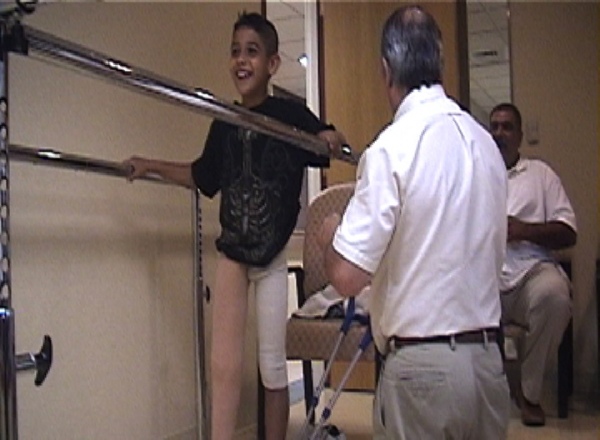
Hamzah lost his right leg in 2008 when a US missile exploded just outside his home, killing several relatives and neighbors. The local group Healing Children of Conflict (HCC) raised funds to bring Hamzah and his father here so that he could get the medical treatment necessary, treatment that is not available in Iraq.
The Press article on Hamzah came out of a send-off event last night where volunteers and supporters of HCC came together to say goodbye to Hamzah and his father Imad who returned to Iraq today.
Just a few headlines away from the story about Hamzah was an article about an event hosted the Economics Club of Grand Rapids, which featured both Colin Powell and Madeline Albright. The irony, to anyone who has even the slightest sense of history, was that some of the very people who caused so much devastation and suffering in Iraq were in Grand Rapids at the same time as Hamzah and his father.
Lets talk about Colin Powell first. Powell was part of Ronald Reagan’s national security team in the 1980s at a time that the US was funding Iraq in its war against Iran. This policy of supporting Saddam Hussein was not so much because the US wanted to defend Iraq, rather the policy was designed to weaken Iran. In addition, having Iraq expend so much of their own financial and human resources during those 8 years of war also left that country less stable.
Then in 1990, the US claimed that Iraq was violating international law by invading Kuwait in what Iraq was claiming was a dispute over national boundaries. The US not only condemned Iraq’s actions they quickly mobilized hundreds of thousands of US troops in Saudi Arabia in preparation for an invasion.
Using a fabricated story, which claimed that Iraqi soldiers were taking Kuwaiti babies out of their incubators, the Bush administration was able to convince Congress to support a 1991 US attack on Iraq.
For six weeks the US bombed Iraq into submission. Colin Powell was the Chairman of the Joint Chiefs of Staff during the 1991 war/occupation of Iraq. The US bombing campaign in Iraq was one of the most devastating in history and declassified documents showed that much of Iraq’s social infrastructure was targeted. Once the bombing campaign was over the US, through the United Nations, imposed the most severe sanctions campaign ever seen in history.
During the more than a decade of sanctions Iraq could not import thousands of items, many of them medical, which contributed to the deaths of hundreds of thousands of Iraqi children. UNICEF reported in 1999 that half a million Iraqi children had died because of the US/UN sanctions. The sanctions were so devastating on Iraq that former United Nations envoy Dennis Halliday referred to the sanctions as “genocidal.”
This fact was not hidden at the time and even US Secretary of State Madeline Albright at the time acknowledged what had happened to Iraqi children as a result of the sanctions. Albright was the guest of a 60 minutes show where she was asked if the death of half-a million Iraqi children was worth it. Her response was, “I think this is a very hard choice, but the price–we think the price is worth it.”
In 2002, the Bush administration began to fabricate the claim that Iraq possessed weapons of mass destruction (WMD). Colin Powell went to the United Nations in February of 2003 to present “proof” of the WMD claim, a presentation, which had tremendous influence on public opinion. Powell’s presentation has been hotly contested as a fabrication and in 2005 Powell himself even admitted that the information provided to him was not accurate.

The 2003 US bombing campaign and the ongoing US occupation of Iraq have caused irreparable harm to Iraq and some estimates put civilian deaths near 1.5 million. Hundreds of thousands of other Iraqi civilians have been wounded and more than a million have become refugees.
To put this into perspective, Iraq has been suffering from war & sanctions since 1980. Their public infrastructure has been devastated to the degree that basic services are not being met. The irony of the MLive coverage today is that there is no acknowledgement of the fact that the Iraqi boy who came to Grand Rapids to get a prosthetic leg could not get that treatment in Iraq because of the violent US policy over the past 30 years and that two of the architects of this policy (Powell & Albright) were in Grand Rapids at the same time.
Campaign transparency hit new lows in Michigan in 2010
(This article is re-posted from Michigan Campaign Finance Network.)
Decade of lost accountability saw $70 million off the books
LANSING – Nearly $23 million in unreported television advertising in 2010 statewide election campaigns pushed the state total of undisclosed candidate-focused “issue” advertising to almost $70 million since 2000.

Those data were compiled by the Michigan Campaign Finance Network in a new report released today titled, $70 Million Hidden in Plain View – Michigan’s Spectacular Failure of Campaign Finance Disclosure, 2000 – 2010.
Three candidates won television-driven statewide elections in 2010 without buying broadcast advertising of their own. They are Secretary of State Ruth Johnson, Supreme Court Justice Mary Beth Kelly and Democratic gubernatorial nominee Virg Bernero. All three were totally dependent on their political party for their advertising campaign, and the parties reported nothing about the Johnson campaign or the Bernero primary campaign. The Michigan Republican Party reported $650,000 of its $3.4 million television campaign supporting now-Justice Kelly and her fellow Republican nominee, now-Chief Justice Robert P. Young, Jr.
The Michigan Department of State does not require advertisers to report their spending or the sources that enable it unless the advertisements explicitly suggest voting. Despite the fact that neither the words nor the concept of “express advocacy” are found in the Michigan Campaign Finance Act, the interpretation that says only express advocacy is a campaign expenditure allows campaign advertisers to report nothing and the Department of State to turn its blind eye.
“The United States Supreme Court recognized that there is a functional equivalent of express advocacy in its 2007 decision in Federal Election Commission v. Wisconsin Right to Life,” said Rich Robinson of the Michigan Campaign Finance Network. “The Department of State’s interpretation remains firmly rooted in the jurisprudence of the last century, to the extreme delight of the interest groups and individuals who want to buy election outcomes without leaving fingerprints.”
Among the major 2010 statewide campaigns, only the Republican gubernatorial primary had a disclosure rate above 55 percent. Ninety-two percent of the Republican primary spending was reported.
“When Congressman Pete Hoekstra was being knee-capped by Americans for Job Security – whoever they were, I’ll bet he never dreamed he was in the midst of the best-disclosed state campaign of 2010,” Robinson said.
The gubernatorial general election, like the Supreme Court campaign, was a case where there was more spending off the books than was disclosed. The Michigan Democratic Party spent $4.3 million on ads supporting Bernero while the Republican Governors Association spent $3.6 million supporting now-Gov. Rick Snyder. Unreported spending in the gubernatorial general election overshadowed that which was reported, $7.9 million to $6.9 million. The RGA’s ads supporting Snyder included B-roll of Snyder recycled from the candidate’s own primary ads. California-based Target Enterprises was Snyder’s ad agency for the primary and the RGA’s agency for the general.
“The gubernatorial general election was not a different kind of politics,” Robinson noted. “It was the same old same old: Secret spenders, no accountability.”
The Republican Governors Association pressured several television stations around the state to withhold records of its ads from their public files. MCFN estimated those stations’ sales based on a decade’s worth of market-share data.
The Michigan Campaign Finance Network supports full disclosure of all campaign spending and the contributions behind it. Polling consistently shows that voters do, too.
“Disclosure helps voters to evaluate the messages they receive in the course of a campaign, and disclosure is critical for controlling the corruption of quid pro quo politics,” said Robinson.
“Disclosure is particularly critical in Supreme Court campaigns, so all parties can be sure that their due process rights to an impartial court hearing have not been usurped by some unreported campaign expenditure by an unidentified participant in their case. With over half the money flowing off the books in our Supreme Court campaigns, the exposure to that sort of problem is enormous.”
The 2010 case of Citizens United v Federal Election Commission included an 8-1 vote that thoroughgoing disclosure is constitutionally permissible, whether the requirement is applied to express advocacy, the functional equivalent of express advocacy or authentic issue advocacy.
Authentic issue advocacy, which involves an effort to evoke grassroots lobbying of an official who can affect a public policy, is an obvious fiction in Supreme Court campaigns. Judges are not lobbyable officials under Michigan law.
“Our campaign finance disclosure system is highly dysfunctional,” Robinson said. “Citizens should demand that elected officials fix it.”
Note: Denise Langford Morris, a 2010 Supreme Court candidate, amended her campaign finance reports on June 6, when $70 Million Hidden in Plain View was at the printer. Morris now reports having raised $250,000 more than she had previously reported. While this is a substantial change in Morris’s campaign profile, it makes a limited difference in the profile of the overall 2010 Supreme Court campaign. The revised Dashboard of Campaign Finance Accountability will show 44.7% disclosure for the overall campaign, rather than 43.5%. The changes reported by Morris will be reflected in revisions to the pdf version of the report in the coming days.
 Grand Rapids Institute for Information Democracy