The Grand Rapids Chapter of the IWW and the Bloom Collective will host a joint screening this Thursday for a new documentary film COINTELPRO 101.
 Here is an excellent review of the film from Black Agenda Report:
COINTELPRO 101, the latest film release from The Freedom Archives, is nothing like the all-too-common soft, liberal documentary, which tells of worse and distant horrors so as to lessen the pain or awareness of those still occurring. It is not a film that imposes a happy ending by suggesting that its subject is somehow past. It is a film that makes plain the fact that all of your problems of today, from war, to incarceration, to banking crises, joblessness and environmental catastrophe, still exist because movements to do away with them suffered and continue to suffer the greatest levels of repression from the most powerful state apparatus in world history. And worse still, as Black Panther Party veteran Kathleen Cleaver states unequivocally, unlike the official Counter Intelligence Program of previous decades, today’s version is perfectly legal.
COINTELPRO 101 is just that. It is an introduction to the often omitted history of the FBI’s illegal wars of terror waged against the full spectrum of radical Left movements in this country. The Counter Intelligence Program, which emerged in the post-WWII era of international struggles for human rights and national liberation, simply focused internally to the United States all that had been carried out against populations abroad. It turned so-called U.S. citizens in the 20th century into insurgent rebels to be dealt with as any foreign army or movement. Assassination, imprisonment, surveillance and encouraged internal strife were employed to forcibly dissolve these movements. But, as this film so skillfully demonstrates, this all was merely an extension of a continuing state project of enslavement, genocide, theft of land, culture and humanity that pre-dates even the official declaration of U.S. nationhood.
The film’s brilliance is not simply its nicely styled aesthetic elements. They are there of course. Strong interviews, rarely seen clips, high quality audio and video production across the board with equally strong narration from Liz Derias. But it is the film’s ability to force new confrontation with the political reality of today, as much as with the past, that truly demonstrates its value. The simple point made by Geronimo Pratt is also its strongest; that COINTELPRO made official the illegality of politics, the “criminalization of positions” represented by its targets. COINTELPRO was the political and legal descendant of its ancestors, slavery and genocide, and is now itself an ancestor to the still-implemented policies of, for instance, the Patriot Act. This central theme of the film is its most important because it forces us to put in context the current and horrific state of peace, freedom and labor movements.
Thursday, June 16
7pm
IATSE Labor Hall
931 Bridge St. NW
All are welcome to this screening. A discussion will follow the 56-minute film.
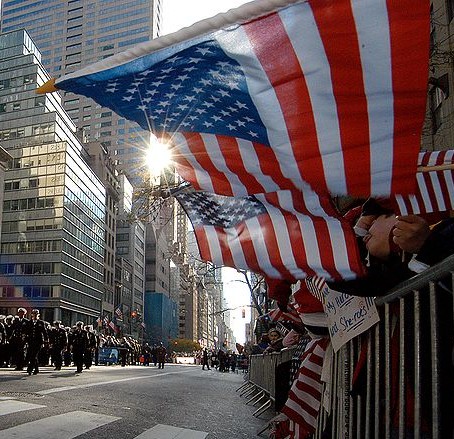
June 14 is Flag Day. This strange little non-holiday marks the day in 1777 when the stars-and-stripes version of the flag was declared our country’s official symbol. Prior to that, the Revolutionary army used a number of different flags, such as the “Don’t Tread on Me” snake banner, the “Liberty or Death” flag, and different star/field configurations.
Flag Day is observed in some U.S. cities, from Quincy, Massachusetts to New York City. It is a state holiday in Pennsylvania. At the beginning of June, most states have a mandated lesson sequence on patriotic symbols that requires students to color flag pages, listen to flag-related stories, and memorize poems, such as this one written for the first Flag Day. It begins: “Your Flag and my Flag!/And, oh, how much it holds/Your land and my land/Secure within its folds!”
The intent of Flag Day is to “carry out a program of a patriotic order, praying for the success of the Federal arms, and the preservation of the Union.”
Our nationalist sentiment on Flag Day apparently used to run on higher octane than it does in most places today. On one of the most famous Flag Days, in 1908, Theodore Roosevelt used a stick to beat a man he saw in the street in Philadelphia because he thought the pedestrian had blown his nose on an American flag. In the midst of the fight, Roosevelt realized his victim’s hankerchief was a blue bandanna with white stars on it. Roosevelt immediately apologized, but then hit the man again for causing the President to become so “riled up with national pride.”

There are people on this day who feel something other than “national pride,” however, and don’t want to pray for the success of Federal arms or the patriotic order. June 14 is also known as Flag Burning Day. Across the country, U.S. citizens are choosing to burn the American flag in protest on this day—their right under the First Amendment of the Constitution.
Or at least, for now. At a number of points in our recent history, usually right before an election, there is a grandstanding move to pass an amendment to the Constintution prohibiting the burning of the U.S. flag. One of the closest near-misses was in 2003-2004. At that time, the Washington Post published a commentary about the emergence of flag burning on Flag Day.
The commentary was anti-burning, calling it “a particularly unpleasant form of expression.” But it advised not to tamper with First Amendment rights, and it also noted that hyper-conservative Supreme Court Justice Antonin Scalia had actually voted down a statutory ban on flag burning. Scalia found himself unable to defy the cornerstone principle of the First Amendment, by which he found himself “handcuffed.”
Reasons for burning an American flag? For the same reason that hundreds of thousands of people around the world burn it: to protest the imperialist policies behind the symbol. As historian Howard Zinn said, “There is no flag large enough to cover the shame of killing innocent people.”
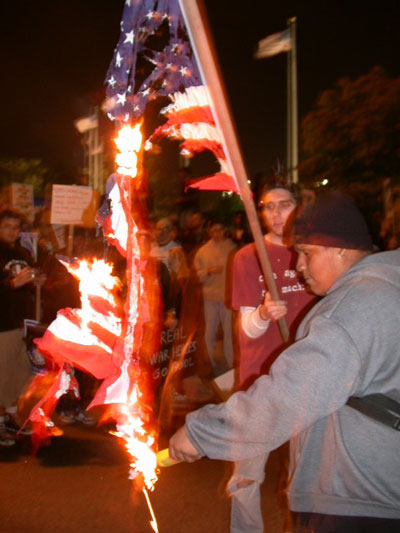
During the 2003 amendment attempt, when the House passed the change to the Constitution (it was later struck down in the Senate), Friction Magazine presented an article by Rev. Nathan Callahan which outlined specifics about the emergence of Flag Burning Day and the reasons for it. Callahan wrote:
Flag Burning Day. It began as a day of national decontamination…A day to end warped notions of patriotism, gaudy jingoist sound-bites, and simple-minded shoulder graphics. A day to end puritanical smugness and preemptive war.
We — the people — refused to allow our rights to be taken away by color-coded fears. We refused to condemn others simply for their beliefs. We defended freedom, not its emblem on a stick…
Let us again strike a match and burn a flag in tribute to those who lit the fire of freedom. We are not only survivors of a dark era in our nation’s history, but inheritors of new emancipation — an emancipation of mind and spirit….When spirit becomes symbol, heart becomes dogma. Today, we are free. Long may it burn. Long may it wave.
So today, some people will be putting on parades and waving American flags to honor this national symbol. Other people will be getting out the lighter fluid, striking matches, and burning a flag to protest this nation’s policies. Both observences are uniquely—and equally—American.

For the past several months GRIID has been working with the LGBT Resource Center at GVSU on a People’s History project focusing the LGBTQ community in the greater Grand Rapids area.
So far we have conducted dozens of interviews and plan on doing many more over the next 6 weeks. GRIID we be at the annual West Michigan Pride Festival on Saturday, June 18 and the Network’s Neighborhood Bash on July 16. However, most of the interviews are being conducted in a film studio and we are inviting people to contact us (jsmith@griid.org) to set up an interview time.
Listening to the stories from the interviews we have already done has been amazing and inspiring. As was expected with any People’s History project we are discovering that there is a rich history of organizing and struggle in the LGBTQ community. We have heard about the Grand Rapids response to the 1980s AIDS crisis, the creation of organizations and the campaign to pass an anti-discrimination ordinance in the mid – 90s.

We are also hearing painful stories of discrimination, bias and violence against the LGBTQ community. Many of those we have interviewed so far state that the ultra-conservative Christian element creates a climate of fear, ignorance and hatred. There are numerous individuals, families and institutions that are overtly homophobic and can be seen in their words and funding of anti-gay policies.
GRIID has also been doing research in preparation for this project. One area of research is to look at other People’s History projects with an LGBTQ focus. We read Vicki Eaklor’s Queer America: A People’s GLBT History of the United States and found it very useful for framing some of the questions used during the interviews. We are also doing a project that looks at the Grand Rapids Press coverage of the LGBTQ community.
In addition, GRIID is looking for any archival material that people might have – old articles, photos, video, newsletters – anything that would help to tell the history of the LGBTQ community in Grand Rapids.
The goal is to have a documentary completed this fall and to do numerous public screenings. In addition to the screenings we will be posting online all the interviews in their entirety and all archival material we have been given permission to use.
This has been an amazing project so far and we anticipate that the outcome will be equally amazing. Again, if anyone wants to participate in this project please contacts us to set up interview times, to speak with us, to provide archival material or to volunteer. We will announce the completion of the project this fall and invite the public to the screenings.
(This article is re-posted from NarcoNews.)
A Pentagon document has come to light that confirms the U.S. has put special operations troops on the ground in Mexico as the drug war there continues to escalate, notching some 40,000 murders since late 2006.
The document is a Department of Defense briefing presented in mid-May 2009 in Washington, D.C., to a group of business and political leaders from northwest Florida. The “Unclassified/For Official Use Only” briefing reveals the 18 Latin American nations where 7th Special Forces Group soldiers [Airborne Green Berets] were deployed as of fiscal year 2009, which ended Sept. 30, 2009.
Among those nations, according to the briefing document, was Mexico.
The document also indicates a 7th Special Forces unit was deployed in Mexico in 1996 as well, as part of a “counter-narcotics” mission.
The revelations in the briefing material are important because, to date, neither the Pentagon nor the State Department has confirmed that U.S. special forces have been deployed inside Mexico — a politically volatile subject in that Latin American nation given the rising drug-war death toll there and the “Yankee” history of U.S. Gunboat Diplomacy in the region.
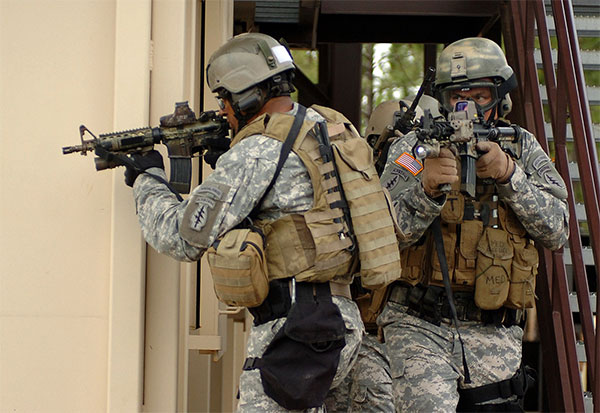 From the vantage point of U.S. policymakers, the deployment of covert Pentagon special forces inside Mexico also is fraught with political peril, given the discovery of such operations by the targets, narco-traffickers in this case, could result in blowback against U.S. agents and interests in Mexico. It also could strain relations with Mexican President Felipe Calderon, who is already feeling increasingly isolated due to his disastrous drug-war policy.
The 7th Special Forces Group (SFG) has played a key role since the 1980s in the bellicose history of Latin America, according to the briefing document and other sources. The 7th SFG has participated in numerous “counter-insurgency” missions in Central America as well as in the invasion of Panama in late 1989. It also has been quite active over the years in counter-narcotics missions in the South America Andean Ridge Countries of Colombia, Venezuela, Peru Ecuador and Bolivia; and more recently in hostage rescue operations in Colombia.
The latter operation, according information in the briefing document, involved the participation of the 7th SFG in the July 2008 rescue of three DoD contractors and noted Colombian activist and politician Ingrid Betancourt, among others, who were being held as hostages by the leftist FARC guerrillas.
Narco News reported on that rescue at the time, indicating then, against the tide of mainstream reporting, that a U.S. special-forces unit was deeply involved in the rescue — a report now seemingly confirmed by this briefing document.
Narco News also reported in detail last year about the activities of U.S. special forces operating covertly inside Mexico.
From that June 12, 2010, story:
The U.S. unit [operating inside Mexico], dubbed Task Force 7, since early 2009, according to the CIA operative, has helped to uncover a warehouse in Juarez packed with U.S. munitions and under the control of drug traffickers; provide critical intelligence that led to the raid of a Juarez sweatshop that was manufacturing phony Mexican military uniforms; worked with the Mexican military in uncovering a mass grave near Palomas, Mexico, just south of Columbus, New Mexico; and, behind the scenes, cooperated with the Mexican Navy in hunting down a major narco-trafficker, Arturo Beltran Leyva — who was killed by Mexican Navy special forces last December [2009] during a raid on a luxury apartment complex in Cuernavaca, Mexico.
That information was provided to Narco News at the time, according to the source, Tosh Plumlee, a former CIA contract pilot who still has deep connections in the covert world, because the members of Task Force 7 believed they had been compromised by leaks.
In fact, Plumlee had relayed some information to Narco News about the task force and its security concerns as early as April of 2009 on the condition we not publish that information then for fear it might jeopardize the lives of the unit’s members.
By June of 2010, however, when Narco News published its story, Plumlee told Narco News the “bad guys” already knew the task-force members were in-country and, as a result, they had become targets. Coming forward in the media, Plumlee says, provided the task force with some cover that made it more difficult for bureaucrats in Washington, D.C., to avoid addressing the security breach — a tendency on the part of some who might wish to avoid the complications that come with accountability.
The stakes of the covert game are quite high, for all those on the ground who are touched by it, including innocent citizens – and are made even steeper when politics and special interests (including careerism) start dictating the shots, literally.
The whistleblower organization WikiLeaks recently released a State Department cable revealing that the Mexican Navy unit that conducted the operation against narco-capo Beltran Leyva “received extensive U.S. training” — which serves as further evidence supporting Narco News’ original reporting on the involvement of U.S. special forces in that operation.
The same cable, however, also points out that the killing of Beltran Leyva will, in the short-term (a period not defined precisely) result in a “spike” in narco-related violence “as inter- and intra-cartel battles are intensified by the sudden leadership gap in one of the country’s most powerful cartels.”
That ramped up violence was still playing out as recently as this past March, when the son of Mexican poet and journalist Javier Sicilia, along with six of his compadres, none of them involved in narco-trafficking, were brutally tortured and murdered near Cuernavaca (just outside Mexico City) – the same region where Beltran Leyva was killed. The senseless murder of those innocents has sparked a mass movement in Mexico, one that is currently marching toward Juarez, the most violent city on earth, where a collective, non-violent action in opposition to the drug war is planned for June 10.
The confirmation that U.S. special forces are now in the mix of the drug-war violence, which Mexican citizens by the millions now see as senseless and resulting in far too much collateral damage (the death and disappearances of thousands of innocent victims), is certain to enhance the public outrage in that land — given the quite visible U.S. role as the major consumer of the drugs and the major exporter of weapons and policies fueling the drug war.
Given this madness, and the inherent duplicity, treachery and buffoonery marking the drug war, it should come as no surprise to anyone, even if their sympathies are not with the U.S. special-forces in Mexico whose lives are jeopardized due to leaks and other security lapses, that the source of those transgressions (intentional or not) is, in part, traceable to the U.S. side of the border.
The briefing document revealing the extent of the 7th SFG operations in Latin America in fiscal 2009 – in 18 countries involving 21 missions and 165 soldiers, including Mexico — was made public by a Florida business group whose membership includes a number of defense contractors. That group, the Economic Development Council for Okaloosa County (EDC), via its Defense Support Initiative, made the May 14, 2009, briefing available on its Web site for all to see and download — including WikiLeaks and some media in Latin America who made it available in Spanish to their audiences (almost assuring that the narco-trafficking organizations being targeted by covert U.S. special forces also were tipped off to their presence in Mexico).
This occurred despite the fact that the briefing document was marked “For Official Use Only,” which, according to Ken McGraw, spokesman for the Pentagon’s U.S. Special Operations Command, means the document was “not to be released publicly.” McGraw adds that he does not “know the specifics” of the 7th SFG operation referred to in the briefing document, explaining that “by the end of the year, we [USSOCOM] will have operations in 120 countries.”
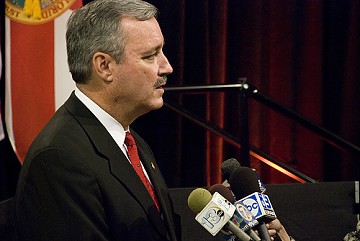
That briefing was prepared by the 7th SFG at the request of U.S. Rep. Jeff Miller, a far-right Republican with Tea Party leanings whose Florida district is about to become the new home for the 7th SFG (which is relocating from Ft. Bragg in North Carolina to Elgin Air Force Base in Florida’s panhandle).
Dan McFaul, chief of staff for Congressman Miller, stressed, when contacted by Narco News, that his boss did not attend the May 14, 2009, 7th SFG briefing.
“That was a non-classified briefing,” McFaul said. “The Congressman is on the [House] Intelligence Committee … and he is briefed at the classified level. … We request briefs on different issues affecting District 1 [Miller’s Congressional area] for chambers or economic development groups [and others], and so this [the 7th SFG briefing] could have been for something like that.”
Both the briefing document and a letter drafted by the EDC’s Defense Support Initiative chairman appear to indicate that was the case. McFaul said he had not received any other media inquiries about the restricted briefing document being made public prior to being contacted by Narco News.
Calls to the Okaloosa County EDC were not returned by press time.
However, someone as of Saturday, June 4, had removed the link on the EDC’s Web site that directs readers to the site where the briefing document can be downloaded. [See screen shot here of material removed]. The EDC Web-site download link for the document is still active, though, and can be accessed here — as well here should that EDC download link be deactivated in the future, with a screen shot here of the EDC download link as it exists as of the publish date of this story.
It is important to stress that there is no evidence that the Okaloosa County EDC, Congressman Miller or members of the 7th SFG intentionally included or made public information that might compromise the security of the U.S. special-forces operations in Mexico.
But it seems clear that somewhere along the line, some bad calls were made — beginning with the decision to include country and date-specific specific information about supposedly covert troop deployments in a non-classified briefing and to then put those briefing materials online, even though the document is marked “For Official Use Only.”
In fact, Narco News contacted the press office for the U.S. Army Special Operations Command, which oversees the 7th SFG, seeking comment on how the sensitive mission information ended up in a non-classified briefing, but was told no one was available to comment until next week, after Narco News’ deadline for this story.
Narco News also contacted USNORTHCOM, which has command control over DoD missions involving Mexico. Lt. Commander William Lewis, USNORTHCOM spokesman, said he would look into the matter and get back to Narco News after “finding out what can and cannot be released” about the matter.

June 8, 1809, marked the end of the life of the most revolutionary and radical of the US’s founding fathers: Thomas Paine. Today, there is a movement among the Tea Party to recast the founding fathers as a group of devout, conservative Christians who wanted no separation of church and state; and insists that the United States is a country founded on “Biblical principles.” Thomas Paine’s life and work shatters that fairy tale completely.
Paine was an Englishman whose life as a rebel began in 1772, when he organized an early attempt at unionization by the excise officers of Lewes. They made an attempt to gain better working conditions and more pay, and Paine wrote his first pamphlet about their struggle against the government He was fired from his own excise office job as a result, and had to sell his possessions to pay debts. Benjamin Franklin was in London at the time, and suggested that Paine come to America. Paine arrived in Philadelphia in 1774, just as the heat of public anger was reaching a fever pitch against British rule.
When Paine released his treatise Common Sense in January of 1776, John Adams wrote, “Without the pen of the author of Common Sense, the sword of Washington would have been raised in vain.”
No new publication in America has ever, per capita, outsold Common Sense. Six months after its release, one out of every five people in the colonies owned a copy. People read the book in their homes and at family gatherings. It was read out loud in pubs, in village squares, and at town meetings.
 Common Sense attacked the institutions of monarchy and aristocracy. It declared that Britain’s imperialism held America enslaved. It stated that the monarchy had no “regard” for its subjects in the American colonies. Despite what King George III declared, the king and Great Britain simply used Americans for profit. Paine added dryly, “What at first was plunder assumed the softer name of ‘revenue.’”
The work pointed out that America had, and would again, be dragged into European wars in which it had no stake or interest. And it argued that America, a wealthy colony with shipbuilding capability and trained militias, had enough fighting power to gain its independence.
But what many people today don’t realize is that Common Sense did more. It actually outlined the exact process in which a new republic could be created. It described a “charter” for the United States; suggested a Continental Charter Conference to draft the document, with representatives from each colony present to provide the viewpoints of the entire population. It explained how a Congress could be assembled; it described the division of voting districts; and outlined the concept of an electoral college. This visionary set of instructions was followed almost to the letter after the colonists drove the British out of America.
Benjamin Franklin wrote to Paine after the Constitution was confirmed, “You…are more responsible than any other living person on this continent for the creation of what are called the United States of America.”

After fighting began in the American Revolution, Paine released his series of “Crisis” pamphlets to encourage soldiers and citizens to stay the course even though the beginning of the conflict was disastrous. The most famous of these pamphlets contained the words, “These are the times that try men’s souls…Tyranny, like hell, is not easily conquered; yet we have this consolation with us, that the harder the conflict, the more glorious the triumph.”
Paine also aided the revolutionaries in other ways. He traveled to France in March of 1781 to raise funds for the revolutionary cause. He is credited with securing a loan of 10 million silver livres, and also convincing the French to give 6 million of it as a gift to the American army.
At the end of America’s revolutionary period, Paine returned to Europe. He went first to London, but then spent time during the French Revolution in Paris. There he wrote another major work, The Rights of Man, in defense of revolution and against the concept of the monarchy. Because of this work, he was tried in absentia in England and found guilty of seditious libel. Paine wrote:
“When I contemplate the natural dignity of man; when I feel (for Nature has not been kind enough to me to blunt my feelings) for the honor and happiness of its character, I become irritated at the attempt to govern mankind by force and fraud, as if they were all knaves and fools, and can scarcely avoid disgust at those who are thus imposed upon.”
Despite having defended the French Revolution to the world, Paine was considered dangerous by revolutionaries like Robespierre whose agenda included an eventual takeover of government control. Paine was imprisoned. While he was in prison in Paris, he wrote The Age of Reason. It presented a rejection of Christianity, outlining the corruption in the various Christian churches and damning all of them for attempting to grab political power. While it does not reject the idea of a creator, The Age of Reason presented the idea of “natural religion” which is based on an understanding from personal experience and one’s own sense of reason. This book greatly influenced Americans like Thomas Jefferson, Elihu Palmer, and Mark Twain.

Paine was released from prison in 1794 through the efforts of James Monroe, who was the American Minister to France at the time. In 1795, Paine wrote his most radical work (and ironically, his least well known): Agrarian Justice. This treatise presents Paine’s view of what is meant by a “just society.” He advocated for ownership of all farmland by the entire population of a nation, since land was “the common property of the human race.” He pinpointed what he considered true evil in the world: the ownership of the majority of assets by the elite. “…the landed monopoly that began with [farming] has produced the greatest evil. It has dispossessed more than half the inhabitants of every nation of their natural inheritance.”
If the land was not returned to the general population, Paine went on, then every laborer should be paid an indemnity in compensation for “the loss of his or her natural inheritance by the introduction of the system of landed property.” He advised creating programs of public assistance to help the poor.
In 1803, Paine returned to America, but he found less than a warm welcome. In the intervening years, the Second Great Awakening had created an ardent group of religious fundamentalists who vilified Paine for his anti-church writings. Many Federalists objected to his support of the French Revolution and hated the fact that he had become a close friend of their political rival, President Thomas Jefferson. Even John Adams, who had praised Common Sense on its publication, now said it was a “poor, ignorant, malicious, short-sighted crapulous mass.”
Another factor in Paine’s sudden unpopularity was his publication of Letter to Washington in 1797. This work criticized ignorant military decisions that Washington made which Paine felt had prolonged the war. It described Washington as growing increasingly egotistical and autocratic, alienating European allies. It castigated the first President for not being a true radical and revolutionary, and taking credit away from those who had a genuine belief in radical politics. Washington had just died in 1799 and had reached the status of a demigod in the nation, so this incensed the public.
When Paine died in Greenwich Village in 1809, the New York Citizen wrote an editorial that said, “He had lived long, did some good, and much harm.” Six people went to his funeral.
Today, schoolchildren are taught little about Thomas Paine, although his work triggered the popular support of revolution in this country, and his concepts shaped the initial form of our government. His revolutionary views do not fit neatly into the conservative idea of “patriotism.” And as our teaching materials are revised to present an ever-more-conservative viewpoint, Paine has been relegated to the attic of the 18th Century.
Were he to return to our country today, Paine might well find the same conditions against which he called for direct action in the 1770s. He had already seen in the autocracy of George Washington the shadow of how the founding principles of America could be twisted by those in power. Perhaps he might remind us of his description of life whenever the wealthy and their heirs play profit games with nations and the lives of working class:
Freedom had been hunted round the globe; reason was considered as rebellion; and the slavery of fear had made men afraid to think. But such is the irresistible nature of truth, that all it asks, and all it wants, is the liberty of appearing.
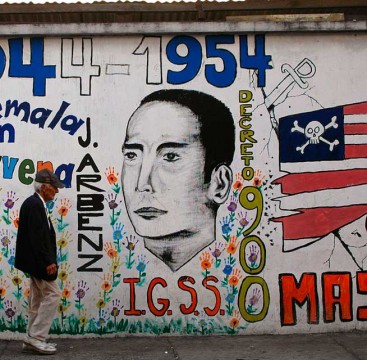
Fifty-seven years ago today the CIA was successful in overthrowing the democratically elected government of Guatemala in a campaign known as “Operation PBSUCCESS.”
This CIA campaign was the first of its kind in Latin America and took place over several years in an attempt to undermine the democratic efforts of the Guatemalan government. The Central American government was guilty of nothing more than trying to utilize the resources of its own country to improve the lives of its citizens.
This self-improvement plan involved a land reform effort where land that was owned by the United Fruit Company (land not being used) was appropriated so that local communities could be self-sufficient. The United Fruit Company was closely connected to the Eisenhower administration with both CIA director Allen Dulles and Secretary of State John Foster Dulles both being former lawyers for United Fruit.
The CIA coup involved many tactics, such as hiring the father of the PR industry Edward Bernays to take US reporters on “fact-finding” trips to Guatemala, collaborating with the arch-conservative Catholic Church, plus arming and training Guatemalan soldiers to defeat the democratic government of Jacobo Arbenz.

One of the legacies of the 1954 CIA coup was decades of political repression that resulted in hundreds of thousands of Guatemalans being murdered, tortured, disappeared and targeted for political assassination. The worst of this repression was in the 1980s, in what Amnesty International called a “genocidal campaign” against the Mayan population in Guatemala.
This brutal repression, which continues to this day (in a lesser form), has also resulted millions of Guatemalans being displaced. Many were displaced within the country, others fled to Mexico and many made their way to the US.
Before the 1980 there were very few Guatemalans living in West Michigan, but as a result of the political repression and economic policies of the last 20 years there are now thousands. The flight of Guatemalans did not end with the end of the war in 1996 and has only been exacerbated with the implementation of the Central America Free Trade Agreement (CAFTA) in 2005.
According to the Guatemalan Human Rights Commission there are an estimated 1.5 million Guatemalans living in the US who collectively send back to Guatemalan about $4 billion annually in remittances.
So what does this legacy actually mean for those of us who live in the Grand Rapids area? First, it means that we have to recognize that there are thousands of Guatemalans here and that many of them have suffered torture, political repression and a life of poverty. Before we are quick to judge or look critically at their behavior here in Grand Rapids we need to realize that they are not here because they thought it would be fun or because they wanted a part of the American dream……they are here because of a 60 year legacy of US support for political repression and economic exploitation.
Second, it means that we have to consider this historical context in relating to the Guatemalans who are here. If you work in the medical field you cannot lump Guatemalans into the “Hispanic” category and assume they speak Spanish. Most of the Guatemalans who are in this community are Mayan and speak one of many Mayan languages such as Qanjobal, Mam or Quiche.
This reality has to be factored in to those who educate Guatemalan children, those who work in social services and the non-profit sector. There are significant linguistic and cultural factors that must be considered.
Third, the Guatemalan Diaspora community is all around us if we would just pay attention. Guatemalans own small shops and restaurants, they have a few of their own religious congregations and several soccer teams. I have attended some of the soccer games and at times it felt like I was back in Guatemala, since the men and women were speaking their native language, they sat on brightly colored, hand-woven blankets and eating elote locos (crazy corn) – a traditional food, which is corn on the cob with lots of toppings.
Once we recognize that they are here we also need to be extremely sensitive to the fact that most Guatemalans live in fear of immigration and other law enforcement officers. This is not to say that most of them are undocumented. In fact, it is difficult to get a handle on the number of those who are here with legal documentation and those that are not, but regardless of their legal status most Guatemalans I know have a well-founded fear of harassment and deportation. This too is a legacy of the CIA coup, in that Guatemalans living in West Michigan are in a position of being a second-class citizen by virtue of their immigrant status, which is a direct result of the economic and military policies the US has imposed on Guatemala for the past 60 years.
The last point worth mentioning is that considering that there are these larger global dynamics that make up the social fabric of the Grand Rapids area those who are gravitate to the recent love affair of localism need to reconsider the limitations of such a philosophy. We do not live in a vacuum and what we do here impacts what happens around the world, even if we are not included in the decision-making process about policies that result in forced relocation of populations from other countries.
The legacy of the 1954 CIA coup in Guatemala is not just a walk down memory lane, it is an acknowledgement of the long term consequences of US foreign policy and its impact at the local level. Grand Rapids is forever impacted by that CIA action.
New Media We Recommend
Below is a list of new materials that we have read/watched in recent weeks. The comments are not a “review” of the material, instead sort of an endorsement of ideas and investigations that can provide solid analysis and even inspiration in the struggle for change. All these items are available at The Bloom Collective, so check them out and stimulate your mind.

Green is the New Red: An Insider’s Account of a Social Movement Under Siege, by Will Potter – What movement in the US is the most targeted for what the US government labels “domestic terrorism?” Answer: environmental and animal rights activists. Now, we don’t mean that all environmentalists and animal rights activists are on an FBI list, but the more radical members of those two movements are the primary targets of US government repression. Green is the New Red is an amazing read that should be a wake up call for anyone concerned about government repression. Potter himself targeted by the FBI provides us with important details and cogent analysis of how the US government has been targeting people who are involved with either the Earth Liberation Front or the Animal Liberation Front. The author also raises important questions about how the US government defines terrorism and how it applies such an interpretation as a mechanism for state repression.
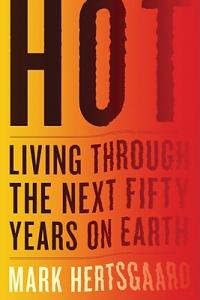
Hot: Living Through the Next Fifty Years on Earth, by Mark Hertsgaard – Long-time investigative reporter Mark Hertsgaard is now a father and this reality has forced him to come to terms with the question: what will the world be like in the future for my daughter? The author is specifically addressing the issue of global warming and attempting to come to terms with what kind of a world he and the current generation will do to prevent catastrophic consequences. Hertsgaard weaves stories of his daughter, communities confronted with global warming and scientific data to present both an urgent and well thought out analysis about the seriousness of global warming. You don’t need to be a parent to feel a sense of urgency, but Hertsgaard does a fine job of translating his parental anxieties into meaningful discourse on the most pressing issue facing humanity.

Anti-Capitalism, by Ezequiel Adamovsky – This book is a cross between a zine and a comic book. However, don’t think it is short on good analysis. Anti-Capitalism provides readers with important foundations for both understanding what capitalism is and the various historical responses to the dominant economic system that cripples the world. What makes the book such a delight to read are the accompanying illustrations provided by the Argentine art collective known as Ilustradores Unidos. This book first appeared in Spanish and was recently translated into English. Anti-Capitalism is an important resource and would be a useful tool for popular education groups wanting to critique capitalism and dismantle it.
Out of Place: Memories of Edward Said/Edward Said: The Last Interview (DVD) – This two-DVD collection provides amazing insight into the life and work of the great Palestinian intellectual Edward Said. Out of Place is sort of a memoire of the life of Edward Said. The first documentary looks at the life and work of this amazing writer, with rare footage of Said that also includes comments from close friends and colleagues. The second DVD is the last interview conducted with Said before leukemia took his life in 2003. It was filmed over three days and includes his comments on his illness, his work and the passions of his life, particularly the fate of Palestine. Both films are an incredible tribute to one of the best intellectuals of the last half-century.
(This article is re-posted from Project Censored and is part of their Top 25 of 2011 Censored Stories)
 The US military is responsible for the most egregious and widespread pollution of the planet, yet this information and accompanying documentation goes almost entirely unreported. In spite of the evidence, the environmental impact of the US military goes largely unaddressed by environmental organizations and was not the focus of any discussions or proposed restrictions at the recent UN Climate Change Conference in Copenhagen. This impact includes uninhibited use of fossil fuels, massive creation of greenhouse gases, and extensive release of radioactive and chemical contaminants into the air, water, and soil.
The extensive global operations of the US military (wars, interventions, and secret operations on over one thousand bases around the world and six thousand facilities in the United States) are not counted against US greenhouse gas limits. Sara Flounders writes, “By every measure, the Pentagon is the largest institutional user of petroleum products and energy in general. Yet the Pentagon has a blanket exemption in all international climate agreements.”
While official accounts put US military usage at 320,000 barrels of oil a day, that does not include fuel consumed by contractors, in leased or private facilities, or in the production of weapons. The US military is a major contributor of carbon dioxide, a greenhouse gas that most scientists believe is to blame for climate change. Steve Kretzmann, director of Oil Change International, reports, “The Iraq war was responsible for at least 141 million metric tons of carbon dioxide equivalent (MMTCO2e) from March 2003 through December 2007. . . . That war emits more than 60 percent that of all countries. . . . This information is not readily available . . . because military emissions abroad are exempt from national reporting requirements under US law and the UN Framework Convention on Climate Change.”
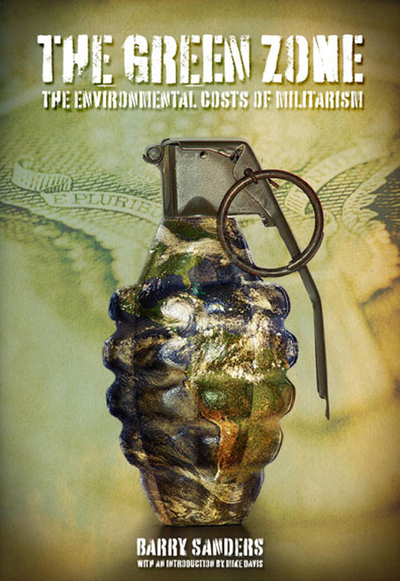
According to Barry Sanders, author of The Green Zone: The Environmental Costs of Militarism, “the greatest single assault on the environment, on all of us around the globe, comes from one agency . . . the Armed Forces of the United States.”
Throughout the long history of military preparations, actions, and wars, the US military has not been held responsible for the effects of its activities upon environments, peoples, or animals. During the Kyoto Accords negotiations in December 1997, the US demanded as a provision of signing that any and all of its military operations worldwide, including operations in participation with the UN and NATO, be exempted from measurement or reductions. After attaining this concession, the Bush administration then refused to sign the accords and the US Congress passed an explicit provision guaranteeing the US military exemption from any energy reduction or measurement.
Environmental journalist Johanna Peace reports that military activities will continue to be exempt based on an executive order signed by President Barack Obama that calls for other federal agencies to reduce their greenhouse gas emissions by 2020. Peace states, “The military accounts for a full 80 percent of the federal government’s energy demand.”
As it stands, the Department of Defense is the largest polluter in the world, producing more hazardous waste than the five largest US chemical companies combined. Depleted uranium, petroleum, oil, pesticides, defoliant agents such as Agent Orange, and lead, along with vast amounts of radiation from weaponry produced, tested, and used, are just some of the pollutants with which the US military is contaminating the environment. Flounders identifies key examples:
– Depleted uranium: Tens of thousands of pounds of microparticles of radioactive and highly toxic waste contaminate the Middle East, Central Asia, and the Balkans.
– US-made land mines and cluster bombs spread over wide areas of Africa, Asia, Latin America, and the Middle East continue to spread death and destruction even after wars have ceased.
– Thirty-five years after the Vietnam War, dioxin contamination is three hundred to four hundred times higher than “safe” levels, resulting in severe birth defects and cancers into the third generation of those affected.
– US military policies and wars in Iraq have created severe desertification of 90 percent of the land, changing Iraq from a food exporter into a country that imports 80 percent of its food.
– In the US, military bases top the Superfund list of the most polluted places, as perchlorate and trichloroethylene seep into the drinking water, aquifers, and soil.
– Nuclear weapons testing in the American Southwest and the South Pacific Islands has contaminated millions of acres of land and water with radiation, while uranium tailings defile Navajo reservations.
– Rusting barrels of chemicals and solvents and millions of rounds of ammunition are criminally abandoned by the Pentagon in bases around the world.
The United States is planning an enormous $15 billion military buildup on the Pacific island of Guam. The project would turn the thirty-mile-long island into a major hub for US military operations in the Pacific. It has been described as the largest military buildup in recent history and could bring as many as fifty thousand people to the tiny island. Chamoru civil rights attorney Julian Aguon warns that this military operation will bring irreversible social and environmental consequences to Guam. As an unincorporated territory, or colony, and of the US, the people of Guam have no right to self-determination, and no governmental means to oppose an unpopular and destructive occupation.
Between 1946 and 1958, the US dropped more than sixty nuclear weapons on the people of the Marshall Islands. The Chamoru people of Guam, being so close and downwind, still experience an alarmingly high rate of related cancer.
On Capitol Hill, the conversation has been restricted to whether the jobs expected from the military construction should go to mainland Americans, foreign workers, or Guam residents. But we rarely hear the voices and concerns of the indigenous people of Guam, who constitute over a third of the island’s population.
Meanwhile, as if the US military has not contaminated enough of the world already, a new five-year strategic plan by the US Navy outlines the militarization of the Arctic to defend national security, potential undersea riches, and other maritime interests, anticipating the frozen Arctic Ocean to be open waters by the year 2030. This plan strategizes expanding fleet operations, resource development, research, and tourism, and could possibly reshape global transportation.
While the plan discusses “strong partnerships” with other nations (Canada, Norway, Denmark, and Russia have also made substantial investments in Arctic-capable military armaments), it is quite evident that the US is serious about increasing its military presence and naval combat capabilities. The US, in addition to planned naval rearmament, is stationing thirty-six F-22 Raptor stealth fighter jets, which is 20 percent of the F-22 fleet, in Anchorage, Alaska.
Some of the action items in the US Navy Arctic Roadmap document include:
– Assessing current and required capability to execute undersea warfare, expeditionary warfare, strike warfare, strategic sealift, and regional security cooperation.
– Assessing current and predicted threats in order to determine the most dangerous and most likely threats in the Arctic region in 2010, 2015, and 2025.
– Focusing on threats to US national security, although threats to maritime safety and security may also be considered.
Behind the public façade of international Arctic cooperation, Rob Heubert, associate director at the Centre for Military and Strategic Studies at the University of Calgary, points out, “If you read the document carefully you’ll see a dual language, one where they’re saying, ‘We’ve got to start working together’ . . . and [then] they start saying, ‘We have to get new instrumentation for our combat officers.’ . . . They’re clearly understanding that the future is not nearly as nice as what all the public policy statements say.”
Beyond the concerns about human conflicts in the Arctic, the consequences of militarization on the Arctic environment are not even being considered. Given the record of environmental devastation that the US military has wrought, such a silence is unacceptable.
Rob Bliss appears to be enjoying a new revenue stream since his Grand Rapids LipDub of “American Pie” caught the attention of the media this past week.

Now you can go to CafePress.com and buy LipDub merchandising. How did I find this out? Because Rob has inserted an advertising line at the opening of the LipDub on YouTube—upping the video’s classiness quotient even more. The message asks for support of “this non-profit organization” and says you can “buy cool merchandise” at the CafePress website
On our very own American Pie promotional site, Grand Rapids fans can buy LipDub 2011 t-shirts; posters and cards featuring Rob’s storyboards for the video; and a t-shirt with a generic office chair on it that simply says, “Grand Rapids.” Or, you can buy a t-shirt with a heart that says, “I Love Grand Rapids.” There are also water bottles, steins, shot glasses, and other tasteful products for sale.
T-shirt prices go up to about $30, but even infants can wear Grand Rapids LipDub bodysuits. A framed print of the storyboard will set you back $39.99, and a pack of 20 storyboard notecards costs $23.99.
Just like the organization of the LipDub itself, it’s impressive that this site was launched with so many products this quickly and efficiently. Advertising copy describes each item in glowing terms: for example, the description for the notecards advises:
A personal note on a beautiful card will make a lasting impression and a touching keepsake.
You can even submit your e-mail address to get updates on “product specials” and other “news.” News of what? New projects by the unnamed non-profit? News of even more merchandise choices? It doesn’t say.
As detailed as the sales copy is, information on the non-profit itself is totally missing in action. There’s no actual explanation of how the money from this “fund-raising” is going to be used or who exactly is collecting it.
The ad line blazoned across the start of the LipDub video makes it clear you are somehow contributing to a non-profit when you buy this stuff, but doesn’t even tell you the name of the non-profit. There’s no “about” statement on the merchandise site explaining who, exactly, is the sales entity behind this cornucopia of Grand Rapids LipDub love.
At the top of each merchandise page is the puzzlingly vague statement: “Support the Grand Rapids LipDub and other public projects with your purchase.”
How does this support the completed LipDub? What other public projects? Is the Grand Rapids LipDub its own charitable organization?
Normally, when you buy something to support a non-profit, there’s information available: The name of the non-profit. Its mission. Why it is raising money, and what the money is going to be used for.
If someone came to your door and said, “Please donate $30 to keep our air and water clean,” without any information on what group they were collecting funds for or why—would you donate?
At Rob Bliss’s merchandising site there is no disclosure—just a demand for money in exchange for merchandise. And the utter absence of any explanation seems to raise more questions than anything else.
New Notice: Attend Training This Weekend Here in Grand Rapids to Help Repeal Public Act 4

In order to encourage more Grand Rapids volunteers for the repeal of Snyder’s EFM law, Michigan Forward has arranged for a Grand Rapids training session this Saturday, June 4 from 10 AM to noon:
Grand Rapids Location
ATUGR (Amalgamated Transit Union Local 836)
918 Benjamin NE
Grand Rapids, Michigan 49503
Phone: (616) 235-9836
You can pre-register for training using this form at the bottom of the page. Or, just go to the training site on Saturday morning.
By collecting signatures this summer, we can stop this law in its tracks before more communities and school systems are taken over by EFMs with unlimited power. Canvassers need to attend one of the training sessions to get started.
As soon as the required number of signatures are collected, the law will be suspended until the 2012 election. Throughout the summer and fall, check Michigan Forward’s website and Reject Emergency Mangers’ Facebook page for up-to-date news on the repeal effort.
Training will cover the campaign goals, training on delivering the message, best practices for volunteer canvassers, and Michigan electoral law.
Grand Rapids is key to collecting enough signatures to place the repeal on the 2012 ballot. Even though this is last-minute information, try to attend if you can.
 Grand Rapids Institute for Information Democracy