War Resisters sentenced to 30 days in Federal Prison

Today it was reported that Max Kantar and Ahlam Mohsen were sentenced to 30 days in Federal Prison for their anti-war action last year in Big Rapids.
As we reported last August Michigan Senator Carl Levin was speaking at a Democratic Party meeting in Big Rapids when Kantar and Mohsen confronted Levin on his role in supporting war crimes in Iraq, Afghanistan and against the Palestinian people. One of the protestors read a statement and the other then threw a pie at Levin.

The Mlive story posted today presents the two war resisters as not knowing what they were doing. In addition the article cites the Judge on several occasions, but Mohsen and Kantar are never cited directly.
At one point in the article the judge is cited where he asked Kantar if, “perhaps the senator has done more reading than you have? … You assume you know more and you know the truth and he doesn’t.” It seems that one could easily say that the Judge is also making an assumption, since the statement by Mohsen and Kantar is very well written and sources, which indicates they are well informed on the issue of US war crimes.
One can not tell from the story whether or not Mohsen or Kantar spoke at the sentencing today, but the Press reporter didn’t bother to even provide background information on the war resisters and their motives, which can be found at the Campaign to Free Ahlam Mohsena and Max Kantar.
August is Deadliest Month for US in Afghanistan
(This article is re-posted from Common Dreams.)
August has become the deadliest month for U.S. troops in the nearly 10-year-old war in Afghanistan, where international forces have started to go home and let Afghan forces take charge of securing their country.
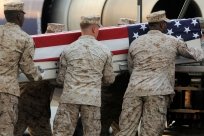
A record 66 U.S. troops have died so far this month, eclipsing the 65 killed in July 2010, according to a tally by The Associated Press.
This month’s death toll soared when 30 Americans — most of them elite Navy SEALs — were killed in a helicopter crash Aug. 6. They were aboard a Chinook shot down as it was flying in to help Army Rangers who had come under fire in Wardak province. It was the single deadliest incident of war being waged by Afghan and U.S.-led coalition forces and insurgents.
On Tuesday, Afghan President Hamid Karzai used the start of a three-day Muslim holiday to plead with insurgents to lay down their arms and help rebuild the nation. Karzai wants Afghan security forces to take the lead in defending and protecting the nation by the end of 2014.
At a palace celebration, he also greeted eight boys and young men who had been asked to become suicide bombers, but then turned themselves in to Afghan authorities.
“Today we witness another good day for Afghanistan,” he said. “We have with us those children who were forced by the Taliban — or whoever was behind it — to commit suicide attacks. They (the children) were saved using their wisdom.”
He said five had been released to their parents, one was going to study in Turkey and authorities were still trying to find the relatives of the remaining two.
Karzai spoke on Eid al-Fitr, a holiday marking the end of the holy month of Ramadan, which is observed by millions of Muslims around the world. The month of dawn-to-dusk fasting and extended prayer began Aug. 1.
Violence is being reported across the nation despite the U.S.-led coalition’s drive to rout insurgents from their strongholds in the south.
At the same time, the U.S. military has begun to implement President Barack Obama’s order to start withdrawing the 33,000 extra troops he dispatched to the war. He ordered 10,000 out this year and another 23,000 withdrawn by the summer of 2012, leaving about 68,000 U.S. troops on the ground. Although major combat units are not expected to start leaving until late fall, two National Guard regiments comprising about 1,000 soldiers started going home last month.
Aside from the 30 Americans killed in the Chinook crash, southwest of Kabul, 23 died this month in Kandahar and Helmand provinces in southern Afghanistan, the main focus of Afghan and U.S.-led coalition forces. The remaining 13 were killed in eastern Afghanistan.
Besides the 66 Americans killed so far this month, the NATO coalition suffered the loss of two British, four French, one New Zealander, one Australian, one Polish and five other troops whose nationalities have not yet been disclosed. One of the five was killed in a roadside bombing Tuesday in southern Afghanistan, the coalition said. No other details were released.
So far this year, 403 international service members, including at least 299 Americans, have been killed in Afghanistan.
The Grand Rapids Press and the 10th Anniversary of 9/11

Yesterday, the Grand Rapids Press began its coverage for the 10th anniversary of 9/11 in the US. The article, headlined “America is mostly back to normal after 9/11 attacks, but should it be?,” was a perfect example of unexamined news.
The article begins by painting a picture of the collective mourning that took place in West Michigan in the first days after 9/11, but soon after that the reporter makes the claim that the US is back to “normal.”
The idea of the US returning to normal is never really explored in the article or substantiated by the Press. The reporter does cite a GVSU professor, Rob Franciosi, who claims that people in the US have remained unchanged despite of 9/11. However, the GVSU professor offers up nothing more than opinion. He doesn’t cite polls or research, which would verify his claims, just his opinion.
Besides the university professor, the Press reporter cites a former Hope football player who reflected on the meaning of 9/11 and a Hudsonville pastor. The Hudsonville pastor has been to the Middle East since 9/11 and does say that people here could have had an awakening after 9/11 but instead are caught up in “the rat race and material possessions.”

The only other source cited in the story was Jim Kristan, an Army veteran who is heading up a local 9/11 memorial service. The Press reporter presents Kristan as in “the minority” since he cares about what happened ten years ago. Kristan says what happened on 9/11 is all he thinks about, so much so that he painted his truck to reflect his feelings.
What is disturbing about the article was not so much the attention they gave to the man organizing the 9/11 memorial service, since that is to be expected. What seems problematic is both the unquestioning nature of the article and the lack of critical voices.
There have been plenty of people in West Michigan who have devoted a great deal of time and energy to fighting the US government responses since 9/11. People have organized and resisted the US wars in Iraq and Afghanistan. People have exposed and protested the US use of torture after 9/11. People have been part of all kinds of educational efforts to present information to counter the massive propaganda campaign by the US government.
People have examined US foreign policy and have attempted to challenge US hegemony in the Middle East. Local people have even been the subject of government surveillance and repression since 9/11 – Arab Americans, Muslims and dissidents. However, none of these voices are presented in the Press article, which presents the public as mere sheep.
If this story is an indication of the superficial reporting we will get surrounding the 10th anniversary of 9/11 then it is important for people to seek out other sources that will provide some substantive information on a broad range of critical issues.
Ten Years after 9/11

We are less than two weeks from the 10th anniversary of 9/11 and it is important that we take a step back and ask ourselves some serious questions about what has transpired in the US and abroad since the 9/11 attacks in the US in 2001.
It is necessary to ask hard questions about the consequences of 9/11 since we can not rely on the commercial news media to honestly report on what the US has done with both its foreign and domestic policy since the Twin Towers and the Pentagon were hit 10 years ago.
In fact, the commercial news media will no doubt focus on memorial services and activities planned for 9/11 that will not move beyond what happen 10 years ago. We will be encouraged to mournfully reflect on the 3,000 lives that were lost on 9/11 in the US and then to offer up our support to law enforcement agencies and the US military, which continue to “defend our freedom.”
However, if you don’t get teary-eyed every time you see an American flag or have yet to succumb to putting one of those “Get r Done!” stickers on your car then you might want to honestly think about how the US government has responded since 9/11. The most costly responses have been the US occupations in Afghanistan and Iraq, both justified by 9/11.
First, the US has spent a massive amount of money on war, occupation, surveillance and military aid around the world. According to the National Priorities Project, the US has spent $1.42 Trillion (and counting) just on the occupations of Iraq and Afghanistan. This amount does not include the current war in Libya or the US funding to Israel and all the other military activities the US has engaged in, all in the name of the War on Terror. The $1.42 Trillion translates into $28.5 billion in tax dollars that has left the State of Michigan to fund the occupations of Iraq and Afghanistan. The amount of tax money that has left Grand Rapids to fund these two wars is now up to $447 million (and counting). With all the budget problems at the federal, state and local level the American public might want to rethink the Pentagon’s budget.

Second, these military occupations abroad have resulted in an estimated 1,455,590 civilian deaths in Iraq and tens of thousands in Afghanistan. Add to that 4,474 US soldier deaths in Iraq and another 1,752 in Afghanistan and the death tool is staggering. In addition to the death toll there have been thousands wounded in Iraq and Afghanistan and hundreds of thousands displaced.
Third, the US has not been able to defeat or significantly reduce al Qaeda operatives around the world. In fact, the ongoing US occupations of Iraq and Afghanistan have been the best recruiting tool that al Qaeda and other insurgent groups could have asked for.
Fourth, the US occupations abroad and support for repressive governments has actually led to a significant number of popular uprisings, particularly in the Middle East. These uprisings, called the Arab Spring by some, have demonstrated that the overthrow of dictatorships needs to come from the populations of those countries and that the US government has in no way been supportive of the generally non-violent uprising that want democratic rule.
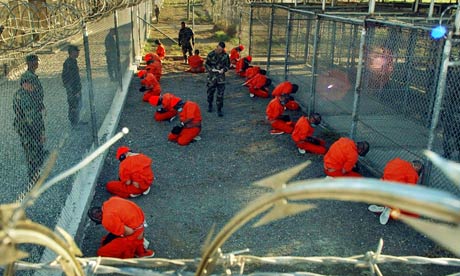
Fifth, the US and its allies have not only condoned but actively engaged in torture as a matter of policy, like what has been documented in the jails of Abu Ghraib and Bagram or the US detention center at Guantanamo Bay. The use of torture will only contribute to growing anti-American sentiment and lead to further acts of violence.
On the domestic front there have also been ongoing consequences to the so-called US War on Terror. In general civil rights and civil liberties have been violated on a massive scale.
According to the ACLU, the laws that have been passed since 9/11 have taken away a significant number of previously constitutionally protected rights, particularly the right of due process and the right of privacy. The passing of the USA Patriot Act within days of 9/11 has been continued and revised on numerous occasions since 9/11. The language of the Patriot Act is such that people in the US who participate in civil disobedience can now be labeled domestic terrorists, which is just one tactic that the US government ha been using to suppress dissent.

We have seen the rise of collaboration between phone companies and the US government in order to spy on US citizens. We have seen the arrested and detention of those of civilians who have not been guilty of anything other than looking foreign and we have seen an increased level of censorship, both of critical voices in news media and critical voices in academia.
However, it has been the Muslim and Arab communities that suffered the worst in the US since 9/11. Thousands of Arabs and Muslims have been arrested, detained, questioned, deported and in some cases killed because of their suspected connection to global terrorism. There has also been in increase of hate crimes against Arab Americans and Muslims in the US, which have been fueled in part by the growing popularity of Islamophobia.
There is certainly a great deal more that could be said about the consequences of US policy since 9/11, but these comments will hopefully provide people with an opportunity to have informed discourse as the nation is in the midst of tenth anniversary of the 9/11 memorial mania.
(This article is re-posted from iwatchnews.)
As U.S. military deaths and injuries from roadside bombs escalated after the invasion of Iraq, the Pentagon rushed to find solutions.
Competition is normally the cornerstone of better prices and better products, but the urgency of dealing with improvised explosive devices, or IEDs, has been cited to justify a number of sole-source contracts to companies promising quick solutions over a decade of war.
One such company was Tucson-based Applied Energetics , which markets a futuristic weapon that shoots beams of lightning to detonate roadside bombs. The company won over $50 million in military contracts for their lightning weapon, all without full and open competition, even though there was another company marketing similar technology. Despite test failures, the company, in part thanks to congressional support, continued to get funding.
In August, the Marine Corps, which was on the verge of awarding the company yet another sole-source contract for the lightning weapon, cancelled the latest $3 million deal after the commander of the unit in Afghanistan decided it didn’t meet their needs.
In the meantime, a competitor, called Xtreme Alternative Defense Systems , an Indiana-based firm with its own lightning-based counter-bomb technology, says it’s had good results with only a fraction of the federal funding that Applied Energetics has received—$1.5 million. The company is preparing to test its technology at a military range. “We did our own development based on state grants” and federal funds, says Pete Bitar, the head of the company. “I cashed out my 401(k).”
The bomb fighting contract is a small example of a problem that’s been exacerbated by 10 years of war: awarding contracts without competition. While the Pentagon says its overall level of competition has remained steady over the past 10 years, publicly available data shows that Defense Department dollars flowing into non-competitive contracts have almost tripled since the terrorist attacks of 9/11. According to analysis by the Center for Public Integrity’s iWatch News, the data shows that the value of Pentagon contracts awarded without competition topped $140 billion in 2010, up from $50 billion in 2001.
And despite repeated pledges to reform the process, non-competitive contracts are a hard habit to break. According to federal data, the Pentagon’s competed contracts, based on dollar figures, fell to 55 percent in the first two quarters of 2011, a number lower than any point in the last 10 years since the terrorist attacks of 9/11.

There are a number of legal loopholes that allow the Defense Department, as well as other federal agencies, to avoid competition and to select a single company to provide the desired goods and services. In some cases, there may be only one legitimate supplier of needed goods, or the government can argue that it has “an unusual and compelling urgency,” and that holding a competition would have a detrimental impact on government operations or national security.
But those exceptions have become increasingly abused, according to numerous studies. In fact, an analysis of over a dozen government reports and investigations, and interviews with eight former government officials and experts, found a number of concerns about DOD competition practices — attributable in large part to the past 10 years of war. Those include:
- The use of large umbrella contracts to purchase goods and services that could be competed individually, thus resulting in lower price;
- Justifying sole source contracts by citing an “urgent and compelling need,” when in fact the urgency stemmed from the agency’s lack of planning for requirements that have been known for years.
- Extending large contracts as a “bridge,” rather than re-competing them.
- An overall failure to utilize competition in cases that could result in cost savings and better performance.
These alarming trends have not gone unnoticed. Sole-source and other noncompetitive contracting practices at the Pentagon have been the subject of numerous investigations by the Government Accountability Office, the Defense Department’s Inspector General, and the Commission on Wartime Contracting, among other government watchdogs.
The consequence, according to those investigative agencies and commissions: wasted dollars, lower quality goods and services, and in some cases, outright fraud.
Reports of limited and no-bid contracting, particularly in Iraq and Afghanistan, captured headlines in the early days of the Coalition Provisional Authority in Iraq, when companies like Custer Battles, later convicted of fraud , were given sole-source security contracts for security and reconstruction, including one worth $16.5 million to provide security at Baghdad International Airport. Among the accusations eventually levied against the company, which had no prior track record, was that it charged grossly inflated prices, in part by using fictitious companies to “lease” equipment to the government.
In his 2008 presidential campaign, candidate Barack Obama railed against such contracts, accusing them of wasting taxpayer dollars, and promised to rein in such spending.
In 2009, President Obama followed up those campaign promises with a memo directing a broad overhaul of government contracting, including limits to sole-source and non-competitive contracting. “Excessive reliance by executive agencies on sole-source contracts (or contracts with a limited number of sources) and cost-reimbursement contracts creates a risk that taxpayer funds will be spent on contracts that are wasteful, inefficient, subject to misuse, or otherwise not well designed to serve the needs of the Federal Government or the interests of the American taxpayer,” the president wrote in the 2009 memorandum , citing reports by multiple government agencies. Moving back to full and open competition, the memo continued, could save the government billions of dollars. But in two-and-half years, the Obama administration has made no progress in competing military contracts.
Even the Pentagon’s senior leadership has acknowledged the problem: a 2010 memo by Undersecretary Ashton Carter, the Pentagon’s senior procurement official, called for greater competition, along the lines of the earlier Obama memo, and promised the Pentagon would make its contracting process more open to competitive bidding. “Maximize the use of multiple-source, continuously competitive contracts,” a briefing accompanying the memo states.
However, campaign pledges and memos have made little headway in combating the problem. “The lack of competition in the Defense Department is a scandal,” said Charles Tiefer , a professor at the University of Baltimore School of Law and a member of the congressionally mandated Commission on Wartime Contracting in Iraq and Afghanistan.
The ultimate question is whether non-competitive contracts are due to trends beyond the Pentagon’s control, such as the lack of qualified competitors and the urgency of wartime contracting, or whether they are the result of poor policies and procedures. The Pentagon maintains that its competition rates are lower because of the nature of the things it buys: large weapons and major systems that then have large follow-on contracts that must, by their nature, go to the original supplier. “These high-dollar non-competitive procurements significantly impact the Department’s overall level of competition to produce the 61.7 percent competition rate for FY2010,” says Cheryl Irwin, a Pentagon spokeswoman.
The GAO, in multiple decisions, has said that “failure to plan” for a procurement that results in an urgent need does not constitute a basis for a sole source competition, and has, on a number of occasions, sided with protesting companies that argue the only urgency was an agency’s failure to conduct a timely competitive procurement.
One report commissioned by the Pentagon’s Office of Industrial Policy and conducted by the federally-funded Institute for Defense Analyses appears to suggest it’s a systemic problem. “We found that the use of short-term contracts and modifications to fill the gap in services between the end of one contract and the beginning of the next is a significant source of sole source contracts,” the report concluded.
The study, which looked specifically at contracts for services, found that there wasn’t a lack of qualified companies; rather, nearly a quarter of the sole-source awards were justified based on “bridge contracts” that extended existing contracts without competition. “For sole source contracts there does appear to be a problem, not with the industrial base or with competition, but with DOD practices and policies,” the report concluded.
Noncompetitive, sole-source contracts are by no means unique to the Pentagon. Other agencies have been accused of giving short shrift to competition, such as the Federal Emergency Management Agency, which awarded over half of its immediate post-Hurricane Katrina contracts without full competition, according to one congressional report. But based on total dollars, the Pentagon, according to publicly available data analyzed by iWatch News , lags behind all other major departments in competitive contracting. The Pentagon’s competition rate of about 61 percent places it will below other agencies. The State Department in 2010 competed almost 75 percent of its contract dollars, the Department of Homeland Security competed almost 77 percent, and the Energy Department competed 94 percent.
Nevertheless, sole source contracts, ranging from training to equipment, continue to be handed out on a near daily basis, often with little explanation beyond a stated “urgent requirement.” On July 18 of this year, DRS Technical Services of Herndon, Va., received a contract worth nearly $20 million for training and mentoring Afghan police.It was the only bid solicited for the contract, according to the Pentagon.
A spokesperson for Army Contracting Command said the sole source contract, which was actually for fielding communications equipment to Afghan police, was due to an “urgent requirement that necessitated an award to the incumbent DRS pending competition.” That same contract was also the subject of a 2009 DOD Inspector General investigation, which criticized the contractor’s and the Army’s inventory controls.
Two weeks ago we reported on the ongoing campaign to get the City of Holland to adopt an anti-discrimination ordinance that would include sexual orientation.
At that August 17 City Council meeting a member of the Holland PFLAG invited members of the City Council to attend their next meeting so that the elected officials would have a chance to hear directly from parents, friends and family members about the harm being done the LGBT community that lives and works in Holland.
GRIID contacted the folks at Holland PFLAG to find out if any of the Holland City Council members attended their last meeting on August 20. According to one PFLAG spokesperson not one of the Holland City Council members attended that meeting.
PFLAG Holland meets the 3rd Friday of every month from 7 – 9PM Grace Episcopal Church 555 Michigan Ave, Holland, MI (Across from Holland Hospital). One spokesperson for the group said that their PFLAG chapter is working closely with Holland is Ready to get the ordinance passed.
Recall Efforts Continue For Both Snyder and His EFM Law

Haven’t signed a Recall Snyder petition yet? Grand Rapids residents have three chances in September to do so before the deadline at the end of the month. There will be a petition signing station set up at the Fulton Street Farmers’ Market on Labor Day—Monday, September 5—from 7AM to 6PM. The Farmer’s Market is at 1147 Fulton St. SE.
The Recall Snyder group will also be there on Saturday, September 10 and Saturday, September 17 —same place, same times.
Meanwhile, you may get an anonymous phone call telling you that if you sign a Recall Snyder petition, your identity will be stolen. This is just one of the efforts by state conservatives to derail the drive in its final month.
To get the recall on the ballot, 807,000 verified signatures of registered voters need to be handed in. The effort fell short on August 5, the original deadline to make the November ballot. Only 300,000 signatures had been collected. Regrouping, the campaign set its sights on a February ballot. The new deadline is September 29.
The Recall Snyder campaign plans a major push over the Labor Day weekend. Counter measures are being deployed. The Battle Creek Enquirer published information on August 24 that state voters are receiving untraceable telephone calls that say that signing a Recall Snyder petition will lead to identify theft. In Saugatuck, City officials have told canvassers that they can stand on public sidewalks to collect signatures…but they are forbidden to speak to anyone to tell them about the recall effort. The ACLU filed a lawsuit over this fiat.

Many Michigan newspapers have remained silent on Recall Snyder petition drive, giving it little play in their pages. The Grand Rapids Press’s articles have been mainly anti-recall, such as a slavishly supportive commentary about Snyder from the head of the Michigan Association of Realtors and the president of the Michigan Chamber of Commerce. No hidden agenda there.
In the meantime, your best bet to get updated information is the Recall Snyder Facebook page.
As for the recall attempt for Public Act 4 (Snyder’s Emergency Financial Manager law), GRIID was informed by Michigan Forward that after this past weekend’s petition drives, the group is within 30,000 signatures of its goal. The allied activist groups collecting signatures (they were here on Saturday, August 27) may reach their goal to freeze use of Public Act 4 just in time to save Flint, which has been placed under preliminary financial review.
This review has been ordered even though the City of Flint reduced its deficit from $14 million to $2 million with this year’s budget agreement. As in Detroit, it’s Flint’s mayor who is campaigning for the all-powerful EFM position, and he attended Emergency Financial Manager training earlier this year.
The training sessions are run by Treasury Secretary Andy Dillon at Michigan State University to sell-out crowds. You can see the agenda for one session here. Note that a large part of the program involves hiring “professional support”—contractors—and also trains future EFMs on how they can avoid personal liability or indemnity for acts they commit such as breaking legal contracts.
September’s training session will include the hilariously titled special session, “How to Communicate Bad News.” The cost of the workshop ranges from $199 to $315 (charges for entry to the lavish reception, the group golf tournament, and the hotel room are extra). In the case of Flint’s mayor, the costs for the workshop were apparently passed onto the citizens of Flint.
As soon as the petition signatures are submitted and validated to recall Public Act 4, Snyder’s version of the EFM law will be suspended until the election.
Copyrighted image used by permission from Linda R. Robinson
Snyder/Dillon photo from Voice of Detroit http://voiceofdetroit.net/
Over the past several months there has been an effort by AT&T and T-Mobile to merge making them the largest telecom corporation in the country.

The Federal Communications Commission (FCC) has been hearing arguments and getting input from the public. In addition, the Media Reform group Free Press, based in Madison, has been engaged in a campaign to defeat this merger.
In recent weeks it has been discovered through an internal memo to AT&T that the merger would eliminate an estimated 20,000 US jobs. It has also been discovered that the cost of texting would increase if the merger were to go through, because there would be less competition.
In a recent campaign to target the White House with opposition to the merger, Free Press included the following as part of their campaign:
“We at Free Press have warned about this from day one. Now, in a letter that was inadvertently leaked, one of AT&T’s own lawyers has confirmed it. The letter reveals the merger has nothing to do with expanding AT&T’s coverage to 97 percent of the country – the main argument the company has made to gain Washington’s support – and everything to do with eliminating the cheaper T-Mobile option from the marketplace (and laying off half of its workforce) to pad company profits.”
Free Press has also created this short video as a popular education tool to inform people about why a merger between AT&T and T-Mobil would be bad for the public.
Michigan Politicians
The FCC has yet to decide on this matter, but one thing that both AT&T and T-Mobile have been doing is trying to influence the political process with money.
According to the Center for Responsible Politics, AT&T has contributed to almost every member of the House and Senate from Michigan. In 2010 alone, this chart shows which Michigan politicians have received money and how much. Fred Upton was the top recipient with $11,000, but AT&T spent its money with both Republicans and Democrats.
Democratic Senator Debbie Stabenow received $3,000 in 2010 from AT&T, but has received a total of $51,900 from the Telecom giant since joining the Senate in 1989. Stabenow has also received a total of $3,000 from T-Mobile since 2010. Michigan Congressmen John Conyers and Fred Upton each received $10,000 from T-Mobile in 2010 alone.
It seems clear that AT&T and T-Mobile have been busy spending money on both Republicans and Democrats from Michigan in order to influence the outcome of the proposed merger, a topic that has received little coverage in the commercial media.
Why Is Israel Bombing Gaza?
(This article by Peter Hart is re-posted from Fairness & Accuracy in Reporting.)
 The coverage of the Israeli attacks on Gaza is following some predictable patterns. The New York Times has a headline today (8/26/11), “Israeli Strikes in Retaliation Kill Nine Gazans.” Readers should ask: Retaliation for what?
It’s widely understood that this violence stems from the attack last week in the southern Israeli town of Eilat. As the Times puts it: “The recent round of violence started a week ago, with a terrorist attack on southern Israel in which eight Israelis were killed.”
The real question, though, is who committed these acts. The Times says:
“Israeli officials said the perpetrators and planners of the terrorist attack were originally from Gaza, and Israel has retaliated with strikes that have killed at least 23 Palestinians. Gazan officials say they know nothing about the source of the attack.”
That’s a massive understatement.
To date, no armed Palestinian groups have claimed responsibility for the Eilat attack. Israeli officials claimed the Popular Resistance Committees (PRC) were behind it, but have offered no proof to back up these allegations. And there has been almost no critical coverage of the weakness of the Israeli case. On NPR (8/18/11), for example, listeners have heard Israeli ambassador Michael Oren claim that Palestinian militants carried out the attack, and five days later London Times reporter James Hider (8/23/11) stated the same thing as if it were a well-established fact.

A handful of journalists have been persistently pointing out that the weakness of this case. One of those writers, Yossi Gurvitz, explains in his latest piece at the Israeli website +972 (8/25/11) that Israeli media are beginning to raise serious questions:
“Since Monday, there have been a few more reports in the Israeli media, casting more doubt on the official story. Yediot reported on Tuesday (Hebrew) that nameless people in the security apparatus doubt the PRC were responsible for the attacks, and raise an interesting question: If they were responsible, why was the PRC’s entire leadership in the same place?
According to Yediot’s anonymous intelligence sources (bear in mind that such sources should always be viewed with skepticism; by their very nature they cannot be corroborated, and they tend to be unreliable even when speaking openly), the attribution of the attacks to the PRC stems from one somewhat incoherent comment on some Jihadi message board.
Ha’aretz reported on Tuesday (Hebrew) that at least three on the attackers were Egyptian Jihadis. American intelligence sources – the same caveat above applies here–told Globes (Hebrew) that they, too, doubt the PRC are responsible, though they may have had a small role in the attacks.
Two days ago, the IAF attacked the Gaza Strip again–naturally, it does not consider itself bound by the ceasefire; only the Palestinians are, and only them can be blamed for breaking it–and killed some Islamic Jihad apparatchick. Yesterday, the IDF claimed (Hebrew) that he was in charge of funding the Eilat attacks. Hold on a minute, I’m confused: I thought you said the attacks were carried out by the PRC, and now it’s the Islamic Jihad left holding the bag? As of yesterday, reported Amira Hass in Ha’aretz (Hebrew), there are no mourning tents in Gaza. As of today, one week after the attack, the IDF refrains from exposing the identity of the attackers it killed.”
This is a remarkable story that deserves serious coverage. Two-dozen people in Gaza have been killed in “retaliation” for an attack that very well could have originated somewhere else.
No Way to Honor Dr. King
(This article by Medea Benjamin is re-posted from Common Dreams.)
The ceremonies for the new Martin Luther King Jr. Memorial in Washington DC were kicked off on August 24 at an event billed as Honoring Global Leaders for Peace. But some of those honored are a far cry from King’s beloved community of the poor and oppressed. The tribute to peacemakers, organized by the MLK National Memorial Foundation, was mostly a night applauding warmakers, corporate profiteers and co-opted musicians.

The night started out with great promise when MC Andrea Mitchell mentioned Dr. King’s brilliant anti-war speech Beyond Vietnam as a key to understanding the real Dr. King. And sure, there were a few wonderful moments—a song by Stevie Wonder, a speech about nonviolence by the South African Ambassador and a quick appearance by Jesse Jackson in which he managed to spit out a call to “study war no more.”
But most of the evening’s speakers and guests of honor had little to do with peacemaking. One of the dignitaries thanked at the start of the program was Israeli Ambassador Michael Oren, representing a country that uses $3 billion a year in precious U.S. tax dollars to commit war crimes against Palestinians.
Then came a parade of representatives of corporations that want to cleanse their image by being associated with Dr. King. The first was General Motors VP Eric Peterson. His company took billions from government coffers to keep it afloat, then showed its “generosity” by donating $10 million of our tax dollars to the memorial. Mr. Peterson gave a speech paying tribute to the company’s first black board member, Rev. Leon Sullivan. Peterson claimed that the Sullivan Principles, principles that established a social responsibility code for companies working in South Africa, helped abolish apartheid. The truth is that the Sullivan Principles ended up being a cover for U.S. corporations—like General Motors–to continue doing business in racist South Africa instead of respecting the international divestment campaign.

Up next was Guy Vikers, president of the Tommy Hilfiger Corporate Foundation. Although the group Sweatshop Watch fingered Hilfiger for mistreating workers and inducted the company into its Hall of Shame, Hilfiger’s $6 million gift to the memorial bought it a piece of the King legacy.
Next on the corporate sponsor list was Myrtle Potter of Medco Health Solutions. Medco is a $60 billion “pharmaceutical management” company that fought against healthcare reform and was recently forced to pay the U.S. government $155 million to settle fraud charges. Other corporate benefactors to the memorial include union-busting Verizon, war profiteering General Electric and sweatshop king Wal-Mart.
After the line-up of corporate shills came U.S. trade rep Ron Kirk. One wonders how on earth a man who pushes free trade policies that destroy workers’ right and promote a race to the bottom was deemed a peacemaker. King’s commitment to workers—remember his support of the sanitation workers?—was in total opposition to Ron Kirk’s pro-corporate stance.

But the queen bee of the evening was former Secretary of State Madeleine Albright. She dismissed King’s call that morality to be the guiding light of our international relations as nice, but far from the complex real world where we have enemies we have to confront. This is the same “practical” diplomat whose claim to shame in the eyes of true peacemakers was her support of such stringent sanctions against Iraq that over 500,000 children under 5 were killed. When asked about the morality of this policy on national TV, Albright calmly asserted that “the price was worth it” in the fight against Saddam Hussein.
Ms. Albright was awarded a model-size version of the King Memorial, presented by the controversial Chinese artist himself, Lei Yixin. Uninvited was the group that had spearheaded a campaign pressing the Foundation to choose an African-American artist, and use American granite and American workers. Instead the Foundation tried to save some money with a Chinese artist who used Chinese materials and Chinese workers. The human rights abusing Chinese government, delighted by the association with Dr. King, sweetened the deal with a $25 million donation. And despite written promises that the Foundation would use local stonemasons to assemble the memorial, Chinese laborers were used. The Washington area local of the Bricklayers and Allied Craftsworkers union claims the workers were not paid fairly, and their pay was withheld until they returned to China.
After the speeches and Stevie Wonder’s song, the mic was turned over to an Israeli musician Idan Raichel, an avid supporter of the Israeli Army and someone who has publicly expressed approval of Israel’s 2009 invasion of Gaza. One wonders how much the Israel government gave to the Foundation to get a plum spot in the tribute to peace.
But don’t ask the King family how they feel about their fathers’ opening tribute being sold off to the highest bidder. The family demands royalties for use of the King name—even from the Memorial—and so far have received about a million dollars. Cambridge University historian David Garrow, who won a Pulitzer Prize for his biography of King, said that King would have been “absolutely scandalized by the profiteering behavior of his children.”
Today’s great global peacemakers, the true followers of Dr. King, were neither seen nor evoked. No mention of Burma’s struggling opposition leader Aung San Suu Kyi or the nonviolent protagonists of the Arab Spring or the environmentalists opposing a proposed tar sands pipeline from Canada to Texas who were arrested at the White House on the very day of the tribute. No mention of the U.S. peace groups trying—for 10 years now—to stop the horrifying Bush/Obama wars in Iraq and Afghanistan and the drone attacks in Pakistan that have killed so many civilians.
Dr. King, whose life was spent preaching unconditional love and nonviolent redemptive good, continues to inspire people the world over who are helping to shape his vision of an “arc of the moral universe” that is long but bends toward justice. Gandhi, King, Mandela—there are precious few whose legacies resonate with those who are risking their lives today, in a nonviolent fashion, to eliminate the evils of racism, poverty, militarism and environmental destruction. King’s tribute to global peacemakers should have reached out to them as the legitimate heirs of the King legacy, not the monied interests who helped pay for the piece of carved granite that bears his image.
 Grand Rapids Institute for Information Democracy