After 9/11, Was War the Only Option?
(This article by Noam Chomsky is re-posted from ZNet.)
This month marks the 10th anniversary of the horrendous atrocities of Sept. 11, 2001, which, it is commonly held, changed the world.
The impact of the attacks is not in doubt. Just keeping to western and central Asia: Afghanistan is barely surviving, Iraq has been devastated and Pakistan is edging closer to a disaster that could be catastrophic.
On May 1, 2011, the presumed mastermind of the crime, Osama bin Laden, was assassinated in Pakistan. The most immediate significant consequences have also occurred in Pakistan. There has been much discussion of Washington’s anger that Pakistan didn’t turn over bin Laden. Less has been said about the fury among Pakistanis that the U.S. invaded their territory to carry out a political assassination. Anti-American fervor had already intensified in Pakistan, and these events have stoked it further.
One of the leading specialists on Pakistan, British military historian Anatol Lieven, wrote in The National Interest in February that the war in Afghanistan is “destabilizing and radicalizing Pakistan, risking a geopolitical catastrophe for the United States — and the world — which would dwarf anything that could possibly occur in Afghanistan.”
At every level of society, Lieven writes, Pakistanis overwhelmingly sympathize with the Afghan Taliban, not because they like them but because “the Taliban are seen as a legitimate force of resistance against an alien occupation of the country,” much as the Afghan mujahedeen were perceived when they resisted the Russian occupation in the 1980s.
These feelings are shared by Pakistan’s military leaders, who bitterly resent U.S. pressures to sacrifice themselves in Washington’s war against the Taliban. Further bitterness comes from the terror attacks (drone warfare) by the U.S. within Pakistan, the frequency of which was sharply accelerated by President Obama; and from U.S. demands that the Pakistani army carry Washington’s war into tribal areas of Pakistan that had been pretty much left on their own, even under British rule.
The military is the stable institution in Pakistan, holding the country together. U.S. actions might “provoke a mutiny of parts of the military,” Lieven writes, in which case “the Pakistani state would collapse very quickly indeed, with all the disasters that this would entail.”
The potential disasters are drastically heightened by Pakistan’s huge, rapidly growing nuclear weapons arsenal, and by the country’s substantial jihadi movement.
Both of these are legacies of the Reagan administration. Reagan officials pretended they did not know that Zia ul-Haq, the most vicious of Pakistan’s military dictators and a Washington favorite, was developing nuclear weapons and carrying out a program of radical Islamization of Pakistan with Saudi funding.
The catastrophe lurking in the background is that these two legacies might combine, with fissile materials leaking into the hands of jihadis. Thus we might see nuclear weapons, most likely “dirty bombs,” exploding in London and New York.
Lieven summarizes: “U.S. and British soldiers are in effect dying in Afghanistan in order to make the world more dangerous for American and British peoples.”

Surely Washington understands that U.S. operations in what has been christened “Afpak” — Afghanistan-Pakistan — might destabilize and radicalize Pakistan.
The most significant WikiLeaks documents to have been released so far are the cables from U.S. Ambassador Anne Patterson in Islamabad, who supports U.S. actions in Afpak but warns that they “risk destabilizing the Pakistani state, alienating both the civilian government and military leadership, and provoking a broader governance crisis in Pakistan.”
Patterson writes of the possibility that “someone working in (Pakistani government) facilities could gradually smuggle enough fissile material out to eventually make a weapon,” a danger enhanced by “the vulnerability of weapons in transit.”
A number of analysts have observed that bin Laden won some major successes in his war against the United States.
As Eric S. Margolis writes in The American Conservative in May, “(bin Laden) repeatedly asserted that the only way to drive the U.S. from the Muslim world and defeat its satraps was by drawing Americans into a series of small but expensive wars that would ultimately bankrupt them.”
That Washington seemed bent on fulfilling bin Laden’s wishes was evident immediately after the 9/11 attacks.
In his 2004 book “Imperial Hubris,” Michael Scheuer, a senior CIA analyst who had tracked Osama bin Laden since 1996, explains: “Bin Laden has been precise in telling America the reasons he is waging war on us. (He) is out to drastically alter U.S. and Western policies toward the Islamic world,” and largely achieved his goal.
He continues: “U.S. forces and policies are completing the radicalization of the Islamic world, something Osama bin Laden has been trying to do with substantial but incomplete success since the early 1990s. As a result, I think it is fair to conclude that the United States of America remains bin Laden’s only indispensable ally.” And arguably remains so, even after his death.
The succession of horrors across the past decade leads to the question: Was there an alternative to the West’s response to the 9/11 attacks?
The jihadi movement, much of it highly critical of bin Laden, could have been split and undermined after 9/11, if the “crime against humanity,” as the attacks were rightly called, had been approached as a crime, with an international operation to apprehend the suspects. That was recognized at the time, but no such idea was even considered in the rush to war. It is worth adding that bin Laden was condemned in much of the Arab world for his part in the attacks.
By the time of his death, bin Laden had long been a fading presence, and in the previous months was eclipsed by the Arab Spring. His significance in the Arab world is captured by the headline in a New York Times article by Middle East specialist Gilles Kepel: “Bin Laden Was Dead Already.”
That headline might have been dated far earlier, had the U.S. not mobilized the jihadi movement with retaliatory attacks on Afghanistan and Iraq.
Within the jihadi movement, bin Laden was doubtless a venerated symbol but apparently didn’t play much more of a role for al-Qaida, this “network of networks,” as analysts call it, which undertake mostly independent operations.
Even the most obvious and elementary facts about the decade lead to bleak reflections when we consider 9/11 and its consequences, and what they portend for the future.
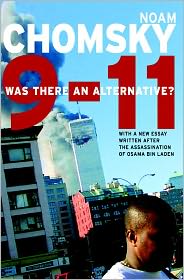
This article is adapted from 9-11: Was There an Alternative?, the 10th-anniversary edition of 9-11, by Noam Chomsky, just published by Seven Stories Press.
Labor Day and the Spirit of Joe Hill
(This article by Clancy Sigal is re-posted from Common Dreams.)
l eat, bye and bye,
In that glorious land above the sky;
Work and pray, live on hay,
You’ll get pie in the sky when you die
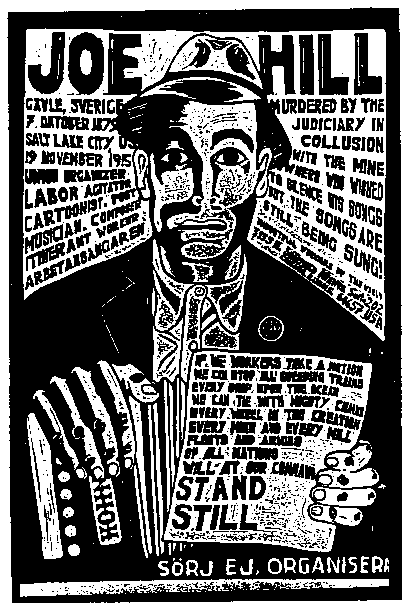
– “The Preacher and the Slave”, a parody hymn written by rebel singer and labor icon Joe Hill
Anyone who is a fan of Billy Bragg, as I am, or Bruce Springsteen, Bob Dylan, Pete Seeger, Woody Guthrie or the sixties protest singer Phil Ochs knows that radical America’s greatest songwriter-educator Joe Hill is still alive in the young-in-heart on this besieged Labor Day.
Joe, a Swedish immigrant and wandering troubadour-troublemaker, was a “Wobbly”, an agitating member of the One Big Union, the red flag International Workers of the World, a harum-scarum, mad-as-hell, happy-in-fellowship bunch of hoboes and gypsy workingmen who scared the pants off business leaders, pious church-goers, police chiefs, governors and all right-thinking citizens in the early part of the last century.
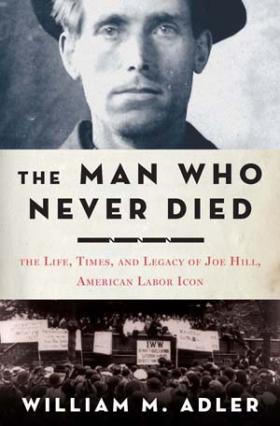
As a just published, terrific biography of Hill, The Man Who Never Died, by William Adler, makes clear yet again, Joe Hillström (né Joel Hägglund, his birth name) was framed on a murder charge in Salt Lake City, Utah, strapped into a chair and shot by a firing squad.
In my house, wherever we moved, my mother always put up two pictures, the labor lawyer who once defended her, Clarence Darrow (after whom I’m named), and the seditious martyr Joe Hill. As Joe may have shrewdly deduced on his last day, when the guards came for him – and a possible reason why he refused to testify for himself at his rigged trial – he may have been more valuable to the movement as a bullet-punctured corpse than he would have been alive: a reminder that the class struggle for which he was surrendering his life was – and is – as undying as his legacy on this Labor Day, 2011.
My mother, a skilled craftswoman on a sweater-making machine, felt split between her conservative union motto, “A fair day’s wage for a fair day’s work” and the IWW’s revolutionary preamble – “Abolition of the wage system is the historic mission of the working class to do away with capitalism.” In her lifetime – she witnessed the 1911 Triangle Fire annihilation of 146 immigrant young women – most of her co-workers took the “class war” as a obvious fact of life; they held a consensus that, in the IWW’s ringing words, “the working class and the employing class have nothing in common.”
In pre-first world war America, the employing class had no ethical problem deploying federal and state troops to murder working people. The massacres at Ludlow, Cripple Creek, Thibodaux, Coeur d’Alene, Pullman, Everett and so many other bleeding grounds are burned into what’s left of labor’s institutional memory. Or as a New York judge told striking female garment workers, “You are on strike against God.”
“The copper bosses killed you Joe
They shot you Joe, says I
Takes more than guns to kill a man
Says Joe I didn’t die…
Joe Hill’s IWW believed in head-on, confrontational direct action based on what we now fashionably call participatory democracy or self-management. Hence, you rolled into town in a box car and met spontaneously with other bindlestiffs and bums like yourself, and did what had to be done on a voice vote and no Roberts Rules of Order. You struck industrially, sabotaged when appropriate, and constantly tested the limits of free speech laws. Arrested en masse (and beaten, sometimes lynched), you whistled for your socialist, anarchist, what-the-hell comrades who poured in from all corners of the United States to fill the Podunk jails where you drove the sheriff and his deputies nuts with your tactics. One of which was to jump up and down in the jailhouse in unison until the flimsy wood structure broke apart around you as in a Buster Keaton movie.
The IWW was unique in its time for admitting African Americans, illegal immigrants, Asians and women – an inclusiveness that was revolutionary in its day. That’s when labor really sang. Before Lieber and Stoller, before Irving Berlin and Tin Pan Alley, there was Joe Hill, who would, when the spirit moved him (usually in a bar or doss house), plunk-plunk a tune on his guitar, often a witty takeoff on a religious hymn or a current popular ditty. His verses, like “Rebel Girl”, “There is Power in the Union” and “Casey Jones: Union Scab”, soon included in the IWW’s bestselling ten-cents-a-copy Little Red Songbook, became for workers – all over the world – their version of platinum. Wherever “wheat bums” (migrant farm workers), miners, railroad stiffs, dockers and sailors, the unemployed and hungry gathered, they sang their hearts out from the Little Red Song Book.
To “be union” was to sing songs at the top of your voice; melody, Marxism and militancy were braided into One Big Union.
Labor today doesn’t have much to sing about. Organized labor – organized into structured unions tied to collective bargaining contracts, that is – is on the ropes. By all indices, Americans are working harder for less money – that is, when they are working at all. Unemployment and under-employment numbers at anywhere from 25 to 30 million, and the angry, unorganized jobless have yet to fight back except for the self-destructive manifestations of frustrated rage. Republicans in Congress hate the unemployed. If they could, they’d get rid of unemployment insurance altogether, which GOP minority whip Jon Kyl sneers at as a “disincentive for them to seek new work”.
Kyl and his Republican and Blue Dog Democrat colleagues – direct descendants of Gilded Age barons who ordered workers shot down – with an enabling President Obama, who hasn’t lifted a finger to help unions he once promised to meet on the picket line, have united to declare old-fashioned class war on working people. Joe Hill and his spirited IWW comrades like the “rebel girl” Elizabeth Gurley Flynn, anarchist Emma Goldman, Big Bill Haywood and Gene Debs would immediately get it. The same victims, same union-busting tactics only now with $1000-per-hour billable lawyers: and the same enemy.
Except that Joe Hill didn’t believe in victims, only fighters. The day before his execution, he told friends:
“Tomorrow I expect to make a trip to the planet Mars and, if so, will immediately commence to organize the Mars canal workers into the IWW, and we will sing the good old songs so loud that the learned stargazers will once and for all get positive proof that the planet Mars is really inhabited … Don’t mourn for me – Organize!”
At its peak, the IWW could count on half a million supporters in the US. Today, albeit in the thousands, in the US, UK, Australia and Canada, they’re the fighting young, between ages 20 and 30, with websites and strong hearts. And they’re organizing – New York immigrant food workers, panhandlers in Vancouver, Chicago bike messengers, City of London cleaners – even at your favorite Starbucks.
You can’t kill the spirit of Joe Hill.
Dave Agema, MLive and Islamophobia
Today, MLive ran a story about legislation introduced by Rep. Dave Agema, that some are referring to as an anti-Muslim bill.
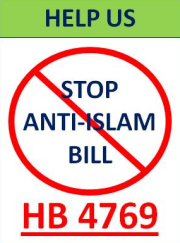
The legislation that Agema introduced in June is HR Bill 4769. However, the MLive article does not give any information on what the bill states, it only provides a forum for Agema to give his opinion on why he thinks the bill should be adopted.
Agema is using the introduction of this legislation to promote his own brand of Islamophobia, by suggesting that Muslims want to impose their religious laws on the US legal system. Agema’s Islamophobia is right in line with the kind of systemic anti-Muslim hysteria that has been promoted in much of the US mainstream media as has been well documented in a report by Fairness & Accuracy in Reporting, entitled Smearcasting.
Agema’s use of Islamophobia is also consistent with what has been happening in political circles all across the country. The Center for American Progress just released a report entitled Fear Inc: The Roots of the Islamophobia Network in America. This report sheds light on those who are financing anti-Muslim sentiment, the front groups, think tanks and politicians who are at the forefront of the Islamophobia effort in the US at the federal level.
Agema even presented information about his anti-Muslim legislation at a Pro-Israel rally held in downtown Grand Rapids last week, a message that fit well into the anti-Islam messages of the other speakers.
The MLive story does provide a counter perspective by citing Dawud Walid, executive director of the Council on American Islamic Relations (CAIR). However, the quote from Walid was just a recycled comment from a previously posted MLive article, which does not provide the same opportunity to respond to this issue in the way that Agema was able to.
There is a more detailed response by Walid in a video statement posted one week ago that you can watch below. Many Muslim groups in the state as well as the Michigan ACLU and the NAACP are calling on people to resist this legislation and there is an online petition people can sign if they oppose HR Bill 4769.
Four Heretical Thoughts and More in the Wake of the Obama Disaster
(This article by Paul Street is re-posted from ZNet.)
I do not gently contemplate the possibility of an evangelical proto-fascistic dolt like Texas Governor Rick Perry walking into the White House. That is not a pretty prospect for anyone with hopes for the future. Ditto for Michelle Bachman and others in the Republican presidential field. As the Princeton political scientist Sheldon Wolin noted three years ago, well before the rise of the much ballyhooed Tea Party phenomenon: “The character of the Republican Party reflects a profound change: radicalism has shifted its location and meaning. Formerly it was associated with the Left [but now it is] the property of those who, quaintly, call themselves ‘conservatives’ and are called such by media commentators….It is hard to imagine any power more radical in its determination to undo the social gains of the past century.” 1
1. Dismal Democrats Empower the Right
Still, as I look across the ever more right-tilting landscape of America’s one-and-a-half party system, I can’t escape four basic thoughts that are certain to strike many “liberal” Democrats as unforgivable heresy. My first thought, hardly original, is that the Democrats have opened the door to the ever more right wing Republicans with their own excessive tepid corporatism and related class elitism. Given the closeness of the 2004 race and the unpopularity of the heavily plutocratic George W. Bush administration by the summer of 2004, the spectacularly wealthy Democratic presidential candidate John Forbes “I am Not a Redistribution Democrat” Kerry (the quote comes from a comment he made at a posh Manhattan fundraiser during the 2004 campaign)[2] would likely have won the election if he’d run further to the populist left after achieving the Democratic nomination. (With all due respect for the roles played by Republican shenanigans in Florida and a preposterous and partisan vote in the U.S. Supreme Court in the installation of George W. Bush, the same is probably true of Al Gore’s centrist campaign in 2000).
His failure to do so followed in accord with Thomas Frank’s reflections on why many working class Americans vote Republican in Frank’s widely read book What’s the Matter With Kansas? How Conservatives Won the Heart of America. Released just before Bush defeated Kerry with no small help from working class whites, Frank’s book has generally been taken to have argued that plutocratic Republicans have cleverly conjured working class whites away from their own supposed “pocketbook interests” in the Democratic Party with “cultural wedge issues” like abortion, gun rights, religion, and gay marriage. At the end of his book, however, Frank blamed the shift of the post-New Deal Democratic Party to the corporate right and away from honest discussion of – and opposition to – economic and class inequality for much of whatever success the GOP achieved in winning white working class voters.
“‘New Democrats’…rule out what they deride as ‘class warfare’ and take great pains to emphasize their friendliness with business. Like the conservatives, they take economic issues off the table. As for working-class voters who were until recently the party’s very backbone, the DLC figures they will have nowhere else to go; Democrats will always be marginally better on economic issues than Republicans….The problem is not that Democrats are monolithically pro-choice or anti-school prayer; it’s that by dropping the class language that once distinguished them sharply from Republicans they have left themselves vulnerable to cultural wedge issues like guns and abortion and the rest whose hallucinatory appeal would ordinarily be overshadowed by material concerns.”3
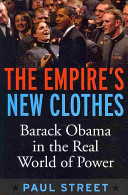
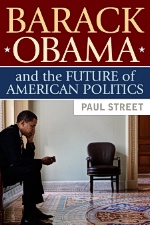
Contrary to Frank, the Democrats’ difficulty is not so much the loss of working class votes to the racist, homophobic, and sexist “rancid populism” (William Greider’s excellent phrase) of the right as it is about shutting down and depressing a critical mass of the Democrats’ support base.[4] The problem continues even when the Republicans screw up badly enough to lose control of both the White House and (briefly) Congress. As predicted in my 2008 book Barack Obama and the Future of American Politics, the dismal dollar Democrats’ demobilization of the working class, minority, and progressive forces (such as they are) deepened a dangerous anger and activism vacuum on the left and has played itself out with standard rightward consequences that are all too chillingly reminiscent of pre-Nazi Germany. As I documented in my 2010 book The Empire’s New Clothes: Barack Obama in the Real World of Power and in my 2011 book (co-authored with Anthony DiMaggio) Crashing the Tea Party: Mass Media and the Campaign to Remake American Politics, the in-power Obama-Pelosi-Reid Democrats steered to the business-friendly center-right, savagely betraying their “progressive base” on numerous issues of economic and social justice and war (not to mention civil liberties and ecology), thereby opening the door for an epic “conservative” victory in the 2010 mid-term elections. The Democrats suffered from significant declines in voter participation on the part of segments of the electorate that played key roles in their triumphs in the 2006 (Congressional) and 2008 (Congressional and presidential) elections – union households; young voters, black voters. By contrast, voters who identified themselves as “conservative” increased their share of the active electorate significantly from 2006 and 2010.[5] This was all it took for the right to clean up in a mid-term, when turnout is considerably smaller than during a race that includes a presidential contest.
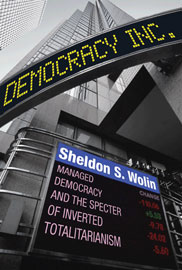
Wolin easily foretold this Democratic performance in his chilling 2008 book Democracy Incorporated:
“The timidity of a Democratic Party mesmerized by centrist precepts points to the crucial fact that, for the poor, minorities, the working-class, anti-corporatists, pro-environmentalists, and anti-imperialists, there is no opposition party working actively on their behalf. And this despite the fact that these elements are recognized as the loyal base of the party. By ignoring dissent and assuming the dissenters have no alternative, the party serves an important, if ironical, stabilizing function and in effect marginalizes any possible threat to the corporate allies of the Republicans. Unlike the Democrats, however, the Republicans, with their combination of reactionary and innovative elements, are a cohesive, if not a coherent, opposition force.”
Obama’s liberal apologists complain about how their supposedly progressive President is now checked at every turn by terrible Republicans. As the Associated Press reported two weeks ago, “liberal angst has surfaced repeatedly over the past year as Obama has faced the reality of divided government in the aftermath of the 2010 congressional elections, in which Republicans won the House.”[6] But it is questionable how blocked Obama feels, since he appears to be something of a Republican in his own right. And Obama and other top Democrats bear no small burden of responsibility for the exaggerated power of the right in the U.S. What did they deliver to their purported popular constituency in 2009 and 2010, prior to the onset of “divided government,” when they held not just the White House but also a significant, filibuster-proof majority in the Congress? With its monumental bailout of hyper-opulent financial overlords, its refusal to nationalize and cut down the parasitic too-big (too powerful)-to-fail financial institutions that have paralyzed the economy, its passage of a health reform bill that only the big insurance and drug companies could love (consistent with Rahm Emmanuel’s advice to the president: “ignore the progressives”), its cutting of an auto bailout deal that rewards capital flight, its undermining of serious global carbon emission reduction at Copenhagen, its refusal to advance serious public works programs (green or otherwise), its disregarding of promises to labor and other popular constituencies, and other betrayals of its “progressive base” (the other side of the coin of less advertised promises kept to its corporate sponsors), the “change” and “hope” the 2009-10 Obama presidency and Democratic Congress starkly demonstrated the power of what Edward S. Herman and David Peterson call “the unelected dictatorship of money.” As the left liberal author Bill Greider noted in a Washington Post column titled “Obama told Us to Speak but Is He Listening?” in early 2009: “People everywhere [have] learned a blunt lesson about power, who has it and who doesn’t. They [have] watched Washington run to rescue the very financial interests that caused the catastrophe. They [have] learned that government has plenty of money to spend when the right people want it.”[7] The “right people” include the top military contractors and the Pentagon, as the “new” White House has escalated Superpower violence in South Asia, passed record-setting “defense” (Empire) budgets, rolled over George W. Bush’s not-so counter-terrorist assault on human rights (in the name of “freedom”), extended the imperial terror war to Yemen and Somalia, disguised escalated U.S. occupation of Haiti as humanitarian relief, and aided and abetted a thuggish right wing coup in Honduras. “Liberal angst” is coming rather late in the game if it surfacing just this year.
Though the Republican Party remains highly unpopular and is having difficulty finding a serious presidential candidate, it is hardly guaranteed that cringing corporate centrism will not cost the Democrats the “big prize” – the White House – in 2012. Most of the “progressives” and liberal activists who express “disappointment” and “surprise” at “our black president’s”[8] predictable (and predicted) center-right policy record can be counted on to vote for him again out of fear and hatred of the terrible Tea.O.P. But some, perhaps many, angry and disenchanted liberals will refuse to volunteer to make phone calls or knock on doors and to make modest campaign contributions (I have spoken with a number of such liberals in recent weeks). Working class, minority, and youth turnout for Obama and the Democrats will be considerably lower and “grassroots” get-out-the-vote energies will be slighter, thanks to Obama’s “New Democrat” approach. The New York Times’ political reporter Jackie Calmes asked the leading liberal activist Robert Borosage (co-director of Campaign for America’s Future) what price the Democrats might pay in the next election for the fact that the president “has adopted the Republicans’ language and in some cases their policies.” Borasage noted that “the activist liberal base will support Obama because they’re terrified of the right wing” but added that “the voting base of the Democratic Party — young people, single women, African-Americans, Latinos — are going to be so discouraged by this economy and so dismayed unless the president starts to champion a jobs program and take on the Republican Congress that the ability of labor to turn out its vote, the ability of activists to mobilize that vote, is going to be dramatically reduced.”[9] That’s a big “unless” – one that Obama is unlikely to overcome in his forthcoming Labor Day jobs speech.
2. The Moral and Practical Price of Lesser Evil-ism

My second heretical thought is that liberals and leftists only encourage this kind of deadly nonsense by announcing in advance they will vote for Democrats to block Republicans. The great left intellectual Noam Chomsky has long advised (with no particular strong emphasis or enthusiasm, it should be noted) leftists to vote tactically for Democrats in contested American elections since the winner-take-all and narrow “two party” nature of U.S. elections means that a third party vote can swing a contested race to the right and because even small differences between the two reigning business parties can carry big consequences for millions of disadvantaged people in a system of vastly concentrated power and wealth like that one the prevails in the U.S. It’s an important moral point to keep in mind if and as one enters that venerable “coffin of class consciousness” (to quote the late radical historian Alan Dawley) known as the American ballot box in an election where the two viable candidates are in a closely matched battle. But we must also weigh the moral and practical price of telling the Democrats in advance that they – and not the only other party that can actually defeat them under the rules of the U.S. elections system – can count on our votes no matter how far right they drift, Listen to the following remark from Mark Mellman, a Democratic pollster, who spoke to the New York Times four weeks ago about Democratic voters will line up with Obama no matter how far right he drifts because of how bad the G.O.P is: “Whatever qualms or questions they may have about this policy or that policy, at the end of the day the one thing they’re absolutely certain of — they’re going to hate these Republican candidates. So I’m not honestly all that worried about a solid or enthusiastic base.”[10] Progressives’ less-evil-ism is at least partly to blame for Mellman’s smugness, which nicely captures elite Democrats’ basic attitude towards those beneath and to the left of their party’s capitalist and imperial behavior: “screw ‘em, they’ve got nowhere else to go.”
We might, moreover, examine the moral price of helping put into power the business party that is better at cloaking neoliberal policy and imperialism in fake-progressive clothing – at putting a supposedly human and popular face on corporatism and militarism. The Republicans are at least more transparent and explicit in announcing their plutocracy, nationalism, militarism, sexism, nativism, and racism.
3. Outrages That Are Wrong Under Republicans Become Acceptable Under Democrats
My third heretical thought, intimately related to the last reflection, is that we almost seem to need to have Republicans in power for much of the nation’s progressive and liberal community to engage in meaningful social protest and movement-building. Last summer when then White House Press Secretary Robert Gibbs called for “drug testing” for the “professional left,” I proposed an “ObamaLaid test.” My examination would have been applied all those supposedly left and liberal Americans who opposed criminal wiretappings, immoral and illegal wars, plutocratic bankers’ bailouts, corporate environmental outrages, and other vile policies when they were implemented in the name of a white Republican moron from West Texas but who became all too strangely silent when those same policies were enacted under the portrait of a supposedly eloquent black Democrat from Chicago. As Cindy Sheehan noted in 2009, thinking of all the liberals she could no longer interest in opposing Washington’s imperial policies, “Wars that were wrong under Bush become acceptable under Obama.” She could have made much the same point in relation to numerous Orwellian police state policies, to bankers’ bailouts, to U.S. enablement of criminal right wing coups in Latin America, and to much more.
Consistent with Sheehan’s complaint, a major study published by University of Michigan political scientist Michael Heany and his colleague Fabio Rojas of Indiana University last spring found that the U.S. antiwar movement demobilized as Democrats withdrew from antiwar protests when the Democratic Party achieved electoral success, first with Congress in 2006 and then with the presidency in 2008. Democrats had been sparked to participate in antiwar activities when the war (the invasion and occupation of Iraq) they purported to oppose was being conducted by a Republican president. “As president,” Heany notes, “Obama has maintained the occupation of Iraq and escalated the war inAfghanistan…The antiwar movement should have been furious at Obama’s ‘betrayal’ and reinvigorated its protest activity. Instead, attendance at antiwar rallies declined precipitously and financial resources available to the movement have dissipated. The election of Obama appeared to be a demobilizing force on the antiwar movement, even in the face of his pro-war decisions.” [11]
Looking at Heany and Rojas’ study the other day, I was reminded of my futile counsel to the local campus antiwar group in Iowa City (the now defunct “University of Iowa Antiwar Committee”) in the summer of 2008: “protest at the [Obama-nominating] Democratic national convention in Denver, Colorado, not the [McCain-nominating] Republican national convention in St. Paul, Minnesota. Obama,” I told disbelieving “activists,” is “the next president, the empire’s next and new clothes. He will continue the war on Iraq and expand the one in Afghanistan.” There is no longer an antiwar movement in Iowa City, thanks to the departure of the best activists, the nefarious activities of an FBI informant, internal squabbles over personalities and Israel, and – last but not least – the significant demobilizing impact of an imperial Democratic president who deceptively ran as an antiwar candidate.
Look at the remarkable mass protests that broke out in Madison against Wisconsin governor Scott Walker’s brash public sector union-busting offensive last February and March. They seemed like an inspiring monument to Howard Zinn’s call for citizens and activists to remember that how the really important question isn’t “who is sitting in the White House, but who is sitting in—in the streets, in the cafeterias, in the halls of government, in the factories.” Still, the ease with which the giant marches and protests were shut down and rank and file energies directed into Democratic Party campaigns to recall Republican state legislators and Walker after mid-March makes it hard not to suspect that the protests had quite a bit to do with the party identity of who was sitting in the governor’s mansion and state senate. The state-level labor rebellion that emerged in response to right wing provocations in Wisconsin (and also in Ohio and Indiana) is a most welcome development – no small step in the direction the nation’s all-too hidden, under-reported and under-mobilized progressive majority needs to take if political and social democracy and sane, balanced, and egalitarian policy are going to survive and advance in 21st century America. Still, it is one thing for existing labor institutions and leaders (themselves heavily integrated into the nation’s reigning state-capitalist order) to rally popular masses in defensive response to the worst policy outrages of the most reactionary politicians in the rightmost wing of America’s corporate-ruled “one-and-a-half party system.” It is another thing to wield and expand popular pro-actively and against the richly bipartisan neoliberal business agenda and to capture and act meaningfully on the legitimate popular anger that “the Tea Party” and the broader right has at times been able to exploit and misdirect. The political observer Chris Green raised a good question in a private communication with me (via the mostly disastrous medium called Facebook) on February 22, 2011. “Is this progressive movement going to operate,” Green asked, “within traditional limitations, especially those imposed by the union leadership? That is, are they only going to protest Republican governors and not pro-cut Democrat governors in places like New York, California and Illinois? This will be the challenge, not to get co-opted by the Democrats.” Indeed, the Austerity Party is not limited to the Republicans. The left commentator Doug Henwood offered some sage and sobering advice at the end of a generally quite favorable and optimistic take on the eruption of labor protest in Wisconsin:
“It may be that had Walker not gone for such a maximalist agenda, this sort of protest might not have happened. Other governors may take note and opt instead for the death by a thousand cuts instead of one giant machete chop. But of course, it’s not just Republicans. Democratic governors like Jerry Brown and Andrew Cuomo also have it out for public sector workers, since, as everyone knows, you just can’t tax the fat-cats these days. And you do have to wonder how aggressive unions in California and New York will be in protesting Democratic governors.”12
A correspondent from California recently wrote me with a poignant reflection on what passes for a left in his state. Many liberal and progressives he knows are sitting on their hands in response to anti-labor and other regressive provocations from the California governors’ office because that office’s current occupant is a Democrat named Jerry Brown. “It is amazing and dumbfounding,” my correspondent writes, “to watch this every-4-year cycle of hopes hyped then predictably smashed. We live in California and Jerry Brown is getting a pass, from the same folks that if [the Republicans’ 2010 gubernatorial candidate] Meg Whitman had won and was doing exactly what Brown is doing, would be having a cow.” With Whitman running Sacramento, “left” activists would be in the streets, protesting policies they seem unable to openly oppose with Brown in nominal power atop corporate California.
4. John McCain for President?
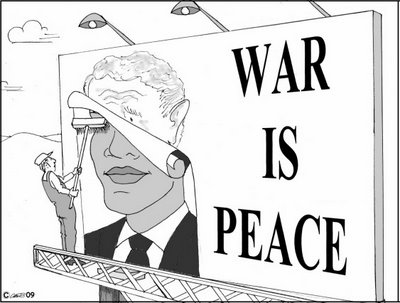
My fourth heretical thought is that insofar as anything remotely progressive can actually take place within the American one-and-half party political system (I’m not sure it can, in all honesty), we’d be better off in the medium term if John McCain had won in 2008. Think about the counter-factual scenario from the perspective of a Democratic Party “progressive.” The corporate crack white- nationalist neoconservative Republican Party rather than the corporate Coke neoliberal Democrats would wear the Herbert Hoover yoke of the greatest capitalist slump since the 1930s – a slump that McCain would have done little or nothing to alleviate. Democrats rather than Republicans would have gained in the mid-term elections. Liberal and left progressives would be in the streets and building movements and sparking actions without the paralyzing Kool Aid of a Democrat (what’s more a Democrat with a non-traditional ethno-cultural identity) in the White House. It is doubtful that the Scott Walker and David and Charles Koch “Tea Party” would have arisen as a vehicle for the most crazed wings of concentrated wealth to push U.S. politics yet more rightward had a Republican (even a McCain) sat in the White House during the last two and half years. Had McCain won, a Democrat would be poised to roll into 1600 Pennsylvania Avenue with a long-building mandate for progressive change from a furious working and lower class majority, its anger stoked by the continuation of a Great Recession that would be clearly owned by the party of Hoover, Bush, and McCain. Instead, of course, we got a premature, pre-emptive, and popular expectation-managing brand shift toward the Democrats just as the financial crisis kicked in, followed by a neoliberal Barack O’Hoover administration (definitely NOT the “Franklin Delano Obama” White House that leading national liberal Paul Krugman dreamed about[13]) that may or may not hang on to prevent the emergence of a new Christian Fundamentalist presidency with potentially lethal consequences at home and abroad.
Beyond the Electoral Delusion
Ah, but what am I thinking? The ruling class always has the option of pulling the other major party brand out from the back of the shelf when the one in power (out front) runs into trouble and the populace-pacifying Democrats are always waiting in the wings to calm and co-opt the angry masses and their “populist rage” (the dominant corporate media’s condescending term) if things get too hot and alienated under the more explicitly authoritarian rule of the Republicans.[14] A McCain administration would have helped Democrats continue to avoid any blame for wars and other corporate and imperial outrages they support – to blame everything on the Republicans and to pose as a meaningful popular opposition party. What really matters is that citizens and activists develop the capacity to build energetic rank and file social and political movements whichever party beneath and beyond the “two party system” and the narrow spectrum big money big media candidate-centered “electoral extravaganzas” (Noam Chomsky’s term [15]) the masters stage for us every two and four years, telling us “that’s politics” – the only politics that matter. We must develop the capacity for such activism with Democrats as well as Republicans in the Washington saddle. Such activism is currently on display with the significant action being undertaken by Bill McKibben and thousands of other courageous ecological activists in opposition to the Obama administration’s revolting alliance with Big Oil’s Keystone Pipeline Project – an environmentally disastrous assault on Canadian ecology, global climate, and U.S. American water safety. 16
Though I protest-voted (in a “safe,” that is, un-contested state) for Nader in 2008, I wanted Obama to win the election for what might seem like on odd reason. I thought there was radical potential in U.S. voters and citizens, especially younger ones (for whom war, empire, and plutocracy seemed to be all about George W. Bush and Republicans), experiencing corporate and imperial rule under a Democratic administration. I wanted Americans to come into more direct and visible contact with the bipartisan nature of the American imperial and business system and to confront the gap between their rising and ridden expectations and the harsh reality of persistent top-down corporate, financial and military rules with Democrats at the nominal helm of the ship of state. I wanted them to be subjected to the reality that (in Marxist writer Doug Henwood’s words) “everything still pretty much sucks” when Democrats hold the top political offices – that the basic institutional reality stays the same with the other business party in official charge. As the antiwar activist, author, and essayist Stan Goff put it last year, “I’m glad Obama was elected. Otherwise, people would blame the war on McCain and the Republicans and continue with the delusion that elections can be our salvation. The modern nation-state was created by war, of war, and for war. That is its only real purpose, and all others are subordinate to it. You can change the executive director but he/she is still the commander in chief. That’s the job description.” The Age of Obamanistic betrayal would, I hoped, be a very teachable, left-moving moment for serious American progressives. Thinking of many reported and under-reported examples of popular resistance that have occurred this year – U.S. Uncut’s actions against corporate tax breaks and loopholes enjoyed by Bank of America[17] and other big government bailout recipients, the Midwestern public worker rebellion sparked in Madison earlier this year, the recent Verizon strike, recent mass Latino protests against the Obama administration’s, mass-deportation-ist “Secure Communities” program[18], the current protest of the Keystone project, and (looking ahead) a forthcoming October convergence against war and corporate greed in Washington[19]– I have yet to give up on that possibility and the notion that a critical mass of Americans can undertake significant action against concentrated wealth and power with dismal fake-progressive Democrats as well as radical messianic Republicans holding down the White House.
Selected Notes
1 Sheldon Wolin, Democracy Incorporated: Managed Democracy and the Specter of Inverted Totalitarianism (Princeton, NJ: Princeton University Press, 2008), 206.
2 Paul Street, “Kerry’s Predictable Refusal to Make Bush Pay for Rising US Poverty,” Dissident Voice (September 8, 2004) at http://dissidentvoice.org/Sept04/Street0908.htm
3 Thomas Frank, What’s the Matter With Kansas? How Conservatives Won the Heart of America (New York: Metropolitan, 2004), 242-43, 245.
4 For early reflections, see Paul Street, “Frank Discussion: Moral-Economic Abandonment, Race, Security, and Psychological Wages,” ZNet(November 6, 2004).
5 Karlyn Bowman, “What the Voters Actually Said on Election Day,” The American (November 16, 2010), citing CBS exit polls at http://www.american.com/archive/2010/november/what-the-voters-actually-said-on-election-day. For a detailed analysis of the November 2010 mid-term elections, see Paul Streetand DiMaggio, Crashing the Tea Party: Mass Media and the Campaign to Remake American Politics (Paradigm, 2011), Chapter 7: “Elections 2010: The Democrats’ Mid-term Disaster, the Tea Party, and the Challenge to Progressives.”
6 Associated Pres, “Liberal Democrats Complain About Obama: Will it Cost Votes?” The Gazette (Cedar Rapids, IA), August 20, 2011, 7A. Relating yet another terrible story of Obama’s servility to “the unelected and interrelated dictatorships of money and empire”…at the Lucy Parsons Center in Boston, August 24, 2010.
7 William Greider, “Obama Asked Us to Speak But is He Listening?” Washington Post, March 22, 2009.
8 Paul Street, “Whose Black President? Getting Things Done for the Rich and Powerful,” CounterPunch (July 30, 2011) at http://www.counterpunch.org/2011/07/30/whose-black-president/
9 Jackie Calmes, “Rightward Tilt Leaves Obama with Party Rift,” NYT, July 30, 2011, A1.
10 Calmes, “Rightward Tilt.”
11 Michael T. Heaney and Fabio Rojas, “The Partisan Dynamics of Contention: Demobilization of the Antiwar Movement in the United States, 2007-2009,” Mobilization: An International Journal, 2011, 16 (1): 45-64, read at http://www-personal.umich.edu/~mheaney/Partisan_Dynamics_of_Contention.pdf. As the University of Michigan press release explains: “Heaney and Rojas analyzed the demobilization of the antiwar movement by using surveys of 5,400 demonstrators at 27 protests mostly in Washington,D.C., New York, Chicago and San Francisco from January 2007 to December 2009. The surveys asked questions on basic demographics, partisan affiliations, organizational affiliations, reasons for attending the events, histories of political participation, and attitudes toward the movement, war and the political system…. In addition, the researchers observed smaller, more informal events at which antiwar activists gathered, including Capitol Hill lobby days, candlelight vigils, fundraisers, small protests, planning meetings, training sessions, parties, the National Assembly of United for Peace and Justice and the U.S. Social Forum. They also interviewed 40 antiwar leaders about their personal backgrounds, the inner workings of the antiwar movement, political leaders and the Democratic Party…Their study found that the withdrawal of Democratic activists changed the character of the antiwar movement by undermining broad coalitions in the movement and encouraging the formation of smaller, more radical coalitions….After Obama’s election as president, Democratic participation in antiwar activities plunged, falling from 37 percent in January 2009 to a low of 19 percent in November 2009, Heaney and Rojas say. In contrast, members of third parties became proportionately more prevalent in the movement, rising from 16 percent in January 2009 to a high of 34 percent in November 2009….’Since Democrats are more numerous in the population at large than are members of third parties, the withdrawal of Democrats from the movement in 2009 appears to be a significant explanation for the falling size of antiwar protests,’ Heaney said. ‘Thus, we have identified the kernel of the linkage between Democratic partisanship and the demobilization of the antiwar movement.’…Using statistical analysis, the researchers found that holding anti-Republican attitudes had a significant, positive effect on the likelihood that Democrats attended antiwar rallies. The results also show that Democrats increasingly abandoned the movement over time, perhaps to channel their activism into other causes such as health care reform or simply to decrease their overall level of political involvement. ‘Overall, our results convincingly demonstrate a strong relationship between partisanship and the dynamics of the antiwar movement. While Obama’s election was heralded as a victory for the antiwar movement, Obama’s election, in fact, thwarted the ability of the movement to achieve critical mass.’”
12 Doug Henwood, “Wisconsin Erupts,” Left Business Observer, February 16, 2011 at http://lbo-news.com/2011/02/16/wisconsin-erupts/
13 Paul Krugman, “Franklin Delano Obama,” New York Times, November 10, 2008. See Paul Street, “The Economics of Barack O’Hoover: Obama and the Business Culture,” CounterPunch (August 12,, 2011) athttp://www.counterpunch.org/2011/08/12/the-economics-of-barack-ohoover/
14 See Lance Selfa’s sophisticated Marxist presentation in his book The Democrats: A Critical History (Chicago: Haymarket, 2008). As Selfa notes, the two reigning U.S. business parties are not identical. To be sure, the differences that separate the Democrats from the Republicans are “minor,” “in comparison to the fundamental commitments that unite them” (p. 13). Still, Selfa reminds us, corporate America would have no reason to embrace a two-party system if there were no differences at all between the two competing “subdivisions” of what Ferdinand Lundberg once called “The Property Party.” The U.S. ruling class profits from a narrow-spectrum system wherein one business party is always waiting in the wings to capture and control popular anger and energy when the other business party falls out of favor. The parties are not simply interchangeable, however. It is the Democrats’ job to police and define the leftmost parameters of acceptable political debate. For the last century it has been the Democrats’ special assignment to play “the role of shock absorber, trying to head off and co-opt restive [and potentially Left, P.S.] segments of the electorate” by posing as “the party of the people.” The Democrats performed this critical system-preserving, change-maintaining function in relation to the agrarian populist insurgency of the 1890s, the working-class rebellion of the 1930s and 1940s, and the antiwar, civil rights, anti-poverty, ecology, and feminist movements during and since the 1960s and early 1970s (including the gay rights movement today). The “such absorber” role continues into the 21st century.
15 Noam Chomsky, Interventions (San Francisco: City Lights, 2007), pp. 97-100.
16 See Amy Goodman, “D.C. Protests that Make Big Oil Quake,” Truthdig, August 23, 2011, athttp://www.truthdig.com/report/item/dc_protests_that_make_big_oil_quake_20110823/
17 Lucia Graves, “Liberal Tea Party? U.S. Uncut Disrupts Service at Bank of America,” Huffington Post (February 28, 2011) at http://www.huffingtonpost.com/2011/02/27/us-uncut-bank-of-america-liberal-tea-party_n_828782.html
18 “Latino Activists Take Aim at Obama Administration’s Secure Communities Program,” LatinoPoliticsBlog.com, August 17, 2011 athttp://latinopoliticsblog.com/2011/08/17/activists-take-aim-at-obama-administrations-secure-communities-program/; Latinos Across America Protest Obama’s Deportation Policies,”’ AlterNet, August 15, 2011 athttp://www.alternet.org/newsandviews/article/650572/latinos_across_america_protest_obama%27s_deportation_policies
19. http://october2011.org/quotes/kevin-zeese
Despite 2-weeks of protests in DC, Obama administration backs oil pipeline from Alberta to Texas
(This article by Suzanne Goldenberg is re-posted from The Guardian.)
The Obama administration has given an important approval to a controversial pipeline that will pump oil from the tar sands of Alberta to the Texas coast.
In a blow to campaigners, who have spent the last week at a sit-in at the White House, the State Department said the proposed 1,700-mile pipeline would not cause significant damage to the environment.

The State Department in its report said the project – which would pipe more than 700,000 barrels a day of tar sands crude to Texas refineries – would not increase greenhouse gas emissions. It also downplayed the risks of an accident from piping highly corrosive tar sands crude across prime American farmland.
Campaigners accused the State Department of consistently overlooking the potential risks of the pipeline.
“The State Department… failed to acknowledge the true extent of the project’s threats to the climate, to drinking water and to the health of people who would breathe polluted air from refineries processing the dirty tar sands oil,” Friends of the Earth said in a statement.
But Kerri-Ann Jones, the assistant secretary of state, rejected the charges. She argued that other government agencies had still to sign off on the project.
“This is not the rubber stamp for this project,” Jones told reporters, adding that the pipeline would not lead to an increase in greenhouse gas emissions, claiming Alberta was going to produce the crude anyway.
“The sense we have is that the oil sands would be developed and there is not going to be any change in greenhouse gas emissions with the pipeline or without the pipeline because these oil sands will be developed anyway,” she said.

Jones said that the State Department review had addressed some safety concerns, directing TransCanada, the pipeline operator, to bury the pipeline deeper.
The State Department will hold a series of public meetings on the pipeline next month and into October.
But with Friday’s decision the pipeline is now expected to come on line in 2013.
Over the last three years, the pipeline has become a central focus of environmentalist concerns, and Friday’s decision was rendered at the midpoint of a two-week sit-in at the White House against the project which has seen more than 100 arrested.
But the Canadian government and oil companies with a stake in tar sands production fought back with an intense lobbying effort.
Environmental campaigners argued the pipeline would encourage production of Alberta tar sands, which imposes a far heavier carbon footprint than other oils.
There was also opposition from homeowners along the Keystone’s proposed route through South Dakota, Nebraska, and Texas.
They warned the highly corrosive nature of tar sands oil put the pipeline increased the risk of accidents, and damage to important sources of groundwater.
Bill McKibben, who helped organise the protests at the White House, said the approval from the State Department had been expected. The secretary of state, Hillary Clinton, indicated last year that she favoured the pipeline.
“Everyone has known exactly what they would say all along. And everyone knows that they’ve valiantly ignored the elephant in the room – the fact that this would go a long ways towards opening up the world’s second-largest pool of carbon,” he wrote in an email.
However, McKibben held out hope that Obama – who still has final authority over the project – might step in to stop the pipeline.
Yesterday, MLive posted a story on the formation of the new Grand Rapids Black Chamber of Commerce. A similar story was aired on the local ABC affilate, WZZM 13.

In both stories, the creation of a Grand Rapids Black Chamber of Commerce is presented as the need for more diversity. Both Ken Harris (CEO of the MI Black Chamber of Commerce) and Bing Goei (former GR Chamber President) both cite the importance of having a Chamber specifically for the needs of Black Business owners.
Local lawyer and former Democratic Party candidate for the 3rd Congressional District Patrick Miles Jr. was quoted on MLive as saying that Grand Rapids is an entrepreneurial city. “But we know we need to do better and more to … draw on the best from people here to create more jobs, better jobs, better living conditions.”
While this may sound well intentioned, there is no clear plan about how it will create better living conditions, especially for Black people. According to the Kids Count Michigan 2011 report, “African-American children are seven times more likely to spend half or more of childhood in poverty compared with white children.”
Addressing the disproportionate level of poverty amongst Black children would seem to be an important focus for any such effort, yet there is no indication that this is what the new Black Chamber will put energy to. The Michigan Black Chamber of Commerce website doesn’t address these kinds of issues, but they do have a 5 Pillars of Service section. Included in these pillars are – access to capital, gaining more contracts for Black owner businesses, legislative lobbying and developing best practices.
The function of any Chamber of Commerce is to look out for the economic interests of the business community. At the national and local level, this means that the Chamber of Commerce will take action against worker rights and fight for deregulation, which often leads to more environmental destruction. There is no indication that any Chamber of Commerce will create better living conditions for people, no matter what the racial makeup is of the group.
Black liberationists would argue that in order for their to be economic justice for Black people that there first needs to be reparations paid to Black people for the amount of wealth that was stolen from their labor and property during slavery and Jim Crow America.
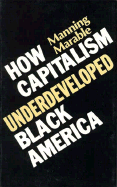
Other Black liberationists such as the late Black scholar Manning Marable would argue that African Americans should fight against the economic system of Capitalism. Marable’s book on this topic is must reading for anyone who wants to come to terms with why Capitalism can never eliminated poverty, particularly for Black America.
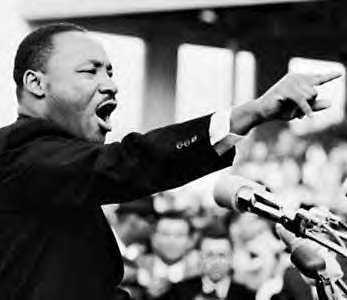
Lastly, it would be worth citing Dr. Martin Luther King Jr, who in the last few years of his life was increasingly critical of the wealth disparity in the US and even of Capitalism.
“We are now making demands that will cost the nation something. You can’t talk about solving the economic problem of the Negro without talking about billions of dollars. You can’t talk about ending slums without first saying profit must be taken out of slums. You’re really tampering and getting on dangerous ground because you are messing with folk then. You are messing with the captains of industry….Now this means that we are treading in difficult waters, because it really means that we are saying that something is wrong…with capitalism…here must be a better distribution of wealth and maybe America must move toward a Democratic Socialism.”
The analysis that Dr. King and Manning Marable provide us should be reason enough to not see the creation of a Grand Rapids Black Chamber of Commerce as doing anything more than perpetuating an economic system that doesn’t care about the well being of most people.
Chomsky on Western attitudes about Arabs & terrorism

Noam Chomsky has written extensively on the issue of terrorism, particularly state terrorism in book such as Failed States: The Abuse of Power and the Assault on Democracy and Power and Terror: Conflict, Hegemony and the Rule of Force.
Seven Stories Press has just re-released his book 9/11 (with new chapters), a book that provided important analysis to counter the post – 9/11 cacophony that the US was attacked because the rest of the world hates democracy.
In this video by the British news agency The Guardian, Chomsky talks about Arabs, terrorism and state power. Chomsky is utilized by the foreign press on a regular basis, unlike the US press, which should tell us something about how the commercial media in this country operates.
Selling Islamophobia
(This article by Wajahat Ali is re-posted from CounterPunch.)
Exploiting fear, hysteria and ignorance has been a lucrative business for the Islamophobia network in America.
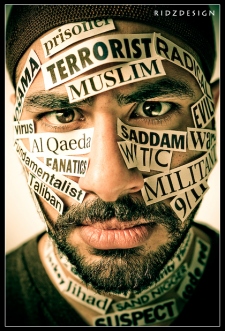
After a six-month-long investigative research project, the Center for American Progress Action Fund released a 138-page report, “Fear Inc: Exposing the Islamophobia Network in America”, which for the first time reveals that more than $42m from seven foundations over the past decade have helped empower a relatively small, but interconnected group of individuals and organizations to spread anti-Muslim fear and hate in America.
I, along with co-authors Eli Clifton, Matt Duss, Lee Fang, Scott Keyes and Faiz Shakir, expose this network in depth, categories it, trace the money trail to the donors, name the players in the network, connect the dots between them, and uncover the genesis of several fictitious threats such as the current “anti-sharia” fear sweeping the nation, as well as the protests of neighborhood mosques as alleged “Trojan horses” and incubators of radicalization.
We’ve defined Islamophobia as the following: an exaggerated fear, hatred and hostility towards Islam and Muslims that is perpetuated by negative stereotypes resulting in bias, discrimination and the marginalization and exclusion of Muslims from America’s social, political and civic life.
Healthy debate, disagreement and differences of opinion are a critical part of any civil society, and it is, in fact, necessary when discussing religion, race and politics. This report, however, targets those individuals who have clearly ventured towards poisonous extremist ideology and rhetoric by exploiting fears concerning terrorism and national security, as well general ignorance of Muslims, as a profitable vehicle to advance a hateful agenda.
The Islamphobia network in America is comprised of five categories:
• The money trail: a list of seven funders who have given nearly $43m to anti-Muslim organizations and think tanks.
• The Islamophobia scholars and policy experts: five individuals and their respective organizations that act as the central nervous system responsible for manufacturing the fictitious memes and fear-mongering talking points about Muslims and Islam. For example, Frank Gaffney’s neoconservative think tank, the Centre for Security Policy, has used its millions to misdefine sharia, or Islamic religious law, as the pre-eminent totalitarian threat to America, which radical Muslims will allegedly use to supplant and replace the US constitution. No religious Muslim scholar, let alone a practicing layman, would recognize this definition of sharia, which, in reality, deals primarily with personal religious observances, including practices such as charitable giving, prayer and honoring one’s parents, with precepts virtually identical to those of Christianity and Judaism.
• Grassroots organizations and the religious right: new and existing activist networks and mainstream popular religious personalities disseminate these messages to their constituents and elected officials. The organization Act! For America relies upon Frank Gaffney’s anti-sharia memes and promotes this fictitious threat through their 573 national chapters and 170,000 members worldwide. Currently, 23 states are in process of considering anti-sharia bills.
• The media enablers: the mainstreaming of this fringe, extremist rhetoric is aided by media allies in network TV (Fox News), radio (Rush Limbaugh, Sean Hannity, Glenn Beck), online magazines (World Net Daily, Front Page Magazine) and the Islamophobia blogosphere (Jihad Watch), which give Islamophobe talking-heads an influential pulpit to broadcast their misinformation.
• The political players: finally, these talking points end up as soundbites and wedge issues for politicians and, specifically, several 2012 Republican presidential candidates, such as Michele Bachmann, Herman Cain and Newt Gingrich, who all have jumped on the manufactured, fictitious “anti-sharia” bandwagon.
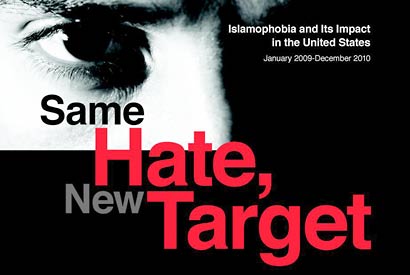
This fear-mongering rhetoric negatively affects our fellow Muslim American citizens and portrays them as perpetual hostile suspects, instead of our neighbors and allies. Currently, this has reached a crescendo resulting in certain communities attempting to curtail constitutionally protected rights and freedoms.
For example, we’ve witnessed grassroots organizations protest the construction of mosques, constitutionally protected houses of worship, in Tennessee, California and Brooklyn. In February, Muslim American families with young children attending a fundraising dinner in Yorba Linda, California were jeered by protesters who called them “Terrorists!” and told them “Take your sharia and go home, you terrorist lovers.” This was not the result of a spontaneous groundswell of public bullying, but rather a well-organized and highly effective effort orchestrated by principal grassroots organizations of the Islamophobia network, such as Act! For America, Stop Islamisation of America and state Tea Party groups.
For example, blogger Pamela Geller, the co-founder of Stop Islamisation of America and face of the manufactured “Ground Zero Mosque” controversy – which was neither a mosque nor at ground zero – clearly reveals her bias against Muslims when she equates practicing Muslims with Nazis: “Devout Muslims should be prohibited from military service. Would Patton have recruited Nazis into his army?”
Brigitte Gabriel, the “radical Islamophobe” founder of the effective, anti-Muslims grassroots network Act! For America, believes a practicing Muslim “who prays five times a day – this practicing Muslim, who believes in the teachings of the Koran, cannot be a loyal citizen to the United States of America.”
The Anti Defamation League has reviewed both of these groups’ rhetoric and actions and concluded they are simply promoting a conspiratorial agenda against Muslims under the guise of fighting radical Islam. This report exposes these alleged “patriots” for what they really are: the primary motivators of fear and bigotry in an economically uncertain and politically volatile climate that urgently needs less hate, division and fear-mongering. Instead, we desire a proactive, united effort towards moderation by embracing American values that protect our religious freedoms, ensure a vibrant, diverse democracy and sustain America as beacon of inclusiveness.
History has taught us that what’s happening to Muslim Americans right now is simply a remake. In the past, the characters were Jews, Irish Catholics, Japanese Americans and gays and lesbians. But America, despite sadly succumbing to hysteria in moments past, eventually – and sometimes grudgingly – tends to regain its moral compass and strive to become a nation resilient to fear and scapegoating.
Just like the McCarthyites before them, the individuals in the Islamophobia network revealed in the report should immediately cleanse themselves of their fear-mongering and ignorance, which may appear to offer short-term political gain but comes at the price of becoming the villains in our children’s history books.
Meet the New American Sweatshop

The activist group Cuentame has just released a new video that documents how the carwashes in the Los Angeles area are in many ways the new form of sweatshops in the USA.
The video was created to not only to raise awareness about this reality, but to get people in their own communities to investigate this issue. According to the Cuentame site:
“Carwash workers across the country are routinely abused, intimidated and exploited. They are subjected to obscene labor abuses and health hazardous conditions and often end up with severe kidney damage respiratory problems and nerve deterioration. Car wash workers are the face of the new American sweatshop.”
Last week, Michigan Senator Carl Levin returned from a 3-day trip to Afghanistan and Pakistan, along with fellow Senators Jeanne Shaheen and Jeff Merkle.
The three Senators released a brief statement on what they learned in that brief trip to those two countries. The statement begins with a comment about the “professionalism of our troops and at the high morale they maintain.” This comment seems a bit strange considering that August of 2011 has seen more US troops killed in Afghanistan that in any other month over the last 10 years.
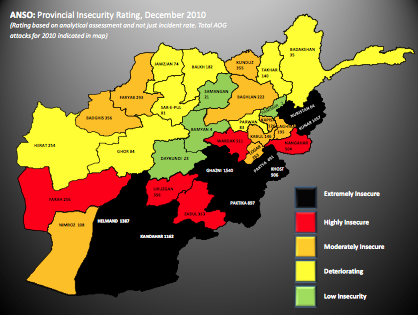
Levin’s statement goes on to say, “There has been militarily significant progress in Afghanistan since our last visits.” What the Senators mean by progress is their claim that some Taliban areas are now under US control and that the Afghan National Security Forces (ANSF) have increased in size and capability. Levin made the same claim of progress in Afghanistan when speaking in Grand Rapids last February, but a report released by the Afghaistan NGO Safety Office said: “Foreign military assertions that security in Afghanistan is improving are intended to sway Western public opinion ahead of a troop withdrawal and do not reflect the reality on the ground.”

The ANSF is what Levin has been holding up as the golden egg in Afghan and his main justification for continued support for the US occupation in Afghanistan since the US military escalation was announced by the Obama administration in December 2009. However, there have been independent reports that challenge the viability of the ANSF and demonstrate that they are also responsible for human rights violations.
The statement is short on what they observed in Pakistan and emphasizes the efforts to go after “terrorists groups” and their “safe havens.” Levin also makes the claim that attacks against these groups have taken Pakistani lives, but the Michigan Senator fails to mention that US Drone strikes have also killed many Pakistani civilians. According to the group Voices for Creative Non-Violence, an estimate 740 Pakistani civilians have been killed by US Drone strikes. However, Levin is likely to dismiss these deaths as nothing more than mistakes, which was what he said to the Council on Foreign Relations last October.
This was not information that Senator Levin was likely to hear since he met exclusively with US military officials, US diplomats, Afghan military leaders and Pakistani diplomats. Indeed, it seems that Levin and his fellow Senators are using these brief trips to Afghanistan to justify the ongoing US occupation of Afghanistan and the militarization of the region.
 Grand Rapids Institute for Information Democracy