Michigan Hate Crimes Conference 2011: Hate Groups in Michigan

The Michigan Civil Rights Commission and the Michigan Alliance Against Hate Crimes hosted a conference on hate crimes today in East Lansing, with several keynote speakers and breakout sessions dealing with various aspects of hate crimes.
According to the Director of the Michigan Civil Rights Department, Michigan leads the country in the amount hate groups that either are based in the state and/or groups that come to Michigan to harass and intimidate.
Before the first speaker addressed the audience, those in attendance were subjected to a message from Michigan Governor Rick Snyder. The message was mostly a welcome to those in attendance and a thank you to those who do the work in communities across the state. Snyder did say that his office was committed to passing anti-bullying legislation, since Michigan is one of the few states in the country that does not have such legislation. However, the kind of legislation that Snyder wants to pass would not have any teeth and would be a watered down version of what most of the country has adopted.

The opening plenary speaker was Rick Eaton with the Simon Wiesenthal Center. Eaton spent some time providing the audience some historical background on hate groups, such as the KKK in Michigan. The current manifestation of the Klan is the United White Knights of the Ku Klux Klan, which operates mostly on the east side of the state.
He then spoke about the American Nazi Party, which has chapters in several Michigan communities. Another White Supremacist group is White Honor, which is affiliated with the American Nazi Party. On their website, White Honor has numerous manuals that provide information on weapons manufacturing and other violence-based documents on how to promote their philosophy of hate.
Eaton also mentions that National Socialist Movement, which is based in Detroit. Eaton spoke about the rally they held in Toledo, which was confronted by anti-racist activists. However, the police targeted the anti-racist activists, with several being convicted and sentenced to jail time.
The speaker also addressed the number of Skinhead groups that are based in Michigan, such as the Hammerskins and Volksfront. Many of the skinhead groups promote their messages through music and concerts that appeals to younger audiences.
Then there are Christian Identity groups in Michigan, many of which had a strong relationship with various militia groups. Eaton cited numerous books that the Christian Identity groups use as inspiration.
Eaton ends by identifying emerging groups that are based in Michigan, such as anti-government, anti-tax, militia and Sovereign Citizens. These groups were “dormant” during the Bush years for a variety of reasons, but with the election of a Barack Obama they have increased their activity.
Some of their activity has been purely in the form of paper activism, where they publish handouts and flyers or legal documents to target law enforcement and judges who they have identified as enemies to their cause. Some of these groups are associated with the Patriot Broadcasting Network, Moorish Public Trust and the Hutaree Militia. Eaton was utilizing much of the data on hate groups identified by the Southern Poverty Law Center.
Eaton also argued that it was important for people to know that these groups exist and that awareness was half the battle. He also mentioned that every participant received a CD in their packets that have more details and data on these kinds of hate crimes entitled, Digital Terrorism & Hate 2011.
Sign Petitions to Recall Snyder This Saturday and Next Saturday
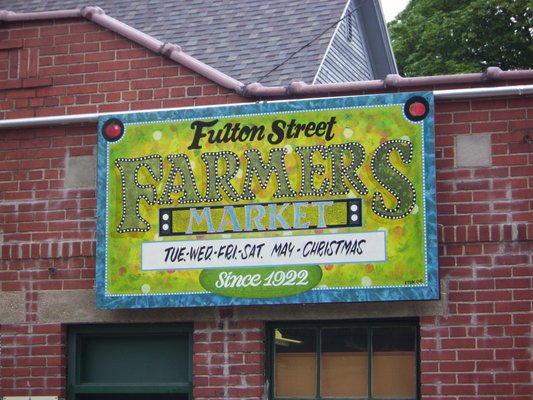
Don’t forget to stop by the Fulton Street Farmers’ Market on Saturday, September 10 between 8AM to 2PM. Activists from the campaign to recall the governor will have a station set up where you can sign a petition to place the recall of the governor on next February’s ballot.
The same group will be at the Farmers’ Market on Saturday, September 17, between 8AM and 2PM. These are the two best chances for Grand Rapids residents to sign petitions before the September deadline.
The Fulton Street Farmers’ Market is located at 1147 Fulton Street SE.
Koch Brothers’ donors includes the DeVos family
(This article is re-posted from OpenSecrets.org)

Research by the Center for Responsive Politics has helped Mother Jones profile the secret donors of the billionaire Koch brother’s charity organization. Audio recordings obtained by the investigative news organization captured Charles and David Koch at a tightly guarded fund-raiser in June thanking 32 of the “great partners” who donated more than $1 million to the Charles G. Koch Charitable Foundation, which, by law, isn’t required to publicly disclose its funders. Those individuals have also been among the biggest spenders in Washington.
A few of the notable supporters of the Koch organization include:
- The DeVos family, who have donated $2.82 million to political campaigns since the 1990 election cycle. Rich DeVos is owner of the NBA’s Orlando Magic and cofounder of Amway.
- Dick Farmer, the CEO of the Cintas Corporation, who, along with his wife, donated more than $1.1 million to Republicans during the 2002 election cycle alone. He also served as a bundler for Republican John McCain’s 2008 presidential bid.
- Joe Craft, who is head of the coal company Alliance Resource Partners, which gave $2.43 million to outside spending groups during the 2010 election cycle.
See the full list on Gavin Aronsen’s post at Mother Jones: “Exclusive: The Koch Brothers’ Million-Dollar Donor Club.”
Notably, people and political action committees associated with energy and chemical conglomerate Koch Industries have donated $9.6 million to political campaigns and committees since 1989, according to the Center’s research. The company also spends millions on lobbying, having spent $8 million last year alone.
This Day in Resistance History: Sitting Bull’s Railway Speech

On September 8, 1883, the Sioux leader Sitting Bull made a speech to government officials, railroad barons, and the U.S. military in honor of the completion of the Northern Pacific Railway. And on this one occasion, after a long and bloody attempt to defend his people and their lands from White invaders, Sitting Bull seized the chance to express his opinion of those he had opposed for so long against tremendous odds.
Some context: The lands of northern Montana and Idaho had not drawn as many settlers as other parts of the U.S. west, and for good reason. The harsh prairie environment included scalding summer heat, winter temperatures ranging from 10 to 40 degrees below zero, relentless winds without any tree breaks to slow them down, and a lack of water. But to the Sioux, these lands were perfect. The prairie tableland meant that they could ride their horses during hunting at top speeds. The buffalo provided for most of their food and clothing needs. They were able to hunt at will, and move to fresh hunting grounds when they wished.
Even with a relatively small invasion of Whites, the balance of this life was upset. Sitting Bull summed up the problem, a set of differences that went far beyond culture:
White men like to dig in the ground for their food. My people prefer to hunt the buffalo…White men like to stay in one place. My people want to move their tepees here and there to different hunting grounds. The life of white men is slavery. They are prisoners in their towns or farms. The life my people want is freedom.
But the settlers kept coming. In 1870, there were 5,000 of them, and another 15,000 soldiers at various forts. In 1880, 117,000 Whites lived in territory all around the government-mandated Sioux Reservation, plowing the fields up to plant wheat and destroying buffalo migration paths. By 1885, the number of settlers had doubled to 234,000.
The U.S. government did not just want the Sioux hunting grounds. They also wanted the Black Hills, where gold had been discovered in 1874. These lands are sacred to the Sioux, and when pushed to sell them, the Sioux Nation retaliated. General Custer was sent to drive back the two most important leaders, Sitting Bull and Crazy Horse, onto the reservation, leaving other Sioux lands undefended. The resulting Battle of Little Big Horn was a stunning defeat for the United States. This was a culmination of wars between the United States and the Sioux Nation that had been ongoing since 1862, the same year that the Homestead Act was passed.

One of the biggest raids on Indian lands was the confiscation of huge tracts that were transferred to the railroads. After the Battle of Little Big Horn, Sitting Bull led his people north to Canada, remaining there until 1881. By the time of his return, the railroad was close to completion; the containment of Indians on their reservations was ongoing; random raids and massacres of various bands that attempted to move to traditional hunting lands had become a feature of Indian life. And well underway was the systematic starvation of the Sioux through the U.S. government’s “Buffalo Harvest” program.
The buffalo, essential to the survival of the Sioux way of life, were being eradicated from the prairies. Hunters were paid a bounty to kill as many as possible. Huge mountains of buffalo skulls were common features on the prairies of the Dakotas and Montana. The purpose of this program was described by an army officer to reporter John F. Finerty: “Better [to] kill the buffalo than have him feed the Sioux.” The intention was not only to break the spirit of the Sioux Nation but also to force Indians to subsist on handouts from the government.
And it worked. Sitting Bull, on his return to Montana, watched 300 of his tribespeople starve to death during the winter of 1883 at Fort Peck. Neither the medical treatment nor food rations promised by the government were available to prevent this.
It was in this context that the Northern Pacific Railway, with incredible audacity, decided it would be a nice touch to their railroad completion celebration to have Sitting Bull deliver a speech. In Bury My Heart at Wounded Knee, it describes Sitting Bull’s surprising acceptance of the offer.

The ceremony was lavish, featuring the joining of the two ends of the railroad with a solid gold spike. Guests of honor included former President Ulysses S. Grant, Secretary of State Henry Teller, the governors of every state that the railway connected, Northern Pacific president Henry Villard, and the bankers and investors who would rake in the profits from their venture. Other guests included diplomats from Germany, Great Britain, and the Netherlands. Plus the defeated leader of the Sioux Nation, Sitting Bull, who had submitted a draft of his speech in advance for approval. The remarks had been co-written with a young Army officer who spoke Sioux and made extensive “suggestions” for Sitting Bull’s remarks.
Sitting Bull rode at the head of the parade with his army chaperone by his side. But when it was time for him to speak, the audience was surprised when the famous Indian warrior spoke in Sioux, not in English. Sitting Bull looked directly to the U.S. Secretary of State, to Grant, to the generals and railroad barons who sat before him. “I hate all White people,” he said. “You are thieves and liars. You have taken away our land and made us outcasts.” He went on to describe all the atrocities that his nation had endured at the hands of the United States. He would stop periodically to smile, and the audience applauded enthusiastically, assuming he was welcoming them and complimenting their great achievement. Sitting Bull would bow in return, then resume his scathing assessment of the White man’s corruption and dishonesty. Only the panic-stricken Army officer who had helped Sitting Bull draft the speech could understand him, and knew it was pointless to interrupt. Sitting Bull received a standing ovation at the end of his speech.
“I wish it to be remembered that I was the last man of my tribe to surrender my rifle,” Sitting Bull told the officers at Fort Buford when he turned himself in. In 1883, this great leader was an outcast, had starved nearly to death, and was a prisoner of U.S. policies. But he understood that his only path was continued resistance. With bullets, warriors, and even provisions taken from him, Sitting Bull still had his anger, his sense of justice, and the words that rendered his enemies into fools.
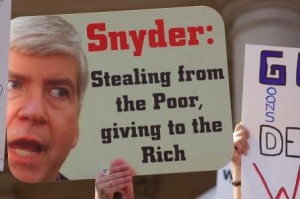
It was announced on Tuesday that local NBC affiliate WOOD TV 8 would host a “Town Hall” meeting with Michigan Governor Rick Snyder.
The channel 8 posting states, “A diverse group of West Michigan community members, from a variety of demographics, will be selected by WOOD TV8 to attend the live broadcast and participate by asking questions directly to the governor.” There are no details about how this diverse group will be selected, but based on previously broadcast events that WOOD TV has held in their studio it would be safe to say that this will be a highly scripted and controlled event.
Today, people with Michigan Stands for Democracy announced that there will be a protest outside of the WOOD TV 8 facility located on College Avenue, just north of Cherry Street. The protest is schedule for next Tuesday, September 13.
The Facebook announcement says the protest will take place from 7 – 8pm, the same time as the live broadcast that channel 8 will host with Snyder. The Michigan Stands for Democracy is part of the campaign to reverse the Emergency Financial Managers law that Snyder imposed on the state earlier this year.
Food Charity or Food Justice? Reporting on Hunger in Grand Rapids
Yesterday, a new project between the Grand Rapids Press and The Rapidian began in what they are calling the Grand Rapids Hunger Challenge.
Hunger Challenge Week is September 14 – 20, a these two local news entities decided that as a way of making people aware of hunger and food insecurity they would have a writer from each news outlet try to live off of a $30.59 a week food budget.
The Day 1 article on MLive talks about how both of the writers went shopping for food with their limited budget. The Press writer talked about being at a birthday party and not being able to eat ice cream and cake, while The Rapidian writer talks about how she was once herself on food assistance.
The Rapidian also has an opinion piece that has some useful statistics on hunger and the number of people who rely on food stamps, but the article, like the ones by the writers taking the “hunger challenge” do little to really address hunger and poverty in West Michigan.
Having people who have a certain level of class privilege try to follow a budget of people who are truly poor is a bit disingenuous. These kinds of exercises are like the “poverty simulations” that charity groups put on or the Planned Famines that high school church groups organize so that privileged kids can somehow understand what starving and malnourished children feel like. However, these attempts to sensitize people do not ask the fundamental and important reasons for why people in the richest nation in the world are going hungry.
Both the Press article and the Rapidian pieces never address the causes of hunger in the US. Having their writers try to live on a fixed food budget tends to put the emphasis on personal responsibility instead of systemic factors.
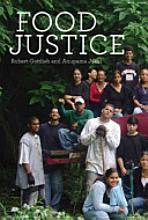
One of the oldest anti-hunger education organizations in the US is Food First. Food First has been working on both dispelling the myths about hunger and providing analysis of both food insecurity and how to actively organize against it. Food First looks at Food Deserts and how large monopoly grocery chains are buying up land in urban areas with little access to real food with their claim to “serving” poor communities.
Food First also addresses issues of economic and racial inequality and how that impacts who has access to food and what kind of food people have access to. In an excellent report on youth and food justice, the report looks at how there is a relationship to Jim Crow policies and the kind of food system we have in the US.
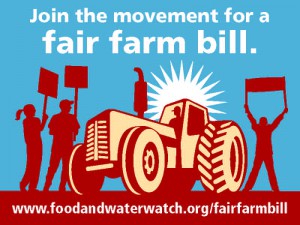
There is also a growing movement in the US that is advocating food justice, not food pantries. Food justice involves more urban food production, access to land for people to grow more of their own food, limitations on fast food restaurants being built in poor communities, community kitchens, Community Supported Agriculture and the efforts to challenge the grossly unjust food system we have in the US that is publicly funded through the Farm Bill.
In fact, Food and Water Watch is doing a national campaign to address the failed food system we have in the US and is even organizing in Grand Rapids. Their first meeting on this project to reform the Farm Bill will be held on September 21st at 7pm in the WMEAC building in Grand Rapids.
This kind of information and local analysis would not only address systemic reasons why people go hungry in West Michigan, it would challenge the charity-based food efforts that drive too much of hunger awareness in this community.
At Least Some Ministers Tell the TRUTH: Hip-Hop, Social Media and Revolutionary Politics
(This article by Jared Ball is re-posted from BlackAgendaReport.)
“To move from prank to political act and beyond will require more than industry-sponsored pop icons breaking trends and becoming radicals.”

In a recent editorial from The TRUTH Minista Paul Scott took only a few hundred words to raise some of the more relevant questions regarding hip-hop, Black radical politics and social media. What can be learned from a popular rapper, an allegedly misused Twitter account and some scared police? I think Scott’s editorial points us in some very important directions.
The issue is a dust up from last month where one of the industry’s latest and greatest, a rapper known as The Game, had posted to his Twitter account the phone number to the Los Angeles sheriff’s office. The lines were jammed, cops were scared and The Game faced claims that he would do time. But as Scott said, this is “a whole lot bigger than an Internet prank. It is about the potential power of Hip Hop artists and social media to provoke social unrest and political change.” Scott connected this story with the claims that social media spurred on the uprisings in London and then reminded his readers that, “this is the real fear of the authorities, not some sophomoric prank. Their greatest fear is that one-day rappers like The Game will stop playing games and start mobilizing the masses for political power. In 2011, every thug with a Blackberry is a potential revolutionary.”
Of course, it is not just thugs with Blackberrys. Anyone, and in this case, any Black woman or man is a potential revolutionary. And this is the point to which we are directed by the very nature of Scott’s editorial. Another is his juxtaposing prank with political act. As we’ve argued before, social media are no more a guarantee of revolution than the disorganized collective use of any previously existing technology. To move from prank to political act and beyond will require more than industry-sponsored pop icons breaking trends and becoming radicals. It will require organization. As Dhoruba bin-Wahad correctly said recently of the so-called Arab Spring, Twitter didn’t do a thing; pro-longed organization finally culminated in mass public calls for change that may indeed one day result in some. The same can likely be said of London. Some prior organization was facilitated in later-stage activity by new social media with instant communication capability culminating in mass public calls for change that may indeed one day result in some.
“In 2011, every thug with a Blackberry is a potential revolutionary.”
But organization is the key. The current drive by New Jersey’s People’s Organization for Progress to truly honor Dr. King with a year-long daily protest demanding jobs and justice is just one example of pre-existing organization moving ahead of any social media. That media may now be deployed to assist their efforts but here the chicken certainly did not come before the egg. Organization also means that the outcomes, good or bad, of this extended 381 day planned protest will either be best put to use or mitigated by an organized and prepared body of activists. Pranks, on the other hand, often lead to unexpected outcomes for which the pranksters are not prepared to exploit or defend against.
Organization is also an issue as it reminds those involved of the fact that our political enemies are also organizing, are themselves already using social media and, more importantly, they actually control it. Protestors last month in San Francisco found their phones entirely disabled by Bay Area Rapid Transit (B.A.R.T.) officials in order to prevent them from on-the-fly preparations. British Prime Minister David Cameron said he might do the same in London to prevent what he said was a misuse of the “flow of communication” for “violence.” Even Obama and the Republicans used Twitter to help reach their debt agreement. Now, that – the violence of empire and capitalism – is the real misuse of social media.
So it is true. Some ministers do tell the TRUTH. And this is a good one; pranks are cute, even inspiring, but we need to organize to go from prank to political act. Because the next question is, what is done while a police force has its communications knocked out?
New Media We Recommend
Below is a list of new materials that we have read/watched in recent weeks. The comments are not a “review” of the material, instead sort of an endorsement of ideas and investigations that can provide solid analysis and even inspiration in the struggle for change. All these items are available at The Bloom Collective, so check them out and stimulate your mind.
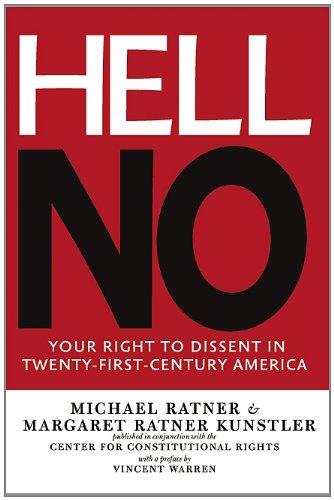
Hell No: Your Right to Dissent in Twenty-First Century America, by Michael Ratner & Margaret Ratner Kunstler – For anyone looking to understand what your legal rights are to dissent in the US today, this book is an excellent resource. The co-authors not only present what the US government has done in recent years to crack down on dissent, they provide useful tips and information on what to do if you are arrested, approached by law enforcement, given a subpoena, faced with a Grand Jury and how to deal with surveillance. One section of the book is entitled, “If an Agent knocks,” and is presented in a “know your rights” fashion. The book also includes a section on current US Attorney General Guidelines, which is useful for understanding the parameters in which the legal system is operating to identify and target dissidents. A great book that could be a useful tool for a workshop.
Stonewall: The Riots That Sparked The Gay Revolution, by David Carter – It is the general belief that the Stonewall rebellion is what ushered in the contemporary LGBT movement. The 1969 riot in New York is what is in principle the reason for the annual Pride Celebrations across the country. Looking at original source material and conducting interviews with both protestors and police officers, David Carter sheds light on what really happened at Stonewall. Carter provides excellent contextual information and great detail of what happened over the 3-days of rioting by angry members of the LGBT community that were sick and tired of being harassed by the cops. Carter also spends several chapters looking at other organizing that took place shortly after the riots and the formation of both the Gay Liberation Front and the Gay Activist Alliance. An important contribution for understanding the history of the LGBTQ movement.

Tar Sands: Dirty Oil and the Future of a Continent, by Andrew Nikiforuk – The Obama administration just gave the green light to continue the US/Canadian Tar Sands Project, a project that the author calls one of the worst environmental disasters in recent years. Nikiforuk, a Canadian journalist, presents a well documented case for why the Tar Sands Project will be devastating for the environment, for indigenous people and how it is contributing to global warming on a massive scale. The book also helps connect the dots on who is financing the project, who is profiting and how money is influencing politics in both Canada and the US. Tar Sands is an important book for those who care about the environment and for anyone who cares about the future of humanity.
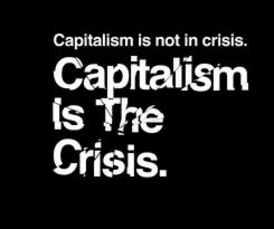
Capitalism is the Crisis: Radical Politics in the Age of Austerity (DVD) – With all the global turmoil since the 2008 economic crash and the ongoing resistance to that crash, few writers or films have laid the blame properly where it belongs…….with capitalism. This film relies on both numerous writer/activists to critique the current push towards “austerity,” it also looks at key events of resistance that helps frame the state of desperation that global capitalism finds itself in. One of the resistance actions the film looks at is the G20 Summit in Toronto, which not only shows the desperation of capitalism, but the brutal force it is willing to use against anyone who disagrees. This is an important film not only because of the analysis it provides, but because of its call to action for systemic change.
Getting What We Want? Unions and the Democrats
Yesterday, President Barack Obama spend part of his Labor Day in Detroit speaking to organized labor, rank and file members and their supporters.
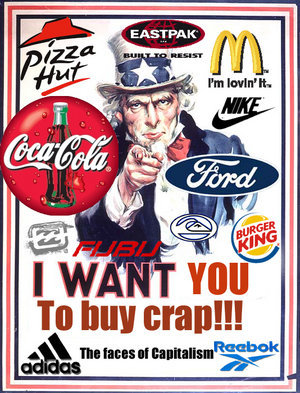
The President’s speech was filled with rhetoric that received some occasional applause. He talked about rebuilding the Middle Class, fighting for better wages and even acknowledged what unions have done for the US, such as fighting for the 8-hour work day.
However, rhetoric doesn’t pay the bills or put food on the table, especially not when there are millions in this country who are unemployed, underemployed and living in poverty. These statistics are on poverty are even worse in Michigan, particularly for children.
Further indication of the administration’s claim to care about working families, means we need to look at the actual record on policies over the past 2 and one-half years. Here is a partial listing of the Obama administration’s voting record that has not been good for working people:
- Despite his campaign promise in 2008, the Employee Free Choice Act has not been passed.
- The Obama administration has continued to pass policies that benefit Wall Street.
- The average CEO salary continues to increase while the average worker pay is decreasing.
- The Obama administration has continued the Bush tax policies, which benefit the rich, but not working people.
- During the 2008 election, Obama promise new fair trade policies, but has continued to embrace corporate trade policies and is looking to push through more devastating trade policies.
- Funding for war has increased under Obama, while funding for social programs has dropped.
These are just some of the policies the current administration has adopted, which have been devastating for working people and their families in the US. This begs the question – why do unions continue to support Democrats?
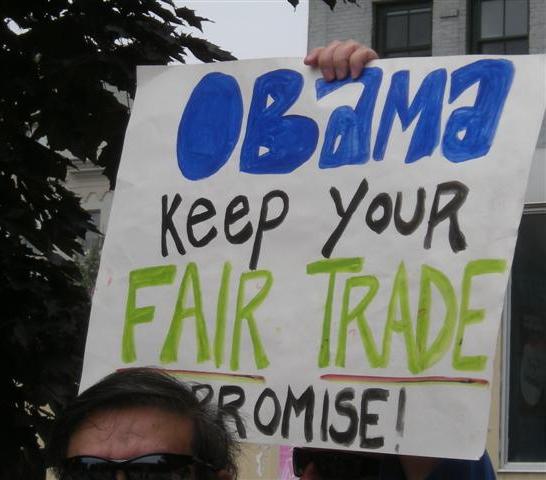
In May, AFL-CIO President Richard Trumka claimed that he wants a union movement that is independent of the Democratic Party, but is there any clear indication that this will happen? One way of determining if the labor movement is independent of the Democratic Party is to look at how much money they give to Democratic candidates.
In a recent posting at OpenSecrets.org, researches provide us with some data on labor financing of Democratic candidates and how much money they spend lobbying. At the federal level, unions have spent over $771 million since 1990 on financing political candidates. In the 2008 election cycle, unions gave just short of $75 million to Democratic candidates, over $96 million in 2010 and over $12 for the 2012 election to date.
A similar scenario is at play in Michigan with labor unions giving thousands to Democrats in 2010 and thousands more already in 2011.
Clearly organized labor has given a great deal to the Democratic Party, but the question must be asked, what have the got in return? It seems to this writer that if organized labor wants to have the kinds of policies they want put in place in this country that they either create a worker movement that is independent of partisan politics or they force the Democrats to actually do what working people want.
What if organized labor in the US said to the Democrats, we will not vote for you in 2012 if you do not pass the kinds of legislation that we demand? What if they don’t give the Democrats another cent until their demands are met? You would never see corporations giving money to politicians and not get what they want in terms of policies. Organized labor needs to use the only power it has, which is the power of numbers and not continue to fund the Democratic Party and get token returns.
After 9/11, Was War the Only Option?
(This article by Noam Chomsky is re-posted from ZNet.)
This month marks the 10th anniversary of the horrendous atrocities of Sept. 11, 2001, which, it is commonly held, changed the world.
The impact of the attacks is not in doubt. Just keeping to western and central Asia: Afghanistan is barely surviving, Iraq has been devastated and Pakistan is edging closer to a disaster that could be catastrophic.
On May 1, 2011, the presumed mastermind of the crime, Osama bin Laden, was assassinated in Pakistan. The most immediate significant consequences have also occurred in Pakistan. There has been much discussion of Washington’s anger that Pakistan didn’t turn over bin Laden. Less has been said about the fury among Pakistanis that the U.S. invaded their territory to carry out a political assassination. Anti-American fervor had already intensified in Pakistan, and these events have stoked it further.
One of the leading specialists on Pakistan, British military historian Anatol Lieven, wrote in The National Interest in February that the war in Afghanistan is “destabilizing and radicalizing Pakistan, risking a geopolitical catastrophe for the United States — and the world — which would dwarf anything that could possibly occur in Afghanistan.”
At every level of society, Lieven writes, Pakistanis overwhelmingly sympathize with the Afghan Taliban, not because they like them but because “the Taliban are seen as a legitimate force of resistance against an alien occupation of the country,” much as the Afghan mujahedeen were perceived when they resisted the Russian occupation in the 1980s.
These feelings are shared by Pakistan’s military leaders, who bitterly resent U.S. pressures to sacrifice themselves in Washington’s war against the Taliban. Further bitterness comes from the terror attacks (drone warfare) by the U.S. within Pakistan, the frequency of which was sharply accelerated by President Obama; and from U.S. demands that the Pakistani army carry Washington’s war into tribal areas of Pakistan that had been pretty much left on their own, even under British rule.
The military is the stable institution in Pakistan, holding the country together. U.S. actions might “provoke a mutiny of parts of the military,” Lieven writes, in which case “the Pakistani state would collapse very quickly indeed, with all the disasters that this would entail.”
The potential disasters are drastically heightened by Pakistan’s huge, rapidly growing nuclear weapons arsenal, and by the country’s substantial jihadi movement.
Both of these are legacies of the Reagan administration. Reagan officials pretended they did not know that Zia ul-Haq, the most vicious of Pakistan’s military dictators and a Washington favorite, was developing nuclear weapons and carrying out a program of radical Islamization of Pakistan with Saudi funding.
The catastrophe lurking in the background is that these two legacies might combine, with fissile materials leaking into the hands of jihadis. Thus we might see nuclear weapons, most likely “dirty bombs,” exploding in London and New York.
Lieven summarizes: “U.S. and British soldiers are in effect dying in Afghanistan in order to make the world more dangerous for American and British peoples.”
Surely Washington understands that U.S. operations in what has been christened “Afpak” — Afghanistan-Pakistan — might destabilize and radicalize Pakistan.
The most significant WikiLeaks documents to have been released so far are the cables from U.S. Ambassador Anne Patterson in Islamabad, who supports U.S. actions in Afpak but warns that they “risk destabilizing the Pakistani state, alienating both the civilian government and military leadership, and provoking a broader governance crisis in Pakistan.”
Patterson writes of the possibility that “someone working in (Pakistani government) facilities could gradually smuggle enough fissile material out to eventually make a weapon,” a danger enhanced by “the vulnerability of weapons in transit.”
A number of analysts have observed that bin Laden won some major successes in his war against the United States.
As Eric S. Margolis writes in The American Conservative in May, “(bin Laden) repeatedly asserted that the only way to drive the U.S. from the Muslim world and defeat its satraps was by drawing Americans into a series of small but expensive wars that would ultimately bankrupt them.”
That Washington seemed bent on fulfilling bin Laden’s wishes was evident immediately after the 9/11 attacks.
In his 2004 book “Imperial Hubris,” Michael Scheuer, a senior CIA analyst who had tracked Osama bin Laden since 1996, explains: “Bin Laden has been precise in telling America the reasons he is waging war on us. (He) is out to drastically alter U.S. and Western policies toward the Islamic world,” and largely achieved his goal.
He continues: “U.S. forces and policies are completing the radicalization of the Islamic world, something Osama bin Laden has been trying to do with substantial but incomplete success since the early 1990s. As a result, I think it is fair to conclude that the United States of America remains bin Laden’s only indispensable ally.” And arguably remains so, even after his death.
The succession of horrors across the past decade leads to the question: Was there an alternative to the West’s response to the 9/11 attacks?
The jihadi movement, much of it highly critical of bin Laden, could have been split and undermined after 9/11, if the “crime against humanity,” as the attacks were rightly called, had been approached as a crime, with an international operation to apprehend the suspects. That was recognized at the time, but no such idea was even considered in the rush to war. It is worth adding that bin Laden was condemned in much of the Arab world for his part in the attacks.
By the time of his death, bin Laden had long been a fading presence, and in the previous months was eclipsed by the Arab Spring. His significance in the Arab world is captured by the headline in a New York Times article by Middle East specialist Gilles Kepel: “Bin Laden Was Dead Already.”
That headline might have been dated far earlier, had the U.S. not mobilized the jihadi movement with retaliatory attacks on Afghanistan and Iraq.
Within the jihadi movement, bin Laden was doubtless a venerated symbol but apparently didn’t play much more of a role for al-Qaida, this “network of networks,” as analysts call it, which undertake mostly independent operations.
Even the most obvious and elementary facts about the decade lead to bleak reflections when we consider 9/11 and its consequences, and what they portend for the future.
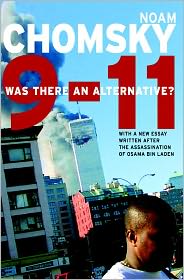
This article is adapted from 9-11: Was There an Alternative?, the 10th-anniversary edition of 9-11, by Noam Chomsky, just published by Seven Stories Press.
 Grand Rapids Institute for Information Democracy