Nobody Can Predict The Moment Of Revolution – Occupy Wall Street

(This video is re-posted from OccupyWallstreet.org.)
Despite of the corporate media’s effort to silence the protests, and Yahoo’s attempt to to censor it in e-mail communication, the occupation is growing in numbers and spreading to other cities in the US and abroad. Please forward our video to likeminded people via email, facebook, twitter – and make the voices of dissent circulate. Find the latest news, learn how to participate and support: https://occupywallst.org/.
Trailer for the LGBTQ People’s History of Grand Rapids film

Here is a taste of what you can expect to see on November 17, when the premier screening of A People’s History of the LGBTQ Community in Grand Rapids takes place at the downtown campus of GVSU.
We have conducted 70 interviews, collected lots of archival material – video, photos, articles and posters, for the material to complete this film. It has been an incredible process of learning and sharing.
GRIID is grateful to the LGBT Resource Center at Grand Valley State University and the Kutsche Office of Local History for their support in making this project come to fruition.
The premier screening is Thursday, November 17 at the downtown campus of GVSU, in the Loosemore Auditorium. Doors open at 6:30PM. The film screening if free and open to the public. There is also a facebook event page for this event.
The music for this trailer is provided by the local band Alexis and the song is Human Condition.
Elect to End Hunger and Poverty Tour in Grand Rapids this Thursday
Keith McHenry, activist with Food Not Bombs is on the road for a speaking tour across the US to talk about why we need to end the criminalization of hunger and poverty in America.

According to the FNB webpage:
The Elect to End Hunger and Poverty presentation talks about the campaign to end the criminalization of poverty and how you can participate in the global protest movement against austerity! Food Not Bombs co-founder Keith McHenry will share the details of the history, principles and current activities of the movement. Keith will also invite the audience to participate with their local activist groups.
Most people would elect to end hunger and poverty but many of the people running for office have another agenda, cutting social services while transferring our tax dollars to wealthy military contractors and their corporate friends. While elected officials cut social services like unemployment insurance, food stamps, education, health care and other basic necessities they are also passing laws against the poor and their supporters.
Food Not Bombs is responding to this crisis by recovering, preparing and sharing vegan meals and groceries with the hungry in nearly 1,000 communities. This presentation will inspire you and your friends to join the Food Not Bombs movement and help our dedicated volunteers organize, implement and feed the global campaign to end hunger and poverty. You can make a difference!
Food Not Bombs started in 1980 when eight college aged activists dressed as generals and started holding bake sales pretending to buy a bomber. Thirty years later Food Not Bombs continues to encourage the redirection of our resources from the military towards human needs.
McHenry will be speaking this Thursday at Trinity United Methodist Church in Grand Rapids at an event co-sponsored by the GR chapter of Food Not Bombs and the Grand Rapids IWW.
Thursday, September 29
6:30PM
Trinity United Methodist Church
1100 Lake Dr. SE, Grand Rapids
Nothing but praise for ArtPrize at GVSU event
Last night, a packed audience at Grand Valley’s Loosemore Auditorium, came to hear perspectives from a panel of artists on what they thought about ArtPrize.

The event was billed as “Perspectives on ArtPrize” and was part of the 2011 DeVos Art Lecture Series at GVSU. The panel consisted of 6 artists and ArtPrize founder Rick DeVos.
From the very beginning, it was clear that the event was framed in such a way that didn’t really welcome any criticism of the local art competition. Marcia Haas, wife of GVSU President Thomas Haas, said in her welcoming comments, “Isn’t it wonderful that our city is alive with art? This is an experience like no other, for people to have a chance to explore our community.”
The panel was then introduced and moderated by GVSU Director of Galleries and Collections Henry Matthews. The first words out of his mouth were, “can you feel the excitement?”
Matthews asked Rick DeVos to begin the conversation by saying that the overall structure of ArtPrize is pretty much the same as previous years, with voting and no categories. He also said there were awards being judged and an exhibition center at St. Cecilia Society, which included music and other performance art.
The first question asked by the moderator was, “For those who participated last year, how are things different or better?” Jason Quigno, a Native American artist from Michigan said it was hectic, but he likes seeing the excitement on the street. Cyril Lixenberg, an artist from Amsterdam, said he also thinks it is exciting and knows many other people who have told him they were excited. Cynthia McKean, an artist from Saugatuck, said there is confusion, but that this is part of the fun.
There were two Argentine artists on the panel, both from Buenos Aires. Juan Batalla said it was an interesting experience. “It allows art to be talked about, since there is no one who determines who gets to exhibit and who doesn’t. The real joy begins when people begin to talk about the art.” Danny Barreto said he was impressed by the size of the event, the beauty of the city and the variety of art. “It is not only for enlightened people, but for families and regular people who have a chance to look at art in a different way.”
Hubert Massey, an artist from Detroit, said he was impressed by the size and the interaction of the people with the art. “It has a real large impact on the community. Art changes lives and people’s behavior. This should be happening all across the country.”
This was the consensus all night, with panelists falling over themselves in praise of ArtPrize. Questions and comments from the audience were not much different in that people wanted to thank Rick DeVos and asked questions like, “Could this be replicated in other cities and what are the lessons learned from this event?” DeVos responded to the lessons learned by saying he thinks that we need to “just get out of the way and allow people determine what happens. He thinks that the collaborative relationships that develop are critical and more of that needs to be developed. The artists and the venue people are putting lots of energy into the whole experience.”
Another audience question asked how many people have been employed by this event? It spoke to the general belief that ArtPrize is good for the local economy, but upon further investigation it seems that a narrow sector of Grand Rapids really benefits – hotel, restaurant, parking lot and club owners are the big winners. DeVos’ response to this question was that the real goal of ArtPrize “is building a deeper and richer culture of experimentation of expression.”
When the artists on the panel were asked about how they felt about their work being voted on, they all responded favorably. DeVos said, “it wasn’t about the Prize, it was the participation of the people.” Really, I wonder how many artists, especially the first year, would have participated if there were no prize money. It seems like a pretty big carrot in motivating artist participation.
The only critical question asked all night was by a young Latino man. He wanted to how this art competition affected the poor people in the community? Cyril Lixenberg responded by saying “get the kids involved.” DeVos agreed and said that he talked to students who got excited about what they were seeing. “It opens up the possibilities for people. ArtPrize is like a treasure hunt, since they get to explore parts of the city they haven’t seen, especially people of lesser means.” No one really answered the young man’s questions and no one could use the word poor, just terms like “disadvantaged” and “lesser means.”
Matthews wrapped up the panel discussion by asking DeVos what was next for ArtPrize? DeVos said he had no “world conquering” plans.
After sitting through the brief panel discussion (only 1 hour), I was left feeling frustrated that: 1) there was no one on the panel who had a critical, different or dissenting opinion; 2) the only question with social implications was skillfully diverted and dismissed, and 3) the event was really an opportunity for Rick DeVos to promote himself and his art competition.
9-17 Urban Foraging Workshop introduced shared skills
This story is reposted from www.OKTjustice.org

Last Saturday morning, a group of about 20 folks gathered at Garfield Park during the Southeast Area Farmers’ Market for an Urban Foraging Workshop, co-sponsored by Our Kitchen Table and The Bloom Collective.
The presenter who was to lead the event had a family emergency so the workshop turned into a skill-share. People in attendance shared how they used various wild medicinal and edible plants (commonly called weeds). Here are a few of those:
- Purslane—a delicious salad green
- Dandelion – use as a salad green; brew as tea that for a good kidney tonic; use the root as a coffee substitute. The flowers are also edible.
- Sorel – a lemony tart salad green.
- Queen Anne’s lace – Deep fry the flowers; the seeds brewed as tea have traditionally been used as a contraceptive among indigenous peoples.
- Wild grape and mulberry leaves – use to wrap rice and meat mixtures, think Middle Eastern cuisine.
- Mulberries – a summer fruit that makes a great snack and a delicious jelly or jam.
- Peppermint – brew as tea to settle an upset stomach; chew a leaf instead of a breath mint.
- Plantain – the leaves can relieve insect bites and bee stings. Roll and crush the leaf, apply it to the sting, use a whole leaf as a “band-aid” to hold the crushed mixture in place.
- Ground cherries – found inside the tomatilla like flower, these are a semi-sweet treat that can be used for jams and jellies as well.
We were also fortunate to have Kristin Tindall, ecology education coordinator from Blandford Nature Center, in attendance. She had lots of good information for the group and let us know that Blandford sometimes hosts foraging workshops.
Kristin also mentioned that a foraging club is forming. The club will be able to provide an ongoing shared experience that will help members to broaden their skills for finding foods and medicinal herbs in their backyards, local parks, parkways and abandoned lots. Kristin also shares this Wild foraging handout.
A word to the wise: When foraging, make sure you are picking plants from an area that has not been chemically contaminated. For example, Tindall shared that utility companies usually spray a swath of herbicides under electricity towers.
Just like the grocery stores have helped us forget that food comes from farms, cultivation of domestic crops has helped us forget that many of the native species we see around us (and label as weeds) once were a prize source of both food and medicine. Let’s learn how to take advantage of the free foods growing all around us.
The Media Spectacle that is ArtPrize

It is now day three of the official beginning of ArtPrize 2011. However, it is strikingly clear that coverage of this year’s ArtPrize began way before the event kick-off on Wednesday.
For the third year in a row there is no way that one could not know about the downtown art competition. The local news media have been falling over themselves trying to “report” on everything from artist profiles, the marketing techniques, venue locations and public reactions.
The Grand Rapids Press ran their own competition, by inviting people to design a front-page cover that would be used for the opening day. The winning design also now adorns Press boxes throughout downtown GR, enticing readers to get a copy of the only daily paper in town’s take on the art competition.

The local TV stations have also been busy making ArtPrize their main focus. Channel 8 and channel 13 both broadcast live all day at the Grand Rapids Art Museum. WOOD TV 8 has an ArtPrize banner to go along with weather and sports. The local NBC affiliate included the art competition logo onto the station’s web design and their meteorologists will be providing “live ArtPrize forecasts every day from the street side studio.”
WXMI 17 also has an Artprize section, but the ABC affiliate WZZM 13 has what they have called the “conversation couch.” WZZM 13 has partnered with the Grand Rapids Art Museum, by setting up a couch with word bubbles behind it. People can sit down and use other word bubbles to talk about what art and the art competition means to them. Corporate sponsors all graciously provided the couch, TV and signage for WZZM 13’s art competition coverage.

Local radio isn’t doing quite as much as TV, but WOOD radio does have a listing of ArtPrize events.
We also can’t ignore what independent media is doing. The Rapidian has their own ArtPrize section, which has been consistent the three years the event has happened in downtown Grand Rapids.
So what is the big deal, there is lots of local media coverage of ArtPrize. This writer doesn’t really have a big issue with the amount of coverage that the art competition is receiving, rather it is the lack of critical coverage and the frustration from not seeing the same intensity of coverage for other issues.
Imagine if elections got the same amount of coverage, with all day live broadcasts and a couch for people to sit in and talk about the meaning of democracy for them. Imagine the Grand Rapids Press invited people to design a front-page for their paper with the theme of environmental justice or sustainability. What if the local TV stations had a banner for racial justice or fighting poverty? Are these issues of less importance than ArtPrize? Do they not deserve the same kinds of journalistic enthusiasm and creativity?
“$4 Trillion in Tax Cuts = $4 Trillion in Budget Cuts”
This article by Jack Rasmus is re-posted from ZNet.
This past Monday, September 19, President Obama revealed his proposals for how to pay for his $447 billion tax cut/jobs bill announced last week. In the same speech, he announced a goal of cutting the deficits and debt by $4.4 trillion. But what he didn’t tell us is that the $4 trillion plus in deficit and debt reduction is almost exactly the amount of tax cuts that have been enacted over the past decade, 2001-2011, roughly three-fourths of which have gone to corporations, banks, investors and the wealthiest 10 percent households.

$4 Trillion Budget Cuts to Pay for $4 Trillion Tax Cuts
Here’s how the $4 trillion tax cuts stack up:
· Bush tax cuts, 2001-2010 $2,900 billion
· Bush 2008 stimulus tax cuts $90 billion
· Obama 2009 stimulus tax cuts $313 billion
· AMT tax “fix” for high income households $70 billion
· Supplemental tax cuts June 2009-October 2010 $50 billion
· Obama December 2010 tax cuts $802 billion
· Obama September 2011 “jobs” bill tax cuts $270 billion
Total tax cuts $4,495 billion ($4.49 Trillion)
Approximately 75 percent of the $4.482 Trillion in tax cuts accrued to corporations, bankers, investors and the wealthiest 10 percent households. Today, the consensus of policy makers from Obama to the Deficit Commission to the Supercommittee is that the appropriate mix of budget cuts should be 75 percent spending reductions and 25 percent tax hikes. Most of the spending cuts will be social programs benefiting seniors; retirees (Medicare, Social Security); the working poor and children (Medicaid, CHIP); students (loans, assistance to schools); and just about every other social program aiding the least fortunate.
In his September 19 speech, Obama “threatened Monday to veto any bill that cuts Medicare benefits without increasing taxes on corporations or the wealthy,” according to the front page story in the September 20 Wall Street Journal.
Among those experienced in bargaining, that statement means, “I am signaling I will cut Medicare if you, Republicans, agree to raise taxes,” but not until you do. In other words, folks, bigger Medicare cuts are not “off the table” by any means. In fact, as a sweetener, Obama has already agreed to start with $320 billion in Medicare and Medicaid cuts out of the gate, which he already announced. Once again, a “freebie” concession up front for nothing in return, which is the president’s negotiating style, it appears. Republicans get an initial pass from agreeing to any tax increase, in exchange for Obama’s first down-payment of $320 billion in Medicare cuts as a prelude to a later final deal in December.
The $4 Trillion Consensus
For some time now there’s been a clear consensus among Democrats and Republicans alike, Obama and Boehner, Deficit Commission, Gang of Six, Supercommittee of 12, and all the rest. That consensus is to cut $4 trillion minimum from the budget.
The original Simpson-Bowles deficit commission report issued last December 2010 called for about $4 trillion in deficit reduction over the coming decade. Then, last spring, Republicans demanded that same amount. Even Tea Party Congressman Paul Ryan’s budget last spring proposed $4 trillion in cuts. It’s just that he wanted the lion’s share taken out of the hides of seniors and Medicare. After that, in June, Vice President Joe Biden held his then secret backroom negotiations with Republican leaders on behalf of the Obama administration. When news of the negotiations leaked out, it was reported Biden had agreed to a $3 trillion deficit reduction, with 87 percent composed of spending cuts, including Social Security and Medicare, and 13 percent in tax loophole closings. The Democrat Party base choked when it found out what was going on. The negotiations blew up and Republican House Leader John Boehner walked out. In July, the magic number of $4 trillion was once again quickly reintroduced by the gang of six senators. President Obama then directly jumped into the public negotiations in July and proposed his grand deal of $4 trillion of deficit cuts, composed of 75 percent spending reduction and 25 percent tax loophole closing. And now, most recently, the magic number of $4 trillion in budget cuts is offered up again by Obama.
One trillion dollars is already in the bag, as they say. This past August’s “debt ceiling deal” between Obama and Republicans amounted to roughly $1 trillion in immediate cuts and required a further minimum $1.2 trillion to $1.5 trillion guaranteed cuts by end of this year from the Supercommittee in Congress that will make its proposals public on November 19. So, that adds up to a guaranteed minimum $2.5 trillion. But wait! Obama’s recent proposed $447 billion jobs bill will raise that $2.5 trillion to $2.95 trillion, since Obama has publicly said the Congressional Supercommittee should add that amount to $1.5 trillion additional cuts mandated by year end. That same Supercommittee is already talking about cutting more than the $1.5 trillion, however. So, to the $1 trillion cuts this past August will be increased, at minimum, by another $2 trillion and possibly more. This writer predicts the eventual final deficit cutting package by year end will add at least another $1 trillion. That adds up to the consensus $4 trillion number.
$4 Trillion Tax Cuts and 25 Million Jobless
The $4 trillion in 2008-2011 tax cuts were supposed to create jobs, but they didn’t. Nor will Obama’s $447 billion “jobs” bill – composed of 60 percent of tax cuts – create jobs. We had 25 million jobless when Obama came in office. After $420 billion in tax cuts in 2009 and another $802 billion in tax cuts in 2010, we still have 25 million jobless today. By what logic does anyone think another $270 billion in tax cuts will create jobs when more than $1.2 trillion did not? Whether another $270 billion in Obama’s “jobs” bill or more (which is likely after Republicans take a whack at it), six months from now, there will still be 25 million jobless – as the US and global economies continue to drift inexorably toward a double-dip recession.
$4 Trillion Tax Cuts and $4 Trillion Corporate Cash Hoard
But wait, there’s still more. That $4 trillion in deficit cuts for tax cuts is also just about the amount that big business, multinational corporations and banks have been hoarding in cash since they were bailed out during 2009-10.
According to various sources and estimates, large US corporations – not small businesses – are sitting on a cash hoard of $2 trillion and refusing to invest it and create jobs in the US. Multinational corporations are reportedly hoarding another $1.2 trillion to $1.4 trillion in their offshore subsidiaries, refusing to return it to the US and pay the normal 35 percent corporate income tax rate. And US big banks are sitting on an excess cash reserves hoard of at least another $1 trillion. That’s all just about … guess what? Four trillion dollars.
$4 Trillion Tax Cuts and $9 Trillion US Debt
In 2001 the total federal debt as George W. Bush entered office was approximately $5.5 trillion. That total debt accelerated to $14.5 trillion today. So, the run-up in the total federal debt over the last decade was about $9 trillion. As already noted, about $4 trillion attributable to tax cuts. Another $1 trillion in lost revenue due to chronic joblessness. That leaves … $4 trillion of the $9 trillion debt run-up due to excess spending over the decade. So, where does this $4 trillion in excess spending derive from?
The amount of $2.1 trillion was from escalating defense spending and wars. Defense spending rose at an annual rate of 8.2 percent over the decade. If it had just risen at the normal consumer price rate over the decade of roughly 2 percent, instead of the 8.2 percent, it would have lowered the deficits over the past decade by $2.1 trillion. Add at least another $400 billion to $500 billion in the Medicare Part D prescription drug program introduced by Bush that was not funded, but paid for by borrowing; add another $200 billion in excess inflationary health care cost increases that have pushed government Medicare and Medicaid payments through the roof; add the $700 billion cost of the TARP bailouts of banks in 2008 plus $140 billion in bailout costs for the government housing agencies, Fannie Mae & Freddie Mac; and then add $589 billion in non-tax spending provisions in Obama’s 2009-10 stimulus packages. The total in spending contributing to the $9 trillion debt now comes to roughly … $4.179 trillion. And that’s before any interest charges on the debt from the $4.179 trillion.
Summing it all up, about $4.495 trillion of the $9 trillion debt added since 2000 has been due to tax cuts that didn’t create jobs. And another $4.179 trillion of the $9 trillion is the product of inflationary defense spending, inflationary health care costs, unfunded prescription drug plan, bank bailouts and stimulus spending that didn’t create a sustained economic recovery. (The remaining $500 billion to $1 trillion is a consequence of three years of 25 million unemployed and lost income tax revenue and interest on the $9 trillion debt.)
Some Simple Alternatives to $4 Trillion Budget Cuts
If the consensus budget cut target is $4 trillion, why not just reverse the $4 trillion tax cuts? Or address the four major causes of deficit spending: wars, health care cost inflation, bank bailouts and poorly targeted stimulus spending? Or why not tax the $4 trillion cash hoard big corporations, multinational companies and banks are sitting on and refusing to spend to create jobs after we bailed them out? Or, while we’re at it, how about taxing the $4 trillion that US wealthy investors have squirreled away in offshore tax havens from the Cayman islands to Cyprus to Vanuatu to Seychelles … and, of course, Switzerland?
So, why are politicians, Republican and Democrat alike, Obama and Tea Partyers, liberals and libertarians, all so focused on cutting $4 trillion at the expense of seniors and retirees, students and middle-working class households when they had nothing whatsoever to do with the deficits and $9 trillion debt run-up? They didn’t cause the economic crisis and weren’t bailed out even to this day. They are the 25 million unemployed. They are the 11 million foreclosed homeowners. They are the 20 million with homes “under water.” They are the 44 million seniors who will soon have to pay twice as much for their Medicare and receive no cost of living increases in their Social Security checks. They are the tens of millions of children of the poor who will soon be denied Medicaid. They are the millions of students now facing decades of financial indenture due to accelerating college debt.
Who will speak for them, as the politicians this coming December 23, 2011, cut another $3 trillion from social programs, and as we are offered yet another tax-cut bloated jobs bill from the president that won’t create jobs and only add to corporations’ cash hoarding? Don’t count on the politicians in Washington, whatever their party affiliation or ideological stripe. It’s time to take to the streets and be heard.
New Media We Recommend
Below is a list of new materials that we have read/watched in recent weeks. The comments are not a “review” of the material, instead sort of an endorsement of ideas and investigations that can provide solid analysis and even inspiration in the struggle for change. All these items are available at The Bloom Collective, so check them out and stimulate your mind.

Fatal Invention: How Science, Politics and Big Business Re-Create Race in the Twenty-First Century, by Dorothy Roberts – Institutional racism and White Supremacy are very resilient and always seem to be manifesting themselves in ways that are not easy to detect. Black scholar Dorothy Roberts has been keeping an eye on these more subtle forms of institutional racism by looking at what the scientific and corporate pharmaceutical world has been doing in recent decades. Robert’s assertion is that the old racist propaganda promoted through eugenics is alive and well in scientific research, particularly in the medical field. Roberts investigates the research being done in genetics and exposes the racialized research that argues in part that black people are less healthy because of their genes and not because of social forces. Roberts demonstrates that institutional racism is deeply entrenched within some sectors of the scientific community, particularly those working for pharmaceutical companies. A must read for people who care about confronting institutional racism.

Global Slump: The Economics and Politics of Crisis and Resistance, by David McNally – Global Slump is one of the best books I have read that looks at both the 2008 global economic crisis and the response from the public. McNally provides an important anti-capitalist analysis that re-frames how we understand the 2008 economic crash. He argues that is wasn’t so much about corruption and greed as it was an intentional crisis created by centers of capital as a mechanism of transferring more public wealth into private hands. McNally says this is evident with the use of the term “austerity measures,” where governments are eliminating public sector jobs, drastically reducing funds for public social programs, privatizing public services and changing policies and tax structures which benefit the rich. This effort to move more public funds into private hands has met significant resistance around the world in places like Greece, Iceland, Spain, the UK and Madison. McNally devotes several chapters to this resistance and suggests that this is the only real mechanism to fight global capitalism.

Homocons: The Rise of the Gay Right, by Richard Goldstein – Even though this book is nearly a decade old, it provides important analysis for those concerned about the future of the LGBTQ movement. Goldstein, an editor with Village Voice, argues that there are several writers within the LGBTQ community that have increasingly become “stars” of right-wing and conservative sectors. In fact, Goldstein argues that some of these writers have even adopted self-hating LGBTQ positions. Writers like Andrew Sullivan and Camille Paglia, according to Goldstein, have become what Ward Connelly is to the Black community – a neo-conservative who spends most of his energy trying to dismantle the gains made by Black Americans. However, Goldstein notes that the embrace of the likes of Sullivan and Paglia are not just with the right, but more often within liberal circles. Sullivan and Paglia argue that the LGBTQ community has asked for too much and pushed to hard, so much so that they have done damage to those in the gay community who just want to be “tolerated.” A quick read, Homocons is important for the continued discussion around whether or not the LGBTQ community wants to be assimilated or liberated.
Will the Real Terrorists Please Stand Up (DVD) – A fabulous documentary that looks at the recent case of the Cuban Five and in the process provides a detailed look at the US response to the Cuban revolution since 1959. Saul Landau, who has produced numerous political documentaries, presents us with an important critique of 5 decades of US policy towards Cuba. Landau uses Cuban nationals, Cubans in exile, US officials and political analysts in this in depth film. A must see for anyone who is interested in Cuban history and for those who are willing to come to terms with how US foreign policy functions.
Meijer and DeVos got richer while West Michigan poverty increased
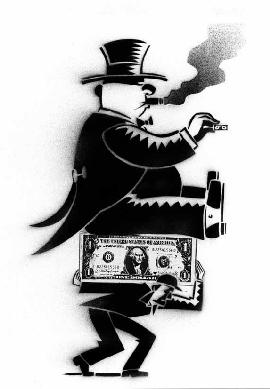
Today, MLive reported that Fred Meijer and Richard DeVos are tied for 60th place on the Forbes 400 richest people in the US.
Besides listing other rich people on the list from Michigan, MLive reporter Chris Knape echoes the message from both Meijer and DeVos about how they made their wealth. Meijer, because he practices “higher standards, lower prices,” and DeVos because of his “international multi-level marketing business in his basement.”
The article did have useful data, since it reported that DeVos’ wealth had increase by 43% since 2007 and Meijer’ wealth went up 150% during the same period of time. Both, according to Forbes are worth $5 Billion.
These substantial increases in their wealth raise numerous questions, which the Press writer doesn’t pursue. One question might be how has the federal and state tax structures benefited these obscenely rich men? Citizens for Tax Justice note in a recent fact sheet that corporations pay well below the amount of taxes they should be paying because of the current federal tax structure. We all know what kind of tax cuts for businesses have taken place in Michigan in 2011, with the elimination of the business tax legislation.
Another question, which could be asked by journalists, would be how both DeVos and Meijer were able to increase their wealth at 43 and 150 percent respectively during a major global economic crisis? Some Meijer employees are unionized, but that union has made significant concessions in recent years on wages and benefits. Amway isn’t unionized and isn’t likely to unionize since the DeVos family has been rabidly anti-union from the beginning of their pyramid scheme business.
Maybe the most important question to ask about the $5 billion dollars that DeVos and Meijer are worth is how one can reconcile this increase in wealth during a period when more people in Michigan are living in poverty?
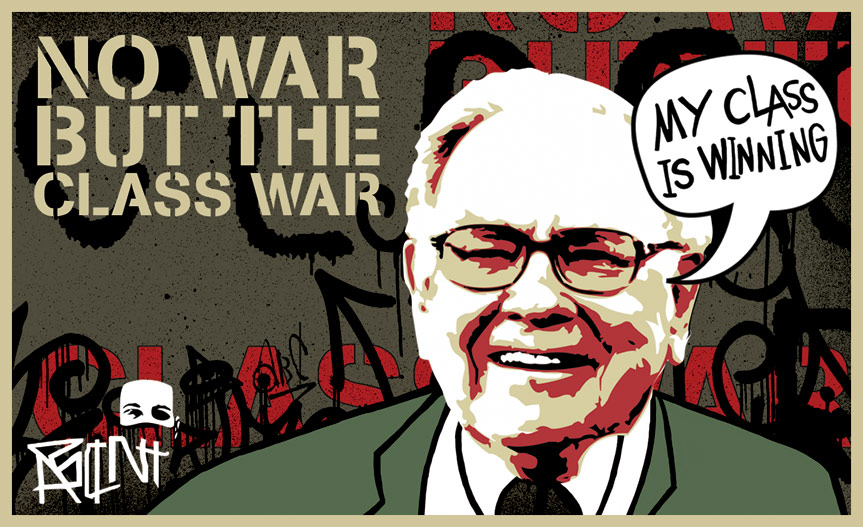
According to a 2010 report by the Brookings Institute, poverty in the Grand Rapids area increased 8.9% between 2000 – 2008. The same report shows that the percentage of the population living in poverty in the Grand Rapids area went from 15.7 in 2000, to 22.7 in 2007 and 24.7 in 2008. This would mean that one quarter of the people living in this area are living in poverty.
This increase in poverty is just as bad for children. According to the Michigan League for Human Services children living in poverty increased 19.4 in 2008 to 22.1 in 2009.
Considering that one quarter of the population in the Grand Rapids area are living in poverty and having to rely on some form of assistance, the announcement that Meijer and DeVos are both now worth $5 Billion dollars should cause us to question how that is possible.
My own experience in Latin America is that the poor to not celebrate and idolize the rich. In fact, they see the rich oligarchies as the source of their misery. Here in West Michigan, Fred Meijer and Richard DeVos are labeled as generous philanthropists that everyone should be grateful for. This is a stunning achievement of class warfare being conducted by the wealthy elite, when working class people think fondly of the local robber barons. However, as long as MLive and the other local commercial news media continue to celebrate such individuals, the possibility of developing a class-consciousness amongst working people will be a difficult task.
Obama’s Arc of Instability: Destabilizing the World One Region at a Time

This article by Nick Turse is re-posted from Tom’s Dispatch.
It’s a story that should take your breath away: the destabilization of what, in the Bush years, used to be called “the arc of instability.” It involves at least 97 countries, across the bulk of the global south, much of it coinciding with the oil heartlands of the planet. A startling number of these nations are now in turmoil, and in every single one of them — from Afghanistan and Algeria to Yemen and Zambia — Washington is militarily involved, overtly or covertly, in outright war or what passes for peace.
Garrisoning the planet is just part of it. The Pentagon and U.S. intelligence services are also running covert special forces and spy operations, launching drone attacks, building bases and secret prisons, training, arming, and funding local security forces, and engaging in a host of other militarized activities right up to full-scale war. But while you consider this, keep one fact in mind: the odds are that there is no longer a single nation in the arc of instability in which the United States is in no way militarily involved.
Covenant of the Arc
“Freedom is on the march in the broader Middle East,” the president said in his speech. “The hope of liberty now reaches from Kabul to Baghdad to Beirut and beyond. Slowly but surely, we’re helping to transform the broader Middle East from an arc of instability into an arc of freedom.”
An arc of freedom. You could be forgiven if you thought that this was an excerpt from President Barack Obama’s Arab Spring speech, where he said “[I]t will be the policy of the United States to… support transitions to democracy.” Those were, however, the words of his predecessor George W. Bush. The giveaway is that phrase “arc of instability,” a core rhetorical concept of the former president’s global vision and that of his neoconservative supporters.
The dream of the Bush years was to militarily dominate that arc, which largely coincided with the area from North Africa to the Chinese border, also known as the Greater Middle East, but sometimes was said to stretch from Latin America to Southeast Asia. While the phrase has been dropped in the Obama years, when it comes to projecting military power President Obama is in the process of trumping his predecessor.
In addition to waging more wars in “arc” nations, Obama has overseen the deployment of greater numbers of special operations forces to the region, has transferred or brokered the sale of substantial quantities of weapons there, while continuing to build and expand military bases at a torrid rate, as well as training and supplying large numbers of indigenous forces. Pentagon documents and open source information indicate that there is not a single country in that arc in which U.S. military and intelligence agencies are not now active. This raises questions about just how crucial the American role has been in the region’s increasing volatility and destabilization.
Flooding the Arc
Given the centrality of the arc of instability to Bush administration thinking, it was hardly surprising that it launched wars in Afghanistan and Iraq, and carried out limited strikes in three other arc states — Yemen, Pakistan, and Somalia. Nor should anyone have been shocked that it also deployed elite military forces and special operators from the Central Intelligence Agency elsewhere within the arc.
In his book The One Percent Doctrine, journalist Ron Suskind reported on CIA plans, unveiled in September 2001 and known as the “Worldwide Attack Matrix,” for “detailed operations against terrorists in 80 countries.” At about the same time, then-Secretary of Defense Donald Rumsfeld proclaimed that the nation had embarked on “a large multi-headed effort that probably spans 60 countries.” By the end of the Bush years, the Pentagon would indeed have special operations forces deployed in 60 countries around the world.
It has been the Obama administration, however, that has embraced the concept far more fully and engaged the region even more broadly. Last year, the Washington Post reported that U.S. had deployed special operations forces in 75 countries, from South America to Central Asia. Recently, however, U.S. Special Operations Command spokesman Colonel Tim Nye told me that on any given day, America’s elite troops are working in about 70 countries, and that its country total by year’s end would be around 120. These forces are engaged in a host of missions, from Army Rangers involved in conventional combat in Afghanistan to the team of Navy SEALs who assassinated Osama bin Laden in Pakistan, to trainers from the Army, Navy, Air Force, and Marines within U.S. Special Operations Command working globally from the Dominican Republic to Yemen.
The United States is now involved in wars in six arc-of-instability nations: Afghanistan, Iraq, Libya, Pakistan, Somalia, and Yemen. It has military personnel deployed in other arc states, including Algeria, Bahrain, Djibouti, Egypt, Israel, Jordan, Kuwait, Lebanon, Morocco, Oman, Pakistan, Qatar, Saudi Arabia, Tunisia, and the United Arab Emirates. Of these countries, Afghanistan, Bahrain, Djibouti, Iraq, Kuwait, Oman, Qatar, Saudi Arabia, and the United Arab Emirates all host U.S. military bases, while the CIA is reportedly building a secret base somewhere in the region for use in its expanded drone wars in Yemen and Somalia. It is also using already existing facilities in Djibouti, Ethiopia, and the United Arab Emirates for the same purposes, and operating a clandestine base in Somalia where it runs indigenous agents and carries out counterterrorism training for local partners.
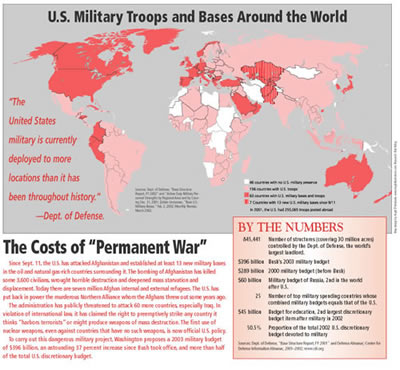 In addition to its own military efforts, the Obama administration has also arranged for the sale of weaponry to regimes in arc states across the Middle East, including Bahrain, Egypt, Iraq, Jordan, Kuwait, Morocco, Saudi Arabia, Tunisia, the United Arab Emirates, and Yemen. It has been indoctrinating and schooling indigenous military partners through the State Department’s and Pentagon’s International Military Education and Training program. Last year, it provided training to more than 7,000 students from 130 countries. “The emphasis is on the Middle East and Africa because we know that terrorism will grow, and we know that vulnerable countries are the most targeted,” Kay Judkins, the program’s policy manager, recently told the American Forces Press Service.
According to Pentagon documents released earlier this year, the U.S. has personnel — some in token numbers, some in more sizeable contingents — deployed in 76 other nations sometimes counted in the arc of instability: Angola, Botswana, Burundi, Cameroon, Chad, Congo, Cote d’Ivoire, Ethiopia, Gabon, Ghana, Guinea, Kenya, Liberia, Madagascar, Mali, Mauritania, Mozambique, Niger, Nigeria, Rwanda, Senegal, Sierra Leone, South Africa, Sudan, Tanzania, Togo, Uganda, Zambia, Zimbabwe, Sri Lanka, Syria, Antigua, the Bahamas, Barbados, Belize, Bolivia, Colombia, Costa Rica, Cuba, the Dominican Republic, Ecuador, El Salvador, Guatemala, Guyana, Haiti, Honduras, Jamaica, Mexico, Nicaragua, Panama, Paraguay, Peru, Suriname, Trinidad and Tobago, Uruguay, Venezuela, Albania, Bosnia and Herzegovina, Macedonia, Romania, Serbia, Kazakhstan, Kyrgyzstan, Tajikistan, Turkmenistan, Uzbekistan, Bangladesh, Myanmar, Cambodia, Indonesia, Laos, Malaysia, the Philippines, Singapore, Thailand, and Vietnam.
While arrests of 30 members of an alleged CIA spy ring in Iran earlier this year may be, like earlier incarcerations of supposed American “spies”, pure theater for internal consumption or international bargaining, there is little doubt that the U.S. is conducting covert operations there, too. Last year, reports surfaced that U.S. black ops teams had been authorized to run missions inside that country, and spies and local proxies are almost certainly at work there as well. Just recently, the Wall Street Journal revealed a series of “secret operations on the Iran-Iraq border” by the U.S. military and a coming CIA campaign of covert operations aimed at halting the smuggling of Iranian arms into Iraq.
All of this suggests that there may, in fact, not be a single nation within the arc of instability, however defined, in which the United States is without a base or military or intelligence personnel, or where it is not running agents, sending weapons, conducting covert operations — or at war.
The Arc of History
Just after President Obama came into office in 2009, then-Director of National Intelligence Dennis Blair briefed the Senate Select Committee on Intelligence. Drawing special attention to the arc of instability, he summed up the global situation this way: “The large region from the Middle East to South Asia is the locus for many of the challenges facing the United States in the twenty-first century.” Since then, as with the Bush-identified phrase “global war on terror,” the Obama administration and the U.S. military have largely avoided using “arc of instability,” preferring to refer to it using far vaguer formulations.
During a speech at the National Defense Industrial Association’s annual Special Operations and Low-Intensity Conflict Symposium earlier this year, for example, Navy Admiral Eric Olson, then the chief of U.S. Special Operations Command, pointed toward a composite satellite image of the world at night. Before September 11, 2001, said Olson, the lit portion of the planet — the industrialized nations of the global north — were considered the key areas. Since then, he told the audience, 51 countries, almost all of them in the arc of instability, have taken precedence. “Our strategic focus,” he said, “has shifted largely to the south… certainly within the special operations community, as we deal with the emerging threats from the places where the lights aren’t.”
More recently, in remarks at the Paul H. Nitze School of Advanced International Studies in Washington, D.C., John O. Brennan, the assistant to the president for homeland security and counterterrorism, outlined the president’s new National Strategy for Counterterrorism, which highlighted carrying out missions in the “Pakistan-Afghanistan region” and “a focus on specific regions, including what we might call the periphery — places like Yemen, Somalia, Iraq, and the Maghreb [northern Africa].”
“This does not,” Brennan insisted, “require a ‘global’ war” — and indeed, despite the Bush-era terminology, it never has. While, for instance, planning for the 9/11 attacks took place in Germany and would-be shoe-bomber Richard Reid hailed from the United Kingdom, advanced, majority-white Western nations have never been American targets. The “arc” has never arced out of the global south, whose countries are assumed to be fundamentally unstable by nature and their problems fixable through military intervention.
Building Instability
A decade’s evidence has made it clear that U.S. operations in the arc of instability are destabilizing. For years, to take one example, Washington has wielded military aid, military actions, and diplomatic pressure in such a way as to undermine the government of Pakistan, promote factionalism within its military and intelligence services, and stoke anti-American sentiment to remarkable levels among the country’s population. (According to a recent survey, just 12% of Pakistanis have a positive view of the United States.)
A semi-secret drone war in that nation’s tribal borderlands, involving hundreds of missile strikes and significant, if unknown levels, of civilian casualties, has been only the most polarizing of Washington’s many ham-handed efforts. When it comes to that CIA-run effort, a recent Pew survey of Pakistanis found that 97% of respondents viewed it negatively, a figure almost impossible to achieve in any sort of polling.
In Yemen, long-time support — in the form of aid, military training, and weapons, as well as periodic air or drone strikes — for dictator Ali Abdullah Saleh led to a special relationship between the U.S. and elite Yemeni forces led by Saleh’s relatives. This year, those units have been instrumental in cracking down on the freedom struggle there, killing protesters and arresting dissenting officers who refused orders to open fire on civilians. It’s hardly surprising that, even before Yemen slid into a leaderless void (after Saleh was wounded in an assassination attempt), a survey of Yemenis found — again a jaw-dropping polling figure — 99% of respondents viewed the U.S. government’s relations with the Islamic world unfavorably, while just 4% “somewhat” or “strongly approved” of Saleh’s cooperation with Washington.
Instead of pulling back from operations in Yemen, however, the U.S. has doubled down. The CIA, with support from Saudi Arabia’s intelligence service, has been running local agents as well as a lethal drone campaign aimed at Islamic militants. The U.S. military has been carrying out its own air strikes, as well as sending in more trainers to work with indigenous forces, while American black ops teams launch lethal missions, often alongside Yemeni allies.
These efforts have set the stage for further ill-will, political instability, and possible blowback. Just last year, a U.S. drone strike accidentally killed Jabr al-Shabwani, the son of strongman Sheikh Ali al-Shabwani. In an act of revenge, Ali repeatedly attacked of one of Yemen’s largest oil pipelines, resulting in billions of dollars in lost revenue for the Yemeni government, and demanded Saleh stop cooperating with the U.S. strikes.
Earlier this year, in Egypt and Tunisia, long-time U.S. efforts to promote what it liked to call “regional stability” — through military alliances, aid, training, and weaponry — collapsed in the face of popular movements against the U.S.-supported dictators ruling those nations. Similarly, in Bahrain, Iraq, Jordan, Kuwait, Morocco, Oman, Saudi Arabia, and the United Arab Emirates, popular protests erupted against authoritarian regimes partnered with and armed courtesy of the U.S. military. It’s hardly surprising that, when asked in a recent survey whether President Obama had met the expectations created by his 2009 speech in Cairo, where he called for “a new beginning between the United States and Muslims around the world,” only 4% of Egyptians answered yes. (The same poll found only 6% of Jordanians thought so and just 1% of Lebanese.)
A recent Zogby poll of respondents in six Arab countries — Egypt, Jordan, Lebanon, Morocco, Saudi Arabia, and the United Arab Emirates — found that, taking over from a president who had propelled anti-Americanism in the Muslim world to an all-time high, Obama managed to drive such attitudes even higher. Substantial majorities of Arabs in every country now view the U.S. as not contributing “to peace and stability in the Arab World.”
Increasing Instability Across the Globe
U.S. interference in the arc of instability is certainly nothing new. Leaving aside current wars, over the last century, the United States has engaged in military interventions in the global south in Cambodia, Congo, Cuba, the Dominican Republic, El Salvador, Egypt, Grenada, Guatemala, Haiti, Honduras, Iraq, Kuwait, Laos, Lebanon, Libya, Panama, the Philippines, Mexico, Nicaragua, Panama, Somalia, Thailand, and Vietnam, among other places. The CIA has waged covert campaigns in many of the same countries, as well as Afghanistan, Algeria, Chile, Ecuador, Indonesia, Iran, and Syria, to name just a few.
Like George W. Bush before him, Barack Obama evidently looks out on the “unlit world” and sees a source of global volatility and danger for the United States. His answer has been to deploy U.S. military might to blunt instability, shore up allies, and protect American lives.
Despite the salient lesson of 9/11– interventions abroad beget blowback at home — he has waged wars in response to blowback that have, in turn, generated more of the same. A recent Rasmussen poll indicates that most Americans differ with the president when it comes to his idea of how the U.S. should be involved abroad. Seventy-five percent of voters, for example, agreed with this proposition in a recent poll: “The United States should not commit its forces to military action overseas unless the cause is vital to our national interest.” In addition, clear majorities of Americans are against defending Afghanistan, Iraq, Pakistan, Saudi Arabia, and a host of other arc of instability countries, even if they are attacked by outside powers.
After decades of overt and covert U.S. interventions in arc states, including the last 10 years of constant warfare, most are still poor, underdeveloped, and seemingly even more unstable. This year, in their annual failed state index — a ranking of the most volatile nations on the planet — Foreign Policy and the Fund for Peace placed the two arc nations that have seen the largest military interventions by the U.S. — Iraq and Afghanistan — in their top ten. Pakistan and Yemen ranked 12th and 13th, respectively, while Somalia — the site of U.S. interventions under President Bill Clinton in the 1990s, during the Bush presidency in the 2000s, and again under Obama — had the dubious honor of being number one.
For all the discussions here about (armed) “nation-building efforts” in the region, what we’ve clearly witnessed is a decade of nation unbuilding that ended only when the peoples of various Arab lands took their futures into their own hands and their bodies out into the streets. As recent polling in arc nations indicates, people of the global south see the United States as promoting or sustaining, not preventing, instability, and objective measures bear out their claims. The fact that numerous popular uprisings opposing authoritarian rulers allied with the U.S. have proliferated this year provides the strongest evidence yet of that.
With Americans balking at defending arc-of-instability nations, with clear indications that military interventions don’t promote stability, and with a budget crisis of epic proportions at home, it remains to be seen what pretexts the Obama administration will rely on to continue a failed policy — one that seems certain to make the world more volatile and put American citizens at greater risk.
 Grand Rapids Institute for Information Democracy
