Occupy Wall Street v. The Tea Party
This article by Paul Street is re-posted from ZNet.

Many in the dominant U.S. corporate media have been quick to label the Occupy Wall Street (OWS) movement that spread from New York City’s financial district to more than 800 U.S. locations between September 17 and mid-October 2011 as (in the words of Time Magazine’s Michael Scherer) “the Tea Party of the American left.” A related media theme portrays OWS as the Democratic Party’s potentially powerful new version of the Tea Party. (M. Scherer, “Taking it to the Streets.” Time, Oct. 24, 2011). In some versions of this “parallel movements” story line, “the Tea Party” and OWS are seen as likely to find common ground and possible policy influence in their shared distaste for a Washington dominated by corporate interests.
The story line draws on a number of obvious and undeniable parallels. Like the Tea Party phenomenon that broke out in early 2009 and significantly influenced U.S. politics on behalf of the Republican Party in November of 2010, OWS:
1. opposes the federal government’s massive bailout of the nation’s leading financial institutions
2. speaks in angry terms on behalf of “the people” and against arrogant and greedy elites
3. denounces the subversion of American democracy, freedom, and prosperity by concentrated power and calls for taking the country back from the agents of subversion.
4. expresses a sense that something has gone fundamentally wrong in America and that fundamental changes are required to restore balance, decency, and democracy
5. appeals to a mass of Americans who feel that “the system no longer works for them” and that they are getting nowhere despite “playing by the rules.”
6. is driven by “anxiety about the economy [and] belief that big institutions favor the reckless over the hard-working” (New York Times reporter Kate Zernike).
7. claims to be independent, partisan, leaderless, and beyond the control of the dominant two establishment political parties (the Republicans and the Democrats)
8. expanded quickly thanks in part to excited media coverage and a strong Internet presence.
Consistent with the analogy made by Scherer and others, the Democratic Party hopes and is working to turn OWS to its electoral advantage. “For a Democratic Party dispirited by its president’s sliding approval ratings,” the Wall Street Journal correctly reported early on, “the new energy has been greeted as a tonic comparable to what Republican congressional leaders tapped in the tea party movement – and are now finding it difficult to harness… Democrats see an avenue to bring the anger back to their side.” (WSJ, October 7, 2011, A1). (Consistent with that goal, a few people who participated in and identify with “the Tea Party” have in fact been visible at OWS sites within and beyond Zucotti Park.) Top Democrats from President Obama down have tried to link themselves to the Wall Street protests and Democratic front groups like MoveOn and Van Jones’ “Rebuild the Dream” project have moved in to infiltrate and co-opt the movement.
The Tea Party’s Fake and Rancid Populism
Beyond easily noticeable similarities, however, deep and fundamental differences significantly undermine the Tea Party-OWS parallel posited by Scherer and other mainstream commentators. As Anthony DiMaggio and I showed in our book Crashing the Tea Party: Mass Media and the Campaign to Remake American Politics (Paradigm, 2011), the quickly entrenched and mainstreamed media description of “the Tea Party” as a refreshing, independent-nonpartisan, anti-establishment, insurgent, grassroots, populist, and democratic force that constituted a leaderless and decentralized popular social and political protest movement was deeply inaccurate. The Tea Party’s active membership, leadership and support base in 2010 (the year of the Tea Party phenomenon’s greatest significance and popularity) were far from “grassroots” and “popular.” They were considerably more affluent and far more reactionary than the U.S. citizenry as a whole. They were comparatively well off and Middle American, very predominantly white, significantly racist, militaristic, narcissistically selfish, viciously hostile to the poor, deeply undemocratic, profoundly ignorant and anti-intellectual, and highly reliant on propagandistic right-wing news and commentary for basic political information. Many of its leaders and members exhibited: profound philosophic contempt for collective action; a disturbing and revealing uniformity of rhetoric across groups, cities, and regions; a stunning absence of real and deeply rooted local organizing; and a predominant prioritization of Republican electioneering over grassroots protest of any kind.
The Tea Party was and is not a social movement at all but rather a loose conglomeration of partisan interest groups set on returning the Republican Party to power. It is Astroturf and partisan Republican to the core. It is not an “uprising” against a corrupt political system or against the established social order. It is a reactionary, top-down manifestation of that system, dressed up and sold as an outsider rebellion set on changing the rules in Washington. Far from being antiestablishment, the Tea Party is a classic, right-wing, and fundamentally Republican and significantly racist and victim-blaming epitome of what the formerly left political commentator Christopher Hitchens once called “the essence of American politics…the manipulation of populism by elitism.” It is an ugly, authoritarian, nationalistic, significantly racist and fake-populist pseudo-movement directed from above and early on by and for elite Republican and business interests like the right wing billionaires Charles and David Koch and the longtime leading Republican operative Dick Armey.
Everything the Tea Party Pretended to Be and Isn’t, OWS is

A Leaderless, Grassroots, and democratic Social Movement
The Tea Party was launched from the arch-Republican top down. Its technical birth occurred when a former leading finance capitalist (Rick Santelli) went on the business television network CNBC on February 19, 2009 to denounce President Obama’s supposed leftist policy agenda and call (from the floor of the Chicago Mercantile Exchange) for “a Chicago Tea Party.” Video of Santelli’s instantly famous Tea Party “rant” went viral across cable news after it received a “red siren” headline on the right-wing news aggregator Web site Drudge Report. A top-down Tea Party tsunami quickly followed on the Internet. A Facebook page was created a day after “Santelli’s rant” by the arch-Republican, business-sponsored propaganda and advocacy group FreedomWorks, which called for “simultaneous Tea Party protests” across the country. FreedomWorks coordinated a “Nationwide Chicago Tea Party” protest across more than forty different cities for February 27, 2009, creating the first national modern Tea Party protest. The rapid “grassroots” response to the supposedly leftist Obama administration was financed and coordinated by the right wing of the Republican Party and the right wing business elite, who quickly hatched a handful of fake-populist protest entities (ResistNet, Tea Party Nation, Tea Party Patriots, Tea Party Express, and 1776 Tea Party, for example) to coordinate and give grassroots cover to the right wing counter-campaign.
It was hardly the first time that the American right had tried to use the “Tea Party” brand against “big government” Democrats. Armey and other top right Republicans had experimented with the label since the early 1980s. They were reminded of its potential by Congressman Ron Paul (R-TX) in late 2007. An authentic libertarian who opposed imperial wars and advocated drug decriminalization, Paul gave the name “Tea Party” to the rallies for his 2008 presidential run. During a Boston fund-raising event for his presidential campaign on December 16, 2007 (the 230th anniversary of the Boston Tea Party), Paul evoked the “Tea Party” to emphasize his fiscal conservatism and strict “small government” stance in a fund-raiser that garnered $6.01 million, reported to be the largest single-day campaign finance take in history. As the iconoclastic journalist Matt Taibbi noted last year, Paul’s genuine libertarianism meant that he could never be taken seriously by the Republican establishment, but the curious early success of his insurgent campaign and brand name was not lost on GOP elites, who “s[aw] the utility of borrowing his insurgent rhetoric and parts of his platform for Tea Party 2.0” – a “second-generation Tea Party” that “came into being a month after Barack Obama moved into the White House” (M. Taibbi, “Tea and Crackers: How Corporate Interests and Republican Insiders Created the Tea Party Monster,” Rolling Stone, October 15, 2010)
By sharp contrast, OWS genuinely sprang up from outside and from beneath the political establishment and without assistance from wealthy elites. It emerged from the activism of anarchist, global-justice, and other democratic sparkplug militants, including a number of young activists with recent prior experience camping out to protest the New York City Mayor’s pro-business policies. The movement’s founders acted on a clever suggestion made by the Canadian anti-consumerist magazine Adbusters: that activists “flood into lower Manhattan” to “occupy Wall Street” on September 17th and remain there on the model of the revolutionary Egyptian’s who seized Cairo’s Tarhir Square in March of 2011. Adbusters’ proposition was made on July 13, 2011. Three weeks later, rank and file activist held a modestly attended organizing rally at the iconic Wall Street bull statue. As early organizer and anarchist anthropologist David Graeber recalls:
“Over the next few weeks a plan began to take shape. The core of the emerging group, which began to meet regularly in Tompkins Square park, were very young people who had cut their activist teeth on the Bloombergville encampment outside City Hall earlier in the summer; aside from that there was a smattering of activists who had been connected to the Global Justice movement with skills to share…and…a number of New Yorkers originally from Greece, Spain, even Tunisia, with knowledge and connections with those who were, or had been, involved in occupations there. We quickly decided that what we really wanted to do was something like had already been accomplished in Athens, Barcelona, or Madrid: occupy a public space to create a New York General Assembly, a body that could act as a model of genuine, direct democracy to contrapose to the corrupt charade presented to us as ‘democracy’ by the US government. The Wall Street action would be a stepping-stone. Still, it was almost impossible to predict what would really happen on the 17th.”
Two days later, during a meeting of the early occupation movement’s Outreach Committee, Graeber proposed and won acceptance for the slogan “We are the 99 percent.” The slogan became the title of the movement’s first pamphlet. (D. Graeber, “On Playing by the Rules: The Strange Success of Occupy Wall Street,” Naked Capitalism, October 19, 2011, read at http://sagemagazine.org/?p=921).
On September 17, 2011, roughly 2000 people gathered in lower Manhattan. Denied access to their first chosen target (a plaza outside Citibank), activists claimed Zucotti Park. They dug in to stay, overcoming regular police harassment (including pepper-spraying and the use off batons) and the difficulties of living exposed to rain and cold. The rest, as they say, is history, including a march across the Brooklyn Bridge that led to 700 arrests and generated remarkable publicity (October 1, 2011), a solidarity march to Zucotti Park by more than 15,000 trade unionists (October 5), the arrival of thousands of protestors to successfully defend the park against city efforts to shut it down (October 14), and a global day of action against big banks that ended with a mass sit-in occupying Times Square (October 15th).
Consistent with its genuinely grassroots and anti-establishment origins, OWS really is a leaderless and democratic, many-sided social movement. It makes its decisions through a militantly democratic consensus process embodied in its nightly extended and often fiercely contested General Assembly (GA) processes. Within and beyond Zucotti Park, the movement’s slogans, tactics, philosophies and practices percolate up from the rank and file, not from the top down – not from any left equivalents to the Koch brothers, Dick Armey’s Freedom Works, and FOX News, who provided the narrow, canned, and widely repeated, elections-centered talking points and marching orders prevalent in many Tea Party meetings and gatherings I attended in 2010. OWS activists are highly engaged in a broad number of tasks and activities organized by the small committees their parent GAs create through consensus process: maintaining the camp, communicating with the municipal park and permit authorities, inviting outside speakers, holding teach-ins, staging poetry readings and musical performances, designing street theater, communicating with the other occupation chapters, soliciting donations and other forms of assistance; generating public outreach materials; holding marches and demonstrations and more. In these and other activities, its members and demonstrate a genuine passion for organizing and collective and democratic action, the real stuff of genuine social movements – something I found sorely lacking in “the Tea Party.” As the left New York City-based journalist and activist Arun Gupta noted early in the occupation: “the scene in Liberty Plaza [Zucotti Park] seems messy and chaotic. But it’s also a laboratory of possibility, and that’s the beauty of democracy. As opposed to our monoculture world, where political life is flipping a lever every four years, social life is being a consumer, and economic life is being a timid cog, the Wall Street occupation is creating a polyculture of ideas, expression, and art.” (A. Gupta, “The Revolution Begins at Home: An Open Letter to Join the Wall Street Occupation,” The Indypendent, Issue 170, October 5-23, 2011, p.10).
Populist
OWS really is a populist movement, targeting the nation’s leading economic institutions and modern capitalism’s concentration of wealth and power in the hands of the moneyed elite – what it calls “the One Percent.” Like many economically populist movements in the past, the occupation movement focuses it anger on the nation’s top corporations and financial institutions and the power the rich exercise over American economics, politics, policy, and culture.
A core and critical OWS-Tea Party difference relates to the primary target of protestors’ anger. Consistent with the right wing business class’s longstanding understanding of American “’freedom” to mean the investor class’s unfettered ability to do whatever it wishes with its supposedly hard-earned wealth, the Tea Party directs its ire at government and trumpets the virtues of self-reliance and the unalterable rectitude of the so-called free market. Reflecting grassroots populism’s very different and also longstanding understanding of that freedom to mean (among other thing) popular and governmental restrictions on the selfish and authoritarian control of government and society by the wealthy and arrogant Few, OWS more piercingly denounces the collusion of corporate and political masters. As Time’s Ishaan Thoroor noted in a useful rejoinder to Scherer, the occupation movement seeks not to demonize and destroy the state but rather to democratize government by taking it back from economic elites and building its positive possibilities from the bottom up:
“The answer, for many of the protesters I’ve spoken with, is never the wholesale dismantling or whittling away of the capabilities of political institutions (except, perhaps, the Fed), but a subtler disentangling of Wall Street from Washington. Government writ large is not the problem, just the current sort of government….. Occupy Wall Street, like most idealistic social movements, wants real political solutions. Excited activists in Zuccotti Park spoke to me about the advent of “participatory budgeting” in a number of City Council districts in New York — an egalitarian system, first brought about in leftist-run cities in Latin America, that allows communities to dole out funds in their neighborhoods through deliberation and consensus-building. It’s the same process that gets played out every day by the activist general assemblies held in Zuccotti Park and other occupation sites around the U.S. To the outside observer, that may seem foolishly utopian — and impracticable on a larger scale — but it’s a sign of the deep political commitments of many of the motley protesters gathering under Occupy Wall Street’s banner. They want to fix government, not escape from it.” (I. Thoroor, “Why You Shouldn’t Compare Occupy Wall Street to the Tea Party,” Time/Global Spin, October 18, 2011 at http://globalspin.blogs.time.com/2011/10/18/why-you-shouldnt-compare-occupy-wall-street-to-the-te)
The problem with the current U.S. presidential administration and Democratic Party, OWSers think, is that they are hopelessly captive to the nation’s corporate, financial, and military elite: the money and imperial power centers that rule both of the nation’s major political parties and much more behind the scenes. By contrast, Tea Partiers’ preposterously claim that Barack Obama and the rest of the Democrats are “big government leftists” (even “radical Marxists”) who seek to advance “socialism.” This bizarre belief is fed to them by reactionary Republican propagandists at FOX News and right wing talk radio, the leading sources of political information and commentary for most Tea Party supporters.
Independent
At the Tea Party’s peak in the spring of 2010, Tea Party supporters and activists were surveyed at length by pollsters at CBS, the New York Times, Gallup, and CNN. The “movement’s” base was found (among other things) to be considerably older, whiter, more suburban and rural, more affluent, and far more Republican and conservative than the general U.S. population. Am April 2010 CBS-New York Times poll found that: 76 percent of Tea Party supporters enjoyed incomes household incomes above $50,000; 20 percent received more than $100,000 in income per year; 78 percent described their financial situation as “good;” 54 percent had a favorable opinion of the Republican Party; 92 percent had an unfavorable view of the Democratic Party; 57 percent had a favorable opinion of George W. Bush; 66 percent had a favorable opinion of Sarah Palin; and 66 percent always or usually voted Republican. A CNN poll determined that 82 percent of “strong tea party supporters” identified as Republicans and that 87 percent of “Tea Party activists” consistently voted Republican.
The Tea Partiers’ strong partisan identification with the Republicans and against the Democrats was consistent with their failure to resist the expansion of “big government” and the deficit under George W. Bush. Where were their protests and their supposed independent and populist opposition to the establishment order when the nation’s 43rd president was driving deficits through the roof and pushing government expansion with regressive tax cuts for the rich, messianic military campaigns, and new police state measures? Even though the basic policies of a John McCain presidency, including the massive expansion of deficit-fueling government bailouts for the leading banks and the continuation of expensive, budget-busting imperial wars, would have been largely similar to those of Obama, it is highly unlikely that a Tea Party would have emerged if McCain had won the last election
OWS supporters are considerably less affluent and far more genuinely non-partisan and insulated and alienated from electoral politics. In mid-October the first major study on OWS’ much younger and poorer demographics came out, based on a survey of 1,619 respondents polled through the Web site occupywallst.org. The survey determined that 72 percent of the movement’s supporters earned less than $50,000 and that 48 percent made less than $24,999. Just 28 percent received more than $50,000. Thirteen percent (higher than the national average by 4 points) were unemployed. Twenty-seven percent of the respondents considered themselves Democrats and 2 percent Republicans. The great majority, 70 percent, called themselves Independents
Consistent with this last difference, OWS really is independent of establishment partisan politics to a very significant degree. It is no adjunct of the dominant party system and does not focus on electoral objectives. Its targets reach down to taproot national and global capitalist financial institutions and corporations that hold leading national parties, policies, and governments hostage to the profits interests of the wealthy Few. It articulates a social movement and direct action orientation that rejects the candidate-centered election spectacles that big money and media masters stage for the populace every two and four years, saying “that’s politics – the only politics that matters.” Among other things, OWS reflects the fact that many young people have learned their lessons from the fake-progressive Obama Hope and Change ascendancy, followed by the in-power “betrayals” of Nope and Continuity. The OWS “kids” get it that American “democracy” is no less crippled by the dark cloud of big money and corporate rule when Democrats hold nominal power than when Republicans do. They grasp that real progressive and democratic change can only come from an epic peoples’ fight against concentrated wealth and power – a fight that goes to the economic root of social, environmental, and political decay. A lot of them now know in their bones that (to quote Howard Zinn) “it’s not about who’s sitting in the White House” (or the governors’ mansion or the congressional or state-legislative or city council office) at the end of the day. It’s about “who’s sitting in,” marching, demonstrating, occupying, and (last but not least) organizing on a day-to-day basis beneath and beyond the masters’ “personalized quadrennial [electoral] extravaganzas” (Noam Chomsky’s term). Thus, as Gupta has noted, “it is difficult to imagine a [Democratic Party version of ] Michele Bachmann or Eric Cantor emerging as a standard bearer of the Occupy Wall Street movement” (A. Gupta, “Where OWS and the Tea Party are coming from” Salon, October 21, 2011 read at http://www.salon.com/2011/10/21/where_ows_and_the_ tea_party_ are_coming_ from).
Obama and the Democrats will face steep barriers of their own and Wall Street’s making in trying to harness and ride the populism of OWS. “Given their reliance on Wall Street money, as well as radical demands from many protesters,” Gupta ads, “the Democrats will find it almost impossible to channel ‘the 99%’ into an electoral tidal wave next year, the way the Republicans rode the Tea Party to victory in 2010.” Gupta’s judgment is seconded by Time Magazine columnist Joe Klein, who notes a big “problem [with] the President’s credibility as an anti-Wall Street crusader. He has none.” Klein elaborates:
“Obama was faced with a fairly stark economic policy choice after he was elected…The President could have taken the path of real Wall Street reform, espoused by former Federal Reserve Chairman Paul Volker and the consumer-credit reformer Elizabeth Warren. This would have meant restructuring the big banks. It would have meant imposing real regulatory reforms….[and] imposing a tax on Wall Street financial transactions, especially financial derivatives, in order to discourage the speculative churning that helped collapse the market. It would have meant that the big banks paid a price for their bailouts….Instead Obama went with the Wall Street establishment, ….[making] a no drama choice that must have seemed safe at the time.”
For these and other reasons, Obama is an “implausible populist.” His “hope to join forces with the protestors” is undermined by the reality of his plutocratic record. (J. Klein, “Obama: An Improbable Populist,” Time, October 31, 2011 )
In Line with Majority Opinion
Another OWS-Tea Party difference relates to their very different alignments with the values of the citizenry. Tea Partiers’ hard-right beliefs, including their strong embrace of the “free market” and their fierce opposition to taxes on the rich and to positive government social programs, stand well outside majority U.S. opinion. But OWS’ core issue – the control of politics, policy and more by the super-rich – resonates strongly with a progressive U.S. majority that dislikes the over-concentration of American wealth and power and stands to the left of both of the nation’s reigning business parties on numerous key issues. As Kevin Young noted on ZNet in early October:
“The public is fiercely distrustful of corporate power and thinks that workers should have far more income, workplace protections, and political influence than they do. Strong majorities believe that the government has a responsibility to ensure that everyone has access to food, education, and health care. On tax and spending issues, polls have repeatedly confirmed that majorities favor large cuts to the military budget, higher taxes on the wealthy, and government stimulus spending to create jobs; this trend holds true for polls from the last two months. Yet public disgust with the unrepresentative nature of US politics and what Edward Herman and David Peterson call ‘the unelected dictatorship of money’ is sky-high. One 2010 poll from the Program on International Policy Attitudes found that an astounding 81 percent of the US public thinks that their country ‘is pretty much run by a few big interests.’” (K. Young, “The Time is Ripe for a Mass Movement: 167 Million People Support Occupy Wall Street,” ZNet, October 15, 2011 at http://www.zcommunications.org/167-million-people-support-occupy-wall-street-by-kevin-young).
Among the 50 percent of Americans who consider themselves familiar with the OWS protests 79 percent think the gap between rich and poor is too large in the U.S.; 68 percent think the rich are under-taxed; 73 percent favor raising taxes on millionaires, and 86 percent think Wall Street and its lobbyists enjoy excessive influence in Washington (Young, “Time is Ripe”). A CBS/New York Times poll in mid October found that two-thirds of the American population thought American wealth and money should be distributed more equally. Just 26 percent said that the nation’s wealth distribution was fair, (Zachary Roth, “Poll: More Agree than Disagree With OWS Goals,” The Lookout, October 26, 2011). No wonder that just three weeks into OWS, a TIME poll found that 54 percent of Americans had either a “very favorable” (25 percent) or “somewhat favorable” (29 percent) view of the movement. The CBS/New York Times survey found that considerably more Americans agreed (43 percent) than disagreed (27 percent) with the goals of OWS (30 percent were unsure). Forty six (46) percent said OWS represented the views of most Americans, compared to 34 percent who said it did not and 20 percent who were unsure. From its emergence on the national scene, OWS has been considerably more popular among Americans than “the Tea Party.”
Open-Minded, Internationalist, Anti-Racist, Anti-War, Anti-Victim-Blaming, and Labor-Friendly
There are other and related differences between OWS and “the Tea Party.” OWSers are intellectually open and curious. They do not share the pronounced anti-intellectualism and related anti-academic sentiments of the Tea Party crowd. They consult a much wider and more diverse range of sources in forming their opinions than do Tea Partiers, who rely on a small number of powerful electronic right wing media outlets (chiefly FOX) for most of their information.
While the Tea Partiers are heavily nationalistic, Nativist, “patriotic,” racist, and militaristic, OWSers have a strong global and international feel. They are strongly anti-racist, anti-war, opposed to the war on immigrants, and broadly hostile to the imperial and military state. Consistent with these contrasts, many of the original OWS activists were from other countries (see the Graeber quote above) and OWS quickly inspired sympathetic movements across the world – something “the Tea Party” could never have achieved. As Thoroor recently noted, “A cursory glimpse at newspapers over the weekend would have shown scenes of mass protest across European capitals and cities elsewhere in the world, all in solidarity with the anti-greed protesters in New York. The Tea Party, for all its early brio, commands no such solidarity, nor does it care for it. It’s a hyper-nationalist movement in the U.S., lofting the totems of the Constitution and the flag.” Exactly right.
OWSers explain poverty and unemployment primarily in terms of how the nation’s financial and corporate elite have slashed wages, destroyed unions, eliminated and off-shored jobs, and assaulted governmental social programs in the endless pursuit of profit. Tea Partiers blame the poor and unemployed themselves for their difficulties, attributing joblessness and poverty to irresponsible behavior and weak character on the part of those at the bottom.
OWSers have attracted and welcomed sympathetic support from numerous local and national unions. Tea Partiers vilify organized labor, consistent with the Tea Party’s strong backing by right wing business.
Police and Media Response: Worthy v. Unworthy Protest
Last but not least, the Tea Party and OWS have elicited considerably different responses from government authorities and the dominant corporate media. As a fake-populist pseudo-movement that is strongly aligned with existing dominant domestic and global hierarchies of class, race, and empire, Tea Party activists have faced little if anything in the way of state repression. They pose no threat to the existing corporate, military, sexist, eco-cidal and white-supremacist state and have therefore operated free of government harassment, surveillance, arrest, violence, and incarceration. Things have been very different for OWS and its offshoots. Its genuinely radical-populist and democratic character, its opposition to the aforementioned hierarchies, and its militant determination to resist authority and claim and create true public space have meant that it has been subjected to repeated arrest, brutality, and ongoing surveillance by state authorities.
The pattern of media response is also quite different for the same basic reason, The Tea Party in its expansion phase received wildly outsized and favorable coverage and commentary that was largely consistent with its own deceptive self-branding as a genuinely populist, independent, grassroots anti-establishment protest movement with real and reasonable and detailed policy solutions that reflected widespread moderate and majority opinion against the supposed extremism of Washington and its purportedly left-leaning, big government president Barack Obama. Predictably enough given corporate media’s bias on behalf of what it considers “worthy protests” (those that reinforce existing dominant hierarchies) and against what it sees as “unworthy protests” (ones that that challenge those hierarchies), OWS has received far less and less favorable coverage and commentary. That coverage and commentary has tended to be dismissive, treating the new and actual populist movement as confused, contradictory, ignorant, paranoid, chaotic, un-focused, irresponsible, inchoate and generally without serious alternatives and solutions. How, interesting that a significant plurality of Americans nonetheless find OWS’s basic goal – a more equitable distribution of wealth and power in the U.S. and the world – clear enough to agree with.
One Fallacy of Green Capitalism
There are many fundamental problems with Capitalism’s recent greenwashing approach to marketing. We have been highlighting some of these problems, flaws and fallacies in our Dissection Green Capitalism section for a little more than a year.

Corporate America constantly provides us with examples of the shallowness of Capitalism’s claim to sustainable and eco-friendly.
One such example is a recent Media Release from the Sterling Heights, Michigan office of General Dynamics. The Media Release was part of the MiBiz weekly Michigan Loves Manufacturing e-newsletter.
The focus of the message from General Dynamics was the company’s Sterling Heights location, which just awarded LEED certification from the US Green Building Council.
The Media Release reads in part:
The company’s 450,000 square-foot Sterling Heights complex achieved LEED certification for efficiencies in energy use, lighting, water and material use, as well as for incorporating a variety of other sustainable strategies. By using less energy and water, LEED-certified buildings save money, reduce greenhouse-gas emissions and contribute to a healthier environment for the community. This facility is one of only 17 buildings in Michigan to achieve the LEED certification in the category of Existing Buildings: Operations & Maintenance.
The Media Release then cites the director of Manufacturing Development for General Dynamics Land Systems who states, “General Dynamics Land Systems is committed to protecting the environment and has designated key resources to ensure our green program is successful.”
This all sounds really wonderful doesn’t it? The company received certification for their energy efficient building and is stating that they are committed to protecting the environment.
However, there is one glaring problem with this otherwise green wonderland. At the Sterling Heights facility General Dynamics manufactures armaments. The Media Release even acknowledges as much at the very end by saying, “the company provides a full spectrum of land and amphibious combat systems, subsystems and components worldwide; land and expeditionary combat vehicles and systems, armaments, and munitions.”
So, while the building might be “green,” what General Dynamics makes not only kills human beings and destroys buildings, what they make destroys nature. Whether it is the munitions or the military support vehicles, both contribute significantly to the destruction of the environment and both are major contributors to global warming.
The best investigation we have seen to date is Barry Sanders’s The Green Zone: The Environmental Costs of Militarism. It’s a detailed examination of the environmental impact of US military practices—which identifies those practices, from fuel emissions to radioactive waste to defoliation campaigns, as the single-greatest contributor to the worldwide environmental crisis.
The absurdity of General Dynamics claim is bad enough, but the business press is also complicit here since MiBiz was promoting the company’s green capitalism. This is one of the fallacies of green capitalism – you can have green packaging, but the product is at its core ecologically destructive!
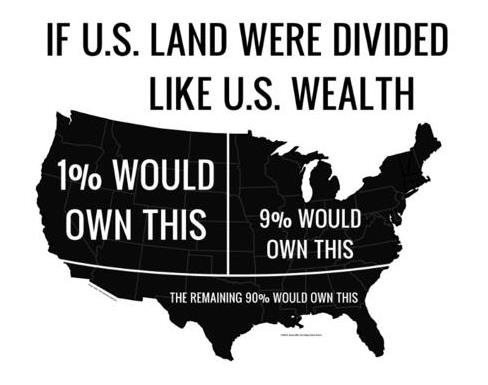
Mapping Wealth in the US
Media Alert: NewsHour and the One Percent
This Media Alert is re-posted from Fairness & Accuracy in Reporting.
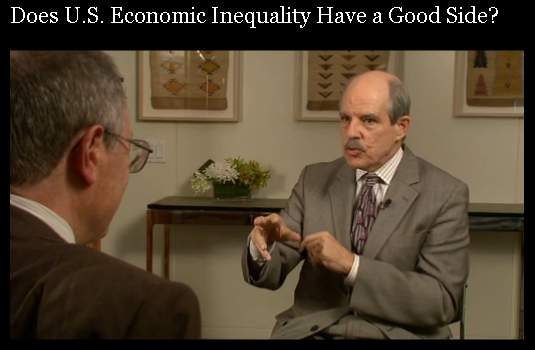
With protesters around the country speaking out against income inequality, public television’s flagship newscast made time on October 26 for the pro-inequality side to be heard, featuring a guest who invoked a phony Abraham Lincoln quote to make his case.
NewsHour anchor Jeffrey Brown explained that in the segment correspondent Paul Solman “gets a contrarian view, suggesting inequality in a free market system may not be as bad as advertised.”
The guest was New York University law school professor Richard Epstein, who presented a John Stossel-style view of the economy: “Inequality creates an incentive for people to produce and to create wealth,” raising taxes on the wealthy would harm the economy, and the “fundamental truth is the tax system is more redistributive than it was before… and the regulatory burden on the economy is vastly greater.” PBS should have disclosed that Epstein is also a director at Global Economics Group, a corporate consulting firm that advises on issues like financial regulation and employment law.
When asked if the top one percent have too much control over the political system, Epstein replied: Of course they have a disproportionate impact, but that doesn’t mean that they control it. They also ought to have it.
The last thing you would want to do in any kind of sensible society is to have a set of rules in which one man/one vote dictates over every issue.
The piece closes with Epstein invoking Abraham Lincoln: I’m going to quote Abraham Lincoln, because I like to do that–which is, he said, quite rightly, that you do not make the poor rich by making the rich poor.
The NewsHour should, at the very least, tell its viewers that this quote is a well-traveled hoax. It’s been falsely attributed to Lincoln for the better part of a century, and has been debunked almost as long. The New York Times (8/19/92) and CNN (8/19/92) pointed out that Lincoln hadn’t said those words when Ronald Reagan misquoted him in a 1992 speech. In 1996, Rush Limbaugh admitted that he too had falsely attributed the quote to Lincoln (Extra!, 4/10).
Even better, the NewsHour could explain to viewers why it’s so eager to present segments that portray economic inequality as no big deal. Brown’s introduction called this a “contrarian” view, but defending inequality is hardly contrarian in elite media–including on the NewsHour.
On September 21 Solman presented a segment featuring American University economics professor Robert Lerman, who was critical of a previous NewsHour broadcast for apparently being too one-sided: “It would be nice if there was more equality, but let’s not overdo it.” Lerman’s point was that seniors enjoy vast riches in the form of Social Security and Medicare (FAIR Blog, 9/23/11). The segment included a visit to a nursing home, where Solman informed one resident that “Medicare is like a stash of wealth that you’re now drawing on.”
Public broadcasting is supposed to be dedicated to showcasing viewpoints that “would otherwise go unheard” in commercial media. Voices championing inequality are heard loud and clear in the corporate media; public television should be doing something different.
ACTION:
Tell the PBS NewsHour to issue a correction explaining that guest Richard Epstein invoked a false Abraham Lincoln quote to support his pro-inequality argument. And ask the show why it is so eager to feature one-on-one interviews with guests who downplay–if not outright celebrate–economic inequality.
CONTACT:
PBS NewsHour
Phone: 703-998-2150
Ex-Lobbyist Becomes Top Obama Surrogate
This article is re-posted from OpenSecrets.org.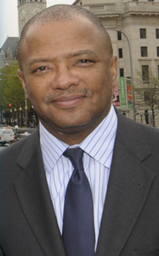
K Street and Capitol Hill veteran Broderick Johnson is joining the re-election campaign of President Barack Obama as a senior adviser.
Johnson clocked more than a decade of experience in the U.S. House of Representatives, as an attorney, during the 1980s and 1990s. Between 1998 and 2000, he served in senior roles in the Clinton White House, including acting as the president’s principal liaison to the House. And after working for President Bill Clinton, Johnson became a top lobbyist for BellSouth Corp. and AT&T.
During his time in the private sector in Washington, Johnson has also worked for Wiley, Rein & Fielding, the Oliver Group, Bryan Cave Strategies, Bryan Cave LLP and the Collins-Johnson Group, according to research by the Center for Responsive Politics.
In addition to AT&T, Johnson’s clients over the years have included numerous political heavy weights, federal lobbying records show, such as Anheuser-Busch, Bank of America, the Biotechnology Industry Organization, Comcast, Fannie Mae, FedEx, Ford, JPMorgan Chase, Microsoft, Shell Oil, Time Warner and Verizon.
Federal records indicate that he has also lobbied on behalf of the Commonwealth of Puerto Rico, the GEO Group (the private prison industry giant) and TransCanada Corp. — although TransCanada spokesman Terry Cunha told Politico Monday that the company’s “government relations operation did not look to and receive lobbying support from Broderick Johnson,” despite what lobbying records show, as the energy company has sought Obama administration approval for its controversial Keystone XL pipeline project.
Over the years, Johnson has also been a political heavy weight in his own right — donating tens of thousands of dollars, mainly to Democratic causes.

According to research by the Center for Responsive Politics, during the 2008 election cycle, Johnson donated $53,850 to federal candidates and committees, with 91 percent of that money aiding Democrats. (The rest went to a nonpartisan political action committee.) During the 2010 election cycle, he donated $81,000 — all to Democrats. And so far this year, he has donated $19,000 to Democrats and $900 to the PAC of his former employer Bryan Cave LLP.
Johnson, a native of Baltimore, Md., has also served on the board of directors of the Center for American Progress Action Fund and is the husband of National Public Radio host Michele Norris.
Former Bush Lawyer & Florida Lobbyist Among Obama’s Elite Bundlers
Eleven years ago, Barry Richard served as the lead litigation counsel in Bush v. Gore, the high-stakes legal case surrounding Florida’s recount that effectively delivered the presidency to Texas Gov. George W. Bush. Richard, a lifelong Democrat and attorney at Greenberg Traurig, is married to Allison Tant, who herself was a state-level lobbyist at Holland & Knight in Florida for eight years. Now, the duo is raising big bucks for President Barack Obama and the Democratic National Committee.
In August, the pair hosted a fund-raiser for the Obama Victory Fund — the joint fund-raising committee that benefits Obama and the DNC — at their home in Tallahassee, Fla. (see screenshot of online invite, right). DNC Chairwoman Debbie Wasserman Schultz, who is also a Florida Congresswoman, was in attendance.
According to information released by the Obama campaign earlier this month, Tant is officially among Obama’s elite fund-raisers, bringing in between $50,000 and $100,000 during the third quarter. (Richard’s name does not appear on the campaign’s list of bundlers, which it calls “volunteer fund-raisers.” Notably, the campaign does not provide specific dollar amounts its bundlers have raised, only broad ranges.)
According to a review of campaign finance data by the Center for Responsive Politics, this year, Tant has donated the legal maximum of $5,000 to Obama, while Richard has donated $3,300. During the 2008 election cycle, Tant donated $2,300 to Obama, while Richard donated $1,750. (Neither was named by the campaign as official bundlers four years ago.)
By the Center’s tally, more than 350 bundlers have raised at least $56 million for the Obama campaign and DNC so far this year — or about $1 out of every $3 the groups have raised, as OpenSecrets Blog previously reported.
Richard did not immediately respond to a request by OpenSecrets Blog for comment for this story.
FBI “Mapping”: Racial Profiling on a People-Wide Scale
This article by Glen Ford is re-posted from BlackAgendaReport.com
Until the events of 9/11, Black America seemed to be winning lots of battles in the fight against racial profiling. The term “Driving While Black” had become almost a household word due to heavy media exposure of wildly disproportionate stops of Black drivers by police on Interstate highways.
Racial profiling had become politically and socially unacceptable, with few public advocates even among law and order Republicans. And then the Twin Towers came down. Almost instantaneously, racial profiling was back, with a vengeance – directed most dramatically against people who “appeared” to be Muslim, whatever that looks like, but with renewed vigor against African Americans, the historical targets.
The FBI, which was never a respecter of the rights of darker peoples, repositioned itself to aggressively pre-empt any threat to national security. That means going after people even when there is no evidence of a crime. Although it remained against the rules for FBI agents to launch investigations based solely on race, religion of ethnicity, those factors could be taken into account. It was a loophole big enough to drive a busload of Knights of the Ku Klux Klan through.
By asserting that certain racial, religious and ethnic groups – Blacks, Muslims (especially Black Muslims) and Latinos – were more prone to crime and acts of terror, the FBI cold justify all manner of methods to massively penetrate these groups in the interest of national security.
The vocabulary changed to suit the mission. Ethnic, racial and religious communities became “domains” in FBI parlance, large geographic and social spaces in which national security demanded that the Bureau make itself acutely “aware.” Thus, the new strategy was called “domain awareness” – meaning, the FBI’s job was to learn everything about the people who lived in these ethnic, religious and racial “domains.” All that was required to launch massive intelligence gathering campaigns against, say, Black people in the state of Georgia, Arabs in the Detroit area, Chinese and Russians in the San Francisco Bay Area, or almost any group in New York City, was the invocation of a vague criminal or national security “threat.”
Like magic, threats started appearing all over the place. In October 2009, the Atlanta office of the FBI sent out a threat “alert” about supposed “Black Separatist” groups. It turned out that the alert involved peaceful protests and support of a congressional candidate, but the FBI set about collecting information on the growth of the entire Black population in the Atlanta area, the better to understand the “domain.” The FBI has used the presence of street gangs like MS13 in some Latino communities to launch domain-wide dragnets of information on area Hispanic populations. Muslims of any extraction – but especially Black American Muslims – are considered domains worthy of endless mapping.
According to the ACLU, which is urging people to tell the FBI “Don’t Map Me or My Community,” the Bureau is studying racial and ethnic “behaviors.” That means “behaving while Black” – or behaving while Latino, or behaving while Muslim. The FBI also studies racial, ethnic and religious “facilities” – that is, the places where people…exist. The ACLU says the FBI’s own behavior is unconstitutional. It also seems very much like the FBI is preparing to put the people it is studying under some kind of siege.
New Media We Recommend
Below is a list of new materials that we have read/watched in recent weeks. The comments are not a “review” of the material, instead sort of an endorsement of ideas and investigations that can provide solid analysis and even inspiration in the struggle for change. All these items are available at The Bloom Collective, so check them out and stimulate your mind.
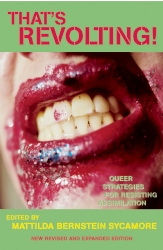
That’s Revolting: Queer Strategies for Resisting Assimilation, edited by Mattilda Bernstein Sycamore – That’s Revolting shows us what the new queer resistance looks like. The collection is a fistful of rocks to throw at the glass house of Gaylandia. That’s Revolting uses queer identity and struggle as a starting point from which to reframe, reclaim, and re-shape the world. The collection challenges the commercialized, commodified, and hyper-objectified view of gay/queer identity projected by the mainstream (straight and gay) media by exploring queer struggles to transform gender, revolutionize sexuality, and build community/family outside of traditional models. A fabulous collection of articles and interviews. Highly recommended.

Will the Last Reporter Please Turn Out the Lights: The Collapse of Journalism and What Can Be Done to Fix It, edited by Robert McChesney – In Will the Last Reporter Please Turn out the Lights, media analysts Robert W. McChesney and Victor Pickard have assembled thirty-two illuminating pieces on the crisis in journalism, revised and updated for this volume. Featuring some of today’s most incisive and influential commentators, this comprehensive collection contextualizes the predicament faced by the news media industry through a concise history of modern journalism, a hard-hitting analysis of the structural and financial causes of news media’s sudden collapse, and deeply informed proposals for how the vital role of journalism might be rescued from impending disaster.

The Resilient Gardener: Food Production and Self-Reliance in Uncertain Times, by Carol Deppe – The Resilient Gardener is both a conceptual and a hands-on gardening book, and is suitable for gardeners at all levels of experience. Resilience here is broadly conceived and encompasses a full range of problems, from personal hard times such as injuries, family crises, financial problems, health problems, and special dietary needs (gluten intolerance, food allergies, carbohydrate sensitivity, and a need for weight control) to serious regional and global disasters and climate change. It is a supremely optimistic as well as realistic book about how resilient gardeners and their gardens can flourish even in challenging times and help their communities to survive and thrive through everything that comes their way — from tomorrow through the next thousand years.

Life in Occupied Palestine (DVD) – In Life in Occupied Palestine, Anna Baltzer, a graduate of Columbia University and the Jewish-American granddaughter of Holocaust refugees, documents her experience as a volunteer with the International Women’s Peace Service in the West Bank. Baltzer provides a straightforward account of the Israeli-Palestinian conflict, while chronicling the almost unbearable living conditions of Palestinians under the Occupation.
Tell Chevron and GM to stop sponsoring hate speech on the radio
This Action Alert is from the group human rights group Cuentame.
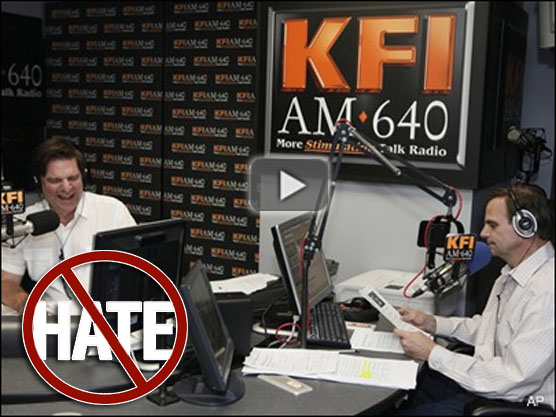
The John & Ken show on KFI (AM 640) is hate radio. The language used on the show, recently attacking the Latino community, is on par with that of Rush Limbaugh or Michael Savage, and it reaches over a million listeners each week. As with most radio shows, John & Ken’s substantial paychecks are funded by the advertisers who buy time on KFI, like GM Cadillac and Chevron.
On September 1st, John & Ken gave out the personal phone number of DREAM Act supporter Jorge-Mario Cabrera and urged listeners to contact him. Jorge-Mario received close to 500 calls with many of the callers repeating John and Ken’s exact words, and then wished death upon Mr. Cabrera and/or threatened his life and his physical safety.
Watch the video and hear a sample of what he heard (WARNING: Explicit Language)
This is the direct result of how John & Ken talk about people they disagree with, particularly Latinos. And every day advertisers pay to keep this toxic rhetoric on the air. GM and Chevron are now aware of this but they still refuse to take their advertising dollars out.
Sign the petition demanding they stop sponsoring hate!
This is the direct result of how John & Ken talk about people they disagree with, particularly Latinos. And every day advertisers pay to keep this toxic rhetoric on the air. GM and Chevron are now aware of this but they still refuse to take their advertising dollars out. You can call them and demand they do so:
GM: 1-313-556-5000
Chevron: 1-925-842-3232
Guards of the Status Quo and the Occupy Movement
This article by Bruce Levine is re-posted from ZNet.

“In a highly developed society, the Establishment cannot survive without the obedience and loyalty of millions of people who are given small rewards to keep the system going: the soldiers and police, teachers and ministers, administrators and social workers, technicians and production workers, doctors, lawyers. . . . They become the guards of the system, buffers between the upper and lower classes. If they stop obeying, the system falls.”
—Howard Zinn, from “The Coming Revolt of the Guards,” A People’s History of the United States,
For those of us who have demonstrated and marched in the Occupy movement, it is obvious that the police and the corporate press serve as guards—buffers between the vast majority of the American people and the ruling “corporatocracy” (the partnership of giant corporations, the wealthy elite, and their collaborating politicians). In addition to the police and the corporate press, there are millions of other guards employed by the corporatocracy to keep people obedient and maintain the status quo.
Even a partial revolt of the guards could increase the number of protesters on the streets from the thousands to the millions. When did Zinn predict the revolt would occur, and how can this revolt be accelerated?
The Other Guards
I am a clinical psychologist, and Zinn is correct that mental health professionals also serve as guards who are given small rewards to keep the system going. The corporatocracy demands that psychiatrists, psychologists, social workers, and other mental health professionals assist people’s adjustment to the status quo, regardless of how dehumanizing the status quo has become. Prior to the 1980s, mental health professionals such as Erich Fromm (1900–1980) were concerned by this “adjustment to what?” problem. However, in recent years there has been decreasing awareness among mental health professionals about their guard role, even though today some of the best financial packages offered to us are from the growing U.S. prison system and U.S. military.
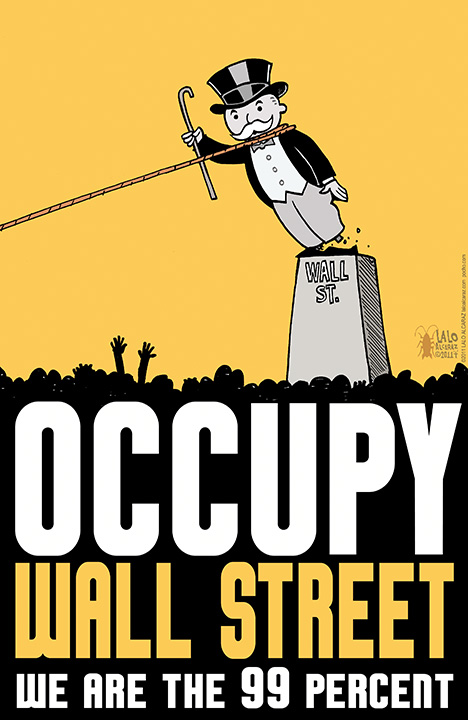
Most guards also perform duties besides “guard duty.” The police don’t just protect the elite from the 99 percent; they also provide people with roadside assistance. And mental health professionals also perform “non-guard duty” roles such as improving family relationships. Guards certainly can perform duties helpful for the non-elite, but the elite would be foolish to reward us guards if we didn’t serve to maintain their system.
Many teachers went into their profession because of their passion for education, but they soon discover that they are not being paid to educate young people for democracy, which would mean inspiring independent learning, critical thinking, and questioning authority. While teachers may help young children learn how to read, they are employed by the corporatocracy to socialize young people to fit into a system that was created by and for the corporatocracy. The corporatocracy needs its future employees to comply with their rules, to passively submit to authorities, and to perform meaningless activities for a paycheck. William Bennett, U.S. Secretary of Education under Ronald Reagan, was clear about the role of schools, “The primordial task of the schools is transmission of the social and political values.”
If you are comfortably at the top of the hierarchy, you reward guards to make your system work. In addition to the police, the corporate press, mental health professionals, and teachers, there are clergy, bureaucrats, and many other guards in the system, all of whom are given small rewards to pacify and control the population. Some guards have rebelled from their pacification and control roles, most have not.
When Will the Revolt of the Guards Occur?
Howard Zinn predicted the revolt of the guards would occur when guards recognize that they are “expendable.”
Historically, the elite’s strategy is to pay what is necessary to fill guard jobs, and when the time is ripe, reduce the rewards of guards and ultimately eliminate the guards. Union teachers—similar to union prison guards who’ve been replaced by non-union guards in for-profit prisons—have discovered that they too are expendable. It is logical for the elite to first use teachers to pacify young people, then use corporate-collaborator politician guards to reduce the rewards of teachers, and finally replace teachers with various technologies (such as computer programmed instruction) that the elite can profit from.
While the corporatocracy once paid us mental health professionals fairly well to provide therapy to help people adjust to the status quo, we now receive relative chump change for therapy, and it’s clear that psychotherapists and counselors are expendable. Mental health professionals are increasingly pressured by insurance corporations to treat the “maladjusted” with drugs, which create wealth for drug corporations and reduces labor costs for health insurance corporations. Today, a psychiatrist can still make good money prescribing drugs, but in the future, the corporatocracy will likely reduce rewards to its drug dispensers. That future is here in the U.S. military, as troops in combat zones in Iraq and Afghanistan are, without prescriptions, given psychiatric drugs by military medics.
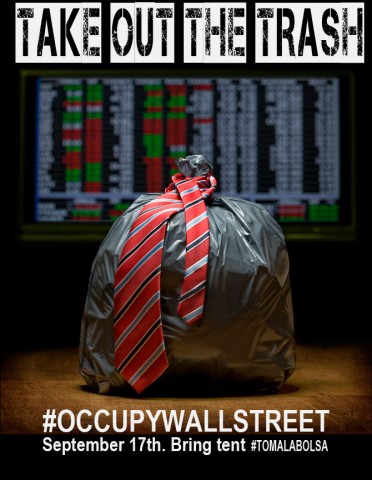
So, law enforcement officers, beware. Cameras and other surveillance technology are becoming increasingly inexpensive, and law enforcement labor costs will increasingly be replaced by inexpensive Orwellian surveillance.
How to Accelerate the Revolt of the Guards
For guards, it is not easy coming out of denial of our role and our fate. As Upton Sinclair observed, “It is difficult to make a man understand something when his salary depends on his not understanding it.”
To accelerate the revolt of obedient guards, I recommend two strategies: (1) create unpleasant dissonance about their role as guards; in other words, put guards in some pain for their unquestioning obedience that maintains the system. (2) offer encouragement for even small acts of rebellion against their guard role; small acts of rebellion may well be major financial risks.
It is my experience that guards are far less defensive when they are “off-duty.” So, if you are at protest demonstration, don’t try to lecture police about their role as a guard for the system or stroke them for any act of humanity. When we guards we are on duty, we are extremely vigilant about being manipulated. Off-duty, we are more receptive.
If you have social contact with off-duty law enforcement officers, you might ask them “Wouldn’t it be more satisfying putting the handcuffs on some billionaire tax dodger than arresting some small-time pot user?” I’ve asked police officers if they’ve heard of Jonathan Swift’s quote, “Laws are like cobwebs, which may catch small flies, but let wasps and hornets break through.” On-duty police will respond with “no comment” or a blank stare, but some off-duty cops will smile and even agree. And should off-duty police ever tell you an anecdote in which they ignored a law designed to catch a small fly, give them encouragement.
For off-duty corporate journalists, you might talk to them about how much you admire journalists such as Bill Moyers, former press secretary of Lyndon Johnson, and Chris Hedges, former New York Times reporter, for their rebellion from the their guard role. Remind journalists of their expendability, as the corporate media is increasingly eliminating reporters for the sake of profitability. And if they give you anecdotes in which they created tension with their editor by challenging the system, be encouraging.
If you know any mental health professionals, ask them if they think insurance companies care at all about either patients or providers. They will likely laugh, and say that insurance companies care only about their profits, and most will agree that other giant corporations care only about their profits. You might ask them, “Just how unjust does a society have to become before helping people adjust to it with behavior modification and medication is immoral?” If they have validated their patients’ pain over an increasingly undemocratic and authoritarian society and helped them constructively rebel against a dehumanizing system, encourage these stirrings of rebellion.
Most teachers despise the tyranny created by “No Child Left Behind” and “Race to the Top” with its fear-based standardized test preparations and computerized learning programs. Ask teachers, “Is it possible that you, like manufacturing workers, are also expendable?” You might also ask them, “Have you ever told parents of a disruptive kid that it is possible to effectively teach their child without any medication if there were fewer children in the classroom, which would allow their child to receive the attention and structure necessary?” Certainly give teachers encouragement if they have put their job in jeopardy by explaining the purpose of schools in the corporatocracy to any of their anti-authoritarian and alienated students.
In order to rouse more guards to revolt, we should not let obedient guards “off the hook” for their refusal to question, challenge, and resist illegitimate authority. Do not say, “Hey, I understand, you are just doing your job.” Guards must be confronted with the reality of the misery that results from blind obedience. Guards must deal with the reality that history looks unkindly on those who “just followed orders.” And guards must be given confidence that there are revitalizing satisfactions and new community that will emerge for them when they join the revolt of the guards.
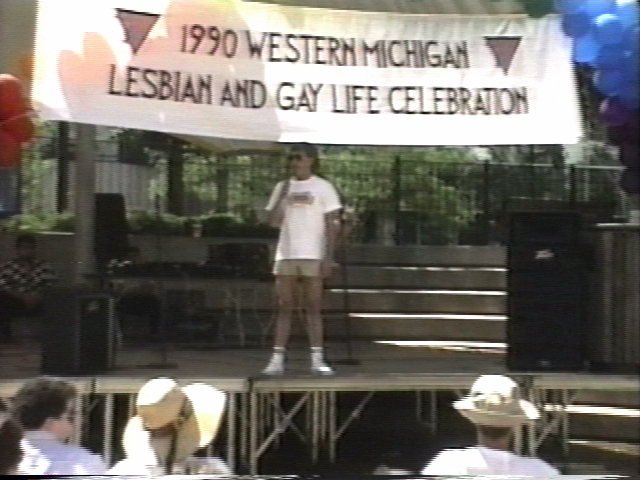
In 1990, the Grand Rapids Pride Celebration invited AIDS Quilt founder Cleve Jones to speak about his work to educate the public about HIV/AIDS.
Jones, who was a close friend of the late Harvey Milk, spoke with Bryan Ribbens about his experience of being in Grand Rapids in the video below.
This video, like many other archival materials, is part of the Grand Rapids People’s History Project and will be hosted online at a new wordpress site that will go live after our premier screening of the People’s History of the LGBTQ Community in Grand Rapids film on Thursday, November 17.
For more information of the film screening go to http://www.facebook.com/event.php?eid=177037795707401.
 Grand Rapids Institute for Information Democracy