Meet Kellogg’s Sludge Puppet
This article by Rebekah Wilce is re-posted from PRwatch.org.
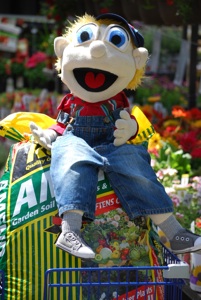
A new puppet’s in town! His name is Karden, and according to his PR, he shows kids how much fun gardening can be. What parents and teachers aren’t told is that he is actually a marketing tool for sewage sludge merchant Kellogg Garden Products.
Books featuring Karden, available at common bookstores, and an “Idea Factory” website devoted to him, are full of gardening activities for parents and teachers to do with their kids. Karden throws free kids’ gardening events at bookstores and hardware stores.
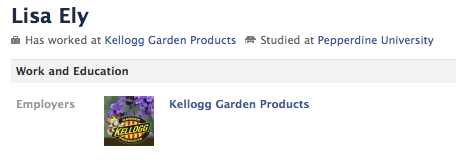
Lisa Ely, one of the two creators of the character, is listed on a gardening website about “Karden’s Corner” as “an award-winning television producer and owner of one the newest production companies in Los Angeles focused on documentary television.” But while she has, indeed, produced such reality TV shows as CBS’s “The Amazing Race,” Discovery Channel’s “Verminators,” and TLC’s “America’s Ugliest,” Ely’s Facebook page lists no production company. Instead, it lists Kellogg as her employer:
While Ely was busy producing TV shows about what creepy-crawlies are “grossest,” and featuring “gnarly infestations,” her latest employer, Kellogg, was busy buying concentrated sewage sludge from municipalities like Los Angeles, via its “Inland Empire Regional Composting Authority,” and repackaging and greenwashing it as “compost.” Kellogg has been in the sludge slinging business since 1925.

Sewage sludge contains toxic and hazardous materials, including large numbers of endocrine disruptors and several heavy metals, along with carcinogenic flame retardants, pharmaceutical residues, phthalates, industrial solvents, resistant pathogens, and perfluorinated compounds, which can bioaccumulate in gardens and in the human body.
A recent test of Kellogg’s Amend and Nitrohumus found high levels of cancer-causing dioxins.
“If the ingredients aren’t listed, you may want to look at buying a different bag.”
One of the suggested kids’ activities in Karden’s “Idea Factory” is choosing bagged potting soil. Karden, who’s supposed to have just toured “Kellogg’s soil factory,” says he “learned that when shopping for potting soil, the most important thing you can do is look for a bag that lists quality ingredients and gives a satisfaction guarantee. The ingredients should be listed on the bags of soil you’re buying, almost like the food you buy from the grocery store. If the ingredients aren’t listed, you may want to look at buying a different bag.”
Although Kellogg’s “Amend” product, as pictured on the kids’ activity page, sports a list of ingredients, it does not list sewage sludge or even the sludge industry’s Orwellian PR euphemism, “biosolids.” It does list “compost.”
One must look on Kellogg’s website, rather than its packages, to find what is meant by “compost”:
“Compost from biosolids … comes from wastewater treatment plants in different communities throughout the U.S. (Our compost comes mostly from the Inland Empire.) You might find it in our Amend, Gromulch, or Topper products — depending on where they’re bagged. And this type of compost is always in bags of Nitrohumus.”
What parent, with kids in tow, would put a bag of fertilizer that says it contains something as innocuous-sounding as “compost” back on the shelf until they can go home and look up Kellogg’s definition tucked away on the web?
Sludge Obstacles
Another activity in Karden’s “Idea Factory” is setting up and playing in an “obstacle course” made of Kellogg products, including Amend and Topper, made from industrial and human sewage sludge.
More Children Gardening in Sludge
Karden’s Corner, Kellogg and Lowe’s sponsored a school garden design contest earlier this year. The winner was a young student at Joseph Sims Elementary School in Elk Grove, CA.
Kellogg’s contribution came in the form of — what else? — a “soil donation” to the school.
As we’ve reported, Kellogg has contributed the products it sells, many of which contain “biosolids,” to at least thirteen schools in the Los Angeles area and to a rooftop community garden on skid row.
As for Karden, you may find him at a garden store near you, greenwashing the idea of kids gardening in sewage sludge. Parents may want to beware of Kellogg’s puppets bearing “gifts” made of contaminated industrial waste.
Redefining Veteran’s Day
This article by Jared Ball is re-posted from Black Agenda Report.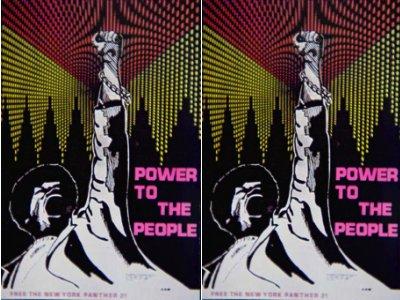
I am officially a veteran. Like many I was conscripted by this country’s “poverty draft” and its associated judicial-military pipeline, the one that encourages military time over jail time, and then immediately pressed into service of this nation’s imperial projects. And while I recognize this reality and can still appreciate the position in which people like me have found themselves and the suffering some have endured for it, I prefer we praise another kind of veteran. On November 11th let us commemorate those who have fought, and still fight, those who have been exiled, assassinated or imprisoned as veterans of the many on-going wars against U.S. and Western imperialism. More than any they deserve our reflection and support.
Veteran’s Day began as “Armistice Day,” commemorating the end of what we now call World War I, what was called then the “war to end all wars.” But rabid empires can only expand. There can never be an armistice. So after a second so-called World War they simply dropped the “Armistice” and made it about the oh-so-many veterans that would be created and re-created by the permanency of war. This permanence of the nation’s war machine is evident in the permanence of this nation’s thirst for war. Simply interlace lists of American wars against Europe between 1776 and the massacre at Wounded Knee in 1890 which “settled” the matter of control over this land with lists of American invasions into every pocket of Latin America and the Caribbean from then until now. Then add the lists of repression of hundreds of African uprisings against enslavement and the domestic policing of internally-held colonies and suppression of labor organizers and you won’t find a 10 year period in this country’s history when it wasn’t at war. And all of this warfare creates veterans on all sides.
In the U.S. alone we currently have dozens of political prisoners still incarcerated for their veteran participation in these wars. We certainly have thousands more here and around the globe who have, in some form of solidarity, been engaged in anti-imperial, counter-terrorism but whose names and stories we don’t know and whose political legacy we have not carried on. Perhaps an aggressive attempt to redefine the state’s propaganda could help. Power over definition is essential. This is why Nat Turner and his compatriots were once described as “insurgent[s]” as are those fighting today against the U.S. in Iraq, Afghanistan and elsewhere. And it is also why, more than a century after Nat Turner, this same concept, applied to his political descendants, resulted in the FBI’s Counter Intelligence Program (COINTELPRO) application of “counter-insurgency” tactics against domestic targets. Malcolm X did say that, “the police do locally what the military does internationally.”
This, of course, is not mere semantics. Those we know as political prisoners are indeed veteran prisoners of war. These POWs, as former Black Liberation Army member and current political prisoner Jalil Muntaqim has explained, come from the Black, Indigenous and Latin American “nations” held in “domestic (neo) colonialism.” They, along with those oppressed along class lines, are “all fighting wars of national liberation, seeking independence and sovereignty from capitalist exploitation.” In fact, during the sentencing for Muntaqim, Albert ‘Nuh’ (Noah) Washington and Herman Bell, all members of the Black Liberation Army, the judge said as much, that if these are prisoners of war then they should see themselves as having been “captured by the enemy.” And so our commemoration of a Veteran’s Day should incorporate work to free our prisoners of war and to finally force this country into an armistice. This is the least we can do.
So as symbolism goes it is indeed fitting then that this year Veteran’s Day coincides with the release of Clint Eastwood’s J. Edgar, a film that is already said to be little more than praise to a “brilliant patriot” who was merely an “impediment to the civil rights movement” and who may have been gay. Yes, Veteran’s Day and J. Edgar, one praises those who do internationally what the other did domestically.
Bloom Collective hosts discussion on the role of museums in perpetuating oppression and elite values

This Saturday, the Bloom Collective is hosting a potluck/discussion on the role that places like the Grand Rapids Public Museum, Fred Meijer Gardens and Gerald R. Ford Presidential Museum in perpetuating oppression and favoring the elite through their choice of exhibits and their portrayal of history.
The Bloom Collective promotion for this event says, “Bring a dish to pass as we discover what motivates these institutions choices around what they teach us… and what they don’t.”
Bloom Collective Potluck/discussion
Saturday, November 12
1 – 3pm
671 Davis NW, Grand Rapids
Also see the Facebook event page.
The Women’s Center at GVSU hosted a presentation by Jason Laker, author and presenter on the issue of masculine development and men’s need to be involved in ending violence against women.
About 100 students and some faculty/staff spent an hour listening to a presentation that is part of a larger effort on campus to reduce violence against women on campus and engage more men to be part of that work.
Jason began his presentation with a listing of some talking points about where he is operating from as a researcher and author. He talked about the need for accountability of men, the need for a restorative justice approach to men who commit violence against women and the fact that we have a media system in this society that normalizes unhealthy attitudes and behaviors towards women.
Laker also stressed that the importance of doing this work of confronting and holding men accountable for violence against women is directly tied to the need to radically alter how men are socialized. He presented his information and analysis particularly within the university context.
Looking at data, Laker then provided some context for male behavior on campuses across the country. Men are overwhelmingly involved in negative incidents on campus, but are vastly under-represented in policy planning that deals with multiculturalism, diversity and campus safety.
Laker said that part of the problem is that the majority of men are ignored and not approached around the need to create a healthy climate on campus. He said that most of us are co-conspirators in creating a climate of mediocrity, in that we dismiss men in general as either uninterested or unwilling to change.
For Laker, the key point of doing the work of end violence against women on campuses is to explore and develop healthy male identity. Laker discussed how from the time children are in the womb the emphasis is always people wanting to know the gender of the baby, “so what is it?” This is an indication of how we obsess over the biological distinctions of children as opposed to just embracing them as human.
Laker then presented the notion that there is a hegemonic identity for men in this culture. What he meant by that is that there is a dominant form of male identity that is presented in our society, through the media and major institutions. Men, according to Laker, are constantly being questioned by men about their identity, particularly if they do not reflect the hegemonic view, which is the hyper-masculine, un-emotional and prone to violence/dominance.
This hegemonic view of masculinity is supporter by recent research of pro-feminist men like Michael Kimmel, in his book Guyland and affirmed in feminist theorist writers such as bell hooks.
Laker also said that much of men’s negative behavior is related to this notion of shaming. When men are constantly policed by men about their masculine identity it increases the likelihood that this kind of shaming will increase the levels of violence that men participate in. This critique of shaming is a major part of the analysis in the new documentary The Bro-Code.
Lack of emotion, control, power and competition are the principles that currently nurture male identity, which underscores the need to radically alter the ways in which men are socialized.
This was the message that Jason Laker brought to students, a message that the university hopes to use as a mechanism to create a new campus climate where men become co-participants in reducing violence against women and hold each other accountable.
However, there was one thing that Laker did not address, which to this writer seemed like a big opportunity missed. Penn State University is currently faced with the fact that some administration and football coaches knew that sexual assault occurred over a 15-year period and yet they did not report these assaults or take other actions to hold the perpetrators accountable.
This story would have provided an excellent opportunity to address how institutionalized male privilege can play out and why students, faculty and staff on college campuses cannot assume that just because a policy is in place that justice will prevail.
Minister pleads not guilty in Holland Court for standing against unjust City ordinance
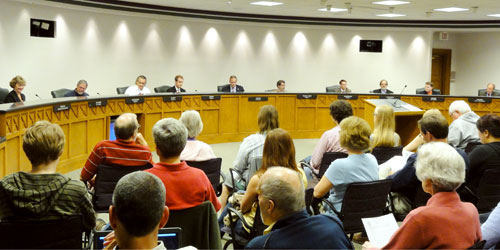
Earlier today, Bill Freeman, a minister with congregations in Holland and Muskegon, plead not guilty to a trespass charge, when he refused to leave the Holland City chambers after he and other people addressed the commissioners on the ordinance that currently excludes anti-discrimination protections.
Since the June decision by the Holland City Council to not include anti-discrimination language to protect the LGBT community there has been an organized campaign to continue pressuring the City Commissioners, a campaign to support businesses that endorse an inclusive ordinance and boycott those that are anti-LGBT.
Freeman, who has been going to the Holland City Commission meetings since June, who has written letters, met with commissioners, done education on this issue felt that it was time to engage in an act of civil disobedience.
Here is a brief interview GRIID conducted with Freeman after he entered a plea of not guilty this morning.
Bullying and the Religious Right
This article by Robert Fantina is re-posted from CounterPunch.
Definition. ‘Bully: a blustering, quarrelsome, overbearing person who habitually badgers and intimidates smaller or weaker people. A blustering browbeating person; especially: one habitually cruel to others who are weaker.’

This writer has commented previously on the religious right’s bizarre interpretation of Christianity, one that its founder, revered by many as the Savior and Redeemer of the world, wouldn’t recognize. Just when one thinks that a no more peculiar interpretation of Christian beliefs and behavior than has already been displayed by this disreputable group is possible, the Michigan State Senate proves that, yes, the religious right knows no bounds in twisting Christianity to suit its bigoted purposes.
An article by Amy Sullivan in Time Magazine discusses Michigan’s long attempts to pass an anti-bullying law. Michigan is one of only three states that have not implemented such a law, despite the minority Democrats’ years-long efforts to do so. During this time, at least 10 Michigan students have committed suicide due to their victimization by bullies. It would seem to be a no-brainer that bullying has become so pervasive and dangerous that laws must be passed to deal with it.
Not so, says one Gary Glenn, the president of the American Family Association of Michigan. He looks at anti-bullying measures through the skewed lens of his own brand of prejudice. Anti-bully measures, he says, are ‘a Trojan horse for the homosexual agenda’ (whatever that is). With the Republicans controlling both the Michigan State Senate and House of Representatives, his bigoted mantra has gained dominant traction.
Finally, however, the State Senate passed an anti-bullying measure, one that the Democrats, who have fought long and hard for such a measure, unanimously voted against. The legislation is significant more for what it doesn’t include, than what it does:
- No requirement for schools to report bullying incidents
- No provision for enforcement
- No teacher training required
- No accountability if administrators are aware of bullying, but do nothing to prevent it.
- And, most significantly: Protections for religiously-motivated bullying.
One can think of few oxymora starker than ‘religiously-motivated bullying.’
As Democrat Gretchen Whitmer said on the floor of the Senate, the law that the Michigan Senate passed, says that “bullying kids is okay if a student, parent, teacher or school employee can come up with a moral or religious reason for doing it.”
This last provision is the most bizarre, and the one that once again twists Christianity into an unrecognizable shape. No one who genuinely follows the example of Jesus Christ would ever bully anyone, under any circumstances at all.
Referring back to the definition of bullying at the start of this article, can anyone conceive of Jesus Christ as ‘blustering, quarrelsome or overbearing?’ Can anyone recount a circumstance when he was cruel? This writer is a Christian, well-versed in the scriptures and the life of Jesus Christ. He is at a complete loss to understand how ‘moral,’ ‘religious’ and ‘bullying’ are ever compatible.
There seems to be an idea that Christianity condemns homosexual behavior, and, therefore, gay people can be bullied. This is puzzling to this writer, as he strives to learn who has put the American Family Association, or any part of the so-called ‘religious right,’ in charge. It is his understanding, based on a careful and years-long study of scripture, that judgment is left to Jesus Christ. Certainly, any church can make its own rules, and require that its members adhere to them. But no one who calls him/herself Christian can ever justify bullying; it is anathema to anyone who follows Jesus Christ.
Let us look at one example of bullying from the Bible, and see how Jesus Christ handled the situation. In John, Chapter 8, is the story of a woman who had committed adultery, a capital offense at that time, and who is brought before Jesus Christ. The Scribes and Pharisees wanted to stone her, which was consistent with the Law of Moses. This seems to fit the bill as an example of bullying: overbearing people being cruel to someone who is weaker. Did Jesus Christ point out some appropriate stones with which to begin? Did he condemn her, call her insulting names, spit on her? Did he do anything whatsoever to frighten or intimidate her?
Let’s look at the account from the Bible (John 8, verses 4- 11):
4. They say unto him, Master, this woman was taken in adultery, in the very act.
5. Now Moses in the law commanded us, that such should be stoned: but what sayest thou?
6. This they said, tempting him, that they might have to accuse him. But Jesus stooped down, and with his finger wrote on the ground, as though he heard them not.
7. So when they continued asking him, he lifted up himself, and said unto them, He that is without sin among you, let him first cast a stone at her.
8. And again he stooped down, and wrote on the ground.
9. And they which heard it, being convicted by their own conscience, went out one by one, beginning at the eldest, even unto the last: and Jesus was left alone, and the woman standing in the midst.
9. When Jesus had lifted up himself, and saw none but the woman, he said unto her, Woman, where are those thine accusers? Hath no man condemned thee?
10. She said, No man, Lord. And Jesus said unto her, Neither do I condemn thee: go, and sin no more.
One can only imagine that if members of the religious right were present then, the woman would have suffered a horrible death, due to their ‘religious’ and ‘moral’ reasons for stoning her.
It is pointless to discuss Jesus Christ’s treatment of lepers, tax collectors and other who were, somehow, outside of society’s narrowly-defined norms. Anyone with the most rudimentary familiarity with the scriptures is aware of his unceasing kindness to almost everyone he encountered. There are only two exceptions in recorded scripture: hypocrites, and the moneychangers in the temple. To them, he was direct, forceful and condemning.
Might not this give pause to some members of the religious right? One can name any number of their members who, while spouting the Biblical phrases that make such good sound bites on the evening news, were lying to their wives while they sleep with their girlfriends. And what about those who grasp and clutch for every dollar they can get? One does not wish to judge, of course, but one can’t help wondering about how pleasing these behaviors are to the Master they purport to follow.
But this writer has once again relied on facts, so he is, in effect, preaching to the choir. For those who simply despise gay people (or African Americans, or Native Americans, or people with physical or mental handicaps, etc.), nothing in the Bible will change their behaviors. Even if an anti-bullying law may save the life of a vulnerable person who is not gay (yes, there are such people), it is not worth it; if the law may somehow, even inadvertently, protect a gay person, it should not be passed.
So this is what it has come to. The party that accuses the Democrats of class warfare has defined a sub-class of people, not worthy of the law’s protection. As goes Michigan, so goes the nation? One hopes not, but with President Obama’s approval ratings moving in the wrong direction, and former Massachusetts governor Mitt Romney, ascendant, the omens are not good.
It has become clear over the past 9 months while working on this People’s History of the LGBTQ community in Grand Rapids, that one of the main obstacles to achieving equality and justice has been the deeply conservative religious forces in West Michigan.
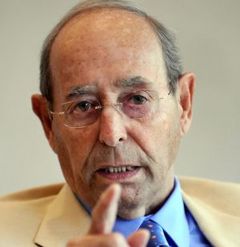
In looking through the archives of the Network News, we came across an article in 1988 during the early organized efforts to gain legal rights for the LGBTQ community. The article was a re-print from the September 1988 issue of Grand Rapids Magazine, which reflected the views of one of the most visible voices from the religious right in West Michigan.
The article cites Jeff Swanson as saying, “Gay people receive all the equal rights they’re entitled to unless someone knows they’re Gay.” Network President Gwen DeJong echoes those sentiments and adds that for Lesbian women it is even more risky to be out and a woman.
To counter these notions, the article then cites Richard DeVos Sr. (then CEO of Amway). “If you are out of it (the mainstream), you’re out of it because you choose to be out of it. I don’t think it’s because you are legislated out of it. You get active, get your gang together, and you’ll be heard.”
It seems that DeVos’ understanding of civil rights were a bit simplistic in 1988. However, even after people from the LGBTQ community got active, got their “gang together” and fought for equal rights DeVos and his fellow religious conservatives were not content to let these gains go by without a challenge.
One section of the film to be screened on November 17 is based on people’s response to the reality of having a very powerful religious right in West Michigan. Numerous people we interviewed acknowledged the power that these religious conservatives have in this community. They have used their influence to pressure politicians one everything from local ordinances to state and national legislation. We learned that when LGBT faculty and staff at GVSU organized for domestic partner benefits in the mid-90s their efforts were defeated because wealthy men like Peter Cook threatened to withhold funding (based on those we interviewed for this history project) for the new medical school being proposed from Grand Rapids if domestic partner benefits were granted.
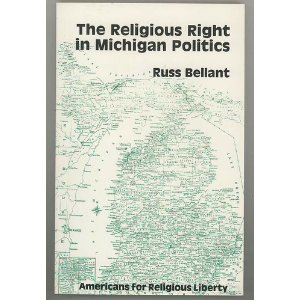
In addition to what people had to say about their experiences of the backlash from the religious right we did some additional research by looking at the 990s of some of the most powerful anti-gay sectors in West Michigan to see who they were giving money to during the 1990s when lots of LGBT organizing was happening locally. We discovered that several influential families (DeVos and Prince) were giving millions to groups that had an anti-gay agenda and were financing campaigns in the state and around the country to defeat efforts for greater equality.
This kind of financing of anti-gay efforts continues in the present with the DeVos family providing money to defeat an effort of marriage equality in Michigan in 2004 and Florida in 2008.
It seems clear that the fight for greater equality in the LGBTQ community has and continues to be met with serious resistance from the religious right. This is not only and important part of the local LGBTQ history, but should inform any current organizing efforts to achieve justice and equality.
Join us for the premier screening of A People’s History of the LGBTQ community in Grand Rapids, on Thursday, November 17 beginning at 6:30PM in the Loosemore auditorium of GVSU’s downtown campus.
Chomsky Interview on Israel, Palestine and the Obama administration
Noted linguist and political writer Noam Chomsky was recently interviewed by the Australian news outlet SBS World News Australia. The interview focused on the recent United Nations debate over granting Palestinians statehood and US policy towards the Israeli/Palestinian conflict, especially under the Obama administration.
Why Buying Local doesn’t always work in market economy

For several years now there has been this mantra that conscientious consumers should support local businesses. The main rational is that then the money they spend will stay in this community.
These are certainly well intentioned notions, but neither assertion (buy local, put money into the local economy) holds up under much scrutiny. There are many businesses that are locally based, but no longer just serve the local community. Meijer for example, operates stores in numerous states in the Midwest and the majority of what they sell is not produced or manufactured locally. Meijer stores are intricately tied to the global market and are dependent on a fossil fuel driven economy, neither of which are sustainable.
The notion that supporting local businesses is somehow a more just model also has to do with economies of scale. For instance, if you own a local coffee shop and are not part of a chain like Starbucks, you would be celebrated within the current “local is best” mantra. However, even a locally owned coffee shop is still tied to the global economy, since coffee must be shipped to Grand Rapids from Latin America, Africa or Asia. This means that even a locally owned coffee shop is part of the global and fossil fuel economy. So while it may make us all feel better to get coffee from a local café than a coffee shop chain, it is not all that sustainable and it is certainly not local in any meaningful sense.
The fallacy of localism was demonstrated well in a Grand Rapids Press article that ran on Sunday. The focus of the article was on the global expansion of some West Michigan companies. The article states early on:
“It’s true: Globalization has cost thousands of jobs as some companies sought to lower labor costs and sell into closed markets such as China. But it also is creating a much larger customer base for nimble U.S. manufacturers able to capitalize on a much larger playing field — particularly in niche fields.”
So the rationale is clear, too bad for some workers, but some of our local businesses are thriving. There is also another message in this story as well. If Amway or Herman Miller are sending their products to other countries doesn’t that undermine the ability of local communities in say Colombia to make the same kinds of products that Amway and Herman Miller can make? Doesn’t exporting of basic goods and services abroad contradict the whole support your local business mentally?
The whole article is a celebration of this dynamic in that is cheerleading the increase of products being manufactured in Michigan. The article is a nod to the recent trade agreements the US entered into with South Korean, Colombia and Panama, as well as the idea that trade barriers are bad in general. This is why the Press reporter only cites businesses that export and people like Birgit Klohs, the director of the Right Place Program, a local entity that promotes global capitalism.
The Press article goes on to argue that the new global markets that have opened up for companies like Amway and Herman Miller means more jobs can be created in West Michigan. This is simply another fallacy. In fact, Amway has reduced local job numbers locally, especially after it moved a distribution center to Central America. This argument that is creates more jobs in the long run is also false in that it never acknowledges the thousands of jobs lost to recent trade agreements. According to Public Citizen’s database, Michigan has lost 329,109 manufacturing jobs since NAFTA was implemented in 1994.
Buying food and other products raised locally certainly makes sense, but we have to be careful that we don’t assume that just because a businesses is local that is benefits the local or the global community. In fact, within a capitalist system buying local in and of itself is a dead end. Creating a new economic system is not only what needs to happen, but a new system would truly promote localism.
Vandana Shiva on Food Justice
Author, activist and feminist Vandana Shiva spoke at the recent Right 2 Know march in Washington, DC.
Shiva talks in the video below about food justice, food sovereignty, challenging Monsanto GMO foods and holding the Obama administration accountable. Shiva is the author of dozens of books on environmental justice and the corporate takeover of our food systems. She is also a co-founder of a seed saving movement in India known as Navdanya.
 Grand Rapids Institute for Information Democracy