Part of the national strategy to get Rush Limbaugh off the air after he publicly insulted and demeaned Sandra Fluke by calling her a “slut” and “a prostitute” has been to pressure companies, which advertise on his syndicated radio show.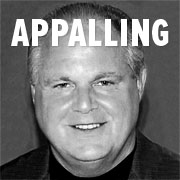
As of this writing there are at least a dozen companies that have pulled their funding from the show, companies that include AOL and makeup company Bare Escentuals. In addition, at least two radio stations in the country have already dropped Limbaugh from their lineup, according to a story on The Huffington Post.
The campaign in Grand Rapids is attempting to get the Rush Limbaugh show dropped from WOOD Radio, which airs the show Monday – Friday for 3 hours each day.
We have been asking people so far to contact the station to express their outrage at Limbaugh’s most recent offensive comments and many people have done so. Not surprising, WOOD Radio Station Manager Tim Feagan has responded with a canned e-mail stating that the station merely wants to “provide listeners with a broad range of opinions and commentary.” A lineup of Limbaugh, Glen Beck, Sean Hannity and Michael Savage hardly could be considered a broad range of opinions.
In additions to contacting the station, we want to kick off a campaign to target local businesses that advertise with WOOD Radio and demand that they pull their funding from the station as long as Limbaugh’s show continues to be broadcast by Clear Channel in Grand Rapids.
The local companies listed below is the beginning of a list we have compiled based on who is advertising on air and on the WOOD Radio website. We are asking people to call and/or e-mail these companies and demand they pull their funding from WOOD Radio. Some of the companies do not have a publicly posted e-mail address, but they do have an online contact mechanism. If you write or call these businesses let us know so we can continue to update people on the campaign.
Also, just a reminder that at noon on Wednesday, March 7 there will be a protest at the Clear Channel/WOOD Radio at 77 Monroe Center in downtown Grand Rapids.
West MI Advertisers on WOOD Radio
Grand Rapids Lighting
616-949-4931
Kyper College
kcapisciolto@kuyper.edu 616-988-3676
Kent Equipment
(616) 675-5368 http://www.kentequipment.com/contact.htm
River City Reproductions
616.464.1220 info@rivercityreproductions.com
Life EMS
1-888-543-3367 info@lifeems.com
Mercantile Bank of Michigan
616.406.3604 https://www.mercbank.com/contact.asp
Silver Bullet Firearms
(616) 249-1911 silverbulletfirearms@gmail.com
West Michigan Office Interiors
(800) 964.0201 sales@wmoi.com
Granite Transformations
(866) 400-1594
http://grandrapids-granitetransformations.aiprx.com/grandrapids/contact-us/
AMR-West Mi
(616) 459-8228
http://www.ems-education.com/page5/
Maple Creek (senior housing)
(616) 452-5900
AAA Turf
616-669-7715
West Michigan Glass Block
616.243.3700
http://www.wmgb.com/contact.asp
Bartlett Tree Experts
616-245-9449
Spectrum Health
(616) 391-1382
http://www.spectrumhealth.org/body.cfm?id=57
Family Fare
616-878-8350

In their last Manufacturing news blast, MiBiz included a link to a Press Release from General Motors highlighting their production of fuel cell vehicles for the US Military.
The Press Release states in part, “Operating these vehicles will provide the military with the necessary data and experience to determine future applications of fuel cell technology,” said Charles Freese, GM executive director of Global Fuel Cell Activities.

This most recent experiment with so-called Green technology by the US Military is just the latest greenwash campaign, in this case between GM and the Pentagon.
First, it should be mentioned that the potential use of fuel cell powered vehicles manufactured for the US Military will be paid for by taxpayers. Any Pentagon purchases are picked up by US taxpayers, a reality usually excluded from such news.
More importantly, the notion of manufacturing some fuel cell vehicles for the US military would qualify as an amazing Orwellian notion. First, one of the main functions of the US Military is resource control, with oil being at the top of the list. This is the thesis of author Michael Klare in his book and film Blood & Oil.
The second fundamental issue that exposes the absurdity of the US Military’s attempt to become “greener’ is the issue of their existing fuel consumption. According to the groundbreaking book, The Green Zone: The Environmental Costs of Militarism, the Department of Defense (DoD) acknowledged that it owns and operates over 187,000 passenger vehicles and an additional 4,000 combat vehicles. Add to that the thousands of fighter jets, ships and tanks the US Military operates and it should be clear that the amount of fuel the US Military consumes on a daily basis is astronomical.
Author of The Green Zone, Barry Sanders, states:
“The US Military is the largest consumer of energy in the world………The DoD’s total primary energy consumption in fiscal year 2006 was 1 quadrillion Btu [1,000,000,000,000,000]. It corresponds to only 1 percent of total energy consumption in the USA. For those of you who think this is not much…..Nigeria, with a population of more than 140 million, consumes as much energy as the US military. The DoD per capital consumption (524 trillion Btu) is 10 times more than per capita energy consumption than China, or 30 times more than that of Africa.”
Sanders frames the amount of fuel the US Military consumes with a useful comparison that provides us with a concrete notion of how much fuel they consume.
“The Pentagon is the single largest consumer of petroleum in the world, using enough oil in one year to run all of the transit systems in the United States for the next fourteen to twenty-two years.”
The very idea that the US Military can engage in truly sustainable practices is utter absurdity, but since the business community and the business press believes that we can have environmental sustainability and capitalism at the same time, the idea of the military being green isn’t a stretch.
This article by Jonathan Latham is re-posted from Dollars and Sense.
Imagine an international mega-deal. The global organic food industry agrees to support international agribusiness in clearing as much tropical rainforest as they want for farming. In return, agribusiness agrees to farm the now-deforested land using organic methods, and the organic industry encourages its supporters to buy the resulting timber and food under the newly devised “Rainforest Plus” label. There would surely be an international outcry.
Virtually unnoticed, however, even by their own membership, the world’s biggest wildlife conservation groups have agreed to exactly such a scenario, only in reverse. Led by the World Wide Fund for Nature (WWF, still known as the World Wildlife Fund in the United States), many of the biggest conservation nonprofits including Conservation International and the Nature Conservancy have already agreed to a series of global bargains with international agribusiness. In exchange for vague promises of habitat protection, sustainability, and social justice, these conservation groups are offering to greenwash industrial commodity agriculture.
The big conservation nonprofits don’t see it that way of course.
According to WWF’s “Vice President for Market Transformation” Jason Clay, the new conservation strategy arose from two fundamental realizations.
The first was that agriculture and food production are the key drivers of almost every environmental concern. From issues as diverse as habitat destruction to over-use of water, from climate change to ocean dead zones, agriculture and food production are globally the primary culprits. To take one example, 80-90% of all fresh water extracted by humans is for agriculture, according to the UN Food and Agriculture Organization’s “State of the World’s Land and Water” report. This point was emphasized once again in a recent analysis published in the scientific journal Nature. The lead author of this study was Professor Jonathan Foley. Not only is Foley the director of the University of Minnesota-based Institute on the Environment, but he is also a science board member of the Nature Conservancy.
The second crucial realization for WWF was that forest destroyers typically are not peasants with machetes but national and international agribusinesses with bulldozers. It is the latter who deforest tens of thousands of acres at a time. Land clearance on this scale is an ecological disaster, but Claire Robinson of Earth Open Source points out it is also “incredibly socially destructive,” as peasants are driven off their land and communities are destroyed. According to the UN Permanent Forum on Indigenous Issues, 60 million people worldwide risk losing their land and means of subsistence from palm plantations. By about 2004, WWF had come to recognize the true impacts of industrial agriculture. Instead of informing their membership and initiating protests and boycotts, however, they embarked on a partnership strategy they call “market transformation.”
Market Transformation
With WWF leading the way, the conservation nonprofits have negotiated approval schemes for “Responsible” and “Sustainable” farmed commodity crops. According to WWF’s Clay, the plan is to have agribusinesses sign up to reduce the 4-6 most serious negative impacts of each commodity crop by 70-80%. And if enough growers and suppliers sign up, then the Indonesian rainforests or the Brazilian Cerrado will be saved.
The ambition of market transformation is on a grand scale. There are schemes for palm oil (the Roundtable on Sustainable Palm Oil; RSPO), soybeans (the Round Table on Responsible Soy; RTRS), biofuels (the Roundtable on Sustainable Biofuels), Sugar (Bonsucro) and also for cotton, shrimp, cocoa and farmed salmon. These are markets each worth many billions of dollars annually and the intention is for these new “Responsible” and “Sustainable” certified products to dominate them.
The reward for producers and supermarkets will be that, reinforced on every shopping trip, “Responsible” and “Sustainable” logos and marketing can be expected to have major effects on public perception of the global food supply chain. And the ultimate goal is that, if these schemes are successful, human rights, critical habitats, and global sustainability will receive a huge and globally significant boost.
The role of WWF and other nonprofits in these schemes is to offer their knowledge to negotiate standards, to provide credibility, and to lubricate entry of certified products into international markets. On its UK website, for example, WWF offers its members the chance to “Save the Cerrado” by emailing supermarkets to buy “Responsible Soy.” What WWF argues will be a major leap forward in environmental and social responsibility has already started. “Sustainable” and “Responsible” products are already entering global supply chains.
Reputational Risk
For conservation nonprofits these plans entail risk, one of which is simple guilt by association. The Round Table on Responsible Soy (RTRS) scheme is typical of these certification schemes. Its membership includes WWF, Conservation International, Fauna and Flora International, the Nature Conservancy, and other prominent nonprofits. Corporate members include repeatedly vilified members of the industrial food chain. As of January 2012, there are 102 members, including Monsanto, Cargill, ADM, Nestle, BP, and UK supermarket ASDA.
That is not the only risk. Membership in the scheme, which includes signatures on press-releases and sometimes on labels, indicates approval for activities that are widely opposed. The RTRS, for example, certifies soybeans grown in large-scale chemical-intensive monocultures. They are usually GMOs. They are mostly fed to animals. And they originate in countries with hungry populations. When, according to an ABC News poll, 52% of Americans think GMOs are unsafe and 93% think genetically modified organisms (GMOs) ought to be labeled, for example, this is a risk most organizations dependent on their reputations probably would not consider. The remedy for such reputational risk is high standards, rigorous certification, and watertight traceability procedures. Only credibility at every step can deflect the seemingly obvious suspicion that the conservation nonprofits have been hoodwinked or have somehow “sold out.”
So, which one is it? Are “Responsible” and “Sustainable” certifications indicative of a genuine strategic success by WWF and its fellows, or are the schemes nothing more than business as usual with industrial-scale greenwashing and a social-justice varnish?
Low and Ambiguous Standards
The first place to look is the standards themselves. The language from the RTRS standards (see sidebar), to stick with the case of soy, illustrates the tone of the RTRS principles and guidance. There are two ways to read these standards. The generous interpretation is to recognize that the sentiments expressed are higher than what is actually practiced in many countries where soybeans are grown, in that the standards broadly follow common practice in Europe or North America. Nevertheless, they are far lower than organic or fair-trade standards; for example, they don’t require crop rotation, or prohibit pesticides. Even a generous reading also needs to acknowledge the crucial point that adherence to similar requirements in Europe and North America has contaminated wells, depleted aquifers, degraded rivers, eroded the soil, polluted the oceans, driven species to extinction, and depopulated the countryside—to mention only a few well-documented downsides.
There is also a less generous interpretation of the standards. Much of the content is either in the form of statements, or it is merely advice. Thus section 4.2 reads: “Pollution is minimized and production waste is managed responsibly.” Imperatives, such as: “must,” “may never,” “will,” etc., are mostly lacking from the document. Worse, key terms such as “pollution,” “minimized,” “responsible,” and “timely” (see sidebar) are left undefined. This chronic vagueness means that both certifiers and producers possess effectively infinite latitude to implement or judge the standards. They could never be enforced, in or out of court.
Dubious Verification and Enforcement
Unfortunately, the flaws of RTRS certification do not end there. They include the use of an internal verification system. The RTRS uses professional certifiers, but only those who are members of RTRS. This means that the conservation nonprofits are relying on third parties for compliance information. It also means that only RTRS members can judge whether a principle was adhered to. Even if they consider it was not, there is nothing they can do, since the RTRS has no legal status or sanctions.
The “culture” of deforestation is also important to the standards. Rainforest clearance is often questionably legal, or actively illegal, and usually requires removing existing occupants from the land. It is a world of private armies and bribery. This operating environment makes very relevant the irony under which RTRS members, under Principle 1, volunteer to obey the law. The concept of volunteering to obey the law invites more than a few questions. If an organization is not already obeying the law, what makes WWF suppose that a voluntary code of conduct will persuade it? And does obeying the law meaningfully contribute to a marketing campaign based on responsibility?
Of equal concern is the absence of a clear certification trail. Under the “Mass Balance” system offered by RTRS, soybeans (or derived products) can be sold as “Responsible” that were never grown under the system. Mass Balance means vendors can transfer the certification quantity purchased, to non-RTRS soybeans. Such an opportunity raises the inherent difficulties of traceability and verification to new levels.
How Will Certification Save Wild Habitats?
A key stated goal of WWF is to halt deforestation through the use of maps identifying priority habitat areas that are off-limits to RTRS members. There are crucial questions over these maps, however. First, even though soybeans are already being traded, the maps have yet to be drawn up. Secondly, the maps are to be drawn up by RTRS members themselves. Thirdly, RTRS maps can be periodically redrawn. Fourthly, RTRS members need not certify all of their production acreage. This means they can certify part of their acreage as “Responsible,” but still sell (as “Irresponsible”?) soybeans from formerly virgin habitat. This means WWF’s target for year 2020 of 25% coverage globally and 75% in WWF’s “priority areas” would still allow 25% of the Brazilian soybean harvest to come from newly deforested land. And of course, the scheme cannot prevent non-members, or even non-certified subsidiaries, from specializing in deforestation.
These are certification schemes, therefore, with low standards, no methods of enforcement, and enormous loopholes. Pete Riley of UK GM Freeze dubs their instigator the “World Wide Fund for naïveté” and believes “the chances of Responsible soy saving the Cerrado are zero.” Claire Robinson of Earth Open Source agrees: “The RTRS standard will not protect the forests and other sensitive ecosystems. Additionally, it greenwashes soy that’s genetically modified to survive being sprayed with quantities of herbicide that endanger human health and the environment.” There is even a website (www.toxicsoy.org) dedicated to exposing the greenwashing of GMO soy. Many other groups apparently share that view. More than 250 large and small sustainable farming, social justice, and rainforest preservation groups from all over the world signed a “Letter of Critical Opposition to the RTRS” in 2009. Signatories included the Global Forest Coalition, Friends of the Earth, Food First, the British Soil Association and the World Development Movement.
Other commodity certifications involving WWF have also received strong criticism. The Mangrove Action Project in 2008 published a “Public Declaration Against the Process of Certification of Industrial Shrimp Aquaculture” while the World Rainforest Movement issued “Declaration against the Roundtable on Sustainable Palm Oil (RSPO),” signed by 256 organizations in October 2008.
What Really Drives Commodity Certification?
Commodity certification is in many ways a strange departure for conservation nonprofits. In the first place the big conservation nonprofits are more normally active in acquiring and researching wild habitats. Secondly, these are membership organizations, yet it is hard to envisage these schemes energizing the membership. How many members of the Nature Conservancy will be pleased to find that their organization has been working with Monsanto to promote GM crops as “Responsible”? Indeed, one can argue that these programs are being actively concealed from their members, donors, and the public. From their advertising, their websites, and their educational materials, one would presume that poachers, population growth and ignorance are the chief threats to wildlife in developing countries. It is not true, however, and as WWF’s Jason Clay and the very existence of these certification schemes make clear, senior management knows it well.
In public, the conservation nonprofits justify market transformation as cooperative; they wish to work with others, not against them. However, they have chosen to work preferentially with powerful and wealthy corporations. Why not cooperate instead with small farmers’ movements, indigenous groups, and already successful standards, such as fair-trade, organic and non-GMO? These are causes that could use the help of big international organizations. Why not, with WWF help, embed into organic standards a rainforest conservation element? Why not cooperate with your membership to create engaged consumer power against habitat destruction, monoculture, and industrial farming? Instead, the new “Responsible” and “Sustainable” standards threaten organic, fair-trade, and local food systems—which are some of the environmental movement’s biggest successes.
One clue to the enthusiasm for “market transformation” may be that financial rewards are available. According to Nina Holland of Corporate Europe Observatory, certification is “now a core business” for WWF. Indeed, WWF and the Dutch nonprofit Solidaridad are currently receiving millions of euros from the Dutch government (under its Sustainable Trade Action Plan) to support these schemes. According to the plan, 67 million euros have already been committed, and similar amounts are promised.
The Threat From the Food Movement
Commodity-certification schemes like RTRS can be seen as an inability of global conservation leadership to work constructively with the ordinary people who live in and around wild areas of the globe; or they can be seen as a disregard for fair-trade and organic labels; or as a lost opportunity to inform and energize members and potential members as to the true causes of habitat destruction; or even as a cynical moneymaking scheme. These are all plausible explanations of the enthusiasm for certification schemes and probably each plays a part. None, however, explains why conservation nonprofits would sign up to schemes whose standards and credibility are so low. Especially when, as never before, agribusiness is under pressure to change its destructive social and environmental practices.
The context of these schemes is that we live at an historic moment. Positive alternatives to industrial agriculture, such as fair trade, organic agriculture, agroecology, and the System of Rice Intensification, have shown they can feed the planet, without destroying it, even with a greater population. Consequently, there is now a substantial international consensus of informed opinion that industrial agriculture is a principal cause of the current environmental crisis and the chief obstacle to hunger eradication.
This consensus is one of several roots of the international food movement. As a powerful synergism of sustainability, social-justice, sustainability, food-quality, and environmental concerns, the food movement is a clear threat to the long-term existence of the industrial food system. Incidentally, this is why big multinationals have been buying up ethical brands.
Under these circumstances, evading the blame for the environmental devastation of the Amazon, Asia, and elsewhere, undermining organic and other genuine certification schemes, and splitting the environmental movement must be a dream come true for members of the industrial food system. A true cynic might surmise that the food industry could hardly have engineered it better had they planned it themselves.
Who Runs Big Conservation?
To guard against such possibilities, nonprofits are required to have boards of directors whose primary legal function is to guard the mission of the organization and to protect its good name. In practice, for conservation nonprofits this means overseeing potential financial conflicts and preventing the organization from lending its name to greenwashing.
So, who are the individuals guarding the mission of global conservation nonprofits? U.S.-WWF boasts (literally) that its new vice-chair was the last CEO of Coca-Cola, Inc. (a member of Bonsucro) and that another board member is Charles O. Holliday Jr., the current chairman of the board of Bank of America, who was formerly CEO of DuPont (owner of Pioneer Hi-Bred International, a major player in the GMO industry). The current chair of the executive board at Conservation International is Robert Walton, better known as chair of the board of WalMart (which now sells “sustainably sourced” food and owns the supermarket chain ASDA). The boards of WWF and Conservation International do have more than a sprinkling of members with conservation-related careers. But they are heavily outnumbered by business representatives. On the board of Conservation International, for example, are GAP, Intel, Northrop Grumman, JP Morgan, Starbucks, and UPS, among others.
The Nature Conservancy’s board of directors has only two members (out of 22) who list an active affiliation to a conservation organization in their board CV (Prof. Gretchen Daly and Cristian Samper, head of the U.S. Museum of Natural History). Only one other member even mentions among his qualifications an interest in the subject of conservation. The remaining members are like Shona Brown, who is an employee of Google and a board member of Pepsico, or Meg Whitman, the current president and CEO of Hewlett-Packard, or Muneer A. Satter, a managing director of Goldman Sachs.
So, was market transformation developed with the support of these boards or against their wishes? The latter is hardly likely. The key question then becomes: Did these boards in fact instigate market transformation? Did it come from the very top?
Never Ending
Leaving aside whether conservation was ever their true intention, it seems highly unlikely that WWF and its fellow conservation groups will leverage a positive transformation of the food system by bestowing “Sustainable” and “Responsible” standards on agribusiness. Instead, it appears much more likely that, by undermining existing standards and offering worthless standards of their own, habitat destruction and human misery will only increase.
Market transformation, as envisaged by WWF, nevertheless might have worked. However, WWF neglected to consider that successful certification schemes start from the ground up. Organic and fair-trade began with a large base of committed farmers determined to fashion a better food system. Producers willingly signed up to high standards and clear requirements because they believed in them. Indeed, many already were practicing high standards without certification. But when big players in the food industry have tried to climb on board, game the system and manipulate standards, problems have resulted, even with credible standards like fair-trade and organic. At some point big players will probably undermine these standards. They seem already to be well on the way, but if they succeed their efforts will only have proved that certification standards can never be a substitute for trust, commitment and individual integrity.
The only good news in this story is that it contradicts fundamentally the defeatist arguments of the WWF. Old-fashioned activist strategies, of shaming bad practice, boycotting products, and encouraging alternatives, do work. The market opportunity presently being exploited by WWF and company resulted from the success of these strategies, not their failure. Multinational corporations, we should conclude, really do fear activists, non-profits, informed consumers, and small producers all working together.
The following information is re-posted from the Michigan Campaign Finance Network.
First quarter television advertising in Michigan related to the 2012 presidential election stands at $7.6 million. SuperPACs and nonprofit “issue” advertisers have out spent the candidates’ campaign committees by 50 percent.
The spending data was compiled by the nonprofit Michigan Campaign Finance Network from the public files of Michigan television broadcasters and cable systems.
Republican candidates Mitt Romney, Rick Santorum and Ron Paul spent $2,547,075 for television advertisements in advance of the February 28th Michigan presidential primary, while SuperPACs supporting Romney and Santorum spent $3,161,589 for television.
President Barack Obama’s campaign committee spent $528,887 for television while the SuperPAC supporting his candidacy spent $235,640.
Two nonprofit social welfare organizations have spent an additional $1,114,200 for candidate-focused “issue” advertisements criticizing the Obama administration for its policies and personnel.
Romney and his supporting SuperPAC, Restore Our Future, spent $3,459,205 in advance of the Michigan primary election: $1,493,036 by the candidate committee and $1,966,169 by Restore Our Future.
Santorum spent $997,834 and his allies at Red White and Blue Fund spent $1,195,420.
Ron Paul spent $56,205 for television, all on cable.
The Obama campaign did its initial advertising in January in response to a $670,000 ad blitz by Americans for Prosperity that criticized the failed government loan to Solyndra. The Obama campaign and Priorities USA Action bought additional advertising in the week prior to the primary, mainly criticizing Mitt Romney’s opposition to the federal bailout of the auto industry in 2008-2009.
American Future Fund began a two-week $414,000 ad blitz the day after Election Day, criticizing Wall Street types in the Obama administration.
As nonprofit corporations, Americans for Prosperity and American Future Fund will not disclose their donors.
Contributors to the SuperPACs and candidate committees are being disclosed in monthly reports to the Federal Election Commission, although nonprofit corporations that contribute to the SuperPACs do not disclose their donors.
“The Michigan primary was a perfect illustration of the fact that political campaigns are now mainly the domain of the very wealthy,” said Rich Robinson of the Michigan Campaign Finance Network. “I don’t know how you can reconcile this with any conventional notion of democracy.”
Other State Political Advertising News
Former congressman Pete Hoekstra has spent $137,040, so far, for television advertising in his campaign for the Republican senatorial nomination. Hoekstra’s spending paid for his widely reviled Super Bowl ad and cable advertising.
Clark Durant, Hoekstra’s opponent for the Republican senatorial nomination, has spent $62,303, all for cable advertising.
A third candidate for the Republican senatorial nomination, Randy Hekman, spent $1,000 for TV.
The Detroit International Bridge Company has spent $755,000 for television advertising so far this year in its ongoing campaign against a public-private partnership to build a new international bridge between Detroit and Windsor. DIBC spent $6 million for television advertising opposing the bridge project in 2011.

Building on the national effort to target Rush Limbaugh for his appalling remarks against Georgetown law student Sandra Fluke, NOW Grand Rapids and GRIID are calling for a protest this Wednesday, March 7 at noon, outside the headquarters of Clear Channel in Grand Rapids.
While Rush Limbaugh would like us to believe he is truly contrite with his recent “apology,” we should not be fooled by his statement, a statement that is motivated by economic concerns since the national backlash has impacted Limbaugh’s radio program revenues with some advertisers pulling their funding.
In addition, Limbaugh has a long history of making demeaning and derogatory statements towards women and feminism, immigrants, the LGBT community and communities of color.
NOW Grand Rapids and GRIID invite you to participate in a protest at the Clear Channel/WOOD Radio office at 77 Monroe Center in downtown Grand Rapids. People are invited to gather outside the building at noon this Wednesday, March 7. People are also asked to bring letters asking for the removal of Limbaugh from WOOD Radio’s weekly lineup. People will deliver letters to the station manager and check the public file of the radio station, which features not only 15 hours every week of Rush Limbaugh, but Sean Hannity, Glen Beck and Michael Savage.
In addition to bringing letters, people are encouraged to bring signs for those who want to remain outside and have a visible presence in protest against Limbaugh’s show on WOOD Radio.
For those who can’t make it Wednesday, continue to send e-mails to WOOD Radio station manager Tim Feagan at TimFeagan@clearchannel.com.
People are also working on collecting information on local advertisers doing business with WOOD Radio in order to target them in the campaign. Check back on this blog for updates or go to http://www.facebook.com/nowgr.
Bloom Collective to host screening of The BroCode film: how men are socialized to be sexist 3/10
On Saturday, March 10, the Bloom Collective will host a screening of the new documentary The BroCode: How Contemporary Culture Creates Sexist Men.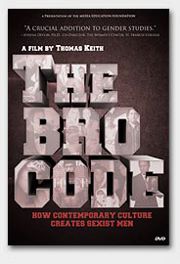
Considering the recent women-hating comments from Rush Limbaugh, the film will explore how hateful and objectifying attitudes about women in this culture are the norm.
“Filmmaker Thomas Keith takes aim at the forces in male culture that condition boys and men to dehumanize and disrespect women. Keith breaks down a range of contemporary media forms that are saturated with sexism — movies and music videos that glamorize misogyny; pornography that trades in the brutalization of women; comedy routines that make fun of sexual assault; and a slate of men’s magazines and cable TV shows whose sole purpose is to revel in reactionary myths of American manhood.
The message he uncovers in virtually every corner of our entertainment culture is clear: It’s not only normal — but cool — for boys and men to control and humiliate women. By showing how there’s nothing natural or inevitable about this mentality, and by setting it against the terrible reality of men’s violence against women in the real world, The Bro Code challenges young people to step up and fight back against the idea that being a real man means disrespecting women.”
This film screening is being co-hosted by the NOW Grand Rapids. A discussion will follow the film and the Bloom Collective will have numerous resources available for those wanting to explore this issue. A $3 donation is suggested.
The BroCode: How Contemporary Culture Creates Sexist Men
Saturday, March 10
2:00PM
671 Davis NW, Grand Rapids
Lower level of the Steepletown Center
Earlier today several people came to the Rainbow Grill in Grandville to express their outrage on the Representative’s stance on issues dealing with LGBT rights, immigration, workers rights and the disability community.
A sign is posted in the restaurant from Agema’s office notifying people of his monthly visit to the Rainbow Grill. The sign states, “Please come and share your thoughts and ideas about your community with Rep. Agema. He is looking forward to hearing your input.”
Like last month, people sat down with Agema during his once-a-month-only opportunity that citizens have to engage him on critical issues. People went in pairs to sit down and talk to issues that they were passionate about, such as disability rights, immigration, domestic partner benefits and worker rights.
It was clear that he did not really want to listen to this group of people again, since he knew they were going to challenge him on his stance on critical issues. At one point, he even suggested to the restaurant manager that he move to the back room and meet with everyone waiting to talk to him so he, “didn’t have to listen to the same arguments over and over again.”
This writer told Agema about several immigrants he has been in relationship with, one who came to the US as a torture survivor and no documentation. This writer stressed that the reasons for people coming to the US are varied and immigration is a complex issue. “If we want to honestly address immigration we need to look at root causes, particularly economic policies such as NAFTA. Your position on immigration is punitive and hate filled. What we need is an immigration policy that is compassionate and humanizes the people who have come here seeking a better life.”
Agema kept stating that it was all about following the law and that security and job loss were his main concerns. Agema stated that Americans are losing out on finding jobs because of “illegals,” even though he could not product any credible sources to back him up. On the issue of security, he claimed that members of the Muslim Brotherhood were entering the US at the northern border with the intent of doing harm to this country. Again, he could provide no hard evidence other than looking at the website of the Federation for American Immigration Reform (FAIR). FAIR is a White Supremacist group that the Southern Poverty Law Center has named as a hate group.
Other people challenged Agema on LGBT rights, such as domestic partner benefits and marriage equality. Again Agema wanted to just argue what the current Michigan Constitution says about marriage and told one person that if you want to get married as a gay couple “you will have to live outside the law.”
While some people sat and talked to Agema in the restaurant, others gathered outside to hold signs articulating the harm that Agema’s policies do.
After the Michigan Representative ended his 90-minute constituent meeting, he left the building and took a picture of the protestors. The protestors then followed him to his car chanting “Shame” and “Shame on you, Rep. Agema,” which you can see in the video here.
What about a campaign against WOOD radio? They broadcast Rush Limbaugh 15 hours every week in West Michigan – Updated
There has been a great deal of online commentary in the past few days related to syndicated radio talk show host Rush Limbaugh’s misogynist comments directed at Georgetown law student Sandra Fluke.
Limbaugh’s comment about Fluke being a “slut” and a “prostitute” are just the most recent example of his long line of hate speech directed mostly at women, communities of color, immigrants and the LGBT community.
The national media watchdog group, Fairness and Accuracy in Reporting, has been documenting Limbaugh’s hate speech for years, with one of their reporters even producing a book entitled The Way Things Aren’t. A more recent book that documents Limbaugh and other talk radio hate speech offenders is Rory O’Connor’s book, Shock Jocks: Hate Speech and Talk Radio: America’s Ten Worst Hate Talkers and the Progressive Alternatives.
One of the responses from the progressive community so far was a petition to get Republicans to denounce Limbaugh’s comments, which has resulted in a few mild responses.
Others have been suggesting we target the companies that Rush Limbaugh sponsors, companies that he often promotes directly as a pitchman. There is an existing list we have seen on Facebook, where people are encouraged to contact these companies directly in order to hit the talk show host financially. This effort seems to have more teeth, but there is not much discussion so far about going after the radio stations that carry Limbaugh’s show.
In Grand Rapids, Clear Channel’s WOOD radio (106.9FM & 1300AM) airs Limbaugh Monday through Friday from noon til 3pm. What if we organized a campaign to target WOOD Radio and what could that look like?
First, people could contact the General Manager of WOOD Radio Tim Feagan timfeagan@clearchannel.com to demand that Limbaugh be taken off the air. This will not likely result in a victory, but it will at least let the local Clear Channel office know that people are pissed off.
Second, we could develop a campaign to target the companies that advertise on WOOD Radio by engaging in a boycott campaign until they pull their advertising dollars from the station. This will most likely be a more effective tactic since money is the only language that for-profit media entities understand.
Third, people could organize a protest of WOOD Radio right outside of their headquarters located at 77 Monroe Center Ave in downtown Grand Rapids. Such an activity would be a way to get people together who are pissed off at Limbaugh and potentially recruit them to get involved in other aspects of a campaign.
Fourth, WOOD Radio and all other Michigan radio stations must renew their FCC license this year in order to legally operate on the public airwaves. During this license renewal process the public can submit letters or e-mails of complaint to the station about Limbaugh. The FCC will take into consideration these letters when determining whether or not to renew the station’s license. Whenever someone submits a letter or e-mail, a copy must go into their public file and failure to do so can result in their radio license being terminated.
Fifth, a campaign to challenge the FCC license of WOOD Radio could also include a legal campaign with the assistance of the ACLU (something they have done in the past to challenge radio/TV license renewal). Such an effort could argue that Limbaugh’s comments are not just his opinion, but a form of hate speech that has serious social consequences.
If anyone is interested in organizing any part of such a campaign right here in Grand Rapids, send me an e-mail at jsmith@griid.org.
Updated at 4:48PM on March 2nd
Several readers have shared with this blog that they have contacted WOOD Radio. Here is the response they are getting from station manager Tim Feagan. “Wood Radio is committed to providing its listeners with access to a broad range of opinion and commentary without condoning or agreeing with the opinions, comments or attempts at humor expressed by on-air talent. The contraception debate is one that sparks strong emotion and opinions on both sides of the issue. We respect the right of Mr. Limbaugh, as well as the rights of those who disagree with him, to express those opinions.”
Not only does this appear to be a canned response, it equates Limbaugh’s hate speech as opinion. The response also demonstrates that nothing short of a major campaign against the station, one that will have monetary consequences, is necessary to make change.
Obama’s Corporate Tax Scam
This article by Glen Ford is re-posted from Black Agenda Report.
Barack Obama can’t hide the fact that he is the One Percent’s president. Most of what he is dangling for the rest of us this election year turns out to be smoke and mirrors, yet he offers corporations a huge tax rate reduction – a gift that will keep on giving long after Obama is gone. It is typical Obama behavior. He sprinkles his speeches with phrases that mimic Occupy Wall Street, then turns around and promises the One Percent a bigger prize than George Bush could deliver.
Obama wants to lower the nominal corporate tax rate form 35 percent to 28 percent. For manufacturing industries, the rate would fall to 25 percent. Big Business has long complained – dishonestly – that American companies are put at a disadvantage by the highest tax rates in the world. But that’s only true on paper. When it comes to actually paying taxes, European corporations give a bigger share of money back to their governments and societies than U.S. companies do. The fact that the U.S. posts a higher official tax rate, while in the real world U.S. corporations pay lower taxes than Europe, is proof of the absolute corruption of the U.S. tax system, where corporations write the tax code and all of its loopholes.
Obama claims he will extract even more tax money from the corporations by doing away with loopholes. There is absolutely no reason whatsoever to believe that. The administration has no plans to revise the U.S. tax code any time soon.
Private studies show the average company pays an effective tax rate of substantially less than 20 percent, and a government study showed that more than half of American companies paid no taxes at all in at least one out of seven years.
“Corporations only account for ten percent of the money the U.S. government takes in per year.”
Back in the Fifties, corporate taxes made up 28 percent of government revenues. In the Sixties, the corporate share was 21 percent of each dollar of taxes. Today, corporations only account for ten percent of the money the U.S. government takes in per year. In other words, they have never had it so good.
Hardly anyone outside the administration believes that the Obama plan will wind up collecting more corporate taxes than it gives away. The grassroots National People’s Action projects that permanently lowering the tax rate will cost the federal government $700 billion over the next ten years. The loss in revenue will increase pressures to cut programs that serve people – which is another way of saying that the 99 percent will pay for the tax reductions of the corporate 1%.
Even in the highly unlikely event that the Obama plan winds up collecting more tax money through closing down corporate loopholes, the president has already stated that the additional revenue will go right back into corporate pockets, in the form of new or existing tax breaks for favored industries, in manufacturing, clean energy, and research. This, of course, would be the biggest loophole of all. Under a Democratic or Republican administration, every corporation would claim to be a manufacturer, or to be doing research. And, President Obama can’t say the word “coal” without also saying “clean” – so that dirty industry would get tax breaks, too.
Obama’s whole plan is a tax giveaway, not a tax reform. And, that’s the point. It’s a billion dollar election year. Corporations need to know what kind of government their campaign contributions are buying.
New Media We Recommend
Below is a list of new materials that we have read/watched in recent weeks. The comments are not a “review” of the material, instead sort of an endorsement of ideas and investigations that can provide solid analysis and even inspiration in the struggle for change. All these items are available at The Bloom Collective, so check them out and stimulate your mind.
Redefining Black Power: Reflections on the State of Black America, edited by Joanne Griffith – This book is a collection of radio interviews conducted by Joanne Griffith for Pacifica Radio. After the 2008 Presidential victory of Barack Obama, Griffith came up with the idea to discuss the meaning of Black Power now that a Black man occupied the White House. Those interviewed include Ramona Africa, Vincent Harding, Michelle Alexander, Dr. Julianne Malveaux, Linn Washington Jr and Van Jones. As one could imagine the interviews are as varied as the persons being interviewed. However, there is a virtual consensus by the notable Black figures in America that the election of Barack Obama has not had much of a positive impact on Black Americans. As Michelle Alexander says in her interview, “the idea that we are in a post-racial period in the United States is just pure fiction.” An excellent collection of reflections on the state of Black America. Highly recommended.

Slow Violence and the Environmentalism of the Poor, by Rob Nixon – Many Americans are quick to response to the kind of violence brought about by war or repression from brutal dictators. It just makes sense to them. However, when millions more die every year from disease, chemical contamination, hunger and ecological catastrophe, people are often less willing to take action. Rob Nixon has done an amazing job of defining this kind of institutionalized violence in his new book Slow Violence and the Environmentalism of the Poor. Essentially, the author is arguing that this kind of violence, a protracted violence that sometimes lasts years, is the major culprit in how human rights violations around the world. Nixon also points out that it is the least discussed within the US, but outside of the US there is a growing body of fiction and non-fiction literature that addresses this theme. The bulk of the book is analyzing this slow violence in places like India and Nigeria through the lens of writers like Arundhati Roy. An excellent book, although difficult at time if one hasn’t read the literature Nixon cites, but a valuable contribution to an analysis of institutionalized violence.
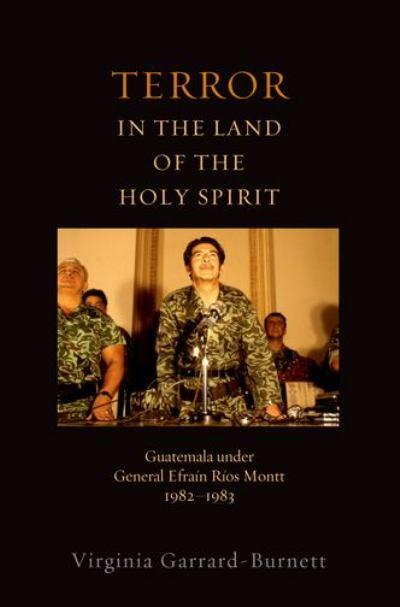
Terror in the Land of the Holy Spirit: Guatemala Under General Efrain Rios Montt 1982 – 1983, by Virginia Garrard-Burnett – Terror in the Land of the Holy Spirit is a fascinating investigation into one of the most intriguing political figures in recent Latin American history – Rios Montt. Montt came to power through a military coup in 1982 and presided over some of the most violent months of Guatemala’s 36-year war. The General was unique, not because of the support from the US government (which is did provide), but because Montt was the first overtly evangelical Latin American leader that used his faith to justify brutal repression. The author reveal new information about the Guatemala dictator after gaining access to archival material and provides us with an interesting examination into the man that Ronald Reagan referred to as “a man of great personal integrity and commitment.” While this book might only appeal to those who have an interest in Guatemala, it also is an excellent case study for those interested in the role of religion and power, along with US foreign policy.
Neshoba: The Price of Freedom (DVD) – In the summer of 1964, 3 young men – two White and one Black – were murdered in Mississippi while working on civil rights and voter registration. This documentary not only sheds light on this brutal murder but the legal case that was re-opened 40 years after the murders. The film relies on archival footage, newsreels and interviews with family members and people of Philadelphia, Mississippi. Neshoba is a powerful documentary that not only reveals a piece of racist US history, it demonstrates that institutional racism still exists today. Highly recommended.

