This interview is re-posted from ZNet. Editor’s Note: This interview is important for a variety of reasons, but mostly because it is an Afghani perspective. As we have noted in previous local news monitoring reports, Afghan voices are rarely heard in US media and when they are they tend to be government voices.
Malalai Joya, 34, first gained international attention in 2003 when she spoke out publicly against the domination of warlords. She was at that time serving as an elected delegate to the Loya Jirga that was convened to ratify the Constitution of Afghanistan; in 2005 she became one of 68 women elected to the 249-seat National Assembly, or Wolesi Jirga, and was the youngest member of the Afghan parliament.
In 2007 she again spoke out against former warlords and war criminals in the Afghan parliament and was thereupon suspended from the parliament. Since then she has survived many assassination attempts. She travels in Afghanistan with armed guards and has worked tirelessly on behalf of Afghan women and to end the occupation of her country.
She has received broad international recognition. In 2010, Time Magazine placed Malalai Joya on their annual list of the 100 most influential people in the world, and Foreign Policy Magazine in listed her in its annual list of the Top 100 Global Thinkers. In March, 2011, The Guardian listed her among “Top 100 women: activists and campaigners.” Her most recent book is “Raising My Voice.”
I first met Malalai in 2007 in Berlin, after she was invited to speak in the German Parliament (see http://www.zcommunications.org/the-war-on-terror-is-a-mockery-by-elsa-rassbach), and we’ve met again during some of her further visits to Europe. This interview is based on our conversation during her most recent visit to Berlin and subsequent email correspondence between us.
RASSBACH: Last month in Paris representatives of the Taliban for the first time met with their former enemies of the Northern Alliance, the collection of militias that fought them in the 1990s and eventually helped the U.S. to oust the Taliban regime. Now President Obama has invited Afghan President Hamid Karzai to meet with him in Washington on January 11th.
What do you make of this?
JOYA: To make the current puppet regime in Kabul more powerful, the U.S. and NATO have been trying to bring together three groups that emerged during three criminal periods of war in Afghanistan: the warlords, the Taliban, and some of those who served the hated Russian occupation.
Both the Taliban and the Northern Alliance warlords are long-time allies of the West. These groups are criminal, dark-minded, and reactionary to the core. In their lust for power, they are ready to sacrifice national interests of Afghanistan to any foreign power.
The Taliban and the Northern Alliance warlords are responsible for much of the suffering of the Afghan people. They are like a wolf and a vulture and can never be regarded part of a “solution” to Afghanistan’s tragedy. Our people want them prosecuted as traitors and war criminals. But the West wants to “unite” them and impose them on our nation. Joining this dirty mafia regime are some of the ex-Russian puppets, the Khalq and the Parcham, who tortured and killed countless innocent democratic-minded people. Such “unity” may serve the U.S./NATO interests in Afghanistan, but will lead to another reign of terror and brutalities upon our poor people.
As history shows, the U.S. has relied on criminals, dictators, human rights violators, and reactionary forces in many other countries of the world. Recently in Libya the U.S. and NATO supported fundamentalists who are worse than Qaddafi; in Syria they are supporting Al-Qaeda and other such dirty groups. So it is not surprising that they are once again working with the Taliban and with Hekmatyar and other criminals in my country.
It was the U.S. that brought the warlords into power in Kabul, and the U.S./NATO puppet Karzai is even more shameless than previous Afghan puppets of the British and the Russians. While the puppets of Russia and Britain negotiated behind closed doors, Karzai is publicly selling Afghanistan to a foreign master. The so-called strategic agreements like the Bilateral Security Agreement provide for long-term U.S./NATO military bases in Afghanistan. The U.S. wants to remain in Afghanistan because of its geopolitical location: to be able to control other Asian powers like Pakistan, Iran, Russia and China.
Karzai and Obama are working on an outline of an agreement for legalizing permanent military bases in Afghanistan. But as long as we have foreign military bases in our country, we have no independence. And when we have no independence, we have nothing, and all talk of democracy, human rights and women’s rights is a joke. Afghanistan is the second most corrupt country in the world. And Afghanistan is the worst place to be a woman, according to a recent international study. They are looting our rich mineral deposit mines worth three trillion dollars, and they are raking in money from the drug trade.
For the U.S. government, the wellbeing of the Afghan people has no value at all. The U.S. elites just want relative stability in order to continue the occupation and maintain military bases in Afghanistan without much trouble. If “stability” can be achieved by empowering the worst enemies of Afghan people, they are ready to do this. After all, the U.S. schemes to interfere with and control Afghanistan did not begin with 9/11. They go back for decades.
What means has the U.S. used to interfere with and control Afghanistan?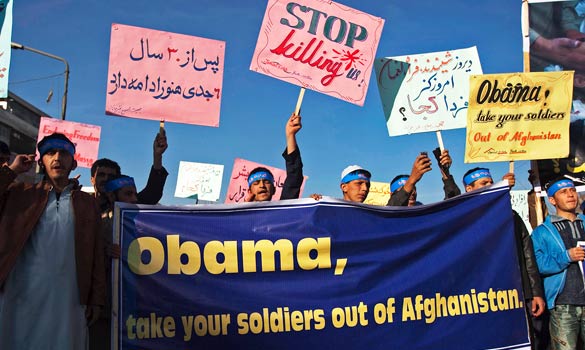
The warlords who were put into power in Kabul by the U.S. are extremist fundamentalists. In the 1980s, during the Cold War, they received much financing and support from the ISI (the Inter-Services Intelligence agency of Pakistan) and from the CIA to fight the Soviets. The warlords were known to be misogynists; for example, one of their leaders was Gulbuddin Hekmatyar (founder of Hezb-e Islami), a fanatic who in the early 1970s ordered his followers to throw acid into the faces of Afghan women who refused to wear burkas in Kabul.
The U.S. government supported and nourished these fundamentalists to kill democratic, leftist, secular and progressive people in Afghanistan. Eight fundamentalist parties were created — seven in Pakistan and an eighth in Iran — and each of them wanted to be the one in power. After they ousted the Soviet-backed regime in Afghanistan, they conducted a brutal civil war among themselves in Afghanistan from 1992 to 1996. Alone in Kabul the warlords killed more than 65,000 innocent people and turned the city into ashes.
In the 1990s, the CIA provided financing to the ultra-fundamentalist Taliban and encouraged Pakistan and Saudi Arabia to support the Taliban in their drive to power; in 1996, the Taliban defeated the warlords and ruled Afghanistan for five years.
In 2001, after ousting the Taliban regime with the help of the warlords, the U.S. government announced that it had learned from past mistakes and would not empower Islamic fundamentalism again. But in reality they are still helping the brutal fundamentalists and imposing the old criminals and looters upon us. Islamic fundamentalism is once again the main tool in the hands of the U.S. to control Afghanistan, to suppress progressive and freedom-loving forces of my country, and to stop the emergence of a powerful democratic anti-occupation movement.
The power of media has been another effective way for the U.S. to mislead Afghans, especially the youth, to say “yes” to the occupation and to the continuing presence of foreign military bases in Afghanistan. Over the past eleven years, the U.S. has promoted media in Afghanistan and has spent large sums of money on propaganda and “soft war.” Almost all the major media outlets in the country are under U.S. control. A large majority of the Afghan people is illiterate, and we have no independent, progressive media to neutralize and counteract the pro-U.S. media.
The NGOs are another tool of the U.S. and other NATO countries in Afghanistan. Through financing NGOs, they buy the loyalty of some Afghans and use them as their puppets to advance their agenda in Afghanistan. Unfortunately, there are many Afghans, especially intellectuals, who are paving the way for a continued U.S./NATO occupation.
There are many reports that the U.S. and NATO want to keep a significant “troop presence” in Afghanistan well after 2014. But if all the foreign troops were to leave, would there be civil war in Afghanistan?
There is already a civil war, a dangerous civil war. Whether the foreign troops stay or leave, war is going on. The presence of foreign troops only makes our struggle for justice harder, because the occupiers empower reactionary warlords — and now also empower Taliban, along with killers from the past Russian puppet regime. At least if the foreign troops leave, one of the biggest evils will be gone. Then we will face internal enemies. If the occupation leaves, at least the Taliban will not get more powerful. If the troops honestly leave, the backbone of these terrorists will break. They will become like orphans, because their godfather is the U.S., which was also the godfather of Al Qaida.
We are fed up with the so-called helping hand of the U.S. and NATO that is used to justify occupation. The mother and father of all these tragedies is the occupation itself and the U.S./NATO support of the killers of my people. When the occupation leaves, these fundamentalists will get weak. They have no roots in the heart of the people, and their backbone will break. If the U.S. stops helping terrorists and killers, then they may not be in a position to wage a civil war and destroy Afghanistan like they did in 90’s.
So the first request of the people is: Leave Afghanistan and stop supporting our enemies.
Have you seen any improvements at all for the people under the U.S./NATO occupation, for example in the situation of women?
The situation of women in Afghanistan was used as an excuse for the U.S. and NATO to occupy our country. But it is clear they were not fighting on behalf of women, because they have put into power the reactionary warlords who are sworn enemies of women. If your family were bombed in a wedding party or your daughter raped by Taliban, what would be your reaction? And you want to negotiate with them?
There is no question that some schools and universities have been built during the U.S./NATO occupation, and some money has been given to the Karzai regime for projects on behalf of women’s and human rights. Meanwhile, tens of thousands of civilians, most of them women and children, have been killed during these eleven years of occupation. They even used white phosphorous; they even bombed wedding parties.
In comparison to the dark period of the medieval-minded Taliban, today there is now a Ministry of Women, and 25% of the representatives in the parliament are women. But the female representatives have mainly a symbolic function, and little is done for ordinary women. In the larger cities like Kabul and Herat, women have some jobs and education, but in most of Afghanistan their lives are hell. The media don’t write much about the many women who are raped or stoned to death in public. Hundreds of schools have been closed, and even in Kabul women don’t have security going to school; in many provinces acid is thrown in their faces. In most places killing a woman is still as easy as killing a bird.
Due to lack of justice and pressure on women, last year 2300 suicide cases were recorded among Afghan women, which has no parallel in our history.
These warlords are misogynists, just like the Taliban, and they don’t want women’s rights in Afghanistan; a few token fundamentalist ladies wearing beautiful clothes should not fool people. And many of the women who have positions, who run NGOs, are corrupt and have received money from the occupation; they betray the truth and justify the U.S. occupation and are even ready to negotiate with the Taliban. Through this, the situation of women will become more bloody and more of a disaster.
Under the U.S./NATO occupation, there is day by day a widening gap between rich and poor. A small percentage of drug-lords, warlords and corrupt officials have everything in their hands while a large majority of the people suffers from poverty and unemployment. Under the occupation, Afghanistan has become the biggest producer of opium and heroin in the world. With the efforts of the U.S. and NATO, Afghanistan has become the capital of the world drug Mafia and also now tops the list of the world’s most corrupt countries (according to a recent study by Transparency International). All of the “achievements,” if any, that can be attributed to the occupation are spoiled by these shameful epidemics that have had and will continue to have a long-run disastrous effect on the whole society.
Where do you place your hopes for the future of Afghanistan?
I tell people, don’t just see two fronts like the Taliban vs. the occupation or the warlords vs. the occupation. There is a third front of democratic-minded intellectuals, activists, parties, organizations, groups, and individuals. Focus on them.
The Afghan people are fed up. Fundamentalism and occupation are no longer accepted among the common people because of the brutalities and savagery they have experienced over the past decade. There is more openness, now, to progressive and democratic organizations and ideas. With the passage of time, I hope for the emergence of a powerful justice-loving alternative in Afghanistan. The U.S. is the main obstacle towards the development of such democratic forces.
Some people are deceived by the anti-imperialist banner of the Taliban, and education is in fact the key to get rid of all of these miseries, all of this ignorance. I remember someone called me when I was in Kabul and said, “Oh my sister, I am in the mountains. I support you. I agree with you. You are against occupation. You are against these warlords. I went to the Taliban to take my revenge against the warlords” — and he told me a long story on the telephone. I said, “Please come down from the mountains. Don’t go with the Taliban. Going with one terrorist to take revenge on another terrorist makes no sense. They are deceiving you.” He said, “Yes, I agree with you, but there is no way for me.” And I discussed with him. This is part of the important role of democratic-minded activists.
When women learn to read and write, many of them become extraordinary activists, and these brave women are running projects and organizations that are really working on behalf of women’s and human rights, like RAWA, like OPAWC, like the Social Association of Afghan Justice Seekers, and a few others that I know who are also justice-seekers. And now women are even coming onto the streets and demonstrating, wearing the burka, in resistance against the U.S. and NATO and also against the Islamic fundamentalists. This is a positive example and a source of hope. In the history of Afghanistan, we have never before seen this kind of activism by women.
In different parts of Afghanistan there are small protests — in Kabul, in Jalalabad, in Helmand Province and in Farah Province, and in many other places — and for the first time women are joining these protests. I hope that with time, there will be a broader movement in Afghanistan like in many of the Arab countries. It will take time.
As the great German writer Bertolt Brecht said, “Those who struggle may fail. Those who do not struggle have already failed.”
If you were invited to speak to the U.S. and NATO officials, what would you say?
Stop this criminal war in my country as soon as possible. Your war, waged under a fake banner of human rights and democracy, is in fact a war against poor Afghan people. You are not only traitors to the Afghan people, but to your own people as well. You are stealing from the pockets of poor Americans and Europeans and wasting billions of dollars on killing and looting in order to safeguard only the interests of a very small, elite minority. You have a massive war and propaganda machine to sell your lies. But the world’s conscience, which includes a large number of U.S. antiwar veterans, is against you: you can’t overturn it by any means. So your war machinery is doomed to fail, and the toiling people of the world will win.
Elsa Rassbach is a US journalist and filmmaker based in Berlin, Germany.
In January, workers at Star Tickets in Grand Rapids went public with their effort to form an IWW union. After years of abuse and exploitation, workers decided that they needed the ability to collectively bargain and create a democratic workspace.
Star Tickets ownership has responded by creating a great deal of propaganda, just before a March 6 election to decide on whether or not the Grand Rapids office will be a union shop.
As a show of solidarity, the Grand Rapids branch of the IWW is hosting a rally this coming Monday morning to stand in solidarity with their fellow workers at Star Tickets and to send a message to management that their tactics of intimidation will not work.
Anyone who supports workplace democracy is invited to come to the rally and stand with the Star Tickets Workers Union. Bring signs and noisemakers!
Solidarity Rally to Show Support for Star Tickets Workers
Monday, March 4
7:45 AM
620 Century Ave. SW, Grand Rapids
This article by Andrea Germanos is re-posted from Common Dreams.
Michigan Governor Rick Snyder declared the city of Detroit in a state of “fiscal emergency” on Friday afternoon and announced he would appoint a emergency financial manager (EFM) for the city.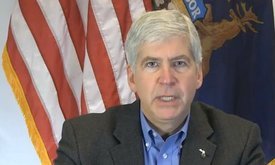
Neil Munshi reported in the Financial Times that the emergency manager “would have relatively broad powers to handle the city’s dire financial situation.”
In a blog post on the decision, Snyder writes: “Working together in partnership, we can more quickly and efficiently reform the finances in the city.” But the EFM role is not one of “partnerships,” the governor’s fact sheets on the EFM decision explain, as the appointee will be able to make a financial decision without waiting for it to go “through the many layers of bureaucracy.” The EFM also has the ability to “take actions to void contracts.”
Agence France-Presse adds that “emergency managers have the power to eliminate entire departments, change labor contracts, sell city assets and rewrite laws without any public review or input.” And the Detroit Free Press reports that the “restructuring likely will include drastic cuts in public services and a top-down rethinking of the type of government.”
Critics have referred to the EFM law as “local dictators law.”
MSNBC adds that
The decision had been predicted for weeks, but Friday’s announcement means that more than 50% of African Americans in the state of Michigan no longer elect their local leaders.
The EFM holds the position for 18 months, at which point the position is under review.
The city council has 10 days to appeal the decision, and they have announced they are prepared to fight the decision.
Detroit would join the towns of Royal Oak Township, Hamtramck, Highland Park, Flint, the Village of Three Oaks, Allen Park, Pontiac, Ecorse, and Benton Harbor, which already have EFMs, as well as Detroit Public Schools, Highland Park Schools, and Muskegon Heights Schools which have the emergency managers.
In December, Snyder signed into law controversial replacement emergency manager legislation, just weeks after Michigan voters rejected the previous emergency manager law, Public Act 4.
Catalyst Radio Interview with GRIID on 2012 Film Study

Earlier today, WYCE aired an interview by Catalyst Radio with GRIID Intern Chloe Beighley and myself.
The interview dealt with the first report from our 2012 film study, looking at gender representation in Hollywood Films.
The report, Normalizing Male Dominance: Gender Representation in 2012 Films, was posted in early February and is one of several studies based upon our analysis of major films released in 2012.
Catalyst Radio host Linda Gellasch, spoke with GRIID last week in a recorded interview that aired this morning on 88.1FM, WYCE. The interview lasted 25 minutes and can be heard here for those who want to hear our discussion on the findings of this report.
MLive and Immigration

As the push for Comprehensive Immigration Reform continues over the next few months, there will no doubt be an increase in coverage on an issue that is quite contentious.
MLive has recently done a series of articles on immigration in West Michigan, profiling certain individuals to demonstrate the diversity of people who make up the immigrant community.
The series began with an article about a young man who is undocumented and has been involved on the front lines of immigration justice. The series is important since it not only puts a human face on immigrants it presents some of the complex aspect of immigration policy, which underscores the need to change the existing policy.
Today, MLive posted an editorial on the same topic, entitled, We Need Immigration Reform in the United States to embrace its legacy as the ‘golden door.’
The MLive editorial acknowledges that the current immigration policy is broken and that it needs to be fixed. “The system we have now is not working and doing nothing only makes the problem worse for people on all sides of the issue” This is an important acknowledgement, not only because it is a social justice issue, but because this is one issue that gets a tremendous amount of negative and hateful commentary on MLive.
However, there are some claims made in the editorial that are worth discussing, since I believe they are either misleading, and in some cases, not based in fact.
The claim I take issue with mostly is the notion that the US has a “legacy as the golden door.” It is true that many immigrants have been able to come to the US since the nation was founded, but there has not always been an open door policy despite the beautiful words that adore the Statue of Liberty.
It should be noted first that the US as a nation was founded on the theft of land from native Nations that were hear before Europeans began to colonize the Americas. Secondly, the nation’s economy was also driven by the forced labor of enslaved African people who were brought to the US against their own will. These are not marginal acknowledgements, rather they are central to our understanding of what the country was founded on. We cannot simply say we are a nation of immigrants, without acknowledging the genocidal policies towards Native people and the history of slavery.
When it comes to immigration policy, the US has never had a consistent stance on when and how people were allowed to migrate to the US. One of the earliest immigration policies was the Chinese Exclusion Act, put in place near the end of the 19th Century. The Chinese Exclusion Act was a racist policy that was implemented after the US business community used the labor of Chinese immigrants to build the railroads and develop much of the agriculture along the west coast. Once the labor of the Chinese was not needed and White Supremacy dictated that they were not welcomed, an unjust immigration policy was put in place.
All throughout the 20th Century there has been a constant revision of US policy towards Mexican immigration, some of it based on White Supremacist notions, but primarily based on economics.
Mexicans have been allowed at times to come to the US more freely, such as when the US implemented the Bracero Program, where Mexican labor was deemed necessary by the Capitalist class, especially during WWII. Once the war was over, Mexican labor was no longer needed in the same way and the Bracero Program was ended.
Agricultural work has been done by migrant workers for much of US history and this has also influenced US immigration policy, since so much of the food that is consumed here is predicated on immigrant labor, often undocumented immigrant labor. Much of this history is well documented in a book co-authored by Mike Davis and Justin Akers Chacon, No One is Illegal: Fighting Racism and State Violence on the U.S-Mexico Border.
Another aspect of US immigration policy is that it is often dictated by US foreign policy. US foreign policy influences domestic immigration policy in two fundamental ways: US military activity and trade policy.
With military or geo-political policy, the US is often responsible for the displacement of thousands of people because of either direct military intervention or because of military and financial support for repressive dictatorships abroad. One example would be US policy in the 1980s in Central America.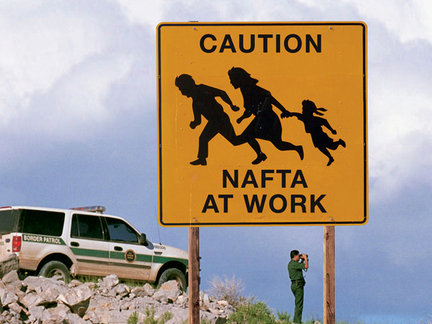
The US was engaged in war with the revolutionary government of Nicaragua in the 1980, mostly by providing weapons and advisors to the counter-insurgency forces known as the Contras. At the same time the US was also providing massive amounts of military aid and advisors to the governments of El Salvador and Guatemala to prevent those countries from overthrowing oppressive systems.
During the 1980s there were thousands of Salvadoran and Guatemalan refugees that came to the US fleeing the political violence and repression primarily conducted by the US-backed governments. However, the US government would not recognize these refugees as political refugees, since it would be an admission that US policy in both El Salvador and Guatemala were repressive. This did not prevent thousands of refugees from these two Central American countries from coming anyway, even if it meant they came without legal documentation.
With economic policy, the results are often quite similar. Lets use Mexico as an example. Since 1994, when the North American Free Trade Agreement (NAFTA) was signed by the US, Mexico and Canada, there has been a significant increase in Mexican migration to the US. Much of the driving force for this increased migration has been due to NAFTA’s negative impact on small farmers and workers in Mexico. Millions of small farmers have been forced off their land since NAFTA policies have made it difficult to compete with large multinationals and a glut of cheap, often subsidized, US food products being imported into Mexico. Thus, NAFTA has been a major ingredient to increased Mexican migration to the US.

Recognizing that people come to the US to flee US-supported violence and US economic policies is much different than this notion that the US is the land of opportunity that compels immigrants to come here. Again, these are not marginal issues and in fact are central to the current debate about immigration.
Therefore, it is important that we not only acknowledge these aspects of US immigration policy, but that we speak honestly about this country’s immigration policy and why so many people take the risks to come here, even without documentation. We can appreciate the MLive editorial’s intent to support immigration reform, but we should not accept the generalized commentary about the history of US immigration policy.
Rally on Tuesday for woman facing deportation from ICE
A Grand Rapids woman is facing deportation and area activists are asking for support to pressure the government to stop the deportation.
The Detroit-based group 1 Michigan has been organizing actions like these for the past year as the federal government has stepped up their efforts to harass, intimidate, arrest and deport people, particularly undocumented immigrants.
According to the group’s Facebook page for this action:
Victoria came to Grand Rapids, MI to seek refuge from her ex-husband. She was a victim of domestic violence who was once beaten so badly, her four-month pregnancy was ended. Victoria’s ex-husband threatened to kill her if she ever tried to flee, but she took the risk and fled for her life to the U.S.
Victoria found a man who truly loves her and they have three beautiful children. Unfortunately, two of the children were born with a hearing impediment and are being treated to receive cochlear implants.
ICE is now trying to deport Victoria and her U.S Citizen Children telling her she only has two options: go back to Guatemala and never see her children again or take her U.S. citizen children with her and assure that two of her children will never hear or speak again.
There is also an online petition that 1 Michigan is asking people to sign and circulate to put pressure on the federal government to not deport this women.
Microsoft and Google’s Pathetic, Revealing and Frightening War
This article by Alfredo Lopez is re-posted from CounterPunch.
If it wasn’t so harmful, it would be funny: a marketing battle between the two technology giants MicroSoft and Google over who lacks integrity and is exploitative. It’s been going on for a while and with every thrust and block the thing becomes more grotesque and more revealing.
First, by way of introduction, well…you don’t need an introduction.
If you’re using Windows, your computer lives MicroSoft. If you don’t, you use a MicroSoft product (like Word or some smaller program you don’t notice on your desktop) or someone sends you stuff using one. You can’t escape MicrosSoft if you use a computer.
Google is to your Internet life what Microsoft is to your workspace. Even if you don’t use its increasingly popular Gmail program, you have used Google Search at some point. So prominent is our use of this resource that, in English, “google it” is now an accepted phrase. No, there is no Google-less life in this country.
So a marketing duel between these two fills the air with the very loud clanging of the very large swords.
The latest thrust is MicroSoft’s campaign about “Scroogle”: a term that meshes Google and Screwed, or maybe “Scrooge” (since it launched around last Christmas). It also pilfers the name of an alternative search engine (Scroogle Search) that went belly up last year. If it didn’t steal someone else’s idea, after all, it wouldn’t be MicroSoft.
In December, MicroSoft began denouncing Google’s charging for better rankings in its “shopping” searches and telling people they should use Bing (MicroSoft’s search engine) instead. That’s right, when you do a “shopping” search on Google, it returns a list of search items from companies that pay Google. The more they pay, the higher they are in the returned search. If you click it you can read Google’s admission about taking filthy lucre in return for returning a good search position.
Try it. Go to Google’s Shopping search and put a product in the search box. You get a list of items arranged like any Google search and that little disclaimer to the right. It’s advertising not searching and Google’s microscopic link is legally compliant but not very transparent.
This month, MicroSoft has a new campaign denouncing Google’s email system, Gmail, for going through people’s email and extracting information to be used for marketing research, advertising and sales. One of the most prominent campaign tools is a website: Scroogle! whose “Get the Facts” section explains what Gmail does. It’s pretty horrible.
But none of this is new information and it is very doubtful that any of it is going to change market share. So, the question arises, why do this now? The answer is a lesson in the life of capitalism on the Internet.
The fact is that these two big kids spent years playing nice. Google did search and other stuff your computer does on the Internet while MicroSoft did the programs your computer needs to run and do things, including get on the Internet. It was a nifty use of boundaries to facilitate peaceful exploitation but capitalism, in the end, respects no boundaries. So, in 2007, MicroSoft launched a search engine, Bing ( whose homepage is here ), while Google launched a web browser called Chrome and its Gmail email program.
War was declared and it wasn’t hard to see it coming. The common denominator in these two company profiles is their planned ubiquitousness. While profit has always been the motive, control and domination has always been their strategy. Stunningly brazen and stupified by their success, they openly admit they want to control your life and their marketing pitch is to convince you that you’re so much better off when that happens.
The problem is that they have run out of life to control and so they are now fighting over the aspects of your life they already dominate and that they have increasingly limited.
One of the problems with corporate cultural domination is that it squeezes the creative life out of any human project. Not only do these companies control what they offer, they make it difficult for other kinds of developments, protocols and technologies to organize and thrive.
There are alternatives to Word or Gmail (I’ll list some at the bottom of this article). But more important, there are alternative ways to do what those programs do — from communication to information sharing to organizing networks of servers. Many of these new approaches veer away from one to one communication or use of a central server to distribute information. They would stoke the fires of political organizing and opposition because they’re often more democratic, more in line with the robust freedom of communication that’s the reason for the Internet. But with these companies waving their repressive wand through lawsuits and clogging up market, money, talent and interest, it’s hard to get people involved in these alternatives.
The “secret” to software development that the big companies keep from you is that you need lots of people involved, not only developing a program but using and testing it and letting developers know what works and what doesn’t. This is done through large, on-line communities but to get large, they must know about the software and the companies do everything in their power to make sure that doesn’t happen. In the techie culture, the critical question is who gets to appear on the conference panels, write the articles in the note-worthy publications, and get mentioned or interviewed on the right blogs. Large corporations strive to control the spotlight by sophisticated public relations, sponsorship of conferences whose attendance fee increases ever year and careful monitoring of and participating in the message boards and mailing lists.
There is no question there has been a change and the percentage of techies who use proprietary software (like MicroSoft’s and Google’s) and only know about that has unquestionably grown. The conversation is too often centered on those companies’ software and the alternative projects are neglected. Soon enough, they are jettisoned on someone’s hard drive.
The trick to control of technology is to grab one idea, boost it and make sure no competing ideas arise. But then you end up shrinking people’s expectations and routines in using the Internet and technology. If they don’t know there are alternatives to email, you can only dominate the market if your email program is the dominant one.
To be fair, MicroSoft has a point. No matter the disclaimer, Google knows that most people who search on “shopping” don’t realize they’re seeing paid ads and the company’s scouring of your activities, particularly your email, is intrusive, invasive and potentially damaging constitutionally.
Google insists that it will never “abuse” the power that excavated information gives it but the issue is “what’s abuse?” If the government wants that information, there is no way Google is going to resist. All the Feds have to do is say you’re suspected of some crime and Google will give what it has. So you have to trust the Feds that they won’t “go overboard” but, of course, going overboard is the federal government’s birthright. Besides, how do you know what Google actually has? It admits that it takes some information for advertising and marketing only but this is the company that does advertising in the disguise of a search. Do you really trust its “admissions”?
It’s important to remember that, before pulling out of China with great fanfare, Google cooperated for four years with a government whose interpretation of Marxism is often “repeat after me” by limiting searches and disallowing many types of results. It was only until China’s other search engine, Baidu, clearly beat Google in the user sweepstakes and it became clear that people could use Hong Kong Google (which has no such restrictions) or some workaround, that Google made its dramatic exit.
Is this a company you want to have a picture of your life?
On the other hand, hey, look who’s talking! Bill Gates’ creation is a monster of arrogant, bullying domination: forcing people to use its software by making deals with computer manufacturers to install its second-rate browser and bizarrely designed operating system on every computer they sell; using a horribly restrictive and unstable licensing system that usually means you can only use a licensed software package on one computer (an unbelievable abuse!); and filling your hard drive with hidden software that captures information (and sends it to some MicroSoft server someplace), prevents you from doing what you want, monitors your every move and literally takes the machine over.
Windows Operating System is like HAL, the computer that takes over in 2001: A Space Odyssey. We’re so used to it that we don’t always recognize the abuse but sometimes you want to do something with your computer and Windows won’t let you! That’s MicroSoft’s contribution to your life; that and the long list of broken and buggy software it has practically forced on the purchasing public.
To make things even uglier, MicroSoft is among the most litigious companies in human history. It has sued someone over virtually every program it produces and, in the case of Windows, has filed several lawsuits a year for years. This despite the fact that Windows itself started out as a poor copy of the MacIntosh desktop and Operating System and most of MicroSoft’s creations are actually “stolen concepts” — the idea comes from someone else and is taken and “developed” into a new Microsoft program.
But what is most irritating about this latest MicroSoft campaign is that it’s predicated on a false comparison. Gmail, for all the nastiness it carries, is not only an email program but an email service. When you use gmail, you use the servers Google has set up to handle email. Microsoft Outlook is only an email program. You get it, you configure it and you use some commercial or non-commercial email service.
MicroSoft has told the industry publications that it is using “advocacy techniques” to market its products but that only serves to underscore the obscene culture of twisted perception that this company thrives on. You don’t advocate by telling lies, obfuscating important nuance and attacking people who are doing what you’re doing. Just the opposite, in fact.
MicroSoft, Google and other mega-companies will continue to grow and tear into each other until they fall apart. And they will fall apart because their future is based on the ebbing fortunes of a system that is falling apart. For us, the issue is how that will impact our lives and work.
We live in a world where a fierce struggle is taking place between people who believe the Internet is a source of freedom and information and those who think that information is a commodity and freedom is limited to the right to sell it. Those sellers lie and cheat and punish and inhibit and each of us who uses their products needs to decide how necessary the evil actually is.
As promised, here are some Free and Open Source alternatives to these companies’ products:
Instead of MicroSoft Office there is LibreOffice
For browsing: Firefox
And email: Thunderbird
(In linux, the browser and email program have different names — Iceweael and Icedove — but they are basically the same code).
Disclaimer: I am a founder and leader of May First/People Link, an Internet membership organization whose members pool our money to equip, run and share email services, among other Internet capabilities. Some would say that makes us a competitor of Gmail; at the very least, part of our mission is as an alternative provider. But we founded May First/People Link not to compete with these commercial services but to work in the movement that will eventually make them unnecessary and I don’t think like this because I’m in May First/People Link, I’m in MF/PL because I think like this.
New Study shows Grand Rapids drinking water has toxicity levels that can cause harm

Much of this article is re-posted from the Environmental Working Group.
A new Environmental Working Group analysis of 2011 water quality tests by 201 large U.S. municipal water systems that serve more than 100 million people in 43 states has determined that all are polluted with unwanted toxic chemicals called trihalomethanes. These chemicals, an unintended side effect of chlorination, elevate the risks of bladder cancer, miscarriages and other serious ills.
“Many people are likely exposed to far higher concentrations of trihalomethanes than anyone really knows,” said Renee Sharp, a senior scientist at EWG and co-author of the analysis. “For most water systems, trihalomethane contamination fluctuates from month to month, sometimes rising well beyond the legal limit set by the federal Environmental Protection Agency.”
Trihalomethanes are formed when chlorine, added to treated water as a disinfectant, reacts with rotting organic matter such as farm runoff, sewage or dead animals and vegetation. Their concentrations tend to rise when storms increase organic pollution in waters that serve as sources for tap water.
Scientists suspect that trihalomethanes in drinking water may cause thousands of cases of bladder cancer every year. These chemicals also have been linked to colon and rectal cancer, miscarriages, birth defects and low birth weight.
Only one of the systems studied by EWG—Davenport, Iowa—xceeded the EPA’s upper legal limit of 80 parts per billion of trihalomethanes in drinking water. Since that regulation was issued in 1998, a significant body of scientific research has developed evidence that these chemicals cause serious disorders at much lower concentrations. Among the research are two Taiwanese studies conducted in 2007 and 2012 that associated increased risks of bladder cancer and stillbirth to long-term consumption of tap water with trihalomethane contamination greater than 21 parts per billion. Some 168 of systems, or 84 percent of the 201 large systems studied, reported average annual concentrations greater than that level.
According to the study, the Grand Rapids water system has Total Trihalomethane annual average in part per billion 37.6 and 26.0 part per billion of Haloacetic Acids. Both of these numbers are on the higher end of the spectrum of the 201 cities tested by the Environmental Working Group.
The EPA regulates four members of the trihalomethane family, the best known of which is chloroform, once used as an anesthetic and, in pulp detective stories, to knock out victims. Today, the U.S. government classifies chloroform as a “probable” human carcinogen. California health officials consider it a “known” carcinogen. The EPA does not regulate hundreds of other types of toxic contaminants formed by water treatment chemicals. Among these unregulated but dangerous chemicals are nitrosamines, which are formed when a chloramine, a chlorine compound used for water treatment, reacts with organic matter. In 2010, then-EPA Administrator Lisa P. Jackson launched a drinking water initiative that committed the agency to investigate nitrosamine contamination. The U.S. government considers some chemicals in the nitrosamine family to be “reasonably anticipated” to be human carcinogens.
Clean source water is critical to breaking this cycle. The EPA has found that every dollar spent to protect source water reduced water treatment costs by an average of $27 dollars.
“We must do a better job of keeping farm runoff, sewage and other pollutants from getting into our drinking water in the first place,” said Sharp. “By failing to do so, Congress, the EPA and polluters leave no choice for water utilities but to treat dirty water with chemical disinfectants. Americans are left to drink dangerous residual chemicals generated by the treatment process.”
Environmental Working Group (EWG) is calling on federal officials to:
- Reform farm policies to provide more funds to programs designed to keep agriculture pollutants, such as manure, fertilizer, pesticides and soil out of tap water.
- Renew the conservation compliance provision by tying wetland and soil protection requirements to crop insurance programs and requiring farm businesses who receive subsidies to update their conservation plans.
- Strengthen and adequately fund conservation programs that reward farmers who take steps to protect sources of drinking water.
- Fund more research on the identity of and toxicological profiles for hundreds of water treatment contaminants in drinking water.
- Reevaluate the measurement of water treatment contaminants so that consumers cannot be legally exposed to spikes of toxic chemicals.
- Expand source water protection programs to prevent and reduce pollution and to conserve land in buffer zones around public water supplies.
To reduce exposure to trihalomethane and many other pollutants in drinking water, EWG recommends consumers use a water filter system. EWG has released its online water filter guide, which helps consumers figure out which filter is best for themselves and their families.
Embedded Commercialism: Product Placement in 2012 Hollywood Films
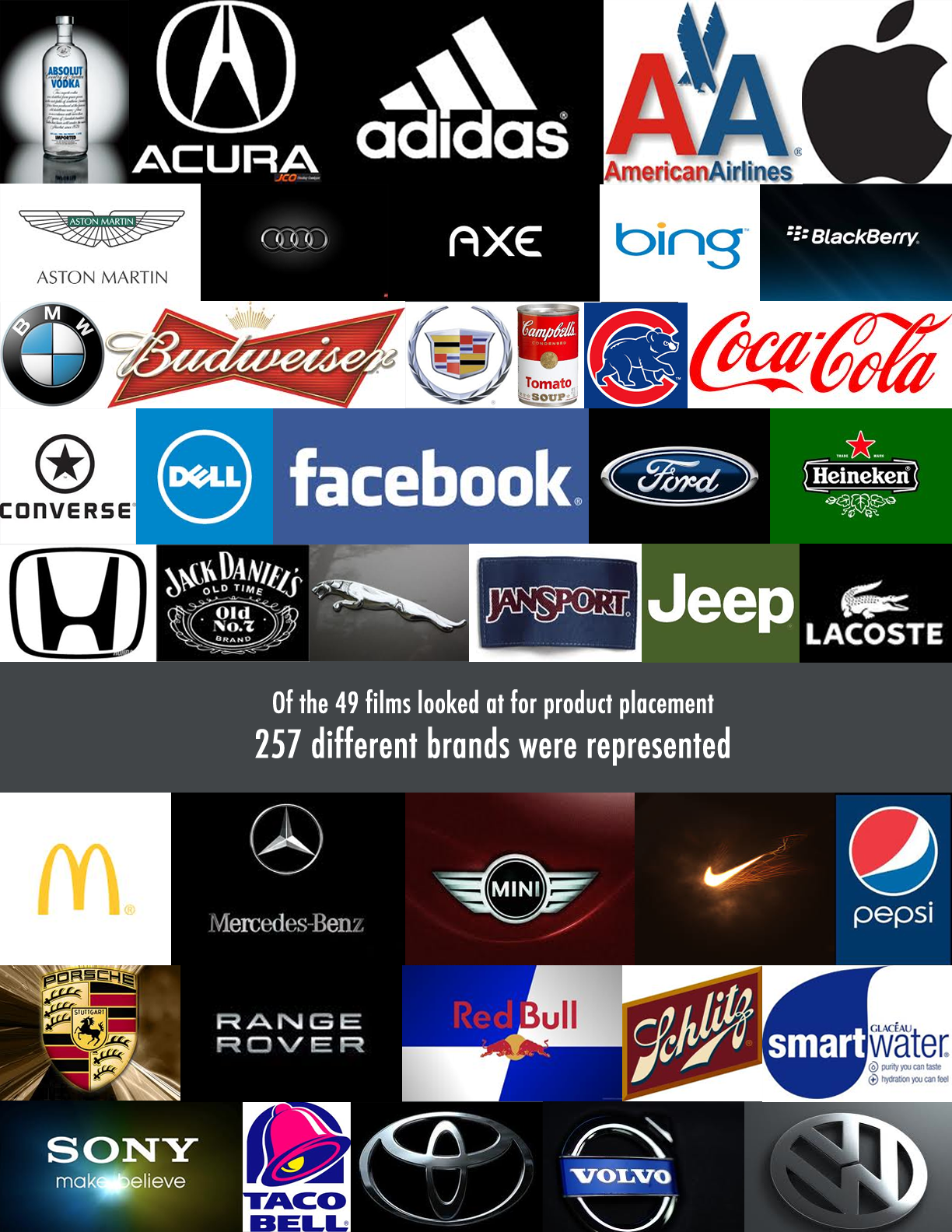
This study was conducted by GRIID intern Chloe Beighley and Jeff Smith.
Product Placement in films is nothing new and has been part of Hollywood films since the early days. However, contractual agreements became formalized in the 1980s, with the film ET, when director Steven Spielberg got the Reeses Company to sign a contract to pay the film company money to use Reeses pieces in one scene.
Ever since, product placement has not only been contractual, it has escalated to a degree that there might be 30 – 40 different contractual products that appear in any given film. In addition, we have seen the use of branded products go from backdrop props to integral parts of a movie script. This is a trend that is investigated in the 2000 documentary, Behind the Screens: Hollywood Goes Hypercommercial.
GRIID has investigated Product Placement in films in both a 2002 film study and more recently in 2011. In this year’s study there were numerous examples of product placement, both in terms of frequency of use and products that were central to the film’s theme or main characters.
We looked at 49 of films from 2012 for this study and identified those, which had products as props, and those where products are more prominent.
Below is a table detailing the brands that were scene in the films, and the film(s) in which they were featured. Following the table, we provide some content analysis of products that appeared in films and those which were woven into the script.
| 321 Water | The Hunger Games |
| ABC | The Avengers |
| Absolut | Flight |
| Ace of Spades | Prometheus |
| Acura | The Avengers |
| adidas | Safe House |
| Afflication | Here Comes The Boom |
| Airbus | Madagascar 3 |
| American Airlines | The Bourne Legacy |
| Amstel | Think Like A Man |
| Angry Birds | That’s My Boy |
| Apple | Chronicle, American Reunion, Contraband, Diary of a Wimpy Kid: Dog Days, Fun Size, Hit and Run, Safe House, Taken 2, The Dictator, The Five Year Engagement, Trouble With The Curve, Wanderlust |
| Aqua Velva | Men In Black 3 |
| Arcteryx | The Bourne Legacy |
| Aston Martin | Skyfall |
| Atchisson Assault | The Expendables 2 |
| Audi | Skyfall |
| aussieBum | The Avengers |
| Axe Body Spray | That’s My Boy |
| Barnes and Noble | Think Like A Man |
| Baskin-Robins | Chronicle |
| Bing.com | The Amazing Spiderman |
| Black Opal | Think Like A Man |
| Black Sabbath | The Avengers |
| Blackberry | Contraband, Project X, Safe House, Wanderlust |
| BMW | Chronicle, Safe House |
| Bose | The Avengers |
| Britax | What To Expect When You’re Expecting |
| Budweiser | American Reunion, Battleship, Contraband, Flight, Rock of Ages, Silver Lining Playbook, Ted, That’s My Boy, The Campaign, The Watch, Trouble With The Curve |
| Bugles | The Watch |
| Buick | One for the Money, Trouble With The Curve |
| Busch | That’s My Boy |
| Bushmills | Flight |
| C-SPAN | The Avengers |
| Cadillac | Hit and Run, Magic Mike, Men In Black 3, That’s My Boy |
| California Pizza Kitchen | What To Expect When You’re Expecting |
| Campbell’s Soup | House At The End Of The Street |
| Canon | Chronicle |
| Carhartt | The Grey |
| Carter’s | What To Expect When You’re Expecting |
| Central Park Zoo | Madagascar 3 |
| Centrum | Chronicle |
| Chevrolet | 21 Jump Street, American Reunion |
| Chicago Cubs | The Vow |
| Chrysler | One for the Money, The Dark Knight Rises, Total Recall |
| Chupa Chups | The Expendables 2 |
| Cirque du Soleil | Madagascar 3 |
| CNN | Safe House, The Avengers, The Campaign |
| Coca-Cola | Battleship, Diary of a Wimpy Kid: Dog Days, Here Comes the Boom, House At The End Of The Street, Men in Black 3, Safe House, The Watch, Trouble With The Curve |
| Colantotte | The Avengers |
| Coldarin | Chronicle |
| Columbia | Here Comes The Boom |
| Converse | Fun Size |
| Corona | Flight |
| Corvette | Hit and Run |
| Costco | The Watch |
| Cracker Jack | Men In Black 3 |
| Crown Royal | The Expendables 2 |
| Daily Herald | The Vow |
| Dartz Motorz | The Dictator |
| Dasani | Think Like A Man |
| Def Jam Records | Fun Size |
| Dell | Safe House, Trouble With The Curve |
| Delta Airlines | What To Expect When You’re Expecting |
| Desert Eagle Pistol | 21 Jump Street |
| Disaronno | The Vow |
| Discovery Channel | The Grey |
| Disney | 21 Jump Street |
| Dodge | Contraband |
| Dole | The Vow |
| Doritos | 21 Jump Street |
| Dos Equis | Think Like A Man |
| Dr. Pepper | The Avengers |
| Duane Reade | Madagascar 3 |
| Dunkin Donuts | Hit and Run, Men In Black 3 |
| Ed Hardy | The Dictator |
| Embassy Suites | Wanderlust |
| Evans | 21 Jump Street |
| 21 Jump Street, Hit and Run, The Campaign, The Watch | |
| Ferrari | Contraband, Madagascar 3 |
| Fiero | That’s My Boy |
| Fila | 21 Jump Street |
| Flash Gordon | Ted |
| Ford | 21 Jump Street, Contraband, Magic Mike, Men In Black 3, One for the Money, Think Like A Man, Trouble With The Curve |
| Framers Insurance | The Avengers |
| FujiFilm | Total Recall |
| Getac | Underworld Awakening |
| Glamour | Men In Black 3 |
| Glidden | What To Expect When You’re Expecting |
| Glock | 21 Jump Street |
| Goldman Sachs | The Campaign |
| The Campaign | |
| Grey Goose | Flight |
| Grey Hound | Rock Of Ages |
| Groupon | That’s My Boy |
| Gucci | Tyler Perry’s Witness Protection |
| Guild Guitars | Think Like A Man |
| Hamilton | Men In Black 3 |
| Harley-Davidson | The Avengers |
| Heineken | Flight, Skyfall, Think Like A Man, Total Recall |
| Hellman’s Mayo | Silver Lining Playbook |
| Hello Kitty | Twilight Saga: Breaking Dawn Part 2 |
| Herbalife | Think Like A Man |
| Honda | Contraband, Magic Mike |
| Honey Nut Cheerios | The Campaign |
| HP | Madagascar 3 |
| HTC | Safe House |
| Hunter Boots | Fun Size |
| Hyundai | 21 Jump Street |
| Imperfect Indulgence | The Vow |
| Jack Daniels | Contraband, The Grey, Trouble With The Curve |
| Jack In The Box | Total Recall |
| Jaguar | Safe House, Skyfall |
| Jansport | 21 Jump Street, The Amazing Spiderman, The Avengers, Twilight Saga: Breaking Dawn Part 2, What To Expect When You’re Expecting |
| JDate.Com | American Reunion |
| Jeep | Contraband, Diary of a Whimpy Kid: Dog Days, The Vow |
| Jim Beam | Flight |
| Jimmy John’s | Chronicle |
| John Deere | Men In Black 3 |
| Kellogg | Total Recall |
| Kinko’s | Wanderlust |
| Lacoste | Project X, The Vow |
| Lamborghini | The Dark Knight Rises, The Dictator |
| Land Rover | Safe House |
| Lay’s Potato Chips | House At The End Of The Street |
| Layer Cake | What To Expect When You’re Expecting |
| Lego | Chronicle |
| LG | Battleship, The Avengers |
| Lincoln | 21 Jump Street, Hit and Run |
| Louis Vuitton | Men In Black 3 |
| M.I.T. | The Expendables 2 |
| MAC Cosmetics | The Avengers |
| Macallan Whiskey | Skyfall |
| Macaroni Grill | The Vow |
| Mack | Men In Black 3 |
| Macys | One for the Money |
| Magnum | The Watch |
| Marriott | Think Like A Man |
| Mazda | Premium Rush |
| McDonalds | Contraband, Dark Shadows |
| Mentos | The Expendables 2 |
| Mercedes | Project X, Safe House, Taken 2, The Vow, Think Like A Man |
| Michelob Beer | Ted |
| Miller Beers | That’s My Boy |
| Mini Cooper | American Reunion, Contraband, Think Like A Man |
| Moet & Chandon | Wanderlust |
| MSNBC | The Avengers, The Campaign |
| Mustang | That’s My Boy |
| Nair | Fun Size |
| NASA | The Avengers |
| NBC | Men In Black 3 |
| New York Examiner | Men In Black 3 |
| New York Jets | Men In Black 3 |
| New York Knicks | Madagascar 3 |
| New York Mets | Men In Black 3 |
| New York Post | Men In Black 3 |
| Newcastle Pale Ale | Think Like A Man |
| Newsweek | That’s My Boy |
| Nike | The Amazing Spiderman, Think Like A Man |
| Nintendo | Ted, The Dictator |
| Northwestern University | The Vow |
| NY1 | The Avengers |
| Olive Garden | The Perks of Being A Wallflower |
| Oliver Peoples | The Amazing Spiderman |
| Omega | Skyfall |
| Oracle | The Avengers |
| Pabst | Trouble With The Curve |
| Panasonic | The Campaign |
| Panerai | The Expendables 2 |
| Pella Windows | Magic Mike |
| Penn State University | The Perks of Being A Wallflower |
| Pennzoil | Chronicle |
| Pepperidge Farms | Ted |
| Pepsi | Chronicle, Contraband, The Expendables 2 |
| Pétrus | Safe House |
| Plantronics | The Avengers |
| Play Station | Ted |
| Playtex | What To Expect When You’re Expecting |
| Pop ‘Em | Ted |
| Porchse | 21 Jump Street, Fun Size, The Vow |
| Pringles | Chronicle |
| Quiznos | 21 Jump Street |
| Raisan Bran | Silver Lining Playbook |
| Range Rover | Skyfall, The Expendables 2 |
| Ray Ban | American Reunion, The Bourne Legacy |
| Ray’s Pizza | The Expendables 2 |
| Rayovac | The Watch |
| Red Bull | 21 Jump Street, Chronicle, Safe House, The Campaign |
| Red Vines | Chronicle |
| Reebok | What To Expect When You’re Expecting |
| Rimowa | The Avengers, Men In Black 3 |
| Robitussen | The Vow |
| Rolaids | Men In Black 3 |
| Rolex | The Bourne Legacy |
| Rolling Rock | That’s My Boy |
| Roosevelt Hotel | Men In Black 3 |
| Ruby Tuesday | The Campaign |
| Sam Adams | That’s My Boy |
| Samsung | Cloud Atlas |
| Schlitz | Contraband, Trouble With The Curve |
| School of the Art Institute of Chicago | The Vow |
| Scrabble | The Campaign |
| Sears | House At The End Of The Street |
| Sheetz | The Bourne Legacy |
| Singer | Tyler Perry’s Witness Protection |
| SkyMall | Wanderlust |
| Smart Car | The Expendables 2 |
| Smart Water | 21 Jump Street, Hit and Run, Think Like A Man |
| Smirnoff | Flight |
| Smith & Wesson | 21 Jump Street |
| Snyder’s of Hannover | Chronicle |
| Sony | 21 Jump Street, Chronicle, Diary of a Whimpy Kid: Dog Days, Premium Rush, Skyfall, The Amazing Spider Man, The Vow, Think Like A Man |
| Sorel | The Grey |
| Southwest Airlines | The Avengers |
| Spalding | Think Like A Man, Men In Black 3 |
| Spam | Trouble With The Curve |
| Springfield Armoury | 21 Jump Street |
| Stary Melnik | The Expendables 2 |
| Stax | The Vow |
| Stolichnaya | Flight |
| STP | Men In Black 3, Chronicle |
| Subway | Battleship |
| Sugar Corn Pops | Ted |
| Taco Bell | 21 Jump Street, That’s My Boy |
| Taurus Judge | Underworld Awakening |
| Teddy Ruxpin | Ted |
| Tide | The Watch |
| Tom Ford | Skyfall |
| Toshiba | Trouble With The Curve |
| Toyota | Premium Rush, The Bourne Legacy, Hit and Run |
| Tribune Company | The Vow |
| Triumph Motorcycle | Here Comes The Boom |
| Tsingtao | Men In Black 3 |
| 21 Jump Street | |
| Under Armor | The Campaign |
| United States Navy | Battleship |
| University of Cal, Berkeley | 21 Jump Street |
| University of Michigan | The Five Year Engagement |
| UPS | Premium Rush |
| Utz Potato Chips | Diary of a Wimpy Kid: Dog Days |
| Vaseline | That’s My Boy |
| Vespa | The Dictator |
| Viagra | Men In Black 3 |
| Voli Vodka | American Reunion |
| Volkswagen | 21 Jump Street, Chronicle, Skyfall |
| Volvo | Diary of a Wimpy Kid: Dog Days, Fun Size, Twilight Saga: Breaking Dawn Part 2 |
| Waffle House | Magic Mike |
| Walther PPK | Skyfall |
| WedMD.com | The Amazing Spiderman |
| Weekly World News | Men In Black 3 |
| Wellbutrin | Wanderlust |
| Wheaties | Dark Shadows |
| Wise Potato Chips | Here Comes The Boom |
| Xanax | Hit and Run |
| Yamaha | The Campaign |
| Yashica | The Amazing Spiderman |
| Zingerman’s Bakery | The Five Year Engagement |
There is a varying degree of integration of these products into films. In some of the films, the product was written into the script, and is a prominent part of the film. On the other side, in some of the films, the product is used merely as a prop or a means to an end.
Products as Props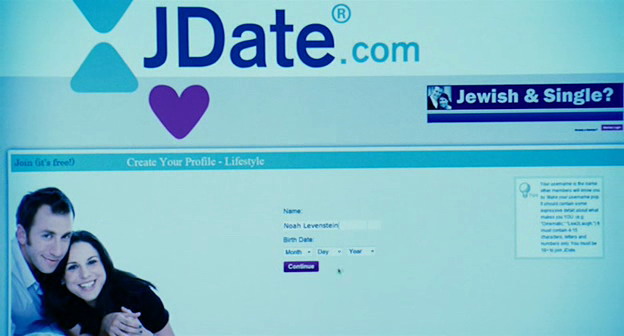
Often times, the product placement that is seen in films does not affect the overall film. One prime example of that would be the film American Reunion, the final installment of the American Pie films. This movie featured quite a bit of product placement. Apple products are used twice, an apple iMac computer, and an iPhone. There are two different types of Ford cars seen, as well as a Mini Cooper. When the characters are at the beach, they are all wearing Ray-Ban sunglasses. When they are at the bar, they are drinking Budweiser products, and only Voli Vodka is seen behind the bar. Also, while most movies use fake websites, the dating site featured, jdate.com, is a real site. While those products were not integral to the film, they were all shown and used.

The Amazing Spider Man offers the majority of its product placement via websites that are shown being used. The Microsoft search engine “Bing” is used three times by Peter Parker, and he clicks through on one of those occasions to the medical search engine “WebMD.com.” We also see accessories as product placement in this film, as three of the main characters are wearing different models of Oliver Stone glasses. Also, the characters use all Sony products. Again, these products were all used as a means to an end for the characters.
Taken 2 offered quite a bit of product placement from Apple, namely the iPhone 5, as well as Mercedes. The iPhone placement is not surprising since the movie was released on October 5, 2012, and the iPhone 5 was released on September 21, 2012.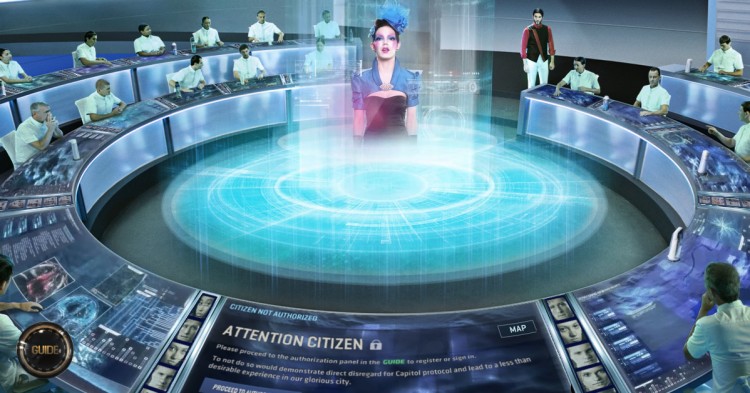
Product placement is even seeping into films where it seems less likely, such as The Hunger Games. Despite the film takes place in a futuristic society, with the majority of it taking place in a forest-like setting, one product did manage to slide into the film. In a scene in the “Control Room,” there is an image of the futuristic looking 321 Water Bottle. Even though it was not a prominent part of the film, it was still used as a prop.
Often times, one of the largest spots for product placement to be used as props is with vehicles. It is nearly impossible to feature a “name-brand” car, so big name automotive makers are featured in quite a few films. In 2012, 33 different types of cars, trucks, and motorcycle were used as transportation by main characters or as props.
 It is not surprising that these cars and trucks were used for brief periods of time in the films we included in the study, but the vehicles often appear at key moments in the plot. For example, in The Avengers, in the middle of the large fighting scene, there is a clear shot of a new Acura SUV that was cross-promoted with the film while the film was being advertised at the box office. Towards the end of the film, there is another image of a new Acura sports vehicle. Similarly, in American Reunion, the men are standing in a parking lot talking at one point, and happen to be standing around a Chevy truck.
This type of placement for the sake of placement is something that we see quite frequently with snack foods and drinks. Coca-Cola is seen in 8 of the 49 films, but is not necessarily intrinsic to any of those plots. Similar, we see many different types of cereals, potato chips, water bottles and snack products in general as was documented in the product table previously.
Products As Part of the Script
In Silver Lining Playbook, the product placement is very subtle. There are mentions of Raisin Bran cereal, Bud, and Bud Light. However, the most notable brand is Hellmann’s Mayonnaise jar. The book that the movie is adapted from states that the lead character has a mayonnaise jar that he keeps water in, and drinks out of obsessively. However, they do not name the brand in the book. In the movie, it was given a name and a label and seen in the mental hospital, the family kitchen and the dance studio where the characters practiced. There was also some speculation as to whether the major pharmaceutical companies had bought into the movie as well, since the names of a variety of medications were mentioned. They did not have a contract with the movie, and the names were added for dramatic effect.
Both That’s My Boy and Flight feature many scenes where the lead characters are drinking Budweiser products. In That’s My Boy, it was more than a prop since Adam Sandler’s character was seen drinking it in nearly every scene. In Flight, the drink was used as a vice and the downfall of Denzel Washington’s character.
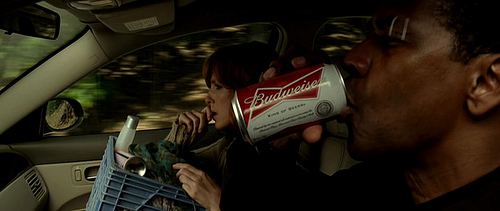 The movie Flight did not have a contract with Budweiser, while the movie, That’s My Boy, was sponsored by the company. It is legal for movies to use products while not under contract with a company, however, Budweiser has asked Flight to remove all aspects of it’s beer from the DVD and digital releases of the film. The Vice President of Budweiser released a statement regarding the uses of their product in the film, saying that Anheuser-Busch had “no knowledge of the use or portrayal of Budweiser. We would never condone the misuse of our products, and have a long history of promoting responsible drinking and preventing drunk driving. It is disappointing that Image Movers, the production company, and Paramount chose to use one of our brands in this manner.”
However, That’s My Boy portrays the main character as having an addictive personality, much like the main character in Flight, but again, Bud products are seen in nearly every scene of the movie.
Budweiser products were featured in 11 of the films we included in our 2012 study that contained product placement. The theme among the films was very similar, all featuring white, male, lead characters, which are doing some kind of work and are drinking Bud products in “fun” situations or to relieve stress. It was not necessarily more than a prop in these films, however we see the added dimension of Budweiser targeting teenagers and men in these films.
The Dark Knight Rises offered one, very large, product placement of Pittsburgh Steelers player Hines Ward. Though the jerseys and field were not 100% Steelers, there was certainly the illusion that was the team playing. Also, pre-movie product endorsements, included the Mountain Dew exclusive trailer, and website, which allowed viewers to interact in Gotham city, as well as a Nokia Lumina App which offered exclusive Dark Knight games, wallpapers, and ring-tones, only available on that phone.
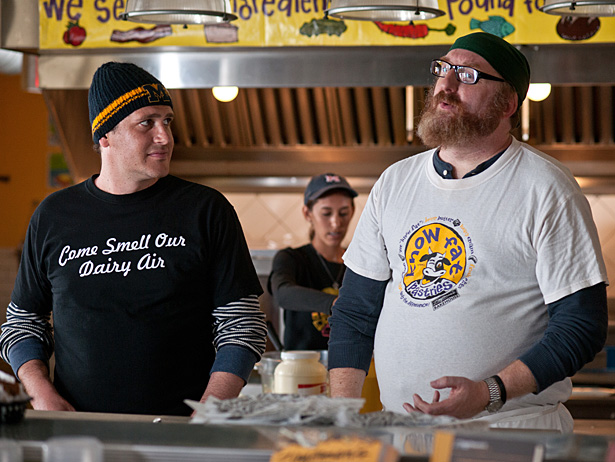
The Five-Year Engagement was certainly a large promotion for the Michigan city of Ann Arbor. The majority of the movie takes place there where one of the main characters works at The University of Michigan, and the other works at a famous local bakery and sandwich shop, Zingermans.
Universities are frequently written into scripts as parts of the plot, like in The Five-Year Engagement and also in The Perks of Being A Wallflower, where Penn State University was featured. Using specific universities helps to add an air of realness to the films, and enables the viewer to connect with the characters on a deeper level.
This technique is also something we see in the use of restaurants in films. In The Perks of Being a Wallflower, the popular restaurant Olive Garden is featured. In Magic Mike, the characters frequently reference eating at a Waffle House. These are restaurants that the majority of viewers will be familiar with, thus normalizing them as commercial places to eat for the general public.
One brand that was largely featured was Apple. The products that were used were iPhones, Macbooks, iPads, and their larger desktop computer. Apple products were seen in 12 of the top films of 2012 that featured products. They were not necessarily more than a prop in some of the films, however, one difference in the placement of Apple products is that they are seen being used by a younger demographic in a majority of these films. They are targeting a younger audience who may use the products for entertainment or educational purposes. Furthermore, in the film That’s My Boy, an application created for Apple products, “Angry Birds” is featured.
In the movie The Dictator, a character becomes an employee of the Apple Store, one of their “Genius” workers. The scene from the movie makes a commentary on the Apple products and Americans.
When the main character Aladeen met Nadal in a restaurant, he asked him to help him get back into power as the dictator of his small country.
Nadal: “What? No. Why would I do that? I have a perfectly good job here. I’m a Mac Genius!”
Aladeen: “What do you do?”
Nadal: “Mostly, I clean semen out of laptops.”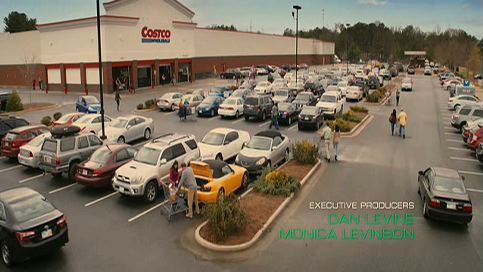
Aladeen: “Congratulations. Living the American dream.”
One last film where the product is more than a prop is the film The Watch, where one of the main characters played by Ben Stiller is the manager of a Costco. There are many scenes in The Watch that take place inside Costco (displaying even more branded products) and outside of Costco, where the name on the building in is prominently displayed.
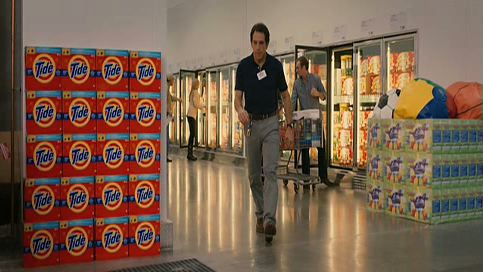
In addition, the scenes taking place in and around the Costco store, Costco is mentioned dozens of time in several different dialogues in the film, since not only does Ben Stiller’s character management the store, but the store is the part of a murder scene and is the location of the big finale, where the neighborhood watch takes on aliens from outer space.
Product Placement is so much a part of the Hollywood movie experience that people might not even notice it. Even if audiences do recognize product placement, they might react with a certain level of indifference, since the branded products we see are often part of our lives. However, it is important to not only recognize that in all forms of media, including film, there is an increasing level of hyper-commercialism. This hyper-commercialism is deliberate and is part of corporate campaigns to brand their identities with the public, despite the fact that they add no real artistic value to movies.
Citizen Activism Workshops and Concert planned for Save Our State event on March 16

Michigan Land Air Water Defense (MLAWD) and Clean Water Action present “Save Our State!” – a full day of workshops geared toward engaging the public in the fight to protect Michigan’s fresh water, followed by an evening of music from Michigan bands (8-midnight) committed to building consciousness and community.
Lead organizers Sarah Barker (MLAWD) and Kate Holloway (Clean Water Action) hope to inspire Lansing’s diverse population to educate themselves on recent developments in horizontal hydraulic fracturing and the State’s leasing of public land for oil and gas development.
The process of horizontal slick water hydraulic fracturing uses 5-7 million gallons of fresh water for each and every well that is completed – water that is never returned to the hydro-cycle. According to the DEQ, up to 500 wells will be permitted in our state this year. In 2012, the Michigan Department of Natural Resources auctioned off the mineral rights to 108,000 acres of our State Forest areas in May and another 193,000 acres in October, to private energy companies for oil and gas extraction.
The May 2012 auction leased 23,400 acres in Barry County, including the Yankee Springs Recreation Area. In response, a group of concerned citizens came together to create MLAWD and hired prominent environmental lawyer Jim Olson. They have filed a lawsuit against the MDNR for violating the public land trust. Their aim is to nullify the state land leases purchased in Barry and Allegan counties during the 2012 auctions and to set a precedent for others to follow
Others have filed legal action against the Michigan Department of Environmental Quality for failing to have a protocol (or even full disclosure) for chemical contamination. This drilling process is also largely EXEMPT from regulation by the Federal EPA, a result of the Energy Policy Act of 2005.
Workshops, led by citizen activists experienced in each area, will begin at 1:00pm and include sessions on:
– Writing and activism,
– How to file lawsuits,
– Petitioning,
– Campus organizing,
– Community organizing,
– Water monitoring,
– Direct action
– a screening of Josh Fox’s short film The Sky Is Pink
– and a special guest from Pennsylvania: Restoration Ecologist Kevin Heatley, who will educate workshop attendees on Pennsylvania’s ongoing fight against fracking.
MLAWD’s President, Steve Losher is quoted saying, “Michigan is tumbling over a fracking precipice that represents the death throes of the fossil fuel economy. To allow this industry, with it’s dismal track record of health and saftey, to proceed unchecked is a betrayal nature, posterity, and common sense.”
Workshops are free of charge, and Registration is encouraged. (Register at: www.MLAWD.org.) Dinner will be served for workshop attendees who register.
The Concert begins at 8 pm. Tickets are $10 and funds will go to MLAWD to help cover legal expenses.

