Interview with Dani Vilella: The ongoing fight for reproductive rights in Michigan
For over a year now there has been a battle at the state level of women’s reproductive rights, with numerous pieces of legislation that would turn back many gains around reproductive rights that women’s organizations and allies have fought for in recent decades.
Last week, Dani Vilella, with the Grand Rapids chapter of the National Organization for Women (NOW), was in Lansing during a House Insurance Committee meeting, where women’s reproductive rights were being discussed.
GRIID – What happened in Lansing last week?
Dani – The House Insurance Committee approved BCBS bill without abortion coverage restrictions. The bill will now go to the House. Here is what was reported on the House Insurance Committee meeting from MIRS, which I think sums up well what went down.
Without opposition votes and without an amendment to restrict insurance coverage for abortions, the House Insurance Committee advanced bills to transform Blue Cross Blue Shield of Michigan (BCBSM) into a non-profit mutual company today.
The committee voted 11-0 to report SB 0061 and SB 0062. While Minority Vice Chairwoman Kate Segal (D-Battle Creek) voted in favor of the bills, the three other Democratic committee members passed.
Rep. John Olumba (I-Detroit) was absent. The bills are not expected to be taken up on the House floor today.
In front of a crowded room, the Insurance Committee took about 90 minutes of testimony before the vote today. Although Planned Parenthood supporters were in attendance and many expected the committee to consider adding language to restrict insurance coverage for abortions, there was no discussion of abortion coverage during the meeting.
Insurance Chairman Pete Lund (R-Shelby Twp.) said this afternoon that if lawmakers had abortion language that was ready to go in the bill, they would put it in.
“We just don’t have it,” Lund said.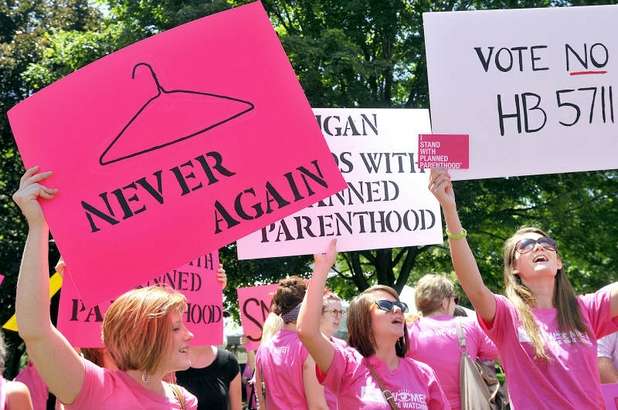
Ed Rivet of Right to Life Michigan (RTLM) said RTLM hasn’t been engaged in any detailed discussions about the language.
“There isn’t any reason that those two issues have to be linked together,” Rivet said. “So if they never are, that is not a problem for us.”
The Insurance Committee did approve today amendments to clean up language in the bill and to add focuses for the health and wellness fund that BCBSM will provide dollars for. The new focuses include expanding access to prenatal care and a reduction of the infant mortality rate.”
GRIID – What does this mean for women’s rights and reproductive rights in Michigan?
Dani – The House Insurance Committee decision to approve bills advancing the ability of BCBSM to participate in the Michigan Health Care Exchange without unnecessary restrictions on abortion coverage is a small sign that the Legislature is moving in the right direction on health care without using woman’s health as a bargaining chip. This is the same bill vetoed by Gov. Snyder during the lame duck session this past winter.
GRIID – What are Planned Parenthood and other organizations planning to do in response to this decision?
Dani – Planned Parenthood will continue to monitor this bill as it now moves to the floor of the Michigan House. In addition to this bill, we will spend 2013 working to expand Medicaid coverage for hundreds of thousands of Michiganders as well as ensuring that women’s health is a priority in the establishment of the Michigan Health Care Exchange.
GRIID – How is this justice issue connected to other justice struggles in Michigan right now?
Dani – The desire to introduce abortion restrictions into bills like one, in addition to eight other anti-choice bills that have been introduced so far this year are exemplary of the fact that certain factions within the Michigan Legislature are not getting the message sent to them during the 2012 elections – that we are tired of these attacks on women and families. We are tired of attacks on the middle class and the poor. We are tired of corporate and conservative interests taking precedent over what is right and fair for Michiganders.
Planned Parenthood and our progressive partners will continue to fight, alongside our amazing advocates to protect MI families.
Chomsky on Mutual Aid, Occupy Sandy and Unions in Michigan
This Interview was conducted by the Occupied Times and is re-posted from ZNet.
Since 2008, the latest crisis of capitalism has given birth to a new wave of horizontal and collective forms of organising in the United States: The occupation of the State Capitol of Wisconsin in early 2011 in opposition to Governor Scott Walker’s plan to drastically reduce collective bargaining rights. The Occupy movement and its notorious occupation of Zuccotti Park in late 2011, followed by similar occupations of public space across hundreds of American cities. And most recently, the network of relief hubs, organised at a community level and aimed at cultivating an atmosphere of mutual aid in the aftermath of Hurricane Sandy. Indeed, Occupy Sandy has been at the forefront of filling the gaps where the state seems absent. The last few months has witnessed the development of tools for debt resistance, exemplified by numerous debtors’ assemblies held in city squares across America, and more recently by the Rolling Jubilee, which aimed to display the power of collective refusal of debt peonage.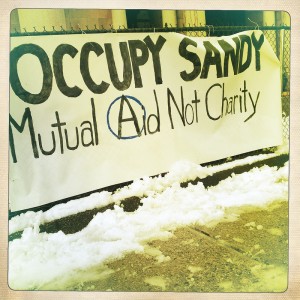
One unifying thread that runs through these recent and varied forms of collective organisation is the lack of institutionalisation. In fact, institutionalised forms of collective bargaining have been declining for some time. Today, US union membership is lower than at any other time since 1933. Losses in private and public sector unions saw total union density fall from 11.8% to 11.3% last year. Meanwhile, anti-union laws are being pushed through state legislatures, most recently in Michigan.
One of the most prominent voices in the debates around collective bargaining and organising has been the MIT linguist and long-time political commentator Noam Chomsky. Recently, the OT sat down with Professor Chomsky in the hope that he might provide a few insights into recent developments on the American Left, and into conservatives’ fight against unions. Below are excerpts from the conversation, lightly edited for length and clarity.
OT: After Hurricane Sandy, New York City seemed to turn into an authoritative vacuum. Nobody expected much help from the feds. Do you think that Occupy Sandy can capitalise on that feeling?
Noam Chomsky: The trouble is, it is a double-edged sword, because to the extent that Sandy or other citizens efforts are effective, they reduce the pressure on the federal government to stand up and do what it is supposed to do. That is a trap you want to be able to avoid. There also ought to be pressure on the feds to say: “You guys are supposed to be doing this.”
OT: So, Occupy Sandy and these various movements that have come out in the last year, they are double-edged in the sense that they alleviating the pressure we should put on [governments], but they are also desired responses in many ways.
NC: What ways? The trouble with saying “the government backs off” is that it only feeds the libertarians. The wealthy and the corporate sector are delighted to have government back off, because then they get more power. Suppose you were to develop a voluntary system, a community type, a mutual support system that takes care of social security – the wealthy sectors would be delighted.
OT: Absolutely, so it’s an interesting dilemma. The idea of mutual aid is very prevalent within Occupy Sandy. Because of the failure of government responses, it has resulted in this thing that can potentially be used against us in lots of ways.
NC: It’s difficult. In principle you are doing what a lot of communities ought to be doing. An organised community is just a government – in a democratic society at least, thus not in ours. Your problem is the effectiveness of the whole doctrinal system which has undermined any belief in democracy. You see it on the front page of every newspaper. Why is there a fuss now about raising taxes? In a democratic society, you would have the opposite pressure to raise taxes, because you appreciate taxes, taxes are what we pay for the things we decide to do. But if the government is a big alien force, we don’t want them to steal our money, so we’re against taxes.
OT: The idea of taxation seems so thoroughly demonised, even though it obviously results in things that everybody takes for granted.
NC: I think the demonisation is a consequence of the feeling that the government is not simply all of us formulating and carrying out our plans. If that’s what the government was, people wouldn’t object to taxes.
OT: There’s a lot of spillover from that sentiment – taxation and its implications for the average individual – to what we are seeing in terms of attacks on labour unions, like what just happened in Michigan.
NC: Its been going on for a 150 years, and it’s a very business-driven society today. In every society business hates labour, but the United States is run by businesses to an unusual degree. It has a very violent labour history. Several times in the last century, labour has been practically destroyed, just through violence, government violence, business violence. Strikers were being murdered in the United States in the late 1930s, and in other countries for decades.
Many legal instruments have been used to discipline the labour force across the USA over the past few decades. One of the most damaging forms of legislation is known as Right to Work law. It exists on the statute books of nearly half of American states, primarily in the South. Its main function is to prohibit the requirement that workers pay union fees as a condition of employment. This doesn’t prevent those who do not pay union membership fees from receiving the benefit of collective bargaining. The long term effects of the legislation, as with most laws designed to restrict labour rights, is a lowering of wages and worsening safety and health conditions for workers. Regions which utilise these laws are often dismissively referred to as “right to work for less” states by their opponents.
OT: What do you think of Michigan’s legalisation of collective bargaining or in-shop organising? Did the integration of potentially radical tactics from the labour force take the ground away from under it? Or have they been normalised?
NC: It just depends how it works. Legalising collective bargaining made it possible to develop labour unions, but it really depends how they work. Take the United States and Canada. They are pretty similar societies but organised labour has worked in quite different ways. The reason that Canada has a health system, and the US doesn’t, is because of the way the labour unions handled it. You had the same United Auto Workers on both sides of the border, and it was about the same time in the 1950s. The Canadian unions pressed for healthcare for everybody, the American unions pressed for healthcare for only themselves. So the Americans got a good contract, a reasonably good contract for UAW workers, but nobody else did, and so we end up with this monstrosity.
Furthermore the UAW leadership weren’t just thugs, they were serious and unbelievably naive. They thought they could make a compact with management and work together. But by 1979, the head of the UAW, Rick Frazier, gave an important speech – it’s probably on the internet. He pulled out of some labour management group that the Carter administration was setting up, realising it was a farce. He said that he realised a little late that business was fighting a one-sided class war against working people, that they don’t mean it when they sign these contracts, that they are just waiting for a chance to cut back and get out of them. And he said that he had finally figured out what workers knew 150 years ago: business is fighting a bitter class war, all the time. The business world is full of dedicated, vulgar Marxists who are always fighting a class war and the labour leadership didn’t understand it, or wanted not to understand it. In any event, they entered into these compacts. Business wanted to undercut them, they did, which is what is happening. Unions were demonised by massive propaganda. We have movies, advertising, everything; it’s moderately well studied. It’s pretty dramatic when you look at it, and it has had an effect.
My daughter teaches in a state college where the students are mostly working class. They don’t call themselves working class, she’s not allowed to use the term – it’s called middle class. Basically, they want to be nurses, police officers or skilled workers. She said she teaches labour history, and she says they just hate unions. Because they regard the union as something which forces you to go on strike, which steals your dues and doesn’t do anything for you. As far as that’s the case, they just hate unions.
Over the past few months, there has been a noticeable focus from activists on debt and its relationship to people’s labour and livelihoods. While debt is not a new phenomenon, the level of analysis has become more detailed after the 2008 crash and the rise of the Occupy Movement. There’s the Jubilee Debt Campaign, which has campaigned for some time against sovereign debt clawed from impoverished countries. Strike Debt is developing ideas around the debtor as a new political subject. The Rolling Jubilee collectively purchased distressed medical debt on secondary markets in order to instantly write it off as an act of solidarity. These initiatives, along with the European We Won’t Pay campaign, are some of the more recent movements against illegitimate debt that have grown to prominence.
OT: Looking at the Rolling Jubilee, it also is a double edged sword. On one hand you are helping someone dramatically by abolishing their thousands of dollars worth of medical debt. So instead of debt collectors buying it on the market and saying “You owe this amount of money” and giving you a principle balance and some other fee, you don’t have to pay it back. But on the other hand, you’re giving five-hundred thousand dollars to speculators on the market.
NC: And you’re also undercutting the government responsibility to do it in the first place. Political pressure that would lead them to do it. The same issue arises all the time. Let’s say with charity, when you give aid to homeless people, you’re taking away the community responsibility to do it, and in a democratic society, that usually means the government. And this is true, you can’t escape the world you’re in, you can tonly ry and change it. It’s not an argument against giving to charities…
OT: Absolutely. I don’t want to use the term morality, but there’s definitely a sense that it’s time to take action.
NC: We are responsible to other people. We should at the same time, and I think that’s what Occupy ought to be doing, create an understanding that there is a community responsibility. It’s not our responsibility, we’re doing it, because the community isn’t. It’s like schools: there’s community responsibility to make sure that kids go to school. People who want to privatise schools would be delighted if an individual charity sent particular kids to school, then it wouldn’t have to be a community responsibility and it would cost them less in tax money. But I think much deeper than that is that they want to undermine the conception of communal responsibility. That also goes back 150 years, back to the beginning of the industrial revolution. It’s remarkable to see how persistent it is – this idea that workers and working people were being driven from the farms into the factories. In England, the same thing happened basically a century earlier, and they bitterly resented it. The labour press from that time is very striking; people should read it and reprint it. I mean, it’s very radical. They had never heard of Marx, never heard of communists, but the press was just instinctively very radical. They were opposed to wage labour and regarded it as not very different from slavery. The main thing they opposed was what they called the “New Spirit of the Age” – ‘you gain wealth, forgetting anybody else’. So that’s what they’ve been driving into people’s heads for 150 years. I talk to MIT students, kind of upwardly mobile students, not Harvard, a lot of them are kind of behind [Ayn] Rand, “Why should I do anything for anyone else? I should be after it for myself.”
That sentiment has spread. Actually I think that’s what happened in Michigan. The anti-union feeling that has been built up is, “Why should that guy over there have a pension when I don’t?” In Wisconsin, that feeling was very strong. The labour movement was never able to get across the fact that these guys are hard working people who gave up their wages so they could have some benefits, they’re not stealing from you. That never got across. So the very widespread feeling even among union members was, ‘They got a pension, they got tenure. I don’t have a pension, I don’t got tenure, I’m just after myself, I don’t care.’ And that’s one of the problems with volunteer and popular activism: It builds a sense of solidarity among participants, but it undermines another sense of solidarity in the community at large. That’s really significant. I think that’s what underlies the massive attack against social security, which is really a bipartisan attack. Obama says we have to cut it, too. There’s no economic problem, but social security is based on the conception that you care about other people. That argument has become unpopular. But you got to drive that out of people’s heads. You have to make sure not to contribute to that.
OT: We were trying to think that if we had to describe Occupy Wall Street and the protests of the last year in a very succinct kind of way, it would probably be based on the idea that for generations prior there was a sense of working class solidarity and the idea of having collective power.
NC: You’re right, I thought the most important contribution of the Occupy movement was to recreate this mutual support system which was lacking in society. But it has this dual character: You have to figure out ways to do it which don’t undermine the broader conception of solidarity. ‘Actual solidarity’ is the slogan of the labour movement – well, it used to be.
OT: With that in mind, if Strike Debt is taking this approach where it’s focusing on debt, the commonality is that we’re not all workers, but we’re all debtors. Would you say that this is a rallying point?
NC: Sure. There are many points of commonality among people, say… schools. I don’t have kids who go to school, I suppose you don’t either, but nevertheless, many of us, we’re committed to making sure kids go to school. We’re part of that community and lots of other communities.
OT: But it’s much easier to say, “you’re a worker, you sell your labour for a wage.” It’s much easier to say that than it is to say: “You owe a debt and you have a solidarity to this person who also has debt.” How do you articulate that bond of solidarity?
NC: That’s the obvious point of contact. That’s the way health organising ought to work: Everybody is going to face health problems.
OT: It’s obvious that there is a need for that kind of thinking. But I’m not sure that it’s so obvious that you could communicate it to people and get people out on the street and organising amongst themselves.
NC: Well, you know, it certainly happened in other places. Again, Canada is not that different but at least it had something of that concept of solidarity. That’s how they got a national health system. Actually, one of the amazing things in Michigan is how the unions were never able to get across the point that even the concept ‘right to work’ is a lie. It’s ‘right to scrounge’. It has got nothing to do with work, but they could never get it across. When you mention that to people they say “yeah, I never thought of it”.
They don’t know what a scam it is to even call it “right to work.” That should have been a major educational issue, just like with pensions for public workers. They should have said: ‘Pension cuts mean that they cut back your wages’. Or take when Obama froze wages for federal workers and it was praised across the board. He was raising taxes – and this is right in the middle of saying ‘You’re not allowed to raise taxes’. A pay freeze for federal workers is identical with a tax on federal workers. Almost nobody pointed it out. We’re just losing a lot of opportunities
The same thing is to be done about debt, as I’m sure you’re doing it. A lot of the debt is just totally illegitimate. Take student debt. There’s no economic basis for it, it is just a tactic of control. You can prove that there’s no economic basis. Other countries don’t have it. Poor countries don’t have it, rich countries don’t have it, it exists only in the US – so it can’t be economically necessary. The United States was a much poorer country in the 1950’s, much poorer, but it had basically free education.
OT: Sure, the NHS in the UK was founded after World War II when the debt was far greater in proportion to the nation’s wealth.
NC: Even in the US, which came out of the war very rich, it was nowhere near as rich as it is today. But the GI bill gave us free education. Yes it was selective: only whites, very few women, but it was free education for a huge amount of people who would have never gone to school. In the 1940s, when I went to college, I went to an IVY league school, it was $100 tuition. That’s a poor country compared to today’s standards.
Right-Wing Think Tank Expands to Downtown; Mlive Raves
Author’s note: It was brought to our attention that in the original publishing of this article we stated that the three Mlive articles discussed were published within 8 days of one another, when in fact the first of the three articles was published in February 2012, while the later two were published in February of 2013. This was an oversight, and the article has been corrected. It is our belief that the analysis and conlusions reached remain relevant, despite the intial error.
The conservative, right-wing think tank Acton Institute has purchased and renovated the building at 98 E. Fulton at the center of downtown, Grand Rapids,

Mlive sent photographer Chris Clark down to document the move, this is his photo
where it will soon call home. GRIID covered this development almost exactly a year ago, but this month Mlive Media Group, specifically Jim Harger, has published two stories on Acton last week, following one about a year ago. We’ll take a deeper look at this uptick in coverage by the local press.
Two of the articles by Harger detail the institute’s move from it’s “cramped, rented space in the Waters Building” to it’s new digs downtown. The institute’s $7 million remodeling bill will cover “a 200 seat auditorium, state-of-the art recording equipment and a soundproof booth for translators” in addition to a chapel with German-made stained glass, amongst other amenities. The third article takes a look at the “local funding” supporting the ever growing “international footprint” of Acton.
The first article, “Acton Institute will raise its profile in Grand Rapids with purchase of downtown landmark building”, opens under the angle that many in West Michigan have not heard of Acton, (acknowledging that many of the readers probably don’t care that the think tank is moving in the first place, and thus begs the question, “why is this news?”). To quell these early concerns, Harger quotes Acton’s spokesperson, John Couretas, “We’re the only public policy think tank in Grand Rapids, but we’re probably better known internationally than in Grand Rapids.”
After Harger establishes that Acton is moving, and that the building has historic roots as a Jacobson’s department store, he grasps at straws for the rest of the story, giving a brief history of Acton, another attempt to get his readers to care. No one commented on the story.
For the second article, “Acton Institute’s new headquarters gives think tank a high-tech base for its free market mission”, Harger goes beyond the spokesperson straight to Acton’s Executive Director and co-founder, Kris Mauren, who proudly divulges more detail about the auditorium, the chapel, and how many jobs the construction project is creating. For more on this angle, Hanger goes on to interview the general contractor Tim Schowalter, president and CEO of Pioneer Construction Co. Clearly, Harger is done pulling punches. He even states that “the project is seeking certification from the Society of Environmentally Responsible Facilities (SERF),” audatiusly suggesting that Acton is now part of the environmental movement (more on that later).
Harger’s third act hints at some in-depth analysis with its headline: “Acton Institute’s financial backing has strong ties to West Michigan’s wealthiest families”. One might think that a journalistic class analysis is about to follow, maybe Harger will even look at the effect of the policies Acton Institute ethos has had locally and globally. One would be mistaken. Here, Harger returns to Kris Mauren and diversifies his approach by including the perspective of John Kennedy, president and CEO of Autocam Corp., and funder to the think tank.
Apparently, according to Kennedy, “Acton excels in encouraging entrepreneurs to develop their skills in the marketplace to improve the lives of others,” and “they don’t say the markets are moral, but players in the market have a responsibility to be moral.” Kennedy neglects to say how Acton’s history of climate change denial fits into its moral responsibility, and Harger forgets to ask.
 Even more disturbing is Acton’s “educational campaign”, dubbed “PovertyCure”, which states “wealth creation, rule of law and private property – situated in a moral culture – are the keys to reversing worldwide poverty.” The think take even has a university that’s “taught” this ideology to more than 800 students last year alone, and looks to expand to 1,000 by next year. Seeing as how the Devos family are major contributors to both Acton and the attack on public education, this should serve as no surprise.
Harger follows these statements with zero critical analysis of the claims at hand and provides no evidence to support them. With so many stories of austerity and the ensuing popular revolts around the world, any reader of the news can hardly go a day without hearing about the devastation and hardship brought by the “rule of law and private property.” It is an old myth that free-market capitalism will somehow resolve poverty and inequality. A system that rewards only greed and self preservation will by its very nature always be exploitive. These policies are hardly “reversing worldwide poverty”, but creating and perpetuating it.
Additionally, by listening exclusively the perspectives of white males from the elite class and regurgitating their claims uncritically, Harger serves as a mouthpiece to those in power. This is why three articles were published on Acton’s move in an eight day period, it benefits Acton. If there is any question, Harger makes sure to mention how Acton has been named as one of the top think tanks by various organizations at least once in every article. No criticisms of Acton or their right-wing Christian ideology are presented what-so-ever.

For as much as contemporary culture demands we do not forget “our founders”, we often ignore their lessons when convenient. Thomas Jefferson said, “Our liberty cannot be guarded but by the freedom of the press, nor that be limited without danger of losing it,” and that “the only security of all is in a
free press. The force of public opinion cannot be resisted when permitted freely to be expressed.” While Jefferson himself showed little commitment to the liberty of those who didn’t share his race, class, or gender, he understood the dynamics of democracy, especially when it came to the press. The purpose of the free press is to keep power in check for the protection of the people. When the press becomes a servant of the powerful, corruption will surely follow; and corruption is halted by the transparency provided by a free press.
Articles such as those detailed above (and dozens others analyzed by GRIID) illustrate that Mlive does not represent the free press or the people, and thus hasno role in a democracy. Mlive Media Group is part of the capitalist press and is a tool of oppression used by the power elite to keep the people of Michigan ignorant and unquestioning of their thieving practices, which will enviably leave us more broke, bankrupt, and hungry than we were yesterday. Meanwhile the dividends, capital gains, and bank statements of those responsible continue to soar upward. People are well advised to recognize Mlive for what it is, and to act accordingly.
Minnesota Mayor and Fracking Industry Lobbyist Resigns
This article by Steve Horn is re-posted from CounterPunch.
Usually “revolving door” connotes a transition from a stint as a public official into one as a corporate lobbyist or vice versa.
In the case of Red Wing, MN – a southeastern Minnesota town of 16,459 located along the Mississippi River – its Mayor Dennis Egan actually obtained a gig as head lobbyist for the frac sand industry trade group Minnesota Industrial Sand Council while serving as the city’s Mayor. The controversy that unfolded after this was exposed has motivated Egan to resign as Red Wing’s Mayor, effective April 1.
Without the fine-grained silica frac sand found within “Sand Land” (or manufactured ceramnic proppants resembling it), there is no hydraulic fracturing (“fracking”) for the oil and gas embedded within shale rock deposits. In other words, frac sand mining is the “cradle” while burning gas for home-heating and other purposes is the “grave.”
Egan is also the former head of Red Wing’s Chamber of Commerce and the public relations firm he runs, Egan Public Affairs, is a Chamber member both at the Red Wing- and state-level. One of his other lobbying clients is Altria, which Big Tobacco’s Phillip Morris renamed itself in Feb. 2003 during its rebranding process with the help of PR powerhouse, Burson-Marsteller.
Many citizens living within the conflines of ”Sand Land” in Minnesota, Wisconsin, Iowa, Texas, and Arkansas are deeply concerned about the ecological impacts of frac sand mining and the fracking at-large the sand enables.
Direct respiratory exposure to silica sand can lead to development of silicosis, a lung disease that can lead to lung cancer, akin to exposure to the tobacco smoke that Egan lobbies on behalf of. Exposure to silica sand was deemed a workplace hazard by the Occupational Safety and Health Administration (OSHA) in a June 2012 report.
Egan’s Frac Sand Ties Engender Citizen, City Council Backlash
Given this “price of sand,” residents reacted with outrage about the conflict-of-interest and started circulating a recall petition to send Egan packing as Mayor.
So too did Red Wing’s City Council, with three of its members demanding Egan resign at a Feb. 11 meeting and the City Council at-large voting unanimously at that same meeting to hire an outside investigator to dig deeper into the entirety of Egan’s conflicts-of-interest.
The brewing dramatic three-week-old scandal has come to a close, though, as Egan announced he will step down from his mayoral post.
“I believe that a mayor must live to a higher standard than just avoiding conflicts of interest,” he told the Minneapolis Star-Tribune. “If a mayor’s activities serve as a distraction or roadblock for the city, the public is not well-served.”
Red Wing’s City Council, in turn, decided to drop the investigation on Egan and the recall petition is now null-and-void.
“We understand his decision and wish him well in his new position,” Red Wing City Council President Lisa Bayley told Minnesota Public Radio. “I think he had to make that decision — what we wanted to do. I just don’t think the two positions were compatible and he needed to pick something.”
Red Wing resident and recall petitioner Dale Hanson told the Star-Tribune that he believes this investigation should proceed regardless of Egan’s choice to step down as Mayor “to ensure that if there was corruption, ethics violations, or other vital issues that we have an accurate sense of how much damage may have been done.”
The announcement comes in the aftermath of a major Feb. 20 MN state Senate hearing on frac sand mining. Another one is slated for Feb. 26.
“Heads in the Sand”: Egan Not Alone in Cashing in on Frac Sand Boom
As it turns out, the sordid truth is that corruption and ethics violations with regards to frac sand mining and local governments go far above and beyond Egan and Red Wing. In a Dec. 26 story, the Star-Tribune explained that “at least five public officials in three counties are trying to make money from frac sand.”
Despite this reality and the enormous cradle-to-grave ecological costs and consequences of fracking, public officials have their “heads in the sand” – both literally and figuratively – with regards to the frac sand mining boom.
New Media We Recommend
Below is a list of new materials that we have read/watched in recent weeks. The comments are not a “review” of the material, instead sort of an endorsement of ideas and investigations that can provide solid analysis and even inspiration in the struggle for change. All these items are available at The Bloom Collective, so check them out and stimulate your mind.

Against Equality: Prisons Will Not Protect You, edited by Ryan Conrad – This is the third book that the group Against Equality has produced and like the first two books, this one is packs a mean punch. The 10 essays in this volume challenge the notion that sending people to prison for hate crimes makes us safer. The reality is that hate crimes legislation not only strengthens the prison industrial complex, it doesn’t do anything to make the LGBTQ community safer. In fact, hate crimes legislation has been used disproportionately against communities of color. In addition, arresting individuals for systemic problems not only is not a solution, it prevents us from having to creatively come up with ways to deal with violence in our communities instead of allowing the state to brutalize people in the prison system. Highly recommended.
 Greenwashed: Why We Can’t Buy Our Way To a Green Planet, by Kendra Pierre-Louis – The title pretty much sums up the analysis of the book. However, one should read this book to get the analysis of why green consumerism is not a real solution for ecological integrity. Greenwashed will not only provide you with the necessary analysis to combat green capitalism, it will be a useful tool in challenging the litany of environmental organizations that have bought into this notion that you are more environmentally responsible if you drive a Prius, work in a LEED certified building or only eat organic foods. The author provides analysis by products and a section on larger structural false green solutions such as bio-fuels. An important contribution to the discussion of why capitalism and ecological integrity are incompatible.
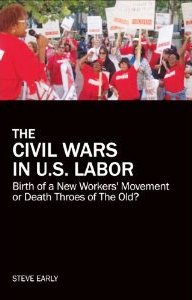
The Civil Wars in US Labor: Birth of a New Worker’s Movement or Death Throes of the Old?, by Steve Early – In this recently published book, longtime labor journalist Steve Early draws on scores of interviews and on his own union organizing experience to explain why and how these labor civil wars occurred. He examines the bitter disputes about union structure, membership rights, organizing strategy, and contract standards that enveloped SEIU, UNITE HERE, the California Nurses Association, and independent organizations like the Federación de Maestros de Puerto Rico and the new National Union of Healthcare Workers in California. Along the way, we meet rank-and-file activists, local union officers, national leaders, and concerned friends of labor who were drawn into the fray. An important book for those involved in labor politics and those interested in the future of social movements in the US.
America the Beautiful (DVD) – America the Beautiful uses the story of the rise and fall of a young model’s budding career to examine America’s obsession with youth and beauty and the damage that occurs when women try to live up to impossible standards of physical perfection.
Foundation Profile: Dan & Pamella DeVos Foundation
This is our fourth foundation profile for our Grand Rapids Non-Profit Industrial Complex Project. So far we have looked at the Richard & Helen DeVos Foundation, the Dick & Betsy DeVos Foundation and the Doug & Maria DeVos Foundation.
The Dan & Pamella DeVos Foundation is the last of the local DeVos family foundations that we are profiling.
Dan & Pamella also contribute to some of the same entities that other DeVos family foundation contribute to. During the years between 2009 – 2011 the Dan & Pamela DeVos Foundation has contributed to the group that brother Dick is involved in, Grand Action ($204,280).
Dan & Pamella have also contributed to the local hospital named after their mom, the Helen DeVos Children’s Hospital Foundation (over $7 million), Grand Rapids Christian School Association ($850,000) and the Young Life Grand Rapids ($50,000).
Like his brother Dick and his wife Betsy, Dan and Pamella have contributed substantially to the art world. During the three years of 990s we looked at, the couple has donated to the Grand Rapids Art Museum ($514,835), John F. Kennedy Center for the Performing Arts ($20,000), ArtPrize ($50,000), UICA ($50,000) and the Whitney Museum of American Art ($2,793,250).
It is worth noting that the couple’s nephew Rick sits on the board of both the UICA and the Grand Rapids Art Museum. Also, Pamella DeVos is the Secretary of the Whitney Museum of American Art, which might explain the large donations from the couple.
Dan & Pamella DeVos have also contributed to some of the same free market capitalism groups such as The Heritage Foundation ($25,000) and the Mackinac Center for Public Policy ($75,000).
The Dan & Pamella DeVos Foundation have also contributed significantly to the global free market school, Norwood University. Over a three year period they contributed $2,627,500.
While the Dan & Pamella DeVos Foundation has not been as overtly political in their contributions as other members of the DeVos family, they continue the tradition of funding conservative Christian organizations and pro-capitalist entities.
Oxfam: World’s Largest Food Companies Creating Legacy of Destruction
This article by Jon Queally is re-posted from Common Dreams.
The world’s largest food and beverage companies may be profitable, but according to Oxfam International their practices are helping to destroy not only the natural resources that support a global food system but the lives of the people they depend on most: their employees and their customers.
In a new effort called Behind the Brand, part of their ongoing GROW campaign to fix the broken food system, Oxfam has singled out the ten largest food processing companies—Associated British Foods (ABF), Coca Cola, Danone, General Mills, Kellogg’s, Mars, Mondelez, Nestlé, Pepsico and Unilever—to make a singular statement about the failure of these behemoths to fulfill their social and environmental responsibilities.
According to Oxfam, these “Big 10”—that together generate $1 billion-a-day in profit—are failing millions of people in developing countries who supply land, labor, water and commodities needed to make their products.
“It’s time these companies take more responsibility for their immense influence on poor people’s lives,” said Jeremy Hobbs, Executive Director for Oxfam International. “Eighty percent of the world’s hungry people work in food production and these companies employ millions of people in developing countries to grow their ingredients. They control hundreds of the world’s most popular brands and have the economic, social and political clout to make a real and lasting difference to the world’s poor and hungry.”
As The Guardian reports:
The charity’s Behind the Brands report compiled a scorecard, rating the “big 10” food companies in seven categories: the transparency of their supply chains and operations, how they ensure the rights of workers, how they protect women’s rights, the management of water and land use, their policies to reduce the impacts of climate change and how they ensure the rights of the farmers who grow their ingredients.
The company with the lowest score – just 13 out of 70 – was ABF. It scored just one mark out of 10 in its treatment of land, women and climate change, while the highest scores it managed to achieve was three out of 10, in relation to workers and transparency.
In joint second-lowest place were Kellogg’s and General Mills, which owns Old El Paso, Häagen-Dazs and Nature Valley, with both scoring 16 out of 70.
In the campaign’s first targeted action, Oxfam will target Nestle, Mondelez and Mars for their failure to address inequality faced by women who grow cocoa for their chocolate products. As part of that effort, the group released a series with first-hand accounts which explore the inequality that women cocoa growers face. And the campaign is urging people to use their own voices and social networks to speak out against the food giants.
“No brand is too big to listen to its customers,” said Hobbs. “If enough people urge the big food companies to do what is right, they have no choice but to listen. By contacting companies on Twitter and Facebook, or signing a petition to their CEO, consumers can do their part to help bring lasting change in our broken food system by showing companies their customers expect them to operate responsibly.”
The ‘Behind the Brands’ campaign also released this list of ways that the “Big 10” fail to meet their commitments:
- While some of the “Big 10” have publicly committed to women’s rights, none have committed to eliminating discrimination against women throughout their supply chains.
- None of the companies have adequate policies to protect local communities from land and water grabs, despite all of them sourcing commodities plagued by land rights violations, such as palm oil, soy and sugar. Not one company has declared ‘zero tolerance’ against land grabs in their supply chains.
- All ten companies are overly secretive about their agricultural supply chains, making their claims of ‘sustainability’ and ‘social responsibility’ difficult to verify. Nestle and Unilever are most open about the countries they source from, but no company is providing enough information about their suppliers.
- Companies are generally increasing their overall water efficiency but most have failed to put policies in place to limit their impact on local water sources. Only Pepsi has publicly recognized water as a human right and committed to consult local communities. Nestle has developed guidelines for its suppliers to manage water and was ranked top for policies on water.
- All of the companies have taken steps to reduce direct emissions, but only five – Mondelez, Danone, Unilever, Coca-Cola and Mars – publicly report on agricultural emissions associated with their products. Unilever alone has committed to halve its greenhouse gas footprint by 2020. None have yet developed policies to help farmers in their supply chains to build resilience to climate change.
- None have publicly committed to pay a fair price to farmers or fair business arrangements with them across all agricultural operations. Only Unilever – which is top-ranked for its dealings with small-scale farmers – has specific supplier guidelines to address some key issues faced by farmers.
The Bloom Collective Moves Downtown: Grand Re-Opening March 9
 The Bloom Collective, Grand Rapids’ only infoshop, is scheduled to reopen from a winter hiatus March 9th in a new location downtown. The collective will now be operating out of 8 Jefferson SE, immediately adjacent to the hyper-local, worker-run Bartertown Diner, and it’s soon-to-be sisters, Cult Pizza and Bread Square.
During their grand opening, the infoshop will host an open house and fundraiser to celebrate the move, featuring readings of radical poetry and literature, food, activities, and music. This marks the second move for the Bloom since they originally opened on Wealthy Street in mid 2007. For the past few years the collective has been struggling to get and keep community attention in the basement of Steepletown Neighborhood Services, a building owned by the Catholic church on the west side of the city. Indeed, many community members lost track of The Bloom after the gentrification on Wealthy made impossible financial demands on the anti-commercial enterprise. The current move is made possible by a partnership between the infoshop and the worker-run restaurants surrounding it.
The Bloom recently announced on their Facebook page a successful fundraising effort to get a year’s worth of rent in the bank prior to reopening. This suggest strong support for this rare institution, as the infoshop remains an “unofficial” non-profit organization, relying completely on donations to stay afloat.

a sneak peak into the new space
Still many in the community are unfamiliar with what an infoshop actually is and what role they play in modern society. The Bloom states on their website that their lending library has over 3000 materials and they “believe sharing [their] collection of resources locally is one of the many ways to inspire change and promote equality globally.” Further, the website explains that the collective operates on consensus, meaning there are no leaders or bosses, and they focus their work around four Points of Unity, which include “a very clear rejection of capitalism, imperialism, institutions and governments that promote oppression (and) all forms and systems of domination and discrimination.” Additionally, the infoshop gives “a call to direct action and civil disobedience,” and utilizes “an organizational philosophy based on decentralization and autonomy.”
The Bloom Collective, and infoshops in general, seek to be both a resource for activists in the community as well as an entry point for folks to become more politically aware and involved. This includes the books and DVDs, but they will also carry radical stickers, posters and are one of the few places to stock a zine library. The Bloom has partnered with other community organizations in a variety of fashions. Food justice group Our Kitchen Table has shared the space with the Bloom for years, and other labor, environmental, and educational groups have used the space for meetings and classes. The Bloom does not support any political parties, but they have offered critiques of local politicians and initiatives, mostly through events organized in the space. Regular movie screenings have also been a mainstay in the infoshop’s history, typically featuring provocative political documentaries.
Infoshops have a history of being targeted by right-wing and racist organizations, and well as police and governments for their radical activities and
community influence, causing a need for a certain amount of security around membership and the physical space itself. The Freedom bookshop in England was recently firebombed, while the Long Haul infoshop in Berkley CA (publisher of Slingshot!) was illegally raided by police a few years back; even the Bloom faced break-ins and threats while on Wealthy St.
The Bloom is completely volunteer run and has had spotty hours in the past as a result. The collective is counting on the more accessible location mobilizing

the Bloom’s new sign, in progress
volunteers to help keep the shop open for more regular hours. Until the gathering on March 9th, potential patrons can get in touch with the infoshop through their Facebook page, (www.facebook.com/bloomcollectivegr), by email (bloomcollective@gmail.com) or on their website, www.thebloomcollective.org, where users can sign up to volunteer or donate.
Foundation Profile: Doug & Maria DeVos Foundation
This is our third foundation profile for our Grand Rapids Non-Profit Industrial Complex Project. So far we have looked at the Richard & Helen DeVos Foundation and the Dick & Betsy DeVos Foundation.
Doug DeVos is the current President of Amway, the company that his father founded, along with Jay Van Andel.
The foundation that Doug and his wife Maria run is not as large as the elder DeVos or his brother Dick, but sizeable nonetheless.
We were able to access the 990 documents for this foundation for 2009 through 2011, from the online source Guidestar.
Like the other DeVos family foundations we have looked at, the Doug & Maria DeVos Foundation has contributed significantly to conservative Christian organizations and organizations that promote the supremacy of free market capitalism.
Some of the groups that the Doug & Maria DeVos Foundation have contributed to between 2009 and 2011 are the Willow Creek Association ($100,000), the Acton Institute ($159,350), the Mackinac Center for Public Policy ($65,000), Grand Action ($200,000) and the Heritage Foundation ($50,000).
This DeVos Family Foundation has also contributed significantly to the Grand Rapids Christian School Association ($7,106,000), the Helen DeVos Children’s Hospital Foundation ($4,545,000) and the National Constitution Center ($3,175,000).
Doug DeVos is the Chairman of the Executive Committee of the National Constitution Center, which includes a whole host of conservative members, including Richard DeVos Sr. Despite the rather benign sounding name, the National Constitution Center promotes a rather narrow notion of civic engagement, with its current Chairman being Jeb Bush.
Another large recipient of funding from the Doug & Maria DeVos Foundation is the American Enterprise Institute – AEI ($1,750,000). The American Enterprise Institute has a along history of lobbying the federal government on issues ranging from Iraq, tobacco regulation and water policies. The American Enterprise Institute has had a strong relationship with the American Legislative Exchange Council (ALEC), which has been at the forefront of much scrutiny for its lobbying practices. It also should be noted that the American Enterprise Institute is part of the network of organizations that deny climate change and has even offered money to scientists to publicly state their opposition to global warming.
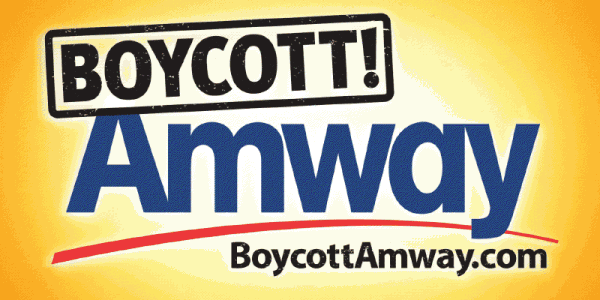
One last group that has been the recipient of Doug & Maria DeVos Foundation money is the National Organization for Marriage (NOM). NOM has received $500,000 from the foundation, which has resulted in a national boycott against Amway.
The National Organization for Marriage aggressively opposed marriage equality and is a leading group that both lobbies and funnels money to state campaigns where marriage equality is on the ballot.
The California-based group Rights Equal Rights Cause initiated the boycott campaign last summer and is targeting Amway, since Doug DeVos is the current President of the family company.
New Video Campaign seeks to reframe the immigration debate

The folks at Cuentame and Brave New Films have teamed up again to create several new videos that both expose the hate language of anti-immigration forces, but also to encourage the pro-immigration rights movement to not let the anti-immigration voices frame the debate.
Nativist, racist and fear-mongering hate groups are working hard to drive their narrative on immigration. For years now, anti-immigrant groups have successfully infused their message into the national immigration debate. Influencing local politicians and national figures – with the same talking points: “More punishment”, “Militarize the border”, “Massive deportations”, “More Enforcement.” This has resulted in dangerous policies that have led to flagrant violation of human rights.
It is time we put basic immigrant, human rights back in the forefront of our national values and priorities! Let Congress and the President know that to reform immigration they must prioritize “Immigrant rights before enforcement.”
Add your name and message – make sure your voice is heard! Here is one of the four videos that Cuentame and Brave New Films have created.

