Senator Peters sits with US Army Research Director, is Silent on Trump Proposed Military Budget when President addressed Congress
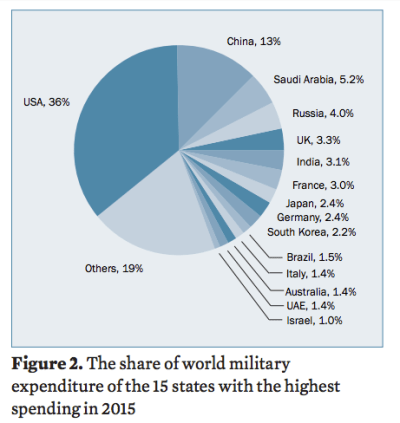
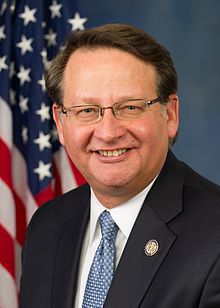 A few weeks ago, President Trump presented before a joint session of Congress his proposed budget for the US military. The proposed budget was a $54 billion increase from the previous year, which was roughly $600 billion.
There was not a great deal of resistance to this announcement from the Democrats, mostly because the Democratic Representatives and Senators are just as tied to the military industrial complex as are their Republican counterparts.
Take Michigan Senator Gary Peters, for example. Peters sits on the Senate Armed Forces Committee, just like his predecessor Carl Levin. And just like Carl Levin, Senator Peters is equally committed to protecting private military contractors, especially those based in Michigan.
Just days before President Trump told a joint session of Congress that he plans on increasing the US military budget, Senator Peters was in Sterling Heights, Michigan, visiting the military contractor BAE Systems.
In a Press Release from February 23, Senator Peters stated:
“I am proud that Michigan workers at companies like BAE Systems and its suppliers are developing solutions to meet the challenges of the future of warfare. As a new member of the Armed Services Committee, I am committed to supporting these manufacturers so they can continue to supply our service members with the best equipment and vehicles.”
To further demonstrate his commitment to the military industrial complex, Senator Peters was seated next to Dr. Paul Rogers, Director of the U.S. Army Tank Automotive Research Development and Engineering Center (TARDEC).
According to a news release on the day of President Trump’s address to Congress, Senator Peters said:
 “TARDEC is leading groundbreaking research that keeps our military at the forefront of new technological developments that improves safety for our service members, supports Michigan’s leading role in the transformation of mobility and drives our growing defense manufacturing sector. I’m honored to have Dr. Rogers as my guest for the President’s address to recognize TARDEC’s innovative work that will ensure our service members are prepared for the next frontier of warfare.”
In a statement from Senator Peters, responding to the President’s address to Congress, Senator Peters is silent on Trump’s proposed increase in US military spending. His statement was vague overall, but no surprise that someone as entrenched in the military industrial complex as Senator Peters had nothing to say about the US military budget, a budget that is the largest in the world.
 In an example of solid journalism, Grand Rapids Press reporter Jim Harger’s article in Thursday’s paper, investigates the property management company Eenhoorn LLC’s efforts to push low-income tenants out in favor of making larger profits.
However, it should be noted that the GR Press article was the not the first to report on this matter. Nick Manes, writing for MiBiz had written about the very same topic two month’s earlier. Courthouse News Service also reported on the issue in early January of this year, thus making the Grand Rapids Press story seem a bit late.
John Smith, a lawyer with Legal Aid of West Michigan, has taken the case of Kari Thompson, a tenant who moved into loft apartments at 26 Sheldon Blvd SE in downtown Grand Rapids.
The Grand Rapids Press article states:
According to a paper trail unearthed by Smith and other Legal Aid lawyers, Eenhoorn bought ownership control of the properties and loaned them money backed by mortgages. The entities that held the mortgages took the properties back through a legal process called “deed in lieu of foreclosure” when the properties fell behind on the mortgages.
The foreclosures allowed Eenhoorn to get out of the final 15 years of its 30-year obligation to provide low-income housing at the properties, said Smith, who discovered the foreclosures while representing a low-income and disabled resident of The Lofts, a downtown Grand Rapids apartment project at 26 Sheldon Blvd. SE.

Kari Thompson is the plaintiff in a case against Eenhoorn LLC, where Thompson filed a complaint about how they were treating her. You can read the 28-page case file here.
Eenhoorn LLC has engaged in the same practice at other properties they own in at least three states, according to the lawyer with Legal Aid of West Michigan. On top of that, Eenhoorn has demonstrated that it puts profits over people, when a HUD audit revealed that the property management company was engaged in “Equity Skimming.”
It should also be noted that the lawyer representing Eenhoorn in this dispute, is Nyal Deems, the former Mayor of East Grand Rapids and now working for the law firm of Varnum. In addition, Deems was the face of the One Kent Coalition, a private sector group that was attempting to change the structure of government in West Michigan, a change that would benefit those involved in the campaign, such as Dick & Betsy DeVos, Peter Seechia and others that make up the local power structure.
While Eenhoorn has engaged in this kind of tactic against other working class tenants in the past, the recent case can be directly tied to the dramatic change in the housing market in Grand Rapids over the past decade.
We have heard from numerous tenants and from community organizers that rent has nearly doubled in the past 10 years, making it impossible for people to afford the increased rental costs. Many people have been forced to leave Grand Rapids and move to Kentwood or Wyoming, where the housing market is not as expensive as it is in Grand Rapids.
Another technique that landlords and property management companies have been encourage to pursue is to convert their apartments into Vacation Rentals or Airbnb. A workshop was offered at the recent Rental Property Owners Association held in Grand Rapids at the convention center in February. Landlords and Property Management companies know that they can get top dollar in the current market, thus leaving out thousands of working class families and individuals like Kari Thompson.

 It has been a few months now since the November election and we have witnessed a tremendous amount of activity centered around opposing the person of Donald Trump.
The opposition to the new president is refreshing in some ways, but this is a pattern amongst liberal and progressive circles. Liberals and progressives tend to get activated when their party is not in power.
We are seeing this same dynamic in West Michigan with lots of marches and increased attendance at public meetings held by local members of Congress. Again, seeing people become more engaged is refreshing, but to what end? What does all this activism mean and what will it do to dismantled systems of power?
Tomorrow, there will be an event entitled Surviving the Trump Apocalypse, hosted by One Michigan Alliance and David LaGrand. One Michigan Alliance is a Democratic Party front group and David LaGrand is a Democratic politician. The agenda for the day, and the strategy of the organizers, is as follows:
- Canvassing Door-to-Door and Volunteering for Campaigns
- Indivisible Resistance Tactics
- How to Become a Candidate Yourself (or help a friend)
- Legislative Update and the Year Ahead with Representative David LaGrand and others
The strategy, as evidenced by the agenda, is purely centered around electoral politics or what Noam Chomsky refers to as the quadrennial strategy. Every four year (or two if you prefer) a tremendous amount of energy and money is expended on trying to get politicians and political parties elected. So lets look at how the electoral system works and if that has really furthered our ability to resist systems of oppression.
Elections have always been influenced by centers of power and money. As the first Chief Justice of the United States, John Jay always said, “those who own the country, ought to govern it.”
More specifically, we know that billions of dollars are spent every four years on elections, which is itself a system that has been designed to keep power in the hands of those who own the country. It’s not that the electoral college is flawed or the delegate system is flawed or even the how Presidential debates are flawed. But the fact is, they are not flawed, because the electoral system was designed this way.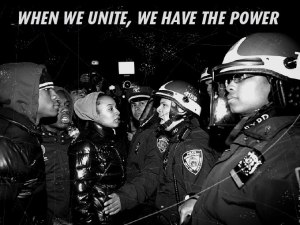
Look at the trajectory of partisan politics since the last great American period of revolutionary movements, between the 1950s and the mid-1970s. Since then all politics has shifted further to the right, regards of what political party we are talking about. The reason why it has shift is because there has not been enough popular resistance to this shift, especially since most of our energy has been spent on getting “our people” elected.
This is a failed strategy, a losing strategy and a strategy that will not promote an end to systems of oppression or create collective liberation.
The way we resist, the way we build grassroots power, the way we practice liberation is not by appealing to politicians or those in power. We create power and practice liberation when we practice collective. autonomous movements for radical social change. This has always been the case. The abolitionist movement was not about appealing to politicians, it was a movement of slaves engaging in self-emancipation. The resistance to slavery and white supremacy took on the form of people who were enslaved killing their masters, revolting, uprising and creating the underground railroad because those enslaved were not going to wait for politicians to decide their fate.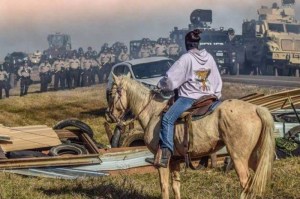
The labor movement, especially from the 1870s through the 1940s, was a movement that sought to democratize the workplace, by giving workers power to determine the conditions of which they wanted to work in. Some of these unions, not all, also believed that capitalism needed to be overthrown and replaced with a different kind of economic system.
The same can be said about so many other movements throughout US history. They didn’t bother to appeal to those in power, they took matters into their own hands. These movements made demands of those in power and made damn well sure their were consequences.
If we are serious about resistance, why would we want to keep perpetuating the same kind of systems that we know do not lead to greater freedom, equality and justice? Look at the difference between those who fight systems of oppression compared to those who put their energy into electoral politics.
Resisting Systems of Oppression:
- Black people resistance police brutality, the prison industrial complex and neo-liberal capitalism = Black Lives Matter
- Communities of Color fighting the arrest, detention and deportation of immigrants and white supremacy = Immigrant Justice Movement
- Indigenous people fighting against pipelines and fracking are fighting for environmental justice and climate justice = Standing Rock and Idol No More
- Communities in resistance around the world fighting US imperialism and war = The Zapatistas, Palestinians, the Arab Spring, the Landless People’s Movement in Brazil and Via Campesina – just to name a few.

We are in desperate need of having a political vision that thinks way beyond electoral politics. We need to develop strategies from liberation movements from around the world and within the US, like the ones we just mentioned. We need to stopped settling for the lesser of evils or as political writer Paul Street names it, the more effective evil. We need to stop thinking about trying so damn hard to be pragmatic and start practicing liberation collectively.
Lets us listen to the words of the great abolitionist Frederick Douglass, someone who knew a few things about collective liberation and direct action:
Let me give you a word of the philosophy of reform. The whole history of the progress of human liberty shows that all concessions yet made to her august claims have been born of earnest struggle. The conflict has been exciting, agitating, all-absorbing, and for the time being, putting all other tumults to silence. It must do this or it does nothing. If there is no struggle there is no progress. Those who profess to favor freedom and yet deprecate agitation are men who want crops without plowing up the ground; they want rain without thunder and lightning. They want the ocean without the awful roar of its many waters.
This struggle may be a moral one, or it may be a physical one, and it may be both moral and physical, but it must be a struggle. Power concedes nothing without a demand. It never did and it never will. Find out just what any people will quietly submit to and you have found out the exact measure of injustice and wrong which will be imposed upon them, and these will continue till they are resisted with either words or blows, or with both. The limits of tyrants are prescribed by the endurance of those whom they oppress.
Rolling Stone Magazine article on Betsy DeVos cites numerous West Michigan sources, including GRIID
In an article entitled, Betsy DeVos’ Holy War, Janet Reitman does a thorough job of reporting on and investigating Donald Trump’s Secretary of Education. 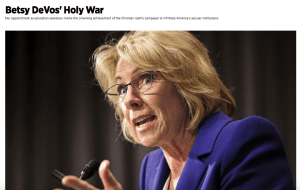
There are several West Michigan sources cited in the article, like the President of the Acton Institute, Rev. Robert Sirico, along with some community organizers and Grand Rapids School Board member and a local public school teacher.
Reitman cites lots of good background material, such as the book Amway, the Cult of Free Enterprise and Russ Bellant, who has been tracking the religious and political right in the US and Michigan for almost 30 years.
I spoke with Reitman for almost two hours on the phone and exchanged dozens of e-mails over a three-week period, as the Rolling Stone Magazine writer was uncovering as many of the local angles as possible. GRIID is cited in the story and the comments she uses are fairly reflective of the conversation we had.
What is important about the article is its broader articulation around the role that reconstructionist christian values influence the DeVos family politics. An important contribution into our collective understanding of the DeVos family and the values they embrace and impose on the public.

Last week, Rapid Growth Media ran a piece about new grocery store efforts in Grand Rapids. The article, discusses food deserts and the variety of responses that people are involved in. Unfortunately, the article and the new grocery stores will only perpetuate food insecurity in Grand Rapids.
There are several misconceptions that people have about those who experience food insecurity. The first misconception is the very language we use to try to describe the problem – food deserts.
The article states, “Calvin College defines food deserts as large continuous areas within urban areas where healthy and balanced food stores are difficult to access.” While it is true that people living in certain urban neighborhoods are limited in where they can access their food, the definition of food deserts is highly problematic.
Sociologists have been using the term food deserts since the 1970s, but the term is misleading in two ways. First, a desert is a thriving ecological system that provides plenty of food for the lifeforms that make up those ecosystems. Secondly, food deserts fails to convey the historical, economic and political dynamics which led to neighborhoods being food insecure.
The food system in the US has been evolving over the past 100 years and a large reason why there are limited food options available in many urban neighborhoods is because there has been a consolidation of grocery store chains that has led to large hyper-markets like Meijer or Walmart that require lots of land to accommodate the volume of food they carry and lots of parking since we are a car-dependent society.
The fact that grocery store chains exist are based on economic and political factors that made small, family-owned grocery stores obsolete, because they could not compete. These smaller stores could not compete, especially after the 1960s, when larger stores began to dominant the market, utilizing massive municipal subsidies, building near highways and other major road systems, investing in massive advertising budgets and appealing to the white population that was fleeing urban areas because of increased racial tensions, resulting in White flight.
On top of this, the highly subsidized food system began to promote and expand the amount of unhealthy food items, items that were highly processed and cheap to produce. Many of these products were not sold by smaller, family-owned stores.
However, increasing food insecurity not only means limited grocery store options, it means limited or no options for farmers markets or the use of urban land for neighborhood-based food growing. Too often, the term food deserts is limited to whether or not there are grocery stores, which excludes all other other ways that people can access food.
So, instead of food deserts, a term that would more accurately depict the limited food options in certain urban neighborhoods could be called food apartheid.
Food apartheid would more honestly reflect the social, economic and political forces that made the decisions that resulted in some urban neighborhoods having reduced food options. Food apartheid also is more honest because it reflects that the decisions about where people in urban spaces could access food was made by a small number of people, with no real input from the public, and it was a decision that primarily benefited white suburbanites while punishing communities of color.
What is happening now in cities across the US and in Grand Rapids, is that white people are flocking back to downtown and core urban neighborhoods and displacing people of color and working class white families.
In reading the Rapid Growth Media article it becomes clear that where all the “new” urban grocery stores that are featured, are in neighborhoods that are being gentrified. The downtown market, the Grand Central Market, Martha’s Vineyard, the new Meijer store on the near westside and the prosed grocery store that will be part of Diamond Place on Michigan near Medical Mile are all in areas where new development projects are displacing working class families and communities of color.

The upwardly mobile and disproportionately white professionals moving into these neighborhoods are now demanding more food purchasing options. In addition, these new grocery stores that are feature in the Rapid Growth article will actually not reduce “food deserts,” they are merely re-centering healthier food stores in increasingly white-dominated neighborhoods.
Thus, the new grocery options in urban Grand Rapids are not only not changing the food system, they are participating in the gentrification of neighborhoods that once were working class and communities of color dominant.
 On Sunday, one of the two major business publications in West Michigan, ran a front page article headline, As Betsy DeVos takes Cabinet post, family to continue community engagement.
The MiBiz article presents Betsy DeVos and the rest of the DeVos Family as, “inextricably woven into the community.” This is not an inaccurate statement, rather a statement from a certain perspective. Those of us who write about local politics might call it a process of population management or social control.
We use those kinds of terms, especially since the DeVos Family through the organizations they are apart of (West Michigan Policy Forum, GR Chamber of Commerce, Great Lakes Education Project, Grand Action, etc) and their foundations as a way to influence local, regional and state politics that reflects the values they embrace – anti-working class, homophobic, neo-liberal capitalist, hyper-conservative christian and white supremacist values. These are evidenced by the organizations they are part of. The foundations also perpetuate these values, but also provide major funding sources for the non-profit sector in West Michigan as a means of censoring these groups from even thinking about challenging those values.
The MiBiz article spends a fair amount of time talking about the ways in which Betsy DeVos has had to divest from certain areas, particularly areas related to education. There is a link in the article to the 108-page document from the US Office of Government Ethics.
Related to Betsy DeVos having to remove herself from being part of some of the family holdings, MiBis cited Remos Lenio, partner at investment banking firm Tillerman & Co. in Grand Rapids. Lenio, has a person connection to the DeVos family and is said to share the DeVos Family’s desire to make Grand Rapids into a “Christian Wall Street.”
None of the DeVos Family members are cited in the MiBiz article, instead we hear from two of the DeVos Family operatives, Greg McNeilly and John Truscott. McNeilly, who ran Dick DeVos’ failed campaign for the Governor of Michigan in 2006, continues to work as a DeVos operative, when he became the Windquest Group’s Chief Operating Officer in 2012. McNeilly also runs one of the DeVos state policy front groups, the Michigan Freedom Fund, which lobbies for policies that represent the DeVos Family’s conservative christian values and neo-liberal capitalist interests.
John Truscott used to work for former Governor John Engler as his Press Secretary. In addition to being a spokesperson for the DeVos Family, Truscott is a founding partner of Truscott Rossman, a public relations agency based in Michigan, which has clients such as the Van Andel Institute, CWD (Cummings, Weirda & DeVos), Experience Grand Rapids and the City of Grand Rapids.
Towards the end of the article is states which boards that Betsy DeVos has had to step down from, but the MiBiz piece suggests that there are no major changes to what the Dick & Betsy DeVos Foundation does in the community.
However, the MiBiz article does not provide any analysis of what the Dick & Betsy DeVos Foundation has provided money to since it’s inception. They simply quote John Truscott who says, “No major changes are expected from Dick and Betsy’s foundation. While she does not have a role in the foundation while serving as Secretary, the family will continue to help people and make a significant philanthropic impact.”
I guess what Truscott means by helping people is to fund all kinds of groups that attack public sector workers, working class families, the LGBT community, women’s reproductive rights and to support Religious Right groups in Michigan and across the nation.
According to the most recent year available on Guidestar for the Dick & Betsy DeVos Foundation (2013), here are some of the “charitable” organizations they contributed to: 
- Acton Institute $250,000
- Alliance for School Choice $250,000
- Bethany Christian Services $25,000
- Endeavor Global Inc $162,500
- Foundation for Excellence in Education $100,000
- Great Lakes education Foundation $200,000
- Mackinac Center for Public Policy $50,000
- Northwood University $200,000
- Pregnancy Resource Center $20,000
- Right to Life Michigan $25,000
- Willow Creek Association $1,000,000
In the end, the MiBiz piece not only fails to scrutinize the DeVos Family, it only cites DeVos Family operatives as it relates to what their businesses and foundation are involved in. Considering this article appeared in the business press, it is no surprise then that MiBiz ends up coddling the most powerful family in West Michigan.
Nearly two weeks ago, the Hispanic Center of Western Michigan hosted a forum with some elected officials and Grand Rapids City staff to address concerns from the Latino/a community about immigration policy and law enforcement.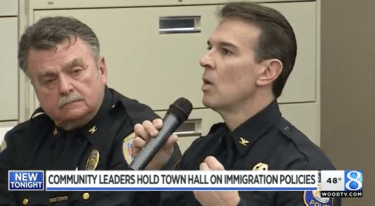
A few days ago, Michigan Radio interviewed Grand Rapids Police Chief David Rahinsky about that forum and his take on how local law enforcement should respond to the most recent concerns over immigration status.
The interview is instructive and should raise concerns amongst the immigrant community and those who stand in solidarity with them. While Rahinsky implores the immigrant community to not be afraid to call the GRPD, he makes some statements that would not reduce the level of fear the immigrant community has of law enforcement agencies.
In response to the question of what constitutes a sanctuary city, Rahinsky said, “If an agency arrests someone who is here illegally and books them into either their municipal facility or their county facility, I believe we have an obligation to notify our federal counterparts in ICE of that arrest.”
This statement is consistent with what the Grand Rapids Chief of Police has said in recent months in that he still believes that his officers have an obligation to cooperate with ICE. There are no clear parameters of what it means to be a sanctuary city, but one thing that has been fairly consistent is that local law enforcement will NOT cooperate with ICE officials.
Something else that Rahinsky said, which should give us cause for concern, was this response to a question of how he can get the immigrant community to trust the police.
“Conversely, if you are a criminal and you are here illegally, we are not offering safe haven. We are not neglecting our role in law enforcement. We are just making a clear line of demarcation in terms of people who need our help and the criminal element.”
Such a statement does not reduce the fear that people will feel, especially since the line between criminal behavior and those who come to the US as undocumented is not very clear when it comes to police interpretation. The current administration and many people in the community already see those who are undocumented as having engaged in “criminal” behavior.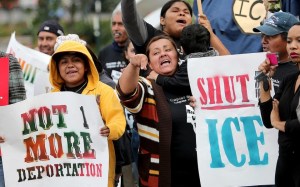
There are efforts underway right now by immigration lawyers and immigration justice advocates to get the city of Grand Rapids to adopt clear guidelines and policies that will minimize the possibility of people who are undocumented ending up at the Kent County Jail. The Kent County Sheriff’s Department has made it clear that they WILL fully cooperate with ICE officials and notify them when those without documentation are booked into the jail.
What was noticeably absent from this Michigan Radio story were immigrant voices. The article would have been fundamentally different had their been immigrant voices talking about their reality and their lived experience of being afraid of law enforcement agencies.
Lastly, it should be stated that we must come to terms with what the function and role of law enforcement agencies is, which is not focused on community safety. The bottom line function of police department is to protect power and privilege. When Chief Rahinsky says he wants people to not be afraid to call them, he wants us all to believe that the GRPD’s role is to protect people. The GRPD might, in some instances, protect people from further harm, but their primary function is to protect power, which does not include the most vulnerable in our community – people of color, immigrants and the working class poor. The sooner we come to recognize this the more we can imagine and practice how to keep our communities safe without relying on police departments, but relying on each other.
Indigenous Activist/Scholar Winona LaDuke says Making America Great would be growing 8,000 varieties of corn
Last night Indigenous Scholar/Activist Winona LaDuke spoke to a crowd at the GVSU downtown campus as part of the annual Women and the Environment event.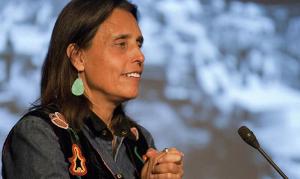
This was no lecture. It was a series of story tell and truth bombs.
LaDuke began by saying that in her tradition there are two paths; one that is scorched, where devastation has occurred and one that is less worn and green, because it is a path that fewer have taken.
The Native activist also pointed out the need to reflect on the future. “We should always be looking to the future and asking, what will we look like and who will be in charge?”
That future depends upon us and what we chose to do. LaDuke said that right now, there are places near her home on the White Earth Reservation where you can still drink from the lakes. This is the future that we can have.
Winona then showed a slide of a canoe that had many people in it, saying, “We are all in this together. Sitting Bull said lets put our minds together to see what future we can make for our children.”
Another slide she presented to the audience had a statement we have all become familiar with over the past year, Making America Great Again. However, what she meant by this is when we have 8,000 varieties of corn that are being grown, corn that is nutrient rich and resilient. She said that American was great when we had 50 million buffalo and when had a billion passenger pigeons in the sky.
The next slide she showed spoke volumes. There were two photos, one with Sitting Bull and the other was of Col. George Armstrong Custer. Under Sitting Bulls image it said Organic and under Custer’s image it said GMO. The slide needed no explanation.
LaDuke then talked about how Enbridge had proposed a pipeline through her reservation, the Sand Piper, right through their wild rice harvesting grounds. She said they forced the state of Minnesota to hold public hearing and to get the government to require an Environmental Impact statement. Winona said, “We rode on (on horses) the route of the proposed pipeline for 4 years and then Enbridge pulled out!
After that Enbridge bought 28% of the Dakota Access Pipeline. LaDuke then reflected on the realities of North Dakota, about how many people have left the state and how depopulated it was. She said that the Sierra Club has one person for all of North Dakota and the ACLU has one person for both North and South Dakota.
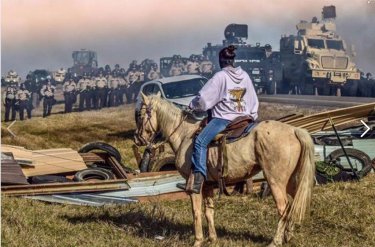 Initially the pipeline was scheduled to go near the city of Bismark, which of course said no. So what they did was to put it through Standing Rock. North Dakota then became militarized. She showed a slide with a Mine Resistant Ambush Protection vehicle, an MRAP that you can see in the upper right corner. LaDuke said that the militarization of Standing Rock also included the use of water cannons, pepper spray, and sound machines that would disorient people. Winona then said, “Standing Rock was our Selma moment.”
There are currently 750 people are facing charges because they dared to stand against the pipeline at Standing Rock. 8LaDuke said there was a survey done in North Dakota and 82% of the jury pool believes that Water Protectors are guilty. “Maybe what we need are Freedom Riders to go to North Dakota to sit in the court rooms,” LaDuke said, with yet another reference to the Freedom Movement of the 60s.
The speaker then said that we suffer from Ecological Amnesia, which is when we don’t remember what we once had.
“Our economy is based on consumption. All we do is consume. We are like a T-Rex, consuming like crazy and leaving nothing but destruction behind.”
LaDuke then made the link to our consumption of fossil fuels and how that related to addiction. Someone once told her that they would rather have oil delivered on a railway instead of pipelines. LaDuke responded by saying, “Would you rather have some heroin delivered by pipeline or rail? The problem with being an addict is that you end up doing bad things. Being an addict is like going to your drug dealer to get policy written. This is how much influence the oil companies have over policy.”
Forever the economist, LaDuke then breaks down the money spent on defending the pipeline at Standing Rock and how that money could have been spent on renewable energy and retro fitting people’s homes.
She talked about the Dine solar project and about the need for all of us to work on a local food economy. She told the story of when she was studying at Harvard and her father came to see her and said, “I know you are a really smart person, but I don’t want to hear about your philosophy unless you can grow corn.”
LaDuke concluded her comments by giving some examples of how we fight back and how we make the changes we want to see in our communities.
She said that what justice looks like for Standing Rock is getting wind turbines, solar power, supporting local food, energy efficient homes, a new hospital for the people. This is what the people need. Not a pipeline.
LaDuke showed slides of what they are doing in their community. Here is an image of a project, where artists have been coming to paint homes in such a way as to celebrate their history and their resistance.

Here is a picture of solar panels that are connected to her home and how so much of this could be done with people. In the end she said, “be passionate about what you do. Find out what your gifts are and utilize them. Live your life intentionally and with integrity.”
The Trump administration announced a ban on people traveling from seven countries in late January, claiming these countries have Islamic terrorists. Those countries include Syria, Iran, Iraq, Yemen, Sudan, Somalia and Libya.
Shortly after this executive order was announced, several major media sources made the claim that President Trump has no business dealings with these seven countries. At the same time, they claimed that other majority Muslim countries, where Trump does have businesses dealings, also are home to terrorist groups.
The Washington Post stated on January 28, “But without divesting from his company, as bipartisan ethics experts had advised, Trump is now facing questions about whether he designed the new rules with his own business at least partly in mind.”
While it may be true that President Trump has no business dealings with the seven countries with the travel ban in effect, this is hardly the primary motive for choosing these particular countries.
Syria, Iran, Iraq, Yemen, Sudan, Somalia and Libya are all countries that have been seen by US foreign policy officials as enemy states for for years and in some cases decades.
The suggestion that Trump chose these countries because of his business dealings is ridiculous and the fact that many commercial media source went out of their way to make this point only underscores the foreign policy amnesia we all struggle with when it comes to the United States and the rest of the world. Let’s take a look at the historical record and these seven countries.
Iran – The US has had issues with Iran since the early 1950s. The popular president, Mohammad Mossadegh, nationalized Iran’s oil, which was unacceptable to the west. In 1953, the CIA overthrew the Mossadegh government and put in power a brutal dictatorship, know as the Shah. The Shah ran the country with an iron fist, with the use of his death squads, known as SAVAK, which were trained by the Israelis and armed by the US.
The Shah of Iran has close relations with US Presidents from Dwight Eisenhower through Jimmy Carter, but growing internal opposition to the repressive policies of the Shah eventually led to his overthrow in 1979. The new government was led by a Muslim cleric named the Ayatollah Khomeini.
The Khomeini government began with lots of support, but soon adopted repressive tactics. The US began to isolate Iran diplomatically and quickly turned to the Iraqi dictator, Saddam Hussein, who was eager to pick a fight with Iran. From 1980 – 1988, the US government provided millions of dollars to the Iraqi government to fight a war against Iran, even supplying the Iraqi government with chemical weapons that were used against Iranians. There was a period of time during this eight year war, that the US was actually providing military aid to both Iraq and Iran, with the hopes of destabilizing both countries and allowing the US greater control in the region.
During the Clinton administration, Iran continued to be a terrorist state, especially because of it’s relationship with Israel. After 9/11, the Bush administration referred to Iran as part of the Axis of Evil, along with Iraq and North Korea. Ever since then the US has claimed that Iran possesses nuclear capability and punished them through diplomatic means and by supporting internal opposition forces that have threatened to overthrown the Iranian government for years.
Iraq – The US had supported Saddam Hussein since the early 1960s when the Ba’ath Party overthrew the government. Saddam would eventually become President of Iraq in 1979, just in time to be an ally in the US isolation of Iran.
As was mentioned in the section on Iran, the US government supplied Iraqi with millions of dollars of military aid, including chemical weapons that Iraq used against Iran and against the Kurdish population.
After the Iran-Iraq war ended in 1988, the US soon began to distance themselves from Saddam Hussein. Beginning in 1990, the US needed a new rogue nation threat, especially after the collapse of the former Soviet Union. The US told Iraqi diplomats that they didn’t care about their border dispute with Kuwait, but within months to US was deploying its military to Saudi Arabia in the Fall of 1990.
In order to justify a war with Iraq, the US claimed that Iraqi soldiers were killing babies who were still in incubators in Kuwait. This was later revealed to be a fabricated story that was developed by a US PR firm, Hill & Knowlton.
In January of 1991, the US began a massive bombing campaign against Iraq, a campaign which lasted 40 days until Iraq finally surrendered. However, the US left Saddam Hussein in power and according to declassified documents, wanted him to stay in power because he would provide the best opportunity for the US to intervene in the future when necessary.
The US imposed the most severe sanctions ever applied to a country from 1991 to 2002, just before the US invasion and occupation of Iraq beginning in March of 2003. During the Clinton years, in addition to harsh sanctions, the US bombed Iraq on a regular basis and funded armed groups with the hope that they would overthrow Saddam Hussein. In a 1996 interview by 60 Minutes, then Secretary of State Madeleine Albright was asked if the 500,000 Iraqi children that had died because of the sanctions was worth it. Here is what Albright had to say.
The US occupation of Iraq lasted from 2003 through the early years of the Obama administration. During those years several anti-American movements grew because of the US military occupation and the re-writing of the Iraqi constitution to favor US-based corporations. These insurgent movements despised the US occupation, with the most recent insurgent manifestation being ISIS. According to author and scholar Patrick Cockburn (The Rise of Islamic State), the US is directly responsible for creating a political climate that gave birth to ISIS in Iraq.
Syria – The US government has played an active role in Syria, ever since the 1949 CIA sponsored military takeover of that country. Beginning in 1950, the US worked to put in power various leaders, again with the CIA’s involved throughout much of the 1950s.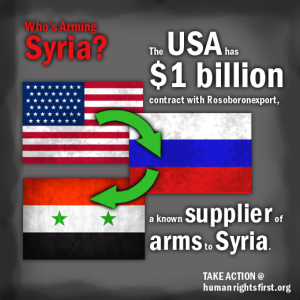
In 1967, during the Israeli war against Egypt, Syria also engaged in a military campaign against Israel, because Israel wanted the Golan Heights, territory that the Syrians claimed was theirs.
In the 1970s, Syria invaded Lebanon during the Ford administration, with support directly from Henry Kissinger. President Assad was an ally to the US, mostly because of his contempt for PLO leader Yassir Arafat.
Beginning in the 1980s, Assad turned a blind eye towards Islamic extremists who were committing atrocities. The US continued to see Assad as an ally and supported his regime throughout the 80s and 90s. Just after 9/11, the US recruited Syria in its war against al Qaida, despite the fact that the US kept Syria on their list of countries sponsoring terrorism.
During the Obama administration, the policy has been to provide military support to opposition forces with Syria, but not enough for them to overthrow the Assad regime. The administration hoped to demonstrate just enough disgust with the Assad regime, while quietly unwilling to actually overthrown the dictatorship.
Sudan – Sudan has been engaged in bloody internal wars since 1955, when it obtained independence from Britain. With massive oil reserves, the West and particularly the US has had an interest in that country.
By 1980, Sudan had become the sixth largest recipient of US military aid. Islamic militants eventually came to power in 1989, but the US chose to maintain close relationship with Sudan until they decided to support Iraq during the 1991 Persian Gulf War.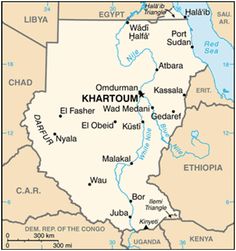
Osama bin Laden fled his native Saudi Arabia and landed in Sudan in 1990 in opposition to the US military build up in just before the Persian Gulf War. Bin Laden was collaborating with the National Islamic Front (NIF) and after years of operation, the Clinton administration lobbed 75 cruise missile into the Sudanese city of Khartoum. The bombs destroyed the only pharmaceutical factory, which led to the deaths of tens of thousands of children, since they were not able to provide basic medicines. The US eventually admitted to wrong doing and they settled after a lawsuit was brought forth for the factory bombing.
After 9/11 Sudan’s status increased as a country that supports state terrorism, although the US hasn’t demonstrated any urgency in dealing with their role in foster Islamic fundamentalists groups. The Bush and Obama administrations maintain sanction against Sudan, up until the last few weeks before Trump took office, when President Obama lifted sanctions.
Libya – The US relationship with Libya has been primarily about oil since the north African country obtained independence. Thus, the relationship the US has had with the Qadaffy regime over the years has been mixed.
The US has always tried to present itself as being in opposition to the Qadaffy government, but for years the US government through the CIA always assisted him in fighting off attempted coups. beginning in the 1980s, Libya began to be seen as an enemy state, especially during the Reagan years, with attempts to assassinate Qadaffy in 1986. Sanctions were also imposed on Libya during the 1980s.
The sanctions continued through the Clinton years, until they were eventually lifted in 1999. Cordial relations continued after 9/11, when Libya condemned the attacks on US soil. However, in 2011 the US led campaign to get the United Nations to go to war against Qadaffy demonstrated that the US no longer had use for the dictator. The US disposed of Qadaffy in a brutal war that is well documented in books like The Illegal War on Libya and Arab Spring, Libyan Winter, despite the fact that the war was presented to the American public as a war of liberation.
Somalia – Somalia is a great example of how flooding a country with small arms can eventually come back to haunt the country that provides the weapons. This is what happened in Somali in the late 1980s and early 1990s, even before Siad Barre came to power.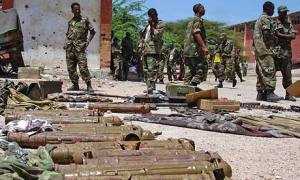
As the United States poured in more than $50 million of arms annually to prop up the Barre regime, there was virtually no assistance offered that would have helped build a self-sustaining economy which could feed Somalia’s people. In addition, the United States pushed a structural adjustment program through the International Monetary Fund which severely weakened the local agricultural economy. Combined with the breakdown of the central government, drought conditions and rival militias disrupting food supplies, there was famine on a massive scale, resulting in the deaths of more than 300,000 Somalis, mostly children.
The tensions built up and eventually the US sent troops to engage in a counter-insurgency war that lasted for about 18 months and wound up being a nightmare for the US troops and US diplomats.
The country continued to suffer from civil war and repression, with Islamic group eventually coming to power in 2006. Since 2006, the US has viewed Somalia as significant terrorist threat, but has never really acknowledged the role in has played in the history of violence over the past 40 years.
Yemen – Yemen is another country where the US has been a major supplier of weapons over the years, eventually resulting in destabilization and anti-American sentiment. In addition to the history of US weapons trafficking in Yemen, the Obama administration escalated its drone war campaign in Yemen, with numerous targeted assassinations, often resulting in civilian deaths.
Author Jeremy Scahill writes: 
For years, the elite Joint Special Operations Command and the CIA had teams deployed inside Yemen that supported Yemeni forces and conducted unilateral operations, consisting mostly of cruise missile and drone attacks. Some of the unilateral strikes have killed their intended targets, such as the CIA attack on Awlaki. But others have killed civilians—at times, a lot of civilians. And many of these have been in Abyan and its neighboring province of Shebwa, both of which have recently seen a substantial rise of AQAP activity. President Obama’s first known authorization of a missile strike on Yemen, on December 17, 2009, killed more than forty Bedouins, many of them women and children, in the remote village of al Majala in Abyan. Another US strike, in May 2010, killed an important tribal leader and the deputy governor of Marib province, Jabir Shabwani, sparking mass anger at the United States and Saleh’s government.
This brief overview of the history of US relations with the seven countries that the Trump administration has issued the travel ban against, demonstrates that the US has for decades seen these countries as enemy states regardless of which political party sits in the White House.
Sources used for this article:
Imperial Alibis: Rationalizing US Intervention After the Cold War, by Stephen Shalom
Crusade 2.0: The West’s Resurgent War on Islam, by John Feffer
Boomerang? How Covert Wars Have Created Enemies Across the Middle East and Brought Terror to America, by Mark Zepezauer
Killing Hope: US Military and CIA Interventions since WWII, by Bill Blum
Devil’s Game: How the United States Helped Unleash Fundamentalist Islam, by Robert Dreyfuss
Marchers call for Dignity and Respect for all Immigrants
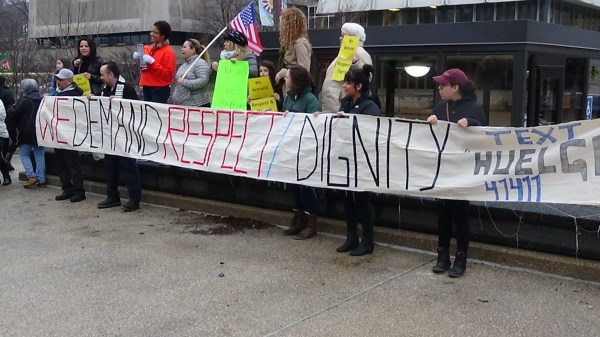
On late Tuesday afternoon, people started to gather at the Calder Plaza in Grand Rapids for another action promoting immigrant justice.
The action today was on the heels of a February 16 march that began on 28th Street near division and even though today’s turnout wasn’t as big, the energy level was high.
Before the march began there were several speakers with stories about family members being deported and a DACA student’s inspiring message. Organizer Gema Lowe, with the Workers Center in Grand Rapids, also led people in chants, talked about upcoming actions and made it clear to those present that this was a movement that was growing.
The march departed from Calder Plaza and made it’s way north on Ottawa towards Michigan. There were several large banners used by the marchers, along with signs and the use of a megaphone to lead everyone in chants.
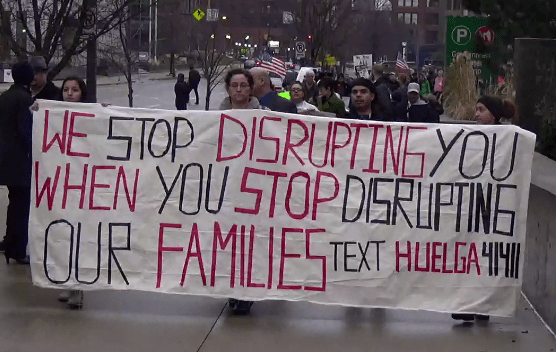
What was interesting about the march was that it was not only targeting the traffic on Michigan Avenue, it also made it difficult for those attempting to access the highway at Ionia during rush-hour. The marcher walked in a big square along Michigan, crossing at Ottawa and Ionia, making several rounds before the police told them that the next time they prevented cars from moving people would be arrested. This video gives you a better idea of how traffic was backed up on Michigan.
Police presence began at the Calder Plaza and then moved over to Michigan Avenue. The marchers were not confronted by police for the first 30 minutes, but more cops showed up and eventually threatened people with arrest if they didn’t stop making it difficult to move about.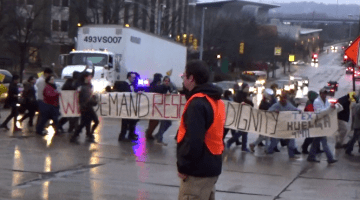
Marchers did make it very clear that they would stop disrupting the lives of motorists when the government and law enforcement agencies would stop disrupting the lives of immigrants by detaining, arresting and deporting members of their families. People in their cars were delayed by several minutes, while immigrant families are having families members taken from them and often deported thousands of miles from loved ones. The organizers of the march wanted to make this clear to people that they will not stop with these kinds of actions until the US government stopped terrorizing the immigrant community.

