The Fight against Enbridge’s Line 5 and the Future of Climate Justice in Michigan Part II
 Last week, in Part I, we looked at what the State of Michigan is doing to support the Enbridge Corporation’s Line 5 project, with the recent decision to provide $4.5 million of taxpayer money to construct a tunnel under the lake to connected the lower peninsula with the upper peninsula.
We discussed the Enbridge Line 5 project within the context of recent reports on global Climate Change, which states that current fossil fuel consumption needs to be reduced by at least 50% within the next 12 years or humanity will not be able to reverse the global warming trend.
There are two additional reports that are also rather alarming as it relates to Climate Change. One report, published in the journal Nature, shows that the Greenland Ice Sheet hasn’t melted this fast for more than 7,000 years.
The second recent report comes from the US Global Change Research Program, which published its Fourth National Climate Assessment. The summary of findings in this report are rather sobering, which includes this statement:
Communities, governments, and businesses are working to reduce risks from and costs associated with climate change by taking action to lower greenhouse gas emissions and implement adaptation strategies. While mitigation and adaptation efforts have expanded substantially in the last four years, they do not yet approach the scale considered necessary to avoid substantial damages to the economy, environment, and human health over the coming decades.
With all of this new information and analysis, the logical conclusion that one could draw , especially as it relates to Michigan, is that Line 5 cannot continue to operate and must be shut down.
Climate Justice and Resistance to Line 5
Many of the mainstream environmental organizations don’t seem to have the urgency around Climate Justice, particularly when it comes to resisting Enbridge’s Line 5. The Michigan Environmental Council in their Energy and Climate Change section, has some information about Line 5 and its risks, but there is no clear call for it to be shut down and no clear steps and actions that need to be taken for it to be shut down.
The Michigan Sierra Club has great information about Enbridge’s Line 5 on their main page and even more educational material on the pipelines section. However, the only actions that the Sierra Club is encouraging people to take to Shut Down Line 5 is to contact the Governor’s office, the State’s Attorney General and to sign a petition.
Closer to home, there is the West Michigan Environmental Action Council (WMEAC), which does not have any information about Line 5 easily accessible on their website. The only thing related to Climate Change that you can find quickly is a report about Grand Rapids and Climate Resiliency.
The group FLOW (For the Love of Water), which is based out of Traverse City, also has a lot of great information on Line 5, like the graphic below, and a clear demand for the pipeline to be shut down. However, when it comes to taking action, they suggest signing a petition, writing Michigan lawmakers, getting your group to endorse shutting down Line 5, or putting a Shut Down Line 5 yard sign in front of where you live.

The only group that we have come across that advocates anything other than signing petitions or pressuring state lawmakers is the group known as Anishinaabek Camp – Shut Down Line 5. This is 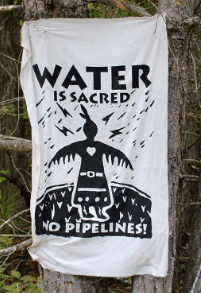 an indigenous-led effort that is made up of Anishinaabek people, many of whom were involved with the indigenous resistance at Standing Rock. They are advocating for direct action to shut down Line 5 and have set up a base camp in Levering, Michigan, just south of Mackinac City.
The group is engaging in rallies, educational work, but more importantly they are using direct action as the larger tactic, with plans to actively shut down Line 5 and not wait for lawmakers to make that happen. You can support them by contributing to their resistance work at this link. They also welcome visitors to the camp, but have made it very clear that this is an indigenous-led movement to shut down Line 5, like to many of the other campaigns that are taking place, which are also led by indigenous people. This seems to be the most important work that those of us who are allies can support, with our money, resources and solidarity. You can contact the group by going to their Facebook page www.facebook.com/groups/207551026772509/.
Last night Movimiento Cosecha GR and the GR Rapid Response to ICE hosted a protest/vigil to make the connection to the tear gassing of asylum seekers at the US/Mexican border and the violence of family separation being perpetrated by ICE agents in Kent County.

After a brief informational gathering, the group walked to three different ICE offices located in the downtown area, offices that ICE operates out of, offices that ICE rents from local property management companies that we previously reported on.
However, before the protest/vigil began one member of Movimiento Cosecha GR was interviewed by WOOD TV 8. We recoded the entire interview, which lasted 8:55 and is posted here below.
We think it is important to contrast the interview that we did, with the interview that WOOD TV 8 conducted, which you can view at this link.
There are several differences between the full interview that we video taped with Movimiento Cosecha GR member Karla Barberi and what WOOD TV 8 aired on their channel and posted on their website.
First, WOOD TV 8 felt it was necessary to early on in their story and at the very end to use language from the US Border Patrol to frame their actions against asylum seekers at the US/Mexican border, language that places the blame on those who were coming to the US seeking asylum.
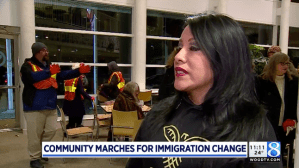 Second, in the WOOD TV 8 interview we never hear Karla talk about what the purpose of the action last night was and why Movimiento Cosecha GR organized the event, along with GR Rapid Response to ICE.
Third, WOOD TV 8 chose to focus on the more emotional comments from Barberi. And while there is nothing wrong with using emotional comments, those comments were taken out of context, thus making it difficult for viewers of the channel 8 story to fully understand what was happening and what the focus of the protest/vigil.
Fourth, in the video tape of Karla Barberi, she clearly discusses what local ICE violence is doing to immigrant families and why it is important for Kent County to end their contract with ICE. Those points, unfortunately are not very clear in the WOOD TV 8 story.
Lastly, since WOOD TV 8 did not accompany the march/vigil to the three ICE locations, they also missed the important information and analysis that was provided at each location by members of Movimiento Cosecha GR and GR Rapid Response to ICE. At the last ICE office that the protestors visited, in the old Waters Building, they were met by members of the GRPD, which escorted them out of the building, stating that if they stayed in the building, they would be arrested.
Movimiento Cosecha GR was live streaming the entire action, which you can watch at this link.
Kent County Administrative Staff and Commissioners establish Immigration Focus Group
 During the November 29th Kent County Board of Commissioners meeting, it was announced near the end that the County administration and the Commissioners have now formed a Immigration Focus Group
Kent County Commissioner Bolter made the announcement, when she said:
I also wanted to make mention that if anyone happened to miss our Executive Team meeting this morning, staff is focusing on an immigration focus group that they have started…….and staff has met with the Sheriff and a few others, but they are putting together an action plan and planning to meet with community leaders and any other commissioners who want to be involved…..and that should be kicking off in January.
(You can watch the video from the 11/29/2018 meeting, with the comments beginning at 55:20 in the video.)
This decision by Kent County is the result of members of the immigrant community and allies pressuring them to end the Sheriff Department’s contract it has with ICE, a contract that has been in place since 2012 and is set to be renewed in September of 2019.
I want to make several points in response to this announcement.
First, Commissioner Bolter states that this is an immigration focus group, which is different than what we had been hearing for months. We were told that the County would establish a Task Force.
Second, when they say they are planning to meet with community leaders, what exactly does that mean? There are no defined community leaders in the immigrant community. What this usually means is people who have name recognition or those who work in the non-profit sector. However, community leaders can mean all kinds of things to all kinds of people, especially to those most affected by the contract that Kent County has with ICE. Who do you think that those most impacted by the ICE contract view are the “community leaders?”
Lastly, while some might see the immigration focus group as a positive, those who have been confronting the County to End the Contract with ICE view this announcement with skepticism and frustration. People are skeptical that it will not put the focus on the ICE Contract and they are frustrated that this announcement seems to minimize the actual harm that has been done, and is being done to the immigrant community by ICE in Kent County, including the Sheriff Department’s contract.
Legislative Republicans passed two bills, SB 1171 and SB 1175, gutting citizen-led ballot initiatives that were passed into law back in September. SB 1171 reduced the minimum wage in Michigan from what was decided back in September and SB 1175 reversed the earned paid sick leave improvements that were also established in September.

All of this has happened in the Lame Duck session by Gov. Synder and the Michigan Legislature. There have been protests against these actions, but no direct action in the form of occupying the State Capital or organized civil disobedience.
These measures taken by the Republican controlled legislature has infuriated people across the state. Such actions by the GOP speaks to the limitations of electoral politics, in terms of following the will of the people.
 One thing that has not received much attention is who are the primary financial backers of the Republican controlled House in Michigan. In looking at the data provided by the Michigan Campaign Finance Network, we were able to determine that of the 60 Republican Legislators in the House, 41 of them have received funding from the DeVos family or one of the other members of the Grand Rapids Power Structure – Peter Secchia, John Kennedy or Michael Jandernoa.
To many political observers, the fact that the DeVos family has been contributors to most of the GOP members in the Michigan Legislator, this is fairly well known. However, there are many people in West Michigan who are unaware of the DeVos family influence in Michigan politics. The question people should be asking themselves is: 1) were they aware that the majority of the GOP members of the Michigan Legislature have received significant financial backing by the DeVos family; and 2) what would they think if they knew that the same Republican Legislators who are backed by DeVos, recently voted to reduced the minimum wage and repeal the earned paid sick leave?
What follows is a list of the GOP members of the Michigan House that voted for SB 1171 and SB 1175. If there is a NO after their name then they did not receive funds from the DeVos family or other members of the Grand Rapids Power Structure. The link after each name allows you to look at their top funding sources as elected officials.
Rep. Chris Afendoulis http://mcfn.org/donor-tracking?candidate=137
Rep. Thomas Albert http://mcfn.org/donor-tracking?candidate=104
Rep. Julie Alexander http://mcfn.org/donor-tracking?candidate=129
Rep. Sue Allor http://mcfn.org/donor-tracking?candidate=94
Rep. Tom Barrett http://mcfn.org/donor-tracking?candidate=124
Rep. John Bizon http://mcfn.org/donor-tracking?candidate=8
Rep. Tommy Brann http://mcfn.org/donor-tracking?candidate=133
Rep. Julie Calley http://mcfn.org/donor-tracking?candidate=105 NO
Rep. Ed Canfield http://mcfn.org/donor-tracking?candidate=102
Rep. Lee Chatfield http://mcfn.org/donor-tracking?candidate=88
Rep. Triston Cole http://mcfn.org/donor-tracking?candidate=90 NO
Rep. Laura Cox http://mcfn.org/donor-tracking?candidate=70 NO
Rep. Kathy Crawford http://mcfn.org/donor-tracking?candidate=79
Rep. Diana Farrington http://mcfn.org/donor-tracking?candidate=78
Rep. Ben Frederick http://mcfn.org/donor-tracking?candidate=103
Rep. Daniela Garcia http://mcfn.org/donor-tracking?candidate=108
Rep. Gary Glen http://mcfn.org/donor-tracking?candidate=109 NO
Rep. Joseph Graves http://mcfn.org/donor-tracking?candidate=148
Rep. Beth Griffin http://mcfn.org/donor-tracking?candidate=10
Rep. Roger Hauck http://mcfn.org/donor-tracking?candidate=4
Rep. Shane Hernandez http://mcfn.org/donor-tracking?candidate=101 NO
Rep. Michelle Hoitenga http://mcfn.org/donor-tracking?candidate=6
Rep. Pam Hornberger http://mcfn.org/donor-tracking?candidate=84
Rep. Gary Howell http://mcfn.org/donor-tracking?candidate=97
Rep. Holly Hughes http://mcfn.org/donor-tracking?candidate=113
Rep. Brandt Iden http://mcfn.org/donor-tracking?candidate=118
Rep. Larry Inman http://mcfn.org/donor-tracking?candidate=89
Rep. Steve Johnson http://mcfn.org/donor-tracking?candidate=138
Rep. Bronna Kahle http://mcfn.org/donor-tracking?candidate=130
Rep. Tim Kelly http://mcfn.org/donor-tracking?candidate=112 NO
Rep. Klint Kesto http://mcfn.org/donor-tracking?candidate=17
Rep. Beau LaFave http://mcfn.org/donor-tracking?candidate=91
Rep. Kim LaSata http://mcfn.org/donor-tracking?candidate=98
Rep. Dan Lauwers http://mcfn.org/donor-tracking?candidate=100 NO
Rep. Tom Leonard http://mcfn.org/donor-tracking?candidate=115
Rep. Eric Leutheuser http://mcfn.org/donor-tracking?candidate=120 NO
Rep. Jim Lilly http://mcfn.org/donor-tracking?candidate=106
Rep. James Lower http://mcfn.org/donor-tracking?candidate=136
Rep. Pete Lucido http://mcfn.org/donor-tracking?candidate=81 NO
Rep. Steve Marino http://mcfn.org/donor-tracking?candidate=75
Rep. David Maturen http://mcfn.org/donor-tracking?candidate=119 NO
Rep. Mike McCready http://mcfn.org/donor-tracking?candidate=127
Rep. Aaron Miller http://mcfn.org/donor-tracking?candidate=125 NO
Rep. Jeff Noble http://mcfn.org/donor-tracking?candidate=71
Rep. Dave Pagel http://mcfn.org/donor-tracking?candidate=128 NO
Rep. John Reilly http://mcfn.org/donor-tracking?candidate=144 NO
Rep. Daire Rendon http://mcfn.org/donor-tracking?candidate=93
Rep. Brett Roberts http://mcfn.org/donor-tracking?candidate=13 NO
Rep. Jim Runestad http://mcfn.org/donor-tracking?candidate=121
Rep. Jason Sheppard http://mcfn.org/donor-tracking?candidate=131 NO
Rep. Jim Tedder http://mcfn.org/donor-tracking?candidate=143
Rep. Lana Theis http://mcfn.org/donor-tracking?candidate=122
Rep. Curt VanderWall http://mcfn.org/donor-tracking?candidate=95
Rep. Scott VanSingel http://mcfn.org/donor-tracking?candidate=96 NO
Rep. Henry Vaupel http://mcfn.org/donor-tracking?candidate=123 NO
Rep. Rob VerHeulen http://mcfn.org/donor-tracking?candidate=116
Rep. Roger Victory http://mcfn.org/donor-tracking?candidate=9 NO
Rep. Mike Webber http://mcfn.org/donor-tracking?candidate=141
Rep. Jason Wentworth http://mcfn.org/donor-tracking?candidate=110
Rep. Mary Whiteford http://mcfn.org/donor-tracking?candidate=99
The Fight against Enbridge’s Line 5 and the Future of Climate Justice in Michigan Part I
 A little over a week ago, MLive ran a story stating that Michigan Gov. Rick Snyder was requesting that “lawmakers earmark $4.5 million for “radar current mapping, as well as planning, oversight and legal services related to the proposed Mackinac Straits utility tunnel project.”
The same MLive article also stated:
The outgoing governor called it a “common-sense solution” to safeguard the Straits from an oil spill while maintaining the pipeline connection.
The notion that this is a common-sense solution is ridiculous and it is in clear contrast to the recent reports from the global climate scientific community, which stated:
We have just 12 years to make massive and unprecedented changes to global energy infrastructure to limit global warming to moderate levels, the United Nation’s climate science body said in a monumental new report released Sunday.
“There is no documented historic precedent” for the action needed at this moment, the Intergovernmental Panel on Climate Change (IPCC) wrote in its 700-page report on the impacts of global warming of 2.7 degrees Fahrenheit, or 1.5 degrees Celsius.
Therefore, building new oil pipelines, even if the Line 5 proposal would just be just be a re-routing of the current pipeline is not sustainable if we are to take serious the warning from the scientific community that we have a 12-year window to drastically alter our consumption of fossil fuels. Unfortunately, no where in the MLive article is there even a discussion of information about climate change and the recent IPCC report.
Not that this is what you would expect from MLive when it comes to challenging corporate power. Just after the Enbridge Kalamazoo River disaster in 2010, MLive did an interview with the CEO of Enbridge that was nothing more than an opportunity for the company to promote it’s own propaganda. We reported on that interview and provide a deconstruction, which you can read here.
What is the track record of Enbridge?
According to a report from Tar Sands Watch:
Between 1999 and 2008, across all of Enbridge’s operations there were 610 spills that released close to 132,000 barrels of hydrocarbons into the environment. This amounts to approximately half of the oil that spilled from the oil tanker the Exxon Valdez after it struck a rock in Prince William Sound, Alaska in 1988.
Since then the company has continued to have oil disasters, like the Kalamazoo River disaster in 2010 and additional accidents since then.

However, if you listed to commercial radio stations throughout Michigan, you will likely here Enbridge commercials telling us all how safe their pipelines are. The company has gone to great lengths to convince the public of how wonderful and responsible Enbridge is. If you spend anytime on their Line 5 website, you can see how sophisticated the propaganda is.

Over the years Enbridge has also used numerous lawsuits against citizens and communities of people to gain access to land to run their pipelines through. They have used eminent domain as a way to force people from their land and lawsuits against numerous communities, particularly indigenous communities in Canada and the US.
In addition, we know that Enbridge, like all oil related companies, spends a great deal of money on lobbying and channeling money to support candidates. In May, there was a pretty good article that explored some of this Dark Money, which is limited, since Michigan is one of the worst states in the country when it comes to government transparency.
The incoming Michigan Attorney General, Dana Nessel, has said that she plans to shut down Line 5. In fact, Nessel said it was her top priority while campaigning. It would be great if that were the case, but we also know how long it could take, considering how Enbridge will fight the closing of Line 5 in the courts, and that could take years. We also know that often candidates say things during an election that they don’t do when in office. The point being, we should not put our hopes in the Michigan government being the ones to shut down Line 5.
In Part II, we will look at what actions are being taken to resist Line 5 in Michigan.
A missed opportunity with the GM layoffs: What US Labor Unions could learn from Unions around the world
In the fall of 2003, I was interviewing a labor leader with the UAW about the closing of the Electrolux plant in Greenville. When I asked the woman with the UAW, why the union did not fight harder to keep the plant open, even if it meant for workers to occupy the plant. The UAW representative responded by saying that those kind of tactics have been outlawed ever since the Labor Management Relations Act, also known as the Taft-Hartley Act, was signed into law in 1947.
I share this story, because it reflects the general attitude by the large, mainstream unions in the US that have failed working people for a long time on numerous fronts. So what if US law prohibits using those kinds of tactics. The Taft-Hartley Act was designed to break unions and to limit their ability to engage in sit-down or wildcat strikes, like the UAW use to do in the early days of that union.
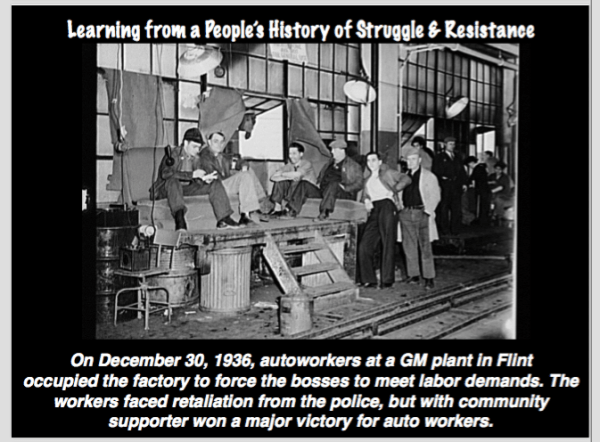
GM Layoffs and Missed Opportunities
The mass layoffs recently announced by General Motors was a cruel, callous action that once again demonstrated how businesses view workers…….as disposable.
What made these layoffs so insidious was the fact that GM had received huge tax benefits, totally $514 million, plus the company has been given a total of $50 billion in taxpayer funded subsidies over the last decade, according to a recent article posted on Common Dreams.
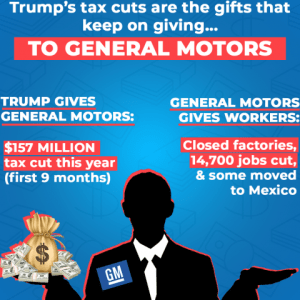 A total of 14,700 jobs have been cut with this latest GM announcement and what did the UAW do? So far, the only thing they have done is to write statements objecting to the massive worker layoffs. Here is what UAW President Gary Jones said:
We have been clear that the UAW will leave no stone unturned and use any and all resources available to us regarding the future of these plants. Today, we wrote to GM formally objecting to its unilateral decision regarding four U.S. manufacturing facilities. There are issues related to this and to collective bargaining that we cannot discuss in detail at this point. But UAW members across this country are committed to using every means available to us on behalf of our brothers and sisters at Lordstown, Hamtramck, Baltimore and Warren, MI. UAW members and U.S. taxpayers invested in GM during their darkest days. Now it is time for them to invest in us!
My question is, what does it mean when he says that they are committed to using every means available to us on behalf of our brothers and sisters?”
Here is a thought. How about if workers occupied the factories and ran it as if they owned the factories. This is exactly what factory workers did in Argentina after the economic crash in 2001. Workers occupied the factories and began to run them as worker collectives. This amazing story is captured in a documentary film by Avi Lewis and Naomi Klein, entitled, The Take, which you can watch here.
Since the documentary came out in 2004, there is a book that has also been written about how the  decision by the workers at this one factory has led to a movement of worker-owned and worker-run cooperatives. These cooperatives include all kinds of business and the majority of them are run by women. The worker-run factories of Argentina offer an inspirational example of a struggle for social change that has achieved a real victory for working people confronting corporate globalization. Sin Patrón gives an insider’s account of this important movement.
This is exactly the tactic and the kind of strategy that organized labor needs to use here in the US, if they plan on staying relevant. Don’t you think that of the 14,700 GM workers who just lost their jobs would have nothing to lose by taking such an action? Unfortunately, we may never know, since the UAW is not likely to use every means available to defend their union members.
Understanding the History & Context of US Immigration Policy: Part III – We have to Stop saying that tear-gassing asylum seekers is unAmerican
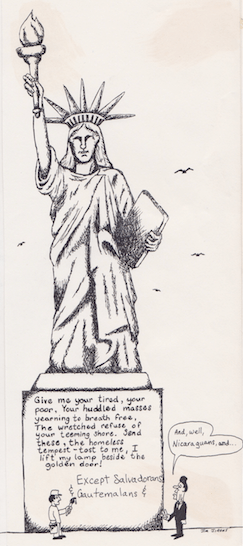 In Part I of this series we provided some background information on the asylum seekers who were tear gassed by US Customs and Border agents last Sunday. In Part II, we looked at the history of the US/Mexican border and how it has become so militarized. In today’s post we want to look at how the US immigration policy has been unfriendly to many immigrants and refugees, especially if those immigrants and refugees have come from non-European counties.
It is important to note that US immigration policy, apart from being driven by white supremacy, has at times allowed non-European immigrants and refugees to come to the US, but this has often been motivated by politics. For instance, since the Cuban revolution in 1959, the US welcomed Cubans into the US, primarily because it was a matter on wanting to marginalize Cuba in the eyes of the world community. However, during the same period of time, the US has not been very receptive to Haitians wanting to come to the US, even though the political repression has been significantly worse there in the past several decades.
One last thing to point out before getting to the main focus of this article, is that the US is essentially based on Settler Colonialism, since the US took Native lands (by force or through treaties). Native scholar Roxanne Dunbar Ortiz describes Settler Colonialism this way:
“The objective of settler colonialism is always the acquisition of indigenous territories and resources, which means the native must be eliminated. This can be accomplished in overt ways including biological warfare and military domination but also in more subtle ways; for example, through national policies of assimilation.”
The dominant narrative about the US is that “we are a nation of immigrants,” but we rarely include in that narrative that these same immigrants forcibly removed native people from their land and then settled on that land, thus settler colonialism.
US immigration policy that has been anti-immigrant
- The Chinese Exclusion Act was a United States federal law signed by President Chester A. Arthur on May 6, 1882, prohibiting all immigration of Chinese laborers. However, the Chinese Exclusion Act did not include the Chinese upperclass, like diplomats and business people.
While the Chinese Exclusion Act was passed in 1882, there had been decades of anti-Chinese racism that was normalized in US newspapers, academic journals and popular fiction at the time. In 1866, the Anthropological Review referred to the Chinese as “an inferior and infantile race.” Horace Greeley, editor of the New York Tribune stated in 1854, “The Chinese are uncivilized, unclean, and filthy beyond all conception.”
The social, political and cultural climate was profoundly anti-Chinese and often led to violence against the Chinese community – beatings, murder, burning businesses, etc. After the 1882 Chinese Exclusion Act was signed, the US Army was also involved in enforcing the law, rounding up Chinese people for deportation. The US Army was even recruiting others to come to California to assist them in their efforts. In fact, here is an ad posted in the Grand Rapids Evening Leader, dated December 24, 1885:

- Anti-German hysteria during WWI – At the beginning of World War I, there were about 900,000 German-born Americans, but many of them changed their names to avoid the anti-German hysteria. Restaurants changed their menus from hamburgers to Liberty Burgers and sauerkraut to Liberty Cabbage. As WWI proceeded, the anti-German hysteria ramped up as more and more Germans were being questioned about the relationship with Germany and lots of Germans were being accused of acting as spies. On June 14, 1917, President Woodrow Wilson issued a warning to Congress stating, that German Americans “filled our unsuspecting communities with vicious spies and conspirators and sought to corrupt the opinion of our people in their own behalf.” The Anti-German League was attempting to ban books published by German authors and most schools in the US no longer taught German as a foreign language.
 US refuses to take in Jews during WWII – There has always been anti-semitism in the US, but one of the worst examples was during WWII. Anti-Semitism was growing in the 1930s, partly because of the field of Eugenics. Numerous businesses and Foundations (like the Rockefeller Foundation) were funding eugenics research, research that was based on racist assumptions to support the racist values of White Supremacy. In 1939, there was a bill Congress called the Children’s Bill, which would allow 20,000 children to escape Nazi Germany and come to the US. The bill was eventually defeated because of growing anti-semitism by groups like the American Legion and the American Immigration Restrictionist League, both of which were using the battle cry of “America First” and referred to the bill as the “Jewish bill.” In the early 1940s, as it became public that Germany was going to institute their “Final Solution” policy and exterminate millions of Jews, the US State Department blocked numerous efforts to allow thousands of Jews fleeing Nazi Germany to come to the US. This dark part of US history is documented in David Wyman’s important book, The Abandonment of the Jews: America and the Holocaust 1941 – 1945.
- The Japanese Americans put forced into Internment Camps during WWII – The Japanese who had come to the US beginning in the late 19th Century, never felt welcomed. Anti-Japanese sentiment grew, similar to Anti-Chinese fears in the US in popular media and because of groups like the Japanese Exclusion League. With the Immigration Act of 1924, Congressed prohibited Japanese immigration and limited European migration as well. Then, on February 19, 1942, President Roosevelt issued Order 9066, which paved the way for the forced removal and internment of an estimated 120,000 Japanese, most of whom were American citizens. In addition to being interned in camps, the Japanese Americans also lots their homes and businesses in the process. Most people in the US did not oppose the internment camps, because anti-Japanese propaganda was no normalized as is evidenced by these images, which were widely used in the media and by civic groups.

- Anti-Mexican immigration has been part of US history since the Mexican/American War – Like we discussed in Part II of this series, as White America took land from Mexico, the Mexicans who had been living there faced discrimination constantly. Between 1929 and 1936, the US government engaged in a massive deportation campaign directed at Mexicans, with some two million being sent back during this seven year period, on the pretext that the Mexicans were “taking our jobs.” This pattern has repeated itself over the decades and then the US welcomed Mexican laborers during WWII, it what was known as the Bracero Program. The most recent wave of anti-Mexican sentiment has come since the 1980s, as a result of the US military and economic policy towards Mexico and Central America. After the terrorist attacks in September of 2001, the US created the Department of Homeland Security, which includes Immigration and Customs Enforcement (ICE). The Bush administration deported some 2 million people from 2001 – 2008, but that number increased to 2.5 million during the next eight years with the Obama administration. Most of those deported were Mexican.
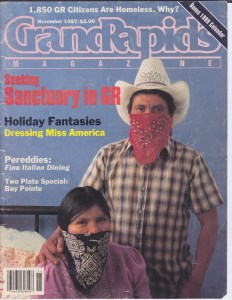 Central American wars of the 1980s – During the 1980s, the Reagan administration was obsessed with what was happening in Central America. Hundreds of thousands of Salvadoran and Guatemalan refugees fled during the US-back counterinsurgency wars, yet the US would not recognize Guatemalans or Salvadorans as political refugees, so most were denied asylum and many were either deported or forced to live underground in constant fear of possible deportation. This crisis led to the 1980s Central American Sanctuary Movement, which consisted of about 400 different sanctuaries being established across the US for Guatemalan and Salvadoran refugees who had fled political violence. Grand Rapids was part of that movement.
- Anti-Muslim/Anti-Arab racism since the 1970s – Anti-Arab/Anti-Muslim racism began in the 1970s, primarily due to the OPEC Oil crisis, where American motorists had to wait in line because of gas being rationed. This Anti-Arab/Anti-Muslim racism escalated during the Iran Hostage crisis and has continued throughout the 1980s to the present, with an additional escalations during the Gulf War in 1991, the Oklahoma City bombing in 1994, the 2001 War on Terror and the most recent Muslim Travel ban initiated by the Trump administration in early 2017. The rise of Islamophobia has been well documented by groups like Fairness & Accuracy in Reporting and the work of Jack Sheehan, most notably in his documentary Reel Bad Arabs: How Hollywood Vilifies a People.
 This is just a sample of the way in which US government policy, white supremacy, along with cultural and religious institutions have treated immigrants in the US for more than a century. Therefore, while we should be outraged at the tear-gassing of asylum seekers, we have to STOP saying that such behavior is un-American, because this simply is not true. In fact, it could arguably be said that the gassing of asylum seekers is consistent with the treatment of immigrants in US. Lastly, not only do we need to become more familiar with the historical treatment of immigrants int he US, we should not forget the recent history of the Obama administration’s use of tear gas against immigrants at the US/Mexican border, as was recently reported in Newsweek.
Understanding the History & Context of US Immigration Policy: Part II – The Militarization of the US/Mexican Border
 In Part I of this series we provided some background information on the asylum seekers who were tear gassed by US Customs and Border agents last Sunday. In today’s post we want to look at the history of the US/Mexican border and how it has become so militarized,
The desire on the part of the US power structure to expand the empire has been part of the experiment known as the US from the beginning. In regards to the US southern border, the US has always been engaged in what insurgent journalist and author John Ross called the ongoing “annexation of Mexico.” (The Annexation of Mexico: From the Aztecs to the IMF, by John Ross.)
Beginning with the annexation of the Mexican territory known now as Texas, the US has always been working to gobble up more real estate. The US was not content with just the annexation of Texas, but using the power of the military, forced Mexico to concede about a third of their northern territory, it what is called the Treaty of Guadalupe Hidalgo. Like current dynamics, the Mexican-American War between 1846 – 1848, was a military and diplomatic exercise in White Supremacy.
 One of the major consequences of the mid-19th century US annexation of Mexican territory was the fact that all of the Mexican people who lived in the territory taken by the US endured racist treatment from US citizens who never saw them as having legitimate claim to their lands. Mexicans in the annexed territory last thousands of acres of land to theft, intimidation and forced removal.While many in states along the now US/Mexican border embrace the food and other cultural “benefits” of conquest, Latinos/Latinx people have never been accepted or treated as equals.
The Mexican Revolution in the early part of the 20th Century was also cause for alarm amongst US expansionists, since revolutionaries like Emiliano Zapata and Pancho Villa were challenging the oligarchy and spreading subversive ideas like owning land communally. The US did not sit idly by and for nearly a year (from 1916 – 1917), the US military sent thousands of troops to Mexico to try to apprehend Francisco Pancho Villa. The real threat from Villa was that he threatened US business interests in the northern part of Mexico, something that the US power structure found unacceptable. The US military never apprehended Villa, but they did send a strong message and put in place a long-standing military/corporate dynamic that continues to the present.
When the Rockefeller oil empire (Standard Oil) was expanding, the US military collaborated to continue to provide access to petroleum deposits that were discovered south of the US border, in Mexican territory. However, the Mexican government nationalized its oil in the 1930s, leading the big 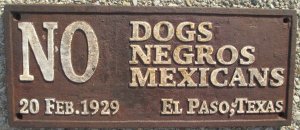 US oil barons unhappy with the loss of revenue. This dynamic coincided with various US immigration policies that kicked out Mexican nationals during the depression and then allowed them to come back and work during the end of WWII through what was called the Bracero program. However, despite the fact that the US government immigration policy allowed Mexicans to work in the US, it didn’t translate into a broad acceptance of Mexicans living in the US. Ultimately, the US policy from WWI to the Carter administration was to see the US southern border policy as a mechanism of labor control.
However, beginning in the 1970s the US evolved its border policy and made significant changes, such as the so called US war on Drugs, where the US/Mexican border was now seen as a drug interdiction issue. The US Customs and Border Patrol was beefed up and furthered militarized to deal with the border as a drug trans-shipment point.
 A second major issue that had begun in the late 1970s was the US role in suppressing the popular movements in Central America. The US-backed counterinsurgency wars, what the Reagan administration referred to as Low Intensity Conflict, caused massive displacement of civilians from El Salvador, Guatemala and Honduras. Hundreds of thousands of political refugees from these countries attempted to come to the US in the 1980s, which ultimately led to the US Sanctuary Movement. The Reagan administration was obsessed with Central America and part of that obsession was to further militarize the US/Mexican border.
Always under the pretext of fighting the War on Drugs, the US Border agents received more money in the 1980s, in order to expand personnel and to purchase better weapons, helicopters and the regular use of surveillance equipment. This increase in the militarization of the southern US border is well documented in Timothy Dunn’s book, The Militarization of the US-Mexican Border 1978 – 1992.
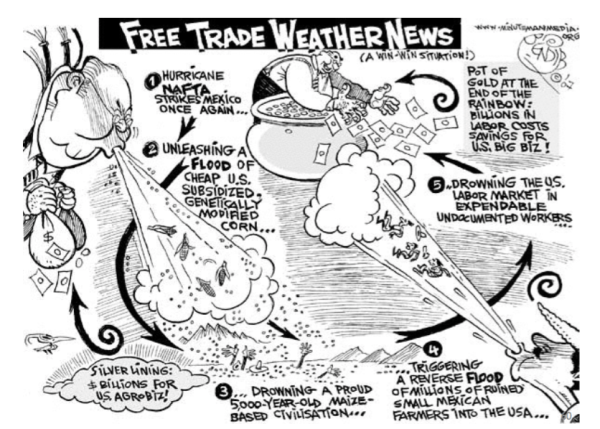
The passage of the North American Free Trade Agreement (NAFTA) signed between the US, Mexican and Canadian government in 1992, signaled another drastic change in policy at the US/Mexican border. What NAFTA did was to essentially allowed businesses and the goods they produced to move freely across the US/Mexican border, but not Mexican civilians. NAFTA gutted to US manufacturing industry, moving many plants to Mexico and at the same time the US sent cheap subsidized corn to Mexico, which led to the demise of millions of small Mexican farmers who could not compete with US corn prices. Many of the Mexican farmers fled north to the US, thus demonstrating once again that US policy in the Mexico is what is driving the massive immigration crisis. The political cartoon below, accurately depicts this dynamic as it relates to NAFTA.
The last two major changes in recent decades that has impacted the US/Mexican border and resulted in its ongoing militarization were the September 11, 2001 terrorist attack in the US and Plan Merida.
The September 11, 2001 terrorist attack in the US renewed the political and ideological call to strengthen US borders, which primarily meant the southern US border. The Bush Administration used this opportunity to create what is called the Department of Homeland Security, which includes Immigration and Customs Enforcement (ICE). ICE activity during the Bush and Obama administrations, resulted in the deportation of millions of undocumented immigrants, mostly from Mexico. The ideological reasoning behind the deportations is that these undocumented immigrants are a threat to US national security. This same ideological justification continues with the Trump administration, even though it has never had anything to do with security.
The last major point to make about the militarization of the US/Mexican border is the impact that Plan Merida has had on creating more violence in Mexico, which has forced millions more to seek safety in the US. Plan Merida was announced in 2007, but signed into law by the Obama administration under the guise of fighting the war on drugs. However, there is no evidence that there is any reduction of drug trafficking into the US from Mexico, but there is plenty of evidence in the increased political violence in Mexico, resulting in the displacement of large numbers of Mexican civil society. The video below, provides a brief outline of the consequences of Plan Merida.
In Part III of this series, we will examine the reaction of so many people who were horrified by the tear gassing of asylum seekers and why this reaction demonstrates how little people in the US understand about the history of US treatment of immigrants.
Understanding the History & Context of US Immigration Policy: Part I – US violence against immigrants at the Border
On Sunday, the whole world watched as the caravan of people from Central America, who are seeking asylum, were tear gassed by US Customs and Border Patrol agents who had been ordered to do so from by the Trump Administration.
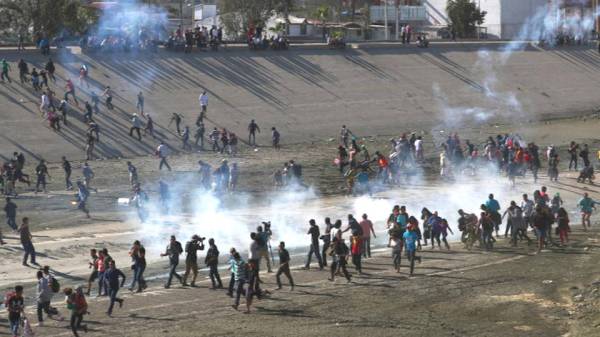
People in the US and around the world are condemning the tear gassing of civilians, which also included children. Some are saying this is a war crime, but the fact is that while tear gas is banned from use in warfare, the use of tear gas against civilians is a common practice, especially in the US.
Tear gas was used against people in Ferguson, Missouri in 2014, after the community rose up against the police after a cop killed Michael Brown. Tear gas is used frequently by law enforcement agencies when people rise up and demand justice no matter what the cause is.
I have witness the use of tear gas at the 2001 protest against the Free Trade Area of the Americans in Quebec City, Canada and at the 2008 RNC protest in Minneapolis. If you have ever experienced being exposed to tear gas, you know that it is something that is very disorienting. Those exposed to tear gas will have a hard time seeing, a hard time breathing and you are likely to have tears and snot running down your face. Tear gas also causes people to vomit. Thus, you can imagine how the asylum seekers felt at the US border, when they were teared gassed, the confusion and terror they must have felt.
 However, beyond the outrage that many people are feeling, most of the commercial media coverage is not providing any context for why those who are seeking asylum, often referred to as people in the “immigrant caravan,” are coming to the US in the first place.
A friend and colleague in the struggle, Fermin Valle, wrote a piece about the asylum seekers and they communicated with him why people have come to the US:
They wanted to make clear to the world that they are chasing a dream of a better life, and that they left their country in search of jobs to feed their families and children, to buy medicine for sick loved ones, to escape the violence of gangs and drug cartels, and maybe even to find opportunities to send their kids to college.
In addition to what individuals who are coming to the US seeking asylum are saying, we need to develop an important analysis of the root causes of why so many are attempting to enter the US, especially from Mexico and Central America.
 There are some really good resources that provides this kind of background information, resources that we recommend. First, there is always solid analysis provided by the Washington Office on Latin America (WOLA). Here is a recent piece they put together called 9 Questions (and Answers) about the Central American Migrant Caravan. Another solid piece of analysis from WOLA is entitled, “Come Back Later”: Challenges for Asylum Seekers Waiting at Ports of Entry. One additional piece from WOLA is, The US Government’s 2018 Border Data Clearly Shows Why the Trump Administration is on the Wrong Track.
Another great resource for understanding the context of why so many from Central America are trying to enter the US if from the group A Project for Teaching Change is entitled, Teaching Central America.
Public Citizen provides important information and analysis on both the North American Free Trade Agreement (NAFTA) and the Central American Free Trade Agreement (CAFTA) and why those trade policies have displaced so many from the region.
Lastly, there are also some good resources through the American Friends Service Committee, such as their online section on US-Mexico Border Militarization and Defending Immigrant Rights.
Who profits from Asylum Seekers being Tear Gassed?
The security industry is vast and highly profitable in the US and after September 11, 2001, it has gone off the charts. One clear example is the Florida-based Safariland Group.
Safariland Group is the company that supplied US Customs and Border agents with tear gas that was used against the asylum seekers on Sunday. The CEO of the Safariland Group is Warren Kanders, who has been CEO of the company since 1996. Kanders is worth $2.2 billion and he is also involved with the Claus Corporation, PC Group Inc., the Highlands Acquisition Corp. and DHS Techonologies LLC.

The Safariland Group is a one-stop shop for protest repression, since the corporation controls 25 individually branded policing and security sub-companies. The company started off as a gun holster business in 1964 and then merged with Body Armor in 1969.
When Kanders became CEO, the former investment banker gain a controlling share of Body Armor’s stock and then changed the name to Armor Holdings Inc. Armor Holdings Inc. then acquired Defense Tech and added in the company’s portfolio such items as pepper spray, tear gas, distraction devices, flameless expulsion grenades, and specialty munitions.
In 1998, under Kanders leadership, the company bought up Mace Security International, which at the time was a major player in the tear gas manufacturing business.
Then 9/11 came, so Kanders decided to align himself with homeland security and joined the Board of Directors at the Federal Enforcement Homeland Security Foundation, which provides grants to government law enforcement agencies to purchase items like tear gas and other anti-riot resources, all in the name of fighting domestic terrorism.
In Part II, we will look at the history of the US/Mexican border and how it has become more militarized since the US expanded its empire with the war/invasion of Mexico.
 In September, MLive posted a pretty solid article about what AmplifyGR was up to these days, especially since it has been over a year now that they cancelled the community forums they were hosting, meetings where the DeVos funded project had been receiving a great deal of push back.
At the second AmplifyGR community forum, the director of the Doug & Maria DeVos Foundation created entity said, “even if 70% of the community opposed this, we would just have to get back up and move forward and do it better.”
AmplifyGR has indeed, moved forward. The organization has moved forward by avoiding the messiness of having community forums and decided to turn to what they refer to has more personal way to engage the community. In the MLive article published in September, AmplifyGR’s director John Ipple stated in that article that the mission of the organization was to “promote prosperity in a part of Grand Rapids that hasn’t shared in the economic rebound unfolding elsewhere in the city.” Such a statement is consistent with the DeVos philosophy of capitalism, but we should always ask ourselves, prosperity for whom?
That same MLive article also pointed out that AmplifyGR has been giving out food baskets, doing turkey give-a-ways and promoting more local business development in the area. The MLive article also quotes Fran Dalton, with the Garfield Park Neighborhood Association who said, “she views Amplify as “a real possible resource and benefit to the community,” but contends the group does not want to pursue its development efforts “under the watchful eye of the community.”
In February, we posted an article about how AmplifyGR was hosting Start Garden’s 100 Ideas project, where people could come and pitch business ideas. A group of Start Garden selected people would vote on the best ideas and give $20,000 to each of those projects.
One of the projects submitted was by two African American men who wanted to start a brewery in the Boston Square area. Why not, white folks shouldn’t be the only ones profiting off of the creation of new breweries, right?
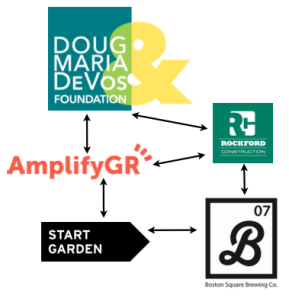
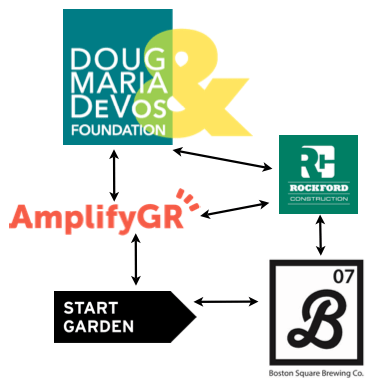
However, it is worth looking a bit at the connections and relationships that made all of this happen, since it seems that hose involved are connected. So, the Doug & Maria DeVos Foundation created AmplifyGR, which is partnering with the Rockford Construction Company, which technically purchased the 32 properties in the AmplifyGR targeted area. Start Garden, which is also a DeVos family creation, hosts a “let’s fund some business ideas event.” One of the men involved in the Boston Square Brewing Company project, which received $20,000 from Start Garden at an event hosted at AmplifyGR, also works for Rockford Construction. Terry Rostic, co-owner of the Boston Square Brewing Company, is the Project Manager of Human Resources at Rockford Construction.
 But, there is more to this than just the interlocking connections between all the players involved. There have been many people from the African American community that have been meeting and discussing issues around why the Southeast part of the city is the least developed. One group, which goes by the hashtag #SEGR on Facebook, has been looking at ways to prevent or minimize the effects of gentrification in the the part of Grand Rapids with the largest African American population.
I reached out to Rev. Jerry Bishop, who is involved with the group #SEGR. Rev. Bishop is the pastor of LifeQuest, which is also based in the southeast part of the city. I asked him what he thought about the new brewery that was announced for the Boston Square area and this was his response:
In short, it’s not in any way a vendetta against the Visionaries for the brewery. Rather, its a consistent position of wanting less alcohol/vices in that area. More than a year ago a meeting was held on our campus with staff from Amplify and a line up of urban pastors that agreed that Olivers Liquor Store should be removed if a authentic redevelopment was to happen, much like how Speedy Mart was eliminated on Wealthy and Fuller. It would be disingenuous to advocate for the removal of Olivers and then usher in a brewery. There has been more than one discussion on this.
This comment also gets to another aspect of having an entity like AmplifyGR plant itself in a neighborhood which it has not been a part of and yet it has purchased 32 properties for redevelopment. The question is, who gets to decide what happens in southeast part of Grand Rapids? During the larger AmplifyGR forums that were being held in 2017, several people were promoting the idea that DeVos/AmplifyGR/Rockford Construction could just give over all the land they purchased, which could allow the neighborhood to put it in a Community Land Trust and then take the time to let the people who live there decide what to do with the land. Some might even say this is a forum of reparations, where those from the white community who have benefited from white supremacy and capitalism for so long, could pay reparations to the black community and let them do as they see fit. Why do white people and white run organization always think they know what is best?
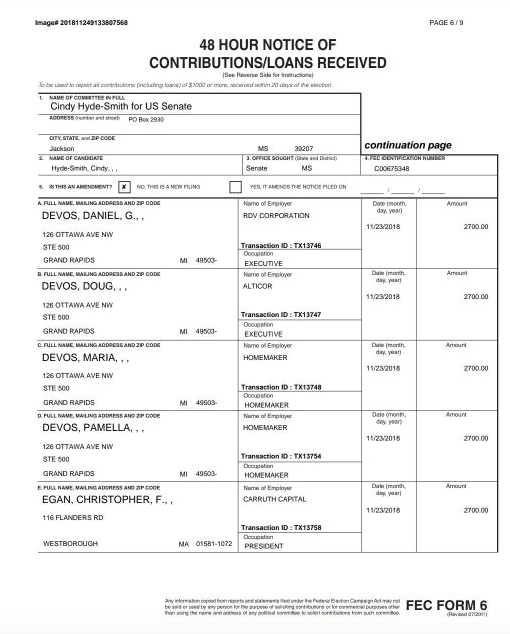
Lastly, it is also important to note that several members of the DeVos family and specifically Doug & Maria DeVos (which funded the creation of AmplifyGR) recently gave money to Cindy Hyde-Smith (see below), the Senator from Mississippi, even after she made racist comments about going to a public hanging and off handed remarks about supporting voter suppression. This is no marginal issue and it should be discussed openly, especially since Doug & Maria DeVos has funded and created AmplifyGR to push their own agenda in the southeast part of the city. More importantly, the DeVos family contributes millions to the Republican Party and the policies they have imposed on the public are disproportionately oppressive for black communities.
What if this dynamic and the other issues raised here were discussed in an open forum, where there could be more accountability? Transparency and accountability doesn’t just happen, we have to make it happen and then support those doing the work to bring these issues to light. DeVos money can back businesses by black people, but they will never support black people fighting for racial justice and an end to white supremacy!