Founders of the American Patriot Council were involved in the January 6th Siege at the US Capitol
 In the last few days, there have been photos of the co-founders of the American Patriot Council, Ryan Kelley and Jason Howland, at the January 6 siege on the US Capitol.
The pictures of Kelley, at least the ones I have seen, shows him outside, like the picture here on the right.
The fact that the “Founding Fathers of the American Patriot Council,” as they like to refer to themselves as, were at the January 6th siege on the US Capitol is not a surprise to people who have been following and monitoring these two men.
Kelley and Howland were instrumental in organizing many of the anti-lockdown protests in Lansing, beginning in April of 2020, and they organized the anti-lockdown protest in Grand Rapids in May.
In October, we wrote how the American Patriot Council not only had a relationship with some of the white men who plotted to kidnap Gov. Whitmer, we also wrote that they created a climate for this type of violence.
What is interesting about Kelley and Howland’s involvement in the January 6 siege, is that one of the core values of the American Patriot Council, based on what is listed on their website, states:
Nonviolence is a way of life for courageous people.
- We condemn acts of violence, especially to achieve political gain.
- We do not tolerate lawless behavior or illegal actions.
If Howland and Kelley really believe this core value, which is questionable, then their attendance and participation in the January 6th siege at the US Capitol is in direct contradiction of the value of non-violence. This is especially true of Jason Howland, as he was inside the US Capitol building on January 6, based on the photo here below. The only way for anyone connected to the January 6th siege to get into the US Capitol building that day, was by force.

Ryan Kelley and Allendale
Many people are also aware that Ryan Kelley sits on the Planning Commission for Allendale Charter Township. There has been an effort since this past summer to get the Allendale Charter Township governing board to remove Ryan Kelley from the Planning Commission. Up til now that effort has been unsuccessful. In addition, according to a recent Facebook post, some people have shared the pictures of Kelley at the January 6 siege at the US Capitol with Allendale Charter Township Trustee Adam Elenbaas, who still maintains that unless Kelley did anything illegal on the January 6th, the Allendale Charter Township Board of Trustees, “legally cannot remove him from his position as he was not acting on behalf of his “role” with the township” on January 6th. Spoken like a true politician.
For those who want to be involved in an organized effort to remove Ryan Kelley from the Allendale Charter Township Planning Commission, please contact Justice for Black Lives or the group Take It Down Allendale.
As for the American Patriot Council, we will continue to monitor them and write critiques and provide analysis of what they are up to, based on what they post on their website and their YouTube channel.
 We are all familiar with what happened on January 6, 2021, at the US Capitol. White Nationalists stormed the US Capitol building, destroying property along the way and using violence against people, resulting in several deaths. There has been a constantly flow of news since that day and it will be part of the narrative for the Inauguration as well.
However, four years ago today, there was an action during the inauguration of Donald Trump, where no government buildings were under siege, but some property was damaged. This protest is less known, even though it involved people who identified as anti-fascists.
One glaring difference between these two events so far, is that the January 20, 2017 (from here on referred to as J20) activists were facing up to 70 years in jail, while those involved in the January 6, 2021 (from here referred to as J6) action are facing lesser chargers or are already having charges dismissed by some judges.
The other fundamental difference it that the J6 protester, mostly White Nationalists, who are contesting the 2020 election and who are mostly Trump supporters. The J20 protesters are not connected to any political party, they were not contesting the the results of the election, nor defending Hillary Clinton. The J20 activists took action four years ago to denounce fascism and to protest the incoming Trump administration, which was not shy about the White Supremacist, xenophobic, misogynist policies they were going to promote.
Since, the general public is less familiar with the J20 protesters, here is a link that provides a good overview of the harsh sentencing they were facing and how they beat it. GRIID had reported on the harsh sentencing that the J20 protesters faced on several occasions, like our post in July of 2017.
Since the J6 storming of the US Capitol, there have been numerous comparisons to how the police responded to those who forced their way into the Capitol and how the police all across the US have responded to all of the Black Lives Matter rebellions last summer. These comparison are fair, since they point out how White Nationalists were able to storm the US Capitol with minimal harm done to them, while BLM protesters were killed, beaten, pepper-sprayed and shot with rubber bullets. The comparisons are stark.
However, these comparisons are fairly obvious and we should not be content with just making this point and not talking about the larger issue of State Violence. It would be easy to pat ourselves on the back and say, “see, when the right does it, they get special treatment, but when the left does it, they get brutalized.”
We need to start talking about State Violence and how the State can do anything they want to people who don’t follow the rules…..rules determined by those who have power. This is not a new thing, so whether we are talking about the 1798 Sedition Act, the 1918 Sedition Act, the Palmer Raids, the creation of the House Un-American Activities Committee, COINTELPRO, the Patriot Act or the recent proposals coming from GOP State lawmakers and the incoming Biden administration.
The fact that politicians on both sides are calling for new domestic anti-terrorism laws should concern us all, for several reasons. First, the history of domestic terrorism laws has disproportionately been used against Black, Indigenous, Latin, immigrant, Arab-Americans, Muslims, and other communities that are fighting for a more just world. Second, these kinds of laws are always passed during what are often framed as “periods of a national crisis,” thus taking advantage of moments when the public is vulnerable to swift and harsh state responses.
Third, whether it is the FBI, the Department of Homeland Security, the National Guard or state and local law enforcement, we need to come to terms with the fact that every one of the groups listed have engaged in state terrorism. When cops murder Black people, that is state terrorism. When the National Guard is brought in to put down an uprising, that is state terrorism. When ICE agents round up members of the undocumented community, that is state terrorism. When the FBI targets Black organizations, that is state terrorism.
Lastly, when people, who are not normally the targets of state violence, remain neutral or support existing/increases in state repression and state terrorism, that makes it easier for the state to get away with the violence they perpetrate against people every day!
Providing a platform for the Far Right: How the Grand Rapids Media reported on the small protest at the Lansing State Capitol on Sunday
The news media loves conflict, since conflict creates a wonderful climate for advertising and consumption.
On Sunday, the Grand Rapids-based news media was no doubt disappointed that the protest that was planned by the far right at the Lansing State Capitol had a tiny turnout.
 By all accounts, there were between 20 – 25 members of the far right, mostly boogaloo members, who showed up in Lansing, not so much as to protest, but to posture in front of the news media, a news media that was all too eager to provide them with a platform to spout their propaganda.
MLive, WOODTV8, WZZM 13 and WXMI 17, all framed their stories in similar fashion. First, they let news consumers know that the State Police and the Michigan National Guard were prepared for anything, with cops and soldiers all over Lansing and temporary fencing placed around the Capitol building.
The MLive article provided a platform for two boogaloo members, one person who identified as a Trump supporter and another person who wasn’t convinced there was a fair election, although he disagreed with what happened on January 6. With each person who was cited in the Live article, there is no indication that the reporter questioned or challenged them. Timothy Teagan is the first person cited in the Live article, yet there is no questioning of his comments and no contextual information about him. Thankfully, there are anti-fascists who have been monitoring his twitter account.
The WOODTV8 story wasn’t much different, only in terms of who was cited. In the Channel 8 coverage, there also is no evidence that the reporter questioned those they spoke with.
The channel 13 story took a different approach, talking about how the protest was “peaceful” and that there were no incidents of violence that occurred. WZZM 13’s coverage included a comment from the Lansing Mayor, saying that the protesters were “non-violent.” I’m not sure how anyone who shows up with an assault rifle can be non-violent, but this just reflects how narrowly people understand the issue of violence in our society.
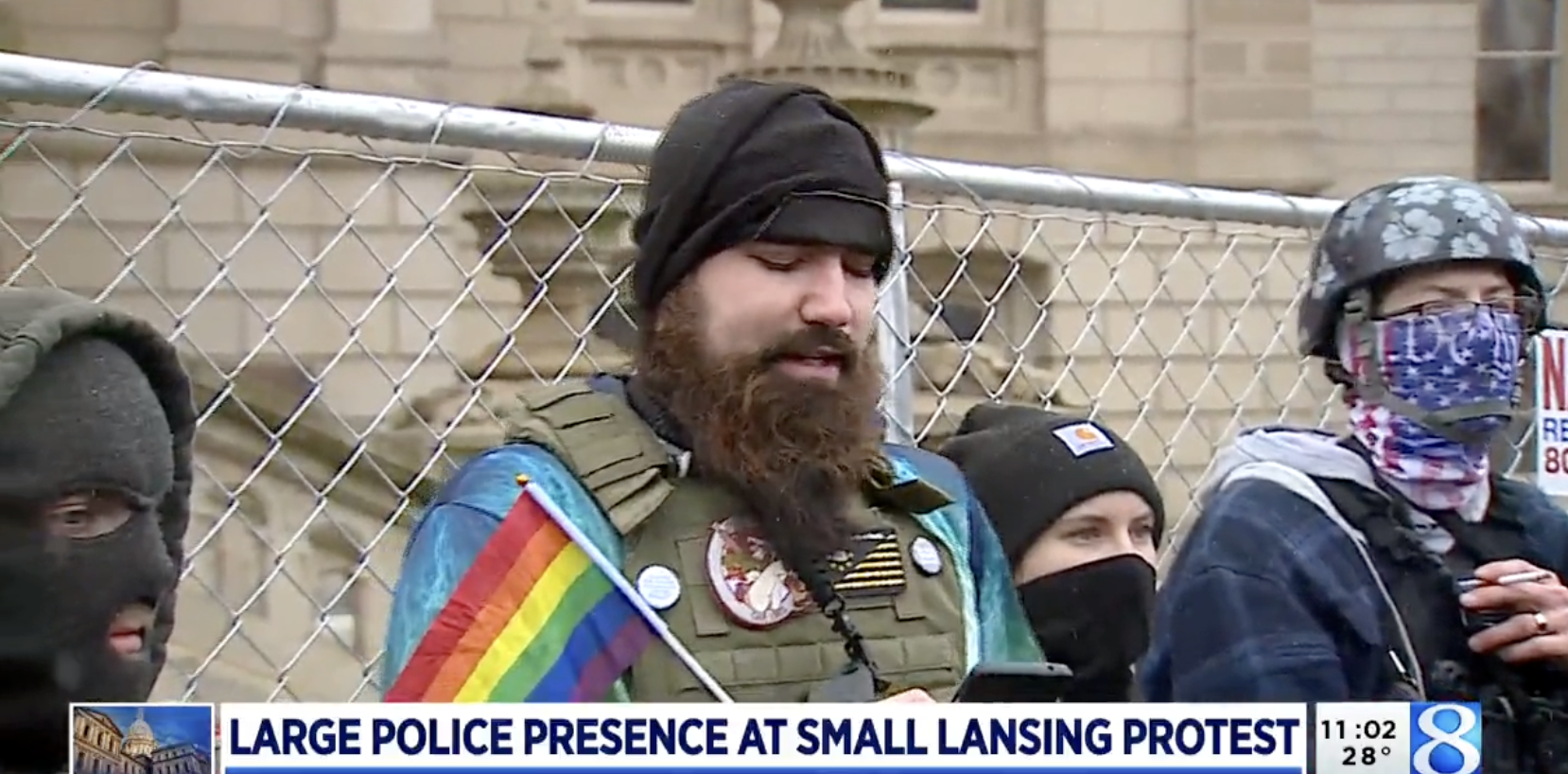
The WXMI story began with the news readers framing the issue as one of security, talking mostly about how State Capitols across the country were preparing to suppress any unlawful activity. The Fox 17 reporter also interviewed Timothy Teagan, who again made claims that go unchallenged. The channel 17 story did cite a Trump supporter and a former State Representative who was defending Gov. Whitmer.
The problem with this type of coverage, which is very event driven, is that it offers up no substantive investigation into far right groups and the real harm they perpetrate. As we noted in October, after a plot to kidnap Gov. Whitmer was foiled, the local news media have failed us miserably when it comes to both informing the public about these far right, White Supremacist and White Nationalists groups. Not only has the local news media failed to inform the public, they continue to provide a neutral platform for those who have done real harm and are likely to commit more acts of violence in the future.
Lastly, it is worth noting that the level of police and military presence at the Lansing Capitol was astounding. While many people believe that the massive mobilization of state was necessary, we all should consider what this will mean for the suppression of dissent in general in Michigan and across the country.
It has been nearly 53 years since Dr. Martin Luther King Jr was assassinated and roughly three decades since his birthday was made a federal holiday. The transition from who the actual Dr. King was and how his legacy has been co-opted, is well documented. I mean, when the most far right public figures, like Glen Beck, cherry pick words from Dr. King, something is really wrong.
Dr. King was under constant surveillance by the FBI, as the new documentary MLK/FBI demonstrates. Dr. King received numerous death threats, because of his role in challenging the White Supremacist Power Structure in the United States, especially after 1965, when Dr. King began speaking out against the system of Capitalism.
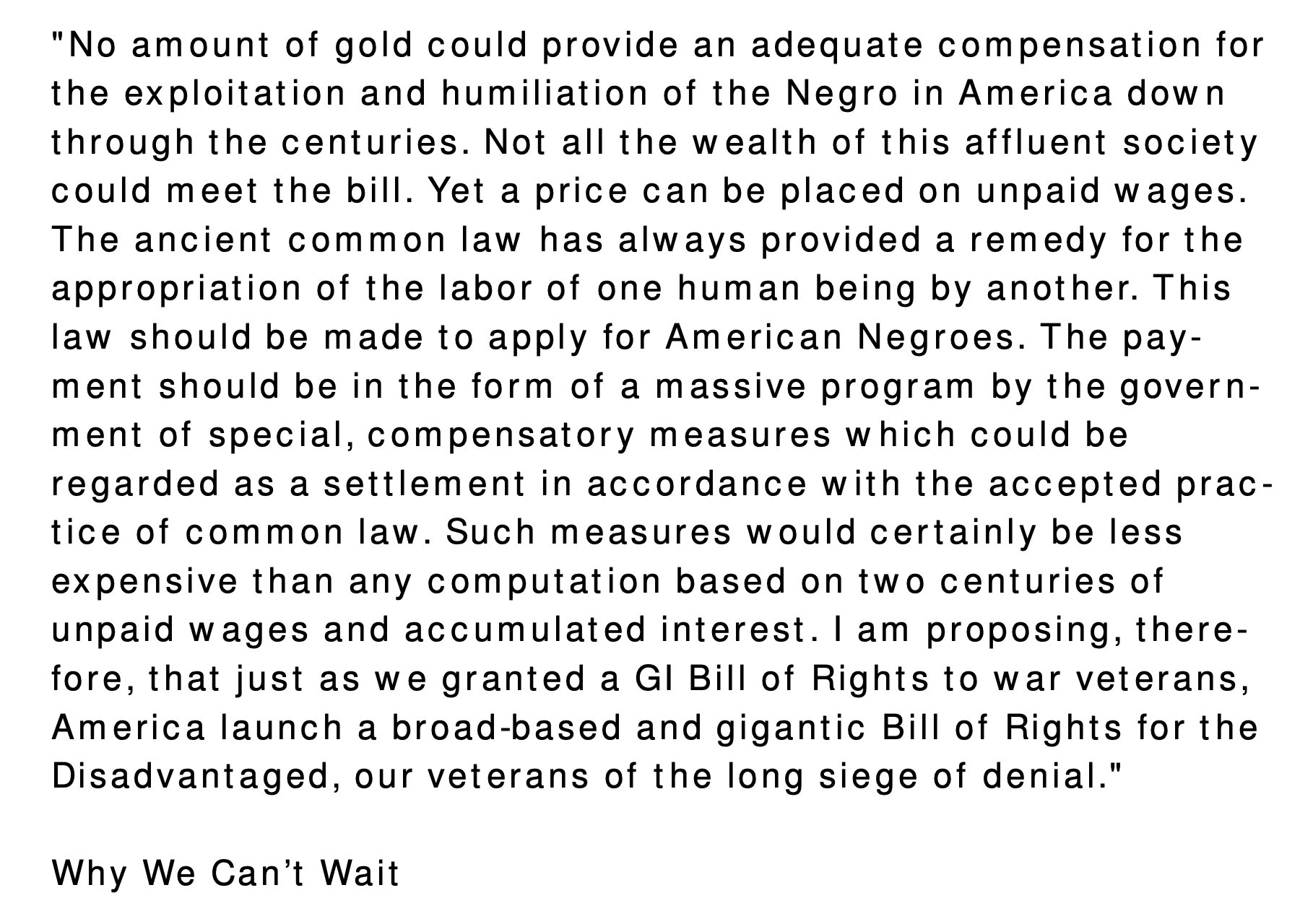

In April of 1967, Dr. King came out against the Vietnam War, in his famous Beyond Vietnam speech:
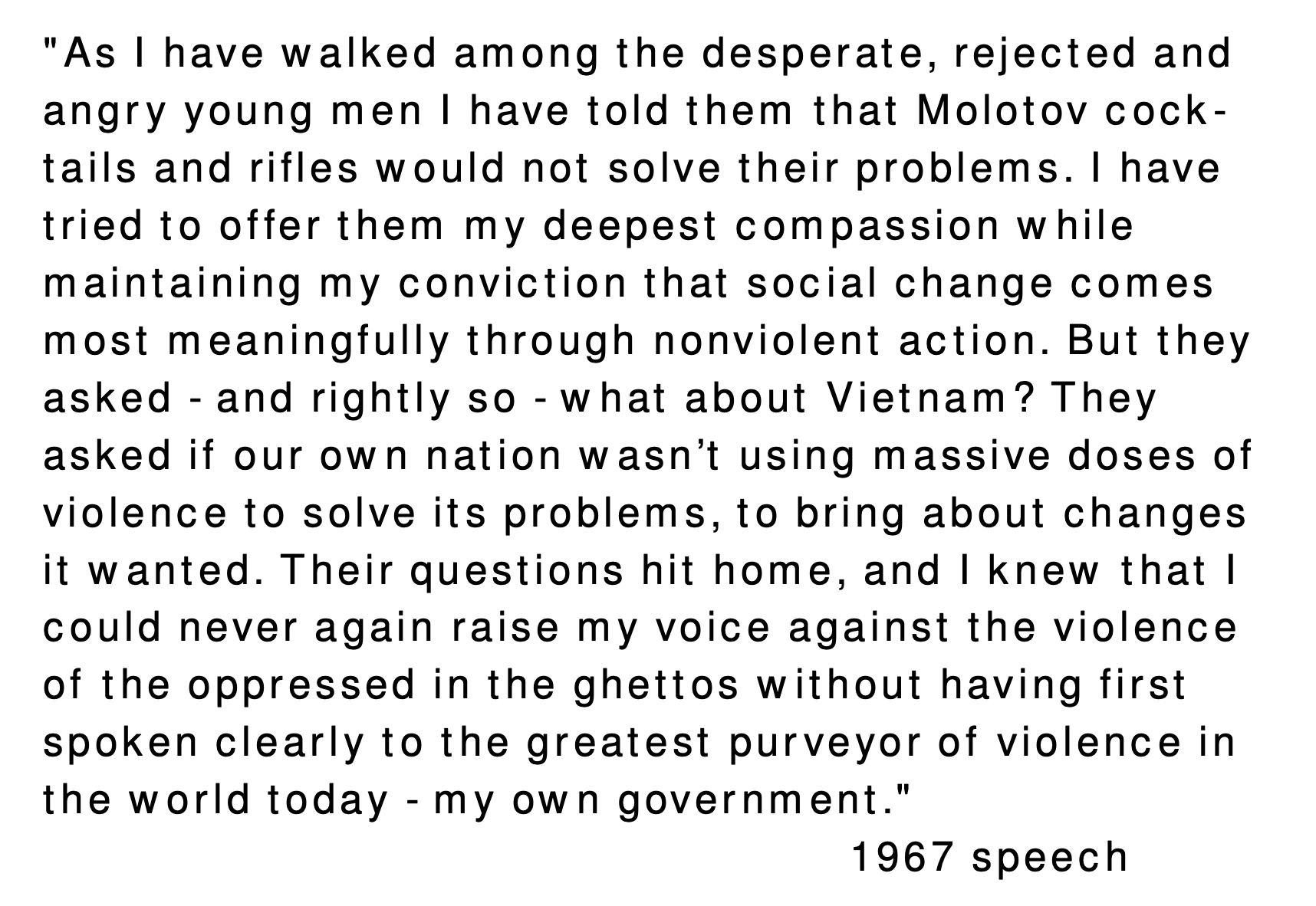
While Dr. King was working on the Poor People’s Campaign, a campaign that sought to elevate the plight of poor people all across the country, with a mass occupation of Washington DC and demands for a massive transfer of wealth from those in power to working class people across the country. In the midst of this campaign, Dr. King went to Memphis to support the struggle of striking city refuse workers, where he once again made the link between racism and capitalism, Dr. King was assassinated.
In the wake of Dr. King’s assassination, rebellions broke out all of the US, not unlike the rebellions that swept the country after a cop publicly Lynch George Floyd in Minnesota. Therefore, it seems to this writer, that for white people, if we are to honor the legacy of Dr. King and the Black Freedom Struggle he was part of, we need to be about the same kind of work of dismantling White Supremacy, Militarism and Capitalism, what Dr. King often referred to as the Evil Triplets.
The kind of tactics that Dr. King and the Black Freedom Struggle used was varied, but the emphasis was surely on confronting power by being in the streets, by disrupting business as usual, by engaging in civil disobedience and by our collective ability to make sacrifices. If White people think for a moment that voting for a Democrat and getting a Democrat in the White House, even controlling the House and the Senate, then you are ignoring history and in denial about how change is made.


We may be focused on the White Nationalists who stormed the US Capitol recently, but Dr. King warned us about who he was really concerned about, when he wrote from a jail cell in 1963:
I must confess that over the past few years I have been gravely disappointed with the white moderate. I have almost reached the regrettable conclusion that the Negro’s great stumbling block in his stride toward freedom is not the White Citizen’s Counciler or the Ku Klux Klanner, but the white moderate, who is more devoted to “order” than to justice; who prefers a negative peace which is the absence of tension to a positive peace which is the presence of justice; who constantly says: “I agree with you in the goal you seek, but I cannot agree with your methods of direct action”; who paternalistically believes he can set the timetable for another man’s freedom; who lives by a mythical concept of time and who constantly advises the Negro to wait for a “more convenient season.” Shallow understanding from people of good will is more frustrating than absolute misunderstanding from people of ill will. Lukewarm acceptance is much more bewildering than outright rejection.
For those of us who are White Moderates, those who council pragmatism and patience, we need to not only take these words of Dr. King seriously, we need to actively take part in the ongoing Black Freedom Struggle and other struggle for liberation.
There is no shortage of ways to be involved in freedom struggles right now, right here in Grand Rapids. Groups like Justice for Black Lives, Defund the GRPD, Movimiento Cosecha GR, GR Rapid Response to ICE, the Grand Rapids Area Mutual Aid Network, Together We Are Safe and the Grand Rapids Area Tenant Union are all autonomous groups are fighting against state violence, against Neo-liberal Capitalism, against the non-profit industrial complex and against putting our trust in the political parties. These groups practice mutual aid, radical imagination and put their faith in the lived experiences of those most impacted by systems of power and oppression.

In closing, I will leave you with more words from Dr. King, also from his Beyond Vietnam speech, talking about a revolution of values:
“A true revolution of values will soon cause us to question the fairness and justice of many of our past and present policies. On the one hand we are called to play the Good Samaritan on life’s roadside, but that will be only an initial act. One day we must come to see that the whole Jericho Road must be transformed so that men and women will not be constantly beaten and robbed as they make their journey on life’s highway. True compassion is more than flinging a coin to a beggar. It comes to see that an edifice which produces beggars needs restructuring. [applause]
A true revolution of values will soon look uneasily on the glaring contrast of poverty and wealth. With righteous indignation, it will look across the seas and see individual capitalists of the West investing huge sums of money in Asia, Africa, and South America, only to take the profits out with no concern for the social betterment of the countries, and say, “This is not just.” It will look at our alliance with the landed gentry of South America and say, “This is not just.” The Western arrogance of feeling that it has everything to teach others and nothing to learn from them is not just.
A true revolution of values will lay hand on the world order and say of war, “This way of settling differences is not just.” This business of burning human beings with napalm, of filling our nation’s homes with orphans and widows, of injecting poisonous drugs of hate into the veins of peoples normally humane, of sending men home from dark and bloody battlefields physically handicapped and psychologically deranged, cannot be reconciled with wisdom, justice, and love. A nation that continues year after year to spend more money on military defense than on programs of social uplift is approaching spiritual death.”
 As the spectacle of the January 6 actions by White nationalists continues to unfold, it is important that we pay attention to what organizations in West Michigan are saying about what took place.
On Monday, the Acton Institute for the Study of Religion & Liberty, posted an article by their lead editor, Rev. Ben Johnson. The article was a summary of a TV segment from The World Over, a Catholic media outlet, that Acton Institute founder Rev. Sirico was on.
The topic of the TV show that Sirico was on, had to do with the action by White Nationalists at the US Capitol on January 6. Also on the show with Rev. Sirico, was Bill Donohue, President of the ultra-Conservative group known as the Catholic League.
The host of the Catholic TV program framed the issue in a very leading way from the get go, by asking the question: “Why are we seeing more frequent, violent political protests here in the U.S., and what needs to be done about this rioting?”
Such a leading question gave both Donohue and Sirico the opportunity to talk more about the Black Lives Matter protests than the White Nationalists who stormed the US Capitol on January 6.
Rev. Sirico stated, “We need to be outraged – morally outraged – by what we saw in D.C.” for “the same reason that we were morally outraged by what we saw in Seattle, and Portland, and Minneapolis.”
While Rev. Sirico and Bill Donohue kept hitting on the “violence of the left,” the host of the TV show did not question or ask both guests about a fundamental difference between the protests and rebellions that took place after a police officer publicly lynched George Floyd, which was led by Black community members and community organizers, who have been fighting racial oppression for decades all across the US, and the White Nationalists who stormed the US Capitol, primarily to object to the results of the 2020 Presidential Election. The context for these two types of actions are worlds apart.
At one point in the discussion, the Acton Institute founder said, “The ringleaders of riots consist of “a smaller group of irresponsible, ideological people who are bent on destruction, bent on violence, and those people need to be isolated and identified. Those thoughts, those principles, those politics need to be identified and [exorcised] from the body politic.” Rev. Sirico doesn’t provide any information or sources to support such a claim. The fact is, that public lynching of George Floyd by a cop was simply a spark that ignited tremendous righteous indignation from Black and Brown communities that have been subject to various forms of state violence, the effects of brutal Neo-liberal Capitalist austerity measures, on top of a highly radicalized COVID crisis that disproportionately have impacted Black, Brown and Indigenous communities across the US. This was is sharp contrast to the the pathetic grievances of White Nationalists who were primarily motivated by ideology, unlike the lived experiences of those from the Black community.
This type of posturing by the Acton Institute is consistent with what we have been seeing since they were founded in 1990, right here in Grand Rapids. You can go to SourceWatch to read their information about the Acton Institute and see at the bottom of the page that numerous sources from the 1990s and 2000s are from Jeff Smith and from Media Mouse. Over the past decade, you can see that GRIID has written dozens of article about the Acton Institute, documenting numerous ideological stances they take, especially their racist views and their love of Free Market Capitalism.
 On Monday, the DeVos-created Great Lakes Education Project posted the following statement on their website:
When it comes to our kids’ schools and learning, Governor Gretchen Whitmer and her administration have spent the last 10 months flouting the science, ignoring the data, and acting against the advice of physicians, medical experts and the CDC.
As Whitmer and her team wilt under the weight of their catastrophically failed vaccine rollout (Michigan is ranked 40th in the United States for COVID-19 vaccine rate), there’s finally some good news for teachers and students.
Last week, the administration announced it’d finally be taking GLEP’s advice, and moving teachers to the front of the line for the COVID-19 vaccine. (Whether they’ll actually be able to get the shots out of the freezer and into their arms is another question.) Then came word that the Governor will gently encourage schools to stop locking kids out of school and allow them to return – in March.
The failures we’ve witnessed over the last 10 months have had a catastrophic impact on Michigan students and families – particularly those in low-income communities. It’ll take years for students to overcome the damage the governor’s unscientific orders caused. Getting them safely back in the classroom is the first, important step on that long journey. It should happen today, not in 7 weeks.
First, this statement comes from GLEP’s Executive Director Beth DeShone, who was a campaign consultant for Dick DeVos, in his failed 2006 campaign to be Governor of Michigan. Since GLEP was created by Betsy DeVos, it makes complete sense that DeShone would be running a DeVos entity.
Second, DeShone offers no clear sources to support the claims she is making in this statement. Yes, she cites physicians, medical experts and the CDC, but with no links to specific pronouncements or data to back up her claims.
Third, if Governor’s Whitmer’s decision to adopt Stay in Place orders was so bad, then why is Michigan near the top of states that has a lower COVID infection/death rate in the US.
Fourth, the recent decision by Gov. Whitmer had absolutely nothing to do with the pronouncements of GLEP, despite their claim. The decision by Whitmer is based on the Michigan Department of Health and Human Services and the guidelines they laid out.
Talent creation and concerns about concerns about the loss of low wage, low skilled jobs
Closer to home, the Grand Rapids-based Talent 2025, has their own take on the COVID crisis and education. Talent 2025 is a group made up primarily of local CEOs who are interested in influencing education policy for the specific purpose of creating future employees – talent – for their companies. In other words, Talent 2025 is interested in how to ensure and increase the profit making capability of the businesses they represent (listed here).
On a recent blog post, Talent 2025 reflected on their work during the COVID crisis in 2020:
In fact, the pandemic has only amplified the importance of our work to ensure a world-class talent supply for West Michigan.
Not only does Talent 2025 shamelessly promote talent creation as the basis of their interest in education, their solution to responding to the low of low wage, low skilled jobs during the pandemic is this:
- The accelerated and permanent loss of many low-skill, low-wage jobs means new strategies and partnerships will be needed to help the people who lost these jobs upskill to get better jobs, often in other industries.
New strategies and partnerships is really just code for, “we will continue to work with the private sector Capitalist Class to find ways to influence education policy in such a way as to maximize the number of skilled laborers for West Michigan companies.
The Great Lakes Education Project and Talent 2025 are just two of the numerous groups that are seeking to influence education policy in Michigan. We would do well to remain vigilant to better understand what their efforts mean for education policy and how it should inform strategies for education justice.
 Last week I had the opportunity to talk about Food Justice with my friend Ember Kelley.
Ember, who used to live in Grand Rapids with their family, is now doing religious education work in New York City, with the Fourth Universalist Society.
In our discussion on Food Justice we covered lots of ground, which was prompted by the following questions from Ember:
1) Tell us a bit about yourself
2) What does Food Justice mean to you?
3) What can we do to fight for food justice?
4) How does food justice connect to the other work you do?
5) Food Justice seems a good example of intersectionality- how different issues of oppression inter-relate, as someone who has been doing this work- what observations and insights have you gained about food justice intersecting with fights against other oppressions?
6) What would a world where we have food justice look like to you? What are some practical small steps we could take?
You can listen to or download the 44 minute podcast at this link.
Kent County I-Bond Fund continues to raise money for immigrants being detained by ICE – Help them spread the word!
 For the past two years, the Kent County I-Bond Fund, which grew out of GR Rapid Response to ICE, has functioned as a community-based fund specifically for immigrants being detained by Immigration and Customs Enforcement (ICE).
Those who are in detention after being picked up by ICE, must pay the full amount of the bond cost set by the judge, unlike criminal cases, where people pay 10% of what the bond is set at.
The Kent County I-Bond Fund was designed to provide financial assistance to to immigrant families who have a loved one in detention. This bond fund can supplement the costs needed and in some cases cover the entire bond fee.
Since the COVID 19 pandemic, the number of immigrants being detained by ICE in West Michigan has decreased, so the Kent County I-Bond Fund has been able to replenish, with a substantial amount of funds that are available for those needing to bond out a family member who was detained because of ICE.
Geoff Gillis, one of the core members of the Kent County I-Bond Fund said of the bond fund:
“The Kent I-Bond is part of the National Immigration Bond Fund Network, a coast to coast and border to border, bond movement which shares ideas, on the ground assistance and fundraising cooperation.
Statistics show that people out of jail have an orders of magnitude greater chance of winning their immigration cases; and they can return to their families and work. They can make plans. Freedom makes a real difference in lives and suffering. Confinement in the COVID era adds a whole different level of risk.”
If you know of someone who might benefit from this community resource, please direct them to their Facebook page https://www.facebook.com/KentCountyIBOND, or they can call 616-340-4757 or 248-727-3529.
In addition, individuals, organizations, faith communities and lawyers need to know about this resource, which would help the Kent County I-Bond Fund get the word out about this important resource.
Lastly, please consider donating to help us defend our neighbors from ICE violence and deportation. You can donate online at https://secure.actblue.com/donate/kentcountyibond or by sending a check made out to Joy Like a River (the fiduciary) and mailing it to this address.
Kent County I-Bond Fund
PO Box 150350
Grand Rapids, Mich. 49515
GR Chamber blog post promotes misinformation about Grand Rapids voting down CARES Act Funding from the County
 In November, we reported that the Grand Rapids City Commission was split on whether or not to accept CARES Act funds from the county, specifically for crime prevention.
We noted in that post from November 17, that part of the reason why three commissioners voted against accepting the funding, was because of a GRPD memo that was part of the City resolution on the matter. Part of our report stated:
There was a lengthy conversation centered around the resolution, with questions about why there was ShotSpotter information included, along with how the money would be used and how quickly it the CARES Act funds would need to be used.
The City Attorney and City Manager both chimed in on these questions in order to clarify a few points. City Manager Mark Washington stated that the $500,000 could only be used for crime prevention within the GRPD. Washington claimed that the money would likely be used for GRPD payroll, to cover additional costs for officers who have been responding to gun violence in recent months. The City Manager also said they might be able to us the money for the GRPD’s gun buy back program, but the County could reserve the right to reject the proposal to use it for such a program.
On the matter of ShotSpotter, there was lots of confusion and frustration being expressed by several commissioners. Commissioner Reppart and Ysasi both asked why ShotSpotter was included in the resolution, especially if the $500,000 could not be used for this technology. The Mayor acknowledged that it was confusing, but kept saying the resolution language was clear.
Commissioners Ysasi and Reppart both made it clear that all communications they have received about ShotSpotter have been in opposition to the technology, while Commissioner Lenear said that most of the messages she has received were also in opposition, except for some residents in the 3rd Ward who want something to be done about the gun violence, but that they were not naming ShotSpotter as the solution specifically.
For anyone who listed in or watch the City Commission meeting that night, it was clear that the GRPD memo about ShotSpotter and the volume of messages that commissioners received in opposition to using CARES Act money for the GRPD, which is why the vote did not pass.
However, the Grand Rapids Chamber posted on their blog on November 18, a different narrative. The Chamber blog post calls the vote both surprising and unexpected, since there has been a rise gunfire and murder in the city. This narrative completely omits the context about the GRPD’s memo, which was attached to the City resolution on using CARES Act funding from the County, plus there is NO mention of the substantial community opposition on the funds being used by the GRPD.
The Chamber blog post, then goes on to make the following claim:
The Grand Rapids Chamber is working every day to address root causes of crime through our work to promote an environment that supports economic prosperity for all, housing supply and affordability, access to high quality childcare, criminal justice reform and more.
Of course, the Grand Rapids Chamber of Commerce doesn’t provide any evidence that they actually fight the root causes of crime. The GR Chamber has been around for a long time, and this is the first time I have read that they claimed to fight the root causes of crime and that they support economic prosperity for all. Again, no evidence that the Chamber has been able to win prosperity for all. We do know that Grand Rapids has the highest wealth gap of any city in Michigan, plus after monitoring their work for several decades, the kind of legislative actions they take primarily benefit the business class. The Grand Rapids Chamber of Commerce has opposed any increase in the minimum wage and they take an aggressive stance against workers who either are part of a union or attempt to organize a union. Several years ago, the West Michigan Policy Forum was born out of the Chamber’s work and that entity vehemently opposes economic prosperity or equality for all, as we have noted in the past decade.
Towards the end of the Chamber blog post, they express their disappointment at the commission and then thank the commissioners who voted for the CARES Act funding. Again, those who voted against the funding were clear about the reasons, which included the GRPD memo, the substantial community call to not accept the funds and because the City’s resolution would have gone for previous GRPD payroll costs. Then again, it is not surprising that the Grand Rapids Chamber of Commerce would push a false narrative about what the City vote, along with a self congratulatory narrative about their commitment to bringing economic prosperity for all. Maybe the thousands of families impacted by COVID should call the GR Chamber and see if they can provide funds for rent, food and health care, just to demonstrate their commitment to economic prosperity for everyone. Here is how you can contact them: 616.771.0300 Email | info@grandrapids.org
The Devil is in the Details: Committees, Policies and Power in Grand Rapids – Week of January 11
 (Editor’s note: this is the first installment of a new series that will dissect some of the inner-workings of Grand Rapids City government and the various committees that exist to serve the interests of those with power and privilege.)
The activity of local government is constant. There are decisions that get made on a daily basis, often without public knowledge or consent.
If one looks at the schedule of all the various meetings becoming out of the City of Grand Rapids, it can be a bit overwhelming. There are numerous committees, from the Planning Commission to the Economic Development Committee and the Fiscal Committee to Public Safety. While there are elected officials who are part of these committees, most of those who serve are by appointment. Those appointed are generally recommended by those elected or those who have regular and ongoing access to Grand Rapids City officials.
For example, based on the City Commission Agenda packet for January 12, there is a list of newly appointed members to the numerous committees that operate within the City Government, listed on pages 7 – 12 of the City Commission Agenda packet. A couple examples of those appointed illustrates that more often than not, those who are appointed are those with direct access to City officials and people with lots of privilege. The City Planning Commission appointees serve for 3 year terms and Kyle Van Strien was appointed again. Van Strien is the co-owner of Long Road Distillery on the westside. Van Strien’s business partner at Long Road Distillery, is 1st Ward Commissioner John O’Connor, demonstrating how committee appointees are so connected to local centers of power.
A second example, is the new appointment of Ed Kettle to the Public Safety Committee. For those who are not familiar with Kettle, he has been a longtime supporter of the GRPD and created the group Friends of GR Cops several years ago, just after Black Lives Matter came on the scene to challenge the legitimacy of policing in the US. Kettle states on the Friends of GR Cops website, “I am presently working with the Grand Rapids Police Officers Association to build their community and political profile. I formed Friends of GRCops, essentially a social media effort, to help solidify public support for our police officers and to create opportunities for public dialogue.”Having a police apologist on the Public Safety Committee should tell you something about how these committees are stacked in favor of those who power, access and privilege.
Another aspect of these Grand Rapids City Committees is that they tend to operate under the radar. Sure, you can read about what is on their agendas from meeting to meeting, but who has the time to read all of these documents, make sense of them and then try to organize against whatever is being proposed? People who are struggling to make ends meet, to take care of their families, people who do not make a living wage and have unstable housing, food and healthcare needs, are often not in a position to sift through the minutia of these Committee meeting minutes. This reality, is not merely an unfortunate one, it is by design. John Jay, the first Chief Justice of the United States was fond of saying, “those who own the country, ought to govern it.” Using that sentiment on a local level here in Grand Rapids, we could say, those that have privilege and access to power, ought to make the decisions about what happens in Grand Rapids.
Cannabis Rules
There are more and more companies that are proposing recreational cannabis licenses in Grand Rapids, most of which are not local and will not benefit those most impacted by the historical war on drugs.
According to the most recent Agenda Packet from the City Planning Commission, the following companies have requested approval for being a recreational cannabis retailer:
- SB VB Grand Rapids, LLC
- FPAW Michigan, LLC
- AEY Capital LLC
Question: Why is it so hard to get concrete information about these companies? Also, by design.
Still No Transparency
In early December, it was reported that the DeVos-created AmplifyGR project was lobbying for $2.2 million in tax breaks for the re-development of 1601 Madison SE. The name of the future business at 1601 Madison SE was not revealed last month, but the Direct of AmplifyGR was quoted in MLive, saying, ““We’re hoping that by the end of the year we can be a little bit more public with that. So hopefully it’s a matter of weeks and not months.” No names have been revealed as of yet, but no matter, as the City of Grand Rapids is hosting a Public Hearing on the issue of a $2.2 million tax break, despite the lack of transparency. See page 324 of the City Commission Agenda packet, which says:
The Developer, an entity affiliated with Amplify GR and Rockford Construction, is proposing to demolish the existing 250,000 square foot industrial building to begin a first phase of development on the 10-acre site.
More tax breaks for AmplifyGR projects
The Fiscal Committee is set to approve tax exemption for part of the 9 acres AmplifyGR project that was approved by the City of Grand Rapids last fall. The Boston Square Together project is the first phase of a larger development project, with the first phase consisting of condominium construction. From the Fiscal Committee packet, “The developer is a joint venture between Brinshore Development, LLC and Amplify GR. The ownership entity will be the BSQ Together I Limited Dividend Housing Association, LLC (BSQ Together I LDHA LLC).”
The Fiscal Committee document says of the Condos: “Unit 1 will be owned by an affiliate of Amplify GR and Units 2 and 3 will be owned by BSQ Together I LDHA LLC.” There are no details on who the AmplifyGR affiliate is……but who needs transparency, especially when public funds are involved.

