On Tuesday, the Grand Rapids Police Department presented another update to their 2020 Strategic Plan. We have been critiquing this strategic plan since it was first drafted last August and more recently in late February.
The updated report on the GRPD Strategic Plan was presented on Tuesday during the Public Safety meeting at 3pm. The Public Safety Committee is currently made up of several Grand Rapids City Commissioners and only one resident, Ed Kettle. Kettle, as we have reported in the past, is an apologist for the GRPD and created the Facebook group Friends of the GRPD, which has not been active for the past 18 months.
The GRPD Strategic Plan update presentation on Tuesday, also came with a powerpoint, which you can find here.
This presentation began with a couple of slides that wanted to make the point that the GRPD is understaffed, a point that was accentuated by a graph on page 3 of the powerpoint. Beginning on page 4, the presentation shifts to focus on how the GRPD has been making personnel adjustments based on the findings of the Hillard-Heintze study that was done in 2019. What is instructive about what the GRPD presents here is the fact that they omitted one of the major findings from the study which made clear that most calls to the GRPD are non-emergency calls and could be responded to by non-police. Here is the larger quote from the Hillard-Heintze study about the non-emergency calls, which we reported on in 2019.
“most calls are not for emergency police services, such as immediate physical danger, but rather are service oriented. Seventy percent of calls for service in 2018 were categorized as “low priority.” For example, the most common calls for service included 4,982 for property damage-only traffic crashes and 4,050 calls for burglar alarms, most of which are false. On average, officers spend almost an hour on scene resolving calls for service, so a significant amount of patrol time is spent addressing non-emergency calls. This evolving demand for a variety of services from law enforcement is a trend that we see nationally, and many communities continue to struggle with identifying what, when and how they want police services delivered. This is of concern for many municipalities as police budgets are often the largest component of municipal expenditures.”
The GRPD presentation on Tuesday, acknowledges the need to shift non-emergency calls to what they refer to as “non-sworn employees.” (Page 6) However, nowhere does the GRPD acknowledge that they could cut police staff significantly, since most calls are non-emergency.
Page 7 of the presentation then talks about the shift from Community Based Policing to Neighborhood Based Policing. However, the GRPD never defines what they mean by either Community or Neighborhood based policing, along with the fact that they do not differentiate the two. Here is what the City of Grand Rapids says about the shift from Community to Neighborhood based policing:
The move to this new policing philosophy was first identified by the department as a way to provide both traditional and community policing services with available resources. Through many listening sessions the City also heard that residents expressed a desire to see “their” community service officer more often and engaged in more non-enforcement, positive contacts. This new neighborhood policing model could also allow an assigned officer to more closely adapt and serve the unique needs and wants of each neighborhood.
Regardless of what model the GRPD says it is using, we have to come to terms with the historical and contemporary function of policing, which we wrote about last July in an article entitled, Coming to terms with the function of policing in the US and in Grand Rapids, Part I and Part II. In both of these article we identify that the primary function of policing is intelligence gathering, population management and counterinsurgency, which often means to repress those who believe that the state has failed them.
Pages 8 – 10 of the GRPD’s Strategic Plan update was centered around his best to utilize cops without reducing their numbers, along with some fluffy language around “responding to the needs of the community.”
On pages 11 and 12, we read that the Grand Rapids Police Officer’s Association (GRPOA) filed a grievance against the City to make sure that the City could not shift current police functions to non-cops, as you can see in the slide here below.
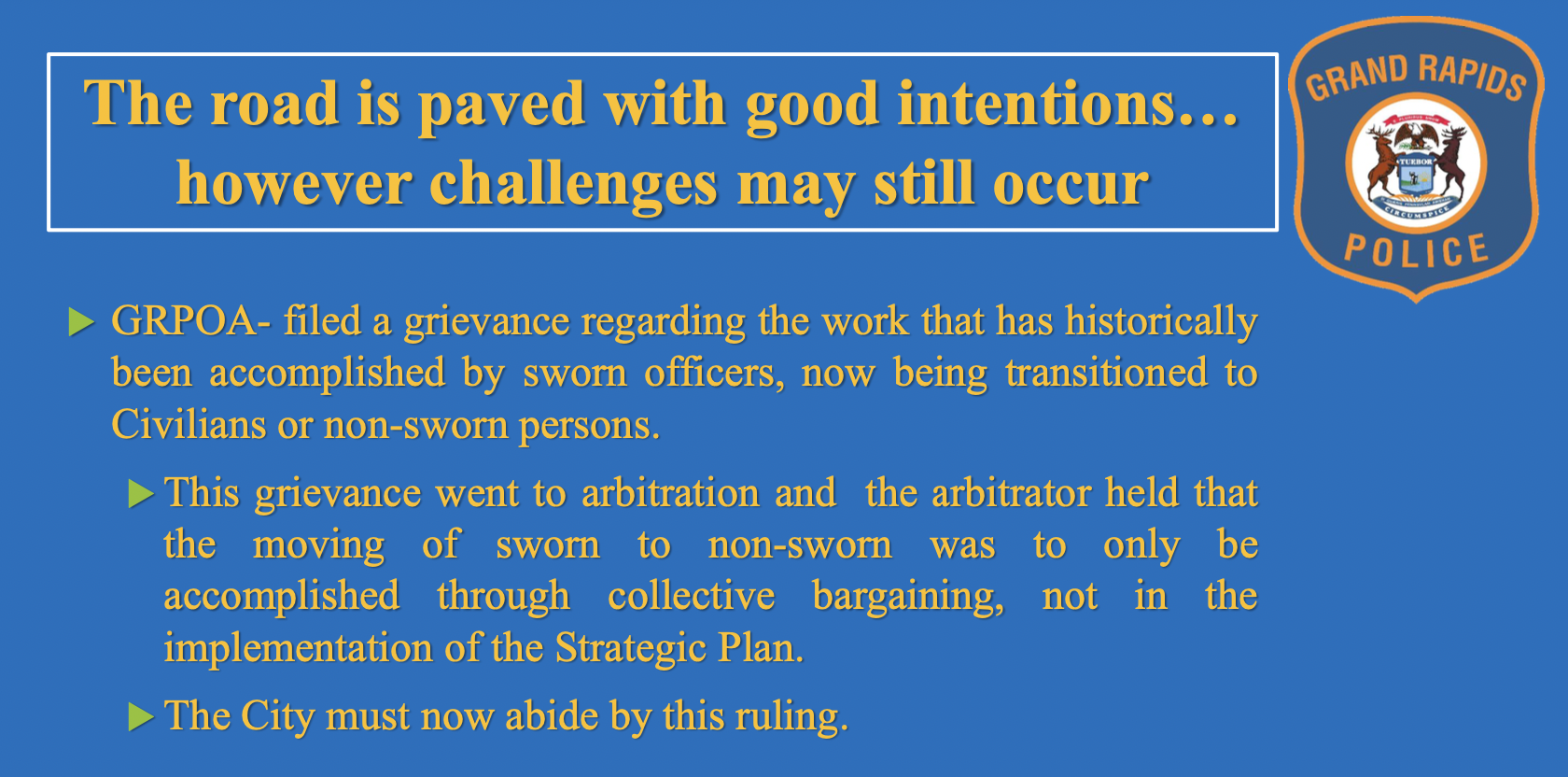
So, you can see that the GRPD union is resistant to even the mild reformist elements of the GRPD Strategic Plan, which came about as a direct result of the national uprising against policing after a cop publicly lynched George Floyd and after the May 30th uprising in Grand Rapids. The GRPD union has demonstrated over and over again that they will not tolerate any form of community accountability, which we have documented in recent years:
- GRPOA pushes back against scrutiny of GRPD relationship with ICE
- GRPOA complains about being held accountable
- GRPOA endorsement of a far right Congressional candidate in 2020
- GRPOA campaign to counter community calls for defunding the GRPD
The final page of the presentation is devoted to community feedback, with an emphasis on the use of the taxpayer funded Flashvote survey, which recently centered on the GRPD. The FlashVote survey about the GRPD is a waste of public funds. The number of participants in the City was 579, with a mix of responses. However, the questions asked were weak, vague and did not frame issues around how policing is done in this city and which communities are disproportionately harmed. Last summer there were over 3,000 communications with the City of GR to Defund the GRPD, 5 times the amount that this survey received, yet the City Manager and the City Attorney prevented the City Commission from voting on defunding. This FlashVote only re-enforces the fact that the City will not fundamentally do anything to reduced the GRPD’s budget, because City officials overwhelmingly support the function of the GRPD, which is to protect White Supremacy and the Capitalist Class interests in this community!
The arrest of Holland Restaurant owner provides a platform for far right ideas, which is then amplified by local news coverage
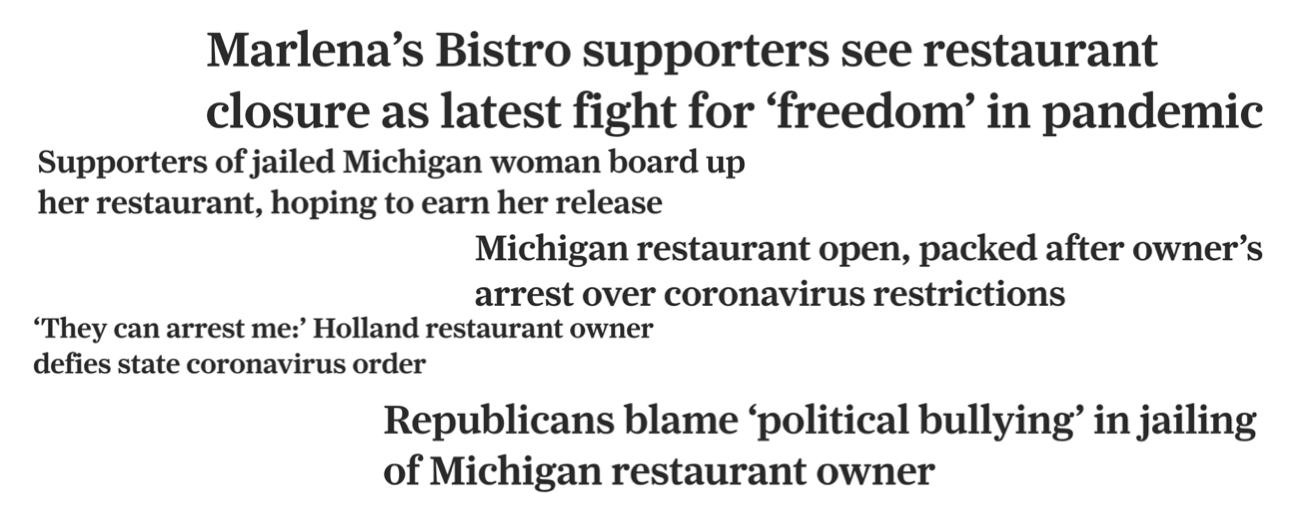 Over the past several days, the local news media has been reporting on the restaurant owner in Holland he went to jail for violation of COVID 19 polices.
The print and broadcast news media has been reporting on this non-stop, but more importantly is how they are framing the issue. In fact, there are several ways the West Michigan media has been framing this story. First, they are referring to the restaurant owner (Marlena) as someone who fled “communist Poland to migrate to the US.” Other stories keep using the term freedom to describe Marlena and those who support her.
How the local news media has been reporting on this story is very instructive, both for the kind of messaging the local news media is providing, as well as what they are not reporting. One example of the coverage, was a story that MLive ran on March 20th, a story that has been updated several times. This article is indicative of how the local news media has framed this issue, but more importantly, it demonstrates the poor quality of journalism that gets practiced in West Michigan.
The MLive story from March 20th was fairly long, as mLive stories go. In addition to the article, there were numerous pictures and two videos included, one that was just under 3 minutes in length, while the other was just over 23 minutes. However, let’s start with the written piece and then move on the deconstructing the videos.
While the MLive article does provide some context on why the Holland restaurant owner was jailed, stating:
The Michigan Department of Agriculture and Rural Development determined Marlena’s Bistro posed an “imminent threat to public health” because the restaurant remained open during a statewide shutdown on indoor dining and did not enforce mandates for face coverings or social distancing. Pavlos-Hackney’s license was suspended in January, but she remained open and declined to follow state safety mandates.
However, this information doesn’t come until paragraph 12 and even then it is sandwich in between comments from Republican Party operatives, candidates and other far right sources.
Those sourced in the MLive article from March 20th are: Michigan Republican Party co-chair Meshawn Maddock, Wyoming resident Julie Nelson, Make Michigan Great Again founder Mark Gurley, State Rep. Matt Maddock, Fox News commentator Tucker Carlson, Stand Up Michigan organizer Garrett Soldano, Jon Rocha, who organized the GoFundMe for Pavlos-Hickney, American Patriot Council founder Ryan Kelley.
In the short video, we hear from Make Michigan Great Again founder Mark Gurley, Michigan Republican Party co-chair Meshawn Maddock, and Stand Up Michigan organizer Garrett Soldano.
What is Wrong with this kind of journalism?
- Whether or not it was intentional, stories like the March 20 MLive piece provides an unquestioning platform for far right ideas, ideas that at a minimum threaten public health.
- None of the comments from those cited in the MLive article are verified, thus they end up being presented as fact.
- There is no information about or analysis on the issue of stay at home orders, PPP and other country models that pay people directly to stay home during the pandemic. The irony here is that at the federal level and in the State of Michigan, the primary push for re-opening the state, the decision to give businesses money instead of residents, all come from the Republican Party or Republican supporters, the same ones that have been most vocal about the Holland restaurant owner going to jail for public health violations.
- There is also no context for those who spoke. For instance, we don’t know who Make Michigan Great Again founder Mark Gurley and what he believes. If you read his website, it state, “Our purpose is to help influence Michigan communities and culture with a biblical worldview.”
- Then there is Stand Up Michigan, which talks about freedom a great deal, but the three team members – Tammy Clark, Ron Armstrong and Pastor Jason Georges – are all about promoting a far right brand of Christianity.
- In the longer video from the MLive article on March 20, we hear from Austin Chenge, who is running for Governor in Michigan as a Republican. Check out his platform, which includes “our God given American values, including Bible classes are taught in our schools.”
- Maybe the biggest omission had to do with Ryan Kelley, who is also running for Gov. of Michigan. MLive doesn’t tell us he is a co-founder of the American Patriot Council, that he organized the big anti-lockdown protests in Lansing last Spring, that he took part in the January 6th insurrection at the US Capital and that he has been connected to several of those charged with the attempted kidnapping of Gov. Whitmer.
- Lastly, it was instructive to see that those protesting for the Holland Restaurant owner were not wearing masks, despite the fact that it is being reported that there is another surge in COVID cases with the past week.
 This is our latest installment of The Devil is in the Details, which takes a critical look at Grand Rapids politics and policies, based primarily on the public record, such as committee agendas and minutes.
There are 2 issues we want to focus on in this installment of The Devil is in the Details, with the first one being the ongoing lack of transparency around the 1601 Madison SE project that is being spearheaded by AmplifyGR.
As we mentioned in the last installment of this post, AmplifyGR has been pushing this development project since last November, but has failed to identify which company will be located at the 1601 Madison SE property, despite the fact that AmplifyGR has been asking for a $1,943,810 tax break through the Brownfield Development Authority.
On March 17, I sent an e-mail to 3rd Ward City Commissioner Lenear, asking if she knew what company would be located at the 1601 Madison SE property, but as of this posting I have yet to get a response.
In the Southtown Corridor Improvement Authority packet for March 17th, there was new information on the AmplifyGR project. AmplifyGR’s Director Jon Ippel introduced Andy Shannon from MCPC, representing the tenant for the property. Mr. Shannon provided background on the company. However, the document never provides the name of the company. Andy Shannon is the President of Sales for MCPC, which is a Data Protection Company, which leads us to believe that the company that will be occupying the 1601 Madison SE property will be a tech company.
Also worth noting about this project is that Ruben Ramos, who sits on the Southtown Corridor Authority Board, said he would be abstaining from voting on this project. Unfortunately, the document doesn’t provide a reason why Ramos would be abstaining, but that usually means there is a conflict of interest, which often means those abstaining have a financial interest in the project.
The second issue we wanted to address in this addition of The Devil is in the Details, has to do with a new Parks & Recs policy proposal, which was included in the March 23rd Committee of the Whole packet, beginning on page 63.
The subject of the document listed states, Resolution approving City Commission Policy 1100-11; Naming and Renaming of Parks and Recreational Facilities. A more detailed explanation is referenced on page 66, which states:
These policies and procedures are intended to guide a) any individual or community group that is interested in having a park, building, or major feature named for a significant person, event, or place, b) any individual, group, or business that is interested in having their significant donation (park, building, major feature) named, c) the Parks and Recreation Advisory Board that will be making a recommendation to the department in regard to these requests, d) City Commission members that will be holding public hearings and approving the names of parks and buildings, and e) the Parks and Recreation Department Director and their staff.
Now, part of the documentation states that the naming or renaming of Parks and other public spaces in the City, “are not encouraged and should be entertained only after fully investigating and considering the potential impact of dropping the current name, of which will be included as part of the formal petition submitted.”
However, beginning on page 69, the document then begins to talk about naming and renaming public spaces for Major Gifts, meaning financial contributions. Here the document provides some details:
“When a gift is made to the Grand Rapids parks and recreation system that is of such magnitude and generosity that naming of such a new park or recreational facility in honor of or at the request of the benefactor, consideration to naming rights will be considered in addition to the other criteria outlined herein.
As a guideline but not a limitation, the threshold for naming rights on parks and buildings would include one or preferably more of the following:
- Deeding to the City of most, if not all, of the land on which the park or building to be named will be situated;
- Payment of one-half or more of the capital costs of constructing a park or building to be named (depending on the availability of matching funds or grants);
- Some long-term endowment for the repair and maintenance of a donated park or building; and
- The provision of significant program costs for facilities that will serve parks and recreation program needs.
When reading this, the only thing that I could think of was that the City is willing to consider naming or renaming public spaces based on financial contributions, which almost always means from those who are part of the Grand Rapids Power Structure. Does this mean that we might see in the not too distant future a park or other public space being named after Richard & Helen DeVos? It certainly seems possible, since on page 69 it references naming right for Benefactors – members of the Capitalist Class, and corporations, associations, and other legally created entities making a major gift.
Of course, this whole trend it rooted in the fact that government bodies have been adopting austerity measures, which are the hallmark of Neoliberalism. Austerity measures include the transfer of public money to the private sector, privatization of formerly public services and deregulation.
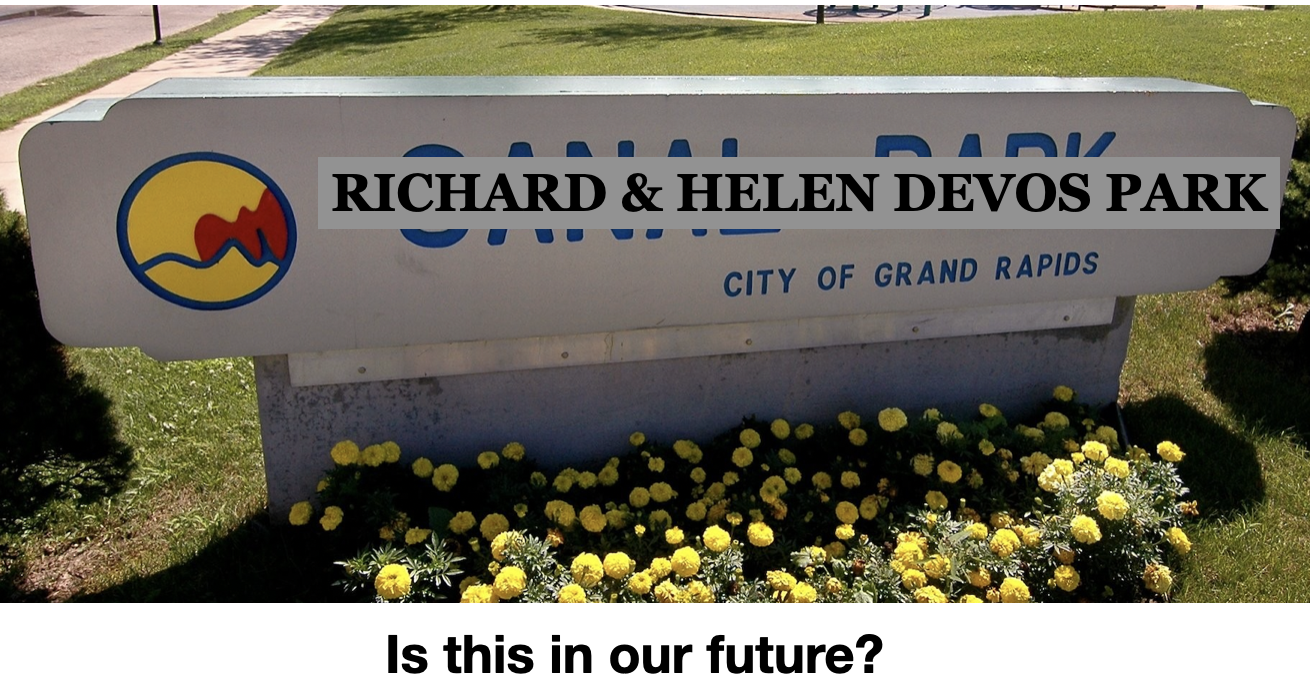
With this new Naming and Renaming of public spaces policy, it opens the door for rich people and corporations to buy naming rights, which would not only be insulting to the public, it would also be driven by the ongoing war that Grand Rapids Power Structure has been waging in this community. This war is being directed at the most marginalized in our community, with concrete material consequences, but it’s also a war being waged against historical memory and forgetting. The more our public spaces are named after those with financial and political power, the more likely we become vulnerable to a sanitized narrative about those who have been exploiting this city for decades.
How is it that we allow groups like Grand Action 2.0 to get away with the shit they do?
 There are many definitions of the term stakeholder, but most often, when used by those in positions of power it usually means, “denoting a type of organization or system in which all the members or participants are seen as having an interest in its success.”
The organization known as Grand Action 2.0, recently published their plans/wish list for further development in downtown Grand Rapids, development that is primarily about attracting tourists to the area. In fact, the document is referred to as Venue & Attraction Development for Grand Rapids.
On the last page of this document, there is a listing of all the Interviewed Stakeholders. If we are using the working definition of stakeholder listed above, those included in the Grand Action 2.0 document are almost all groups that would have an interest in the success of the development plan.
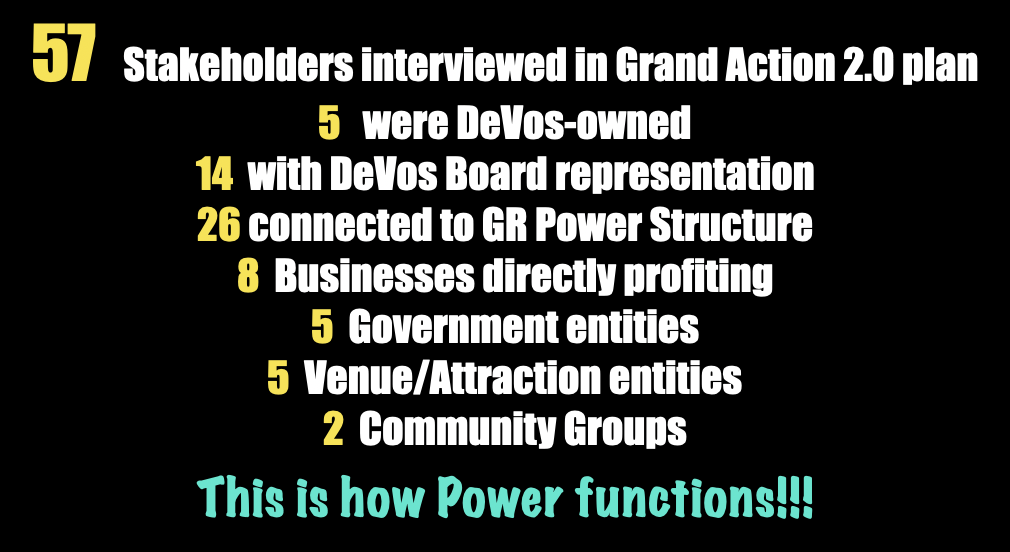
What follows is a list of the 57 stakeholders that were interviewed, with a hyperlink included for those who many not be familiar with the entity. However, in most cases the hyperlink takes you to the leadership or Board of Directors of the entity listed, so you can see how in most cases there is a small sector of the community, specifically representing the Grand Rapids Power Structure, which dictate do much of what happens not only in downtown Grand Rapids, but throughout the city.
After that, we want to organize the 57 entities under the following groups: DeVos family run, other entities that make up the Grand Rapids Power Structure, entities with DeVos family representation on its board of directors, businesses that would profit from the Grand Action 2.0 development plans, government entities, stakeholders that were included because of their tourist appeal, and stakeholders that were included because they represent the optics of community.
AHC Hospitality https://www.ahchospitality.com/properties
Amway https://www.amwayglobal.com/
ASM Global https://asmglobal.com/p/our-story
Bluewater Audio & Video https://bluewaterav.com/
Brigham Consulting https://www.brighamconsulting.com/
City of Grand Rapids https://www.grandrapidsmi.gov/Home
Colliers https://www.colliers.com/en/about#56bf90ae-53a7-4c31-b4e4-57fc4c0298a4 (Global Real Estate Company)
CWD Real Estate https://www.cwdrealestate.com/
DGRI https://downtowngr.org/about/dgri
Dick and Betsy DeVos Family Foundation https://www.dbdvfoundation.org/
DP Fox Ventures https://www.dpfox.com/
Experience Grand Rapids https://www.experiencegr.com/contact-staff/board-of-directors/
Fifth Third Bank https://www.53.com/content/fifth-third/en.html
Frederik Meijer Gardens & Sculpture Park https://www.meijergardens.org/storage/docs/21-024_Board_of_Directors_Web_Update.pdf
Frey Foundation https://freyfdn.org/founders-and-trustees/
Gerald R. Ford International Airport Authority https://www.grr.org/airport-board
GR Community Foundation https://www.grfoundation.org/about/trustees-committees
GR Mobile https://www.grandrapidsmi.gov/Government/Boards-and-Commissions/Mobile-GR-Commission
Grand Action https://www.grandaction.org/who-we-are
Grand Action 2.0 Executive Committee https://www.grandaction.org/who-we-are
Grand Rapids Ballet https://grballet.com/about/board-directors/
Grand Rapids Chamber of Commerce https://www.grandrapids.org/your-chamber/board-of-directors/
Grand Rapids Community College https://www.grcc.edu/about-grcc/leadership-administration/board-trustees
Grand Rapids FC https://grandrapidsfc.com/
Grand Rapids Next Gen Advisory Board https://www.grandrapidsmi.gov/Government/Boards-and-Commissions/The-Mayors-Next-Gen-Advisory-Board
Grand Rapids Opera https://www.operagr.org/board-of-trustees/
Grand Rapids Symphony https://www.grsymphony.org/board
Grand Rapids Urban League https://www.grurbanleague.org/board-of-directors
Grand Rapids Whitewater https://grandrapidswhitewater.org/funding/
Grand Rapids-Kent County Convention/Arena Authority https://www.vanandelarena.com/p/about/about-caa
Grand Valley State University https://www.gvsu.edu/boardoftrustees/
Jandernoa Foundation https://www.open990.org/org/383083625/jandernoa-foundation/
John Ball Zoo https://www.jbzoo.org/about/board
Kent County https://www.accesskent.com/Departments/BOC/members.htm
Kent County Hotel Advisory Board https://www.kentcountyhospitality.org/hotel-advisory-board/
Keystone Fund https://keystonefund.org/revenue-source/
Live Nation Michigan https://www.livenationentertainment.com/leadership/
Major League Lacrosse https://majorleaguelacrosse.com/news/2019/2/25/about-mll.aspx
Michigan Travel Commission https://www.michigan.org/board-members#asset-aid-19976
Midwest United https://www.midwestunitedfc.com/boardofdirectors
Northland United Soccer Club https://northlandunited.org/current-board-members/
NWSL https://www.nwslsoccer.com/leadership-team
Orion Construction http://orionbuilt.com/about-us
Osteria Rossa http://osteriarossa.com/about/
Pioneer Construction https://www.pioneerinc.com/our-team
Premier Productions https://www.premierproductions.com/about
Progressive AE https://www.progressiveae.com/overview/people/
Rockford Construction https://rockfordconstruction.com/team?drawer%5B0%5D=department-corporate
SJC Alliance https://www.scjalliance.com/culture/our-team/
Steelcase Foundation https://www.steelcasefoundation.org/staff-and-trustees/
Terryberry https://www.terryberry.com/about-us/
The Right Place https://www.rightplace.org/about-us/board-of-directors
United Methodist Community House http://www.umchousegr.org/about-us/our-board/
Van Andel Enterprises https://www.linkedin.com/company/va-enterprises-llc
Van Andel Institute https://www.vai.org/leadership/trustees/
Wege Foundation https://wegefoundation.com/trustees/
West Michigan Sports Commission https://www.westmisports.com/board
Western Michigan Hispanic Chamber https://westmihcc.org/board-of-directors/
Who these Stakeholders really represent
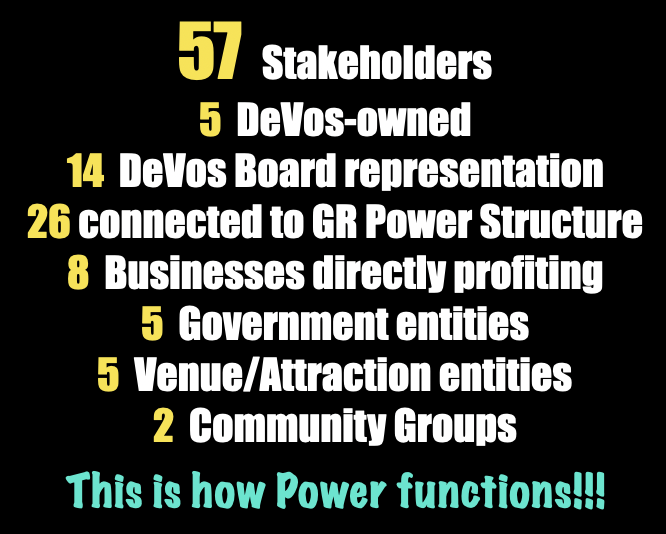
DeVos Family run entities – AHC Hospitality, Amway, Dick and Betsy DeVos Family Foundation, DP Fox Ventures and CWD Real Estate (partial ownership).
Other Grand Rapids Power Structure Stakeholders – CWD Real Estate, DGRI, Experience Grand Rapids, Frey Foundation, GR Community Foundation, Grand Action, Grand Action 2.0 Executive Committee, Grand Rapids Chamber of Commerce, Grand Rapids-Kent County Convention/Arena Authority, Grand Valley State University, Jandernoa Foundation, Orion Construction, Pioneer Construction, Progressive AE, Rockford Construction, Steelcase Foundation, The Right Place, Van Andel Enterprises, Van Andel Institute, Wege Foundation and the Western Michigan Hispanic Chamber.
Stakeholders with DeVos Board Representation – DGRI, Experience Grand Rapids, Grand Action, Grand Action 2.0 Executive Committee, Grand Rapids Chamber of Commerce, Grand Rapids Community College (funding), Grand Rapids Symphony, Grand Rapids Whitewater (funding), Grand Rapids-Kent County Convention/Arena Authority, Grand Valley State University, Kent County Hotel Advisory Board, The Right Place, West Michigan Sports Commission and the Western Michigan Hispanic Chamber.
Businesses that would likely profit from the Grand Action 2.0 development plans – AHC Hospitality, Bluewater Audio & Video, Colliers, CWD Real Estate, Orion Construction, Pioneer Construction, Progressive AE, and Rockford Construction.
Government entities – City of Grand Rapids, GR Mobile, Grand Rapids Next Gen Advisory Board, Kent County, and Michigan Travel Commission.
Stakeholders with tourist and venue appeal – Frederik Meijer Gardens & Sculpture Park, Grand Rapids Opera, Grand Rapids Symphony, Grand Rapids-Kent County Convention/Arena Authority, and John Ball Zoo.
Stakeholders that are community-based – Grand Rapids Urban League and United Methodist Community House.
The Rich get Richer and everyone else pays for it
In a March 10th WOODTV8 story, it was reported that the Downtown Development Authority (DDA) approved steps to create a new oversight group for the Grand River “development plans.” While the Grand River development plans are not the same as the Grand Action 2.0 Venue & Attraction Development for Grand Rapids document, these projects overlap and involved the same stakeholders, ie, representatives of the Grand Rapids Power Structure.
In the WOODTV8 story, one DDA board member, Greg McNeilly, had reservations about having “ too many oversight groups over time.” McNeilly, who represents the DeVos owned Windquest Group at the DDA meetings, is also the President of the Michigan Freedom Fund. It’s not surprising that McNeilly, who has been a DeVos operative for years, would verbalize his objection to too much oversight, but he really shouldn’t worry about this, since it is likely that whatever oversight group is put in place, will represent the DeVos and other Grand Rapids Power Structure member interests quite well.
Lastly, as thousands of families in Grand Rapids continue to face eviction, food insecurity and unemployment, the Grand Action 2.0 plans will continue to move forward without a hitch. In fact, those behind the Grand Action 2.0 plans, along with the stakeholders involved in the project, are delighted that so many people are busy just surviving, since that means they are not pissed off and organized against the Grand Action 2.0 plans to use public money to development more of the downtown area, which will lead to expanding the wealth of the members of the Grand Rapids Power Structure. If those who were struggling to survive knew what those in power were up to, it might look a whole lot like what happened on May 30th last year, when the police could not control the thousands of people who mobilized with righteous indignation against police repression and the concentrated wealth that exists within the Capitalist Class in the downtown area. The question for groups doing work outside of the non-profit industrial complex is, “how can we mobilize the disenfranchised to bring down the Grand Rapids Power Structure?”
GRIID Class on US Social Movements – Part VIII: Building a Framework for Social Movements and Radical Imagination
 In the 8th, and last, week of the class on US social movements, we discussed an article by Steve Darcy, which you can find here.
Darcy’s article has to do with the importance of creating autonomous and independent social organizations/structures that do not rely in the existing Capitalist structures in business, government and the non-profit sector, entities that he identifies as Social Movement Organizations, Class Conflict Organizations and Grassroots-Democratic Organizations.
In addition, Darcy explores what he describes as a two-pronged strategic framework – the resistance phase and the transition phase. The resistance phase is where we actively work to dismantled systems of power and oppression, using a whole array of tactics in that work. The transition phase is where we work to build alternative structures and a capacity to building the kind of community and society we want to see.
Participants were very engaged with the content from Darcy’s article and we began to discuss what this might look like in a variety of movement-based work.
The second part of week 8 was spent responding to four questions that were meant to engage people around some of the overarching themes raised in the first 7 weeks.
What have you learned about systems of power and oppression in US History, and how they have they have responded – pushed back, against social movements. Here, people discussed the Abolitionist Movement, the larger Black Freedom Struggle and the Labor Movement. Participants addressed how systems of power are always attempting to co-opt movements, present mild reforms – with the hope that it will weaken movements, direct suppression of movements and how systems of power always want to dictate the narrative around this history.
What have you learned about Social Movements, specifically about tactics and strategies that you may not have known before, and how have those tactics and strategies threaten systems of power? One participant made it clear, using the example of labor conflicts that it seems that unless there is significant confrontation, movements will not be effective. Another participant spoke to how the Abolitionist movement used direct action tactics like uprising, killing plantation owners and creating the Underground Railroad, all of which were tactics that used force and were determined by society to be illegal.
Whatever gains that have been made in the US, how have they come about? Here we discussed Zinn’s analysis that whatever gains we have made, they have come about because of our collective ability to organize and struggle to make the changes we want. Whatever gains we have made was the direct result of movements, never gifts from those in power and never as a result of elections. One of the participants pointed out that the 8 hour work day, worker benefits, etc, were the result of the Labor Movement, not because bosses or owners gifted those things to us.
How does our collective investigation into the history of social movements influence our understanding/participation in current movements? We ran out of time before getting to the fourth question, but there was some discussion about existing movements in the area and ways to get involved.
As always, facilitating these kinds of conversations is always engaging, always instructive and it is always affirming to watch and listen to people who are grappling with this history and how it impacts their understanding of what is happening in the present. Thank you all for your commitment to this class, your sharing and your insights!
Resisting Enbridge’s Line 3 in the Great Lakes: GRIID interview with Anishinaabe activist Joe Cadreau
 GRIID – Can you tell us when you will be going to Minnesota and why?
Joe – Yes, I will be leaving the Grand Rapids area on March 25th, heading to Red Lake Minnesota to stand in solidarity with fellow Indigenous people in demanding the shutdown of Line 3. For the last 6 years tribal nations, community and environmental groups in Minnesota have fought to stop Canadian oil giant Enbridge Energy from building the massive Line 3 pipeline in Northern Minnesota, to take oil from Canada’s tar sands region to Superior, Wisconsin.
The pipeline violates several treaties with the Ojibwe people that establish our rights to hunt, fish, and gather along the proposed route. The pipeline would cross 200 bodies of water, including the Mississippi River twice. If built, Line 3 would carry hundreds of thousands of barrels a day of tar sands crude oil — some of the dirtiest oil in the world — and would contribute the equivalent of 50 coal plants worth of carbon pollution to the atmosphere. Its carbon footprint would exceed the entire state of Minnesota’s.
GRIID – How long will you be there and are there any other members of the local indigenous community making the trip with you?
Joe – We will be there for 2-3 days to bring in some supplies and donations and to help uplift and amplify indigenous voices. There is a caravan that will be starting in the UP at the Bay Mills Indian Community and we will be meeting up in Grand Rapids and head to Minnesota as a group, kind of like back in the old days of AIM. As far as local indigenous community members from Grand Rapids, we have five tribal members that are going along with a group of allies.
GRIID – How important is the resistance of Line 3 to Indigenous people?
Joe – I think it is very important after the NoDAPL fight. NoDAPL proved to us that we cannot rely or trust the federal government to do the right thing, in regards to Indigenous people and treaty rights. Line 3 would violate the treaty rights of Anishinaabe peoples and nations in its path — wild rice is a centerpiece of Anishinaabe culture, it grows in numerous watersheds Line 3 seeks to cross. It’s well-past time to end the legacy of theft from and destruction of indigenous peoples and territories. Add the fact that ALL pipelines leak, this is non-starter for us as Anishinaabe, as the Dakota Access line proved!
I also think it’s important to understand that historically, we Anishaabek people earned our livelihoods off these wetlands and water sheds, from fishing, and fur trapping, to wild rice harvesting and land conservation. A historical fact that is often lost, is that Anishinaabe people were the people who discovered and plotted the trade routes in every water way and river from the Mississippi River eastward. These lands are not only sacred to our life ways, but also hold significant cultural meaning. I cannot stress enough the importance of resistance to Line 3 and Enbridge as a corporation.
 GRIID – Why do you think that the resistance to Line3 hasn’t received the same kind of attention from both the news media and climate justice groups, as Standing Rock did?
Joe – I believe the lack of attention to Line 3 has several factors, the first being that this fight has been on-going in the courts for the last 6 years. Secondly, I believe that mixed messaging from state leaders, particularly the governor has played a major role, and never under estimate the power of money and influence that Enbridge utilizes. And lastly, the current social climate in Minnesota, with police brutality on Indigenous and Black community members, the George Floyd murder, and the missing and murdered indigenous women movements, people are pulled in many different directions. Add on the pandemic and coverage becomes even more thin.
As legal cases continue to play out, long standing grassroots resistance to the pipeline have entered a new phase with public actions in multiple locations and dozens of arrests of peaceful water protectors. Native American Anishinaabe (Ojibwe) organizations have led the movement with groups like the Giniw Collective, Honor the Earth, Rise Coalition and Gitchi Gumi Scouts leading public actions along the construction route along with organizations including MN350 Action and Northfield Against Line 3.
GRIID – Are you able to talk about what you will be doing when you take part in the Line 3 resistance? If, so please share.
Joe – We are basically going there to help uplift and support Indigenous voices in whatever way that they need and tell us. We have some supplies and donations that we are also bringing to the Red Lake Treaty Camp. However, actions are progressing as Enbridge was given a permit and as the ground thaws, they have begun to stage pipeline and equipment along the route for construction. Some actions that happened over the last 2 months, included Indigenous women (Ogichidda Kwe) chaining themselves to construction equipment, construction of a Medicine lodge along the planned route, and peaceful demonstrations at various sites, where protesters were arrested.
 GRIID – Can you talk about how the Line 3 project is just another form of Settler Colonialism?
Joe – This project Line 3 along with Line 5 right here in Michigan and The Dakota Access Line are living forms of Settler Colonialism. They perpetuate the legacy of colonization and imperialism in the forms of land theft and destruction of a people and life ways in the name of capitalist gains. An easier way to explain what these pipelines mean to me as a proud Ojibwa man would be to compare them to confederate monuments. Just as the confederate monuments were created as a means to demonstrate white supremacy over a group, the pipelines serve the same purpose to indigenous people. A trophy of accomplishment over a people and culture and a constant reminder of that victory.
GRIID – What will it take for a similar kind of resistance campaign to happen in Michigan against Line 5?
Joe – Well, Line 5 is going to be interesting over the next couple of months. Governor Whitmer has demanded that Enbridge shut down Line 5. Through her office and by executive order it is supposed to be shut down by the first week of May. In return Enbridge has been defiant and has now employed the powers of PM Trudeau and has promised to take the fight to Washington DC.
Depending on what happens in May will determine what actions will happen not only in the courts and from the state, but also tribal nations and local grassroots. I believe that actions will only progress here in Michigan if Line 5 is not shut down. Over the last 2-3 years actions of resistance slowly increased over Line 5. From PR campaigns to activist filming and recording Enbridge workers, and even some had camps set up in areas on both sides of the Mackinac Bridge.
 GRIID – In what ways can non-indigenous people be supportive of the Line 3 resistance?
Joe – I have a quote from Winona LaDuke that I want to share, “Frontline leaders and climate activists have called on supporters to join in resisting Line 3. A leading opponent of the pipeline, Winona LaDuke, executive director of Honor the Earth calls the battle over Line 3, “ground zero in the battle over climate change”. “This is the last pipeline. This is the last battle, and that battle is in Minnesota …We expect thousands of people to join us.“
They can also donate to the Red Lake Treaty Camp on Facebook, or you can donate and find ways to support by visiting, https://www.stopline3.org
I think it is important to remember that Standing Rock and the NoDAPL movement were not only effective and impactful because of the many tribal nations that united. Yes that was important. But, the fact that many different cultures, and people came and stood with those tribal nations and indigenous people, also contributed to the success of that movement.
How many people have the police killed in 2021 so far? Asking for Johnny Brann Sr in Grand Rapids and Voice for the Badge
 As I am accustomed to doing on a regular basis, early this week I checked the Voice for the Badge Facebook page.
On March 13th, the founder of Voice for the Badge, Johnny Brann Sr. made the following post:
2021 to date
Nationally
62 police officers died/killed
8 suicides
Ya feel good about that – haters of Police?
If you do you’re a sick demented – individual
God Bless our Police
Johnny Brann Sr.
VFB
We are here for you Blue
Some harsh words for those of us who supporting the Defunding of the GRPD.
I looked in to where Johnny Brann Sr might have got his data on police deaths so far in 2021, especially since he never sources his data. I did an online search and looked at the site called Officer Down Memorial Page, since I wanted to find the most pro-police site I could find. That page has 69 deaths as of the week of March 15th for 2021.
However, upon looking at the list of reasons for police officers dying in 2021, the number one reason was COVID 19, which has resulted in 38 police officer deaths. The next highest is gunfire (11) and then they list a whole bunch of other reasons, which you can see at this link. https://www.odmp.org/search/year
Therefore, more than half of the deaths of police officers have been due to COVID 19, and based on the data from the Officer Down Memorial Page, it appears that maybe 14 police officers have been killed by someone, while on duty, so far this year.
Comparatively, the number of people that police officers have killed across the US so far in 2021 is substantially higher. According to the database that the Washington Post has been using since 2015, the number of people that cops have killed so far in 2021 (under the heading Fatal Force) is 179.
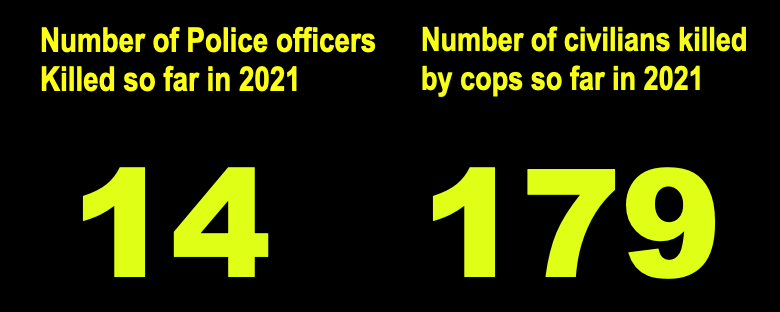
Based on the data provided by these two sources, there have been 14 police officers that have been intentionally killed, compared to 179 people that police officers have killed during the same amount of time. That is a 12.7 to 1 ratio, meaning for every police officer that is killed while on duty, the cops kill 12.7 people.
Who again, are the sick and demented people Johnny Brann Sr?
GOP proposes anti-trans legislation in Michigan: Every co-signers of the bill has received money from the DeVos family
 On March 10th, GOP Senators in Michigan introduced legislation that is anti-trans.
The proposed bill, Senate Bill 0218, was introduced by Michigan Senator Lana Theis and was sponsored by the following GOP Senators: Tom Barrett, Jim Runestad, Roger Victory, Jon Bumstead, John Bison, Kevin Daley, Rick Outman, Aric Nesbitt, Kimberly LaSata, Michael MacDonald, Dale Born and Curtis VanderWall.
The proposed anti-trans legislation would:
“Require that only biological males may compete for a position on and compete on a boys’ high school team in an interscholastic activity and only biological females may compete for a position on and compete on a girls’ high school team in an interscholastic activity; provide for. Amends 1979 PA 451 (MCL 380.1 – 380.1852) by adding sec. 1146a & repeals sec. 1289 of 1976 PA 451 (MCL 380.1289).”
These kinds of bills are being proposed all across the country at the state level and are being supported by three large historically anti-LGBTQ groups, the Family Policy Alliance, The Heritage Foundation, and Alliance Defending Freedom. According to a recent article from Political Research Associates:
Amid a spate of legislation in early 2021 targeting trans-affirming health care for youth and trans and gender nonconforming athletes, Ohio State Representative Jena Powell (R-Arcanum) announced this week that she had signed on to The Promise to America’s Children, a collaborative effort between the Family Policy Alliance, The Heritage Foundation, and Alliance Defending Freedom. The ten principles set forth a vision for childhood in which comprehensive sex education is banned in schools, teachers aren’t allowed to talk about LGBT people, students can openly discriminate against their LGBT classmates and teachers, parents are encouraged to submit their LGBT children to unethical conversion therapy and schools are powerless to protect them, trans student athletes are prohibited from playing sports, trans children are unable to access life-saving trans-affirming care, child-welfare organizations are encouraged to discriminate against LGBT prospective parents, and schools are forced to out LGBT students to their parents, regardless of safety considerations.
In addition to the national anti-LGBTQ groups that are pushing this type of legislation across the country, all of the sponsors of Senate Bill 0218 have also received substantial campaign contributions over the years from the DeVos family. As we have reported in the past, the DeVos family has consistently financed candidates that take an anti-LGBTQ stance, anti-union, anti-transparency and pro-Neoliberal economic policies that almost always include austerity measures.
What follows are a list of the GOP sponsors of Senate Bill 0218 and how much money they have received directly from the DeVos family or from the House ($1,880,000) and Senate ($1,121,000) Republican Campaign Committees, to which the DeVos family is the number one contributor.
- Senator Lana Theis DeVos family $12,000
- Senator Tom Barrett $30,000, plus Senate Republican Campaign Committee, $507,236 and House Republican Campaign Committee, $448,009
- Senator Jim Runestad DeVos family $12,000, plus Senate Republican Campaign Committee, $535,495
- Senator Roger Victory DeVos family $2,500
- Senator Jon Bumstead Senate Republican campaign Committee, $483,856
- Senator John Bison DeVos family $30,000, plus House Republican Campaign Committee, $345,974
- Senator Kevin Daley DeVos family $10,000, plus Senate Republican Campaign Committee, $190,883
- Senator Rick Outman House Republican Campaign Committee, $168,783
- Senator Aric Nesbitt DeVos family $4,500, plus House Republican Campaign Committee, $12,000
- Senator Kimberly LaSata DeVos family $12,000
- Senator Michael MacDonald DeVos family $10,000, plus Senate Republican Campaign Committee, $648,090
- Senator Dale Zorn Senate Republican Campaign Committee, $504,975
- Senator Curtis VanderWall DeVos family $9,000, plus House Republican Campaign Committee, $83,825
 Last Monday, the GRPD arrested 8 people during a march organized by Justice for Black Lives, a march that happened on the first day of the trial for the cop who lynched George Floyd was to begin.
On Tuesday, the 8 people who were arrested held a Press Conference to share their ind=sights on what happened, with the over-arching message that organizers, particularly Black organizers were targeted for arrest by the GRPD.
The GRPD posted their own response to the arrests, using misinformation, double speak and gaslighting to make their point.
On Saturday, I attended the 1 year anniversary march for when police shot and killed Breonna Taylor, while she was at home and sleeping in her bed. As of today there has been no justice for Breonna Taylor and her family.
The Breonna Taylor march on Saturday had a permit. Someone told me that people not connected to the march organizers offered to pay the fee for the permit, but what is problematic about that is that getting a permit plays into the GRPD’s propaganda. I have spent the past week reflecting on what has happened in Grand Rapids and thought it might be useful to remind us all of important aspects about engaging in protests and revolutionary politics.
1. There have been plenty of people in the last week, along with the GRPD, saying, It’s against the law to march in the streets without a permit. First, the cops always selectively enforce such laws. The GRPD constantly blocks traffic in front of the arena to allow pedestrians to cross the street, even though people could cross during the normal crosswalk designations. More importantly, the GRPD has not arrested a single person during protests that have been in the streets since June 2nd, just two days after the rebellion that took place on May 30th, until last Monday. Lastly, we DO NOT NEED PERMISSION to fucking protest. It’s a protest!
2. There is No such thing as a peaceful protest when cops are involved. First, it is important to come to terms with the use of the word peace, which for many people means the absence of conflict. If we think about peace in terms of a protest, then we have to ask ourselves if there is no conflict. The very nature of a protest, whether we are talking about climate change, US militarism or police violence against black people, there is always an inherent conflict. People protest because some injustice has occurred, because they want to express some grievances, grievances often directed at the very institutions which are at the heart of the conflict. Therefore, we can conclude that a protest cannot be peaceful, since there indeed is a conflict.
Second, it is important that we frame the issue of racism, White Supremacy and the police murder of black people through the lens of power. Systems of power, like police departments, have the backing of the legal system, the political system and propaganda systems like news media, popular culture and schooling, all of which present a general narrative that police are necessary and most of them are “good.” All of these systems of power protect and legitimize police and policing. However, police departments are one clear example of structural violence, which we are conditioned to not think about. As Alex Vitale, author of the book, The End of Policing, states:
 Well-trained police following proper procedure are still going to be arresting people for mostly low-level offenses, and the burden will continue to fall primarily on communities of color because that is how the system is designed to operate – not because of the biases or misunderstandings of officers.
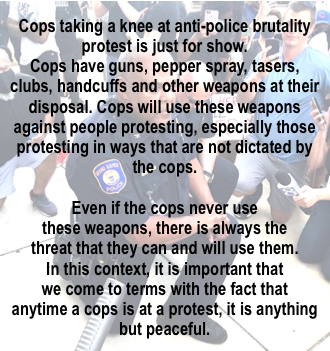
Third, the presence of police at a protest, means there are people with guns, tasers, mace, clubs, tear gas, rubber bullets and a whole range of other high tech weapons. As anyone who has ever participated in a protest knows, it doesn’t take much for the police to use any number of these weapons. In fact, one could argue that the police are looking for a reason to use such weapons. However, even if they don’t use these weapons, there is always the threat of their use, which means that whenever cops are at a protest it CANNOT be peaceful.
Fourth, calling a protest peaceful, when protests are anything but peaceful, is a way for the system(s) to dictate the narrative about what is happening. When the police say a protest was peaceful, they mean that those protesting obey their orders, did nothing to disrupt business as usual and often it means that protest organizers cooperate and even collaborate with the police. In fact, one could argue that if this happens, then it is not really a protest, instead it becomes a performance. Such forms of “protests” are almost always organized by white liberals to make other white people feel good about themselves, without having to interrogate systems of power and oppression.
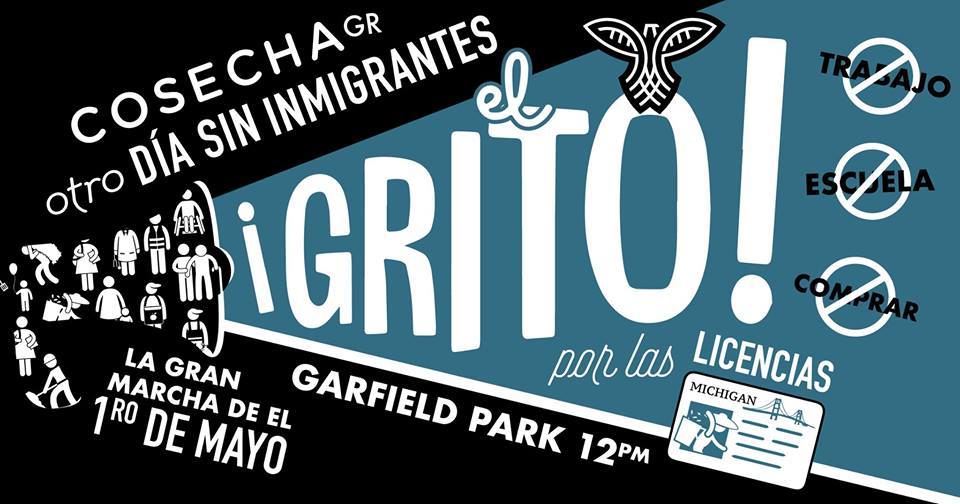
3. Disruption is a long standing tactic within Social Movements. The history of Social Movements is filled with actions – marches, sit-in, strikes, civil disobedience, insurrection – that are designed to be disruptive to business as usual, to what is normative. But here is thing – White Supremacy, poverty, mass incarceration, the climate crisis, rape, structural violence, these are normative, particularly within a Capitalist system. Social Movements disrupt the norm. Social Movement tactics, like blocking traffic, are designed to disrupt business as usual because they want people to be confronted with the grievances that people are making public, like the systemic practice of cops lynching Black people. Movimiento Cosecha often carries a banner with them that says, We’ll stop interrupting your lives, when you stop interrupting ours. What they mean by that is we’ll stop blocking traffic when you stop a system where ICE can take my family members, lock them up and deport them, with a likely outcome that the parent that was arrested will never see their children again, and all of this happens because people do not have documentation.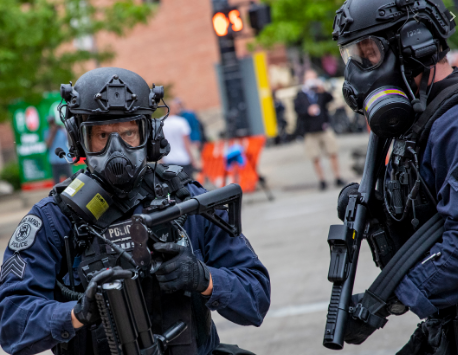
4. Systems of power and privilege will always push back against calls for radical change. All of the responses we have seen in the past week, from both the GRPD and Grand Rapids City Officials, while infuriating, is expected. Systems of power will always push back against social movements, especially when there are calls for radical systemic change. In fact, one could argue, based on history, that systems of power will often become more entrenched precisely because they feel threatened. We should celebrate this fact, since it means that those in power feel threatened and their push back is a signal that they feel threatened. Systemic and structural change never comes about quickly, nor does it come without sacrifice. We have to be in these kinds of struggles for the long haul and not give in to the temptation of reformism.
5. The GRPD acted exactly how they were supposed. When it comes to how policing happens in Grand Rapids or around the country, we need to come to terms with the fact that they are designed to protect the very systems of power that oppress us. The GRPD arrested 8 people last week and targeted Black organizers because that was a strategic response on their part. None of it is random.
When dealing with protest movements, the GRPD will use two overarching strategies, Negotiated Management and Escalating Force. Negotiated Management – also called Command and Control techniques – this is when police attempt to negotiate actions, always with the goal to manage it. This often takes the form of cops asking people to get permits to protest, showing up at a protest to let everyone know that they are there to keep people safe, when in fact they are there to manage or control public dissent.
Escalated Force – this is where the state uses surveillance, infiltration, negative press, pre-emptive arrests, protest zones and the use of less lethal weaponry to suppress public resistance. This is what we have seen in Grand Rapids beginning on May 30th, where they have used weapons agains the public, relied on curfews, brought in the National Guard, sought to control the public narrative in the news media and have created the good protester/bad protester dichotomy.
Until we come to terms with these facts, we will continue to view the police as a necessary good and only seek to reform the GRPD. When we speak the language of copspeak – of police reform – we see the world as police do. Police reform is the science of police legitimation accomplished through the art of euphemism. Police reform speaks in a language carefully calibrated to limit our ability to understand police as anything other than an equitable force and indispensable institution.
Ultimately, we have to see that police and policing, even in West Michigan, function to protect power. Black communities have understood this about the US, since the country was founded. James Baldwin, in his famous 1966 essay on policing, referred to policing as a function of an occupying power. The Black Panther Party for Self Defense used the same language several years after Baldwin wrote his essay, always referring to the police as an occupying force.
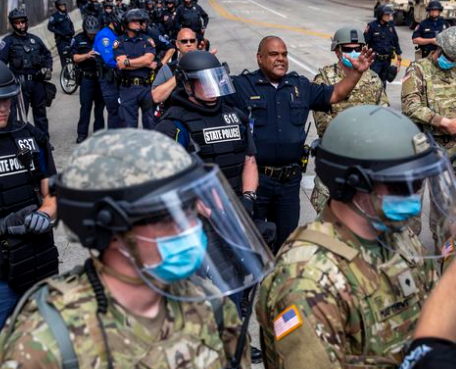 However, white communities don’t tend to see the police through the same lens, especially white liberal communities like Grand Rapids. As Alex Vitale, in his groundbreaking book, The End of Policing:
“For liberals, police reform is always a question of taking steps to restore the legitimacy of policing…………They want the police to be better trained, more accountable, and less brutal and racist – laudable goals, but they leave intact the basic institutional functions of the police, which have never really been about public safety and crime control………..The reality is that police exist primarily as a system for managing and even producing inequality by suppressing social movements and highly managing the behaviors of poor and nonwhite people; those on the losing end of economic and political arrangements.”
Lastly, the 5 points we just laid out are precisely why the GRPD needs to be Defunded.
GRIID Class on US Social Movements – Part VII: The Immigrant Justice Movement in Grand Rapids
In the 7th week of the class on US social movements, we looked at the Immigrant Justice Movement in Grand Rapids, using a chapter from my forthcoming book, A People’s History of Grand Rapids.
When Grand Rapids was formally founded in 1850, just shy of 3,000 people lived in the city. As was mentioned earlier, the Europeans who came to the area were French, English, German and Dutch, but soon came Polish, Lithuania, Irish, Italians and Jewish immigrants.
According to Randal Jelks’ book, African Americans in the Furniture City: The Struggle for Civil Rights in Grand Rapids, there were few African Americans in the City in the middle of the 19th Century. According to the archives of Paul I Phillips, an African American leader in 20th Century Grand Rapids, there were 9 African Americans in 1854 and 48 in 1870. However, African Americans did not migrate to Grand Rapids in significant numbers until the 20th Century.
US immigration policy began to adjust in the later part of the 19th Century, particularly when non-European’s were coming to the United States. The growing Chinese population on the west coast eventually led to the passage of the Chineses Exclusion Act in 1882. This legislation was coupled with growing anti-Chinese sentiment in the US, so much so that white Californians were recruiting other white people to come their state to deal with the “Chinese problem.” According to a December 24, 1885 story in the Grand Rapids Evening Leader, headline, The Chinese Must Go:
Nine members of the Cigar maker’s Union of this city will leave Saturday to join the army that is going to California to help drive out the Chinese. They will meet a train load of tobacco rollers at Chicago going in the same direction. E.B. Griffin, formerly of Michigan, now located in San Franciso, writes that there are situations for about 2,000 cigar makers in that city, the war on the Chinese having been a success.
Ethnic resentment was used by the Capitalist Class in Grand Rapids to pit Euro-Americans against each other during the 1911 Furniture Workers Strike, but for most of Grand Rapids history this was not the norm.
This is not the case with non-Europeans who came to live in Grand Rapids, where they face discrimination and xenophobia. African Americans faced Jim Crows realities in Grand Rapids in the 20th Century, like red-lining, while Arab Americans who came here faced xenophobia, along with religious discrimination and an increase in anti-Arab treatment, especially after September 11, 2001.
This is not to say that Grand Rapids doesn’t have a long history of welcoming people who have come to the US with a refugee status. There are numerous agencies in the city that have a decades-long history of providing support and transition to refugees from Vietnam (see Flight to Freedom: The Story of the Vietnamese of West Michigan, by Gordon Olson), people who have fled violence in various African nations, and Haitians who began coming during the politician conflicts between the US and Haiti in the early 1990s.
However, for lots of other people who immigrated from south of the US border, particularly Mexican, Guatemalan, Salvadoran, Honduran and to a lesser degree, Puerto Ricans, Dominicans and Cubans, there has been a different kind of reception.
Mexicans who have migrated to Michigan started coming in the early part of the 20th Century, primarily because of the large migrant labor demand that exists in West Michigan. Mexicans and Mexican Americans have been living and working in West Michigan in the agricultural sector for decades, especially since the Bracero program was begun during WWII. Even after the Bracero program was formally ended in 1964, other temporary visa programs were designed to allow farm workers to come into the US.
However, as the US/Mexican border became more militarized and anti-immigrant organization became more influential (like the group Federation for American Immigration Reform) the amount of undocumented/under-documented immigrants increased across the US and in the Grand Rapids area.
It was in this context that the immigrant justice movement was born. We used a timeline that Movimiento Cosecha GR uses when they do trainings on this topic, which are included here.
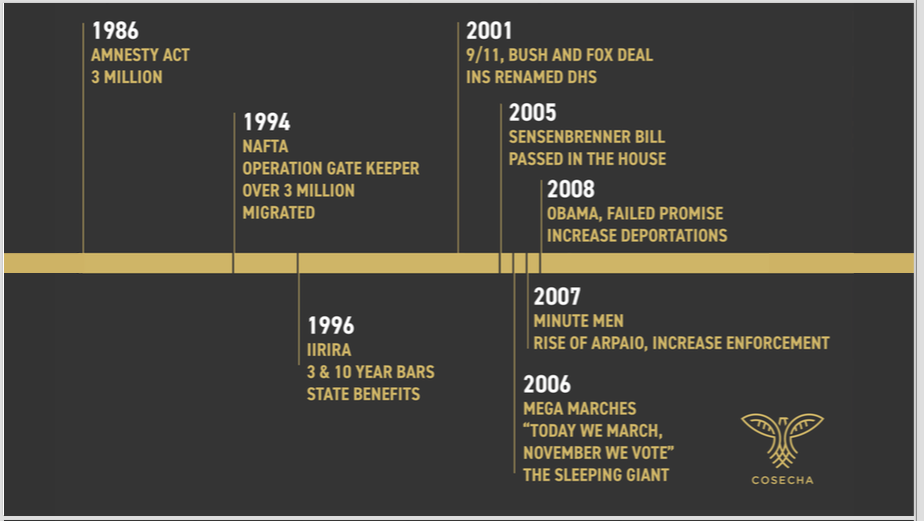

Part I of the Immigrant Justice Movement began as a response to proposed legislation in 2005 from Rep. Sensenbrenner, known as the Border Protection, Antiterrorism and Illegal Immigration Control Act of 2005. The immigrant community got organized over the next several months and then held a massive protest (10,000 strong) in late March of 2006, which was reported on by the Indymedia site Media Mouse.
However, there was no immigrant-led entity to maintain the necessary organizing, plus many in the immigrant community got behind the candidacy of Barack Obama and the Democratic Party’s proposal of Comprehensive Immigration Reform. The Obama campaign promised Comprehensive Immigration Reform, but never delivered on this promise and many immigrants became disillusioned by electoral politics, along with the fact that roughly 3 million undocumented immigrants were deported under the Obama/Biden administration.
After the election of Donald Trump, there became a renewed interest in immigrant rights, in part because of the overtly anti-immigrant rhetoric of the new administration and some of the early policy positions. More importantly, the immigrant justice movement now was being led by immigrants and immigrant groups like Movimiento Cosecha. This was all discussed in the class as Part II of the Immigrant Justice Movement.