Despite public perception, the Democratic Party is equally committed to supporting and increasing funding for the police
In recent years the issue of policing has come under greater scrutiny, particularly by BIPOC communities that have disproportionately been the target of police surveillance, harassment, violence and arrest.
The public has been confronted by the issue of policing, especially since the police murder of Michael Brown in 2014, followed by a series of other policing killings of Black people, which culminated in the protests that erupted after the death George Floyd in 2020.
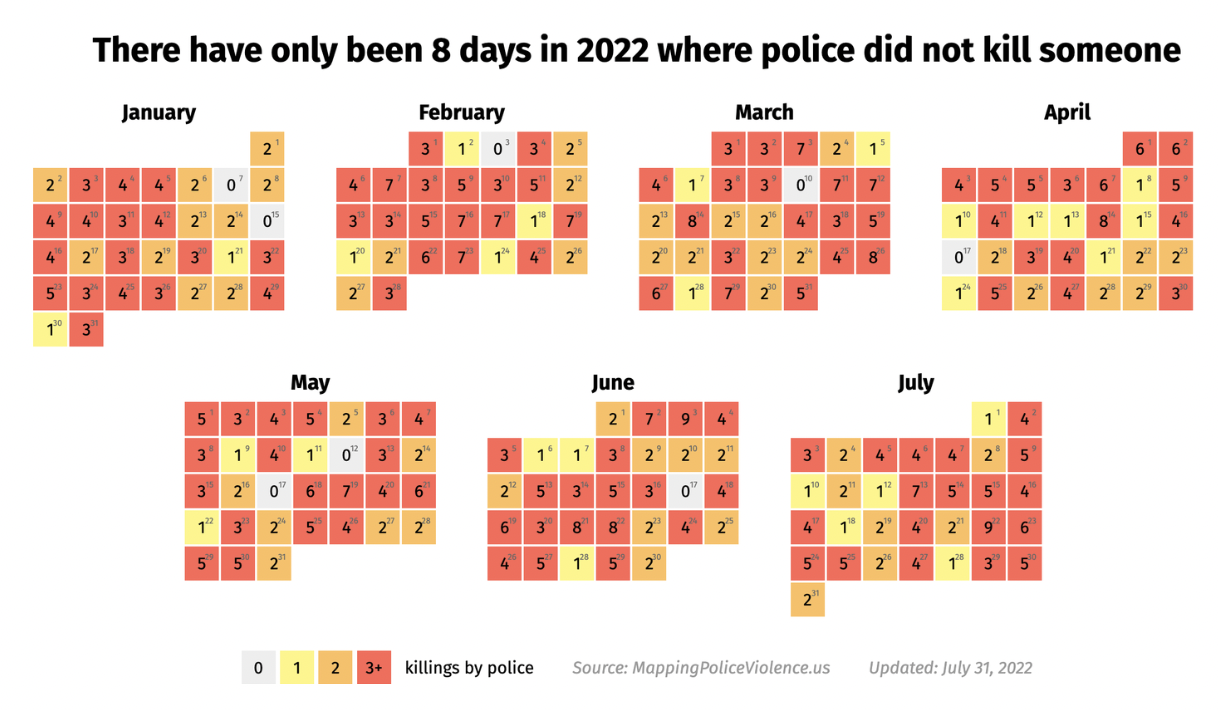
The Movement for Black Lives, along with numerous other BIPOC-led movements dealing with policing and the Prison Industrial Complex, had been critical of the mild and incremental reforms that had been proposed every time a Black person was murdered by the police. When the 2020 uprisings took place, these movements began demanding that the police should be defunded, which was a strategy within a larger goal police abolition.
The idea of defunding or abolishing the police was a radical idea, which resonated with lots of people who were part of the Black Freedom Struggle and other liberation movements within the US. However, many mainstream progressives and liberals not only pushed back around the possibility of abolishing or defunding the police, that they even decided to create their own narratives around what defunding the police actually meant. These narratives not only sought to undermine the very idea of the defund/abolish framework, it was completely counter to what the Movement for Black Lives was proposing, as we noted in a July 2021 post.

In fact, it was white liberals and progressive that went out of their way to undermine the work of the Movement for Black Lives, through their attempts to “clarify” what defunding the police really meant. This was particularly the case for those with the Democratic Party.
The re-framing of what defunding the police meant by Democrats is generally argued as a response to the GOP who conflated the Democrats with Black Lives Matter activists and/or antifa radicals. There may be some truth to this, but it is very thin. The Democratic Party establishment has always been committed to supporting and defending law enforcement agencies in the US, ever since policing and policing departments became established in the 19th Century. The Democratic Party has been equally committed to taking police union funding during electoral cycles, which has always resulted in the pro-police legislation that has been adopted, like the 1994 Violent Crime Control and Law Enforcement Act, more commonly known as the Crime Bill.
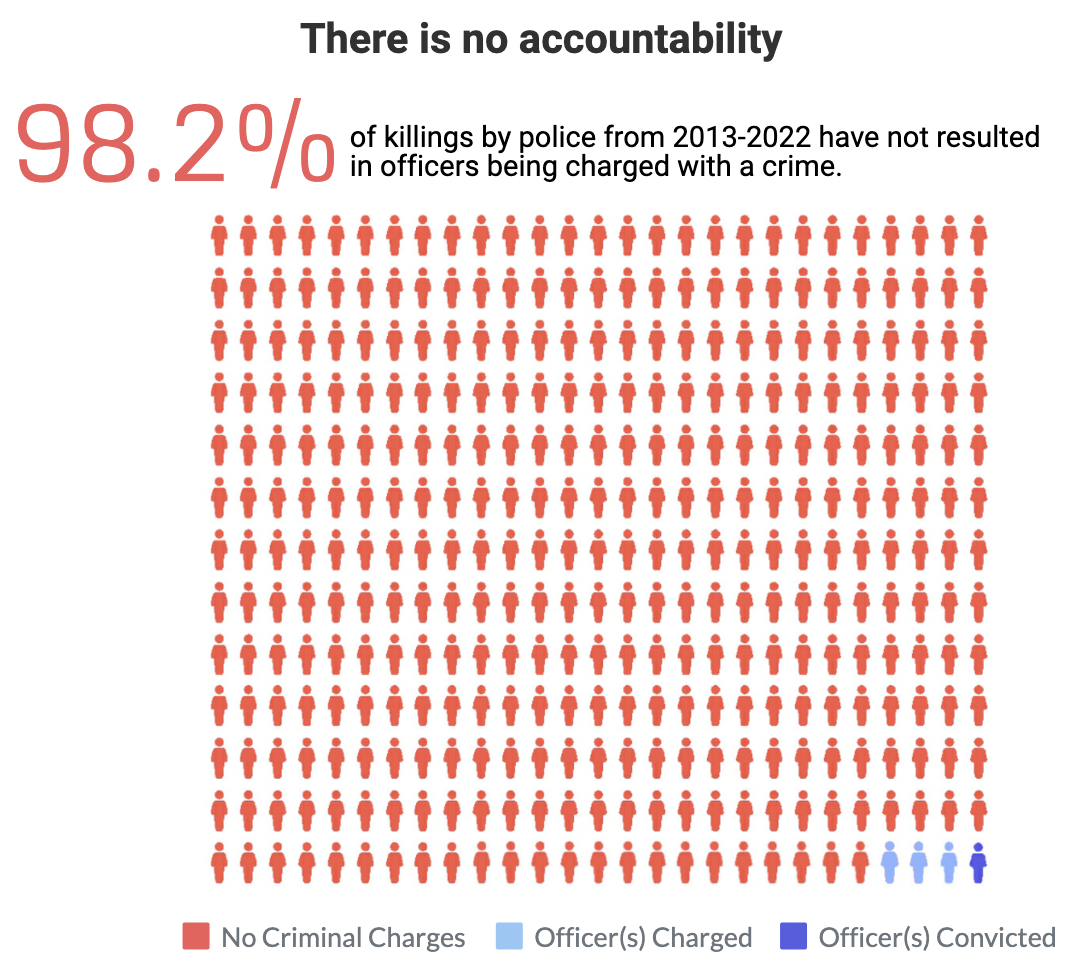 One way to gauge the Democratic Party support for policing is to look at their reaction after the 2020 uprisings. While Joe Biden was running for the Presidency in 2020, he made it clear that he was committed to better training and an increase of funding for cops.
Just this past May, the Biden Administration released a plan for a multi-billion dollar effort to fund policing around the country, in what Biden is calling the American Rescue Plan. Then in late July, the Biden Administration was requesting an additional $37 Billion in funding for the police, in what the White House is calling the Safer America Plan.
At the State level, we have been tracking how the Democratic Party has maintained the same position on policing, with mild reformist rhetoric, but always a call for adding more police officers and more funding for the cops. Last December, the Michigan House of Representatives passed a nearly unanimous bill that would provide an additional $300 Million for policing.
Just last month, there was also bi-partisan support at the state level to provide an additional $20 Million for the Michigan State Police. State Representative David LaGand was quoted as saying of this bi-partisan support, “I’m especially proud to see that several of my priorities are part of the final budget, including funding for public safety. We’ve included grants for community policing.”
The commitment to policing and police funding is also part of the platforms of several Democrats running for state office from West Michigan. Part of that commitment is due to the fact that these Democrats who are either State Senators or State Representatives have received substantial amounts of campaign contributions from police unions. For example, since 2014, State Senator Winnie Brinks has received $5000 in campaign contributions from the Grand Rapids Police Officer’s Association PAC.
State Representative David LaGrand, who is running for State Senate, has under the title of Criminal Justice Reform, that he “introduced legislation to support public safety in communities.” The reality is that the legislation LaGrand introduced involves hiring more State Police Officers and provides grants to local communities to add more cops.
Democratic State Representative candidates from West Michigan have also made it clear that they support the police, more funding for the police and some of them have received campaign contributions from the GRPD union during their political careers. Phil Skaggs, running for State Representative, has received funding from the GRPD union and he believes in ongoing support for police departments, along with additional funding for training. These sentiments from Phil Skaggs are clearly reflected in his statement on April 14th, after he watched the video that was released by the GRPD on the police shooting of Patrick Lyoya, which you can read on his Facebook page. In that statement Skaggs praises cops for “keeping us safe”, plus he advocates for more training and more support for Law Enforcement agencies.
 Another Democratic State Representative who is running for re-election, is Rachel Hood. In a recent paid ad for her campaign, Hood advocates for Safe and Strong Communities, where she touts the $368.5 million in funding for hiring and retaining cops.
One last example is Democratic Candidate for State Representative, Kristian Grant. On Grant’s campaign platform page, she makes it clear that she supports police departments and believes there needs to be more training and more hiring by police departments, specifically to hire more cops from the communities they will work in.
At the local level, the Kent County Commission did nothing to end the contract with Immigration and Customs Enforcement, but the contract ended primarily because of the pressure that the Immigrant Justice Movement applied on Kent County. With Grand Rapids City officials, there has also been tremendous resistance to defunding the GRPD. Within a month after the May 30, 2020 uprising in Grand Rapids, the City of Grand Rapids had heard from 3,000 – 4,000 residents demanding that the GRPD be funded to the 32% minimum that was mandated by the 1995 City Charter. This demand continued and was amplified after the GRPD murdered Patrick Lyoya, but despite the ongoing pressure, no City official – not the City Manager, the Mayor, nor the six Commissioners – have been willing to call for the defunding of the GRPD.
In addition, I think it is worth mentioning that a few months ago, someone who attended a Kent County Democratic Party meeting, told me that Democratic candidates were told to not make waves at the Grand Rapids City Commission meetings around the GRPD murder of Patrick Lyoya. Democratic Party candidates were also told to not be seen as supporting the Justice4Patrick movement that has been challenging Grand Rapids City officials during commission meetings.
If you are interested in supporting the efforts to defund the police and/or abolish the system of policing, then it would be impossible for those objectives to be won by voting for Democrats. The Democratic Party has demonstrated since the 2020 uprisings that they are equally committed to hiring more cops and voting for more funding for police departments.
Not one single Democratic official or Democratic Party candidate in the West Michigan area is calling for a reduction of funding for police departments or the abolition of policing. Therefore, we cannot rely on the so-called liberal political party to achieve the goals of defunding and the abolition of policing in this community. If we want to defund the cops and then abolish them, we will have to use Direct Action as a primary strategy and build movements that can win such goals.
The Devil is in the Details: The Business of Grand Rapids is Business and Business as usual……as long as the public pays for it
 This is our latest installment of The Devil is in the Details, which takes a critical look at Grand Rapids politics and policies, based primarily on the public record, such as committee agendas and minutes.
At the last Grand Rapids City Commission meeting, from July 26th, there were a couple of agenda items that were approved, which is what I want to address here. In both cases, Grand Rapids City Officials have decided to use public money for two contracts, one to Experience Grand Rapids and the other for ACP/Green & Associates, LLC. Let’s look at the Experience GR contract first.
On pages 156 – 176 of the Fiscal Committee’s agenda packet for July 26, you can look at the contract between the City of Grand Rapids and Experience GR. The Fiscal Committee document states:
The proposed contract will continue the long-standing investment in the service of Experience Grand Rapids for their marketing of Grand Rapids as a destination. The contract amount is $150,000, of which $50,000 is funded from the promotional property tax levy and $100,000 is funded from an appropriation included in the FY2023 General Operating Fund budget. This investment helps support Experience Grand Rapids’ diversity, equity, and inclusion work in Multicultural Business Development to increase its reach to multicultural visitors, use a more diverse vendor base, and engage the community. This work supports Experience Grand Rapids’ Strategic Plan which is consistent with the City of Grand Rapids Strategic Plan.
This is all sounds lovely, especially the whole diversity, equity and inclusion (DEI) verbiage, but let’s be clear here that the City is using public money to promote the City as a tourist destination. Why? There are so many entities, especially private sector entities, which have the capacity and the budget to market Grand Rapids as a tourist destination, so why does the City need to use public money for that? I’m sure that the Convention Center, the Arena, ArtPrize, both the Public and Art Museums, various festivals, hotels, restaurants, bars, retail stores, the Meijer Gardens, and a whole slew of other entities are zealously marketing their events, their services, etc to the broader public through trade magazines, lots of social media sites, trade shows, sports magazines, art journals, etc., not to mention the Chamber of Commerce, along with Experience Grand Rapids themselves.
So again, I ask you, why is the City of Grand Rapids using public money to pay Experience Grand Rapids to do what they already do? According to the Experience GR mission statement:
The mission of Experience Grand Rapids is to create an exceptional community by sharing Grand Rapids with the world. What does that really mean? It means that we inspire tourism and conventions through short-term promotions, long-term marketing and sales strategies, and a focus on community developments that will impact the visitor experience.
In the Community Relations section of the Experience GR website, it says:
While the organizational goal is to bring in visitors, convention attendees and business travelers, it’s also important to implement strategies that improve and uplift the local population.
It would probably useful for Experience GR to articulate strategies that improve and uplift the local population, but my guess is that they don’t really have any. Let’s face it, if there primary goal is to market Grand Rapids as a tourist destination, that will only benefit a small sector of the population, primarily the downtown businesses and venues that are already disproportionately the beneficiaries of tourism money that is spent. There are literally thousands of families who will not benefit from Grand Rapids being a tourist destination. So, why does the City of Grand Rapids use public money for this purpose, especially since it does not benefit most Grand Rapidians?
Granted, $150,000 is small potatoes in the grand scheme of things, but $150,000 could used to cover the cost of 1 month’s rent for 150 renters. Again, 150 renters is not a lot, but it would provided needed relief for many renters who are living pay check to pay check, those facing eviction and for tens of thousands of families that are facing an ongoing housing crisis.
The second item I wanted to draw attention to was another contract the City of Grand Rapids, a contract with ACP/Green & Associates, LLC dba Planning Next, for $1 Million. The Fiscal Committee Agenda packet states on pages 5-6 that the City is contracting with them in the amount of $930,360.00, with total expenditures not to exceed $1,000,000.00 for professional services for the Community Master Plan.
Again, I have to ask, why are we paying people up to $1 Million to create a new Master Plan for the City? Why are we not paying people who actually live in this city and people who have a history with the City? What if we used public money to pay for some potential training for people, whom the City of Grand Rapids then hires to work on creating a Community Master Plan. The City of Grand Rapids could pay 20 people $50,000 to work on a Community Master Plan over the next 12 months. Now $50,000 for a 1 year salary isn’t a great salary, but for thousands of people in this city it would be way more than they are used to.
Think of it this way, $50,000 for a year working a 40 hour work week, comes out to $25 an hour, which for a lot of people would be a significant improvement. $25 an hour wage would cover the average rental costs, according to the most recent information from National Low Income Housing Coalition, which states that people need to make at least $20 an hour in wages to afford the cost of rent in this city. If the City of Grand Rapids paid 20 people $25 it would be almost triple the current minimum wage in Michigan.

Paying people who live in Grand Rapids a 1 year salary that is two to three times what they currently make, would not only benefit those 20 people, it would send a message about the value of investing in people in this community. Paying people from this community would be a statement of equity and it would acknowledge the importance of paying people more of a living wage. This is the kind of creative thinking the City of Grand Rapids needs to engage in, instead of relying on “experts” who don’t live in this community. More importantly, investing in members of the community who are already devalued in a Capitalist economy, would send a powerful message about how the City of Grand Rapids values people over profits.
As I post this, it looks like Tudor Dixon is going to win the GOP Primary race to face Gov. Gretchen Whitmer in the November Election. The GOP Gubernatorial candidate list was significantly reduced, since several candidates failed to get enough valid signatures to be on the ballot.
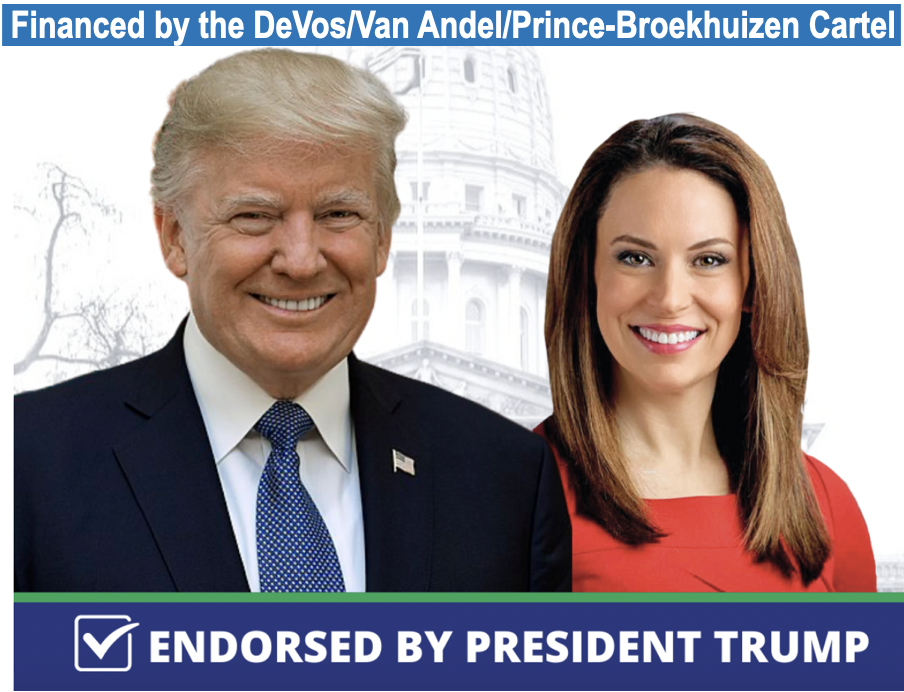
Last Friday, July 29, Tudor Dixon received an official endorsement from former US President Donald Trump, which pushed her ahead of the other Republican Gubernatorial candidates. In a Press Release that same day, Dixon wrote:
“It is a great honor to receive President Trump’s endorsement and have the strength of our campaign to defeat Gretchen Whitmer further affirmed by his support.”
Another endorsement that Dixon received, much earlier than the endorsement from Trump, was an official endorsement from the DeVos family. In a May 23rd Press Release, Dixon includes a comment from Dick DeVos:
“The DeVos family have decided to stand with Tudor Dixon as being the next, right governor for the state of Michigan. We think Tudor, as a business leader and a mom, has the experience, the passion, and a plan to put the state back on track.”
Based on the most recent Campaign Finance records, the DeVos family and other families who work for the DeVos family, have contributed a substantial amount to Dixon’s campaign. Here is the data from the most recent campaign finance data, which was due on July 25th:
- Betsy DeVos $7,150
- Doug DeVos $7,150
- Melissa DeVos $7,150
- Suzanne DeVos $7,150
- Dick DeVos $7,150
- Dan DeVos $7,150
- Pamella DeVos $7,150
- Rick DeVos $7,150
- Dalton DeVos $7,150
- Maria DeVos $7,150
- Steve Ehmann (RDV Corp) $7,150
- Jerry Tubergen (RDV Corp) $7,150
- Barb Van Andel-Gaby $7,150
- David Van Andel $7,150
- Carol Van Andel $7,150
- Amy Van Andel $7,150
- Stephen Van Andel $7,150
- Elsa Broekhuizen (Betsy’s Mom) $7,150
- Ren Broekhuizen $7,150
- Emilie Wierda (Betsy’s Sisiter) $7,150
- Laurie Wierda $7,150
- Craig Wierda $7,150
- Chris Wierda $7,150
The total of the DeVos, Van Andel, Prince/Broekhuizen family contributions comes to a total of $164,450, making them the largest single contributing family group to any of the Gubernatorial candidates in Michigan in 2022.
There were other members of the West Michigan elite, which contributed to Dixon’s campaign, such as several members of the Haworth family, Mark Murray, Mike & Gayle VanGessel, and members of the DeWitt family. However, the DeVos/Van Andel/Prince/Broekhuizen cartel was head and shoulders above everyone else.
If you go to the website for Tudor Dixon’s campaign, one can see how her platform aligns with the DeVos/Van Andel/Prince/Broekhuizen cartel, especially on economic, education, abortion and public safety matters. We will continue to follow Dixon and report on her campaign finances just before the November election to see how much more the money her campaign receives from the wealthiest families in our back yard. Lastly, it is always important to point out that the financial support for Tudor Dixon from the DeVos/Van Andel/Prince/Broekhuizen cartel means that they are in agreement with the neo-fascist Donald Trump about who should be the next Governor of Michigan. This is not surprising, since the DeVos family made significant contributions to Trump in the 2020 Election, which means the DeVos family endorses all of the White Supremacist and neo-fascist aspects of Trump and his Maga horde.
Grand Rapids Power Structure dominates campaign contributions in West Michigan on the eve of Primary Elections
Last week, we looked at campaign financing from the most recent state deadlines, first the State Senate races in West Michigan, then the State Representative races, and lastly the Kent County Commission races.

There were clear patterns that emerged in terms of which names of individuals, families and organizations were making the largest campaign contributions. Specifically members of the Grand Rapids Power Structure, have overwhelmingly funneled thousands into the campaigns for political seats in West Michigan. What follows is a run down of campaign contributions, from the largest on down, plus there are three more months until the November elections.
- DeVos family $86,550
- Terri Land/Dan Hibma $24,950
- Michael & Susan Jandernoa $20,000
- John & Nancy Kennedy $9,450
- Mark Murray $6,250
- Van Andel family $5,200
- JC Huizenga $4,450
Total GR Power Structure $164,850
- GR Chamber of Commerce PAC $29,900
- Realtors PAC $71,750
There are several things worth noting about these campaign contributions. First, most of the money was contributed in the Kent County Commission races, specifically when it came to the DeVos family contributions. Too often we don’t think about how influential the DeVos family is when it comes to buying political influence right here in Kent County, but people would be wise to come to terms with that fact.
Second, while the majority of the GR Chamber PAC campaign contributions went to GOP candidates, 9 different Democrats also received money from them. What is even more interesting about this dynamic, is the fact that the Democrats who received campaign contributions from the GR Chamber PAC, were those who are more likely to win the seats they are running for. This means that the GR Chamber PAC is strategic in their thinking, making sure that no matter who is in office, they have purchased access and influence.
Third, although they are not exclusively based in West Michigan, the Realtors PAC, which represents the Realtors Association, the very entity which dictates the cost of housing in Michigan, also contributed a sizable amount of campaign money in 2022. This is important, since housing costs are a critical issue facing thousands of families in the Greater Grand Rapids area. Thus, the Realtors PAC also wants to make sure that they have purchased access and influence with candidates in the upcoming election. And like the GR Chamber PAC, the Realtors PAC did primarily contribute to GOP candidates, but they also provided campaign contributions to 8 different Democrats, specifically Democrats that are more likely to win their seats in November.
Fourth, there are still a few months before the November election, so we can anticipate a whole lot more money from the GR Power Structure leading up to that time. There were significant campaign contributions from the GR Power Structure to candidates who were on the August 2nd Primary, but one that is done, we’ll have a clearer picture of the partisan battles that will be on the ballot in November. We will be tracking that information after the October 25th deadline for candidates to report campaign contributions.
Lastly, if we then combine the amount of campaign contributions from the Grand Rapids Power Structure families, the GR Chamber PAC and the Realtors PAC (power structure organizations) – which are just nine different entities – we are talking about $266,500 that are going to candidates running for seats in the Greater Grand Rapids area. This means that these 9 entities will not only have a great deal of influence in the outcome of the 2022 Elections in West Michigan, they will have significant influence with the candidates who become State Senators, State Representatives and Kent County Commissioners through the end of 2024. Lastly, this influence will be driven by what benefits the members of the Grand Rapids Power Structure, which is always at the expense of the rest of us, politically, economically and socially. If we ignore their influence, we do so at our own peril.
On Friday, the group Citizens for Safe Neighborhoods sent out a Media Release, expressing their opposition to the ballot initiative that is being organized by the Coalition for Community Owned Safety. The Coalition for Community Owned Safety is made up of the ACLU of Michigan, Urban Core Collective, NAACP of Greater Grand Rapids, and LINC UP, all non-profits that have been speaking out against the GRPD for the last several years.

Both MLive and WOOD TV 8, both ran stories on Friday about the Media Release that was sent out by the newly formed group, Citizens for Safe Neighborhoods.
The MLive article cites two people who are against the Coalition for Community Owned Safety ballot initiative, current 3rd Ward City Commissioner Moody and former Grand Rapids Mayor George Heartwell. Moody calls the ballot initiative “misleading” and Heartwell uses terms like “dishonest” and “devious.”
The Channel 8 version of the story use two members of the group Citizens for Safe Neighborhoods, Ed Kettle and David Doyle. The WOOD TV 8 story does acknowledge that Kettle is a political consultant and has had the Grand Rapids Police Officer’s Association as a client in the past. However, both WOODTV8 and MLive fail to mention that Ed Kettle also created the group Friends of GR Cops and that his wife is the current director of Silent Observer, which works hand in hand with the GRPD.
However, the larger omission in the coverage of this new opposition group, is the fact that Ed Kettle and David Doyle were both part of the effort in 1995 to get two ballot initiatives passed, one to add more cops to the GRPD and the other to change the City’s Charter to mandate that a minimum of 32% of the City’s budget would go to the GRPD. This campaign was known as the Safety 95 Campaign and it was modeled on the 1994 Crime Bill that was adopted by the US Congress and crafted by then Senator Joe Biden. In addition, George Heartwell, who was a 3rd Ward City Commissioner at that time, also supported adding more cops to the GRPD and the mandatory funding levels for the Police Department. This is not a minor oversight, it is information that is as relevant as the creation of the this new opposition group.
Lastly, the local commercial news media coverage from Friday also failed to mention that Ed Kettle is a current member of the Public Safety Committee, has made condescending remarks about those calling for Defunding the GRPD, and has made some rather racist comments. In a previous incident involving several GRPD officers beating a Black man, Kettle responded by saying about this incident is that the Black man should, “Shut up. Don’t resist and ask for an attorney.” Ed Kettle also made some rather racists comments after the GRPD shot and killed Patrick Lyoya, which we wrote about. Unfortunately, the public does not have this information about the two white men who are behind the Citizens for Safe Neighborhoods group.
Lastly, it is worth mentioning that the channel 8 reporter who interviewed the two white men from the opposition group, as well as a Black woman who is part of the Coalition for Community Owned Safety, the reporter only questioned the Black woman and never challenged the two white men. If the Coalition for Community Owned Safety gets enough signatures to put this issue on the November Ballot, it will be very interesting to see how this will play out and how awful the news media will report on these two groups and their supporters.
 Last month, we posted an article looking at the policy platforms of the candidates for Kent County Commission that are on the ballot for the upcoming 2022 Elections.
We noted that most of the candidates had very limited information about public policy issues, often used vague language for what they stood for and often said things like, “I am running to bring back Michigan Values.” I’m not sure what “Michigan Values” means, but if we look at the history of Michigan, one could say that the values of this state are rooted in Settler Colonialism, theft of land from Indigenous people, systemic racism directed at Black and other BIPOC communities, and giving too much power to corporations and members of the Capitalist Class.
This is the third post we have done this week, with information on the most recent campaign finance data for candidates that are on the ballot for 2022. Today, we will look at campaign finance data for the Kent County Commission seats.
Campaign finances can tell you are great deal about who is backing a candidate, who is buying access and who wants to influence public policy if the candidate they are contributing to ends up winning. Campaign finances have always been a tool for the wealthiest members of the Capitalist Class to control the outcome of elections in the US.
In addition, we must always keep in mind that no matter how much money members of the Capitalist Class, political action committees or corporations contribute, it is “protected speech.” This reality underscores one of the fundamental contradictions of US democracy, which is – the more money you contribute, the more protected speech you have. This is just one major flaw of the US electoral process, what Sheldon Wolin dissects in his book, Democracy Inc.: Managed Democracy and the Specter of Inverted Totalitarianism. Wolin provides us with critically important analysis about money in US elections, which ultimately makes a mockery out of the notion of free and fair elections.
To access information about Campaign finances for Kent County Commission Candidates, go to this link and type in their name. We will list the total raised for each candidate and larger, more notable contributors.
District 1 Kent County Commission
Jerry Berta (D)
No Funds raised
Ben Greene (R) – Total raised: $27,258
GR Chamber PAC $3500
Realtors PAC $2000
TGIF Victory Fund $2000
JC Huizenga $1050
Dan Hibma $1000
Joel Langlois $1000
Lee Ann Langlois $1000
Terri Land $1000
Michael Jandernoa $1000
Susan Jandernoa $1000
Taylor Greene $500
Patrick Greene $500
Matthew Golden $500
Amy Drumm $500
Roger Hauck $500
Johnny Brann Jr $250
Chris Afendoulis $250
Mark Murray $250
Mark Jordan (R) – Total raised: $9207
Mark Jordan $7522
District 2 Kent County Commission
Rebecca Diffin (D)
$0 funds raised
Thomas Antor (R)
$0 funds raised
District 3 Kent County Commission
Janalee Keegstra (D)
$0 funds raised
Mark Laws (R) – Total raised: $3104
John Kyee’s $1000
Judy Kyees $1000
Jennifer Merchant (R) – Total raised: $24,475
Jennifer Merchant $2100
Maria DeVos $2100
Dalton DeVos $2100
Rebecca Humphreys $1050
Dick DeVos $1050
Betsy DeVos $1050
Pamela DeVos $1050
Daniel DeVos $1050
Suzanne DeVos $1050
Doug DeVos $1050
Steve Ehmann $1050
Michael Jandernoa $1000
Susan Jandernoa $1000
GR Chamber PAC $1000
Don Goris $1000
Michelle Humphreys $1000
Realtors PAC $1000
David Van Andel $500
Carol Van Andel $500
District 4 Kent County Commission
Judy Wood (D)
$0 funds raised
Katie DeBoer (R) – Total raised: $2542
Sean DenHerder $500
Katie DeBoer $300
Diane Jones (R) – Total raised: $24,150
GR Chamber PAC $2000
Yvonne Socha $1050
Terri Land $1050
Samuel Moore $1050
Dick DeVos $1050
Betsy DeVos $1050
Pamela DeVos $1050
Daniel DeVos $1050
Suzanne DeVos $1050
Doug DeVos $1050
Maria DeVos $1050
Steven Ehmann $1050
Dan Hibma $1000
Michael Jandernoa $1000
Susan Jandernoa $1000
Realtors PAC $1000
District 5 Kent County Commission
Vanessa Lee (D)
$0 funds raised
Stefanie Boone (R) – Total raised: $9215
Stefanie Boone $3696
Lewis VanKuiken $1000
Norma VanKuiken $1000
Dave Hildenbrand (R) – Total raised: $27,750
GR Chamber PAC $2500
Dick DeVos $1050
Betsy DeVos $1050
Pamela DeVos $1050
Daniel DeVos $1050
Suzanne DeVos $1050
Doug DeVos $1050
Maria DeVos $1050
Steven Ehmann $1050
West MI Anesthesia PAC $1000
Edward Nausieda $1000
Mark Anderson $1000
Compete Michigan PAC $1000
Michael Jandernoa $1000
Susan Jandernoa $1000
Realtor PAC $1000
District 6 Kent County Commission
Nicholas Vander Veen (D) – Total Raised: $305
Nicholas Vander Veen $255
Stan Stek (R) – Total Raised: $2301
Commercial Alliance of Realtors $1000
Realtors PAC $500
GR Chamber PAC $500
District 7 Kent County Commission
Sue Merrell (D)
$0 funds raised
Stan Ponstein (R) – Total Raised: $1500
Stan Ponstein $1000
Realtors PAC $500
District 8 Kent County Commission
Jennie Chatman (D)
$0 funds raised
Dan Burrill (R) – Total Raised: $5275
Rusty Richter $1050
CARWM Realtors PAC $1000
GR Chamber PAC $1000
District 9 Kent County Commission
Chip LaFleur (D)
$0 funds raised
Matt Kallman (R)
$0 funds raised
District 10 Kent County Commission
Julie Humphreys (D)
$0 funds raised
Emily Post Brieve (R) – Total Raised: $20,636
GR Chamber PAC $2000
Realtors PAC $2000
Terri Land $1050
Dick DeVos $1050
Betsy DeVos $1050
Pamela DeVos $1050
Daniel DeVos $1050
Suzanne DeVos $1050
Doug DeVos $1050
Maria DeVos $1050
Steven Ehmann $1050
Emily Post Brieve $1000
Michael Jandernoa $1000
Susan Jandernoa $1000
Bill Hirsch (R) – Total Raised: $4733
Bill Hirsch $2800
District 11 Kent County Commission
John Considine (D) – Total Raised: $100
AJ Hoff (R) – Total Raised: $796
Lindsey Thiel (R) – Total Raised: $1425
Realtor PAC $2000
Dick DeVos $1050
Betsy DeVos $1050
Pamela DeVos $1050
Daniel DeVos $1050
Suzanne DeVos $1050
Doug DeVos $1050
Maria DeVos $1050
Dalton DeVos $1050
Steven Ehmann $1050
GR Chamber PAC $1000
District 12 Kent County Commission
Monica Sparks (D) – Total Raised: $2000
Realtors PAC $1750
GR Chamber PAC $250
Adam Palasek (R)
$0 funds raised
Lee White (R) – Total Raised: $2345
Terri Land $1050
Dan Hibma $1050
District 13 Kent County Commission
Michelle McCloud (D) – Total Raised: $2345
Michelle McCloud $1610
GR Chamber PAC $250
Tom McKelvey (R) – Total Raised: $11,700
Dan Hibma $1050
Terri Land $1050
Dick DeVos $1050
Betsy DeVos $1050
Pamela DeVos $1050
Daniel DeVos $1050
Suzanne DeVos $1050
Doug DeVos $1050
Maria DeVos $1050
Realtors PAC $750
Nick Prill (R) – Total Raised: $4681
Haley Meijer $1000
Nick Prill $500
Paul Laidler $500
District 14 Kent County Commission
Carol Hennessy (D) – Total Raised: $3232
GR Firefighters Union PAC $1000
Realtors PAC $500
GR Chamber PAC $250
Jerri Schmidt (R) – Total Raised: $2814
Jerri Schmidt $2714
District 15 Kent County Commission
Lisa Oliver-King (D)
$0 funds raised
Brian Boersema (R)
$0 funds raised
District 16 Kent County Commission
Melissa LaGrand (D) – Total Raised: $15,905
Melissa LaGrand $5980
GR Firefighters Union PAC $2500
Andrew & Cynthia DeBoer $1000
Realtors PAC $750
GR Chamber PAC $250
Jim Talen (D) – Total Raised: $22,959
Jim Talen $7239
Rick & Cindy Bandstra $500
Dr. Steffen Genthe $500
Marlin Feyen $350
Mayor Bliss $250
John Brooks Twist (R)
$0 funds raised
District 17 Kent County Commission
Tony Baker (D) – Total Raised: $11,843
Tony Baker $3500
Realtors PAC $750
Donald (Mike) Kolehouse $500
Victor Williams (D) – Total Raised: $1025
Michael Carnevale $250
Verluria Cobbs $200
Jason Gillikin (R)
$0 funds raised
District 18 Kent County Commission
Stephen Wooden (D) – Total Raised: $8006
Stephen Wooden $2000
GR Chamber PAC $250
Rachel Hood $250
Paul Beach $250
John Hunting $250
Ryan Schmidt $250
Tim Allen (R) – Total Raised: $2355
Dan Hibma $1050
Terri Land $1050
Josie Kornev (R) – Total Raised: $571
Thomas Nemcek $208
Anna Timmer $208
District 19 Kent County Commission
Dave Bulkowski (D) – Total Raised: $10,414
GR Chamber PAC $1000
Laurie Murphy $750
Dave Bulkowski $500
Amy Brogger $500
Kris Pachla (D) – Total Raised: $4821
Matt Richenthal $500
Amy Brogger $500
Ryan Schmidt $250
Erik Daly $250
Denise Delano-Taylor $250
Jeremiah Bannister (R)
$0 funds raised
Samuel Carstens (R) – Total Raised: $2100
Dan Hibma $1050
Terri Land $1050
District 20 Kent County Commission
Ivan Diaz (D)
$0 funds raised
Elisa Rodriguez (R) – Total Raised: $8515
Dick DeVos $1050
Betsy DeVos $1050
Pamela DeVos $1050
Daniel DeVos $1050
Suzanne DeVos $1050
Doug DeVos $1050
Maria DeVos $1050
Steven Ehmann $1050
District 21 Kent County Commission
Charles Howe (D)
$0 funds raised
Alan Bolter (R) – Total Raised: $31, 727
GR Chamber $2000
Realtor PAC $2000
MAC PAC $1500
Terri Land $1050
Dick DeVos $1050
Betsy DeVos $1050
Pamela DeVos $1050
Daniel DeVos $1050
Suzanne DeVos $1050
Doug DeVos $1050
Maria DeVos $1050
Steven Ehmann $1050
TGIF Victory Fund $1000
William Jackson $1000
Mary Mochel $1000
Susan Jandernoa $1000
Michael Jandernoa $1000
Dan Hibma $1000
David Mehney $1000
Alan Bolter $500
Mark Murray $500
Don Goris $500
Joel Langlois $500
JC Huizenga $250
Walter Bujak (R) – Total Raised: $3645
Walter Bujak $3000
Like what we have seen with the State Senate and State Representative races, there are several patterns one can see, with large contributions coming from both corporate PACs, Labor PACs, other candidate PACs and a fair amount of self-financing.
There were also numerous members of the Grand Rapids Power Structure making contributions, such as John and Nancy Kennedy, Michael and Susan Jandernoa, all of the DeVos family members, Mark Murray, Mike VanGessel, Charlie Secchia, JC Huizenga and several members of the Hayworth family. In addition, the Grand Rapids Area Chamber of Commerce made numerous contributions, and not always to Republicans, with the following Democrats also receiving contributions from the GR Chamber of Commerce – Monica Sparks, Michelle McCloud, Carol Hennessy, Melissa LaGrand, Stephen Wooden and Dave Bulkowski.
It also appears that in the Kent County Districts where Democrats have conceded to the GOP, their candidates have not received any campaign contributions or very small amounts.
During Tuesday’s Public Safety Committee meeting, GRPD Chief Winstrom rolled out his new recommendations for policing in Grand Rapids, policing that in his words, “is rooted in a sanctity of life approach to policing.”

The very fact that Chief Winstrom has the audacity to refer to the policing that is done by the GRPD as grounded in a sanctity of life approach is in one sense laughable, but it also underscores why City Manager Mark Washington hired Winstrom in the first place. Over the short months since Winstrom was hired he has demonstrated that his primary skill is to act as a Public Relations mouthpiece for the City of Grand Rapids. Winstrom has shown time and time again that he can bullshit with the best of them. The Chief’s ability to use language to fool people is impressive and it appears that lots of people are buying into what he has to say.
You can watch Chief Winstrom’s presentation during the Public Safety Committee meeting from Tuesday, or you can download the 31 page report, which the presentation is based on. In this post, I want to look at the 31 page recommendations document, offering up some critiques and analysis that challenges what Chief Winstrom has crafted.
On page 2, the document states, Our City suffered significant trauma in 2020, through the pandemic and again with the shooting death of Patrick Lyoya in 2022. We have healing to do together. Let’s be clear here that the City of Grand Rapids did not suffer trauma from the unarmed uprising that took place on May 30th, 2020, the pandemic and the GRPD murder of Patrick Lyoya. Some people in this city experienced a whole lot more trauma, so to suggest that everyone did, is simply dishonest. We know from data and the lived experiences of BIPOC communities, that those communities have suffered more and have experienced more trauma during the past 2 years that Winstrom acknowledges. In addition, numerous people, especially from BIPOC communities, have been brutalized and traumatized by the GRPD, which Chief Winstrom fails to acknowledge.
On page 3, Winstrom lists several policy changes and reports that have been done since 2015, all of which we in direct response to increased scrutiny of the police nationally – the January 2015 Community and Police Relations Committee’s1 2-Point Plan came 5 months after cops shot and killed Michael Brown in Ferguson, Missouri, which sparked national outrage and put the Movement for Black Lives on the map. Police departments, like the GRPD, always put forth well polished reforms, but such reforms have little to no impact on how BIPOC communities and dissidents are treated by the police.
On pages 5 – 7, Chief Winstrom lists meetings they have hosted in the city as part of their community engagement work. Cops love meetings, particularly meetings that they organize, since it allows them to control content and process. These meetings are spectacles at best, since many people either don’t feel safe coming to meetings with violence workers present, and/or they don’t believe what they have to say will be taken seriously. On page 7, Winstrom goes out of his way to make this statement, “While some have been vocal about “abolishing” the police, the majority of residents and stakeholders would like a more visible police presence in their community and consistently rank the need for public safety highly.” Such a statement is not verified, like we are all supposed to take his word for it that the majority of residents want a more visible presence of the GRPD. This statement is also a great sleight of hand example of good PR, since it not only makes unsubstantiated claims, it marginalizes those who are calling for the abolition of police departments.
On page 10, Winstrom then gets into current policy changes, suggesting that the old way of doing things was to just apply use of force. Now, we are led to believe that the GRPD will use “De-escalation, response to resistance, and use of force.” Does this evolution mean that cops were not using de-escalation tactics previously? It seems that in recent years, the GRPD was constantly talking about de-escalation with use of force only as the last resort. More importantly, the use of force is still the end result, which in the State of Michigan, pretty much lets the GRPD do whatever they want.

On page 13, Chief Winstrom says that training with the new policies will begin on August 2, which includes – Improved understanding of the entire history of policing, Self-regulation, De-escalation, Neuroscience of Stress/Fear response, Constitutional Policing, and Re-enforcement of core policy principles through training provided by OPA. It would be interesting to see how the GRPD presents the history of policing, but I’m not guessing they will provide information that books like Our Enemies in Blue: Police and Power in America or The End of Policing. Alex Vitale’s book, The End of Policing, makes it clear sensitivity training, diversity trainings, implicit bias training or any other real training that police receive, doesn’t really change how policing is done, since they don’t take into account the institutional pressures that remain intact.
Another aspect of the “new training” with the new policy changes, is that the GRPD will now verbally communicate with suspects that if they do not comply with police commands that they will be given a warning before use of deadly force. Does anyone think that it will be beneficial for those being targeted by the GRPD to know if they do not comply with Police commands that will be told that they will be tased, beaten, have a cop put his knee on their neck, or shoot you in the back of the head? Take a moment to ponder that question.

Most of the rest of the document provides data and graphs – administrators love data and graphics – showing levels of crime, homicides, car theft, etc. This section of the document, which is the largest, is what police departments refer to as “put the fear of God into them” section. This kind of data is used to provide justification for police departments to continue to have bloated budgets and to continue to justify the existence of policing in the first place. We assume that the data they present is accurate and that the only rational response is more cops. As a counter to this kind of data, we highly recommend the report entitled, Cops Don’t Stop Violence, which deconstructs the whole notion of crime, how crime data is misused to serve policing interests and how police consistently engage in their own crimes against people they stop, detain and arrest.
The reality is that in Grand Rapids right now, there are too many people who deeply believe in the necessity of the GRPD. I’m not talking about the Voice for the Badge types, I’m talking about lots of good White Liberals, who fundamentally believe that cops are a force for good, thus making it difficult for them to even image a world without cops, also known as violence workers. We have a great deal of work ahead of us, but like all movements for abolition and collective liberation we need to practice revolutionary patience.
Always Follow the Money: Campaign Finances for State Representative Races in West Michigan
Last month, we posted an article looking at the policy platforms of the candidates for State Representative that were on the ballot for the upcoming 2022 Elections, specifically those in West Michigan.
We noted that most of the candidates had very limited information about public policy issues, often used vague language for what they stood for and often said things like, “I am running to bring back Michigan Values.” I’m not sure what “Michigan Values” means, but if we look at the history of Michigan, one could say that the values of this state are rooted in Settler Colonialism, theft of land from Indigenous people, systemic racism directed at Black and other BIPOC communities, and giving too much power to corporations and members of the Capitalist Class.
During the next week or so, we will be posting information on the most recent campaign finance data on these same candidates and races for various offices, particularly regarding candidates that are on the ballot for 2022. Today, we will look at campaign finance data for the State Representative races.
Campaign finances can tell you are great deal about who is backing a candidate, who is buying access and who wants to influence public policy if the candidate they are contributing to ends up winning. Campaign finances have always been a tool for the wealthiest members of the Capitalist Class to control the outcome of elections in the US.
In addition, we must always keep in mind that no matter how much money members of the Capitalist Class, political action committees or corporations contribute, it is “protected speech.” This reality underscores one of the fundamental contradictions of US democracy, which is – the more money you contribute, the more protected speech you have. This is just one major flaw of the US electoral process, what Sheldon Wolin dissects in his book, Democracy Inc.: Managed Democracy and the Specter of Inverted Totalitarianism. Wolin provides us with critically important analysis about money in US elections, which ultimately makes a mockery out of the notion of free and fair elections.
Each candidate is hyperlinked to the Secretary of State’s Campaign Finance Data page.
78th District State Representative Race
Leah M. Groves (D)
No funds raised
Almost exclusively self-financed
Ben Geiger (R)
- Small Biz PAC $2,000
- Michael Jandernoa $1,000
- Brian Calley $1,000
- Julie Calley $1,000
Gina Johnsen (R)
Mostly self-financed
79th District State Representative Race
Kimberly Y. Kennedy-Barrington (D)
No funds raised
Ryan Gallogly (R)
Only 3 contributors
Jeremiah Keeler (R)
- Friends of West MI Business $2,000
- Dan DeVos $1,050
- Suzanne DeVos $1,050
- Matthew Hayworth $1,050
- Steve Ehmann (RDV Corp) $1.050
- Maria DeVos $1.050
- Betsy DeVos $1,050
- Doug DeVos $1,050
- Dick DeVos $1,050
- Richard Hayworth $1,050
- John Kennedy $1,050
- Ethelyn Hayworth $1,050
- Mike VanGessel (Rockford Constr.) $500
Angela Rigas (R)
- Save America PAC $5000
- Beeler Majority Fund $5000
- Maddock Leadership Fund $2000
- David Agema $1000
80th District State Representative Race
- Lily Cheng-Schulting $4,250
- Shri Thanedar $1,000
- Bing Goei $500
- Jose Flores $500
Phil Skaggs (D)
- Phil Skaggs $20,000
- GR Firefighters Union PAC $5000
- Michigan Laborers Political League $2,500
- Daniel Allor $2,100
- Scott Bowen $1,000
- MI Beer & Wine Wholesalers $1,000
- MI Brotherhood of Electricians $1,000
Jeffrey Johnson (R)
- Jeffrey Johnson $51,280
- JC Huizenga $1,050
- Irving Limatta $1,000
- Rental Property Owners Assoc. $500
- GR Chamber PAC $500
- Michigan Health Choice Alliance $500
81st District State Representative Race
Rachel Hood (D)
- MI Regional Council of Carpenter $6,000
- The PAC for America’s Future $5,000
- MEA PAC $4,250
- Joe Tate Leadership PAC $2,500
- MI Beer & Wine Wholesalers $2,000
- Lasinski for Michigan PAC $2,000
- MI League for Conservation Voters $3,500
- MI List $1,500
- Delta PAC $1,000
- DTE Energy PAC $1,000
- Realtors PAC of MI $650
Lynn Afendoulis (R)
- Realtors PAC of Michigan $5,000
- MI Farm Bureau PAC $3,000
- TGIF Victory Fund $2,000
- Matt Hall Majority Fund $2,000
- Daniel Hibma $1,050
- Charlie Secchia $1,050
- Teri Lynn Land $1,050
- Johnny Brann $1,050
- GR Chamber PAC $1,050
- Mark Murray $1,000
82nd District State Representative Race
- Salim Mohammed Al-Shatel $2,165
- Realtor PAC $1,500
- Chris Guis $500
- Liala Burmeister $500
Kristian Grant (D)
- GR Firefighters PAC $5,000
- GR Chamber PAC $1,000
- Tony Baker $1,000
- Nathaniel Moody $300
- Rachel Hood $250
- Joe Jones $250
Robert Womack (D)
William Alexander (R)
$0 funds raised
Ryan Malinoski (R)
- Terri Land $1,050
- Dan Hibma $1,050
83rd District State Representative Race
Keith Courtade (D)
Keith Courtade $7,000
John Fitzgerald (D)
- John Fitzgerald $11,000
- Realtors PAC $1,500
- MI Beer & Wine Wholesalers PAC $1,000
- IBEW PAC $1,000
- GR Chamber PAC $500
- Auto Dealers of MI PAC $500
Jose Flores (D)
- Jose Flores $4,700
- Dan Salas $900
- John Beason $350
- Victor Vasquez $250
Lisa DeKryger (R)
- Lisa DeKryger $5,000
- TGIF Victory Fund $2,000
- Matt Hall Majority Fund $2,000
- Terri Land $1,050
- Small Business Assoc. of MI PAC $2,000
- Daniel Hibma $1.000
- Rental Property Owners Association $500
- GR Chamber PAC $500
84th District State Representative Race
Carol Glanville (D)
- MI House Democratic Fund $3,181
- Lasinski for Michigan PAC $2,500
- MI Regional Council of Carpenters $2,500
- Joe Tate Leadership PAC $2,000
- MI League of Conservation Voters $2,000
- IBEW PAC Fund $1,500
- Jonathan Jelks $1.050
- Mike Milanowski Jr. $10,000
- Matt Hall Majority Fund $3,000
- TGIF Victory Fund $2,500
- Realtors PAC $2,500
- Small Business Assoc. of MI $2,000
- Ethelyn Haworth $1,050
- Maria DeVos $1,050
- Betsy DeVos $1,050
- Doug DeVos $1,050
- Steven Ehmann $1,050
- Richard Hayworth $1,050
- Terri Land $1,050
- Nancy Kennedy $1,050
- Cheri DeVos $1,050
- John Kennedy $1,050
- Matthew Hayworth $1,050
- Dick DeVos $1,050
- Dan DeVos $1,050
- GR Chamber PAC $1,000
- Michael Jandernoa $1,000
- Mike VanGessel $500
- Mark Murray $500
Justin Noordhoek (R)
Justin Noordhoek $5,860
Robert Regan (R)
Norma VanKuiken $1,050
John Wetzel (R)
John Wetzel $151,000
89th District State Representative Race
Sharon McConnon (D)
$0 funds raised
Luke Meerman (R)
- Realtors Pac $5,000
- MI Beer & Wine Wholesalers PAC $2,500
- MI Petrolium Jobbers PAC $1,250
- Delta PAC $1,000
- Association of Builders & Contractors $1,000
- Rental Property Owners PAC $500
90th District State Representative Race
Meagan Hintz (D)
$0 funds raised
Kathy Clark (R)
Mostly self-financed – Kathy Clark $2,050
Bryan Posthumus (R)
- Wentworth Majority Fund $12,500
- Realtors PAC $10,000
- Auto Dealer of MI PAC $2,550
- BCBSM PAC $2,500
- MI Beer & Wine Wholesalers $2,500
- Farm Bureau PAC $1,750
- CMS Energy PAC $1,500
- Mark Murray $1,000
- MI State Troopers PAC $750
91st District State Representative Race
Tammy L. DeVries (D)
$0 funds raised
Frank J. LaFata (D)
- MI Regional Council of Carpenters $2,000
- Frank Lafata $1,416
- Curtis Loweke $500
Pat Outman (R)
- Realtors PAC $5,400
- MI Beer & Wine Wholesalers $5,000
- MI Laborers Political League $3,500
- DTE Energy PAC $3,000
- Matt Hall Majority Fund $2,000
- CMS Energy Employees PAC $1,500
- BCBSM PAC $1,000
- Auto Dealer of MI PAC $1,000
- GR Chamber PAC $750
There are several patterns one can see, with large contributions coming from both corporate PACs, Labor PACs, other candidate PACs and a fair amount of self-financing.
There were also numerous members of the Grand Rapids Power Structure making contributions, such as John and Nancy Kennedy, Michael and Susan Jandernoa, all of the DeVos family members, Mark Murray, Mike VanGessel, Charlie Secchia and several members of the Hayworth family. In addition, the Grand Rapids Area Chamber of Commerce made numerous contributions, and not always to Republicans, with John Fitzgerald (D) and Kristian Grant (D) both receiving funds from the GR Chamber of Commerce PAC.
Lastly, there were also candidate that either had most of their funding through self-financing, others with very few contributors and still others will no funding raising at all.
While well intentioned, MLive editorial is decades late and still relies heavily on the GRPD for reporting on Public Safety
On Thursday, MLive posted a Letter from the Editor, entitled, When we cover ‘public safety’ rather than ‘crime,’ we give a more accurate picture of our communities.
While I appreciate the sentiment, the Letter from the Editor is deeply problematic and reflects the fact that, like most commercial news media, they internalize the necessity of Police Departments. Let’s talk first about what is problematic in this post, then we can talk about what is missing.

First, the image that the MLive Letter from the Editor is deeply problematic and sensationalizes existing tensions in the Grand Rapids community. The image they used is June 10, where Justice4Patrick activists are seen confronting supporters of Christopher Schurr, the cop that shot and killed Patrick Lyoya on April 4. The setting in the Kent County courthouse, where we see the faces of Black activists, but only the back of a few white police supporters. The photo caption says (in part), “Supporters for Patrick Lyoya exchange words with supporters for Grand Rapids police officer Christopher Schurr inside a hallway after Schurr was arraigned at the Kent County Courthouse.” The context is very limited, thus failing to honestly reflect the reality between how Black activists who have been deeply wounded and outraged by the murder of Patrick Lyoya, and the supporters of Christopher Schurr, which was an overwhelmingly white group that were there to offer support to the cop who killed Patrick Lyoya, but no sympathy for the grieving supporters of young Congolese man that Schurr had murdered.
Second, the Letter from the Editor begins by saying that they cover crime differently now, ever since the George Floyd protests in 2020. This is an admission that for decades prior to May 2020, MLive and the Grand Rapids Press had failed the public miserably when it came to reporting on crime and public safety. In the second paragraph, the writer confessed that, “In July 2020 I announced in a column that MLive was curtailing its routine use of police mugshots in crime stories. That column was my most-read ever and provoked an avalanche of reader emails questioning or supporting the decision.” Therefore, the person who glibly used to cover crimes stories by posting mug shots, is only recently willing to shift his reporting from crime to public safety.
Third, the MLive post then makes an important statement, by writing:
That change was just one facet of evolution of thought and practice within MLive, and journalism as a whole. What crime is covered and how it is presented creates perceptions, can perpetuate stereotypes about marginalized people or communities, and reflects power dynamics involving institutions like police agencies, prosecutors and courts.
Yes, it is about power dynamics from police departments and other institutions that make up the Prison Industrial Complex. However, after this important statement, the post then falls apart, since the MLive writer supports his position by talking about how well MLive has done on reporting since Patrick Lyoya was killed by the GRPD on April 4th. This is interesting, especially since we have written 10 Local News Dissection articles related to the Patrick Lyoya case, specifically because the reporting has been biased and just flat out bad. One article the writer highlights is the profile piece they did on Christopher Schurr, which we responded to. Our response was basically arguing that the MLive profile piece on Schurr not only normalizes White Supremacy, it perpetuates White Saviorism.
Fourth, the rest of the Letter from the Editor, primarily talks about workshops and trainings that some of the MLive journalist have attended, but it is also self-congratulatory with comments like this:
“Public safety’ provides a more holistic look at the criminal justice system, which goes from when the crime was committed to the police to the prosecutor’s office to the judges and all those support systems that exist to help people as they leave prison and reintegrate into society.”
Again, while this is an improvement, it is decades late and it is still limiting, since MLive still sees crime, public safety and violence in very narrow terms. Rarely is there any reporting on corporate or white collar crimes in Grand Rapids, plus the never acknowledge the structural violence that exists, which is way more insidious than the street level violence. For example, Structural Violence can easily be seen in how inadequate most people’s wages are in this society. If people are unable to make a living wage, this is no fault of their own, thus they are forced to live with the structural violence of poverty.
Lastly, MLive, like all of the other commercial news outlets in Grand Rapids, still rely too heavily on the GRPD has the primary source on crime and violence. Not only do they rely on the GRPD as a news source, they rarely question the information or commentary that the Grand Rapids Police Department provides. In just one example, we dissect how the local news often ends up re-printing GRPD Press Releases as news, as they did in early January of 2022.
What the MLive Letter from the Editorial is missing
For years there has been a push to shift from reporting as stenography to investigative and community-based reporting. In addition, good reporters will recognize that there are numerous factors that impact issues like crime, such as political, economic, social and cultural factors that must be taken into account if we are to better understand what causes violence and crime, along with who benefits from it. It’s not enough to simply report that a man raped a woman somewhere in the city, which does provide people with some potentially valuable information to keep themselves safe. However, unless we come to terms with the larger factors that contribute to the normalization of male violence against women – how men are socialized to think about women and women’s bodies, the hyper-sexualization of women’s bodies, how misogyny is embedded in our institutions, etc -, just reporting the facts about a specific case are inadequate.
In Zach Morris’s book, We Keep Us Safe: Building Secure, Just and Inclusive Communities, he acknowledges that we live in a failed state. What Morris means by a failed state, is that too many people do not have their basic human needs met – housing, health care, food, transportation, child care, employment/wages. The result is the Prison Industrial Complex, the War on Drugs, Gentrification, a health care system based on profits over human needs, a dysfunctional transportation system and employment that is based on exploitation.
What We Keep Us Safe advocates, in the face of a failed state, is a care-based strategy for public safety that overturns more than 200 years of fear-based discrimination, othering, and punishment. In addition, the book:
“We Keep Us Safe is a blueprint of how to hold people accountable while still holding them in community. The result reinstates full humanity and agency for everyone who has been dehumanized and traumatized so they can participate fully in life, in society, and in the fabric of our democracy.”
Lastly, I think it is worth quoting from the final page of the book, We Keep Us Safe:
“Real safety happens when we bridge the divides and build relationships with each other, overcoming suspicion and distrust. Real safety comes from strategic, smart investment – meaning resources directed towards our stability and well-being. Real safety addresses harms that the current system is failing to tackle, and holds people accountable for those harms while still holding them in community. Real safety results from reinstating full humanity and agency for everyone who has been dehumanized and traumatized, so they can participate fully in society. If we are able to transform our old system and create a culture of caring and healing in its place, we may have an actual shot at creating real democracy for the first time.”

If the MLive writer of the Letter from the Editor is serious about fundamental changes to how journalism is done, then they will need to radically alter how they view public and community safety. This ultimately means they will have to come to terms with the systems of power and oppression in Grand Rapids that are often completely ignored when talking about crime and public safety.
Last month, we posted an article looking at the policy platforms of the candidates for State Senate that were on the ballot for the upcoming 2022 Elections.
We noted that most of the candidates had very limited information about public policy issues, often used vague language for what they stood for and often said things like, “I am running to bring back Michigan Values.” I’m not sure what “Michigan Values” means, but if we look at the history of Michigan, one could say that the values of this state are rooted in Settler Colonialism, theft of land from Indigenous people, systemic racism directed at Black and other BIPOC communities, and giving too much power to corporations and members of the Capitalist Class.
During the next week or so, we will be posting information on the most recent campaign finance data on these same candidates and races for various offices, particularly regarding candidates that are on the ballot for 2022. Today, we will look at campaign finance data for the State Senate races.
Campaign finances can tell you are great deal about who is backing a candidate, who is buying access and who wants to influence public policy if the candidate they are contributing to ends up winning. Campaign finances have always been a tool for the wealthiest members of the Capitalist Class to control the outcome of elections in the US.
In addition, we must always keep in mind that no matter how much money members of the Capitalist Class, political action committees or corporations contribute, it is “protected speech.” This reality underscores one of the fundamental contradictions of US democracy, which is – the more money you contribute, the more protected speech you have. This is just one major flaw of the US electoral process, what Sheldon Wolin dissects in his book, Democracy Inc.: Managed Democracy and the Specter of Inverted Totalitarianism. Wolin provides us with critically important analysis about money in US elections, which ultimately makes a mockery out of the notion of free and fair elections.
Each candidate is hyperlinked to the Secretary of State’s Campaign Finance Data page.
18th District State Senate Race
Thomas Albert (R)
Michigan Laborers Political League $21,000
Several GOP Funding sources, like the Michigan Values Leadership Fund
Self-funding through the Albert Majority Fund
Realtors PAC $8,500
MI Beer & Wine Wholesalers $4,000
DTE $2,500
Nancy Kennedy $2,100
John Kennedy $2,100
Michael Jondernoa $2,000
GR Chamber of Commerce $1,500
Mark Murray $1,000
$0 funds raised
Kai W. Degraaf (D)
$0 funds raised
20th District State Senate Race
Aric Nesbitt (R)
Small Biz PAC $5,000
Michigan Farm Bureau $3,650
GR Chamber PAC $1,000
Michael Jandernoa $1,000
Susan Jandernoa $1,000
Kim Jorgensen Gane (D)
Primarily self-Financed, with a few other large donors
29th District State Senate Race
Tommy Brann (R)
Self-financed $103,750
Michigan Farm Bureau $3,000
Daniel Hibma $2,100
JC Huizenga $2,100
GR Chamber PAC $1,000
MI State Police Troopers PAC $1,000
Mark Murray $1,000
GR Rental Property Owners PAC $500
Winnie Brinks (D)
Teamsters $12,000
MI Regional Council of Carpenters $10,000
MI Beer & Wine Wholesalers Ass. $6,000
GR Firefighters PAC $5,500
MI Credit Union League $4,500
Blue Cross/Blue Shied of MI $3,500
MI Education Association PAC $3,000
Realtors Political Action Cmte $1,600
Home Depot PAC $1,500
GR Chamber $1,350
30th District State Senate Race
David LaGrand (D)
GR Firefighters PAC $12,694
Brinks for MI $10,000
PAC for America’s Future (DC-based) $10,000 https://www.opensecrets.org/political-action-committees-pacs/future-now-fund/C00654053/summary/2022
MI Regional Council of Carpenters $10,000
MI Education Association $5,000
Stephanies Changemaker Fund $5,000
MI League of Conservation Voters $2,000
Mike Kolehouse $1,000
John Hunting $1,000
Mark Huizenga (R)
Nesbit Majority Fund $14,500
Realtors PAC $12,500
MI Beer & Wine Wholesalers $6,500
GR Chamber PAC $2,300
Nancy Kennedy $2,100
Susan Jandernoa $2,000
Amy Van Andel $2,100
Stephen Van Andel $2,100
Marcia Tubergen $1,500
MI State Police Trooper PAC $1,500
Mark Murray $1,000
GR Rental Property Owners PAC $1,000
Keith Hinkle (R)
Only 10 contributors
33rd District State Senate Race
Mark Bignell (D)
Only 24 contributors, some self-financing
Rick Outman (R)
Health Care Ass. Of MI PAC $8,000
Delta PAC $7,000
Realtors PAC $6,750
MI Petrolium PAC $3,250
Auto Dealers of MI PAC $3,000
JC Huizenga $2,000
Realtors PAC $1,750
MI StateTroopers PAC $1,000
There are several patterns one can see, with large contributions coming from both corporate PACs, Labor PACs, other candidate PACs and a fair amount of self-financing.
There were also numerous members of the Grand Rapids Power Structure making contributions, such as John and Nancy Kennedy, Michael and Susan Jandernoa, Stephen and Amy Van Andel, JC Huizenga, Mark Murray and Marcia Tubergen. In addition, the Grand Rapids Area Chamber of Commerce made numerous contributions, and not always to Republicans, as in the case of Winnie Brinks.
There were also contributions from PACs that represent hot button issues like policing, with the MI State Trooper PAC making contributions to three GOP candidates, along with the Realtors PAC and Rental Property Owners PAC, since housing is also a critical issue. Again, Winnie Brink received funding from Realtors PAC.
Lastly, there were also candidate that either had most of their funding through self-financing, others with very few contributors and still others will no funding raising at all.

