For me, the New Year is always about collective liberation: My experience with the Zapatistas in Mexico
During four different trips to Mexico, I had the opportunity to do accompaniment work with the Ejercito Zapatista de Liberacion Nacional (EZLN), also known as the Zapatistas.
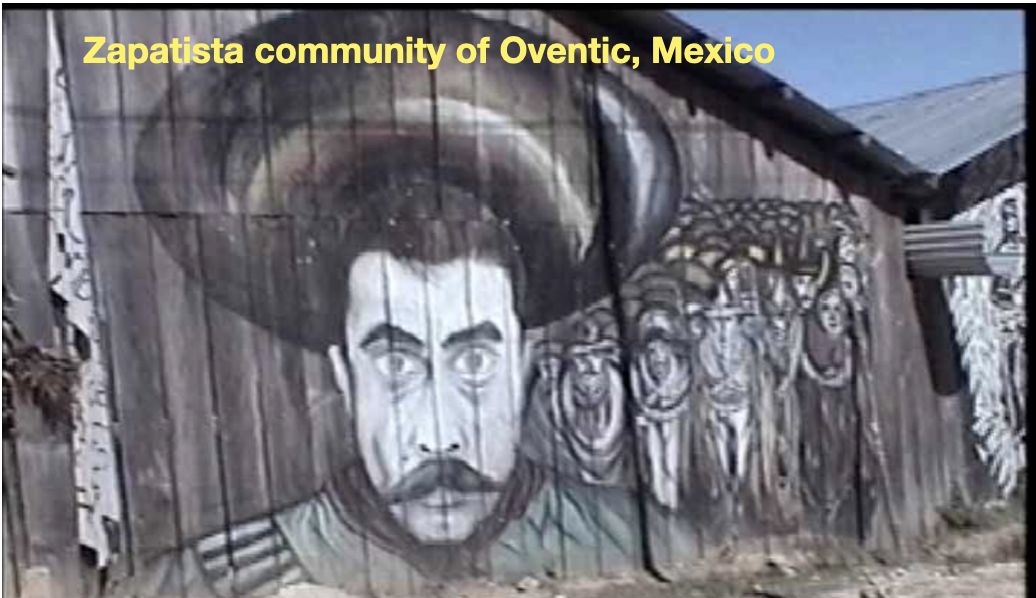
The EZLN began organizing in response to Neo-Liberal Globalization in the early 1990s, which was disproportionately impacting Indigenous communities in Mexico. The North American Free Trade Agreement (NAFTA), a trade agreement made between the governments of Canada, Mexico and the USA, would escalate the Neo-Liberal war against Indigenous communities, so the Zapatistas made the day that NAFTA went into affect – January 1st, 1994 – the day they went public with their uprising.
The Zapatista uprising is documented well in John Ross’s book, Rebellion from the Roots: Indian Uprising in Chiapas. Ross and other chroniclers of the EZLN uprising all recount how the Zapatistas targeted the colonial city of San Cristobal. They particularly targeted the government buildings and destroyed many government documents, specifically land title documents, which the EZLN believed were bogus documents because they legalize the theft of Indigenous land. San Cristobal was also a popular tourist destination, so there were numerous European and US tourists in San Cristobal on New Year’s eve that day. The EZLN uprising disrupted the tourists’ plans and it is said that at one point some of the tourists who were looking down onto the central park from their hotels were complaining about the EZLN rebellion. In response, Sub Commandente Marcos replied, “Sorry for the inconvenience, but this is a revolution.”
The first time I did accompaniment in one of the Zapatista communities was in 1997, the in community of La Realidad. Our work was two-fold. We were to have a presence to deter Mexican military violence against the Indigenous communities, and we were there to document what the Mexican military was doing, which included collecting data on the number of soldiers, weapons, communications systems and how often US supplied army helicopter flew above the community.
I went to Chiapas the following year, also to do accompaniment work, this time in the community known as Oventic. I returned to Oventic again in 2000 and 2005, always doing accompaniment work and always at the invitation of the EZLN. You can read about my time in Chiapas, Mexico and Guatemala, in the book, Sembramos, Comemos, Sembramos: Learning Solidarity on Mayan Time.
The 6 minute video here is an excerpt from my documentary called, Reversing the Missionary Position: Learning Solidarity on Mayan Time.
One bullshit response I received from a business owner that signed on to the GR Chamber of Commerce ordinance proposal that would further punish the unhoused
 For those who read this blog or follow the Grand Rapids Area Tenant Union on Facebook, you are aware that there has been an organized campaign to pressure business in downtown Grand Rapids for signing on the GR Chamber of Commerce ordinance proposal.
The proposed ordinance from the GR Chamber of Commerce would further criminalized the unhoused, those struggling with mental health issues and those that don’t make a living wage. We wrote about the GR Chamber’s ordinance proposal, which even has some of the following details:
However, despite the Chamber’s claim that this will not criminalize homelessness, beginning on page 45 of the Agenda Packet there is a section with the heading, “Aggressive solicitation and harassment.” Under that section it makes clear that this type of ordinance would punish those who solicit people for money. What is instructive about this section is that it is prohibiting people (those who solicit) from being within 15 feet of a public toilet entrance, an automated teller machine, any bus stop, taxi stand or rapid transit stop, the entrance or exit from a building, public or private, or within 20 feet of any parking lot, parking garage, parking meter or parking pay station, from any entrance or exit of commercially zoned property, or within 150 feet of any signalized intersection. Lastly, the ordinance that the GR Chamber of Commerce is proposing would prohibit those soliciting -which is code for the unhoused and those that are financially struggling – from, “At any lawfully permitted outdoor dining area, amphitheater seating area, playground or lawfully permitted outdoor merchandise area.”
The organized campaign against this proposal has included over 12,700 electronic letters being sent to GR City officials and businesses that signed on the the ordinance proposal. There have also been actions done at the GR Chamber of Commerce office and a visit was paid to Mel Trotter Ministries.
I signed the electronic letter early on, so those who have received it have had almost three weeks to respond. Yesterday, I finally received the first response. The response came from the owner of Restaurant Partners, Jeff Lobdell, who was one of the 120 people to endorse the GR Chamber’s ordinance proposal. What follows is what Lobdell had to say, followed by my response.
Thank you for reaching out and taking the time to express your concern and care. Our apologies for the delay in getting back to you – this email was filtered to our spam folder. Please be assured, as a locally owned and operated company we share the same concern and deep care for our community as well as for our employees and our guests.
We care about the community and its residents, whether housed or unhoused. We work closely with the Homeless Outreach Team to help find people assistance who have fallen on hard times. We also show our care and offer our support to the local shelters and food banks in hopes that our contributions will help work toward a solution. We will continue to support these shelters and stand beside places like Mel Trotter, Dégagé Ministries, Guiding Light, Kid’s Food Basket, Family Promise of Grand Rapids, Feeding America West Michigan, Meals on Wheels, and the YWCA.
We also care greatly about our employees and our guests. The safety and well-being of everyone in the community is our number one priority. While some may believe the new legislation proposed to the Grand Rapids City Commission is unacceptable, we believe the status quo is not working. Our employees and our guests are forced to endure harassment, witness public defecation, fear verbal and physical assault, remove dangerous drug paraphernalia from our properties, as well as deal with other disruptive and disturbing behavior on a regular basis. We take pride in our businesses operating as safe gathering places around Grand Rapids and we care deeply for our employees who come to work every day to provide for their families and serve our great community.
Although proposing a new ordinance may not solve all of the current problems, we agree with Dennis Van Kampen’s article in the Grand Rapids Business Journal that neither is the status quo. We invite you to read the article here, “Homelessness won’t be solved by status quo.” We appreciate the Chamber of Commerce for getting the conversation started and look forward to working together as a community to come up with a solution that works for everyone’s health and safety.
Best Regards,
Jeff Lobdell Owner
Restaurant Partners Management
Wow, Mr. Lobdell engaged in some pretty ridiculous gaslighting here, using all sorts of double speak, making sure to present himself as a responsible business owner and NEVER taking ownership for endorsing the GR Chamber’s ordinance proposal.
First, the owner of Restaurant Partners makes the claim that he care about the unhoused, because his business works with the City’s Homeless Outreach Team. He then goes on to list several non-profit groups that his business “stands beside,” even though he never says what it is exactly they do with these groups. More importantly, the list of groups he cites are not interested in ending “homelessness,” they only want to manage those who are unhoused or hungry, since none of these groups are willing to address the root causes of hunger or those without a place to live.
Second, Mr. Lobdell then spend a great deal of time talking about how his business cares about their employees and their safety. Just to be clear, Mr. Lobdell owns numerous restaurants, which means cooks, dish washers, people who bus tables, along with wait staff. Employees who do this kind of work don’t usually get paid very well, which means that it is very likely that most of his employees do not earn the minimum amount of money to afford paying rent in this market. According to the National Low Income Housing Coalition, people need to earn $20.02 an hour to afford the average cost of rent in Grand Rapids, as is shown in the graphic below. Keep employees safe also means that you pay them enough to afford basic necessities, like housing in this city.

Third, Mr. Lobdell says that he appreciates that the GR Chamber of Commerce was “getting the conversation started” around addressing issues of health and safety. The GR Chamber’s proposed ordinance was not a conversation starter, especially since it had very specific points that would criminalize those who are unhoused, as we noted above. Even in the letter that Lobdell signed on to, the only text that was in bold states, “We request that you adopt an ordinance to regulate appropriate access and use of the public right of way and solicitation.” Such a statement does not reflect a conversation starter, rather it says that they want the City of Grand Rapids to use whatever means they chose to stop people from asking people for money in downtown Grand Rapids.
Lastly, Mr. Lobdell references a letter published in the Grand Rapids Business Journal by the CEO of Mel Trotter Ministries, Dennis Van Kampen. Van Kampen’s article does mention systemic issues that are at the root of why people are living on the street, etc, yet the agencies he works for doesn’t have a plan to address these systemic issues. What Van Kampen, Mr. Lobdell, and all of the other business people who signed on in support of the GR Chamber’s ordinance proposal don’t want to talk about, in fact are deathly afraid to talk about, is the massive wealth gap in Grand Rapids.
Most of the 120 people who signed the letter saying they support the GR Chamber’s ordinance proposal are people who are part fo the Capitalist Class and obtained their wealth by exploiting workers, by influencing public policy with campaign contributions and ongoing lobby work conducted by the GR Chamber of Commerce and the West Michigan Policy Forum. If anyone is seriously interested in talking about the health and safety of people in downtown, then there is no way they will ever find a solution without talking about system of power and privilege, which the GR Chamber and the 120 signatories are part of, and the massive wealth gap that exists between the these so-called business leaders and the rest of us.
GRIID Year in Review Part IV – The GRPD murder of Patrick Lyoya
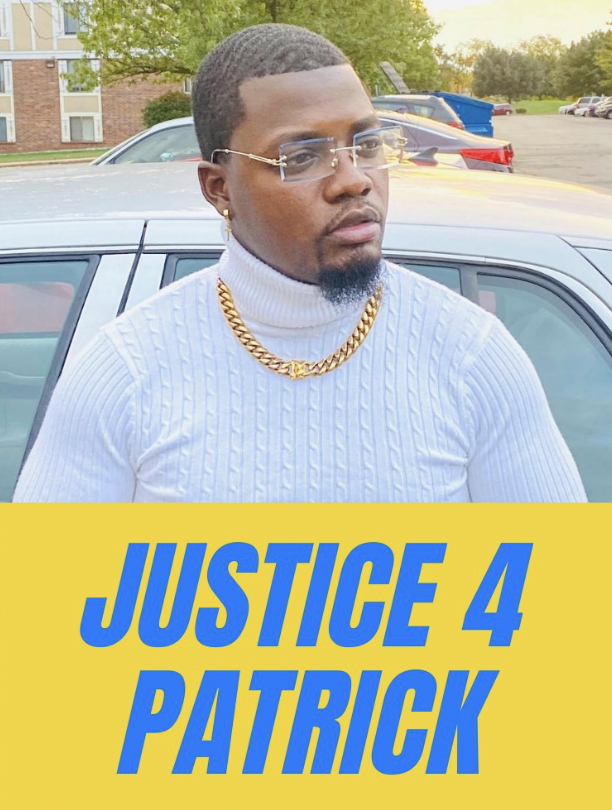 In Part I of our Year in Review for 2022, we looked at how the local news media (mis)reported on critical issues in Grand Rapids. In Part II, we looked back at what the Far Right in West Michigan was doing over the past year. With Part III, we looked back at the activity of the Grand Rapids Power Structure, how they expanded their wealth, how they influenced electoral outcome and how they colluded with local government. Today, we want to look back at the most reported issue in Grand Rapids for 2022, the GRPD murder of Patrick Lyoya.
As we mention in Part I, GRIID responded with 14 posts to local news media coverage on the police killing of Patrick Lyoya. We also made numerous posts about activist organizing as a result of the GRPD murder of Patrick, but we will discuss that aspect in Pat V, which will cover social movements in Grand Rapids.
When it comes to articles about what happened to Patrick Lyoya, the City of Grand Rapids and the GRPD response, or the legal aspect of this case, GRIID posted a total of 31 articles. Our first post, from April 5, was entitled, GRPD shoots and kills 26 year old Black man: Deconstructing the PR Spin, also known as a Press Conference. Here is part of what we wrote:
In effect, the Press Conference was designed to primarily divert attention away from the police shooting of a Black man, both through the rhetoric they used and the fact that they are holding the facts close to their chest until the investigation is complete and the video is released, allowing them time to devise a Public Relations/communications plan.
A few days later, GRIID posted something that no other news sources were discussing, which was an overview of US policy in the Congo since that country began resisting colonialism, how US policy supported political repression, which was the very reason that the Lyoya family chose to come to the US in the first place.
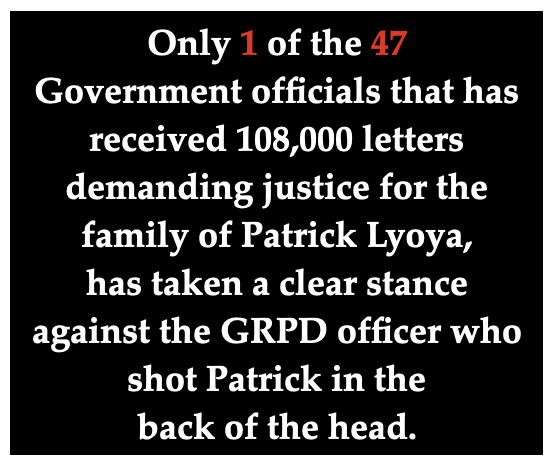 One week after the GRPD had murdered Patrick Lyoya, the Justice for Patrick had generated 108,000 letters to 47 different government officials, but only one had even bothered to respond. Then on April 14, Grand Rapids City officials released video of the GRPD murder of Patrick Lyoya, but used another Press Conference as an attempt to control the narrative.
Once people in positions of power felt comfortable addressing the death of Patrick Lyoya, there were several local government officials that addressed the GRPD murder of Patrick, although none of them called it that. Maybe the most egregious public statement had come from then Kent County commissioner Skaggs, who was running for state office at the time. Here is a summary of the GRIID response to the statement from Skaggs:
Lastly, towards the end of the statement, Skaggs says, “Throughout American history, change only happens when we elect government officials who are work toward justice and when people peacefully take action to show leaders the changes they want to see implemented.” This is a very White interpretation of US history. Elected officials have overwhelmingly only ever done the will of the people when they are forced to. In addition, to suggest that change only came about through peaceful means in just a god damn lie. People who were enslaved often freed themselves by killing those who enslaved them and burned the fucking plantation. In fact, the Black Freedom Struggle has always had an armed wing throughout history, that often work in concert with the more non-violent branch of that centuries long movement. See the books Force and Freedom: Black Abolitionists and the Politics of Violence, by Kellie Carter Jackson, and, This Nonviolent Stuff’ll Get You Killed: How Guns Made the Civil Rights Movement Possible, by Charles Cobb Jr.
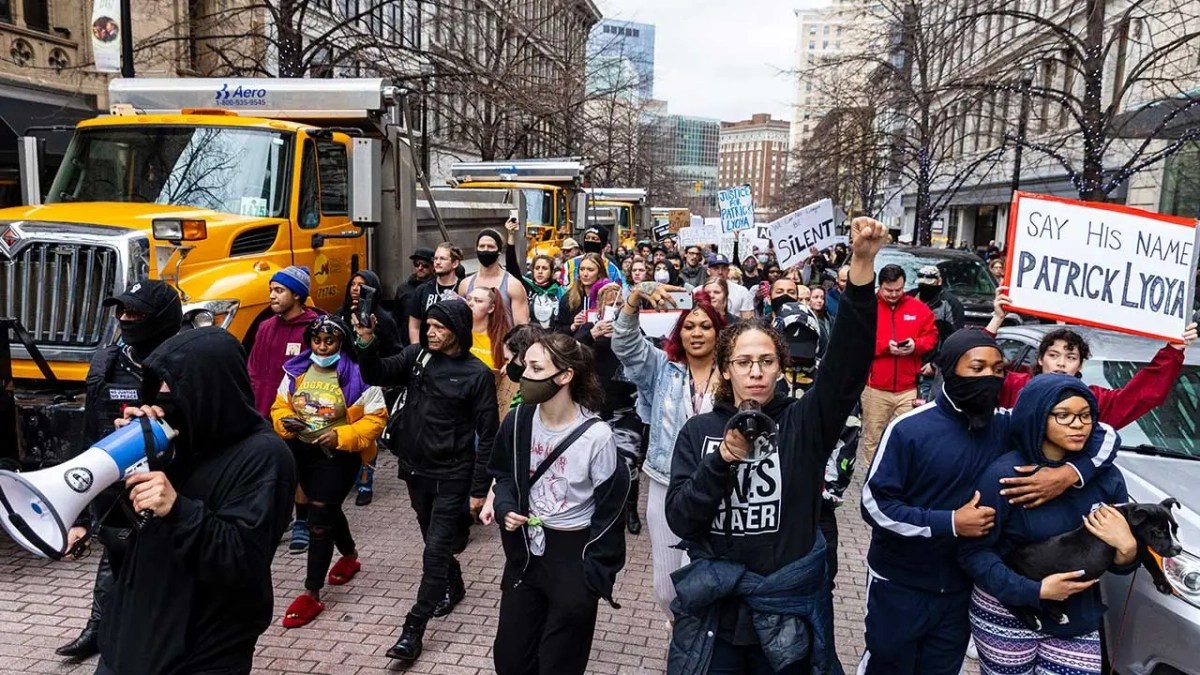
There were also constant attempts by GR City officials to dictate how the community should resist the GRPD murder of Patrick Lyoya. GR City officials were constantly demanding that the community act peacefully, all the while the GRPD was preparing to target activists who were part of the movement. On April 18, we wrote:
For those of us who have participated in the protests over the past week, we have also seen undercover officers in the crowd, cops in buildings overlooking the usual protest areas and cops on rooftops. Such tactics are designed to intimidate people, but their primary interest is to engage in surveillance, with the intent of identify certain people and to have documented footage to use against organizers and protesters in general.
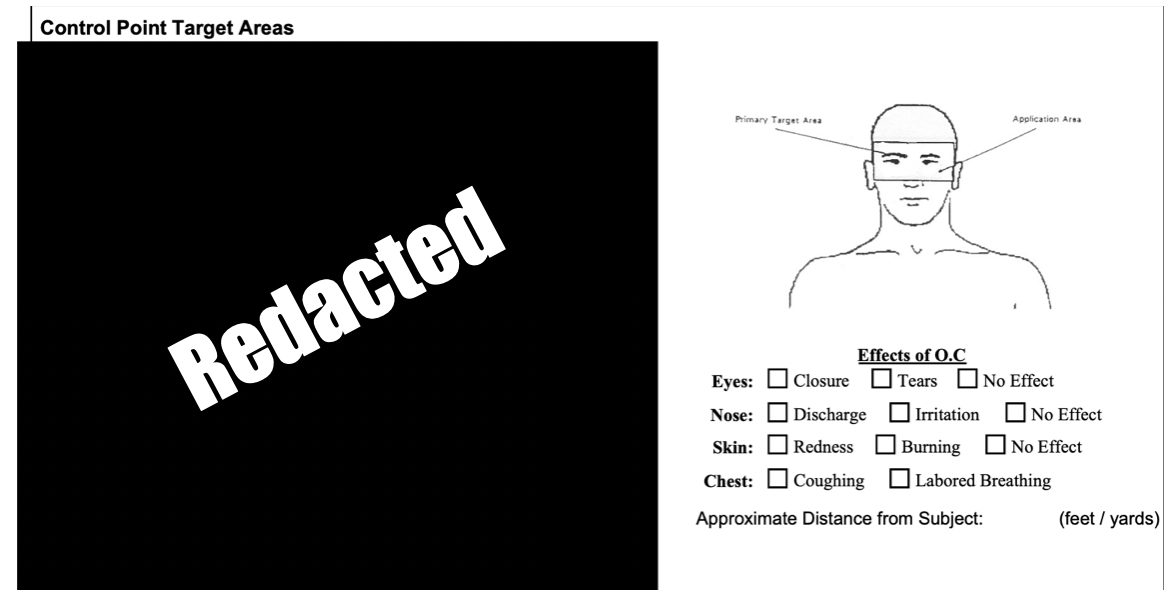
In early May, we wrote about FOIA documents that had been released, but was largely ignored or downplayed by local news and GR City officials. Not surprising, was the fact that most of the requested documents were heavily redacted.
Six weeks after the GRPD murdered Patrick Lyoya, groups like Voice for the Badge decided to respond. Their statement used the same tired arguments, along with unsubstantiated claims.
On June 10th, the Kent County prosecutor charged the cop who shot Patrick Lyoya in the back of the head with second degree murder. GRIID put together a list of responses from GR City officials and so-called community leaders. A few days later, the lawyers representing the cop that killed Patrick Lyoya, went of the offensive to push their own narrative about what happened on April 4, stating:
We were disappointed to learn that Officer Schurr has been charged with murder by the Kent County Prosecutor. Officer Schurr is a decorated member of law enforcement who has dedicated his career to helping others and protecting the citizens of Grand Rapids. The evidence in this case will show that the death of Patrick Lyoya was not murder but an unfortunate tragedy, resulting from a highly volatile situation. Mr. Lyoya continually refused to obey lawful commands and ultimately disarmed a police officer. Mr. Lyoya gained full control of a police officer’s weapon while resisting arrest, placing Officer Schurr in fear of great bodily harm or death. We are confident that after a jury hears all of the evidence, Officer Schurr will be exonerated.
We respond by writing, “This narrative about Christopher Schurr was very strategic on the part of his lawyers. First, they want to present Schurr in a positive light, since he apparently, “has dedicated his career to helping others and protecting the citizens of Grand Rapids.” Neither of these claims are substantiated by the lawyers, but they will no doubt be using this narrative as a central part of their case when it goes to trial. This narrative about Schurr is also a narrative that has been perpetuated by the commercial news media, like a recent MLive article from late May that GRIID deconstructs.”
As time passed, GR City officials felt like they could continue to control the narrative and hope that the resistance would fade away. In late June, the GRPD held another Press Conference, and GRIID responded with an article entitled, The Ferguson Effect, handling protesters and other fallacies at the GRPD Press Conference on Friday.
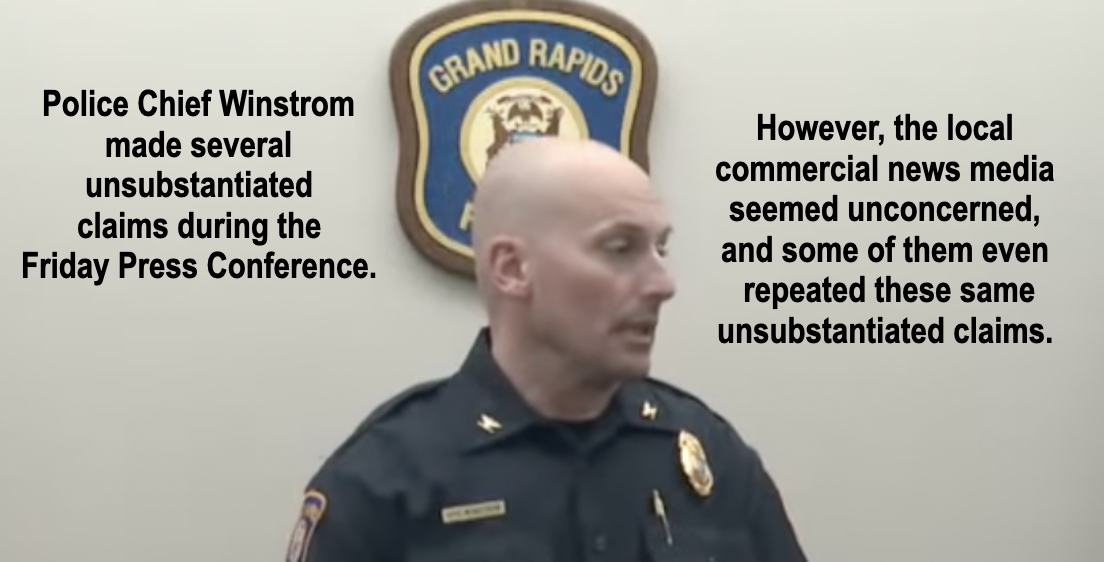
Much of the local news coverage had died down and the only stories presented by the local news media, were specifically about the legal proceedings, like they did in late September and October, often ignoring or dismissing those who continued to protest the GRPD murder of Patrick Lyoya.
In Part V, we will look back at our reporting on the various social movements in Grand Rapids and their important work.
In Part I of our Year in Review for 2022, we looked at how the local news media (mis)reported on critical issues in Grand Rapids. In Part II, we looked back at what the Far Right in West Michigan was doing over the past year. Today, we want to look back at the actions and influence of the Grand Rapids Power Structure in 2022.
The Grand Rapids Power Structure can best be defined in the graphic above, but for our purposes today, we are going to focus on economic power, political power and state power.
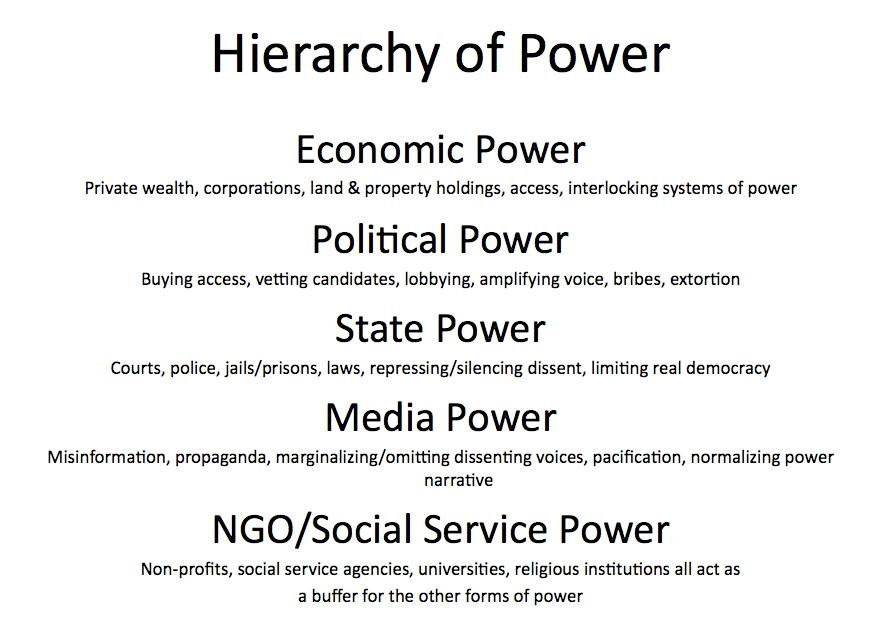
Economic Power in Grand Rapids
Over the past year, those with tremendous wealth have continued to exert their influence over the general public. We know the names of these families and entities, what we often don’t know the details of how they function, primarily because they are not committed to transparency.
Part of our look at economic power dynamics when it comes to members of the Grand Rapids Power Structure, always includes how they defend their own economic interests, while at the same time taking credit for “innovative projects.” In March of 2022, we saw a great example of how wealthy elites engaged in a bit of deception around a housing program they are backing. The GR Chamber of Commerce announced a new workforce housing plan, which GRIID responded to, writing:
The language from the announcement is instructive, in that it states that the goal, “was to create workforce housing for individuals and families employed in Ottawa County who were unable to afford to live there.” Now, any reasonable person would ask themselves why can’t workers afford to live in the communities that they work in? The simple answer is because these individuals and families don’t make enough to afford the cost of housing in the communities that they work in.
Another major economic-driven project GRIID has been following for a few years, is the proposed downtown outdoor amphitheater project. In late March, the City of Grand Rapids unanimously approved a land sale worth $116 Million, paving the way for the proposed amphitheater project. Then in June, it was announced that the State of Michigan would likely be providing $30 Million in public funds for the downtown amphitheater project, despite the fact that the public had no say in this. Finally, in November it was announced that the downtown amphitheater project would be run by the Kent County Convention Arena Authority, an entity which is essentially run by the GR Power Structure.
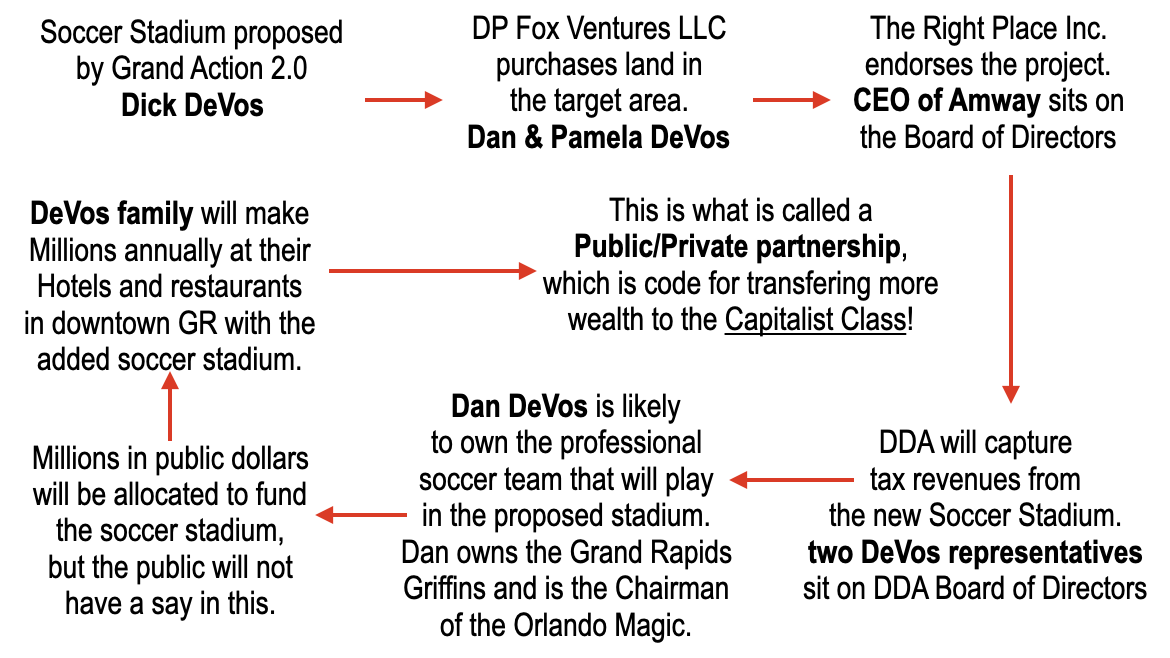
There were also a few land deals involving the DeVos family. In September, local news agencies reported that there was a new proposal to build a soccer stadium in downtown Grand Rapids, one that had a DeVos connection. GRIID did more digging and connected the dots on this project. Then in November, GRIID reported on a new land purchase by the DeVos family in the city’s 2nd Ward. What we discovered is that the land was purchased by a DeVos family member and that the developer involved int he project is also connected to the DeVos family.
GRIID also critiqued the annual 200 most powerful business leaders edition of the Grand Rapids Business Journal.
However, one of the biggest stories of 2022, was the Grand Rapids Chamber of Commerce push to criminalize the unhoused. In early September, the GR Chamber sent a letter to Grand Rapids City officials, complaining about how downtown businesses were being negatively impacted by the unhoused, plus their demand to increased GRPD presence. This initial letter was followed up by a second letter in early December, where the GR Chamber included a proposed ordinance that would punish the unhoused. Lastly, 120 so-called leaders, signed on to the GR Chamber’s proposed ordinance, primarily because of their economic interests.
Political Power/Influence by the GR Power Structure
 2022 was an election year in Michigan, so the Grand Rapids Power Structure certainly used their economic power to influence election races. GRIID reported on campaign finance dynamics involving the GR Power Structure in February, April, and just before the August primary, which also included how much money the DeVos family contributed to the GOP Gubernatorial candidate Tudor Dixon.
However, even larger amounts of campaign contributions came just before the November 8th election, specifically with State Representative and State Senate races. However, the major political intrigued was all the money that was injected into Grand Rapids City Commission races, particularly money coming from the Grand Rapids Police Union and the GR Chamber of Commerce. There was also a tremendous amount of money coming from members of the Grand Rapids Power Structure, particularly in the 1st and 3rd Ward City Commission races.
Grand Rapids City government power, often in service to economic power
One last area of how systems of power work together, was how the City of Grand Rapids used its own power, which is often in service to the Grand Rapids Power Structure.
For instance, in January, the process the City of Grand Rapids used during their search for a new Chief of Police, the city held public forums, despite the fact that the City Manager ultimately made the decision. In March, it was announced that the outgoing Chief of Police, Eric Payne, was stepping down. Unfortunately, the local news just used the narrative created by the City of Grand Rapids, a manufactured narrative that the local news ran with.
In April, GRIID wrote about all of the tax money the City of Grand Rapids was getting from cannabis sales. We proposed that all of that money go towards reparations for those most impacted by the War on Drugs. GRIID also wrote about the Downtown Development Authority’s decision to expand their geographical area, which means more tax dollars would be captured, specifically for the purpose of benefiting downtown businesses.
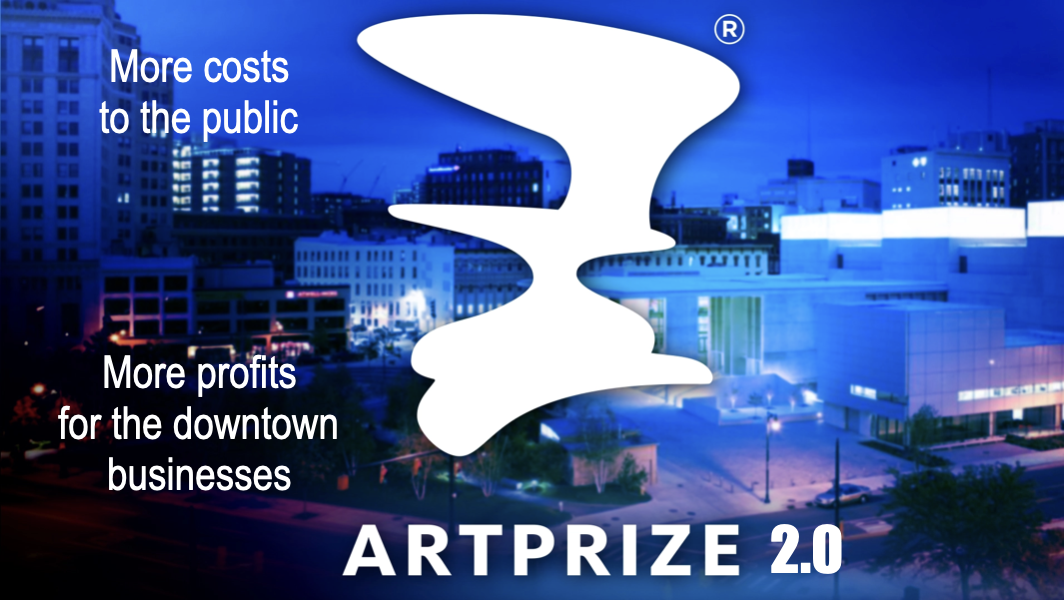
Lastly, it was announced that the DeVos family would no longer be running ArtPrize. However, the City of Grand Rapids agreed to step in and create another public/private partnership that would not only mean more public money and city staff time would be used for ArtPrize, those who have been economically benefiting from the annual art spectacle, would continue to reap the monetary rewards, without having to front the money to run the annual art event. GRIID wrote about what the City of Grand Rapids is calling ArtPrize 2.0, both in November and December.
In Part IV, we will look at the GRPD murder of Patrick Lyoya and how the City of Grand Rapids has responded to this injustice.
Unlike social spending, US Congress has no problem passing the largest US Military budget in history
A nation that continues year after year to spend more money on military defense than on programs of social uplift is approaching spiritual doom. Dr. Martin Luther King Jr.
Just two days before Christmas, the US Congress passed that largest US military budget in history, The $858 Billion budget for the Pentagon/US Military was almost unanimously passed by Congress, thus continuing the long standing history of Bi-partisan support for US militarism.
According to the Director of the National Priorities Project:
This deal gives the military its highest budget since the height of the post-9/11 wars, and more than $100 billion more than the last budget under President Trump — an increase big enough to fund most of the still-unfunded priorities under President Biden’s Build Back Better plan. In a typical year, half or more of the Pentagon budget goes to corporate contractors, who have seen their stock prices soar since Russia’s invasion of Ukraine. The Pentagon recently failed its fifth audit in a row, the only major government agency unable to account for how it spends taxpayer dollars.
Co-founder of The Intercepted, Jeremy Scahill, also wrote about the FY 2023 US Military budget, stating:
Included in the National Defense Authorization Act of 2023, finalized on December 6, is the establishment of a multiyear no-bid contract system through which Lockheed Martin, Raytheon, Boeing, and other weapons manufacturers are being empowered to expand their “industrial base” and business. Lawmakers determined that “providing multi-year procurement authority for certain munitions programs is essential,” in part because it will “provide the defense industrial base with predictable production opportunities and firm contractual commitments” to “increase and expand defense industrial capacity.”
The power of the US Military Industrial Complex cannot be understated. According to data from OpenSecrets.org, military contractors have contributed over $293 Million to Congressional candidates since 1990, when the data began to be collected. The military industry also has over 700 lobbyists, who are paid a ton of money to constantly pressure members of the US Congress to adopt military budgets, which will be good for their clients. In 2022, Military contractors spent over $92 Million in order to lobby the US Congress.
Senate Armed Serves Committee member and Michigan Senator, Gary Peters, released his own Press Release on December 23rd, touting how well he didi to secure funding for US military installations in Michigan and Michigan-based military contractors.
What Senator Peters and other members of the US Congress fail to mention are the following important contextual realities about the US Military Budget:
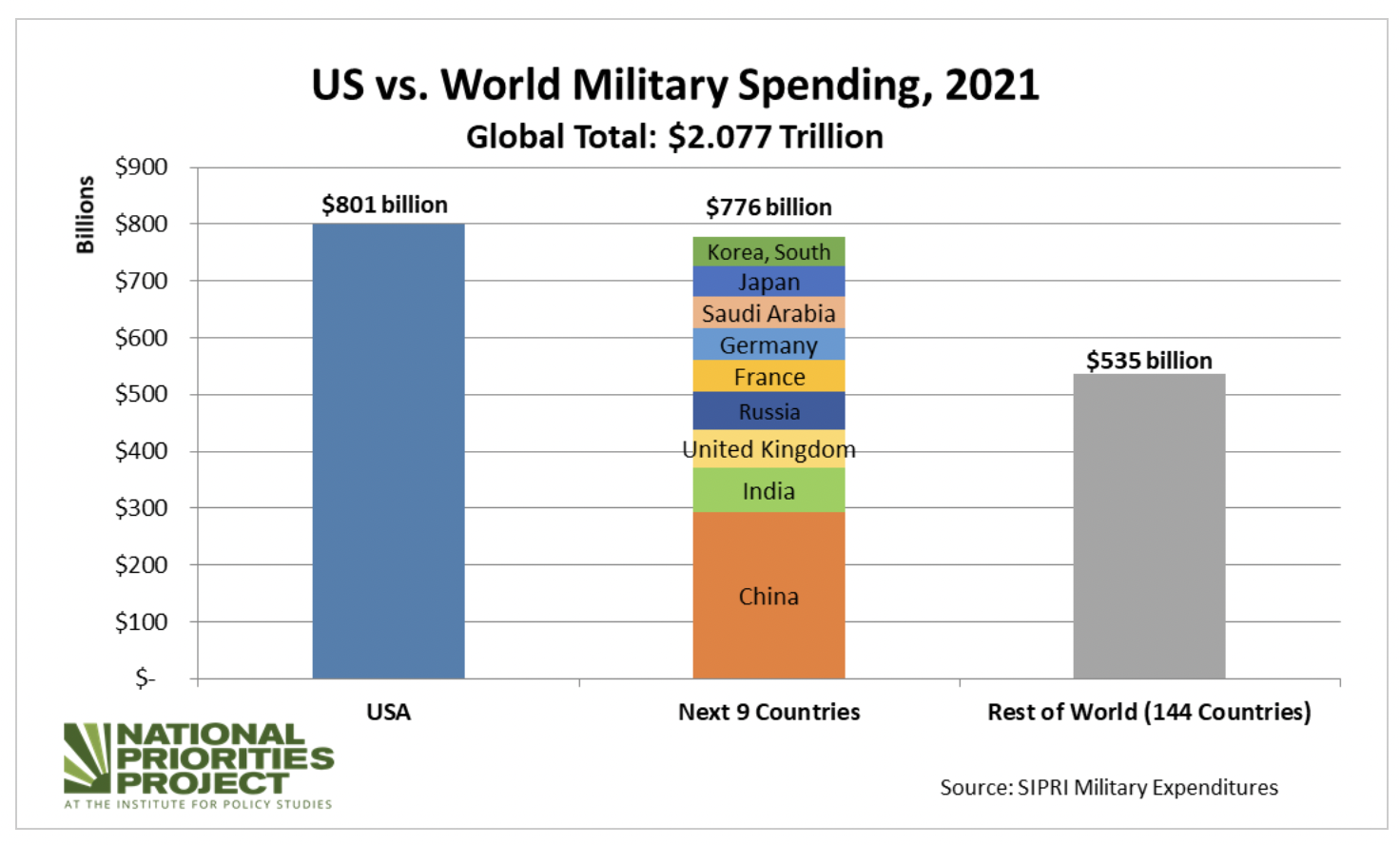
The US has the largest military budget in the world. In fact, the US military budget is larger than the next 9 largest military budgets in the world, combined. (See graph above, from the National Priorities Project)
The US has 750 Military bases around the world, in 80 different countries, according to data from 2021 from World Beyond War.
The US military is currently involved in numerous wars/military conflicts around the world, which includes direct military involvement, US military advisors, covert operations, training for foreign troops, US Military aid to countries and US weapons sales abroad. In fact, the US is the largest weapons dealer on the planet.
Did you know if the Pentagon were a country, its fuel use alone would make it the 47th largest greenhouse gas emitter in the world? If we’re going to address the climate crisis, we need to #DivestFromWar NOW!
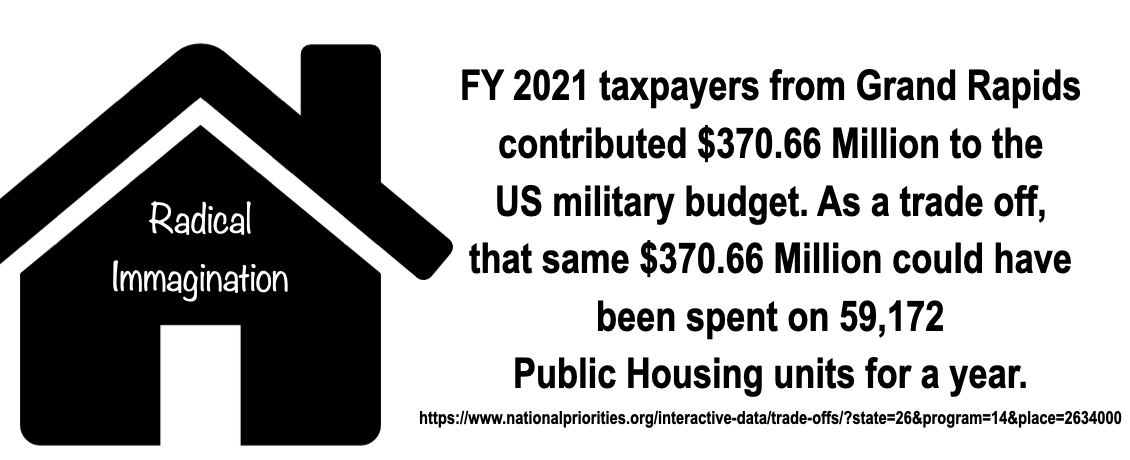
 According to the excellent data provided by the National Priorities Project, for FY 2021 taxpayers from Grand Rapids contributed $370.66 Million to the US military budget. As a trade off, that same $370.66 Million could have been spent on 59,172 Public Housing units for a year. Imagine if that amount of money stayed in Grand Rapids and was used for critical issues like housing, education, health care etc. It’s never a question of there not being enough money, rather it is always a question of priorities.
Just last week, over 1,000 US faith leaders called for a negotiated settlement between Russia and Ukraine, a settle that the US could be involved in if they were truly committed to disarmament and lasting peace.
The very fact that there is no real anti-imperialist/anti-war movement in the US right now, is indicative of the fact that too many people are either disinterested in fighting US imperialism or too many people, including progressives who contrite to support US militarism and the US Military Industrial Complex. Until such a movement exists in the US, the US Military Budget will continue to grow and be adopted by both Republicans and Democrats alike.
Taking a break from posting, be back next week!
Still saying NO to the Criminalization of the unhoused: Paying a visit to Mel Trotter Ministries
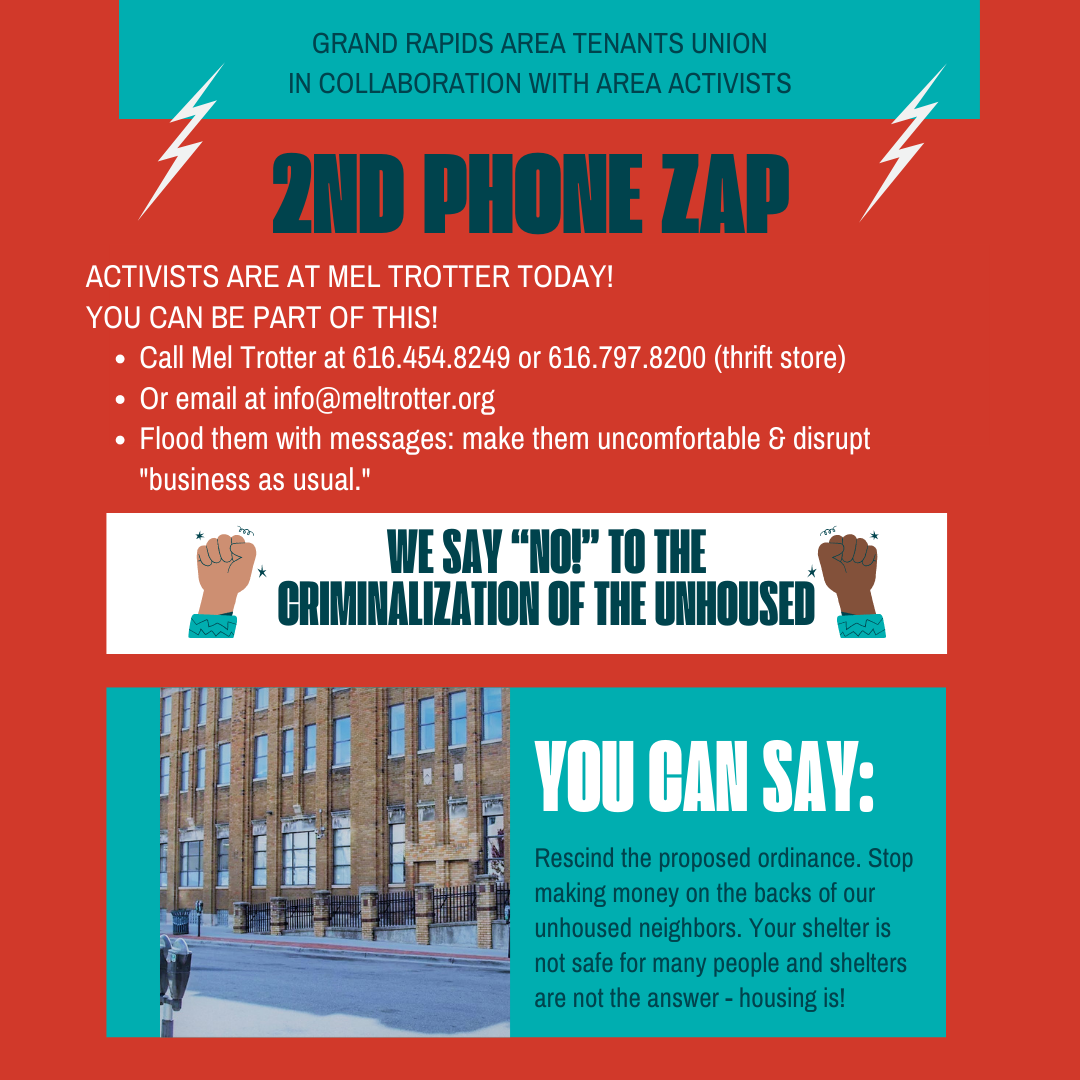 Last week, we reported on a group of activists that went to the Grand Rapids Area Chamber of Commerce to demand that they retract their proposed ordinance for downtown Grand Rapids and make a public apology for even suggesting such an oppressive policy be adopted by the city.
Last night, another group of activists did the very same thing, by going to one of the entities that endorsed the GR Chamber’s ordinance proposal, Mel Trotter Ministries. This time there were no chants or signs being held by activists, so as not to alarm or cause any unnecessary stress to the people who utilize the services of Mel Trotter’s, primarily the unhoused.
One can’t enter Mel Trotter by just opening a door, instead every door has a security camera and a buzzer you have to push in order to gain access. Once inside, people approached a reception area, where staff were sitting behind plexiglass. Activists asked to see the CEO of Mel Trotter’s, Dennis Vankampen. However, when the help desk staff called back, they were told that the CEO was not there. Instead, the Vice President of Operations, Jeff Dashner, was sent out to greet the group of activists.
Once a representative of Mel Trotter was present, activists communicated the same thing they did last Monday to the GR Chamber, they demanded that they retract their support of the proposed ordinance for downtown Grand Rapids and make a public apology for supporting said ordinance proposal. They also demanded a response by this Friday.
Jeff Dashner said that he sent an e-mail to both Vankampen and another person who is part of the Executive Team. While making the demands it appeared to several of the activists present, that the Mel Trotter staff person seemed disinterested in what was being said. One activist, who does weekly work with the unhoused – mutual aid, harm reduction, etc. – spoke up and said, “We are not just observers, we work with the unhoused and are well aware of the precarious situation they are in, which is exactly why we are appalled by your organization’s support for the ordinance proposed by the GR Chamber of Commerce. Several other activists who were present, affirmed this point and made other comments, which were acknowledged. Another activists made it clear that as of Sunday, those involved in organizing against the Chamber’s proposed ordinance, had over 12,000 people send messages to Grand Rapids City officials making it clear that there was widespread popular opposition.
For those who were unable to attend in person, the Grand Rapids Area Tenant Union, which is collaborating with other area activists, are encouraging people to contact Mel Trotter Ministries to demand they pull their support for the proposed ordinance from the GR Chamber of Commerce. Call Mel Trotter at 616.454.8249 or 616.797.8200 (thrift store), or email at info@meltrotter.org. Please share the graphic included in this article so we can get as many people to pressure Mel Trotter Ministries to do the right thing.
GRIID Year in Review Part II – Monitoring the Far Right in West Michigan
Yesterday, we began our annual year in review series with a look at our work with monitoring local news coverage of critical issues, which was Part I in this series. Today, we will take a look at our coverage of the Far Right in West Michigan in 2022.
When we use the term Far Right, we are not simply referring to extremist groups like the Proud Boys (although they would fall under this category), we are referring to organizations and institutions that embrace and perpetuate policies and practices that push the envelope on issues like White Supremacy, heterosexism, transphobia, patriarchy, and xenophobia. Granted, some of the stories we look at below, could fall under multiple categories, but for our purposes today we are identifying them as Far Right.
Within the past year it is hard to go a week without the dominant news media reporting on the January 6th attempted insurrection. However, local news agencies haven’t reported much on that issues, except for some coverage around the 1st anniversary of January 6th.
On January 4th, GRIID posted a piece that discussed the importance of having a critical lens when it came to the one year anniversary of the attempted insurrection, which also included a critique of a Catholic TV show that interviewed Fr. Robert Sirico, founder of the Grand Rapids-based Action Institute, where he was discussing the January 6th insurrection. A few days later we wrote a piece about the PBS documentary on the January 6th attempted insurrection, which left out any critical information about the West Michigan connection to that insurrection. Lastly, this issue was reported on briefly in June, after Michigan Gubernatorial candidate Ryan Kelley (from Allendale) was arrested by the FBI for his role in the January 6th attack on the US Capitol.
There were also some article we posted that continued our two-decade critique of the Far Right Think Tank, the Acton Institute, based here in Grand Rapids. In January, they posted an article that once again demonized the national movement of Black Lives Matter. Then in March, the Acton Institute continued its assault against people who identify as trans, which they have consistently done for years.
There were also a couple of stand alone piece that GRIID wrote during the year, having to do with the Far Right in this area. One article had to do with the major contributions from the Van Andel family to the Far Right school in Michigan, Hillsdale College. Another article was about a church just north of Grand Rapids, which bragged about building their own armory back in April. The other stand alone article was just after the shooting in Colorado in November, where a gunman shot and killed several people, along with wounding others who were part of the LGBTQ community. One queer group spray painted a message at the compound of the group Focus on the Family, which has received millions of dollars of funding from the DeVos family and has created an anti-LGBTQ climate across the country.
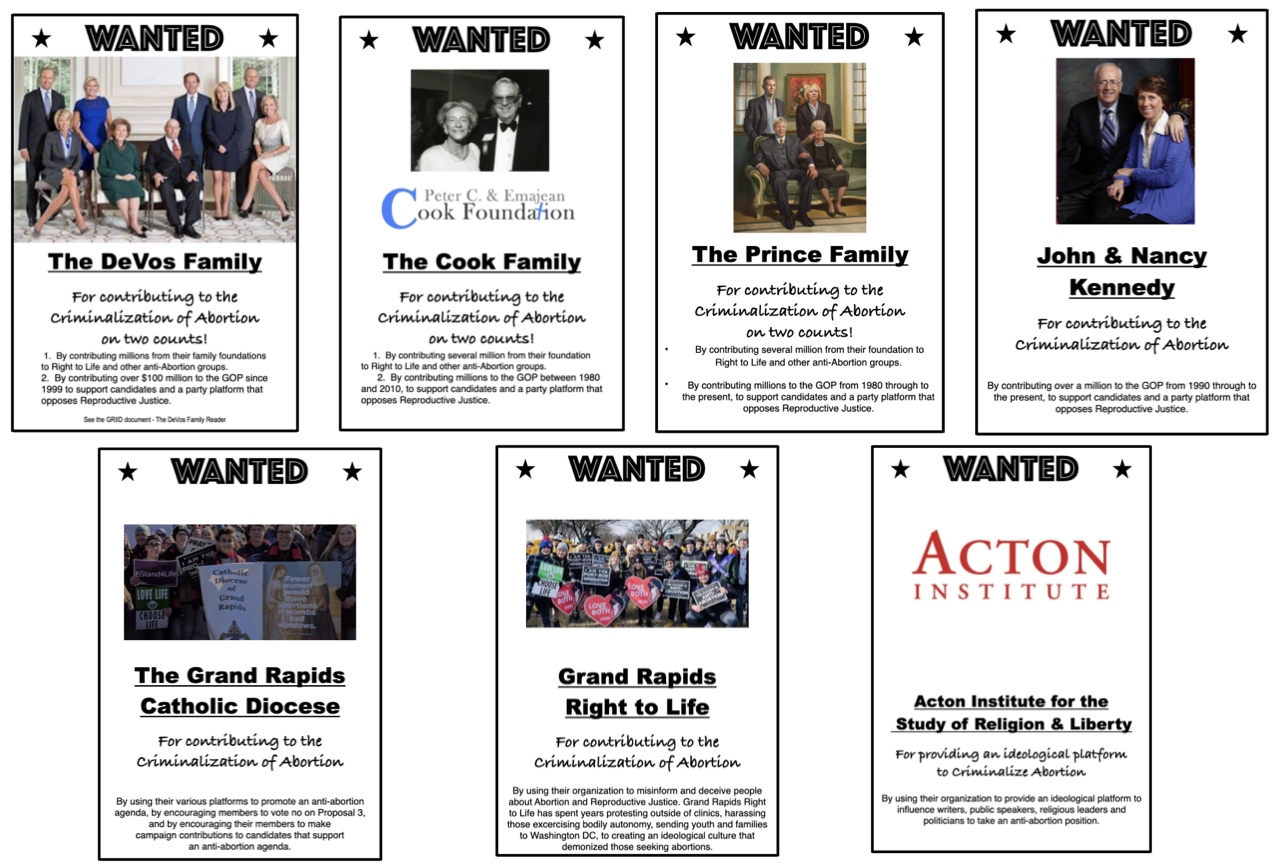
However, the big far right story of the year was the US Supreme Court’s decision to reverse Roe v Wade. GRIID wrote a piece about the history of the reproductive justice movement in Grand Rapids, then followed it with a piece looking at what we called the anti-abortion cartel in West Michigan in May. After that we posted several stories focusing on people or organizations in West Michigan that have contributed to the criminalization of abortion, some for more than forty years. Each of these stories came with a Wanted Poster for the family or organization that funded and supported the criminalization of abortion, with links to each of those postings/Wanted posters below.
In Part III, we will take a look at article we did in 2022 that shinned the light on the Grand Rapids Power Structure.
https://griid.org/2022/07/07/wanted-for-funding-the-criminalization-of-abortion-the-devos-family/
https://griid.org/2022/07/21/wanted-for-funding-the-criminalization-of-abortion-the-cook-family/
https://griid.org/2022/08/18/wanted-for-funding-the-criminalization-of-abortion-the-prince-family/
https://griid.org/2022/08/26/wanted-for-funding-the-criminalization-of-abortion-john-nancy-kennedy/
It’s that time of the year again, where we offer up a review and revisit some of the most relevant posts from GRIID. We will be looking back at stories that focus on the Grand Rapids Power Structure, Social Movements in Grand Rapids, Monitoring the Far Right in West Michigan and a reposting of GRIID constructed memes. However, we kick off the year in review by looking at our ongoing critique of local news coverage.

There were a total of 42 times that we posted under the section Dissecting Local News for 2022. Not surprising, 14 of our posts were dedicated to critiquing how the local news reported on the GRPD, particularly the police murder of Patrick Lyoya.
One of the things that we noticed in the reporting on the GRPD’s murder of Patrick Lyoya have to do with how favorable the coverage has been to the now ex-cop Christopher Schurr, with the example of a May article by MLive that presented Schurr as someone devoted to serving others. Our response to that story, was entitled, MLive article on Officer Christopher Schurr normalizes White Supremacy and White Saviorism. Another issue has been how the local news has framed the police murder of Lyoya once the court process had begun, as is evidenced in our post in late September, The ongoing court case and Grand Rapids news media coverage of the ex-cop who murdered Patrick Lyoya.
There have also been stories about the GRPD, that continue to show the local news media’s bias towards the GRPD. Two separate posts that we did are worth noting here. The first was a post in early January, where were documented how the local news essentially just regurgitated the City”s Press Release about a forum for the next Police Chief, When Press Releases become news stories: City of Grand Rapids sends Press Release on forum about new GRPD Chief, local TV stations regurgitate Press Release as news.
The second example of what could be called Copaganda, comes from an April story done by WZZM 13, about the group iCI Nation. iCI Nation is essentially a pro-police organization that has been active in recent years specifically because the public has been demanding greater scrutiny of how policing is done in the US and in Grand Rapids. The GRIID post was actually an Action Alert, since the WZZM 13 story provided no context or critical backdrop on the iCI Nation group.
News Coverage regarding those with power in Grand Rapids
One of the most important roles that news agencies can play is to hold systems of power in check, whether those systems are government or private power. There were numerous postings that GRIID crafted in response to how much of a free pass the local news media gave for those in power. One example was how the local news reports on those with power was from January. The wife of Fred Meijer, Lena, passed away in January, and the local news coverage made her out to be a saint, with MLive referring to her as having “a wonderful heart.” Our response was written to reflect the fact that the Meijer family is one of the wealthiest families in the area, which the local news coverage didn’t really address. A second example looks at how MLive reported uncritically on the DeVos Family Foundation hurricane relief donation in October.
When local reporting is PR for developers
New development projects are always being announced in Grand Rapids, but unfortunately the coverage does not challenge, question or provide amble contextual information for the public. There were six times that GRIID wrote critiques of how development project were covered by the local news media.
 One example GRIID looked at was an MLive story that was essentially based on a Press Release from the Right Place Inc, having to do with what they referred to as 12 Transformational projects. A second example, which is related to the 12 Transformational projects, has been coverage of the proposed soccer stadium, where the local news coverage fails to provide relevant context and issues around conflict of interest. A third example, looks at how public funds continue to be prioritized for tourism and private sector interests, over affordable housing and other urgent needs for thousands of families in Grand Rapids. Our post was entitled, It’s never a question of funding, rather priorities: Making the area around the Van Andel Arena more appealing or providing housing relief for marginalized families?
There were other issues, like the 2022 election coverage, but we will provide more on that in another part in the series. In tomorrow’s post we will look at articles we posted looking at the far right in West Michigan.
Grand Rapids is considering spending between $3 and $15 Million on an indoor golf driving range
“I’ve got just the place for low-cost housing. I have solved this problem. I know where we can build housing for the homeless: golf courses! It’s perfect! Just what we need. Plenty of good land, in nice neighborhoods, land that is currently being wasted on a meaningless, mindless activity engaged in primarily by white, well-to-do male businessmen who use the game to get together to make deals to carve this country up a little finer amongst themselves.” George Carlin

Grand Rapids City officials never cease to amaze me when it comes to how they spend money. On Tuesday, only a few local news agencies reported that the City of Grand Rapids is considering spending between $3 and $15 million on an indoor driving range, according to a story on WOODTV8.
The source for this news is David Marquardt, the director of Grand Rapids Parks and Recreation. Marquardt is quoted as saying:
“Topgolf is the one brand that comes to people’s mind. It is in most of the major cities across the country, like Chicago, Detroit and Minneapolis. That company looks for a big population base and other things that attract people to their cities like major league football. Grand Rapids does not have that.”
Again, it’s all about entertainment stuff when it comes to attracting people to live or visit here. How about instead of making the City of Grand Rapids primarily a destination for tourism or attracting “talent”, how about we attract people based on the notion the principle that every person who lives in the city is valued? And when I say valued, I mean that everyone has all of their basic needs met – earning a living wage ($25 an hour minimum), health care, good public education, great sustainable transportation, and yes, truly affordable housing.
The director of Grand Rapids Parks and Recreation says that Topgolf is probably not in the cards, but a smaller version of what they do. The discussion so far is to build an indoor golf driving range using land at the City operated Indian Trails golf course. (Of course this is what the City would call a golf course.)
Marquardt then goes on to say:
“The Indian Trails golf course is what we call an ‘enterprise fund’. And so essentially it needs to be self-sustaining like any business. It would not necessarily be taxpayer funded, but rather funded by user participation. We would be looking at some partner funding from other sources. I don’t know how many or whom.”
Do other people find it curious (and enraging) that this is even a conversation happening in city government circles? The timing is also pretty incredible, especially considering we are only beginning to come out of a major pandemic, with massive inflation, making thing even more economically stressful for thousands of families in Grand Rapids, along with increased pressure from residents to re-direct funding away from policing and into housing, health care and other basic needs.
In addition, I have no doubt that Grand Rapids City officials will be able to find partners – ie rich people – who will contribute to the cost. However, as we continue to see with other public/private partnerships, more often than not the public pays (with little or no input), while the private sector makes money and lobbies to use federal, state and local public dollars, all in the name of attracting people to Grand Rapids.

