Grand Rapids City Commission Candidates: Business as usual or collective action to radically transform this community?
Like we did for the State Senate, State House and Kent County Commission races in the August Primary Election, we want to look at the candidates for the 3 wards in Grand Rapids.

In those previous races, I made it clear that as someone who embraces an anarchist politics, I believe that elected officials need to respond to the current social movements in Grand Rapids and not allow those with deep pockets or those who are part of the Grand Rapids Power Structure and dictate the future of this city.
In recent years there have been numerous social movements that have made known their demands and have been doing their own autonomous organizing work, along with participating in Mutual Aid projects. Some of the social movements are well known, working on issues that challenge systems of power and oppression, such as the Justice4Patrick Movement, which has been connected to Defund the GRPD, which is made up of a coalition of groups – the Grand Rapids Area Mutual Aid Network, Together We Are Safe, Movimiento Cosecha GR, GR Rapid Response to ICE and the Grand Rapids Area Tenant Union.
These social movements have been working on challenging structural racism in Grand Rapids, such as the disproportionate number of GRPD cops who patrol, surveil, harass and intimidate BIPOC communities in this city. There are also groups working on fighting for housing justice, the lack of truly affordable housing in Grand Rapids, the role of gentrification throughout the city, and how the City of Grand Rapids, using the GRPD, deals with the unhoused population. The Grand Rapids Area Tenant Union is one resource that works with tenants to fight for housing justice.
There are also groups/movements working on immigrant justice, confronting the cops and other state violence actors in targeting undocumented immigrants and the intense monitoring by the GRPD of immigrant led groups.
The Grand Rapids Area Mutual Aid Network (GRAMAN) has been an amazing response to providing mutual aid to people most impacted by the COVID pandemic, redistributing wealth and centering the needs of BIPOC residents. There are also lots of more informal mutual aid work being done in Grand Rapids, which operates outside of the non-profit industrial complex, which often polices those seeking support.
These are only some of the movements that have caught the attention of those in power, which have regularly engaged in efforts to discredit these autonomous groups, along with using state violence workers (cops) to undermine, threaten and repress those working for structural change.
It is in this context that we encourage people to look at the six candidates running for the three ward seats. There are two incumbents, Kurt Reppart and Joe Jones, plus four new candidates. Below are links to their campaign websites, along with Facebook pages. Check out where they stand on issues, their list of endorsements and how much they center those who are most marginalized in Grand Rapids. Here are questions that we would ask.
- Do these candidates support the demands to defund the GRPD, to redistribute funds that would normally go to the cops and make sure it gets into the hands of families and communities that are the most marginalized
- According to the National Low Income Housing Coalition, people in Grand Rapids need to earn a minimum of $20.02 an hour to afford a two bedroom apartment in this city. Do candidates support a baseline income of $25 an hour, which would be more of a living wage for people.
- While the Participatory Budgeting Project (PBP) is presented as an experiment, do candidates support allowing residents to have an ongoing say in the way that their tax dollars are used in the city. The current PBP funds allocated are $2 million, which are funds from the American Rescue Plan Act. The 2023 Grand Rapids City Budget is $598 Million, thus $2 million is really next to nothing. Imagine how residents might prioritize how their tax dollars get spent, especially if there was a much larger percentage of the budget allocated for participatory budgeting?
- Where do candidates stand on matters of those with deep pockets dictating development projects in Grand Rapids? Do we really need a soccer stadium, which will use considerable public funds, and end up increasing the profits of those in the private sector? Do candidates support creating committees that are made up of those most marginalized, instead of always appointing the so-called stakeholders to influence outcomes?
- Do candidates support real climate justice policies and practices, like limiting the use of fossil fuels, make mass transit the primary source of transportation, make food growing central to land use, or see water as sacred and not a resource?
- Do candidates support the dismantling of Structural Racism, which currently means that BIPOC people disproportionately experience poverty, mass incarceration, unemployment/underemployment? Do candidates support reparations, non-cooperation with Immigration and Customs Enforcement in this city, and and end to Settler Colonial practices against the Anishinaabe/Indigenous people?
These are just a few of the larger issues that this city is confronted with, issues that have been made public by various groups and social movements in recent years. In the last week before the election, we will be posting information based on campaign finances, to see which organizations and which members of the Grand Rapids Power Structure will influence the outcome.
1st Ward
Kurt Reppart
https://www.facebook.com/Kurt1stWard
Drew Robbins
https://www.drewrobbinsforgr.com/
https://www.facebook.com/drewrobbinsforgr/
GRPOA and GR Chamber endorsements
2nd Ward
Lisa Knight
https://www.facebook.com/Committeetoelectlisaknight
Joe Jones
https://www.facebook.com/KeepJoeJones
https://keepjoejones.com/endorsements
3rd Ward
Kenneth Hoskins
https://www.facebook.com/electrevken
Kelsey Perdue
Wanted for funding the criminalization of Abortion: The Grand Rapids Catholic Diocese
 This is the firth in a series of WANTED posters, looking at individuals, families and organizations in West Michigan that have contributed significantly to the criminalization of abortion and the undermining of reproductive justice.
Today’s focus is on the Catholic Church, specifically the Grand Rapids Catholic Diocese. The Catholic Church universally condemns abortion, but since we are looking at entities in West Michigan, the Grand Rapids Catholic Diocese makes the most sense.
The Catholic Church in Grand Rapids, like all Catholic Churches, relies on a hierarchy, which dictates church beliefs and church policy. The Catholic Church has long insisted that having an abortion is a sin. The Catholic Church uses the institutional structure to also communicate messaging around abortion, whether that is from the pulpit, in newsletters of public statements. In a statement after the US Supreme Court decision to overturn Roe v. Wade, the head of the Grand Rapids Catholic Diocese, Bishop Walkowiak wrote:
“The United States Supreme Court’s decision moves America one step closer to protecting human life from its earliest stages of existence. The Catholic Church remains committed to helping women and couples who are facing unexpected or difficult pregnancies. For every pregnant woman who may be unsure of what is next, the Catholic Church is here. We will continue to accompany and care for women in need of emotional, spiritual, or physical support and their child(ren), born and unborn. Support is available through Catholic Churches as well as other local organizations.”
In the November Elections, people will be able to vote on the issue of abortion, with Proposal 3. In response to this, Bishop Walkowiak wrote a column in the Catholic Diocese magazine Faith, stating:
All people should oppose this proposed amendment. I urge you to go to the polls to vote “NO” on the “Reproductive Freedom for All” constitutional ballot proposal in November.
Such advocacy is nothing new. In 2019, the Grand Rapids Catholic Diocese worked with the Michigan Catholic Conference, in order to provide information on HB 4320. The Grand Rapids Catholic Church provided opportunities for parishioners to sign petitions in support of what they referred to as “partial-birth abortion and dismemberment abortion ban act,” in July of 2019. You can read a letter that Bishop Walkowiak wrote, a letter that appeared in Church bulletin all across the Diocese.
In addition, the Grand Rapids Catholic Diocese has a Respect Life Ministry, which provides education, resources and other support systems to promote an anti-abortion agenda.
The Catholic Church is arguably the most powerful religious institution on the planet, so we should not be surprised that Roe v. Wade was overturned and that the Catholic Church played a major role in the criminalization of abortion. The Catholic Church can encourage their members on how to vote and to make campaign contributions to candidates that take an anti-abortion stance, thus wielding tremendous influence over public policy.
We encourage you to share this poster and consider directing some of your rage at the recent US Supreme Court ruling to overturn Roe v Wade towards the Grand Rapids Catholic Dioceses. Their headquarters are located on the corner of Wealthy and Division in Grand Rapids, which could be one of the stops on the march for reproductive freedom.
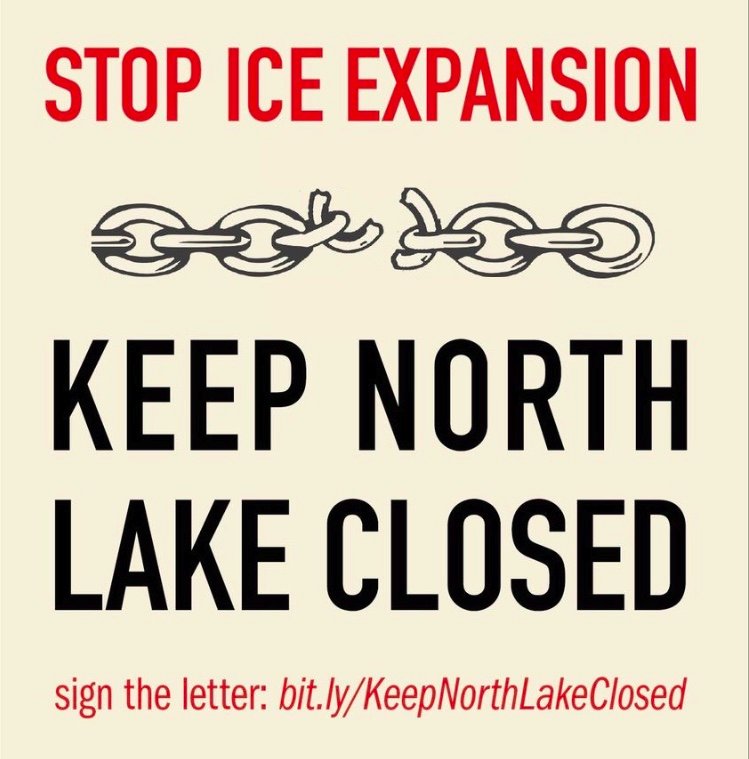
No Detention Centers in Michigan demands that the Biden Administration not allow a Michigan prison to be used as an ICE Detention Center
 There has been an interesting dynamic happening around immigration issues in the US, especially since the transition from the Trump administration to the Biden administration. While there was a great deal of public outcry during the Trump years, immigration justice organizing has faded so far into the second year of the Biden administration.
Despite this trend, there is plenty of evidence that many of the same anti-immigrant policies that was zealously embraced during the Trump years, are being continued during the Biden administration. The main difference seems to be in the rhetoric, but not the actual policy. Here are a few examples of how the Biden administration has continued Trump’s immigration policies:
- Continuing to build the US/Mexican border wall
- US Border Patrol numbers are still high and their influence is expanding.
- Immigrants are dying at a high rate when crossing the US/Mexican Border.
- The Biden 2023 Budget maintains the same funding levels as the Trump administration for ICE and Customs and Border Protection.
- Over 1 Million Asylum seekers have been removed during the Biden administration.
- The Biden administration is using private detention centers for undocumented immigrants.
This last issue, the use of ICE Detention Centers, is making the news in Michigan again. According to a Press Release, “The No Detention Centers in Michigan coalition has recently sent a letter to President Biden, Secretary of Homeland Security Mayorkas, Michigan Governor Gretchen Whitmer, and Senator Gary Peters calling for an end to the expansion of immigration detention and for the North Lake Correctional Facility in Baldwin to remain closed. This letter follows a recent proposal from Michigan Representatives Bill Huizenga and John Moolenaar to repurpose the facility as an ICE detention center.”
The No Detention Centers in Michigan coalition letter has over 50 groups that have signed on to the letter, which you can read at this link.
The letter seeks to pressure the Biden Administration to keep its promise not to renew contracts with private prisons. Executive Order 14006 instructed the Department of Justice not to renew contracts with private prisons. This is a central part of the No Detention Centers in Michigan coalition’s Press Release, which states:
North Lake, a private prison owned and managed by the Florida-based GEO Group, has closed and reopened multiple times since its construction in 1999. In its most recent incarnation, from October 2019 through September 2022, the facility contracted with the Federal Bureau of Prisons to hold non-U.S. citizens convicted of federal crimes.
In keeping with the history of immigrant-only prisons run by the GEO Group, this period of less than two years has seen numerous accounts of inhumane conditions, medical neglect, and violent mistreatment endemic to the immigration detention system. Six documented hunger strikes took place at North Lake over the course of 2020, primarily led by Black immigrants demanding medical care, better food, and an end to discriminatory confinement in the Restricted Housing Unit. In May 2020, more than 45 relatives and loved ones of people incarcerated at North Lake signed a letter to the U.S. Department of Justice and the Bureau of Prisons, demanding increased transparency and a recognition of the GEO Group’s mishandling of the COVID-19 crisis.
The Biden administration issued an executive order in January 2021 purporting to end the federal government’s use of private prisons, setting the stage for the facility’s closure later this month. But immigrant advocates have pointed to a pattern of similar facilities ending their BOP contracts only to reopen as detention centers, while the number of immigrants held in ICE custody has continued to rise since President Biden took office, despite campaign promises to curtail detention. Eighty percent of the immigrants detained by ICE are held at facilities run by private companies. In June, Michigan Representatives Bill Huizenga and John Moolenaar publicly requested that North Lake be converted into a detention center.
“In calling for an ICE contract to bail out the GEO Group in Michigan yet again,” the letter from NDCM affirms, “Huizenga and Moolenaar seek to capitalize on the human misery caused by the organized abandonment and exploitation of working people both within the United States and beyond its borders. […] We refuse to let ICE and GEO expand their violence further into Michigan, and we call on the Biden administration to extend Executive Order 14006 to explicitly prohibit the use of private facilities for immigration detention as a first step toward phasing out all ICE detention.”
 “This prison has already caused enormous suffering and has never fulfilled GEO’s promises to the people of Lake County,” said Oscar Castañeda, a member of No Detention Centers in Michigan. “Now the federal prison contract is finally ending, but we’ve seen that GEO will exploit any opportunity to make a profit. When it comes to the immigrant detention system, the Biden administration has not kept its word. We’re not going to let ICE expand here without a fight. We want to make sure that the loopholes allowing for the expansion of detention are closed and that this time, North Lake stays shut down for good.”
Pressuring the Biden administration on this matter is critical, especially since there has been less mainstream attention to immigration issues over the past two years. Just because a Democrat occupies the White House, it doesn’t mean that immigrant justice is being fulfilled.
If you want to communicate with No Detention Centers in Michigan, you can contact them via their Facebook page, which posts regular updates.
Political Ads are designed to be vague, deceptive and to misinform the public: Part III
In Part I, we discussed some of the larger reasons why political ads are so offensive. We talked about how journalism has failed us on election coverage and how candidates center themselves instead of the community or issues that people care about.
In Part II, we looked at an attack ad that was paid for by the Congressional Leadership Fund, which was attacked the 3rd Congressional District Democratic Party candidate, Hillary Scholten. This video ad use deceptive images and a misleading narrative, most of which was not based in fact.

In today’s post, we want to look at print ads, specifically ads one would receive at their homes, like the ones pictured here below.
First, it is worth pointing out, that when you contribute to political candidates, particularly at the State and Federal level, most of their campaign funds are spent on advertising. Political ads, as we have pointed out in the first two parts of this series, are inherently misleading and they often utilize deceptive imagery and narratives. Political advertising should be abolished, then we could allow every candidate the same amount of time to present their platform and voting record on broadcast TV and radio. This, of course, is unlikely to happen, since radio and TV stations rely heavily on political ads for revenue.
Now, lets look at some of the vague language used in a few of the ads I received at home in the mail, specifically ads from candidates David LaGrand and Mark Huizenga, who are running against each other for a State Senate seat, and Rachel Hood and Lynn Afendoulis, who are running for a State Representative seat.
In the two ads I received having to do with LaGrand and Huizenga, the Huizenga ad was paid for by the Michigan Republican Party and the LaGrand ad was paid for by the Michigan Democratic State Central Committee. The LaGrand ad is focused on public safety, with the tag line being, For David LaGrand, keeping us safe is never a partisan issue. Here the Democrats want to present LaGrand as someone who “reaches across the isle,” always wanting to be bipartisan.
When it comes to public safety, the ad provides 3 talking points – more funding for police, eliminating the cash bail system and rehabilitating low-level offenders to reenter the workforce. The first talking point is misleading, since there is no evidence that more funding/more hiring of cops leads to greater public safety. We encourage readers to check out a recent report from the group Interrupting Criminalization, entitled, Cops Don’t Stop Violence. Getting rid of the cash bail system is certainly a positive step, but there is a great deal more to be done to dismantle the Prison Industrial Complex. On the matter of getting ex-offenders back to work, this is an issue the Capitalists like the Koch brothers to the DeVos family salute, because they are in need a workers, particularly low wage workers. In fact, the West Michigan Policy Forum held a conference last year on this very topic. Lastly, it is important to point out that the LaGrand ad had no souring on it, so people would have a hard time verifying the claims made on the print ad.
The Huizenga ad, chose to go the route of comparing Huizenga to LaGrand, with the claim that LaGrand has voted on his that negatively impact Michigan families. The images used are also unflattering to LaGrand, using a black background, whereas the Huizenga images are in color and much brighter. This technique is pretty common, but it should be offensive to any free thinking person.
The three talking points for the Huizenga print ad are – income taxes, American energy independence and property and other taxes. Huizenga clearly is trying to present himself as being better on economic issues that LaGrand, but these are only a few economic issues and one cannot make an informed decision on such a narrow spectrum. One could easily argue that both Huizenga and LaGrand to not support working families, since neither of them is advocating for a $20 – $25 an hour minimum wage in Michigan. This would be more of a living wage for people/families, but such political ads avoid discussing things like a living wage or narrowing the wealth gap. One positive note on the Huizenga ad was that the talking points are sources, so at least people could verify the claims.
The other two print political ads were about Rachel Hood and Lynn Afendoulis. The ad from Hood was paid for by the Michigan Democratic Party and was a 4 sided fold-over ad. The front cover had a large beer glass on it, highlighting the restaurant bar that Hood owns with her husband. On the inside pages the tag line is, State Rep. Rachel Hood is a brewery owner who understands what matters to Kent County families. There are three major themes included in the content: helping families and small businesses deal with rising costs, Supporting men and women in uniform, and keep the water safe and clean. There are no sources to substantiate the claims about Hood.
The ad for Afendoulis, which is paid for by the Committee to Elect Lynn Afendoulis, is similar to the Huizenga ad, where Afendoulis juxtaposes her policies with Hood, primarily economic policies – income taxes and gas taxes. The ad has a darker image of Hood with a Black background and a color image of Afendoulis with a white background.
In the end, none of these ads provide much substantive information on voting records or campaign platforms. Both of the Democratic candidate ads have no sourcing for their claims, but the Republicans do. The Democrat ads we looked at only talk about their candidates, whereas the GOP ads made comparisons to their opponent. All of these ads used vague language and campaign buzzwords like family, high prices, taxes and public safety, yet offered little on what those things mean in the real world, especially to families that are struggling to survive.
Do we really want immigrants as neighbors? Misleading memes, bipartisan realities and immigrant justice
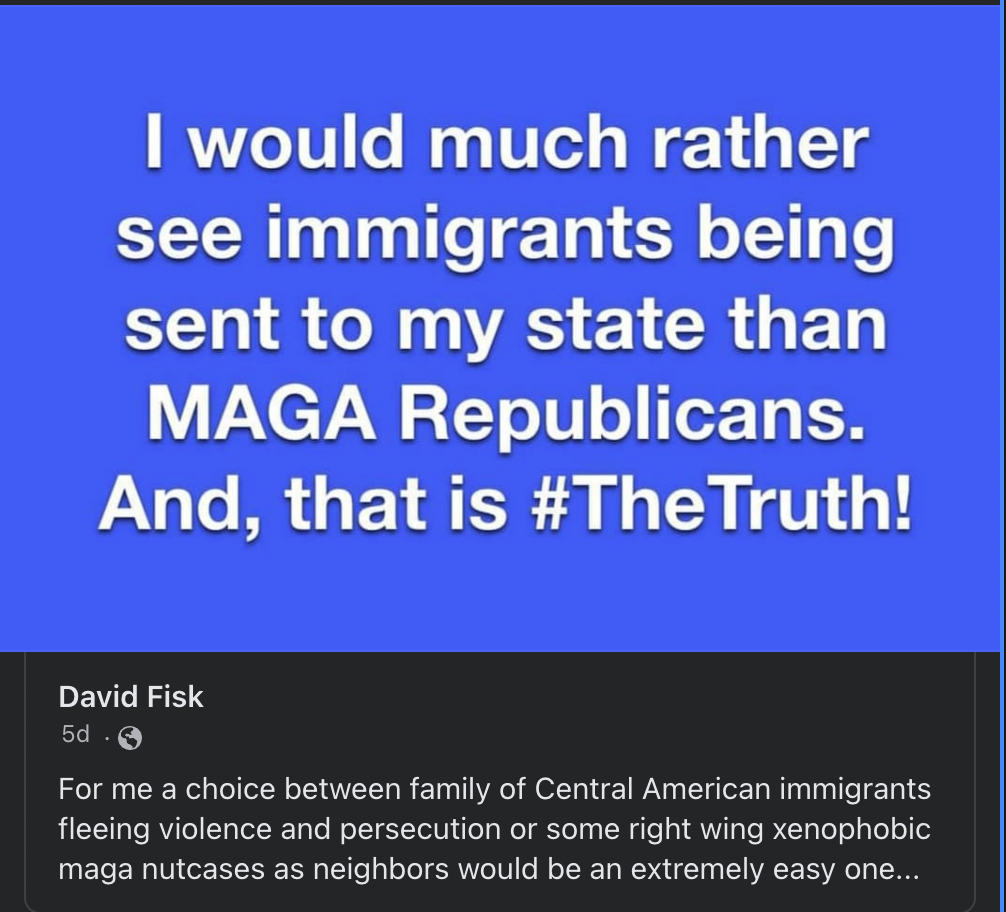 I have been seeing a meme on social media recently, which is completely in response to recent ridiculous and abusive actions towards immigrants in the US.
The meme I am referring to originated on the site Occupy Democrats, which states: I would much rather see immigrants being sent to my state than MAGA Republicans. And, the is #TheTruth!
Someone I know reposted the meme, then included the following comment under the meme:
For me a choice between a family of Central American immigrants fleeing violence and persecution or some right wing xenophobic saga nutcases as neighbors would be an extremely easy one……
Now, I get the sentiment of both the meme, and the above comment about preferring Central Americans fleeing violence and persecution over Trump supporters. I too would prefer the former over the later. However, sentiment is not enough, especially since US policy towards immigrants has a dark history, particularly if those immigrants are not from Europeans countries or countries that the US identifies as client states. This is a topic that I am very familiar with, as I have taught classes on the history of US Immigration policy. Check out this popular education tool on this topic.
Even if people in the US would rather have Central Americans fleeing violence and persecution over Trump supporters as neighbors, it doesn’t mean much if, 1) those same people keep voting for political parties that perpetuate a very exclusionary and racialized immigration policies, and 2) those same people are not part of grassroots movements like the Sanctuary Movement.
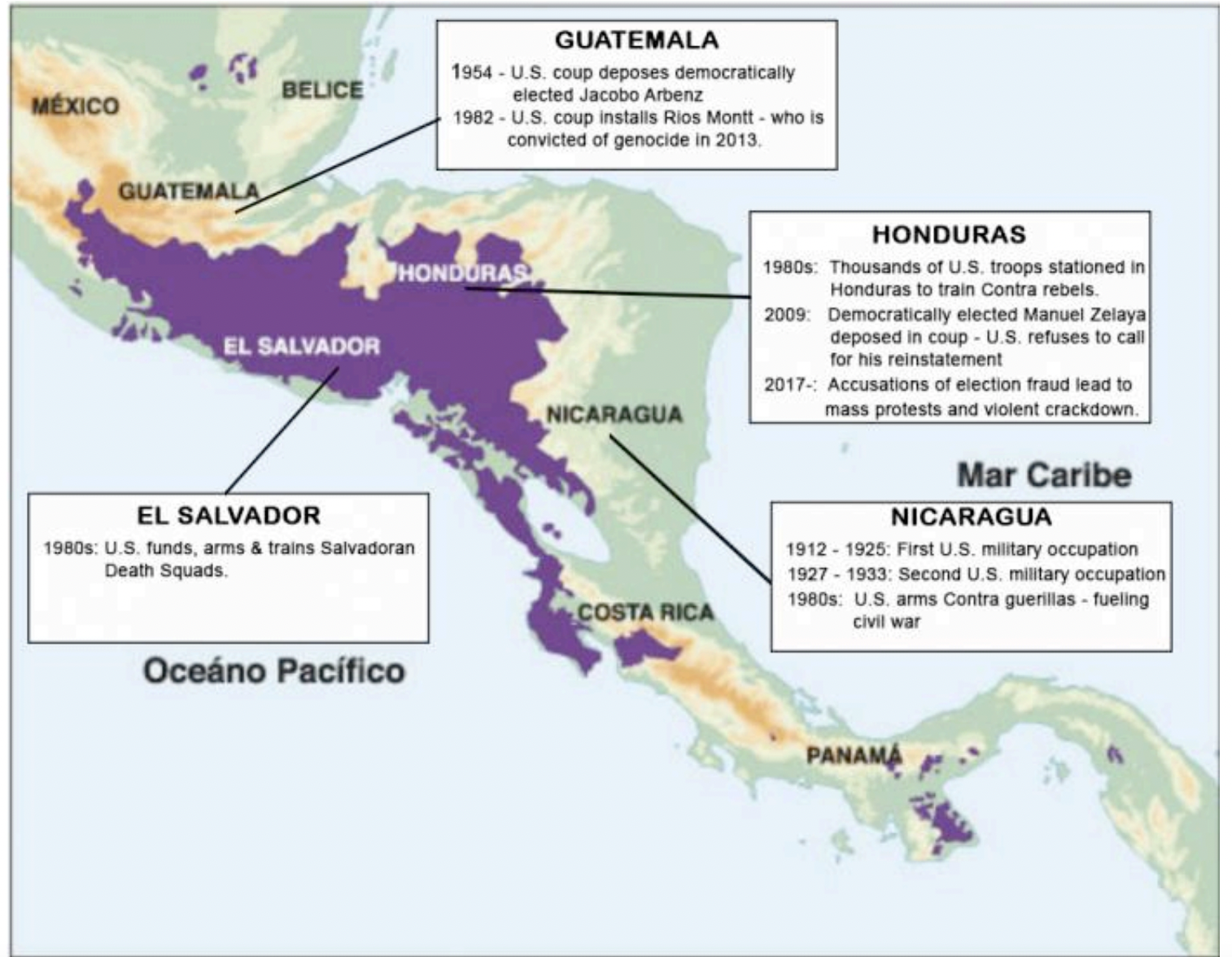
The reality is, when it comes to anti-immigration policy, both Republicans and Democrats have consistently not supported truly progressive policies that both welcome any and all refugees/immigrants since the country was founded or change foreign policy towards counties that immigrants flee from, in part, because US policy in those countries is a major factor that contributes to people fleeing their homelands. For details on this bipartisan anti-immigrant policy, check out the following books – All-American Nativism: How the Bipartisan War on immigrants Explains Politics as We Know It, by Daniel Denvir and Storming the Wall: Climate Change, Migration, and Homeland Security, by Todd Miller.
The second critique I have of the Occupy Democrats meme is that it is not reflective of the Democratic Party’s position towards grassroots movements that are centered around immigration justice. For example, in the US during the Reagan Administration’s obsession with Central America in the 1980s, there was a lively Central American Solidarity Movement and a Sanctuary Movement. However, both of those movements did not receive significant support from the Democratic Party. The Central American Solidarity Movements saw thousands of US citizens go to Central American and stand against the US-backed death squad governments in El Salvador and Guatemala, in addition to people going to Nicaragua to oppose the US-trained and financed Contra forces, which were really a terrorist group. On the domestic end, you have over 400 faith-based groups and other community groups offering sanctuary to refugees who actually fled violence and persecution in El Salvador and Guatemala, even though the Reagan Administration was actively persecuting some of the more visible sanctuaries at that time. Meanwhile, the Democratic Party did virtually nothing to oppose this persecution, nor did they publicly support the Sanctuary Movement. See the Grand Rapids People History Project information on the Central American Solidarity Movement in Grand Rapids and the Central American Sanctuary Movement as well.
 More recently, especially after Trump was elected in 2016, there was somewhat of a revival in the immigrant justice movement, a movement that has been led by immigrants. The Trump administration made no bones about going after immigrants who were undocumented, which led to lots of organizing across the country and in Grand Rapids. From 2017 through 2021, there was an urgent need for sanctuary for undocumented immigrants. The group GR Rapid Response to ICE has been speaking with numerous faith-based entities to declare themselves a sanctuary for undocumented immigrants, over the past several years only one church has been willing to take on this responsibility. Grand Rapids boasts of having some 800 churches, yet only one has been willing to truly welcome all immigrants, particularly those most vulnerable, to safe from persecution in Grand Rapids. Lastly, the Democratic Party in the Grand Rapids area never took a public position in support of the immigrant justice movement, nor the efforts to find more groups willing to become immigrant sanctuaries.
In the end, the meme from Occupy Democrats is just plain misleading. Personally, I don’t expect either political party in the US to become a champion for immigrants and refugees. I do however, have a great deal of hope in social movements that are rooted in immigrant justice and movements that are willing to take risks to defend and support immigrants who come to the US, whether that have documentation or not. If we want to have immigrants as neighbors, then we need to actively support immigrant justice and join groups like Movimiento Cosecha, which is an immigrant-led movement fighting for the rights of the estimated 11 million undocumented immigrations currently living in this country.
The ongoing court case and Grand Rapids news media coverage of the ex-cop who murdered Patrick Lyoya
On Friday, there was a meeting between the Kent County Prosecutor and the legal team representing Christopher Schurr, the ex-GRPD cop who was charged with 2nd degree murder in the killing of Patrick Lyoya.
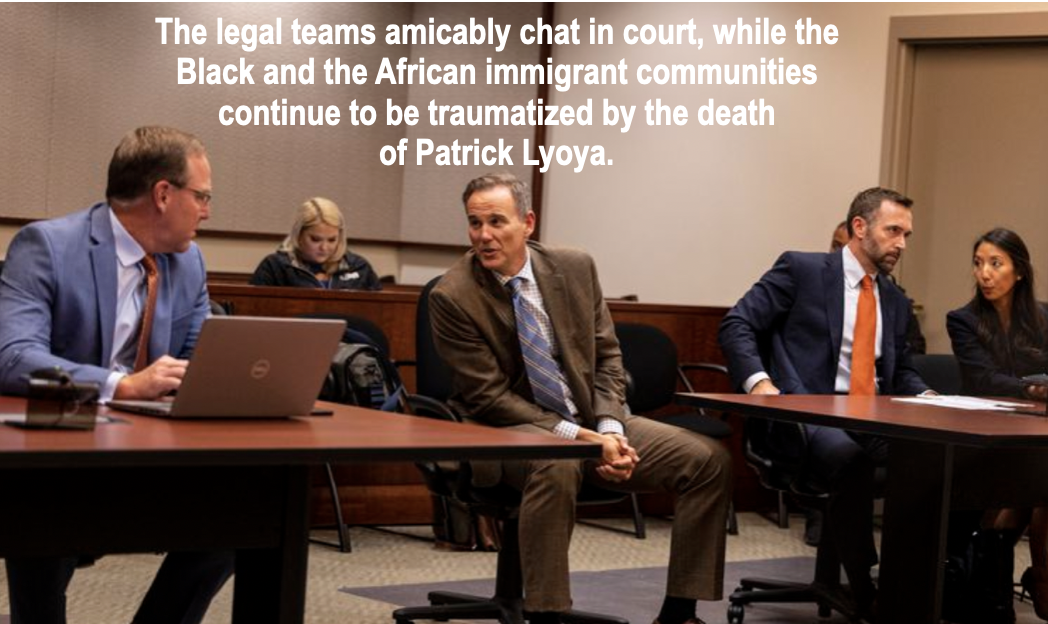
I, along with several other Justice4Patrick activists, were present in the courtroom on Friday, although most of the meeting between the lawyers and the judge, took place in the judge’s chambers.
Twenty minutes after the scheduled court hearing, lawyers from both sides came out, but 5 minutes later they left. Eventually the legal teams returned, along with the judge, to talk a bit about whether or not the lawyers representing Schurr had all of the documentation necessary to move forward. The lawyers representing Schurr said they now had all the documents they requested in order to move forward. The judge then set October 27 as the next court date for a hearing on this case. October 27 is a Thursday, but the judge made it clear that they were also reserving October 28th as well, in case the hearing would spill over into a second day.
Local News Media Coverage
Also present in the courtroom were several local commercial news media agencies – MLive, WOOD TV8, WZZM 13 and Fox 17. I found stories from all of the news agencies, except from Fox 17. What follows is a brief deconstruction of the local news coverage.
The MLive story, ran as its headline, Key hearing date set for former Grand Rapids officer accused in Lyoya’s shooting death. As the headline suggests the story was mostly about the date that the judge set for the next hearing in this case, plus the MLive story did acknowledge that the lawyers from both sides did meet in the judge’s chambers. In addition, the MLive story had one paragraph about what happened on April 4th, when Christopher Schurr shot and killed Patrick Lyoya. There was also a paragraph about legal proceedings leading up to now. MLive also included 8 photos, all of which were of the legal teams and the judge, plus one picture of Christopher Schurr sitting on top of Patrick Lyoya, just before he was shot in the back of the head.
The WOOD TV8 story had some of the same information, but also included a comment made by Patrick Lyoya’s father in August, regarding the the court delays were affecting their family. In addition, channel 8 included this:
Some anti-police activists attended the brief Friday court session at which the hearing date was decided. One posed a question to Kent County Prosecutor Chris Becker as he prepared to leave the courtroom. “Why doesn’t Schurr have to appear for the court date like everyone else?” the activist inquired. Becker said, “It’s up to the judge,” to which the woman responded, “Preferential treatment.”
WOOD TV8 was the only commercial news agency to acknowledge that there were activists there, referring to them as “anti-police activists.” It is worth noting that this exchange between activists and the Kent County Prosecuting Attorney did take place after everyone left the court room, yet channel 8 felt it was content worthy to share. It was the only “drama” of the day, which is probably why WOOD TV8 included it.
The WZZM 13 story was the worst of the bunch, since it was written before the judge announced the October 27 hearing date. Not only did the story fail to provide information on the next court date, they included video of Schurr’s lawyer commenting on June 21st.
Omissions in the local news coverage
There were also a few critical omissions in the local commercial news media coverage of the court proceedings in the case involving Christopher Schurr, the ex-cop who shot and killed Patrick Lyoya.
The first omission has to do with the fact that one of Schurr’s legal team, Mark Dodge, had recently represented another GRPD cop who was found not guilty of intentionally discharging his firearm when approaching a Black man.
The second significant omission has to do with a comment from Mark Dodge, a comment the lawyer made on June 11th, after the initial court date, where Dodge was representing Schurr. The statement reads:
We were disappointed to learn that Officer Schurr has been charged with murder by the Kent County Prosecutor. Officer Schurr is a decorated member of law enforcement who has dedicated his career to helping others and protecting the citizens of Grand Rapids. The evidence in this case will show that the death of Patrick Lyoya was not murder but an unfortunate tragedy, resulting from a highly volatile situation. Mr. Lyoya continually refused to obey lawful commands and ultimately disarmed a police officer. Mr. Lyoya gained full control of a police officer’s weapon while resisting arrest, placing Officer Schurr in fear of great bodily harm or death. We are confident that after a jury hears all of the evidence, Officer Schurr will be exonerated.
This statement is important, since it not only suggests that Schurr was justified in shooting Patrick Lyoya in the back of the head, it reflects the sentiment that the Grand Rapids Police Officer’s Association (GRPOA) has taken and many others in the community. On September 2, the GRPOA wrote on their Facebook page, “Never a doubt Officer Bauer would be acquitted. What a waste of tax payer dollars. Way to go Becker!! Officer Schurr will be the next to be acquitted.” We have also documented that numerous people have suggested that Patrick Lyoya was at fault and ultimately responsible for his own death, like the guy who spoke at a Grand Rapids City Commission meeting in August. Lastly, it is important to acknowledge that the Black community and the African immigrant community continue to be traumatized by what Christopher Schurr did to Patrick Lyoya. Unfortunately, none of the trauma experienced by these communities is reflected in the ongoing commercial news media coverage of this case.
We will continue to report on this case and the legal proceedings, as well as track the commercial news media coverage, which has been filled with misinformation at times and demonstrates a certain bias, particularly how they often frame their stories and which source they disproportionately use. This was particularly the case in the June court date coverage and the MLive story profiling Christopher Schurr, which perpetuated a form of White Saviorism and White Supremacy.
A few thoughts about the proposals submitted to Kent County for use of the American Rescue Plan Act funds: Funding business as usual
 The Kent County Government recently posted all of the proposals submitted by organizations who are seeking to access some of the $127.6 million in COVID-19 stimulus funding that Kent County received from the American Rescue Plan Act (ARPA).
Remember, this is public money. You can go to this link https://kentcountyarpa.com/proposal-catalog/ to view the 319 different proposals.
The proposals have been broken down into categories, such as Affordable Housing, Art & Culture, Broadband, Business Grants, Community Center, DEI, Disability Services, Education, Energy & Environment, Food & Nutrition, Government Services, Homeless Support, Hospitality, Immigrant Services, Lead, Medical Care, Mental Health, Parks & Recreation, Public Safety, Roads and Transportation, Rockford Ice and Turf, Senior Citizen Support, Substance Abuse, Water and Sewer.
After reviewing all 319 proposals, here are 7 points I would like to make.
First, there are numerous proposals around issues like mental health, food & nutrition and housing that are from organizations that one would expect to submit ideas. Many of these proposals offer particular social services, services that are needed, but there are only a few proposals that address root causes of serious social problems – more on this at the end.
Second, then there are proposals that center workforce development. Most of these proposals are from the business community or business associations. For example, Experience GR submitted a proposal to expand the workforce in the hospitality industry. Part of this project would involve partnering with the GRPS, specifically Ottawa Hills High School to develop a hospitality academy. This would target students that are not college-ready and provide incentives for them to find work in the hospitality field. There is a second Experience GR proposal ($900,000), which would expand the marketing of Kent County as a tourist destination, particularly in cooperation with the Pure Michigan campaign.
Third, then there are several entities that are faith-based, which have submitted proposals to use public money. The very fact that this is public money should disqualify faith-based groups from receiving COVID-19 stimulus funding. Some of the faith-based groups that submitted proposals are Rise Up Church, David’s House Ministries, Mel Trotter Ministries and Catholic Charities, with proposals ranging from $750,000 up to $10 Million.
A fourth point worth noting, is that various departments within Kent County submitted proposals. It seems a bit disingenuous to ask the community for proposals and then include several local government proposals. Governments are already generating funding sources through taxes to fund the work that they do to serve the public interest, or at least that is how it is framed. Maybe two of the most offensive government proposal was submitted by the Kent County Sheriff’s Department ($2,837,500), for a Quality of Life Project, which would have the Sheriff’s Department do trainings for schools on shooter preparedness. The other offensive proposal was from the Kent County Jail ($2 Million), which was also a workforce development plan. Thus, they want to hire more guards for the jail, in order to perpetuate mass incarceration.
A fifth critical point to make about the 319 submitted proposals to use public money are much larger proposals that seems rather excessive. The John Ball Zoo submitted at $40 Million proposal to expand the zoo, while another proposal, from Grand River Inc., for $175 Million, would be to transform the Grand River area, primarily for development.
A sixth point worth noting is that there were four specific proposals submitted by entities that were started by and are part of the DeVos family – ArtPrize, Start Garden, AmplifyGR and Grand Rapids Initiative for Leaders. Look, the DeVos family has more than enough of their own money to fund any and all of these projects. They do not need to use, nor should they ever use public money.
The last point I wish to make in regards to the $127.6 million in COVID-19 stimulus funding that Kent County received from the American Rescue Plan Act (ARPA), is that instead of giving this money to agencies, businesses and government bodies, why not give the money directly to the residents of Kent County, particularly those most impacted by the pandemic? Those individuals and families that would share the $127.6 million in COVID-19 stimulus funding could use it for housing, food, utilities or whatever it is that they want to spend it on. If the people who have been most impacted by the pandemic are collectively spending $127.6 million, then that money will be injected back into the economy, which is what financial experts are always saying is a good thing. Why not bypass the agencies, businesses and government groups that claim to provide public services and just give the money directly to those most impact by the pandemic. Imagine how much relief it would be to the thousands of families to receive the Covid-19 stimulus funds, public funds, and how it will improve their quality of life.
Tenants fighting back against Landlords and Property Management Companies in Grand Rapids
(Editor’s note: I work as a volunteer organizer with the Grand Rapids Area Tenant Union. The information included in this article is based upon concrete examples of tenants asking the Tenant Union for assistance to deal with exploitative landlords and Property Management Companies.)
Question, what happens when an apartment or an apartment complex becomes infested with bed bugs? Answer, more often than not in Michigan, tenants are 100% responsible for paying to have the bed bugs eradicated.

This is a harsh reality for hundreds of thousands of individuals and families who rent in Michigan. In fact, many landlords and Property Management Companies include, as part of their lease agreement, that tenants are responsible for covering the cost of eradicating bed bugs in their apartment.
Now, there are no concrete laws in Michigan that hold landlords and Property Management Companies responsible for the cost of bed bug infestation. The Michigan Tenant and Landlord Guide, has the following paragraph, which is rather vague language:
While current state law does not address bed bugs directly, there are a number of tools available to tenants with bed bug concerns. As discussed under Repair and Maintenance, a landowner has a statutory obligation under MCL 554.139 to repair defects about which he or she knows or should have known, but does not have a duty to regularly inspect the premises to search for defects. As such, a tenant who believes that bed bugs are present must notify the landlord that they believe a problem exists.
In October of 2021, there was proposed legislation that would regulate some of the issues around bed bugs. This piece of legislation, known as HB 5412, states that a landlord cannot enter into a lease agreement if they know that an apartment they are renting is already infested with bed bugs. To read the actual language of HB 5412, go to this link.
Based on how legislative politics works, it is highly unlikely that HB 5412 will be voted on before the November election. However, even after the upcoming election, it may never pass, precisely because the Rental Property Associations lobby is strong and makes significant campaign contributions to political candidates.
But let’s say that the bill will pass next year, what are tenants to do in the mean time? This is an important question and the answer that the Grand Rapids Area Tenant Union gives to tenants who are dealing with bed bug infestation is this, “we can work with you to pressure the landlord/Property Management Company into incurring the cost of bed bug infestation and to put an end to this added burden on tenants.” In fact, any issue that tenants are faced with shouldn’t depend on what the law says, what what justice demands. For instance, Michigan does not rent control laws, so landlords/Property Management Companies can pretty much charge whatever they want for rent. However, that does mean that tenants have to just accept it. Tenant Unions all over the country have been organizing over the last decade to win rent control agreements from specific landlords/Property Management Companies, because those tenants got organized. For example, tenants in Oakland, California recently engaged in a rent strike and won. Not only did they win rent control, they actually were able to de-commodify their housing, where tenants are now in charge of making decisions about their housing.
Now, even if HB 5412 is voted on and passed in the Michigan House, it still does go far enough to prevent landlords/Property Management Companies from taking advantage of tenants. Many of the tenants that the Grand Rapids Area Tenant Union hears from, are people who are on a fixed income, often senior citizens, people with disabilities and those that are military veterans. Having to pay the cost of bed bug extermination is really not an option, plus there are numerous other costs involved when someone’s apartment becomes infested with bed bugs.
Besides the cost of extermination, tenants have to deal with:
- The cost of deep cleaning or throwing away furniture and bedding that is infested.
- Purchasing new furniture and bedding.
- The psychological stress of living with bed bugs.
- Loss of sleep, since many people will sleep in chairs or in their car…..if they have one.
- The emotional cost of societal shame due to bed bug infestation.
This underscores the tactical and strategic difference from pursuing legal changes that would benefit tenants, as opposed to engaging in direct action, where tenants organize to make demands.
In addition, since more and more of rental properties are owned by larger Housing Development Corporations and Property Management Companies, which have deep pockets, it is not unreasonable for them to incur the costs of extermination of bed bugs. One Property Management Company that the Grand Rapids Area Tenant Union is currently dealing with, regarding the bed bug issue, is KMG Prestige. KMG Prestige owns numerous rental properties in this area and in other communities. Interestingly enough, KMG Prestige applied for a PPP loan during the COVID pandemic and was given $7,845,514, which was forgiven. If a company that makes money from tenants can receive nearly $8 million of public money, they can surely incur the costs of exterminating bed bugs, especially for tenants who are financially struggling.
If you are a tenant or you know someone in the Grand Rapids area that is a tenant and is confronted with a landlord or Property Management Company that is charging too much rent, threatening eviction, not making repairs in a timely fashion or any other issue, please contact the Grand Rapids Area Tenant Union who will help you get organized to fight for housing justice. You can contact them via their Facebook page or send them an e-mail gratunion@gmail.com.
It’s never a question of funding, rather priorities: Making the area around the Van Andel Arena more appealing or providing housing relief for marginalized families?
On Monday, it was announced that Downtown Grand Rapids Inc. would receive an $800,000 State grant offered through the Michigan Economic Development Corporation. This grant is to upgrade an alleyway between the Van Andel Arena and numerous bars and restaurants which have their back entrance facing the arena.

According to MLive, the project would repave the alley, add some green space, seating and relocate dumpsters that the businesses currently use to a more central location. The $800,000 grant is only part of the $4.5 million that the project is estimated to cost. In 2021, landscaping in the front of the area was completed, which cost $2.1 million.
The state entity that granted the $800,000 for the project, the Michigan Economic Development Corporation, has a board of directors that is made up of corporate representatives and other well connected people from foundations to universities. The entity that submitted the grant proposal, The Right Place Inc., also has a board of directors that are mostly part of the corporate world, with first and second tier members of the Grand Rapids Power Structure.
The MLive article does not provide further information on where the rest of the funding has come from – $4.5 million for the current alley project, with $2.1 million for the 2021 completed project in the front plaza of the arena – but I would suspect that there have been other costs incurred by the public.
However, if we just looked at the $800,000 state grant that was recently awarded to improve the alleyway between the east side of the arena and a string of businesses, that is no small amount of money. In fact, if we think about how that money could have been re-purposed, for saying housing support, then $800,000 takes on a different tone.
For example, if $800,000 were equally distributed to families looking to put a $50,000 down payment on a house, that would mean that sixteen families would be able to purchase a home. If we are talking about rent support to families, and each family would receive $5000 in rent support, which would easily cover 5 – 6 months of rent, then 160 families would get $5000 each. This would be significant, since it would provide a great deal of relief to families who are always struggling to make rent on a monthly basis. Having enough to cover rent for 5 or 6 months would give them some breathing room, potentially reduce stress and minimize the chances of these families being either homeless or forced to stay in a shelter or other types of transitional housing.
Of course, if we took it a step further and looked at the total that will be spent on upgrading the Van Andel Arena plaza and the east side alleyway, which is $6.6 million, then we have exponentially raised the bar to provide even more housing relief for families. With the $6.6 million, it would provide 132 families with a $50,000 downpayment for a home, and 1320 families $5000 to go towards rent that would likely cover half a year. Now we are talking about 1352 families that would experience some form of housing assistance with the money that is currently being spent on making the Van Andel Arena area more pleasant for those attending arena events and those spending money to eat and drink at nearby establishments.
I always find it interesting that when it comes to development projects in the City of Grand Rapids, those involved never really seem to have a problem finding funding for projects that benefit members of the business class, the professional class or tourists who come to Grand Rapids because it is marketed as a tourist destination. However, when it comes to providing economic relief to families that are experiencing poverty, those that are struggling, which are often the most marginalized, then finding funding doesn’t seem so easy. If however, the narrative were to shift, where instead of making development projects the priority, families who are experiencing poverty were given priority, how would people view Grand Rapids then?
The Black Freedom Struggle and the Justice4Patrick Movement in Grand Rapids
It has been five and a half months since the GRPD murdered Patrick Lyoya, with a bullet to the back of his head. The judicial system, which is part of the Prison Industrial Complex, has been dragging their feet on moving forward with the prosecution of Christopher Schurr, the ex-cop who killed Patrick on April 4th of this year.
Over the past five and one half months, there has been a tremendous amount of organizing, resistance and protesting over the murder of Patrick, coupled with demands to reduce the funding of the GRPD.
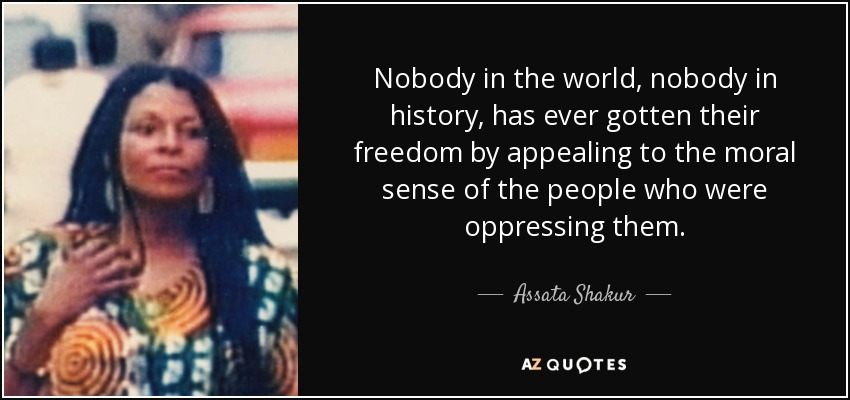
During these five and one half months, there have been lots of criticism from various sectors, specifically criticism of those organizing under the banner of Justice4Patrick. Some of that criticism has come from the Grand Rapids Police Officer’s Association, the GRPD, Grand Rapids City Officials and pro-Police groups like Voice for the Badge. This is to be expected, since the Justice4Patrick movement is not just demanding justice for the Lyoya family, they are confronting the very way that the City of Grand Rapids is complicit with the GRPD, police funding and how policing is done in this city, specifically how policing disproportionately impact BIPOC residents.
At the same time there has also been plenty of criticism coming from groups that are generally identified as liberal, even progressive. The Kent County Democratic Party, for instance, made it known to their members to stay away from or to not participate in any of the actions that have been organized by those operating under the Justice4Patrick banner; the marches, protests and the ongoing presence of people challenging GR City officials during City Commission meetings. Democratic State Representative David LaGrand, in late July, posted on his FB page that the anger displayed by BIPOC people during City Commission meetings was “misplaced,” even unproductive. These comments are instructive, since they are coming from a politician that has continued to endorse more funding for policing, even funding for the recruitment of more cops. This call for more funding for cops has been a consistent message from the Democratic Party, from President Biden, to Senator Gary Peters, Gov. Whitmer, on down to State and County Democratic Party officials.
Over the over again, those involved in the Justice4Patrick movement are counseled to be patient, to let the system work, to be nice and to not make too many demands. As someone who has explored the rich history of the Black Freedom Struggle in the US, this sort of counsel, which almost always comes from systems of power and those with more privilege, is very similar to the counsel that those involved in the Black Freedom Struggle have heard over the past two centuries. Whether we are talking about the 19th Century Abolitionist Movement, to those involved in the Reconstruction era, the Jim Crow era, the Civil Rights era, the Black Power era, or the Black Lives Matter era, these movements have always had significant push back from systems of power or from groups that are part of the non-profit/social service/religious communities, what some from refer to as buffer groups. Buffer groups are often organizations who practice Respectability Politics and prefer to work within systems of power, as opposed to those working to dismantle systems of power.
Observations of the Justice4Patrick Movement
So as to be transparent, I have been part of the Justice4Patrick movement since it began. However, what I want to speak on now, is not about my own involvement, but what I have observed from those involved in this work. In addition, I want to say that I have been part of various social movements since I first moved to Grand Rapids in the early 1980s, such as the anti-Nuclear, Central American Solidarity, Housing Justice, anti-war, anti-Globalization, anti-racist, Food Justice, Environmental Justice and Immigrant Justice Movements that have come and gone over the past four decades. What follows are some of my observations about the Justice4Patrick movement, which includes the movement to Defund the GRPD.
- There is a deep sense of commitment from many of those who have been part of the movement to demand justice for Patrick Lyoya and to Defund the GRPD. People show up, do all sorts of organizing work, which is often behind the scenes stuff, but is often the most important stuff that makes whatever action possible. This commitment has been both constant and consistent. In fact, the kind of commitment I have witnessed is often overlooked, because we don’t talk about what is actually necessary for social movements to have a real impact. It’s one thing to show up at a march, but it is another thing to organize a march, to get the word out, to make sure there is a clear message, that there is crowd safety, street medics, support people for transportation. This is what I mean by commitment.
- A second thing that I have observed in recent months is very much related to people’s commitment, which is what one might call moral fortitude. It takes a great deal of physical, emotional and psychological energy to keep showing up and showing out. Think about it. Systems of power and oppression are constantly working against you, whether we are talking about cops, politicians, cop-apologist groups, and others who want to tear you down, bad mouth you or refer to you as unrealistic. Now, I know it is fashionable to think that those who are constantly in the street, engaging Mutual Aid work, confronting power or attending meetings, are people who are “career activists” who get paid by people like George Soros. The reality is, those who have consistently showed up are regular people, people with families, jobs, student loans, car payments, people who care for pets, people who work intheir gardens, people who grieve and those that dream of a better world.
- A third thing that I have observed from those involved in the Justice4Patrick movement is that these are people who are single issue focused. More and more, particularly with younger organizers, I have witness a great deal of intersectionality in both their analysis and their practice. These are people who really care about their communities and have a constant desire to learn and grow in the practice of Collective Liberation.
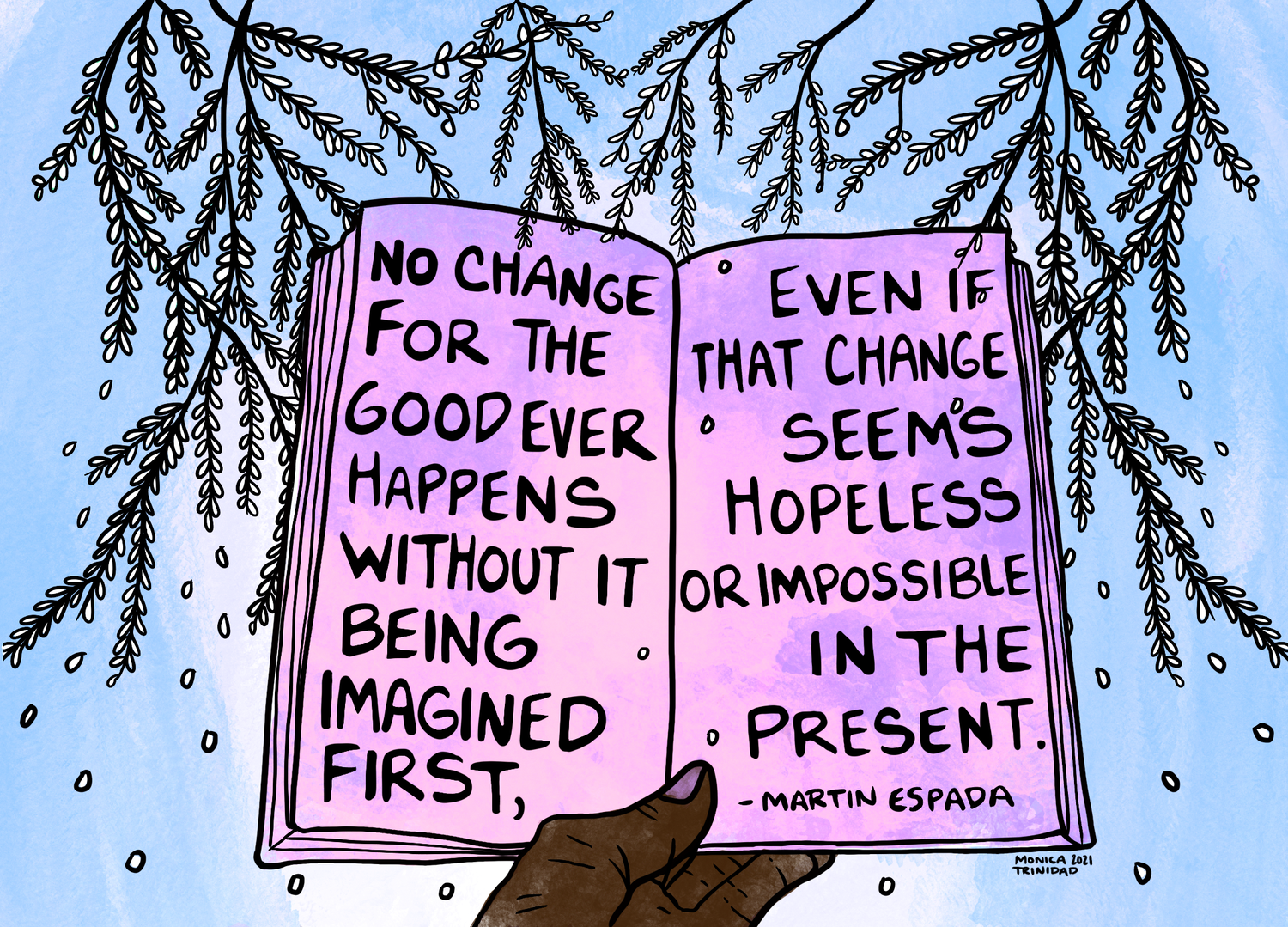
- A final thing I have witnessed from people in recent months are those engaged in radical imagination. The great Puerto Rican poet, Martin Espada says, “No change for the good ever happens without it being imagined first, even if that change seems hopeless or impossible in the present.” Engaging in radical imagination means to imagine a world where there are no cops, where everyone has their basic needs met, where people can be free of doing meaningless work that only lines the pockets of capitalists or spend most of their days taking care of themselves and others. Radical Imagination can lead us to a world where care, compassion and joy are what we can all experience on a daily basis.
A great deal more could be said about what I have observed in recent months from the community of care and resistance that have been organizing around Justice4Patrick and the defunding of the GRPD. But let me leave you with this. The commitment, the moral fortitude, the intersectionality, and the radical imagination that is being practiced by the community of those operating under the banner of the Justice4Patrick movement are continuing the legacy of the Black Freedom Struggle here in Grand Rapids. We all should be supporting them!
 Grand Rapids Institute for Information Democracy