US Militarization of Colombian
It was announced last August that the US government was in negotiations with the government of Colombia to give the US access to several military bases. Now there is information from a variety of sources that the agreement may include another attempt to get Colombia to sign a trade agreement with the US.

The School of the America’s Watch recently posted a story about the current status of this base agreement between the US and Colombia. The article states that with this new base agreement, “The United States thereby increased its ties to the military known for the worst human rights abuses in the Western Hemisphere and is a troubling indication of what can be expected of the Obama Administration and its promise of change.
The Obama Administration’s decision to extend US military muscle to an extent previously unknown threatens to destabilize the entire region. Yes, South American countries have had their border skirmishes and brief armed conflicts, but American bases create a scenario for what could potentially be a major war on the continent. At the same time, the US presence will lead Colombia’s neighbors to respond to this anxiety by buying more weapons and raising more national armies. Colombia, Venezuela, Brazil, Ecuador, and Peru will spend on their militaries the money that could and should go to improving the quality of life for all their citizens.
The agreement represents more of the inevitable failure that comes from policies that rely on the military paradigm. In Colombia, as in Afghanistan, military might has failed and is destined to fail. In neither country can the military put a dent in drug trafficking. In both countries, a weak central government has little or no presence–except for military presence–in much of the country and fails to provide even basic services. Military action inspires insurgency and resistance, while warlords and corrupt government officials continue to profit from war.”
With all of the attention focus on the Middle East and Central Asia the Obama administration has been able to further militarize this hemisphere without much resistance. For an indepth investigation into what this military agreement between the US and Colombia means, check out this story from Al Jazeera news.
Media Coverage of the 2nd Ward Candidate Interviews
Yesterday, five candidates for the Grand Rapids Second Ward City Commission seat, which was vacated by David LaGrand, had interviews with the Mayor and the other 5 City Commissioners.
Two TV stations were present for the two and one-half hour interview process where each candidate was given 30 minutes to respond to pre-determined questions that the City Commission provided for each of the candidates ahead of time.
WZZM 13 only stated that there were interviews and gave the names of each candidate, but no information about how the interviews went or how candidates responded. WXMI 17 only included the names of the candidates and a comment from Third Ward Commissioner Elias Lumpkins on what he thought about the process. The local Fox affiliate also told viewers that there were other dates set for public hearings on the next step in the process to chose another candidate for the 2nd Ward.
The Grand Rapids Press had the longest story of any local media, with reporter Jim Harger at least providing a short summary of each other five candidate’s interview, but as with the other news agencies you wouldn’t know from reading the Press what kinds of questions were asked of the candidates.
This writer was present for the whole interview process and some of the questions asked of candidates were as follows: What are some of the strengths you would bring to the Commission; What Leadership Style do you possess; What do you consider to be the priorities of the City of Grand Rapids; What would you do to encourage more regional cooperation; How would you deal with the budget deficit; What activity or event have you been involved in that promotes diversity; What would you consider to be a recent success story in Grand Rapids; What assets does the 2nd Ward have; How would you deal with Labor Disputes involving City staff; How would you retain young professionals in the City of Grand Rapids; and how would you resolve a conflict between the city and neighborhood residents over a proposed street widening project?
It seemed to this writer that the questions were pretty typical and framed within the boundaries of the status quo. Therefore, most of the answers were limited and what one might expect with such questions. There were a few exceptions, however.
When asked about priorities for the City, Michael Booker said he would make it a priority to end homelessness in the City, a concern that no one else even addressed in the interview process.
The only other response by a candidate that fell outside of the status quo was when candidate Eric Foster suggested that the City involve residents in the budget process at a deeper level. Foster suggested that the City encourage people to engage in what is called participatory budgeting, a process where citizens take an active role in determining how their community tax dollars are spent. Foster seemed to be quite familiar with this process and cited example of where it is being used across the country right now.
The Mayor and the Commissioners will narrow the field down to three candidates and then hold pubic hearings to get input from residents before hosting a second interview process, wherein they will chose one of the candidates on April 13.
Media Bites – Clean Coal?
This week’s Media Bites takes a look at a recent commercial that is part of a campaign by the American Coalition for Clean Coal Energy, a coal and energy industry lobby group that is trying to counteract the impact of grassroots organizing against coal mining and coal burning.
New Video on Blackwater in Afghanistan
Last week we posted a story about private mercenary company formerly known as Blackwater basically stealing weapons from a US military depot in Afghanistan. Here is a new video from Rethink Afghanistan that looks at Blackwater’s recent contracts in Afghanistan while they continue to be accused of serious human rights abuses.
Hiroshima survivor speaks to GR audience: “Why is it necessary for people to suffer like this in war?”
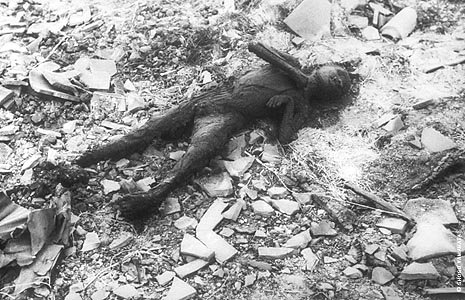
 On Sunday evening, Dominican Sisters ~ Grand Rapids Culture of Peace Committee hosted a live Web video interview with Seika Ikeda, a survivor , Hibakusha, of the Aug. 1945 US atomic bombing of Hiroshima, Japan. The video conference is part of a Hiroshima Peace Memorial Museum project that has the goal of global nuclear disarmament. In 2007 and 2008, 14 Japanese atomic bomb survivors toured the US making presentations in 53 cities. In 2009 and 2010, the survivors have continued the project via video conference.
Streamed live from Hiroshima to an Aquinas College conference room, the interview centered on Ms. Ikeda’s experience in the direct aftermath of the bombing. When the bomb exploded less than a mile away, she was working with a group of 1,500 other middle school students who had been mobilized to help build firebreaks in the city.
“Because we were mobilized students working in the open air, we had fierce exposure,” she said. “Our city was obliterated in a second. Sixty-five years have passed, but for those of us who survived it seems like yesterday. At any time, the radiation in our bodies could take us.”
 I knew I was naked but I didn’t care.
Ms. Ikeda recalled seeing a flash “tens of thousands times brighter than lightning,” hearing a tremendous boom and then, everything went black. The blast threw her 15 meters through the air and into unconsciousness. When she came to, her hair was singed, her clothes burned off with bits of fabric burned into her skin and her skin was hanging, in tatters, from her body. “I knew I was naked but I didn’t care as I saw my skin hanging, flayed from me. I screamed for help.”
No help came, so Ms. Ikeda joined a procession of survivors who looked like “ghosts and demons” walking along, out of the rubble that was once their city. “Everywhere, people were piled up like so many charred fish. Their burns were so deep you couldn’t tell if they were men or women, children or adults,” she recalled. “There were a huge number of people still alive who lacked the strength to move, they could only whimper. I tried not to step on them.”
“Many bodies, they still had their teeth clinched. Many bodies were without heads. At first I felt sorry, but after so many, I stopped caring. There’s another pile of people. The bomb also robbed us of our humanity.”
As the procession neared the river, adults and children, whether they could swim or not, plunged in to find relief from their burns. Many drowned or died in the water. Still, more entered the water, even though they were surrounded by corpses, bobbing up and down on the waves. The following days, thousands of bobbing corpses came back into the river with each high tide.
As the procession of survivors mounted a hill outside the city, Ms. Ikeda looked at her friends’ faces. “Their skin was melted like candle wax. I thought that must be what I look like. We walked past collapsed houses where people were trapped, calling for help. I was just a girl. I couldn’t do anything. I closed my ears and kept saying, ‘I’m sorry. I’m sorry.’ An old man grabbed my leg, asking for water . . . He reproached me. I shook his hand off my leg and ran away. For the rest of my life, I see that man in my dreams and in my waking as well as hear the voices of those who asked for help.”
 When Ms. Ikeda reached the hilltop, she turned and saw that the whole city had collapsed. Then houses started catching fire, like piece s of paper. Within two or three hours, the whole city was ablaze, a sea of fire, four kilometers in diameter. People burned alive in their homes.
Severely injured and in intense pain, Ms. Ikeda crawled down the other side of the hill on her hands and knees, towards a highway. A woman ran out to her with a curtain snatched from a collapsed house. As she wrapped Ms. Ikeda in it, she said, “You poor thing. A high school girl, naked.”
“I didn’t care if I was naked or not,” Ms. Ikeda said. “There were 8,200 junior high school students working. 6,000 died.”
The Hibakusha: lifetimes of pain and fear, courage and witness
Ms. Ikeda made it to a rescue truck, where she had to argue with the soldier to take the surviving girl students as well as the boys. In the hospital, survivors laid head to head, toe to toe, on mats on the floor, waiting their turn for treatment. “Everyone was crying for parents and for water.”
Flies came to feast on their wounds, laying eggs that became maggots under the skin. When it was finally her turn for treatment, Ms. Ikeda endured the excruciating pain of having the burned-in remainders of her clothing extricated from her flesh. Then, finally, she slept. When she awoke, her eyes were swollen shut and she could barely open her mouth. She heard her own father’s voice calling for her and was able to get out a little answer, “Father.” He could only recognize her by her voice. As US planes were still bombing the area, he waited until dark to bring Ms. Ikeda home on a cart.
For several months, she lay in pain and high fever, vomiting and with diarrhea. After so many died, there was finally a doctor available to come treat her wounds. When she finally had strength to get up and walk, she approached a group of neighborhood children playing outdoors. They ran from her, crying, “Red Demon! Ogre!”
Ms. Ikeda returned to her house in tears and realized all the mirrors had been hidden. She managed to find a small one in the bottom of a drawer. “When I saw my face I was thunderstruck. It was unlike any face I had ever seen. From that day on, there was emotional pain.”
After returning to school eight months later and feeling the sting of others’ stares, she decided on suicide, something that other young female survivors were committing in epidemic proportions. But, on that day, she overheard her father telling a neighbor how he had risked his own life to remain in their home, nursing her night and day, when the rest of the family had left for a safer area. “I was planning on dying with her in that spot,” he said. “And now she has scars all over her body, but I am so glad to have her health back.”
Ms. Ikeda decided to choose the path of life. Fifteen surgeries alleviated some of Ms. Ikeda’s facial scarring. “Though I could never get back the face I was given, I am still alive . . . What hurts most is (remembering) the people I rushed past, who were asking for help, my own classmates. People who I knew but didn’t recognize.”
“I hope you will ask with me ‘Why is it necessary for people to suffer like this in war?’ War makes people crazy. It isn’t just people who suffer, all living creatures, plants, have a right to live. Hiroshima is a plea for respect for all life. . . It is the duty of every person who survived Hiroshima and Nagasaki, to use the rest of the breaths that we are given to us to get rid of these weapons. I believe in all of you. Listen to the cry of the survivors, the Hibakusha, and work to bring peace.”
Take Action
Steven Leeper, chairperson of the Hiroshima Peace Museum, then spoke to current developments in nuclear disarmament. He believes that the time is ripe for a grass roots movement to demand nuclear disarmament. The elite  superpowers are for the first time considering nuclear disarmament because they are scared that nuclear weapons could “fall into the hands of those wanting to bring the system down.” Even so, the US budget for nukes is increasing. “We need to get some people in the streets,” Leeper said.
He hopes thousands will take to New York’s streets May 2, the day before the UN meets there to review the Nuclear Non-Proliferation Treaty. A contingency of Dominican sisters from Grand Rapids intends to be there, but more people are needed. Leeper also asked audience members to pressure their mayors to join Mayors for Peace.
Leeper noted that the nuclear weapons industry’s influence is one reason these weapons continue to be produced. He mentioned Westinghouse, GE, Raytheon, Bechtel and Texas Instruments as being five of the “dirty dozen” nuclear weapon manufacturers—and recommended the book The New Nuclear Danger by Helen Caldecott.
***
For more information on the US bombings of Hiroshima and Nagasaki, GRIID suggests reading the following books, available at The Bloom Collective:
Judgment at the Smithsonian – This book reveals the uncensored script that was to go on display at the museum as part of the 50th anniversary of the bombings, but was banned as it gave evidence that the US did not have to bomb Japan to end the war.
With Hiroshima Eyes: Atomic War, Nuclear Extortion and Moral Imagination – Explores US use of nuclear bombs in Japan and elsewhere as related to official histories, collective memory and racism in US foreign policy.
Hiroshima in America: 50 Years of Denial Debunks the official history of the bombings.
National Days of Action Against US Militarism
A new group called Peace of the Action is calling for national days of action against US militarism starting on March 13th in Washington, DC.

Peace of the Action will be setting up a tent city on the grounds of the Washington Monument and will use that as a base in order to engage in a series of Direct Action beginning on March 22.
“We are not calling for this commitment for a day, a week, or a month. We are not even interested in making symbolic gestures. We are calling for this commitment until our demands of: All troops and para-military mercenaries, are ordered out of Iraq and Afghanistan, the drone bombings in the tribal regions of Af-Pak are discontinued and we get about the business of healing, reconciliation and REPARATIONS.”
One of the organizers, Cindy Sheehan states: The anti-war, peace movement must step our efforts up and take it to the next level of severe militant resistance. Not only is this country borrowing or printing billions of dollars each month for the military; almost one out of four of us do not have a job, or are grossly underemployed; millions of us have or will lose our homes due to foreclosure or eviction; and 1/6 of us don’t have health insurance. The police state is getting out of control and if we don’t intensely exercise our rights immediately, we will lose them.
To that end, we are organizing the most ambitious anti-war, peace event ever. We are planning what we are calling, Camp OUT NOW, which will be the largest, most aggressive and sustained action ever done in DC. We are calling for 5000 people to commit to come to this Nation’s Capitol to participate in daily civil resistance to stop “business as usual,” because “business as usual” in this town is so corrupt and disordered.
Sheehan, once the darling of the Anti-War movement while she was camped out near the home of George W. Bush, has not had the same kind of support from national organizations since she and others have been applying the same pressure to President Obama, as has been documented by anti-war organizer John Walsh.
We certainly support these kinds of efforts, just like the anti-war action planed in Grand Rapids for March 13. Perhaps the local and national actions will inspire a much larger movement to resist the imperialist wars in Iraq and Afghanistan.
Check out this creative video that Peace of the Action has put together that challenges us to WAKE UP!
US House and Senate Approve Extension for Patriot Act

This week, both the US House of Representative and the Senate voted to extend the Patriot Act for an additional year. The House voted 315 to 97 to extend major provisions of the USA Patriot Act.
The three sections of the Patriot Act that would stay in force are:
- Authorize court-approved roving wiretaps that permit surveillance on multiple phones.
- Allow court-approved seizure of records and property in anti-terrorism operations.
- Permit surveillance against a so-called “lone wolf,” a non-U.S. citizen engaged in terrorism who may not be part of a recognized terrorist group.
The American Civil Liberties Union Responded by saying, “Congress refuses to make reforming the Patriot Act a priority and continues to punt this crucial issue down the road. Once again, we have missed an opportunity to put the proper civil liberties and privacy protections into this bill. Congress should respect the rule of law and should have taken this opportunity to better protect the privacy and freedom of innocent Americans. We shouldn’t have to live under these unconstitutional provisions for another year.”
In addition, the ACLU acknowledged that, “Since the Patriot Act’s passage in 2001, there have been several consecutive reports (including one released in January) from the Department of Justice Office of the Inspector General that have outlined widespread and blatant abuse of the statute.”
This is just the most recent example of despite both the House and the Senate being a majority of Democrats that progressive action is not taking place in Washington, DC.
March 13 Iraq War Protest marks 7th Anniversary of the US Occupation
Iraq War Protest
Saturday March 13, 2010
Noon to 3 p.m.
Fulton & Division, Downtown Grand Rapids

March 2010 marks the seventh year of US occupation and brutalization in Iraq. While the names of the US offensive have changed to protect the guilty (media relations experts have dubbed the next phase of the Iraqi occupation “New Dawn” ) the US funded violence remains the same.
The group of local citizens organizing the protest made this statement:
We are coming up on another anniversary of the illegal US invasion of Iraq, and we are seeing now more clearly than ever that the Democratic Party has been little more than a redecorating party for US imperialism and corporate domination. The war(s) raging on in the Middle East are unjust, unwarranted, and unacceptable, and they are sucking money and power from the common people at a disgusting rate. The resources funding this despicable show of capitalist imperialism could totally revolutionize the socioeconomic landscape of the US and of the world if redirected properly.
But we’ve seen time and time again that those in charge will not willingly let go of those resources for the good of the people. The corporate interests manipulating this war will continue to destroy for profit as long as the people continue to play their games and buy into their lies. Electoral politics, lobbying, and passive spectator culture have led us deeper and deeper into war and devastation.
But radical organizing, consciousness-raising, and direct action give us hope for change. Not the “hope” and “change” so perversely and cleverly marketed to us in the most recent presidential election, but something truly different. People–not corporations, not governments, not even apparently independent “grassroots” political bids for power–can make the difference between a world of destruction and oppression and one of trust and mutual aid.
Meet at the park at the corner of Division and Fulton in downtown Grand Rapids on Saturday, March 13. Bring banners, signs, flags, puppets, art, street theater performances, leaflets, fliers, chalk, paint, and anything else beautiful and eye-catching. Also, bring drums, buckets, sticks, whistles, instruments, megaphones, boom-boxes, and other tools for making huge amounts of noise. Most importantly, bring friends.
Iraqis and Afghan civilians and American troops are dying—and American taxpayers are watching their public schools and universities, social assistance programs and cities slash budgets and reduce services. To date, the US has spent nearly $966 billion dollars on the occupations of Iraq and Afghanistan—with another $150 billion slated for military operations in 2011. Come downtown March 13 and make your voice heard.
Get the US out of Iraq!
Get the US out of Afghanistan!
What We Are Reading
Below is a list of books that we have read in the past month. The comments are not a review of the books, instead sort of an endorsement of ideas and investigations that can provide solid analysis and even inspiration in the struggle for change. All these books are available at The Bloom Collective, so check them out and stimulate your mind.

A Woman Among Warlords: The Extraordinary Story of an Afghan Who Dared to Raise Her Voice, by Malalia Joya – This amazing book consists of the personal experiences of Malalia Joya, an Afghan woman who became the youngest person to be elected to the Afghan parliament. Raised in refugee camps, this woman represents the best of Afghanistan in that she advocates for the real liberation of women and actively opposes the US/NATO occupation of her country. Malalia also has spoken out consistently against the Afghan warlords, some of which are part of Karzai’s inner circle and for this she was suspended from parliament in 2007 and has had numerous assassination attempts made on her life.

Against Ratizinger, by an Anonymous writer – This book, written by an anonymous Italian writer is an interesting look at the current head of the Roman Catholic Church, Pope Benedict XVI. The writer takes a look at the Pope’s involvement in the Nazi Party, his climb to power within the Catholic Church and his role in cracking down on priests and theologians who advocated Liberation Theology during the 1980 – 90s, particularly in Latin America.

Venezuela Speaks: Voices from the Grassroots, by Carlos Martinez, Michael Fox & JoJo Farrell – Venezuela Speaks is an extremely inspirational collection of interviews with people in Venezuela that are the real protagonists in the Bolivarian Revolution. While, the mainstream press and to some degree the left media gives a great deal of attention to President Chavez, this book rightfully puts the focus of union organizers, students, women’s organizations, indigenous groups, community based entities and cooperatives.

Seeds of Terror: How Heroin is Bankrolling the Taliban and Al Qaeda, by Gretchen Peters – This is must reading for anyone who wants to understand the US/NATO occupation of Afghanistan. Peters not only documents how opium and heroin production has flourished since the US/NATO occupation began in 2001, but how the US has downplayed the role that this illegal substance has played in financing the Taliban’s campaign against the occupation. Peters uses lots of first hand sources and gives readers a first hand account since she has spent years talking to people throughout Afghanistan and Pakistan.

Che Guevara: A Life, by Nick Caistor – There has been many books written about the Argentine-born revolutionary Che Guevara, but Nick Caistor has done a much better job of capturing the essential aspects of Che’s life and political thought. While not an exhaustive investigation, this book provides readers with an important investigation of someone who has influenced recent generations, both in terms of intellectual inquiry and revolutionary courage. Caistor does paint Guevara as a stale icon, but as someone who believed that the only way to develop revolutionary consciousness was by example.
Sunrise or Sunset for Iraq?
(This article is by Frida Berrigan and is reposted from Foreign Policy in Focus)
Operation New Dawn. That is the name the U.S. military will give its operations in Iraq when U.S. military operations in that country end this September.

Wait, what? Okay, once more, a little more slowly. The United States has nearly 100,000 military personnel in Iraq right now. In keeping with the January 2009 Security Agreement between Washington and Baghdad, the United States will withdraw all forces and contractors and turn over military installations to the Iraqi government by the end of 2011.
In order to meet this goal, the Obama administration will begin moving troops out of Iraq this spring. The president promised to remove all combat personnel by August. In September, the United States will reduce its troop levels to 48,000 troops and bring down the number of contractors from 120-130,000 to 75,000. That new arrangement will be dubbed Operation New Dawn.
Why Now?
Operation Dawn was first used in a memo from Defense Secretary Robert Gates to U.S. Central Command head General Davis Petraeus last week. In the memo Gates says that the name change “sends a strong signal” and “presents opportunities to synchronize strategic communication initiatives, reinforce our commitment to honor the Security Agreement, and recognize our evolving relationship with the Government of Iraq.” Okay, but why in February, months before this transition even begins?
The announcement has some obvious liabilities. For one, it reminds the U.S. people that there is a war in Iraq — an expensive, bloody, and protracted conflict that the president campaigned to end. No one wants to be reminded of this conflict, especially when there’s another expensive, bloody, and protracted conflict in Afghanistan dominating the front pages of the newspaper.
Operation New Dawn also opens the administration up for renewed derision at its clumsy rebranding efforts. One can’t help but be reminded of the Obama administration’s efforts to replace the bombastic “Global War on Terror” and its robust shorthand GWOT with the tepid moniker “overseas contingency operations.”
In light of these and other drawbacks, the name change is happening now because — in part — Iraq is preparing for elections in the first week of March, and those preparations aren’t going well. Sunni groups might sit it out, violence is once again spiraling out of control, and voter turnout is expected to be light.
Against this less-than-bright-new-dawn rising, the United States military appears to be trying to remind everyone it is on its way out.
Just as the Pentagon is preparing its exit plan — or at least the rhetoric for its exit plan — pressure is mounting for the military to stay. In a recent New York Times op-ed, long-time journalist and critic of Iraq War policies Thomas Ricks wrote that staying might be the new leaving. “I think leaders in both countries may come to recognize that the best way to deter a return to civil war is to find a way to keep 30,000 to 50,000 United States service members in Iraq for many years to come,” he wrote. Kenneth Pollack of Brookings compared U.S. military forces in Iraq to a cast on a broken arm, saying “we can’t know for certain when Iraq’s bones have healed, we need to be very careful about how and when we remove the cast.” This is a compelling argument only if one forgets that the cast broke the arm in the first place.
A Real New Dawn
The name change, in addition to being “extremely cheesy,” is at best premature, according to Raed Jarrar, an Iraqi-born political analyst at Peace Action. For the Obama administration, New Dawn marks the beginning of U.S. forces withdrawal. But, he says, “The bottom line is that for the majority of Iraqis, the New Dawn will only rise when all U.S. forces are gone and the occupation over.”
March will mark seven years since the Bush administration’s invasion of Iraq. But Joshua Brollier, co-director of Voices for Creative Nonviolence, points out that the people of Iraq have endured 19 years of economic and military warfare at the hands of the United States. Thus, “it is hard to genuinely say what a New Dawn could look like for the people of Iraq, especially when it comes to U.S. involvement in the lives of Iraqis.”
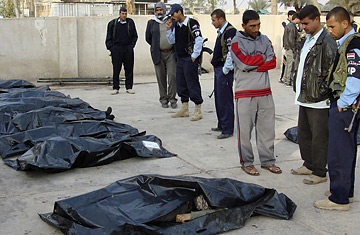
Brollier contrasts the $150 billion that the United States will spend on military operations in Iraq and Afghanistan in fiscal year 2011 with the $330 million set aside for Iraqi refugee assistance. “If these excessive and ineffective combat funds were redirected to refugee assistance, locally directed projects and much-needed infrastructure, maybe then a crack could open up for reconciliation and trust to be built between the people of Iraq and the United States,” he writes. “Changing our troop designation from combat brigades to advisors will not suffice; neither will a new name for more of the same.”
Brollier’s colleague Kathy Kelly reacted to the New Dawn name change by imagining what a real new dawn would look like for the Iraqi people: “Suppose Iraqis awakened to news that, as a clear sign of repentance for the suffering the United States has caused Iraqis, the U.S. plans to pay just and fair reparations, and that the funds would be directed away from U.S. military operations in Iraq and instead entrusted to an Iraqi reconstruction fund under the oversight of experts and world leaders who have demonstrated that they have no interest in exploiting Iraq’s people or its resources. That is a new dawn.”
Vice President Joe Biden recently expressed that he was “very optimistic” about and “impressed” by Iraq, and that it “could be one of the great achievements of this administration.” But Operation New Dawn could well become known as “Obama’s Other War.” And that doesn’t have a very nice ring to it, does it?