From Seattle to Detroit: 10 Lessons for Movement Building on the 10th Anniversary of the WTO Shutdown
(For the 10th Anniversary of the anti-WTO action in Seattle, we thought this article does a great job of taking the lessons from that historic action and offering up ideas for future movement building. This piece is by Stephanie Guilloud and first appeared in the newsletter of Project South.)
For five days in 1999, 80,000 people from Seattle and from all over the country stopped the World Trade Organization from meeting. Despite extreme police and state violence, students, organizers, workers, and community members participated in a public uprising using direct actions, marches, rallies, and mass convergences. Longshoremen shut down every port on the West Coast. Global actions of solidarity happened from India to Italy. Trade ministers, heads of state, and corporate hosts were forced to abandon their agenda and declare the Millenium Ministerial a complete failure. We said we would shut it down, and we did.
“The fact is that the Social Forum and Peoples Movement Assembly process actually started in Seattle. The Social Forum took off from the experience of the ‘Battle of Seattle’ when the Brazilian organizing committee formed in 2000 and held the first World Social Forum in 2001. Ten years later, we come back to where this started. What has been accomplished in the last 10 years? How have our social movements developed to build the power towards real social systemic change in the US? How do we map the new forces and what is the power of the social movement assembly?”
– Ruben Solis, Southwest Workers Union,
participant in the Seattle shutdown, and one of the founders of the Grassroots Global Justice Alliance
As one of the founders and leaders of the Direct Action Network and a resident of Olympia, Washington, I offer personal and political reflections on the WTO shutdown as a major turning point in my life as an organizer and in our lives working to build movements in the US. As an organizer with the US Social Forum process and a co-lead to develop the People’s Movement Assembly, I carry these lessons with me on a daily basis. I offer these stories with humility and a sense of responsibility. When I refer to “we” in this brief article, I refer to my community of young people in their early twenties, living in Seattle, Olympia, Portland, and the Bay Area, who, with many others, mobilized, organized, and implemented the direct action strategies we had planned for months.
1) Know your history: Seattle was a turning point
Seattle was a historic turning point in our movements for racial, economic and gender justice for a few reasons. On a global scale, the demonstrations and effective shutdown of the World Trade Organization’s ministerial was historic because of our position and location in the US. Seattle did not mark the beginning of a movement, it marked the beginning of a significant connection between the US and the rest of the world. Global movements had and have been challenging and confronting financial institutions and their systemic effects for decades. The demonstrations – the five days of direct action, the massive and violent state response, and the subsequent alliances – accomplished a few major shifts in historic directions. The demonstrations exposed to the US public the tangible affects of globalization on regular people’s lives. The effectiveness of the actions and stalling of the meetings allowed for delegates from the global South to challenge the policies and procedures of the WTO. And for the first time in history, the decision-making rounds of a global financial institution collapsed.
Seattle also opened a door on a new era for movement in the US. The strengths and weaknesses of our organizing efforts served as a spark for new work, new alliances, new conversations, and a new generational drive. It opened the possibility for a generation of people to understand action, movement, and strategy as effective. It also offered an opportunity to see the strengths of innovation and mass organizing, as well as the weaknesses of underdeveloped leadership and lack of connection to long-term transformative practices.
2) Claim your victories and evaluate your mistakes.
How we organize to win is still a critical question today. Winning is different in any moment given the political context as well as the will and abilities of the people involved. We made a widespread call to Shut Down the WTO without total confidence that we could or would achieve that goal. The call was a way to declare a politic beyond reforming the WTO and towards complete transformation of the economic and social systems in motion. On the first day, we succeeded at exactly what we had said we would do. Shutting down a major financial institution with tens of thousands of people and well-coordinated non-violent action was a victory.
Claiming victory is essential to tactical decisions on the ground as well as understanding the political significance after the fact. After the success of the first day, we re-convened the Spokescouncil easily. We had planned for the possibility of mass numbers being in jail, but I am proud that we saw and rose to the opportunity of victory and understood it as an ongoing process. The next few days demanded different sets of tactics to incorporate the constant influx of new people who had not necessarily gone through the preparations that led up to the November 30th action.
That’s a taste of movement building – How do you move consistently through multiple reactions from the state and opposing forces while constantly mobilizing and expanding your base? How do you shift and re-adjust when met with the possibility of victory? And significantly (because it was lacking on a mass scale following the demonstrations) how do you expand the momentum of victory with strategic, intentional plans to continue what you started? And finally, how do you evaluate the mis-steps and mistakes after such a significant and widespread experience? How do you receive and understand criticism as well as accolade without losing momentum or integrity?
3) Make your enemy known: Mass demonstrations are not spontaneous
Globalization and neoliberalism were not common terms or centers of public debate. The WTO was relatively unknown at the time. Its meetings were secret, the levers of decision making and the connections between nation-states and corporate leaders were blurry and deliberately non-transparent. We believed everyone had a stake in refusing to let them meet quietly, especially in our town. We knew that any major action would not be spontaneous – it would need massive buy-in and involvement from many sectors of the community.
There had been a successful campaign to pass an ordinance banning the MAI (Mulitlateral Agreement on Investment) in Olympia, and we knew there was a hook into our community on the issues of corporate control and local power. We studied the mechanisms of the WTO in order to describe it and educate about its relationship to our work, our food, our health, our governance, and our economies. I facilitated countless popular education-style workshops in classes, at unions, in prisons, and in the community. A team of us produced the broadsheet that went out that summer to over 25,000 people engaged in environmental, labor, peace, and social justice work. The articles exposed the WTO as an illegitimate and undemocratic institution, and we called for a Shut Down on November 30, 1999.
One of the most significant accomplishments of our organizing was that people knew the enemy – they knew the details, the characteristics, the impact, and the context of the WTO. We worked to make that happen. We studied and applied tactics and strategies from the Spanish Civil War and the anti-nuclear movement. We invented new tactics and strategies based on our knowledge of the terrain. It was a planned, locally-led massive demonstration with global consequence.
4) They came out of the bars: Infrastructure and preparation allows for spontaneous action
On the first day of the demonstrations, there were a few different kinds of folks on the street. There were the organized labor marchers, prepared and routed. There were the Direct Action Network folks who had been preparing for months, organized into affinity groups and clusters with clear, coordinated instructions to hold particular intersections in various formations. And there were folks in Seattle who walked off their shifts and linked elbows in front of glass doors and irate WTO delegates. On the third day of the demonstrations, after two days of cloudy tear gas on Capitol Hill and rubber bullets flying, the confused media reports, and a lot of traumatized people who were either arrested or hurt – the people living in Seattle were the irate ones. We had more people who wanted to get involved, and they hadn’t gone through the trainings.
My affinity group was tasked on the second night of the protests with leading a march the next day on King County Jail where about 600 of our folks were being held and doing jail solidarity. We moved thousands of people from Pike Place Market with the plan to split the march and surround the jail. We were still successfully operating with tactics of surprise. There had been no police or city negotiations for any days past the first. No routes, no advance warning. (And remember that ten years ago there were no cell phones, no tweets and texts, and very little email.) We did it again – Surrounded the jail with 2000 people, made our demands, and got the lawyers in. But the real victory was the mass of people who was not prepared, was not experienced with actions, direct or otherwise, and who completely trusted our leadership and moved collectively.
In order for that trust to emerge, we created a culture. We prepared as best we could, and a culture emerged spontaneously in the moment as well. The way we used call and response was like poetry. We had to make the words meaningful and precise. And it worked – at that time and in that place. The experience, sometimes frustrating and frightening, still moves me to believe in people’s power and creativity.
5) Surprise only works once: Evolve our tactics and strategies
We cannot afford to dismiss the significance and influence of different tactics, strategies, and convergences in different historical moments. We also cannot rely on old models of organizing, simply because they have worked in the past. Mass demonstrations and protest rallies cannot be our default response to all injustice. Two major lessons surface. Surprising the cops in Seattle put us at an advantage at every turn. By the nature of our movements being extremely out-militarized, we are not in a position to repeat the same strategies with the same success. We will have to be smarter, one (or more) steps ahead of the turn, and completely in command of whatever local terrain we occupy.
Another major lesson from post-Seattle demonstrations was that convergence at the expense of local organizing is not effective. The local leadership and knowledge made the demonstrations in Seattle effective. We learn similar lessons in the US Social Forum process. The Forum would be in danger of becoming a big conference if power building in multiple locations (including local, regional, national, and global relationships) is not inherent to the organizing and operational process. What has been powerful in my experience in working in the South and organizing the US Social Forum, a convergence process led by people of color in community-based organizations from multiple sectors, is that we understand that strategic convergence is still extremely necessary and valuable. That the model was developed and refined in the global South through the World Social Forum is critical to its relevance and success. The convergence in Seattle ten years ago was important, but we’re not always coming together to target an oppressive institution or body. We are also coming together to increase the breadth and width of community-led power bases. New tactics and strategies will rise from that convergence.
6) It’s not about a leader. It is about leadership.
There are two major things you learn about inside of an affinity group: 1) Play your position and 2) trust everyone else to play theirs. There is no other option. If you’re locked down to 50 other people, you cannot also get water for everyone or communicate your coordinates. There are distinct and necessary roles. The group process of building trust and skills together over time allows for everyone to play their roles to the utmost efficiency. We were spokespeople, facilitators, planners, logisticians, tacticians, jail support, communication points, and when the time came to make hard decisions about how to move within and through the police violence, while still maintaining our effectiveness in blocking our coordinates, we made them by consensus. With 200 people. You can’t ever tell me, consensus doesn’t work or it takes too long – you’re just not doing it right.
We built that same model to scale for the Spokescouncil, and as with many of the lessons from this moment, there is a lot to learn and expand from being able to convene hundreds of people that represent thousands and make tactical decisions. These models are not about a single leader nor the absence of leaders. Leadership is critical to the functionality and direction of these spaces. The collective nature of leadership is not easy, we are not trained to work like that, and we must be intentional and deliberate about our principles as we practice them at higher and higher stakes. Leadership in this case looked like incredibly well-developed plans and structures by multiple people in different positions, while at the same time allowing everyone on the streets to claim and feel true victory in their bodies. What can we learn and share, about this model, and what needs to be further developed?
7) Strategy, please: Action-hopping is not movement building
Most of the demonstrations that followed the Seattle demonstrations over the next two years in the US (specifically the actions around the IMF, World Bank, and political party conventions) did not have the intention, timeline, or local mobilization and support that would allow for 10,000 people to do direct action while having the support and solidarity of upwards of 60-70,000 people in the labor and progressive movements. Though there were different levels of success and effectiveness in different convergences over the next few years, we played to many of our weaknesses rather than move from our strengths and unique positions.
There were opportunities to build with broader, more grounded global movements who felt connected to what we did in Seattle. Part of what’s necessary to do this work effectively is knowing the landscape – literally and politically. In order to organize for global justice in our communities, we need to understand that the forms and functions of international financial institutions and groups change and shift to meet new economic conditions. The exclusive club of primarily colonial powers, the G8 just became the G20. How are we shifting and changing to meet new conditions? How are we building in our communities in ways that are rooted to the local conditions and responding to broad systemic realities?
8) Leadership development, thank you.
Where there were intergenerational relationships there was strength. Where we relied on only ourselves as isolated young people, we stumbled. The impediments were age-old internal and external barriers to serious, strategic organizing. Most of us were young (I was 22) and having participated at the helm of the protests, we held this depth of experience but struggled with what all new leadership struggles with – clear political direction, strategy development, and organizing skills. The generational turning point here cannot be dismissed. I was hired and trained by a seasoned organizer and strategist, and he challenged me, supported me, and connected what was happening to a broader, historical context. That daily training I received laid the foundations for me to develop my skills as an organizer for long-term work. Others in my community also had relationships with key mentors and advisors, but there was not a movement infrastructure for that leadership to enter, learn, and build on the momentum after the demonstrations. I am still wildly cognizant of that immense and specific need on a large scale, and I strive to carve out space and time to give and receive what I can to people who are battling on the frontlines of our communities.
9) Guilt slowed us down: Solidarity is action
Elizabeth Martinez’s article “Where was the Color in Seattle?” sparked debate following the demonstrations about race, leadership, and global justice. Though there were great points to discuss, the debate it sparked is not as relevant as the larger context of how white supremacy and racism manifests in our social movements. The Seattle demonstrations did not represent “white movements” but it did reflect many dynamics – old and painful dynamics around leadership, race, culture, and styles, as well as some new dynamics about the nature of massive convergences from a local base with national reach. The debate and challenge around the roles of white people in leadership was happening within the organizing bodies. We challenged racism where we saw it, we attempted to advance our communities’ understanding and skill through trainings and workshops, and ultimately the affinity group I was working with in Olympia made a decision to resign from the Direct Action Network if we did not examine our broader positions as a leadership body and our roles within that context.
One outcome of the dialogue at that time was a culture embedded in identity rather than experience. This culture had already begun plaguing this new generation but has since ballooned. The critique for critique’s sake nature of anti-oppression work showed a lack of development as well as real misunderstandings of history and race in the US. Instead of emerging from this historical moment to build deeper connections to local and global struggles, young white activists questioned their right to act. Confronting white supremacy is not an existential activity. The lesson here for our US movements is about understanding how to challenge the dynamics of privilege and oppression while also building large, wide, and deep movements that are led by and rooted in the experiences of people who know injustice and exploitation – currently and historically.
10) Know your vision: Learn lessons in order to move forward.
The lessons of that time are with me in my everyday organizing work. I moved back South (I’m from Houston and live in Atlanta now) in 2003 to work with Project South and practice movement building in Southern grassroots communities. After Seattle, I knew I needed more development around strategy, history, and developing long-term organized formations to build instead of react. Project South was one of the primary anchors for the first-ever US Social Forum in 2007, and for me the Forum was a continuation of the momentum we built in Seattle. In an exciting shift and in less than ten years after the demonstrations, the Forum represented more vision, more leadership from frontline communities, and more strategic connection to global struggles.
From that process and within the context of global dialogues about coordinated actions, we are building the People’s Movement Assembly as an organizing process to prepare for the Forum, to make decisions at the Forum, and to advance new directions after the Forum. We are pulling on all these lessons from 10 years ago to facilitate Movement Assemblies – mass convergence, collective decision-making, political clarity, shared leadership, and trust that we will move forward together. What will we build over the next ten years in order to shift, evolve, and grow our movements to win?
Stephanie Guilloud graduated from The Evergreen State College in Olympia, Washington in 1999. She was hired that week by history professor and organizer Dan Leahy to organize a conference called Trade, Labor, and the Environment: Analyzing the World Trade Organization. She co-founded the Direct Action Network with other organizers from California, Oregon, and Washington. Her affinity group was made up of queer and trans folks from Olympia and called itself the Small Town Sleazy Cowboys (and Lady) Puppet Rodeo Association. They built a cluster of over 200 people to shut down multiple intersections on the first day, led the action for over 2000 people to shut down King County Jail on the third day, and continued mobilizing actions until the end of the fifth day. Stephanie edited and produced ‘Voices from the WTO,’ an anthology of first-hand accounts from the demonstrations and is a contributor to The Battle of the Story of the Battle of Seattle, a short anthology released for the tenth anniversary looking at how that watershed event has been misrepresented and reproducing the original 1999 Shut Down broadsheet.
Blind Spot Documentary in Conjunction with Climate Summit

GVSU students and the Bloom Collective will be hosting 2 screenings this week of the documentary Blind Spot: Peak Oil and the Coming Global Crisis.
The documentary screenings are in conjunction with the upcoming International Climate Summit in Copenhagen, Denmark, which takes place from December 7 – 18. After the documentary there will be discussion and resources available for people to check out.
Times and locations:
– Wed Dec 2 @ 6pm on Pew Campus in Downtown Grand Rapids 204A DeVos building
– Thurs Dec 3 @ 6pm on the Allendale Campus 154 Lake Superior Hall
Both screenings are free and open to the public.
Anti-War Rally Planned Before Obama Addresses the Nation

This Tuesday, December 1, there is an Anti-War Rally planned outside the Grand Rapids Federal building to protest President Barack Obama’s decision to send more US troops to Afghanistan.
The White House has announced that the President will address the nation this Tuesday at 8pm from the West Point Military Academy. News reports are saying that Obama plans to send between 32 – 35,000 additional US soldiers to fight the war in Afghanistan.
People are encouraged to bring signs and noise-makers to the rally.
Anti-War Rally
Tuesday, December 1
4:30 – 5:30pm
Grand Rapids Federal building
Corner of Michigan & Ottawa
Questioning War Claims: The GR Press, Afghanistan & Obama
Yesterday, the Grand Rapids Press published another Associated Press article about President Barack Obama’s upcoming announcement to send more US troops to Afghanistan.
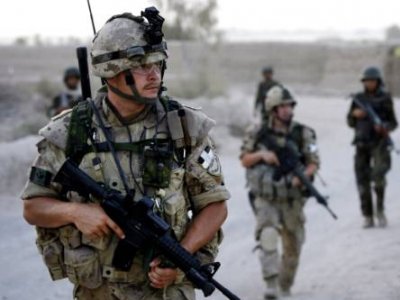
The article states up front that the President will announce on Tuesday to a national audience his intention to increase US troop numbers in Afghanistan by as many as 35,000, according to military officials who spoke with the AP reporter on condition of anonymity.
The article then says, “Polls show support for the war has dropped significantly since Obama took office, with a majority now saying both that they oppose the war and that it is not worth fighting.” The AP story does not source any recent data to support such a claim. There have been recent polls that shows less public support for the war in Afghanistan, such as an August 20 Washington Post poll or September 15 poll from CNN. However, a recent (Nov. 12) Gallup poll shows the country to be quite divided on sending more troops to Afghanistan.
Much of the rest of the article is devoted to how Democrats and Republicans will respond. The AP story makes the claim that, “Congressional Democrats, including House Speaker Nancy Pelosi, D-Calif., have been blunt in saying Congress has little stomach for a large troop increase and flagging confidence in the U.S.-backed Afghan government the war effort is meant to support.” While Pelosi and others may have made these comments, the real test of support is whether or not these Democratic leaders have voted in favor of financial support for the war in Afghanistan or for the troop increases last Spring. Also not mentioned was the concrete opposition by Rep. Barbara Lee whose bill calls for cutting off funds for the troop escalation and Rep. Jim McGovern’s resolution calling for the administration to offer an exit strategy.
The AP article concludes with two points that are also not verified. The first is a comment from White House Press Secretary Gibbs who says, “We are not going to be there another eight or nine years.” There is no follow-up, nor any context for such a statement. The AP reporter could have asked, “if the US has no plans to be there for a long time, why are they building permanent military bases in Afghanistan?” The reporter also could have asked about the number of private US military contractors in Afghanistan or the recent construction of a 1,000-plus prison the US has built there.
The other unverified statement was from the AP reporter, which claimed, “Incompetence and corruption have aided a rise in the Taliban’s strength.” While it is true that there has been significant corruption in the Karzai regime, the article fails to mention that the US has until the recent election fraud backed the corrupt Afghani leader. The closing comment also fails to acknowledge that in addition to corruption giving aid to the Taliban’s strength so has the US/NATO occupation, which according to some sources is the number one reason for Afghans joining the Taliban.
Unfortunately for Press readers, this article, like much of what we have documented, gives both a limited and slanted view of US policy in Afghanistan.
Today, several members of the Grand Rapids Chapter of the IWW went to a Kohl’s store just off Alpine Avenue to draw attention to the 70 workers who were recently fired from a Bissell warehouse near Chicago.

Kohl’s is one of the largest sellers of Bissell products, so the union in Chicago (UE) was asking people to act in solidarity around the country. Since Bissell’s headquarters is in Walker, Michigan, the IWW decided to take action. They distributed a flyer to customers inside and outside of the Kohl’s store until Walker police were called and made them move off the property and onto a nearby road where people continued to hand out flyers and hold signs.
The campaign is calling on people to pressure the Bissell company to treat workers in their warehouses with dignity. According to the UE organizers workers at a Bissell warehouse near Chicago have been disrespected, pregnant women have been discriminated against, other workers have earned less than minimum wage and management has made threats against workers for attempting to organize.
Warehouse Workers for Justice is asking people contact Bissell CEO, Mark J. Bissell, to pressure him to reinstate the 70 workers that were recently fired. You can send an E-mail to ann.lamb@bissell.com (Director of Communications), call (616) 977-4341 or send a letter to:
Mark J. Bissell
2840 Pioneer Club Road SE
Grand Rapids, MI 49506
Below is video with IWW members talking about the campaign and what happened at the Kohl’s store.
How I stopped hating Thanksgiving and learned to be afraid
(This article is by Robert Jensen – a professor in the School of Journalism of the University of Texas at Austin and a board member of the Third Coast Activist Resource Center, http://thirdcoastactivist.org/. His latest book is All My Bones Shake: Seeking a Progressive Path to the Prophetic Voice (Soft Skull Press, 2009).
I have stopped hating Thanksgiving and learned to be afraid of the holiday.
 Over the past few years a growing number of white people have joined the longstanding indigenous people’s critique of the holocaust denial that is at the heart of the Thanksgiving holiday. In two recent essays I have examined the disturbing nature of a holiday rooted in a celebration of the European conquest of the Americas, which means the celebration of the Europeans’ genocidal campaign against indigenous people that is central to the creation of the United States. Many similar pieces have been published in predominantly white left/progressive media, while indigenous people continue to mark the holiday as a “National Day of Mourning” (http://www.uaine.org/).
In recent years I have refused to participate in Thanksgiving Day meals, even with friends and family who share this critical analysis and reject the national mythology around manifest destiny. In bowing out of those gatherings, I would often tell folks that I hated Thanksgiving. I realize now that “hate” is the wrong word to describe my emotional reaction to the holiday. I am afraid of Thanksgiving. More accurately, I am afraid of what Thanksgiving tells us about both the dominant culture and much of the alleged counterculture.
Here’s what I think it tells us: As a society, the United States is intellectually dishonest, politically irresponsible, and morally bankrupt. This is a society in which even progressive people routinely allow national and family traditions to trump fundamental human decency. It’s a society in which, in the privileged sectors, getting along and not causing trouble are often valued above honesty and accountability. Though it’s painful to consider, it’s possible that such a society is beyond redemption. Such a consideration becomes frightening when we recognize that all this goes on in the most affluent and militarily powerful country in the history of the world, but a country that is falling apart — an empire in decline.
Thanksgiving should teach us all to be afraid.
 Although it’s well known to anyone who wants to know, let me summarize the argument against Thanksgiving: European invaders exterminated nearly the entire indigenous population to create the United States. Without that holocaust, the United States as we know it would not exist. The United States celebrates a Thanksgiving Day holiday dominated not by atonement for that horrendous crime against humanity but by a falsified account of the “encounter” between Europeans and American Indians. When confronted with this, most people in the United States (outside of indigenous communities) ignore the history or attack those who make the argument. This is intellectually dishonest, politically irresponsible, and morally bankrupt.
In left/radical circles, even though that basic critique is widely accepted, a relatively small number of people argue that we should renounce the holiday and refuse to celebrate it in any fashion. Most leftists who celebrate Thanksgiving claim that they can individually redefine the holiday in a politically progressive fashion in private, which is an illusory dodge: We don’t define holidays individually or privately — the idea of a holiday is rooted in its collective, shared meaning. When the dominant culture defines a holiday in a certain fashion, one can’t pretend to redefine it in private. To pretend we can do that also is intellectually dishonest, politically irresponsible, and morally bankrupt.
I press these points with no sense of moral superiority. For many years I didn’t give these questions a thought, and for some years after that I sat sullenly at Thanksgiving dinners, unwilling to raise my voice. For the past few years I’ve spent the day alone, which was less stressful for me personally (and, probably, less stressful for people around me) but had no political effect. This year I’ve avoided the issue by accepting a speaking invitation in Canada, taking myself out of the country on that day. But that feels like a cheap resolution, again with no political effect in the United States.
The next step for me is to seek creative ways to use the tension around this holiday for political purposes, to highlight the white-supremacist and predatory nature of the dominant culture, then and now. Is it possible to find a way to bring people together in public to contest the values of the dominant culture? How can those of us who want to reject that dominant culture meet our intellectual, political, and moral obligations? How can we act righteously without slipping into self-righteousness? What strategies create the most expansive space possible for honest engagement with others?
Along with allies in Austin, I’ve struggled with the question of how to create an alternative public event that could contribute to a more honest accounting of the American holocausts in the past (not only the indigenous genocide, but African slavery) and present (the murderous U.S. assault on the developing world, especially in the past six decades, in places such as Vietnam and Iraq).
Some have suggested an educational event, bringing in speakers to talk about those holocausts. Others have suggested a gathering focused on atonement. Should the event be more political or more spiritual? Perhaps some combination of methods and goals is possible.
However we decide to proceed, we can’t ignore the ugly ideological realities of the holiday. My fear of those realities is appropriate but facing reality need not leave us paralyzed by fear; instead it can help us understand the contours of the multiple crises — economic and ecological, political and cultural — that we face. The challenge is to channel our fear into action. I hope that next year I will find a way to take another step toward a more meaningful honoring of our intellectual, political, and moral obligations.
As we approach Thanksgiving Day, I’m eager to hear about the successful strategies of others. For such advice, I would be thankful.
Several news sources are reporting today that President Barack Obama will announce his plans next week to send more US troops to Afghanistan. McClatchy newspapers is saying that the administration is likely to send an additional 34,000 US soldiers to participate in an occupation now in its 9th year.

The Associated Press reports that Obama said, “I feel very confident that when the American people hear a clear rationale for what we’re doing there and how we intend to achieve our goals, that they will be supportive.” He was also quoted as saying, “It is my intention to finish the job,” referring to what has been going on since September 11, 2001.
Nowhere in the Associated Press story did the reporter verify what the President meant by finishing the job. The administration continues to claim that the military occupation of Afghanistan is to hunt down the terrorists responsible for 9/11. However, this overlooks the fact that the US military is fighting a Taliban insurgency that had nothing to do with September 11, 2001.
When President Obama makes the announcement next week about the US troop increases to Afghanistan we will continue to provide some analysis and information about any actions in West Michigan.
Blackwater in Afghanistan/Pakistan
We also thought is was important to add that Jeremy Scahill, author of the important book on Blackwater, has just written an excellent investigative piece on the role that Blackwater mercenaries are playing in both Afghanistan and Pakistan. Despite the local connections with the Prince family, there has been no reporting in the local news about Blackwater as it relates to the war in Afghanistan/Pakistan.
Media Bites – Marketing Love
In this week’s Media Bites we look at some recent Zales diamond commercials and critique their use of equating diamond giving with love. This strategy has been used for decades through Hollywood Films, magazine ads and TV commercials. We look at some of these examples and then juxtapose this marketing campaign with the human cost of diamond mining and diamond trafficking.
Alternative Actions to Black Friday
This Friday, according to the Business community, is the busiest shopping day of the year. People are led to believe that the best holiday deals will be available to them, so people will line up early in the morning outside of stores and malls hoping to get one of these deals.

The news media will report on this shopping frenzy so that human greed and indulgence can be on display. What the news media won’t report on is how the public is being manipulated into participating in what the industry calls Black Friday.
However, there are alternatives to this madness. One general idea is to just not participate in the shopping madness. For years people have made the first Friday after Thanksgiving (Nov. 27) in the US (Nov. 28 internationally), “Buy Nothing Day.” Buy Nothing Day is essentially a moratorium on buying anything for 24 hours on the very day that the business world most wants us to ship.
A variation on that theme is the Really Really Free Market (RRFM), which is also practiced around the world. The RRFM is an anti-capitalist action where people get together to exchange goods for free. People give what they don’t need and take want they might need.
The RRFM takes place once a month on Grand Rapids and this month they will be holding the event on Black Friday. On Friday, November 27, from 1pm – 5pm, the RRFM will be held at the Division Avenue Arts Cooperative (DAAC), located at 115 S. Division in Grand Rapids.

One other action you could take on Black Friday is to stand in solidarity with workers who were recently fired from a Bissell warehouse in Chicago. People in Chicago and in Grand Rapids will be going to Kohl’s stores on Black Friday to inform people about how Bissell treats workers. Kohl’s is the largest retail distributor of Bissell Products, which is why they were chosen as a target for this action.
In Grand Rapids we will meet outside the Kohl’s store at 745 Center Dr., just off of Alpine Avenue near the Star Theaters. People will gather there at 1pm to hand out flyers to the public. You are encouraged to bring signs and invite your friends!
Obama and the Afghan War Escalation
Once President Obama comes back from his Asian trip he is expected to announce a decision on whether or not the US will send more troops to Afghanistan. Actually, as Tom Engelhardt has pointed out, the administration is not deciding on whether to send more troops, rather how many troops the administration will send.

Every day independent reporters are providing good information on the consequences of the US occupation of Afghanistan. Now it seems that the US might use the pretext that the Karzai administration is corrupt, therefore bringing “stability” to the country is crucial at this moment. This notion disregards the fact that the US has propped up the Karzai regime since 2002 and this support has also meant financing the worst of Afghan’s warlords.
Beyond the current debate on the number of US troops being deployed in Afghanistan are the larger strategic questions that are not being addressed in the US mainstream media. What are the real motivations of the US government in regards to Afghanistan?
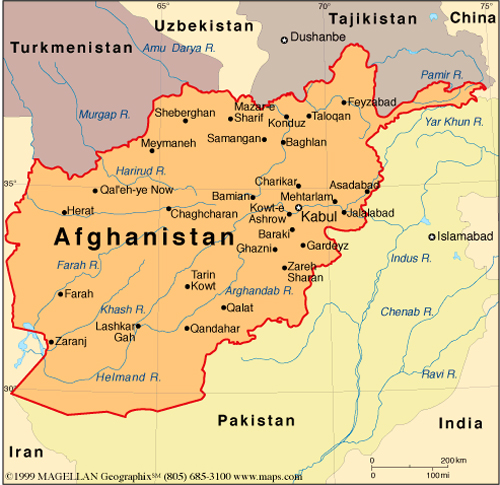
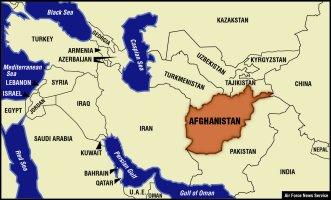
Afghanistan plays a critical role in the future of the region, since it borders both the Middle East and Central Asia. Iran, Pakistan, China, Uzbekistan, Tajiikstan and Turkmenistan, all countries that have tremendous amounts of natural resources, surround Afghanistan. Afghanistan itself does not possess many natural resources, but it provides a critical role as a trans-shipment point for fuel pipelines in the region, as is noted in an important study by the Canadian Center for Policy Alternatives, A Pipeline Through a Troubled Land.
The strategic and regional role that Afghanistan plays is further supported by the fact that the US military is expanding its infrastructure throughout the country. According to a recent article by Nick Turse, the US is expanding its main base at Bagram and building new military facilities in other parts of the country. If history has taught us anything, it’s that when the US builds permanent military bases they have no intention of leaving anytime soon.
Where is the Anti-war movement?
The military buildup in Afghanistan and the probable announcement from the Obama administration that more US troops will be sent to Afghanistan has not generated the kind of anti-war groundswell that we saw with Iraq. However, there are the beginnings of activity across the country.
An ad-hoc coalition of national peace groups is calling on people to inundate the White House with Phone calls on Monday (November 23) against military escalation in Afghanistan. The White House number is 202-456-1111.
There is also an online petition campaign that Brave News Films has organized. This petition campaign is accompanied by a video with Matthew Hoh, who resigned from his position at the State Department in protest of the administration’s Afghan policy, which we have posted below. However, we know that these actions alone will not be enough to pressure the US government to end its occupation of Afghanistan. If you are aware of any other campaigns or efforts to challenge the Afghan occupation let us know so we can publicize them in the coming weeks and months.
 Grand Rapids Institute for Information Democracy