Getting Your Voice Heard: Choosing the New City Commissioner

Recently, GRIID posted a report on the selection process by the City Commissioners of a replacement for David LaGrand. I found it disturbing that there appeared to be minimal participation allowed by Grand Rapids citizens, even though LaGrand’s term runs for nearly another two years. I was also concerned that commissioners, having selected the field of candidates, had already announced to the media who they felt the “front-runner” was, before they’d even gotten citizen input on their choices. Lastly, it was puzzling why the Commission didn’t simply vet a group of candidates and then place them on the ballot in early May. After all, LaGrand had been selected by the people of Grand Rapids. Why not his successor?
For answers, I turned to Commissioner Rosalynn Bliss. I chose to write to Bliss partly because I knew she had voiced her own concerns that the selection process was not inclusive enough or open enough to the public. I wrote her an e-mail outlining my questions. She answered, in part, “The current appointment process is what is required under the City Charter, which we are bound to comply with as a commission. I recognize that it is different than an election and have attempted to create a process that allows for as much community input as possible. The first round interviews we held were just that, first round and yes the candidates were given copies of the questions but it was because they had 30 minutes before the commission. There was a public hearing last Tuesday night where community members could come forward to provide input.”
I then pointed out to her that in the Grand Rapids Press, (January 13, 2010) it stated that the Commission and Mayor Heartwell had chosen the process they were currently following, because “City Attorney Catherine Mish said the charter does not spell out a process to replace a commissioner who resigns.” I told her that that seemed to imply that the Commission had authority to do anything it wished, including a ballot vote by the public, so I asked her to explain she and the other Commissioners had settled on this particular process.
In her second e-mail, Bliss was more explicit. She replied, “Kate, I apologize if there was confusion in my response. Let me try to clarify. The charter specifically says that a commission vacancy ‘shall be filled by a majority vote of the City Commission at any regular meeting.’
“What is/was at the discretion of the commission is the appointment process such as: how long we would accept applications, what we would ask for on the application, how many interviews we wished to complete, if we would have a public forum, how would be determine final candidates, and how we would make a final decision. The appointment process is what the Mayor worked on, had flexibility with and brought back to the Commission to discuss and determine. And this is when I offered and recommended having a community forum and ample time for public comment at public hearings.”
Concerning the “front-runner” announcement, Bliss did not speak to the inappropriateness of some Commissioners announcing their preferences to the media (and she wasn’t one who did so), but she did say, “In regards to rating the candidates, we also discussed this and the various options we had to determine the final round of candidates. It was difficult because we had to in some way identify our final candidates, particularly since we didn’t know how many people would apply. Ranking candidates and then weighing the various ranking to come up with the final three was our decision. It then turned out that we had a tie so now there are 4 final candidates.”
So it appears that the Commission was limited by the city charter to select a replacement for David LaGrand itself, regardless of the length of his remaining term. Bliss appears to have been the one who insisted on adding public forums to gather views from citizens prior to a final vote. As for the “front-runner” comments, it’s difficult to tell whether these were mis-reported or played up by theGrand Rapids Press or whether it was, as Bliss has stated, simply that identifying rankings became a necessary part of the process in order to determine the final candidate pool. In fact, it appears that the Press has been guilty of sloppy and patchy reporting throughout this process.
Here’s the bottom line: Grand Rapids citizens who desire any input in this process have only two more chances: First, on Monday, March 22, 7PM, Rosalynn Bliss will be moderating a candidate forum at the Wealthy Street Theater where voters can listen to candidates and also fill in written forms that will go to the Commission. Second, on Tuesday, March 23 at 7PM, there will be an opportunity at the Commission hearing when people can voice their views directly to Commissioners.
Since the Commission could have chosen a completely closed process, it’s important for people to share their opinions. If you can’t make either of the meetings, you can write an e-mail to the Commissioners or to Mayor George Heartwell with your views. Tell them which candidate you feel is best qualified. You could also voice your opinions about this current replacement process and how it could have been improved.
March 13 Iraq Protest in GR

About 60 area folks marched against the occupation of Iraq last Saturday--about the same number that iraqbodycount.org reported killed by the occupation in Iraq this past week.
On Saturday March 13, approximately 60 area folks met at the corner of Division Avenue and Fulton Street downtown Grand Rapids to mark the seventh anniversary of the US occupation of Iraq. Prior to marching, many held up signs condemning the ongoing violence in Iraq. People driving by responded with encouraging honks, peace signs, waves and smiles.
This past week, many larger protests of the Iraq occupation took place all across the US, but like here, they received little or no coverage by corporate media, leaving many Americans with the false impression that the Iraq occupation is over or that the war has been won. These lies are two of the issues that the organizers of the Grand Rapids’ action hoped to bring to light.
GRIID spoke with one of the organizers after the march.
GRIID: What motivated you all to organize this Iraq Occupation Protest?
Organizer: The real motivation is always to spread the word and to draw attention to the cause, not because we think it will end the war. It was about the realization of power and radical potential. We were aggressive about taking the streets and disregarding authority. There were a lot of younger people there who hadn’t been involved before. It got the word out.
Another reason for the march was to confront the idea that the war in Iraq is over–and, to bring attention to Afghanistan. And it wasn’t just anti-war. Hopefully the march inspired people to explore the real reasons for US military aggression, the economic causes, and to consider the will of the people being occupied. Less than 1% of Iraqis want US involvement there.
GRIID: Some local antiwar groups disagreed with organizers’ tactics beforehand, and suggested that the march be coordinated via the City Grand Rapids permit process. Why no permits?
Organizer: This was an anarchist organized event with an anti-state perspective on the war. Dissent isn’t a privilege to be paid for. We took on non-authoritarian, non-passive tactics—but no violence. We believe there needs to be a diversity of tactics. Still, a few pacifist folks were afraid and voiced concerns. We could have done a little better job of explaining things to them.
GRIID: What kind of reaction did folks get from people on the street?
Organizer: It always is positive. One city bus driver stopped the bus, honked and gave us a thumbs-up.

Once relegated to the margins of society, pornography has emerged as one of the most visible and profitable sectors of the cultural industries, assuming an unprecedented role in the mainstream of our popular culture at the same time that its content has become more extreme and harsh, more overtly sexist and racist.
This eye-opening and disturbing film tackles the complexity behind this seeming paradox, placing the voices of critics, producers, and performers alongside the observations of men and women as they candidly discuss the role pornography has played in shaping their sexual imaginations and relationships.
Honest and non-judgmental, The Price of Pleasure moves beyond the liberal versus conservative debates so common in the culture to paint a myth-busting and nuanced portrait of how pleasure and pain, commerce and power, liberty and responsibility have become intertwined in the most intimate area of our lives.
Thursday, March 25
7pm
Bloom Collective 1134 Wealthy
$3 Suggested Donation
Discussion to follow the film.
Women’s Health Under Attack
With the healthcare reform debate coming to a head this weekend, a group of women gathered in Grand Rapids earlier this week to discuss one of their major contention points in the current healthcare system: women’s health.
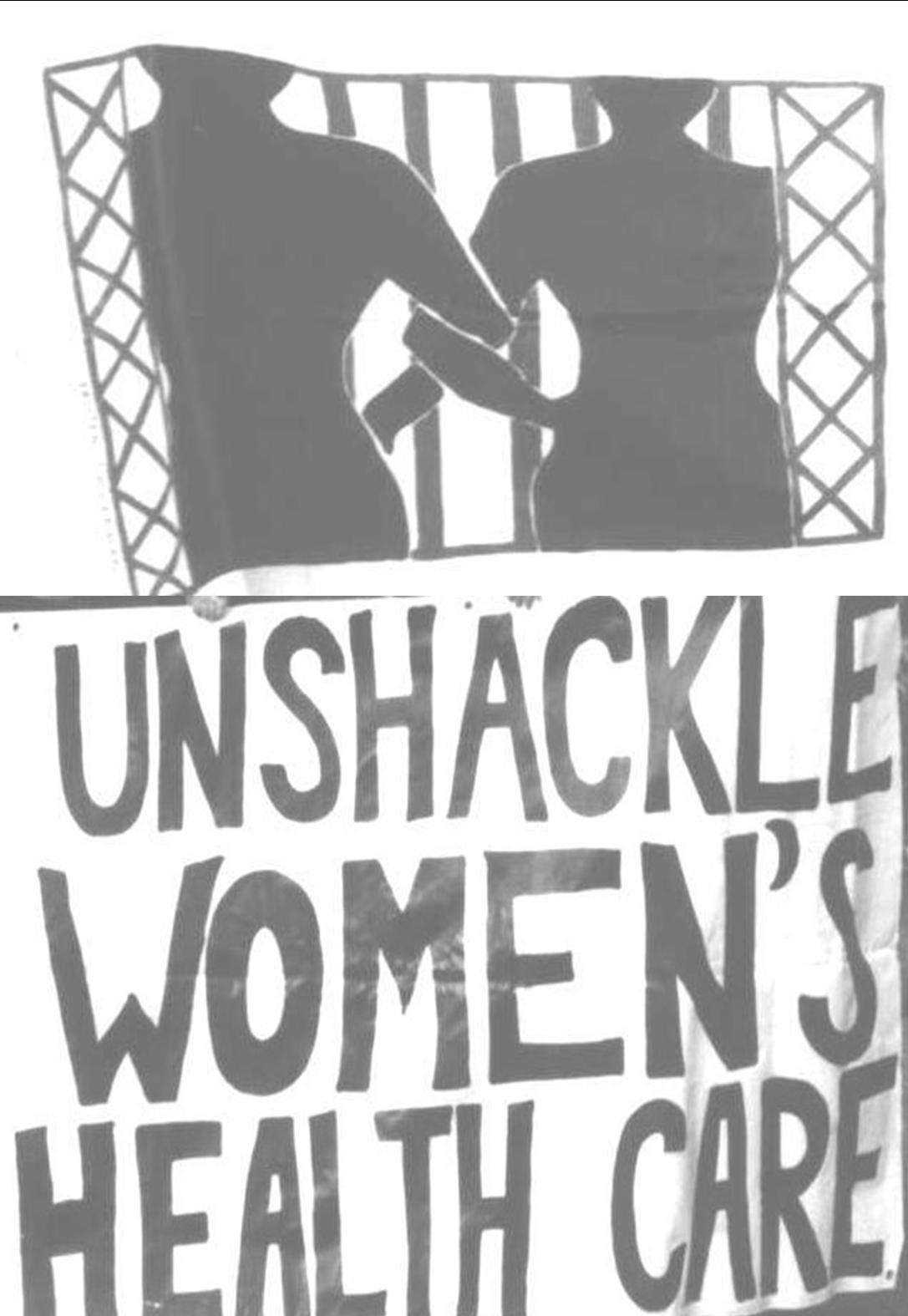 The panel discussion, put on by the Progressive Women’s Alliance, featured speakers Gayla Jewell of the Grand Rapids Medical Education and Research Center; Kary Moss, Executive Director, ACLU of Michigan; Sarah Scranton, Executive Director, Planned Parenthood Advocates of Michigan; and State Senator Gretchen Whitmer (23rd District).
While most people think of women’s health revolving around the so-called “pro-choice vs pro-life” debate, the speakers touched on other problems women are facing in the current healthcare system.
Right here in Grand Rapids, the problems are rampant. Gayla Jewell believes that “we’re a microcosm of what’s happening nationally. We have segregated healthcare, we’ve rationed healthcare. Healthcare is not readily available to people.” She went on to say that in Kent County alone the infant mortality rate for black children is 2 to 3 times higher than for white children. Most of the women that need medical attention and cannot afford it are minority women in need of government assistance for health insurance, like Medicaid.
Jewell pulled information about Medicaid from the internet, saying it was barely decipherable to her with high-level English, let alone to those who do not understand the language well. “If you don’t understand it, how can you go get it? So having things in a way that all women can understand is vitally important.”
Even with Medicaid, that does not guarantee access to medical care. Jewell went on to say that only 22% of healthcare providers accept Medicaid, and they only choose so many to see so they can get reimbursed. While relating a story about a pregnant college student who received Medicaid, Jewell said the girl called every provider on the approved list and was told by all of them they could see her in 6 months.
With a more national perspective, Kary Moss of the ACLU of Michigan began by saying over 17 million women nationwide are without healthcare, which she says is a major issue considering women are 40% more likely to be on prescription drugs than men and often have a lower income than men.
Her list of requirements for healthcare reform include, among other things: increased research funding, promoting reproductive health and rights, being “pro-choice”, increased availability of birth control, and comprehensive sex education including an end to abstinence only programs. While she admits the current healthcare bill is far from including her wish list, it may open the door to dealing with these issues.
And that was the common thread throughout the speeches of these women: the current healthcare bill leaves much to be desired in terms of women’s health equality but this may just be a launching pad to change.
This is change that Sarah Scranton of Planned Parenthood has begun to see in the Michigan legislature. In 2008 it was the first time in a decade that the majority of the Democratic caucus were “pro-choice”, along with a “pro-choice” Governor Granholm. With elections this year, that may very likely change. Scranton said Michigan is often used as a testing ground for the “anti-choice” movement to find out how to pass such measures in other states.
The controversial Planned Parenthood lobbies mainly for “pro-choice” issues, including the Prevention First Initiative, which says it seeks to decrease unwanted pregnancies to avoid abortions.
The term “pro-choice” is saturated with political undertones and morality issues, just as the term “pro-life” is.
Jewell, however, wanted to make her stance clear: “I am pro-choice, I am not pro-abortion. I would like for there to be no need for abortion. The question is how do you create an environment that abortion is not necessary? That happens through choice, because the more choice women have, generally speaking the more responsible they become.”
This choice involves insurance coverage of contraceptives, access to emergency contraceptives (often known as “the morning after pill”), the right to safe, legal abortions, and sex education that is both abstinence and contraceptive based.
All this finicky abortion language comes on the heels of the Stupak Amendment, which was added to the House’s healthcare bill to be voted on in the next few days. The language in this amendment has many “pro-choice” people upset, though recent news suggests it may not be included in the Senate version of the bill. If it is not, Rep. Bart Stupak (D-Michigan) says he has other Democrats who will vote against the healthcare reform bill with him, which may very well stop the healthcare bill in its tracks. The women speakers urged those in attendance to really push their representatives to vote for the bill, so that change, of any kind, can begin to take place.
There were no “anti-abortion” advocates present on the panel discussion put on by Progressive Women’s Alliance.
(This media alert is from Fairness & Accuracy in Reporting)
Since Glenn Beck left Headline News for Fox, CNN executives apparently feel that their staff is short on unbalanced hatemongers. To make up the gap, they’ve just hired Erick Erickson as a political commentator.
 “Prominent conservative commentator and RedState.com editor Erick Erickson will join CNN as a political contributor,” CNN announced in a March 16 press release. “Erickson will appear weeknights on John King, USA, which launches Monday, March 22, as well as provide perspective and commentary to other programs across the network.”
Who is Erickson? Well, he’s a racist who declared that Barack Obama won the Nobel Prize because of “affirmative action quotas” (Think Progress, 10/9/09). He’s a misogynist who suggested that “feminazis were enraged” by an anti-abortion Super Bowl ad because “that’s what being too ugly to get a date does to your brain.” He urged that “ugly feminists return to their kitchens” (Media Matters, 2/8/10). He’s a homophobe who asserted that “the full gay rights agenda” means that “men and boys can have sexual relationships free of prudish moral people frowning” (Media Matters, 10/9/09).
He’s an all-around nasty human being who, upon Justice David Souter’s retirement, called him “the only goat-fucking child molester to ever serve on the Supreme Court” (Crooks and Liars,5/1/09). He declared that White House spokesperson Linda Douglass “really is the Joseph Goebbels of the White House healthcare shop” (TPM, 10/12/09). Meanwhile, he suggested that Obama might be worse than Hitler, writing, “Does it say more about the IOC or Obama that the IOC gave Hitler the Olympics, but not Obama?”
As if that weren’t enough, he’s also an advocate of political violence (Yglesias, 4/1/09):
At what point do the people tell the politicians to go to hell? At what point do they get off the couch, march down to their state legislator’s house, pull him outside, and beat him to a bloody pulp for being an idiot?
At some point soon, it will happen. It’ll be over an innocuous issue. But the rage is building. It’s not a partisan issue…. Were I in Washington State, I’d be cleaning my gun right about now waiting to protect my property from the coming riots or the government apparatchiks coming to enforce nonsensical legislation.
(Note that the tyranny to which he was calling for armed resistance involved regulation of dishwashing soap.)
If Erickson is not beyond the pale, then CNN has no pale.
ACTION: Please write to CNN and ask them to explain how hiring a commentator of Erick Erickson’s ilk can possibly conform to the network’s standards and practices.
CONTACT:
CNN Political Director Sam Feist
Email: sam.feist@turner.com
Telephone: 202-515-2852
Web form: http://www.cnn.com/feedback/forms/form6a.html?2
Please post copies of your letters in the comments section on the FAIR Blog:http://www.fair.org/blog/2010/03/16/action-alert-cnn-hires-erick-erickson/
Interview with Dr. Izzeldin Abuelaish
Earlier today we had the opportunity to interview Doctor Izzeldin Abuelaish who is in town to present at both Calvin College and GVSU on how the Israeli Assault on Gaza has affected children. He was invited to West Michigan by the group Healing Children of Conflict, which seeks to offer medical treatment to children, which have been wounded from US military attacks or with weapons supplied by the US.
To view the interview just click here.
Carl Levin and US Imperial Policy
As we have documented previously, Michigan Senator Carl Levin, while having some liberal leanings on domestic policy, tends to support US Foreign Policy that is essentially imperialist in nature.

Earlier this week during a Senate Armed Services Committee Hearing on U.S. Central Command and U.S. Special Operations Command Levin made some interesting remarks that indicate he supports an imperialist position.
Levin is in full support of the US occupations of both Afghanistan and Iraq. When speaking about Afghanistan Senator Levin seems most concerned about the speed in which the US & NATO forces are training Afghan military recruits or the lack of necessary equipment for the US special operations forces in Afghanistan.
All of Levin’s references to Afghanistan are in support of the US counterinsurgency plan that President Obama has called for since last fall. Nowhere in his statement does the Michigan Senator acknowledge the Afghani civilians who have died as a result of this campaign.
On Iraq, Levin supports the Obama administration’s claims that the US forces will be reduced to 50,000 by the end of this year and eventually all US forces will be gone by 2011. This of course doesn’t not address the massive US bases that are in Iraq nor the independent reports coming from that country which suggests that the US will not remove all of it’s troops in the next few years.
Levin then goes on to discuss the attempted Christmas Day airline bombing and “that Al Qaeda is a global organization that continues to threaten harm to anyone that does not share its radical views.” Levin mentions the growing anti-American attitude in places like Yemen and the Afghani/Pakistani border and say that US special operations forces need to be deployed in all of those countries to “address the underlying causes of violent extremism.”
However, some groups would argue that it is US policy, particularly the occupation of Afghanistan that is creating anti-US acts of terror. This is the assessment of Afghan groups like RAWA and former CIA Analyst Michael Scheuer, both believe that US policy creates terrorists.

Senator Levin then ends his statement by addressing US policy towards Iran. Levins says, “Iran continues to work to undermine stability in the Middle East and to stoke fear across the region. The brutal tactics and human rights abuses of the Government of Iran in its efforts to silence the voices of the people of Iran are of deep concern.” While it is true that Iran has an atrocious human rights record, it is no worse than Saudi Arabia, Egypt or Israel, all of which are US allies in the region.
Levin supports greater sanctions against Iran for a variety of reasons, but mostly because of their push to develop nuclear technology. This argument ignores the fact that Israel already possesses nuclear weapons, which begs the question why one country in the region can have them and not another.
Media Alert – The Great Internet Rip-Off
The FCC just released its National Broadband Plan. Based on the gushing media response, you’d think that America’s Internet was sailing smoothly into the future.

Think again.
There are some good things in the plan, but it punts on the thorniest problems that Internet users face in America: astronomical prices, slow speeds and no real choices among providers.
The FCC plan is a promising start, but it’s short on action. And Comcast and Time Warner Cable are thumbing their noses at it — having just announced plans to jack up their Internet prices even higher.
That’s why we’re asking you to sign on to this letter telling FCC Chairman Julius Genachowski that we need real choices, lower prices, faster speeds and an open Internet in America. Nothing less.
The only way to keep down prices, and get the Internet we need, is for the FCC to follow through on our demands. We’re facing:
High Prices: Cable and phone companies jack up Internet prices simply because they can. People have too few options for world-class Internet connections, resulting in costs that are among the highest in the developed world.
Slow Speeds: Average U.S. broadband speeds are 20 times slower than speeds available to users in Japan, France, Spain, the Netherlands, Korea and Hong Kong.
Few Choices: Five percent of American households have no wireline providers; 13 percent of households have just one; and 78 percent have just two. In other words, 96 percent of the country has two or fewer choices for wired broadband.
The National Broadband Plan is our best chance to fix America’s Internet problem. But prices will not go down, and speeds will not increase without concrete action from the FCC.
It’s time we took a stand against the narrow corporate interests that have held America’s Internet captive for too long.
Radical Author/Journalist John Ross to Speak in Grand Rapids
Next week, John Ross, radical journalist and author of numerous books on the Zapatista Rebellion in Mexico, will be speaking in Grand Rapids.

Ross is on tour with a new book entitled, El Monstruo: True Tales of Dread and Redemption in Mexico City. He will be speaking at two public events while in Grand Rapids.
On Wednesday, March 24 at 7pm, Ross will give a talk on The Drug War and Mexican Migration. The presentation will be held at Trinity United Methodist Church, 1100 Lake Dr. SE in Grand Rapids. There is a Facebook event set up, which we encourage people to share with others.
On Thursday, March 25 beginning at 9pm, Ross will read from his new book and talk informally with people in a gathering at Mexicains Sans Frontieres, located at 120 S. Division on the 2nd floor. There is also a Facebook event set up, so please pass this information along as well.
Both events are sponsored by The Bloom Collective, Mexicains Sans Frontieres, and GRIID.
Cornell West talks about the Obama Administration
Avi Lewis, co-director of the documentary The Take, interviews Professor and author Dr. Cornell West. They discuss the Obama administration and African Americans, US as Empire and Racism in the US.

