(This Media Alert is re-posted from Fairness & Accuracy in Reporting)
A leaked videotape of a 2007 U.S. helicopter attack in Baghdad that killed a dozen Iraqis was unveiled on April 5 by the website WikiLeaks. To much of the corporate media, though, it was either not worth reporting at all, or an unfortunate incident to be defended.
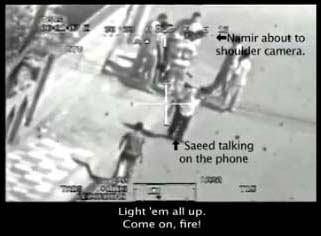
The graphic and disturbing video includes audio of the helicopter pilots cheering their attacks. Two journalists working for Reuters–photographer Namir Noor-Eldeen and driver Saed Chmagh–were killed in the assault, which U.S. military officials had claimed was a response to insurgent activity. WikiLeaks says it acquired the video from whistleblowers within the military.
The release of the video, though, got only cursory treatment in the mainstream press. The New York Times (4/5/10) ran a relatively thorough piece, which summarized the video this way:
But the video does not show hostile action. Instead, it begins with a group of people milling around on a street, among them, according to WikiLeaks, Mr. Noor-Eldeen and Mr. Chmagh. The pilots believe them to be insurgents, and mistake Mr. Noor-Eldeen’s camera for a weapon. They aim and fire at the group, then revel in their kills.
“Look at those dead bastards,” one pilot says. “Nice,” the other responds.
A wounded man can be seen crawling and the pilots impatiently hope that he will try to fire at them so that under the rules of engagement they can shoot him again. “All you gotta do is pick up a weapon,” one pilot says.
The helicopters also fire on a van that appears on the scene to carry away some of the victims. The Times had two follow-up stories on April 7.
A leaked video that seems to show the U.S. military killing and wounding civilians should be a big news story. But most of the media seemed to think otherwise, with a search of the Nexis news database showing scant pick-up.
CBS Evening News (4/5/10) reported on the video, with anchor Harry Smith opening the segment, “In the heat of battle, things are not always as they might seem.” Correspondent Bob Orr closed by offering something of a justification: “Now, it appears from the tapes that at least some of those hit on the ground were unarmed, but a journalist who was in the general area that same day says it’s important for all of us to remember it was a hectic, violent and uneasy day.”
On CNN‘s Situation Room (4/5/10), the network decided not show any of the shots that were fired “out of respect for the families of the two Iraqi employees of the Reuters news organization that were killed,” explained Pentagon correspondent Barbara Starr. (The photographer’s father was quoted in the April 7 Times: “God has answered my prayer in revealing this tape to the world…. I would have sold my house and I all that I own in order to show this tape to the world.”) Starr went on to claim:
There was an investigation of this incident. The Army found no one at fault, that the units in the air–the helicopters in the air had no reason to believe that there were journalists there on the ground with the insurgents. They say that nearby U.S. troops had come under attack and that this shooting, which we are not showing the specifics of, was justified.
While it is correct that the military conducted some sort of investigation, it is unclear how Starr could know that any of the victims were “insurgents.”
And there has been little discussion of the relevant history of U.S. forces firing on and killing journalists working in Iraq, including a tank firing on journalists at the Palestine Hotel and attacks on the Baghdad offices of Al Jazeera and Abu Dhabi TV (FAIR Media Advisory, “Is Killing Part of Pentagon Press Policy?,” 4/10/03). While those who defend the helicopter attacks in the video say that the U.S. forces could not have known there were journalists on the ground, these earlier incidents suggest that knowledge of the whereabouts of media workers does not necessarily prevent attacks.
There has been other coverage of the video. MSNBC‘s Dylan Ratigan (4/5/10), for example, hosted a lengthy discussion with former military officials, Salon‘s Glenn Greenwald and Julian Assange from WikiLeaks. Democracy Now! (4/6/10) hosted a discussion with Assange and Greenwald as well. National Public Radio aired two reports on April 6. But where is the rest of the media on this story?
This news comes on the heels of the revelation that a Special Forces raid in Afghanistan killed five civilians, including three women, in a house raid in February. NATO forces had originally claimed that the three women were found dead at the scene; the London Times reported (4/5/10) that according to Afghan investigators, “U.S. special forces soldiers dug bullets out of their victims’ bodies in the bloody aftermath of a botched night raid, then washed the wounds with alcohol before lying to their superiors about what happened.”
Both incidents, of course, demand more scrutiny. So far, U.S. corporate media are mostly ignoring them.
To view the WikiLeaks video: http://www.collateralmurder.com/
Three Cups of Tea author addresses audience at GVSU

Yesterday the Grand Rapids Press ran an article in the region section about a talk given at GVSU by “Three Cups of Tea” author Greg Mortenson. The headline of the story written by reporter Charles Honey was, “The real enemy is ignorance.”
The story states that around 2,000 people came to hear the author who has been working to build schools in Pakistan and Afghanistan in recent years. The story cites Mortenson as saying that education is the key to peace in Afghanistan. “We can drop bombs, we can surge troops, we can put in electricity, we can build roads. But if girls are not educated, a society will never, ever change.”
The article also stated that Mortenson’s book “Three Cups of Tea” has been GVSU’s Community Reading Project this year. Part of this project was an interdisciplinary panel discussion two weeks ago on the book and its significance.
On that panel, GVSU Sociology Professor Jennifer Stewart raised concerns about the book, calling it “sincere fiction.” Sincere fiction is literature written by White, privileged people who go somewhere to “help” other people, usually people of color. Stewart thinks that the popularity of Mortenson’s book is in part because it makes Americans feel good. “Americans like to be seen as the ones who save others and this fits into our country’s narrative about being a beacon of light for the rest of the world.”
The Press reporter states that Mortenson was somewhat critical of President Obama’s decision to send more US soldiers to Afghanistan, but the criticism had more to do with the process used for making this decision and not so much about the increase in troops. Reporter Charles Honey does say that the book is required reading by US military leaders, but the reporter never says why the book is required reading. Joint Chiefs of Staff Chairman Adm. Mike Mullen has an endorsement on the book cover of Mortenson’s most recent book “Stone’s into Schools,” which raises questions about the roll that Mortenson’s schools play in the larger US counter-insurgency strategy in Afghanistan.
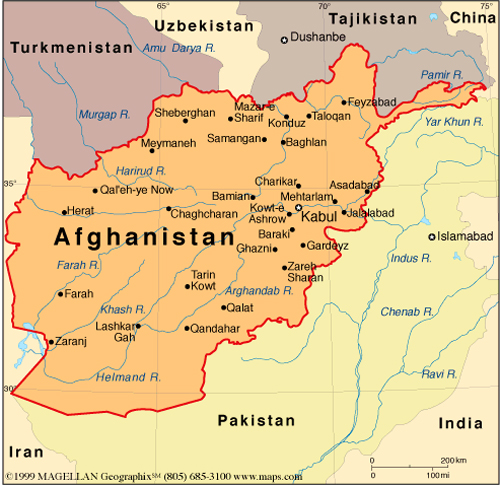
What is missing from the discussion on Afghanistan as it relates to Mortenson’s book and his visit is the lack of historical context to the current US/NATO occupation of that country.
Afghanistan is a country made up of numerous tribal communities and the borders of that country were arbitrarily created by the British government during their occupation at the end of the 19th century. There is tremendous language diversity in the country, which makes Mortenson’s decision to use English as the language in which his schools operate seem questionable.
Afghanistan is also a country, which has been at war for the past 30 years. The former Soviet Union occupied Afghanistan from 1980 – 1989. During that period the US recruited, financed and trained insurgents from all over the world who identified with a very narrow interpretation of Islam, a group of men known as the Moujahedeen (Holy Warriors). This group of men were the ones who instituted policies and practices that restricted women’s freedom, which was acceptable to US policy makers because it served Cold War objectives.
“What was more important in the worldview of history? The Taliban or the fall of the Soviet Empire? A few stirred-up Muslims or the liberation of Central Europe and the end of the Cold War?” –President Carter’s national security advisor Zbigniew Brzezinski, 1996.
After the Soviet Union withdrew from Afghanistan the US paid little attention to the aftermath of the Moujahedeen. This group of radical Jihadists began fighting each other for control of the country and continued to use the weapons provided by the US or left over from the Soviets. Thousands of people were murdered in the first half of the 1990s until another group known as the Taliban came to power in 1996. The Clinton administration initially endorsed the Taliban because they were a “stabilizing force in the country.”
The 1990s were also a period where there was greater interest in the gas & oil resources within Afghanistan and the strategic role the country could play as a trans-shipment point for energy resources in the region. One US-based energy company with close ties to the government was UNOCAL.
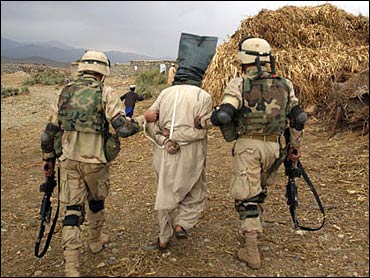
Then the September 11, 2001 terrorist attacks occurred and Afghanistan became front-page news and on the top of the list of US foreign policy interests. The US began bombing Afghanistan in October of 2001 and has been occupying that country for almost nine years. In those nine years the US military has built numerous bases, detained thousands of Afghanis, systematically tortured them, and killed thousands more.
To not provide this kind of information about what Mortenson has been doing with his school project, not only distorts any discussion about what will ultimately bring peace to that country, it is a disservice to the Afghani people who have suffered as a direct result of US policy for three decades.
Some excellent resources on US policy in Afghanistan in recent decades are the website Rethink Afghanistan and the books Bleeding Afghanistan and Ending the US War in Afghanistan.
People’s Climate Justice Summit in Cochabama, Bolivia
(This article is re-posted from Inter Press Service IPS)
by Franz Chávez
LA PAZ – A different way of fighting global warming will be tried out in the central Bolivian city of Cochabamba when government representatives and thousands of activists gather for the World People’s Conference on Climate Change and the Rights of Mother Earth.

The social organizations sponsoring the Apr. 19-22 conference have announced an alternative platform to the efforts of the 15th Conference of the Parties to the United Nations Framework Convention on Climate Change (COP-15), which ended in failure in icy Copenhagen in December 2009.
The defense of Mother Earth, championed by Bolivian President Evo Morales, has the support of more than 240 grassroots and indigenous movements, non-governmental organizations, activists and intellectuals who are calling for a charter of rights for the planet. The main aims of the conference are to organize a world people’s referendum on global warming, draw up an action plan to create an international climate justice tribunal, and agree new commitments to be negotiated within United Nations scenarios.
The agenda priorities are: climate debt, climate change migrants and refugees, greenhouse gas emission cuts, adaptation, technology transfer, financing, forests and climate change, shared visions and indigenous peoples.
“We, as activists from different social movements, define the present time by the arrogance of the United States, European Union and transnational corporations, which was expressed at Copenhagen where a very few countries attempted to impose an outcome – that was not agreed at COP 15 – to do nothing to stop rising global temperatures and climate damage,” said the event announcement by leading social organizations.
These organizations include the Hemispheric Social Alliance (ASC-HSA), Friends of the Earth Latin America, the Trade Union Confederation of the Americas (TUCA-CSA), the World March of Women, Campaign 350.org and Via Campesina. Morales will formally open the conference on Apr. 20.
The organizations identify a “crisis of civilization” that they attribute to capitalism and the “logic of exploitation, racism and patriarchy,” which they see in “increased military presence and military bases in various parts of the world, and ‘humanitarian’ invasions and occupations” which are actually war, they say.

War, the occupation of markets and territories, and militarization to control energy resources, water and biodiversity, are pointed out as capitalism’s methods for solving its own crisis. The World People’s Conference on Climate Change will advocate the right to “live well,” as opposed to the economic principle of uninterrupted growth.
In contrast to Copenhagen, where industrialized countries sought a formula for greenhouse gas emissions reductions that would not imply binding commitments, at Cochabamba it will be the popular sectors that take the lead. “For a long time, the voices of indigenous peoples and social organizations have not been heard. Their movement has been growing underground, in rural areas and the outlying suburbs of cities,” environmentalist Carmen Capriles, of the Bolivian chapter of Campaign 350.org, told IPS.
Their knowledge, as farmers or livestock raisers, means they can promptly identify the climate phenomena that their way of life and economic wellbeing depend on, she said.
Campaign 350.org is named for the 350 parts per million of carbon dioxide in the atmosphere that scientists regard as the “maximum safe limit” for the concentration of this gas, without triggering climate catastrophe. The conference is distinguished by being “for and with indigenous peoples, unlike any other world conference held to date,” Bolivian economist and environment expert Stanislaw Czaplicki told IPS.
Czaplicki was at Copenhagen as a civil society representative, and coordinated networks of young Latin American environmental activists. “Indigenous peoples and social organizations have already formed a worldwide movement in defense of the planet, and civil society has a major role in the development of public policies,” he said. However, “women and young people are under-represented,” he added. In Capriles’ view, new movements capable of generating alternative proposals are needed, and she called for political will on the part of developed countries to make structural changes in their economies.
Czaplicki said there are political movements in Europe that are against models of development that harm the environment, but they do not express anti-capitalist thinking, and neither do they distance themselves from the international financial institutions.
These movements arise in countries that achieved development by environmentally harmful means, not in countries that can still choose their model of economic growth, he said. In the case of Bolivia, policies opposed to capitalism and polluting industrialization have not yet changed the model of extracting commodities like minerals and gas, Czaplicki said. As a result, 300,000 hectares are deforested every year, he said. Theory and practice must come together, he said.
(This article is re-posted from the immigration reform group America’s Voice)
Washington, DC – Immigrant advocates in Washington and Miami today strongly urged the Obama Administration to improve practices and performance by Immigration and Customs Enforcement (ICE), the federal agency charged with apprehending, detaining, and deporting unauthorized immigrants. According to reports today and Tuesday in the New York Times and this week in the Washington Post, the federal government has continued misguided immigration enforcement policies first implemented during the Bush years, and allowed ICE to continue to operate with little oversight and accountability. Today’s revelation that dozens of Haitians rescued after the earthquake by U.S. forces and brought to Florida were greeted with handcuffs and put in detention, was just the latest in a litany of abuses and scandals.
Frank Sharry, Executive Director of America’s Voice; Cheryl Little, Executive Director of the Florida Immigrant Advocacy Center; and Dr. Derrick Harkins, Senior Pastor of the Nineteenth Street Baptist Church in Washington, DC, participated in a teleconference this afternoon to denounce the detention of the rescued Haitians and demand stronger oversight over ICE. This followed a week of embarrassing news reports that revealed cruel and callous treatment of mentally ill detainees and an unauthorized deportation “quota” policy that instructed ICE agents to beef up their numbers by going after “easy targets”—undocumented workers—instead of focusing on serious criminal offenders and security threats.
According to Frank Sharry, these revelations “strongly suggest that ICE is a rogue agency that acts in direct contradiction to the stated priorities of President Obama. Candidate Obama clearly understood this when he said: ‘When communities are terrorized by ICE immigration raids, when nursing mothers are torn from their babies, when children come home from school to find their parents missing, when people are detained without access to legal counsel, when all that is happening, the system just isn’t working, and we need to change it.’ More recently, the head of ICE, John Morton, stated that his agency’s priority was go after the ‘worst of the worst.’ But given today’s New York Times story and the developments earlier this week, it is clear ICE agents haven’t gotten the memo.”
The media coverage has prompted action from the Administration, which began releasing dozens of Haitians who were being held in a detention center in Broward County, Florida while Cheryl Little was there and taking part in the advocates’ press conference.
“Rather than being welcomed in the U. S. of A and getting the refuge that they expected, they were detained for two months here at the Broward facility,” Little said, adding that most of the Haitian detainees have family in the U.S. who are able to support them. “We were just scratching our heads, honestly. We knew they couldn’t be deported under the new government policy, they didn’t have criminal backgrounds, and yet they were being detained with our tax dollars, American tax dollars.”
Reverend Hawkins said the developments point to a need for reform of the immigration laws and a policy that treats immigrants humanely. “We call on our leaders to address the immigration issue with equity, fairness, and compassion,” he said.
U.S. Rep Yvette Clarke (D-NY), who was not at the press conference but supports the call for change, issued the following statement: “I am very concerned with reports that Haitian survivors from the January 12th earthquake are being detained by ICE. I commend Reform Immigration for America, America’s Voice and other immigration advocates for highlighting the importance of this issue. I applaud the Obama Administration for reviewing its detention policies, but it is important that we maintain a high standard of humanity when we deal with detainees. Unfortunately this situation only highlights one of the many issues that need to be addressed in our detention/deportation system. ”
The Courts Can’t Take Away Our Internet
(This article is re-posted from the media reform group Free Press)

Today’s ruling for Comcast by the DC Circuit Court could be the biggest blow to our nation’s primary communications platform, or it could be the kick in the pants our leaders need to finally protect it. Either way, the future of the Internet, the fight for Net Neutrality, and the expansion of broadband is hanging in the balance.
The court ruled that the Federal Communications Commission lacks the authority under existing legal framework to enforce rules that keep Internet service providers from blocking and controlling Internet traffic. The decision puts the FCC’s Net Neutrality proceeding and the National Broadband Plan in jeopardy.
The court ruled in favor of ISP Comcast, which was caught blocking BitTorrent Internet traffic in 2007 and contested the FCC’s attempts to stop the company. The decision has made it near impossible for the FCC to follow through with plans to create strong Net Neutrality protections that keep the Internet out of the hands of corporations. Additionally, without authority over broadband, the decision means the FCC will be hamstrung when it comes to implementing portions of its just released broadband plan.
As a result of this decision, the FCC can’t stop Comcast and others from blocking Web sites. And the FCC can’t make policies to bring broadband to rural America, to promote competition, and to protect consumer privacy or truth in billing.
Unless…
The FCC has found itself in the ridiculous situation of attempting to regulate broadband without the authority to do so unless the agency takes strong and decisive action to “reclassify” the service under the Communications Act.
Here’s the deal: under the Bush FCC, the agency decided to classify and treat broadband Internet service providers the same as any Internet applications company like Facebook or Lexis-Nexis, placing broadband providers outside of the legal framework that traditionally applied to the companies that offer two-way communications services. That’s the loophole that let Comcast wiggle out from under the agency’s thumb.

Change it back
There’s an easy fix here: The FCC can change broadband back to a “communications service,” which is where it should have been in the first place. By reclassifying broadband, all of these questions about authority will fall away and the FCC can pick up where it left off – protecting the Internet for the public and bridging the digital divide.
While Comcast and other ISPs may be celebrating today, this court decision will hopefully force the FCC to take action that will ultimately come back to haunt them. Free Press Policy Director Ben Scott told the Associated Press, “Comcast swung an ax at the FCC to protest the BitTorrent order. And they sliced right through the FCC’s arm and plunged the ax into their own back.”
Millions of you
Reclassification of broadband may be a simple fix, but it will take guts from FCC Chairman Julius Genachowski to actually implement it, particularly as ISPs unleash intense pressure to maintain the status quo.
That’s where you come in: We need thousands of you, if not millions, to tell the FCC to protect Net Neutrality and the National Broadband Plan by reasserting their regulatory authority.
In less than 72 hours, the public comment period on the FCC’s Net Neutrality proceeding will end. Use this window of opportunity to give the FCC one giant public mandate: We want an Internet free from corporate control.
Will Internet service providers like Comcast and AT&T persuade the FCC to allow them to control Internet traffic, rerouting people to the sites and search engines they own? Or will the FCC protect our last remaining open platform for communication, where anyone can create a Web site, post a video, start a business, or find the information they need without ISPs meddling with our traffic?
This could be one of the most important actions you take all year. The hours are ticking down. Take a few minutes to take action on something that will impact generations.
Feminist Artist Judy Chicago Speaks in Grand Rapids
Last night the West Michigan Women’s Studies Council hosted noted artist and feminist Judy Chicago for a public presentation at the Celebration North movie complex.

The presentation consisted largely of the artist discussing the body of her life’s work and showing images of some of her art on the big screen. However, Judy Chicago also talked a bit about her life and what motivates and informs her art.
Judy grew up in Chicago and went to college at UCLA. She got the name Judy Chicago when in college, in part because of her accent. She always wanted to an artist and ended up getting several degrees in art.
She began doing large-scale paintings and sculptures in a warehouse studio, which she says was very cheap in those days. However, in her early years she found it was very difficult to be a woman and an artist in a male dominated art world. She shared the story about what one professor she had who gave a course on the various contributions of artists over the centuries and that this professor would discuss the contribution that women made to art in the last lecture of the course. When that day finally came the professor said that women contributed absolutely nothing to art.
It was because of this experience and others like it that she did her own independent investigation of women’s contribution to art. One series she did was called the “Great Ladies.” In this early feminist work she wanted to communicate how women were transformed and transforming the world. She showed one piece called “Through the Flower,” which was a work of art that communicated the push through femininity into a larger sense of womanhood.
The impact that this early work had on her life and the lives of other women led Chicago to form an organization that would “educate a broad public about the importance of art and its power in countering the erasure of women’s achievements.” This new organization was founded in 1978 and is called Through the Flower.
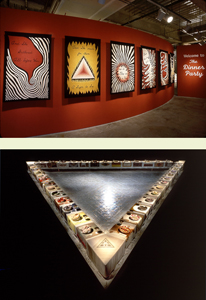
Chicago wanted to tell women’s history through art and that is when she had the idea to do the Dinner Party. She saw a painted piece of china, known as china-painting and was intrigued by the craft, which led here to study this practice and led to her creating the Dinner Party.
The Diner Party for her was “a symbolic history of women in Western Civilization or a reinterpretation of the Last Supper, since women have always done the cooking throughout history.” Each woman, Goddess or historical figure is manifested in a plate, with a separate runner or quilt that included the name and design of each woman. At one point she made a comment about how during the project she discovered so much about so many women and that it made her angry that these women’s achievements were just a footnote in history. She gave the example of Susan B. Anthony and how compared to Paul Revere, this amazing woman is just not that known.
While she was working on the Dinner Party, she became interested in the issue of birthing and was moved about the story of the birth of Mary Wollenstonecraft Shelly, the daughter of the feminist philosopher Mary Wollenstonecraft. For the Birth Project, she got hundreds of letters from women who want to help do needle work for the project.

One image she showed was called “creation tapestry,” which was a contrast to the traditional creation image of God as man touching a man. The birth project, Chicago said, also provided an opportunity for her to learn more about the lives of ordinary women, many of whom did not have the luxury that she did to just focus their energy on artistic work.

Another important project she undertook with her husband was “The Holocaust Project.” Chicago talked about how she was raised as a secular Jew and was not raised with information about the Jewish Holocaust. She began to investigate this dark period of history.
The Holocaust Project was the most difficult for her. The project mixed paintings and photography. She used the symbol of a triangle, which the Nazis used to mark people. However, in Chicago’s work she transformed the triangle into symbols of hope. The Holocaust Project opened in 1993 and traveled for 10 years. For her this project was to come to terms with what had happened and how we can prevent this kind of genocidal horror from happening again.
Chicago discussed some other projects since then and then opened it up for questions or comments from those in attendance. Not many people got up to ask questions. However, one person did ask Judy if she had heard about ArtPrize and what she thought about it. Chicago said she had not thought about entering an art contest since she was 21. Then she asked the audience the question, which was “did ArtPrize engage the community?” It was hard to judge from the hundreds in attendance, but I felt like it was a mild applause, which for me was an indication of the ongoing ambivalence around ArtPrize and what it means for Grand Rapids. It would have been interesting to hear more on this topic, particularly through a feminist lens.
The Opium Wars in Afghanistan
(This article, written by Alfred McCoy, is re-posted from Tom’s Dispatch)
In ways that have escaped most observers, the Obama administration is now trapped in an endless cycle of drugs and death in Afghanistan from which there is neither an easy end nor an obvious exit.
After a year of cautious debate and costly deployments, President Obama finally launched his new Afghan war strategy at 2:40 am on February 13, 2010, in a remote market town called Marja in southern Afghanistan’s Helmand Province. As a wave of helicopters descended on Marja’s outskirts spitting up clouds of dust, hundreds of U.S. Marines dashed through fields sprouting opium poppies toward the town’s mud-walled compounds.
After a week of fighting, U.S. war commander General Stanley A. McChrystal choppered into town with Afghanistan’s vice-president and Helmand’s provincial governor. Their mission: a media roll-out for the general’s new-look counterinsurgency strategy based on bringing government to remote villages just like Marja.
At a carefully staged meet-and-greet with some 200 villagers, however, the vice-president and provincial governor faced some unexpected, unscripted anger. “If they come with tractors,” one Afghan widow announced to a chorus of supportive shouts from her fellow farmers, “they will have to roll over me and kill me before they can kill my poppy.”
For these poppy growers and thousands more like them, the return of government control, however contested, brought with it a perilous threat: opium eradication.
Throughout all the shooting and shouting, American commanders seemed strangely unaware that Marja might qualify as the world’s heroin capital — with hundreds of laboratories, reputedly hidden inside the area’s mud-brick houses, regularly processing the local poppy crop into high-grade heroin. After all, the surrounding fields of Helmand Province produce a remarkable 40% of the world’s illicit opium supply, and much of this harvest has been traded in Marja. Rushing through those opium fields to attack the Taliban on day one of this offensive, the Marines missed their real enemy, the ultimate force behind the Taliban insurgency, as they pursued just the latest crop of peasant guerrillas whose guns and wages are funded by those poppy plants. “You can’t win this war,” said one U.S. Embassy official just back from inspecting these opium districts, “without taking on drug production in Helmand Province.”
Indeed, as Air Force One headed for Kabul Sunday, National Security Adviser James L. Jones assured reporters that President Obama would try to persuade Afghan President Hamid Karzai to prioritize “battling corruption, taking the fight to the narco-traffickers.” The drug trade, he added, “provides a lot of the economic engine for the insurgents.”
Just as these Marja farmers spoiled General McChrystal’s media event, so their crop has subverted every regime that has tried to rule Afghanistan for the past 30 years. During the CIA’s covert war in the 1980s, opium financed the mujahedeen or “freedom fighters” (as President Ronald Reagan called them) who finally forced the Soviets to abandon the country and then defeated its Marxist client state.
In the late 1990s, the Taliban, which had taken power in most of the country, lost any chance for international legitimacy by protecting and profiting from opium — and then, ironically, fell from power only months after reversing course and banning the crop. Since the US military intervened in 2001, a rising tide of opium has corrupted the government in Kabul while empowering a resurgent Taliban whose guerrillas have taken control of ever larger parts of the Afghan countryside.
These three eras of almost constant warfare fueled a relentless rise in Afghanistan’s opium harvest — from just 250 tons in 1979 to 8,200 tons in 2007. For the past five years, the Afghan opium harvest has accounted for as much as 50% of the country’s gross domestic product (GDP) and provided the prime ingredient for over 90% of the world’s heroin supply.
The ecological devastation and societal dislocation from these three war-torn decades has woven opium so deeply into the Afghan grain that it defies solution by Washington’s best and brightest (as well as its most inept and least competent). Caroming between ignoring the opium crop and demanding its total eradication, the Bush administration dithered for seven years while heroin boomed, and in doing so helped create a drug economy that corrupted and crippled the government of its ally, President Karzai. In recent years, opium farming has supported 500,000 Afghan families, nearly 20% of the country’s estimated population, and funds a Taliban insurgency that has, since 2006, spread across the countryside.
To understand the Afghan War, one basic point must be grasped: in poor nations with weak state services, agriculture is the foundation for all politics, binding villagers to the government or warlords or rebels. The ultimate aim of counterinsurgency strategy is always to establish the state’s authority. When the economy is illicit and by definition beyond government control, this task becomes monumental. If the insurgents capture that illicit economy, as the Taliban have done, then the task becomes little short of insurmountable.
Opium is an illegal drug, but Afghanistan’s poppy crop is still grounded in networks of social trust that tie people together at each step in the chain of production. Crop loans are necessary for planting, labor exchange for harvesting, stability for marketing, and security for shipment. So dominant and problematic is the opium economy in Afghanistan today that a question Washington has avoided for the past nine years must be asked: Can anyone pacify a full-blown narco-state?
The answer to this critical question lies in the history of the three Afghan wars in which Washington has been involved over the past 30 years — the CIA covert warfare of the 1980s, the civil war of the 1990s (fueled at its start by $900 million in CIA funding), and since 2001, the U.S. invasion, occupation, and counterinsurgency campaigns. In each of these conflicts, Washington has tolerated drug trafficking by its Afghan allies as the price of military success — a policy of benign neglect that has helped make Afghanistan today the world’s number one narco-state.
CIA Covert Warfare, Spreading Poppy Fields, and Drug Labs: the 1980s
Opium first emerged as a key force in Afghan politics during the CIA covert war against the Soviets, the last in a series of secret operations that it conducted along the mountain rim-lands of Asia which stretch for 5,000 miles from Turkey to Thailand. In the late 1940s, as the Cold War was revving up, the United States first mounted covert probes of communism’s Asian underbelly. For 40 years thereafter, the CIA fought a succession of secret wars along this mountain rim — in Burma during the 1950s, Laos in the 1960s, and Afghanistan in the 1980s. In one of history’s ironic accidents, the southern reach of communist China and the Soviet Union had coincided with Asia’s opium zone along this same mountain rim, drawing the CIA into ambiguous alliances with the region’s highland warlords.
Washington’s first Afghan war began in 1979, when the Soviet Union invaded the country to save a Marxist client regime in Kabul, the Afghan capital. Seeing an opportunity to wound its Cold War enemy, the Reagan administration worked closely with Pakistan’s military dictatorship in a ten-year CIA campaign to expel the Soviets.
This was, however, a covert operation unlike any other in the Cold War years. First, the collision of CIA secret operations and Soviet conventional warfare led to the devastation of Afghanistan’s fragile highland ecology, damaging its traditional agriculture beyond immediate recovery, and fostering a growing dependence on the international drug trade. Of equal import, instead of conducting this covert warfare on its own as it had in Laos in the Vietnam War years, the CIA outsourced much of the operation to Pakistan’s Inter-Service Intelligence (ISI), which soon became a powerful and ever more problematic ally.
When the ISI proposed its Afghan client, Gulbuddin Hekmatyar, as overall leader of the anti-Soviet resistance, Washington — with few alternatives — agreed. Over the next 10 years, the CIA supplied some $2 billion to Afghanistan’s mujahedeen through the ISI, half to Hekmatyar, a violent fundamentalist infamous for throwing acid at unveiled women at Kabul University and, later, murdering rival resistance leaders. As the CIA operation was winding down in May 1990, the Washington Post published a front-page article charging that its key ally, Hekmatyar, was operating a chain of heroin laboratories inside Pakistan under the protection of the ISI.
Although this area had zero heroin production in the mid-1970s, the CIA’s covert war served as the catalyst that transformed the Afghan-Pakistan borderlands into the world’s largest heroin producing region. As mujahedeen guerrillas captured prime agricultural areas inside Afghanistan in the early 1980s, they began collecting a revolutionary poppy tax from their peasant supporters.
Once the Afghan guerrillas brought the opium across the border, they sold it to hundreds of Pakistani heroin labs operating under the ISI’s protection. Between 1981 and 1990, Afghanistan’s opium production grew ten-fold — from 250 tons to 2,000 tons. After just two years of covert CIA support for the Afghan guerrillas, the U.S. Attorney General announced in 1981 that Pakistan was already the source of 60% of the American heroin supply. Across Europe and Russia, Afghan-Pakistani heroin soon captured an even larger share of local markets, while inside Pakistan itself the number of addicts soared from zero in 1979 to 1.2 million just five years later.
After investing $3 billion in Afghanistan’s destruction, Washington just walked away in 1992, leaving behind a thoroughly ravaged country with over one million dead, five million refugees, 10-20 million landmines still in place, an infrastructure in ruins, an economy in tatters, and well-armed tribal warlords prepared to fight among themselves for control of the capital. Even when Washington finally cut its covert CIA funding at the end of 1991, however, Pakistan’s ISI continued to back favored local warlords in pursuit of its long-term goal of installing a Pashtun client regime in Kabul.
Druglords, Dragon’s Teeth, and Civil Wars: the 1990s
Throughout the 1990s, ruthless local warlords mixed guns and opium in a lethal brew as part of a brutal struggle for power. It was almost as if the soil had been sown with those dragons’ teeth of ancient myth that can suddenly sprout into an army of full-grown warriors, who leap from the earth with swords drawn for war.
When northern resistance forces finally captured Kabul from the communist regime, which had outlasted the Soviet withdrawal by three years, Pakistan still backed its client Hekmatyar. He, in turn, unleashed his artillery on the besieged capital. The result: the deaths of an estimated 50,000 more Afghans. Even a slaughter of such monumental proportions, however, could not win power for this unpopular fundamentalist. So the ISI armed a new force, the Taliban and in September 1996, it succeeded in capturing Kabul, only to fight the Northern Alliance for the next five years in the valleys to the north of the capital.
During this seemingly unending civil war, rival factions leaned heavily on opium to finance the fighting, more than doubling the harvest to 4,600 tons by 1999. Throughout these two decades of warfare and a twenty-fold jump in drug production, Afghanistan itself was slowly transformed from a diverse agricultural ecosystem — with herding, orchards, and over 60 food crops — into the world’s first economy dependent on the production of a single illicit drug. In the process, a fragile human ecology was brought to ruin in an unprecedented way.
Located at the northern edge of the annual monsoon rains, where clouds arrive from the Arabian Sea already squeezed dry, Afghanistan is an arid land. Its staple food crops have historically been sustained by irrigation systems that rely on snowmelt from the region’s high mountains. To supplement staples such as wheat, Afghan tribesmen herded vast flocks of sheep and goats hundreds of miles every year to summer pasture in the central uplands. Most important of all, farmers planted perennial tree crops — walnut, pistachio, and mulberry — which thrived because they sink their roots deep into the soil and are remarkably resistant to the region’s periodic droughts, offering relief from the threat of famine in the dry years.
During these two decades of war, however, modern firepower devastated the herds, damaged snowmelt irrigation systems, and destroyed many of the orchards. While the Soviets simply blasted the landscape with firepower, the Taliban, with an unerring instinct for their society’s economic jugular, violated the unwritten rules of traditional Afghan warfare by cutting down the orchards on the vast Shamali plain north of Kabul.
All these strands of destruction knit themselves into a veritable Gordian knot of human suffering to which opium became the sole solution. Like Alexander’s legendary sword, it offered a straightforward way to cut through a complex conundrum. Without any aid to restock their herds, reseed their fields, or replant their orchards, Afghan farmers — including some 3 million returning refugees — found sustenance in opium, which had historically been but a small part of their agriculture.
Since poppy cultivation requires nine times more labor per hectare than wheat, opium offered immediate seasonal employment to more than a million Afghans — perhaps half of those actually employed at the time. In this ruined land and ravaged economy, opium merchants alone could accumulate capital rapidly and so give poppy farmers crop loans equivalent to more than half their annual incomes, credit critical to the survival of many poor villagers.
In marked contrast to the marginal yields the country’s harsh climate offers most food crops, Afghanistan proved ideal for opium. On average, each hectare of Afghan poppy land produces three to five times more than its chief competitor, Burma. Most important of all, in such an arid ecosystem, subject to periodic drought, opium uses less than half the water needed for staples such as wheat.
After taking power in 1996, the Taliban regime encouraged a nationwide expansion of opium cultivation, doubling production to 4,600 tons, then equivalent to 75% of the world’s heroin supply. Signaling its support for drug production, the Taliban regime began collecting a 20% tax from the yearly opium harvest, earning an estimated $100 million in revenues.
In retrospect, the regime’s most important innovation was undoubtedly the introduction of large-scale heroin refining in the environs of the city of Jalalabad. There, hundreds of crude labs set to work, paying only a modest production tax of $70 on every kilo of heroin powder. According to U.N. researchers, the Taliban also presided over bustling regional opium markets in Helmand and Nangarhar provinces, protecting some 240 top traders there.
During the 1990s, Afghanistan’s soaring opium harvest fueled an international smuggling trade that tied Central Asia, Russia, and Europe into a vast illicit market of arms, drugs, and money-laundering. It also helped fuel an eruption of ethnic insurgency across a 3,000-mile swath of land from Uzbekistan in Central Asia to Bosnia in the Balkans.
In July 2000, however, the Taliban leader Mullah Omar suddenly ordered a ban on all opium cultivation in a desperate bid for international recognition. Remarkably enough, almost overnight the Taliban regime used the ruthless repression for which it was infamous to slash the opium harvest by 94% to only 185 metric tons.
By then, however, Afghanistan had become dependent on poppy production for most of its taxes, export income, and employment. In effect, the Taliban’s ban was an act of economic suicide that brought an already weakened society to the brink of collapse. This was the unwitting weapon the U.S. wielded when it began its military campaign against the Taliban in October 2001. Without opium, the regime was already a hollow shell and essentially imploded at the bursting of the first American bombs.
The Return of the CIA, Opium, and Counterinsurgency: 2001-
To defeat the Taliban in the aftermath of 9/11, the CIA successfully mobilized former warlords long active in the heroin trade to seize towns and cities across eastern Afghanistan. In other words, the Agency and its local allies created ideal conditions for reversing the Taliban’s opium ban and reviving the drug traffic. Only weeks after the collapse of the Taliban, officials were reporting an outburst of poppy planting in the heroin-heartlands of Helmand and Nangarhar. At a Tokyo international donors’ conference in January 2002, Hamid Karzai, the new Prime Minister put in place by the Bush administration, issued a pro forma ban on opium growing — without any means of enforcing it against the power of these resurgent local warlords.
After investing some three billion dollars in Afghanistan’s destruction during the Cold War, Washington and its allies now proved parsimonious in the reconstruction funds they offered. At that 2002 Tokyo conference, international donors promised just four billion dollars of an estimated $10 billion needed to rebuild the economy over the next five years. In addition, the total U.S. spending of $22 billion for Afghanistan from 2003 to 2007 turned out to be skewed sharply toward military operations, leaving, for instance, just $237 million for agriculture. (And as in Iraq, significant sums from what reconstruction funds were available simply went into the pockets of Western experts, private contractors, and their local counterparts.) Under these circumstances, no one should have been surprised when, during the first year of the U.S. occupation, Afghanistan’s opium harvest surged to 3,400 tons. Over the next five years, international donors would contribute $8 billion to rebuild Afghanistan, while opium would infuse nearly twice that amount, $14 billion, directly into the rural economy without any deductions by either those Western experts or Kabul’s bloated bureaucracy.
While opium production continued its relentless rise, the Bush administration downplayed the problem, outsourcing narcotics control to Great Britain and police training to Germany. As the lead agency in Allied operations, Donald Rumsfeld’s Defense Department regarded opium as a distraction from its main mission of defeating the Taliban (and, of course, invading Iraq). Waving away the problem in late 2004, President Bush said he did not want to “waste another American life on a narco-state.” Meanwhile, in their counterinsurgency operations, U.S. forces worked closely with local warlords who proved to be leading druglords.
After five years of the U.S. occupation, Afghanistan’s drug production had swelled to unprecedented proportions. In August 2007, the U.N. reported that the country’s record opium crop covered almost 500,000 acres, an area larger than all the coca fields in Latin America. From a modest 185 tons at the start of American intervention in 2001, Afghanistan now produced 8,200 tons of opium, a remarkable 53% of the country’s GDP and 93% of global heroin supply.
In this way, Afghanistan became the world’s first true “narco-state.” If a cocaine traffic that provided just 3% of Colombia’s GDP could bring in its wake endless violence and powerful cartels capable of corrupting that country’s government, then we can only imagine the consequences of Afghanistan’s dependence on opium for more than 50% of its entire economy.
At a drug conference in Kabul this month, the head of Russia’s Federal Narcotics Service estimated the value of Afghanistan’s current opium crop at $65 billion. Only $500 million of that vast sum goes to Afghanistan’s farmers, $300 million to the Taliban guerrillas, and the $64 billion balance “to the drug mafia,” leaving ample funds to corrupt the Karzai government in a nation whose total GDP is only $10 billion.
Indeed, opium’s influence is so pervasive that many Afghan officials, from village leaders to Kabul’s police chief, the defense minister, and the president’s brother, have been tainted by the traffic. So cancerous and crippling is this corruption that, according to recent U.N. estimates, Afghans are forced to spend a stunning $2.5 billion in bribes. Not surprisingly, the government’s repeated attempts at opium eradication have been thoroughly compromised by what the U.N. has called “corrupt deals between field owners, village elders, and eradication teams.”
Not only have drug taxes funded an expanding guerrilla force, but the Taliban’s role in protecting opium farmers and the heroin merchants who rely on their crop gives them real control over the core of the country’s economy. In January 2009, the U.N. and anonymous U.S. “intelligence officials” estimated that drug traffic provided Taliban insurgents with $400 million a year. “Clearly,” commented Defense Secretary Robert Gates, “we have to go after the drug labs and the druglords that provide support to the Taliban and other insurgents.”
In mid-2009, the U.S. embassy launched a multi-agency effort, called the Afghan Threat Finance Cell, to cut Taliban drug monies through financial controls. But one American official soon compared this effort to “punching jello.” By August 2009, a frustrated Obama administration had ordered the U.S. military to “kill or capture” 50 Taliban-connected druglords who were placed on a classified “kill list.”
Since the record crop of 2007, opium production has, in fact, declined somewhat — to 6,900 tons last year (still over 90% of the world’s opium supply). While U.N. analysts attribute this 20% reduction largely to eradication efforts, a more likely cause has been the global glut of heroin that came with the Afghan opium boom, and which had depressed the price of poppies by 34%. In fact, even this reduced Afghan opium crop is still far above total world demand, which the U.N. estimates at 5,000 tons per annum.
Preliminary reports on the 2010 Afghan opium harvest, which starts next month, indicate that the drug problem is not going away. Some U.S. officials who have surveyed Helmand’s opium heartland see signs of an expanded crop. Even the U.N. drug experts who have predicted a continuing decline in production are not optimistic about long-term trends. Opium prices might decline for a few years, but the price of wheat and other staple crops is dropping even faster, leaving poppies as by far the most profitable crop for poor Afghan farmers.
Ending the Cycle of Drugs and Death
With its forces now planted in the dragon’s teeth soil of Afghanistan, Washington is locked into what looks to be an unending cycle of drugs and death. Every spring in those rugged mountains, the snows melt, the opium seeds sprout, and a fresh crop of Taliban fighters takes to the field, many to die by lethal American fire. And the next year, the snows melt again, fresh poppy shoots break through the soil, and a new crop of teen-aged Taliban fighters pick up arms against America, spilling more blood. This cycle has been repeated for the past ten years and, unless something changes, can continue indefinitely.
Is there any alternative? Even were the cost of rebuilding Afghanistan’s rural economy — with its orchards, flocks, and food crops — as high as $30 billion or, for that matter, $90 billion dollars, the money is at hand. By conservative estimates, the cost of President Obama’s ongoing surge of 30,000 troops alone is $30 billion a year. So just bringing those 30,000 troops home would create ample funds to begin the rebuilding of rural life in Afghanistan, making it possible for young farmers to begin feeding their families without joining the Taliban’s army.
Short of another precipitous withdrawal akin to 1991, Washington has no realistic alternative to the costly, long-term reconstruction of Afghanistan’s agriculture. Beneath the gaze of an allied force that now numbers about 120,000 soldiers, opium has fueled the Taliban’s growth into an omnipresent shadow government and an effective guerrilla army. The idea that our expanded military presence might soon succeed in driving back that force and handing over pacification to the illiterate, drug-addicted Afghan police and army remains, for the time being, a fantasy. Quick fixes like paying poppy farmers not to plant, something British and Americans have both tried, can backfire and end up actually promoting yet more opium cultivation. Rapid drug eradication without alternative employment, something the private contractor DynCorp tried so disastrously under a $150 million contract in 2005, would simply plunge Afghanistan into more misery, stoking mass anger and destabilizing the Kabul government further.
So the choice is clear enough: we can continue to fertilize this deadly soil with yet more blood in a brutal war with an uncertain outcome — for both the United States and the people of Afghanistan. Or we can begin to withdraw American forces while helping renew this ancient, arid land by replanting its orchards, replenishing its flocks, and rebuilding the irrigation systems ruined in decades of war.
At this point, our only realistic choice is this sort of serious rural development — that is, reconstructing the Afghan countryside through countless small-scale projects until food crops become a viable alternative to opium. To put it simply, so simply that even Washington might understand, you can only pacify a narco-state when it is no longer a narco-state.
The Assassination of Dr. King – April 4, 1968
“Martin Luther King is the most notorious liar in the country.” FBI Director J. Edgar Hoover
It was 42 years ago today that Dr. Martin Luther King Jr. was assassinated while in Memphis, Tennessee in support of sanitation workers who were on strike. King gave his last speech, entitled I’ve Been to the Mountaintop, where he talked about knowing that his days were numbered.
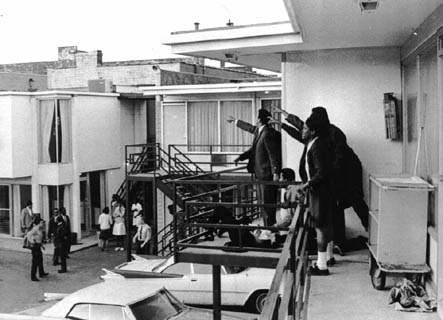
Despite the US government’s decision to give Dr. King a holiday, the US government during King’s life despised the Baptist preacher. FBI Director J. Edgar Hoover even referred to King as “the most dangerous Negro in America.”
The FBI and other US government agencies had been monitoring King’s activities for more than a decade before his assassination, wiretapping his phone and engaging in all kinds of character assassination through an extensive propaganda campaign. For details on the FBI campaign directed at Dr. King, see The COINTELPRO Papers: Documents from the FBI’s Secret Wars Against Dissent in the United States.
King was shot to death while standing on the balcony of the Lorraine Motel in the early evening of April 4. Authorities arrested and charged James Earl Ray with pulling the trigger, but for years more and more information has surfaced to suggest that Ray was not the triggerman.
Declassified documents show that local law enforcement, the National Guard and the FBI all had a hand in the assassination of King. While there is no hard evidence that any of these government agencies actually shot King, but they clearly played a role in making it happen. The best book on this issue is by William Pepper entitled, An Act of State: The Execution of Martin Luther King.
The “official” narrative that a lone racist named James Earl Ray killed King makes it easier for those in power, because it takes the focus off of what the State did to repress the movement that King was part of. However, if one reads this history of declassified documents and independent investigation it is clear that King and the larger freedom movement that he was part of was a significant threat to the political and economic power structures of the day.
Founder of the Southern Poverty Law Center speaks about the importance of diversity to counteract Hate Groups

Last night hundreds of people gathered at Fountain St. Church in downtown Grand Rapids for the last final lecture of the GRCC Diversity Learning Center. Morris Dees, founder of the Southern Poverty Law Center (SPLC), spoke for about 40 minutes on the importance of diversity and tolerance, mixing in stories about Dr. King, biblical themes and some of his own personal experiences.
One story he told that reflected the importance of the work that the SPLC does was from the late 1970s. After the Vietnam War, thousands of refugees came to the US from Vietnam. About 50,000 of them settled in the Houston, Texas area. They did quite well financially and some of them decided to go into the shrimp business. They did well and began doing better than other commercial fisherman, who happened to be White. The White business people decided to lobby the State legislation to forbid granting a fishing license to the Vietnamese in response to their success. The legislature denied them, so they turned to the KKK for support.
The clan began to patrol in boats as a way to frighten the Vietnamese. The SPLC got involved in this case. They wanted to argue that what was happening was a violation of the federal trade and commerce laws, which the Vietnamese agreed to.
One of the most important aspects of the trial was the testimony from some in the Vietnamese community who claimed that the KKK threatened them if they continued to fish. The judge eventually decided in their favor based in large part on that testimony.
At an event to celebrate the victory they had a blessing of the boats and as the ceremony was beginning federal marshals showed up to enforce their rights and Dees said it was a very proud moment, to have been a lawyer and an American.

Dees said that right now there are about 950 certified hate groups operating in the US. More alarming are the rise of militia groups in the US in recent years. The speaker made mention of the 9 individuals arrested just the other day in Michigan for hate crimes being planned with the use of weapons. In the last 12 months alone there have been an almost 500% increase in militia groups. There has also been about a 50% increase in nativist groups, mostly targeting Latinos and immigrants.
Add to this the Tea Party Movement, which Dees doesn’t qualify as a hate group, but acknowledges their “hate-filled rhetoric.” There is also the growing number of people who listen to hate speech manifested by the radio commentators like Glen Beck, Michael Savage and Rush Limbaugh, a trend which is well documented in Rory O’Connor’s book Shock Jocks: Hate Speech and Talk Radio.
The speech by Dees was originally scheduled for December, but was cancelled due to weather. An online forum for hate groups and White Supremacists was advocating a march against Dees visit back in December. Comments on that website refer to Dees as anti-White and a sexual pervert. One commentator even advocated going to the event and disrupting it. In fact, just before Dees got to the podium to speak someone did begin to yell, but was quickly escorted out of the building by police and body guards, which Dees always travels with because of the constant threats he receives from hate groups all across the country.
(This article is re-posted from the Center for Media and Democracy)

Today, the Real Economy Project of the Center for Media and Democracy (CMD) released an assessment of the total cost to taxpayers of the Wall Street bailout. CMD concludes that multiple federal agencies have disbursed $4.6 trillion dollars in supporting the financial sector since the meltdown in 2007-2008. Of that, $2 trillion is still outstanding. Our tally shows that the Federal Reserve is the real source of the bailout funds.
CMD’s assessment demonstrates that while the press has focused its attention on the $700 billion TARP bill passed by Congress, the Federal Reserve has provided by far the bulk of the funding for the bailout in the form of loans amounting to $3.8 trillion. Little information has been disclosed about what collateral taxpayers have received in return for these loans, sparking the Bloomberg News lawsuit covered earlier. CMD also concludes that the bailout is far from over as the government has active programs authorized to cost up to $2.9 trillion and still has $2 trillion in outstanding investments and loans.
Learn more about the 35 programs included in the CMD tally by visiting our Total Wall Street Bailout Cost Table, which contains links to pages on each bailout program with details including the current balance sheet for each program.
 Grand Rapids Institute for Information Democracy